Home Blog Page 384

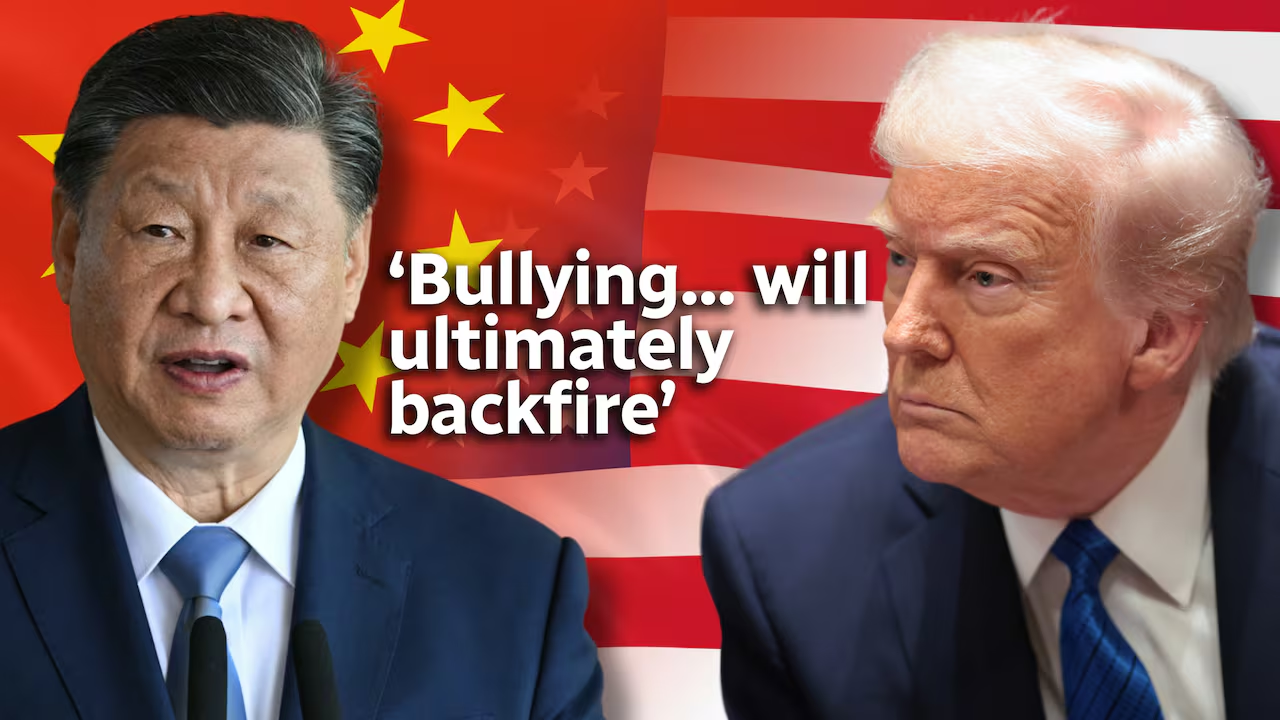
Revealed! Why Trump is hitting China on trade

  • US-China Trade War: Top entrepreneur says tariffs could be ‘nail in coffin’ for small businesses

Suddenly, Donald Trump’s trade war is in much sharper focus.

Rather than a fight on all fronts against the world, this now looks far more like a fight on familiar Trumpian territory: America v China.

The 90-day pause on the higher “retaliatory” tariffs levied on dozens of countries still leaves a universal across-the-board tariff of 10% in place.

But China – which ships everything from iPhones to children’s toys and accounts for around 14% of all US imports – has been singled out for much harsher treatment with an eye-watering rate of 125%.

Trump said the increase was due to Beijing’s readiness to retaliate with its own 84% levy on US goods, a move the president described as showing a “lack of respect”.

But for a politician who first fought his way to the White House on the back of an anti-China message, there is much more to this than simple retaliation.

For Trump, this is about the unfinished business of that first term in office.

“We didn’t have the time to do the right thing, which we’re doing now,” he told reporters.

The aim is nothing less than the upending of an established system of global trade centred on China as the factory of the world, as well as the once widely held view that underpinned it – the idea that more of this trade was, in and of itself, a good thing.

To understand just how central this is to the US president’s thinking, you need to go back to the time before anyone ever thought of him as a possible candidate for office, let alone a likely winner.

In 2012, when I first reported from Shanghai – China’s business capital – increased trade with the country was seen by almost everyone – global business leaders, Chinese officials, visiting foreign governments and trade delegations, foreign correspondents and learned economists – as a no brainer.

It was boosting global growth, providing an endless supply of cheap goods, enriching China’s army of new factory workers increasingly embedded in global supply chains, and providing lucrative opportunities to multinational corporations selling their wares to its newly minted middle classes.

Within a few of years of my arrival, China had surpassed the US to become the world’s biggest market for Rolls Royce, General Motors and Volkswagen.

There was a deeper justification, too.

As China got richer, so the theory went, Chinese people would begin to demand political reform.

Their spending habits would also help China transition to a consumer society.

But the first of those aspirations never happened, with China’s ruling Communist Party only tightening its grip on power.

And the second one didn’t happen fast enough, with China not only still dependent on exports, but openly planning to become ever more dominant.

Its infamous policy blueprint – published in 2015 and entitled Made in China 2025 – set out a huge state-backed vision of becoming a global leader in a number of key manufacturing sectors, from aerospace to ship building to electric vehicles.

And so it was that same year, a political outsider launched his run for US president, making the case repeatedly on the campaign trail that China’s rise had hollowed out the American economy, driven Rust Belt decline and cost blue-collar workers their livelihoods and dignity.

Trump’s first-term trade war broke the mould and shattered the consensus. His successor, President Joe Biden, kept much of his tariffs on China in place.

And yet, even though they have undoubtedly caused China some pain, they have not done much to change the economic model.

China now produces 60% of the world’s electric cars – a large proportion of them made by its own homegrown brands – and 80% of the batteries that power them.

So, now Trump is back, with this tit-for-tat escalation on levies.

It would, arguably, be the biggest shock ever delivered to the established global trading system, were it not for all the other on-again off-again tariff measures the US president has rolled out in recent days.

What happens next depends on two key questions.

Firstly, whether China takes up that offer to negotiate.

And secondly, assuming it eventually does, whether China is willing to make the kind of major concessions that America is looking for, including a complete overhaul of its export driven economic model.

In answering them, the first thing to say is that we are in completely unchartered territory, so we should be wary of anyone who says they know how Beijing is likely to react.

But there are certainly reasons to be cautious.

China’s vision of its economic strength – one based on strong exports and a tightly protected domestic market – is now closely bound up with its idea of national rejuvenation and the supremacy of its one-party system.

Its tight control over the information sphere means it will be unlikely to drop its barriers to American technology companies, for example.

But there is a third question, and it is one for America to answer.

Does the US still believe in free trade? Donald Trump often suggests that tariffs are a good thing, not merely as a means to an end but as an end in themselves.

He talks about the benefit of a protectionist barrier for America in order to stimulate domestic investment, encourage American companies to bring those foreign supply chains back home, and raise tax revenues.

And if Beijing believes that is indeed the primary purpose of the tariffs, it may decide there is nothing to negotiate anyway.

Rather than championing the idea of economic cooperation, the world’s two biggest superpowers may find themselves locked in a fight for winner-takes-all economic supremacy.

If so, that really would mark a shattering of the old consensus and a very different, possibly very dangerous, future.

Meanwhile, when you think of who would be affected by the global turmoil the tariff war is causing, and MrBeast (real name: Jimmy Donaldson) – the world’s most successful YouTuber – probably isn’t the first person who springs to mind.

But as well as making viral videos, MrBeast, whose real name is Jimmy Donaldson, has a number of side hustles, including a chocolate business, Feastables.

While it is a US company, America isn’t exactly renowned as a cocoa producer, meaning their chocolate bars rely on imported raw ingredients – now facing tariffs.

The Trump administration hopes its import levies will encourage more companies to set up in the US. For Feastables, the opposite is true.

“Ironically because of all the new tariffs it is now way cheaper to make our chocolate bars we sell globally NOT in America,” MrBeast posts on X.

“We’ll figure it out. I feel for small businesses, though. Could really be a nail in the coffin for them,” he adds.

His intervention is bad news for the White House because it’s a real world example of the potential unintended consequences of its policies.

But secondly – and possibly more importantly – it represents one of the most influential voices for young Americans publicly criticising the Trump tariff policy.

Read Also: China slams 84% revenge tariffs on US goods hours after Trump’s 104% levy – as global financial markets sink again

Credit: BBC

My daughter’s reason for refusing a £400 jacket I was paying for left me stunned…By Mogaji Wole Arisekola

Parents, let me tell you: If you don’t train your children well, your own wealth might become your curse—and theirs.

Last Sunday, I had a life-altering moment. It wasn’t in a church or mosque—it was inside a shopping mall, thanks to my daughter Diekolami, my third-born.

We were heading to a shopping center just 20 minutes away from home. I had a few errands to run and figured we’d make it quick. As promised, she showed up at 2 p.m. sharp. Punctual, responsible—the kind of discipline every parent dreams of.

While we browsed, I spotted a dazzling leather jacket in a luxury store. It was classy, elegant, and absolutely perfect. Earlier, I had scolded her for not dressing warmly enough. The sun was out, yes, but that breeze? Pure ice.

So I handed her my card. “Go on, get it,” I said.

Minutes later, she returned… empty-handed.

“What happened?” I asked.

She looked me in the eye and said, “Dad, I didn’t buy it. It’s too expensive—£400!”

My jaw dropped. I snapped, “What’s your problem? Go back and pay for it!”

But she stood her ground. Calmly, she said, “Dad, I just completed my Master’s. How much do you think I’ll be earning to justify a £400 jacket?”

I said, “You’re not paying—I am!”

Then came the statement that silenced me completely.

“If you’re not around, how can I survive if I’ve been trained to live above my means?”

Boom. That was the slap of truth I never saw coming.

My heart sank. My mind flew straight to Nigeria. I thought of Gen Z girls who demand HERMÈS bags just because their father is going to Mecca. Girls who beg for bone-straight hair worth N5 million—on top of empty ambition.

That day, I realized the kind of treasure I have in my children. I must give all the credit to my wife. She deserves not just an award—but a statue in her honor. May God bless her with long life to enjoy the fruits of her labor.

Nigerian parents, hear me loud and clear: Comfort is good, but overpampering is a silent killer. Giving our children everything we were denied as kids can lead them to ruin.

A friend’s 19-year-old son was recently seen speeding recklessly through Lagos in a brand-new Range Rover. Music blaring, friends dancing, zero accountability. Is that what wealth is for?

So many rich men die and vanish into silence. Not because they weren’t great—but because they failed to raise children who could sustain their legacy.

Many corrupt officials and politicians think they’ve stolen enough to secure their children’s futures. But guess what? Money you didn’t earn will vanish faster than morning dew.

Train your children today, so they don’t destroy your name tomorrow.

Mogaji Wole Arisekola (Wole Streetjournal)

State of Emergency: Is it really about Rivers State’s resources? When will FG chase out bandits from the mines in Zamfara State?

By Lillian Okenwa

Although 11 governors of the Peoples Democratic Party (PDP) have approached the Supreme Court challenging the powers of President Bola Tinubu to suspend a democratically elected structure of a state, with Governor Siminalayi Fubara insisting that the target is the resources in oil-rich Rivers State, not a few Nigerians are wondering when a state of emergency will be declared in Zamfara state where terrorists and bandits are freely exploiting the state’s minerals including gold, copper and lithium.

Many are also wondering when beyond rhetoric, the government will deal decisively with the killers rampaging Plateau state.

On Tuesday, 8 April, Caleb Muftwang, the governor of Plateau State, during an interview on Channels Television’s Politics Today raised alarm over the worsening security situation in his state, revealing that about 64 communities have been taken over by bandits.

According to him, “These communities that have been recently attacked were part of the communities that were attacked in 2023 but they survived it and rebuilt themselves… The Ruwi community that was first attacked lost about 17 people in 2023, but they bounced back to show you the resilience of the people.

In the past week, more than 50 people have been reported killed in renewed attacks across five communities, with over 300 houses set ablaze by suspected herdsmen. The violence has reignited national concern over the persistent insecurity plaguing the North-Central region. Benue state has also had an enormous dose of widespread wanton killings from rampaging mauraders.

In his article, Can Nigeria stop bandits from exploiting Zamfara’s minerals?, Malik Samuel, a Senior Researcher with Good Governance Africa in Nigeria revealed that bandits have maintained control over mining sites in Zamfara with the government appearing helpless.

Below is a reproduction of his article. 

Zamfara State is one of Nigeria’s minerally-rich states with huge deposits of gold, copper and lithium. In the same vein, the state has, over the years, become one of the most insecure in the country, where illegal mining has become intricately linked with banditry, a form of organized crime involving armed groups engaged in cattle rustling, kidnapping, and violent attacks on communities. As a result, these resources have become a double-edged sword, attracting illegal artisanal miners and criminal groups who exploit the minerals for profit with the extensive participation of thousands of ordinary people seeking livelihood. These mine labourers are made to work in often unsafe and exploitative conditions rife with intimidation by the armed groups.

In 2019, the Nigerian federal government imposed a ban on mining in the state as part of efforts to address rising insecurity. Two years later, this was followed with an imposition of a no-fly zone over the state. Authorities believed that illegal mining fuelled insecurity and that illegally mined gold was being ferried out of the state using private aircrafts, with proceeds used to smuggle in weapons.

However, the policy faced immediate challenges. Bandits maintained control over mining sites, making it nearly impossible for government officials to enforce the ban. Community members involved in artisanal mining told Good Governance Africa (GGA) that the presence of armed groups at these sites remained largely unchallenged by security forces. This undermined the effectiveness of the ban, leaving a significant gap in resource governance.

Ineffective ban

Data from the Nigeria Security Tracker, a Council of Foreign Relations project, on security outcomes during the ban reveal its limited success. In the period from 2015 to 2019 before the ban was introduced, there were 2,247 reported deaths linked to insecurity in Zamfara. In the four years following the ban, this figure rose to 6,349 deaths – a staggering 183% increase. Many incidents go unreported due to the state’s remote areas, likely understating the figures. However, the available data shows that the ban failed to reduce violence and instead coincided with rising insecurity.

Several factors contributed to this failure. Firstly, the ban disrupted the livelihoods of many local communities who depended on artisanal mining for survival. With their farmlands either taken over by bandits or rendered inaccessible due to fear of attacks, mining became their only viable source of income. This inadvertently pushed more people into illegal mining activities, further empowering bandits who controlled these operations and exploited the people. Bandits leveraged the proceeds from illegal mining to smuggle arms and recruit members, including individuals from across Nigeria’s borders. Rather than weakening the bandits, the ban unintentionally strengthened their financial base, exacerbating insecurity in the state.

Secondly, the government’s inability to enforce the ban left mining sites in the hands of criminal groups. This was confirmed by the government when the solid minerals minister, Dele Alake, announced the lifting of the ban in December 2024. “The previous ban, intended to address security concerns linked to illegal mining and banditry, inadvertently allowed illegal miners to exploit our resources,” the minister stated. Community members have informed GGA that despite the lifting of the ban, mining sites are still being controlled by bandits.

High-level official complicity contributes to illicit mining and insecurity. Addressing this requires structural reforms, including constitutional changes to involve state authorities in mineral sector regulation and mine development alongside federal and private sector participation. This was a key proposal by GGA-Nigeria Executive Director Dr. Ola Bello at the 2024 Nigeria Mining Week summit in Abuja.

Rejig policy with fresh innovations

The minister cited the “significant security improvements” in the state as reason for lifting the ban. He also stated the government’s resolve to harness the state’s mineral wealth for national economic growth through the introduction of “policies to revitalise the mining sector, consolidate reforms, and create a more favourable investment environment.” While this decision holds promise, it also poses risks if not accompanied by robust measures to address the root causes of illegal mining and banditry.

To ensure the success of this policy shift, the government must adopt a comprehensive approach focusing on security, regulation, and community engagement.

Strengthening security at mining sites is crucial to preventing bandits from regaining control. This requires deploying specialized security forces, enhancing surveillance with modern technology such as drones and satellite imagery, and fostering collaboration with local communities. Additionally, the government must establish a robust regulatory framework by conducting a census of mining sites, registering artisanal miners, and implementing transparent tracking of mineral extraction and sales to curb smuggling. Collaborations with private sector stakeholders and international partners can provide technical expertise, funding, and best practices to modernize Nigeria’s mining sector, which currently contributes less than 1% to the country’s official economic output.

Addressing economic vulnerabilities is equally important, as mining communities in Zamfara rely on the sector for their livelihoods. To ensure their economic stability while curbing illegal activities, the federal government should work with the state government to provide more employment opportunities in regulated mining operations, invest in alternative livelihoods, such as agriculture and small-scale industries, to reduce dependency on mining, introduce community development programmes that address education, healthcare, and infrastructure needs, all of which brings government closer to the people and prevent recruitment by both criminal gangs and violent extremists.

Promoting environmental and health standards should be part of responsible mining, which must prioritise the health and well-being of both miners and local communities. The government should enforce environmental regulations, ensuring that mining activities do not lead to health hazards like lead poisoning, soil degradation, water pollution, or other ecological harm.

In conclusion, the lifting of the mining ban in Zamfara State marks a critical juncture in Nigeria’s efforts to address insecurity and harness its mineral wealth for economic prosperity. While the ban’s failure underscores the complexity of the challenges involved, it also offers valuable lessons for future interventions. By prioritising security, regulation, and community welfare, the government can create a sustainable framework for mining that benefits Nigeria while preventing bandits from exploiting its resources.

**************************************************

But then another Nigerian, Moses Oludele Idowu brough a rather worrisome angle to this conversation. Oludele in his article Generals without shame had this to say:

“A general was kidnapped in his own house by gunmen and kidnappers and taken to the forest in Katsina State. He was the former director of NYSC. He could not be rescued by the authorities and security agencies – the same agencies that could monitor protesters and their phone conversations.

“The friends of this general now came together, formed a WhatsApp Group and began to raise money to free their colleague and friend. The terrorists demanded for N400 million (four hundred million naira), but the family began to negotiate while his friends, both serving and retired, were raising money. They paid the ransom, and he was released. Another general who coordinated the whole raising of ransom now posted a letter of appreciation on Social Media. This is what shocks me…

“But still, I am troubled and deeply too about the Army, Security Agencies and even NIgeria. Has it come to this? I am particularly troubled by the letter of appreciation of another general, Abdullahi, about how they raise money for ransom to terrorists. Haba! In Nigeria? Generals raising money for ransom? Generals don’t pay ransom; they fight. Generals don’t raise money, they lead soldiers and warriors to the battlefield to save their fatherland.”

As Nigerians await a declaration of a state of emergency in Zamfara, Plateau and other hugely troubled parts of Nigeria, PDP governors in the suit marked SC/CV/329/2025, want the Supreme Court to determine if the President has the power to suspend a democratically elected structure of a state.

The plaintiffs — Adamawa, Enugu, Osun, Oyo, Bauchi, Akwa Ibom, Plateau, Delta, Taraba, Zamfara, and Bayelsa states, also asked the apex court to determine if the way and manner the President pronounced the state of emergency declaration in Rivers State was not in contravention of the 1999 Constitution.

They also prayed the court to determine, “Whether upon a proper construction and interpretation of the provisions of Sections 1(2), 5(2), 176, 180, 188 and 305 of the Constitution of the Federal Republic of Nigeria 1999, the President of the Federal Republic of Nigeria can lawfully suspend or in any manner whatsoever interfere with the offices of a Governor and the Deputy Governor of any of the component 36 States of the Federation of Nigeria and replace same with his own unelected nominee as a Sole Administrator, under the guise of, or pursuant to, a Proclamation of a State of Emergency in any of the State of the Federation, particularly in any of the Plaintiffs States?”

What does a woman really want? Relationship expert shares a ‘secret weapon’…

What do women want? This is one question that has been asked over the ages.

In this piece, a dating expert reveals the ‘secret weapon’ men can use to find a partner.

Scott Galloway, a member of the advisory council for the American Institute for Boys and Men, took part in a ‘masculinity debate’ on The Diary of a CEO podcast alongside behavioural scientist Logan Ury and host Steven Bartlett.

The experts debated if society is failing young boys, today’s dating standards and how porn addiction affects men. 

During the conversation, Scott revealed that women tend to look for emotionally intelligent and considerate men who still have masculine attributes. 

He said: ‘What women say they want is an emotionally in-touch man and what they want is a masculine man. 

‘They will articulate what they want in a man and includes being more emotionally available and then they want to have sex with a traditional masculine man.’

Meanwhile, Scott pointed out a ‘secret weapon’ that men should use more if they are hoping to impress a woman. 

He said: ‘A secret weapon I think for men that they don’t leverage is to demonstrate kindness, the little things, have good manners, follow up with people, be thoughtful.

Women want to see that you are a good person; you treat service staff well, you’re good to your parents, you have manners, and you treat people well, even with no reciprocal expectation.

‘Because they know that a kind person, if and when she’s vulnerable and needs help and maybe isn’t bringing as much to the table for certain periods, that this is a kind man.

‘Maybe you’re smart, maybe you’re not, there’s not a lot you can do there but the secret weapon I think for men that they don’t leverage… is to demonstrate kindness and we don’t talk about that enough as men.’

Elsewhere, Scott claimed that his research has shown him that women also want a man who can ‘signal resources’.

He explained: ‘It doesn’t necessarily mean you have to have a Range Rover right now, but you have a plan.

‘You have your s*** together, you go home at midnight when everyone’s partying because you have to be up for work, you work out which shows a level of discipline and that you can commit to something, you’re in school, you’ve got a good job, this person is going to have resources.

‘I don’t think that’s changed a whole lot. I think a man’s ability to signal future resources has gone down, but I’m not sure it’s become any less of a criteria.’

He revealed that women also look for ‘intellect’ when looking for a partner, which he claimed is very ‘instinctual’. 

Click here to continue reading.

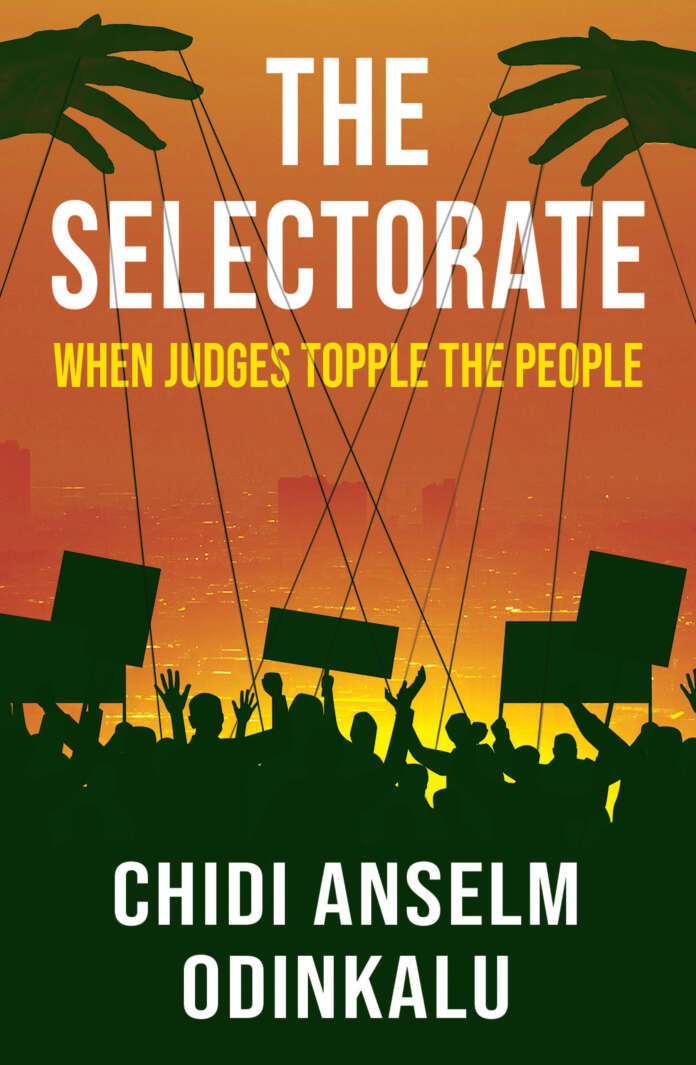
“The Selectorate”, By Chidi Anselm Odinkalu, A wealth of knowledge on the history of the judiciary in Nigeria

By Adaobi Onuoha

Last year, I had the privileged opportunity of working as a Research Assistant with Prof. Chidi Anselm Odinkalu on his newest book, ‘The Selectorate: When Judges Topple The People’.

The-Selectorate-Cover-and-back


This book promises such a wealth of knowledge on the history of the judiciary in Nigeria, with specific reference to the question of the existence of independence of the judiciary…or not.

It throws such light on the history of the ‘capture’ of the judiciary.
It delivers this historical narrative in a way that no single piece of literature has done.
An intriguing compilation of the history of the Bench in Nigeria.

I highly recommend!
It is available on preorder at https://lnkd.in/d6qYcyiD

I am very thankful to Prof. for trusting my ability to assist in bringing this unique book to life.

More about The Selectorate

Chidi Odinkalu argues that Nigeria’s judiciary has orchestrated a constitutional coup, replacing the electorate with itself as the final arbiter of political power. The Selectorate presents a gripping account of how judges have gradually expanded their influence beyond legal disputes to deciding who holds political office. This shift is more than an anomaly; it is a systemic crisis that calls for democratic rebalancing. Odinkalu’s analysis is both provocative and necessary, challenging the entrenched belief that judicial pronouncements are beyond scrutiny.

Niger discards French, adopts Hausa as national language

The military government of Niger has officially made Hausa the country’s new national language, moving away from its colonial past where French played a central role.

The change was announced in a new charter released on March 31, published in a special edition of the government’s official journal.

According to the document, “The national language is Hausa,” and “the working languages are English and French.”

Hausa is already the most commonly spoken language across Niger, especially in the Zinder, Maradi, and Tahoua regions.

Most of the country’s population of about 26 million people understand and speak Hausa. In comparison, only around three million people, just 13 per cent, can speak French.

PUNCH reports thatthe new charter also officially lists nine other local languages, including Zarma-Songhay, Fula, Kanuri, Gourmanche, and Arabic, as “the spoken languages of Niger.”

During that event, the military government received more support and General Abdourahamane Tiani, the junta leader, was approved to stay in power for five more years.

Since taking over in a coup in July 2023, which removed the country’s civilian president, Mohamed Bazoum, the junta has been cutting off ties with France.

These actions include removing French troops from the country, ending diplomatic relations, and changing the names of roads and buildings that used to carry French names.

Like Niger, Mali and Burkina Faso, which also have military governments and used to be French colonies, are taking similar steps.

They’ve also pulled out of the Organisation Internationale de la Francophonie, a group similar to the Commonwealth that supports French-speaking nations.

Abuja lawyer denounces FUOYE for clearing VC of sexual harassment allegations

An Abuja-based legal practitioner, Pelumi Olajengbesi, has strongly criticised the Federal University Oye-Ekiti (FUOYE) in Ekiti State for exonerating its Vice Chancellor, Professor Abayomi Fasina, from allegations of sexual harassment without regard for what he called incriminating evidence to the contrary.

In a press statement posted on his Facebook page on Wednesday, Olajengbesi described the university’s investigation process as “procedurally reckless” and riddled with “institutional bias.”

The criticism followed a meeting of FUOYE’s Governing Council on April 8, where the institution formally cleared Professor Fasina of any wrongdoing in a case brought against him by a female staff member of the institution, Engr. Folasade Adebayo.

Olajengbesi, expressing deep concern, said the university’s conclusions ignored what he termed “hard-core evidence,” including audio recordings, written exchanges, and public disclosures. “The outright dismissal of the sexual harassment allegations is not only shocking but profoundly troubling,” he stated. “It sends a chilling message… that no matter the gravity of an accusation, if it involves someone in a position of power, it will be ignored and the complainant vilified.”

In the statement, the lawyer highlighted several areas of concern, majorly among them the integrity of the investigative process. He alleged that FUOYE’s reliance on “unverified audio recordings without forensic analysis” undermined the credibility of the university’s findings.

“The investigative procedure casts serious doubt on the credibility of any conclusions drawn,” he argued, describing the methodology as “flawed” and “subverting the search for truth.”

He also criticised what he called a “culture of institutional protectionism,” pointing out that while the complainant was issued a warning, the Vice Chancellor merely received “superficial advice.” This, he said, reflected “an institution more concerned with its reputation than with achieving genuine justice.”

Olajengbesi was particularly critical of the decision to allow Professor Fasina to retain his position throughout the investigation. “As long as the Vice Chancellor retains control of the institution, no one within the University is in any position to impartially investigate such allegations,” he said.

Calling for external intervention, he urged the Independent Corrupt Practices and other related offences Commission (ICPC) to step into the matter. “An investigation conducted by an external, impartial body is essential to restore public faith in the process of justice,” he said, adding that the ICPC should “prosecute those who have allowed misconduct and institutional cover-ups to persist.”

FUOYE has yet to respond publicly to the latest accusations from Barrister Olajengbesi, though the university has previously maintained that it acted within the boundaries of its internal policies and procedures to deal with the matter.

The controversy continues to spark debate on the integrity of institutional investigations in Nigerian higher institutions, particularly where allegations of misconduct against high-ranking officials are involved.

Is woman-to-woman marriage in West Africa disappearing?

By Oluwadamilola Olanrewaju

Do you know that long before the loud advocacy for same-sex marriage, woman-to-woman marriages have been happening in West Africa, including Nigeria?

In the streets of Lagos, the royal courts of Benin, and the quiet villages of Ghana’s Upper East Region, marriage has long been a pillar of social life in West Africa.

But beyond the widely recognized man-woman unions, there is an unpopular yet deeply rooted tradition, woman-to-woman marriage.

Once a powerful tool for lineage preservation and female agency, this practice is now fading away. The question is – why?

Tradition shaped by power and purpose

Woman-to-woman marriage, though often misunderstood today, was never about romantic relationships or sexual preference. It was a practical and socially respected institution found in more than 40 ethnic groups across West Africa.

Among the Igbo in Nigeria, the Frafra in Ghana, and the Dahomeans of Benin, a woman could take on the role of a husband paying bride price, marrying another woman, and legally becoming the head of a household.

These unions weren’t symbolic. They had real legal, economic, and social consequences. The female husband assumed responsibility for the wife and any children she bore, typically fathered by a male relative or a chosen genitor.

The children belonged to the female husband’s lineage, ensuring continuity of the family name and inheritance line, especially in the absence of male heirs.

Why did it matter?

In traditional societies, land, property, and leadership often passed through male lines. But in the absence of sons or male relatives, woman-to-woman marriage provided a solution. It allowed women, especially those who were wealthy or influential, to maintain control over family property and legacy.

This structure also granted women a unique kind of autonomy. Female husbands could manage property, settle disputes, represent families in community matters, and hold leadership roles.

In a deeply patriarchal society, this was a powerful way for women to gain influence and agency while still operating within accepted cultural frameworks.

Stories from the ground

In Okrika, a town in Nigeria’s Rivers State, elders still speak of how a woman with no brothers or sons could marry wives to bring male children into the family.

In Mbaise, Chief Nkemjirika Njoku recalls how daughters, after losing a father without sons, could marry a woman to raise children in his name, preserving his lineage.

Ghana’s Frafra communities had similar arrangements

A wealthy woman might marry wives to bear children for her husband or manage labor and household duties. In each case, the purpose was clear: protect family ties, maintain lineage, and empower women to fulfill roles society typically reserved for men.

The colonial backlash

So what happened to this rich tradition? The answer lies partly in colonial history. European colonizers, guided by Victorian-era ideals, viewed gender roles and marriage through rigid moral lenses.

When British colonial administrators and Christian missionaries encountered woman-to-woman unions, they misunderstood and condemned them, wrongly equating them with homosexuality.

This moral judgment led to the criminalization of same-sex relationships, including woman-to-woman marriages in places like colonial Ghana as early as 1882. Over time, these external pressures stigmatized the practice, forcing it into the shadows.

Even as the tradition adapted sometimes being rebranded as business partnerships or household arrangements it gradually lost its formal recognition and widespread acceptance.

How it is misunderstood in the modern era

Today, the few remaining traces of woman-to-woman marriage are largely misunderstood or ignored. Some critics argue the practice reinforced patriarchal norms by requiring women to adopt “male” roles to gain power.

Others mistakenly view it as a form of same-sex romantic union, overlooking its true cultural and functional context.

Religious shifts have played a role, too. The rise of Christianity and Islam across West Africa brought new value systems that further stigmatized such unions.

Meanwhile, modern legal systems rarely recognize them, which means children born in these arrangements may be excluded from inheritance or legal protections.

Is it really disappearing?

Yes and no. While formal recognition and cultural acceptance of woman-to-woman marriage have declined, the logic behind it still lingers. The need for lineage continuity, female leadership, and alternative kinship structures hasn’t gone away. In some communities, quiet forms of the tradition persist, even if they’re no longer publicly celebrated.

What has changed is how society views gender and family

Technological advances in reproduction, more inclusive legal systems, and shifting gender norms have provided new ways to achieve what woman-to-woman marriage once did. Still, the historical practice offers an important lens into the flexibility of African gender roles and the creative social structures that precolonial societies developed to solve real-world challenges.

More Than Marriage

At its heart, woman-to-woman marriage in West Africa wasn’t just about companionship. It was about survival, strategy, and power. It showed that gender roles in African societies were never as rigid as colonial narratives suggested. Women found ways to thrive, lead, and protect their families, even if it meant becoming a “husband.”

As the tradition fades, so does a powerful example of African ingenuity, one that reminds us of the many ways cultures adapt to meet the needs of their people.

The disappearance of woman-to-woman marriage is not just the loss of a marital custom. It’s the quiet fading of a system that once gave women power in places where few other doors were open.

Meta has blocked livestreaming by teenagers on Instagram

Meta is expanding its safety measures for teenagers on Instagram with a block on livestreaming, as the social media company extends its under-18 safeguards to the Facebook and Messenger platforms.

Late last year, the Australian Senate passed a law prohibiting children under 16 from using social media.

Meta now moves to bar under-16s from using Instagram’s Live feature unless they have parental permission. They will also require parental permission to turn off a feature that blurs images containing suspected nudity in their direct messages.

The changes were announced alongside the extension of Instagram’s teen accounts system to Facebook and Messenger. Teen accounts were introduced last year and placed under-18s by default into a setting that includes giving parents the ability to set daily time limits for using the app, to block teenagers from using Instagram at certain times and to see the accounts with which their child is exchanging messages.

Read Also: Australian Senate approves landmark law banning under-16s from social media

Facebook and Messenger teen accounts will be rolled out initially in the US, UK, Australia and Canada. As with the Instagram accounts, users under the age of 16 will need parental permission to change the settings, while 16 and 17-year-olds defaulted into the new features will be able to change them independently.

Meta said the Instagram teen accounts were used by 54 million under-18s around the world, with more than 90% of 13- to 15-year-olds keeping on their default restrictions.

The NSPCC, a leading child protection charity, said it welcomed extending the measures to Facebook and Messenger, but said Meta had to do more work to prevent harmful material appearing on its platforms.

“For these changes to be truly effective, they must be combined with proactive measures so dangerous content doesn’t proliferate on Instagram, Facebook and Messenger in the first place,” said Matthew Sowemimo, the associate head of policy for child safety online at the NSPCC.

The announcement was made as the UK implements the Online Safety Act. Since March, every site and app within the scope of the legislation, which covers more than 100,000 services from Facebook, Google and X to Reddit and OnlyFans, is required to take steps to stop the appearance of illegal content such as child sexual abuse, fraud and terrorism material, or to take it down if it goes online.

The act also contains provisions for protecting children from harm and requires tech platforms to shield under-18s from damaging material such as suicide and self-harm-related content. Reports last week that the act could be watered down as part of a UK-US trade deal were met with protests from child safety groups, which said any compromise would be an “appalling sellout” that would be rejected by voters.skip past newsletter promotion

Onye-Nburu Na Turn By Turn-The AGF as A Night Soil Man: The History of Lawsuits Against Previous Attorney-General (AGFs) as A cautionary tale of one of the occupational hazards facing AGF Prince Lateef Fagbemi, SAN

By Dr. Tonye Clinton Jaja.

Since the year 1999, when Nigeria returned to democratic governance, apart from Godwin Kanu Agabi, SAN, Bola Ige, SAN and Adetokunbo Kayode, SAN, every other Attorney-General of the Federation (AGF) has been involved subjected to litigation for both their words and actions during their tenure!!!

This is one of the occupational hazards that any occupant of the office of AGF is exposed to.

As the cliches go, the possibility of litigation goes with the territory!!!

However, the purpose of this write-up is to sound a note of warning to the incumbent AGF, who is a neophyte considering that this is his first time holding public office in Nigeria.

There are three sets of persons that are likely to serve as the agent provocateur that goad and lures any AGF to face litigation arising from their line of duty.

The three sets of persons are as follows:

  1. politicians;
  2. civil servants, and
  3. the AGF’s personal desire to enrich themselves through embezzlement of public funds and other personal desires.

Politicians and civil (“evil”) servants whom any AGF must work with are the most dangerous species of humans. 99.9% of the lawsuits that are brought against any AGF are as a result of acting upon the directives, instructions and counsel of both politicians and civil servants!!!

In the case of politicians they often issue both ILLEGAL and UNETHICAL directives and instructions to the AGF which later boomerangs and results in litigation against the AGF.

In the case of civil servants they deploy two methods to entrap any AGF. The two methods are as follows:

  1. They inform the AGF that their illegal and unethical methods of doing things is the way that things have been done from time immemorial; and
  2. Even if the AGF initially refuses to succumb to the illegal and unethical suggestions of the said civil servants, they would frustrate the said AGF by refusal to implement the “righteous” directives of the said AGF.

A few weeks after the appointment of this incumbent AGF, I held two meetings with his good self at his office at the Federal Ministry of Justice.

The foregoing is based on first-hand experience of my working with three AGFs including the incumbent!!!

For example, a German international donor organisation had offered funding for training of staff of the Federal Ministry of Justice in an aspect of labour law. However, even though this was at no cost to the said Federal Ministry of Justice, and was happy endorsed by the AGF, up till today it has never happened because the civil servants saw no immediate financial benefits of the said training to themselves.

The duty of any AGF is akin to the duty of the historical “night soil men” to the extent that it is their duty to invent legal means to handle and dispose of the unpleasant and often illegal and unethical instructions of politicians and civil servants.

Before the advent of water flushing toilets, even up to the 1980s, the toilets were made of buckets which were evacuated at the end of the week by persons known as “night soil men”.

Below is a brief description of “night soil men” as follows:

A “night soil man” was a person, historically, whose job was to collect human waste, often euphemistically referred to as “night soil,” from privies and other receptacles, typically at night, and transport it for disposal or use as fertilizer.

Here’s a more detailed explanation:
Historical Context:
The term “night soil” is a historical euphemism for human excreta, and “night soil men” were the workers who removed this waste, usually at night to avoid public scrutiny.

Occupation :
Their work involved scooping waste into barrels or tanks on a wagon, emptying and cleaning privy vaults, and dealing with the often-unpleasant aspects of the job.

Social Significance :
Night soil men were often marginalized, and the work was considered unclean, leading to them being seen as outsiders.

Other Names :
They were sometimes also known as “gong farmers” or “nightmen”.

Modern Usage:
The term “night soil” is now largely seen as historical, with “fecal sludge” and “fecal sludge management” being more common terms used in discussions about sanitation in developing countries.”

Below are some litigation that were faces by previous AGFs as follows:

“On 13th April 2018 it was reported as follows:

“The Federal High Court in Abuja has ruled that a former Justice Minister and Attorney General of the Federation, Mohammed Adoke, cannot be held personally liable for his role in the $1.1 billion Malabu oil scandal.

In a judgement delivered by Justice Binta Nyako on Friday, the court agreed with the submissions of Mr Adoke that his involvement in the controversial deal which resulted in the sale of Nigeria’s oil well, OPL 245, was in compliance with his constitutional duties.

In a suit filed by the Economic and Financial Crimes Commission (EFCC) in December 2016, Mr Adoke, a former Minister of Petroleum Resources, Dan Etete, and other defendants were accused of fraudulent diversion of $1.1 billion in the controversial transaction.

In a reaction to that charge, however, Mr Adoke sued the Minister of Justice and Attorney-General of the Federation, Abubakar Malami, asking the court to declare his trial for the said transaction illegal.

Mr Adoke requested the court to determine whether by virtue of sections 5(1), 147(1), 148(1) and 150(1) of the 1999 Constitution a serving minister can perform the “executive power of federation vested on the president as directed by the president.”

Section 5(1) of the Constitution deals with the executive power of the president and how such powers can be exercise or delegated.

Section 147(1) and 148(1) outlines the duties and responsibilities of ministers and how those responsibilities are exercised in accordance with the wishes of the president while Section 150 (1) specifically deals with the responsibilities of the AGF.

Mr Adoke submitted that his entire involvement in the OPL 245 oil deal was “in full compliance to lawful directives given to him,” by former President Goodluck Jonathan.

He prayed the court to declare that he cannot be held personally liable for actions emanating from his obedience to lawful directives made by the president.”

In the year 2019, it was reported as follows:

“The immediate past Attorney General of the Federation and Minister of Justice, Mallam Abubakar Malami will on June 14, 2019 face the Disciplinary Panel the Legal Practitioners Privileges Committee over a prejudicial statement made against the detained former National Security Adviser, Colonel Sambo Dasuki.

The Hearing Notice obtained by PRNigeria which was signed by Patricia Orhomuru Esq, the Secretary Disciplinary Committee of the Legal Practitioners’ Privilege Committee has a reference No: PET/LPPC/23/2018 and dated May 16, 2019.

The Notice read in part: “Take notice that the above matter is fixed for hearing by the Disciplinary Committee of the Legal Practitioner Privileged Committee of the Office of Registrar Supreme Court of Nigeria Abuja on June 14, 2019 at 11.00 o’clock in the forenoon.

Malami is expected to face the panel for investigation in a statement credited to him in the Voice of America (VOA) Hausa Service on July 13, 2018 in which he was quoted that Dasuki would not be released despite all subsisting court orders for his release on bails.

In the audio recording of the interview he granted VOA, Malami had accused Dasuki of being responsible for the deaths of over 100,000 Nigerians during Jonathan’s era.

In the interview, Malami had said; “Remember, we are talking about a person who was instrumental to the deaths of over 100,000 people. Are you saying that the rights of one person are more important than that of 100,000 who lost their lives?”

Another example of a lawsuit against a former AGF is reported as follows:

“On February 23, 2022
Justice Kudirat Kekere-Ekun of the Supreme Court in a unanimous judgment delivered on December 10, 2021, affirmed a judgment of the Court of Appeal, Calabar division, which had earlier upheld a Federal High Court decision that barred the former Minister under late President Umaru Musa Yar’Adua’s administration from occupying public office in Nigeria.

A former Attorney-General of the Federation and Minister of Justice, Michael Aondoakaa, a Senior Advocate of Nigeria, has been barred from holding public office in the country for life.
Justice Kudirat Kekere-Ekun of the Supreme Court in a unanimous judgment delivered on December 10, 2021, affirmed a judgment of the Court of Appeal, Calabar division, which had earlier upheld a Federal High Court decision that barred the former Minister under late President Umaru Musa Yar’Adua’s administration from occupying public office in Nigeria.”

In the year February 2019, it was reported as follows:

“Bayo Ojo (SAN), former Attorney-General and Minister of Justice, on Thursday admitted receiving a “compensation” of $10million from former Petroleum Minister Dan Etete for his work as a legal adviser in the sale of OPL 245.

Ojo made the admission in a passage of his examination in Milan in the ongoing trial of former top officials of Royal Dutch Shell and Italian Agip-Eni over the payment of $1.092billion to Etete, the former Minister who awarded himself the lucrative OPL 245 by willing it to Malabu Oil and Gas, a company he had earlier set up using a false identity. He was also convicted of money laundering in an unrelated case in France in 2007.

Among the defendants in the matter are the CEO of the ‘Dog six-legged’, Claudio Descalzi; his predecessor, Paolo Scaroni; their accuser and former Manager of the Sahara area, Vincenzo Armanna; and also the same company and Shell.

Ojo admitted, in fact, that the worth of his compensation was $50million but he only received a part.”

TIPS