Home Blog Page 376

When native doctors ‘mint’ money

By Olusegun Adeniyi

The superstitious belief that instant wealth can be conjured by herbalists or ‘native doctors’ has sent an inordinate number of innocent people to their untimely death in Nigeria. But how desperate or gullible must someone be not to understand that if these ‘native doctors’ could create money by performing rituals, they themselves would not be so poor? That precisely is the question being posed by Governor Chukwuma Soludo, who has been waging a war against crooked ‘native doctors’ in Anambra State. It is a battle other stakeholders must join if we are to rid our country of these charlatans who are wreaking serious havoc on young people’s lives.

Soludo concedes that there are traditional healers who use herbs to cure ailments, but his battle is against those who sell charms and rituals as ‘immunities’ against criminal enterprises like armed robbery, kidnapping, cyber fraud etc. He is therefore not fighting genuine traditional medicine practitioners but rather those who prey on the greed or ignorance of our young people. “Go to Indonesia, 23 Ndi Anambra are on death row there for drug related offenses. These native doctors will deceive you that they will prepare a charm that when you carry drugs and enter the airport, the white man’s scanner will go blind. These young people believe them and today, many of our people are languishing in jail across the world,” Soludo said last week, while explaining the motivation for his campaign. “If you see anyone who is professing to have the powers to make people rich, tell us, we will bring him to Awka. If he makes one person a millionaire, we will bring Anambra people and line them up. I will equally present myself because I need money too.”

What Soludo is dealing with is a serious moral crisis that is not peculiar to Anambra State. These ‘native doctors’ are everywhere and many are complicit in the crime of kidnapping that is now rampant across the country. In February, the recently installed Asagba of Asaba, Professor Epiphany Azinge, SAN, banned the activities of ‘Eze-Nwanyi’ (female native doctors/goddesses) within his domain, following reports linking one of them to the murder of a kidnap victim whose body was discovered on the Niger Bridge. “The murder of the Anambra lawmaker points to Asaba, where money was cleared, and where the shrine harbouring the kingpin was located,” said the traditional ruler. “These native doctors seem to be aiding not only internet fraudsters (Yahoo Yahoo boys) but also kidnappers and other criminals. Therefore, we are banning them effective immediately.”

While dark powers exist, the notion that anybody could carry drugs and evade detection at airports or conjure money after killing and harvesting the head/internal organs of another human being or that they could be ‘fortified’ against arrest after committing heinous crimes is beyond ludicrous. Unfortunately, these beliefs are now very prevalent among many of our young people who look for easy answers to life’s questions, especially in the desperate times we live in. That has also created a huge industry for these so-called native doctors who are setting up their shops everywhere and luring young people into lives of crime. In the process, many also lose their lives. For instance, following a stranger-than-fiction tragedy involving a teenager in a community in Esan Southeast local government area of Edo State last week, the Police have arrested a ‘native doctor’ and an accomplish. What was their alleged crime?

To prove the efficacy of a charm ritual they had performed on a 14-year-old boy who sought powers that would make him “invulnerable to bottles”, they struck his head with a bottle. Regrettably, the body of the teenager is now in the morgue. For a 14-year-old boy to be looking for a charm that would make his head ‘bottle-proof’, I expect there is a catch somewhere about illicit gain. Otherwise, what would be the point? Six months ago in the same state, there was a similar incident involving a 19-year-old self-acclaimed native doctor. “One Alex Ezekiel, now deceased, went to the ‘native doctor’ to have (bullet-proof) charms prepared for him. After preparing the charms, the native doctor tried to test the efficacy by shooting the deceased with a gun,” according to a statement by the state police command spokesman, SP Moses Yamu. “Unfortunately, the deceased sustained fatal injuries and was rushed to Ifejola Hospital, Igarra, where he was certified dead by a medical Doctor.”

I am almost certain that the young man was looking for ‘insurance’ against bullets with his eyes on a life of crime, possibly armed robbery or kidnapping. So commonplace is the lure of instant wealth that there is a growing belief that some people can create billionaires from charms or ‘fortify’ criminals against detection. Rooted in ignorance and superstition, this is also an African challenge which then explains why albino and people suffering with a hunched back are perpetually endangered on the continent. In 2017, for instance, bald men in Mozambique were warned by the police that they could be targets of ritual attacks, after five such men were murdered within a week. “The belief is that the head of a bald man contains gold,” Afonso Dias, a police commander in Mozambique’s central Zambezia province, explained at the time. 

This belief has also led to the creation of ‘professionals’ in the field of ‘head hunting’—people who go in search of body parts, particularly the head and sexual organs, for money-making rituals. Since the only way to get such human parts is by committing murder, it is no surprise that ritual killings are now rampant in cities like Lagos, Ibadan, Port Harcourt, Enugu, Benin and Kano. Hardly a week passes without the story of someone being a victim of ritual murder. Indeed, incidence of ritual killings is said to account for many missing people in Nigeria today.

Meanwhile, nobody has been able to prove that the charms by these crafty ‘witch doctors’, can catapult people from penury into instant wealth. At least for now, there is no single person who can be pointed to as having become rich because of human sacrifices, except characters in Nollywood movies. The son of one of the native doctors who is in detention, according to Soludo, is a waiter in a hotel in Nnewi. “If it was that simple, why didn’t he make his son a millionaire?” asked Soludo whose intervention on this matter deserves the support of critical stakeholders because it has brought out the sociological dimensions to serious crimes in Nigeria. “One of them (native doctor who is active on social media) has used things like these to deceive our young people that you can become rich without doing any work, as far as you have done Oke Ite (money rituals)”, he explained. “That is why you see young people who wake up in the morning and retire to a beer parlour drinking, hoping to get rich later in life.”

In his lecture at the 2019 convocation of the Nigerian Academy of Letters (NAL), respected Emeritus Professor of Philosophy, Godwin Sogolo, FNAL, spoke to the factors that render a social system dysfunctional, using Nigeria as an illustration. While moral disruptions due to ineffective education or damage caused by failure in governance tend to be more gradual and less perceptible, according to Sogolo, “the effects of disruptions caused by severe material needs and cultural invasions are more dramatic and impactful on human character.” Because, as he argued, such “derails the mind of the individual and causes havoc to the collective psyche. The result, in most cases, is the failure to comprehend the purpose of life, leading to moral apathy and unwholesome acts of violence, aggression and criminality, especially among the youths.”

As I have argued in the past on this page, the tragedy of Nigeria is beyond the failure of government; it is that our society is also failing. Although money rituals have been with us for a long time, the current prevalence can be situated within the context of Sogolo’s thesis. If you listen to the lyrics of most of the artistes who now rule the airwaves and are idolized in social media, dishonest living to make money is what most of them now glorify, in addition to peddling obscenities. And many of their young followers are being conditioned to believe that in life, only the end justifies the means.

Last September, the Kogi State Police Command paraded four suspects in connection with killing a 19-year-old female level student at the Federal University Lokoja. All the interactions that led to the tragic drama started on social media where the prime suspect first befriended his victim before they met physically. In his chilling confessional statement, the 20-year-old boy who lured the deceased girl to the bush before killing her for the purpose of ritual money, also said he met the native doctor—to whom he took her eyes, lungs, liver, tongue and other body parts—on TikTok before they then exchanged messages on WhatsApp.

Although the boy hails from Chikun local government of Kaduna State, he admitted coming to Lokoja to ‘hustle’, and then met the girl who fell for his tricks. “I already had it in mind that I want to use her for ritual. I bought codeine and Sprite and mixed it up and gave it to her. When she drank it, I told her, let us go to my house and she agreed. When she felt weak, I took her to an uncompleted building close to my place and strangled her to death…” he told the police. “The native doctor who resides in Ibadan sent a driver and brought calabash and a knife. It is the knife I used to remove parts of her body…” which the driver took back to Ibadan. These body parts were then processed into making a soap that was sent to the boy. Interested readers can consult Mr Google for the gory details and names of culprits in all the cases I have cited.

What should worry us is the growing sociological problem that we must address. In practically all facets of our national life, many of our young people now look for short cuts to success. Such is the moral decay that students (at all levels of our education) want to pass examination not by reading their books but through ‘microchips’, ‘sorting’ and other malpractices for which there are now fancy euphemisms. And for stupendous wealth, they want to make ‘Cheddar’ so they could ‘hammer’ through fraudulent means. Therefore, until we put a lie to this erroneous belief that money can grow out of the body parts of human beings or that there are charms against accountability, the increasing tribe of ‘native doctors’ will continue to deceive young men and women into believing that the surest way to ‘making it’ in life is not by work but rather through ‘money rituals’.  

 You can follow me on my X (formerly Twitter) handle, @Olusegunverdict and on www.olusegunadeniyi.com   

The views expressed by contributors are strictly personal and not of Law & Society Magazine.

The House of Representatives has no constitutional powers to appoint the 21-Man committee to oversee Rivers Assembly in a Sole Administration

By Obioma Ezenwobodo

The action of the House of Representatives creating a committee to oversee the Rivers State Assembly is an extension of the prevailing and manifest illegality unraveling in that State. The essence of section 11 (4) of the Constitution of the Federal Republic of Nigeria, 1999 (as altered) on which it is basing its powers to create such a committee or make legislative interventions is unfounded and misapplied. A careful reading of the said section reveals that it is meant to be applicable in a democratic setting with the complement of a democratically elected Governor and not otherwise. The section envisages a legislative life-support provided by the National Assembly where a State House of Assembly is unable to perform its functions of making laws for a State in a democratic dispensation.

Most importantly, the proviso to section 11 (4) is an injunctive provision that explicitly restrains the National Assembly, while providing legislative intervention, from removing either the Governor or the Deputy Governor. Thus, the National Assembly is precluded by section 11(4) from exercising the powers to make laws for a State during a period of emergency as the Constitution in section 1(2) expressly forbid any person or group of persons from taking control of the Government of Nigeria or any part thereof except in accordance with the provisions of the Constitution.

It is about a month ago that both the House of Representative and the Senate partnered in truncating constitutional democracy in Rivers State via a presidential fiat that foisted an illegal and unconstitutional Sole Administration on the State in a brazen disregard and clear violation of the clear and express provisions of the provisions of section 305 of the CFRN 1999 (as altered). No orderliness, legality, or constitutionality can be conferred on the manifestly illegal administration in Rivers State.

The act of the House of Representatives in overseeing the actions and activities of the illegal Sole Administrator in Rivers State is tantamount to aiding and abetting the continued rape of democracy in Rivers State. The whole situation is riddled with absurdities as it is otiose and inconceivable for the National Assembly, which the House of Representatives belongs to, to make laws or pass a resolution to be assented to or implemented by the Sole Administrator.

Obioma Ezenwobodo LL.M
Managing Partner, Resolution Attorneys
Executive Director, Policy & Legislative Advocacy Network (PLAN)
Pioneer Chairman, Nigerian Bar Association, Garki Branch, Abuja (2022/24)
[email protected]

The views expressed by contributors are strictly personal and not of Law & Society Magazine.

Addressing the Concern of “Nonchalance”: Answers to Common Questions About Nigerian Law School Programs

By Sylvester Udemezue

(A) Questions and Observations by the Respected Damilola Mumuni, Esq. (Legal Practitioner), as posted on the Law and Society WhatsApp Platform on April 10, 2025:

“Please release the results, sir. Also, the session has resumed, and some schools have not received their postings. Why is the law school so nonchalant in 2025?”

(B). A Personal Response by Mr. Udems:

Thank you Mr Mumuni for your thoughtful observations and questions—they show your genuine interest in improving legal education in Nigeria. Please note that my response reflects my personal opinion; I do not speak for or represent the Nigerian Law School. My views are based on my own experiences, observations, available information, and years of research.

  1. Based on the information available to me, the Nigerian Law School has completed all processes related to the November 2024 Bar Part 2 exams, and I can confidently confirm that the results are set to be released. From my experience within the system, I believe that any perceived delay is due to actions taken in the best interest of the students and aspiring lawyers. For those demanding reasons for the delay, I must emphasize that certain aspects of the exam-processing and result-release process are not meant for public discussion. However, the NLS always prioritizes the interests of its students, the legal profession, and the country. What the NLS will never do is pass a student who deserves to fail or fail one who deserves to pass. Integrity is at the core of the NLS—it’s embedded in its operations and upheld through the concept of “Fit and Proper,” as upheld in the case of OKONJO v. Council of Legal Education (1979).
  2. I’ve noticed that many lawyers criticize the Nigerian Law School—especially over the perceived delay in releasing the November 2024 Bar final exam results—without first seeking clarification or asking questions. I often wonder why they don’t reach out to NLS Management for answers, given that some matters can’t be publicly discussed. What has happened to the legal principle of Audi Alteram Partem, which requires hearing the other side before forming conclusions or passing judgment?
  3. I respectfully urge all Nigerian lawyers, as key stakeholders in legal education, to always give the Nigerian Law School a fair hearing. The NLS is open to providing explanations for its actions, and the Freedom of Information Act empowers anyone to seek answers—whether by writing or visiting the institution directly. Sadly, over 98% of those who criticize the NLS do so without first making the effort to inquire and understand its operations.
  4. In response to your concern about some schools not receiving their postings despite the session having commenced, I must say that the admission process and postings for NLS programs depend on several factors beyond the NLS’s control. Delays often stem from universities not submitting graduate lists on time, making errors in submissions, exceeding their allocated quotas, or applicants failing to follow instructions during the application process. These challenges, which are largely unknown to the public, leave the NLS to manage the fallout. Unfortunately, the NLS is often unfairly blamed for delays that aren’t its fault.
  5. In direct response to your query, I advise any admitted student who hasn’t been posted yet to remain calm—everyone with full admission will receive their postings. No one is being treated unfairly, and the NLS has put proper measures in place to ensure all students are treated in their best interest.
  6. In response to your comment that the Law School seems nonchalant in 2025, I assure you that the NLS is not, has never been, and will never be nonchalant. The interests of aspiring lawyers, legal education, and the profession are always a top priority for its management and lecturers. While challenges and occasional lapses may exist, the actions of those at the NLS are always driven by a commitment to the greater good of the legal profession, not personal gain.

Thank you and best regards.
Respectfully,
§¢µð𝓮̂𝓶𝓮̂𝔃µ𝓮̂
Sylvester Udemezue (Udems)
Legal Practitioner, Law Teacher, and Proctor of The Reality Ministry of Truth, Law, and Justice (TRM)
Contact: 08021365545, [email protected].
Date: 11 April 2025

The views expressed by contributors are strictly personal and not of Law & Society Magazine.
NMCN directs institutions to accept Arabic, Islamic certificates as alternatives to WAEC, NECO for nursing programmes

The Nursing and Midwifery Council of Nigeria (NMCN), has reportedly issued a fresh directive reinforcing the acceptance of the Senior Arabic and Islamic Secondary School Certificate Examination, SAISSCE, as a valid entry qualification into nursing programmes.

According to Sahara Reporters, the circular, sent to various stakeholders including commissioners of health, vice chancellors, provosts, directors of nursing services, and university teaching hospitals, underlines the Council’s commitment to inclusivity in nursing education.

The paper reported that it obtained the memo on Wednesday, signed by Ndagi Alhassan, the acting Registrar and Chief Executive Officer of the Nursing and Midwifery Council.

The Council emphasized that SAISSCE stands alongside other officially recognized certificates, such as the WAEC and NECO SSCE, for admission purposes.

“Please ensure that candidates presenting the SAISSCE are given due consideration for admission based on the specific requirements of the programme.

This is consistent with the Federal Government’s approvals and the National Council on Education, NCE’s approval of the SAISSCE in February 2011 at its 57th meeting in Sokoto, Nigeria.”

“Ensure compliance with this directive and bring the content of this circular to the attention of all concerned.”

“Thank you for your cooperation with the Council in promoting and maintaining excellence in nursing education and practice in Nigeria in line with global best practice,” part of the memo read.

SaharaReporters

Horror!! Armed men rape woman to death in Keffi, kill Husband

The Angwan Kari community in Keffi Local Government Area of Nasarawa State has been plunged into deep sorrow following the gruesome murder of Mr Williams Wasiu Jimoh and his wife, Mrs Banke William Jimoh, in a horrific midnight attack by unknown assailants.

The tragic incident occurred in the early hours of Sunday, April 6, 2025, when armed men stormed the couple’s residence. According to reports, the attackers raped Mrs. Jimoh to death and fatally injured her husband.

Confirming the incident, the Keffi Zonal Coordinator of the Fellowship of Christian Students (FCS), Pastor Lee Ngbede, described the couple as committed Christians who were active members of the FCS community.

“Brother and Sister Jimoh were devoted members of the Fellowship of Christian Students in Keffi.

“Their brutal death is a shock to us all. We are still struggling to come to terms with the horror,” Pastor Ngbede told our reporter.

The alarm was raised after Mrs. Jimoh’s father tried unsuccessfully to reach the couple for several days.

Concerned, a family friend and one of Mr. Jimoh’s colleagues visited their home, where he noticed that the doors were locked and a foul smell was emanating from within. He immediately alerted the police.

When officers arrived and forced the door open, they discovered Mrs. Jimoh’s lifeless and decomposing body on the bed.

Her posture, with legs apart and hands placed on her head, suggested she had been raped. Her neck was also reportedly slashed.

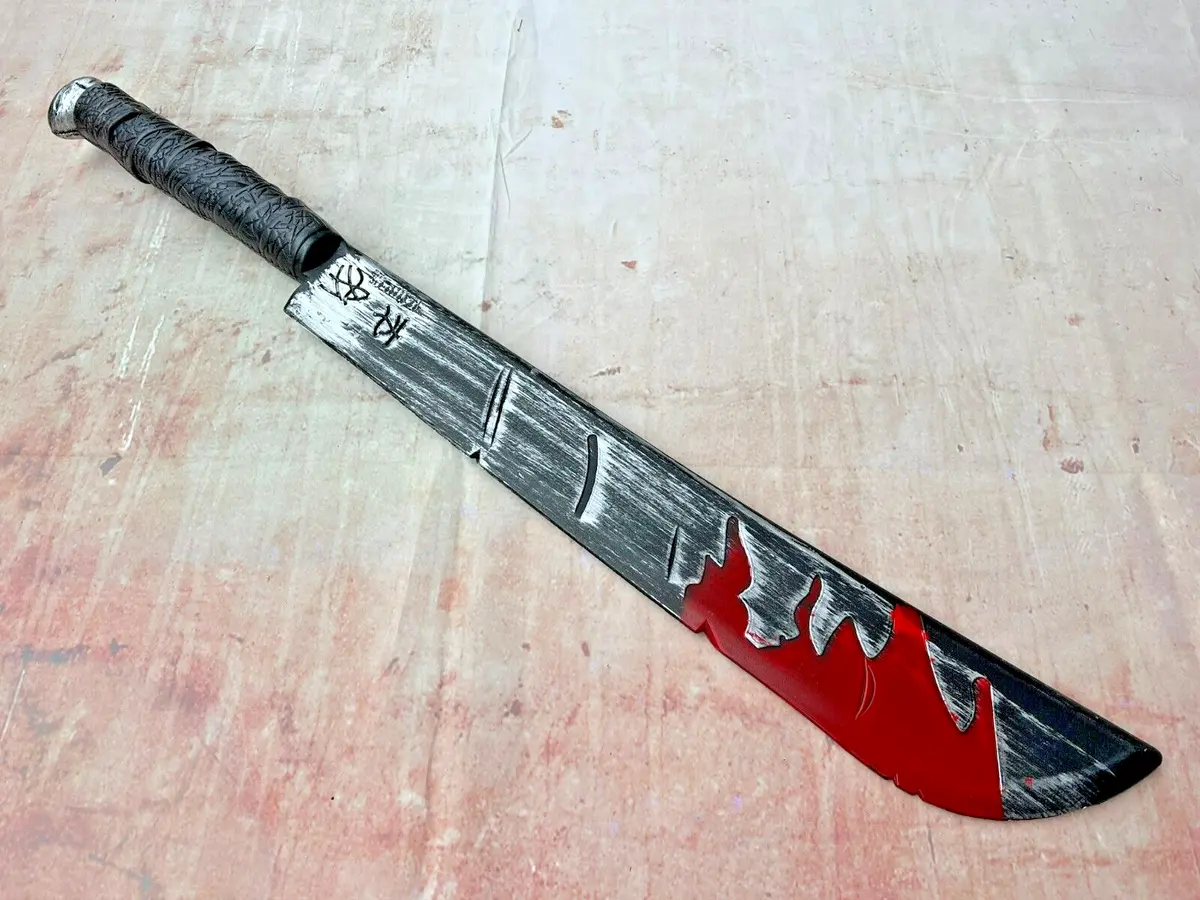
Nearby, Mr Jimoh was found unconscious near the entrance, with his hands tied and multiple machete cuts to his head, indicating a violent struggle. He was rushed to the Federal Medical Centre (FMC) in Keffi, where he remained in critical condition until he died days later from his injuries.

Eyewitnesses and residents described the attack as premeditated, citing the secluded nature of the couple’s residence and the severity of the injuries.

Some neighbours alleged that the incident may be connected to a prior dispute involving suspected Fulani herders, though this has not been confirmed by authorities.

One resident told reporters: “The injuries, especially the machete cuts, resemble previous attacks we’ve seen involving herders. And there had been a recent quarrel between the deceased woman and some of them.”

Due to the advanced state of decomposition, Mrs Jimoh was buried on Thursday, April 10, her body wrapped in cloth. Mr Jimoh is scheduled to be buried today, Wednesday, April 16.

The Nasarawa State Police Command has yet to release an official statement on the matter as at the time of this report.

Daily Post

25-year-old Gabrielle White becomes first female to complete US Army Ranger competition

White competes on the Malvesti Obstacle Course on Friday. Capt. Stephanie Snyder / U.S. Army

By Marlene LenthangCourtney Kube and Mosheh Gains

For the first time in Army history, a female service member completed the grueling Best Ranger Competition.

First Lt. Gabrielle White, a 25-year-old West Point graduate, became the first female Ranger ever to compete in the annual three-day, 30-event marathon, which unfolded Friday to Sunday at Fort Benning, Georgia.

The events included helicopter missions, land navigation, weapon qualification and various physical tests. 

White was the only woman on any of the 52 two-person teams that competed, with her team making it to the final events — even as other teams dropped out — and placing 14th. Overall, the competition included 103 men and just one woman.

White was seen climbing ropes, slogging through mud, completing pullups and swimming across water in the notoriously tasking challenges.

The marathon tests both the physical and the cognitive strength of competitors, with just about four hours to rest a day. By the final day, only 16 of the original 52 teams were still in the competition, and White and her partner, Capt. Seth Deltenre, were among them.

White’s presence proves female challengers can compete in one of the military’s highest profile events for soldiers. She is both the first woman and the first African American woman to compete.

It’s a milestone for the Army, especially when the role of women in combat has come under scrutiny during the Trump administration.

White was already a trailblazer in her own right by having become a Ranger, having graduated from Ranger school in 2022. Ranger school opened to female soldiers only in 2015. The same year, the military lifted its ban on women in combat roles during the Obama administration. 

Before his confirmation, Trump’s defense secretary, Pete Hegseth, spoke out against women in combat. 

“I’m straight-up just saying we should not have women in combat roles. It hasn’t made us more effective, hasn’t made us more lethal, has made fighting more complicated,” he said Nov. 7 on the “Shawn Ryan Show.” 

The Army posted about the competition but did not acknowledge White’s historic participation.

NBC News has asked Army leaders whether they intend to recognize White.

An Army spokesperson responded with basic details of White’s biography but no mention of whether she will be distinguished for her accomplishment.

White is an infantry officer assigned to the Maneuver Captains Career Course, B Company, 3rd Battalion, 81st Armored Regiment, 199th Infantry Brigade, according to the Army.

She has been awarded two Army Commendation Medals, the National Defense Service Medal, the Global War on Terrorism Service Medal, the Army Service Ribbon, the Ranger Tab and the Air Assault Badge.

Credits: NBC

Nigeria’s Democratic Facade: The diarchic reality beneath the surface

By E. Monjok Agom

Nigeria’s 1999 Constitution (as altered) proclaims a democracy where civilian institutions reign supreme. Yet, the recent State of Emergency in Rivers State- a spectacle of armoured vehicles and soldiers patrolling volatile streets- exposes a haunting truth: Nigeria’s governance is not a democracy but a diarchy, a fractured system where civilian and military authorities vie for dominance.

Political theorist Max Weber once defined the state as an entity that “monopolises the legitimate use of violence.” In Nigeria, however, that monopoly is contested. As the late Chinua Achebe starkly observed, “When the lion and the lamb share power, the lamb is always on the menu.”

Constitutional Contradictions: The Legalisation of Diarchy

The Constitution’s Sections 217(2)(c) and 218(1) permit military intervention in civil crises, but Rivers State reveals how these provisions institutionalise diarchy. Here, the Governor’s constitutional mandate is overshadowed by federal troops answerable only to the Commander-in-Chief. This duality creates parallel power structures: one elected, the other militarised. Political philosopher Hannah Arendt’s warning rings prophetic: “The moment military authority rivals civilian rule, democracy becomes a performative illusion.”

Nigeria’s founders envisioned military deployment ( especially within its borders) as a rare exception, yet Rivers State exemplifies its normalisation. The Governor, stripped of operational control over security, becomes a figurehead- a symbol of diarchy’s hollowing effect on federalism.

Diarchy in Action: Rivers State and the Spectacle of Divided Power

  1. The Theatre of Legitimacy
    In Rivers State, soldiers manning checkpoints and enforcing curfews project federal might, while elected officials scramble to assert relevance. This theatre exposes diarchy’s core flaw: authority without accountability Nobel laureate Wole Soyinka’s indictment resonates: “A democracy that salutes the ballot box by day and kneels to the barracks by night is a pantomime of governance.”
  2. The Shadow of Military Legacy
    Nigeria’s history of coups (1966–1999) casts a long shadow. Decades of military rule normalised the armed forces as arbiters of political order. Today, even in “peacetime,” their influence lingers. As historian Toyin Falola notes, “The ghost of Abacha still strolls the corridors of power.” Rivers State’s crisis revives this spectre, revealing a system still wired to equate stability with martial force.
  3. Civic Distrust and the Death of Participation
    When soldiers disperse protests or “secure” elections, citizens perceive a state under occupation. Voter apathy festers; dissent retreats into whispers. Philosopher John Stuart Mill’s axiom- “A government reliant on soldiers to govern its people is no government at all”- captures the existential threat diarchy poses to Nigeria’s democratic pretence.

The Anatomy of Diarchy: Why Nigeria’s Democracy Falters

Diarchy thrives in Nigeria because it serves entrenched interests:

  • Federal Complicity: Presidents, empowered by Section 218(1), deploy troops to assert control over restive states, often under the guise of “national security.”
  • Institutional Collusion: State Governors, lacking faith in police efficacy, tacitly accept military aid, perpetuating dependency.
  • Constitutional Ambiguity: The Constitution’s vague thresholds for military intervention (e.g., “breakdown of public order”) invite abuse.

This system, as Lord Acton warned, “corrupts absolutely.” It enables politicians to outsource governance to the military while evading accountability for institutional decay.

Diarchy’s Global Echoes: Lessons from History

Nigeria is not alone in grappling with dual authority. Historical precedents offer cautionary tales:

  • Pakistan (1947–present): A perpetual diarchy where civilian governments dance to the military’s tune. As journalist Ahmed Rashid writes, “In Pakistan, the army doesn’t just defend borders- it defines them.”
  • Myanmar (1962–2021): The military’s formal “reserved powers” under the 2008 Constitution culminated in a 2021 coup. Activist Aung San Suu Kyi lamented, “Democracy cannot breathe where soldiers dictate its rhythm.”

These cases underscore diarchy’s inevitable trajectory: the erosion of civilian primacy.

Conclusion: Reclaiming Democracy from the Diarchic Abyss

Nigeria stands at a precipice. The Rivers State crisis is not an anomaly but a symptom of a systemic rot. To dismantle diarchy, Nigeria must confront uncomfortable truths:

  1. Constitutional Reckoning: Clarify thresholds for military deployment and empower legislatures to reject frivolous interventions.
  2. Judicial Courage: Courts must challenge militarisation that violates the spirit of Sections 217 and 218.
  3. Civic Mobilisation: Nigerians must demand accountability, rejecting the normalisation of martial power.

As Desmond Tutu implored, “If you are neutral in situations of injustice, you have chosen the side of the oppressor.” Nigeria’s democracy will remain a façade until its citizens and leaders muster the courage to choose civilian primacy over diarchic convenience.

In the words of Thomas Jefferson, “The price of liberty is eternal vigilance.” For Nigeria, that vigilance must begin by exorcising the ghost of diarchy- and believing, at last, in the promise of self-rule.

E. Monjok Agom
16th April, 2025

The views expressed by contributors are strictly personal and not of Law & Society Magazine.
Open Letter to the Sole Administrator of Rivers State: Please ignore the summons and invitation from the House of Representatives Committee-You are answerable only to PBAT by virtue of the SoE Legislation

Ekwensu cannot render account to or romance mammy water

By Dr. Tonye Clinton Jaja

On a lighter note!!!

Dear Sole Administrator of Rivers State, Vice-Admiral Ibokette Ibas (Retired),

By way of introduction, my name is Dr. Tonye Clinton Jaja. I have been a lawyer for 21 years now.

I am writing to provide free legal advice based on the piece of legislation that appointed your good self as the Sole Administrator of Rivers State.

My professional advice is based on my expertise as a lawyer who is both a legal scholar and practitioner in the field of legislative law for 19 years out of my 21 years as a lawyer.

Please kindly confirm my credentials from Prof. Ibibia Worika, who currently serves as your Secretary of your government. he was my former law lecturer and later my fellow law lecturer at the Faculty of Law, University of Port Harcourt.

To begin with, you must have noticed that I did not address your good self as “Your Excellency”, this is because it is not a honorific that appears anywhere in the legislation that appointed your good self as Sole Administrator of Rivers State. The only honorific that appears there is “Vice-Admiral”, but even the dignity of that honorific is quickly defeated and deflated by the words “retired”.that appears in brackets!!!

The said legislation is the State of Emergency (Rivers State) Proclamation, 2025.

For the avoidance of any doubts, hereunder, I reproduce Section 3 of the said legislation, which states as follows:.

“Appointment of Administrator:

The State shall for the duration of the emergency, be administered by Vice Admiral Ibokette Ibas (Rtd), as Administrator, who shall operate on the basis of such Regulations that may, from time to time, be issued by me (President Bola Ahmed Tinubu-PBAT).

As you can see from the.wordings of the above named legislation, in your capacity as Sole Administrator, you are answerable only to the President of the Federal Republic of Nigeria-PBAT.

Therefore, the summons and/or invitation issued today, 16th April 2025, by the Ad-hoc Committee on Rivers State Oversight, House of Representatives ought to be addressed to the President of the Federal Republic of Nigeria. It is reported that your good self is to physically attend to the said Committee on Thursday, 17th April 2025.

In the hierarchy of laws, any laws enacted by the National Assembly pursuant to Section 305 of the Constitution of the Federal Republic of Nigeria, 1999, carry more weight than other genres or species of laws or Regulations.

In this instance, the National Assembly alleges that the said Ad-hoc Committee on Oversight of the Rivers State was enacted by a Resolution of the House of Representatives, National Assembly.

However, a Resolution of the House of Representatives, National Assembly, is subordinate to the legislation which specifically appointed your good self as Sole Administrator.

In the event that, the House of Representatives, National Assembly, wanted you to be answerable to them, via the said Ad-Committee, they ought to have specifically added such a provision as a Section to the said legislation-State of Emergency (Rivers State) Proclamation, 2025.

Alternatively, they could have added a Section that confers power upon them (House of Representatives) to subsequently enact subsidiary legislation under the said principal legislation, namely the State of Emergency (Rivers State) Proclamation, 2025.

Another circumstance under which the House of Representatives, National Assembly could have had powers to summon your good self as the Sole Administrator of Rivers State is in the event that the budget for your office is specifically listed inside the Appropriation Act of 2025.

Unfortunately, the finances for your office as Sole Administrator is not listed under the Appropriation Act, 2025, since your office is funded solely by the office of the President of the Federal Republic of Nigeria, it is the President (PBAT) that the National Assembly ought to summon in this instance for purposes of oversight.

This is consistent with the powers conferred by Sections 89 and 129 of the Constitution of the Federal Republic of Nigeria, which are summarised as follows:

“The Nigerian National Assembly has the constitutional power to summon anyone, including those who receive funds from the national budget, to give evidence or produce documents during investigations. This power is rooted in their ability to investigate and oversee the disbursement of public funds.”

This power of the National Assembly and it’s Committees to summon or invite anyone that receives public funds (as part of exercise of its oversight function) is recognised by the Supreme Court of Nigeria in the landmark case of El Rufai v House of Representatives, (2003) NWLR (Pt 173) 162 ·

Respectfully, Sole Administrator, Sir, based upon the foregoing, you ought to politely decline the said summons and/or invitation and refer the said Ad-Committee of the House of Representatives to channel their summons to the President of the Federal Republic of Nigeria, PBAT.

On a final note, considering that your office is a special role created by an act of the legislation which relied on a specific Section 305 of the Nigerian Constitution, you are on the same footing as the House of Representatives itself which is also a creation of a specific Section of the same Nigerian Constitution.

Therefore, as we would say in the spirit realm “Ekwensu (the name of the devil in Igbo language) cannot be made to render account to mammy water (the water goddess) because both of them are both principalities in their different jurisdictions.

While the Ekwensu is in charge of the evil spirits that operate on land, mammy water is in charge of the evil spirits that operate inside the rivers and other aquatic environments!!!

The House of Representatives is in charge of the evil spirits that operate at the federal level, while the Sole Administrator is the monitoring spirit in charge of monitoring the evil spirits operating within Rivers State, who are trying to blow up oil pipelines!!

I hope and pray you have found my legal advice useful (please kindly disregard the comic aspects) !!!

Yours faithfully,
Dr. Tonye Clinton Jaja,
16th April 2025.

The views expressed by contributors are strictly personal and not of Law & Society Magazine.
Alleged N300 Million Hosting Rights: Refund will amount to recognising the illegal administration in Rivers State —Okutepa, SAN

By J.S. Okutepa, SAN

I have read the views of some of my colleagues that the NBA should return the sum of 300 million donated to it by the legitimate Rivers State Governor for the 2025 annual general conference of the Bar that was initially scheduled to hold in Rivers State in August this year.

Some of my colleagues went further to make arguments and submissions that the NBA should not collect money from government and that NBA must be self-funding. Plausible and sound as these arguments are, I think most of these arguments are not rooted in the realities of our situations as Nigerian lawyers.

But before returning to this, let me repeat what I said before on this N300 million. I have expressed the view that “I think even if the 300 million given to NBA by Gov Sim Fubara was for the hosting rights, as the illegal and unconstitutional Sole Administrator of Rivers State stated, it will be unconstitutional and unlawful for NBA to return the money to the Sole Administrator. Doing so will amount to recognising the said Sole Administrator as a legitimate authority in Rivers State.

I do not even think the Sole Administrator deserves any reply from the NBA. If the Sole Administrator feels so strongly about his case, he should go to the court and enforce the breach of the alleged contract of hosting rights, and we will meet him there in court. In any case, was he appointed as a debt collector or to restore peace in Rivers State, which peace his appointors felt Gov Sim Fubara could not restore. What absurdities of illegality.

I stand by this view. The illegal and unconstitutional Sole Administrator can go to court. We will meet in court. But my main concern here is the trending suggestions by my colleagues that NBA should refund the money and that NBA should not be funded by those in power. I love these suggestions. Let us begin by showing examples.

Those making suggestions that the money should be refunded should start by making donations to the NBA for the NBA to refund the money to the Governor of Rivers State when he is reinstated.

As far as my knowledge goes, NBA survives solely from donations from governments and other willing donors for its annual general conferences. The conference registration fees are not sufficient to host our annual general conferences.

How many lawyers in Nigeria are willing and ready to give huge donations to NBA for its annual conferences? How much do we pay as membership fees to fund NBA activities? Even the practising fees we pay, not many lawyers want to pay. Are we ready as lawyers to have an independent bar that does not go cap in hands to fund its activities and conferences.

Many times, we have problems with even paying for annual conferences. Year in year out, we have arguments for and against the conference fees. How many senior lawyers, especially the senior advocates of Nigeria, and senior members of the profession are ready to pay one million Naira each as conference fees to attend the NBA conferences, for instance.

But we as lawyers are ready to pay huge amounts as conference fees to attend IBA and CLA in addition to flight tickets and accommodations. While I deeply appreciate the views of my colleagues on the need for NBA to be self-funding and self-sufficient in its conferences, we must all agree to fund the association and let the association be accountable.

NBA must invest and become profitable to stand shoulder high. Be that as it may, I do not see any reason to give the money back because it was not tied to hosting right. If we all agreed that NBA should not take money from the government, then let us all agree to fund NBA.

Teen killed over ‘girlfriend’ misunderstanding between two friends

  • Man arrested for raping 17-year-old daughter

On account of a misunderstanding between two groups of friends over a girl, 17-year-old Buba Bappah has allegedly been killed in a reprisal attack.

Gombe State Police Command’s spokesperson, DSP Buhari Abdullahi, said the issue was an offence of criminal conspiracy and culpable homicide.

According to the Police Public Relations Officer (PPRO), the suspects arrested are Auwalu Isa, Ibrahim Gambo and Ali Zaki, all of Wuro Sale Village via Kumo, Akko LGA, Gombe State, while others are at large.

He stated that, “On 8th April 2025 at about 2000hrs, one Auwalu Isa, 22-year-old of Gamawa Village, reported at Akko Police Station that on the same date at about 1800hrs, he had a misunderstanding with Basiru Yaya, Isaka Bappa Loddo, Gida Bappa Loddo and Mohammed Bapa Loddo all of Wuro Sale Village via Kumo, Akko LGA, Gombe State over a lady.”

“The suspects allegedly conspired and stoned him on the chest, causing internal injuries. he was rushed to General Hospital Kumo for treatment and was discharged after medical attention.

“However, on 9th April 2025 at about 0300hrs, one Bappa Jauro, a 55-year-old of Wuro Sale Village, reported at the same station that the said Auwalu Isa, together with Ibrahim Gambo, Ali Zaki, Tori Abdul Hamid, Mallam Ahmad, Aminu Bello, Babangida Bappari, Yaya Kariya, Alhaji Ala, and Abba Abdulhamid mobilised and attacked his 17-year-old son, Buba Bappa, with sticks, hitting him on the head until he became unconscious.”

A Police team visited the crime scene and rushed the victim to the General Hospital in Kumo, where he was confirmed dead on arrival by a Medical Doctor. Efforts are ongoing to apprehend the remaining culprits.

In another development, a 34-year-old suspect, Dauda Babawuro, of Lapandintai, Kaltungo Local Government Area in Gombe State, was arrested on 5th April 2025 for having unlawful carnal knowledge of his 17-year-old daughter (name withheld).

The victim was taken to the General Hospital, Kaltungo, where medical examination confirmed she was two months pregnant. The suspect was arrested, and the investigation is ongoing.

In a related case, 25-year-old Haske Abubakar of Bassa Village, Billiri LGA in the state, was said to have sexually attacked a 6-year-old girl (name withheld) on 9th April 2025 while she was sleeping at her grandmother’s house.

The victim and the suspect were taken to the General Hospital Kaltungo by the police for examination, and investigation is ongoing.

In the case of alleged criminal conspiracy, theft, and receiving stolen property, the Command arrested Ahmadu Ibrahim, 35, Tukur Musa, 75, and Yaya Tukur, 23. A Bull was recovered from them as an exhibit.

The PPRO stated that “On 9th April 2025 at about 1630hrs, an individual (name withheld) 45 years of Panda Village, Akko LGA, reported that on 7th April 2025 around 0300hrs, One Ahmadu Ibrahim, 35 years of the same address, trespassed into his residence and stole his bull valued at N700,000.

“During interrogation, the suspect confessed to having conspired with Tukur Musa and Yaya Tukur – his son, who helped him to hide the bull in their compound. All suspects were arrested, and the stolen bull was recovered.

“These arrests and breakthroughs are the result of sustained intelligence gathering, prompt response, and unwavering dedication by the Command’s officers.

“The Command reiterated its commitment to the protection of lives and property across the State and encouraged members of the public to continue supporting the Police by providing timely and useful information to aid in the fight against crime.”

Nigerian Tribune

TIPS