Home Blog Page 341

Woman apprehended for killing co-wife’s 3-month-old baby in Kaduna

The Kaduna State Police Command has arrested a woman for allegedly killing her co-wife’s three-months baby boy.

The suspect, Zaliha Shuaibu, of Malari Village in Soba Local Government Area of Kaduna state, was accused of committing the crime at their residence, where both wives live.

According to the police’s preliminary investigation,  the baby’s mother, Maryam Ibrahim, had briefly stepped out to use the restroom, leaving her infant son in her room.

Upon her return, she found her co-wife, Zaliha, holding the baby, with foam coming out of his mouth and an injury inflicted on his neck.

The baby was immediately rushed to the hospital, where he was confirmed dead by the doctor.

Following the death of the baby, Zaliha was immediately arrested by the police.

The police said the suspect, during interrogation, confessed to the crime and revealed that she conspired with one Lawal Muhammad (The husband’s junior brother), who provided her with the acid she used to kill the baby.

Following the suspect’s confession, the Kaduna State Commissioner of Police, Rabiu Muhammad, has assured the public that justice will be served and that all the suspects found complicit in the heinous crime will be prosecuted to the full extent of the law.

Through the Eyes of LASU Students: Prof Abanikanda’s reign of terror

Professor Olatunji Tajudeen Fasasi ‘OTF’ Abanikanda became the dean of the Lagos State University School of Agriculture (LASUSOA) in 2020. From the very moment Abanikanda assumed this position, students and staff began to have a lot more to worry about.

To clash with Abanikanda requires very little effort and bears grave consequences. For instance, Judith Aluko’s* offence was that he deemed her rude. For failing to greet Abanikanda once, Al paid for it with an extra year. Aluko told FIJ that she had greeted him several times without getting a response.

Whether it was a pregnant student who had to buy and carry five heavy slates on a bike for unintentionally breaking one during her Farm Practical Year (FPY) or a male student whose prostration in the rain was not enough to appease OTF Abanikanda, most LASU Agriculture students have little to tell of their encounter with the dean since 2020 but tales of terror.

Abanikanda’s tenure was hellish enough for students that they all learnt to avoid getting into his bad books. However, avoiding his troubles was not enough, what seemed minute and inconsequential could cost a student an academic session.

ABANIKANDA: The Despot of Epe

Abanikanda’s professorship appointment came under controversy in the past. In 2016, LASU stripped him of the appointment after claiming that he skipped the position of an associate professor.

An expert in animal breeding and genetics, Abanikanda was demoted to the position of a senior lecturer, but in 2019, the National Industrial Court ruled that he be reinstated, and within a year, he became the dean of the School of Agriculture in 2020.

LASU operates three major campuses: Ojo, Ikeja and Epe. The Ojo campus is the main campus with houses the central administration and a handful of faculties. Lagos State University College of Medicine (LASUCOM) is situated in the Ikeja campus, while the Epe campus accommodates the Faculty of Engineering, School of Agriculture (LASUSOA) and the Institute for Organic Agriculture and Green Economy.

As the dean of LASUSOA, the rectification of students’ results fell under Abanikanda’s jurisdiction, and he used this to his bidding against many students he was displeased with.

Numerous sources who spoke with FIJ, especially those in the faculty of agriculture, said Abanikanda shoved it in students’ faces that he had an authority no one could question in the school, not even the vice chancellor.

Abanikanda also boasts of being a spiritually-fortified person. He threatens his students with his deanship powers and spiritual powers.

“He chants incantations, curses people and even tells us that there is nothing the university can do to him,” Emmanuel Ogunniyi, a former student of Animal Science, recounted.

While Ogunniyi was a student of LASUSOA and undergoing his Farm Practical Year, he had an encounter with Abanikanda that made him spend an additional year.

“For Farm Practical Year, attendance was supposed to be 70 marks and aptitude test was supposed to be 30 marks. At the end of the practical year, we were all expecting to have As, but at the end, I was seeing Ds. In FPY 416, I got zero,” he narrated.

“Farm practical is made up of many courses.

“I went to Miss Oso, the lecturer in charge, and she said she did not understand what was going on, that I should go to the coordinator. Dr Kareem, the coordinator, said I did not have enough marks in the practicals. Meanwhile, I was present in everything we did. There were some people who missed one whole month, they never had any issue. I never missed a day. I took it in good faith that I was going to sort it in my 500 level.

“In 500 level, when I was done with my project and exams and it was time for people to be cleared to go for NYSC. The dean was my supervisor then, and he said I was not going to be cleared because of that 400 level course. He made me do heavy farm work. From all us of who had the issue, I was the only person made to write an exam. Every other person didn’t.

“I passed the exam, but they didn’t upload it. The dean told me to write him a mail that he was going to upload it. Meanwhile, I was supposed to go for one career fair at the main campus. I could not attend the career fair and I mailed him that I would not be able to attend because I was sick. The career fair was not even a part of our course at all, it did not concern us.

“After the career fair, he didn’t upload my result. I went to school to see him with a friend of mine.

“We apologised and prostrated. He promised me there that because I did not attend the career fair, he would not upload my result and make me stay one extra year in the school.”

Ogunniyi added that at a time, Abanikanda refused to allow his students leave during the December break despite having been in school for a whole year.

READ ALSO: LASU Quietly Suspends Abanikanda as Students Seek Justice After Abuse

“December 25, 26, 31 and January 1, we were working on the farm. He didn’t allow us to go home. We didn’t offend him. He just would not let us go home to our families. Then at one point, he felt we had suffered enough and he could let us go home, he allowed us go home for just two days,” one of Abanikanda’s students told FIJ.

“If you go home for a few days and a poultry bird dies whilst you are away, he makes you pay for it. If you don’t pay, he threatens you with an extra year. Even if a bird dies during your shift on the farm, you will pay for that bird. And not just that, you have to make provision for him to still sell the dead bird. So, he’s making money in two places. There was a particular time I went home, 15 birds died. He calculated it at N112,000 and I had to pay for it.

“For five days in a week, I slept on the farm from 11 pm to 7 am. Then I had to go to class from 8 am to 5 pm for four months.”

Aluko had a similar tale to tell about Abanikanda.

“From the start, he never liked me and I did not care. Anytime I greet him, he snubs me. During the period I was doing my final year project, I was going to the farm to water my plants with my cousin and we both greeted this man, and as usual, he snubbed us. Then after walking down he called me back that I was disrespectful and he started threatening me,” Aluko told FIJ.

“He reported me to lecturers including my project supervisor. He said that I was disrespectful and he’s going to make sure I did not graduate.

“He kept reporting me to lecturers. Even my supervisor kept calling me that I should apologise to him. Anytime I go to his office, he would ignore me. He would use me as an example not to be followed by the 400 level students. I was in 500 level then.

“In 400 level, no one could register first semester courses.

“I had to register some first semester courses in my second semester, which was my own personal mistake, but it’s something that could be rectified for me. So, when our results were uploaded, three of my results did not come out in the second semester which got me bothered. I went to meet the dean and Mrs Kareem, our coordinator then who was in charge. She kept assuring me that it would be rectified, but the dean used the opportunity to delay me for a whole year.

“Even when I went to Ojo to complain, they said the problem could only be fixed in my faculty; all they had to was just send a message to the ICT to upload my result.”

Another lecturer, Professor Yinka Okunbena, tried to intervene in the situation, Aluko said. She continuously pleaded with the ICT department to open the portal for the affected, but Abanikanda stood against her. Okunbena’s death did not allow her see the fight till the end.

“He was telling lecturers that he did it intentionally just because he wanted to punish me. After wasting a year, what he delayed me for barely took him two minutes to fix on his laptop,” Aluko recounted.

ABANIKANDA: Sexual Harasser, Sexual Predator

Apart from constantly threatening students with extra years, Abanikanda also leveraged his position to sexually harass and molest female students.

For instance, Adesuwa Alade, an ex-student, told FIJ that Abanikanda would publicly tell students that he was having a sexual affair with another lecturer.

“There is one Miss Osho, she was one of our crops lecturers back then, but I heard she has left. Everyone knew then that they were having an affair. The man used to say before everybody, ‘I took off her pants last night’. Osho would be trying to caution him, but he would ask her to disprove him by swearing to Ogun. She would just stand there looking,” Alade explained.

Adesuwa Alade*, an alumnus of the school, first had some problems with her results in her penultimate year. After completing her FPY, she had an underwhelming result which she tried to challenge, but one of the lecturers in charge of the course told her that she had to accept whatever she got.

As punishment, Alade and the other affected students had to do their final year project and also work two months on the farm concurrently.

“He gave us unbelievable tasks. He even told us to join the current 400 level then to do whatever they were doing. He said we must not leave the farm without his approval,” Alade said.

“So, when all of that was done and we reached the end of our 500 level, I realised that I failed one 500 level course, which was not supposed to be. So I went to meet the lecturer in charge and he said there was nothing he could do. I told him that I was going to call for my script, that we have rights as students. But he told that I know what that faculty entails.

“I cried, begged, nothing was done. Two of us failed the course. They promised to review it but nothing was done, so I had to do an extra year.

“During my extra year, I would have to leave home from Epe and if I get there ten minutes late, I would have to stay outside to take the note. I did all the assignments and practical. When result came out, I failed again. There were two lecturers taking the course at the time. I went to meet one of them. He did not give me audience. He would rather be listening to music or surfing the internet. When I was explaining myself, he was just listening to music all along.”

Professor Akinbile, the other lecturer, however, told Alade that he was sure she did well having read her work. But all he recommended was for Alade to meet the dean.

“I went to meet the dean, he didn’t give me audience. He told me to just wait for his email. After a week, he gave me a time to come see him in his office. When I got there and explained, he asked me why I was no longer friends with Asake*,” Alade said.

Asake*, Alade explained, was another student Abanikanda had an affair with, and it was public enough that many students were aware of it.

“I told him nothing happened between Asake and me, we just stopped being friends,” she recalled.

“He told me to do a 360 turn. He then started to comment on my body. He said I’m chubby and he liked what he saw. He came closer and was touching my chest, that he likes the way my boobs were full. He said he was not sure I would come back to show gratitude if he helps me. So I told him I would definitely be back to show appreciation, and I would bring whatever gifts he wants me to.

“He said I should know that he does not accept gifts and bribes. He assured me he would do something about my issue.”

Within a week, her result changed, Alade told FIJ. “Since then, I never went there to thank him”.

Alade and Ogunniyi both confirmed to FIJ that Abanikanda harassed Moslem hijab sisters because of their religious tenets that forbids them from making any physical contact with the opposite gender.

“There’s also Zainab, a hijab sister who always covered up but her face. He once threatened her to dress like every regular lady, if not, she would not graduate,” Alade added.

For Ojuolape Davidson*, her encounter with the dean began when he called her a “hookup girl” unprovoked.

The sexual harassment started towards the end of second semester of 400 level.

“In 400 level, he called me to talk to me on a Sunday morning as I was on morning shift. I can’t remember what we were discussing that day, but when we finished talking, he commented, ‘Ashawo, see how your nipple is standing’. I was embarrassed, so I didn’t give him audience,” Davidson recalled.

The worst experience however, happened a year later when he barged into while she was stark naked in a bathroom.

“In 500 level, one morning when we were sleeping on the farm, me and a friend went to the faculty to have our bath. We have designated toilets for male and female. Even the guys know, so they don’t come to where ladies have their bath,” Davidson narrated.

“One girl was in the toilet already, so the other girl entered the toilet to ease herself. I was the only one outside the toilet, naked. I was on my phone because I wanted to play music on my phone before entering the toilet I heard footstep and I asked ‘who is that’ twice.

“The person did not reply, then Abanikanda showed up. He saw me fully naked. He went back and said I shouldn’t be that careless next time. He asked if I had covered myself and I said yes.”

That very night, Abanikanda summoned Davidson. To her, it was going to be a conversation where he apologised, but to her surprise, his intention was to leverage on the earlier event to ask her to a date. She said the lecturer referred to her as the “first woman I have seen naked without dating”.

Davidson said she rejected his advances, even when he offered to help boost her grades.

“He started talking about my result, trying to manipulate me with it because I had a bad result and that was what he did to other people,” she added.

While in 400 level, during her FPY, Sekinah Razaq* endured sexual harassment from Abanikanda. During one of their FPY activities, he tried to get touchy. Razaq maintained her stance but Abanikanda would not stop. However, when he persisted with the touches, Razaq gave in.

“He was always coming around whenever It was my shift. I could not tell anyone because he is the dean. I knew he came because of me. He would come, press my breast. I would just stand there until he was done,” she narrated.

“There was a time he told me to use my hand to massage his penis. He would not bring it out but he would ask me to put it into his trouser. Sometimes, he would […] his penis against my buttocks. Sometimes, I don’t allow him know whenever I was on shift or not.

“During my 500 level, he once asked me to come to his office. He wanted to continue what he had started.

“There was a day he wanted to kiss me by force. He also tried to force his hand inside my breast but I resisted him so strongly. He wanted to force his way but a lecturer knocked and I took that opportunity to escape.”

When the students complaints about Abanikanda’s maltreatment first surfaced on X, the post went viral. LASU moved to quietly suspend Abanikanda. FIJ checked and saw his profile had been removed from the school’s website.

When FIJ called Abanikanda, his phone number did not connect.

FIJ also sent him a text message but he said it was not the “due process”.

“I am aware of FIJ but not sure this is their modus operandi. It is an organisation I respect and will be willing to interact with when they follow due process,” Abanikanda’s response read.

Insiders claimed that Abanikanda had been reported to the school authorities in the past but LASU refused to act until it became a popular affair on social media.

EDITOR’S NOTE: Names with asterisks have been changed to protect the students of LASU’s School of Agriculture who spoke with FIJ for this story.

This article was originally written and published by FIJ.ng

FG set to review adoption rules to curb abuse

The Federal Government has announced plans to review its adoption regulations to strengthen the adoption process and prevent violence and other forms of abuse against children.

Minister of Women Affairs, Hajiya Imaan Sulaiman-Ibrahim, made this known at a press conference organised in collaboration with Save the Children International (SCI) ahead of the Children’s Day celebration on Monday in Abuja.

Sulaiman-Ibrahim explained that the move aimed to ensure children’s rights and welfare were protected, and that adoption procedures were transparent, efficient, and child-centered.

She added that plans were underway to roll out revised National Creche Guidelines to regulate and prevent abuse in childcare facilities.

“We are establishing the Child Protection Knowledge and Data Centre. We are finalising the Child Protection Services structure, including formal protection, reporting, response, and rehabilitation.

“We are also promoting the approved six-month maternity leave for new mothers and two weeks’ paternity leave for new fathers.

“We are reviewing adoption regulations to strengthen processes that prevent abuse in that space,” she said.

She added that the government was also working to strengthen the Nigerian Children’s Parliament at both national and state levels.

“We recognise it as a vital platform for child participation, leadership, and advocacy on development issues.

“The voices of our children matter, and we must amplify them in shaping policies that affect their present and future,” she said.

Also, Duncan Harvey, Country Director of SCI, stressed the importance of including children in identifying challenges affecting them and proposing solutions.

He said: “Children are not just victims; they are part of the solution. Support child-led platforms, peer support groups, safe spaces, and school clubs that encourage children to speak up and support one another.

“Involve children in developing school rules and anti-bullying policies. Incorporate empathy, respect, and conflict resolution into the children’s syllabus.

“Engage children in feedback sessions and policy reviews to ensure their voices shape school culture and anti-bullying measures,” he said.

NAN

Persecution: CISLAC, 45 CSOs demand protection of Sokoto teen who spoke out after numerous bandit attacks in her community

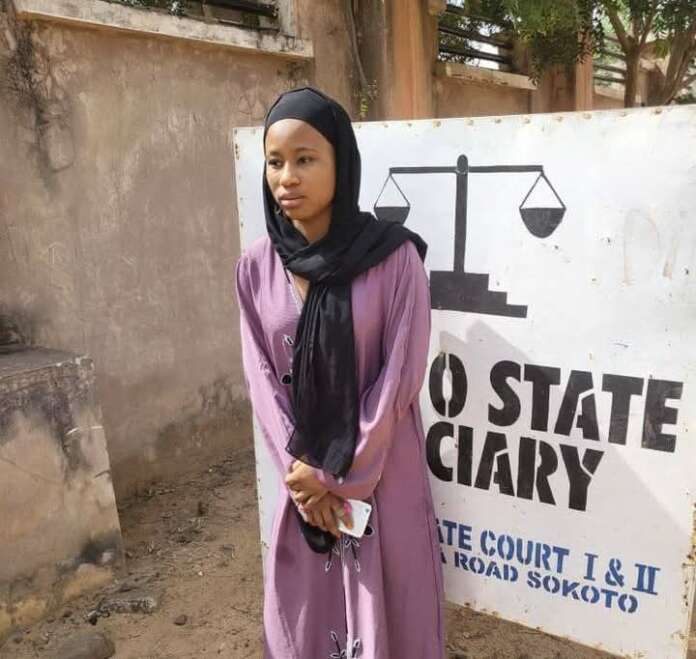
Over 45 Civil Society Organisations (CSOs), including Civil Society for Legislative Advocacy Centre (CISLAC) on Friday, demanded the immediate protection of Hamdiyyah Sharif, a Nigerian teenager and vocal social commentator, against constant attacks and threats to her life.

In a joint statement signed by the CSOs and made available to the media, the group said Sharif has suffered persecution, harassment, and unlawful treatment for consistently advocating for improved governance and citizen welfare in Sokoto State.

According to the CSOs including FixPoliticsAmnesty International Nigeria Corporate Accountability and Public Participation Africa (CAPPA) Resource Centre for Human Rights and Civic Education (CHRICED) Global Rights, and others, after several bandit attacks in her community resulting in displacement, killings, raping and arson, she tried to communicate this deplorable condition to draw the attention of the State Government on this brutal attack, but wondered why the state government or officials did not bother to visit or sympathize with communities that suffer severe and violent attacks.

“Sadly, this became the reason for her persecution, intimidation, harassment and threat to life. Rather than the state government to focus on ameliorating the suffering of the people who have some of the worst rate of poverty, almajiri and out-of-school children in Nigeria, it opted to direct its energy on attacking innocent citizens”, the CSOs lamented.

“Sharif, who was recently declared missing by her legal counsel, was reportedly found later in a hospital in Bakura, Zamfara State, in circumstances that are yet to be fully clarified.

“Three days ago, Miss Hamdiyyah was reportedly abducted on a commercial tricycle (Napep) in her village, taken to an unknown village where she was injected with unknown substances and abandoned in a bush in Bakura LGA of Zamfara.

“She was eventually found by good Samaritans, received medical treatment at a hospital, and ended up in a police station. Alarming reports indicate that the Commissioner of Police in Zamfara is under intense pressure to hand her over to the Commissioner of Police in Sokoto State. Given the suspicious circumstances of her abduction and the looming threat to her life, we call on the Inspector General of Police to urgently take custody and ensure the protection of Miss Sharif.”

The CSOs also warned that, “Should anything happen to her, the Commissioners of Police in both Sokoto and Zamfara will be held responsible.

“While her physical recovery remains a priority, the circumstances of her disappearance and the events leading to her hospitalisation raise serious questions about state complicity in the unlawful targeting of critics and the misuse of power by some state officials.

“While we do not yet have incontrovertible evidence to directly accuse Governor Ahmed Aliyu of Sokoto State of orchestrating her ordeal, it is important to state that multiple reports and credible indicators point to alleged state involvement in the ongoing intimidation, harassment, and silencing of Miss Sharif.
Such allegations must be taken seriously and investigated transparently by relevant authorities.

“We remind His Excellency, the Governor of Sokoto State, of his constitutional oath to uphold the Constitution of the Federal Republic of Nigeria and to govern in accordance with rule of law and respect for human rights.

“The Constitution, under Section 39(1), guarantees every Nigerian the right to freedom of expression, and Section 35 guarantees the right to personal liberty. These rights are not gifts from the government—they are entitlements under our Constitution and democratic system.

“It is worrisome that the Police and the State Magistrate are being used to maliciously prosecute this teenager for crying out against insecurity and bad governance in the state. It is important that the Inspector General of Police brings sanity in the way and manner the Police are used to harass innocent citizens while bandits and other criminals are on social media mocking and challenging the Nigerian security but are not being dealt with.

“The case of Miss Sharif is not isolated. During the ‘#EndBadGovernance’ protests, 29 minors were unlawfully detained for participating in protests decrying Nigeria’s worsening economic situation and insecurity. Months after Civil Society pressure, they were released.

“However, many remain in deplorable conditions, without rehabilitation, psychosocial support, or access to justice. This is despite the President’s directive to investigate and prosecute the Police officers behind the prosecution of these minors, nothing till today has been done or said.”

Part of their demands include:
Immediate and unconditional release of Miss Hamdiyyah Sharif from from contrived detention and be accorded full protection for to enable her enjoy her constitutional rights to freedom of movement, freedom of expression, and personal liberty without fear of reprisal.

An independent investigation into the circumstances surrounding her disappearance and the allegations of state complicity. Those responsible for any wrongdoing must be held to account; The judiciary must act with courage and consistency in upholding the Constitution, as it remains the last hope of every Nigerian, especially the vulnerable ones.

“Today, hope is a dangerous thing for the average Nigerian citizen to have. It must not be crushed by a judiciary that bows to executive pressure or partisan interference.

“We call on the First Lady Senator Oluremi Tinubu, Fatima Ahmed Aliyu (wife of the Sokoto State Governor), and all women in public leadership positions to rise to the occasion and protect the dignity of a fellow woman. At a time when women’s participation in politics and governance in Nigeria is at an all-time low, silence in the face of injustice will only deepen the erosion of gender inclusion and equality.

“We ask them to speak truth to power and uphold the rights of all women, regardless of their status in the society.

“We call on the National Human Rights Commission, NHRC, the National Assembly Committees on Women Affairs, Human Rights, and Judiciary, and all other relevant bodies to immediately commence oversight and enquiry into this case and others like it across Nigeria at large. This will also demonstrate their willingness to address injustice and save the country from global embarrassment and scandal.

“We want to reaffirm our commitment to collective action and support to end violence against women. Should this situation remain unresolved to save this young girl’s life, we will escalate advocacy to relevant international human rights bodies, including the United Nations Special Rapporteur on Freedom of Expression, the African Commission on Human and Peoples’ Rights, diplomatic community and call for visa denial and asset seizure.

“We will also explore legal redress through international mechanisms, including the International Criminal Court (ICC).This country belongs to us all—young and old, male and female, rich and poor, leader and follower. Civic space must never be a privilege only for the powerful; it is a right guaranteed to all citizens.

“We will not fold our arms while Nigeria drifts into authoritarianism under the guise of protective regime.We will continue to mobilise, resist, and speak against injustice, because silence is not neutrality—it is complicity”, it added.

Children’s Day, Reclaming Our Future: Enforcing child rights in Nigeria

By Sonnie Ekwowusi

In assessing the humanitarian issues of our time, the pitiable situation of Nigerian children calls for serious concern. A world with endangered children is a perishing world. It is a great indictment of our age that the victims of man’s inhumanity to man are our own children—the most innocent among us. Children are our future. Unfortunately, however, children everywhere are victims of rape, torture, infanticide, forced labour, child soldiering, child prostitution, child pornography, unsafe teenage sex, modern slavery, child street hawking, and preventable childhood diseases.

Therefore, this year’s Children’s Day celebration offers us another opportunity to reflect on the plight of Nigerian children. Over the past year, we have watched with alarm the increasing hostilities against children and the destruction of countless young lives in Nigeria. Most tragically, over the years, we have witnessed the unnecessary spilling of the blood of innocent children.

For example, in the past ten years, Boko Haram terrorists and abductors in the North have repeatedly stormed schools and seminaries, freely murdering, maiming, raping, and abducting their victims. To date, the whereabouts of Leah Sharibu—a schoolgirl abducted in the North by Islamic terrorists for refusing to convert to Islam—remain unknown. Just a few days ago in Ibadan, a stray bullet killed a 15-year-old SS1 secondary school student, Kehinde Alade. The Joint Admissions and Matriculation Board (JAMB) recently admitted that a “technical glitch” compromised some results of this year’s exam, after nearly 80% of the students recorded low grades. Frustrated by her poor score, Faith Opesusi Timileyin, 19, committed suicide.

Laws protecting children’s rights are not lacking in Nigeria. The Child Rights Act, 2003 (as amended) promotes the rights of children. Specifically, Section 30 of the Act prohibits child trafficking, child sex trafficking, and surrogacy. In addition, the Trafficking in Persons (Prohibition) Enforcement and Administration Act (TIPPEA Act) condemns all forms of human trafficking. Section 82 of the Act defines trafficking in persons to include:

“… the giving or receiving of payments or benefits to achieve the consent of a person having control over another person or debt bondage for the purpose of placing or holding the person, whether or not in involuntary servitude (domestic, sexual or reproductive), in forced or bonded labour, or in slavery-like conditions, the removal of organs or generally for exploitative purposes.”

This definition clearly captures surrogacy, as well as all parties to surrogacy and agents/persons involved in the business of surrogacy—including doctors, lawyers, and others—where exploitation is involved.

By virtue of the combined effect of Sections 228, 229, 230, and 328 of the Criminal Code (and their equivalent provisions in the Penal Code), abortion is illegal in Nigeria. The United Nations’ Declaration of the Rights of the Child states that “mankind owes the child the best it has to give.” Similarly, the Convention on the Rights of the Child (CRC) 1989, which Nigeria has signed and ratified, states that every child—before and after birth—has the right to life, basic education, and freedom of expression.

But despite the foregoing laws protecting the Nigerian child, children in Nigeria remain an endangered species. Unfortunately, only about 16 out of the 36 states of the federation have so far adopted the Child Rights Act. Despite the existing legal framework, infanticide and abortion are still routinely committed in many parts of the country. Disturbingly, many young Nigerian girls are renting their wombs for surrogacy for as little as ₦250,000. Similarly, others are selling their eggs for paltry sums. A few months ago, the University of Ibadan (UI) raised an alarm that many female students were selling their eggs—a dangerous practice that poses serious risks to their procreative health.

Equally disturbing is the sight of children aged between five and eighteen, without access to basic education, loitering the streets—abandoned by negligent parents. The few fortunate ones enrolled in public schools are exposed to various forms of danger. For over 12 years, school pupils and residents of several communities in local government areas of Oyo State have suffered from stray bullets fired from a shooting range inside a nearby army barracks. In other parts of the country, many schoolchildren are denied access to basic education due to unforeseen and avoidable circumstances.

As I stated earlier, this year’s Children’s Day Celebration affords us an opportunity to put in place the necessary mechanisms for the protection of our children. We must recognize that, like adults, children are entitled to the full enforcement of their rights. Therefore, states that object to the Child Rights Act on cultural and religious grounds are respectfully urged to adopt and implement the Act.

The Children and Young Persons (Street Trading) Law, which prohibits the employment of female children in street trading, should be enforced. Likewise, the Children and Young Persons (Harmful Publications) Act, the laws on abortion, and the Cinematography Law—which prohibit the dissemination of harmful publications and films to children—should also be enforced. The same applies to the Child Prostitution and Child Pornography Law (2002). Government agencies, voluntary organizations, and NGOs must create frameworks to promote existing child welfare services and trusts in the country.

A society that allows its children to be killed or dehumanized is heading for extinction. Public office holders and law enforcement agents must understand that children have rights that must be protected.

Our children should be given the opportunity to develop physically, mentally, morally, spiritually, and socially in a healthy environment, and in conditions of freedom and dignity. That is the only way we can hope to nurture the future leaders of tomorrow. Our future is built on the triumph of youthful potential. Therefore, if that potential is destroyed, our future is inevitably destroyed as well.

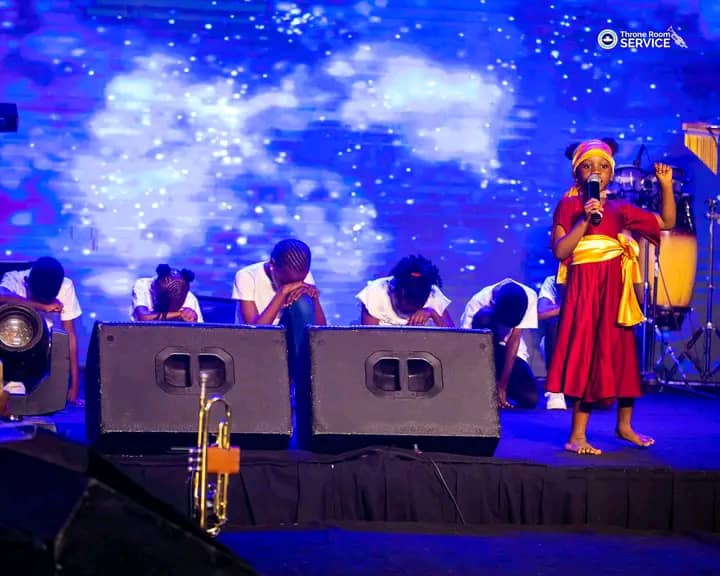
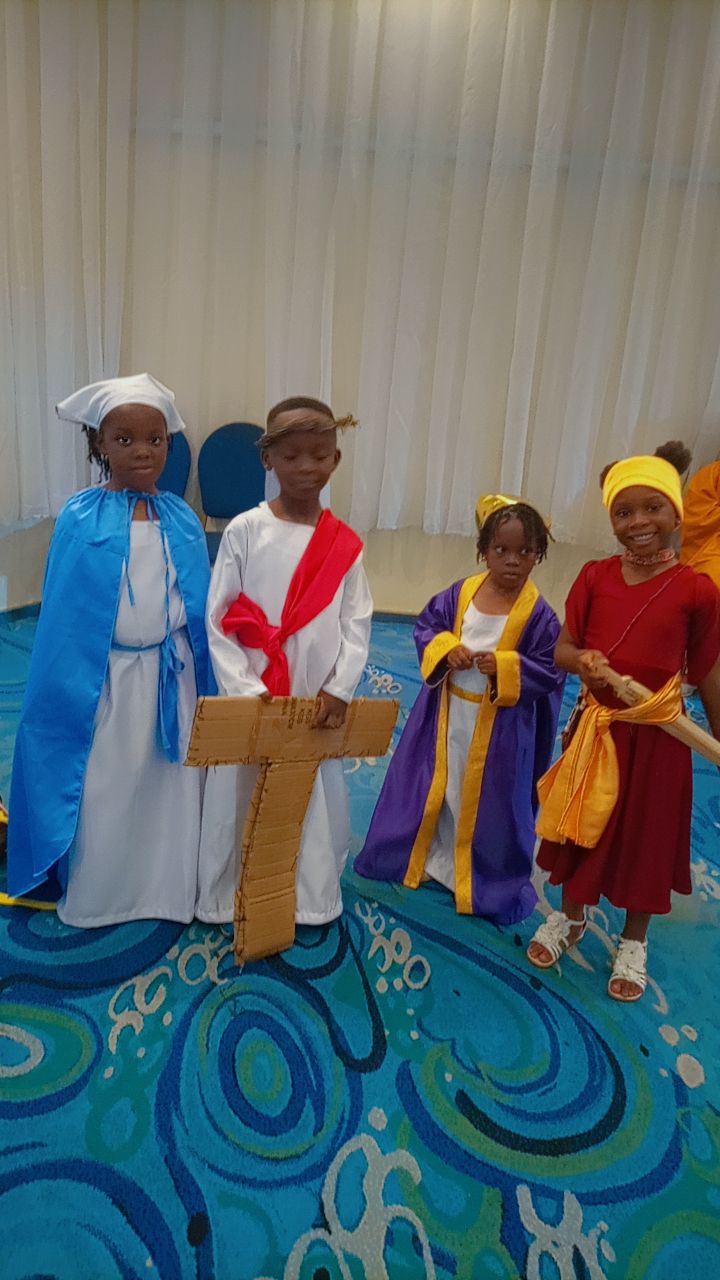
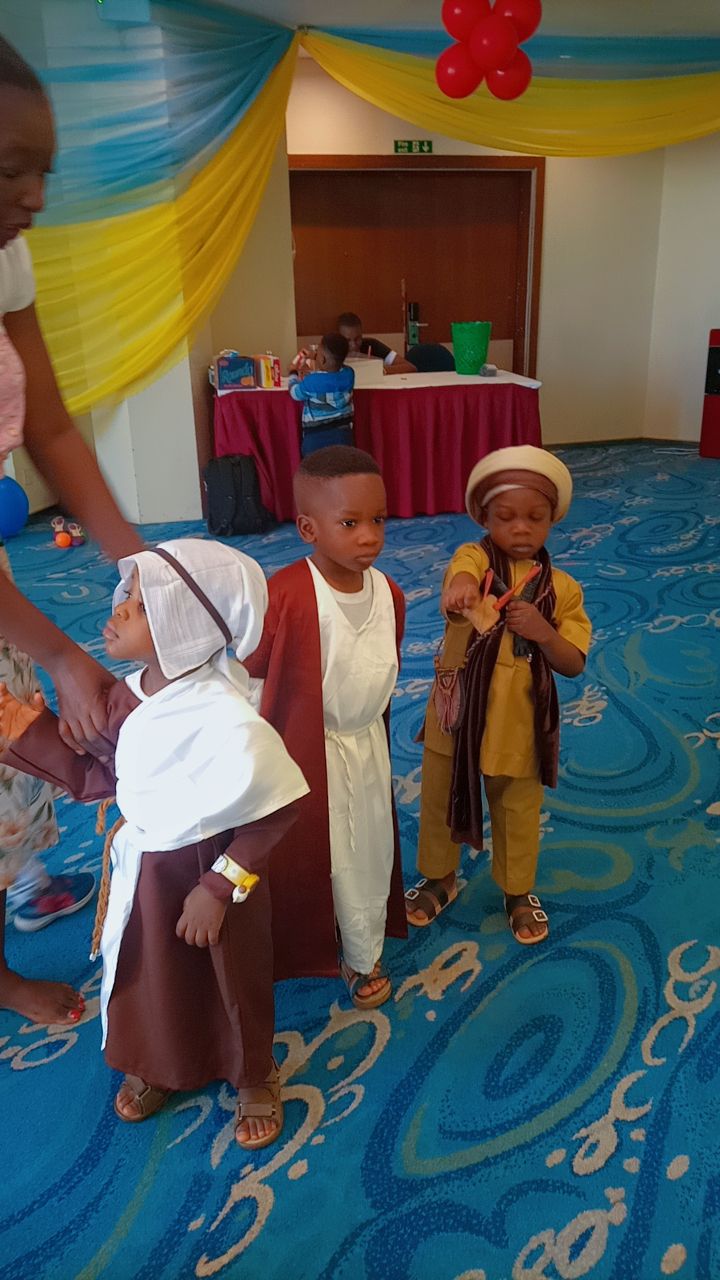
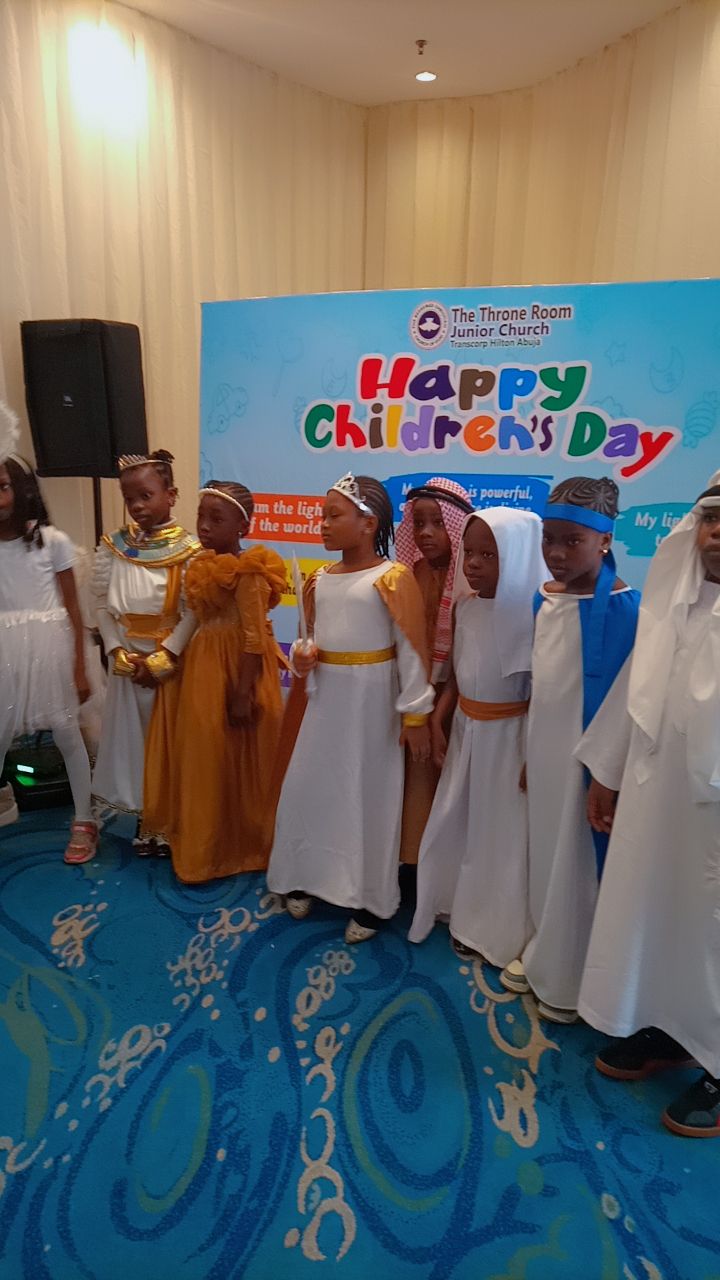
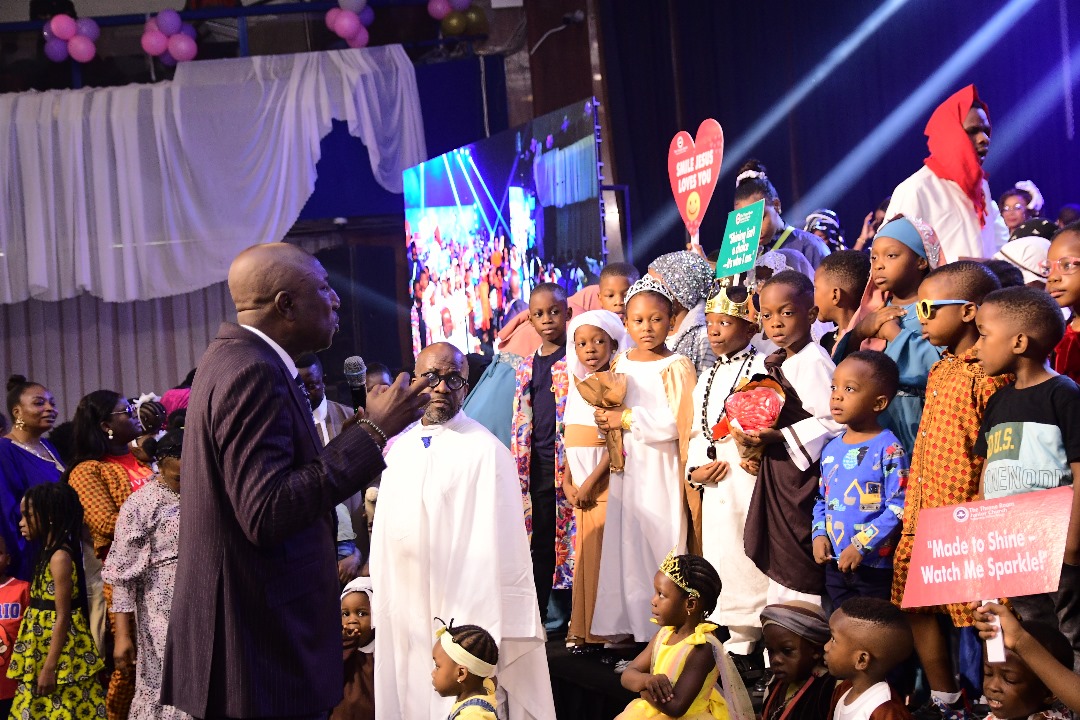
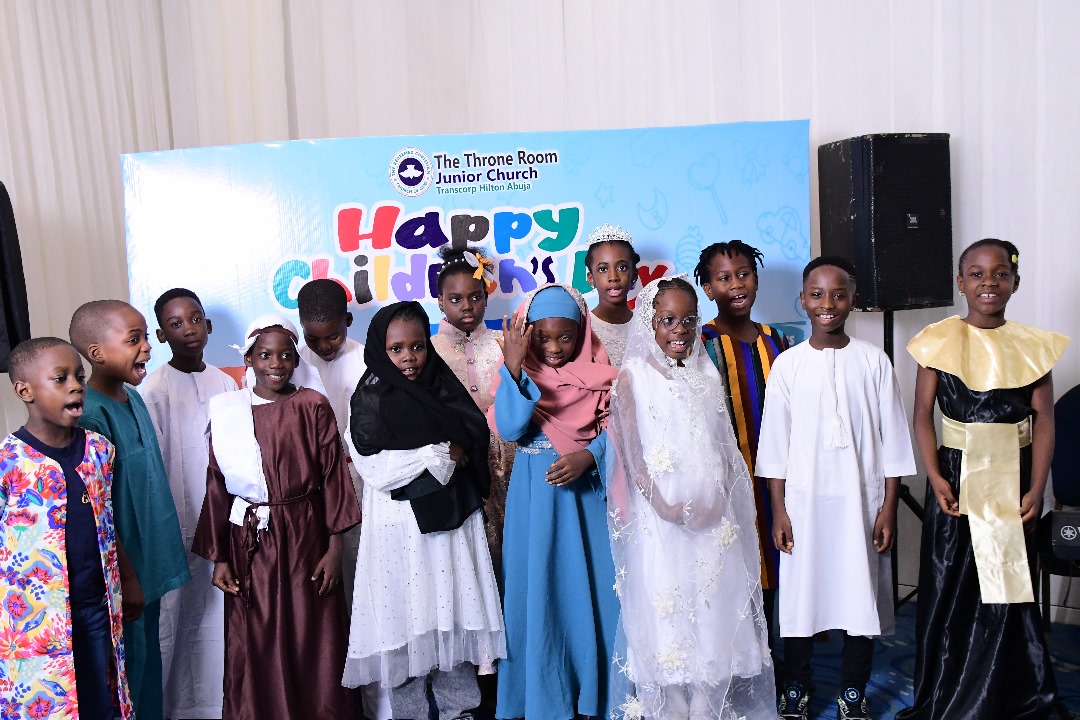
RCCG The Throne Room marks Children’s Day with Bible Characters

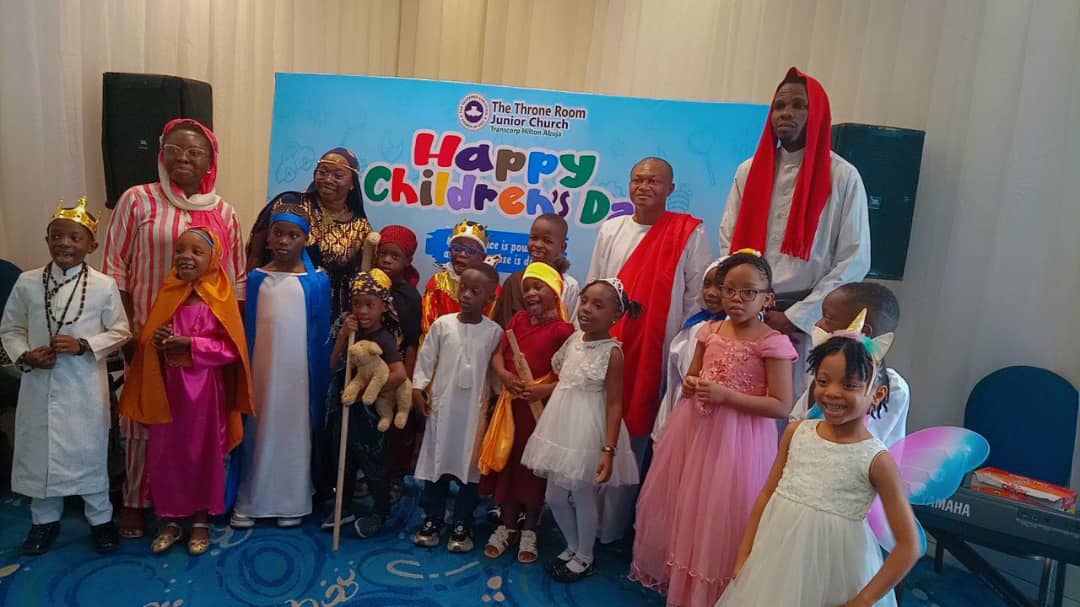
As Nigeria celebrates Children’s Day, RCCG The Throne Room, Transcorp Hilton Abuja, made it a day to remember with most of the kids, preteens and teens turning up in church last Sunday as Bible characters.

There were also dances, recitations and more.

Teachers were not left out.

From all of us at Media & Teens Network, Happy Children’s Day 2025!!!

Children’s Day: Tinubu denounces bullying, assures better future, environment

  • AWLA Nigeria advocates a society where every child grows in safety, dignity, and joy
  • FIDA Nigeria reaffirms unwavering commitment to promotion and protection of children’s rights

President Bola Tinubu has condemned child bullying and is promising to create a better and more secure environment for children in the country. 

This was the crux of Tinubu’s message on the 2025 Children’s Day celebration.

In a post made on the Instagram page of the African Women Lawyers Association (AWLA Nigeria), Caroline Ibharuneafe, President of AWLA Nigeria restated the association’s commitment to protecting the rights of children, “empowering their future, and creating a society where every child grows in safety, dignity, and joy.”

“Let us continue to champion a world free from violence, discrimination, and injustice—where children, especially the girl-child, can rise, lead, and thrive. Every child matters. Every dream deserves a chance. Together, let’s build a future they can believe in.” she said.

Also, the International Federation of Women Lawyers (FIDA) reaffirmed its unwavering commitment to the promotion and protection of the rights of children, assuring that it will “continue to advocate for laws, policies, and practices that shield children from abuse, violence, neglect, and exploitation.”

The Chairperson of FIDA Nigeria Abuja branch, Chioma Onyenucheya-Uko, in a statement issued in commemoration of the day, said: “We also recognize the importance of providing access to quality education, healthcare, and a supportive environment that allows every child to reach their full potential.

“We call on all stakeholders, government, civil society, parents, guardians, and community leaders, to prioritize the welfare of our children and ensure that their rights are upheld at all times, as enshrined in the Child Rights Act 2003. Every child deserves to be heard, respected, and valued.”

Likewise, in a statement issued on Tuesday, President Tinubu said this year’s Children’s Day theme, “Stand Up, Speak Up: Building a Bullying-Free Generation,” serves as a fitting reminder of the need to foster a culture where every child is respected and heard.

“A culture where every child feels safe, respected, and heard, both in physical spaces and digital communities.

“Just to be clear, violence, bullying, and neglect have no place in the Nigeria of today,” the president said.

“Globally, more than 1 in 3 children experience bullying regularly. In Nigeria, studies estimate that up to 65% of school-age children have experienced some form of physical, psychological, or social aggression. This is unacceptable. A child who learns in fear cannot learn well. A child who grows in fear cannot grow right.”

According to President Tinubu, the Federal Government and states in the country are taking measures to protect children, whom he described “as the heartbeat of our nation’s future, and the custodians of tomorrow’s promise, innovation, and leadership”.

He listed these efforts to include the “full implementation of Nigeria’s National Plan of Action on Ending Violence Against Children (2024–2030), which I recently launched.

“The plan provides a comprehensive roadmap to prevent abuse, prosecute perpetrators, and support victims, backed by robust financing and multi-sectoral coordination.

“I am pleased to note that 36 states have domesticated the Child Rights Act, thus reflecting our collective resolve to protect and provide for the welfare of children. However, laws alone will not be sufficient to protect our children. We require a holistic approach where parents, teachers, caregivers, faith leaders, lawmakers, and citizens must take ownership.”

He called on Nigerians, especially stakeholders, to embed child rights in their budgets, plans, and policies.

“I commend states taking bold steps for our children’s welfare and urge those yet to act: now is the time. Our children are not just statistics—they are the heart of our nation,” President Tinubu said. “Let today mark a renewed movement to build a Nigeria where no child suffers in silence, no child is left behind, and every child grows in dignity, peace, and love.”

Abu v State: When colonialism provokes sovereignty

By Ebun-Olu Adegboruwa, SAN

Nigeria and other African countries appear to still labour under the yokes of subjugation and imperialism, this time indirectly through the laws that should free them. It is worse in the Francophone entities where the policy of assimilation was imposed to take over the people, their culture, their language and indeed their entire existence. There are still so many laws in our statute books which either have no relevance to the current state of development of Nigeria or are inconsistent with our status as a sovereign state. But many of these laws rule and tie us to the apron strings of colonialism, not of their own making though.

Until recently in 2011 when the Evidence Act was amended, it used to be one of the laws bequeathed by the British masters, similar in that order to the Railway Act, Electricity Act and such other legislations that muzzle the liberty and rights of the citizens under the doctrine of sovereignty of the Crown. One of these archaic laws came up for interpretation by the Supreme Court recently and it gladdens the heart that the Justices of the Court who sat on the case displayed commendable patriotism in identifying the need to put Nigeria above dead legislations.

The Criminal Procedure Code (and indeed the Criminal Procedure Act) contain provisions that denigrate our status as free-born citizens with such deriding epithets as ‘idle and disorderly persons’ or ‘wanderers’, all of which were deployed by the British government to frustrate the noble campaigns of nationalists and activists for independence. Even after independence, successive governments in Nigeria have found it convenient to retain these oppressive legislations to suppress legitimate protests against bad governance. If our lawmakers will not discharge their constitutional responsibilities to expunge these offensive legislations from our statute books, let the courts continue to strike them down one after the other until they are totally obliterated. Permit me to share with you the facts of the case of Abu v State (2025) 7 NWLR (Pt.1989) 299, decided by the Supreme Court of Nigeria on Friday, March 1, 2025.

The appellant, Danjuma Abu, alongside five others were arraigned at the High Court of Gombe State on three counts charge of criminal conspiracy to commit armed robbery contrary to section 5(b) and punishable under section 1(2) (b) of the Robbery and Firearms (Special Provisions) Act; illegal possession of firearms punishable under section 3 of the Robbery and Firearms (Special Provisions) Act and belonging to a wandering gang of persons associated with the purpose of habitually committing armed robbery punishable under section 306 of the Penal Code Law. The appellant and others were alleged to have conspired to rob at Tudun Hatsi Market, Gombe whilst in possession of a pistol with 4 rounds of live ammunition without a licence.

The appellant pleaded not guilty to the three-count charge preferred against him. The respondent in proof of its case called six witnesses whilst the appellant testified in his defence as DW4. At the end of the trial, the appellant was convicted on two of the three counts. He was discharged and acquitted on the second count of illegal possession of firearms. Dissatisfied with the judgment of the trial court, the appellant appealed to the Court of Appeal which dismissed the appeal and affirmed the judgment of the trial court. Still dissatisfied with the decision of the Court of Appeal, the appellant appealed to the Supreme Court. In determining the appeal, the Supreme Court considered the provisions of Section 2(3) of the Robbery and Firearms (Special Provisions) Act and section 306 of the Penal Code amongst others.

Section 2 (3) of the Robbery and Firearms (Special Provisions) Act:

“Any person found in any public place in possession of any firearms whether real or imitation and in circumstances reasonably indicating that the possession of the firearm is with intent to immediate or eventual commission by that person or any other person of any offence under section 1 of this Act or under the foregoing provisions of this section shall upon conviction under this Act be sentenced to imprisonment for not less than fourteen years but not more than twenty years.”

Section 306 of the Penal Code:

“Whoever belongs to a wandering or other gang of persons associated for the purpose of habitually committing theft or robbery and not being a gang of brigands, shall be punished with imprisonment for a term which may extend to seven years and shall also be liable to fine.”

On When a person shall be punished for belonging to a gang of persons associated for purpose of habitually committing theft –

By the provisions of section 306 of the Penal Code of Northern Nigeria, whoever belongs to a wandering or other gang of persons associated for the purpose of habitually committing theft or robbery and not being a gang of brigands, shall be punished with imprisonment for a term which may extend to seven years and shall also be liable to fine.”

Per OGUNWUMIJU, J.S.C.:

“My Lords, this is a provision that has caused so many problems in its misuse by law enforcement agents. In the circumstances of this case, the facts do not support the evidence adduced by the prosecution. The appellant and his cohorts were in situ in an uncompleted building. They were not at the time of their arrest “wandering” by any definition of that word. “Wander” according to Dictionary.com is defined as “to ramble without a definite purpose or objective, roam, rove or stray” or “to go aimlessly, indirectly or casually; to meander”. The appellant and others were not found on the streets wandering about. They came from their different homes to gather in the uncompleted building. The evidence adduced in support of this count is insufficient to ground a conviction”.

On Meaning of “Wandering”

Wandering is defined as to ramble without a definite purpose or objective, roam, rove or stray or to go aimlessly, indirectly or casually to meander. (P.325, paas. D-E)

On Offence of Wandering

 Per OGUNWUMIJU, J.S.C. at page 327, paras. A-D:

“At common law, the freedom to roam or “everyman’s” right is the general public’s right to access certain public or privately owned land, lakes and rivers for recreation and exercise. The right is sometimes called the right of public access to the wilderness or the “right to roam. The offence of “wandering” is in common law the same as vagrancy. The vagrancy law in this jurisdiction and some jurisdictions was created to criminalize the act· of wandering from place to place with no evidence of employment or a way to· support oneself. Prostitution, professional gambling and disorderly conduct, loitering, public intoxication and public defecation or urination were regarded as acts of vagrancy. “Vagrancy” or “wandering” was originally a crime targeted at homelessness and unemployment that was, overreachingly and subjectively used to arrest those seen as political opponents or trouble makers. Most crimes which were covered by the law of vagrancy now have individual charges targeted at the specific offence’’.

On Right to Freedom of Movement and when Circumscribed –

 Section 41(1) of the 1999 Constitution guarantees right to freedom of movement and presupposes that every citizen of Nigeria is entitled to move freely throughout Nigeria and to reside in any part thereof and no citizen of Nigeria shall be expelled from Nigeria or refused entry thereto or exit therefrom. This right to freedom of movement is circumscribed by section 41 (2) (a) of the Constitution which places a restriction on the right of movement of a person who has committed or is reasonably suspected to have committed a criminal offence and the movement of the person must be restricted to ensure that the person does not escape the law. [Okafor v. Lagos State (2017) 4 NWLR (Pt.1556) 404 referred to.] (P. 326, paras. B-G)

On Meaning of Public Place –

A public place is a place that can be accessed and used by any member of the public as a member of the public as of right even if subject to certain restrictions. (P. 329, para. F)

On Need to Expunge Wandering as an Offence from Penal Code and Criminal Code –

Per OGUNWUMIJU, J.S.C.:

“By way of obiter, I think the law against wandering has lost its relevance and is against the spirit and letters of the 1999 CFRN (as altered). However, I will not go as far as to hold the law unconstitutional and to strike it down or expunge it from the Penal Code of Northern Nigeria or the Criminal Code of Southern Nigeria. Most states still have this law in their criminal law codes. This is principally because this court has not been asked to do so by the appellant’s counsel and the court will not gratuitously strike out a criminal legislation. Apart from that, the whole essence of society is to set limits to the rights of individuals if and when they infringe on the rights of the corporate unit.

Thus, Chapter IV of the 1999 Constitution in setting out these fundamental rights makes them subordinate to the overall good of the society and accordingly enables laws that are necessary for democracy, security and the general wellbeing of the entire society. It appears that as William Pitt stated at that House of Commons speech in 1783: “Necessity is the plea for every infringement of human freedom. It is the argument of tyrants, it is the creed of slaves.” The courts have the unique duty to deal with enforcement of human rights when infringed by the government or the executive or another private individual. It is the reconciliation of liberty with authority that is thus the bounden duty of the judges.”

Our statute books are filled with similar odious legislations that portray Nigeria as a country still under colonial rule. It is commendable that the Honourable Attorney-General of the Federation has constituted a committee to review the laws of the Federation. This must be done holistically, working with the legislature. The various States should also examine their laws to rid them of all legislations that seem to subjugate the people. But while they are at it, let the courts continue to free Nigeria from all colonial legislations that provoke our collective sovereignty.

How long can the President run from his shadow?

By Suyi Ayodele

At his coronation as the Deji of Akure, an old man, according to the legend, was asked to choose a regnal name.

Being a man who had advanced in age before he was named the Deji-designate, the would-be Oba chose the name, Òjìjígògún. That is a strange name.

The simple meaning of Òjìjígògún is I have ascended the throne with my shadow. The English Language equivalent of Òjìjí is shadow. Ògún or Ìmògún, in the royal dialects of Akure, Owo, and up to Benin, means throne.

The kingmakers present in Ìpèbí (seclusion) when the Deji picked the regnal name were shocked. Name is significant in Yoruba world outlook. Names carry meanings. So, they asked the new king to explain the meaning of the name he chose.

Picking his words, the Deji asked the kingmakers if any of them ever gave him the chance that he would one day be crowned the Deji, given his old age. They all answered him in the negative.

Then, the new Oba said, “Alright, I will explain the reason I choose to be called Òjìjígògún. Today, let it be known to all of you that it is not only me that has ascended the throne. My past, my present, and my future are here on the throne with me.” The new Deji stopped. Kings are known to speak in a few words; no room for verbosity with the royals!

The kingmakers and the Omo Owas (princes) present understood him. They knew that a man is made up of his past, his present, and his future. They equally knew that a man’s present is defined by his past (antecedents) and his future determined by a combination of his past and present. In totality, no man can run away from his òjìjí. Shadow reflects a man’s past, his present, and his future.

These three elements are significant in the Yoruba understanding of the concept of òjìjí, which is made up of a man’s Ara, the physical or material; that is, the body, represented by the shadow: Ọkàn (the mind) and Ẹmí (the spirit). Why then should a man be afraid of his òjìjí (shadow), his Ọkàn (mind-present), and his Ẹmí (spirit- future)?

Oba Òjìjígògún whose real name is Deji Aládégbùjì, the story says, was on the ancient throne of Akure for 30 years (1852-1882) as the 38th Deji and was one of the oldest monarchs of the kingdom. His reign, ~judged~ judging by his shadow (past), his present (while he was on the throne), and what he wanted the future to record for him, was one of the best Dejis of Akure.

He successfully resisted the incursion of Ibadan warriors to Akure Kingdom. Oba Òjìjígògún featured prominently in the 1877 Ekiti-Parapo War that ended all internecine wars in Yorubaland. He joined his forebears, leaving a lasting legacy for the Arakale Royal Family of Akure to cherish!

The Akure Kingdom prospered under his watch. Oba Òjìjígògún was never afraid of his shadow because he knew he had done well before coming to the throne. That was why he practically asked his people, represented by the kingmakers, to judge him by his deeds – past and present – and history has a positive portion for him!

Should a man be afraid of his òjìjí, the Yoruba word for shadow? The simple non-esoteric interpretation of òjìjí is a reflection. But it has a deeper spiritual connotation when we apply mysticism to the surface meaning of òjìjí.

One common feature of the phenomenon, òjìjí, is that it appears in the latter part of the day, or where there is a shade, a cloudy place or faded light. We see the shadow more in the evening times, and that underscores its spiritual dimension. We shall not be going into that today.

As children in the countryside, we played a lot with our shadow. One of the things we tried to do with our shadow then, especially when it appeared before us, was to step on it. But we could not achieve that as the shadow kept moving ahead of us, projecting far from the physical body.

At times, deep into the evening, the shadow appears behind us, trailing us. As children, too, we looked back, making attempts to get hold of it. It was also an exercise in futility.

At that stage, fear would set in. Shadow is phenomenal. It appears to follow us wherever we go. Yet, we cannot hold it physically. When it was getting late in the night and the shadow appeared, we used to take a dash into our homes, to the protection of our parents or any available adult. Shadow can be both pleasing and frightening!

Whenever that happened, and we got frightened, the exhortation we got from the elderly ones is that we should strive not to be afraid of our shadows. They would add that the only way to achieve that is to always strive to do that which is acceptable.

The elders then impressed on us that our shadows would be the witnesses against us on the day of judgement. Only a bad man, the elders further counselled, would be afraid of his shadow. How right were they?

We are no longer in the era of Deji Aládégbùjì Òjìjígògún. This is Nigeria of the Year of the Lord 2025. It is an era where those in authority are afraid of their past and present. We are in a season when leaders don’t want us to remember their shadows when determining their future. This is a strange time indeed!

President Bola Ahmed Tinubu will be seeking a second term in 2027, God willing. No, that is not the correct way to put it. Tinubu will not be seeking a second term. He has already had the second term delivered on his laps! No thanks to his acolytes, who have told us that the President is the best thing to happen to humanity after the fall of man in the Garden of Eden.

They have said nobody else can do the job except Tinubu. This is why, from Gbonyin in Ekiti State to Malali in Kaduna; from Ekwulobia in Anambra State to the Kukuruku Hills of Afemai, Edo State, President Tinubu is harvesting second-term endorsements the way a maize farmer harvests his cobs of maize.

Ironically, the man whom all his promoters said had done wonderfully well is angry that a few Nigerians are asking for his assessment based on his òjìjí – shadow. President Tinubu is afraid of a shadow cabinet or shadow government. He does not want anyone to use his shadows (deeds) in the last two years in office as President, to assess him. He wants to be President again. But he does not want anyone to beam the light on his outings so far.

It is no news that Tinubu would do anything to stop the idea of a shadow cabinet or shadow government, as suggested by Professor Pat Utomi. Our President hates the thought of alternative ideas to the shenanigans his government represents. He would not have any of that. And he would advance any argument from the grandiose to the japery to kick against that.

One of the giddy points Tinubu and his clique are raising against the idea of a shadow cabinet is that it is a practice alien to the presidential system of government, they claim we are running. Funny, very funny!

Tinubu and his hangers-on are saying that the concept of a shadow cabinet is an exclusive preserve of the parliamentary system of government. The presidential system, they argue, does not envisage that concept. Though in their usual ways, too, they failed to tell us if the presidential system is also synonymous with bad governance and rudderless leadership, the hallmarks of the present administration.

To stop the idea of what could give Nigerians alternatives to the killer economic policies of the present administration, the Directorate of State Security (DSS) approached the court to stop Utomi from forming anything near a shadow cabinet or shadow government. In the suit marked FHC/ABJ/CS/937/2025, the security agency asked the court to declare the planned shadow government an attack on the constitution.

The DSS argument is that “The defendant’s actions amount to an attempt to usurp or mimic executive authority, contrary to Sections 1(1), 1(2), and 14(2)(a) of the 1999 Constitution (As Amended), which exclusively vests governance in institutions duly created under the constitution and through democratic elections.”

It therefore prayed the court to issue an order of perpetual injunction, restraining Utomi, “his agents and associates from further taking any steps towards the establishment or operation of a ‘shadow government,’ ‘shadow cabinet’ or any similar entity not recognized by the Constitution of the Federal Republic of Nigeria, 1999 (as amended).”

What the heck (pardon my diction) is a shadow cabinet? Why can’t we have a shadow cabinet or government in a presidential system of government? If Shadow cabinet, by the definition of Tinubu orchestra is the exclusive preserve of the parliamentary system, can we ask where in any presidential system, all over the world, a president can sack a governor of a state and his deputy, dissolve the legislature and appoint a sole administrator the way Tinubu did in Rivers State? Why are the Emilokan apologists quick to refer us to the United States presidential system but will veil their eyes to see the letters, principles, and spirit of the system as being run in the US?

Ẹni tí kò sá bọtì, kii bẹrù òjò (he who does not spread millets outside, does not fear the rain), is a common saying among our elders. What is Tinubu afraid of? Why is he scared that a shadow cabinet that will give Nigerians alternative ideas to governance is being proposed? If he has done well, why is he afraid to compare notes? Is a shadow cabinet a threat to Tinubu’s presidency? I answer, NO! So, what is the issue?

Simple. President Tinubu is afraid of his own shadow. Because it is too dark and frightening! That itself is enough identikit to his performance as President. But for how long can the President run away from his òjìjí? I don’t want to sound impudent here. Otherwise, I would have asked President Tinubu to take a voyage back to his childhood when, like any other child of that time, he tried to play with his shadow or run away from it.

Our shadows follow us wherever we go. So it has been from the creation of the earth; and so shall it remain till the end of time. Whether he allows the shadow cabinet to be formed or not, Nigerians shall judge Tinubu in 2027 based on his shadow of today. He has two years ahead to make amends. He has 24 full months to lessen the burden. He has all the chances in the world now to change the negative narratives his government is to positive ones.

President Tinubu should stop chasing the shadow, thinking that Nigerians would be cajoled again. His libidinous manhood has raped us in a farm hut the first time because he called it a mansion. We shall not follow him on the same farm path leading to the hut he once projected to us as a mansion in his first violation of our womanhood. The shadow of his four years in office shall follow Tinubu to his bid for a second term. That will surely happen unless Nigeria is doomed!

The views expressed by contributors are strictly personal and not of Law & Society Magazine.

AI has come to stay—Justice Bankole-Oki

  • Says Nigerian Courts and the Bar must ensure the use of technology to enhance the administration of justice
  • Bill to regulate social media an attempt to gag operations

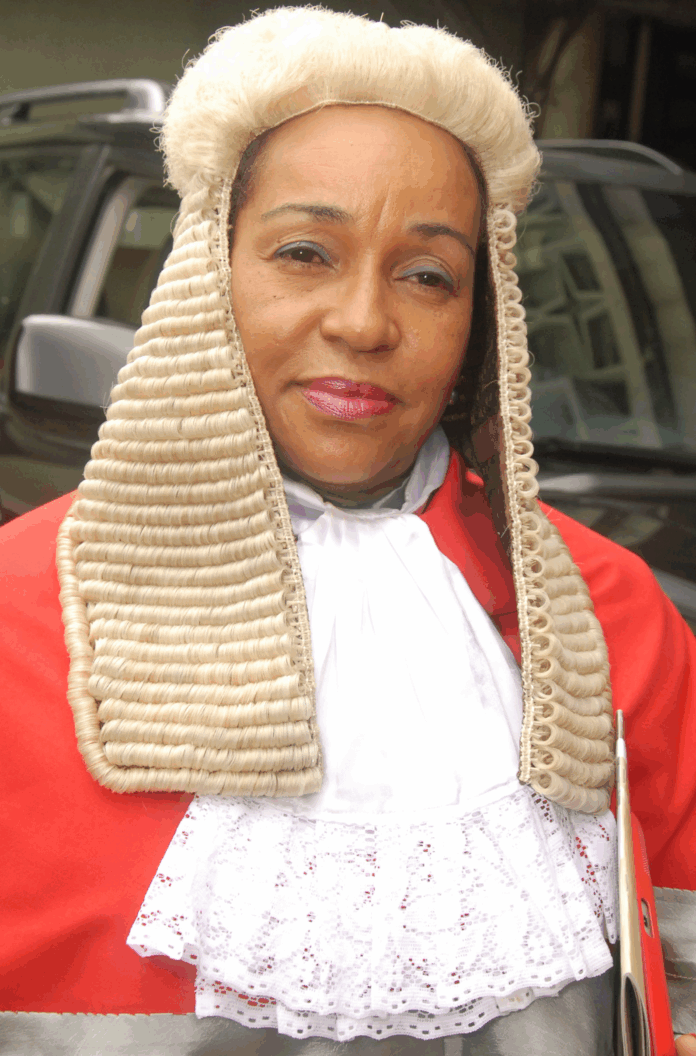
As artificial intelligence (AI) gradually takes a dominant position in everyday life, a retired judge of the Lagos State High Court, Hon. Justice Folashade Bankole-Oki, has called on Nigerians, particularly those in the legal profession, to embrace it, seek its advantages and put them to use

Her Lordship, who also noted that the Nigerian justice system urgently needs transformation, was a guest speaker at the recent Nigerian Association of Judicial Correspondents (NAJUC) Annual Lecture in Lagos, themed “Strengthening the Administration of Justice Through Technology, International Best Practices, Media, and Public Feedback.”

Asserting that AI is rapidly becoming a transformative tool in the legal sector, Justice Bankole-Oki pointed out that: “From research and document analysis to prediction models and case law referencing AI holds promise—but also poses risks…Whether we like it or not, AI has come to stay. Furthermore, like all new practices, theories and ideologies, there are the negatives and the positives.  Our duty is to seek its advantages and put them to use.  There was an era when people were very reluctant to use laptops and computers to deliver speeches, training and judgments. But look where we are now!”

According to Bankole-Oki: “It goes without saying that the Nigerian Courts and the Nigerian Bar have a duty to ensure that the use of technology is employed to enhance the administration of justice. International best practices must be studied and adapted, bearing in mind our cultural and infrastructural realities.

“Our courts face a range of systemic challenges, including case backlogs, delayed trials, and inefficient case management. Technology can—and should—be employed to mitigate these issues. I am proud to state that Nigerian Courts, especially the Lagos State Judiciary, have taken bold steps in embracing the use of technology both in the Courts and in the Registries.”

Speaking on the power of digital platforms and the bill at the National Assembly seeking to regulate social media, she said: “The influence of digital media has grown to the extent that legislative proposals have emerged seeking to regulate online bloggers by requiring them to have a fixed physical address.

“This of course, may be explained as an attempt to ensure accountability of the media; it seems more likely, however, to be an attempt to “gag” their operations.  

“I am hopeful that this type of Bill will not see the light of day. To pass such a Bill will have a negative effect on the right of the public to information. While accountability is important, such efforts often raise serious concerns about freedom of expression and access to information.

“Everyone in this hall is aware that there is an urgent need to strengthen the administration of justice in Nigeria. Public trust in the system has waned, and rightfully so. However, rebuilding this trust is a collective effort. Government, the judiciary, legal practitioners, and— importantly—the media all have essential roles to play.”

Click here to download the entire paper.

Speech-Hon-Justice-Bankole-Oki-NAJUC-

TIPS