Home Blog Page 310

El-Tufiakwa for El-Rufai

By Chidi Anselm Odinkalu

One of the memorable moments from the presidential campaign ahead of Nigeria’s 2023 elections featured then ruling party candidate, Bola Ahmed Tinubu, at the Chatham House in London in December 2022 allocating to leading members of his entourage responsibility for answering various questions from members of the public. For the questions on insecurity, he called on then governor of Kaduna State, Nasir el-Rufai, to address them. At the time, Candidate Bola Tinubu explained that he did that to advertise the versatility and cohesion of his team.

Many believed then that asking el-Rufai to respond to those questions show-cased his competence on insecurity. In hindsight, it seems more likely that candidate Tinubu intuited that Nasir el-Rufai embodied the manifestation in human form of Nigeria’s insecurity crisis.

This past week, a judgment by the Federal High Court in Kaduna, north-west Nigeria, showed exactly why candidate Tinubu’s hunch may have been well-founded.

The story needs context. When he was inaugurated as Governor of Kaduna State on May 29 2015, Nasir el-Rufai identified insecurity as “an obstacle to progress” and promised to “work with law enforcement officials to drastically reduce violent crime” and  “insure safety of life and limb.” Forgetting his inauguration day promise, el-Rufai spent eight years in office visiting the exact opposite to those whom he disliked or disagreed with.

Among the body count of el-Rufai’s thousands of victims, few were as brutalized as the Adara. The Adara are one of the 56 nations that make up the complex ethnic kaleidoscope of Kaduna State. The lands in Kajuru Local Government Area (LGA) in south-central Kaduna State are fertile. The paramount chief of the Adara was known as the Agwam (Agom) Adara.

In the third week of October 2018, inter-communal violence broke out in Kasuwan Magani in Kajuru, pitting Kajuru youths against their Fulbe peers. It was reported at the time that the casualty count from this violence was over 55 persons. The State government imposed a 24-hour curfew over the affected parts. Thereafter, Nasir el-Rufai summoned a meeting in Kaduna. In attendance at the meeting was the paramount ruler of the Adara, Dr. Maiwada Raphael Galadima, Agwam Adara III, who was accompanied by his wife and aides.

This was Agwam Adara’s last earthly appearance. As he made his way home from that meeting on or about 21 October 2018, the Agwam Adara’s convoy was attacked and some of his aides and security detail were killed on the spot. The Agwam Adara himself and his wife were both abducted. Five days later, the dead body of the Agwam Adara was discovered. His wife was spared. It was later reported that he “was brutally murdered in October 2018 on his way to his palace after accompanying Governor Nasir el-Rufai to Kasuwan Magani to commiserate with the community over violence that claimed many lives.”

At the time, the government of Kaduna State led by Nasir el-Rufai promised to “pursue justice for this revered man…. of peace.” Nothing else was heard about that. The Governor meanwhile was too busy to attend his funeral. Instead, he set about ensuring the dismantling of the Adara Kingdom.

Shortly after the killing of the Agwam Adara, Nasir el-Rufai abolished the kingdom, cannibalizing it into emirates and essentially wiping away the rights of Adara’s majority of Christians and indigenous adherents to any claims over their community. It was widely believed, indeed reported, that the Agwam Adara “died for resisting attempts by Nasir el-Rufai, Governor of Kaduna State, to restructure Kajuru under the Adara Traditional Council to the Kajuru Emirate.”

All of this occurred a mere four months before both el-Rufai and his political benefactor, Muhammadu Buhari, were due to stand for re-election in ballots scheduled for February and March 2019. Kaduna State was a battleground in those contests and the Adara had good reason for antipathy towards the Governor.

Voting in the presidential election was initially due to occur on 17 February, 2019. The day before, on or about 16 February, the Governor dramatically announced that he alone had discovered the massacre of 66 Fulbe in Kajuru. No security agency was initially willing to back him up. On the contrary, the state police commissioner accused el-Rufai of having “pre-empted Police investigations.” The National Emergency Management Agency, NEMA, like many residents in the affected area accused him of having lied. The Senator representing the affected communities in the Nigerian Senate at the time, Shehu Sani, suggested that el-Rufai was intentional in seeking to provoke the community ahead of highly contentious elections.

The man was not about to be deterred from habitually inflammatory routine, however. The Independent National Electoral Commission (INEC) deferred the vote by one week. So, el-Rufai decided to once more convene another town-hall in Kasuwan Magani. Among the participants was Awemi Dio Maisamari, an economist who was also president of the Adara Development Association, (ADA).

At the meeting, Awemi Dio sought to speak but el-Rufai shut him down, calling him “part of the problem.” Thereafter, security agents on the orders of el-Rufai set upon the man, arrested him and threatened to shoot him if he uttered one word. Quickly, they bundled him out of the venue into a vehicle which drove him straight to the state headquarters of the dreaded Special Anti-Robbery Squad (SARS), where he was initially detained for three days. All this while, there was no warrant for his arrest.

Simultaneously, el-Rufai ordered the arrest and detention of the leadership of the Adara. In addition to Awemi Dio, the victims included the Wazirin Adara (Vizier) and former commissioner in the government of Kaduna State, Bawa Magaji; former Commissioner of Police, Sani Magaji; National Treasurer of the ADA Joseph Abdallah; Village Head of Maro, Tanko Maisamari; Village Head of Ungwan Gamo, Hosea Danladi; Village Head of Kutura, Joseph Ayuba; Village Head of Aguba, Tanko Wada; and Elder Ulu Maitumbi.

On 20 February, 2019 at the request of el-Rufai, a Magistrate in Kaduna consigned them to pretrial detention on charges entirely constituted by his say-so. After three and a half months in detention and wide spread  international outcry and advocacy, the Attorney-General of Kaduna State advised that there was no case against the nine Adara elders. On 26 May 2019, they were released but el-Rufai had destroyed their lives.

In March 2024, Awemi Dio Maisamari sued el-Rufai in his personal capacity in Suit No. FHC/KD/CS/23/24 through their lawyer, Gloria Ballason, who has fast become el-Rufai’s legal nemesis. Last week, Justice Hauwa’u Buhari of the Federal High Court in Kaduna found him personally culpable for the abuse of the human rights of the Awemi Dio and Adara elders. In a judgment brimming with many telling paragraphs, the judge pointed out that the duty of a governor is to ensure the protection of lives and property and that public office is not meant to gratify the whims, ego or benefit of the occupant.

The court specifically found el-Rufai responsible for abuse of office and held that an occupant of public office cannot assert benefit of official immunities for acts of abuse of office. Even more, the court held that his mis-conduct in this case amounted to a breach of his duty as governor to protect all persons in the state.

The court exonerated the office of the state governor from liability, commended the courage of the Attorney-General in advising against the executive abuse of office, and awarded damages of N900 million against el-Rufai personally. In good-old Nigerian parlance, the court dared to say to el-Rufai, El-Tufiakwa!

Nasir el-Rufai has sought recently to sell himself as an advocate for good government and against arbitrariness. His record in government belies his recent pretensions. This judgment reminds everyone why the man is so odious and why his effort to distract public attention deserves ridicule.

On June 25 2025, meanwhile, el-Rufai is due to take the witness stand in Abuja in his defamation case against two senior lawyers, Silas Onu and Auta Nyata, over the decision of the Nigerian Bar Association (NBA) to de-platform him in 2020. That should be some spectacle.

A lawyer and a teacher, Odinkalu can be reached at [email protected]

The views expressed by contributors are strictly personal and not of Law & Society Magazine.

Democracy in the hands of the judiciary

BOOK SERIAL

By Chidi Anselm Odinkalu

A Democracy in the Hands of the Judiciary To be sure, courts always have a legitimate role in the democratic process, and this was so well before Nigeria embarked on the experiment in presidential politics. The electoral process everywhere is established by law and the courts exist to interpret law. Ideally, the rules that govern elections should be determinate and determined by the courts while the outcome of elections should be indeterminate until the votes are cast and counted. In Nigeria, however, the cone has been inverted so that the courts ensure that the rules are indeterminate in order that the outcomes can be pre-determined. Some of the landmarks on the path to this destination deserve to be charted.

First, the courts – contrary to the decades-long counsel of both Anthony Aniagolu and Bolarinwa Babalakin – granted themselves powers over electoral arithmetic to add and subtract votes to pick, choose and determine who to declare winner or loser in elections. As we have already seen, this thread of jurisprudence evolved in a line of cases that originated in Anambra State with Ubanese Igbeke and the Uba Brothers as the pioneering exponents.

A defining landmark in this trajectory, however, was the decision by the Court of Appeal in March 2006 rightfully striking down the declaration of Dr Chris Ngige in the 2003 election as the governor of Anambra State. In its judgment, the court recomputed the numbers declared by the INEC and found that Peter Obi had indeed won the election. On the facts, the judgment looked unimpeachable. No one could question the powers of the courts to strike down an outcome procured by electoral debauchery. What this case also did was to establish that the courts could compute electoral arithmetic with greater finality than the INEC. The courts were to exercise this power subsequently in governorship elections in Ondo, Ekiti and Edo states ostensibly to check a perception of habitual abuse of the electoral process by the then ruling PDP.

Second, following the 2007 presidential vote, a dispute ensued over the question of whether an election organised with non-serialised ballot papers was compatible with the principles governing the conduct of a credible election under the Electoral Act. This time, the majority of the court complained that the word “principles” in this provision was “vague, nebulous and large” as well as confusing. It decided that there was no problem with organising an election with non-serialised ballot papers and held that “non-serialisation, if it had benefits and advantages, was not exclusive to the respondents.” In other words, the court set up a practically impossible standard of proof, requiring anyone complaining in these circumstances to prove that non-serialisation benefited one party more than the other.

In actuality, the court did not have to struggle to realise that by affording a judicial stamp of approval to alleged elections without serially numbered ballot papers, it was about to reorder the landscape of elections and to wilfully destroy the people’s will as the foundation of legitimate government. It should be evident that if ballot papers are not serialised, it is impossible to control in such circumstances for ballot contamination, all but licensing ballot-stuffing. The question of whether any party has benefitted from the failure of serialisation should, therefore, not arise in the first place. In validating the 2007 presidential election in this manner, Nigeria’s Supreme Court did not just miss an opportunity to define normative values to underpin electoral governance; it effectively legalised ballot contamination, ballot stuffing and elections without rules.

Third, in May 2019, the Supreme Court ruled to confer the mandate to govern Zamfara State in north-west Nigeria on a person who had been hopelessly beaten into second position, losing in every local government area in the state. It held that the votes of the winning candidate were “wasted votes” because of some pre-election infraction connected with party primaries. Now, votes are the only currency of the democratic process and a judiciary committed to upholding the people as the source of legitimacy in a democracy will not venture a jurisprudence that consigns any votes to the dustbin, but that is exactly what the Supremes ordered. Following on this line of jurisprudence, Nigerian judges now appear gleeful in treating the votes of millions of Nigerian voters as “wasted,” affording them the opportunity to substitute their own predilections for the will of the voters without a pause to consider the consequences.

Fourth, in January 2020, the Supreme Court nullified the election of Emeka Ihedioha as governor of Imo State, replacing him with a man who had been well beaten to fourth place in the election. To accomplish this, the court substituted the computation of the INEC in this case with that of a rogue police officer who claimed to have the true and authentic results of the ballot. Miraculously, those rogue results just happened not to have been available to any others except the person for whom six Justices of the Supreme Court (none of whom was registered to vote in Imo State) cast their votes. In this decision, the Supreme Court effectively ruled that when it suits them, the courts could usurp or retrench the INEC as electoral umpire.

The cumulative effect of these judicial decisions is essentially that judges dismantled the incentive systems that underpin the democratic process in rational relationships between the mandate to govern and the welfare of the people. In the new logic invented exclusively for and by judges, it is now routine to organise an election without candidates; undertake voting without ballot papers; administer an election without the INEC; and produce winners without the votes of the people. In the end, the judges make the final call retrospectively as to the winners and losers with no regard for the will of the people or indeed to any rules except their subjective say-so underpinned by no coherent set of principles or norms. Under the influence of this new logic, Nigeria’s electoral jurisprudence became entirely situational. This in turn created an open market in the buying and selling of judicial decisions on election disputes. Chapter II of the constitution may have instituted the people as the electorate, and section 13 thereof requires all branches of government to comply with that. Defying these stipulations, however, Nigeria’s judges invented for themselves an exceptionalism from the constitution and remade the rules to install themselves above the people as the unquestioned “Selectorate”.

Judicial Selectoralism

In the beginning, judicial intervention in candidate selection and election outcomes appeared to enjoy some support, perceived largely as a counterweight to rogue election results that were widely regarded as heavily manipulated by the then ruling party or politicians. Indeed, one body of opinion took a sanguine view of the early immersion of Nigeria’s judges in political and election dispute resolution, describing it as “an instrument of democratic advancement and stability.”

In the years since that opinion was offered, however, it has now become evident that this development “has grave consequences for competitive electoral politics in the country,” and has the effect of being “likely to contaminate and detract from the credibility of competitive elections and electoral governance generally.” Even judges at the highest levels now complain that

“the entire Nigerian judicial system is inundated with electoral litigation and adjudication almost all year round,” which are “taking a monumental toll” on the courts.

The exponential growth in the interposition of judicial intervention to decide winners and losers of elections altered the calibration of incentives in political competition. Inherently, this appeared to encourage political competitors to shift attention and resources to influencing the judiciary in post-election litigation rather than convincing the voters before that. The judiciary has thus been accused of institutionalising “rigging through the courts,” and of undermining the faith of voters in the democratic process. Another expert has described the country as “a democracy in the hands of the judiciary.”

The result is a relocation of the site for the determination of election outcomes from the polling booths and collation centres run by the INEC to the courts presided over exclusively by judges. This showed in the growth in the scale of election dispute resolution as a judicial industry. In 2007, for instance, Nigerian courts through the election petitions process determined 1,299 petitions out of 1,496 offices (86.35%) available to be contested in elections. This number fell to 769 or 51.4% in 2011 and to 663 or 44.32% in 2015. After the departure from office of the leadership of the INEC that delivered the 2011 and 2015 elections, the number of contests decided by the courts rose again to 811 (54.4%) in 2019, and then to 1,209 or 80.82% in 2023.38″ These numbers reflect first instance proceedings in election petitions, excluding appeals, and suggest the existence of a system of electoral legitimacy nearly reliant in its entirety on the machinations of the judiciary.

To be sure, this re-engineering of incentives in elections was long in the making. The Babalakin Commission of Inquiry reported as far back as the dispute resolution process that followed the 1983 elections, the existence of a public perception which viewed some of the verdicts from the courts as “a rape of democracy perpetrated through the law courts” with attendant “allegations of corruption in high places.” The imputation of undue externalities in judicial decision making in this context even then was unmistakable.

In 2009, a senior beneficiary of the judicial re-engineering of the incentive system in electoral outcomes summed up the implications in a narrative of five “mini-gods” and “the godfather” who must be “appeased” for electoral success in Nigeria. He listed these as the INEC, security agencies (including the police and the military), political “thugs and bandits,” the judiciary, the “Money God” and the “Godfather complex” and characterised them together as useful “analytical categories in explaining why elections go the way they do in Nigeria with unpopular candidates ’emerging’ as ‘winners’ in questionable elections.”

It is notable that in the implicit hierarchy of this taxonomy, judges are located between the money god and the thugs and bandits. Even more notable is who is missing from this list – the voters or the people. As sources of electoral legitimacy and mandate for office, the people have first been eviscerated and then usurped and supplanted by the judges. As politicians discovered suddenly that it was possible to become the winner of an election without necessarily being the choice of the voters, they turned their attention to the officials who have the last and only effective say in making them successful — the judges.

One more implication of this is that it stretches the electoral season in Nigeria beyond campaigns, voting, collation and declaration of results by the INEC. This, therefore, makes elections a lot more expensive than usual. It also gives politicians incentives to divert public resources away from the public good to amass the financial war chest needed to purchase the cost of entry into political contest. In a manner of speaking, the real fun and games, therefore, begin after the conclusion of those rituals with the onset of the dispute resolution season. As this writer has summarised elsewhere:

Every election cycle in Nigeria has three seasons. The campaign season belongs to the parties, the politicians, and godfathers. This is followed by the voting season, during which the security agencies, thugs, and the Independent National Electoral Commission (INEC) hold sway. Thereafter, matters shift to the courts for the dispute resolution season, which belongs to the lawyers (mostly Senior Advocates of Nigeria, SANs) and judges. All three are separate but interdependent.

Consummating the “most perfect” scenario foreseen by Stanislav Andrzejewski at the beginning of this chapter, it seems that Nigeria has managed to achieve that situation in which the two things that should never be bought and sold in a democracy – the mandate to govern and the credibility of the courts – are now on auction to the highest or best-connected political bidders in the country. As a result, the judiciary — having wrested ultimate sovereignty from the people – has become widely seen as denuded of its constitutive claims to independence, integrity and trust. For their part, the politicians on whom they now choose to confer the mandate through judicial transactions sanctioned by the courts have increasingly lost the legitimacy and credibility to govern.

The outcome is a country in deficit of capable institutions and of accountability. Fulfilling the dystopian predictions of Paul Collier, being a crook has become the standard person-specification for a successful politician and an overwhelming capability to purchase and corrupt the system, the standard method. The judiciary, supposedly the arm of government best equipped to ensure consequences and levy accountability, has itself become the place where accountability goes to die. This can happen in two ways. One is by creating a jurisprudence that actively discourages accountability. The other is through engineering a capture of the judiciary. The next two chapters address these two in that sequence.

Winning elections without contesting

BOOK SERIAL

By Chidi Anselm Odinkalu

The Senator Who Won an Election in Which He Was Not an Aspirant

The Supreme Court decision in Joy Emordi’s appeal against the belated award of her senatorial seat to Ubanese Alphonsus Igbeke was one of several inexplicably conflicting outcomes from that court in contests over elections which supposedly ended at the Court of Appeal. Several attempts by different candidates in elections inviting the Supreme Court to review decisions of the Court of Appeal met with conflicting outcomes. For instance, the Supreme Court decided in a contest over a Senate seat in Ebonyi State that it could intervene, but took a different view in another one going so far as to say that it would not entertain any such attempt “even if the decision is wrong.”

A judicial decision may be wrong without having been obtained by fraud or malfeasance. A court ought, however, to be able to set aside its own decision where that was obtained by fraud, but Nigerian judges appear to have chosen to disregard this in relation to the lucrative business of election dispute resolution on various excuses, the best known of which is that election dispute resolution is time-bound. That may indeed be so but a lingering fraud that is not lanced remains a continuing violation. When many of those occur over time, they corrode the credibility of the institutions which invent excuses for averting attention from them. Instead, the perception is now entrenched that the reason for this jurisprudence of ostensible despondency is that some judges may be involved in protecting judicial transactions with politicians.

Over three different cycles of elections, Ubanese Igbeke pioneered and then refined the art of winning elections not through the votes of the citizens but in the courts procured by the most implausible votes of marginal judicial majorities hawking curious jurisprudence. Around the same time that Ubanese Igbeke began his improbable experiment in relocating democratic legitimacy from the ballot box to the courtroom, the Uba Brothers in Anambra State also launched their gamble to turn their eldest sibling, Ugochukwu Uba, who was not even an aspirant, into the winner of an election in which he did not run for the seat to represent Anambra South in the Senate after the 2003 general elections. This gamble played out in the courts. Following the declaration of the result in favour of Nicholas Ukachukwu, who was the lawful candidate of the then ruling PDP, the Uba brothers got the INEC to exercise a power it lacked to administratively set aside the return. Then they had Ugochukwu Uba’s name substituted as the candidate of the party and the winner. In the Enugu Division of the Court of Appeal where the case was decided, they bought two of the three members of the panel with cash gifts and houses in Abuja, securing a majority decision of the panel, which sent Ugochukwu Uba to the Senate as the winner of an election in which he was not on the ballot. The decision of the Court of Appeal in the case concerning Ugochukwu Uba unleashed a scandal. In its aftermath, the President of the Court of Appeal, Umaru Abdullahi, transferred out of station all the Justices of Appeal who were then in Enugu, replacing them with a new panel. The National Judicial Council found as a fact that the decision by the two justices in the majority in the case had been procured through corrupt payments. Apparently forgetting the principle that a court has the inherent power to review a decision obtained by fraud, the Court of Appeal decided on an application for review that they could not revisit their decision “because we had already decided it.” This begged the question at best because it avoided the real issue, which was whether a judgment clearly obtained through corrupt payments to the judges could in fact be regarded as a judicial decision. In most jurisdictions, the answer to this would be obvious. In this case, however, the Court of Appeal chose to be credited with a decision which effectively determined it was lawful to buy and sell judgments in election petitions.

The Governor Installed from an Election in Which He Was Not on the Ballot

In October 2007, the Supreme Court effectively retrenched the distinction between pre and post-election disputes. The court determined in the case involving the governorship election in Rivers State that a person could be elected as governor even when his name was not on the ballot. In that case, the then ruling party had arbitrarily replaced the winner of its governorship primaries with a loser in the primaries, doing so in defiance of a court order. The facts of this case deserve some attention. Typically, election dispute resolution happens in two phases in any election cycle, before and after the voting. The pre-election phase is usually a dispute over determining the destination of the party ticket for the various positions to be contested. Under Nigeria’s Constitution, political parties enjoy a monopoly of the capacity to field candidates for elective office. Candidate selection has historically become a site of considerable dispute, however. The Supreme Court of Nigeria determined in 1983 in the case of Patrick Onuoha v. RBK Okafor & Ors that questions about party tickets were internal party matters beyond the purview of the courts. This jurisprudence created an internal market within parties which party managers used quite often to override the outcomes of contests for party tickets by substituting them with other persons who had not run in or emerged as winners in party primaries. Twenty-three years after the decision in Onuoha’s case, the Electoral Act 2006 required parties to provide “cogent and verifiable” reasons for such substitution.

In response, the Supreme Court determined that this new standard provided a basis for the courts to assert jurisdiction over candidate selection. The question of what the consequences of non-compliance with this new standard would be arose when the then ruling PDP decided unilaterally to substitute the candidate who emerged from its primaries for the governorship ticket in Rivers State ahead of the 2007 elections in favour of distant loser in the primaries. In the election that followed, the substituted candidate was declared the winner. The pre-election suit by the aggrieved aspirant ended up before the Supreme Court after the declared winner had been inaugurated. During the proceedings, it became evident that the party had no desire to comply with the statutory standard governing substitution of candidates. Notwithstanding the pending legal proceedings, it chose to take steps which clearly indicated that they desired to foreclose any inquiry into the subject matter and to present the court with a fait accompli. In its decision, the court ousted the substituted candidate and, going well beyond the reliefs sought by the ousted winner of the primaries, restored him not as a candidate but as the winner of the election in which he had been precluded from campaigning. In a poorly reasoned fit of judicial pique, the court went further to say that a person who was not on the ballot won the election.

To justify this, the court claimed, relying on section 221 of the Constitution, that it was political parties alone who ran for office in Nigeria and not candidates and that the aggrieved winner was always the presumed candidate of the party.” In so doing, the court established a dubious principle that candidates do not matter in Nigeria’s version of elective politics. This decision was hardly compatible with the right of the people to determine who governs them. Judicial electoralism was about to take off on a horse girdled with good intentions. This decision birthed “concerns among Nigerians about the potential repercussions of the judiciary taking on the role of determining political leadership by potentially supplanting the clectorate.

In 2003, the controversial circumstances of the outcomes in the cases of both Ubanese Igbeke and Ugochukwu Uba as well as the fact that the offices involved were in the legislature, arguably ensured that the underlying precedents did not necessarily catch the public imagination immediately nor did the implications for the right of participation and electoral democracy seem immediately obvious. However, the decision in Rotimi Amaechi’s case was too high profile in terms both of its political geography and of the office involved not to capture public imagination. In the years that followed, it would become evident that these cases had laid the foundations for a remarkable development in Nigerian politics: a judicial ouster of the people as the repository of electoral legitimacy.

TOMORROW…

Prof. Odinkalu looks at the specific methods the judiciary adopted to install itself as the ‘selectorate’.

Teacher bags life imprisonment for defiling three-year-old girl

  • Suspect who defiled and abandoned four-year-old girl at refuse dump site still at large

The Sexual Offences and Domestic Violence Court sitting in the Ikeja area of Lagos State has sentenced a 25-year-old teacher, Chukwunonso Okafor, to life imprisonment for defiling a 3-year-old girl in the state.

The presiding judge, Justice Abiola Soladoye, convicted and sentenced Okafor to life imprisonment on Wednesday, May 28, 2025.

The judge held that the prosecution proved the three-count charge of sexual assault by penetration, defilement, and indecent treatment of a child against the teacher.

Justice Soladoye held that the survivor testified before the court and identified the teacher as the man who sucked her breast and penetrated her vagina.

She said the testimony of the 3-year-old girl was corroborated as she gave compelling evidence of how the teacher sexually assaulted her.

Justice Soladoye said: “You descended so low by having oral sex with a three year old baby.

“You are everything a teacher should not be and you are barbaric.

“Upon all the evidence adduced before this court, I hereby convict you on all the three-count charges.

“You are hereby sentenced to life imprisonment on count one, life imprisonment on count two, and seven years jail term on count three.”

The judge added that the sentencing would run concurrently and that the convict be named as a sex offender.

The Lagos State counsel, Ibukun Ibikunle disclosed that the teacher committed the offences in the Ikotun area of Lagos in December 2022.

Ibikunle told the court that the convict sexually assaulted the minor by putting his penis into the girl’s mouth and caused her to perform an oral sex on him.

The prosecutor also told the court that Okafor flogged the 3-year-old girl and sucked her breasts.

She added that the offences violated Sections 135, 137 and 261 of the Criminal Laws of Lagos State, 2015.

In the meantime, a suspected rapist who allegedely defiled a four-year-old girl in Kontagora area of Niger State, after forcefully abducting her from her parents while they all slept in front of their house due to the hot weather condition is still at large.

Arewa PUNCH gathered that when the parents woke up, they could not find the girl and thought she had sleepwalked while they were asleep.

Their search for the missing girl yielded no results; as such, they raised an alarm, which led their neighbours and other sympathisers to their aid.

Sources said it took several hours before a neighbour found the missing girl at a refuse dump site with blood running down her thigh.

Following this discovery, the rescue team suspected the worst and took her back to her father.

The girl’s father, Hudsaine Abubakar (not real names), granted Arewa PUNCH an interview wherein he narrated what actually happened.

According to him: “We were outside our house due to the heat, but I later told the family to go inside because the breeze had started blowing and before long I went into the house to sleep.

“I woke up again and noticed that they were still sleeping, so I woke them up to enter the house because it was also getting late. When they entered, my wife said she didn’t see one of my daughters. So we started looking for her, thinking she must have woken up and entered another place in her deep-sleep condition.

“When we couldn’t find her, it was then it dawned on us that someone must have carried her away while we were asleep. We raised an alarm, and neighbours came out and assisted us to search for the little girl till 3 am.

“Later, when the early morning prayers were called, and we still did not find her, we all decided to go and pray. After the 5 am prayers, people came to tell us that she had been found in a refuse dump site and could not stand up by herself

“When we asked her how she got there, she told us that she was taken to an uncompleted building by an unknown person. When we did a thorough check on her, we noticed blood stains in between her legs, and we concluded that she must have been raped,” Abubakar said.

Arewa PUNCH further learnt that the little girl was taken to the Kontagora General Hospital where doctors confirmed that she was indeed raped severally.

The hospital also recommended that the parents immediately transfer her to another hospital because the medical personnel could not handle her case.

Continuing, Abubakar noted, “We took her to the Kontagora General Hospital. The hospital staff checked her and they said her situation was beyond them and that if we are willing, they will give us a referral letter to take her to Sokoto State, where they believe her case will be adequately attended to.

“We agreed, and the hospital management took the responsibility of conveying her and the mother to the hospital in Sokoto, payment of the bill, feeding and return home.

“The treatment took two weeks, and she was discharged to return home. The hospital management told us to observe her and bring her back for the second operation in six weeks. But when we returned, Dr. Fati and her staff from the Kontagora General Hospital came and ran a check on her and left.

“Later in the evening, she called to inform me that while checking my daughter they noticed some issues and asked me to prepare along side her grand mother to come to Minna to run another check,” he said.

Abubakar, who said the incident happened in April, said he had been suffering since he relocated to Kontagora. He also said he has handed over the case of his daughter to God because God allowed it to happen. Otherwise, it would not have happened.

“It is an act of God or a temptation which God allowed. I leave everything to God. I thank the hospital management for the assistance my family got. Without assistance from the hospital, it would have been very difficult to handle the situation. Currently, I can barely feed my family

“The hospital through the support of Dr. Fati paid and took care of everything. They asked us not to pay anything for the treatment, and we are grateful to her and her team in the hospital. I have been suffering with no peace of mind for a whole year after relocating from Gulbin-Boka, my ancestral home town to Kontagora due to insecurity.

“In spite of the hot weather condition while there, we were usually forced to sleep indoors because of fear of attacks,” he said.

A Director of Planning Research and Statistics in the Niger State Ministry of Women Affairs and Local Development Mary Yisa and her colleague, Rachel Twaki, Director of Social Welfare Services confirmed the rape incident and said the matter was brought to their notice at the ministry.

“The four-year-old girl was raped in Kontagora. According to the story, because of the heat, the family decided to sleep outside within the compound to take some fresh air and some people forcefully picked her while they were all asleep and took her to an unknown place where they raped her and all her organs came out.

“That was how they had to rush her to a specialist hospital in Sokoto to take care of her, and presently, I think she is being taken care of,” they further explained.

Two Years of President Tinubu: A business perspective

By Abdul Samad Rabiu

As Nigeria marks two years under the leadership of President Bola Ahmed Tinubu, I believe it is important to reflect, not from the lens of politics, but from the perspective of business, of industry, and of the economy. I speak not only as the Chairman of BUA Group – one of Africa’s largest conglomerates, but also as someone who has lived through the complexity of Nigeria’s reforms. I have seen the cost of dysfunction, the burden of inefficiency, but more importantly, the promise of a level playing field and the dividends of decisive governance.

FUEL SUBSIDY REMOVAL

The removal of the fuel subsidy is one of the most important decisions taken by this administration. Before that, Nigeria was selling PMS at 200 or 250 Naira per litre, which was about 25 or 30 cents. I doubt there was any country in the world where fuel was being sold at that price. During my trip to Saudi Arabia for the lesser Hajj in February this year, I checked the pump price at one of the petrol stations as we drove from Jeddah to Mecca. When I converted the price to Naira, it was almost 1,500 Naira per litre. That was Saudi Arabia.

We could simply not afford the subsidy. It was not just Nigerians who were benefiting from it. We were subsidising the entire region. I remember visiting Niger Republic a few years ago when President Bazoum honoured us. During dinner, he joked and said, “Thank you for the subsidy.” He said 100 percent of all PMS consumed in Niger was coming from Nigeria because it would cost them three times more to import. There was no incentive for them to bring in their own fuel or refine crude at their own refinery. This was the situation across the region.

Today, I understand that our fuel consumption has dropped by almost 40 to 50 percent. It is not because Nigerians are consuming less, but because neighbouring countries have stopped tapping into our subsidised fuel. The PMS is still cheaper in Nigeria, even at 800 or 900 Naira per litre, but the logistics no longer support easy access. Countries like Niger and Benin Republic still take fuel from Nigeria, but others have stopped.

The removal of subsidies was needed not only to save the economy but to ensure that Nigerians alone benefit from what is imported. Even if there must be subsidy, it should be for Nigerians only. The money saved is now being channelled to infrastructure, to better support for states, and to other developmental priorities. All the states are receiving more money now, and that has made a real difference.

I am of firm opinion that President Bola Ahmed Tinubu made the right decision, and he made it boldly. On the first day he took office, he did what everyone knew had to be done but no one dared to do. He acted immediately. Many criticised him, but he did the right thing, and it saved the country. Had we continued under that burden, only God knows where we would be today. I always say, Mr President is probably the only one who had the courage to take such hard and necessary decisions.

ON THE UNIFICATION OF THE FOREIGN EXCHANGE REGIME

The unification of the foreign exchange market is another critical reform. Before this, many of us in the business community spent most of our time chasing foreign exchange. I personally spent half of my time trying to get FX from the Central Bank of Nigeria. The CBN was the only source of official exchange, offering FX at around 500 Naira when the parallel market was 800 or 900. No business could survive outside the CBN structure.

Every two weeks, we would go to Abuja to seek allocations. It was exhausting and inefficient. You had to camp there for three or four days before Allocation Monday, waiting for the CBN to allocate dollars. Today, I have met the new CBN Governor, Mr Cardoso, only once in two years. The reason is simple: I do not need to go to Abuja now to get foreign exchange. The system is open. It is working.

This was also a bold move by President Tinubu. It was necessary, and he took that decision as well. We are very glad because today we can focus on our businesses. These reforms are saving the economy.

FAIRNESS, SANITY AND STABILITY IN BUSINESS

Under this administration, we have seen a return to fairness and stability in business. We no longer worry about arbitrary shutdowns or politically motivated disruptions. Let me give a real example. We started a new business in Port Harcourt four or five years ago under BUA Foods, operating at the Rivers Ports under a concession with the Nigerian Ports Authority. It was going very well. One day, we woke up to a letter stating that the concession had been revoked, the terminal shut down, and the lease agreement terminated. There was no prior warning, no issue, no conflict.

Later, we discovered that the Managing Director of NPA at the time decided to close the business simply because our operations were competing with those of her friend. She wanted to impress her friend. That was the only reason. Today, that kind of thing cannot happen. Nobody would dare take such an action under President Tinubu. You can wake up now without fear that your business has been shut down by an agency or politician.

That stability is critical. That Port Harcourt plant alone has seen over 500 million dollars in investment and has employed over 4,000 people. The confidence this government has brought is real, and it is helping us plan better.

I must also personally acknowledge former President Muhammadu Buhari. When our Port Harcourt plant was unfairly shut down, it was his intervention that saved it. I had the privilege of explaining the situation to him. He agreed it was wrong and acted. He said he would not permit injustice under his watch. That decision saved the business. But the reality is, I had access. What if I did not? That is the difference today. Now, nobody needs access to the President to be treated fairly. Everyone knows that if you do something wrong under President Tinubu, you may lose your job or even face prosecution and go to jail. That is why I can now spend more time focusing on the business and relaxing.

The President Tinubu reforms are creating a level playing field. Like I said previously, every business had to lobby the CBN for FX. If you did not, your business would collapse. Now, you do not need to go to Abuja. You just focus on your operations.

INFRASTRUCTURE AS A KEY DRIVER OF DEVELOPMENT

In infrastructure, the difference is also clear. Look at the Lagos-Calabar highway. Look at the Sokoto-Badagry road. Look at the Kwara projects we are executing under the tax credit scheme. Look at Kano-Kongolam. Look at the Okpella to Kogi State corridor. These projects are progressing because of the savings from subsidy removal and FX unification. With more revenue, Nigeria is building.

These roads and others being built are critical because logistics have become a major challenge. Transporting goods from Lagos to the North is very expensive due to bad roads. Now, the President is addressing this. With better infrastructure, logistics will improve, and businesses will grow. These reforms have enabled long-term planning and serious investment.

BUA WILL CONTINUE TO BET ON NIGERIA

Since President Tinubu took office, BUA Group has invested over one billion dollars in the Nigerian economy. We are expanding our food business, doubling our flour and pasta facilities in Port Harcourt and building another in Lagos. Demand is increasing. People are earning more. Confidence is returning. We have also completed the first POP plaster manufacturing plant in Nigeria which is now operating and are soon starting construction of a 30MW solar energy project in Sokoto State.

In the oil and gas sector, we are completing our LNG project in Ajaokuta, Kogi State. These investments are possible because of stability that has been brought about by President Tinubu’s reforms. We can plan now. The exchange rate has been fairly stable for almost a year. FX is accessible. Money is coming in from different sources, and investors are responding. If you want 200 million dollars a week for trade, you can get it without lobbying anyone at the Central Bank. These are the results of good policies.

ON FOOD SECURITY

When I met President Tinubu recently, he raised concerns about food prices. He wanted to know what BUA Foods was doing. I explained that his six-month tariff waiver had worked. It disrupted hoarding in the rice market. In Nigeria, the rice harvest is short and runs for about three months. Middlemen were buying paddy rice, hoarding it, and raising prices post-harvest. This artificial scarcity drove prices to as high as 110,000 Naira per bag. The farmers did not benefit. Farmers just wanted to sell and move on yet some people were buying from them, hoarding it, and creating a food crises in the country.

The temporary waiver allowed rice to be brought in, and milled immediately. The hoarders were cut out. Prices began to drop. It was a short-term solution, but it worked. It showed foresight. I told the President it helped and that if the situation persists, further steps can be taken. But for now, it has made a difference.

PRESIDENT TINUBU’S NIGERIA FIRST POLICY AND BACKWARD INTEGRATION

President Tinubu’s Nigeria First policy has aligned well with our own belief in backward integration. Our cement business is almost entirely local. We mine our own limestone. We use Nigerian gas even though it is dollar-denominated. The only foreign element is the equipment, and even that benefits from government concessions for mining equipment which everyone else in the industry benefits. If we had to import cement today, prices would be over 15,000 Naira per bag. Nigeria does not have the port infrastructure to even handle the import volume. Producing locally has saved the economy and stabilised the sector.

We are doing more, and we will continue to do more. Nigeria has everything—population, arable land, resources, water, and now, strong leadership under President Tinubu. We believe in Nigeria because the fundamentals are now strong. My advice to all is to take a Bet on Nigeria. This is the place to be.

So for me, what has this administration done right? First, it removed the fuel subsidy which was the biggest economic scam in our history. Second, it unified the foreign exchange market and third, it restored stability, fairness, and confidence in the economy. These are the foundations of growth. Nigeria is full of potential. With the right leadership, which we now have, there is no limit to what we can achieve.

  • Rabiu is the Founder and Chairman, BUA Group

A Midterm of Misery: Periscoping the bungling blunders of Bola Ahmed Tinubu

By Haruna Yahaya Poloma

Two years ago, Bola Tinubu swept into power on the wings of his “Renewed Hope” mantra, promising prosperity, stability, and a break from Nigeria’s cycle of dysfunction. Today, as his administration marks its midterm, that hope has curdled into despair. Tinubu’s tenure has been a masterclass in economic mismanagement, policy incoherence, and a staggering indifference to the suffering of ordinary Nigerians. From skyrocketing inflation to a collapsing power sector, from mass unemployment to a security crisis spiraling out of control, his government has presided over a midterm of unrelenting misery.

The Fuel Subsidy Fiasco: A Self-Inflicted Economic Catastrophe
Tinubu’s defining act—the abrupt removal of petrol subsidies on his inauguration day—was less a bold reform than an act of economic arson. Overnight, petrol prices surged from ₦185 to over ₦1,000 per litre, triggering a chain reaction of hyperinflation in transportation, food, and basic goods. The government’s justification—that subsidy removal would free funds for development—rings hollow when Nigerians see no tangible improvements in infrastructure or social services. Instead, they face a brutal cost-of-living crisis, with inflation peaking at 34.8% in late 2024.

Worse still, the promised benefits of subsidy removal—like domestic refining capacity—remain a mirage. Despite Tinubu retaining the petroleum portfolio (a dubious tradition of Nigerian leaders), fuel imports continue as local refineries struggle. The much-hyped Dangote Refinery, while a rare bright spot, has yet to offset the crisis, leaving Nigeria’s energy sector in shambles.

The Power Sector: Darkness and Dysfunction
If Tinubu’s handling of fuel was disastrous, his administration’s approach to electricity is outright negligent. Under Minister Adebayo Adelabu, Nigeria’s power grid collapsed 12 times in 2024 alone, plunging homes, businesses, and even hospitals into darkness. Universities and medical facilities, including the prestigious University College Hospital, were disconnected for months over unpaid bills—forcing the government to scramble for a ₦10 billion solar bailout for Aso Rock itself.

With only 5,000 megawatts for a population of over 200 million—compared to South Africa’s 58,000 MW—Nigeria’s power sector is a lamentable laughingstock. The introduction of punitive “consumption bands” has only raised costs without improving supply, perversely squeezing households and businesses.

Economic Freefall: The Naira’s Nosedive and the Exodus of Jobs
Finance Minister Wale Edun presides over an economy in freefall. The naira, once trading at ₦740 to the dollar, now wobbles between ₦1,500 and ₦1,600, eroding savings and purchasing power. The new minimum wage of ₦70,000 is a cruel joke when compared to South Africa’s ₦393,000 or Egypt’s ₦209,000—yet even this paltry sum remains unimplemented in many states of Nigeria.

Multinationals, from Diageo to Kimberly-Clark, have fled Nigeria, taking 20,000 jobs along with them. The reason? An unfriendly business environment, erratic power, and suffocating bureaucracy. Meanwhile, the “japa” syndrome drains the country of doctors, engineers, and skilled professionals, leaving critical sectors in manpower ruination.

Security: A Government in Denial
Despite allocating ₦6.11 trillion to defense in 2025, Tinubu’s security chiefs have failed spectacularly. Boko Haram, ISWAP, bandits, and newly emerging terror groups in Sokoto and Kwara continue their reign of unchecked violence and impunity. Plateau and Benue states remain blood-soaked battlegrounds, while the military struggles to protect even its own bases from attacks. The government’s hollow assurances—”terrorists are no match for our troops”—are an insult to grieving communities and their hapless victims.

Ethnic Favouritism and a Divided Nation
Beyond policy failures, Tinubu has exacerbated Nigeria’s fragile unity by stacking key institutions with his ethnic Yoruba appointees. All eight of Nigeria’s most powerful positions—Central Bank, NNPC, Police, Army, Customs, EFCC, and others—are now held by Yorubas, a historic imbalance that fuels ethnic tensions and magnifies the fault lines of a deeply divided nation. Critics, including voices from his own party, warn that this lopsidedness undermines national cohesion and sets a dangerous precedent.

Conclusion: A Government Adrift
Tinubu’s midterm report card is one of broken promises and worsening suffering. His reforms, praised by vampire and blood sucking international bodies like the IMF, have yet to translate into tangible relief for Nigerians. Instead, his administration oscillates between denial and deflection—APC governors may trumpet “vindication,” but the streets tell a continuously different story.

With two years left in an era of unprecedented bungling blunders, Tinubu has a choice: course-correct with genuine reforms, fiscal discipline, and inclusive governance—or double down on the same blunders while eyeing re-election in 2027. For now, Nigerians endure a midterm of misery, led by a government that governs for itself and its cronies, not the Nigerian people it swore to serve.

Haruna Yahaya Poloma.
[email protected]

The views expressed by contributors are strictly personal and not of Law & Society Magazine.

Trump’s unfounded attack on Cyril Ramaphosa was an insult to all Africans

By John Dramani Mahama

“If we want to solve injustices in Africa today, we cannot forget the injustices that shaped our shared history.” John Dramani Mahama, president of the Republic of Ghana

The meeting at the White House between Donald Trump and the South African president, Cyril Ramaphosa, was, at its heart, about the preservation of essential historical truths. The US president’s claims of white genocide conflict with the actual racial persecution and massacres that took place during the two centuries of colonisation and nearly 50 years of apartheid in South Africa.

It is not enough to be affronted by these claims, or to casually dismiss them as untruths. These statements are a clear example of how language can be leveraged to extend the effects of previous injustices. This mode of violence has long been used against Indigenous Africans. And it cannot simply be met with silence – not any more.

The Kenyan writer Mzee Ngũgĩ wa Thiong’o wrote: “Language conquest, unlike the military form, wherein the victor must subdue the whole population directly, is cheaper and more effective.”

African nations learned long ago that their fates are inextricably linked. When it comes to interactions with the world beyond our continent, we are each other’s bellwether. In 1957, the year before my birth, Ghana became the first Black African country to free itself from colonialism. After the union jack had been lowered, our first prime minister, Dr Kwame Nkrumah, gave a speech in which he emphasised that, “our independence is meaningless unless it is linked up with the total liberation of Africa”.

Shortly after, in 1960, was the Sharpeville massacre in South Africa, which resulted in 69 deaths and more than 100 wounded. In Ghana, thousands of miles away, we marched, we protested, we gave cover and shelter. A similar solidarity existed in sovereign nations across the continent. Why? Because people who looked like us were being subjugated, treated as second-class citizens, on their own ancestral land. We had fought our own versions of that same battle.

I was 17 in June 1976, when the South African Soweto uprising took place. The now-iconic photo of a young man, Mbuyisa Makhubo, carrying the limp, 12-year-old body of Hector Pieterson, who had just been shot by the police, haunted me for years. It so deeply hurt me to think that I was free to dream of a future as this child was making the ultimate sacrifice for the freedom and future of his people. Hundreds of children were killed in that protest alone. It is their blood, and the blood of their forebears that nourishes the soil of South Africa.

The racial persecution of Black South Africans was rooted in a system that was enshrined in law. It took worldwide participation through demonstrations, boycotts, divestments and sanctions to end apartheid so that all South Africans, regardless of skin colour, would be considered equal. Nevertheless, the effects of centuries-long oppression do not just disappear with the stroke of a pen, particularly when there has been no cogent plan of reparative justice.

Despite making up less than 10% of the population, white South Africans control more than 70% of the nation’s wealth. Even now, there are a few places in South Africa where only Afrikaners are permitted to own property, live, and work. At the entrance to once such settlement, Kleinfontein, is an enormous bust of Hendrik Verwoerd, the former prime minister who is considered the architect of apartheid.

Another separatist town, Orania, teaches only Afrikaans in its schools, has its own chamber of commerce, as well as its own currency, the ora, that is used strictly within its borders. It has been reported that inside the Orania Cultural History Museum there is a bust of every apartheid-era president except FW de Klerk, who initiated reforms that led to the repeal of apartheid laws.

Both Kleinfontein and Orania are currently in existence, and they boast a peaceful lifestyle. Why had the America-bound Afrikaners not sought refuge in either of those places?

Had the Black South Africans wanted to exact revenge on Afrikaners, surely, they would have done so decades ago when the pain of their previous circumstances was still fresh in their minds. What, at this point, is there to be gained by viciously killing and persecuting people you’d long ago forgiven?

According to the UN Department of Economic and Social Affairs, half of the population of South Africa is under 29, born after the apartheid era and, presumably, committed to building and uplifting the “rainbow nation”. For what reason would they suddenly begin a genocide against white people?

Ramaphosa was blindsided by Trump with those unfounded accusations and the accompanying display of images that were misrepresented – in one image, pictures of burials were actually from Congo. Trump refused to listen as Ramaphosa insisted that his government did not have any official policies of discrimination.

“If you want to destroy a people,” Archbishop Desmond Tutu once said, “you destroy their memory, you destroy their history.” Memory, however, is long. It courses through the veins of our children and their children. The terror of what we have experienced is stored at a cellular level. As long as those stories are told, at home, in church, at the beauty and barber shop, in schools, in literature, music and on the screen, then we, the sons and daughters of Africa, will continue to know what we’ve survived and who we are.

Mzee Ngũgĩ wa Thiong’o wrote: “The process of knowing is simple. No matter where you want to journey, you start from where you are.” We journey forward with a history that cannot be erased, and will not be erased. Not while there are children dying in the mines of the Congo, and rape is being used as a weapon of war in Sudan.

Our world is in real crisis; real refugees are being turned away from the borders of the wealthiest nations, real babies will die because international aid has been abruptly stopped, and real genocides are happening in real time all across the globe.

Culled from The Guardian

Trump says he fired National Portrait Gallery chief, experts suggest he does not have legal grounds to do so

Donald Trump says he is firing the first female director of the National Portrait Gallery, which contained a caption that referenced the attack on the US Capitol that his supporters carried out in early 2021.

The president announced the termination on Friday in a post on his social media platform that accused Sajet – born in Nigeria, raised in Australia and a citizen of the Netherlands – of being “a strong supporter” of diversity initiatives that his administration opposes as well as “highly partisan”. He cited no evidence for either claim.

Legal experts, including Eric Columbus, a former litigator for the January 6 select committee, suggested Trump does not have the power to fire Sajet, since the gallery is part of the Smithsonian, which is not run by the executive branch.

Click here to continue reading.

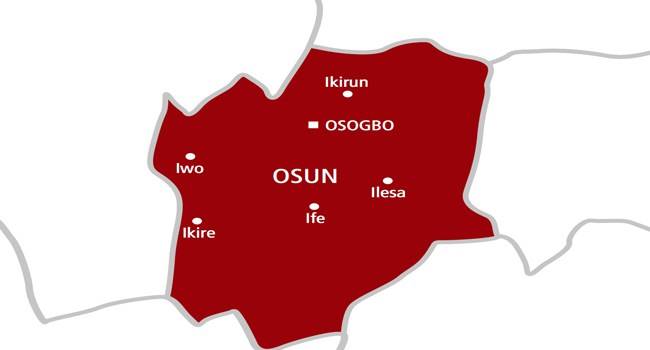
Osun drags FG to Supreme Court over seizure of LGs’ February, March, April allocations

Osun State filed an originating summons at the Supreme Court following the Federal Government’s confiscation of the monthly allocations accruing to its local governments for the months of February, March and April 2025.

It has not been ascertained whether that of May will also be withheld.

The suit dated 23 April 2025 marked SC/CV/379/2025 filed by Musibau Adetunbi, SAN, counsel for the Attorney General of Osun State (plaintiff), has the Attorney General of the Federation (AGF) as the sole defendant.

The state government approached the Supreme Court for an order directing the federal government to release the seized funds and for further orders restraining it from further withholding, suspending and for seizing fund allocations to the local government councils in the state.

In an originating summons filed on 24 April, 2025, the state government is asking the Supreme Court to determine the following questions:

Whether upon a proper construction of the provisions of Section 162 (3), (5), (6) and (8) of the 1999 Constitution of the Federal Republic of Nigeria (as amended) via-a-vis the decisions of this Honourable Court in A.G. Lagos State V. A.G. Federation (2004) 18 NWLR (PART 904) 1 and A.G. Federation V. A.G. Abia State (2024) 17 NWLR (PART 1966) 1; the defendant can withhold, seize and/or suspend payment of the monthly allocations, revenues and other funds due to the constituent local government councils of the plaintiff state without any justification whatsoever, notwithstanding the fact that the plaintiff state has in place, at all-time material to this suit, democratically elected local government councils?

Upon a proper construction of Section 7(1) of the 1999 Constitution of the Federal Republic of Nigeria (as amended), which guarantees the existence and subsistence of democratically elected local government councils in all the states of the federation, including the plaintiff state, whether the act of the defendant in withholding, suspending and/or seizing the statutory allocations due to the constituent local government councils of the plaintiff state without any justification whatsoever, does not pose a threat to the existence, governance and/or subsistence of the democratically elected local government councils in place in the plaintiff state and, by extension, the state generally, and thereby contravening the clear provisions of the constitution?

Whether the defendant, without any lawful justification and/or any valid or subsisting judgment/order of court whatsoever, can single out the plaintiff state herein and decide to withhold, suspend, seize and/or refuse to pay the monthly allocations and revenues standing to the credit of the constituent local government councils of the plaintiff state, notwithstanding the fact that the plaintiff state has in place democratically elected local government councils in the state at all-time material to this suit?

The state government is praying the apex court to make the following declarations:

A declaration that the defendant has no right to withhold, suspend and/or seize the monthly allocations, revenues and/or other funds standing to the credit of the constituent local government councils of the plaintiff state without any justification whatsoever, particularly in view of the fact that the plaintiff state has democratically elected local government councils in place at all-time material to this suit.

A declaration that the acts of the defendant withholding the monthly allocation and revenues due to the constituent local government councils of the plaintiff state for the months of March 2025, without any justification whatsoever, despite the fact that the plaintiff has in place democratically elected local government councils at all-time material to this suit, as unconstitutional, unlawful and ultra vires the powers of the defendant.

A declaration that the seizure, suspension, withholding and/or refusal to pay the allocations and revenues due to the plaintiff state by the defendant is a threat to the existence and subsistence of the democratically elected local government councils which is in place in the plaintiff state at all-time material to this suit.

A declaration that insofar as the defendant is yet to commence implementation of the Judgment of this Honourable Court in Suit No.: SC/CV/343/2024 between A.G. Federation V. A.G. Abia State & Ors. by putting in place necessary logistics to ensure direct payment of the allocations and revenues due to each local government council of the states, the plaintiff cannot be singled out by the defendant for non-payment of its local government allocation while other states in the federation continue to receive payment of the local government allocation for and on behalf of their local government councils.

An order directing the defendant to release forthwith to the plaintiff, the monthly allocations and revenues due to its constituent local government councils for the months of March 2025 which have been unlawfully and unjustifiably withheld by the defendant into its state joint local government accounts.

An order directing the defendant to continue paying the allocation, revenues and other funds due to the local government councils of the plaintiff state through the plaintiff’s state joint local government accounts opened for that purpose pending the necessary logistics.

In an affidavit of extreme urgency deposed to by the Commissioner for Finance, Ogungbile Adeola Olusola, the state government, through the state Attorney General, said the suit was filed against the backdrop of the unjustifiable and unlawful withholding and seizure of the funds, allowances and revenues due to the local government councils from the federation account.

The plaintiff told the apex court that “the continuous seizure of this fund by the federation would paralyse the education and health sectors of the plaintiff state if not urgently restrained by this honourable court, hence the plaintiff had contemporaneously filed an application for both interim and interlocutory injunctions alongside the originating summons in this suit”.

The Finance Commissioner said in the affidavit of urgency, sworn to on April 24, 2025 that the various local government councils in the plaintiff state need the allocations and revenue to function.

He said: “I know that if the defendant is not urgently restrained from further withholding, suspending and seizing this fund, the local government councils would not be able to function and perform their constitutional obligations.

“I equally know as fact that the continuous seizure of this fund by the defendant would cripple the governance and subsistence of the local government councils in Osun State and, by extension, cripple the governance of the state itself.”

He said, “The defendant, having withheld the allocation and revenue of the local government councils of Osun State of March, 2025 has caused hardship on the people of the state, and if the defendant is not urgently restrained, the monthly allocation for April, 2025 would also be withheld, suspended and seized and this will cause more and serious hardship on the people of the state.”

The deponent averred: “It will satisfy the interest of justice and fairness if the motion ex parte for Interim Injunction is urgently heard and determined by the apex court so as to mitigate the hardship already being faced by the people of Osun State, due to the withholding, seizure and suspension of their local government councils’ allocation and revenue.

“I depose to this affidavit in good faith, conscientiously believing same to be true, correct and in accordance with the Oaths Act.”

No date has been fixed for hearing of the case.

It will be recalled that the APC had, in February called on the Federal Government to withhold allocations to local government councils in the state, alleging illegal constitution of council heads by Governor Ademola Adeleke’s administration.

According to the APC, Governor Adeleke conducted a “purported” local government election on February 22, 2025, “in disregard of a valid and subsisting judgment of the Court of Appeal.”

READ ALSO: Court asks FG to withhold Osun LGs’ allocations

The party’s spokesman, Felix Morka, said, “In keeping with the rule of law, it is our expectation that the Federal Government will make federal allocation for local governments available only to democratically elected and judicially certified local government officials in Osun state.”

The state government and the PDP, however, countered the APC argument, pointing at a case the APC lost at the same Federal High Court, the appeal on which was dismissed by the Court of Appeal on 13 January 2025 for lack of diligent prosecution.

The Court of Appeal recently heard an application filed by the All Progressives Congress (APC) praying the court to relist the appeal against the Federal High Court judgement which sacked its chairmen and councilors on 30 November, 2022.

Ruling on the application and on a preliminary objection filed by the respondents, Action Peoples Party and OSSIEC, has been adjourned till a date yet to be announced by the court.

Meanwhile, the state chapter of the Inter-Party Advisory Council (IPAC) appealed to the Federal Government not to withhold allocations to the state’s local governments over the controversy surrounding the council elections.

Borno Mourns: 8 volunteers killed in an IED blast

By Yilik Mukwan

Borno State is in mourning over the tragic death of eight Civilian Joint Task Force (CJTF) members killed in an Improvised Explosive Device (IED) blast on Tuesday along the Dikwa-Marte road.

CJTF is a security volunteer outfit supporting the Nigerian Army in the fight against insurgency in the North-east region.

The brave volunteers were trying to retrieve the body of a colleague killed in an encounter between insurgents and the Nigerian Army in Marte Local Government Area when the device exploded on them.

Borno residents have always commended the vigilante groups for their role and sacrifices in the fight against the insurgency.

Many have paid tributes to the fallen volunteers.

“I grew up together with Abba. Even though we went our separate ways after he became very stubborn, he later grew into a courageous and reliable man. Just yesterday we met and chatted. May the soul of Baba rest in peace,” Abubakar Dodo said about one of the victims.

Mr Dodo was among hundreds of Borno residents who paid their last respects at the burial rites of the victims.

“Alhamdulillah, the gathering is enough to confirm they died as heroes. We pray that God will see their sacrifices and forgive them,” Musa Inuwa, another resident, said.

Many others have shared their condolences on social media.

According to a Daily Trust report, between 2012 and 2025, over 1,773 members of the CJTF were killed fighting Boko Haram and Islamic State of the West African Province (ISWAP) terrorists in the entire Northeast.

The Insurgents, believed to have been degraded, recently renewed attacks on Borno communities.

PREMIUM TIMES reported recently how 12 communities were attacked within three weeks.

Governor offers support

Governor Babagana Zulum has described the deceases as heroes whose memories will remain in the hearts of Borno forever.

He also offered support to their bereaved families.

Mr Zulum, on Thursday, paid a condolence visit to the families of the fallen heroes in the Fezzan ward of the Maiduguri metropolis.

The governor pledged a scholarship for the children of the deceased CJTF members or their family members.

“I want to announce an initial assistance of N5 million to be given to each of the families to take care of their immediate needs,” Governor Zulum stated during his visit.

He described the fallen CJTF members as “martyrs who made ultimate sacrifices in defence of their communities.”

Governor Zulum was accompanied on his sympathy visit by a delegation of government officials, including the Deputy Speaker of the state House of Assembly, Abdullahi Askira; APC state chairman, Bello Ayuba; and the Permanent Secretary of Government House, Mustapha Busuguma.

The governor’s swift response underscores the state government’s recognition of the invaluable role played by the CJTF in securing Borno.

Premium Times

TIPS