Home Blog Page 309

Ngugi, where is the light?

By Lasisi Olagunju

My generation met him famous. His first novels he wrote as an undergraduate. One of them is the hugely popular ‘Weep Not, Child’; another is ‘The River Between.’ He was James Ngũgĩ, then he became James Thiong’o Ngũgĩ, then he stepped out fully and became Ngũgĩ wa Thiong’o.

The African writer from Kenya who died last week worked really hard to repudiate everything that he thought oppressed him. He took out his scalpel and cut open the name he bore. He dropped the foreign and picked a labyrinthine label from his ancestral pouch. The language of his art was next. With the English language, he wrote himself to fame, then he dropped English and started writing in Gikuyu. If you thought Gikuyu wasn’t global enough, you could translate his works to English or whatever European language you wanted. Ngugi was rigid in his conviction. Was his muse playing with irony or contradiction or what figure of speech best describes his experiment with life? He dropped everything the oppressor brought to Africa. Yet, when death came last week, it met him in the very land that epitomises those things he ran away from – the United States.

Some forty-something years ago, ‘Weep Not, Child’ was prescribed for our school certificate exams. Some of us soon found in it much more than what WAEC said it was. It is a book of light; a writ of struggle and liberation. We ate and chewed and swallowed and digested it. From that story and the next and the next, I read in Ngugi an optimistic soldier of justice. He believed in the inevitable victory of light over darkness. ‘Weep Not, Child’ took its title from Walt Whitman’s ‘On The Beach At Night’. It is in that poem that the challenged child is told not to weep because “The ravening clouds shall not long be victorious” and “shall not long possess the sky.” But how long is not long enough? That book was written over 60 years ago. The sky is still possessed by the clouds.

The writer loved his country and gave it his all. But his ‘free’ country soon showed him the taste of pepper. ‘Independence’ has remained what it parades: an exchange of foreign oppression for domestic repression. Jomo Kenyatta is knighted in ‘Weep Not, Child’ as the hope of the oppressed. He became president and blighted the tall and the short who placed their hope in him. Ngugi was a victim. His recollections say: “writers were not spared. In 1969, a leading poet, Abdulatif Abdalla, was imprisoned for writing a pamphlet entitled Kenya twendapi? (‘Kenya, where are we heading to?’) It was my turn in 1977 for my play, ‘I Will Marry When I Want’, and novel, ‘Petals of Blood’. I was in a maximum security prison in 1978 when Kenyatta died and his vice-president, Daniel Arap Moi, took over. Though I was happy that Moi released me three months after his ascension to power, I soon realized that he had emptied the jails of hundreds of Kenyatta’s political prisoners to make room for thousands of his own. Where Kenyatta had imprisoned me for my writing, Moi sent three truckloads of armed policemen to raze to the ground the community theatre where I worked, eventually forcing me – and many others – into exile.”

That was his Kenya; and it was not just his Kenya. It was and is Africa. Dark Africa has “Two laws. Two justices. One law and one justice protects the man of property, of wealth and the foreign exploiter. Another law and another justice silences the poor, the hungry, our people.” No darkness could be darker than what is described here by Ngugi in ‘The Trial of Dedan Kimathi’. Yet, throughout his life, the man kept talking about light defeating darkness.

Even as dusk approached and he was going, going, Ngugi still wrote optimism in 2020. He said that Wanjikũ, his Gĩkũyũ mother, used to tell him: Gũtirĩ ũtukũ ũtakĩa: No night is so Dark that, / It will not end in Dawn, / Or simply put, / Every night ends with dawn./ Gũtirĩ ũtukũ ũtakĩa…”

Language frees and can also enslave. Ngugi said it contains the seed of life. It is a sword of freedom and can be a tool in the hand of the oppressor. The writer believed so and I agree with him. He says: “If you know all the languages of the world and you do not know your mother tongue, the language of your culture, that is enslavement. On the other hand, if you know your mother tongue, the language of your culture and you add all the languages of the world to it, that is empowerment.” He also spoke about labels. Addressing a group of young Africans, he interrogated ‘tribe’ as a lexical item of racial interest. “Tribalism is a colonial invention”, he said, and asked: “Why would 250,000 Icelanders be called a nation and ten million Yorubas are called a tribe, and not a nation?”

Ngũgĩ wrote seven novels, at least five plays, more than four memoirs, over eight collections of essays, and several children’s books. You are very familiar with ‘Weep Not, Child’ (1964), ‘The River Between’ (1965), ‘A Grain of Wheat’ (1967) and ‘Petals of Blood’ (1977). Yet the man almost denied us the benefit of some of his critical stories. His ‘Devil on the Cross’, published in 1980 was originally in Gikuyu as Caitaani Mutharaba-Ini. ‘Matigari’, another novel published in 1986 was also written originally in Gikuyu; the same with ‘Wizard of the Crow’ originally in Gikuyu as ‘Mũrogi wa Kagogo’. Why did he do that? “When you use a language, you are also choosing an audience …. When I used English, I was choosing an English-speaking audience…” He said in a February 1996 interview in India. A global citizen sits in the US and writes in a Kenyan language! What kind of rebellion informed that? What Kikuyu audience was the writer targeting in America? I wished I could ask him to provide answers to those queries.

The challenges he faced were matched by the sheer strength of his character, his resilient spirit. To him, “Life, struggle, even amidst pain and blood and poverty, seemed beautiful.” His life mirrored the blistered feet on Africa’s sherd roads, stubborn and untired. In ‘The River Between’, we encounter Ngugi’s river, the Honia, which he says, “meant cure, or bring-back-to-life.” That river never dried and “seemed to possess a strong will to live, scorning droughts and weather changes. And it went on in the same way, never hurrying, never hesitating.” I think that says something prophetic of the tardy black man as he soon became marooned between the drought of the past and the pestilence of the present. For most of his 89 years, Ngugi stood at the bank of River Africa watching “as it gracefully, and without any apparent haste, wound its way down the valley, like a snake.”

‘Darkness Falls’ is the title of a critical part of ‘Weep Not, Child’. For Ngugi Wa Thiong’o, writer of light, dusk dawned last week. As he ebbed away, one could imagine the horror in his eyes as he watched Africa’s inheritors do what the rains did in ‘The River Between’: “Carrying away the soil. Corroding, eating away the earth. Stealing the land.”

Africa’s predators are audacious; they do their thing right in the open marketplace. He cried out: “How do you saatirise their utterances and claims when their own words beat all fictional exaggerations?” He asked in his ‘Decolonising the Mind: The Politics of Language in African Literature.’ But he was still full of hope that light would drive out darkness.

Hope appears to me his greatest asset. Till his canary stopped chirping, he never stopped asking the African child not to weep. He insisted that kisses of spoken and written words would soon birth a dawn of justice. In spite of all the death and destruction we see all over, he still believed that “This darkness too will pass away” and that “We shall meet again and again /And talk about Darkness and Dawn / Sing and laugh, maybe even hug…In the light of the Darkness and the new Dawn.” I do not know the peg on which his optimism was anchored. What we see is every new decade bringing darker misery. But we must listen to him. He was an elder who saw far even while seated. So, I ask him: Ngugi, before you cross the river, tell us: when is the new Dawn? And, where is the light you predicted? May your soul Rest In Peace.

Swiss Police Strangles Nigerian, family protests, writes envoy, NIDCOM

  • Demands the repatriation of corpse
  • Nigerians protest amidst panic

The family of the late Michael Kenechukwu Ekemezie, a Nigerian citizen who was killed by the police in Lausanne, Switzerland, on May 25 2025, under troubling circumstances, demanded an investigation to ascertain what happened.

According to them, the deceased from Anambra State was subjected to brutal and excessive force by the Swiss police officers, in circumstances disturbingly reminiscent of the tragic death of George Floyd in the United States.

Already, there is protest and panic among the Nigerian community in Switzerland following the incident.

The family in a petition by their lawyer, Ifeany Ejiofor, to the Swiss Ambassador to Nigeria and Nigeria Diaspora Commission (NIDCOM), said that he was violently restrained, resulting in asphyxiation and, ultimately, death.

The incident has provoked widespread outrage and demands for justice and accountability.

While no official explanation has been communicated to the bereaved family, no meaningful effort has been made by the Swiss authorities toward transparency, justice, or reparations.

“The continued silence and apparent disregard for the sanctity of human life and due process in this case constitute a grave violation of international human rights obligations, particularly those enshrined in the European Convention on Human Rights and the International Covenant on Civil and Political Rights, to which Switzerland is a signatory”, Ejiofor said.

The family demanded as follows: “I view of the foregoing, and on behalf of our client, we hereby formally demand the following:

“Immediate and transparent investigation. The Embassy should urgently liaise with the Swiss Federal and Cantonal authorities to initiate, or ensure, an independent, thorough, and transparent investigation into the circumstances surrounding Ekemezie’s death, including the identification and prosecution of all officers involved.

“That all individuals responsible for this inhumane and unlawful act be held criminally and civilly accountable to the fullest extent of the law. No individual should lose their life at the hands of those sworn to protect them. The Swiss Government must not allow this grave injustice to go unpunished.

“The Swiss authorities should provide immediate and unimpeded access to the autopsy report, body camera footage (if available), eyewitness statements, and all relevant documentation related to the incident.

“The Swiss Government should accept responsibility for this tragic loss and provide full compensation to the bereaved family, not only for their emotional and psychological trauma, but also for the wrongful termination of a young and promising life.

“Assistance should be rendered for the dignified repatriation of Ekemezie’s remains to Nigeria, and that financial support be extended towards his funeral arrangements, as a humanitarian gesture and acknowledgement of responsibility.

“Switzerland is globally renowned for its commitment to human rights, the rule of law, and the dignity of human life. It is our earnest expectation that these principles will be upheld in addressing this grievous and avoidable tragedy.

“Kindly be assured that we are prepared to pursue all available legal, diplomatic, and international remedies, including petitions to the African Commission on Human and Peoples’ Rights, the United Nations Human Rights Council, and other appropriate international justice bodies, should this matter not be addressed with the urgency and seriousness it demands.”

Also in a statement, Ejiofor said Ekemezie, had lived in Switzerland for over a decade working hard like many others in pursuit of a better life before his life was cut short in a brutal encounter with law enforcement —an encounter that bears chilling similarities to the infamous murder of George Floyd in the United States, exactly five years earlier.

He said, “We remember how the world watched in horror on May 25 2020, when George Floyd, a 46-year-old Black man, was murdered in cold blood- a White police officer knelt on his neck for over nine minutes while Floyd was handcuffed and lying face-down on a street in Minneapolis. His final words/dying cries, his helplessness, and the silence of those around him, sparked global reckoning with racial injustice and police brutality.

“Sadly, history has repeated itself on May 25, 2025. The footage emerging from Lausanne shows Michael, too, handcuffed and pinned face-down, by an officer who used brutal force that proved fatal. His distress was visible. His life could have been saved. But he was left there- ignored, unheard, ultimately lifeless. No attempt was made to help him. He was subjected to lethal force that ultimately led to his death.

“What is equally painful is not only the brutal manner of Ekemezie’s death but the deafening silence that has followed it. Unlike the global response that followed George Floyd’s death, the murder of Mr. Ekemezie has received little to no coverage from major international media outlets such as CNN, BBC, or Al Jazeera.

“Within Nigeria, mainstream media has also largely remained silent. This silence is both unacceptable and deeply troubling, especially as it suggests a deliberate effort to downplay or conceal the brutal nature of the killing. It further suggests that Michael’s life, like those of many Africans, can be taken without consequence or even acknowledgement.

“In the face of this, Nigerians and other Africans residing in Switzerland have taken to the streets in protest, demanding accountability, transparency, and justice. Yet the response from the Swiss authorities has been lukewarm at best. Swiss authorities’ response thus far, has failed to meet the minimum threshold of transparency and urgency required in such egregious cases of state-sanctioned violence.

“Upon being officially briefed by Ekemezie’s devastated family, our legal team immediately began the process of seeking justice through diplomatic and legal channels aimed at invoking all available international legal and diplomatic mechanisms. We have since submitted a detailed and strongly-worded petition to the Swiss Embassy in Nigeria, demanding the immediate identification, arrest, and prosecution of the officers involved in this heinous act. Among other things, our petition calls for:

“A full, independent, and transparent investigation into the incident;

“Public disclosure of the identities and roles of all officers involved;

“Immediate suspension and arrest of the officers pending investigation;

“An official apology and appropriate compensation for Michael’s family;

“Concrete reforms to prevent such abuse in the future.

“We have also formally petitioned the Nigerians in the Diaspora Commission (NIDCOM) and other relevant government bodies, demanding prompt diplomatic engagement with the Swiss Government. The life of every Nigerian citizen, whether at home or abroad, must be treated with dignity and protected with resolve.

“This is not merely about one man’s death—it is about justice, dignity, and the sanctity of human life. It is about sending a clear message that Nigerian lives cannot be wasted with impunity, and that the international community must not turn a blind eye when Africans are killed unjustly.

We call on the Government of Switzerland to rise to its international obligations and ensure justice is done. The Nigerian Government to assertively demand answers and justice for its citizens;

“International human rights organizations, civil society groups, and media platforms to speak out and shine a light on this gross injustice.

“As we mourn the painful loss of Mr. Michael Kenechukwu Ekemezie, we reiterate our unwavering commitment to pursuing justice through all lawful and diplomatic means, for him, for his family, and for all those whose lives have been marked by violence and silence.

“Justice must not only be done, but must also be seen to be done.”

Tinubu’s hunger is worse, power is his only food; By Ikeddy Isiguzo

President Bola Ahmed Tinubu is hungry. He is also angry that many Nigerians do not understand his sacrifices for us. What a people!

Imagine daily sacrificing for a complaining people. They keep shouting all over the place, “We are hungry,” in different tongues, thinking he would hear them. It is not for nothing that the glasses of those glimmering, glistening limos are always wound up.

Only TV stations that bring “good news” are permitted around him. For instance, NTA would cast news of how Tinubu’s arrival two years ago has renewed the Argungu fishing festival with bigger catches and spread happiness throughout Kebbi and surrounding states.

Nobody dares mention “renewed” insecurity except if they are reminding governors that they are failing in their states as “chief security officers”.

The President’s most recent sacrifice was while in Rome for the Pope’s mass. None of us acknowledged Tinubu avoiding winging to Paris, just two hours away, to rest after the heavy schedule in Rome.

We dismiss his sacrifices for a better tomorrow by accusing Tinubu of living his today in obscene opulence. Would that explain why he lives in 2027 when we are stuck in 2025 with its problems?

Tinubu is hungry. His hunger is worse than ours. His own hunger is for power. Hunger for power is worse than not having food. For Tinubu, power firmly in his grip, is the food he wants. Nothing else.

Before Tinubu is a menu with one item – power for him, by him, in his own terms. Thoughts of anyone taking away his food are giving him sleepless nights. Before this though, one of his aides had said the President barely slept. How much worse it could be by now.

We do not live in the same hunger spectrum with Tinubu. We do not speak the same language. We are differently hungry.

An agitated Tinubu wonders why anyone with an understanding of the workings of democracy should contest the 2027 election with him. Tinubu the democrat now supports the idea of one-party state.

His hunger for power spells desperation, trust deficit. He trusts only himself having swam seas of deception, a sphere where expertise expires swiftly.

We see election in 2027. Tinubu wants to quench his hunger well before then. By his admission, his party’s current control of 22 States through “elections” is inadequate. He wants more.

More governors are falling over themselves to do his bid. If Tinubu is available, before June journeys far, three more governors would have joined APC, not counting Delta and Rivers that have already fallen in line.

A simple agenda is to see at least APC governors in 28 states before 2025 eclipses. Once achieved, Tinubu would have scaled the hurdle of 24 states, the constitutional requirement of two-thirds of states of the federation, and winning in Abuja is seemingly guaranteed by loquacity.

Why is Tinubu in a hurry to reach the milestone? Like anyone really hungry, especially for Tinubu’s type of food, creation of more options, denying others opportunities, are critical weapons. The disappearing 2026 ploy is to spend that whole year dispiriting opponents with the weapons available to APC.

“We do not take your patience for granted. I must restate that the only alternative to the reforms our administration initiated was a fiscal crisis that would have bred runaway inflation, external debt default, crippling fuel shortages, a plunging naira, and an economy in a free-fall,” Tinubu’s second anniversary speech read.

Nigerians are facing what Tinubu claims to have managed in the past two years. His world is different from that of millions of Nigerians who are facing the biting cruelty of those measures.

Whatever happens, don’t panic. An old magazine advertisement, about 40 years ago, issued that advisory that was meant to market an alcoholic beverage. It was an admission of the legion of matters that could trigger panic. It is an acceptance, not only of the situation, but how to deal with it. The better reaction would produce better results.

Two years of Tinubu’s renewed hope agenda was not expected to be an elixir for Nigeria’s challenges. Were our expectations too high, too ambitious, for a Chicago-trained financial management expert, who worked with international consultancies, and whose financial skills were credited with keeping a global oil giant in business?

Abundant explanations confound things. Tinubu has crashed below the low standards he set for himself. In two years, he boasts of roads that lead to nowhere – yes, nowhere.

His roads are not just dangerous from poor attention to safety details; road trips today are almost death sentences. The level of banditry, kidnapping, and terrorism that occurs on those roads, and our forests, debase them as achievements.

Renewed hope agenda arrived drained of content. Without content, there was nothing to renew. Not surprisingly, the agenda has birthed two years of hopelessness that have also left many helpless.

Are Nigerians disappointed in Tinubu. Yes. The disappointment is mutual too. Tinubu wants Nigerians to lower their expectations. He wants us to make more sacrifices for tomorrow. Tinubu, most importantly wants Nigerians to unquestioningly entrust him with their future after he worsened their present.

He talks of a future that means his re-election.

Tinubu chooses his sacrifices. We do not have the luxury of deciding how badly we live, now, today, not to talk of the tomorrow bench-marked on Tinubu being President again.
“Nigeria can’t rely on borrowing; Nigeria must stop borrowing” – November 2023. “Nigeria needs more borrowing; Why FG is borrowing” – November 2024. These positions are from Chief Wale Edun, Minister of Finance. The headlines indicate the dynamism of Tinubu’s economic policies.

“Security shall be the top priority of our administration because neither prosperity nor justice can prevail amidst insecurity and violence. To effectively tackle this menace, we shall reform both our security DOCTRINE and its ARCHITECTURE. We shall invest more in our security personnel, and this means more than an increase in number. We shall provide better training, equipment, pay and firepower,” Tinubu promised during his inaugural, two years ago. Is this promise meant for 2027?

The presidency is both food and air to Tinubu.

“With full confidence in our ability, I declare that these things are within our proximate reach because my name is Bola Ahmed Tinubu, and I am the President of the Federal Republic of Nigeria,” he rounded off his inaugural speech.

Nigeria is not about a President who thinks his name is a magic wand to whisk challenges away. Tinubu has failed to realise that in the past two years.

Perhaps, it is time for another Paris vacation while Nigerians must work hard to retrieve by 2027 the shreds of the country that Tinubu fought for at all costs, grabbed, snatched, and ran with it in 2023.

Finally…
•THE newer race to endorse Tinubu is fast, ferocious, and colour-blind. Distinguished Senator Orji Uzọ Kalu has ensured that. His appearance at the Senate in an all-red attire, except his shoes and wrist-watch, has commenced the race. Red appears more like retained parts of Orji’s PDP days.

•OUR future is not about our children taking examinations in darkness. We are not bothered by armed bandits firing shots in examination halls, with examinations in progress, to scare our children away from school. The future that matters is Tinubu being re-elected.

•KILLINGS continue in different parts of Nigeria. The crimes would be dealt with in future when the proposed beneficiaries of tomorrow would have become a distant past.

ISIGUZO is a major commentator on minor issues.

Sale of Weapons to Armed Groups: Soldiers and police officer detained

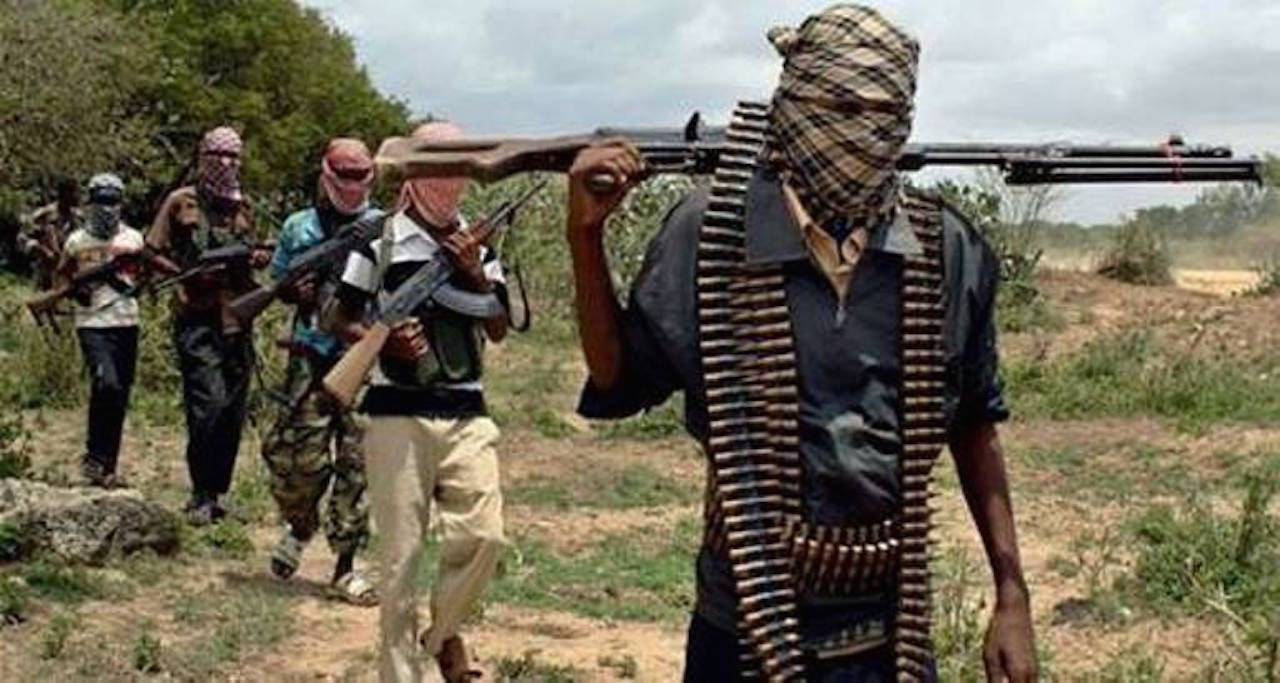
The Nigerian military has detained over two dozen soldiers and members of the police force over sales of weapons from military stockpiles to armed groups, including Islamist insurgents, a spokesperson said.

Africa’s most populous country and biggest energy producer, Nigeria, is battling insecurity on many fronts, including a long-running insurgency in the northeast and armed kidnapping gangs in the northwest.

Captain Reuben Kovangiya, spokesperson for the military’s anti-insurgency operation, said the arrests were part of a crackdown on racketeering involving ammunition.

Local media reported that 18 soldiers, 15 policemen and eight civilians were taken into custody.

“It is part of the counter-arms and ammunition racketeering operation conducted in every theatre of operations,” Kovangiya told Reuters. “If any personnel engage in any act that is inimical to the system, they are arrested and tried.”

Kovangiya did not elaborate on the types and numbers of weapons sold but said the suspects would be prosecuted.

Nigeria has this year experienced a surge in attacks by militants from Boko Haram and its offshoot, Islamic State West Africa Province, who have overrun some military bases in the northeastern state of Borno.

In the course of most of the raids, militants have seized weapons from army bases.

Reuters

Kebbi State Tragedy: 0ver 100 persons, mother, baby dead

At least 100 people were abducted and several others killed on Tuesday evening when armed bandits attacked Dan Muntari village in Danko-Wasagu Local Government Area of Kebbi State.

Among those killed was a woman who had given birth just two weeks earlier, along with her newborn baby.

The incident was disclosed on Thursday in a post by security analyst Bakatsine on X.

“On Tuesday evening, bandits attacked Dan Muntari village in Danko Wasagu LGA, Kebbi State. They killed many people, including a woman who had given birth just two weeks earlier and her newborn baby. They also abducted at least 100 people,” Bakatsine wrote.

No official statement on the attack has been made.

End Weaponized Governance

By Oseloka H. Obaze

Power corrupts and absolute power corrupts absolutely,” is a cliché which might have lost its instructive value in contemporary governance.  This is more so, as some serving national leaders are exhibiting their true colours; while masking as democrats.  “Power reveals who a leader is.”   As evinced in some countries, we’ve witnessed blurred definitional lines between democratic leaders and unmasked autocratic leaders. Arguably, integrity or corruption is habitual default for power wielders.

Nigeria confronts a national crisis and a peacetime existential threat. Governance has been extremely ethnified and weaponized.  Of that, there is no debate, despite expedient rationalizations. Happenings in Nigeria are dreadfully peculiar. The situation needs to be remedied urgently. In whole or in parts, Nigeria is in deep trouble. As such, there can be no conscientious objectors to the rescue mission, which must start now.

Northern Nigeria is a mess. There is insecurity, poverty, communal conflicts, and food crisis in the three zones of the monolithic North, where banditry, insurgency and ungoverned spaces are also rife. The disappearance of the hides and skins industries, the groundnut pyramids, renowned textiles and tin ore industries, and now, the farms that were erstwhile national food basket were not orchestrated by outsiders. Kano once produced canned Jollof rice and egusi soup. Not anymore! It’s incumbent on the Northern leaders past and present to accept responsibility for such expansive crisis. Remediation will start with Northern leaders accepting their fault. Their blame game is defeatist.

South-Eastern Nigeria is in a morass; and fraught with insecurity, criminality and a bested mindset. Its commerce suffers immeasurably.  Its industries have collapsed or moved to safer climes. Her financial capital, clout and culture have taken flight and are now domiciled outside the zone. The incumbent governors are all too knowing, to heed counsel or show humility.  They rule, but hardly govern. They have not managed indigenous recidivism well. They seem averse to joint-ventures and working cohesively in the interest of the zone. The moneybags from the zone contribute vicariously to the present impasse.  They tend to equate personal wellbeing and purchased security to collective wellbeing and collective security.  That disposition is most insidious. The zone is literarily deserted. It’s now a charnel house –a necropolis– where only the courageous return only to bury their dead.

The South-South zone, suffers from leadership schizophrenia. Unarguably, the richest of the seven political zones, it is blighted by environmental despoilment and mired in underdevelopment. Their past leaders frittered away their commonwealth while chasing elusive power at the centre. The citizens are neither allowed to enjoy their rightful oil wealth or to peaceably govern themselves. The zone is collectively worse off for it. Their mercenaries masking as key stakeholders, are neither good leaders nor good citizens. 

South-Western Nigeria is now in-charge of national leadership.  It suffers from insularity complex. Most regrettably, their understanding of national leadership bona fides, credentials and focus, negates the core leadership values and vision of Obafemi Awolowo and the inherent pragmatism that guided Olusegun Obasanjo to lead Nigeria, as a soldier and then as a civilian president. The present South-Western-led national government has weaponized governance as never before. The utmost danger is inherent in the prevailing delusional pretenses and deafening silence from that zone.  The road to perdition has never been so apparent.

The Tinubu-Shettima government has been in office for two years. During that period, we have watched the Nigerian federation mentally, physically and progressively fractionize, as equity and national unity were without any caution thrown to the winds. Evidently, those who contrived the APC tag-team sold Nigerians a dummy. Acceptably, the atrocious eight years of President Muhammadu Buhari were foundational to the present governance rut and retrogression. But Nigerians can’t forget that President Bola Ahmed Tinubu had promised that he would continue where Buhari stopped. In that regard, he has kept faith.

Ironically, the select coterie of roguish cohorts and beneficiaries of the present Malgovernance, who emanate from the seven political zones, pretend that all is well. It can’t be so. Let’s speak truth to power before its way too late. 

Right now, Nigeria ticks off well on the list of indices of bad governance, notably: deception, corruption, insecurity, illiberalism, iniquitous policies, criminality, incapacitated police force, ineffective legislature and judiciary, absence of checks and balances and utter disregard for the rule of law. Nigeria has been calculatedly plunged into a debt peonage. Nationwide, most of our youths are not in employment, education or training.

Our urban agglomerations are increasingly decrepit and burdened by rural migration and unemployment pressures. This, like grazing areas has become sources of inter-communal internecine strife. The discontent and disenfranchisement of the national population is pronounced and humongous.  APC’s promise of “renewed hope” is proscriptive and has come to naught. Certainly, there can be no part two to that promise. 

As is routine, we have entered yet another cyclical season when strange political bedfellows pally around.  They do so supposedly on non-partisan basis and in the name of alliances. But individual or primordial interests and staying politically relevant is their raison d’être.  Yet, there are universal nation-building and national interest issues that are not being proactively addressed. If Nigeria implodes, we all lose. Somalia and Libya’s fate will be child’s play. The regional and geo-strategic implications will be immense. A failed Nigeria would also be a self-fulfilling prophecy. 

Nigeria needs bold nation-building and redemptive initiatives.  If by 2027 we don’t succeed in changing the present APC leadership and government constitutionally, with a view to putting Nigeria back on the trajectory of good governance, we may not have a country thereafter.  

Under our present circumstances, from 2027 going forward requires a fit-for-purpose nationalistic leader; who is elected through a process bereft of traditional emotionalisms and based on equity. He or she will need to be supported by our various ethnicities, and a support team of erstwhile rivals for Nigeria to be governed purposefully and equitably. The mixed political configuration of South Africa’s present government is a good example. Therefore, we must constitutionally bring an end the APC government, which like no other before -military or civilian- has effectively weaponized governance to the detriment of the national population. The task won’t easy: but it’s a doable national imperative. 

Nigeria has its fractured history. But it is a multiparty democracy, not a one-party state. As such, it can ill-afford to remain the extremely fractured nation it has become.  The choice of where we go from here is clear.  The path we toe eventually will depend on hard choices. As a federated nation, we must either choose to be parochial and myopic, or sufficiently bold to seize the moment and remain one country.  

As to purpose, it remains unclear if it is indifference or incompetence that drives Tinubu’s administration lackluster performance that is running Nigeria to the ground. But this much is clear: purpose has no expiry date. For that singular reason, it’s time to end this weaponized governance. There must be an endpoint to this “insanity that decays the wise.”  

——

Obaze is MD/CEO, Selonnes Consult – a policy, governance and management consulting firm in Awka.

El-Tufiakwa for El-Rufai

By Chidi Anselm Odinkalu

One of the memorable moments from the presidential campaign ahead of Nigeria’s 2023 elections featured then ruling party candidate, Bola Ahmed Tinubu, at the Chatham House in London in December 2022 allocating to leading members of his entourage responsibility for answering various questions from members of the public. For the questions on insecurity, he called on then governor of Kaduna State, Nasir el-Rufai, to address them. At the time, Candidate Bola Tinubu explained that he did that to advertise the versatility and cohesion of his team.

Many believed then that asking el-Rufai to respond to those questions show-cased his competence on insecurity. In hindsight, it seems more likely that candidate Tinubu intuited that Nasir el-Rufai embodied the manifestation in human form of Nigeria’s insecurity crisis.

This past week, a judgment by the Federal High Court in Kaduna, north-west Nigeria, showed exactly why candidate Tinubu’s hunch may have been well-founded.

The story needs context. When he was inaugurated as Governor of Kaduna State on May 29 2015, Nasir el-Rufai identified insecurity as “an obstacle to progress” and promised to “work with law enforcement officials to drastically reduce violent crime” and  “insure safety of life and limb.” Forgetting his inauguration day promise, el-Rufai spent eight years in office visiting the exact opposite to those whom he disliked or disagreed with.

Among the body count of el-Rufai’s thousands of victims, few were as brutalized as the Adara. The Adara are one of the 56 nations that make up the complex ethnic kaleidoscope of Kaduna State. The lands in Kajuru Local Government Area (LGA) in south-central Kaduna State are fertile. The paramount chief of the Adara was known as the Agwam (Agom) Adara.

In the third week of October 2018, inter-communal violence broke out in Kasuwan Magani in Kajuru, pitting Kajuru youths against their Fulbe peers. It was reported at the time that the casualty count from this violence was over 55 persons. The State government imposed a 24-hour curfew over the affected parts. Thereafter, Nasir el-Rufai summoned a meeting in Kaduna. In attendance at the meeting was the paramount ruler of the Adara, Dr. Maiwada Raphael Galadima, Agwam Adara III, who was accompanied by his wife and aides.

This was Agwam Adara’s last earthly appearance. As he made his way home from that meeting on or about 21 October 2018, the Agwam Adara’s convoy was attacked and some of his aides and security detail were killed on the spot. The Agwam Adara himself and his wife were both abducted. Five days later, the dead body of the Agwam Adara was discovered. His wife was spared. It was later reported that he “was brutally murdered in October 2018 on his way to his palace after accompanying Governor Nasir el-Rufai to Kasuwan Magani to commiserate with the community over violence that claimed many lives.”

At the time, the government of Kaduna State led by Nasir el-Rufai promised to “pursue justice for this revered man…. of peace.” Nothing else was heard about that. The Governor meanwhile was too busy to attend his funeral. Instead, he set about ensuring the dismantling of the Adara Kingdom.

Shortly after the killing of the Agwam Adara, Nasir el-Rufai abolished the kingdom, cannibalizing it into emirates and essentially wiping away the rights of Adara’s majority of Christians and indigenous adherents to any claims over their community. It was widely believed, indeed reported, that the Agwam Adara “died for resisting attempts by Nasir el-Rufai, Governor of Kaduna State, to restructure Kajuru under the Adara Traditional Council to the Kajuru Emirate.”

All of this occurred a mere four months before both el-Rufai and his political benefactor, Muhammadu Buhari, were due to stand for re-election in ballots scheduled for February and March 2019. Kaduna State was a battleground in those contests and the Adara had good reason for antipathy towards the Governor.

Voting in the presidential election was initially due to occur on 17 February, 2019. The day before, on or about 16 February, the Governor dramatically announced that he alone had discovered the massacre of 66 Fulbe in Kajuru. No security agency was initially willing to back him up. On the contrary, the state police commissioner accused el-Rufai of having “pre-empted Police investigations.” The National Emergency Management Agency, NEMA, like many residents in the affected area accused him of having lied. The Senator representing the affected communities in the Nigerian Senate at the time, Shehu Sani, suggested that el-Rufai was intentional in seeking to provoke the community ahead of highly contentious elections.

The man was not about to be deterred from habitually inflammatory routine, however. The Independent National Electoral Commission (INEC) deferred the vote by one week. So, el-Rufai decided to once more convene another town-hall in Kasuwan Magani. Among the participants was Awemi Dio Maisamari, an economist who was also president of the Adara Development Association, (ADA).

At the meeting, Awemi Dio sought to speak but el-Rufai shut him down, calling him “part of the problem.” Thereafter, security agents on the orders of el-Rufai set upon the man, arrested him and threatened to shoot him if he uttered one word. Quickly, they bundled him out of the venue into a vehicle which drove him straight to the state headquarters of the dreaded Special Anti-Robbery Squad (SARS), where he was initially detained for three days. All this while, there was no warrant for his arrest.

Simultaneously, el-Rufai ordered the arrest and detention of the leadership of the Adara. In addition to Awemi Dio, the victims included the Wazirin Adara (Vizier) and former commissioner in the government of Kaduna State, Bawa Magaji; former Commissioner of Police, Sani Magaji; National Treasurer of the ADA Joseph Abdallah; Village Head of Maro, Tanko Maisamari; Village Head of Ungwan Gamo, Hosea Danladi; Village Head of Kutura, Joseph Ayuba; Village Head of Aguba, Tanko Wada; and Elder Ulu Maitumbi.

On 20 February, 2019 at the request of el-Rufai, a Magistrate in Kaduna consigned them to pretrial detention on charges entirely constituted by his say-so. After three and a half months in detention and wide spread  international outcry and advocacy, the Attorney-General of Kaduna State advised that there was no case against the nine Adara elders. On 26 May 2019, they were released but el-Rufai had destroyed their lives.

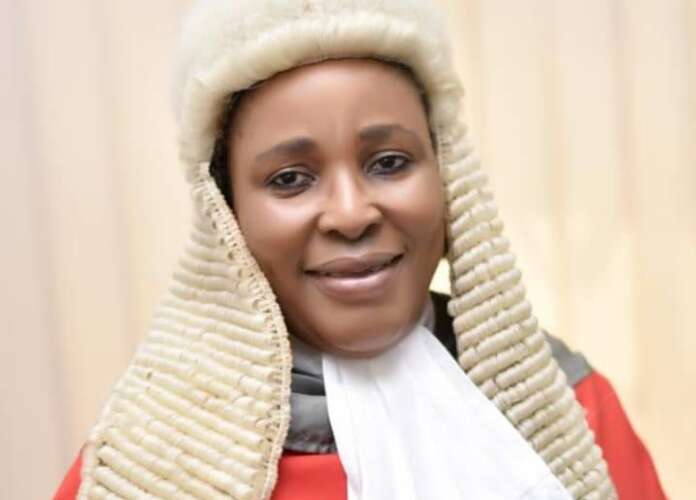
In March 2024, Awemi Dio Maisamari sued el-Rufai in his personal capacity in Suit No. FHC/KD/CS/23/24 through their lawyer, Gloria Ballason, who has fast become el-Rufai’s legal nemesis. Last week, Justice Hauwa’u Buhari of the Federal High Court in Kaduna found him personally culpable for the abuse of the human rights of the Awemi Dio and Adara elders. In a judgment brimming with many telling paragraphs, the judge pointed out that the duty of a governor is to ensure the protection of lives and property and that public office is not meant to gratify the whims, ego or benefit of the occupant.

The court specifically found el-Rufai responsible for abuse of office and held that an occupant of public office cannot assert benefit of official immunities for acts of abuse of office. Even more, the court held that his mis-conduct in this case amounted to a breach of his duty as governor to protect all persons in the state.

The court exonerated the office of the state governor from liability, commended the courage of the Attorney-General in advising against the executive abuse of office, and awarded damages of N900 million against el-Rufai personally. In good-old Nigerian parlance, the court dared to say to el-Rufai, El-Tufiakwa!

Nasir el-Rufai has sought recently to sell himself as an advocate for good government and against arbitrariness. His record in government belies his recent pretensions. This judgment reminds everyone why the man is so odious and why his effort to distract public attention deserves ridicule.

On June 25 2025, meanwhile, el-Rufai is due to take the witness stand in Abuja in his defamation case against two senior lawyers, Silas Onu and Auta Nyata, over the decision of the Nigerian Bar Association (NBA) to de-platform him in 2020. That should be some spectacle.

A lawyer and a teacher, Odinkalu can be reached at [email protected]

The views expressed by contributors are strictly personal and not of Law & Society Magazine.

Democracy in the hands of the judiciary

BOOK SERIAL

By Chidi Anselm Odinkalu

A Democracy in the Hands of the Judiciary To be sure, courts always have a legitimate role in the democratic process, and this was so well before Nigeria embarked on the experiment in presidential politics. The electoral process everywhere is established by law and the courts exist to interpret law. Ideally, the rules that govern elections should be determinate and determined by the courts while the outcome of elections should be indeterminate until the votes are cast and counted. In Nigeria, however, the cone has been inverted so that the courts ensure that the rules are indeterminate in order that the outcomes can be pre-determined. Some of the landmarks on the path to this destination deserve to be charted.

First, the courts – contrary to the decades-long counsel of both Anthony Aniagolu and Bolarinwa Babalakin – granted themselves powers over electoral arithmetic to add and subtract votes to pick, choose and determine who to declare winner or loser in elections. As we have already seen, this thread of jurisprudence evolved in a line of cases that originated in Anambra State with Ubanese Igbeke and the Uba Brothers as the pioneering exponents.

A defining landmark in this trajectory, however, was the decision by the Court of Appeal in March 2006 rightfully striking down the declaration of Dr Chris Ngige in the 2003 election as the governor of Anambra State. In its judgment, the court recomputed the numbers declared by the INEC and found that Peter Obi had indeed won the election. On the facts, the judgment looked unimpeachable. No one could question the powers of the courts to strike down an outcome procured by electoral debauchery. What this case also did was to establish that the courts could compute electoral arithmetic with greater finality than the INEC. The courts were to exercise this power subsequently in governorship elections in Ondo, Ekiti and Edo states ostensibly to check a perception of habitual abuse of the electoral process by the then ruling PDP.

Second, following the 2007 presidential vote, a dispute ensued over the question of whether an election organised with non-serialised ballot papers was compatible with the principles governing the conduct of a credible election under the Electoral Act. This time, the majority of the court complained that the word “principles” in this provision was “vague, nebulous and large” as well as confusing. It decided that there was no problem with organising an election with non-serialised ballot papers and held that “non-serialisation, if it had benefits and advantages, was not exclusive to the respondents.” In other words, the court set up a practically impossible standard of proof, requiring anyone complaining in these circumstances to prove that non-serialisation benefited one party more than the other.

In actuality, the court did not have to struggle to realise that by affording a judicial stamp of approval to alleged elections without serially numbered ballot papers, it was about to reorder the landscape of elections and to wilfully destroy the people’s will as the foundation of legitimate government. It should be evident that if ballot papers are not serialised, it is impossible to control in such circumstances for ballot contamination, all but licensing ballot-stuffing. The question of whether any party has benefitted from the failure of serialisation should, therefore, not arise in the first place. In validating the 2007 presidential election in this manner, Nigeria’s Supreme Court did not just miss an opportunity to define normative values to underpin electoral governance; it effectively legalised ballot contamination, ballot stuffing and elections without rules.

Third, in May 2019, the Supreme Court ruled to confer the mandate to govern Zamfara State in north-west Nigeria on a person who had been hopelessly beaten into second position, losing in every local government area in the state. It held that the votes of the winning candidate were “wasted votes” because of some pre-election infraction connected with party primaries. Now, votes are the only currency of the democratic process and a judiciary committed to upholding the people as the source of legitimacy in a democracy will not venture a jurisprudence that consigns any votes to the dustbin, but that is exactly what the Supremes ordered. Following on this line of jurisprudence, Nigerian judges now appear gleeful in treating the votes of millions of Nigerian voters as “wasted,” affording them the opportunity to substitute their own predilections for the will of the voters without a pause to consider the consequences.

Fourth, in January 2020, the Supreme Court nullified the election of Emeka Ihedioha as governor of Imo State, replacing him with a man who had been well beaten to fourth place in the election. To accomplish this, the court substituted the computation of the INEC in this case with that of a rogue police officer who claimed to have the true and authentic results of the ballot. Miraculously, those rogue results just happened not to have been available to any others except the person for whom six Justices of the Supreme Court (none of whom was registered to vote in Imo State) cast their votes. In this decision, the Supreme Court effectively ruled that when it suits them, the courts could usurp or retrench the INEC as electoral umpire.

The cumulative effect of these judicial decisions is essentially that judges dismantled the incentive systems that underpin the democratic process in rational relationships between the mandate to govern and the welfare of the people. In the new logic invented exclusively for and by judges, it is now routine to organise an election without candidates; undertake voting without ballot papers; administer an election without the INEC; and produce winners without the votes of the people. In the end, the judges make the final call retrospectively as to the winners and losers with no regard for the will of the people or indeed to any rules except their subjective say-so underpinned by no coherent set of principles or norms. Under the influence of this new logic, Nigeria’s electoral jurisprudence became entirely situational. This in turn created an open market in the buying and selling of judicial decisions on election disputes. Chapter II of the constitution may have instituted the people as the electorate, and section 13 thereof requires all branches of government to comply with that. Defying these stipulations, however, Nigeria’s judges invented for themselves an exceptionalism from the constitution and remade the rules to install themselves above the people as the unquestioned “Selectorate”.

Judicial Selectoralism

In the beginning, judicial intervention in candidate selection and election outcomes appeared to enjoy some support, perceived largely as a counterweight to rogue election results that were widely regarded as heavily manipulated by the then ruling party or politicians. Indeed, one body of opinion took a sanguine view of the early immersion of Nigeria’s judges in political and election dispute resolution, describing it as “an instrument of democratic advancement and stability.”

In the years since that opinion was offered, however, it has now become evident that this development “has grave consequences for competitive electoral politics in the country,” and has the effect of being “likely to contaminate and detract from the credibility of competitive elections and electoral governance generally.” Even judges at the highest levels now complain that

“the entire Nigerian judicial system is inundated with electoral litigation and adjudication almost all year round,” which are “taking a monumental toll” on the courts.

The exponential growth in the interposition of judicial intervention to decide winners and losers of elections altered the calibration of incentives in political competition. Inherently, this appeared to encourage political competitors to shift attention and resources to influencing the judiciary in post-election litigation rather than convincing the voters before that. The judiciary has thus been accused of institutionalising “rigging through the courts,” and of undermining the faith of voters in the democratic process. Another expert has described the country as “a democracy in the hands of the judiciary.”

The result is a relocation of the site for the determination of election outcomes from the polling booths and collation centres run by the INEC to the courts presided over exclusively by judges. This showed in the growth in the scale of election dispute resolution as a judicial industry. In 2007, for instance, Nigerian courts through the election petitions process determined 1,299 petitions out of 1,496 offices (86.35%) available to be contested in elections. This number fell to 769 or 51.4% in 2011 and to 663 or 44.32% in 2015. After the departure from office of the leadership of the INEC that delivered the 2011 and 2015 elections, the number of contests decided by the courts rose again to 811 (54.4%) in 2019, and then to 1,209 or 80.82% in 2023.38″ These numbers reflect first instance proceedings in election petitions, excluding appeals, and suggest the existence of a system of electoral legitimacy nearly reliant in its entirety on the machinations of the judiciary.

To be sure, this re-engineering of incentives in elections was long in the making. The Babalakin Commission of Inquiry reported as far back as the dispute resolution process that followed the 1983 elections, the existence of a public perception which viewed some of the verdicts from the courts as “a rape of democracy perpetrated through the law courts” with attendant “allegations of corruption in high places.” The imputation of undue externalities in judicial decision making in this context even then was unmistakable.

In 2009, a senior beneficiary of the judicial re-engineering of the incentive system in electoral outcomes summed up the implications in a narrative of five “mini-gods” and “the godfather” who must be “appeased” for electoral success in Nigeria. He listed these as the INEC, security agencies (including the police and the military), political “thugs and bandits,” the judiciary, the “Money God” and the “Godfather complex” and characterised them together as useful “analytical categories in explaining why elections go the way they do in Nigeria with unpopular candidates ’emerging’ as ‘winners’ in questionable elections.”

It is notable that in the implicit hierarchy of this taxonomy, judges are located between the money god and the thugs and bandits. Even more notable is who is missing from this list – the voters or the people. As sources of electoral legitimacy and mandate for office, the people have first been eviscerated and then usurped and supplanted by the judges. As politicians discovered suddenly that it was possible to become the winner of an election without necessarily being the choice of the voters, they turned their attention to the officials who have the last and only effective say in making them successful — the judges.

One more implication of this is that it stretches the electoral season in Nigeria beyond campaigns, voting, collation and declaration of results by the INEC. This, therefore, makes elections a lot more expensive than usual. It also gives politicians incentives to divert public resources away from the public good to amass the financial war chest needed to purchase the cost of entry into political contest. In a manner of speaking, the real fun and games, therefore, begin after the conclusion of those rituals with the onset of the dispute resolution season. As this writer has summarised elsewhere:

Every election cycle in Nigeria has three seasons. The campaign season belongs to the parties, the politicians, and godfathers. This is followed by the voting season, during which the security agencies, thugs, and the Independent National Electoral Commission (INEC) hold sway. Thereafter, matters shift to the courts for the dispute resolution season, which belongs to the lawyers (mostly Senior Advocates of Nigeria, SANs) and judges. All three are separate but interdependent.

Consummating the “most perfect” scenario foreseen by Stanislav Andrzejewski at the beginning of this chapter, it seems that Nigeria has managed to achieve that situation in which the two things that should never be bought and sold in a democracy – the mandate to govern and the credibility of the courts – are now on auction to the highest or best-connected political bidders in the country. As a result, the judiciary — having wrested ultimate sovereignty from the people – has become widely seen as denuded of its constitutive claims to independence, integrity and trust. For their part, the politicians on whom they now choose to confer the mandate through judicial transactions sanctioned by the courts have increasingly lost the legitimacy and credibility to govern.

The outcome is a country in deficit of capable institutions and of accountability. Fulfilling the dystopian predictions of Paul Collier, being a crook has become the standard person-specification for a successful politician and an overwhelming capability to purchase and corrupt the system, the standard method. The judiciary, supposedly the arm of government best equipped to ensure consequences and levy accountability, has itself become the place where accountability goes to die. This can happen in two ways. One is by creating a jurisprudence that actively discourages accountability. The other is through engineering a capture of the judiciary. The next two chapters address these two in that sequence.

Winning elections without contesting

BOOK SERIAL

By Chidi Anselm Odinkalu

The Senator Who Won an Election in Which He Was Not an Aspirant

The Supreme Court decision in Joy Emordi’s appeal against the belated award of her senatorial seat to Ubanese Alphonsus Igbeke was one of several inexplicably conflicting outcomes from that court in contests over elections which supposedly ended at the Court of Appeal. Several attempts by different candidates in elections inviting the Supreme Court to review decisions of the Court of Appeal met with conflicting outcomes. For instance, the Supreme Court decided in a contest over a Senate seat in Ebonyi State that it could intervene, but took a different view in another one going so far as to say that it would not entertain any such attempt “even if the decision is wrong.”

A judicial decision may be wrong without having been obtained by fraud or malfeasance. A court ought, however, to be able to set aside its own decision where that was obtained by fraud, but Nigerian judges appear to have chosen to disregard this in relation to the lucrative business of election dispute resolution on various excuses, the best known of which is that election dispute resolution is time-bound. That may indeed be so but a lingering fraud that is not lanced remains a continuing violation. When many of those occur over time, they corrode the credibility of the institutions which invent excuses for averting attention from them. Instead, the perception is now entrenched that the reason for this jurisprudence of ostensible despondency is that some judges may be involved in protecting judicial transactions with politicians.

Over three different cycles of elections, Ubanese Igbeke pioneered and then refined the art of winning elections not through the votes of the citizens but in the courts procured by the most implausible votes of marginal judicial majorities hawking curious jurisprudence. Around the same time that Ubanese Igbeke began his improbable experiment in relocating democratic legitimacy from the ballot box to the courtroom, the Uba Brothers in Anambra State also launched their gamble to turn their eldest sibling, Ugochukwu Uba, who was not even an aspirant, into the winner of an election in which he did not run for the seat to represent Anambra South in the Senate after the 2003 general elections. This gamble played out in the courts. Following the declaration of the result in favour of Nicholas Ukachukwu, who was the lawful candidate of the then ruling PDP, the Uba brothers got the INEC to exercise a power it lacked to administratively set aside the return. Then they had Ugochukwu Uba’s name substituted as the candidate of the party and the winner. In the Enugu Division of the Court of Appeal where the case was decided, they bought two of the three members of the panel with cash gifts and houses in Abuja, securing a majority decision of the panel, which sent Ugochukwu Uba to the Senate as the winner of an election in which he was not on the ballot. The decision of the Court of Appeal in the case concerning Ugochukwu Uba unleashed a scandal. In its aftermath, the President of the Court of Appeal, Umaru Abdullahi, transferred out of station all the Justices of Appeal who were then in Enugu, replacing them with a new panel. The National Judicial Council found as a fact that the decision by the two justices in the majority in the case had been procured through corrupt payments. Apparently forgetting the principle that a court has the inherent power to review a decision obtained by fraud, the Court of Appeal decided on an application for review that they could not revisit their decision “because we had already decided it.” This begged the question at best because it avoided the real issue, which was whether a judgment clearly obtained through corrupt payments to the judges could in fact be regarded as a judicial decision. In most jurisdictions, the answer to this would be obvious. In this case, however, the Court of Appeal chose to be credited with a decision which effectively determined it was lawful to buy and sell judgments in election petitions.

The Governor Installed from an Election in Which He Was Not on the Ballot

In October 2007, the Supreme Court effectively retrenched the distinction between pre and post-election disputes. The court determined in the case involving the governorship election in Rivers State that a person could be elected as governor even when his name was not on the ballot. In that case, the then ruling party had arbitrarily replaced the winner of its governorship primaries with a loser in the primaries, doing so in defiance of a court order. The facts of this case deserve some attention. Typically, election dispute resolution happens in two phases in any election cycle, before and after the voting. The pre-election phase is usually a dispute over determining the destination of the party ticket for the various positions to be contested. Under Nigeria’s Constitution, political parties enjoy a monopoly of the capacity to field candidates for elective office. Candidate selection has historically become a site of considerable dispute, however. The Supreme Court of Nigeria determined in 1983 in the case of Patrick Onuoha v. RBK Okafor & Ors that questions about party tickets were internal party matters beyond the purview of the courts. This jurisprudence created an internal market within parties which party managers used quite often to override the outcomes of contests for party tickets by substituting them with other persons who had not run in or emerged as winners in party primaries. Twenty-three years after the decision in Onuoha’s case, the Electoral Act 2006 required parties to provide “cogent and verifiable” reasons for such substitution.

In response, the Supreme Court determined that this new standard provided a basis for the courts to assert jurisdiction over candidate selection. The question of what the consequences of non-compliance with this new standard would be arose when the then ruling PDP decided unilaterally to substitute the candidate who emerged from its primaries for the governorship ticket in Rivers State ahead of the 2007 elections in favour of distant loser in the primaries. In the election that followed, the substituted candidate was declared the winner. The pre-election suit by the aggrieved aspirant ended up before the Supreme Court after the declared winner had been inaugurated. During the proceedings, it became evident that the party had no desire to comply with the statutory standard governing substitution of candidates. Notwithstanding the pending legal proceedings, it chose to take steps which clearly indicated that they desired to foreclose any inquiry into the subject matter and to present the court with a fait accompli. In its decision, the court ousted the substituted candidate and, going well beyond the reliefs sought by the ousted winner of the primaries, restored him not as a candidate but as the winner of the election in which he had been precluded from campaigning. In a poorly reasoned fit of judicial pique, the court went further to say that a person who was not on the ballot won the election.

To justify this, the court claimed, relying on section 221 of the Constitution, that it was political parties alone who ran for office in Nigeria and not candidates and that the aggrieved winner was always the presumed candidate of the party.” In so doing, the court established a dubious principle that candidates do not matter in Nigeria’s version of elective politics. This decision was hardly compatible with the right of the people to determine who governs them. Judicial electoralism was about to take off on a horse girdled with good intentions. This decision birthed “concerns among Nigerians about the potential repercussions of the judiciary taking on the role of determining political leadership by potentially supplanting the clectorate.

In 2003, the controversial circumstances of the outcomes in the cases of both Ubanese Igbeke and Ugochukwu Uba as well as the fact that the offices involved were in the legislature, arguably ensured that the underlying precedents did not necessarily catch the public imagination immediately nor did the implications for the right of participation and electoral democracy seem immediately obvious. However, the decision in Rotimi Amaechi’s case was too high profile in terms both of its political geography and of the office involved not to capture public imagination. In the years that followed, it would become evident that these cases had laid the foundations for a remarkable development in Nigerian politics: a judicial ouster of the people as the repository of electoral legitimacy.

TOMORROW…

Prof. Odinkalu looks at the specific methods the judiciary adopted to install itself as the ‘selectorate’.

Teacher bags life imprisonment for defiling three-year-old girl

  • Suspect who defiled and abandoned four-year-old girl at refuse dump site still at large

The Sexual Offences and Domestic Violence Court sitting in the Ikeja area of Lagos State has sentenced a 25-year-old teacher, Chukwunonso Okafor, to life imprisonment for defiling a 3-year-old girl in the state.

The presiding judge, Justice Abiola Soladoye, convicted and sentenced Okafor to life imprisonment on Wednesday, May 28, 2025.

The judge held that the prosecution proved the three-count charge of sexual assault by penetration, defilement, and indecent treatment of a child against the teacher.

Justice Soladoye held that the survivor testified before the court and identified the teacher as the man who sucked her breast and penetrated her vagina.

She said the testimony of the 3-year-old girl was corroborated as she gave compelling evidence of how the teacher sexually assaulted her.

Justice Soladoye said: “You descended so low by having oral sex with a three year old baby.

“You are everything a teacher should not be and you are barbaric.

“Upon all the evidence adduced before this court, I hereby convict you on all the three-count charges.

“You are hereby sentenced to life imprisonment on count one, life imprisonment on count two, and seven years jail term on count three.”

The judge added that the sentencing would run concurrently and that the convict be named as a sex offender.

The Lagos State counsel, Ibukun Ibikunle disclosed that the teacher committed the offences in the Ikotun area of Lagos in December 2022.

Ibikunle told the court that the convict sexually assaulted the minor by putting his penis into the girl’s mouth and caused her to perform an oral sex on him.

The prosecutor also told the court that Okafor flogged the 3-year-old girl and sucked her breasts.

She added that the offences violated Sections 135, 137 and 261 of the Criminal Laws of Lagos State, 2015.

In the meantime, a suspected rapist who allegedely defiled a four-year-old girl in Kontagora area of Niger State, after forcefully abducting her from her parents while they all slept in front of their house due to the hot weather condition is still at large.

Arewa PUNCH gathered that when the parents woke up, they could not find the girl and thought she had sleepwalked while they were asleep.

Their search for the missing girl yielded no results; as such, they raised an alarm, which led their neighbours and other sympathisers to their aid.

Sources said it took several hours before a neighbour found the missing girl at a refuse dump site with blood running down her thigh.

Following this discovery, the rescue team suspected the worst and took her back to her father.

The girl’s father, Hudsaine Abubakar (not real names), granted Arewa PUNCH an interview wherein he narrated what actually happened.

According to him: “We were outside our house due to the heat, but I later told the family to go inside because the breeze had started blowing and before long I went into the house to sleep.

“I woke up again and noticed that they were still sleeping, so I woke them up to enter the house because it was also getting late. When they entered, my wife said she didn’t see one of my daughters. So we started looking for her, thinking she must have woken up and entered another place in her deep-sleep condition.

“When we couldn’t find her, it was then it dawned on us that someone must have carried her away while we were asleep. We raised an alarm, and neighbours came out and assisted us to search for the little girl till 3 am.

“Later, when the early morning prayers were called, and we still did not find her, we all decided to go and pray. After the 5 am prayers, people came to tell us that she had been found in a refuse dump site and could not stand up by herself

“When we asked her how she got there, she told us that she was taken to an uncompleted building by an unknown person. When we did a thorough check on her, we noticed blood stains in between her legs, and we concluded that she must have been raped,” Abubakar said.

Arewa PUNCH further learnt that the little girl was taken to the Kontagora General Hospital where doctors confirmed that she was indeed raped severally.

The hospital also recommended that the parents immediately transfer her to another hospital because the medical personnel could not handle her case.

Continuing, Abubakar noted, “We took her to the Kontagora General Hospital. The hospital staff checked her and they said her situation was beyond them and that if we are willing, they will give us a referral letter to take her to Sokoto State, where they believe her case will be adequately attended to.

“We agreed, and the hospital management took the responsibility of conveying her and the mother to the hospital in Sokoto, payment of the bill, feeding and return home.

“The treatment took two weeks, and she was discharged to return home. The hospital management told us to observe her and bring her back for the second operation in six weeks. But when we returned, Dr. Fati and her staff from the Kontagora General Hospital came and ran a check on her and left.

“Later in the evening, she called to inform me that while checking my daughter they noticed some issues and asked me to prepare along side her grand mother to come to Minna to run another check,” he said.

Abubakar, who said the incident happened in April, said he had been suffering since he relocated to Kontagora. He also said he has handed over the case of his daughter to God because God allowed it to happen. Otherwise, it would not have happened.

“It is an act of God or a temptation which God allowed. I leave everything to God. I thank the hospital management for the assistance my family got. Without assistance from the hospital, it would have been very difficult to handle the situation. Currently, I can barely feed my family

“The hospital through the support of Dr. Fati paid and took care of everything. They asked us not to pay anything for the treatment, and we are grateful to her and her team in the hospital. I have been suffering with no peace of mind for a whole year after relocating from Gulbin-Boka, my ancestral home town to Kontagora due to insecurity.

“In spite of the hot weather condition while there, we were usually forced to sleep indoors because of fear of attacks,” he said.

A Director of Planning Research and Statistics in the Niger State Ministry of Women Affairs and Local Development Mary Yisa and her colleague, Rachel Twaki, Director of Social Welfare Services confirmed the rape incident and said the matter was brought to their notice at the ministry.

“The four-year-old girl was raped in Kontagora. According to the story, because of the heat, the family decided to sleep outside within the compound to take some fresh air and some people forcefully picked her while they were all asleep and took her to an unknown place where they raped her and all her organs came out.

“That was how they had to rush her to a specialist hospital in Sokoto to take care of her, and presently, I think she is being taken care of,” they further explained.

TIPS