Home Blog Page 31

These twins were born within minutes of each other – but have different dads

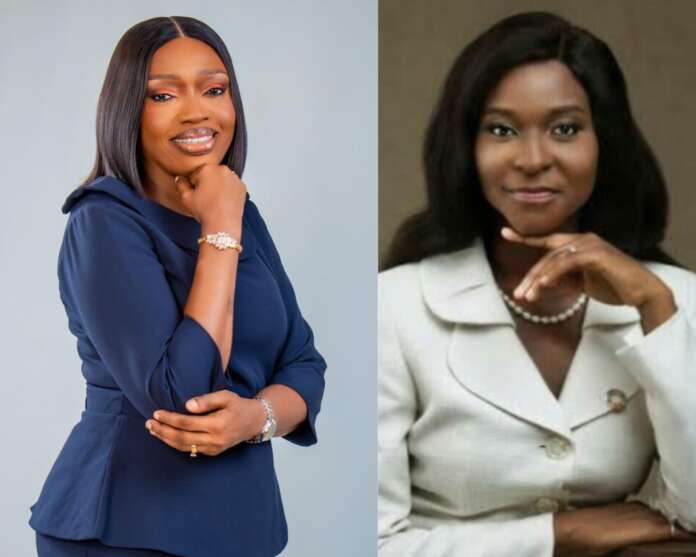
Twins Michelle and Lavinia Osbourne

Twins Michelle and Lavinia Osbourne have always shared a special connection.

But when Lavinia clicked on an email with results of an at-home DNA test in September 2022, she was filled with a sense of dread.

“Maybe subconsciously I knew,” she says.

Her test results revealed something astonishing: non-identical twins Lavinia and Michelle don’t have the same father.

Click here to continue reading.

Australia wants to become the first country to eliminate a cancer – can it?

Chrissy Walters' daughter is part of a generation Australia hopes will grow up without the burden of cervical cancer

Six months after finally giving birth to her first child, following a years-long struggle to conceive, Chrissy Walters was told her daughter would likely grow up without her.

Walters had suffered a major bleed while at home in Toowoomba – a small city two hours inland of Brisbane – and several hospital visits, doctor appointments and biopsies later, the then 39-year-old was handed an advanced cervical cancer diagnosis.

“I just said to [my husband] Neil… there has been a huge mistake,” Walters recalls.

Click here to continue reading.

Built for Greatness, Now Breeding Survival: The tragedy of UNN

By Alex Onyia

There was a time in this country when a man looked at the future and refused to accept mediocrity.

His name was Nnamdi Azikiwe.

In 1960, as Nigeria stood on the edge of independence, he didn’t just celebrate freedom, he designed it. He envisioned a university that would not copy the colonial system, but challenge it. A university that would produce thinkers, builders, and leaders for a new Africa.

That dream became University of Nigeria, Nsukka.

It was bold. It was revolutionary.

The first indigenous university in Nigeria. Built on the American educational model. A place where merit, curiosity, and innovation would define the African mind.

Read Also: The Decline and Potential Resurrection of the University of Nigeria, Nsukka: A Historical and Contemporary Analysis

UNN was not just a school, it was a statement: “We can think for ourselves.”

But today… walk into those hostels. And try not to feel your chest tighten.

Rooms built for 4 students now hold 10. Mattresses laid on bare floors. Broken windows patched with cardboard. Toilets that have forgotten what water feels like.

Walls that have absorbed decades of neglect, sweat, and silence. This is not just decay but rather this is betrayal. Because how do you place a young girl or boy full of dreams, full of fire into an environment that slowly erodes their dignity?

How do you expect brilliance to thrive where basic humanity is absent? We like to talk about moral decline, about distractions, about “this generation.” But nobody wants to talk about what happens when young people are forced to survive, not learn.

When privacy disappears. When safety becomes uncertain. When the line between resilience and desperation begins to blur.

Environments shape behavior. And somewhere in those overcrowded rooms, something is being lost. Focus. Discipline. Innocence. And then, the most painful part. The silence. Not the silence of peace but the silence of fear.

Students who speak up risk intimidation. Staff who demand better conditions are quietly sidelined. Voices that should drive reform are sometimes treated like threats. So people learn. They learn to whisper instead of speak.

They learn to endure instead of question. They learn that survival in the system often means compliance.

But a university is supposed to be the birthplace of ideas, not a place where courage is punished. When truth becomes dangerous, education becomes hollow.

University of Nigeria, Nsukka was built to raise giants. Today, too many are being trained to tolerate.

And the painful truth is this: A nation that neglects its students is failing but a nation that silences its students is collapsing.

We must go back to basics and restore the dignity of man.

The views expressed by contributors are strictly personal and not of Law & Society Magazine.

[Video] High Fuel, Low Pay: When survival becomes a luxury

Photo Credit: Nairametrics

By Ladidi Sabo

A viral street interview capturing the raw frustration of an ordinary Nigerian has reignited a familiar but unresolved national debate: why does fuel feel more expensive in Nigeria—despite the country being one of Africa’s largest oil producers?

The woman at the center of the now-circulating video did not cite policy papers or economic models. Her argument was simpler—and more devastating. Nigerians, she said, are paying fuel prices that feel crushing not because they are the highest in the world, but because they exist within an economy where wages are low, living conditions are harsh, and social support systems are weak.

Her point cuts to the heart of Nigeria’s economic paradox: in wealthier countries, fuel may cost more per litre, but incomes, infrastructure, and quality of life soften the impact. In Nigeria, by contrast, even moderate increases in petrol prices ripple through every layer of daily survival—from transportation to food costs—turning fuel into a symbol of economic strain.

That strain is unfolding against a troubled domestic refining landscape. As of early 2026, Nigeria’s hopes for energy independence rest largely on the Dangote Refinery—a 650,000 barrels-per-day mega-project widely seen as a game changer, yet still unable to single-handedly resolve the affordability crisis.

While the refinery represents unmatched scale and investment, it operates within a broken system. Fuel prices in Nigeria remain tied to global market dynamics, meaning that even increased local production does not automatically translate into cheaper pump prices. For millions of Nigerians, the expectation that domestic refining would bring relief has yet to materialize.

Beyond Dangote, the rest of Nigeria’s refining sector tells a more troubling story. State-owned facilities in Port Harcourt, Warri, and Kaduna—once pillars of national energy strategy—have remained largely non-functional despite more than $27 billion reportedly spent on rehabilitation over the past decade. Critics point to a familiar mix of mismanagement, outdated technology, and systemic inefficiencies.

Smaller, modular refineries, once touted as a flexible solution, are also struggling to gain traction. Operators face chronic crude shortages, high operational costs, and limited access to financing. Even policies designed to support them, such as the naira-for-crude initiative under the Petroleum Industry Act, have faltered in implementation, leaving many plants operating far below capacity.

Compounding the crisis is insecurity in the oil-producing Niger Delta, where pipeline vandalism and crude theft continue to choke supply chains. The result is a system where local refiners cannot access the very resource Nigeria exports in abundance.

Industry groups say modular refineries could meet up to 10 percent of Nigeria’s diesel demand under the right conditions. For now, they contribute less than 3 percent—another missed opportunity in a country long plagued by energy contradictions.

The dominance of Dangote’s refinery, while significant, also underscores a deeper structural imbalance. Unlike smaller operators, it benefits from independent infrastructure, financial muscle, and the ability to source crude internationally when local supply falters. It is, in many ways, an exception in an otherwise fragile ecosystem.

Yet even that advantage has limits. Without broader reforms, spanning supply chains, infrastructure, and economic policy, the benefits of large-scale refining risk being diluted before they reach ordinary citizens.

For Nigerians, the issue is no longer just about fuel, it is about fairness. The viral video’s central question lingers: what does it mean to compare fuel prices globally when the realities of income, welfare, and opportunity are so starkly unequal?

As the country grapples with inflation, stagnant wages, and rising living costs, fuel has become more than a commodity. It is now a daily referendum on governance, economic planning, and whether Africa’s largest oil producer can finally translate resource wealth into real relief for its people.

Watch the video below.

Islamic cleric accused of sexually abusing young girls inside mosque

An Islamic leader of a Queens mosque was arrested after being accused of gr0ping and molesting multiple young girls.

Tajul Islam, 55, was arrested on Monday, April 27, by the Queens Child Abuse Squad on charges of sexual abuse, forcible touching, and unlawfully dealing with a child for multiple alleged disturbing incidents that occurred over a week in April, according to the NYPD.

Islam, a religious leader at Masjid Bilal Queens Islamic Center in Jamaica, allegedly approached a 10-year-old girl inside the storefront mosque, grabbed her bre@st, and touched her inner thigh, according to a criminal complaint obtained by QNS.

The cleric, who also lives in the mosque, committed the same act again on Monday — approaching and gr0ping another 10-year-old girl, the complaint alleged.

He was cuffed roughly four hours after the most recent incident unfolded, the outlet said.

Islam was arraigned on Tuesday and pleaded not guilty to the charges.

He was ordered held on $25,000 bail by Judge Sharifa Nasser-Cuellar, who also issued temporary orders of protection, court records show.

The NYPD is now asking other possible victims or individuals with knowledge of the incidents to come forward by calling the NYPD’s S£x Crimes Hotline.

How many jobs have you created?’ Julius Malema slams South Africans blaming migrants for unemployment

Julius Malema has condemned South Africans carrying out xenophobic violence against Nigerians and other migrants in the country.

While speaking at a public function recently, a visibly angry Malema said he would never support any attack on another African national residing in South Africa. 

“You say Zimbabweans take your jobs, Nigerians take your jobs, and you march, close shops, and beat up people. Tell us, after doing that, how many jobs have you created? By beating up these Nigerians, Ghanaian, Zimbabweans….You have beaten them and taking them out of the country, how many jobs have you created after that? You be@t people because they took your jobs…They ran away, You closed a shop that hired five people and say they take our jobs. After closing that job, how many hobs have you created? 

Unskilled men with no skill, none whatsoever, saying somebody took your job? The only skill they know is to drink all of that nonsense and pretend they are revolutionary” he said

He said he doesn’t want the votes of people who would look at an African child, who looks just like their own children, and ask that the child be thrown out of a South African school or a pregnant woman be kicked out of a hospital just because she isn’t South African.

His speech comes amidst renewed Xenophobic attacks in South Africa.

Watch a video of him speaking.

Moldovan former richest man jailed in $1bn ‘theft of the century’ case

Vlad Plahotniuc, once Moldova’s richest man, has been sentenced to 19 years in jail in a banking fraud case known in the country as the “theft of the century”.

Plahotniuc was found guilty of partaking in the 2014-15 fraud which involved $1bn (£748m) – at the time 12% of Moldova’s total GDP.

He was personally accused of receiving over $40m from the fraud scheme and was ordered to pay around $60m (£44m) to the state in damages.

Plahotniuc, who denies any wrongdoing, was not present in court. His lawyer said he would appeal.

Reuters said the prosecutor’s office argued it had data showing that Plahotniuc used the funds siphoned off from the banks for personal gain: the purchase of an Embraer Legacy 650 aircraft, the acquisition of property, paying for legal, medical, and tourism services, and business investments.

The former oligarch was Moldova’s richest businessman and a prominent political figure when the “theft of the century” took place.

In 2014, loans worth $1bn were transferred in just two days to a series of UK- and Hong Kong-registered companies whose owners were unknown.

The government was forced to step in to bail the banks out, protecting depositors but creating a hole in the public finances equivalent to an eighth of Moldova’s GDP.

A report later found that much of the funds had ended up in companies owned by pro-Russian oligarch Ilan Shor.

Plahotniuc was not immediately accused of involvement. But by 2019 he was facing corruption charges and fled Moldova after his Democratic Party was ousted from power.

He spent six years on the run and in July 2025 he was arrested at Athens while he was boarding a plane to Dubai and later extradited back to Moldova.

On Wednesday prosecutors said Plahotniuc had used “his influence in the public, political, financial and criminal environments” to allegedly coordinate “a network… in order to obtain illicit benefits”.

Authorities added that to achieve this goal Plahotniuc allegedly facilitated Shor’s entry into the shareholdings of some commercial banks, leading to fraud.

Shor is now living in Moscow and has recently been accused of being the mastermind behind a pro-Russian vote-buying and vote-influencing scheme in Moldova.

Plahotniuc faces several other long-running criminal cases in Moldova but denies involvement in any of them.

His lawyers maintained that the prosecution’s stance was “politically motivated”.

This article was opriginally published by BBC under the headline: “Moldovan oligarch jailed in $1bn ‘theft of the century’ fraud case

Evil rapist who infected men and boys with HIV jailed

A “dangerous” rapist who deliberately infected five young men and two boys aged 15 and 17 with HIV has been handed a life sentence with a minimum jail term of 23 years.

Adam Hall, 43, wanted to inflict “pain and harm” on “vulnerable” men he targeted online or at bars in Newcastle between 2016 and 2023, the city’s crown court heard.

Hall, from Washington near Sunderland, was found guilty of inflicting grievous bodily harm on seven victims, four of whom he raped.

Click here to continue reading.

Michael Jackson biopic smashes box office record

The new musical film about Michael Jackson has stormed the worldwide box office, scoring the highest opening weekend ever for a biopic.

The singer’s nephew Jaafar Jackson portrays him in Michael, which has taken $217m (£160m) globally since it opened on Wednesday.

Queen musical Bohemian Rhapsody, which launched with $124m (£91m) in 2018 and starred Rami Malek as Freddie Mercury, previously held the box office record for a musical biopic.

Click here to continue reading.

Democracy on Trial: Traore’s military alternative

By Sonnie Ekwowusi

Burkina Faso’s irrepressible young military ruler, Ibrahim Traoré, has once again stirred continental debate with his blunt admonition that African countries should “forget about democracy.” In his telling, democracy is not merely flawed; it is bloody, imposed, and a modern instrument of subjugation. “Democracy kills,” he declares, urging Africans to run from it rather than embrace it.

In Traoré’s own words: “People must forget about democracy. If an African wants to tell you about democracy, you should run away. Democracy kills. Democracy as a Western ideal amounts to slavery, and it is killing. Wherever they want to install it in the world, it’s in the blood. There is no democracy in this world. They impose it when they want and they also kill it. Imperialism is the individual who wants to dominate the other, keep him in slavery and oppress him.”

These remarks, provocative as they are, cannot be dismissed outright. They speak to a growing frustration across Africa—one born not of theory, but of lived experience. In too many countries, democracy has failed to deliver its most basic promises. Elections are held, yet poverty persists. Governments are chosen, yet corruption thrives. Institutions exist, yet justice remains elusive. For millions of Africans, democracy has too often been reduced to a ritual devoid of tangible benefit.

For example, Nigeria, the “giant” of Africa, is currently under the iron grip of President Bola Tinubu’s dictatorial, delusional and incompetent misrule. This is testing the limits of public patience and state capacity. Under the dictatorship of President Tinubu life has ceased to exist for many poor Nigerians. At the moment in Nigeria governance is in abeyance as the APC rulling party is only focused on how to return to power in 2027. Consequently, hope hangs in the balance. The Nigerian streets are littered with walking corpses who pitiably regard themselves as human beings. All that President Tinubu is concerned with at the moment is how to return to power in 2027.

To achieve this, he is poised to wipe away the five major opposition political parties so that he himself and his rulling party will be the only political party contesting the 2027 election. It sounds absurd but that is the reality in Nigeria at this moment. Meanwhile the Nigerian economy has collapsed with inflation eroding purchasing power and deepening hardship. Nigeria has just been named as one of the three countries in the world with most hungry people and most malnourished people. Hunger, unemployment, and frustration have become defining features of everyday life in Nigeria.

Even more troubling is the persistence—and in some areas, escalation—of insecurity. From insurgency in the North-East to banditry in the North-West to continuous killings in Kwara State and on the Plateau and communal violence elsewhere, the Nigerian state has lost the struggle to assert control and guarantee the safety of its citizens. This is why terror groups and criminal networks have adapted quickly, exploiting institutional weaknesses and porous borders.

The core issue is lack of responsibility on the part of the Tinubu government. Nigeria’s security architecture remains fragmented, under-resourced, and often reactive rather than proactive. Without a clearly articulated, homegrown strategy that integrates military action with intelligence, technology, economic development, and community engagement, the cycle of violence is likely to persist.

It is within this context that Traoré’s message finds resonance, particularly in Burkina Faso, where years of insecurity and governance failures eroded public confidence in civilian rule. Yet there is a glaring contradiction at the heart of his position. Having seized power in a September 2022 coup—ousting Lieutenant Paul-Henri Sandaogo Damiba, who himself had overthrown President Roch Marc Christian Kaboré—Traoré promised a swift return to democratic governance. That promise has since been deferred. The transition timeline has been extended to 2029, political parties have been curtailed, and citizens have been told, in unmistakable terms, to “forget” democracy.

This is no minor shift; it is a fundamental recalibration of Burkina Faso’s political trajectory. And it sends a troubling signal across the continent: that democratic failure may justify indefinite military rule. Yet to accept that conclusion would be to embrace a dangerous illusion.

The central question is not whether democracy has disappointed—clearly, in many instances, it has. The real question is whether the failures attributed to democracy are in fact failures of its practice rather than its principles. Democracy, properly understood, is not merely the conduct of elections. It is a system grounded in accountability, participation, and the rule of law. Where these elements are weak or manipulated, the result is not true democracy, but its hollow imitation.

Africa’s challenge, therefore, is not to abandon democracy, but to make it work.

On paper, democracy is compelling; in practice, it can be distorted into an engine of fraud. It promises participation, accountability, and freedom. Yet, as the French political thinker Alexis de Tocqueville observed in Democracy in America, even the system’s most celebrated model fell short of its ideals—susceptible to the tyranny of the majority, social inequality, and fragile institutions. Democracy, in other words, has never been a finished product. It is an aspiration that demands constant tending.

Africa’s experience has been more complex still. Democratic systems, often inherited wholesale from colonial powers, were grafted onto societies without the institutional foundations that make them work: independent courts, professional civil services, credible electoral bodies, and a civic culture that prizes accountability. The result, in too many places, has been democracy in form but not in substance—ballots cast without power dispersed; leaders elected without being held to account.

It is here that Traoré’s critique finds its audience. If the purpose of government is the welfare and security of the people, then outcomes matter. A system that cannot protect lives, create jobs, or deliver justice risks forfeiting its legitimacy, however procedurally correct it may be.

But this is only half the truth—and a dangerous half if taken to its conclusion.

The alternative on offer—military rule—has a long and sobering record. Across Africa, military regimes have often begun with promises of order and renewal, only to end in repression and decline. From Uganda under Idi Amin, to Nigeria under Sani Abacha, to the Central African Republic under Jean-Bédel Bokassa, the pattern has been grimly consistent: initial applause, followed by curtailed freedoms, weakened institutions, economic mismanagement, and eventual disillusionment. Without checks and balances, power concentrates; without scrutiny, it corrodes.

This is why the fixation must not be on democracy as a label, but on governance as a lived reality. The ultimate purpose of government is the welfare and security of the people. On this, Traoré is not wrong. But the means of achieving that purpose matter just as much as the end. Good governance cannot be sustained where citizens lack the power to question, to participate, and ultimately, to change their leaders.

The problem, then, is not democracy per se, but the failure to build the conditions that allow it to work. As Plato warned, political systems are only as good as the character and capacity of those who operate them. Democracy assumes civic virtue and institutional integrity that cannot be taken for granted. Where these are absent, outcomes will disappoint.

Yet the remedy is not abandonment but repair.

To dismiss democracy because it has been poorly practiced is akin to abandoning medicine because of a misdiagnosis. The task is to diagnose correctly and treat the underlying ailment: weak institutions, elite capture, impunity, and a deficit of public trust. Elections alone do not constitute democracy. A government that emerges from the ballot but governs without regard for the rule of law, economic justice, or public welfare cannot claim democratic legitimacy.

Good governance—effective service delivery, respect for rights, opportunity, and security—is the true test of any system.

Here, Africa’s own experience offers grounds for cautious optimism. Countries such as Ghana and Botswana demonstrate that democratic governance, though imperfect, can yield stability, legitimacy, and incremental development when institutions are respected and leaders are held accountable. Senegal has sustained civilian rule with credible transitions, while Namibia has combined regular elections with constitutional fidelity. These are not utopias, but they show that democracy—adapted and strengthened—can work.

Nor should the deeper moral dimension be ignored. Tocqueville argued that political institutions cannot endure without corresponding moral ties—that governance reflects the character of society itself. If democratic practice is to improve, it will require more than legal reform. It will demand a renewal of civic norms: integrity in public office, intolerance for corruption, and a citizenry willing to hold leaders accountable between elections, not merely during them.

This is the harder path. It is also the only sustainable one.

Traoré is right to insist that citizens care about results. However, he is wrong to suggest that those results can be secured by setting aside the very principles that make governments answerable. The choice between democracy and good governance is a false one. Properly understood, each requires the other.

Africa should not be fixated on democracy as a label. It should be fixated on governance that works—effective, accountable, and just. But history suggests that such governance is most likely to endure where power is limited by law, leaders are chosen and changed by the people, and institutions outlast individuals.

The continent stands at a crossroads. It can retreat into the false comfort of authoritarianism, or it can undertake the harder—but more necessary—task of building democratic systems that deliver.

Africa may not need to forget democracy.

It needs to finally make it work.

CONCLUDED

The views expressed by contributors are strictly personal and not of Law & Society Magazine.

TIPS