Home Blog Page 3

Doris Fisher, who built Gap Inc. into a retail giant, dies at 94

The company she started in 1969 with her husband, Don, grew from a single store selling jeans and records to a $16 billion brand that remade the apparel industry.

Doris Fisher, who co-founded their clothing brand — Gap — with her husband, Donald has died at 94.

They were said to have make finding well-fitting jeans easier when they started in 1969. Doris served as the brand’s merchandiser, shaping Gap’s style identity until she stepped down in 2003

A spokesperson for Gap confirmed to PEOPLE that Doris, “passed away this weekend, surrounded by her family” on Saturday, May 2. In a statement shared with Gap Inc. employees, CEO Richard Dickson said Doris died “peacefully,” and highlighted her “brilliance, quiet determination, and heart,” all of which positively impacted the business and the broader fashion scene.

“Doris built Gap with vision, conviction, and an equal voice in the brand from the very beginning — at a time when that was highly unusual for women,” Gap wrote in a tribute on Instagram. “She was, simply, a true original.”

“Her values shaped our company. And her eye shaped our style,” the post continued. “Her legacy is woven into who we are. What we wear. And how we show up. Today, and always.”

The businesswoman and her husband created the clothing brand together in 1969, built on the goal to “make it easier to find a pair of jeans that fit with a commitment to do more,” per the brand’s site. Donald himself experienced that all-too-familiar problem, BBC reported, and the frustrating experience fueled his and Doris’ new business.

Doris Fisher and Donald Fisher attend Dinner for RICHARD SERRA "SCULPTURE: FORTY YEARS" Hosted by MoMA and LVMH at The Museum of Modern Art on May 29, 2007 in New York City.
Doris and Donald Fisher.BILLY FARRELL/Patrick McMullan via Getty

Doris came up with the brand’s name, which referred to the generation gap in an effort to draw in younger shoppers, BBC reported, and the brand’s effort to “bridge gaps to create a better world,” Dickson wrote in his message to Gap employees.

The couple, who wed in 1953, opened the doors to their first store in 1969 in San Francisco, where only men’s Levi’s jeans and record tapes were sold, followed by another location in San Jose, Calif., the following year, at which time the brand began making jeans for women, too, per the brand’s site. Three years in, Gap had established 25 stores, and by 1987, it had expanded internationally by opening a number of stores in London, then more in Vancouver, British Columbia, Canada, two years later.

Doris worked as Gap’s merchandiser, thus influencing the brand’s style identity, until 2003. Donald stepped down as Gap Inc.’s chairman the year after, though he remained on the board. Five years later, Gap’s co-founder and Doris’ husband of 56 years died at age 81.

California first lady Anne Gust Brown (L) walks on the stage with Gap clothing store chain founder Doris Fisher after she was inducted along with her late husband Donald, during the 2011 California Hall of Fame Induction Ceremony in Sacramento, California December 8, 2011.
Doris Fisher.REUTERS/Hector Amezcua/Pool 

Since its founding, Gap has grown to include Old Navy, Banana Republic and Athleta, with the four brands operating about 3,570 stores across the world, BBC reported.

Of trigger-happy badges and dead Nigerians, By Jonathan Nda-Isaiah

A 28-year-old man named Mene Ogidi sat on the ground in Effurun, Delta State on April 26, 2026. His hands were tied behind his back with a rope. He was not running. He was not fighting. He was begging.

“Officers, abeg, I go tell you everything. Na my friend deceived me. E dey Sapele. I will carry you to the place.”

Someone filmed what happened next.

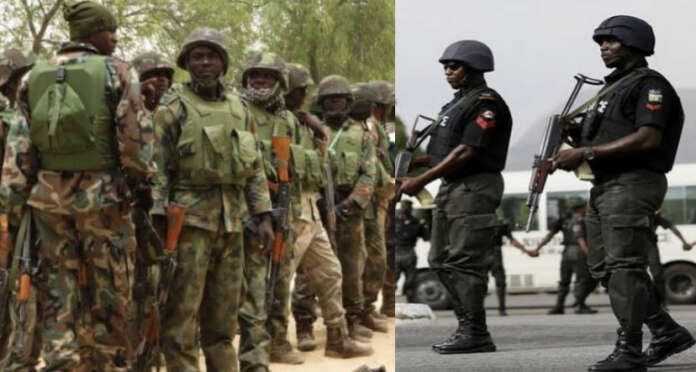
ASP Nuhu Usman cocked his rifle and shot Mene Ogidi at point-blank range. In broad daylight. With the man’s hands still tied behind his back. The officers then lifted the body into a police Toyota Sienna and drove off.

This is not a war story from Sambisa Forest. This happened on an ordinary street in Delta State. And if not for the camera phone of an ordinary Nigerian, it would have been filed under “suspected criminal neutralised” and we would have moved on.

That is the part that should disturb every one of us deeply. Mind you, I am not saying Mene Ogidi was a saint. The police claimed he was caught trying to ship a Beretta pistol with four rounds of ammunition. Maybe he was. Maybe he was not. Maybe, as he was screaming in that video, a friend truly set him up. We will never know now, because ASP Usman decided to become judge, jury, and executioner in one trigger pull.

This is the very foundation of what a justice system is supposed to prevent. You arrest a suspect, you produce him in court, you present your evidence, and a judge decides his fate. That is not bureaucracy for its own sake. It is the difference between a functioning state and a killing field.

Now, in fairness, the Inspector-General of Police, Rilwan Disu, moved relatively quickly. ASP Usman and three other officers have been recommended for dismissal and criminal prosecution. The Force Disciplinary Committee has sat. The case is before the Police Service Commission for ratification. I give the IGP some credit for not circling the wagons this time. But credit only goes so far.

Because here is my real question. Why does this keep happening?

The #EndSARS protests of October 2020 shook this country to its foundations. Young Nigerians, armed with nothing but phones and anger, took to the streets and told the government Enough is enough. The Special Anti-Robbery Squad was dissolved, at least on paper. Panels were set up in every state. Reports were written. Recommendations were submitted. Governors received findings. And then what? Nearly six years later, a restrained man is shot dead on camera in Delta State by a serving police officer and we are back to the same outrage cycle, the same official condemnations, the same promises.

What did we actually reform? I want someone to answer that question with specifics, not press releases.

Let me be precise about the pattern here, because treating Mene Ogidi’s death as an isolated incident is dishonest. There is a recurring category of security force killing where the victim is not a combatant, not an armed suspect in flight, not posing any imminent threat at the moment lethal force was applied. In the cases of Kehinde Alade, Ibrahim Usman, and the unnamed pregnant woman in Abraka, the two passers-by cut down in Alag do in each of those incidents, the victims were either bystanders or already under some form of state control when they were killed. Mene Ogidi fits squarely into the worst sub-category of this pattern: physically restrained, hands literally tied behind his back, pleading cooperatively, and still shot. That is not a split-second field decision gone wrong. That is the deliberate execution of a man in custody.

And before anyone tries to make this a regional story, the geography of documented cases from the past two years stretches from Delta to Lagos, from Abuja to Akwa Ibom, from the north-east to the south-east. This is not a southern problem or a northern problem. The common thread is not geography. The common thread is impunity, the settled belief among some officers that a poor, unconnected Nigerian’s life carries no real cost.

There is also something in this Delta case that I am surprised official commentary has not pressed harder on. Mene Ogidi, in that video, was actively cooperating. He was offering the officers a lead, a friend in Sapele, a specific location, a potentially bigger arrest. That is exactly the intelligence any competent officer would want to follow. So what was ASP Usman so eager to bury that he shot this man mid-sentence, mid-cooperation?

I am not accusing anyone of a specific crime beyond what the video already shows. But the question must be asked. When a suspect is willing to talk and an officer silences him permanently, the logical inference is that the officer had a reason to prevent that information from surfacing. The IGP’s disciplinary process must go beyond the mechanics of the shooting and probe what Mene Ogidi might have known that made him dangerous to someone in or connected to that patrol. Cover-ups in Nigerian law enforcement are not conspiracy theories. They are a documented, recurring feature of how certain bad actors within the system operate.

The wider problem resolves to three things: training, culture, and accountability infrastructure.

On training, a Nigerian police constable typically receives between three and six months of instruction before being handed a firearm. In jurisdictions that take professional policing seriously, that period runs between eighteen months and two years. You cannot build proportional force judgment, human rights instincts, and de-escalation reflexes in six months. What you produce is someone who knows how to operate a weapon but has received no serious grounding in why restraint is the harder and more disciplined calling.

When that person faces a tense situation, muscle memory beats judgment every time. On culture, the rot is generational. For decades, sections of the Nigerian police have operated on an unspoken premise that poor, unconnected citizens are not quite rights-bearing individuals but problems to be suppressed. That culture does not die with a memo from the IGP. It requires new supervisory norms at the divisional level, consistent mentorship from senior officers who model different behaviour, and most critically  a track record of consequences severe enough to alter the calculus for the next officer tempted to cross the line.

On accountability infrastructure, the Mene Ogidi case does show something: when leadership chooses to act, the system can respond with some speed. The IGP moved. Good. But accountability cannot be a function of how viral a video went. It cannot be selective. The families of Kehinde Alade, Ibrahim Usman, and the unnamed pregnant woman from Abraka have the same rights as Mene Ogidi’s family. If the state cannot show them equivalent resolve, then what we have is not accountability it is brand management triggered by embarrassing footage.

And that is the uncomfortable truth underneath all of this. The reason that the camera phone mattered is that without it, nothing would have moved. How many Mene Ogidis were never filmed? How many families received a phone call, a body, and a story about how their son was a dangerous criminal who gave officers no choice? The documentation gap in Nigerian law enforcement accountability is not an administrative oversight. It is the gap through which most of the impunity escapes, unchallenged and uncounted.

So what must happen now? First, the IGP must drive this case to its full legal conclusion, criminal prosecution, trial, and conviction, not a quiet administrative dismissal that allows ASP Usman to eventually resurface somewhere in the system. The family of Mene Ogidi deserves justice completed, not justice begun.

Second, the National Human Rights Commission, working with police oversight bodies, should establish and publish a running public register of extrajudicial killing cases  dates, locations, officers named, charges filed, and verdicts reached. We cannot manage what we refuse to measure, and right now the true scale of unlawful killings by Nigerian security forces is masked by the absence of systematic public record-keeping.

Third, state governors cannot continue hiding behind the federal structure of the Nigeria Police Force. The police operating in Delta State operate in a political environment shaped in part by the Delta State Government. Governors have the platform, the relationships, and the public authority to demand higher standards from the commands in their states. The silence of most governors after incidents like this is its own form of complicity.

Mene Ogidi was 28 years old. Whether guilty of the charge against him or entirely innocent, we may never know which he deserved to live to see a courtroom. He did not. And if we exhaust our outrage on social media and then move on to the next scandal, we have no right to be surprised when the next restrained man is shot on camera and the cycle begins again.

The views expressed by contributors are strictly personal and not of Law & Society Magazine.

How to link your BVN to multiple bank accounts easily

Amid renewed concerns over restricted bank accounts and growing complaints from customers across Nigeria, the issue of Bank Verification Number linkage has returned to the spotlight. 

Reports of transactions being limited and accounts placed on hold have pushed many account holders to revisit their compliance status, particularly as financial institutions tighten enforcement of regulatory directives. At the centre of the development is a simple but critical requirement: every bank account must be tied to a valid BVN. For customers operating more than one account, understanding how to link BVN to multiple bank accounts easily has become urgent.

The Bank Verification Number system was introduced by the Central Bank of Nigeria to strengthen identity verification within the banking sector.

It ensures that each customer has a unique identity that cuts across all financial institutions, reducing cases of fraud and impersonation. 

However, failure to properly link accounts continues to create avoidable disruptions for many Nigerians.

Why BVN linkage is under renewed scrutiny

Recent enforcement actions by banks have been driven by compliance with Know Your Customer regulations issued by the Central Bank of Nigeria. Financial institutions are under obligation to ensure that every account on their platform is properly identified and traceable.

For individuals with multiple accounts, the requirement is not to register multiple BVNs but to ensure that a single BVN is linked across all accounts. This is where the need to link BVN to multiple bank accounts easily becomes important.

Retrieving your BVN before linking

Before proceeding with any linkage, customers must first confirm their BVN. This can be done by dialing 5650# using the phone number used during registration. The number will be displayed instantly, although network charges may apply.

Having the correct BVN is essential, as incorrect entries can delay or completely prevent successful linkage.

Linking BVN through mobile banking apps

Most commercial banks in Nigeria provide BVN update options within their mobile applications. After logging into the app, customers can navigate to the profile or account settings section where BVN linkage is usually listed.

Once the BVN is entered and submitted, the system verifies the details against the existing database. If the information matches, the account is updated almost immediately. This method remains one of the fastest ways to link BVN to multiple bank accounts easily, especially for customers who already use digital banking services.

Using USSD codes for quick linkage

For customers without access to smartphones or internet services, USSD remains a dependable option. By dialing the bank’s shortcode, users can follow prompts to update their BVN details.

Common USSD codes include, UBA: *919#, Zenith Bank: *966#, GTBank: *737#. After selecting the appropriate option, customers input their BVN and confirm the request. The process is typically completed within minutes.

Visiting the bank branch for assistance

In situations where digital methods fail, visiting a bank branch provides a direct solution. Bank officials can assist with manual linkage after verifying identity through valid means such as a national ID card or voter’s card. This option is particularly useful for customers facing persistent errors or discrepancies in their records.

Ensuring your details match

A major challenge in BVN linkage is inconsistency in personal information. The name on the bank account must align exactly with the name registered under the BVN.

Differences in spelling, arrangement, or omission of middle names can lead to rejection. Where such issues exist, customers are advised to update their details at the bank or through BVN enrolment centres before attempting to link again. Without this step, efforts to link BVN to multiple bank accounts easily may not succeed.

What happens after linking your BVN

Once the BVN is successfully linked, the account becomes fully compliant with regulatory requirements. Customers regain unrestricted access to banking services and can carry out transactions without interruption. The linkage also strengthens security. Since all accounts are tied to a single identity, suspicious activities can be tracked more efficiently across different banks.

The effort to link BVN to multiple bank accounts easily reflects a broader attempt to build trust and accountability within Nigeria’s financial system. 

With the right information, accurate personal details, and access to the available channels, customers can complete the process without stress. What remains essential is compliance, because in today’s banking environment, an unlinked account is no longer a viable option.

Frequently Asked Questions

Can I have two different BVNs in Nigeria?

No. The policy allows only one BVN per individual. Multiple BVNs must be resolved through the appropriate banking channels.

In most cases, the process is instant when done through mobile apps or USSD. However, delays may occur if verification issues arise.

Will my account be blocked if my BVN is not linked?

Yes. Banks may restrict transactions or freeze accounts that are not linked in line with regulatory requirements.

Source: Tribuneonline

The sickness called xenophobia, By Funke Egbemode

Kaka:

 What kind of people gather to water another man’s private Strait of Hormuz?

Koko:

Sick people.

Kaka:

 What kind of men leave their so-called businesses to watch women’s breasts and buttocks?

Koko:

 Sex-starved, sex-deprived men who are not really busy.

Kaka:

You mean those who do those things are really not well, and uncivilised?

Koko:

 Trust me, they need all kinds of therapy and mind resets.

 I know, Kaka, I saw that video. A Nigerian woman, stripped of dignity, assaulted in broad daylight. Not in a war zone. Not in a red light district. The kind of violence we see these days belittles our morals and demeans us all.

Read Also: Xenophobia Crisis: Nigerians fleeing South Africa to pay their own way home – FG

Kaka:

At first, I thought it happened in South Africa.

Koko:

Oh no, whatever it is that ails South Africa is not that bad yet. Their cold is not yet Covid.

It would have sat in the mouth like bitter kola.

Read Also: When justice fails…

Kaka:

But those shameless lazy bones are okada riding blacks stripping women naked, forcing their legs open, in search of God-knows-what, and filming it.

Koko:

Other people’s wives o.

Kaka: Those women have children, parents, siblings.

Koko:

And the sick men parked their ‘okada’ to watch the show of shame.

Kaka:

Real shame of shameless people. But let’s not allow perverts to distract us from calling out evil doers who forgot their roots and helpers. Who would have thought a day would come when South Africans would turn to bite Nigeria with teeth we spent sweat and money to shape and sharpen?

Koko:

It’s sad and Nigerians are asking: why? What have we done? Why are our children being cut down in their prime? Why are our promising sons being returned home in the cargo cabins of planes that flew them in premium cabins to Johannesburg? Why are our hard-earned businesses being destroyed by those we once called brothers? Are we the cause of everything that is wrong with South Africa?

Kaka:

Ah! The eternal Nigerian question—what did we do wrong? As if a man must commit a crime before he is lynched.

Koko:

In other words, we are being lynched just because we are not South Africans? They just hate our faces?

Kaka:

Your faces are enough problem, really, along with your colourful lifestyle. However, seriously, this thing called xenophobia is a disease that has South Africa by the jugular.

Since the end of apartheid in 1994, xenophobic violence in South Africa has killed at least 669 people, displaced over 127,000, and led to the looting of thousands of businesses, according to Georgetown Journal

In just the first half of 2025, there were 26 recorded incidents and 14 deaths.

Koko:

As we speak in 2026, reports confirm renewed attacks, including the killing of two Nigerians and widespread violence in cities like Pretoria and Durban. Killing Nigerians seems to have become a sporting event.

Kaka:

Morbid sport by sick people.

Koko: And they have refused to seek help for the unfortunate recurring disease. 2008, 2015, 2019—each wave was worse than the last. Like malaria that refuses to die because the swamp is still there.

Koko:

But why Nigerians? Why always us?

Kaka:

Sit well. There are reasons. Not excuses—reasons. Let us start with economic frustration. South Africa is battling unemployment. Angry young men look around and see foreigners hustling, trading, surviving and conclude:

“They are taking our jobs.”

That narrative repeated like a broken record leaves them angry but at the wrong people.

Koko:

South Africa needs a scapegoat, someone to blame for their malfunctioning polity.

When a country struggles, it needs a villain. Foreigners become the convenient enemy and are being blamed for economic woes.

Kaka:

There is also the issue of stereotypes about Nigerians. Let’s not lie to ourselves.

Nigerians carry a reputation—some earned, many exaggerated.

Drug trafficking. Fraud. Flashy lifestyles.

Even when only a few are guilty, the whole community is branded.

Koko:

I believe jealousy is another demon in the matter.

A Nigerian opens a shop, works 18 hours, including Sundays and public holidays and succeeds.

Next thing, the sons of the soil who slept till noon and went clubbing twice a week suddenly go green with envy.

“Burn his shop.”

“ He is corrupt.”

“ He stole my customers.”

“ All of them should go back to their country.”

Suddenly, hard work becomes a vice and envious laziness becomes a virtue. South African would choose violence every day and twice on Sunday instead of learning how Nigerians’ resilience and hardworking ways.

READ ALSO: Chidimma Vanessa, The Ugly Side Of Perceived Xenophobia In South Africa

Kaka:

A nation elects leaders they do not like and the voters hold foreigners responsible for their bad choices. Then, the inhuman opportunistic politicians also blame the foreigners for their ineptitude.

They stir pots of trouble.

Anti-immigrant rhetoric is used as campaign slogans even as they increased tension because nothing wins votes like blaming outsiders.

Koko:

That is like an impotent man blaming his noisy neighbor for his inability to walk with his third leg.

Kaka:

Or a man with a small staff of office envying the strength and length of his more endowed brother. That is why they concoct misinformation and rumours to demarket and demonise everything Nigerian.

One minute, it is “Nigerians installed a king”, and boom, riots. How does a leader chosen by Nigerians to direct Nigerians’ affairs become other people’s headaches? We have not forced South Africans to worship at our shrines or prostrate before our kings. Why is our boil giving them pains?

Koko:

But Nigerians sef! Must an endowed man fling and flaunt his endowment in the presence of a man struggling to satisfy his wife?

Kaka:

Yeah, I heard that because of this famed endowment, some South African women have left their small-sized men for Nigerian men.

Koko:

Women, do they not know that such choices can start a war?

Kaka:

Well, now that they have started the war, everyone is suffering.

 Koko:

But I’m sure, there is more to this sickness than a Strait of Hormuz and who has the best ocean-going vessels.

Kaka:

Nigerians don’t hide success. We spray it like perfume. When we ‘arrive ‘, nobody is left in doubt. We arrive with drums roll, aso ebi that announces established steeze.

In a struggling society, that attracts anger.

Koko:

 It’s not our fault that they don’t understand us. And we do not force our aso ebi on them. We are just different. Is being different a sin?

Kaka:

There’s also the issue of poor integration. Some Nigerians form tight communities, speak their languages as if it is the host country’s lingua franca, speaking at the top of their voices and running their networks like cults.

To locals, that feels like:

“They came, but they didn’t join us. Instead, they are building another nation within our nation.”

Koko:

For people who still have PTSD from Apartheid, that definitely will rile them up.

Kaka:

Then there are the bad eggs who took their criminal minds along to other people’s domains. The big consequences are now haunting us all.

A few criminals can destroy the image of millions and Nigerians—let’s be honest—have produced some very smelly bad eggs abroad.

Kaka:

There is also the way our can-do attitude is perceived as arrogance. Our

confidence is our strength but to others, it can look like arrogance.

Koko:

So, are you saying Nigerians are the cause of their own misfortunes?

Kaka:

No. Don’t twist it.

There is no justification for violence, rape, or killing. Understanding cause is not excusing crime. The real problem is the festering disease called xenophobia.

It is even bigger than Nigerians.

Xenophobia in South Africa is described as “deep-rooted” across society—even institutions.

It is not just about strikes or mob actions. It is about a nation’s economic failure. It is about frustrated a people taking their anger out on others. It is about the identity crisis of a people who are not sure if they are fully Africans or half-white men.

Koko:

 Maybe the solution question is, should Nigerians not just leave that toxic space, pack their bags and come home?

Kaka:

 No, it is not that simple. Those people are not there on vacation.

Many Nigerians in South Africa run businesses. Their children are in schools. They have dependants

and families back home.

Leaving would mean starting life from zero. Though staying may mean continued risking their lives.

Koko:

What about self-defence?

Kaka:

Careful. The moment Nigerians retaliate violently, it becomes foreigners vs citizens war.

Guess who the big loser will be?

Not the mob. Not the politicians.

The foreigner.

The most realistic way out is stronger Nigerian diplomacy, legal protection, better community bond. Nigerians living in South Africa must document the abuses because silence can invite more violence.

Koko:

Let’s come back to our own house.

Where is Abuja in all this?

Kaka:

Abuja is summoning envoys, issuing statements and writing strongly-worded letters as usual but the time is ripe for reactions that are faster, louder, and stronger. We can no longer speak diplomatese at violence.

Koko:

Otherwise, Nigerians abroad will feel abandoned?

Kaka:

Exactly. A citizen without protection is like a goat tied in a lion’s den.

Koko:

Whatever happened to “Africa for Africans”?

Kaka:

That slogan started dying years ago. Today, it is fully dead. Each baby now must carry his mother’s breasts himself. Every man for himself, God for us all.

What we have now are borders in the mind, unhealthy competition in the stomach, fear in the heart even when asleep.

Pan-Africanism sounds sweet in speeches but on the streets, it is about survival of the angriest.

Koko:

Let us hope this new pattern of s3xual assault, public stripping will not be added into the xenophobic mix before Nigeria does something to protect its own abroad.

Kaka:

When a mob strips a woman, they are not just attacking her. They are saying:

“You are not human.”

It is the final stage of hatred.

Koko:

So what do we do?

Kaka:

There are four things we must do urgently.

 Nigeria must protect its citizens globally and I mean going beyond nice-sounding speeches.  South Africa must enforce law, not mouth excuses that sound like they are condoning this nauseating nonsense because impunity breeds repetition.

 Nigerians abroad must be strategic by building alliances and avoid unnecessary exposure that is often mistaken for arrogance.

All Africans must confront this hypocrisy. We cannot shout  “down with colonialism” and still practise tribal hatred.

Koko:

But seriously, Kaka, are Nigerians in South Africa doing something wrong?

Kaka:

Some things, yes.

But nothing—nothing—justifies being hunted like animals.

Koko:

Should they leave?

Kaka:

Some will. Some can’t.

Koko:

Should they fight?

Kaka:

They must survive first.

Kaka (quietly):

The real tragedy is not that foreigners are attacked.

The tragedy is that Africans have learned to hate Africans with the efficiency of former oppressors. And that, Koko,

is the most dangerous import we never paid for.

The views expressed by contributors are strictly personal and not of Law & Society Magazine.

Africa, Autonomy and Geopolitics of Digital Rights: Lessons from Rightscon cancellation

Just days before thousands of activists, technologists, policymakers, and civil society actors were due to converge in Lusaka, the Zambian government abruptly cancelled RightsCon 2026, the world’s leading summit on the intersection of human rights and technology. The official explanation was bureaucratic: the need to ensure “alignment with national values” and unresolved administrative clearances.

But beneath this carefully worded justification lies a far more complex and troubling story. Evidence from organisers and multiple reports points to geopolitical pressure, particularly from China, linked to the participation of Taiwanese civil society groups.

What happened in Lusaka is not merely the cancellation of a conference. It is a signal event, one that exposes the entanglement of digital rights, global power politics, and Africa’s contested place in the emerging technological order.

RightsCon is not just another international conference. It is a convening space where some of the most contentious issues in global governance are debated: internet shutdowns, surveillance, AI governance, data protection, online gender-based violence, and the future of digital democracy. That alone makes it politically sensitive.

According to organisers, Chinese diplomats exerted pressure on the Zambian government due to the planned participation of Taiwanese delegates, reflecting Beijing’s longstanding insistence on isolating Taiwan internationally. The stakes were heightened by the expectation that discussions at the summit would include China’s global digital influence, surveillance technologies, and models of digital authoritarianism.

Zambia, like many African countries, maintains deep economic ties with China, including infrastructure financing and development loans. The conference venue itself had links to Chinese support, further complicating the political calculus.

In this context, the decision to cancel RightsCon reflects more than domestic policy considerations. It reveals how external geopolitical pressures can shape internal decisions even in matters as seemingly apolitical as hosting a conference.

Neoliberalism and Digital Neocolonisation

The cancellation of RightsCon must also be understood within the broader framework of neoliberal globalisation and its discontents. African economies, including Zambia’s, have long operated within systems of dependency shaped by external capital — first from Western institutions under structural adjustment programmes, and increasingly from emerging powers like China. This shift has not dismantled dependency; it has diversified it.

What we are witnessing is a form of digital neocolonisation where influence is exercised not only through trade or infrastructure, but through control over narratives, platforms, and spaces of discourse.

When a global human rights conference can be halted because of discomfort from an external power, it raises uncomfortable questions: Who controls the agenda of digital rights in Africa? Whose voices are allowed to be heard? And at what cost does economic partnership come?

The irony is stark. A conference designed to defend openness, participation, and accountability in digital spaces was itself shut down through opaque, unaccountable processes. All this without any recourse to the cost of such a decision. As far as we know, the immediate consequences of the cancellation are both tangible and intangible.

First, there are financial losses. Thousands of participants, over 2,600 by some estimates, had already committed resources to travel, accommodation, and logistics. Airlines, hotels, local vendors, and service providers in Lusaka stand to lose significant revenue. Beyond direct losses, Zambia forfeits the economic boost that accompanies large international gatherings.

Second, institutional damage. For Zambia, the reputational cost may be even greater than the financial one. Hosting RightsCon was a milestone, the first time the summit would be held in Southern Africa. Its cancellation “dents the image” of the country as a reliable host for global events and Africa as a continent.

Third, disruption of global collaboration. RightsCon is a critical space for cross-sector collaboration. Governments, tech companies, activists, and researchers use it to build coalitions, shape policy, and share knowledge. Its abrupt cancellation disrupts ongoing initiatives, delays advocacy efforts, and weakens already fragile networks working on digital rights.

Fourth, loss for marginalised voices. Perhaps the most profound loss is borne by those already on the margins, including women and activists from the Global South who rely on spaces like RightsCon to amplify their voices.

A Dangerous Precedent for Africa and Global Reverberations

The implications of this incident extend far beyond Zambia. If governments can cancel international gatherings at the last minute due to political pressure, it introduces a new level of uncertainty into Africa’s role as a host for global events. Civil society organisations may begin to reconsider hosting conferences on the continent, fearing instability or interference.

This is a profound setback. Africa has been steadily positioning itself as a hub for global dialogue on technology, governance, and innovation. The cancellation of RightsCon risks reversing that progress.

Moreover, it reinforces a troubling trend: the shrinking of civic space. Across the continent, there has been a rise in laws and policies that restrict assembly, expression, and digital freedoms. The RightsCon cancellation fits into this broader pattern, raising concerns about the future of democratic engagement in Africa.

The disruption caused by the cancellation is not confined to Africa. RightsCon is part of a global ecosystem of governance conversations. Its cancellation has ripple effects across international institutions, including events tied to World Press Freedom Day, some of which had to be relocated or restructured.

It also sends a chilling message to global civil society: even established, internationally recognised platforms are not immune to political interference. For organisations already grappling with funding constraints, political hostility, and digital threats, this represents an “existential” challenge.

Between Sovereignty and Influence: The Way Forward

To be clear, states have the sovereign right to determine what events take place within their borders. But sovereignty, in this case, appears entangled with external influence. However, the RightsCon episode forces a deeper reflection on what sovereignty means in a globalised world. Is it the ability to make independent decisions or the ability to resist pressure from more powerful actors?

For many African countries, the answer is complicated. Economic realities often constrain political choices. Yet, the long-term cost of compromised autonomy, particularly in areas as critical as digital governance, may far outweigh short-term gains.

The incident should not be seen as an isolated incident, but as a warning. Africa stands at a crossroads in the digital age. The continent has an opportunity to shape global norms on technology, governance, and human rights. But doing so requires safeguarding the spaces where these conversations happen. Three priorities emerge.

One, protecting civic space: governments must reaffirm commitments to freedom of expression and assembly, particularly in digital contexts. Two, strengthening institutional independence: host countries need mechanisms that insulate international events from undue political interference, whether domestic or external. Three, rebalancing global partnerships: African states must engage global partners, both Western and Eastern, from a position that prioritises long-term autonomy over short-term dependency.

The cancellation of RightsCon 2026 is more than a logistical failure. It is a moment that lays bare the tensions shaping our world: between openness and control, sovereignty and influence, collaboration and coercion.

For Africa, it is a test. Will the continent assert itself as a space for free and open dialogue in the digital age, or will it become a terrain where global powers dictate the terms of engagement?

For the global community, it is a reminder that the fight for digital rights is not only about technology, it is about power. And in Lusaka, that power spoke loudly by ensuring that others could not speak at all.

The views expressed by contributors are strictly personal and not of Law & Society Magazine.

Man sentenced to life imprisonment for sexually abusing 13-year-old girl in Cross River

27-year-old Edidiong Cletus Nyojole has been convicted and sentenced to life imprisonment for sexually violating a 13-year-old girl in Cross River State. 

The judgement was delivered on Tuesday, May 5, 2026 by Family Court 2 sitting in Calabar, presided over by Justice Blessing Egwu.

Nyojole was found guilty of raping the minor at Uwanse, Calabar after forcefully dragging her into an uncompleted building alongside an accomplice who remains at large. 

The court, relying on strong medical evidence, corroborated witness testimonies, and the defendant’s own admission during trial, imposed life imprisonment and ordered the payment of N1,000,000 as compensation to the victim. 

The case was prosecuted with the support of the Basic Rights Counsel Initiative (BRCI), a non-governmental organisation focused on protecting the rights of children and indigent women.

Reacting shortly after the judgement, the organisation said the conviction shows a firm judicial stance against s3xual violence. 

BRCI commended everyone, including law enforcement authorities and judicial officers, for their roles in ensuring justice was served. 

“This conviction shows a firm judicial stance against s3xual violence and affirms that perpetrators of such crimes will be held fully accountable under the law,” the organisation said.

“We acknowledge this outcome as a significant step. Efforts will continue to ensure that all perpetrators of abuse against children are identified and brought to justice. We commend all who made this conviction possible.” 

Woman severs husband’s penis after he suggests second wife moves in

A man’s penis has been permanently compromised after his wife allegedly chopped it off with a kitchen knife because he demanded that his other wife move into their family home.

The couple, of Bangladeshi heritage, had recently relocated to the town of Angri in Campania, Italy, where the husband had found a house spacious enough to accommodate both his wives.

Read Also: Sickening!! Woman slices off her husband’s penis, cooks it in bean stew after catching him watching porn

Read Also: Spurned doctor hacks off her boyfriend’s penis in revenge for not turning up on their wedding day

Both bigamy and polygamy are illegal in Italy, but the practice persists within certain communities.

The 35-year-old second wife was against the idea of cohabiting with the first wife, triggering the disagreement. She then allegedly castrated him when he was taking a nap after lunch.

Read Also: Frustrated man cuts off penis after wife shunned reconciliation

Read Also: Billionaire diamond tycoon dies in botched penis enlargement surgery, surgeons banned

The husband awoke screaming in agony as blood poured from the injury. He stumbled onto a first-floor balcony and cried out for assistance.

Two women passing by heard his screams, entered the property, and managed to stem the bleeding until paramedics arrived.

They reportedly put the detached penis on ice in the hope it could be reattached.

However, surgeons stated reattachment was impossible as the organ was “permanently compromised.”

Upon arrival, police discovered the wife wandering around in a state of shock, allegedly still holding the knife. She was arrested and charged with attempted murder.

The police are also probing whether the husband was drugged before the assault.

A team of Carabinieri police, led by Commander Gianfranco Albanese and local prosecutor Gianluca Caputo, are still investigating the alleged knife attack.

Angelo Pisani, a lawyer and founder of an organisation that campaigns against domestic abuse, commented on the case and said: “This is a case of unprecedented violence.”

The domestic abuse lawyer added: “This kind of violence must always be condemned, regardless of who committed it.”

Echoes of Trauma: Born into a battle they did not choose

By Lillian Okenwa

Some children do not inherit wealth, or safety, or even certainty. They inherit a virus, a silence, and a lifetime of questions they never asked.

Usman (not his real name) loved Mariam. For years, they planned a future together, but when it was time for marriage, his family refused. Culture was their reason, tradition their shield. After a long struggle, he gave in and married the woman they chose for him, but he did not let go of Mariam. He continued seeing her privately, holding on to what he believed was love.

Then his wife gave to their first child. But when the child he fell ill and tests were run, the diagnosis came back heavy and unforgiving. HIV.

The shock was only beginning. His wife was HIV positive. He was HIV positive. And somewhere in the painful unravelling of truth, it emerged that his wife and her family had known. He did not know. She had been on treatment, but failed or was ignorant about taking the necessary medication to prevent mother to child transmission. And so, the child was born into a lifelong battle.  

In the middle of his pain and confusion, Usman had to confront another truth. Mariam. She too tested positive. There are some of those stories that break quietly but linger for a lifetime.

Read Also: Echoes of Trauma: When justice becomes a wound

Mary’s story is different. She was a devoted wife, healthy, hopeful, stepping into marriage with trust. When her baby girl was born sickly, confusion quickly turned to fear. Then came the diagnosis. The child was HIV positive. She was HIV positive. Then her husband disappeared. He left them in the hospital and never returned.

It was a relative, burdened with both pity and truth, who revealed what Mary had not been told. Her husband had been living with HIV long before the marriage. Chima had known. And yet, nothing was done to protect her. Nothing was done to protect the child. The one life that should have been shielded above all else entered the world already fighting.

There is something deeply troubling about a child carrying a burden they had no part in creating.

In many public health facilities across Abuja, mornings at HIV clinics tell their own story. Children in school uniforms sit quietly, waiting. Toddlers cling to their mothers. Teenagers look away, already learning to carry stigma before they fully understand it. On some clinic days, a large number of patients are children. Babies, preteens, adolescents. Lives just beginning, already marked by something that could have been prevented.

Nigeria continues to carry one of the heaviest HIV burdens in the world. According to UNAIDS, about two million people are living with HIV, with roughly 160,000 of them being children between ages zero and fourteen. New infections continue. Thousands of children remain undiagnosed. And behind these numbers are stories that are rarely told in full.

The deeper concern, health experts say, is not just the numbers, but the gaps. Gaps in awareness. Gaps in testing. Gaps in prevention.

At a recent paediatric HIV meeting in Abuja in April 2026, stakeholders spoke of the children who are still being missed. Infants not diagnosed early enough. Mothers who are not adequately informed. Opportunities to prevent transmission lost in moments that should have been decisive.

With the right care, guidance, and treatment, mother-to-child transmission of HIV is largely preventable. But prevention depends on knowledge. It depends on testing. It depends on honesty within relationships. It depends on removing the silence and stigma that cause people to hide, delay, or ignore what should be addressed early.

Children depend entirely on adults. They do not choose. They do not negotiate. They receive. And when systems fail, when awareness is low, when responsibility is avoided, it is the child who carries the consequence.

There is also the reality of stigma. Many children grow up not only managing a medical condition, but navigating a social one. Questions. Isolation. The subtle ways they are made to feel different. By the time some of them come of age, their parents are gone, and they are left to carry both the illness and the weight of survival on their own. This is where the trauma deepens. Not just in the diagnosis, but in the life that follows it.

We must speak more openly about testing. About knowing one’s status before marriage, during pregnancy, and as part of responsible living. We must speak about safe intimacy, not as an abstract moral idea, but as a necessary protection of life. We must ensure that expectant mothers have access to the information and medication required to prevent transmission to their children.

No child should begin life this way. No child should inherit pain that could have been prevented. No child should carry the consequences of silence, denial, or neglect. There is a responsibility that comes with adulthood. A responsibility to protect, to inform, to act. And perhaps that is where this conversation must rest.

Until we confront the silences around HIV, until we make testing normal, until we make prevention and treatment accessible, until we place the child at the centre of our decisions, the cycle will continue. And the echoes will remain, not just in statistics, but in the lives of children who deserved a better beginning.

A  lawyer and equity advocate, Lillian can be reached at [email protected]
No escape from rat virus death ship where three died

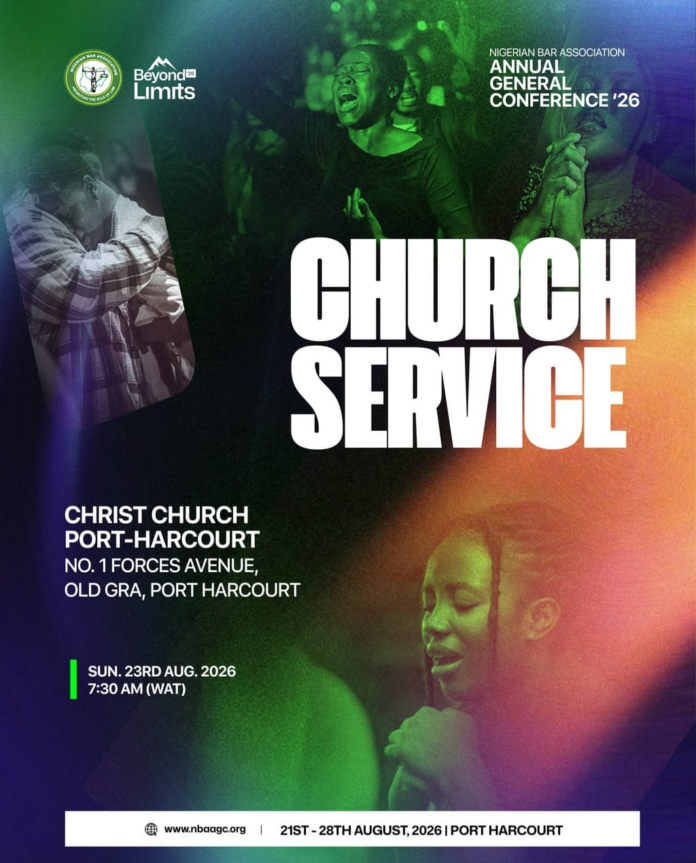
Supplies being loaded onto the MV Hondius, stranded at the Port of Praia

Seriously ill British ‘ship doctor’ still cannot leave vessel and cruise firm admits it does not know what will happen to remaining passengers…

A seriously ill British crew member is still trapped on the MV Hondius cruise ship following a suspected outbreak of the deadly hantavirus infection.

Three people have died so far from the rare rat-borne virus on the Dutch-flagged vessel, which set off in March to sail from Ushuaia in Argentina to Cape Verde.

The luxury ship has been stranded at the Port of Praia after health authorities in Cape Verde said they would not authorise its docking ‘with the aim of protecting national public health’.

Click here to continue reading.

Xenophobia Crisis: Nigerians fleeing South Africa to pay their own way home – FG

Nigeria’s Ministry of Foreign Affairs Nigeria has said citizens seeking repatriation from South Africa will be required to fund their own return, describing the process as voluntary.

The ministry’s spokesperson, Kimiebi Ebienfa, disclosed this during a press briefing following a meeting between the Permanent Secretary, Dunoma Ahmed, and South Africa’s Acting High Commissioner, Lesoli Machele.

Ebienfa said the government would only coordinate and facilitate the process, not finance it. “Those willing to leave are expected to approach the high commission and, given that their decision is voluntary, have the resources to fund their return to Nigeria,” he said.

He added that the government would not provide transportation. “The government will not provide an aircraft from Nigeria to convey them.”

According to him, about 130 Nigerians have so far indicated interest in returning home, but their departure will depend on their ability to pay for travel. “Yes, 130 as of this morning have registered, but actualisation would be required to have their flight ticket to move back to Nigeria,” he said.

Mr Ebienfa explained that those seeking repatriation fall into two categories. “There are two groups of Nigerians who want to come back. One group feels the country is not safe for them and wants to come. They have all their papers intact.

“Then there is also the second group that has travel document violations or resident permit violations. And instead of running away from law enforcement, they are appealing that the government facilitate their movement back to Nigeria,” he added.

The development follows rising tensions and xenophobic violence in parts of South Africa, which have prompted concerns for the safety of foreign nationals, including Nigerians. Reports indicate that two Nigerians were recently killed in separate incidents allegedly involving personnel of the South African National Defence Force.

The situation led Nigeria’s Foreign Affairs Minister, Bianca Odumegwu Ojukwu, to summon the South African envoand express concern over the treatment of Nigerian citizens.

TIPS