One-time Governor of Adamawa State, Rear Admiral Muritala Nyako (rtd.), has agreed to an out-of-court settlement in a N29bn alleged fraud case brought against him by the Economic and Financial Crimes Commission, EFCC, since 2015.
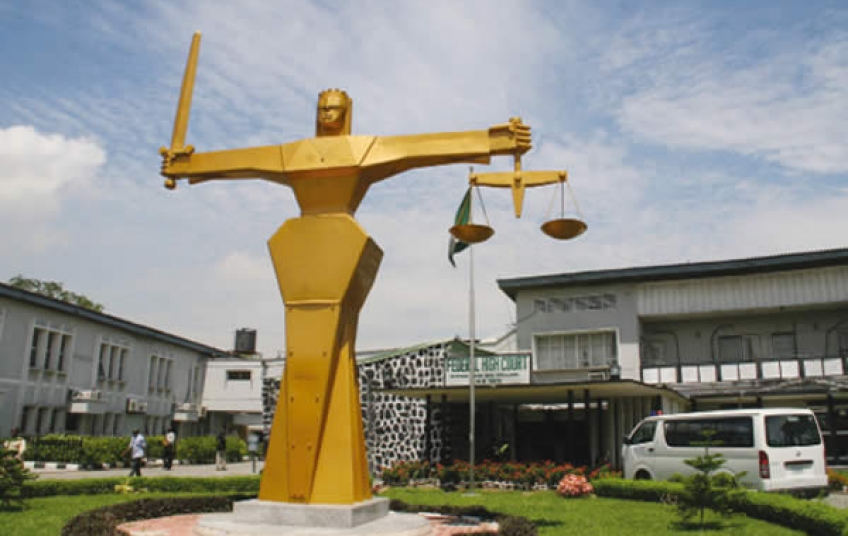
An indication to this effect emerged on Friday, at the Federal High Court in Abuja during the hearing of the ten-year-old corruption case.
At Friday’s proceedings, the prosecuting counsel, Rotimi Jacobs, SAN, informed the court that both parties were currently in discussions to ensure an amicable settlement of the case.
According to the senior lawyer, by the next adjourned date, the two parties should be able to resolve all the details of the settlement so that the court can dispose of this matter.
“If we get a week’s adjournment, we will be able to resolve this,” Jacobs expressed optimism.
Counsel to Nyako, Chief Michael Kaase Aondoaka, SAN, confirmed to the court that discussions have reached an advanced stage for an out-of-court settlement in the alleged fraud case.
Aondoaka, a former Attorney General of the Federation and Minister of Justice, AGF, said he was positive that the matter would be resolved amicably.
Based on the agreement of lawyers, the trial judge, Justice Peter Lifu, fixed July 18 for the former governor and the anti-graft agency to file a report of settlement.
Admiral Nyako, who is the husband of Justice Binta Fatima Nyako of the Federal High Court, Abuja division, is being prosecuted by the EFCC alongside his son, Abdul-Aziz, on charges of criminal conspiracy and abuse of office to the tune of N29bn.
Others standing trial along with them are two companies, Sebore Farms and Extension Ltd and Pagado Fortunes Ltd, as well as Zulkifik Abba, Abubakar Aliyu, Blue Opal Ltd, Tower Assets Management Ltd, and Crust Energy Ltd.
The trial, which began on July 8, 2015, before Justice Evoh Chukwu, was started afresh on September 12, 2016, before Justice Okon Abang following the death of Justice Chukwu on June 8, 2016, after the EFCC had called five witnesses to establish its case.
The trial had to start afresh before Justice Peter Lifu, on the elevation of Abang to the Court of Appeal in 2023.
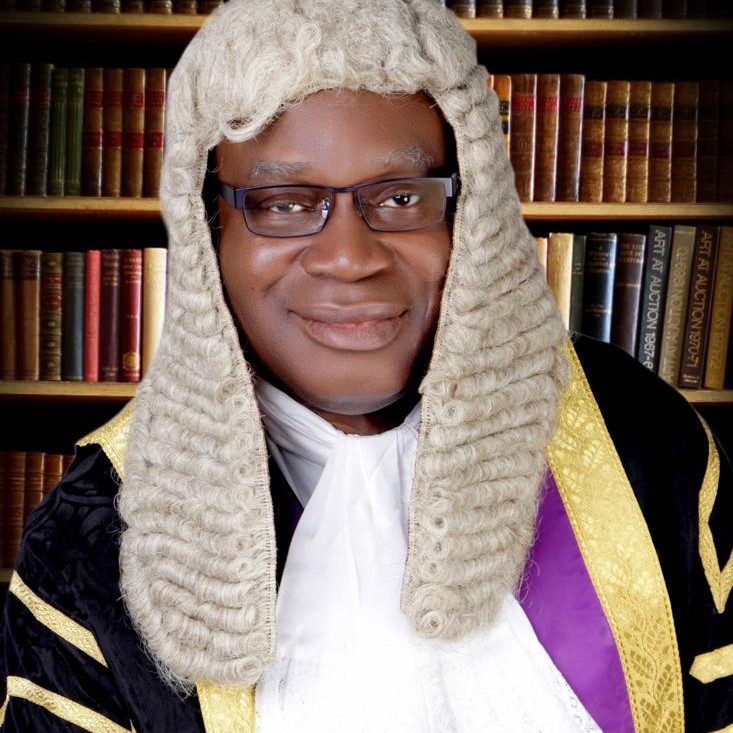
Life Bencher and Chairman of Nigeria’s Council of Legal Education, Chief Emeka Ngige, SAN, decided long ago to make a mark in his chosen profession. He has done that and much more.
He desired to study either law or mass communications, but the attraction for law proved to be stronger when he elected to follow the footsteps of his immediate elder sister, MaryRose Nwadike nee Ngige, who he immensely admired. She is a law graduate of the University of Ife.
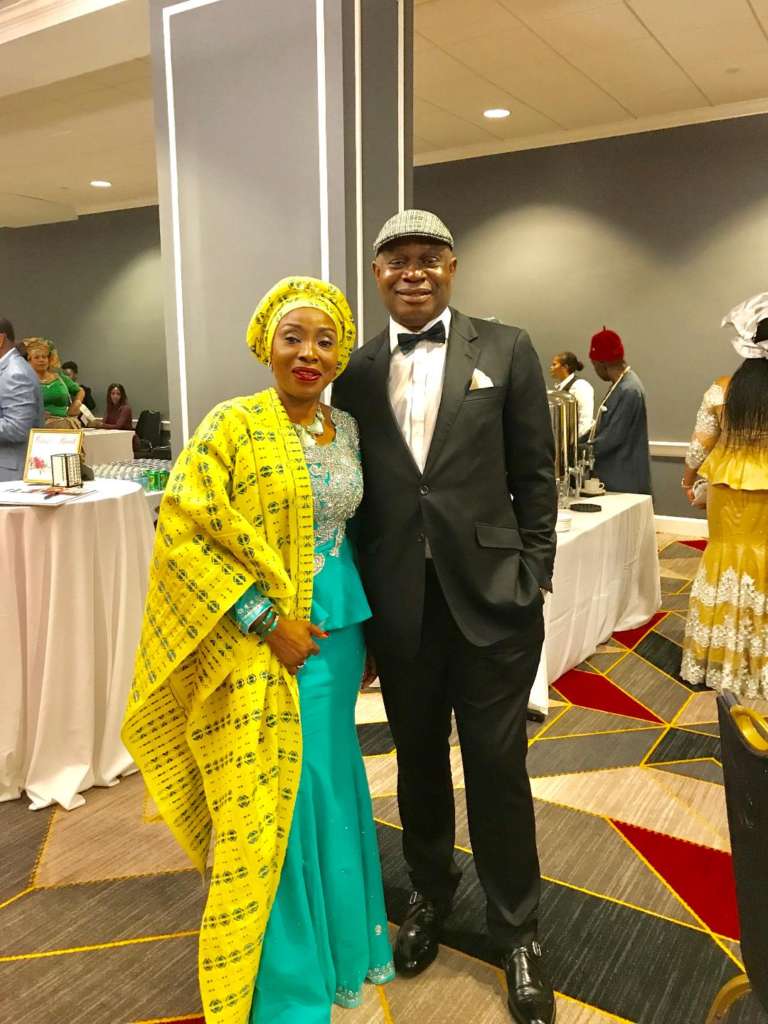
With mentor, counsellor, teacher, ‘Coacher’ and immediate elder sister, Attorney MaryRose Nwadike@Maryland, USA
Under the watchful eyes of Chief G.N. Uwechue, SAN, Principal Partner G.N. Uwechue & Co, Barristers & Solicitors & Notaries Public in 1986, he honed his legal skills and became a towering figure in Nigeria’s legal profession.
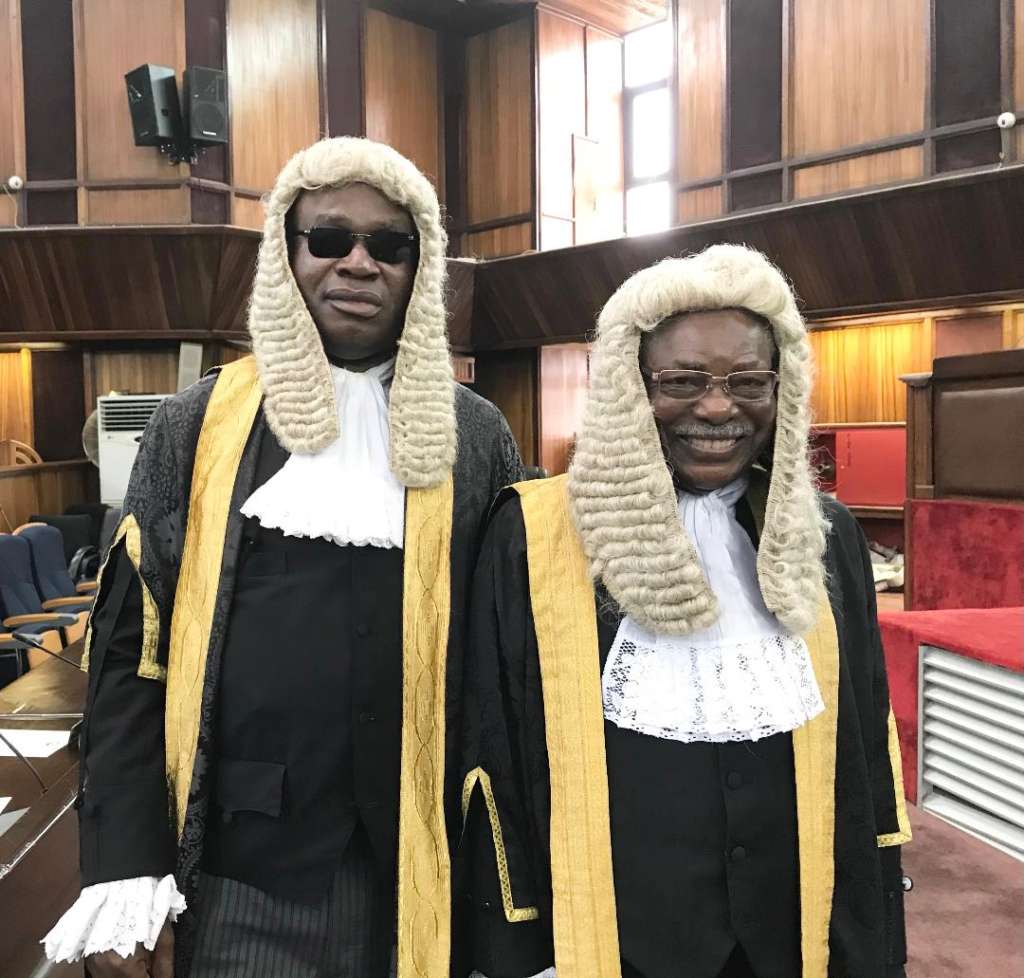
With boss and mentor, Owelle George Uwechue, SAN
No surprises there for one whose father taught the value of hard work and aspiring beyond preconceived limits.
On this special day, Law & Society Magazine celebrates —a remarkable senior colleague and a truly inspiring lawyer. Your unwavering dedication, integrity, and exceptional legal acumen have earned you the respect and admiration of everyone fortunate enough to work alongside you.
Over the years, we have watched you navigate complex cases and situations with calm precision and advocate for justice with unshakeable ethics. Your mentorship and thoughtful guidance have been invaluable to many, helping shape careers, bolster confidence, and instill a deep sense of purpose.
As you celebrate this milestone, we hope you take pride in all you’ve achieved—your victories in the courtroom, the impact you have made in the Council of Legal Education, particularly your enormous contribution to the ‘making’ of the Nigerian Law School, Port Harcourt campus. Many do not know the behind-the-scenes story.
May the year ahead bring you renewed energy, abundant joy, and continued success.
Days ago marked a historic milestone for Enugu State as Governor Peter Mbah officially launched Enugu Air, a state-owned commercial airline poised to redefine regional air travel in Nigeria. This bold initiative reflects the governor’s vision of transforming Enugu into a major aviation hub, backed by a modern, multimodal transport ecosystem.
The success of Enugu Air is not just a regional win; it’s a national opportunity. Its sustainability is closely tied to the full operationalization of Akanu Ibiam International Airport, which must be upgraded to handle both domestic and international traffic efficiently. The airport’s transformation is not merely infrastructural, it is symbolic of the Southeast’s rightful place in Nigeria’s aviation and economic landscape and; these upgrades will enable the airport to support over 100 flights daily, as envisioned by Governor Mbah, and accommodate over three million visitors annually.
For Ndi Igbo, whose entrepreneurial spirit and global business footprint are well known, a fully functional international airport in Enugu is more than a convenience. It is a strategic imperative. The Southeast has long been underserved in terms of international aviation infrastructure, despite being one of Nigeria’s most commercially vibrant regions. Akanu Ibiam International Airport, once fully operational, will facilitate direct exports of agro-products, pharmaceuticals, and manufactured goods from the region, attract foreign investment by improving access and connectivity and serve as a cultural and economic gateway, reconnecting the diaspora with the homeland.
The proposed cargo terminal, in particular, is expected to unlock vast economic potential in export logistics, agro-processing, e-commerce, and light manufacturing. This positions Enugu, not just as a passenger hub, but as a regional logistics powerhouse.
May Enugu Air soar not just in altitude but in trust, efficiency, and service. And may Akanu Ibiam International Airport rise as the beating heart of Southeast commerce, culture, and connectivity.
The one that is already in and seated is called APC. The one that is outside and itching to be admitted to unseat the one that is seated is called ADC. The difference is in the displacement and replacement of letters P and D. On the surface, this distinction lacks the firmness to affect a clear choice. This means that either of the entities can go or stay, and nothing significant will be lost in content. It is the same as saying that if, per adventure, ADC replaces APC in 2017, it will look like replacing six with half a dozen. Or like the national team, the Super Eagles, breaking into two sides of 11 players each, to compete for the same trophy. Either way, Nigerians are going to suffer. That is the devil’s alternative.
This perception is gradually strengthening into a national consensus. The good thing is that it is not the only consensus regarding 2027 that is building up in the country. There is another that is equally high-pitch. It is somehow close to what people said in 2014 when Dr. Goodluck Ebelle Jonathan was President. Then, these same perennial issues of nation-building were carefully and deliberately orchestrated to practically turn Goodluck to Badluck Jonathan. The last name was actually compressed to Jonah to lay a better context as to why, even as the captain, Jonathan, needed to be cast overboard to save the sinking Nigerian ship. His traducers said there was so much between him and Prophet Jonah, who, against the clear directive of God, had followed a sea route that did not lead to Nineveh or salvation. Jonathan, too, was alleged to have followed a path that did not lead to national development. He was therefore good for nothing and needed to be thrown into the raging sea like Prophet Jonah to calm the national turbulence.
No room was left for long debates. The campaign messaging was clinically effective. It was done to affirm and not to interrogate the charges against Jonathan. He was denied fair hearing, so to say. The mantra was just anything and any person, but Goodluck Jonathan, was good to come as President. Reasons took flight as emotions surged. And so, when a Muhammadu Buhari was resuscitated from sustained electoral injuries and repackaged as the most resourceful Nigerian that had ever lived, the focus was not on the pretentious challenger. Rather, the intensive gaze was on President Jonathan, who was recreated into a negative benchmark against whom Buhari shone like a million stars. Hard facts on Buhari’s deficits that adequately sign-posted what was to come upon Nigeria and Nigerians were ignored because Goodluck had become badluck and people were desperate to try their luck with someone else.
Amid that flow of extreme emotionality and illogicality, evidence of Buhari’s unfitness conveniently dissolved into the stream of providence that gratuitously propelled him into power. His ill health and narrow-mindedness, which manifested in an unacceptable level of ethno-religious bigotry, did not count against him or counted for Jonathan. Even his lack of resourcefulness that made him the poorest among his class of retired army general and former military heads of state of Nigeria was recorded for him as an advantage. The story was that Buhari was poor because he was not corrupt. He was poor because he did not steal money to become rich like others. It was not because he couldn’t combine the necessary factors to create value. With him, poverty got a new definition. It was elevated to a virtue.
Meanwhile, the entire process followed as schemed and orchestrated. On May 29, 2015, while Goodluck Jonathan was leaving Aso Rock Villa Abuja crestfallen for his village, Otueke, in Bayelsa State, having lost the 2015 presidential election, Mohammadu Buhari, the winner, was leaving Daura in absolute triumphalism to become a democratically elected president of Nigeria, 30 years after he was overthrown as a military head of state.
In all of this, one man was solidly in the background, directing and coordinating. He advanced all the alternate viewpoints to design a new reality through which Buhari became revalidated as a messiah, nationalist, high performer and rescuer of the Nigerian state ship. His name was Senator Bola Ahmed Tinubu. That name has not changed. It has only gained more strength with a change of the title. He is now President Bola Ahmed Tinubu (PBAT). He remains the Jagaban Borgu also. Tinubu relishes his Jagaban title. The name is heavier in sound than it is in substance. It makes BAT feel like a conqueror. For instance, BAT was not President, but just Jagabgan , when he crowned the serial electoral failures of Muhammadu Buhari with the presidency. Jagaban is an onomatopoeia that sums up the Tinubu’s essence. The man is at his best when the paths are jagged and the rules are perfect freedom. He is stronger when nothing appears straightforward. He has the capacity to ride rough waives. The name was given to him by the late Emir of Borgu, Alhaji Haliru Dantoro III. It means leader of warriors.
Today is July 11, 2025. The next presidential election is less than two years away. The elements have recreated themselves, albeit in a reverse order. The hunter is now the hunted. The one being hunted in the current hunt does not want the guidelines applied previously to apply in 2027. I am out today to say that why the plots in 2015 and 2027 may have the same material trappings, the central characters are different. Very different, that is. Tinubu is not Jonathan. They are different individuals defined by different value systems. While the strength of one lies in defying rules and conventions to reach results, the other gladly yields to circumscription and even sees failure in some instances as a triumph.
For instance, under an unfair bombardment by enemies in 2015, Jonathan refused to reach for a weapon of mass destruction (WMD) to liquidate his attackers and re-establish a life-line for himself. This he could have done without causing heavens to fall. But he didn’t. Instead, he maintained this lame line that his ambition to remain the President of Nigeria was not worth the blood of the least Nigerian. He didn’t want to break eggs to prepare omelette. But nobody does without breaking eggs.
The man from Otueke did not talk like a typical Nigerian President. He had talked like an underdog in a contest where he was the champion. Jonathan sounded like any other good man in the street who believes in live and let live. He loved telling true life stories to explain why he detested vaulting ambition. He went to school without sandals. While growing up, nothing in his circumstances betrayed great promises. He was the son of a fisherman. During the civil war, he had thought every truck was a military truck loaded with armed soldiers, looking for people to shoot. When he saw one approaching on one occasion, he quickly escaped into the surrounding mangrove vegetation with his elder sister to avoid being killed. If being President was going to take blood in addition to cash to erase his essence, he was ready to let go.
In truth, Jonathan might have calculated to teach and retire before the twist that saw him soaring. He had started as a Deputy Governor in Bayelsa State and later moved to become Governor. He was Vice President and then the very ultimate, President and Commander-In-Chief of the Armed Forces of the Federal Republic of Nigeria for a whole six years. This is the same position that Buhari fought tooth and nail, including going into forced alliances to achieve. Alhaji Atiku Abubakar who will be 80 years in November next year, has been fighting to become president since 1993 when he was only 47 years old. He is still in the trenches fighting.
Evidently, Goodluck Jonathan meant to stop at the mountain top, but providence took him to the moon. He was wise enough to understand that maiming and killing to shoot higher would amount to over-reaching himself and challenging God in God’s own game. He backed down, and that singular act has made him a refreshing reference point in good conduct in national politics.
So much on Goodluck Jonathan. Tinubu, the Jagagban, operates differently. He yields to an existentialist interpretation that assigns no role to any outsider in the determination of the great issues of life. To him, victory is always won and not awarded. Success or failure is a consequence of effort. He believes the gods do not help as such in the many battles of life. The gods may come in to align with victors or vanquished after the battle has been won and lost. He relies on his ingenuity to create all the advantages. And every move is war where all is fine and fair. He preaches that in situations where victory is not certain in the perennial struggles against opposing forces, the rules of engagement should be breached to reverse the tide. That is, when it is not willingly or easily yielded, one is permitted, under the Jagagban school of power, to “grab it and run away with it.”
Unlike Jonathan, Tinubu does not have any true or original story to tell. He creates his own stories to fit all purposes. If the narration, for instance, fits Ibadan Grammar School, fine. If it fits Government College, Surulere, Lagos, all fine and good too. He is most deliberate in approach. He takes action and moves on, leaving others to bother about the reactions or consequences. He is focused on the end, not the means. Once motivated, he lacks the temperament to wait for a turnaround. Instead, he turns things around himself. He does not fear a superior force. When he declared Emilokon , he was not taken too seriously. As it turned out, it truly became his turn to be president of Nigeria. He talks as if he controls tomorrow.
On the whole, while Jonathan followed a path, Tinubu created one. That is the difference. Jonathan had power thrust upon him. Tinubu had been working and is still working for power. He is not like Jonathan who looked everywhere for power to save himself while power was in his hands. Tinubu projected so much power even when he didn’t have enough of it. Now that he has power and so much of it and also understands how to convert power to brute force to serve his purpose, he is close in description to a drunken king cobra. This is why I fear for the coalition.
In 2015, the coalition against Jonathan operated on propaganda and won. This time, the coalition against Tinubu is different. It is running largely on facts. But facts may be secondary or even prove inconsequential in the current calculation. The reality today is harsh. It is as harsh as taking a battle to a lion in his den. I advise therefore that in addition to facts of the campaign against Tinubu, the coalition should stretch a little more to invent ways to kill a lion in his den. This is also saying that the coalition should be prepared to match Tinubu in all departments of the game. Power for power. Cash for cash. And propaganda for propaganda. When a stolen property is re-stoleno or a thief steals from another thief, the town crier is left out of the equation. He is not contacted to announce the stolen property. It is also good to add that the currency of war business is blood. If blood is required in the proposed venture, the coalition would be justified by the new ethics to spill some. You act like a monkey to catch a monkey.
The views expressed by contributors are strictly personal and not of Law & Society Magazine.
A High Court in Uyo, Akwa Ibom State capital city, has sentenced 29-year-old Akaninyene Thomas Okpon to death by hanging for murdering his elder brother, Friday Thomas Enyenokpon, in Ikot Abasi Asutan, Ibesikpo Asutan Local Government Area.
Akaninyene, a father of three, and another elder sibling, Ime Thomas Okpon, 37—who died in custody during trial—had, in 2018, ambushed their blood brother while he was checking his hunting traps, beheaded him, and buried the head separately. They accused him of being a witch responsible for their misfortunes.
In the judgment delivered on Thursday in Suit No. HU/5C/2019 in Uyo, Justice Okon Okon, ruled that the prosecution had proven its case beyond reasonable doubt, relying on the defendant’s confessional statement and corroborating evidence.
The court held that the defendant, who dropped out of primary school in Grade Three, had issued death threats to the deceased and other family members prior to the murder. He had also led the police to the crime scene, where the remains of the deceased were recovered.
Justice Okon declared:
“The sentence of the court upon you, Akaninyene Thomas Okpon, is that you be hanged by the neck until you are dead.” The court also ordered the forfeiture of the murder weapons—two machetes, marked as Exhibits 1–1A—to the state.
The much-awaited copy of the verdict delivered by Justice Binta Nyao of the Federal High Court, Abuja, in the action instituted by Senator Natasha Akpoti-Uduaghan challenging her suspension by Nigeria’s senate has finally been released, but it appears to have raised some more questions.
Part of Justice Nyako’s verdict reads:
“That to suspend a member for a period of 6 months equals to a suspension of 180 days and this is the same number of days a member is expected to sit in the House representing his people. That I find this excessive and overreaching, noting that it will prevent a member from complying with Section 63 of the 1999 Constitution.
That I am of the opinion that the Senate has the power to review the provisions of the Senate Rules and can even amend Section 14 (2) of the Legislative Houses (Powers & Privileges) Act both for being excessive and overreaching.
That the Senate has the power to and I believe should recall the plaintiff and allow her to resume representing the people who sent her there to represent them.
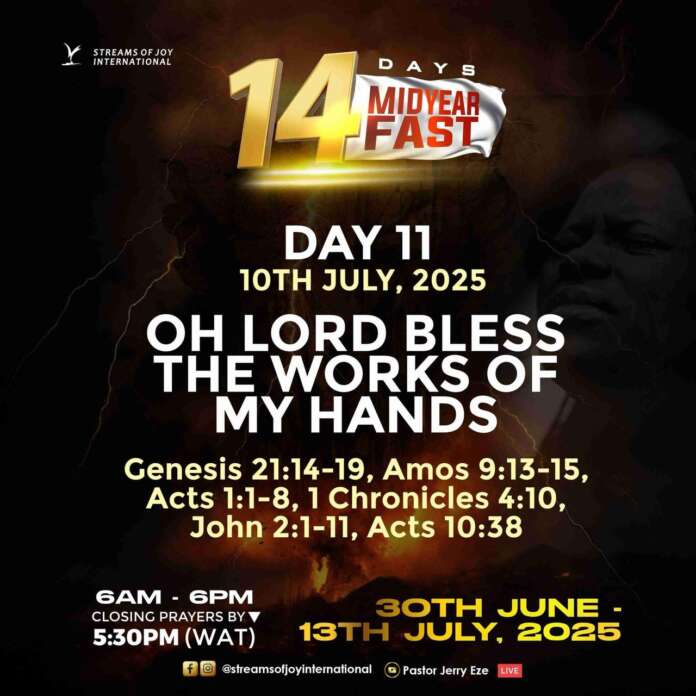
DAY 11 OF 14 – OH LORD, BLESS THE WORKS OF MY HANDS
Scriptures for Study & Meditation: Genesis 21:14–19, Amos 9:13–15, Acts 1:1–8, 1 Chronicles 4:10, John 2:1–11, Acts 10:38
Declare with us: (insert your name/business/career/ministry name): Blessed, Above Only, The One El-Roi Showed Mercy, Global Champion, Anointed for Exploits, The Favored, The Chosen, The Celebrated and Congratulated! That’s your new name! Let everything align. Let evidences burst out now!
July to December: My second half is filled with back to back wonders! I see 20-years-in-1 miracles arriving, mega breakthroughs on the heels of the other! My testimony shall be: El-Roi finished the work and cut it short in righteousness – It happened speedily, suddenly, hastily, without warning! (Amos 9:13 MSG, Romans 9:28)
I hear my name on higher grounds! No matter what happened in the first half, a new season begins now. I am sensitive to my change of seasons. By the help of God, I will be in the right place at the right time. Body, soul, and spirit, align! Distractions and dislocations, FIRE! (Revelations 4)
Hand of God that moves men from where they are to where they belong, rest on me. In the order of Ezekiel, this second half, my transport is in the Spirit! I rise in prayer, go deeper in the Word, and receive fresh revelation of what to do, when to do it, and how to do it. (Ezekiel 37:1-11)
Thus saith Ebenezer to me: “It is not too late. I will still do it!” Wherever I’ve been delayed in the works of my hands, Whatever age-long siege held me back, Wherever I had lost hope, by the quickening power of the Holy Ghost, July to December: my help has come! (Psalm 121:1)
I call on the same power that raised Jesus from the dead: Invade the works of my hands! Let there be a quickening! Let dead things come alive! I call forth restoration with compensation for What my God Cannot Do Does Not Exist! (Romans 8 )
I declare over my business/career/ministry: JESUS REIGNS! By this: Yokes break! Sieges scatter! Ancient altars bow! Territorial powers give way! Let God’s kingdom come here and now! (Matthew 6:10)
July to December: JOY, PEACE, and ABUNDANCE have been laid for me! The struggles of January to June have qualified me for mega breakthroughs in the second half! Like Peter, in places where I toiled in darkness, I now receive answers—pressed down, shaken together, running over! (Luke 5:1–11, Luke 6:38)
The stone that killed Stephen will not kill Paul! By the zeal of El-Roi, what stopped others will not stop me! By the verdict of the Most High, my case is different! Where others faint, fall, or fail, I rise higher! When others say there is a casting down, I declare a lifting up! (Job 22:29, Acts 7:59, 14:20)
July to December: That vacant throne is mine! By the mantle of Esther upon me, no matter who has gone ahead, until I show up, the crown will not be given to another! As it was for Solomon, any Adonijah that rises against my throne, go down by Fire! (Esther 2, 1 Kings 1)
July to December: NEW WINE, NEW BOTTLES! As the Lord fills me with new wine; new ideas, contracts, clients, and connections, Old wine skins in the form of limiting mindsets and outdated revelations, break and burn by Fire! (Matthew 9:17)
July to December: NO DESTINY BLUNTNESS! My axehead must swim again! Lord, sharpen my cutting edge! I was born for such a time as this. The earnest expectation of those You’ve sent me to is waiting, I show up new and sharp! Powers insisting that the second half will look like the first half, FIRE! (Isaiah 41:15)
I am anointed for greater results, higher evidence, and mighty exploits! Past failures and territorial limitations, break! Demonic gatekeepers contending with my manifestation, be destroyed! FIRE!
July to December, by the Mercies of El-Roi, I will not make mistakes that cost me my destiny. I have the mind of Christ! I do not second-guess the voice of God. I am led by His Spirit. Conversations with serpents that introduce sieges into businesses, I am not your candidate. FIRE!
_(insert name/business/career/ministry): BOUNCE BACK! In the same places I went down, counted losses, or was depleted from January to June, In the order of the Resurrection, I bounce back higher, better, greater! I take my seat in places of power. I am elevated and rightly positioned. I have all I need to emerge with what’s missing in my industry/nation/generation. (Ephesians 1:20)
Once has the Lord spoken, twice have I heard: 2025 is my year of El-Roi! By His zeal, July to December: I move from bottles to wells, from not enough to more than enough! My eyes will see it, my hands will carry it, my mouth will testify that “I have seen the God that sees me!” (Genesis 21)
My second half STARTED WITH JOY, PROGRESSED WITH LAUGHTER, ENDED IN PRAISE! By the be power in His name, I see: Unexpected breakthroughs, Instant answers, Joy unspeakable, Loud celebrations! My status has changed, no more decline! The Works of My hands are blessed now, today and forever, My better days are HERE AND NOW! Hallelujah!
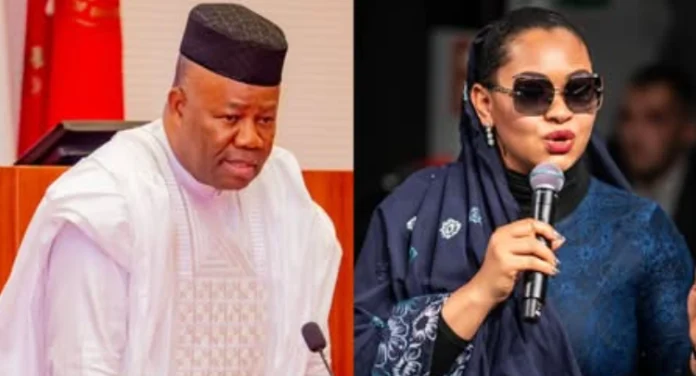
Senate President Godswill Akpabio has officially replaced Senator Natasha Akpoti-Uduaghan as Chairperson of the Senate Committee on Diaspora and Non-Governmental Organisations (NGOs), appointing Senator Aniekan Bassey of Cross River State as her successor.
The announcement was made at the close of Thursday’s plenary session, marking the latest development in a series of committee leadership changes involving the Kogi Central lawmaker.
Senator Akpoti-Uduaghan was originally appointed as Chair of the Senate Committee on Local Content following her swearing-in as Senator in November 2023. However, on 4 February 2025, Senate President Akpabio led a reshuffle of committee leaderships, removing her from Local Content and reassigning her to chair the Committee on Diaspora and NGOs.
The February reshuffle sparked controversy because it happened soon after Senator Akpoti-Uduaghan had actively overseen oil and gas agencies. Some observers hinted that political motives may have driven her removal.
Her tenure as Chair of the Diaspora and NGOs committee was abruptly disrupted again when, on 6 March 2025, she was suspended for six months over allegations of misconduct linked to confrontations during the reshuffle process. Though the suspension temporarily halted her committee activities, she remained the official chair until Thursday’s announcement.
With Senator Bassey now at the helm of the Diaspora and NGOs Committee, the Senate has effectively closed the chapter on Akpoti-Uduaghan’s short-lived leadership of two strategic committees.
But in Nigerian politics where suspensions often mark a quiet exit—a soft political burial, Senator Natasha Akpoti-Uduaghan has chosen a different route: not into silence, but deeper into service.
With her six-month suspension from the Senate still under legal contention, the Kogi Central senator has taken her mandate back to the grassroots. And on Sunday, she made a bold statement—not with press conferences or legal threats, but with bricks, concrete, and a vision of economic empowerment.
Akpoti-Uduaghan flagged off the construction of two ultra-modern smart markets in Okene and Okehi local government areas—projects designed to uplift local commerce and directly impact hundreds of rural traders.
“I was elected to serve, not to sit,” she told a cheering crowd at Ihima Central Market. “My suspension cannot suspend my responsibility.”
Each market, set to be delivered by November 2025, will contain 80 trading spaces—split evenly between lock-up stores and open stalls—and come fully equipped with solar power, boreholes, public toilets, shop sockets, truck bays, and street lighting.
Beyond the infrastructure, however, lies a powerful message: that representation is not a title, but an act.
In a season when her voice was muted on the Senate floor, Akpoti-Uduaghan has amplified it in the communities that gave her their votes. Where some might have faded from view, she has made her absence from the chamber feel like a full-time presence on the ground.
“Leadership isn’t about a seat in Abuja. It’s about who you show up for, and when,” she said.
Akpoti-Uduaghan’s actions have not gone unnoticed. Her opponents see political theatre. Her supporters see proof of a rare kind of public servant—one who keeps building even when institutions attempt to break her momentum.
A trader at the market summed it up plainly:
“Even when they say she can’t talk in Abuja, she’s working here. That’s louder than any speech.”
Local chiefs, women’s cooperatives, and youth leaders were present to bless the project and commend her resilience. Many described her as a fighter—not with fists, but with follow-through.
Known for her independent streak, the senator continued to preach a message of post-partisan governance.
“Politics ends the day elections are over,” she said. “After that, what matters is delivery. And that’s not a party thing—it’s a people thing.” According to her, It’s a philosophy that has gained her respect across political lines and deepened her connection with those she represents. A political commentator in her senatoroal district, Ismail Omeza Salisu indicated that for a region long plagued by empty promises, the smart markets offer something tangible, timely, and transformational. Continuing Salisu said as courtrooms debate the legality of her suspension, and the Senate prepares for a potentially confrontational return, one thing is clear: Akpoti-Uduaghan is not waiting for institutional permission to serve.
“She may be off the roll call in Abuja, but in Kogi Central, she’s showing up—breaking ground, building trust, and reminding Nigerians that public office begins where the people are.
“And with every project she launches, the message echoes louder: true power is service that doesn’t wait for permission.”
As Osita Chidoka speaks about his journey to becoming a lawyer
A Nigerian family is basking in euphoria after welcoming a third-generation lawyer into their fold, as captured in a viral video that has melted hearts online.
The new wig Sommy Wokemba who was called to the Nigerian Bar recently proudly celebrated alongside her mother Nneoma Wokemba , a lawyer with NAPTIP Legal Unit, and her maternal grandmother, Hon. Justice Nwakamma of Abia State judiciary.
In the video shared on X (formerly Twitter) by #Oyindamola, the young lady is seen beaming with pride in her full legal regalia. She stood in line with her mother and grandmother, showcasing a remarkable legacy of legal excellence spanning three generations.
Netizens have flooded the family with congratulatory messages, praising the strong tradition of education and professional achievement.
Many described the clip as “inspiring” and a testament to the power of legacy and family support.
The trio, dressed in their wigs and gowns, stood side by side, grandmother first, then mother, and finally the newest addition, symbolising the passing of the torch in a most touching and empowering way.
A Nigerian family is basking in joy after welcoming a third-generation lawyer into their fold, as captured in a viral video that has melted hearts… pic.twitter.com/Eyq5qRBNBm
Also, Osita Benjamin Chidoka, Nigeria’s ex-Minister of Aviation and a former Corps Marshal and Chief Executive of the Federal Road Safety Corps, who later studied law at Baze University in Abuja, speaks about his journey to being one of the persons newly called bar.
It was 1988 at Union Secondary School Awkunanaw, Enugu. I was Deputy Senior Prefect, one of the best Arts students in the school. English, English Literature, and Government were my playground. I proudly carried our school’s banner in quizzes and debates, earning trophies and, more importantly, the joy of wielding words — spoken, argued, written.
I was Editor-in-Chief of Union Spark, our school magazine. On stage, I was the lead actor and wore the tragic skin of Odewale in The Gods Are Not to Blame. Literature was my lifeblood.
While my mates stuck to class texts, I feasted on James Hadley Chase, Pacesetters, Sidney Sheldon. Tolstoy carried me into Russian snows, Dostoevsky made me wrestle with sin and redemption, Marx lit a fire in my belly. But Awolowo?
Awolowo made me believe in the power of a single, disciplined mind to change a nation. His My Early Life and Awo were not books to me; they were portals into a disciplined, purpose-driven mind I longed to emulate.
Awolowo’s journey from journalism to law became my blueprint. I interned at The Guardian, played with journalism, wrote furiously. His library of over 11,000 books set a personal ambition: to one day own more. I’m still on that quest.
My father, a proud Zikist, poured fuel on this passion. From SS1 through university, he gave me money daily for The Guardian, Newswatch, later Timemagazine. He wanted me to be like Zik— a philosopher and politician — but also a lawyer like Awo. Thanks to him, I grew up reading far beyond any syllabus.
So when WAEC 1988 arrived, I walked in certain of my destiny. Literature was my “safe A.” But fate had other plans. That exam hall is still a haze. My mind blanked, even Achebe’s Arrow of God seemed to mock me.
When the results came, it was scandalous. I got As in all my strong subjects and only a Pass in Literature. The best Literature student in school … reduced to a whisper. I was mortified.
Still, I brushed it aside. I’d applied for Law and Literature wasn’t required yet. I got admission for Mass Communication. But my parents insisted: Law or nothing. They sent me to Foucos Tutorial College in Ebute Metta, Lagos — an expensive and upscale JAMB tutorial lesson. I passed. My dream was alive again.
Then the rules changed. Around 1989, the Council of Legal Education or NUC made Literature compulsory for Law. By 1990, UNN began enforcing it. I didn’t know the seriousness otherwise I would have changed to Unilag which did not enforce
I arrived Enugu that year clutching my admission letter, heart pounding. I marched into the Law Faculty like a man stepping into destiny. The Secretary to the Dean took my papers, scanned them, frowned.
“Do you have GCE?”
“No.” I responded.
“You don’t have Literature. We can’t register you.”
I smiled, eager. “I’ve registered for the Nov/Dec GCE.”
I stood there, clutching my WAEC result. My throat dry. My hands cold. The Secretary to the Dean looked up and said words that shattered my world:
He shook his head gently. “It won’t help. You had to be qualified at the point of admission.”
Just like that, my dream died.
My world collapsed in that dim office. For a week I haunted the Faculty, hoping for a waiver. Finally, Prof. Ilegbune, the Dean, a family friend, put a hand on my shoulder and led me to the Business School. He secured me a spot in Business Management.
I was crushed. My father’s eyes held disappointment he tried to hide. My mother promised we’d switch after my GCE. I wrote it, scored an A2 in Literature. But by then it was too late. To read Law, I’d have to start over from year one. It made no sense.
That night I lay awake, staring at the ceiling. Maybe I was not meant to be a lawyer after all. Maybe my father’s pride was misplaced. I felt small, ashamed, like I had failed not just myself but everyone who believed in me.
I was devastated. I skipped classes, loathed my department, felt I had failed everyone. By my second year, the bitterness slowly eased. I started attending lectures, but I often stared across at the Law Faculty with envy.
I didn’t know then that life had other plans. Sometimes, the detours we curse are actually the highways to our true calling. The study of Business Management would prove providential….
FIDA Abuja Heartfelt Felicitation to all Female New Wigs On Call to the Nigerian Bar and an Invitation to a Convivial “Sip and Connect Hangout”
First things first – a massive congratulations, Learned Babes!
It’s no mean feat but you did it!
You survived Law School, crushed your Bar Finals, and now you have officially crossed the threshold into THE noble profession.
You have absolutely earned every letter of the Barrister & Solicitor title – so let it marinate wella for a moment!
And just so you know, this momentous milestone is more than the personal win you may think it is.
It is a big deal for the legal profession, for Nigerian women, and will significantly contribute to inspiring and fanning the embers for a little girl somewhere, who now dares to dream.
I embrace you into the profession with pride, and extend your flowers to you – unreservedly!
As Chairperson of FIDA Nigeria – Abuja Branch, it gives me immense joy to not only celebrate you but also to invite you to our prestigious fold.
This is a solemn invitation to lead with purpose, serve with integrity, and stand tall as a champion for justice — especially for indigent women, children and persons with disabilities, who desperately need it.
Now that you’ve got the wig on, let’s get to the scoop:
Character is everything – integrity is not optional. You’re stepping into a world that will test your values, your voice, and your vision. Ensure your yes remains yes, your no, no, and your ethics more unshakable than a Supreme Court ruling. Though your brilliance and hardwork may have brought you here, note that it is your character that will keep you soaring.
Be brave and confident. Yours must be the bold voice that rightly and reasonably echoes for the voiceless in any room – be it a courtroom, boardroom or ballroom. Don’t just quote the law – endeavour to exemplify its highest ideals.
Find your tribe – join FIDA. While you may not immediately realise it, worthwhile connections are a goldmine! If you’re looking for a community of powerful women lawyers who are about measurable impact, service, sisterhood and plenty of smart moves – FIDA is where it’s at. We preserve, promote and protect the rights and interests of vulnerable persons. And we do it with heart, grace, and of course, some serious legal sauce.
At the risk of sounding immodest, joining FIDA simply means:
signing on to a legacy of service and purpose-driven advocacy;
connecting with seasoned mentors who genuinely get it;
being part of a global force shaping justice for an egalitarian society;
gaining platforms to serve, speak, and shine fully;
enjoying enduring camaraderie and conviviality of sisterhood; etc.
Remember, your wig isn’t just a crown, it symbolizes a call. A call to justice, to lead and to lift others as you rise. So be a real slay queen and come make indelible impact with us.
Assuredly, we’re rooting for you – always.
For a relaxed convivial time together where we better get connected, lounge, play and learn, I invite you to the FIDA ABUJA SIP AND CONNECT HANGOUT, to hold at 10am on Saturday, 12th July 2025. (Attendance is strictly upon reservation – send a WhatsApp message to 09016469573).
While looking forward to hosting you, I heartily welcome you to the legal profession – and hopefully, into the warm, vibrant family that is FIDA Nigeria – Abuja Branch.
With pride, excitement and deep sisterly affection,
Our site uses cookies. By clicking “Accept All Cookies”, you direct Law and Society Magazine to store cookies on your device and disclose information in accordance with our Cookie Statement: cookie policyACCEPTREJECT
Privacy & Cookies Policy
Privacy Overview
This website uses cookies to improve your experience while you navigate through the website. Out of these cookies, the cookies that are categorized as necessary are stored on your browser as they are essential for the working of basic functionalities of the website. We also use third-party cookies that help us analyze and understand how you use this website. These cookies will be stored in your browser only with your consent. You also have the option to opt-out of these cookies. But opting out of some of these cookies may have an effect on your browsing experience.
Necessary cookies are absolutely essential for the website to function properly. This category only includes cookies that ensures basic functionalities and security features of the website. These cookies do not store any personal information.
Any cookies that may not be particularly necessary for the website to function and is used specifically to collect user personal data via analytics, ads, other embedded contents are termed as non-necessary cookies. It is mandatory to procure user consent prior to running these cookies on your website.