The Lagos division of the Court of Appeal has overturned a 2014 judgment of the Federal High Court in a case between RCN Networks Ltd and Guaranty Trust Bank PLC.
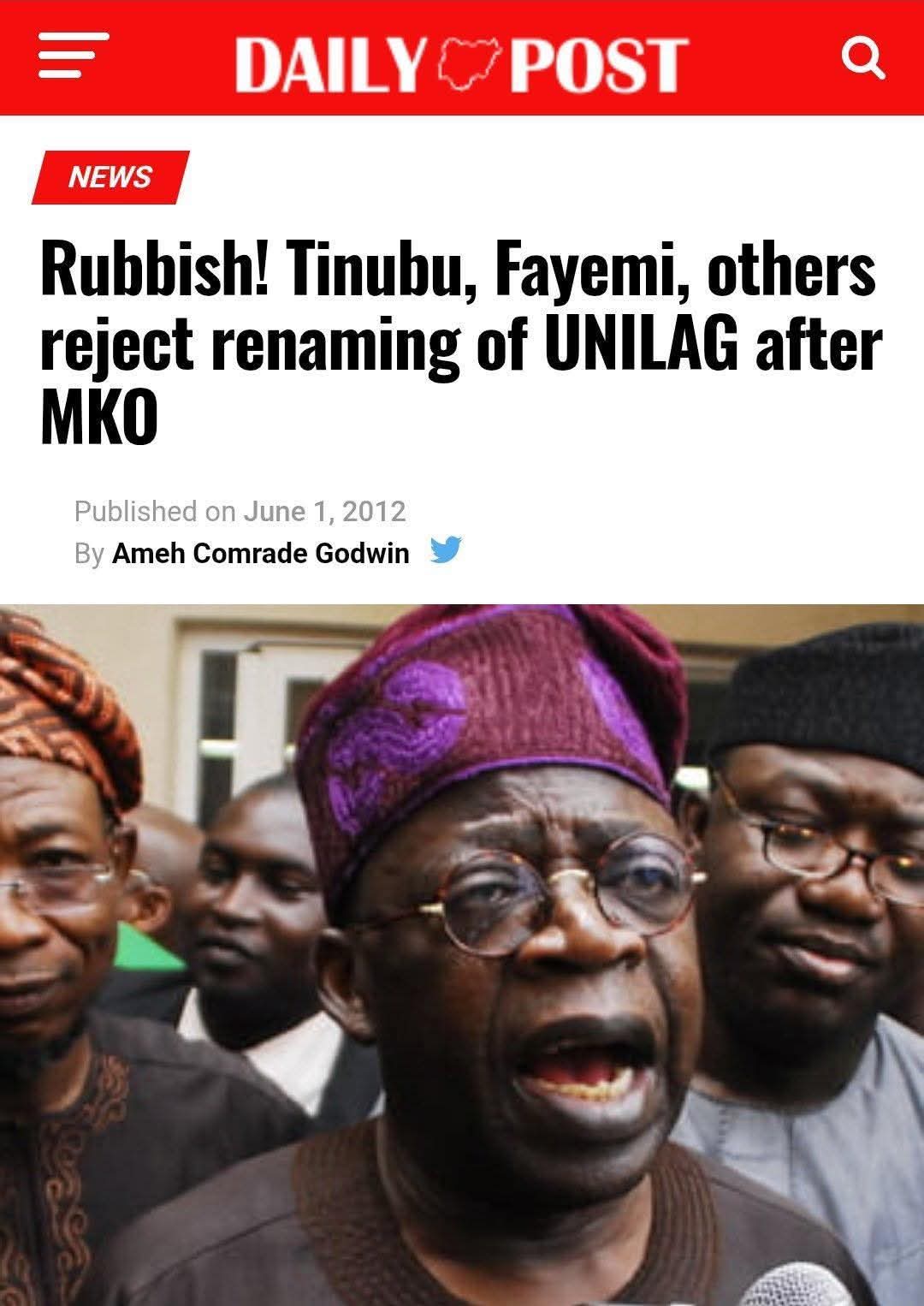
The Federal High Court’s ruling in 2014 led to the foreclosure by GTBank of a 44-room mansion valued at N30 billion owned by Agboola Abiola, one of the sons of the late MKO Abiola.
Agboola and RCN Networks Ltd challenged the judgment at the Court of Appeal in CA/L/888/2014.
The main contentions were that the company, as a borrower, signed a deed of tripartite legal mortgage alongside GTB, the respondent.
However, the second appellant, Agboola, denied signing the legal document, claiming instead that the execution page bearing his signature was from a different document and was fraudulently attached to the deed of tripartite legal mortgage to include his assets as part of the loan security.
Delivering judgment on Wednesday, a three-member panel of the appellate court unanimously held that the trial court had ignored glaring discrepancies in the tripartite deed of legal mortgage registered by the bank at the Lagos state land registry against the said property.
The appellate court held that the discrepancies made the tripartite legal mortgage document deficient and incapable of conferring any legal rights on the bank to foreclose on the property.
“Now the lower court, for some reason, elected to gloss over these alleged alterations and amendments, which even the police alluded to, and proceeded to restrict itself to the interpretation of clause 6 of the deed,” Paul Bassi, the lead justice, held.
“Where the authenticity of the deed or document as a whole is called into question, can the court interpret this document and make a pronouncement of the rights of the parties? I think not.
“It is incumbent on the court to be satisfied that the deed or document sought to be interpreted is accepted by the parties as that creating the rights and obligations of the parties.
“Again, a court cannot proceed to make a determination of rights of parties on a contested deed or document, especially one tainted with allegations of fraud or forgery. The court cannot fill in the gaps in establishing authenticity or the fraud by itself. That would be proceeding on a faulty premise.
“At this point, the obvious conclusion is that the lower court was in error to have determined the rights of the parties on a contentious document that was allegedly a forgery. This court cannot endorse the decision of the lower court on this basis. I therefore resolve this issue in favour of the appellants.
“I therefore allow the appeal and set aside the judgement of the federal high court, Lagos division delivered on the 20th day of June 2014, in suit no: FHC/L/CS/876/2013.”
The appellant was represented by Charles Adeogun-Phillips, while the respondent was represented by Norrison Quakers.
The government of Sokoto State has made known its readiness to enter into dialogue with bandits who are ready to lay down their arms and embrace peace.
This is even as the Indigenous People of Biafra has described the ongoing trial of its leader, Mazi Nnamdi Kanu and what transpired in court on Thursday as a full-blown indictment on Nigeria’s judicial system and exposure of the Federal Government’s “reckless abuse” of judicial processes.
Sokoto State government’s position was made known by Ahmed Usman, the Special Adviser to Governor Ahmed Aliyu on Security Matters, during a media briefing.
He highlighted the importance of negotiation as a strategic path to ending the ongoing insecurity in the state.
“We wholeheartedly welcome any development that promotes peace and security in our region,” Usman stated.
“It’s important to recognise that, historically, many conflicts have ended not solely through force but through dialogue.
“In Sokoto, we’re open to engaging in negotiations with bandits who are genuinely willing to surrender and embrace peace.”
Usman also extended appreciation to President Bola Tinubu, the service chiefs, security commanders, and frontline personnel for their relentless efforts in maintaining security in the region.
“Their sacrifices are deeply appreciated. May Allah bless the souls of our fallen heroes and grant comfort to their families,” he said.
In addition, the state government welcomed the federal government’s plan to deploy forest guards as part of broader efforts to combat insecurity.
Usman stressed that the integrity of the recruitment process and the trust of local communities would be critical to the success of the initiative.
In a statement released on Friday, the Spokesman for the pro-Biafran group, Emma Powerful, said what transpired at the Federal High Court in Abuja on Thursday exposed the Federal Government’s last gasp effort to blame Kanu for the 2020 #EndSARS protests.
Powerful said it is high time the world took urgent and critical notice of the Federal Government’s “falsehoods” and ongoing “sham” trial of the pro-Biafran leader before Justice James Omotosho of the Federal High Court, Abuja, insisting that the trial is a conspiracy built on falsehoods and media manipulations.
He said, “Thursday, June 19, 2025, marks a pivotal moment in a case that has from inception, been sustained by a toxic cocktail of deceit, media manipulation, evidentiary fraud, and a calculated campaign to criminalise self-determination.
“Following the conclusion of cross-examination, the prosecution led by Chief Awomolo, SAN, has closed its case. In response, the defence team led by the eminent Chief Kanu Agabi, SAN indicated his readiness to file a ‘No-Case Submission’, citing the total failure of the prosecution to establish any shred of evidence linking Mazi Nnamdi Kanu to any offence known to law, much less terrorism.
“As a result, Justice Omotosho has adjourned the case to July 18, 2025 for the adoption of final written addresses.
“But let it be stated with absolute clarity: what transpired in court yesterday was not merely a defeat for the government—it is a full-blown indictment of the Nigerian state’s reckless abuse of the judicial process.
“Despite the courtroom being governed by restrictive reporting rules, it is a matter of public record that the last prosecution witness—PW5-EEE, a supposed intelligence officer—collapsed under the weight of cross-examination by the very excellent Dr Onyechi Ikpeazu, SAN. The witness was evasive, contradictory, and pathetically unprepared.
“So damning was his performance that even the prosecution’s lead counsel, Awomolo, SAN, had to caution him in open court. Justice Omotosho was visibly exasperated and at several points compelled the witness to answer basic ‘yes or no’ questions he was deliberately evading.
“The government’s last gasp effort at propping up this collapsed case was a laughable attempt to blame Mazi Nnamdi Kanu for the #EndSARS protests—a grassroots youth-led movement that began in Ughelli, Delta State.
“According to PW5-EEE, the nationwide protest against police brutality was incited by Kanu’s broadcasts, and the government now claims—absurdly—that he was its mastermind. This desperate narrative is not just intellectually bankrupt; it is morally obscene.”
Powerful said among the disturbing revelations in court was the no evidence of the 200 security operatives allegedly killed in the South-East was presented, adding that no names, no ranks, no stations and no death certificates was presented for prove.
“The assessment report purportedly tying IPOB to security breaches was not even produced in 2020 when these incidents supposedly happened. It was fabricated only this month—June 2025, a staggering admission of falsification that should provoke outrage from every decent human being.
“The autopsy reports and coroner’s certificates were unsigned, unverifiable and riddled with forgeries. The unnamed persons who ‘discovered’ these phantom bodies were conveniently absent from the entire prosecution case. This is not law—it is fiction.
“We are forced to ask: Why has the Nigerian press continued to ignore these courtroom bombshells? Why are media houses quick to publish every accusation made by the DSS or the prosecution, yet remain mute when those very accusations crumble under scrutiny in open court?
“We encourage every Nigerian and members of the international community to file applications for Certified True Copies of the daily proceedings and see for themselves the shocking collapse of the Federal Government’s case.
“Kanu is a man of peace. He is not on trial for violence. He is on trial for daring to speak truth to power and for demanding justice for a long-oppressed people. The government’s case against him is not just weak—it is a monument to state-sponsored falsehood.
“History will record those who stood by while injustice was clothed in the garments of legality. It will also remember those who rose to expose it,” the statement added.
The International Criminal Court on 16 June 2025 turned down a request by Amnesty International to open investigations into war crimes and human rights violations in the north-eastern part of Nigeria.
Amnesty International had made the demand through a 2 December, 2024 letter to the President of the Pre-Trial Division of the International Criminal Court as the ICC failed to open an investigation into the various human rights violations and abuses by the armed group Boko Haram or the Nigerian state in the northeast, four years after concluding its preliminary examination.
In the matter before Judge Iulia Antoanella Motoc (Presiding Judge), Judge Reine Adélaïde Sophie Alapini-Gansou, Judge María del Socorro Flores Liera, the majority verdict held that, “although it is not clear when the Prosecution will request authorisation to open an investigation in Nigeria, with the Prosecution working on complementarity matters with Nigeria, the Chamber does not have the power, at present, to make a finding on the Prosecution’s obligation under article 15(3) of the Statute, as requested by Amnesty International heard at the Pre-Trial Chamber 1 of the ICC.”
Judge María del Socorro Flores Liera was the lone dissenting voice.
Amnesty International had in the letter on behalf of victims of war crimes and crimes against humanity in northeast Nigeria who are members of the Jire Dole Networks (“the Applicants”), Amnesty International pointed out that: “In failing to request authorisation to open an investigation into the situation in Nigeria, the Prosecutor is acting inconsistently with their obligation under article 15(3) of the Statute, and to take any appropriate measures to remedy the situation.”
Part of the letter read: “The Office of the Prosecutor (OTP) of the International Criminal Court (ICC) opened a preliminary examination into the situation in Nigeria in 2010, then closed it in 2020, concluding that the criteria were met for the opening of an investigation.
“Four years later, the OTP is yet to request the authorization to open such investigation and to provide an explanation with regards to the delay.”
The group further stated that: “The applicants are of the view that, under Article 15(3) of the Rome Statute, the Prosecutor has a legal obligation to request authorization from the Pre-Trial Chamber to open an investigation if they conclude that there is a reasonable basis to proceed with an investigation.
“Having made that conclusion in relation to the situation in Nigeria, the Prosecutor was and still is under a legal obligation to request authorization from the PreTrial Chamber to proceed with an investigation, without further delay. This legal obligation is also consistent with internationally recognized human rights, including the rights of victims to truth, justice and reparations, and to being informed about the status and progress of criminal proceedings.”
Jire Dole networks is a group constituted of eleven different social networks of individuals who have suffered various human rights violations or abuses by the armed group Boko Haram or the Nigerian state in northeast Nigeria. It is led by a group of human rights activists, journalists and relatives of victims and survivors based in Maiduguri, set up in April 2017.
They organise a loose network of victims, survivors and relatives through the setting up of groups and structures in Maiduguri and various IDP camps in Borno state. This submission is filed on behalf of the following networks, which are part of Jire Dole Networks: the Knifar Movement, composed of over 5,720 displaced women who were separated from their husbands since their husbands were arrested; the Returning Knifar Husbands network, composed of over 2,840 men who returned from the Safe Corridor and Giwa BarracksMilitary Joint Investigation detention centers; the Jire Dole Mothers, composed of over 5,800 relatives of arrested and disappeared young men; the Njotkuno Movement, composed of over 6,650 women, men and children formerly detained by the Nigerian military; and the IndaRai network, composed of over 2,365 survivors of abductions and sexual violence and mothers of the ‘invisible children’ who were conceived and born while their mothers were in Boko Haram captivity or in detention facilities. Members of these seven networks alone total 23,382 individuals as of January 2024.
Amnesty International has worked in close collaboration with, and in support of, Jire Dole networks for over a decade, including to document crimes committed within the armed conflict in northeast Nigeria and to advocate and campaign for justice at the national and international levels.
Amnesty International has also shared its documentation of relevance to the Nigeria situation with the Office of the Prosecutor to support its preliminary examination.
The present submission has been filed on behalf of members of the networks who are direct and indirect victims of murder, enforced disappearances, abductions, conscription and use of child soldiers, enslavement, forced marriage, sexual slavery, rape and other sexual violence, mutilation, imprisonment, torture and other ill-treatment, and other crimes committed in the context of the conflict in northeast Nigeria since 2011, constituting war crimes and/or crimes against humanity.
ICC’s decision has now left the victims in limbo, never to get justice, maybe.
Click here to download ICC’s decision on the matter.
It was a day to explore the crucial theme of “Recalibrating Ethical Responsibility Amongst Lawyers” with distinguished speakers and insightful discussions.
As Nigeria grapples with the rule of law, Hon. Justice (Prof.) Alaba Omolaye-Ajileye’s indictment of Nigeria’s judiciary for betraying one of their own continues to echo.
A Keynote speaker at the 4th C.O. Anah SAN, memorial colloquium held recently in Abuja, His Lordship’s paper “From Pressure To Principles: The Judge As The Backbone Of Human Rights Enforcement, dealt extensively with what it means to deliver justice.
Below are views.
The Pressure Judges Face
I had the fortune (I will never call it a misfortune) of handling many sensitive and high-profile cases while on the bench. Some of those cases put me in direct confrontation with the government, such that I was tagged as an anti-government judge! Such cases also put my career and life on the line. Sometimes, I had to go into the trenches to ensure that the independence of the judiciary was maintained and justice dispensed. Reflecting on my active years on the bench, I thank God that I survived all the vicissitudes. To the glory of God, my career came to a glorious end, and I am alive today to share my chequered experiences with you.
It’s all about the justice and independence of the Judiciary, which, I believe must be preserved in all circumstances! The concept of Independence of the Judiciary is not an esoteric term. In the context of our discourse, it is seen in light of the simple definition provided by the International Commission of Jurists (“ICJ”): “That every judge is free to decide matters before him in accordance with his assessment of the facts and his understanding of the law without any improper influence, inducement or pressures, direct or indirect, from any quarter or for whatever reason.”[1] The phrase: ‘from any quarter or for whatever reason’ is underscored. It includes the judge himself who may not be free from his or her own timidity and timorousness. In this vein, judicial independence is not just a jurisprudential notion. It is an expression of commitment to justice, freedom, and rule of law. An independent and impartial Judiciary is an institution of the greatest value in a democratic society required by law. It is an essential pillar of liberty and the rule of law.
In some climes, the battle for independence of the Judiciary had been won, though, not on a platter of gold, but had been the work of ages to establish, and the sacrifices of courageous men to attain. In Nigeria, it is still work in progress. That is why Nigeria needs courageous judges who will not compromise justice on the altar of inducement, threats or intimidation; Judges who will make decisions solely based on the law without fear and favour; judges who will bravely face threats or intimidation and prioritize the integrity of the justice system.
Unarguably, judges face a multitude of pressures that often influence their decisions. These pressures come in different forms, dimensions, characters, and colours. They also come from friends and relations who may be acting as emissaries or conduit. These people are usually carefully chosen for such nefarious and ignoble assignments on account of their relationship with the judge or the presumed influence (undue influence) they think they can bring to bear on him or her.
Pressure from Executive Arm of Government
By far, the most worrisome exertion of influence on judges comes from the executive branch of government. There are people in government circles whose perspective of the judiciary appears to be distorted, viewing it (the judiciary) as a subordinate department or agency rather than an independent branch of government. This mindset leads them to wrongly perceive judges as mere instruments or tools expected to implement their directives without question. I experienced some of these pressures during my career as a judge. Due to constraints of time, I will highlight two notable cases to demonstrate my points. They are, Eri & Anor v Kogi State House of Assembly & 3 Ors (2009) All FWLR (Pt. 469) 343 and Ajanah & Anor v Kogi State House of Assembly & 4 Ors (Reported in my book: In the Interest of Justice: Excellence in Judgment Writing. Pp. 97 – 126).
The two cases had to do with the removal of Chief Judges. The provision of Section 292 of the Constitution prescribes the ways judicial officers can be removed. To me, the provision is fluid, yet it remains unaltered till date. Both the Executive and Legislature often take advantage of the fluidity of the provision of the Constitution to abuse the same with recklessness. Twice in Kogi State, attempts were made to remove Chief Judges. I had the honour of handling the two cases.
Constitutional Provisions for Removal of Judges
The truth remains that the Constitution simply requires the Governor to remove a Chief Judge upon an address supported by a two-thirds majority of a House of Assembly to get the Chief Judge of a state removed. The relevant provision states:
Section 292
A judicial officer shall not be removed from his office or appointment before his age of retirement except in the following circumstances –xxxxxxxxxxxxxxxxxxxxxxxxxxxxxxxxxxxxxxxxxxxxxxxxxxxxxxxxxxxxxxxx
(ii) Chief Judge of a State, Grand Kadi of a Sharia Court of Appeal or President of a Customary Court of Appeal of a State, by the Governor acting on an address supported by a two-thirds majority of the House of Assembly of the State…Praying that he be so removed for his inability to discharge the functions of his office or appointment (whether arising from infirmity of mind or of the body) or for misconduct or contravention of the Code of Conduct.[2]
It looks like a simple process to remove a Chief Judge, and politicians wrongly consider removal of Chief Judges as a political issue. Accordingly, it is easy to allege misconduct against a Chief Judge on flimsy grounds because misconduct is not defined under the Constitution for purposes of Section 292. Misconduct, therefore, becomes an eccentric word, often abused, and the abuse is such that a little disagreement between a Governor and Chief Judge is jointly treated by both the Executive and Legislature as ‘’misconduct” under Section 292 of the Constitution. For instance, the allegation against the late Justice Nasiru Ajanah (CJ, of blessed memory) was that he failed to release the payroll of judicial staff to the Secretary to the Government of Kogi State for a pay parade of civil servants in the state as directed by the Governor. The response of the late CJ Ajanah to the SGS’s letter was a polite decline to the request and a gentle reminder that the Judiciary was not a parastatal or department of the Government of Kogi State but one of the three arms of the government. What followed was the passage of a Resolution by the Kogi State House of Assembly for the removal of the CJ.
In my judgment, I stated that I found a dubious and conspiratorial siege of both the Executive and Legislature of Kogi state against the Head of the Judiciary of the state. I added:
There also appears to be an unholy alliance in which the Legislature subjugated itself to the overbearing powers of the Executive to subdue the Judiciary under the guise of carrying out a phony investigation.
The Pressure Came – Eri’s Case
No 1 – Subtle Threat & Intimidation
Emissaries (Distinguished and highly respected individuals).
They reminded me of the fact that Justice Eri was at the twilight of his career while I was at the threshold of mine. [Justice Eri had only three months to retire from judicial service when he was purportedly removed by Kogi State House of Assembly. I was barely two years on the bench.
Why can’t you allow another judge to hear the case? Are you the only judge who can do it?
Such were messages they came to deliver. I was not moved. I was firm in my stand that if it was accepted that the case must be heard by a judge, why not me? Their expectation was that I would just come to court one day, give a flimsy excuse and withdraw from the case. This didn’t happen. So, their subtle threat and intimidation did not work.
NO 2 – Thou shall not deliver the judgment
I completed the hearing of CJ Eri’s case in record time [within 40 days]. The case was filed on 7th April and judgment delivered on 18th May 2008. Justice Eri had less than 45 days to retire. There were many interlocutory applications designed to delay the hearing case. What I did was to consolidate the hearing of all the interlocutory applications and delivered the rulings along with the judgment.
Pressure –
Order to adjourn the case sine die.
I went into trenches. I knew my life was in danger.
Justice Eri obtained justice as his dismissal was nullified.
Compare Justice Eri’s case with the case of Justice Walter Onnoghen (CJN’s as he then was).
The Code of Conduct Tribunal granted an ex-parte order for Justice Onnoghen to step aside as the Chief Justice of Nigeria and Chairman of the National Judicial Council, and for the President to swear in the next most senior Justice of the Supreme Court as acting Chief Justice of Nigeria, thereby removing the appellant from office.
Justice Onnoghen before and during the trial, raised objections challenging the jurisdiction of the Code of Conduct Tribunal (CCT), to hear and determine the matter same having not been brought by due process of the law, as the appellant being a judicial officer, ought to have been reported to the National Judicial Council first whose findings and recommendations would determine the action(s) to be taken against him.
The Tribunal ruled against him.
The former CJN filed three appeals namely: (1) CA/A/375c/2019 (2) CA/A/376c/2019 and (3) CA/A/377c/2019. The appeals were filed in 2019 but were not determined by the Court of Appeal until November 4, 2024, after President Buhari left power.
Whatever amount of money he might have received as damages or whatever the question remains: Did the former CJN obtain justice?
CJ Ajanah’s case
This was one case that would go into my record as one in which I experienced the crudest form of pressure.
Intimidation to life.
Withdraw of Police security from my court.
Thuggery.
Principles
Through determination and perseverance, I overcame the hurdles that stood in the way of justice in the two cases and delivered conclusive judgments, advancing crucial legal principles and providing clarity on key issues.
Principle No 1 – Only the National Judicial Council is constitutionally empowered to recommend the removal of a Chief Judge or Judicial Officer. The substratum of justice would be destroyed if a legislative house is allowed to discipline judicial officers.
When I heard Justice Eri’s case in 2008, there was no clear precedent for me to follow to establish that the power of the Governor to remove the Chief Judge of a state went beyond the application of Section 292 of the Constitution. I was constrained to strain the letters of the constitution and proactively take the matter beyond the scope of Section 292. I treated the act of removal of a Chief Judge as a disciplinary action and brought it under Item 21 (d) of the Third Schedule to the Constitution. This is what I said:
It is a cardinal principle of our Federation under the 1999 Constitution that there is a separation of powers, subject to checks and balances, between the Legislature, the Executive, and the Judiciary. (See sections 4, 5, and 6 of the Constitution). Under Item 21 of the Third Schedule to the Constitution, the National Judicial Council (NJC) is empowered to exercise disciplinary control over all judicial officers in Nigeria. Where a Chief Judge of a State is to be removed, for instance, for whatever reason, it is the National Judicial Council that is empowered to make recommendations to the Governor of that State under Item 21 (d) of the Third Schedule. I suppose that before the National Judicial Council makes any recommendation, it is expected that the NJC will investigate the complaints against such a Chief Judge or any Judicial Officer for that matter. It, therefore, follows that the power of investigation inseparably goes with the disciplinary power of the National Judicial Council under Item 21 of the Third Schedule of the Constitution.”
I, then, remarked further:
…This is how it should be because there is something so monstrous and outrageous in allowing anything to the contrary. Indeed, to allow a Legislative House, as the 1st defendant, to investigate and/or discipline judicial officers would destroy the very substratum of justice and introduce a system of servitude, utterly inconsistent with the constitutional independence of judges… Let it be said here, therefore, loud and clear, that no Legislative House, the 1st defendant inclusive, has any oversight function over any judicial officer in Nigeria. This is a basic truth that must be accepted by the defendants. Applying this principle to this case, means, upon the receipt of the petition written against the 1st claimant by a body called Movement for Transparent Government, the 1st and 2nd defendants ought to have directed the petition to the appropriate authority which, in this case, is the National Judicial Council, the body charged by the Constitution to investigate complaints against judicial officers. They (the 1 and 2 defendants) ought not to have wasted their precious legislative time debating the petition, in the first place, let alone setting up an ad-hoc committee that is incompetent to handle such matters. It is hoped that this hint will be taken against future occurrences.
Principle No 2 – A House of Assembly cannot usurp the adjudicatory power of the Judiciary.
In CJ Ajanah’s case, I held:
I find that the committee [of the House] has not been constituted for a permissible purpose under the Constitution but to witch-hunt the claimants. Resolution of an “impasse” between two arms of Government falls outside the purview of the powers of a legislative house. Section 128 of the Constitution is not designed to enable the Legislature to usurp the general adjudicative powers of the Judiciary under Section 6 of the same Constitution. The 1st, 2nd, and 3rd defendants, in this case, ought not to have wasted their precious legislative time debating the petition of the Secretary to Kogi State Government, Exhibit KGS 1, in the first place, let alone set up an Ad hoc committee that is grossly incompetent to handle such matters.
Omolaye-Ajileye, J., in Hon. Justice Nasir Ajanah & Anor. V. Kogi State House of Assembly& 4 Ors (Suit No HC/uCV/2018)
Principle No 3 – Disobedience to court orders is a threat to democracy
When issues involving disobedience of court orders arise, it must be appreciated that they are matters that transcend the claims and interests of the parties before the court. They even go beyond being just an affront to the judge who made the order. Something more fundamental is involved. We are here talking about a potent destabilizing factor of the social equilibrium. They are issues that frontally attack and challenge the whole concept of judicial powers vested in the courts under the Constitution and a calculated act of subversion of peace, order, and good government. Indeed, disobedience of court orders is a big threat to democracy.
Omolaye-Ajileye, J., in Hon. Justice Umaru Eri & Anor. v. Kogi State House of Assembly & 3 Ors. (Suit No HC/KK/002CV/2008).
Principle No 4 – Government ought to govern by example and respect the rule of law
We live in a country where the government professes to the whole world that it is operating under the rule of law. One important way to encourage respect for the rule of law is for those in authority to demonstrate, by their conduct, that the law they make, execute, or administer, as the case may be, also binds them. They must validate the fact that they do not constitute an exceptional group that towers above the law. Indeed, it is the challenge of the government to govern by example.
Omolaye-Ajileye, J., in Hon. Justice Umaru Eri & Anor. v. Kogi State House of Assembly & 3 Ors. (Suit No HC/KK/002CV/2008).
Conclusion – The Type of Judges we need
When all is said and done, the pertinent question here is, what type of judges do we need to act as backbone of human rights enforcement? I cannot find a better answer to this question than the words expressed by Donald R. Cressey when he said:
We need judges learned in the law, not merely the law in books but something far more difficult to acquire, the law as applied in action in the courtroom, judges deeply versed in the mysteries of human nature and adept in the discovery of the truth in the discordant testimony of fallible human beings; judges beholden to no man, independent and honest and equally important, believed by all men to be independent and honest; judges, above all, fired with consuming zeal to mete out justice according to law to every man, woman, and child that may come before them to preserve individual freedom against any aggression of government; judges with humility born of wisdom, patient and untiring in the search for truth and keenly conscious of the evils arising in a workaday world from any unnecessary delay.”[3]
I should finally add that the type of judges we need are those who will see every case before them, including cases of enforcement of human rights, as a journey in which destination is justice; judges who, in the course of the journey, will see themselves as pilgrims insulated from all forms of pressures around him either in the form of inducement or intimidation etc. Judges who would declare as John Bunyan declared:
He who would valiant be ‘Gainst all disaster, Let them in constancy Follow the master. There’s no discouragement Shall make them once relent Their first avowed intent To be a pilgrim.
Ahead of next month’s Monetary Policy Committee meeting, a new research note by Renaissance Capital has revealed that Nigeria’s banking sector is facing a severe liquidity crunch following the Central Bank of Nigeria’s decision to impose a 50 per cent Cash Reserve Ratio, a move analysts say is at odds with the country’s ambition of achieving a $1tn economy by 2030.
A new report by investment bank, Renaissance Capital, has warned that the higher CRR requirement, described as the highest in the world, has significantly restricted banks’ ability to lend, threatening credit growth and turning market sentiment on Nigerian banks from bullish to bearish in the short term.
The research note, seen by The PUNCH on Tuesday, said, “In our view, the CBN’s decision to raise the Cash Reserve Ratio to 50 per cent while simultaneously mandating banks to recapitalise to support lending for a $1tn economy by 2030 appears contradictory. While the recapitalisation directive aims to strengthen banks’ capacity to lend, the 50 per cent CRR severely restricts their ability to deploy funds, effectively undermining the policy’s intent.
“The feasibility of the $1tn GDP target is questionable, given that a core rationale for recapitalisation was to spur credit growth, an outcome now constrained by the CRR’s liquidity drain. With CRR at 50 per cent and the liquidity ratio at 30 per cent, banks are left with only 20 per cent of customer deposits available for lending, well below the regulatory Loan-to-Deposit Ratio benchmark of 50 per cent.
“This structural limitation makes it challenging for banks to meet domestic lending targets, even with higher capital buffers. Notably, banks currently maintaining LDRs above 20 per cent are likely doing so through deposits sourced from international operations, which remain unaffected by the CBN’s domestic CRR policy. This policy mix creates conflicting incentives. While recapitalisation seeks to expand lending capacity, the CRR hike stifles liquidity, forcing banks to prioritise balance sheet management over credit expansion. Unless adjusted, these measures risk stifling the very growth they were designed to support.”
According to Renaissance Capital, the CBN’s simultaneous push for bank recapitalisation to support lending capacity and its aggressive liquidity mop-up through the 50 per cent CRR presents a conflicting policy stance.
“While the recapitalisation directive aims to strengthen banks’ capacity to lend, the 50 per cent CRR severely restricts their ability to deploy funds, effectively undermining the policy’s intent,” the report stated.
The CRR is the percentage of a bank’s total deposits that must be kept with the CBN and not used for lending or investment. The apex bank had previously employed discretionary CRR debits, but its shift to a uniform 50 per cent requirement is now drawing criticism from financial experts and market analysts.
Renaissance Capital estimates that Nigerian banks lost a staggering N840.2bn in income in the 2024 financial year due to the new CRR policy, surpassing the cumulative N862.1bn lost under the old discretionary framework between 2020 and 2023.
“Moreover, our estimates indicate that our covered banks incurred N840.2 billion in lost income during FY24 alone, compared to N862.1 billion in cumulative estimated losses during the FY20-FY23 period.
“This FY24 loss figure suggests that the 50 per cent CRR regime is proving more detrimental to banks’ profitability and liquidity than the previous discretionary CRR framework,” the analysts said.
The firm said the current policy has moved Nigerian banks “from frying pan to fire.”
“Unless adjusted, these measures risk stifling the very growth they were designed to support,” the report warned.
The policy, introduced amid efforts to recapitalise banks for Nigeria’s long-term economic transformation, is said to be choking the same institutions expected to drive lending and economic expansion.
The firm noted that banks that are currently maintaining lending ratios above 20 per cent are able to do so by leveraging deposits from foreign subsidiaries, which are not affected by the CBN’s domestic CRR rules.
“Domestic operations, however, are being suffocated,” the report said. Renaissance Capital is now calling on the CBN to revise its stance, recommending a reduction in CRR to boost liquidity and operational efficiency.
“A CRR reduction would enhance banking sector liquidity, reduce reliance on commercial paper issuance for liquidity management, and improve overall financial system efficiency,” it said.
The investment bank also called for regulatory reforms to accompany any such relief, including tougher non-performing loan disclosures modeled after the Bank of Ghana’s policy, which mandates public listing of individual loan defaulters in annual reports.
While acknowledging the CBN’s intent to stabilise the financial system, Renaissance warned that banks need “breathing space” to carry out recapitalisation and other reforms without losing their ability to support the economy.
“The CBN’s recent measures requiring banks to pause dividend payments, defer management bonuses, and halt foreign subsidiary investments effectively force the banking sector to bite the bullet. However, these institutions now require operational breathing space to implement these changes effectively.
“From an operational perspective, a CRR reduction would enhance banking sector liquidity, reduce reliance on commercial paper issuance for liquidity management, and improve overall financial system efficiency. A CRR reduction should be followed by more stringent non-performing loan disclosures. The CBN should take a leaf from the Bank of Ghana’s recent policy directive on listing of individual defaulted loans in annual audited accounts, alongside other measures,” the note said.
With the Monetary Policy Committee scheduled to meet again in July, all eyes are on the CBN for possible policy recalibration that could ease pressure on the sector and reignite credit growth. The report further noted that banks are likely to embark on share reconstruction exercises to reduce the number of shares outstanding post-recapitalisation
“Post-recapitalisation, we could see Nigerian banks embarking on share reconstruction exercises to reduce the number of shares outstanding. Banks with a large number of shares (exceeding 50 billion shares) could restructure their shares to improve their EPS and DPS. The two major tier-II banks (Fidelity Bank and FCMB) are more likely to embark on this to reduce their shares outstanding as they would have a material number of shares post-recapitalisation.”
The vote comes several months after a court in Avignon found a French man guilty of drugging his wife so he and strangers could rape her.
The case drew renewed attention to the widespread crime of rape and the issue of consent.
The bill passed this week redefines all sexual assaults — including rape — as “any non-consensual act”.
France’s lower house of parliament approved a slightly different version of the bill in April.
Wednesday’s vote is not the final legislative hurdle. A joint committee of senators and lower-house MPs is expected to draft a joint text prior to the final adoption of the law in both houses.
“Consent is not saying no,” said Equality Minister Aurore Berge, but “saying yes, an explicit yes, freely, without constraint or ambiguity”.
The vote is a “decisive step towards a genuine culture of consent”, she added.
The bill passed by both chambers defines consent as “free and informed, specific, prior and revocable”, adding that it “cannot be inferred from the victim’s silence or lack of reaction alone”.
France’s current legal definition of rape defines it as “any act of sexual penetration… by violence, constraint, threat or surprise” but this bill would specify that there is “no consent” under these conditions.
While Wednesday’s vote shows an emerging consensus, some lawmakers and activists have expressed concerns about the change.
Advocates say this will enable the law to better hold perpetrators accountable.
But opponents say they fear the change will lead investigators to focus excessively on the victim’s behaviour.
Consent-based rape laws already exist in several European countries including Germany, the Netherlands, Spain and Sweden.
The High Court of the Federal Capital Territory, FCT, sitting at Maitama, has granted bail to the suspended Senator for Kogi Central, Natasha Akpoti-Uduaghan, in the sum of N50 million.
The court, in a ruling that was delivered by Justice Chizoba Orji, rejected the Federal Government’s application for the defendant, who was arraigned on a three-count charge, to be remanded in prison custody pending the determination of the case against her.
Justice Orji held that she found no reason to deny the defendant bail, saying there was sufficient evidence that she is willing to face her trial.
Consequently, aside from the N50m, the court held that the defendant must produce one surety who must be a person of integrity who owns a landed property in Abuja.
The court based its decision on section 36 of the 1999 Constitution, as amended, as well as sections 163 and 165 of the Administration of Criminal Justice Act, 2015.
The case was subsequently adjourned till September 23 for trial. FG is prosecuting the lawmaker for allegedly making a false claim that the Senate President, Godswill Akpabio, and a former Governor of Kogi state, Alhaji Yahaya Bello, were behind a plot to assassinate her.
In the charge marked: CR/297/25, FG alleged that Senator Akpoti-Uduaghan, who was listed as the sole defendant, made the false and defamatory remarks when she appeared as a guest on live television.
It specifically accused her of making “imputation, knowing or having reason to believe that such imputation will harm the reputation of a person.”
According to the charge, by making such false imputation that tarnished the image of others, Senator Akpoti-Uduaghan, committed an offence under 391 of the Penal Code, Cap 89, Laws of the Federation, 1990. It added that the alleged offence is punishable under section 392 of the same law.
Giving particulars of the offence in count one of the charge, FG, told the court that the defendant committed the alleged crime on April 3, during a live broadcast on Channels Television’s Politics Today.
Among those listed as witnesses in the matter were the Senate President, Godswill Akpabio and a former Governor of Kogi State, Alhaji Yahaya Bello, who were cited as nominal complainants.
Other witnesses billed to testify in the case are two police officers who investigated the matter, Maya Iliya and Abdulhafiz Garba; a Senator, Asuquo Ekpenyong and one Sandra Duru.
The charge, dated May 16, came on the heels of a letter Senator Akpoti-Uduaghan wrote to the Attorney-General of the Federation and Minister of Justice, Prince Lateef Fagbemi, SAN, wherein she accused police of exhibiting bias in the investigation of her petitions against the Senate President.
It will be recalled that the Federal High Court in Abuja had fixed June 27 to determine the legality or otherwise of the six-month suspension that was slammed on the defendant by the Senate.
Senator Akpoti-Uduaghan approached the court after she was summoned to appear before the disciplinary committee following a faceoff she had with the Senate President during plenary on February 20.
While protesting the alleged arbitrary change of her seating position, she repeatedly raised a point of order to be allowed to speak, even though she had been overruled by the Senate President.
Irked by her conduct, the Senate President referred her case to the Ethics Committee. In a television interview she granted on February 28, Senator Akpoti-Uduaghan alleged that her travails in the Senate began after she rejected unwanted advances from the Senate President, Akpabio.
In an ex parte application she brought before the court, she applied for an order to declare any action the Senate Committee took within the pendency of her suit, including her suspension, as “null, void, and of no effect.”
The founder of PRNigeria, Malam Yushau Shuaib, has demanded his immediate reinstatement into the Senior Executive Course (SEC 47) by the National Institute for Policy and Strategic Studies (NIPSS).
Shuaib, a public relations expert, is also seeking from NIPSS, a compensation of ₦1 billion for alleged reputational damage, emotional trauma and financial losses resulting from what he described as a wrongful withdrawal from the elite training programme.
The demands are contained in a pre-action notice served on NIPSS following his ejection from the elite institution on ground of alleged misconduct.
The pre-action notice dated June 16, 2025, and signed by a Senior Advocate of Nigeria (SAN) Yunus Abdulsalam, was addressed to Professor Ayo Omotayo, the Director General of NIPSS.
It outlined series of alleged infractions by the Institute, including cyberstalking, unlawful access to private communications and baseless disciplinary measures, which the legal team claimed were aimed at humiliating and ejecting Shuaib from the programme under false pretences.
Shuaib, a member of the Nigerian Institute of Public Relations (NIPR), was said to have been nominated and admitted to SEC 47 early this year but the relationship between him and the Institute reportedly soured after he was served two queries over newspaper articles allegedly linked to him.
Trouble reportedly broke out when Rear Admiral A. A. Mustapha issued him queries on behalf of Barrister Nima Salman Mann, the acting Director of studies at NIPSS.
A news story, titled “NIPSS Goes Digital: Launches Paperless Platform after Submitting Landmark Report to President Tinubu”, considered to be offensive by NIPSS was said to have been published by his PRNigeria news medium but Shuaib insisted he neither authored nor sanctioned it.
His legal representatives argued that the article was independently disseminated by other media outlets and contained no classified or confidential information.
The second query, according to the legal notice, referenced another article authored by Shuaib on the Blue Economy, an area said to be unrelated to NIPSS activities.
The article, titled “Understanding the ‘Blue’ in the Blue Economy: A PR Perspective”, was described by the legal team as a constitutionally protected expression of opinion.
However, NIPSS allegedly cited it as grounds for punitive action after unlawfully accessing Shuaib’s private email account.
The legal team denounced what it called a “fault-finding voyage” by the Institute, alleging that NIPSS had violated Shuaib’s digital privacy in an attempt to fabricate misconduct.
“The Institute’s actions constitute a flagrant violation of digital privacy and a breach of constitutional rights under Section 39 of the 1999 Constitution,” the letter stated.
It further described the queries and ejection process as malicious, unfounded and driven by “sheer institutional malice.”
Despite his compliance and respect for constituted authority, the notice claimed Shuaib was treated in a manner “incompatible with professional standards and institutional values.”
The legal notice issued to NIPSS gave the institution a 14-day ultimatum to comply with demands concerning Shuaib.
They include the formal and unconditional withdrawal of all disciplinary actions taken against him, as well as a written apology to be addressed to him and to be copied to the Nigerian Institute of Public Relations (NIPR).
The notice further demanded Shuaib’s immediate reinstatement into the Senior Executive Course (SEC) 47, with full privileges restored, particularly access to international study tours.
It also sought a compensation of ₦1 billion for what was described as reputational, emotional, and financial harm caused by the institute’s actions.
The letter warned that failure to meet the demands within the stipulated timeframe would result in the initiation of legal proceedings, including claims for aggravated damages and declaratory relief.
The case, when filed, may raise questions around digital rights, institutional accountability and freedom of expression within Nigeria’s premier policy think tank.
At the time of this report, NIPSS has not officially responded to the pre-action notice.
The Senior Pastor of Dunamis International Gospel Centre, Dr Paul Enenche, has explained why he rejected a N30 million donation offered by the Kebbi State Governor, Nasir Idris, during a crusade organised by the church in the state.
A representative of the governor, Kebbi’s Commissioner for Social Duties, Zayyanu Umar Aliero had announced the cash gift on behalf of the governor at the Kebbi Healing and Deliverance Crusade organised by the church.
Aliero told the gathering that the N30m was approved as a donation to the crusade’s organising committee and was available in cash.
Aliero said, “Our Governor, His Excellency Dr Nasir Idris, a faithful Governor and also a Comrade Governor, who you all know is the only Comrade Governor in this country. He has therefore graciously approved the donation of the sum of 30 million naira to this gathering.
“That is to the organising committee. His Excellency has approved the donation of a sum of 30 million naira to the organising committee, which you know that whenever His Excellency makes a donation, he doesn’t leave without bringing that donation in cash. So before I leave this stage, I want to present that sum of 30 million naira in cash.”
However, Enenche declined the offer, taking to the stage to urge that the money be redirected to charitable causes.
“If there is anything like orphanage, if there is anything like that, at your discretion, please apply this amount of money to it. No. It will not be received,” the senior pastor said.
Speaking later, Enenche explained the church’s stance, emphasising that public funds should be used solely for public causes.
“We are one of those who believe that government money should be used for government projects and government things should be used for government things; and church money should be used for church things, not mixed together.
“That is what we did that is what we do. As small as the Glory Dome is right there, government money is not in it. From land to the building to everything,” he said.
He added that the body of Christ should “trust God for supernatural supplies.”
He suggested that the donation be handed over to a government-approved religious body instead, such as the Christian Pilgrims Welfare Board or the Christian Association of Nigeria.
“This is so that we can retain our dignity as a body of Christ; retain our dignity as a church, and say what we need to say when we need to say it. And be able to say what we need to say when we need to say it,” he said.
Aliero, speaking after the rejection, acknowledged Enenche’s position.
“They don’t accept it because whatever he is doing, he is doing it for the sake of God. We really appreciate and we really thank him for what he is doing in our state,” he said.
Our site uses cookies. By clicking “Accept All Cookies”, you direct Law and Society Magazine to store cookies on your device and disclose information in accordance with our Cookie Statement: cookie policyACCEPTREJECT
Privacy & Cookies Policy
Privacy Overview
This website uses cookies to improve your experience while you navigate through the website. Out of these cookies, the cookies that are categorized as necessary are stored on your browser as they are essential for the working of basic functionalities of the website. We also use third-party cookies that help us analyze and understand how you use this website. These cookies will be stored in your browser only with your consent. You also have the option to opt-out of these cookies. But opting out of some of these cookies may have an effect on your browsing experience.
Necessary cookies are absolutely essential for the website to function properly. This category only includes cookies that ensures basic functionalities and security features of the website. These cookies do not store any personal information.
Any cookies that may not be particularly necessary for the website to function and is used specifically to collect user personal data via analytics, ads, other embedded contents are termed as non-necessary cookies. It is mandatory to procure user consent prior to running these cookies on your website.