Home Blog Page 29

Tales My Patients Told Me: When Fathers mess up

Madeline came to see me on January 2, 2019. For all the trauma she has been through, Madeline was very vivacious and cheerful.

I was very happy to see Madeline. As a matter of fact, my medical practice has been looking for her for almost two years, because she needed to come in for her medical checkup, but she is nowhere to be found. Our phone calls went to voice mail, which were never returned. We wrote her letters of appointment and reminder of need for medical services, and those too elicited no response. I was wondering what has happened to Madeline — until that morning.

Madeline was the older child in a family of four: she has a brother who is two years younger. Madeline’s parents were born again Christians and were very active in their local church. Both parents had good jobs and doted on their children. All the members of the family were registered patients of my medical practice, and you can see the joy radiating from them.

Read Also: Rejected, Confused, He Left Nigeria With Questions—Now he’s solving a global health crisis

Read Also: Faith: Giving child adoption a bad name, By Punch Editorial Board

That was about 19 years ago. Everything was fine for about six years after they enrolled in my medical practice, and then the bottom seemed to fall out. Esther, Madeline’s mom, came to the office on a fateful afternoon, and in a grim tone informed me that she had filed for divorce from her husband. I almost fell from my seat. “You have filed for what?” I asked incredulously. “Yes, divorce”, came the sad reply. “I have thrown Andrew out of the house.”

Madeline, then fifteen years old, was a straight A extremely cheerful student. Then she started beIng moody; became angry easily and started using foul language, Esther knew something was wrong. Then she didn’t want to do her homework from school, didn’t want to attend school, which was very unusual for her, and her grades became bad. We suspected that something was wrong, but we were all shocked when Madeline revealed to her Counselor that her father had been sexually abusing her for a while. Esther felt a deep sense of betrayal, and vowed never to talk to Andrew again. Esther could not stop crying and I felt really sorry for her.

About a year after the incident, Madeline came back to the practice. She was doing much better with counseling. But Esther and her son did not come back to us. I saw that Esther had a deep sense of shame, and great embarrassment about what has happened to her family. She took it very hard. Sometime ago, a friend told me that she had run into Esther on the New York Subway train in Manhattan, and they had a conversation. Esther, knowing the person was a Nigerian, had mentioned casually that her Doctor is a Nigerian. She was surprised that the fella knew me very well, and asked the friend to greet me, which she did. I have not seen Esther since that time.

Madeline came to the office periodically over the years, either for her annual physical, or for the occasional flareup of her asthma. As the years went by, you could notice that she was getting better and putting the problems behind her. She said the mom was doing fine, and the dad was in prison for a while, after pleading guilty to the assault on her. 

Madeline was her usual ebullient self that January morning. It reminded me of her when she was about twelve, thirteen years of age and was always very cheerful and full of life. Madeline did an Associate Degree in Mass Communications, but she does not fancy life as a journalist, so she has enrolled in a University in Upstate New York to study Education. She now wants to be a teacher. She explained that the mom and the brother are doing fine.

I was almost afraid to ask about the dad, but my curiosity got the better of me. I wanted to know what happened to him. “Are you hearing from your dad? How is he doing?”I finally asked her. “Yes, I am hearing from him. My dad has been sick. He is still in hospital. His aorta blew up and was rupturing. He felt numb in the right side of his body. He had to have an extensive operation to repair his aorta. He could not eat for a long time because they had to shift his intestines, but they are allowing him to take some fluids now”. Wow! I exclaimed.

I wanted to know Esther’s reaction to Andrew’s illness, whether seeing him on the verge of death had prompted her to forgive him. “Did your mom visit Andrew in the hospital?”, I asked Madeline. “Nope,” came the sad reply. “She came to the hospital to support my brother and I, and she talked to the nurses, but refused to see him.” Whoa, it appears that Esther’s wounds still run very deep. Madeline seems to have done remarkably well.

I asked her whether she still loves her dad despite what he did to her. “Yes, I love my dad very much”, came the spontaneous reply. “Did your dad apologize to you for his bad conduct towards you?” “Yes,” she replied, “he apologized to my brother and I, and to my grandmom”. I don’t know which grandmom she was referring to, but I noticed that she left Esther out of her list.

Madeline however, said that her mum and Andrew had a brief interaction during her graduation for her Associate Degree, and that was all. Esther has vowed never to talk to Andrew again, and it appears that she has stuck to her guns, even when Andrew was a whisker away from death. When Fathers mess up!

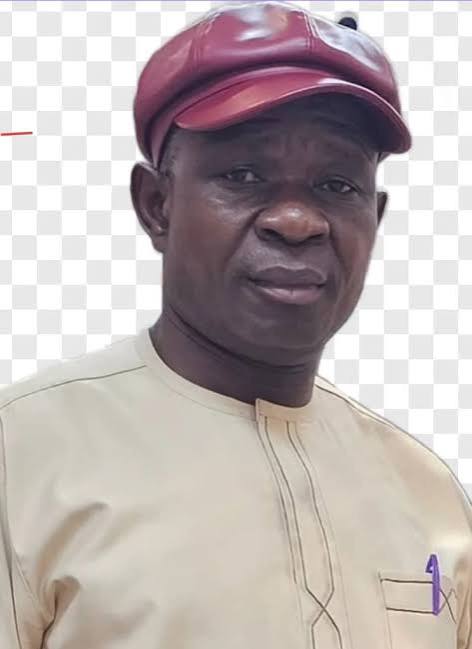
Emmanuel O. Fashakin, M.D.,FMCS(Nig), FWACS, FRCS(Ed), FAAFP, Esq.
Attorney at Law & Medical Director,
Abbydek Family Medical Practice, P.C.
web address: http://www.abbydek.com
Cell phone: +1-347-217-6175

UK refineries asked to maximise jet fuel production amid supply fears

British refineries have been asked to maximise jet fuel supply as part of government contingency planning, amid growing fears the Iran war will force planes to be grounded.

The energy minister Michael Shanks said the government is closely monitoring UK jet fuel stocks and working with airlines, airports, fuel suppliers and other governments, as carriers face rocketing fuel costs as a result of the conflict.

Normal flows of fossil fuels from the Gulf have effectively been at a standstill since the war broke out, after the de facto closure of the important shipping channel, the strait of Hormuz, through which a fifth of the world’s oil and gas flows.

“UK airlines typically buy fuel months in advance, and aviation fuel suppliers hold bunkered stocks. The UK imports jet fuel supplies from a range of countries not reliant on the strait, including the United States,” wrote Shanks in a ministerial statement.

“Airlines UK have stated that ‘UK airlines continue to operate normally and are not experiencing issues with jet fuel supply.’ The government continues to work with partners to monitor and mitigate potential disruptions,” Shanks added.

There are now only four remaining refineries in the UK, after closures at the Grangemouth and Lindsey refineries in 2025.

The remaining UK refineries are: Fawley in Hampshire owned by ExxonMobil; Humber in Lincolnshire owned by Phillips 66; Valero’s Pembroke refinery in Wales; and Essar’s Stanlow site in Cheshire.

These sites produce a range of refined products including petrol, diesel, jet fuel and fuel oil to meet domestic demand and for export. The number of UK refineries has fallen from a peak of 18 in the 1970s, as has the UK’s output of petrol and diesel.

It came as global jet fuel shipments fell to the lowest recorded level last week. Just under 2.3m tonnes of jet fuel and kerosene were transported on ships in the seven days to 26 April, according to initial analysis by the data company Kpler, which first began tracking shipments in 2017. The figure represents less than half the average weekly volume shipped before the war.

Airlines have insisted there are now no supply problems expected during their typical four-to-six-week horizon, although some carriers have already announced flight cancellations and have been lobbying for government help amid rising fuel prices and a possible supply crisis.

Airlines that cancel flights because of a lack of fuel will not lose their rights to valuable takeoff and landing slots at busy airports, which can be forfeited when flights fail to operate over a period.

It was announced on Friday that exemptions to the “use-it-or-lose-it” rule can be granted during shortages by Airport Coordination Ltd, the independent body that manages slots at UK airports, in an attempt to minimise disruption and prevent airlines from flying to protect slots.

The budget travel carrier Jet2 said on Wednesday it remained in contact with its fuel suppliers and airports.

The group said it had hedged 87% of its fuel requirement for the peak summer season, at an average price of $707 a metric tonne, giving it “a high degree of cost certainty”.

Jet2 said “current geopolitical uncertainty” over the Middle East conflict meant holidaymakers were booking trips closer to departure, making it difficult to predict bookings for the peak summer season and beyond.

Heathrow airport also told investors it was facing an “uncertain outlook” as a result of the conflict despite reporting a short-term boost in the number of passengers travelling through the airport to change planes because of airspace closures in the Middle East.

Almost 19 million passengers travelled through the airport during the first three months of the year, an increase of 3.7% compared with a year earlier.

Heathrow said it had “temporarily absorbed demand from elsewhere” but did not expect this to continue for the rest of the year, given “significant uncertainty” in the region.

Source: https://www.theguardian.com/business/2026/apr/29/uk-refineries-asked-to-maximise-jet-fuel-production-amid-growing-supply-fears

Faith: Giving child adoption a bad name, By Punch Editorial Board

On April 24, the life of an adopted girl-child was cut short in the most brutal and avoidable way in the Igando area of Lagos. Faith, 12, who should have been nurtured, protected, and given the chance to dream, instead died at the hands of those who were meant to be her guardians.

Adopted at the age of 10, she entered what should have been a safe home. What she found instead was cruelty. Faith’s brutal minders have given child adoption a bad name.

The accounts of her final months are deeply disturbing. Faith was reportedly overburdened with chores and errands, treated like a slave, rather than a daughter. She was beaten frequently and severely.

Eventually, the sustained physical assaults took their toll. She fell ill. Even then, she was denied care. No effort was made to treat her worsening condition until it was far too late.

When she finally died, her adoptive parents rushed her to the hospital, where she was declared dead on arrival. This is reprehensible.

Faith did not deserve to die that way. Her life, like every child’s, carried promise and potential. She deserved care, education, laughter, and protection.

She deserved a future. Instead, she departed most horribly, failed by her adopters, the systems meant to safeguard her, and a society that did not intervene in time.

Faith’s ordeal risks casting a long shadow over adoption as a whole. Adoption is supposed to be a pathway to hope, especially for children whose biological parents are deceased or unable to care for them.

It is also designed to bring succour to those who are unable to have children. But when stories like this emerge, they instil fear. Who would willingly entrust children to strangers if such horrors are possible? Faith’s death may discourage many from considering adoption at all.

The very system designed to protect vulnerable children and bring joy to needy couples could be undermined by the actions of a few who abuse it. That is the tragedy within the tragedy: one child’s suffering could slam the adoption door shut for many.

This is why justice must be swift, decisive, and visible. The couple responsible for Faith’s death has been arrested. They must face the maximum punishment under the law as a necessary deterrent.

Justice must not only be done, it must be seen to be done. Anything less may send the wrong signal: that the abuse of children, even to the point of death, can go with a slap on the wrist.

It is sheer wickedness and utterly reprehensible to maltreat a defenceless minor. It is an even greater evil to persist in that cruelty until it results in death. Such acts must be confronted with the full force of the law. Society owes that much to Faith, and to every child who depends on adults for survival.

Yet, Faith’s case is not isolated. Across Nigeria, reports of child abuse continue to surface with alarming regularity. The forms of torture inflicted on minors are often extreme. Some children have been starved as punishment, others slashed with blades or burned with hot irons. There are even accounts of pepper being forced into their private parts. This is inhuman.

In November 2022, Margaret Joshua, 11, was found in an uncompleted building in Jos, Plateau State. She was unable to walk, talk, or even eat due to the severity of her injuries. The wounds were the result of repeated beatings by her guardian.

Margaret was rushed to the hospital by a public-spirited woman, but like Faith, she did not survive. She died at the hospital, another victim of unchecked cruelty.

These are not just stories; they are warnings. They point to a systemic failure to protect the most vulnerable members of society. They demand urgent action and justice.

Globally, adoption systems are structured to minimise such risks. In the United Kingdom, prospective adoptive parents undergo rigorous assessments, including detailed background checks, home studies, and continuous monitoring even after the adoption is finalised. The goal is not merely to place a child in a home, but to ensure that the home remains safe over time.

Similarly, in the United States, adoption processes involve multiple layers of scrutiny. Social workers evaluate prospective parents extensively, and post-adoption supervision is often mandatory.

The system is designed to detect and address potential risks early. The court and law enforcement also weigh in.

In Ghana, adoption is also tightly regulated. Court approvals, social welfare investigations, and mandatory checks are integral parts of the process. These measures aim to safeguard the child’s best interests at every stage.

Lagos is not without similar frameworks. Adoption procedures in the state are, on paper, stringent. They include legal requirements, screening processes, and official oversight intended to ensure that only qualified individuals are approved to adopt.

What appears to be lacking, however, is enforcement.

Laws and procedures are only as effective as their implementation. Without consistent monitoring and accountability, even the most robust systems can fail.

Safeguarding must go beyond the initial approval. It must include regular follow-ups, accessible reporting mechanisms, and swift intervention when signs of abuse emerge.

Civil society organisations have a critical role to play. They must not allow Faith’s case to fade into obscurity. They should track it diligently, ensuring that justice is pursued to its logical conclusion.

Advocacy groups, child protection agencies, and the media must keep the spotlight on this case, not for sensationalism, but for accountability and reform.

The community also has an equally vital role to play. In many African cultures, there is a long-standing belief that raising a child is a collective responsibility. Parenting is not confined to biological or adoptive parents alone; it is a shared duty. Neighbours, therefore, must not shirk their responsibility.

Reports indicate that those living around Faith’s home were aware of the abuse she endured. They heard the cries. They saw the signs. Yet, intervention either did not happen or was insufficient. This silence is costly. It can be the difference between life and death.

If you see something, say something. If you suspect a child is being abused, act. Report it to authorities, alert community leaders, or involve organisations equipped to respond. Silence enables abuse; action can stop it.

Faith’s death must mark a turning point. It must galvanise action—legal, institutional, and societal. The systems meant to protect children must be strengthened and enforced.

Communities must embrace their role as protectors. And those who harm children must face consequences that reflect the gravity of their actions.

The couple who adopted Faith only to subject her to suffering and ultimate death must face the music. Their punishment must serve as a clear warning: society will not tolerate cruelty against children.

Faith’s fate must be the last of its kind.

No other child should endure what Faith endured. No other life should be extinguished in such a cruel and senseless manner. Adoption must not become a source of fear; it must remain a beacon of hope.

To achieve this, justice must be done. Safeguards must be enforced. And society must refuse to look away.

Faith deserved better. So do the children who come after her. Adoption need not be given a bad name.

Punch Editorial Board

Grounding Creativity: How Nigeria’s drone regulations prioritize control and revenue over safety and innovation

By Folarinwa M. Aluko

The overwhelming majority of drone users are law- abiding. They are creators, professionals, and hobbyists with every incentive to operate within the law. Those who intend to misuse drones, whether for criminal or otherwise unlawful purposes, are unlikely to register, seek permits


Economists describe the Cobra Effect as a policy failure where an intervention, designed
to solve a problem, ends up worsening it. To reduce the population of dangerous snakes,
the Colonial Government in India once paid bounties for dead cobras. Soon,
enterprising citizens responded by breeding cobras to claim the reward. Seeing the
abuse, the Colonial government discontinued the policy and the now-worthless snakes
were released by the breeders into the wild, leaving the country with more cobras than
before.

Nigeria’s current drone regulatory framework risks producing a similar outcome. The
Regulations are a mixture of control provisions built with layered approvals, high-level
security vetting, and significant fees. It is a regime that burdens those already inclined to
obey the law thereby discouraging lawful compliance, reducing access to technology and
externalizing the cost of regulation onto the public.

The Civil Aviation Act 2006 constitutes the primary legislative framework governing
civil aviation in Nigeria. It establishes the Nigerian Civil Aviation Authority as the
statutory regulator of civil aviation and vests in it the responsibility for the regulation of
air navigation, aircraft operations, and aviation safety within Nigerian airspace. The
Nigerian Civil Aviation Regulations (Nig.CARs) are made pursuant to this statutory
authority and derive their validity from it.

The regulatory regime governing Remotely Piloted Aircraft Systems (RPAS) in Nigeria is
expressly set out in Part 21 of the Nigerian Civil Aviation Regulations, 2023, reflects a
safety-oriented system concerned with airspace management, operational risk, and
accountability of operators.

NigCARs Part 21 provides a comprehensive framework for certification, registration,
operations, internal security safeguards and surveillance of RPAS including provisions
on applicability (21.1.1), registration and marking (21.3), operational limitations
(21.1.1.5), and operator certification. The scope of this framework is clearly defined. It
regulates the classification of RPAS, mandates registration and marking requirements,
prescribes operational standards, and establishes certification obligations such as the
RPAS Operator Certificate (ROC). While these features mirror elements found in other
jurisdictions, the introduction of the Nigerian Effect creates outcomes that are worse
than the problems sought to be addressed.

The difficulty lies in the philosophy and architecture of the Regulations. While Part 21
incorporates security requirements within the aviation safety framework, these
provisions are limited to operational and system-level safeguards. They do not extend to
the imposition of external national security clearance as a universal precondition for
civilian drone operations.

The Civil Aviation Act establishes the Authority as a safety
regulator. The Regulations can only elaborate and not extend that mandate by
converting or transforming routine civilian drone operation into a matter requiring
security vetting.

The involvement of ONSA in routine drone operations suggests a system that has drifted
from safety oversight into generalized control without a clearly articulated legal basis.
This raises a familiar question in administrative law: whether the creation of regulatory
requirements outside the scope of or without clear statutory grounding is an exercise of
lawful authority or executive overreach? Where such requirements lack clear statutory
foundation, they risk being declared ultra vires and of no effect as subsidiary legislation
and administrative practices must remain within the scope of the enabling statute.

Moreover, the conflation of Aviation Safety Regulations with National Security
Oversight raises questions of institutional competence. Aviation regulators are designed
to assess operational risk, airspace management, and safety compliance. Security
agencies, by contrast, are structured to address threats of a fundamentally different
nature. Collapsing these functions into a single approval process risks weakening both
objectives.

The implications of this structural misalignment extend beyond administrative law and
into constitutional territory. Drone technology is no longer an exotic tool. It is
embedded in everyday creative and commercial activity. Filmmakers, journalists,
content creators, surveyors, and entrepreneurs rely on it to produce, document, and
communicate. A regulatory regime that converts daily interactions into a high-level
security matter risks crossing the threshold from regulation to infringement.

Section 39 of the Nigerian Constitution guarantees the right to Freedom of Expression.
A framework that treats low-risk creative use as a matter of national security imposes a
practical restraint on expression. It operates as a practical restraint with effects
comparable to a formal restriction. Delays, costs, and uncertainty combine to reduce
activity, particularly among independent creators who lack the institutional capacity to
navigate complex approval systems. While no right is absolute, restrictions on rights
must be legal and justified. The constitutional validity of such restrictions ultimately
turns on proportionality, whether the regulatory burden imposed is reasonably justified
by the risk it seeks to address

Another source of conflict is with the right to own property, provided in Section 44 of
the Constitution but better articulated in Article 14 African Charter on Human and
Peoples Rights. A drone is, at its core, personal property. While generally speaking,
airspace is regulated and cannot be privately appropriated, the right to use one’s
property for lawful purposes is fundamental. Regulation conditions that limit the use of
private property, especially in the absence of clear statutory grounding, operate as a
constructive limitation on property rights. A regulation that introduces disproportionate
measures relative to the risk sought to be redressed is a limitation on the rights of the
citizen.

The economic implications follow naturally. Drone technology supports entire segments
of Nigeria’s emerging economy. It is central to digital content creation, film production,
real estate marketing, agricultural mapping, and a range of other services. When entry
into this ecosystem is conditioned on high fees, extended processing timelines, and
security clearance, the regulatory framework effectively raises barriers to trade. Larger
entities may absorb these costs; smaller operators cannot. The result is a market skewed
against the very actors driving innovation.

The issuance of operational clearances for ordinary drone use by a national security
institution reflects a misallocation of regulatory function. It diverts security
infrastructure toward low-risk civilian activity, while simultaneously introducing delay,
cost, and uncertainty into sectors that depend on speed and accessibility.

Privacy is often invoked to justify such restrictions, but the argument is less persuasive
than it appears. In Nigerian law, expectations of privacy in public spaces are generally
limited. Where privacy concerns arise, they are already addressed through existing legal
mechanisms, tort law, criminal provisions, and sector-specific regulations. The attempt
to regulate privacy indirectly through aviation controls conflates distinct legal domains,
leading once again to executive overreach.

Privacy, in many respects, is residual and context-specific. The creation of expansive
regulatory bodies with compliance fees risks shifting the focus from protection to
administration, and from safety to revenue generation. Drone regulation, layered on top
of this, becomes part of a broader pattern of regulatory expansion without clear
boundaries.

Against this backdrop, the Nigerian approach stands in contrast to the dominant
philosophy in other jurisdictions. In the United States, the Federal Aviation
Administration has adopted a system built around identification and accountability.
Registration is inexpensive, and mechanisms such as Remote ID ensure that operators

can be traced. The emphasis is not on preventing operation, but on ensuring that those
who operate can be held responsible if necessary.

In the United Kingdom, the Civil Aviation Authority has taken a risk-based approach.
Regulation is calibrated to the level of risk posed by the activity. Low-risk operations are
lightly regulated; higher-risk operations attract more stringent requirements. The
system distinguishes between context and conduct, rather than imposing uniform
constraints.

Nigeria’s framework, by contrast, leans toward permission-based control. It asks
whether an operator should be allowed to fly, rather than ensuring that operators are
identifiable within a system of accountability. Where compliance is simple and
affordable, most users comply. Where compliance is complex and costly, many opt out.
This leads us to a central paradox.

The overwhelming majority of drone users are law- abiding. They are creators, professionals, and hobbyists with every incentive to operate within the law. Those who intend to misuse drones, whether for criminal or otherwise unlawful purposes, are unlikely to register, seek permits, or submit to regulatory oversight. A system that imposes heavy burdens on compliant users while offering little deterrence to non-compliant actors is regulating the wrong population.

The cost structure reinforces this problem. Layered fees covering registration,
certification, and operational permits turn compliance into a financial calculation. For
many small operators, particularly in the creative sector, the costs are prohibitive. The
predictable outcome is regulatory inefficiency not compliance. Regulation, in this
context, has become a barrier to entry and not a mere administrative tool.

Unfortunately, the reliance on weight as a primary regulatory trigger illustrates the
limits of the current approach. While a 250-gram threshold aligns superficially with
international standards, weight alone is an imperfect proxy for risk. A lightweight drone
equipped with advanced imaging capabilities may raise concerns comparable to heavier
equipment. Conversely, a heavier drone operated in a controlled environment may pose
minimal risk.

A framework that relies heavily on weight without incorporating contextual factors such as location, proximity to people, and purpose of use, will inevitably produce blunt and irrational outcomes. A classification that is not rationally connected to the risk it seeks to regulate raises questions of proportionality within administrative law.

The cumulative effect is most visible in the creative industry. Drone technology has
democratized visual storytelling. It allows independent creators to produce high-quality
content, compete globally, and tell local stories with global reach. A regulatory environment that introduces friction at every stage: cost, approval, uncertainty, undermines this progress. Creativity depends on immediacy and experimentation. This bureaucratic system erodes both.

Nigeria needs a more coherent framework that treats registration as a tool of
identification and authentication rather than control. Low-risk, private use at limited
altitudes could be accommodated through free or minimal registration, encouraging
compliance rather than deterring it. Oversight would remain within the NCAA, with
security agencies engaged only where specific and demonstrable risks arise. Regulation
should shift from a weight-based model towards a risk-based model consistent with
principles of proportionality and rational classification in administrative law, taking into
account the context of operation rather than relying on a single metric.

Such an approach would align with our legal jurisprudence and practical reality. It
would respect Constitutional Guarantees while maintaining safety. The regulations
would also support economic activity while preserving accountability. The objective is to
regulate behavior rather than suppress it.

The moral of the Cobra Effect is that poorly designed regulation does not eliminate
problems. It reshapes them and creates worse problems. Nigeria’s current drone
framework is doing precisely that. By making lawful compliance difficult, it may
encourage the very institutional disruption it seeks to prevent, while constraining a
sector that should be allowed to grow.

A regulatory system should not seek to control a technology. It should seek to enable its
safe and productive use. Until that shift occurs, Nigeria’s approach will remain a
solution in search of a problem and a constraint on innovation in a world that is rapidly
moving forward.

Folarinwa Aluko is a Legal Practitioner and Partner in the Firm of Trumann Rockwood
Solicitors. He can be reached at [email protected]

The views expressed by contributors are strictly personal and not of Law & Society Magazine.

“That $60bn Would Have Been Stolen”: Ikeazor Akaraiwe fires back at Festus Adedayo on Nigeria’s role in South Africa

The debate over Nigeria’s historic support for South Africa’s liberation has taken an interesting turn, with Ikeazor Akaraiwe, SAN, dismissing criticism of the country’s estimated $60 billion contribution as misplaced.

Responding directly to Festus Adedayo, Akaraiwe argued that the funds—had they been retained—might never have benefited Nigerians at all, but instead disappeared into the country’s long-troubled system of public accountability.

In his artice Why South Africans murder Nigerians in cold blood, Festus Adedayo sugested that: [I]f Nigerian governments, from independence to 1994, had spent the estimated $60b frittered on South Africa on the future of Nigerians, their offspring would not be hibernating in South Africa today. South Africans may also jolly well still be in captivity. We owe it a duty to both ourselves and country to make Nigeria too a pleasant country, a country which, travelling out of it would be for mere sightseeing, rather than for economic liberation. The hopelessness at home and the serial plunder of our country by our own kin, the notoriety of which is a tale told in all the four corners of the globe, are reasons we weigh little in the estimation of the world. Again, the criminal lifestyles, drug-pushing and excessive self-underscore that our nationals live abroad cannot but make us objects of xenophobia.”

But Akaraiwe, SAN, insists that “If the approximately $60 (sixty) billion dollars Nigeria spent on the South African liberation had not been so utilised, the money would not have made Nigeria better. It would have been stolen.”

Our English is better than theirs, By Monday Philips Ekpe

There are weightier matters that should engage African leaders more than colonial linguistic affinities, writes MONDAY PHILIPS EKPE

The other day, President William Ruto of Kenya stood before an audience in faraway Italy and declared: ” Our education is good. Our English is good. We speak some of the best English in the world. If you listen to a Nigerian speaking, you don’t know what they are saying; you need a translator…We have some of the best human capital anywhere in the world…”

He was most probably in a light mood and wanted to thrill his listeners a bit.
The backlash that followed, especially from aggrieved Nigerians and other Africans who felt scandalised, made him reverse his earlier stance and said later that Nigeria was home to “excellent English”.

I’m not too sure if President Ruto has the requisite credentials to make such distinctions and judgments but attacking him now would be as misplaced as his own Freudian slip. Even taking him head-on in this circumstance would be disingenuous. But those who link Ruto’s gaffe directly to Nigeria’s President Bola Tinubu’s earlier ill-fated reference to the East African country at a public event may well be on point. He assured his bewildered countrymen and women that they were “better off than those in Kenya and other African countries”.

Whatever purpose that expression was meant to serve, it didn’t go down well with both Nigerians and Kenyans. For the former, their lives were in a huge mess such that comparing the dilemma with what obtained elsewhere, no matter how credible, would be insensitive and painful. On their own part, the East Africans felt that for the leader of another country to ridicule them that way was abusive and provocative. Whether Ruto seized the next available opportunity to hit back is left to conjectures.

Whichever side of the divide one belongs, it’ll be tough to ignore the leadership deficit exhibited by these two heads of some of Africa’s most strategic nations. Apart from being Anglophone, Nigeria and Kenya have several other things in common including, quite unfortunately, despicable social and economic conditions. Till now, Tinubu hasn’t explained the reasons for his conclusion and why he explicitly mentioned Kenya.

By assuming that the Nigerian people fared better, he unwittingly betrayed his disconnect with average Nigerians. He may do well by investigating why, despite widespread reports about the underperformance of his beloved reforms, the citizens haven’t yet trooped to the streets, like their Kenyan counterparts, to forcefully demand transparency and accountability. The findings should shock him.

Like Tinubu, Ruto appears confused about the best way to deliver on his mandate; to convince his people that enjoying the good life or achieving something close is still possible under his watch. And, also, how to truly earn the appellation of ‘statesman’ who is capable of rallying everyone to buy into a country that can make progress or, at least, return to its glorious past. It’s often advised that one should avoid putting the wrong foot forward as apologies could prove difficult or ineffective. This is what has happened here.

A simple knowledge of the influence of host local languages on the domineering foreign ones would have saved him and lovers of the continent this embarrassment. When one chief justice of the Kenyan Supreme Court kept referring to presidential “erection” (election) in her ruling a couple of years ago, I knew at once where her problem was coming from. For me, it wasn’t a chance to laugh at her but to understand without any reservation that phonetic renderings can’t always be taken for granted. Since when did the mastery of acquired imperial languages like English, French, Portuguese and Arabic become a parameter for measuring intelligence, anyway?

Interestingly, an article in Laurea Journal published in September 2022, “English Language and Education in Kenya”, written by Jarmo Mikronen isn’t as enthusiastic and lavish in its assessment of the situation compared with Ruto’s. As he puts it, “The reasons behind poor English skills are well-known. Varying levels of schools (especially between public and private schools), poverty, chronic lack of teachers and lack of reading materials in English besides textbooks have been mentioned. Another reason is that despite its status as a language of learning, English is rarely used by many Kenyan students outside school.

Kiswahili and Sheng are used instead as lingua franca by the young people. Sheng is an informal or slang language that combines words from Kiswahili, English and other languages while using Kiswahili grammar and syntax…. Learning experiences have not always been positive and rules have been strictly enforced.” As expected, this challenging experience isn’t peculiar to Kenya. The task of adopting linguistic systems that are at variance with domestic realities can be daunting.

One aspect of Mikronen’s report is flattering, though. According to him, “in 2021, Kenya ranked 21st, the second-best African country after South Africa (12). For comparison, rank of Finland was 9, Sweden 8, Norway 5 and Denmark 3…. As far as English skills are concerned, British English still remains the ideal in Kenya and English skills form a social divide. Higher education and wealth correlate closely with English skills which is also true in Europe. It also applies when one compares countries: EF noted that its English Proficiency Index correlates with GDP per capita and education.” These statistics ought not to gladden Ruto beyond normal. He should, instead, be guided by the same spirit that enabled our heroes past like Kwame Nkrumah, Julius Nyerere, Nnamdi Azikiwe, Kenneth Kaunda and Muammar Ghaddafi to devote their lives to Africanism.

Let’s be clear. The place of the intellect in being able to master English shouldn’t be downplayed or rubbished. Just as it would be self-sabotaging to ascribe superiority to it. For, literacy, as defined by UNESCO, is truly sobering: “The ability to read and write effectively, enabling individuals to communicate and comprehend written information. This foundational skill is essential in education, as it empowers people to access knowledge, participate in society, and engage in lifelong learning. Literacy also encompasses critical thinking and understanding of various texts across different contexts.”

No particular language, its history, standardisation and domination notwithstanding, is stated here. Meaning, inferiority complex needn’t arise. Any of the indigenous Nigerian and Kenyan languages can actually be developed to meet these communication needs. Surely, it’ll take time to formulate and operationalise the enabling policies. Hard, no doubt, but that’s the way to go, not a return to the mental slavery by the very encumbrances that have perpetually kept Africa’s cultures and sense of self-awareness and dignity in a reverse mode.

Let’s maximise this English crossfire between these two brotherly nations. Identity is a major pillar of international diplomacy and presence. Many developed countries didn’t attain their status by idolising the language of the British. Neither should we. Time has come to be very proud of our mother tongues, beginning from those in leadership positions. That will at least save some of them the misery and discomfiture of struggling to speak English. The merits are unquantifiable.

Ekpe, PhD, is a member of THISDAY Editorial Board
X: @monday_ekpe2

The views expressed by contributors are strictly personal and not of Law & Society Magazine.

Tinubu-Ruto banter as food for thought, by Azu Ishiekwene

Listening to Kenyan President William Ruto diss Nigerians with a smile from faraway Italy, one would think he had taken a page from Amos Tutuola’s The Palm-Wine Drinkard. It was obvious that Ruto assumed Nigerians spoke that variety of unconventional English rendered by Tutuola in his story of magical realism from Yoruba mythology. 

Yes, Tutuola’s English was neither the Oxford lexicon of Ngugi wa Thiong’o, nor, for that matter, the intense mastery of the Nobel-winning Wole Soyinka. It can be argued, however, that like Mark Twain’s The Adventures of Huckleberry Finn, Tutuola didn’t set out to tell a story like Charles Dickens or George Orwell. But he did tell his story – unbounded, in the Nigerian spirit.

Ruto got some respite from the protests about the cost of living and difficult economic policies on the streets of Nairobi and felt comfortable enough to humour the Kenyan community abroad with a jab at Nigerian English. He later tried to walk it back, but the message had landed. 

Who English epp?

While Ruto is browsing Nigerians for translations of English, enterprising Kenyan content creators are online baiting Nigerians for traffic. In fact, if the Kenyan high commissioner in Nigeria is within earshot, he must have overheard countless Nigerians laughing and asking, “Who English epp?”, Nigerian-speak for the vanity of Queen’s English. 

Kenyans may speak the best English (which I doubt), but the economic challenges they face, which Nigerian President Bola Ahmed Tinubu alluded to and drew the clap back, are real. The problems won’t be solved just because Kenyans speak in or mimic the late Queen Elizabeth’s mellifluous tone and accent.

Ruto and Tinubu must brace for the messy, difficult task of fixing their countries’ economies, a task that is not a respecter of fine language. The Kenyan economy, which is largely driven by tourism and agriculture, only approximates to Nigeria’s South-West region. At $2,132, Kenya’s GDP per capita may look better than Nigeria’s $1,378, but Kenyans are more often in riot mode. 

Mother of all protesters

On a state visit to Bayelsa – one of the oil-producing states in the Niger Delta region of Nigeria on April 10, President Tinubu had remarked that despite high fuel prices, which have caused significant economic hardship, Nigerians were still “better off” than citizens in other African countries.

The President was quoted as saying: “Yes, I hear you from various angles of the economy. The fuel price is biting hard, but look around… You are better off. Listen to them in Kenya and other African countries and what they are going through.”

Contextually, the President was not wrong. Perhaps he needed to cite a real, relatable example, and Kenya was handy. 

Since September 2022, Kenya has experienced multiple protests and public outrage regarding the cost of living, tax hikes, and fuel costs. There have been at least six protests between 2022 and 2025, with some accounts citing about 246 police killings connected to public demonstrations. 

Where the shoe pinches

The ongoing war by the US and Israel on Iran has further spiked global oil prices through supply disruptions, significantly raising Kenya’s fuel import costs and further aggravating living expenses. As a net importer of petroleum products, oil prices surged above 25 percent, pressuring pump prices, weakening the shilling, raising transport and production expenses and food prices. 

Inflation rose to 4.4 percent in March 2026 from 4.3 percent exacerbating household strains in an import-reliant economy. 

Nigeria faces a situation practically identical to the one Tinubu’s Kenya analogy sought to downplay. It was the equivalent of an errant father telling his wards that he is not the only parent who defaults on school fees. Nigeria is in a very difficult place, and the suffering threshold of its citizens is often the butt of jokes in many circles.

Tinubu’s hook and Ruto’s refrain are making headlines, obviously because they were heard from the top floor. Downstairs, the rest of Africa loves to spar with Nigeria and Nigerians. For fun, for real and often, for just the heck of it. 

The matter of size

There is a logical basis to it. One out of every six of the estimated 1.58 billion Africans is a Nigerian. That’s about 15.4 percent of the continent’s population, about 63 percent of which is under the age of 25. 

Nigeria’s huge population is about the size of 25 other African countries combined. That’s a demographic variable that comes with inherent advantages and weaknesses. It’s also a variable that makes Nigerians visible on and off the stage.

There’s the regular hee-haw of who has the best jollof rice between Nigeria, Ghana and Senegal. This contest ought to have been resolved when the Guinness World record keepers awarded the chef prize to Nigeria’s Hilda Bassi. Ghanaians, in particular, don’t seem to have heard, seen, or tasted what Nigerians call “party jollof.” They would flood Nigeria on a party pilgrimage if they did.

The Senegalese, the brand owners of jollof, are less vocal about the contest and have, more or less, resigned themselves to watching Nigerians make a greater show of the jollof franchise. Being further to the west coast, and perhaps due to linguistic dissonance, the Senegalese have left the battle for Ghanaians, who are closer neighbours and won’t need “translators” to argue about jollof.

What about the Asian Kenyan variety?

As Kenyans may well know, English, a colonial legacy, is hardly a measure of intelligence or national progress. Otherwise, the British would be the most advanced people on the planet. As former British colonies, both Kenya and Nigeria share English as an official language, but each country has developed distinct spoken varieties with different phonetic structures. 

As Ruto might well know, Asian Kenyans who have been in that country since the 1890s don’t quite have the same English accent as native Luo, Kikuyu or Kalenjin speakers. 

The linguistic or tonal differences reflect the influence of indigenous languages – Nigeria has more than 500 languages, which shape its cadence and intonation. At the same time, Kenya’s peculiarities also give rise to its own accents and adaptations. 

As Nigerian civil rights activist, Shehu Sani, posted on X: “Ruto is mocking the English of the country with a Nobel Prize for literature winner. The nation of Achebe and Chimamanda.” 

Sani might have added that in 2025, a 17-year-old Nigerian student, Nafisa Abdullahi, beat over 20,000 competitors from 69 countries (including Kenyan participants) in English language skills at the TeenEagle finals held in London.

We no carry last!

Nigeria has more English speakers than any other country in Africa. Over time, the language has evolved locally into what is often described as “Nigerian English” – a distinct and widely recognised variety shaped by the country’s history, cultures and everyday usage. Nigerian English continues to influence global English, with Nigerian expressions becoming increasingly common.

Kenyans are very likely aware that apart from marathons, steeple chase and the long distance, Naija no dey carry last – a fact known even as far afield as the Buckingham Palace.

The real trouble is that far more than English, the economy is making both Kenyans and Nigerians miss the humour of these presidential jabs. From a shared colonial past, a youthful population, ethnic diversity and entrepreneurial energy to the love of sports and entertainment, there’s far more that binds both countries than linguistic flair. 

Tinubu and Ruto should face the economy. That is what bothers citizens! 

Na who Queen’s English epp?

The views expressed by contributors are strictly personal and not of Law & Society Magazine.

Democracy in Nigeria: A promise still in the making

By Richard Odusanya

Democracy is more than just a system of government; it is a promise. In Nigeria, that promise carries deep meaning—born out of a long history of colonial rule, military interventions, and the collective struggle for freedom and self-determination. At its heart, democracy is the idea that power belongs to the people. In Nigeria, this means that every citizen—regardless of ethnicity, religion, gender, or social status—has a voice in shaping the nation’s future. Through elections and civic participation, Nigerians are meant to choose their leaders and hold them accountable.

Yet, in practice, democracy in Nigeria remains a work in progress.

While elections are regularly conducted, the true spirit of democracy is often challenged by issues such as electoral malpractice, weak institutions, corruption, insecurity, and limited accountability. Too often, the process of choosing leaders is overshadowed by the struggle to ensure that votes truly count. Even when leaders are elected, the connection between governance and the everyday needs of citizens can appear distant.

This gap between promise and reality highlights an important truth: democracy is not sustained by structures alone but by values.

For Nigeria’s democracy to thrive, three core virtues must take root more deeply:

Courage: Citizens must be willing to participate actively—not only during elections but in demanding transparency, speaking against injustice, and engaging in community and national discourse. Silence and apathy weaken democracy.

Integrity: Public office must be seen as a trust, not an opportunity for personal gain. Leaders, institutions, and even citizens must uphold honesty and accountability in both public and private life.

Devotion to democratic principles: Respect for the rule of law, credible elections, separation of powers, and protection of minority rights must be upheld consistently. Democracy cannot function where laws are selectively applied or institutions are undermined.

In Nigeria’s diverse society, democracy also plays another critical role.

It is the framework that allows different ethnic, cultural, and religious groups to coexist peacefully. When democratic principles are respected, diversity becomes a strength. When they are ignored, division and mistrust can deepen.

Importantly, democracy is not the responsibility of government alone. It belongs to the people. Citizens must move from being passive observers to active participants—asking questions, demanding results, and contributing to solutions within their communities.

Nigeria’s democratic journey has made progress, but the road ahead requires deliberate effort.

  • Strengthening institutions,
  • promoting civic education,
  • ensuring electoral credibility, and
  • rebuilding public trust

Collective Responsibility and Accountability are not optional—they are essential.

Ultimately, the future of democracy in Nigeria will not be decided only at the ballot box but in the daily actions of its people and leaders.

The promise of democracy remains alive—but its fulfillment depends on whether Nigerians, collectively, are willing to defend it, nurture it, and make it work.

In my final reflection on this contribution and following from the above, there are two quotes I would like to use to roundup. The first one being: “Power corrupts and absolute power corrupts absolutely” and the second one being: “The road to hell is paved with good intentions”. In Africa today, many countries in the continent are still fighting for their freedom, whether it be economic, social, political, environmental, or psychological.

Sadly, in many African countries, democracy is under pressure: electoral systems have come under attack, authoritarianism is resurgent, and civic freedoms are shrinking. Against this backdrop, democracy without opposition is not a democracy and should outrightly be considered authoritarianism. Therefore, the “opposition” should in no way be confused with “hostility” to the government.

@richardODUSANYA

[email protected] 

The views expressed by contributors are strictly personal and not of Law & Society Magazine.

APC’s politics of consensus, By Lasisi Olagunju

In a democracy, the joy of victory won through real elections has certain permanence. ‘On Your Mandate We Shall Stand’ was composed and sung for Moshood Kashimawo Olawale Abiola because he submitted his ambition to a competitive process: he had a competent opponent, votes were cast, counted, and he won. The song, its defiance, and resilience followed that mandate because it was legitimate.

Those who chant similar slogans today may find themselves clutching empty matchboxes tomorrow if they continue to sidestep competitive elections. A democratic seat secured through elite manipulation and backroom agreement cannot command enduring popular support, especially when those same elites decide to take it back.

Nigeria today stands in the grip of what is called consensus politics; choosing candidates without the ‘trouble’ of voting. We are even scheming to elect a president next year without the inconvenience of election. Good luck to all of us.

At the Battle of Hastings on October 14, 1066, the Norman king, William the Conqueror, defeated King Harold II and went on to become King of England. Historians note that the victory set off sweeping changes across the British Isles. They say by force of arms, William took the crown and went on to remake the Church, the palace, and the culture of England. They say he did more than change the English crown; his victory remade the English language through a deep infusion of Norman/Latin forms. The consequence is that more than 60 percent of English words now carry Latin parentage.

One such word is ‘consensus’, from the Latin ‘consentīre’—“to feel together.”

The rains started beating that word a long time ago. Language historians note that words which experienced long migration often shed their original sense of shared feeling and acquire more instrumental meanings. So it is with ‘consensus’ in today’s political usage.

Somewhere along its long journey from Latin to modern political speech, ‘consensus’ lost its warmth. The distortion of the word and its meaning is no longer abstract. In our usage today, ‘consensus’ no longer suggests a meeting of minds; it often signals a decision already made; an outcome proclaimed from above and affirmed below. A word that once implied a genuine convergence of minds now describes an order from the throne, delivered through courtiers.

The parties—especially the ruling APC—have stretched and inverted the meaning of the word. In APC’s political dictionary, “consensus” increasingly reads as the will of the president, not the outcome of deliberation.

As we had it in Sani Abacha’s transition programme, we think today’s living parties that make it limping to the ballot in January 2027 should reach an ‘agreement’ and adopt one person as the consensus presidential candidate. That is how rich our imaginative thoughts are and how limitless our capacity for distortion of values is.

Also Read: Intimate Affairs: Where did all the wife materials go?

Read Also: After 14 years of waiting, Nigerian woman dies hours after giving birth to quintuplets

Within both party and polity, the president now embodies what Aristide R. Zolberg calls “the chief executive who is also the supreme legislator (the chief elector), and the ultimate arbiter of conflict.” Because the president is what he has always been, photo ops are staged as proof of order, while his name, cast as the final authority in the APC’s doctrine of “consensus”, is invoked to sanctify outcomes.

In the APC, across the states, the refrain is the same: the abuse of ‘consensus,’ with the president inserted into the process as decider-in-chief.

Oyo State offers a very sharp illustration. Some APC leaders, on Friday, announced Senator Sharafadeen Alli as the party’s “consensus” governorship candidate, invoking the president’s name. Within hours, former minister, Adebayo Adelabu, pushed back, also invoking the same presidency, and declaring that he remained in the race as the president’s “son”. When two rival claims lean on the same authority, what is presented as consensus begins to look like a contest of endorsements, not agreement.

Our fathers say the medicine must match the disease. Bí àrùn búburú bá wòlú, oògùn búburú la fi ńwò ó (When the affliction is severe, the remedy cannot be gentle). That may explain why the rhetoric of resistance has turned harsh. One does not need a keen ear to catch the crudity in what now issues from Oyo APC bigwigs. It is a stream of curses and abuse, imprecations without restraint. And one must ask: why?

Beyond Oyo, across Nigeria, north to south, we hear cries of plots to impose “consensus” candidates. How do you use the words ‘imposition’ and ‘consensus’ in the same sentence? Imposition comes from above; the other grows from below. ‘Imposition’ is force without consent. ‘Consensus’ is agreement without force. The two opposites appearing as companions presents a contradiction, and politics is autological, a self-defining oxymoron. You will likely agree with my linguistic choice if you believe the popular (but etymologically false joke) that “politics” comes from ‘poly’ (many) and ‘tics’ (blood-sucking parasites).

In Nasarawa, former Inspector-General of Police, Mohammed Adamu Abubakar, rejected any move towards “consensus,” insisting that only a direct primary could confer legitimacy. To him and others in the race, what is being dressed up as consensus is little more than unilateralism in softer language.

In Ondo, there are subdued objections to what the party may decide on Ondo South senatorial ticket. Aspirants for the Ondo East/Ondo West federal constituency have raised similar alarms, accusing party leaders of plotting to impose a candidate under the convenient cover of consensus. Their warning is simple: once choice is managed from above, internal democracy is already compromised.

In Yobe State, Senator Ibrahim Mohammed Bomai, Kashim Musa Tumsah, and Usman Alkali Baba—three APC governorship aspirants—have rejected the party’s endorsement of former Secretary to the State Government, Alhaji Baba Malam Wali, as its “consensus” candidate for the 2027 election.

Bomai’s choice of words is telling. He described the “consensus” move as an affront to democratic principles; he warned against the steady replacement of popular choice with elite arrangement. No individual, he argued, regardless of past office or political influence, has the authority to determine the leadership of millions behind closed doors. Leadership, he insisted, must emerge through a process that is free, fair, and transparent—not one brokered in the name of “consensus.” Quoting him directly, he said: “We categorically reject this attempt to subvert due process. We reject the culture of imposition. We reject any scheme that undermines fairness, equity, and the democratic rights of our people.” Those words give voice to what dissatisfied but muted APC leaders and members in Kwara, Ogun and beyond are saying in uneasy, even fearful, silence.

Lagos, for now, appears to be the exception. The emergence of Dr Obafemi Hamzat as the APC governorship candidate quietly followed a process that bore the marks of consultation rather than imposition. Hamzat combines the fine qualities of a gentleman with humble erudition. In a field without a formidable opposition, his path to final victory looks smooth. Congratulations may therefore be in order.

Choice of candidates by consensus is good, cheap and safe if it comes with clean hands. Going far back into our beginning, we find that real consensus is not alien to the African political tradition. Ghanaian philosopher Kwasi Wiredu (1931 – 2022), in his reflections on ‘Democracy and Consensus in African Traditional Politics’, argues that decision-making in pre-colonial African societies was anchored in discussion and agreement rather than imposition.

He draws, for instance, on the words of Zambia’s founding father, Kenneth Kaunda, who observed that “in our original societies, we operated by consensus. An issue was talked out in solemn conclave until such time as agreement could be achieved.” Similarly, Julius Nyerere of Tanzania, in 1961, noted that “the African concept of democracy is similar to that of the ancient Greeks, from whose language the word ‘democracy’ originated. To the Greeks, democracy meant simply “government by discussion among equals.” The people discussed, and when they reached an agreement, the result was a “people’s decision.” In African society, he said, the traditional method of conducting affairs is “by free discussion… the elders sit under the big trees and talk until they agree.”

Our politics has refused to benefit from that past of refined due process. There is no “people” in today’s decisions. And we expect today’s “consensus” arrangement to yield good governance. No. It will not. It can only produce a system that answers to kings, kingmakers, and the capos who guard their power.

When a ruling party actively promotes “consensus” after weakening the opposition, it risks sliding toward a very bad form of authoritarianism. It also strips even its own members of the power to choose their candidates. As Kwasi Wiredu observed, both Kenneth Kaunda and Julius Nyerere defended systems that claimed consensus but, in practice, narrowed choice.

The Yoruba, watching what has become of this democracy in the hands of its custodians, would say: when a wise man cooks yams in a mad fashion, the discerning take theirs with sticks. That is àbọ̀ ọ̀rọ̀—half a word—and for the wise, it is enough.

What passes for consensus in Nigeria today therefore demands closer scrutiny. When outcomes are settled before conversations begin, when dissent is managed rather than engaged, and when unanimity is announced rather than negotiated, consensus ceases to be the product of dialogue; it becomes instead an instrument of control.

“Fair is foul, and foul is fair.” In politics, as William Shakespeare suggests, opposites often blur; good and evil do not always stand apart; they, in fact, reinforce each other. Bernard Crick, in ‘In Defence of Politics’ (1962), reminds us that politics thrives on contradiction, that it is “a creative compromise… a diverse unity.”

All dictionaries insist that “consensus” and ‘coercion’ are not the same. Our politicians, however, behave as though they are—indeed, as though one can be made to pass for the other. Once coercion learns to speak the language of consensus, it no longer needs to persuade; it only needs to declare. And declarations are fast, sweet and cheap.

But there are consequences.

Someone said “every cheap choice is a lost chance at joy.” The quest for easy victory is behind the current ‘consensus’ frenzy. But it may be the death of this democracy.

In Yoruba, some proverbs come as stories. Take this: “All the animals in the forest assembled and decided to make ìkokò (hyena) their asípa (secretary). Ikoko was happy to hear the news, but a short while later he burst into tears. Asked what the matter was, he replied that he was sad because he realised that perhaps they (his electors) might revisit the matter and reverse themselves.”

Professor Oyekan Owomoyela, from whom I got the proverb, explains what it says: “even in times of good fortune one should be mindful of the possibility of reversal.”

The moral is that those who donate victory cheaply through agreement can agree again to whimsically annul the victory without consequences.

The views expressed by contributors are strictly personal and not of Law & Society Magazine.

A Season of Solemn Transitions: AFBA President High Chief Ibrahim Eddie Mark mourns elder brother, Maxwell Mark

The legal community and the ancient kingdom of Omagwa are once again united in a somber embrace as High Chief Ibrahim Eddie Mark, President of the African Bar Association (AFBA), navigates a profound season of transition.

Only months after the grand celebration of life for his matriarch, the Mark family has announced the transition of the family’s eldest scion, Chief Maxwell Mark, who passed on Easter Sunday, April 5th, 2026.

A Pillar of the Patriarchal Home

Maxwell Mark was more than just a brother; he stood as the most senior of his father’s children. Born into the expansive and storied home of the late Mark A. Kanu, Maxwell occupied a unique position of leadership and responsibility within the family hierarchy. Though he was born of a different mother, his role as the first-born son served as a vital bridge between generations, embodying the unity and strength of the Mark lineage.

Resonances of a Recent Farewell

This loss follows closely on the heels of the family’s recent rites of passage for their mother, Mrs. Priscilla Queen Nwanediye Mark. A woman of immense grace, Mrs. Mark passed peacefully on November 16, 2025, at the remarkable age of 95, and was laid to rest by High Chief Ibrahim Mark in a magnificent ceremony in January 2026.

The passing of Maxwell Mark marks the closing of another significant chapter for the AFBA President, as he honours the legacy of those who laid the foundation for his own distinguished career.

The Final Rites of Passage

The family has released the official funeral arrangements to honour the life of Maxwell Mark:

  • Service of Songs: Friday, May 29th, 2026, at Holy Fire Overflow Ministries, Ogba, Lagos.
  • Burial Service: Saturday, June 6th, 2026, at Ihunda Castle, Omuchetu, Omagwa.
  • Interment: To follow immediately at the Reynolds Mezue Mark Compound, Omuchetu, Omagwa.

As the legal titan prepares to lead his family through these final rites, colleagues from across the continent have begun pouring in tributes, recognizing the immense weight of back-to-back losses for the AFBA leader.

Chief Maxwell Mark is survived by his aged mother, wife, children, and numerous siblings, including High Chief Ibrahim Eddie Mark.

TIPS