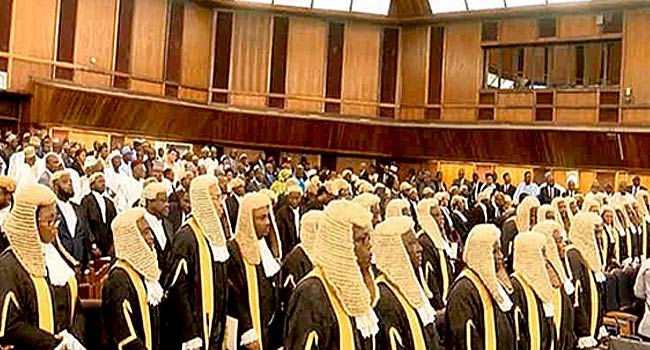
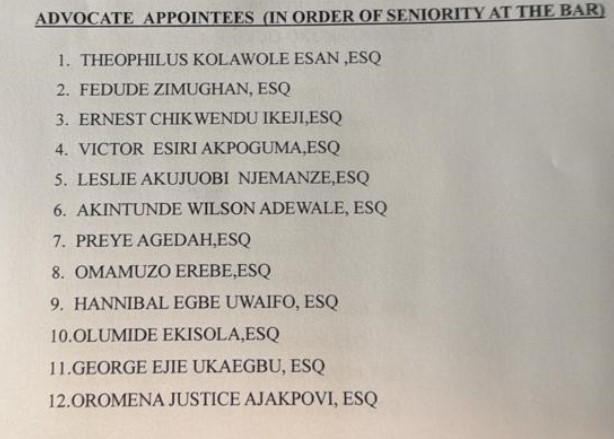
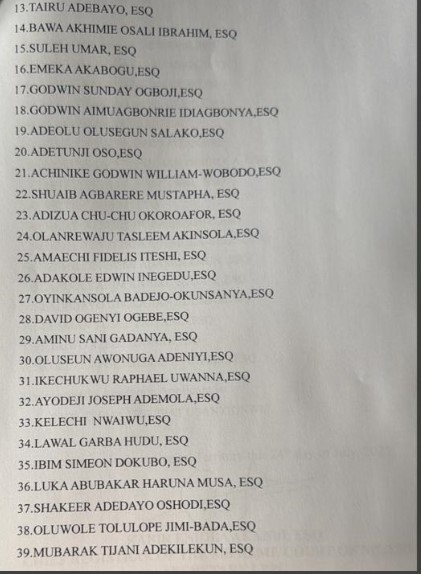
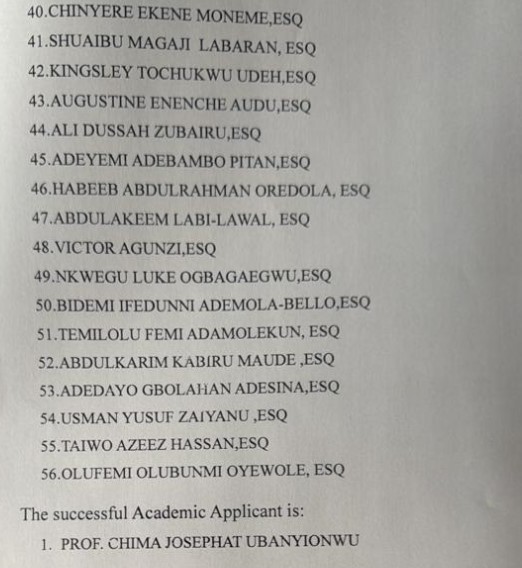
The Legal Practitioners’ Privileges Committee (LPPC) has approved the elevation of 57 legal practitioners to the prestigious rank of Senior Advocate of Nigeria (SAN).
Those elevated include the Secretary to the government of Nasarawa State, Shuaib Magaji Labaran, Osun State Attorney General, Oluwole Tolulope Jimi-Bada and two female legal practitioners — the Chairman of the NBA 2024 Annual General Conference Planning Committee, Mrs Oyinkan Badejo-Okusanya and Mrs Chinyere Ekene Moneme.
Also elevated to the prestigious rank are David Ogenyi Ogebe, son of retired Justice of the Supreme Court, Justice James Ogebe, Professor Chima Josephat Ubanyionwu, amonst others.
The list obtained on Thursday comprised 56 advocates and one from academia.
According to the Chief Registrar of the Supreme Court and Secretary of the LPPC, Mr Kabir Eniola Akanbi, the list was approved by the Chief Justice of Nigeria, Hon. Justice Kudirat Motonmori Olatokunbo Kekere-Ekun, at LPPC’s 169th Plenary Session held on Thursday.
“The rank of Senior Advocate of Nigeria is conferred as a mark of professional excellence upon legal practitioners who have demonstrated exceptional distinction either as advocates in the courts or as academics contributing significantly to the development of legal scholarship.
“During the session, the Committee also considered three (3) petitions submitted against certain applicants. Upon thorough review, each petition was found to be lacking in merit and was accordingly dismissed.
“In accordance with the directives of the Body of Senior Advocates of Nigeria (BOSAN), all shortlisted prospective Senior Advocate of Nigeria (SAN) conferees are required to attend and successfully complete the Pre-Swearing-In Induction Programme”, Akanbi said.
According to the LPPC secretary, participation in the induction programme is a mandatory prerequisite for the formal conferment of the SAN rank.
Meanwhile, the conferees have been warned in line with Paragraph 25(1) of the Legal Practitioners’ Privileges Guidelines and the provisions of Rule 393 of the Rules of Professional Conduct, 2023, from publishing advertisements, congratulatory messages, or goodwill notices related to their nomination or conferment.
“Any breach of these provisions may attract sanctions for violations of statutory or ethical rules as expressly stated”, Akanbi said.
Meanwhile, the Swearing-In Ceremony for the 57 successful applicants is scheduled to be held on Monday, September 29, 2025.
Below is the list of the new SANs in order of seniority.
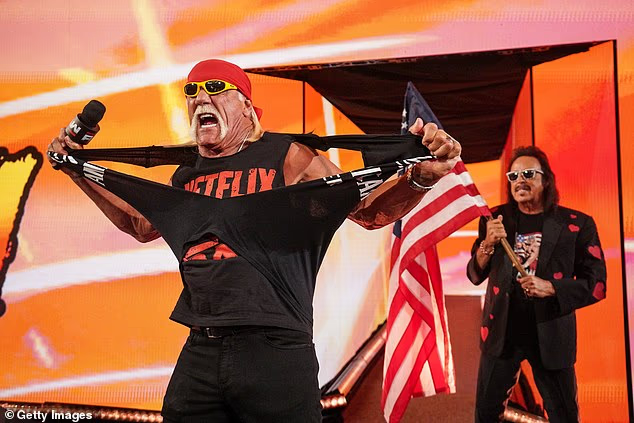
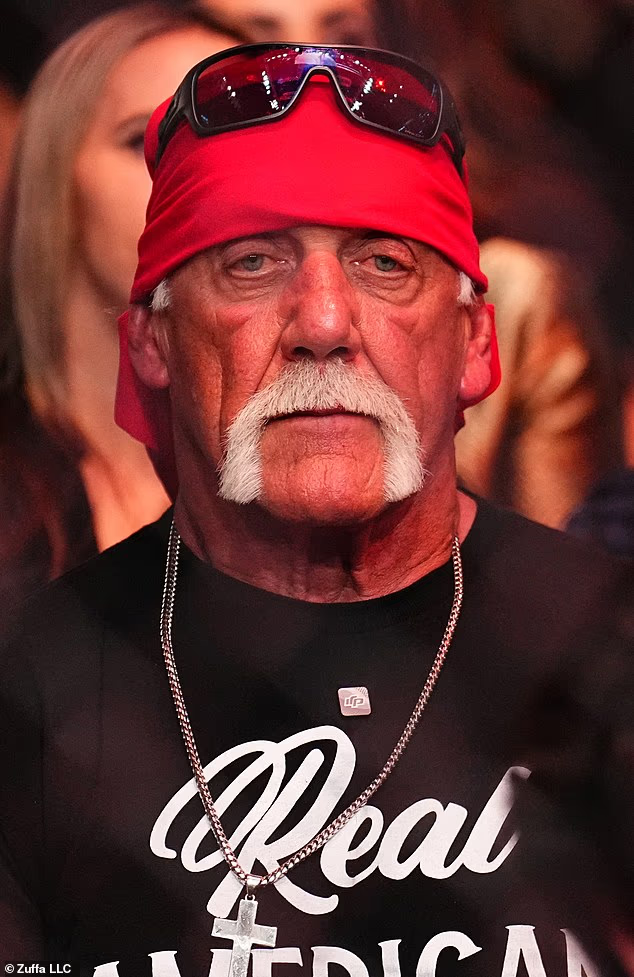
The WWE icon passed away early Thursday morning after medics were dispatched to his Clearwater, Florida home, per TMZ. Operators said it was regarding a cardiac arrest.
Police cars and EMTs were parked outside Hogan’s home, with the reality star carried onto a stretcher and into an ambulance.
The shock death comes just weeks after his wife Sky, denied rumours he was on his deathbed in a coma – and claimed his heart was ‘strong’ after he underwent a routine neck surgery.
His representative said in a statement last month: ‘He’s had problems with his back for years, but there’s no emergency.’
Hogan had previously opened up about undergoing ’25 surgeries in the past decade.’
Speaking on Jake Paul’s IMPAULSIVE podcast last year, he said: ‘Ten of them were back surgeries. I’ve had both knees and hips replaced, shoulders — everything.’
DailyMail.com has contacted representatives for Hulk Hogan for comment.
Fans were left concerned for Hogan when he appeared as a special guest on Fox & Friends at the start of May while sporting a worrying new look.
Renowned for his deep tan, the WWE great’s skin looked particularly weathered on air, while his usual white beard appeared to be dyed black despite his goatee and hair being left white – making for a strange contrast.
One viewer wrote online: ‘Tell Hulk Hogan his face is dirty, clean that soot off.’
Another said: ‘Does anyone believe this is Hulk Hogan?’
A third added: ‘Hulk Hogan giving off Wooly Willy vibes this am on Fox & Friends.’
A viral video shared on Facebook claims that condoms contain over 100 toxic chemicals harmful to women’s reproductive health. The FactCheckHub investigated the claim.
The video, posted by Facebook user Lolo Crystal Chinelo, shows a woman reacting to a speaker who claims that a 2014 Danish study found condoms contain over 100 toxic chemicals, including hormone disruptors and carcinogens.
In the clip, the original speaker referenced a 2014 study, alleging that condoms contain toxic substances such as hormone disruptors and carcinogens.
She claimed that frequent use could expose women to harmful chemicals with potential risks to their reproductive health.
Part of the audio transcribed reads:
You use condoms, and you think it’s safe, but what if it’s slowly poisoning your body? A 2014 Danish study found over 100 toxic ingredients in condoms. Hormone disruptors, carcinogens, and spermicides that can damage the uterine wall. Each condom contains about 1.5 millilitres of lubricant. If a woman is intimate 300 times a year, she’s putting in her uterus over half a litre of this toxin into her body every single year…”
Since the inception of the video, it has garnered an attraction of over 9,000 likes, 2,100 reposts, and 371 comments.
Due to the sensitive nature of the claim, The FactCheckHub decided to examine the veracity of the claim.
Screenshot of the Video from Facebook
What’s in a Condom?
Most condoms are made from latex, polyurethane, or polyisoprene. They often include added lubricants, flavourings, and colours. These extra ingredients, while designed for comfort, may sometimes include substances that cause irritation or allergic reactions.
Some products may be toxic
A 2024 report by The Guardian UK and Reuters cited a study that found that several popular brands of condoms and lubricants contained PFAS (Per-and polyfluoroalkyl substances), also known as “forever chemicals.” PFAS are knownto be reproductive toxicants and endocrine disruptors, and they have been linked to health issues such as low birth weight, reduced sperm counts, pregnancy-induced hypertension, infertility, and shorter duration of breastfeeding.
The study conducted by Mamavation, a consumer advocacy blog, in collaboration with environmental health researchers, highlighted that some condom brands and intimate products tested positive for PFAS levels beyond safe thresholds.
In addition, a 2001 study published in a health journal, Science Direct, identified the presence of N-nitrosamines, classified as potent carcinogens, in rubber products including condoms, baby bottle teats, and balloons. European regulations currently limit the release of these compounds due to their cancer-causing potential.
That study also found that about 0.6 nanogram of nitrosamines may migrate into the vaginal mucous membranes during sexual intercourse, estimating that lifelong exposure through 1,500 condom uses could result in the absorption of up to 0.9 micrograms of these substances.
Another study published by the National Institute of Health noted latex allergies and other additives, such as dimethylsiliconium, colourants, and flavourings which did not provide evidence of widespread toxicity or carcinogenic risk.
The study concluded that more data were needed to assess the cytotoxic impact of non-spermicidal lubricants and other compounds but did not suggest that condoms were inherently unsafe when used as directed.
Official guidance on condom safety
Regulators such as NAFDAC, the World Health Organisation (WHO), and the U.S. Food and Drug Administration (FDA) maintain that condoms are safe when manufactured and used according to established safety standards.
WHO publishes guidelines on male latex condom quality, ensuring limits on harmful additives like nitrosamines. It also notes that spermicidal lubricated condoms should no longer be promoted as it is ineffective in preventing HIV. However, it recommends using a nonoxynol-9 lubricated condom over no condom at all.
FDA mandates rigorous pre‑market testing for biocompatibility, shelf life, and latex integrity before approving condoms for use.
In Nigeria, NAFDAC enforces strict regulations on the registration, labeling, and post-market surveillance of condoms. While the agency has previously issued alerts about unregistered condom brands circulating in the market, it has not raised safety concerns about any NAFDAC-approved brands.
No evidence supporting viral claim
Further findings showed that the specific “2014 Danish study” cited in the viral video could not be found during a review of available academic literature.
Instead, a 2015 Danish study reviewed by The FactCheckHub discussed the use of condoms in preventing sexually transmitted infections among Danish Youths aged 15-29 living in Denmark.
Another Danish National Youth Study (DNYS), conducted in 2014 explored various aspects of health behaviours among young people, including sexual behaviour, but did not focus specifically on condom toxicity. The DNYS, a national survey, gathered data on a range of topics, including alcohol, tobacco, and cannabis use
The speaker in the viral clip was identified as Ayesha Depala, who is the owner of a fashion brand specialising in women’s clothing in the UAE and is also the co-founder of DiviNom Healing, the video was posted on this platform.
When our researcher contacted her via email requesting a link or evidence for the cited study, she responded with a document titled “100 Potentially Harmful Chemicals Found in Condoms and Related Products”, purportedly from the Institute for Toxicology & Consumer Safety Studies, dated May 2025.
Screenshot of the document from the email response
The document included a methodology section and a list of 100 chemicals, but no verifiable links or references were provided nor names of researchers.
When the document’s title and the name of the Institute for Toxicology & Consumer Safety Studies were used in a keyword search, they did not lead to any official publication or website belonging to the institute. Instead, the search results pointed to the earlier-cited study conducted by Mamavation, which had been reported by Reuters and The Guardian.
Are condoms safe?
Condoms do not contain harmful toxins in amounts considered dangerous to human health when used as intended. While trace levels of substances like nitrosamines or PFAS may be present in some products, these are strictly regulatedto ensure safety.
According to the WHO, “Condoms, when used correctly and consistently, are safe and highly effective in preventing transmission of most sexually transmitted infections, including HIV, and unplanned pregnancies. Condoms are safe, inexpensive and widely available.”
To ensure their effectiveness and safety, WHO also notes that “condoms need to follow ISO standards and WHO/UNFPA specifications.”
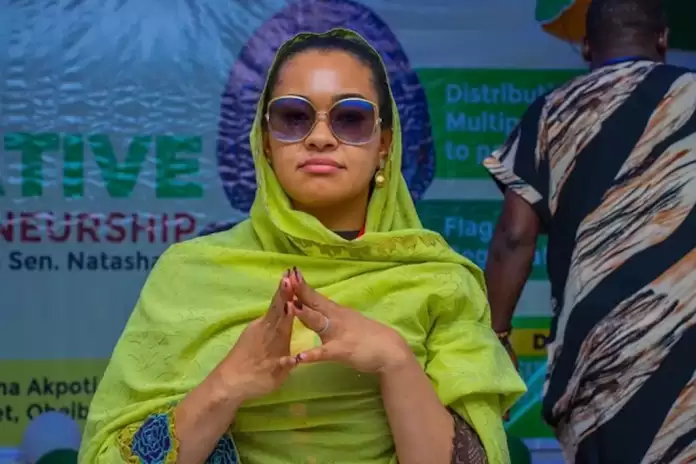
Officers of the Nigeria Immigration Service at the Nnamdi Azikiwe International Airport, Abuja, on Thursday morning, caused a momentary travel scare as they seized the passport of suspended Kogi Central lawmaker, Senator Natasha Akpoti-Uduaghan, on her way to board a British Airways flight to London.
Eyewitnesses at the airport said the Senator arrived at the international terminal of the airport with her husband, Chief Emmanuel Uduaghan, only to be stopped by immigration officials who flagged her as a “national security risk.”
The incident occurred in the early hours of July 24, 2025, just before boarding commenced for the London-bound flight.
Travellers reported that Senator Natasha remained calm and composed throughout the ordeal, insisting that the officers had no legal authority to seize her passport.
“The court never authorised this. You have no right to hold my passport,” she was overheard telling the officers, while urging them to allow her to proceed.
No official explanation was provided to the Senator at the time of the seizure, further fueling suspicions of political interference.
Her husband, Chief Uduaghan was seen making a series of urgent phone calls as the delay dragged on.
Minutes later, the senator’s passport was returned without any formal explanation, allowing her to swiftly proceed through immigration and board her flight just in time.
The incident sparked murmurs among travellers with observers describing the situation as an unnecessary embarrassment and a potential abuse of institutional power.
Neither the Nigeria Immigration Service nor the office of the Senate President has issued a statement on the matter.
A French media conglomerate Canal+ has officially acquired full ownership of MultiChoice Group, the parent company of DStv and GOtv, in a landmark $3 billion (approx. 55 billion rand) deal. The acquisition, which gives Canal+ the remaining 55% stake it did not previously own, was approved by South Africa’s Competition Tribunal on Wednesday, July 23.
The approval comes after months of intense negotiations and regulatory reviews, and paves the way for the deal to be finalized by October 8, 2025. While the Tribunal gave the green light, it imposed several public interest conditions to protect local content and maintain South Africa’s media sovereignty.
For Canal+, the deal represents a major strategic expansion into Africa’s booming media and entertainment market. Already operating in 25 African countries with over eight million subscribers, Canal+ is now positioned to significantly scale up its presence, targeting 50 to 100 million subscribers across the continent in the coming years.
MultiChoice, Africa’s largest pay-TV broadcaster, brings more than 14.5 million subscribers in 50 sub-Saharan African countries, as well as flagship platforms like DStv and GOtv. The company is also home to premium content brands such as SuperSport, making it an attractive acquisition for the French media powerhouse.
Describing the deal as transformative, Canal+ CEO Maxime Saada said: “The combined group will benefit from enhanced scale, greater exposure to high-growth markets and the ability to deliver meaningful synergies.”
One of the key benefits of the merger is the integration of Canal+’s French-language content with MultiChoice’s dominant English and Portuguese offerings—creating a multilingual media powerhouse capable of serving diverse African audiences.
Beyond strategic value, the acquisition is also a timely boost for MultiChoice. The deal is expected to inject fresh capital into the South African broadcaster, enabling deeper investment in local content production, technology upgrades, and digital innovation.
As part of the Competition Tribunal’s conditional approval, Canal+ has committed to spend approximately 26 billion rand over the next three years on initiatives aligned with South Africa’s public interest objectives. These include retaining MultiChoice’s headquarters in South Africa, maintaining investment in local content and sports broadcasting, and supporting local content creators.
In a joint statement, both companies reaffirmed their commitment to the South African media ecosystem: “We will maintain funding for South African general entertainment and sports content, providing local content creators with a strong foundation for future success.”
Canal+ began its takeover bid in 2023 with a mandatory buyout offer of 125 rand per share, valuing MultiChoice at around $3 billion. With full ownership now secured, the French media giant is poised to redefine Africa’s pay-TV industry, tapping into its vast potential and shifting the competitive.
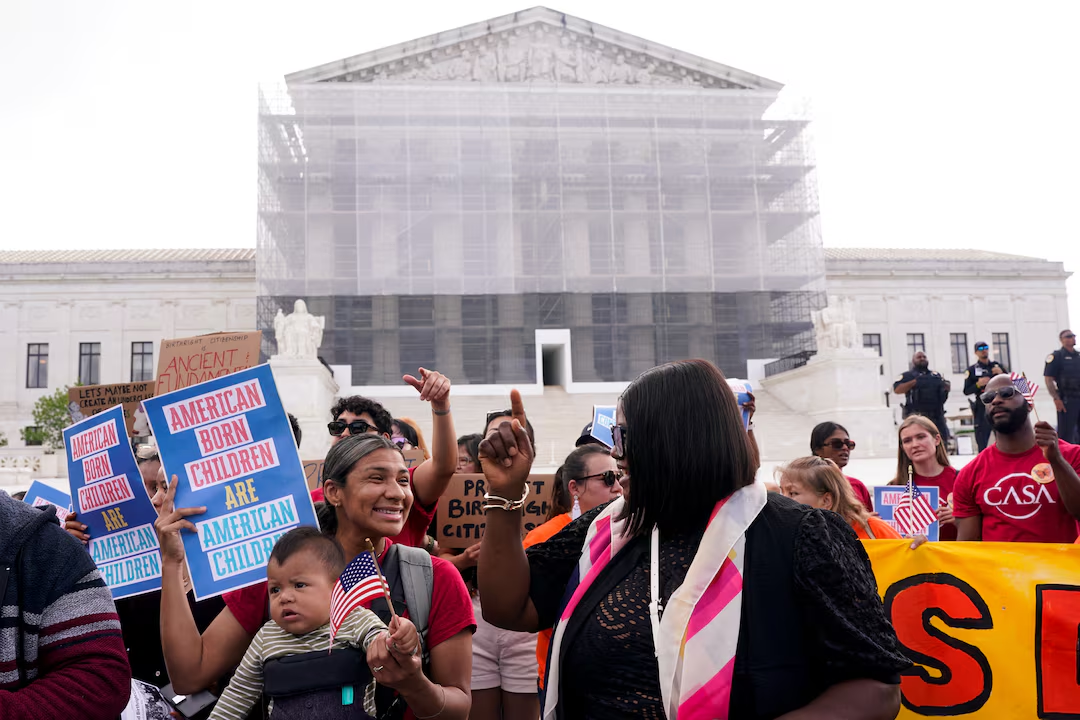
A federal appeals court ruled on Wednesday that U.S. President Donald Trump’s executive order curtailing automatic birthright citizenship is unconstitutional and blocked its enforcement nationwide.
The 2-1 decision by the San Francisco-based 9th U.S. Circuit Court of Appeals marked the first time an appeals court has assessed the legality of Trump’s order since the U.S. Supreme Court in June curbed the power of lower court judges to enjoin that and other federal policies on a nationwide basis.
The Supreme Court’s June 27 ruling in litigation over Trump’s birthright citizenship order limited the ability of judges to issue so-called universal injunctions and directed lower courts that had blocked the Republican president’s policy nationally to reconsider the scope of their orders.
But the ruling contained exceptions allowing courts to potentially still block it nationally again. That has already allowed a judge in New Hampshire to once again halt Trump’s order from taking effect by issuing an injunction in a nationwide class action of children who would be denied citizenship under the policy.
The 9th Circuit’s majority in Wednesday’s ruling said the Democratic-led states that had sued to block the policy – Washington, Arizona, Illinois and Oregon – likewise still were entitled to a nationwide injunction as a more narrow order would not provide them “complete relief.”
“The court agrees that the president cannot redefine what it means to be American with the stroke of a pen,” Washington Attorney General Nick Brown said in a statement.
The Trump administration could either ask a wider panel of 9th Circuit judges to hear the case or appeal directly to the Supreme Court, which is expected to have the final word in the litigation.
“We look forward to being vindicated on appeal,” said White House spokeswoman Abigail Jackson. In a statement, she said the 9th Circuit misinterpreted the U.S. Constitution’s 14th Amendment in reaching its decision.
DAY ONE ORDER
Trump signed the order on January 20, his first day back in office, as part of his hardline approach toward immigration.
Trump’s order directed federal agencies to refuse to recognize the citizenship of U.S.-born children who do not have at least one parent who is an American citizen or lawful permanent resident, also known as a “green card” holder.
It was swiftly challenged in court by Democratic attorneys general from 22 states and immigrant rights advocates who argued it violates the citizenship clause of the U.S. Constitution’s 14th Amendment, long been understood to recognize that virtually anyone born in the United States is a citizen.
The Constitution’s 14th Amendment citizenship clause states that all “persons born or naturalized in the United States, and subject to the jurisdiction thereof, are citizens of the United States and of the state wherein they reside.”
The first judge to block Trump’s directive was Seattle-based U.S. District Judge John Coughenour, an appointee of Republican President Ronald Reagan, who called it “blatantly unconstitutional.” The 9th Circuit’s ruling upheld his decision.
U.S. Circuit Judge Ronald Gould, writing for Wednesday’s majority, said Coughenour rightly concluded that Trump’s executive order violated the citizenship clause of the U.S. Constitution’s 14th Amendment by denying citizenship to many persons born in the United States.
Gould said a geographically limited injunction would harm the four states by forcing them to overhaul their government benefits programs to account for how people denied citizenship under Trump’s order might move into them.
“It is impossible to avoid this harm absent a uniform application of the citizenship clause throughout the United States,” Gould wrote.
His opinion was joined by U.S. Circuit Judge Michael Hawkins, a fellow appointee of Democratic President Bill Clinton.
U.S. Circuit Judge Patrick Bumatay, a Trump appointee, dissented, saying in his view the Democratic-led states lacked standing to challenge Trump’s order, as he warned of the risks of “judicial overreach.”
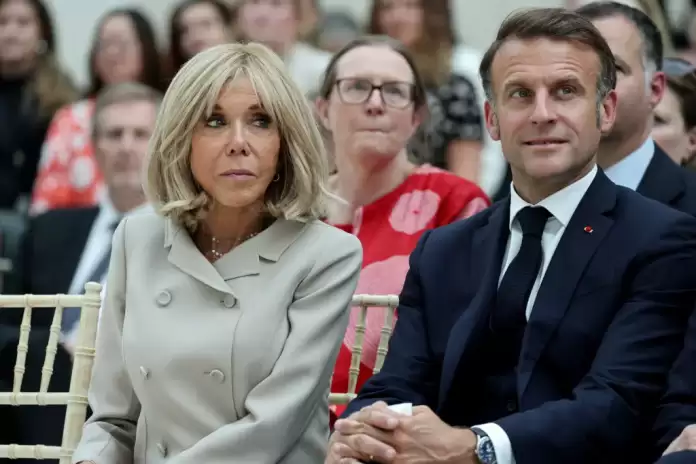
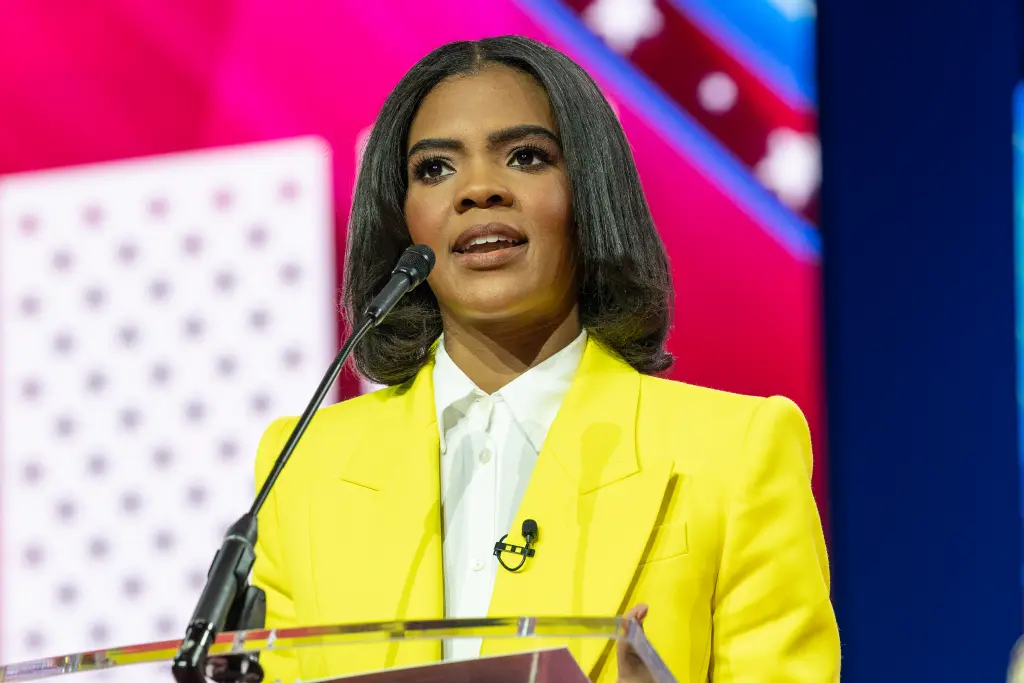
Conspiracy-spewing podcaster Candace Owens was slapped with a defamation lawsuit Wednesday by French President Emmanuel Macron and his wife, Brigitte Macron, for claiming that the first lady was born a male who groomed her allegedly gay husband.
The Paris power couple accused Owens of pushing a conspiracy theory that Mrs. Macron “was born a man, stole another person’s identity, and transitioned to become Brigitte,” according to the 200-page complaint filed in Delaware.
Owens’ claims are similar to those made in France by two women whom Brigitte Macron sued in 2021. That case was initially ruled in the French first lady’s favor but has been overturned on appeal. She has now taken the case to France’s highest appeals court.
Owens
Brigitte Macron, 72, was a 39-year-old school teacher when she became the future French leader’s educator — when he was 15 — in 1993. The pair have been married for nearly two decades after getting hitched in 2007.
In January, Owens — who has stirred controversy for spouting antisemitic conspiracy theories — ran an eight-part podcast series that obsessed over their May-December romance, according to the complaint.
“I believe that Emmanuel Macron is a homosexual man that was groomed from his youth,” Owens said in one of the episodes.
“I believe the individual who groomed him is now his wife. I believe that his wife was born Jean‑Michel Trogneux and transitioned in his early 30s, and I believe that the entire state is colluding to protect that secret.”
“And like I said, I would stake my entire professional career on all of those points.”
The lawsuit also cited statements made by Owens on her podcast that claimed “Mrs. Macron and President Macron are blood relatives committing incest” and that “President Macron was chosen to be the president of France as part of the CIA‑operated MKUltra program or a similar mind‑control program.”
MKUltra was a covert, illegal CIA program that conducted extensive human experiments to research mind control, interrogation methods and psychological manipulation. The agency closed down the program in 1973.
Another statement cited in the lawsuit quotes Owens as saying that the Macrons “are committing forgery, fraud, and abuses of power to conceal these secrets.”
Owens also used social media to accuse President Macron of violating the law.
She posted on X: “Emmanuel Macron married a man. Which was illegal at the time that he did it.”
“This is a desperate public relations strategy,” Owens said on her podcast on Wednesday — her first reaction to the lawsuit.
“A few weeks ago, Brigitte lost her defamation case against two journalists [in France]… “
A lower French court found the two women liable for defamation and awarded damages to Brigitte Macron and her brother in 2023.
Earlier this month, the Paris Appeals Court overturned the decision, accepting a “good faith” defense and ruling the statements not actionable, which nullified the damages award.
Brigitte Macron and her brother have appealed to the Court of Cassation, France’s highest appellate court, where the case remains pending.
Owens said she was looking forward to the lawsuit. “On behalf of the entire world, I will see you in court,” she said on her podcast on Wednesday.
“I find this to be irresistible and delicious,” the influencer said. “The discovery alone will be out of this world. We would be required to depose Donald Trump.”
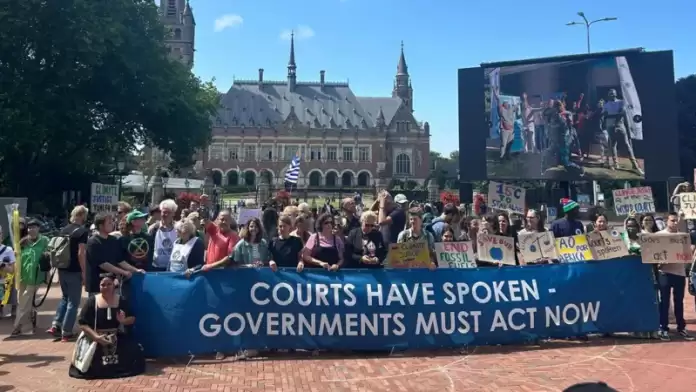
Governments and climate campaigners went to the Hague on Wednesday to hear the court's opinion
In a decision that could lead to a major shift in the flagrant release of greenhouse gases, a landmark decision by a top UN court has paved the way for countries to sue each other over climate change, including over historic emissions of planet-warming gases.
But the judge at the International Court of Justice in the Hague, Netherlands, on Wednesday said that untangling who caused which part of climate change could be difficult.
And although the ruling is non-binding, legal experts say it could have wide-ranging consequences.
It will be seen as a victory for countries that are very vulnerable to climate change, who came to court after feeling frustrated about the lack of global progress in tackling the problem.
The unprecedented case at the International Court of Justice (ICJ) was the brainchild of a group of young law students from low-lying Pacific islands on the frontlines of climate change, who came up with the idea in 2019.
One of those students, Siosiua Veikune from Tonga, was in the Hague to hear the decision.
“I’m lost for words. This is so exciting. There’s a ton of emotions rushing through us. This is a win we take proudly back home to our communities,” he told BBC News.
“Tonight I’ll sleep easier. The ICJ has recognised what we have lived through – our suffering, our resilience and our right to our future,” said Flora Vano, from the Pacific Island Vanuatu, which is considered the country most vulnerable to extreme weather globally.
“This is a victory not just for us but for every frontline community fighting to be heard.”
The ICJ is considered the world’s highest court and it has global jurisdiction. Lawyers have told BBC News that the opinion could be used as early as next week, including in national courts outside of the ICJ.
Campaigners and climate lawyers hope the landmark decision will now pave the way for compensation from countries that have historically burned the most fossil fuels and are therefore the most responsible for global warming.
Many poorer countries had backed the case out of frustration, claiming that developed nations are failing to keep existing promises to tackle the growing problem.
But developed countries, including the UK, argued that existing climate agreements, including the landmark UN Paris deal of 2015, are sufficient and no further legal obligations should be imposed.
On Wednesday the court rejected that argument.
Judge Iwasawa Yuji also said that if countries do not develop the most ambitious possible plans to tackle climate change this would constitute a breach of their promises in the Paris Agreement.
He added that broader international law applies, which means that countries which are not signed up to the Paris Agreement – or want to leave, like the US – are still required to protect the environment, including the climate system.
The court’s opinion is advisory, but previous ICJ decisions have been implemented by governments, including when the UK agreed to hand back the Chagos Islands to Mauritius last year.
“The ruling is a watershed legal moment,” said Joie Chowdhury, Senior Attorney at the Centre for International Environmental Law (CIEL).
“With today’s authoritative historic ruling, the International Court of Justice has broken with business-as-usual and delivered a historic affirmation: those suffering the impacts of climate devastation have a right to remedy for climate harm, including through compensation,” she added.
A spokesperson for the UK’s Foreign, Commonwealth and Development Office said it was “taking time” to look at the opinion before commenting in detail, but added:
“Tackling climate change is and will remain an urgent UK and global priority. Our position remains that this is best achieved through international commitment to the UN’s existing climate treaties and mechanisms.”
The court ruled that developing nations have a right to seek damages for the impacts of climate change such as destroyed buildings and infrastructure.
It added that where it is not possible to restore part of a country then its government may want to seek compensation.
This could be for a specific extreme weather event if it can be proved that climate change caused it, but the Judge said this would need to be determined on a case by case basis.
“This is a huge win for climate vulnerable states. It’s a huge win for Vanuatu, which led this case and is going to change the face of climate advocacy,” said barrister Jennifer Robinson at Doughty Street Chambers, who represented Vanuatu and the Marshall Islands.
It is not clear how much an individual country could have to pay in damages if any claim was successful.
But previous analysis published in Nature, estimated that between 2000 and 2019 there were $2.8 trillion losses from climate change – or $16 million per hour.
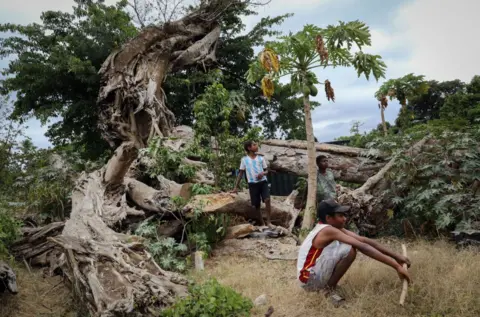
During the evidence sessions in December, the court heard from dozens of Pacific Islanders who have been displaced as a result of rising sea level, caused by climate change.
The Marshall Islands highlighted that the costs for their island to adapt to climate change are $9 billion.
“That is $9 billion the Marshall Islands does not have. Climate change is a problem they have not caused, but they are forced to consider relocating their capital,” said Ms Robinson.
A cyclone in 2015 in Vanuatu destroyed 276,000 homes and wiped out two-thirds of its GDP
As well as compensation, the court also ruled that governments were responsible for the climate impact of companies operating in their countries.
It said specifically that subsidising the fossil fuel industry or approving new oil and gas licenses could be in breach of a country’s obligations.
Developing countries are already exploring bringing new cases seeking compensation for historic contributions to climate change against richer, high emitting nations citing the ICJ opinion, according to lawyers the BBC spoke to.
If a country wants to bring a case back to the ICJ to make a ruling on compensation then it can only do so against countries which have agreed to its jurisdiction, which includes the likes of the UK, but not US or China.
But a case can be brought in any court globally, whether that be domestic or international, citing the ICJ opinion, explained Joie Chowdhury from CIEL.
So instead a country may choose to take their case not to the ICJ but a court where those countries are bound e.g. federal courts in the US.
But the question remains whether the ICJ opinion will be respected.
“[The ICJ] is an institution that is subject to geopolitics – and it relies on states adhering to its judgements, it doesn’t have a police force,” said Harj Narulla, a climate barrister at Doughty Street Chambers, which also represented the Solomon Islands.
When asked about the decision, a White House spokesperson told BBC News:
“As always, President Trump and the entire Administration is committed to putting America first and prioritising the interests of everyday Americans.”
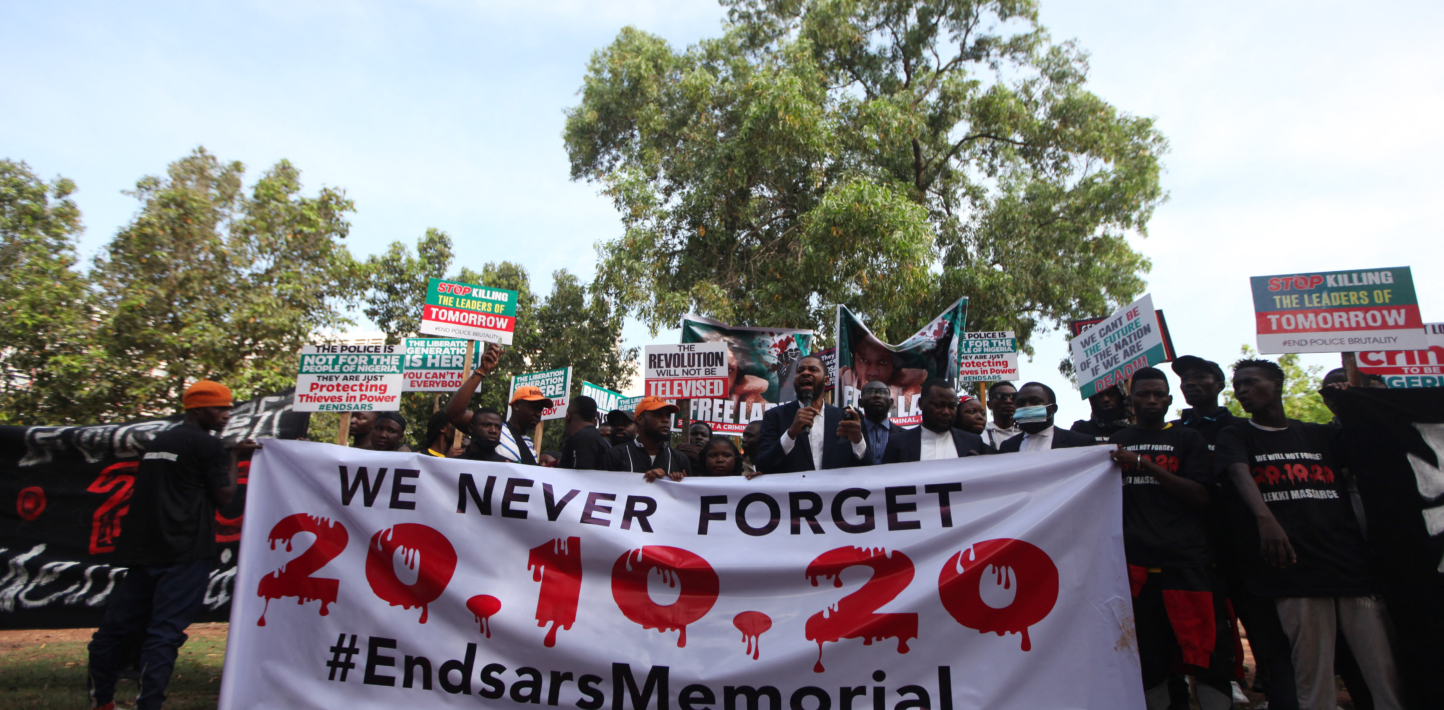
The Federal High Court in Lagos has ordered the Inspector-General of Police (IGP) and the Lagos State Commissioner of Police to jointly pay N10 million in damages for the violation of the fundamental rights of several peaceful protesters.
Justice M. Kakaki, in the verdict delivered on Thursday, pointed out that although the police have constitutional powers to enforce laws, those powers must be exercised in line with democratic principles and the rule of law.
The judge held that the applicants, who participated in a peaceful protest on 20 October 2024, during the fourth anniversary of the #ENDSARS peaceful memorial procession, were unjustly harassed and their rights infringed upon.
His Lordship also affirmed that the applicants were entitled to the constitutional right to freedom of peaceful assembly and association, as guaranteed under Section 40 of the 1999 Constitution (as amended).
The applicants in the suit include: Hassan Taiwo Soweto, Uadiale Kingsley, Ilesanmi Kehinde, Osopale Adeseye, Olamilekan Sanusi, Miss Osugba Blessing, Kayode Agbaje, Michael Adedeji, Jennifer Rita Obiora, Orunsola Oluremi, Seyi Akinde, Akin Okunowon, Ugochukwu Prince, Aisha Omolara, Thomas Abiodun Olamide, Ogbu Obinna Ferdinald, Aghedo Kehinde Stephen, Duronike Olawale, Isaac Obasi, Funmilayo Jolade Ajayi, Gideon Adeyemi, and Afeez Suleiman.
The others are three organisations—Education Rights Campaign (ERC), Take It Back Movement (TIB), and Campaign for the Defence of Human Rights (CDHR).
The respondents in the suit were the Inspector-General of police, Nigeria Police Force, Lagos State Commissioner of police, Chairman of the Lagos State Task Force, Governor of Lagos State, and the Attorney-General of Lagos State.
The applicants had sought redress for what they described as unlawful arrest and violation of their constitutional rights to freedom of expression and peaceful assembly.
The learned Prof. Joy Ezeilo, SAN, has been tenacious in her erudite advocacy for a long time now over what she considers the unequal treatment our constitution metes to Nigerian wives in relation to the non-existent citizenship registration protocols for their alien husbands. She has consistently pointed with erudition to the fact that for Nigerian husbands, section 26 of the 1999 Constitution allows citizenship by registration only for alien wives of Nigerian husbands, ignoring foreign spouses of Nigerian women.
According to the report, Kemi Badenoch was addressing a similar but ontologically different citizenship matter under our constitution. In the one, the question was automatic acquisition by a child of Nigerian citizenship (by birth) through the mother or father. In the other, the issue was the discretionary acquisition by a foreign spouse of Nigerian citizenship (by registration) through a husband or a wife.
The reason why Badenoch was downright wrong is that she complained in relation to her children, not her husband. But our constitution in fact, makes her foreign-born children automatic citizens by birth through her. This is under a different section (Section 25), which comes immediately before the section on registration (Section 26), which the learned Prof. Joy Ezeilo, SAN, had brilliantly and hitherto challenged.
Kemi Badenoch erred.
In an X post (formerly Twitter), Joy Ezeilo, SAN, Law teacher and Senior Advocate of Nigeria said “Kemi Badenoch: A Broken Clock is Right Twice a Day.”
The post further reads:
“The issue of citizenship in Nigeria affects all citizens, particularly women, by creating identity crises and hindering national development. The concept of “indigeneship” often limits women’s rights in both their home states and those of their husbands.
“Chapter III of the 1999 Constitution further complicates this by treating women as inferior citizens, as citizenship is primarily granted based on descent rather than place of birth, unlike in countries like the U.S.
“Section 26(2)(a) exemplifies sex discrimination by denying husbands of Nigerian women the right to citizenship by registration.
“Kemi Badenoch’s critique of this provision is valid: it unfairly disadvantages Nigerian women with foreign spouses, violating the anti-discrimination guarantee outlined in Section 42 of the Constitution and other ratified international human rights treaties by Nigeria.
“Unfortunately, amendments proposed by the 9th National Assembly to resolve these issues failed to pass in the Constitution Review process. It’s hoped that the 10th National Assembly will grant Nigerian women equal rights to confer nationality on their foreign spouses.
“For further reading, see my article, Joy Ezeilo, “The 1999 Constitution of the Federal Republic of Nigeria and the Woman Question,” published in NJR, Vol. 8, 2000/2001, pp. 161–177. Prof. Joy Ezeilo, (SAN, OON, Life Bencher)”
Our site uses cookies. By clicking “Accept All Cookies”, you direct Law and Society Magazine to store cookies on your device and disclose information in accordance with our Cookie Statement: cookie policyACCEPTREJECT
Privacy & Cookies Policy
Privacy Overview
This website uses cookies to improve your experience while you navigate through the website. Out of these cookies, the cookies that are categorized as necessary are stored on your browser as they are essential for the working of basic functionalities of the website. We also use third-party cookies that help us analyze and understand how you use this website. These cookies will be stored in your browser only with your consent. You also have the option to opt-out of these cookies. But opting out of some of these cookies may have an effect on your browsing experience.
Necessary cookies are absolutely essential for the website to function properly. This category only includes cookies that ensures basic functionalities and security features of the website. These cookies do not store any personal information.
Any cookies that may not be particularly necessary for the website to function and is used specifically to collect user personal data via analytics, ads, other embedded contents are termed as non-necessary cookies. It is mandatory to procure user consent prior to running these cookies on your website.