Home Blog Page 283

University of Toronto to host Harvard students amid Trump visa restrictions

The pact will help international students finish their studies amid Harvard’s legal battle with the Trump administration.

Harvard University and the University of Toronto and have announced a plan that would see some Harvard students complete their studies in Canada if visa restrictions prevent them from entering the United States.

The pact between the two schools reflects the tumultuous and “exceptional” politics of the postsecondary world during the second term of Donald Trump.

The deal is between the Harvard John F Kennedy School of Government and the University of Toronto’s Munk School of Global Affairs and Public Policy.

Jeremy Weinstein, the Harvard Kennedy School dean, said in a letter to students the plans were meant to ease concerns but a formal program would only be unveiled if there is “sufficient demand” from students who are unable to come to the United States.

“We are deeply grateful for the support of the Munk School and other partners, who are helping to ensure that we can continue to provide all HKS students with the excellent education they deserve,” he said.

Harvard is locked in an acrimonious legal battle with the Trump administration after it claims the Department of Homeland Security improperly revoked its ability to enrol international students. Nearly a quarter of Harvard’s students come from outside the US and are a key source of funding for the school.

Harvard has so far won two preliminary injunctions against the DHS, probably clearing a path for international students to obtain entry visas.

“These are exceptional times,” Janice Stein, the founding director of the Munk School of Global Affairs and Public Policy, said in a statement.

“If Harvard Kennedy School international students are not able to complete their studies in Cambridge, Mass., the Munk School of Global Affairs and Public Policy looks forward to providing shared academic and co-curricular experiences for students from both our schools.”

In addition to the HKS at Munk School program, the schools also announced HKS Global, which will have both an online and in-person component.

Harvard students attending the University of Toronto will still have to apply for Canadian study permits and would be enrolled as full-time, non-degree students at the Munk school. The future program is only open to students who have already completed a year of study the United States.

Canada has put its own cap on international students and curtailed the number of visas it will issue. The University of Toronto said the plan with Harvard “would not reduce the number of spaces available for U of T students in any academic programs or in university housing.”

Source: The Guardian

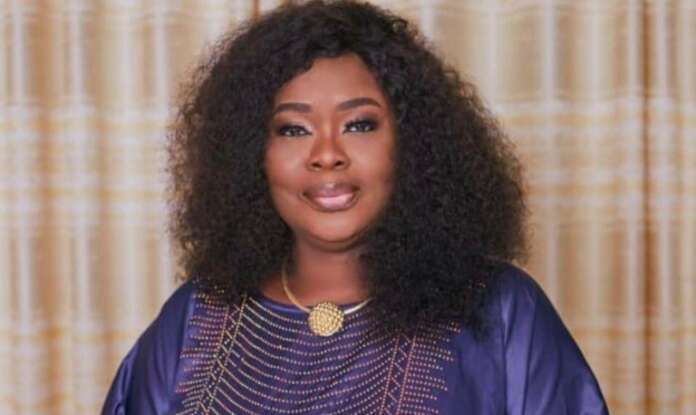
Fmr. NBA General Secretary Joyce Oduah elected Secretary-General of the Pan-African Lawyers Union, PALU

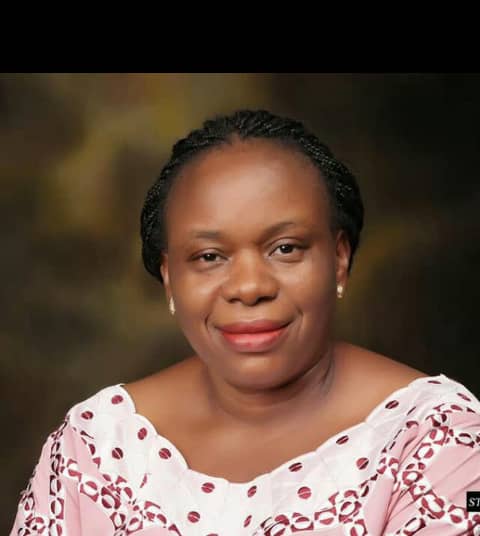
A former General Secretary of the Nigerian Bar Association (NBA), Ms. Joyce Oduah, was on Friday in Abidjan elected Secretary-General of the Pan-African Lawyers Union (PALU).

Others who became members of the PALU executive committee for the years 2025 to 2028 include:

  1. President – Mr. Tewodros Getachew TULU
    Ethiopia, President of Ethiopian Federal Advocates Association (EFAA)
  2. Vice-President Central Africa, Mr. Djerandi Laguerre DIONRO, Chad Bâtonnier, Président du Conseil de l’Ordre des Avocats du Tchad
  3. Vice-President Eastern Africa, Mr. Moïse NKUNDABARASHI, Rwanda, President, Rwanda Bar Association
  4. Vice-President Southern Africa, Ms. Womba Silumbu KANKONDO, Zambia Treasurer, Law Association of Zambia (LAZ)
  5. Vice-President Western Africa, Mr. Koffi Sylvain MENSAH ATTOH, Togo, Doyen du Conseil de l’Ordre des Avocats au Barreau du Togo, (Dean of the Council of the Bar Association of Togo)
  6. Deputy Secretary General, Ms. Nadege KIMBA, Democratic Republic of Congo
  7. (DRC) Lubumbashi, DRC
  8. Treasurer, Ms. Ntlai Eunice MASIPA, Republic of South Africa, Former President of the Law Society of South Africa
  9. President of the Host Bar, Tanganyika Law Society (TLS) Mr. Boniface Anyisile MWABUKUSI,

Vice-President Northern Africa will be elected at a later date

US Supreme Court declares schools must let kids opt out of LGBTQ+ book readings

The US Supreme Court has ruled that schools must give children the chance to opt out on faith grounds from listening to storybooks being read out loud that feature gay and transgender characters, in a landmark decision that will be seen as striking a blow for religious rights in education.

In a case that exposed the passions surrounding the US’s religious-secular divide, the court sided with parents in Maryland who protested that they were left with no means of shielding their children from the contents of six storybooks they found objectionable.

The ruling means that the Montgomery county board of education – which administers schools in some of Washington DC’s most affluent suburbs – must provide opt-out facilities.

In the case, Mahmoud v Taylor, three sets of parents, comprising Muslims, Roman Catholics and Orthodox Christians, complained that the board’s policy in effect forced their children to hear storylines that they alleged promoted “political ideologies about family life and human sexuality that are inconsistent with sound science, common sense, and the well-being of children”.

One book, Uncle Bobby’s Wedding, features a gay character who is getting married, while another, Born Ready: The True Story of a Boy Named Penelope, is about a transgender child.

The parents in the case filed a complaint after education authorities decreed that parents should not expect to receive prior notice before one of the books was read out loud in class, thus enabling a child to leave the room for that period.

The ruling was handed down after an initial hearing in April at which several of the court’s conservative justices – who form a 6-3 majority on the bench – appeared sympathetic to the plaintiffs’ case after lower courts refused to force the education authorities to change its policy.

In the ruling, the conservative justice Samuel Alito wrote: “We have long recognized the rights of parents to direct ‘the religious upbringing’ of their children. And we have held that those rights are violated by government policies that substantially interfere with the religious development of children.”

At the end of Alito’s judgment, the ruling stated: “Until all appellate review in this case is completed, the [school] board should be ordered to notify [parents] in advance whenever one of the books in question or any other similar book is to be used in any way and to allow them to have their children excused from that instruction.”

The ruling prompted a fierce dissent from the liberal justice Sonya Sotomayor, who said that public education was intended to be a unifying experience for children and “the most pervasive means for promoting our common destiny”.

But she added that concept would become “a mere memory” if pupils were “insulated from exposure to ideas and concepts that may conflict with their parents’ religious beliefs”.

The ruling comes against a widespread conservative backlash in public schools and public libraries across many places in the US, but especially Republican-run parts of the country. The backlash has often sought to remove books that social conservatives find objectionable – often those that involve depictions of LGBTQ+ themes or racial inequality.

The American Library Association estimates there are at least 112 proposed state laws concerning schools and public libraries that seek to expand the definition of what is deemed obscene or harmful to children and to limit librarian staff’s ability to determine which books they hold in their collections.

In a statement, Catholics for Choice, which opposes the court’s ruling, said: “The Supreme Court decided that it is okay for parents to teach their children to discriminate and judge people who are different than them.”

Taylor Tuckerman, a CfC vice-president, said: “It’s also important for children to learn that our differences – religion, sexual orientation, gender expression, race, economic backgrounds, and more – contribute to a thriving community and are not something to be ashamed of.”

The Guardian

Teen who became pregnant from rape shot dead by her fiancé in honour killing

  • Suspected armed robbers allegedly stab a young lady to death in Lagos

In a case of double jeopardy, a teenage girl who got pregnant after she was rapped has been brutally murdered by her fiancé when he found out about the rape in Turkey.

According to Turkish news agencies, Oya Budak, 18, was five-and-a-half months pregnant when she was shot dead in the apparent honour killing. 

She was taken to the hospital with a gunshot wound to the chest but died along with her baby, local media reports. 

Ms Budak reportedly became pregnant after being raped by another man several weeks before her engagement.  

Her fiancé is said to have ended the relationship when he became aware of the situation. 

The man, 19, was arrested in Istanbul and confessed, says Turkish media. 

Orhan Budak, the grandfather of Ms Budak, said, “When she said she was in pain, her fiance took her to the hospital and learned she was pregnant.” 

It was learned that Ms Budak’s family was unaware that she had been r@ped and became pregnant.

When her fiancé’s family found out about the pregnancy, they reportedly did not want him to marry Ms Budak. 

The k!lling, which occurred in Istanbul overnight, was the 209th femicide this year in Turkey, according to a women’s rights group. 

Women’s rights groups in Turkey accuse the authorities of failing to act to stop a wave of femicides. 

It comes as the country has seen femicide and transphobic crimes skyrocket in recent years.

In a related development, a young woman named Faith was reportedly killed by suspected armed robbers in the Lagos State neighbourhood of Ajah.

Faith, from Itakpa Ito in Obi Local Government Area of Benue State, was found lifeless along Mobile Road, Ajah in the early hours of Friday, June 27, 2025. 

It was learned that Faith had gone to see her boyfriend on Wednesday night and was on her way home when the robbers attacked her. 

A Facebook user, Ogor Odeh Joseph, who hails from Igede, debunked reports making the rounds that she was killed by her boyfriend for ritual purposes.

According to him, the assailants attempted to snatch Faith’s bag and phone, but she resisted. 

In the ensuing struggle, one of the assailants stabbed Faith in the neck with a knife, resulting in her death.

Faith’s body has been deposited in a mortuary. 

“This is what happened With Faith, An Igede Girl Who Dïed This Morning In Lagos. The person that narrated the story in the video we all watched a few minutes ago was wrong. Faith was not k!lled by her boyfriend, and they didn’t remove her brêãsts and pr!vate parts. Truly, she visited her boyfriend’s house last night. While she was coming back very early in the morning today, in the process of crossing the road she met suspected armëd røbbers,” he wrote. 

“According to the guy who is currently in the mortuary now with other Igede people, those guys attempted to snatch her bag and phone. In the ensuing struggle, one of the boys stãbbed her in the neck with a knife, leading to her untimely demise, as she was bleed!ng through out without help she d!ed.

“They confirmed the only injury found on her body was the knife wøund on her neck. Her body has been deposited in a mortuary, and plans are underway to return her remains to Igede for burial. May her soul rest in peace.” 

Suspected armed robbers reportedly st@b young lady to d3ath in Lagos

AI may just be that powerful tool in treating male infertility

Although infertility affects 7% of the male population, artificial intelligence (AI) may be about to help solve the problem.

Dr Steven Vasilescu says that the AI software developed by him and his team can spot sperm in samples taken from severely infertile men 1,000 times faster than a highly trained pair of eyes.

“It can highlight a potentially viable sperm before a human can even process what they’re looking at,” he says.

Dr Vasilescu is a biomedical engineer at the University of Technology Sydney (UTS), in Australia, and founder of medical company NeoGenix Biosciences.

The system he and his colleagues have developed is called SpermSearch.

It has been designed to help men who have no sperm in their ejaculate at all, 10% of infertile men, a condition called non-obstructive azoospermia (NOA).

Usually in these cases, a small portion of the testes is surgically removed, and taken to a lab, where an embryologist can manually search for healthy sperm.

The tissue is teased apart and examined under a microscope. If any viable sperm are found, they can be extracted and injected into an egg.

This process, says Dr Vasilescu, can take multiple staff six or seven hours, and there is danger of fatigue and inaccuracy.

“When an embryologist looks down the microscope, what they see is just this complete mess – a starscape of cells,” he says.

“There’s blood and tissue. There might be only 10 sperm in the whole thing, but there can be millions of other cells. It’s a needle in a haystack,” says Dr Vasilescu.

He says that, by contrast, SpermSearch can find any healthy sperm in seconds, when photographs of the samples are immediately uploaded into the computer.

To achieve this speed, Dr Vasilescu and his colleagues trained the AI to identify sperm in these complex tissue samples by showing it thousands of such images.

In a published scientific paper, the UTS biomedical engineering team said that in a test SpermSearch was 1,000 times faster than an experienced embryologist.

However, SpermSearch is not designed to replace embryologists, but rather to act as an assistive tool.

Dr Sarah Martins da Silva says that such speed in finding any sperm is vital. “Time is critical,” says the clinical reader in reproductive medicine at the University of Dundee.

“If you’ve got somebody that’s had an egg collection, and you’ve got eggs that need to be fertilised, there’s only a small time window for us to be able to do that. Speeding up the process would be hugely advantageous.”

With sperm counts widely reported to have declined by half over the past four decades, infertility remains a growing problem.

Factors behind the drop in male fertility are reported to include everything from pollution and smoking, to poor diets, not getting enough exercise, and too much stress.

Dr Meurig Gallagher is another academic working to help men with infertility problems.

An Assistant Professor in the Centre for Systems Modelling and Quantitative Biomedicine at the University of Birmingham, his new technique uses imaging software to track the speed and action of sperm tails.

“Watching the tail gives insight into the health of a sample,” he says. “Minute changes can tell us whether the sperm is under environmental stress, about to die, or is responding to a biological cue.”

Meanwhile, Belfast-based fertility firm Examen uses a technique known as single cell gel electrophoresis to identify DNA damage in individual sperm.

Prof Sheena Lewis and her team have been developing the technique for more than 20 years.

However, Prof Lewis, who is emeritus professor in reproductive medicine at Queens University Belfast and chief executive of Examen, says that while developments in the use of AI are exciting, medicine moves very slowly.

For example, SpermSearch is currently at the stage of proof-of-concept, following a very small trial involving just seven patients.

“It doesn’t mean anything yet,” says Prof Lewis. “The length of time between something being at proof-of-concept to being commercially available is probably between two and five years.

“It’s got a long way to go. It’s also aimed at the very small group of men who have NOA. Anything you can do is fantastic – but it’s never going to be mainstream.”

BBC

US Supreme Court delivers shock ruling on Trump’s plan to end birthright citizenship

The Supreme Court of the United States he Supreme Court on Friday ruled that individual judges lack the power to issue nationwide injunctions as it delivered a historic ruling in a case about the right to birthright citizenship.

It was a landmark decision that was seen as a major victory for President Donald Trump in his ongoing battle with the judiciary.

Trump has complained about individual judges in liberal states being able to issue orders against his policies that apply across the country.

The ruling allows Trump’s executive order halting birthright citizenship for children of undocumented immigrants to take effect in states and jurisdictions that did not directly challenge his action in court.

It could mean citizenship rules vary from state to state, pending ongoing litigation.

The court ruled 6-3 in favor of Trump, with all six conservative justices – including the three he appointed – siding with the president.

Speaking at the White House, Trump said: ‘This was a big one. Amazing decision, one we’re very happy about. This really brings back the Constitution. This is what it’s all about.’

Basking in his victory during an impromptu appearance in the White House briefing room, the president vowed to push through ‘many’ more of his policies after the court win, including curbs to birthright citizenship.

The president said he would ‘promptly file’ to advance policies that have previously been blocked by judges.

He said: ‘This morning the Supreme Court has delivered a monumental victory for the Constitution, the separation of powers and the rule of law in striking down the excessive use of nationwide injunctions to interfere with the normal functioning of the executive branch.’

Attorney General Pam Bondi said the ruling meant ‘not one district court judge can think they’re an emperor over this administration and his executive powers, and why the people of the United States elected him.’ 

In a dissenting opinion, liberal Supreme Court Justice Ketanji Brown Jackson described the decision as an ‘existential threat to the rule of law.’

The case arose after a battle between Trump and various judges in states far from Washington over his plan to end the right to birthright citizenship.

Trump had issued an executive order that would deny citizenship to U.S.-born children of people who are in the country illegally, and several judges issued injunctions against that.

The Supreme Court justices have now ruled those lower judges did not have the power to block Trump’s policies nationwide.

However, in a complex ruling, the justices did leave open the possibility that Trump’s specific birthright citizenship policy could still remain blocked.  

It did not let Trump’s birthright citizenship policy go into effect immediately and did not address its legality, which sill be decided at a later date. 

Trump wrote on Truth Social: ‘GIANT WIN in the United States Supreme Court! Even the Birthright Citizenship Hoax has been, indirectly, hit hard. It had to do with the babies of slaves (same year!), not the SCAMMING of our Immigration process .’

Friday’s case stemmed from an executive order Trump signed as soon as he took office that ended birthright citizenship – the legal principle that U.S. citizenship is automatically granted to individuals upon birth. 

Under the directive, children born to parents in the United States illegally or on temporary visas would not automatically become citizens, radically altering the interpretation of the Constitution’s 14th Amendment for over 150 years.

The Supreme Court did not rule on the legality of Trump’s order purporting to end birthright citizenship and left open a legal path to challenge it. 

Trump claims birthright citizenship was tied to ‘slavery’ and should be immediately dismantled.

‘That’s not about tourists coming in and touching a piece of sand and then all of the sudden there’s citizenship, you know they’re a citizen, that is all about slavery,’ the president argued.

‘If you look at it that way, that case is an easy case to win,’ he had previously stated.  

The 6-3 Supreme Court decision was written by Justice Amy Coney Barrett.

‘Federal courts do not exercise general oversight of the Executive Branch; they resolve cases and controversies consistent with the authority Congress has given them,’ she wrote.

However, Trump’s executive order will not go into effect for 30 days, the justices said in their opinion, which allows is legality to be further challenged.

In a concurring opinion with Barrett, Justice Brett Kavanaugh said another way to challenge the executive order is to ‘ask a court to award preliminary class wide relief that may, for example, be statewide, regionwide or even nationwide.’ 

But the larger implication of the ruling affects the power of individual judges.

The court’s decision upends the ability of a single federal judge to freeze presidential policies on a nationwide basis.

Judges have used this powerful and controversial tool to block policies instituted by Democratic and Republican administrations. 

The liberal Supreme Court justices disagreed with the ruling. 

Justice Sonia Sotomayor led the dissent.

‘No right is safe in the new legal regime the Court creates. Today, the threat is to birthright citizenship. Tomorrow, a different administration may try to seize firearms from law-abiding citizens or prevent people of certain faiths from gathering to worship,’ she wrote.

‘The majority holds that, absent cumbersome class-action litigation, courts cannot completely enjoin even such plainly unlawful policies unless doing so is necessary to afford the formal parties complete relief. That holding renders constitutional guarantees meaningful in name only for any individuals who are not parties to a lawsuit. Because I will not be complicit in so grave an attack on our system of law, I dissent.’ 

The majority opinion in the Trump v. CASA Inc., New Jersey and Washington case came on the last day of the high court’s term.

Democratic states and an immigrant rights group sued to stop Trump’s January 20, 2025 executive order from taking effect.

Lower courts issued nationwide preliminary injunctions on the presidential order.

Birthright citizenship was ratified in 1868 in the 14th Amendment of the Constitution, establishing that anyone born on American soil, regardless of their parents’ citizenship or immigration status, is automatically a U.S. citizen.

‘All persons born or naturalized in the United States, and subject to the jurisdiction thereof, are citizens of the United States and of the State wherein they reside,’ Section 1 of the 14th Amendment states.

After his election but before being sworn in as president for a second time, Trump vowed he would fight for a constitutional shake-up by ending the provision.

‘Can you get around the 14th Amendment with an executive action?’ NBC host Kristen Welker asked Trump in an interview that aired in December.

‘Well, we’re going to have to get it changed,’ he said. ‘We’ll maybe have to go back to the people. But we have to end it.’

‘We’re the only country that has it, you know,’ Trump added in explaining his bid to end 125 years of precedent.

The president was elated in April when the Supreme Court decided to take on the case despite the high court rarely hearing emergency appeals.

‘I am so happy,’ he told reporters in the Oval Office on April 17. ‘I think the case has been so misunderstood.’

But oral arguments earlier this spring set the stage for the staggering decision that the president is sure to denounce.

U.S. Solicitor General D. John Sauer was grilled by both liberal and conservative justices over how the narrowing of birthright citizenship rights would work when put into action.

Sauer didn’t seem clear on how it would work, and said it would be up to legislators to work out the logistics.

‘What do hospitals do with newborns?’ Justice Brett Kavanaugh, a Trump pick, questioned during oral arguments last month. ‘What do states do with a newborn?’

‘Federal officials will have to figure that out,’ Sauer replied.

Additionally, Justice Amy Comey Barrett was not pleased with how Sauer refused to answer a legitimate question from liberal Justice Elana Kagan.

Daily Mail

Just In: Umar Ganduje resigns as APC National Chairman

In what many have considered a rather surprising move, Abdullahi Umar Ganduje, the National Chairman of the All Progressives Congress (APC), has resigned from his position, effective immediately.

Ganduje, an ex-Governor of Kano State, cited health reasons for his decision, stating that he needs to focus on his well-being.

Background

Ganduje’s tenure as APC chairman has been marked by controversy and challenges. He was elected as the APC National Chairman in August 2023, amidst internal party conflicts. Prior to his election, Mr Ganduje served as the Governor of Kano State from 2015 to 2023.

Resignation and Allegations

While his resignation letter attributes his decision to health concerns, sources familiar with the matter suggest that political tension within the party may have also played a role in his decision to step down.

Allegations of financial impropriety have also been linked to his resignation, with some party members reportedly protesting “excessive financial demands” imposed by his office.

Specifically, aspiring FCT area council candidates had complained about hefty fee requirements for receiving the party’s ticket.

Implications

Mr Ganduje’s resignation marks a significant shift in the APC’s leadership, and stakeholders are eagerly awaiting further clarification on the circumstances surrounding his departure.

The APC has yet to issue an official statement on his resignation, leaving many to speculate about the implications of this development for the party.

Controversies Surrounding Mr Ganduje’s Tenure

Mr Ganduje’s tenure as APC chairman was also marred by suspension and court battles. In April 2024, a Kano State High Court granted an ex parte order restraining Mr Ganduje from parading himself as a member of the party, following a suit filed by some party executives.

Additionally, a Federal High Court in Abuja struck out a suit seeking Ganduje’s removal as APC Chairman, filed by the APC North Central Forum.

New video game allows you to repatriate African artifacts by looting western museums

Have you ever imagined yourself, on a visit to a major museum, busting through a wall, arms full of ill-begotten African artifacts and ready to return them to their rightful homes? No? Well, you may soon have the chance, thanks to South African video game studio Nyamakop.

Earlier this month at the annual Summer Game Fest in Los Angeles, Nyamakop unveiled its latest project, Relooted, a side-scrolling puzzle platformer—think early Tomb Raider or Prince of Persia games—where players join a crew of Robin Hood-esque thieves staging elaborate heists to take back stolen artifacts from Western museums, and repatriate them to the peoples from whom they were taken.

As Nyamakop lays out on the game’s listing on the online video game marketplace Epic Games, Relooted takes place in a near future where “the political powers that be brokered a Transatlantic Returns Treaty, promising the repatriation of African artifacts from museums.” But the hitch in the treaty is that it only applies to artifacts on “public display,” leading museums to circumvent the requirement by placing the pieces in highly guarded private collections. And that’s where players come in: scoping out a given facility, carefully constructing an exit route, and then, of course, stealing the artifact and escaping.

As Ben Myres, the creative director of the game, explained to Epic in a news post, all of the artifacts in Relooted are based on real-world pieces in Western museums. In crafting the various missions, the developer team spent two years of research narrowing done the list of which pieces, of the hundreds still held by Western museums, into something manageable.

“We looked for artifacts with great stories in terms of how they were looted,” he said. “Why were they important to people? Just anything associated with them.”

By way of explanation, Myres pointed to the Ngadji drum, a wooden drum made by the Pokomo people in Kenya to call for worship or celebrate the start of a king’s reign. It was confiscated by the British in 1902 and has since remained in the British Museum’s collections despite the efforts of Kenyan researchers to have the piece returned.

“The first Kenyan people to see it in the last 100 years were in the 2010s,” Myre said. “The person who saw the drum was a descendant of the king it was taken from originally. So these aren’t artifacts that were just found in the dust and excavated by archaeologists. These were still active cultures.”

According to Myre, each artifact in the game was faithfully rendered into a 3D model based on available photos or scans, a challenge given that many of the artifacts are inaccessible and have long been in storage.

However, while the artifacts are based on real objects, the museums in the game are not.

While Nyamakop is based in Johannesburg, South Africa, the developer team includes people from Zambia, Zimbabwe, Ghana, Nigeria, Ethiopia, and Tanzania. Relooted is the studio’s second game; the first was Semblance, a 2018 game that became the first African-developed original IP to release on a Nintendo game console ever. It is one of the largest independent game developers in sub-Saharan Africa, according to its website.

“There are not a lot of opportunities for people here to professionally make video games,” Myres said. “So if you’re offering people here that opportunity, and it so happens that it’s an African-inspired thing—which you don’t get to see a lot of in games—people are pretty, pretty excited about doing that.

Relooted has yet to announce a release date, but a rendering of its game play is visible in the trailer that accompanied its announcement:

Culled from Artnews

NULGE appeals to Tinubu over alleged plot by CBN and Accountant General of the Federation to send local government allocations in Osun to State’s APC Secretariat

As the crisis over the leadership of the Osun State local government areas persist, the National Union of Local Government Employees has appealed to President Bola Tinubu to intervene in the suspected move by the Central Bank of Nigeria and the Office of the Accountant General of the Federation to release the allocations meant for the Osun local government areas to persons not recognised by law.

NULGE, in a statement by its President General, Aliyu Kankara, made available to The PUNCH on Thursday, accused the AGF and the CBN of planning to release the allocation to unauthorised persons in the LGAs.

This came as a Senior Advocate of Nigeria, Mr Musibau Adetunbi, raised the alarm over what he described as an unconstitutional decision by some federal government officials to divert local government funds in Osun State for the use of the All Progressives Congress.

Adetunbi, who leads the Osun state government’s legal team in the ongoing tussle for control of local government councils, called for restraint and respect for the rule of law on the vexed issues.

In a statement on Thursday, he described as “politically motivated and unlawful” a recent directive by the Accountant General of the Federation to the Central Bank of Nigeria to send statutory allocations of the local government councils to the APC State Secretariat in Osogbo instead of the official Ministry of Local Governments at the Osun State Government Secretariat at Abere, Osogbo.

He also urged the APC to desist from using its federal influence to subvert the judicial process and distort the interpretation of the Court of Appeal’s ruling, which, according to him, did not favour the party.

He stated, “It must be noted that even in the first judgment of the Court of Appeal, which was delivered on 10th February 2025 in Appeal No: CA/AK/270/2022, prayer (G) in the Amended Notice of Appeal filed on 12th January 2023 specifically prayed thus: “An order restoring the appellants into their offices having been duly elected by the citizens of Osun State.”

Adetunmbi argued that the appellate court, however, found the request to be “an academic exercise,” and questioned whether any court or authority could enforce a prayer it had explicitly dismissed on that basis.

Adetunmbi added, “The fundamental question begging for an answer is: whether a court of Law and Equity and/or any authority whatsoever, can enforce a prayer specifically requested for but which the court found the request to be “an academic exercise”? My little knowledge of the law tells me loud and clear that it is not practicable. It is not possible to enforce any prayer whose request had been specifically declared and/or adjudged as an academic exercise.

“If the APC believes that it was wrong for the Court of Appeal to have declared its request as an academic exercise, the proper thing to do is to go to the Apex Court and not to hold the entire State to ransom simply because today, it is the party in power at the Federal level. Certainly, after today, there will be tomorrow.

“Thus, even if one closes his eyes to the second judgment of the same Court of Appeal delivered on 13th June 2025 and the clear pronouncements contained therein, there is nothing in the first judgment which favours the APC.

He described the directive allegedly issued by the Accountant General as a blatant attempt to divert local government funds meant for Osun’s 30 LGAs for partisan use.

Adetunmbi added, “The fact that the Accountant General of the Federation could even direct his letter of payment of statutory allocations meant for the Local Government to the APC State Secretariat in Osogbo instead of the Ministry of Local Governments at the Osun State Secretariat at Abere, Osogbo, shows beyond any iota of doubt that this is not about law and fact. For me, it is a clear act to divert the Local Government funds meant for the 30 Local Government Areas in Osun State for obvious political reasons. After all, when President Obasanjo wrongfully withheld Lagos’ Local Government money, it was not sent to the PDP.”

The NULGE president, Kankara disclosed that a purported letter from the AGF’s office requesting that signatories be presented to open an account with the CBN was in contravention of the fiscal autonomy of the LGAs.

Kankara referenced a letter dated June 10, 2025, purportedly signed by one Okolie Rita O., FCA, from the Accountant General’s office, instructing that two officials—chairmen, treasurers, or directors of finance—endorse letters to activate accounts opened by the CBN for each LGA in Osun.

He said the directive contravened laws on local government fiscal autonomy.

He said, ‘On June 10, 2025, a letter signed by one Okolie Rita O. FCA, emanated from the Office of the Accountant General of the Federation, directing that any two of the Chairmen, Treasurers or Directors of Finance and Administration or Personnel Management in each of the Local Governments in Osun State should endorse an application letter for the opening and maintenance of the accounts earlier opened by the Central Bank of Nigeria for each of the Local Governments, a directive which is an aberration and in contravention with the law on Local Government Fiscal Autonomy.

“As a union, we are embarrassed, to say the least, by this surreptitious move to supplant extant law and place the running of the accounts of Osun State Local Governments in the hands of impostors who are not recognised by the law.

Related News
LASG urges homeowners to obtain property documents
FG dismisses viral video, confirms safety of Nigerians in Iran
100,000 vehicles converted to CNG in one year – FG
“For clarity purposes, the law expressly and unequivocally stipulates that authorised signatories to local government’s accounts are career officers, specifically the directors of finance and supplies and the directors of administration and general services, with the Local Government Chairmen and Heads of Local Government Administration to countersign for confirmation.”

Kankara warned that executing such a plan would deprive Osun residents of the dividends of democracy at the grassroots level.

He appealed to the president to intervene in the plans to release the funds to the unlawful persons, a move, he noted, would deny the people of Osun State the dividends of democracy at the grassroots.

“We are therefore inviting the attention of all well-meaning Nigerians particularly, the President and Commander in Chief of the Armed Forces, Bola Tinubu to this affront on the law, barefaced attempts to rubbish his legacies, most especially the same battle you fought and won as a Governor of Lagos State some years ago.

“This intention and unscrupulous efforts of the saboteurs tend to deny the good people of Osun State the abundant benefits derivable from the Local Government Fiscal Autonomy, which has not only endeared the Tinubu Government to the masses but has also brought the dividends of good governance to the grassroots.”

Kankara urged the AGF and the CBN to reconsider their stands and act by the dictates of the constitution, which specified the signatories to LG accounts.

“We, therefore, appeal passionately to the Governor of CBN, Minister of Finance and Accountant General of Federation to as a matter of urgency work together and ensure the release of the withheld Osun State Local Government Allocation from January 2025 to date to the legitimate Local Government Officers as delivered by the Appeal Court Judgment on June 13, 2025, at Akure by Honorable Justice Peter Chudi Obiorah, JCA affirming the tenure of the democratically elected Peoples Democratic Party Local Government Chairmen in Osun State,” Kankara concluded.

Meanwhile, a civil society group in Osun State, ‘Coalition for Good Governance,’ has dismissed threats against the Federal Government over the current crises rocking local government areas in the state.

The CGG in a statement obtained in Osogbo on Thursday, referred to a 7-day ultimatum given to the Federal Government by the Transparency Centre Network, urging it to enforce the Court of Appeal judgment that ordered the removal of unauthorised occupants from Osun local council secretariats and to restore lawful governance at the grassroots.

At a press conference in Abuja on Wednesday, TCN Executive Director, Ayuba Ahmed, also urged the Inspector-General of Police to comply immediately with the court’s ruling by expelling all unauthorised persons from the council secretariats, warning that failure to act within the ultimatum would prompt a nationwide protest to the Office of the Attorney-General of the Federation.

But, reacting in a statement signed by its convener, Adedokun Ismail, the CGG told TCN not to meddle in Osun affairs.

Adedokun said, “One wonders why their interpretation of a judgment has been flaunted becomes the position of the court and must be forced on the Federal Government.

“As citizens of Osun State who are also resident here and who have watched the different scenarios unfold since 2022, we make bold to say Governor Adeleke’s desperation must be curtailed.

“The judgment of the Court of Appeal of 10th February 2025 has not and remains unchallenged at the Supreme Court. The major reason to relist the appeal as sought by the All Progressives Congress is that the same court of Appeal had decided on the same issues raised by the appeal in appeal number CA/AK/270#2022 in its judgment of 10th February 2025, which reinstated the Chairmen and Councilors elected under the platform of APC during the October 15th 2022 Local Government Election.”

He also condemned TCN’s threat of protest, warning that CGG would respond with an even larger demonstration.

“Threatening to counter any protest to demand eviction of APC chairmen from council areas in Osun, the CGG added, “We condemn and in very strong term the attempt by the self-styled group to bully the Federal Government by their issuance of a 7-day ultimatum to the Federal Government to enforce their version of a legal debacle.

“We make bold to say that for every action there must be a reaction and we will meet their protest as threatened with a force in numbers bigger than theirs,” Adedokun said.

A parade of A-listers as Jeff Bezos and Lauren Sanchez celebrate $20 million Venetian wedding today

Billionaire tech mogul Jeff Bezos and former news anchor Lauren Sanchez will celebrate their $20 million Venetian wedding on Friday at a sumptuous, secluded ceremony attended by celebrity friends on an island in Venice’s lagoon.

Described as the ‘wedding of a century’, the 61-year-old Amazon founder and one of the world’s richest men and his bride-to-be, 55, have welcomed nearly 200 VIPs to Venice for three days of lavish celebrations.

On Thursday night it was revealed Bezos and Sanchez have already married legally ahead of today’s ceremony on San Giorgio Maggiore island. It came as guests including Kylie Jenner were forced to take cover from a freak thunderstorm during the couple’s pre-wedding party inside the historic Madonna dell’Orto cloisters.

A-listers Kim KardashianOprah Winfrey and Orlando Bloom jetted in to Italy earlier this week for the nuptials which come two years after Bezos asked Sanchez to marry him on his $500 million superyacht.

But preparations for the couple’s big day have been far from plain sailing with protesters planning to disrupt the celebrations, even forcing a late venue change.

The tech magnate and his kicked off a three-day wedding celebration on Thursday with guests including Kim and Khloe Kardashian, Oprah Winfrey and Orlando Bloom.

Venice, home to the oldest film festival in the world, is used to VIPs whizzing around in speed boats, and happily hosted the star-studded nuptials of Hollywood actor George Clooney in 2014.

But Bezos — one of the world’s richest men and founder of a company regularly scrutinised for how it treats its workers — is different.

And the festivities have sparked protests from environmentalists and locals who accuse authorities of pandering to the super-rich while the city drowns under tourists.

Bezos and Sanchez will exchange vows at a black-tie ceremony on the island of San Giorgio Maggiore, according to Italian media reports.

Source: AFP/Daily Mail

TIPS