Home Blog Page 267

Let the enemies of Nigerian women speak up now

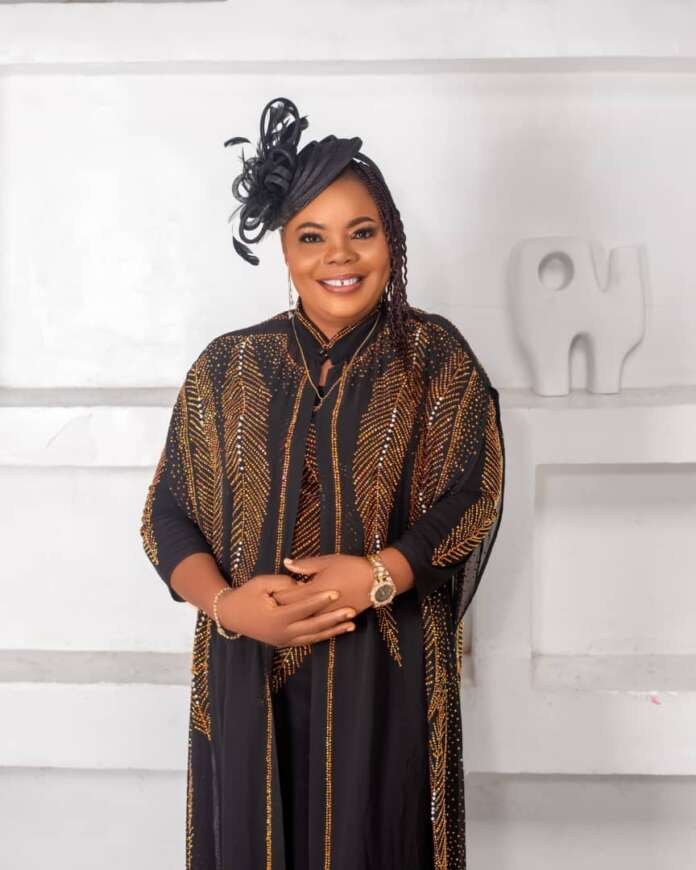
By Funke Egbemode

Ajin Orompoto definitely was not born to become a king. Yes, she was a princess but tradition forbade women from sitting on the throne of their fathers. According to historical accounts, Alaafin Ajiun Orompotoniyun ended up being the only female Alaafin of Oyo. When her father, Alaafin Ofinran joined his ancestors, his brother, Eguguoju, inherited the throne. Unfortunately, he died young without a male heir. Ajiun’s younger brothers, Princes Ajiboyede And Tella were too young to be in contention and that was how Ajiun stepped up.

If it is not easy to confront the male-ruled system in 2025, one can only imagine how it was in the 16th century when Princess Ajiun stopped the Oyo Mesi’s conspiracy to install one of their own as the successor to Alaafin Eguguoju, Ajiun’s uncle. With unheard of courage, Ajiun told the members of Oyo Mesi to give her seven days and she would become a man. What she did and how she did it is still subject of contention till date but somehow, Ajiun showed up on the seventh day bald- headed, flat-chested, and with a phallus too! Long story short, the princess became king and proved herself worthy of her fathers’ stool.

According to an account by Mojisola Savage, ‘Orompoto introduced cavalry to the Oyo military, a feat believed to be why Oyo became the largest empire in Yoruba history. In 1557, she reportedly went as far as Timbuktu to import horses for her specialised cavalry. She may also have employed a thousand Borgu archers to shoot poisoned arrows from horseback. According to legend, she kept her foot soldiers in front and cavalry behind in battles. Riders tied large leaves to the horses’ tails which swept the ground to cover their tracks. In 1555, a few years after her father reclaimed some of Oyo’s original territories from the Nupes, they retaliated. With her formidable cavalry, she defeated the Nupes. Her renowned cavalry and military strategy distinguished her in subsequent battles, making her one of the most influential Alaafin of the Oyo empire.’

Orompoto died in the Battle of Ilayi in 1562.

So why are we in this particular history class? Because Nigeria’s Oyo Mesi, the patriarchal political cabal in charge of Nigeria’s democracy has held women at bay for years, our breasts and hips seen as obstacles and used to keep us as just cheerleaders in the political parties. To make themselves look and feel good, the men have written a few lines in their party constitutions that mouthed women inclusion a la free or discounted nomination forms for women aspirants.

As if owning a nomination form means anything on the long journey to elected office in Nigeria. Nigeria’s political system is run with a special design to keep women away. Between the huge funds required and the violence deployed before, during and after elections, a female politician needs real balls to be in contention. Since we lack both phallus and funds, we are in relegation. That is why there are only four female lawmakers in the 108-member 10th Senate. Only 16 of the 360 members of the House of Representatives are women. Of the 990 seats of the Houses of Assembly across the nation, only 54 of the legislators are women.

And the saddest figures of all: there are 14 states in Nigeria with no single female lawmaker. In the spirit of naming and shaming, here are the 14 shameless states – Osun [my home state], Abia, Bauchi, Borno, Gombe, Imo, Jigawa, Kano, Katsina, Kebbi, Plateau, Sokoto, Yobe and Zamfara. The steady decline in numbers is curious and shameful. From having 36 women in the National Assembly in 2007, we have sunk to a measly four Senators and 16 Reps.

The system is skewed against female participation in every way and it is time to redress the situation. Unless all the men in this country are unanimously submitting that their mothers, sisters, wives and daughters are useless and of no consequence whatsoever, the time is ripe to amend Sections 48, 49 and 91 of the 1999 Constitution to accommodate 37 additional women senators (one per state and FCT); 17 additional female members of the House of Representatives; and 108 women in State Houses of Assembly (three per state). All of this will cost the nation less than one per cent of the annual national budget! The number of Special Assistants and Personal Assistants across the country cost us more.

Our country is blessed with warrior women who are descendants of great warriors like Alaafin Orompotoniyun who dared the odds and extended the frontiers of Oyo Empire all the way to Timbuktu. Brilliant, resourceful and courageous women are already doing exploits in every sector of our national life from aviation to armed forces.

Those in support of Special Seats for Women Bill say aye. Those against say nay. The ayes have it.

Let the enemies of Nigerian women show their faces.

22-year-old Bill Gates’ daughter lands a new side hustle after billionaire dad said he would not give her money

Phoebe, Bill Gates’s youngest daughter, has landed a new job.

The fashion show regular is working with Sophia Kianni and Tay Nakamoto for a new podcast episode, Sticking With Style.

They are offering tips on upgrading dorm room space for the fall 2025 semester.

The project is part of an endorsement deal with Command Brand, which proves Phoebe is moving more into the world of an influencer.

The 22-year-old studied Human Biology at California‘s Stanford University.

She is the daughter to the Microsoft co-founder, 69, and his philanthropist ex wife Melinda Gates, 60.

Phoebe and her siblings, Jennifer, 28, and Rory, 25, will famously receive a minute percentage of their father’s fortune because Bill will instead divert his mammoth fortune to charitable organizations. 

In April she discussed her father’s extraordinary success and the pressure that brings on her new podcast, The Burnouts, alongside her business partner and close friend, Sophia.

She said: ‘I had so much insecurity and such a desire to prove myself at Stanford.

‘I came in, I was like, ”I’m so privileged, I’m a nepo baby”, like I had so much insecurity around that. I feel it’s so hard when you’re a freshman in college because you have no experience. You have nothing.’

Despite her billionaire father’s gravitas, the graduate, who is dating Sir Paul McCartney‘s grandson, Arthur Donald, said she was ‘flat-out rejected’ from a business class after devising her first pitch, Bluetooth tampons, giving women health status updates throughout their periods.

‘This was our first big failure of many, many, many,’ Phoebe admitted. ‘I don’t think it’s really a shocker that we got flat-out rejected from this class – they asked us, ”What problem does this solve? How would it make money?” We couldn’t answer those questions.’

It wasn’t just her Stanford professors who doubted Phoebe’s entrepreneurial skills, but Bill also blocked his daughter’s request to drop out of school to pursue her debut company despite him doing something similar 49 years earlier.

Phoebe, who will soon launch her company, digital fashion platform Phia, which she describes as a ‘new way to shop’ online, with Kianni, said: ‘I remember even when we wanted to start the company, him being like, ”Are you sure you want to do this?”

‘Because both of my siblings were incredibly intelligent and took very typical career paths – my brother’s a genius, my sister has two kids and a horse-back riding career and is in residency [as a Junior Pediatrician] – but there wasn’t this adverse risk of failure.’

Phoebe and her siblings won’t get a big inheritance.

The star continued: ‘So my parents were really cautious when I was like, ”I want to do Stanford abroad and do this remotely and finish up my degree and do the start-up”.

‘They were very much like, ”You need to finish your degree. You don’t just get to drop out and [start] a company.” Which is so funny because my dad literally did that – that’s like the reason I’m able to go to Stanford, have my tuition paid.’

Bill dropped out of Harvard in 1975 after three semesters to start Microsoft, a decision which helped earn him his estimated $107 billion (£83 billion), according to Forbes.

Phoebe added that, despite having a close relationship with her father, she has few recollections of him discussing Microsoft with her.

‘I literally never remember my dad talking to me about the start of Microsoft. I literally mostly just remember him talking about the Foundation,’ she said.

Instead of depending entirely on knowledge passed down from her father, Phoebe claimed that she is securing her future through a solid work ethic.

She said: ‘I really like the results we’re seeing – and this is not just true for business, but any career you’re in: it is just the result of habits.

‘The tracking we’re seeing with our product is really just the result of our habits; it’s the result of loving your work, waking up early, working ’til damn late on this company because you love it.

‘It’s not work-life balance: this is your life, and you really enjoy it. It has to be fun, and you have to have the habits built around that.

‘And controlling – being able to control that part of your brain that wants to stay in bed and being like, I don’t want to eat but I need to go eat lunch because I need to be productive this afternoon.’

Gates offered the example of embracing rejection as a habit she and Kianni adopted to enable success.

She said: ‘A habit that we had that I thought was so good at the beginning was just constant outreach and constant acceptance of rejection.

‘When we were trying to get our first partnerships for Phia, we would outreach like… we maxed out the LinkedIn credits. And they wouldn’t grant us more because we hit the limit.

‘We’d get people respond like, ”Please leave me alone and never email me”. We’d still respond again.

‘I really feel the greatest lesson from this is vulnerability is not embarrassing. Yes, our cold email outreach template was awful at first, and it was a complete flop, but I’ve connected with some of those people now, and they were like, ”Good for you for reaching out in college.”

The star added: ‘The biggest things we’ve learned is have that vulnerability – you just need to take shots on goal.’

Oshiomhole’s toxic advice to Okpebholo

By Suyi Ayodele

It was meant to be a joyous occasion. Governor Monday Okpebholo of Edo State has just been affirmed as the governor of the state by the Supreme Court. Okpebholo’s election was challenged by Asue Ighodalo, the Peoples Democratic Party (PDP) candidate in the September 22, 2024, governorship election. The soft-spoken former senator had won all the litigations from the petition tribunal, through the Appeal Court and up to the Supreme Court. Such a feat calls for celebration.

The governor’s party’s stalwarts from the All Progressives Congress (APC) gathered somewhere in Abuja to savour the victory; the last of any litigation that could come his way on account of the election. The mood was peaceful. Leaders, one after the other, took time to appraise the situation. All of them gave glory to God for seeing their candidate and party through the tedious court proceedings. They were united that it was time for Governor Okpebholo to hit the ground running and bring good governance to the people of Edo State.

Then it was time for Comrade Adams Oshiomhole to talk. Penultimate Saturday in Benin City at the APC South-South stakeholders meeting, Oshiomhole was reduced to a mere seconder of the motion to adopt President Bola Ahmed Tinubu and all the four APC governors from the zone for a second term. Senate President Godswill Akpabio presided over that engagement. Oshiomhole, a former governor of Edo State, former National Chairman of the APC and former President of the Nigeria Labour Congress (NLC) was reduced to a mere spectator at the Victor Uwaifo Creative Hub, the venue of the APC meeting. Why did that happen?

I hate to speculate. Methinks that the leadership of the meeting knew that Oshiomhole might pollute the atmosphere if allowed to talk. He had at the Progressives Governors Forum (PGF) meeting held in the same Benin City days earlier made some unguarded statements! One may, therefore, conclude that shutting him out was to avoid another verbal disaster. You don’t have to believe this claim, especially if you are not familiar with the politics of the Senate Presidency playing out in the South-South.

Now back to the Abuja celebration of Okpebholo’s victory at the Apex Court. Immediately, Oshiomhole held the microphone, all attention shifted to him. And he answered his name that day. Ogun, the Yoruba god of iron, is praised as Okùnrin kúkúrú abìjà kankan (The short man with a tenacious fighting spirit). Oshiomhole shares that praise name with Ogun. This is what the septuagenarian politician cum labour leader said:

“You now have the time to look into that hotel about which they say Edo money, in tens of billions of naira, was spent, and now they claim it’s just a minority shareholding. You have time to revisit all those roads that were built at the worst costs compared to the ones I built and that are still there. Governor Obaseki must come out of hiding to answer these questions.”

From those statements, it is clear that the only thing that is paramount in the mind of Oshiomhole is the probe of former Governor Godwin Obaseki, the immediate past governor of the state. Obaseki, as we know, is Oshiomhole’s successor as governor. But a long-articulated vehicle has since passed between the once-two-jolly-good-fellows! How Obaseki, who at a time was Oshiomhole’s best man at his wedding, turned out to be an archenemy of the senator representing Edo North Senatorial District is what should interest political scientists and anyone desirous of studying ‘how friends become enemies’ as a research proposition.

My immediate reaction to Oshiomhole’s call for the Obaseki probe is to quickly look at how convenient it is for Oshiomhole to speak from the two sides of his mouth without qualms! What sort of human being can have two or more opinions about an individual within a short space of time? Again, how come that of all the lofty ideas anyone could give to Governor Okpebholo, the only one that easily came to Oshiomhole is the idea of a probe and its attendant distractions? Why don’t our leaders consider the consequences of their utterances first?

Dr. John L. Gustavson is a Neuropsychologist in Grand Junction, Colorado, USA. He is reputed to have “special training and skill in evaluating and treating nervous system disorders, and determining how illnesses, injuries, and diseases of the brain and nervous system influence the way a patient feels, thinks, and behaves.” When asked to define why people talk first before thinking, Gustavson named such a condition as “Verbal Disinhibition” or simply “Disinhibition.” Here is his definition of the neuropsychological term, Verbal Disinhibition:

“Verbal disinhibition” or simply “disinhibition.” is saying or acting impulsively without considering the potentially damaging or embarrassing consequences of the words or deeds. Disinhibition may result from a brain injury, intoxication, mental illness, or MERE STUPIDITY (emphasis mine).”

How fitting is this definition? While the 2024 Edo governorship electioneering lasted, all the statements that could have cost the APC the election were made by Oshiomhole. He, for instance, almost ruined the APC campaign then with his allusion to a couple married for many years without a child between them! Yet, he is an elder statesman, going by his age, experience and political outings.

The elders of my place reason that when there is an elder in the marketplace, a child strapped to her mother’s back is not likely to have his neck twisted (Àgbà ki wà l’ójà kí orí omo tuntun wó). But shouldn’t we rethink the axiom, given that we have elders in the mould of Oshiomhole around us? Or which is more dignifying to ask the governor: to give the best to the people and to ask him to go witch-hunting for an imaginary frenemy? Why do Oshiomhole’s friends always turn to his enemies?

For instance, when in 2016, Oshiomhole was selling the same Obaseki to the Edo people, he called him the compressor of the air-conditioning of his government’s economic car. That was at a time Oshiomhole appointed Obaseki as the head of the economic team of the government for eight years. Oshiomhole told the entire Edo people that his administration would not have achieved anything but for Obaseki who generated the funds and managed the state’s economy prudently!

At another time, specifically on January 18, 2018, when the then Governor Obaseki bought a fleet of buses for intra-city transportation, Oshiomhole enthused: “I am humbled by your accomplishments, and I am proud that we made promises on your behalf during the 2016 electioneering period and you have accomplished a lot of the promises. You are working tirelessly to industrialise the state and make life easy for the people. Many governors are complaining that there is no money, and they are unable to pay salaries, but you have developed your creativity to attract resources to the state.” Today, the same Obaseki, in Oshiomhole’s judgement, is the lead character in the Arabic folk tale, ‘Ali Baba and the Forty Thieves’, and he must be probed!

Obaseki is not the first to suffer from Oshiomhole’s “verbal disinhibition.” On July 16, 2012, after Oshiomhole was declared winner of his second term governorship bid election, he described the then President Goodluck Ebele Jonathan as, “…Indeed a statesman, a man of honour because there was adequate and effective presence of security agents on ground. I am impressed because the army actually played a neutral role in the election.”

Move forward to June 14, 2017, when Oshiomhole was assessing the same President Jonathan, hear his magisterial conclusion: “Nigeria was in danger if Jonathan continued in office.” The same “statesman and man of honour” suddenly became the one of whom Oshiomhole would later say: “Once I concluded that Nigeria was not in good hands, I also had to do everything possible to ensure that he (Jonathan) was not re-elected…”

The Edo-born politician did not spare his own too. On November 7, 2019, as the National Chairman of the APC, Oshiomhole’s verdict on the performance of the late President Muhammadu Buhari was a president that “has done well”. He eulogised Buhari, who passed on, on Sunday, in a London hospital, and said: “President Buhari can beat his chest to say I have started well; I have started fast. You cannot call him Baba Go Slow now. This time, he is Baba Fast,”

Fast forward again to Saturday, June 28, 2025, and listen to Oshiomhole describe Buhari’s administration as the ruiner of the nation’s economy. Speaking at the PGF meeting in Benin City, Oshiomhole said the Buhari administration, by using the Ways and Means policy, “printed over N31 trillion”, adding that the “excessive printing of money” crippled the naira.

“This is what the immediate past CBN governor was doing. In the Senate, we have the record that they printed over N31 trillion which they called Ways and Means. You know when the government wants to deceive people they use jargon. They called it Ways and Means but I can tell you what it means: it means a situation in which the government prints banknotes, not based on what we have earned or any resources, just print banknotes to go and share with the people to meet their money illusion. It is the result of that excessive printing of banknotes that led to the collapse of the naira,” Oshiomhole ruled of the same administration he once said was the best ever!

So, when he counselled Okpebholo to probe Obaseki, I wondered how the voluble politician would explain how he transformed from a khaki-wearing labour man to a man of stupendous wealth that he is today! Is Oshiomhole ready to answer questions such as: What was his worth as a labour leader? What is his worth today? How did he acquire his Iyamoh countryside village-within-village home? How about the property in Abuja, the vehicles in his convoy and many more luxuries?

Please get me right. Okpebholo should, by all means, probe Obaseki. No past leaders suspected to have helped himself to our patrimony should keep and enjoy the proceeds of such heists. But, please, let us extend the probe to Oshiomhole. Let us see how clean he was as a governor. If he turns out to be a saint at the end of the exercise, let us raise a fund-me account to sponsor his beautification!

Thankfully, Governor Okpebholo appears to have heeded Oshiomhole’s prompting. The governor has said that he would probe Obaseki. He even mentioned some outrageous figures he alleged Obaseki misappropriated. I think in the interest of the public, Obaseki should be made to account for what he did or failed to do while in office.

I also hope that Okpebholo himself will begin to keep a clean slate of events while in the saddle because no matter how long he spends in office, he will vacate it one day, and he will be summoned to account for all his actions and inactions. I think Nigeria is on the path to good governance with this call to accountability.

The only advice here is that Okpebholo should not allow those with low emotional control to dictate the pace to him. The governor should know that his primary duty is good governance; to make life more abundant for the Edo people, home and in the diaspora.

I don’t know the governor’s mental aptitude to cope with distractions. He should do a self-assessment to determine if he can combine governance with political distractions of probes and what have you. More importantly, he should know the Obaseki camp will not sit back, and that it is not going to be an amala and ewedu exercise.

More importantly, Governor Okpebholo, I think, should begin to change the narrative that he is a man without his mind. Now that the distraction of litigation over his governorship is over, he should begin to demonstrate that he has the capabilities in all ramifications, to direct the affairs of the state according to his personal convictions and judgment of what is good for the state and its people. He must show that he doesn’t need a human prompter like Oshiomhole before he can take the right step as the governor of the state.

The governor should not allow any individual to use him to settle any personal score. If probing Obaseki is the best for his administration and the people of Edo State, Okpebholo should go ahead and do that. But if that exercise is just to satisfy the bruised ego of some megalomaniacs somewhere, the governor should think twice.

Oshiomhole brought Obaseki to Edo State and made him the head of his economic team for eight years. Against all protestations, he went ahead and made Obaseki governor, deploying all the state’s machinery to back him up. Whatever went sour between him and his godson after 12 years of romance remains personal to the two of them. Nobody has the illusion that Oshiomhole fought Obaseki because the latter was not doing the right thing. We can only hope that one day, the duo will have the moral courage to tell the whole world what went wrong between the groom and his best man!

I hate to dwell on the reality that if Oshiomhole were to have his way, Okpebholo would not have been in the saddle today as the governor of Edo State! In fact, Okpebholo’s clan, the entire Esanland, would not have been anywhere near the Dennis Osadebey Avenue known as Edo State Government House! But success, they say, has many relations. If there is equity in the Edo political structure today, the credit goes to Obaseki and his sense of fairness and tenacity of purpose when it mattered. His Esan Agenda proposition and the tenacity with which he prosecuted it, produced a governor of Esan extraction in Okpebholo today! Oshiomhole, the new adviser-in-chief today, had other plans!

I submit, however, that the fact that Obaseki pushed for a governor of Esan extraction is never an excuse why he should not be called to account for how he managed Edo affairs and its finances when he was governor. The only plea here is that Governor Okpebholo should look beyond Obaseki and probe how much of Edo money was committed to, for instance, the Airport Road project and the Benin Water Storm project. The probe should be holistic!

The views expressed by contributors are strictly personal and not of Law & Society Magazine.

Brigitte Macron appeals to France’s highest court over acquittal of women in gender rumour case

The first lady of France Brigitte Macron, has taken her case against two women over claims she used to be man to the highest appeal court in the country after a lower court cleared them.

On Thursday, the Paris appeals court overturned earlier convictions against the two women for spreading false claims that went viral online.

They had alleged that the 72-year-old Mrs. Macron used to be a man.

The fake news about her gender has circulated on social media for years, just as her 24-year age difference with President Emmanuel Macron has also attracted much comment.

Brigitte filed a libel complaint against the two women after they posted a YouTube video in December 2021, alleging she had once been a man named Jean-Michel Trogneux – who is actually Brigitte’s brother.

In the video, defendant Amandine Roy, a self-proclaimed spiritual medium, interviewed Natacha Rey, a self-described independent journalist, for four hours on her YouTube channel. Rey spoke about the “state lie” and “scam” she claimed to have uncovered that Trogneux had changed gender to become Brigitte, and then married the future president.

The claim went viral, including among conspiracy theorists in the United States

A lower court in September last year had ordered the two women to pay €8,000 in damages to Brigitte, and €5,000 to her brother. Brigitte’s lawyer Jean Ennochi told Agence France-Press Sunday that her brother, too, was taking his case against the dismissal of the charges to the highest appeals court, the Court de Cassation.

AFP

Just In: Akpabio goes on appeal over judgement ordering Senator Natasha’s recall to Senate

Senate President Godswill Akpabio has filed a notice of appeal challenging the judgment of a Federal High Court, Abuja, which ordered the recall of Senator Natasha Akpoti-Uduaghan to the Senate after her contentious suspension. 

The notice of appeal, obtained by SaharaReporters on Monday, is dated July 14, 2025, and was filed at the Court of Appeal, Abuja Judicial Division.

The appeal, marked CA/A//2025, stems from suit number FHC/ABJ/CS/384/2025, which was instituted by Senator Akpoti-Uduaghan to contest her suspension from the Red Chamber. 

In the notice of appeal, Akpabio is appealing on 11 grounds and asking the appellate court to set aside the judgment delivered on July 4, 2025, by Justice Binta Nyako of the Federal High Court. 

The court had ordered the Senate to recall Akpoti-Uduaghan, describing her six-month suspension as excessive and lacking legal justification.

Akpabio, through his legal team, argues that the Federal High Court erred in law when it assumed jurisdiction over a matter which, according to him, pertains to the internal workings of the National Assembly and therefore falls outside the court’s jurisdiction as prescribed by Section 251 of the 1999 Constitution of Nigeria. 

He contends that the Federal High Court has no powers to adjudicate on matters concerning the existence or extent of the legal rights and privileges of a member of the National Assembly.

In the notice of appeal, Akpabio listed several parts of the High Court’s ruling which he is dissatisfied with. 

He specifically challenges the court’s dismissal of his preliminary objection, its pronouncement on the validity and duration of Akpoti-Uduaghan’s suspension, and its recommendation that the Senate should recall her to resume her duties.

Akpabio’s grounds of appeal include the argument that the trial judge occasioned a miscarriage of justice by assuming jurisdiction over Akpoti-Uduaghan’s suit, which was filed prematurely and in contravention of the Senate’s internal dispute resolution mechanisms as stipulated in the Senate Standing Orders 2023 (as amended). 

He further insists that the matter should have been resolved internally by the Senate Committee on Ethics, Privileges and Public Petitions before Akpoti-Uduaghan approached the court.

The Senate President also argues that the lower court failed to apply the provisions of the Legislative Houses (Powers and Privileges) Act, which shield legislative proceedings from judicial scrutiny. 

He stated that Akpoti-Uduaghan’s complaint arose from words spoken during a plenary session and from resolutions passed by the Senate, both of which are protected under the Act.

He accuses the Federal High Court of breaching his right to fair hearing by raising issues suo motu which were neither pleaded by any party nor canvassed during the proceedings. 

Specifically, he contends that the trial judge improperly introduced the question of whether the six-month suspension imposed on Akpoti-Uduaghan was excessive and went ahead to make a recommendation for her recall without hearing from the parties on the matter.

According to the notice of appeal, Akpabio’s legal team argues that the lower court erred when it ruled on Akpoti-Uduaghan’s interlocutory application by merging the reliefs sought therein with those in her substantive originating summons, despite the duplication of reliefs in both applications.

 He also claims that the court acted improperly by proceeding to hear and determine the substantive suit despite Akpoti-Uduaghan’s violation of the court’s earlier order restraining parties from making public comments on the matter.

In addition to these claims, Akpabio argues that the Federal High Court lacked jurisdiction to entertain the suit because Akpoti-Uduaghan failed to comply with the statutory requirement under Section 21 of the Legislative Houses (Powers and Privileges) Act, which mandates any person with a cause of action against a legislative house to serve a three-month written notice on the Clerk of the National Assembly disclosing the cause of action and the reliefs sought.

In the reliefs sought before the Court of Appeal, Akpabio is praying for an order allowing the appeal and setting aside the parts of the judgement where the lower court dismissed his preliminary objection, held that the six-month suspension was excessive, and recommended that the Senate should recall Akpoti-Uduaghan. 

He is also seeking an order striking out what he described as duplicated reliefs in Akpoti-Uduaghan’s applications for interlocutory injunction, mandatory injunction and originating summons. Furthermore, Akpabio is asking the Court of Appeal to invoke its powers under Section 15 of the Court of Appeal Act to dismiss Akpoti-Uduaghan’s suit for lack of jurisdiction.

In the notice of appeal, Akpabio’s legal team argues that the trial court went beyond its constitutional powers by offering what they describe as “advisory opinions” to the Senate on how it should handle the recall of a suspended member. They insist that the court lacked jurisdiction to interfere in the internal affairs of the Senate or to recommend amendments to the Senate Standing Orders.

The reliefs sought by Senate President Akpabio, as contained in the court document, read:

“i) AN ORDER of this Honourable Court allowing this cross-appeal.

“ii) AN ORDER of this Honourable Court setting aside the parts of the decision of the lower Court where the lower court dismissed the Appellant’s preliminary objection, and opined that (i) the 6 month suspension of the 1st Respondent was excessive and (ii) it believed that the 3rd Respondent should recall the 1 Respondent to the Senate.

“iii) AN ORDER of this Honourable Court striking out duplicated reliefs contained in the 1ª Respondent’s application for interlocutory injunction, application for mandatory injunction and originating summons.

“iv) AN ORDER of this Honourable Court invoking the powers of this Honourable Court under Section 15 of the Court of Appeal Act to determine the Appellant’s notice of preliminary objection and dismiss the 1st Respondent’s suit at the lower Court for want of jurisdiction.

“v) ANY OTHER ORDERS the Court may deem fit to grant in the interest of justice.”

Yahaya Bello’s Bid To Travel Abroad For Medicals: Lawyer backs EFCC’s position, ‘Only in Nigeria can this type of application can be granted’

Sequel to the argument of the Economic and Financial Crimes Commission (EFCC) that Yahaya Adoza Bello, former governor of Kogi state should visit the top-notch hospital he reportedly built in Kogi state for his medicals rather than seek to travel abroad on health grounds as he requested a Federal High Court in Abuja for, a Nigerian lawyer remarked that, ‘bringing such application is an insult to the integrity of our health system.”

Piqued by Bello’s application, Tosin Ojaomo Esq. said: “It is only in Nigeria that this type of application can be granted by a judge. Bringing such an application is an insult to the integrity of our health system. The allegation against the defendant is that he denied the people, including himself, of a decent health care system by converting their commonwealth to his personal use.

“Ordinarily, this type of application ought to be dismissed with punitive costs. Every time this type of issue comes up, I always remember the way the legal system in the UK held on to Senator Ekweremadu, not minding his status or the several appeals from Nigerian authorities.

“The law should be a respecter of no one. That is what the rule of law entails and not rule of law by personality. That is a pure segregational application of the law, which is what is currently plaguing the Nigerian legal corridor.

EFCC had kicked against a fresh application by the embattled former Kogi State Governor.

Bello, in his fresh application, is seeking to travel out of Nigeria for medical treatment amid his ongoing trial over an alleged ₦80.2billion money laundering scandal.

This was announced in a press statement narrating a heated legal battle at the Federal High Court in Maitama, Abuja, on Thursday, June 27, 2025.

The agency told Justice Emeka Nwite that the move by Bello’s legal team was not only a gross abuse of court process but also a veiled attempt to escape justice under the guise of seeking medical care abroad.

Bello’s counsel, Joseph Daudu, SAN, had presented the application to the court, asking for permission for his client to travel overseas on health grounds.

Citing Section 173(2)(a) of the Administration of Criminal Justice Act (ACJA) and the court’s inherent powers, Daudu argued that Bello’s medical needs could not be addressed locally, not even in the multi-billion naira hospital he commissioned during his tenure in Kogi.

The former governor’s application was backed by a 22-paragraph affidavit personally deposed to by Bello, with attached medical reports and a letter from a consultant cardiologist, whose identity or professional credentials the prosecution later questioned.

Daudu said his client had not left Nigeria in over eight years and was now in need of urgent attention.

“This is about releasing his passport, which he surrendered as part of his bail conditions. The issue is not whether there are hospitals in Nigeria, but whether the defendant is a flight risk. He has no criminal record abroad and will return before the end of August. My Lord can even fix a return date,” he told the court.

But the EFCC’s lead prosecutor, Kemi Pinheiro, SAN, came down hard on the request, accusing Bello of filing similar applications before multiple courts in a deliberate attempt to mislead and derail proceedings.

“This is a gross abuse of court process,” Pinheiro thundered.

“The motion is technically incompetent. His sureties were not notified or made parties to this motion. If he absconds, who takes responsibility?”

He warned that the ex-governor posed a high flight risk and could face international arrest. “This man is already on a red alert. He risks being picked up overseas and extradited. He could be Hushpuppied out of Dubai,” he warned, referencing the infamous arrest and extradition of Nigerian Instagram celebrity, Hushpuppi, over cybercrime.

Pinheiro also dismissed the medical report submitted by Bello’s team, ridiculing its contents and author.

“The doctor who signed the report did not include his qualifications or specialty. And what are we talking about here? Low potassium? Mild hypertension? Those can be handled in any Nigerian hospital. If he needs potassium, let him eat banana and pawpaw,” the EFCC lawyer said.

He further mocked Bello’s claims of a failing health system, saying, “From Abuja to Lokoja is two hours. He built a world-class hospital in Kogi. Let him use it instead of boarding a six-hour flight to the UK.”

Pinheiro also reminded the court of the nature of the charges facing the former governor, stating that money laundering is a transnational crime. “This matter involves funds traced to foreign accounts in the US and UK, and properties in Dubai. It is international in scope.”

In a final push, Daudu insisted that the application was in line with legal procedure, stating that the EFCC’s red notice had expired since Bello was now within the court’s jurisdiction. 

“The sureties do not need to be part of this application,” he maintained, urging the court to act with discretion and allow Bello to attend to his health abroad.

Justice Emeka Nwite is expected to rule on the application at a later adjourned date. 

Land grab: Why Uni-Abuja needs presidential protection

By Martins Oloja

Another wind of time has blown me to the University of Abuja, I once tagged as the only federation university in the country. Yes, in my commentary on the curious policies that preceded the first major Visitor’s intervention, which led to the current interim administration at the university early this year, I had noted that the University of Abuja, renamed Yakubu Gowon University, shouldn’t be regarded as just a federal university. I claimed then that the federal university should be similarly regarded as a federation university that should not be trifled with, in the capital of the federation, Abuja.

I would like to note quickly too that, that is why the University (of Abuja) should not be renamed after any citizen, no matter the significance or prominence of that citizen. Again, that should be a debate for another day to avoid distraction from the point at issue today: alleged “Land Grab” at the university of the federation that seems to have been abandoned by the stakeholders of the federation that own it. And here is why: Abuja is the Capital of the Federation comprising 36 states and the capital itself. The president and chief executive of the federation is, according to the organic law of the land, is the Governor of the Capital, Abuja. The same constitution allows the president to delegate his gubernatorial powers over Abuja to the FCT Minister, if he so wishes. So the minister of FCT isn’t elected as he only holds that position at the pleasure of the president who doubles as the governor.

Therefore the President is the Visitor to the University of Abuja but that function isn’t delegated to the FCT Minister except by express permission to hold the fort during ceremonies. That is the letter of the law. But the spirit of the same law makes the FCT Minister the representative of the president in terms of quality control and development of critical infrastructure of the university of the federation. But since the university was created some 37 years ago, no FCT Minister has intentionally collaborated with Education Minister to build befitting infrastructure that the federation university deserves.

What is worse, since 1988, even the university hasn’t welcomed many Visitors to the university during convocations. What is more curious, since there is no elected governor, the highest elected officer in the capital of the federation is the Senator representing the Territory of only one senatorial district. Since 1999 when democracy was restored, no senator representing the FCT has led any of the two committees of the bi-cameral National Assembly to assess the infrastructure needs of the Federation University. Even education ministers from 1999 till the present haven’t been visiting the University of Abuja. That has been curious and that is why even the current FCT Minister didn’t know that he needed to visit the University of Abuja as the most important institution in the Territory that no public officer including the president has ever recognised in their strategic and national development plans.

That is why, the president wasn’t aware that while the FCT Minister was enthusiastic and effervescent about 17-day unusual commissioning of roads construction in Abuja, primary school teachers in the FCT had been on strike for three months in the capital. That is also why in the 49 years of the federal capital territory, the most neglected project has been the National library. Whereas, one of the most important institutions of democracy in the United states is the Library of Congress. The library of Congress ensures that no public officer prepares public address or records/data/statistics anyhow. It is touted as the best library on earth. The Abuja National Library is sandwiched between the iconic National Mosque and National Christian Centre, but no one in the same federation capital remembers to budget to complete Nigeria’s National Library in Abuja. That is just a necessary distraction about our national priorities, without education.

It would have been more remarkable if the Hurricane Minister Wike had led the president who has done well for the FCT funding of projects to commission the other day, a world-class digital Abuja National library where we can access documents, data, etc on our national development plans and cultures. Now to the brass tacks: who is grabbing plots of land in Abuja and why the president should lead, yes lead Minister Wike to look beyond the land of the University of Abuja. Here is the thing, the University of Abuja deserves a great deal of respect like other universities. I mean here that Minister Wike should not have called the University of Abuja leaders “land grabbers”. What is more concerning, the Nigerian print media also disrespected the Federation University with the way they unjustifiably amplified the description of the university as a “land grabber” without contextual reporting.

The fact file:
Minister of the Federal Capital Territory (FCT), Nyesom Wike, has come under intense scrutiny over the reported reduction of the University of Abuja’s land allocation from a sprawling 11,000 hectares to just 4,000 hectares. The move has sparked accusations of “institutional land grabbing” and drawn passionate responses from education stakeholders, policy analysts, social commentators and student bodies.

The spotlight fell on the issue when Abubakar Sidiq, a prominent policy analyst and former media aide, took to social media to criticise the FCT authorities. According to him, “Wike has reduced the land of the University of Abuja by 7,000 hectares, leaving the university with 4,000 hectares from the initial 11,000 hectares. Is this not land grabbing?” he questioned. “That they are not using the land today does not mean they will not use it tomorrow. It’s a university that is constantly under development and expansion for God’s sake.”

Sidiq’s comments have triggered a broader debate on the role of land in higher education development, especially at a time when most Nigerian universities are grappling with infrastructural deficits. According to the National Universities Commission (NUC), 62% of public universities in Nigeria are operating at over 100% of their carrying capacity, and expansion plans are often hampered by limited space and funding.

However, not all voices agree with Sidiq. Responding to the land controversy, Dr. Toks, a public intellectual and university don, challenged the need for such vast land ownership. In a viral post on X (formerly Twitter), he remarked: “Harvard University across its 5 campuses sits on approximately 2,000 hectares of land, including its research forests. Same with Oxford. UNILAG is sitting on 325 hectares. UI and UNIBEN are less than 2,000 hectares. FUTO is approximately 4,000 hectares.”

Indeed, when compared to global standards, Nigerian universities appear to have disproportionately large land allocations. A comparative review by the Times Higher Education database reveals that the average landholding of the world’s top 50 universities is under 2,500 hectares, with many efficiently leveraging urban land through vertical development, integrated digital facilities, and public-private partnerships.


However, there is a danger of assumption that underutilisation is justification for revocation. Is land not a long-term investment for future expansion, especially for research, agriculture, and innovation parks, as Prof. Fatimah Ahmed, a specialist in educational planning at the University of Ibadan has asked? Her words: “Reducing such land today only mortgages the possibilities of tomorrow.”

The University of Abuja, established in 1988, was envisioned as a comprehensive institution that would combine conventional and distance learning models. With over 40,000 students currently enrolled and a projected enrollment of 60,000 by 2030, many have feared that future expansion might be stifled. Already, the university’s management has warned that some of its planned faculties and agricultural research zones will be disrupted by the land reduction.

Land allocation issues are not new to Nigerian universities. A 2021 report by the Nigerian Institute for Town Planning (NITP) revealed that nearly 30% of university lands across the country face encroachment by private developers and government agencies. In 2022, Ahmadu Bello University lost over 300 hectares of its land in Samaru, no thanks to similar reallocations.

Education activist and founder of Eduwatch Africa, Musa Jatau, condemned the decision as shortsighted. “We’re not against development, but it must be balanced. Reallocating university land without a master development audit or legislative review process is dangerous,” he said. “Today it’s UniAbuja, tomorrow it may be others.”

There are also concerns about the legal implications of the FCT Minister’s arbitrary act. According to the University Autonomy Act of 2003, federal universities are autonomous entities with custodianship over land granted by the federal government. “Any reallocation must pass through the Governing Council and the Federal Executive Council,” as Sandra Ibe, a lawyer based in Abuja has observed.

Students, too, have begun to organise protests under the umbrella of the National Association of Nigerian Students (NANS). At a press briefing last week, NANS Zonal Coordinator, Comrade Hassan Oladejo, described the land cut as “an attack on academic growth.” He urged the federal government to “reverse this travesty or face nationwide student demonstrations.”

So, let us consider the consequences of the decision of the FCT Minister, Wike to revoke the rights, interests and privileges of University of Abuja over the parcel of land measuring approximately 11,824.04 HA, identified as Plot No.1 within Giri District, Abuja for overriding public interest and the granting of 4, 519.80 HA excised from the said parcel of land to the University.

In simple terms, while it is easy to agree with the Minister that he has the power to revoke statutory right of occupancy under Section 28 of the Land Use Act, 1978, isn’t it also true that the power to do that is not absolute and has been construed by various courts to refer to properties owned and acquired by private individuals and organisations known in the legal parlance as private property rights. Besides, the power to revoke private property rights contained in Section 28 of the Land Use Act, 1978 is for the overriding public or societal benefits.

So how is the University of Abuja established in 1988 by an Act of the National Assembly as a federal government owned tertiary institution affected by the power of the FCT Minister to revoke plots of land for overriding public interest?

Why can’t the FCT Minister on behalf of the Visitor to the University visit the University to assess the needs of the university before revoking the plots under review? Is the FCT Minister aware that the University of Abuja lecturers too need to have befitting staff quarters more than the squalid ones they occupy at Giri? Are the university’s academic and non-academic staff inferior to judicial officers the FCT Minister is currently building exquisite retirement quarters for? Why can’t the FCT Minister visit the University of Abuja Teaching Hospital and other Faculties and see things for himself before insulting them as land grabbers?
To be continued…

The views expressed by contributors are strictly personal and not of Law & Society Magazine.

Cameroon’s 92-year-old Paul Biya seeks eighth presidential term

92-year-old Paul Biya, Cameroon’s president, has declared his intentions to run for an eighth term in this year’s presidential election on October 12.

Biya, who is the world’s oldest serving head of state, made the announcement in posts on X on Sunday in both French and English.

“I am a candidate in the presidential election,” he wrote. “Rest assured that my determination to serve you matches the urgency of the challenges we face.”

Biya, who is seeking a new term that could keep him in office until he is nearly 100, came to power more than four decades ago in 1982, when his predecessor, Ahmadou Ahidjo, resigned.

His health is the subject of frequent speculation, most recently last year when he disappeared from public view for 42 days. His re-election bid had been widely anticipated but not formally confirmed until Sunday’s social media post.

Biya had been posting regularly on his verified X handle in the buildup to the announcement.

In 2018, in a first, he also used social media to announce his candidacy for that year’s presidential contest, marking a rare direct engagement with the public on digital platforms.

Members of the governing Cameroon People’s Democratic Movement (CPDM) and other supporters have since last year publicly called for Biya to seek another term.

But opposition parties and some civil society groups argue his long rule has stifled economic and democratic development. Two former allies have quit the governing coalition and announced plans to separately run in the election.

“President Biya’s announcement to run again is a clear sign of Cameroon’s stalled political transition. After over 40 years in power, what the country needs is renewal – not repetition. Cameroonians deserve democratic change and accountable leadership,” Nkongho Felix Agbor, a human rights advocate and lawyer, told The Associated Press news agency.

Sunday’s announcement is sure to revive debate over Biya’s fitness for office. He seldom makes public appearances, often delegating responsibilities to the powerful chief of staff of the president’s office.

Last October, he returned to Cameroon after a 42-day absence, which had sparked speculation he was unwell. The government claimed he was fine but banned any discussion of his health, saying it was a matter of national security.

Biya scrapped term limits in 2008, clearing the way for him to run indefinitely. He won the 2018 election with 71.28 percent of the vote, though opposition parties alleged widespread irregularities.

The cocoa- and oil-producing Central African nation, which has had just two presidents since independence from France and the United Kingdom in the early 1960s, is likely to face a messy succession crisis if Biya were to become too ill to remain in office or die.

Besides Biya, several opposition figures have also declared their intention to run, including 2018 runner-up Maurice Kamto of the Cameroon Renaissance Movement, Joshua Osih of the Social Democratic Front, lawyer Akere Muna and Cabral Libii of the Cameroon Party for National Reconciliation.

All have criticised Biya’s long period as head of state and called for reforms to ensure a fair vote in 2025.

Under Biya, Cameroon has faced economic challenges and insecurity on several fronts, including a drawn-out separatist conflict in its English-speaking regions and ongoing incursions from the Boko Haram armed group in the north.

Source: News Agencies

Buhari’s death: Rotary mourns as District Governor says Nigeria has lost a partner in fight against polio

The District Governor of Rotary International District 9127, Dame (Dr) Princess Joy Okoro, has said the death on Sunday of former President Muhammadu Buhari has robbed Nigeria of a partner in the fight against polio and his family a devoted father.

The District Governor in statement issued on Sunday night by Dr Max Amuchie, District Media Relations Chair, condoled with the deceased President’s wife, Hajia Aisha Buhar, the Buhari family, and the people of Katsina State for losing a dear father and an illustrious son.

“On behalf of Rotary International District 9127 I condole with former First Lady, Hajia Aisha Buhari, the Buhari family and the people of Katsina State.
“As Rotarians we recall that it was on 25 August 2020 during the tenure of former President Muhammadu Buhari that Nigeria was officially declared free of wild poliovirus, a significant milestone in the global effort to eradicate polio.
“Declaring Nigeria free of wild poliovirus in 2020 followed rigorous documentation and verification processes by the African Regional Certification Commission for Polio Eradication (ARCC). This made Nigeria the last country in Africa to achieve this status,” Dame Joy Okoro said.

The District Governor recalled that on 7 September 2021 President Buhari played host to Mr Shekhar Mehta, then Rotary International President, during which he thanked Rotary for interventions in Nigeria’s health sector particularly committing $268m in the fight against polio.

In addition, she said the deceased former President always sought Rotary’s partnership in his administration’s vaccination drive.

The District Governor prayed God to grant the departed former President eternal rest.

‘He did less for man than Cow, loved himself too much to love Nigeria’— Tinubu’s ally, Omatseye’s scathing tribute to Buhari

Veteran journalist and columnist, Sam Omatseye, has published a blistering retrospective on the late former President Muhammadu Buhari, describing his presidency as an anticlimax marked by economic failure, bigotry, self-interest, and squandered public trust.

Omatseye, chairman of the editorial board of The Nation, a newspaper owned by President Bola Tinubu, published his take in an article titled Anticlimax, a day after Buhari’s death in London.

The piece offers a personal, historical, and critical lens into the life and leadership of the late Nigerian leader, whom Omatseye accuses of having “loved himself too much to love Nigeria enough.”

“We have never had a leader like Muhammadu Buhari, and we may never have one like him again,” Omatseye began, before going on to present a complex portrait of a man he said evoked images ranging from soldier-statesman to religious bigot.

He noted that Peter Enahoro, the celebrated journalist known as Peter Pan, had described Buhari as “deceptively gentle” in the 1980s, hinting early at the paradoxes that would come to define his career. “Since Peter Pan’s characterization in the 1980’s, in his first time as leader, Buhari changed his image as a sublime chameleon in many ways,” he wrote.

Omatseye said his own early impressions of Buhari were formed when he was General Officer Commanding (GOC) in Jos, encouraging the military to study the Constitution. As a young observer, Omatseye said he believed Buhari could bring “his spartan discipline to stanch the bleeding in the country.”

He described his support for Buhari’s presidential ambition in its early stages, stating, “I thought Buhari would bring his spartan charm and blend it with men of thinking and energy on the front row while he ran the country as a czar of corruption and due process.”

However, Omatseye said Buhari’s time in office failed to live up to that hope: “And that was the anticlimax of having him at the helm. He would govern with a purifying shadow, a sort of secular priest with his aura both cheering and chastening.”

According to Omatseye, Buhari ended up surrounding himself with a “cabal of antediluvian ideas,” citing the example of former Attorney General Abubakar Malami’s advocacy for open grazing. He called Buhari’s government “dead of ideas.”

“On the economy, he stood guard over a government that had no way to generate money except by printing and borrowing from China, among others. He gave us a debt of over N30 trillion in Ways and Means and several billions of dollars,” he wrote.

Omatseye accused Buhari of failing to improve the economy inherited from former President Goodluck Jonathan. “Rather, he worsened the situation, and created an economy that had to be saved from itself.”

He described the former president as selfish: “Buhari, in the end, turned out to be a man who looked after one man: Muhammadu Buhari.”

Citing Buhari’s refusal to clearly support Bola Tinubu during the 2023 election, Omatseye wrote, “It was hypocritical that he did not even tell now President Tinubu that he did not want him as his successor.”

“Rather he put his weight behind former Senate president Ahmad Lawan. It reflected his lack of integrity, and even blatant hypocrisy as a leader,” he added.

Omatseye also pointed to Buhari’s economic policies during the 2023 election as an attempt to derail Tinubu’s candidacy: “He ran an election-period economy with currency and fuel scarcity that cast his APC in bad light and sought to undermine its candidate.”

Criticising Buhari’s time as both military and civilian leader, he said: “As military leader, he squeezed the economy in the name of enshrining a moral tone. In his time as civilian leader, he choked the economy and failed as a moral compass.”

“He might have made the claim that he was a moral leader in his first time with his war against indiscipline. In retrospect, it was discipline without imagination or conscience,” Omatseye continued.

“He visited Ibadan once as a fighter for the herdsmen, and it cast him as a bigot,” he wrote, accusing Buhari of enabling banditry through inaction: “There is a belief that he did not want the bandits to be killed, so our murderers blossomed on the blood and treasures of society.”

In a searing critique, he said, “Buhari was a tease. He promised with an air of pious devotion. He did not deliver.”

Yet, despite all this, Omatseye acknowledged Buhari’s enigmatic charisma: “His was a charisma of suggestion. He was no demagogue, no performer. If one, his was a demagogue of body language.”

“He was loved by both cow and man. He did less for man than cow, but cows never had a way of gratitude known to man, except men like him, perhaps,” he added.

Even in his condemnation, Omatseye conceded that “History may yet be kind to him in a few areas,” pointing out that Buhari made progress on rail infrastructure, particularly under the guidance of former Minister of Works and Housing, Babatunde Fashola.

“He lived a phenom and died a phenom. He was a hero to many, a man of unflinching tenacity. Even in death, his foes have nothing but admiration, bordering on curious affection,” Omatseye concluded. “Goodbye to a man among men.”

The views expressed by contributors are strictly personal and not of Law & Society Magazine.

TIPS