Home Blog Page 248

Analysing Barr. Deji Adeyanju’s Diatribe against Mr. Peter Obi, from a legal perspective

By. M.O. Idam, Esq.

Instead of yielding to Mr. Peter Obi’s demand to retract his statements, Barr. Deji of Counsel has flamed the presidential hopeful with more invectives. He is resolved, by his disposition, to prove his claim.

Keenly followed his interview on August 29, 2025, with Channels Television, I have presented some “unsolicited” legal opinion on the now topical issues— just for public consumption.

The excerpts of the Lawyer’s comment on live Television read:

“…Obi invited me after I expressed my views on political issues which favoured him, he asked that I work for him and I said no because I do not work for any politician, I was leaving after my meeting, he handed me an envelope and said it was my transportation for coming, I declined the offer…It is not true that he doesn’t give shishi, he attempted to bribe me, he is not who he says he is”

Relentless in his attrition against the former governor, he claimed in several fora that Mr. Peter Obi is a “rogue” who invested Anambra State’s money in Fidelity Bank, where he had vested interests. He describes such an action as Mr. Obi’s—a “crime of conflict of interests”.

I saw in his tone, perhaps wrongly, vengeance and retribution, rather than “provable” facts offered with an honest desire to establish a defence of justification—in law. I mean such a fact which would at the end of the trial, give him a ride to walk home with the litany of the invective remarks he had made against Mr. Peter Obi without consequences.
However, Counsel’s facial expression must be commended. He seemed honest, especially as he sat piously with his leg crossed as a Pentecostal preacher, pontificating before the Channels TV host as an angel who is incapable of hurting a fly.

Counsel may have thought he was speaking from the pulpit, where logic is considered as rebellion. He chose to sermonize, instead of put up a tenable defence, since he would not quietly retract his comments and have us move on with several other issues distracting our attention from President Tinubu’s strange urge for foreign loans. Begrudge me not, if Counsel is reserving his defence for the court process when he is eventually summoned to court.

I have formulated two issues from his Television interview and shall attempt to examine their veracity as defence of justification in a defamation action.

Whether the “offer of an envelope (money) as transportation” or as “thanks for all you do” assuming it is established, can be interpreted to mean bribery, in order to justify the tag given by Barr. Deji to Mr. Obi as a rogue”

Whether the claim if successfully established, that Mr. Obi invested Anambra State’s money in the bank he had a vested interest in, can suffice to justify Barr Deji’s scandalous remarks.

My fair legal opinion :

On Issue 1:
Bribery and Corruption is the alleged offence against Mr. Peter Obi by Barr. Deji of Counsel, on this issue.

On this note, I have taken the liberty to again read through the applicable criminal jurisprudence as it concerns bribery and corruption. Sections 115-119 of the Penal Code Act (PCA) describes bribery and corruption as the conduct of a public servant taking gratification in respect of an official Act. The Criminal Code Act(CCA) did not disagree with the definition. See sections 98 -99 of the Criminal Code Act.

The forgoing not withstanding, the Provision of Section 13 of the Corrupt Practices and Other Related Offense Act(CPROA) provides that “Any Person who corruptly gives, confers or procures any property or benefit of any kind to a public officer or any other person commits an offense” This provision, to my mind, does not contradict the the provision of the Criminal Code and the Penal Code earlier cited.

A community reading of the above provisions, suggests that bribery and corruption is an offense that concerns or relates to a public officer (Public servant) . On who a Public Officer is, the summary definition of a Public Servant according to the Public Service Rules 2021, is a person subject to the employment of the government of Nigeria. Thus, a public servant must have been offered money or he must have accepted money or gratification to fetter or influence his official act, for the offence of Bribery and Corruption to have been committed.

This position was affirmed by the Court in Biobaku Vs. Police (1951) 20 NLR 30, where the court described bribery and corruption as “ the receiving and offering of some benefits, rewards or some inducement, to sway or deflect a person employed in public service from the honest discharge of his duties”

Similarly, the case of FRN VS. Farouk Lawan. SC. 881 /2022 offers a clearer view when the Supreme Court rightly upheld the five-year jail terms of Farouk Lawan, a former member of the House of Representatives, for accepting the sum of $500,000 from Femi Otedola in order to absorb Otedola’s company Zenon Petroleum and Gas Limited for wrongdoing in a fuel subsidy corruption probe. These cases point to the facts that Corruption is an offense committed when a public officer receives money or gratification to fetter his discretion.

The foregoing explanation in mind, it is not disputed that Barr. Deji Adeyanju was not and still not a public servant when the alleged meeting where Mr. Obi purportedly offered him money was held—Whether or not the offer of money was made at all or corruptly made (in the contemplation of CPROA ), same must be established not only by viva voce evidence especially as the allegation is one for crime of “bribery and corruption” which requires a proof beyond reasonable doubt just like any other criminal allegation.

On this note, it is my humble view that, it will be legally difficult to clothe a “thank you” offer of gift (if ever made) with the garment of Bribery and corruption, going by the authorities set out above. I am also not sure morality is in any way against such a gift. Therefore, attempting to rely on this head of defence to justify his defamatory remarks would definitely be challenging.

On Issue 2:
Barr. Deji seems to have been misled or lured by the imaginary crime or “political allegation” created by political opponents to haunt Mr. Peter Obi’s ambition.

The allegations of “crime of conflict of interest” which according to Barr. Deji, was committed by Mr. Obi when he was the Governor of Anambra state, by investing the state’s money into a bank he had a vested interest in.

I will quickly point that the criminal laws cited above: the PCA, CCA and the CPROA do not reorganize a crime known as conflict of interests. Nevertheless, I am not aware of any legislation passed prior to the said investment in Mr. Peter Obi’s Anambra State that criminalize such an investment and if any, Bar. Deji, who is not affected by the investment, not being an indigene of the state, may lack the requisite locus standi to successfully establish his allegation.

CONCLUSION

Except Counsel’s defense(s) are built on truth which he has not made public, he may need to consider a retraction now. Authorities are in support that an unsubstantiated allegation cannot suffice as a defense to defamation. See the case of MacMacus Vs. Beckham (2022)1WLR 2982, where the Court held that in a Defamatory case, the Defendant has the onus to demonstrate the factual accuracy of the defamatory word, requiring tangible evidence that the essence of the defamation is rooted in truth.  

M. O. Idam a legal practitioner, writes from Abuja.

Douglas Out, Uzodinma in: How Imo legislature swapped an old colonial scar for a fresh political bruise, trading oversight for signage

By Chinedu Agu

There is a saying in Igbo that a man who sold his dog to buy a monkey still has a squatting animal in his house.

The elders tell the story of a villager who once had a hunting dog. Despite its occasional nuisance, this dog not only kept his compound safe but often led him into the forest and returned with the game that fed his household.

One market day, overcome by vanity and folly, the man sold the dog and used the money to buy a monkey. He paraded the monkey through the village square, boasting of its cleverness and tricks.

But the villagers only laughed. The monkey could chatter and mimic men, but it could not hunt, it could not guard, and it could not put food on the table. Worse still, it stole fruit from neighbours, scattered cooking pots, and spent its days squatting idly on rooftops, a nuisance to everyone. In the end, the man had not improved his lot. And so the people regarded him as a fool who traded like for like, with the latter a bigger nuisance.

That story comes to mind as we watch the Imo State House of Assembly, fresh from recess, announce its first business of the season: renaming Owerri’s historic Douglas Road after His Excellency Governor Hope Uzodinma.

But just like the man who swapped his dog for a mischievous monkey, the lawmakers have exchanged one painful memory for another; and a fresher one at that. “Douglas Road” may have represented colonial subjugation, but “Uzodinma Road” evokes a wound that still bleeds: the Supreme Court judgment of January 2020, widely seen in some quarters as the subjugation of the will of the people. Add to the insecurity in the state, decaying infrastructure, institutional stagnation, human capital degeneration and selfish political dominance of the past five years and more, and it is clear that the Imo Assembly has not healed history but deepened the wound.

Having resumed from legislative recess, one would expect the Imo Assembly’s first order of business to be tackling insecurity, probing the rot in our justice sector and health sector, and demanding accountability for billions of naira in federal allocations, or debating how to revive the dwindling economy of the state. Instead, the House chose symbolism over substance: passing a resolution to rename Owerri’s historic “Douglas Road” to Hope Uzodinma Road.”

The lawmakers justified the move by citing the legacy of Harold M. Douglas, the colonial District Commissioner whose tenure in the early 1900s is remembered for cruelty, exploitation, and the Ahiara and Eziama massacres. According to them, removing Douglas’s name is an act of decolonisation.

But here lies the paradox: in seeking to erase a scar left more than a century ago, the Assembly has replaced it with a bruise still fresh and painful. Douglas is a distant memory. The Governor is today’s reality. For most Imolites, this new name recalls the Supreme Court judgment of January 2020, still regarded as a judicial sleight of hand that overturned the will of the people. It recalls years of spiralling insecurity, villages deserted by gunmen’s terror, and institutions reduced to rubber stamps. Which memory hurts the people more — the colonial officer long dead, or the governor under whose watch their state has become a byword for fear?

Ngũgĩ wa Thiong’o, in his classic, Decolonising the Mind, reminded us that true liberation lies not in changing names but in changing institutions and consciousness. Decolonisation is about freeing the mind from domination, not swapping one oppressive symbol for another. The Assembly’s resolution is no act of liberation. It is self-glorification dressed up as history.

Even Rochas Okorocha, for all his excesses and empire-building tendencies, resisted the temptation to name any major road in Owerri metropolis after himself. It was a line he would not cross. This Assembly has gleefully crossed it, exposing its docility before the executive. Oversight — the sacred duty of any legislature — has been traded for signage.

Legally, the Assembly may have overreached itself. Section 7(1) of the 1999 Constitution guarantees the system of local government and vests them with functions under the Fourth Schedule. Among those functions in Paragraph 1(e) of the Fourth Schedule is “naming of roads and streets and numbering of houses.” In plain terms, it is the prerogative of local government councils, not the State Assembly, to rename Douglas Road. What the lawmakers have done is not only unnecessary but arguably unconstitutional. At best, they can make recommendations. At worst, they are usurping powers reserved for another tier of government.

This fits into a growing national pattern. Just as Nyesom Wike in Abuja has made a hobby of renaming projects after President Bola Tinubu, Imo lawmakers have chosen to outdo themselves in sycophancy. When legislatures become praise-singers instead of watchdogs, democracy is mocked and scorned.

Yet history offers Imo a better path. If Douglas must be erased, why not replace him with heroes whose names inspire unity and pride? Why not replace it with names that evoke dignity?

The struggle for good governance is not about street signs but about whether our institutions work for the people.

An Igbo proverb warns: “He who removes an old thorn only to plant a new one has not cured the pain.” Douglas Road may have been an old scar from colonial rule, but the new name will be a fresh bruise that throbs daily in the memory of Imolites. Scars may fade with time; bruises are sharp, immediate, and raw. The Assembly has not healed history; it has deepened the wound.

The final tragedy is this: Douglas reminds us of a scar inflicted by strangers long gone; the new name reminds us of a bruise inflicted by our very own, and one that still hurts each time we walk through Owerri’s heart, because the wound inflicted by a friend hurts more than that of an enemy.

Chinedu Agu, a Solicitor & Notary Public, past secretary of NBA Owerri, and advocate for good governance and human rights, can be reached on [email protected].
10 September 2025.

The views expressed by contributors are strictly personal and not of Law & Society Magazine.

Senator Natasha’s Suspension: This injustice should not be sustained

The Senate, as part of the highest law-making body mandated by section 4 of the Constitution of the Federal Republic of Nigeria (CFRN), 1999 (as altered), to make laws for the peace, order, and good governance of the Federation of Nigeria, it should not be found wanting in respecting the cannons of the Constitution and the extant laws on which it exits.

The latest move by the Senate leadership, which frustrates one of its members, Senator Natasha Akpoti-Uduaghan, from resuming her legislative duties in the hallowed chambers of the Senate, is unfounded in both law and morality.

It is admitted that the Senate has inherent powers to regulate its businesses and proceedings vis-à-vis disciplining its erring members, but such exercise of powers must be circumscribed within the frameworks of the Constitution, the Senate Standing Orders, the Legislative Houses (Powers and Privileges) Act, and other relevant laws.  Despite Order 67(4) of the Senate Standing Orders prescribing that a Senator cannot be suspended for more than 14 days, the Senate, without any legal basis or justification, suspended her for 6 months, which amounts to 182 days. This is in spite of the fact that section 63 of the CFRN requires the legislature to sit for at least 182 days in a year. Thus, Senator Natasha and her constituency have been shut out from legislative sittings and oversight for one legislative year. This is unacceptable in any progressive democracy, and Hon. Justice Binta Nyanko of the Federal High Court echoed the same when pillorying the Senate for levying an excessive and undemocratic suspension against their colleague.

The reasons being advanced by the Senate Leadership to justify and sustain these undemocratic actions are plainly implausible. First, the Senate resolution, akin to a Court’s order, has a time frame to run, which can exceed the date. Second, the resolution has nothing to do with the appeal lodged by Senator Natasha against her suspension, which would likely become academic at the end of the 6 months. The 6-month suspension runs independently and cannot be extended by virtue of an appeal challenging its legality.

Therefore, the lifting of the suspension should not be at anyone’s discretion or privilege but should come automatically to put an end to the series of illegality trailing it.

For truth, this injustice should not be sustained in any ramification.

Obioma Ezenwobodo LL.M.

Partner: Resolution Attorneys (Abuja).

Pioneer Chairman: The Nigerian Bar Association, Garki Branch, Abuja (2022/24)

Email:   [email protected]

The views expressed by contributors are strictly personal and not of Law & Society Magazine.

Dangote and his two wives

By Funke egbemode

A man married two wives. To maintain fairness, he set up a roster to guide who shared his bed and when. Since they were only two, he made the bed-sharing a weekly arrangement. Both wives agreed, and the man faithfully fulfilled his duties in each wife’s bed. It seemed the women were satisfied until one day, the senior wife decided to rock the boat.

“You cannot sleep with me and you cannot sleep with my junior wife,” she declared.

The husband blinked in disbelief, as though trying to clear cobwebs from his brain. Even the second wife was stunned. Since when did “our mother” become the guardian of her own honey pot and that of her co-wife? Yet the senior wife insisted: no visiting or browsing of any website by their husband, period. That was when the husband flipped.

“You cannot cordon off your honey pot and also seal the cookie jar of my second wife—the one whose bride price I also paid in full, just like yours. A dog cannot watch over two compounds. Feel free to keep your thighs together as long as you wish, but I am free to do as I please with my second wife.”

Polygamy, like a free market economy, is about choices, competition, and alternatives. No wife is allowed to leave the husband stranded with blue balls, not that I know how black balls turn blue. A man who feeds and houses two or more wives will never be without a warm bed. If one wife is sulking, she will not be missed. In fact, I have reliably learnt that women in polygamy sometimes pray for their co-wives to go on strike, so they can enjoy bonus nights with their husband. When a senior wife, iyale, declares that the husband can neither touch her nor the others, she is not just being unreasonable, she is flirting with madness.

So, how did we get here? Aliko Dangote—or more precisely, Dangote Refinery’s “wives”—are at war. The senior wife wants to dictate whose pot their husband eats from and whose bosom he enjoys. But Dangote (as in Refinery, please) clearly anticipated this day. He is a Nigerian, after all. He knows no Nigerian has a monopoly on mischief. He knew this day of bedroom blackmail would arrive. He had seen other businesses suffer, not just blue balls but outright castration, at the hands of those they fed and clothed, the ones who once professed loyalty and devotion.

Thinking ahead, Dangote did not announce that he was going to buy trucks. If you ask me, I believe he suspected his senior wife might even lace his pounded yam with oogun igbabge (juju of forgetfulness) to make him abandon the project. Like a wise husband, he understood that he must increase operational bandwidth if he was to satisfy all “wives.” Just as a man with many wives must increase blood supply to his southern region to keep the harem happy, Dangote invested over N720 billion and prepared to deploy 4,000 Compressed Natural Gas (CNG)-powered trucks to distribute his products nationwide. This was innovation in fuel distribution designed to cut logistics costs and inefficiency. Until the senior wife got wind of the revolution and decided to pull the roof down with her protest: “You won’t do me, and you won’t do the new wife.”

What is a man supposed to do when he has many women to service? Sit idly while his land is taken over and tilled in his presence? Should he not, like Dangote, count his teeth with his tongue and buy his own burantashi before his wives start straying and his children start resembling the neighbor? What is wrong with producing petroleum products and wanting to deliver them directly to the market? Even orange sellers know it makes sense.

This new arrangement is expected to save Nigerians about N1.7 trillion annually in fuel distribution costs, costs filling stations would otherwise pass on to you and me, who are already heavily burdened. But now the wife who won’t do is insisting the wife who is ready to do cannot do. Do we not look like a crowd rushing toward the asylum? Isn’t this why Nigerians hesitate to invest at home because a few powerful enchanters always rise to kill newborn initiatives? Why are we like this? Who will drive these 4,000 trucks: Togolese, Chinese, Americans, or Nigerians? Won’t those drivers have families to feed? Is there any single Nigerian right now recruiting 4,000 drivers? Has the Nigerian government itself recruited 4,000 of anything this year or last? Yet a few fat cats puffing on cigars sit somewhere calling for a strike. They won’t invest, they won’t let investors breathe. What exactly do we call that, if not evil?

The reasoning of those threatening a strike stands patriotism, development, and employment opportunities on their head. This is perhaps the most poorly thought-out union action in recent times, and it collapsed on Day One. I am embarrassed on behalf of NUPENG, PENGASSAN, and their allies who once terrified Nigerians. Remember those headlines—“NUPENG, PENGASSAN, NURTW VOW TO SHUT DOWN NIGERIA”—that sent us into panic buying and hoarding, sparking endless fuel queues and traffic jams? Did you see any of that on Monday? Even the most potent threats expire. Sorry. The days of holding Nigerians’ balls in a vice grip are gone. I filled both my cars in under ten minutes, and filling stations were calmly doing business.

Dangote Refinery is now accused of “crude and dangerous anti-union practices, monopolistic agenda, and indecent industrial relations strategies.” Critics say Aliko Dangote is unleashing war against Nigeria’s working class, against trade unionism, and against the principle of decent work. They allege the company pays some of the lowest wages in the oil and gas sector and treats staff beneath acceptable standards.

To bolster their case, they brandish Section 40 of the Constitution, the Labour Act, and ILO Conventions 98 and 87, accusing Dangote of bad industrial relations for barring his new drivers from joining oil and gas unions. Classic, predictable union rhetoric.

But let us consider the so-called freedom of association. Imagine a man who endured years of shame, unable to pay rent or school fees, finally receiving an appointment letter from Dangote Refinery. His armpits soaked with nervous sweat, his heart pounding, he clutched that letter and rushed to his church altar to thank God for deliverance from unemployment and his wife’s venomous tongue. Do you think, when he signed “Original copy received by me,” that he was thinking of unions? Would he not have sworn to renounce every union on earth just to secure that job?

One man risked everything to build one of the largest refineries in Africa. He fought the cartels who bled Nigerians dry through importation and subsidies. He took massive dollar loans from hard-eyed bankers who demanded their interest. He endured harassment from those who thought they owned Nigeria’s oil sector, torment by day, nightmares by night.

His blood pressure rose, his three-hour sleep vanished. Yet he stood firm. He rolled out his products. He let market forces speak. Then he said, why not deliver directly to filling stations?

After all, virtually every service in Nigeria has embraced delivery: food, aso-oke, shoes, jewelry, even electronics. Dispatch riders in their thousands now make a living from home delivery. Why then should Dangote be vilified for doing the same with petroleum? Even my hairdresser delivers at home.

Since I heard of Dangote’s delivery model, I have considered setting up a filling station. All I’d need is to build the station, paint it my favourite colours, call Dangote to bring the products, and sell. No need to buy trucks. No need to employ drivers. And truth be told—even regular drivers are full of drama. Just imagine the reduced stress.

Those clinging to analogue strikes should wake up and smell the coffee. The world has moved on. The Petroleum Industry Act (PIA) exists. Deregulation is in place. Dangote Refinery is a private concern. Those who begged for jobs with fasting and prayer cannot suddenly act like his masters. If Dangote says “no unionisation” in his house, it is sheer bad faith to agree and then later run to a union.

How will our manufacturing sector grow, how will investors stay, if we frustrate the few courageous ones who bring their money home instead of hiding it in tax havens? What Nigeria needs is more players across all sectors. More investors mean more jobs. More jobs mean more disposable income, more small businesses, more competition. And it is competition (not lazy complaints) that breaks monopoly.

You cannot wish monopoly away with rhetoric.

Only Dangote, for now, has had the courage to build a refinery. Let us stop harassing him. Let us encourage others by our attitude. That is the only way to build this economy. If we keep chasing investors away, we will eat our young to survive—and like every animal that does so, we too will face extinction.

The views expressed by contributors are strictly personal and not of Law & Society Magazine.

As FG plans to create state police, local security operatives shoot pregnant woman, four traders in Anambra

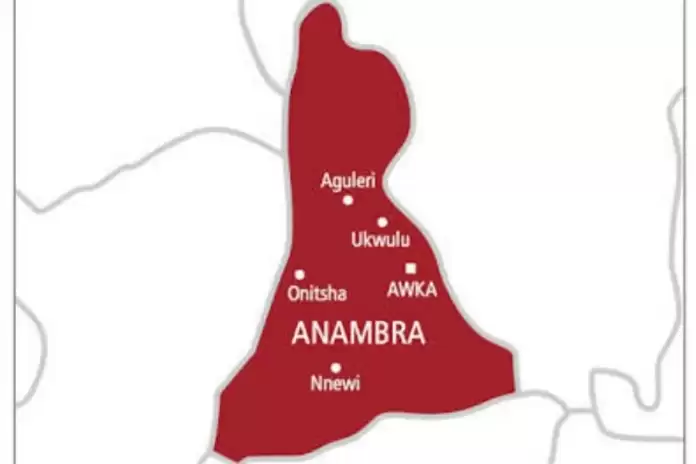
Members of the Operation Clean and Healthy Anambra State, also known as “OCHA Brigade”, who were involved in a shooting incident that claimed the lives of a pregnant woman and four others, have been arrested.

This is coming amidst the debate for creation of state policing.

Days ago, President Bola Tinubu reaffirmed that the establishment of state police is unavoidable as part of efforts to strengthen security across the country.

Speaking on Tuesday at the Presidential Villa in Abuja during a courtesy visit by a delegation of prominent Katsina indigenes led by Governor Dikko Radda, Tinubu said the federal government is committed to confronting insecurity head-on.

The OCHA Brigade operatives were said to be on an enforcement exercise near the Emeka Offor Plaza, Main Market, Onitsha, on Tuesday, when an altercation ensued between them and traders, leading to the shooting that sent panic in the market.

The Managing Director of the OCHA Brigade, Mr Celestine Anere, disclosed this in an interview with our correspondent on Tuesday.

The OCHA Brigade is a state-run enforcement agency tasked with ensuring environmental sustainability, enforcing government policies on cleanliness, order, and discipline, and improving the overall health of Anambra State.

Its activities include clearing illegal structures, enforcing proper waste disposal, ensuring roads remain clear of obstructions like roadside trading, and confiscating products from illegal businesses.

Eyewitnesses in the market said the shooting led to the death of five people, including a pregnant woman, but police authorities insisted that only one woman died, while four others were injured and rushed to a hospital for treatment.

The Anambra State Police Command said it had extended an invitation to the management of the operatives of the brigade over the shooting that led to the alleged killing of the pregnant woman and others.

The spokesman for the command, SP Tochukwu Ikenga, said the move was to properly investigate the incident and for the enforcement team to identify the suspects for prosecution.

The killing raised condemnation of the activities of some law enforcement agents recruited by the state government.

But in reaction, the Anambra State Government said the operatives who went for the exercise that led to the shooting were not unauthorised, adding that the leadership of the OCHA Brigade had dismissed those involved as not having the authority to go on the operation.

Read Also: NBA calls for prosecution of men who stripped and beat Youth Corps member in Anambra, says ‘Justice must be seen to be done’

Speaking on the development, Anere clarified that, “The operation was not approved by the leadership of the agency, and such unsanctioned actions contradict the clear standards guiding the operations of the brigade.

“Those involved have been taken into custody and will be handed over to the police and the Department of State Services for thorough investigation.”

Anere reiterated that the state governor, Prof. Chukwuma Soludo administration remained on top gear in its efforts to entrench discipline, restore sanity and ensure a clean, green and livable Anambra.

He assured the state that any operative found culpable would face decisive sanctions, while reaffirming that all enforcement activities of the OCHA Brigade must strictly align with the law establishing the agency.

Eyewitnesses near the scene told our correspondent that the incident created panic and outrage among traders and residents who fled the scene for safety.

An eyewitness, who identified herself simply as Chinwendu, said, “The incident occurred this morning (Tuesday) as some traders were displaying their wares. The operatives of OCHA Brigade came to the place and forcefully ordered them to remove their wares.

“This led to some altercations between the traders and the operatives and in the process of dragging the wares, the operatives opened fire and started shooting in the air. This led to pandemonium as people, including traders and passers-by, scampered to safety.

“This is heartbreaking. As a result of the shooting, four innocent people who left their homes this morning were shot by stray bullets. Among them is a pregnant woman and three others. Their lifeless bodies were later carried away by police operatives who arrived at the scene.”

Another eyewitness who craved anonymity said, “Following the death of the pregnant woman and the two traders, the OCHA operatives involved in the struggle with the traders took to their heels for fear of being lynched by angry traders.

“Some were sighted on the streets of Onitsha, removing their uniforms to avoid easy identification and attack on them. Angered by the death of the pregnant woman and the traders, with bullet wounds on another, some aggrieved traders in the Onitsha Main Market took to the streets and nearby roads and started breaking bottles in search of other operatives of the brigade.

“The development has fuelled widespread anger, with the traders lamenting how operatives have been terrorising them at the markets.”

When our correspondent visited the Federal Medical Centre, Onitsha, where the dead pregnant woman’s body was deposited in the mortuary, and the three bullet-wound victims were being treated, it was revealed that the chances of survival of one of the victims whose face was shattered with bullets were very slim.

Australian court awards man $2.85 million payout after state department took him back to childhood sexual abuser

A man repeatedly sexually abused as a child in state care has won a landmark legal case after being awarded almost $3 million in compensation.

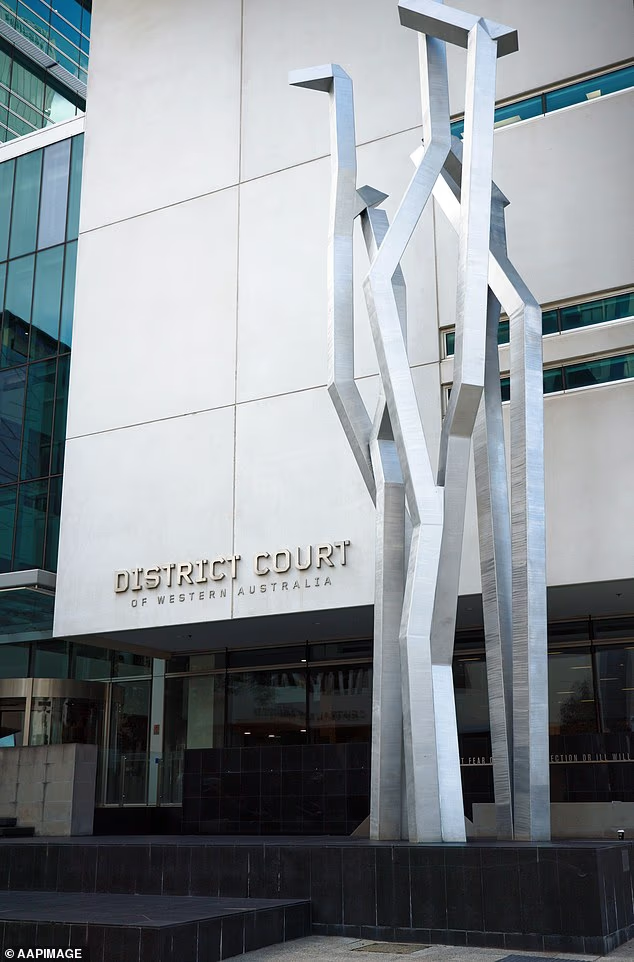
Dion Barber, 45, sued the state of Western Australia for the ‘extraordinary’ abuse he suffered in the 1980s and 1990s.

He was awarded $2.85million in the WA District Court on Tuesday, the largest award of damages made to a child sexual abuse survivor in the state.

It also marked the first historical sexual abuse case against the state of WA to proceed to a judgment since a 2017 royal commission into child sexual abuse removed time limits for survivors to bring claims.

Mr Barber was eight years old when he reported sexual abuse by his stepfather to his mother and authorities, his lawyers Maurice Blackburn said.

The Department of Community Services (now Department of Communities) and the Children’s Court confirmed he was abused, and he was placed under the guardianship and care of the Welfare Department.

Over the following months, he was forced to have counselling with his stepfather before he was sent back into the home, where he was raped and abused by the same perpetrator.

‘The treatment of Dion is the worst I’ve seen,’ Maurice Blackburn lawyer Hugo Seymour told reporters outside court.

‘The sheer negligence in this case was extraordinary,’ he said.

‘The decision to send him back to his abuser, knowingly, to force him into counselling with his abuser, to then place him with his alcoholic, clearly unsafe, violent father, and to let the wardship lapse was extraordinary, inexplicable.’

Mr Barber launched the legal case in 2021 for the repeat abuse and harm caused by his stepfather as well as other perpetrators over subsequent years while in care.

A trial was held earlier in the year before Judge Linda Black, who described Mr Barber as a ‘completely credible witness in every respect’ when she handed down her judgment.

Mr Barber said he was happy with the result, but there was more work to be done.

‘I’m still going to fight because I want change in the system so this doesn’t continue happening,’ he said.

‘I would like an apology (from the department) but it doesn’t mean anything to me because unless there’s change, it don’t mean nothing.’

Judge Black’s comment about his evidence was also significant, he said.

‘You always get put down as being a liar all your life and to have that come through by a judge and actually say you’re believed, it’s massive,’ he said.

Daily Mail

When the dead can’t rest in peace

By Suyi Ayodele

A dying old man was asked why he was pensive on his sickbed. He responded that he was not worried about where he was going. Then what was his worry, his relations asked him. The old man responded that he was worried because he knew he rode the horse of life roughly.

The old man had every reason to be worried. Nobody tethers a badly ridden horse for the rider after his departure. This is why our elders admonish that he who must live, must live very well, very godly and very admirably. The Yoruba concept of igbehin aye (hereafter) speaks to living well. The concept places importance on what history tells after one has departed this planet.

When a good man dies, my people say o se gudugudu meje ati yaya mefa. This simply means the departed soul’s good deeds will not be forgotten easily. When a bad person also dies, the people of my place have a way of remembering him. When you hear: aku itunku e lona ogun, aku itunku e lona ogbon (may he die twenty times over, may he die thirty times over), nobody needs any further explanation to know the one referred to did not live well.

When General Muhammadu Buhari died on July 13, 2025, and was buried, I had a feeling that Nigerians would not allow him to rest peacefully in the bosom of his maker. At least, not immediately. This has nothing to do with the scriptural injunction of “there is no peace,” says God, “for the wicked” (Isaiah 48:22). There is no way Buhari would have led Nigeria the way he did and rest peacefully thereafter. That would have been a double tragedy for Nigeria and Nigerians.

The theory of not speaking ill of the dead became the refrain shortly after the Daura-born General passed on. It became a blackmail, in some quarters. But why should we not talk ill about the dead? Why should we refrain from recalling their deeds-good or evil? We learn from the dead and the living. A lot of people did justice to the monumental failure Buhari was as a leader. One cannot but appreciate those profound thoughts on the life and times of the late President.

Even when the present set of locusts appear to be worse, Nigerians should be grateful to those who took time to remind the vampire in power today that a day would come when people would gather to assess him and his rudderless leadership. It does not matter if he is deaf and inorganic; the day of reckoning shall come. And not just for the veiled maximum ruler; but for everyone, including yours sincerely.

We have remained silent on Buhari not because of the blackmail of those who would not want anyone to situate the soldier man to the corner of history he deserves. History is a beast on its own. Today, members of Buhari’s households are on the rooftops telling us the evil the late President represented. The chicken has come home to roost now. Less than two months after Buhari was interred, his kinsmen are out there telling us the atrocities the retired General perpetrated in his ambition to rule Nigeria.

Datti Baba-Ahmed was on Channels Television a week ago. The man shipped himself to the television house because his half-brother, Nasir El-Rufai, had earlier appeared on the same platform to talk about how they (the political class) made life unbearable for the poor people.

Listening to Datti Baba-Ahmed’s open ‘confession’ about Buhari last week, the first person that came to my mind is former President Goodluck Ebele Jonathan (GEJ). I don’t know how close the former President is to nature; I don’t know how much he understands about our traditional hermeneutics. But his disposition while in power, especially during the heat of the 2015 presidential election, shows that the man must be deeply rooted in the wisdom of our ages.

The elders of my place caution that when a man threatens to drag you through the bush, the one so threatened should relax; he should not argue or resist. We ask them why. They respond thus: he who says he will drag you through the bush will first use his own back to create the path. How wise they are, the elders of our land!

Was that why GEJ packed his bags and slippers and left Aso Rock Villa for Buhari to occupy? Did the Otuoke man see something that we did not see, such that even before the final whistle was blown on the presidential race, he picked up the telephone, called Buhari and congratulated him? Datti Baba-Ahmed, in his outing on Channels Television has cleared every doubt we might have had in confirming that majority of our leaders, past and present and likely too, the aspiring ones, are devil incarnates! In most cases, our leaders make the devil green with envy as they struggle to outdo one another in the perpetration of evil.

Datti Baba-Ahmed, in that interview, stated that the opposition All Progressives Congress (APC) then, was desperate to send GEJ packing at all costs, such that “…they, brought people from neighbouring countries in readiness, to remove Jonathan by all means. The desperation to get Jonathan out of power built up and added to what we call insecurity in Nigeria today.”

GEJ is out of power today. But who is bearing the brunt of the insecurity the desperate gang brought upon the nation? Those who vowed then that they must drag Jonathan through the bush; have they not used their own backs to create the paths? Can we all recall the number of innocent souls that have been killed in the North-West and the North-East geo-political zones by the same bandits and terrorists that Buhari and his gang, according to Datti Baba-Ahmed, imported from Libya?

Which part of Buhari’s North is safe today? How many members of that gang can go to their hometowns freely? How many of them can sleep with their two eyes closed? Who is the ultimate loser; GEJ or those who did all they could to get him out of the way?

I have read comments by people asking why Datti waited for Buhari to die before ‘revealing’ Buhari’s atrocities against the nation, Nigeria and its people. Many commenters said that Datti is simply a coward. But is he?

If, for the purpose of this argument, we admit that Datti Baba-Ahmed is a coward, is it not equally true that it is before the carcass of the elephant that we un-sheath the sword; nobody dares bring the scimitar before a calf (èyìn òkú àjànàkú làá yo idà, taní jé yo agada l’ójú omo erin?). Could this axiom not be true of the Datti Baba-Ahmed’s outing on Buhari?

But in the real sense of it, is there anything Datti Baba-Ahmed said about Buhari that we all did not know when the old man was on this side of the divide? Did we not all know that Buhari was named as the patron of the bandits before we handed over the nation to him to ruin?

Yes, it would have been better if Datti had spoken when Buhari was alive. Nigerians would have had the opportunity to hear the ‘other side’. But what difference would that have made? Who in Nigeria today is not aware that Kaduna is the laboratory where the tactics of insurgency that happened between 2011 and 2015 were brewed? Who is not in the know of the fact that the eggs of the decision to take out GEJ were laid and hatched in Kaduna before the day-old chicks were sold in other cities and towns of Nigeria?

Who among us is ignorant of the fact that today’s ‘Saint’ El-Rufai, as a two-term governor of Kaduna State, presided over a state where insecurity almost became the order of the day?

Who would forget that when the repression of the Southern Kaduna people was a State act and art in the Kaduna of El-Rufai, the voice of Datti Baba-Ahmed was loudly silent? So, if today, Datti has elected to say the ‘truth’ we all knew long ago, why should we worry if Buhari is dead or alive to counter him? Is there anytime ‘truth’ cannot be spoken; does it really matter when it is spoken?

The only worrisome aspect of Datti’s outing on Channels Television is why after all those ‘revelations’, the man is still walking our streets free! Datti, I dare say, was unequivocal when he spoke. His attempt to veil the character involved failed woefully! The reference to “a former Nigerian president” that “was attacked by terrorists”, is a failed attempt to be diplomatic. We all know that Buhari was the former President who was attacked by bandits on the streets of Kaduna.

When that ugly incident happened on Wednesday, July 23, 2014, at Kawo Market area of Kaduna, Buhari’s APC attributed it to the General’s criticism of the Jonathan administration. Many of us also believed that the attack was stage-managed by the APC to shore up Buhari’s popularity. But today, we have Datti to thank for telling us exactly what happened.

But for Datti Baba-Ahmed, we would not have known that what happened was because the late Mai Gaskiya, Buhari, “…had stopped sending the recurrent expenses of those people (bandits) who used to come to Kaduna, collect (money) and go back.” Every bad child has his own glorious day. Last Tuesday was Datti Baba-Ahmed’s day!

What Datti Baba-Ahmed ‘revealed’ on Channels Television are not just bad, they are egregiously implicating. If ours were not to be an anomic State, the Kaduna politician would by now be helping security agencies to unravel those behind the evil of insurgency and banditry in the nation. He knows too much about how we got to this level of insecurity in the nation. With what he said on Channels Television, Datti does not have the prerogative to keep other information to himself. No! If he is not willing to volunteer them, the State should get him to do so by all means.

Also, with the little he has revealed, if Nigeria were to be a decent nation, in his grave too, Buhari would be stripped of all national honour and human respect he dubiously acquired while veiling his devilish postures with the cloak of a saint!

Nigerians must love Datti Baba-Ahmed for his opening remarks about the APC. We should be thankful to him for re-echoing our suspicions “…that insecurity is part of APC; insecurity has been APC’s way of getting power. Insecurity has been APC’s way of staying in power.” We should hail him for telling us that bandits did not just surface on our streets but the late Mai Gaskiya, Buhari, travelled as far as Libya to import the felons to our country.

Today makes it exactly a week that Datti spoke. It is alarming that there is no news out there that he has been invited by the security agencies to shed more light. If in 2014 and 2015, the opposition could initiate insecurity to get rid of President Jonathan, why are we blind to the similarity of the events playing out now? Where are the more than half of those who devised the 2015 evil plans today? In the ruling APC or in the various opposition camps?

If Buhari could travel as far as Libya to get money to unseat the ruling party then, where can’t today’s opposition travel to? Fortunately, the man at the centre of it all, President Bola Ahmed Tinubu, is a shareholder in the 2015 schemes. We have been told that Tinubu is not Jonathan. We don’t dispute that because the two don’t share anything in common. If Jonathan were to be like Tinubu, Nigeria would either have broken up or a figure like Tinubu would only enter Aso Rock Villa on courtesy visit! Today, Tinubu rules Nigeria from any part of the world because a GEJ placed the nation above self! History is there to talk about the Otuoke-born ex-president the same way history is talking about Buhari and his sanguinary inclination!

This is why I feel that today, if anybody should roll out the drums in celebration, it should be President Jonathan. There is nothing more worthy for a man to live to see his enemies fight dirty on the streets. I wonder how the former President reacts to these ‘revelations’ that, in their desperate bid to get to power, the APC incubated insecurity and brought terrorists to Nigeria! How does the Otuoke man feel whenever he remembers his posture that his presidential ambition was not worth the blood of any Nigerian? Those who called GEJ “clueless” then, what do they have to say to Datti’s claim that the APC gang “wanted Nigeria to burn if Buhari did not become the president in 2015?”

And with all these revelations and the sordid state of our security in Nigeria, how would Buhari’s soul rest in peace? How do we reconcile the fact that they asked us to canonise Buhari, who was the greatest importer of terrorists to Nigeria? If we had had any doubt as to why Buhari lifted no finger to fight terrorism when he was president, is the doubt not clear now?

The views expressed by contributors are strictly personal and not of Law & Society Magazine.

Senate insists Senator Natasha cannot resume after suspension

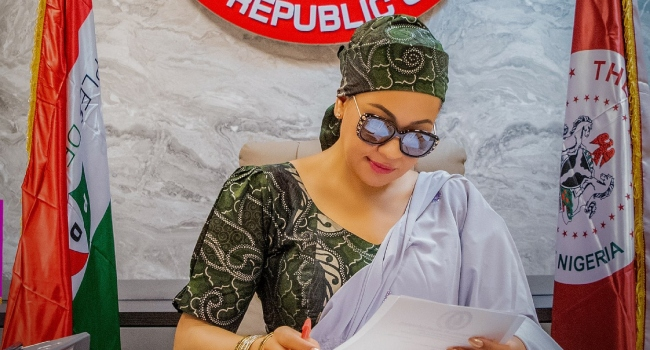
As the six-month suspension of Senator Natasha Akpoti-Uduaghan, the Senator representing Kogi Central in Nigeria’s Senate, draws to a close and following the notification of her resumption sent to the Clerk of the National Assembly, the leadership of the Senate appears determined to frustrate her resumption.

Indeed, the National Assembly has formally rejected her plan to resume legislative duties.

The assembly against the Senate by Akpoti-Uduaghan.

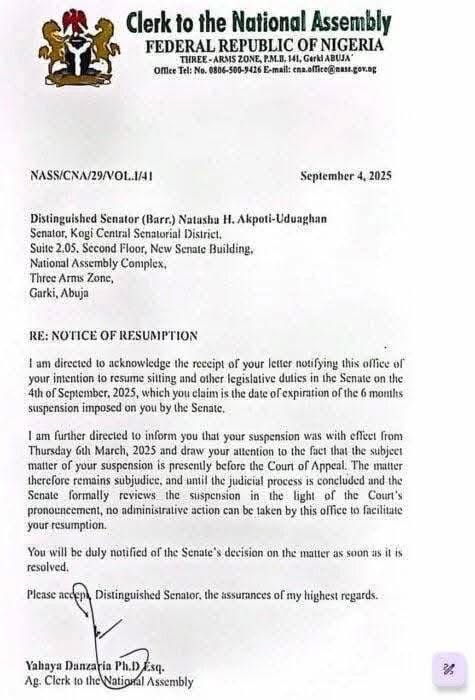
The Senate, in a letter signed by the Acting Clerk to the National Assembly, Dr. Yahaya Danzaria, dated September 4, 2025, acknowledged Akpoti-Uduaghan’s notification of her intended return on September 4, the date she said marked the end of her suspension.

It was, however, added that her six-month suspension remains in force pending the outcome of the Court of Appeal decision in the action she instituted challenging the suspension, which the Senate appealed.

The Senate also clarified that her suspension took effect on March 6, 2025, and emphasised that the matter is still subjudice.

The Senate insisted that no administrative action can be taken until the Court of Appeal delivers a verdict.

The letter stated that the Senate would only review her suspension after the court’s pronouncement.

“The matter remains sub judice, and until the judicial process is concluded, no administrative action can be taken to facilitate your resumption,” the letter read in parts.

PUNCH Online reports that Akpoti-Uduaghan, said she will return to the National Assembly later this month after completing her six-month suspension, according to her lawyer.

Speaking with The PUNCH in Abuja, her counsel, Victor Giwa, disclosed that the senator was on vacation in London but had already made plans to resume plenary alongside her colleagues when the Senate reconvenes on September 23.

Recall that Akpoti-Uduaghan was suspended in March 2025 following a Senate resolution.

Akpoti-Uduaghan was suspended on March 6, 2025, following allegations of insubordination after she rejected a change of her designated seat during plenary.

The suspension, based on recommendations of the Senate Committee on Ethics, Privileges and Public Petitions, also stripped her of aides, office privileges, and salaries.

The lawmaker had consistently argued that her ordeal was linked to her petition accusing Senate President Godswill Akpabio of sexual harassment, a claim the Senate dismissed.

She later challenged her suspension in court, securing a judgment she said favoured her recall.

However, the Senate leadership maintained that she would remain suspended until the six-month penalty elapsed.

Her attempt to force her way back into the National Assembly in July ended in a standoff, as security operatives barred her entry despite a crowd of supporters rallying outside.

Supreme Court in Thailand sends ex-Prime Minister to prison over unlawful hospital stay

Thailand’s Supreme Court has ordered former Prime Minister Thaksin Shinawatra to serve a one-year jail term after ruling that his prolonged hospital stay during his previous conviction was unlawful.

The 76-year-old political heavyweight, who led Thailand from 2001 until his ouster in a 2006 coup, returned to the country in 2023 after 15 years in self-imposed exile.

He was sentenced to eight years for corruption, abuse of power, and conflict of interest, but his jail term was later reduced to one year by royal pardon.

Instead of serving time in prison, Thaksin was admitted to Bangkok’s Police General Hospital, citing health concerns, including chest pains, high blood pressure, and low oxygen levels. He was released on parole in February 2024 after six months.

On Tuesday, however, the Supreme Court ruled that his hospital stay did not qualify as time served, insisting his medical conditions could have been managed on an outpatient basis. Thaksin has now been ordered to serve his sentence at Bangkok Remand Prison.

Video footage showed a convoy of vehicles believed to be transporting him to prison after the ruling. The court also criticized the medical reports that facilitated his prolonged stay in hospital, with two doctors already suspended earlier this year for providing false documentation.

In a statement following the verdict, Thaksin said he accepted the ruling: “Though I may lack physical freedom, I still have the freedom of thought for the benefit of the nation and people.”

His daughter, former Prime Minister Paetongtarn Shinawatra, who was recently removed from office over an ethics breach, said the family remained in “high spirits” and pledged that their Pheu Thai Party would continue its role as opposition.

The verdict marks another setback for the once-dominant Shinawatra dynasty, which has shaped Thai politics for over two decades but continues to clash with the country’s conservative and royalist establishment.

Former Army Sergeant Major admits sexually assaulting a teenage female soldier who committed suicide after bosses ‘covered up’ the attack

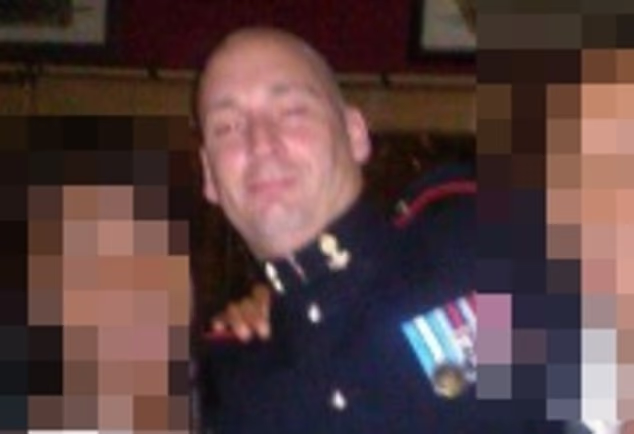
Warrant Officer Michael Webber (pictured), who has since left the Army, faces sentencing at a later date after entering his plea at a pre-trial hearing on Friday September 5, 2025

A disgraced ex-Sergeant Major has pleaded guilty to sexually assaulting a teenage female soldier who took her own life – with the Army accused of a ‘cover-up’. 

Royal Artillery Gunner Jaysley Beck, 19, was found hanging in her room at Larkhill Camp, near Salisbury in Wiltshire, on December 15, 2021.

Her death came following a complaint she made against Battery Sergeant Major Michael Webber after he pinned her down and tried to kiss her, an inquest heard in February this year. 

Now Webber, who was serving at the same base, has pleaded guilty to one count of sexual assault, at a pre-trial hearing.

Jaysley’s family has welcomed the guilty plea but said ‘nothing can undo the devastating loss of our beautiful daughter’.

Read Also: Activist calls for probe, denounces arrest of Nigerian female soldier who railed at sexual harassment by top military officers in viral video

And their lawyer responded to the plea by reiterating criticisms of the military chain of command, saying more should have done to investigate Jaysley’s complaints. 

February’s inquest concluded she had taken her own life after she made a complaint against Webber, who was accused of pinning her down, attempting to kiss her and placing his hand between her legs during a work social event.

Jaysley’s mother Leighann McCready later revealed how she had to plead to see her daughter’s accommodation following the death – and when finally given permission, found a heartbreaking letter tucked away in the young recruit’s room.

Read Also: HURIWA says arrest of female soldier who alleged sexual harassment by senior officers is unconstitutional and primitive

Ms McCready has accused the Army over the circumstances surrounding Jaysley’s death, saying after February’s inquest: ‘I believe it was a cover up. It was made clear at this inquest that the army knew what had taken place but did not take Jaysley’s complaint seriously and even tried to get her to change her story.’

She subsequently told the Sunday Times how the letter from Webber, then 39, confessed to an incident on July 12, 2021 and described his own behaviour as ‘absolutely unacceptable’.

He concluded by telling her, ‘My door will always open’ – a phrase which Ms McCready said her daughter found to be dismissive.

Read Also: Son of female soldier allegedly physically abused by superiors cries out, says mum was sent to psychiatric hospital

Gunner Beck had reported to military chiefs that Webber told her he had been ‘waiting for a moment for them to be alone’, engaged her in a drinking game called Last Man Standing before grabbing her leg and trying to kiss her.

February’s inquest heard she pushed him away and left the room before spending the night in her car and making a complaint to her superiors in the morning, during a stay at Thorney Island, near Emsworth, in Hampshire for an adventure training exercise.

Webber was later given a ‘minor administrative action interview’ over the work social event incident, with no further consequences.

He was later promoted to Warrant Officer 1 (WO1) rank, the highest non-commissioned rank in the Army, in May 2022.

Webber, who has since left the military, is now awaiting sentencing following his guilty plea last Friday. 

In a statement responding to his admission, Ms McCready said: ‘We are relieved that Michael Webber has admitted his guilt and not put us through the trauma of yet more legal proceedings, but nothing can undo the devastating loss of our beautiful daughter Jaysley.’

She described how her daughter had done ‘everything right’ in reporting the attack ‘immediately, not once but twice’ – but senior Army officers did not alert the police.

Ms McCready added: ‘If they had done that one simple thing, we believe with all our hearts she would still be with us today.’

The family’s lawyer Emma Norton said: ‘What an enormous difference it would have made if the Army and its chain of command had just listened to Jaysley when she first told them about the assault and reported it to the police, instead of trying to persuade her it wasn’t that serious.’

It was only after February’s inquest ruling and a request from Gunner Beck’s family to Wiltshire Police, that a file was sent to the the Service Prosecuting Authority who then charged Webber with sexual assault.

The coroner at the earlier hearing was told of Gunner Beck being traumatised not only by Webber’s attack but also the actions of three other officers – one of whom she had a long-distance affair, another who bombarded her with WhatsApp messages and another with whom she socialised on the night of her death.

In an Army statement following February’s inquest verdict, the head of Army Personnel Services Group, Brigadier Melissa Emmett, said: ‘On behalf of the Chief of the General Staff, I wish to extend the Army’s deepest condolences to Jaysley’s family and friends and to offer them our sincerest apologies for the failings that the Coroner has identified during this inquest.

‘We should have done so much more to support and protect her.

‘Jaysley was exactly the kind of person the Army needs, and she was excelling at her job. Her friends described her as someone who was kind, funny and always putting others before herself.

‘The three years since Jaysley’s sad death have seen significant changes in the Army, including the introduction of clear and unequivocal policies to state that there will be Zero Tolerance to unacceptable sexual behaviours.

‘These changes are being embedded throughout our culture, policies, and enduring practices across every part of the Army.

‘There is more work to do, and the evidence heard in this inquest reminds us how important it is to make lasting and effective change.

‘It is my hope that such change will give service personnel the confidence they need to report sexual offences and inappropriate behaviours, knowing that they will be listened to.

‘We are absolutely clear that everyone must play a role in building and upholding the respectful, professional environment we all need to thrive.’

The Daily Mail has asked the Army for further comment and response following Webber’s guilty plea and the grieving family’s criticisms.

Daily Mail

TIPS