Judges are human: don’t be so surprised—it’s true! A judge isn’t a robotic umpire created by common-law anthropology.
Frank Caprio, widely known as the nicest judge in history and geography, served as a judge in Providence, Rhode Island, USA. He earned worldwide praise for his extraordinary compassion in the courtroom. Millions learned about him through the television show ‘Caught in Providence,’ which showcased his interactions with ordinary people. His reputation was built not only on legal expertise but also on kindness, patience, and empathy shown to litigants, witnesses, and even bystanders.
Caprio’s passing last week at just 88 leaves behind more than memories; it leaves a judicial philosophy that could reshape judicial education and practice. He exemplified a style of justice that is both firm and gentle, lawful and humane, authoritative yet deeply personal. This legacy raises a crucial question: Should his approach be systematically studied, taught, and possibly incorporated into judicial training?
I coined the term “Capriology” to describe the study and practice of Caprio’s judicial philosophy, especially his intentional kindness toward litigants and witnesses. Capriology does not suggest lowering standards of judicial responsibility or turning courtrooms into sentimental shows. Instead, it urges careful reflection on how a judge can interpret and apply the law with integrity while respecting the humanity of those who appear before the bench. In short, Capriology is the jurisprudence of kindness. It recognizes that courts are not just judgment thrones but also spaces for meaningful human interaction.
The systematic teaching of Capriology would emphasize empathy, compassion, and dignity as integral to judging, while preserving fidelity to the rule of law. It urges judges to view litigants not as docket entries but as human beings with fears, aspirations, histories, and vulnerabilities. In doing so, Capriology fosters an ethic of judicial care that complements judicial rigor.
Law is a human creation meant to regulate human affairs. Removing the human element from law risks turning it into a blunt, mechanical tool of oppression. Judges must stay alert that their decisions impact more than just the legal record and extend into the everyday lives of citizens. Capriology requires that judges openly and bravely recognize these aspects of human consequence.
The immediate beneficiaries of Capriology are litigants and witnesses. A judge who treats them with dignity can transform the courtroom from a place of fear into a space of respect. Even when outcomes are unfavorable, litigants are more willing to accept rulings and trust the justice system. But the benefits go even further. Caprio’s example shows that judicial kindness boosts the well-being of judges themselves, reducing stress, increasing joy, and giving a renewed sense of purpose. In this way, Capriology becomes not just a gift to litigants but also a form of judicial self-care.
One-time Illinois state senator running for governor in 2026 is mourning the deaths of four family members killed when their helicopter crashed in Montana on Wednesday, Oct. 22.
Darren Bailey’s son Zachary, daughter-in-law Kelsey, and grandchildren Vada Rose, 12, and Samuel, seven, all died in the incident, according to an announcement from his campaign on Thursday, Oct. 23.
The couple is survived by their 10-year-old son Finn, who was not on the aircraft.
“On Wednesday evening, Darren and his wife, Cindy, received the heartbreaking news no parent ever wants to hear,” the campaign statement said. “Their son, Zachary, his wife, Kelsey, and their two young children, Vada Rose, age 12, and Samuel, age 7, tragically lost their lives in a helicopter accident in Montana.”
The statement, posted to X, added that “Darren and Cindy are heartbroken by this unimaginable loss” and said the couple were “finding comfort in their faith, their family, and the prayers of so many who love and care for them”.
The Baileys thanked supporters for their kindness and requested privacy “as they grieve and hold their loved ones close during this difficult time”.
Authorities have not yet released information about what caused the helicopter to crash or where in Montana the incident took place.
Bailey, 59, is mounting his second campaign for Illinois governor, having been defeated by the Democratic incumbent, JB Pritzker, in the 2022 race in one of the most expensive non-presidential races in American history. He secured the Republican nomination that year but lost by a wide margin in the general election.
The southern Illinois politician was previously an elected state senator and earlier was a lawmaker in the state’s House of Representatives.
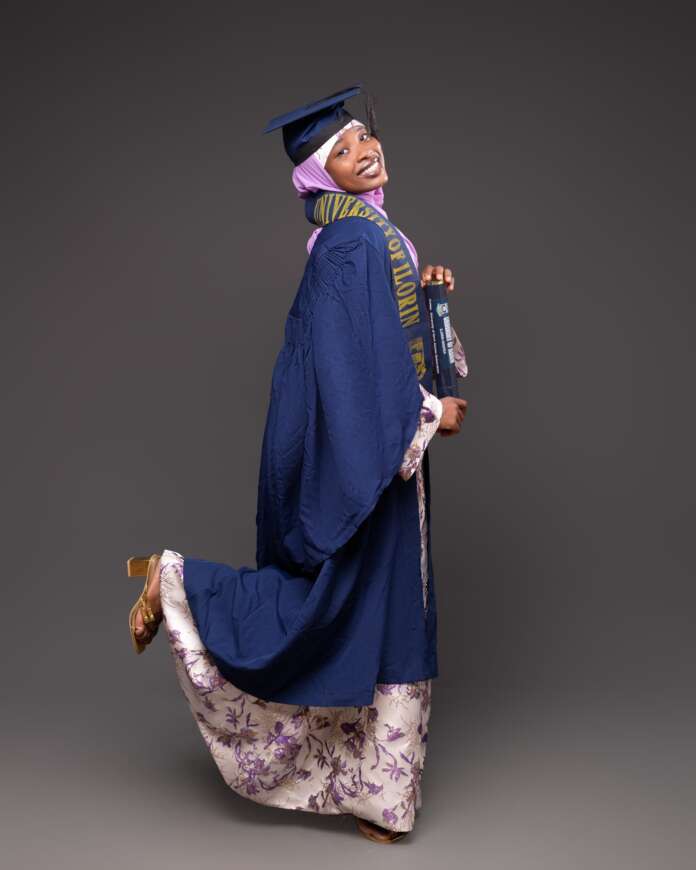
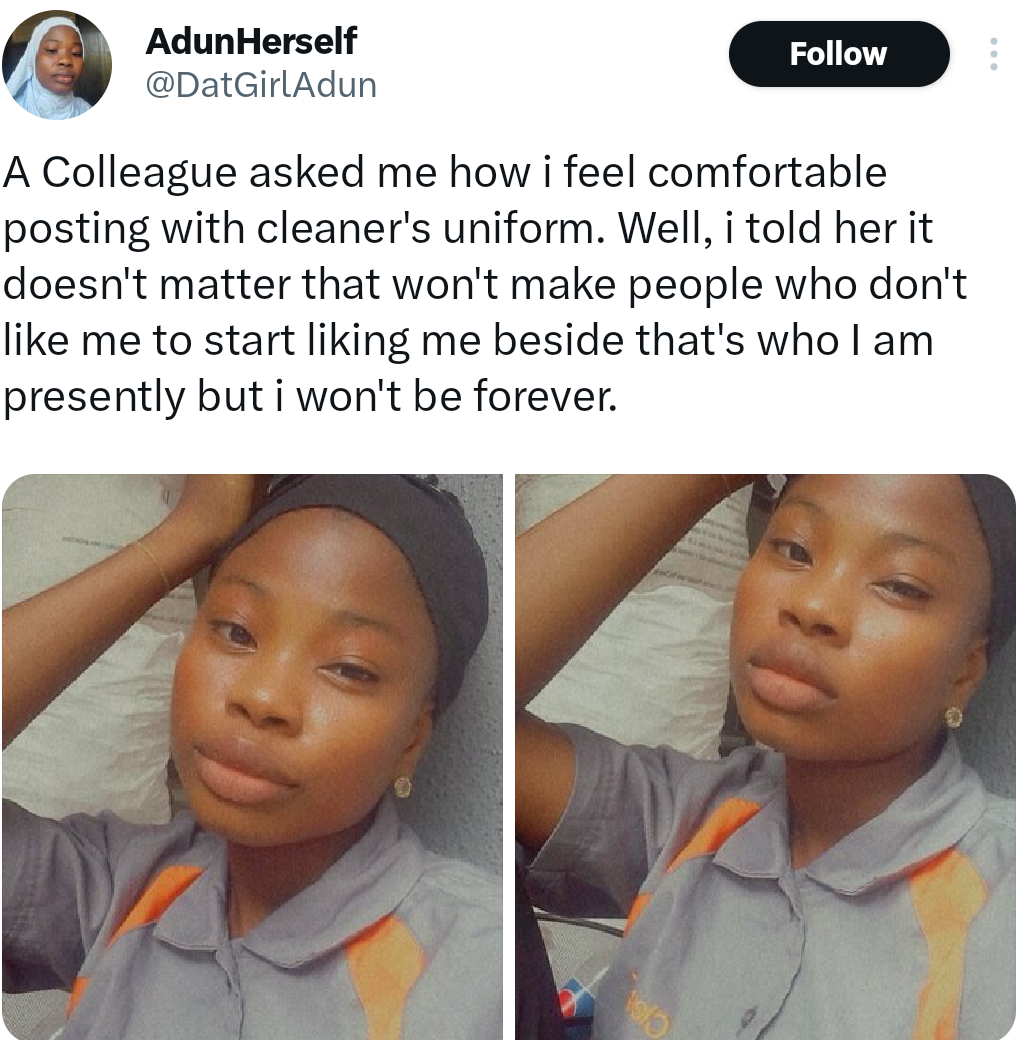
A young lady who went viral in 2021 for proudly sharing photos of herself in a cleaner’s uniform has now graduated as one of the top students from the University of Ilorin.
Back then, she had responded confidently when a colleague asked how she felt posting pictures in her work uniform, saying it didn’t matter because people who disliked her wouldn’t suddenly start liking her. “That’s who I am presently,” she wrote, “but I won’t be forever.”
She used her post to promote her cleaning services — offering weekend jobs, move-in and move-out cleanups, and after-party cleaning — a move that earned her public admiration for her honesty and hard work.
Not long after, she announced that she had been offered admission into the university.
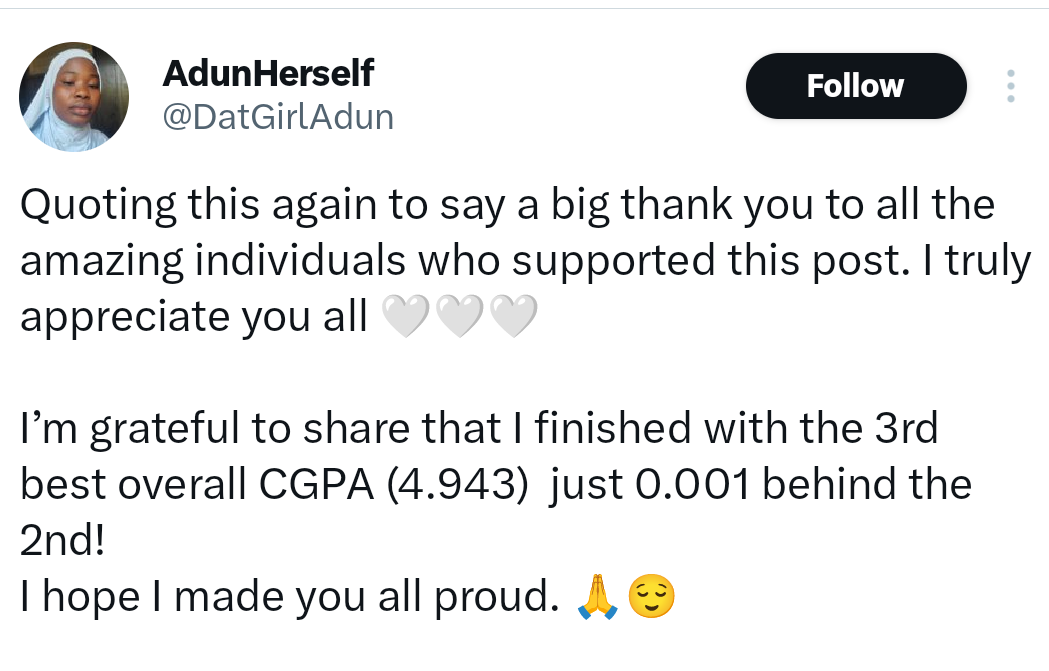
Now, she has proudly shared that she graduated with the third-best overall CGPA of 4.943, just 0.001 behind the second position.
Expressing her gratitude, she thanked everyone who supported her from the beginning of her journey, saying she hoped she had made them proud.
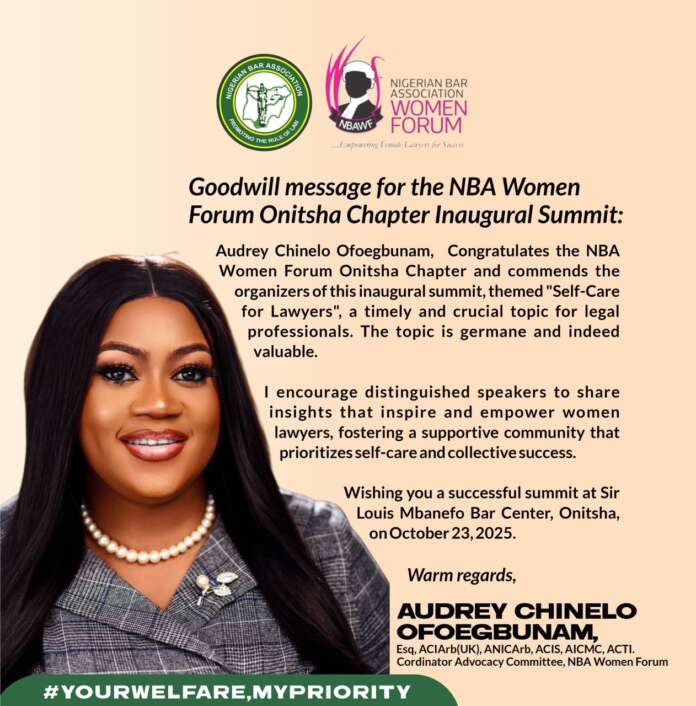
Goodwill message for the NBA Women Forum, Onitsha Chapter, Inaugural Summit
Audrey Chinelo Ofoegbunam, Congratulates the NBA Women Forum Onitsha Chapter and commends the organizers of this inaugural summit, themed “Self-Care for Lawyers”, a timely and crucial topic for legal professionals. The topic is germane and indeed valuable.
I encourage distinguished speakers to share insights that inspire and empower women lawyers, fostering a supportive community that prioritizes self-care and collective success.
Wishing you a successful summit at Sir Louis Mbanefo Bar Center, Onitsha, on October 23, 2025.
Warm regards,
Audrey Chinelo Ofoegbunam, Esq, ACIArb(UK), ANICArb, ACIS, AICMC, ACTI. Coordinator Advocacy Committee, NBA Women Forum
The Police in Bauchi State have arrested six suspects, including a man identified as Auwalu Muhammad, for allegedly removing the eyes of his seven-year-old sister, Rukayya Muhammad, for money rituals in Wailo, Ganjuwa Local Government Area of the state.
According to police reports, Auwalu lured his younger sister into a bush in Bayan Dutse, Wailo, where he allegedly attacked her and plucked out both eyes.
The victim was rescued and taken to Sir Abubakar Tafawa Balewa University Teaching Hospital, Bauchi, where she is currently receiving treatment.
Confirming the incident, the Police Public Relations Officer, CSP Ahmed Wakil, said preliminary investigations revealed that the girl has permanently lost her eyesight.
“A seven-year-old girl, Rukayya Muhammad, tragically lost her eyesight permanently after her elder brother, Auwalu Muhammad, removed both of her eyes for a money ritual in a desperate attempt to gain wealth,” Wakil said.
He added that the suspects — Auwal Mohammed, Mohammed Rabiu, Saleh Ibrahim, Nasiru Muhammad, Hassan Garba, and Garba Dahiru — have all been arrested and confessed to the crime during interrogation.
Wakil said investigations are ongoing to determine the full motive behind the act and to ensure that everyone involved is brought to justice.
Accra, Ghana – The President of the Network of National Human Rights Institutions in West Africa (NNHRI-WA), Prof. Anthony O. Ojukwu, SAN, has called for a stronger African-led approach to human rights protection.
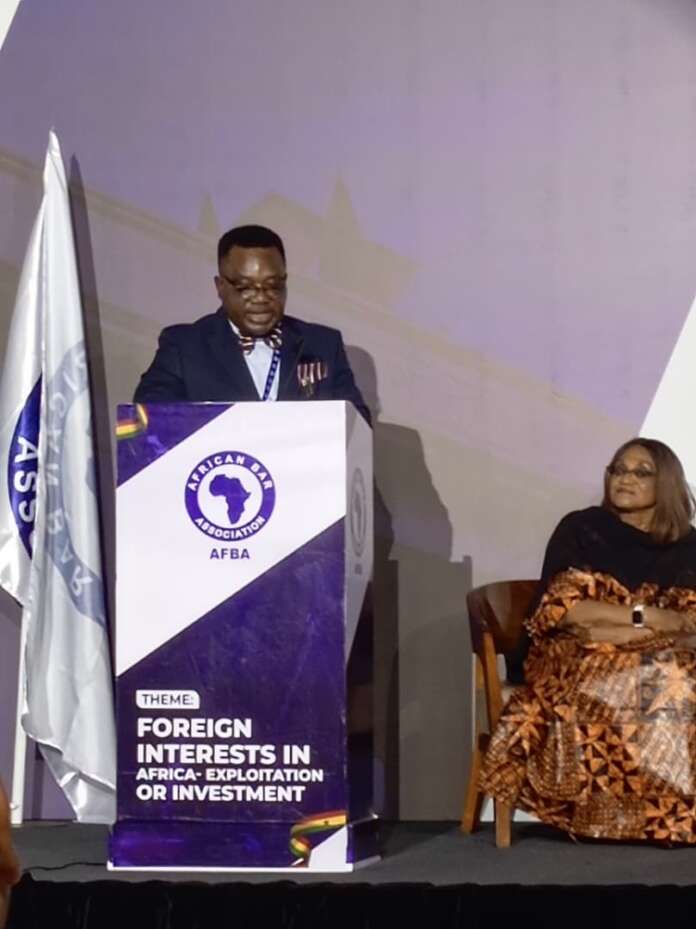
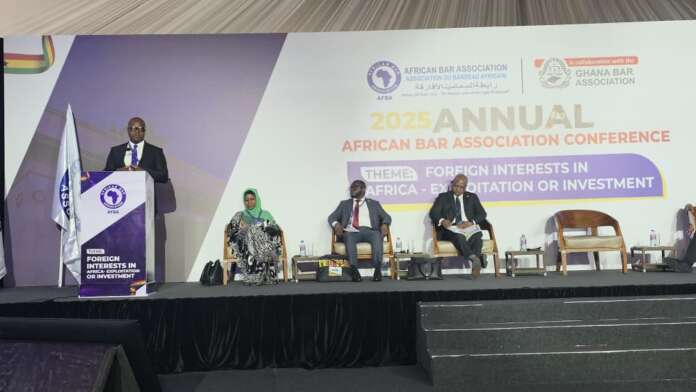
Speaking at the AFBA 2025 Conference held at the Labadi Beach Hotel, Ghana, Prof. Ojukwu emphasized that Africa must shape its own human rights narrative rather than merely adopting global models.
He stated that “Africa” represents more than geography; it embodies diverse states, cultures, laws, and histories. According to him, this diversity—rooted in colonial legacies, customary systems, and linguistic variations—demands a contextual approach to human rights enforcement.
Understanding the African Human Rights System
Prof. Ojukwu explained that Africa’s human rights framework reflects both international standards and local realities. He highlighted that it comprises multiple components, including the African Charter on Human and Peoples’ Rights, the African Commission, and the African Court.
He noted that these institutions collectively protect civil, political, social, and economic rights. However, he warned that implementation faces major obstacles, including weak enforcement, limited resources, and insufficient political will. He pointed out that while many African countries ratified the African Charter, fewer have accepted the African Court’s jurisdiction.
“This gap,” he said, “creates tension between global norms and local legal traditions.” He urged African states to strengthen domestic systems to ensure that continental decisions are implemented effectively.
Global Influence and Its Impact
Prof. Ojukwu examined how global influence shapes African human rights policies, identified international treaties, United Nations bodies, and donor conditions as major sources of pressure and reform. He noted that these global forces can promote accountability but may also conflict with African values and priorities.
He observed that during the Cold War, foreign governments supported authoritarian regimes for political gain. He added that such historical patterns still echo in modern aid and diplomacy, where donor conditionalities often serve political interests.
While acknowledging the positive role of global advocacy, he warned that external influence must align with Africa’s social and cultural context. He stressed that human rights progress should come through partnership, not imposition.
The Role of Civil Society and Global Advocacy
Prof. Ojukwu praised transnational civil society networks for amplifying human rights awareness across Africa. He cited organizations like Amnesty International and Human Rights Watch for their contributions to monitoring abuses. He noted that global activism complements African institutions by empowering local voices and mobilizing public opinion.
He further observed that media, education, and community engagement play vital roles in spreading human rights values. “These connections,” he said, “build a culture of accountability and strengthen Africa’s human rights foundations.”
African Response and Innovation
Prof. Ojukwu described Africa’s response to global human rights norms as creative and independent. He explained that regional and sub-regional institutions—such as the African Union and the Regional Economic Communities—have adapted universal principles to African realities. He emphasized that Africa’s human rights model is not an imitation but an innovation shaped by history and culture.
He cited the African Charter on Human and Peoples’ Rights (1981) as a landmark instrument blending global and African values. The Charter, he said, expanded traditional rights by adding “Peoples’ Rights” such as self-determination, resource control, and cultural development. He added that it also introduced duties to family, society, and state, reflecting the African philosophy of Ubuntu and collective responsibility.
“The African Charter,” he explained, “turns human rights from a purely individual concept into a community-based vision.”
Strengthening Institutions and Enforcement
Prof. Ojukwu stressed the importance of strong institutions for sustaining human rights. He pointed to the African Commission on Human and Peoples’ Rights as a central body that monitors compliance and interprets the Charter. He also highlighted the African Court on Human and Peoples’ Rights, which delivers binding judgments to strengthen enforcement.
He explained that some states remain hesitant to grant individuals and NGOs direct access to the Court. “This hesitation,” he said, “reflects the balance between sovereignty and accountability in Africa’s legal systems.”
Balancing Global and Local Realities
Prof. Ojukwu argued that Africa’s engagement with global human rights norms has evolved beyond imitation. He said the continent now contributes meaningfully to international discourse through its hybrid systems and jurisprudence. He described Africa’s approach as “contextual universalism”—the adaptation of universal principles to regional realities without compromising dignity.
He noted that Africa’s experience proves that effective human rights systems emerge from dialogue between international standards and local values. He called this dialogue “a necessary bridge between law, culture, and community.”
Looking Ahead
In his conclusion, Prof. Ojukwu urged African states to keep refining their human rights systems to reflect evolving realities. He encouraged stronger political commitment, adequate funding, and public participation in rights protection. He warned that external funding and global recognition must not overshadow local ownership.
“Africa’s human rights future,” he said, “depends on our ability to merge universal values with our shared cultural identity.” He called for cooperation between states, civil society, and continental institutions to strengthen justice, equality, and accountability.
Prof. Ojukwu ended by asserting that Africa’s model offers lessons to the world. “It shows,” he concluded, “that universal human dignity can thrive when grounded in local context and collective values.”
Accra, Ghana — Legal scholar and taxation expert Dr. Chinedu Obienu has called for urgent reforms to address deep-rooted customs and taxation bottlenecks hindering trade across Africa.
Speaking at the AFBA 2025 Conference held at the Labadi Beach Hotel, Dr. Obienu, Principal Partner at Zest Partners, Abuja, analyzed structural inefficiencies within African ports, customs operations, and tax systems. He emphasized that bureaucracy and overlapping agencies remain major obstacles to efficient trade facilitation.
Multiple Agencies at African Ports
Dr. Obienu noted that excessive agency presence slows port operations across Africa. In Nigeria, several agencies operate simultaneously, including Customs, Immigration, NPA, NIMASA, Police, DSS, and NDLEA. He said overlapping roles create confusion, duplication, and corruption at entry points. Similarly, South Africa hosts multiple port bodies like TNPA, TPT, SAMSA, and SARS. In Ghana, he identified the Ghana Ports and Harbours Authority, GRA, and GSA as key players with overlapping mandates. According to him, multiple agencies demand separate documentation, which delays cargo clearance and raises transaction costs.
Delays in Cargo Clearance
Dr. Obienu explained that excessive documentation and manual processes cause significant clearance delays in African ports. In Nigeria, bureaucracy and constant policy changes disrupt port efficiency. In South Africa, centralized customs under SARS remains rigid and over-regulated. He linked delays to strikes, outdated technology, and weak coordination among agencies. In Ghana, new systems like UNIPASS and Ghanalink were introduced without adequate consultation. He said such disruptions, coupled with high import duties, hurt traders and economic growth.
Free Trade Zones and Porous Borders
Dr. Obienu highlighted that multiple Free Trade Zones (FTZs) have become loopholes for smuggling and tax evasion. He noted that weak customs oversight allows goods meant for export to enter domestic markets duty-free. Inconsistent FTZ regulations, he added, cause confusion and encourage revenue losses. He further warned that porous borders across Africa enable smuggling, under-declaration, and inflow of counterfeit goods and weapons. These practices, he said, undermine local industries and threaten national security.
Rent-Seeking and Political Waivers
Dr. Obienu described rent-seeking as an entrenched form of corruption within customs systems. He stated that importers often pay “facilitation fees” for faster clearance, creating dual clearance systems. He also condemned political duty waivers, calling them tools of economic sabotage. Stressing that politically motivated waivers deprive governments of revenue and weaken local industries, he urged African leaders to separate economic policy from political patronage.
Excise and Taxation Challenges
Dr. Obienu observed that excise administration in Africa faces similar challenges as customs. He cited policy instability, weak institutions, and low public awareness as key barriers. Frequent, uncoordinated policy changes discourage investment and increase uncertainty for businesses. He also criticized inconsistent excise regimes within ECOWAS and SADC for promoting smuggling and tax evasion. On taxation, he decried overlapping regimes, double taxation, and lack of bilateral tax treaties. He said these factors reduce investor confidence and limit regional integration.
AfCFTA and the Path Forward
Turning to the African Continental Free Trade Area (AfCFTA), Dr. Obienu called it a bold but fragile initiative. He noted that AfCFTA aims to eliminate tariffs on 90% of goods and promote free movement of goods and services. However, he warned that customs inefficiencies and inconsistent national laws threaten its success. He urged African states to modernize customs systems, simplify procedures, and enhance cooperation. He emphasized that AfCFTA’s vision requires harmonized taxation, transparent excise systems, and strong institutions.
Recommendations for Reform
Dr. Obienu proposed concrete measures to overcome trade bottlenecks. He advocated port automation to eliminate manual interference and reduce corruption. He urged investment in industrial scanners to enhance inspection and speed up cargo clearance. He called for the abolition of political waivers and the enforcement of stable economic policies. He also recommended border demarcation, digital surveillance, and collaboration among neighboring customs agencies. Furthermore, he insisted that Africa must build strong institutions rather than rely on “strong individuals.” He emphasized that accountability, training, and internal audits are key to sustainable reform.
Africa’s Trade Future
In conclusion, Dr. Obienu questioned whether African nations are truly ready to trade freely. He noted that while 54 countries have signed the AfCFTA, most remain hesitant about full liberalization. He urged African leaders to invest in Africa, reduce reliance on foreign investors, and promote intra-African trade. He said domestic investment would create jobs, strengthen industries, and reduce economic vulnerability. Dr. Obienu ended by stressing that Africa’s prosperity depends on commitment, cooperation, and institutional integrity.
This is a testament of what a determined mind can accomplish — Oby Ezekwesili
There are many other Eses out there, whose future hangs in the balance because certain persons remain morally trapped in the Stone Age — Reuben Abati
Nine years after her controversial abduction and forced marriage, Ese Oruru, who was abducted from her native Bayelsa state in 2016 and forced into a marriage, has graduated with a university degree.
A former minister of education, Oby Ezekwesili shared the graduation picture of Oruru at the University of Ilorin on X.
At the age of 14 years in 2015, one Yunusa Dahiru abducted Oruru from Bayelsa state and took her to Kano state, where she was converted to Islam.
She was also reportedly forced into marriage.
The incident triggered public outrage until the police rescued her.
She was sent to the gender and child protection unit of the police force, where she was given psychological and emotional support.
Ezekwesili expressed her excitement for Oruru’s “academic achievement”.
The girl-child advocate revealed that the lady graduated with a second-class (upper division) honours in Education Technology.
The former minister described Oruru’s feat as “a testament of what a determined mind can accomplish”.
“I am super-joyful to honour and celebrate the academic achievement of Ese Oruru!” she wrote.
“Ese graduated 2nd Class Upper Division in Education Technology today at the University of Ilorin and now stands as a testament of what a determined mind can accomplish.
“Above all, I thank God for Ese.
“The future holds so much greater promise for this young woman whose life has evolved into an extraordinary inspiration and role model for us all.“
In a 5 February 2016 article titled ‘Ese Oruru, The Girl-Child And A Nation’s Shame’, Reuben Abati had this to say:
Three different incidents in the last week cast, poignantly, in bold relief the plight of the girl-child in Nigeria. Thanks to The Punch newspaper, which launched the #FreeEse, #JusticeforEse campaign, and the civil society groups that took up the fight in a spirited manner. With the outrage and outcry that followed, within 72 hours, this same 14-year-old girl who was abducted from Yenagoa, Bayelsa state and taken to Kano, seven months ago, by one Yinusa Dahiru alias Yellow, is now free. While we were still grappling with this bizarre story, on Monday, a group of criminals stormed a school, Babington Macaulay Junior Seminary in Ikorodu, Lagos state and abducted three girls.
And if that was not shocking enough, on Wednesday, there was this other report about a 15-year old Benue girl, Patience Paul, who had been abducted by two neighbours and married off to a certain “Sarkin Musulmi” in Sokoto state. Her brother cried out, obviously motivated to do so by the Ese Oruru story. Set against the background of the abduction of 219 Chibok girls in 2014, a story that is well known internationally, Nigeria must by now appear in the eyes of the world as a large den of sexual predators, who seem to be obsessed with young, under-aged girls, and the adolescent female.
The international community would be correct to conclude that something terrible is happening here. Indeed, can we blame any analyst who may soon conclude that a girl child is abducted, assaulted or violated per minute in Nigeria, and that Nigeria is not a safe place for either a girl child or a female? The sanity and moral temperature of a society should be measured by the manner in which that society treats its underprivileged and vulnerable members. The powerful trample upon the weak, the privileged despise the less fortunate; a long journey to Hobbes’ apotheosis, which is in truth a comment on the state of our development as state, country, people, and society.
It is instructive, for example, that the girls that end up being abused in the manner of the aforementioned are usually from poor backgrounds and perhaps this makes them specially vulnerable. But all the adult males who abduct other people’s daughters, marry them by force, put them in family way and convert them to Islam, not only make the entire country look bad, they give the rest of us a very bad name indeed. In the end, Nigeria is the victim, and this is why the various government agencies, which were in a position to make a difference when it mattered most in the Ese Oruru case, or similar cases, and failed to act, did the entire country a disservice. In some other countries, certain persons would have honourably submitted their resignations.
But you can be sure, it won’t happen here. The standard response in quarters that should be responsible is likely to be: “ah, wetin? So? “I beg”; Nigeria go stop because of one girl wey follow man?. And life will go on and go on, and the tragedy foretold gets moved to the future. Which is why the protesting small community of men and women with conscience, who have helped to rescue this one girl from sex slavery and forced conversion to a religion that is not of her choice deserve special praise.
The Ese Oruru case is a metaphor for the plight of the Nigerian girl-child. She is a living symbol of the assault on the integrity of the girl child and her hopes and aspirations in a deracinated, dispossessed and conflicted society. She was taken away from her parents at 13 by a man who of course was well-known to her family as a tricycle rider. Initial reports identified the abductor and tormentor as Yinusa Dahiru or Yellow, but from that moment, the story further got coloured by the usual politics of identity, ethnicity and religion. Yellow was branded “Kano man”. There were also references to a North-South cultural divide: a Northerner stealing a Southern child! And then of course, Ese’s conversion to the Islamic religion was a source of boiling anger – most abducted girls tend to be Christians.
There is also the role of the Emir of Kano in the matter. Too many loud and silent indications: conflict between traditional and modern institutions, with particular accent on the relevance, influence, and undue superiorization of the traditional institution in the North, ethnic and regional dichotomy, power dynamics, distortions and historical fault lines and the power of the media, old and new, to change trajectories. No one should fail to notice in this entire saga, how Nigeria and its many ugly complexities are again, sorrowfully on display. But the more urgent and painful part is that the life of a young girl has again been scarred forever. Ese could well have been one of the Chibok girls! Everyday, we are back to Chibok either as symbol, metaphor, painful reminder or elemental fact.
Mr Yellow not only abducted her and turned her into a Muslim, all without her parents’, consent, he also allegedly put the girl in a family way. She is said to be five months pregnant. How sad and annoying. Perhaps if there had been a strong follow up mechanism in place at the Kano Emirate Council, the Emir’s order that she should be released would have saved her the ordeal of being turned into a sex slave. Perhaps if the police in the Kano zone had done their job, seeing that this was nothing but a crime in the eyes of the law, and they had remembered that the primary job of the police is to protect lives and property. But sorry, they just all forgot!
There must be sanctions and civil society must not get tired of this case. There are many other Eses out there, whose future hangs in the balance because certain persons remain morally trapped in the Stone Age. The atrocities that have been committed against innocent children in this land, are despicable: in Ese’s case, her right to education was truncated, she had to miss her JSS 3 exam because a man was busy changing the course of her life; she was subjected to undue imprisonment, and now she is a child bearing a child.
It is shocking to say the least that some persons, carried away by religious and ethnic prejudices, chose to justify this madness. Now that the truth is known that she is indeed a minor, and that Yellow is an adult who took advantage of her, I hope such persons will be reasonable enough to apologise, hide their heads in shame and return filthy lucre. The point has been made ad nauseam that Yinusa Yellow must not be allowed to get away with his brazen crime. The Zimbabwean sit-tight ruler has recommended castration as punishment in this kind of context, but castration not being part of our extant criminal law, we take solace in the realization that there is more than enough in the statutes to put Yinusa Yellow away for a long time, to serve as a deterrent to his ilk. He should be tried expeditiously and a proper closure put to this particular case in line with natural justice, equity and good conscience. His accomplices if there are any, no matter who they are, should also be identified and made to face the full wrath of the law.
This is clearly a case of man’s cruelty to man. In an interview with The Sun, her innocence and vulnerability shine through, as compellingly as the madness of her tormentors. She knows Yinusa as one of her mother’s customers who comes around to buy food at their shop, and she being with her mother at the shop knows and relates with everybody, without any special relationship with Yinusa. “He is not my boyfriend”, she tells us. “I just followed him. I don’t know how I followed him.” She says she doesn’t even know how she found herself in Kano.
She was obviously hypnotized or bewitched. Her kidnappers made her to recite lines she did not understand. They even gave her some strange water to drink. They changed her name to Aisha. She comes across as a child whose childhood and spirit have been polluted by wicked souls. When Ese saw her mother at the Emir’s palace during an earlier attempt to rescue her, she had been so polluted she could not even recognize her mother: “I just looked at her. I did not know her, and I did not talk to her.”
She has now regained her senses enough to now ask her mother for “Banga soup and starch”, but there are many lessons involved. She offers advice, for example, to young girls like her: “They should be careful with the people they play with or talk with because it’s not everybody that is good.” Indeed, we live in a society where “not everybody is good” and that includes those callous ones who turned this episode upside down and spilled much ink trying to protect a fictitious Northern interest. At stake is the human interest, and it is not geographical.
Child labour, such as the type Ese was involved in, assisting her mother in her food vending business is, let’s admit, culturally correct in Africa, but it also comes with grave dangers. The children are exposed to risks and accidents: crazy customers who can’t keep their eyes or fingers off the female child labourer and kidnappers like Yellow who go the extra length. Parents must be careful. They must be vigilant. The need to survive and deploy all possible hands in the house may be given as an excuse, but the truth is that children lack such negotiating skills that could protect them in an adult context. Caution is the word.
The argument that obsession with children as brides is cultural and religious is the most unreasonable thing I have ever heard and to think that some of the most enlightened and privileged men in a part of our country are part of this, beggars belief. The girl child is a child, not a bride, not a sex slave: she deserves her rights to human dignity, access to education, freedom from discrimination, a decent life in a decent society and the right to fulfill her potentials as a human being and a citizen. From Chibok to Kano, to Ikorodu, to Sokoto in the episodes under consideration, we lament the shame of a nation, and proclaim the right of the girl-child to dignity.
Leader of the Indigenous People of Biafra (IPOB), Nnamdi Kanu, has disengaged all members of his legal team.
At the resumed hearing of the matter on Thursday, Kanu told the court that he was prepared to defend himself.
On account of his position, all the senior advocates in the team led by Kanu Agabi (SAN) announced their decision to withdraw their continuous participation in the case.
Kanu then proceeded to address the court from the dock, challenging the court’s jurisdiction to continue to try him.
Paulinus Iheanacho Okoronkwo, a senior official of the Nigerian National Petroleum Company (NNPC), has lost a $2.5 million mansion in Los Angeles to the U.S. government after his conviction for money laundering.
On October 3, 2025, Judge John Walter of the U.S. District Court in California ordered the property forfeited. The order directed the seizure and transfer of Okoronkwo’s luxury home at 25340 Twin Oaks Place, Valencia, to the U.S. government.
According to court documents obtained by Peoples Gazette, the mansion came from proceeds of illegal financial transactions.
The property, identified as Tract No. 45433, Lot 12, violated U.S. money-laundering laws.
U.S. prosecutors secured Okoronkwo’s conviction on three counts of money laundering after a detailed superseding indictment.
The court found a clear connection between his offences and the Los Angeles mansion. As a result, the judge ruled the property subject to forfeiture.
Assistant U.S. Attorney Alexander Su, who filed the forfeiture motion, confirmed the government could seize and sell the asset immediately. He said the Attorney General would notify any third parties with potential claims.
The court stated that the forfeiture would become final at sentencing. It would form part of Okoronkwo’s punishment and grant the government full ownership once third-party claims are settled.
The case, United States v. Paulinus Iheanacho Okoronkwo (Case No. 2:24-CR-20(A)-JFW), forms part of a wider U.S. probe into global financial crimes. Investigators are targeting politically exposed persons from Nigeria and several other countries.
Okoronkwo’s conviction adds to a growing list of Nigerian officials and business executives losing U.S. assets linked to illicit offshore funds.
Our site uses cookies. By clicking “Accept All Cookies”, you direct Law and Society Magazine to store cookies on your device and disclose information in accordance with our Cookie Statement: cookie policyACCEPTREJECT
Privacy & Cookies Policy
Privacy Overview
This website uses cookies to improve your experience while you navigate through the website. Out of these cookies, the cookies that are categorized as necessary are stored on your browser as they are essential for the working of basic functionalities of the website. We also use third-party cookies that help us analyze and understand how you use this website. These cookies will be stored in your browser only with your consent. You also have the option to opt-out of these cookies. But opting out of some of these cookies may have an effect on your browsing experience.
Necessary cookies are absolutely essential for the website to function properly. This category only includes cookies that ensures basic functionalities and security features of the website. These cookies do not store any personal information.
Any cookies that may not be particularly necessary for the website to function and is used specifically to collect user personal data via analytics, ads, other embedded contents are termed as non-necessary cookies. It is mandatory to procure user consent prior to running these cookies on your website.