Home Blog Page 206

WARDC seeks reinstatement of Lagos safe abortion law

The Women Advocates Research and Documentation Centre Africa has appealed to the Lagos government to reinstate its suspended guidelines on safe termination of pregnancy.

Abiola Akiyode-Afolabi, founding director of WARDC Africa, said in an interview on Monday in Abuja that reinstating the guidelines would help reduce maternal deaths caused by unsafe procedures.

World Abortion Day is observed globally every September 28 to raise awareness on unsafe abortion, which, according to the World Health Organisation, remains a leading cause of preventable maternal mortality worldwide.

Ms Akiyode-Afolabi said that the policy was crucial to reducing maternal deaths caused by unsafe procedures and safeguarding the health rights of women and girls.

According to her, the current suspension of the STOP guidelines hinders the realisation of fundamental rights and endangers the lives of countless women.

“Our plea to the Lagos state government is simply to lift the suspension on the STOP guidelines immediately. The guidelines on safe termination of pregnancy for legal indications were a landmark step towards standardising practice and building the capacity of medical personnel to provide safe care within the extant legal framework in Lagos State.

“The suspension undermines the crucial objective of saving women from preventable deaths and denies victims of sexual and gender-based violence, like rape and incest survivors, the comprehensive medical services that are their right,” said Ms Akiyode-Afolabi.

Mr Akiyode-Afolabi noted that for women and girls who were survivors of rape and incest, access to safe termination of pregnancy was not merely a medical procedure.

She said that it was a pathway to reclaiming their bodily autonomy, mental health, and the right to a life of dignity. The WARDC chief added that the law was also a mechanism to free victims from the continuous trauma associated with a forced pregnancy.

According to her, however, the current impasse leaves women vulnerable to unsafe procedures, which allegedly contributed significantly to Nigeria’s high maternal mortality rate.

She appealed to Governor Babajide Sanwo-Olu to lift the suspension to enable medical professionals to operate confidently within the law and standardise post abortion care.

“The law would ensure the guidelines explicitly cater to survivors of rape and incest, recognisng the grave physical and psychological risks of forced pregnancy in such circumstances.

“It will prioritise women’s health and rights over political or religious sentiments, recognising that the guidelines are a public health imperative to curb preventable maternal deaths. WARDC remains committed to working with the Lagos state government and all stakeholders to uphold the human rights of women and girls in Nigeria,” she said.

Mr. Akiyode-Afolabi thanked states that had demonstrated exemplary leadership by actively using guidelines or taking steps to clarify and implement provisions that helped women access their sexual and reproductive health rights within the legal framework.

She said that these progressive steps were vital in ensuring that women’s rights were upheld and their lives protected.

NAN

Celebrating Excellence: Congratulations to the new members of the Inner Bar

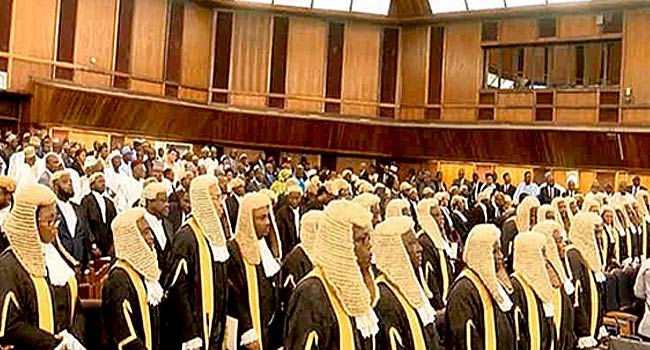
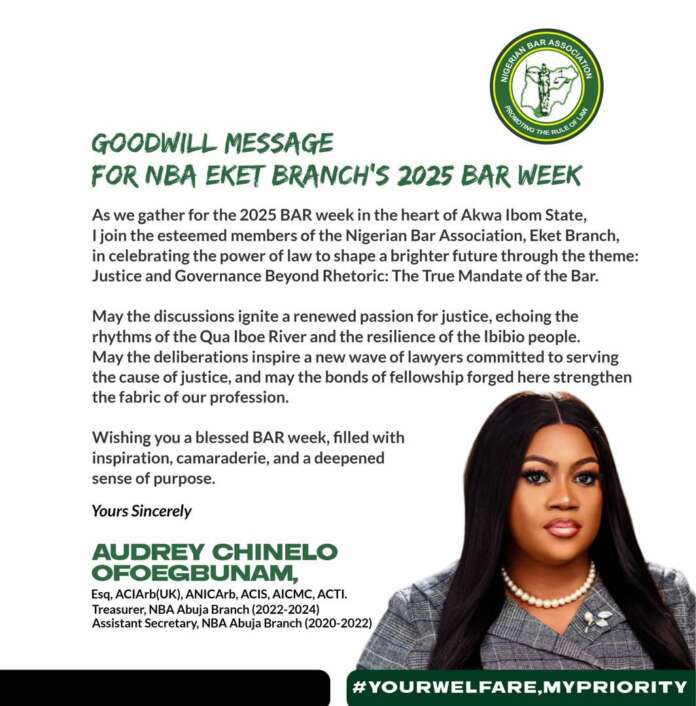
I, Audrey Chinelo Ofoegbunam, do hereby congratulate the newly sworn-in members of the legal profession, elevated to the prestigious rank of Senior Advocates of Nigeria!.

Indeed! Today marks a significant milestone in your distinguished careers and I dare you to wear it with pride as it is a blessing moving from the Outter bar to the Inner bar. I celebrate your zeal to living this dream, and your dedication, expertise, and commitment to the legal profession.

As you wear this prestigious award, may this esteemed honor inspire you to continue upholding the highest standards of justice, integrity, and service to our country Nigeria.

Wishing you all continued success, wisdom, and fulfillment in your noble endeavors.

Congratulations!!!

Audrey Chinelo Ofoegbunam, Esq, ACIArb(UK), ANICArb, ACIS, AICMC, ACTI.

It appears our government is not ready to go all out to secure citizens, Ier Jonathan-Ichaver

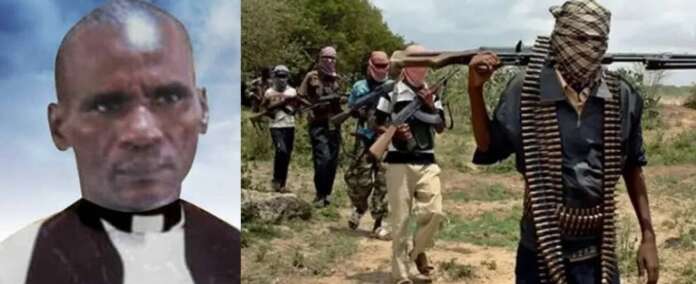
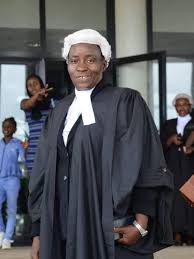
Last Friday’s abduction of Onyesom Peace Udoka), one of the newly called female lawyers and her sister, along the Okene axis in Kogi State again brings the failure of our government in its duty to secure citizens, especially women and children to the fore.

I read about this young lady Friday night and wrote a draft but wondered what good would it do. We seem to have resigned ourselves to our fate.

I was at the call to bar celebrations for a friend’s daughter on Tuesday and I saw this news about this new wig and thought to myself, “at this rate, we are all going to have to defend our communities ourselves as it appears our government is not ready to go all out to secure citizens.”

My organisation does not have funding for any such campaign but I realise that if I am waiting for funding to open my mouth to shout about women and children being kidnapped, then maybe I should not shout too much if the kidnappers come for me or mine.

Are we not tired of paying ransom and contributing for ransom and burying loved ones and weeping while this govt continues to dance on the graves of those we have lost and play political games? How can they be talking about 2027 when Chibok girls are still missing? When we are losing territory and our state governments are bowing to and begging terrorists? Have we as women lost our voice? Have we given up? Is this how we are all going to just be dying off one by one, afraid to travel to our local communities?

When? When will the citizens stand for themselves? We deserve better.

In fact, the more I think about this, the more perplexed I get. WHY ARE WE PAYING TAXES? WHY IS FG EVEN TALKING ABOUT TAX INCREASES WHEN THEY HAVE NOT YET BEEN ABLE TO ADEQUATELY SECURE THE PEOPLE, PROVIDE PIPE BORNE WATER, REDUCE MATERNAL & INFANT MORTALITY AND GIVE US GOOD DURABLE ROADS? IT IS PLAIN MADNESS. AAAAAARGH

Jonathan-Ichaver is Co-Founder & Strategy and Fundraising Adviser at Sesor Empowerment Foundation

Four men apprehended in Yobe for raping three-year-old girl, assaulting police officer

The Yobe State Police Command has arrested four suspects for alleged child rape, assault on a police officer, and unlawful possession of firearms.

The command’s spokesman, SP Dungus Abdulkarim, disclosed this in a statement issued on Saturday, September 27, 2025.

Abdulkarim said operatives of Nguru Division arrested two suspects – Jarma Hussaini Adam, 25, and Mohammed Abdusalam, 16 – both of Sabon Garin Kanuri, Nguru Local Government Area of Yobe State.

Read Also: Police Inspector dies during alleged rendezvous, partner detained as FCT Police opens probe

Read Also: Two arrested as man dies after sex romp in hotel

Abdulkarim said the suspects allegedly attacked a police officer, Amani Ali, while on guard duty at the Federal Medical Centre, Nguru, on Friday.

Abdulkarim said the officer was found unconscious and bleeding, with his rifle stolen, before a tactical operation led to the recovery of the weapon, magazines, and knife jacket.

“The injured officer is recuperating, while the suspects remain in custody,” he added.

The police spokesperson described the incident as an affront to the Nigeria Police Force, stressing that the command viewed such attacks as criminal acts and assaults on constituted authority.

In a separate case, Abdulkarim said personnel of Damaturu ‘A’ Division arrested a suspected armed herder, Ibrahim Alhaji Ahmadu, 24, on September 22.

He disclosed that the suspect was arrested after a farmer reported that a herder had trespassed on his farm and allegedly threatened him with a firearm.

Abdulkarim said a shotgun and live ammunition were recovered from the suspect.

Similarly, Abdulkarim revealed that Potiskum Division operatives arrested Dahiru Ali, 19, for allegedly defiling a three-year-old girl in the Mutawassada area of Potiskum.

“Investigations revealed that the suspect earlier defiled another three-year-old in the same neighbourhood. He confessed to the crime,” Abdulkarim stated.

Read Also: How marathon sex fad is sending men to early graves

Read Also: Intimate Affairs: When men die in active service, By Funke Egbemode

He quoted the Yobe State Commissioner of Police, Emmanuel Ado, as condemning the acts and reaffirming the command’s zero-tolerance stance on criminality.

The police commissioner urged parents and guardians to monitor their children and appealed to residents to support police efforts with timely and credible information.

The Conclave

Video: While elites grumble that 91-year-old Wole Soyinka has abandoned the trenches

By Calixthus Okoruwa

The elite of whom the media is only a subset are complicit.

Many elite are still grumbling that 91-year old Wole Soyinka has abandoned the trenches.

But we see injustice and do nothing. We see touts turning our country into a land of law and disorder and do nothing. A few days ago, touts led an entire family- husband, wife and children to perish in an avoidable accident in Abuja. And the elite hardly even noticed.

Our politicians in collusion with civil servants have completely destroyed the public school system which produced today’s elite. Yet we do nothing to hold them to account as they cruise around our country in their 60-SUV convoys and Rolls Royces. Instead we cough out steadily rising fees to keep our children in private schools.

One professor said many years ago that had Abacha decreed that all 30-year-old Nigerians be executed, Nigerians would have reacted in two ways: one group of 30-year olds would have rushed to the airports and border to escape Nigeria, while the other group would have rushed to high courts to make new Age affidavits. Are today’s elite in Nigeria any different? Aren’t we just as cowardly as we ever were?

Our media is complicit. True, but so are Nigeria’s elite. We’re lazy, cowardly and perpetually looking up to someone to save us. I saw a video of a group of people accosting Wike a few months ago. As citizens who felt wronged they had the right to question him. But as soon as Wike began to feign anger, and act like someone provoked the citizens capitulated, even resorting to begging the man. That is the kind of elite we have in Nigeria.

Take a look at a video of a public school in the same country where politicians and their appointees go around in Rolls Royces and fleets of SUVs👇

This is in the same country where government operatives move around in 60-SUV long convoys.

AWLA Nigeria congratulates Oyinkansola Badejo-Okusanya on her preferment as Senior Advocate of Nigeria

On behalf of the African Women Lawyers Association (AWLA) Nigeria, I warmly congratulate our own Life Member, Mrs. Oyinkansola Badejo-Okusanya on her preferment as a Senior Advocate of Nigeria today, Monday, 29th September, 2025.

This recognition is a true testament to your outstanding expertise, dedication, and integrity within the legal profession.

Your appointment reflects not only your personal achievements and tireless commitment to excellence but also the high regard in which you are held by colleagues, clients, and the wider community. It is a distinction reserved for those who have consistently demonstrated the highest standards of advocacy and professional conduct, and it is inspiring to see your work recognized in this way.

As you take up this well-deserved honour, I have no doubt that you will continue to serve as a role model and inspiration to others—particularly women in the profession—showing that excellence, perseverance, and leadership are rightly celebrated at the highest levels.

I wish you every success as you embark on this next chapter of your distinguished career.

Please accept my heartfelt congratulations once again.

Mrs Caroline Ibharunaefe,

AWLA Nigeria President,
For and on behalf of AWLA NIGERIA


NBA calls for rescue of member abducted after call to bar ceremony, as abductors demanded N40m ransom

  • Force PRO Hundeyin claims eight of 12 abducted persons had been freed
  • Family of kidnaped lawyer says only 8 names on bus manifest and nobody rescued

The Nigerian Bar Association (NBA) has called on the federal government and security agencies to act swiftly to secure the release of one of its members, Onyesom Peace Udoka, who was abducted alongside her sister and others along the Okene-Auchi road in Kogi state on Friday.

Udoka, who was recently called to the Bar, was kidnapped while returning from the Call to Bar ceremony in Abuja.

In the meantime, her family has disclosed that the abductors are demanding N40m ransom before they would be released. This is just as the family appealed to the Federal Government to ensure the safe rescue of the victims.

In a statement on Sunday, NBA President, Mazi Afam Osigwe, SAN, condemned the incident as “unacceptable and utterly condemnable,” stressing that no family should be forced to endure such trauma.

“It is heartbreaking that at a time when our nation should be celebrating the future of the legal profession, young lawyers and their families are subjected to such harrowing ordeals,” Osigwe said.

The NBA called on the government to ensure the immediate and safe release of Udoka, her sister, and other victims still in captivity. It also demanded a more coordinated effort to address the growing insecurity on Nigeria’s highways.

“The safety and security of Nigerians cannot continue to be treated with levity. It is the primary duty of government to protect the lives of its citizens, and this duty must be discharged with the seriousness it deserves,” the association stressed.

Expressing solidarity with the families of the abducted victims, the NBA said it remained hopeful for their safe return and reaffirmed its commitment to supporting measures that will enhance the security of Nigerians.

Speaking on behalf of the family in an exclusive interview with PUNCH Metro on Sunday, the victims’ sister, Adaeze Onyesom, said that Gift had been in contact with another sibling until she became incommunicado during the journey.

She narrated that after a while, one of her siblings, Gift, and the call was picked up by a man who identified as a police officer and informed them that she had been kidnapped.

Adaeze said, “About an hour after our youngest sibling called her, someone else picked up the call and said he was a policeman and that she had been kidnapped.

“The policeman said that they found her phone in the bus and that they had gone after the kidnappers.”

She further stated that the kidnappers reached out to the family on Friday, demanding a sum of N100m, which they pleaded to be reduced.

Adaeze said, “When they (the kidnappers) contacted us on Friday evening, they told us that we should bring N100m, but we told them we could not get such an amount, and we pleaded with them. On Saturday, they called back and reduced it to N20m, but we told them we could only raise N3m, but they declined.

“After a while, they called us back to say that they were not collecting anything less than N20m for each person, which is N40m for the two of them. We appealed that it was only N7m that we could raise, but they did not agree.

“They called us this morning (Sunday) and allowed us to speak with our sisters who were pleading that we should raise money.”

Ada lamented that the situation had caused distress to the family and that they had resorted to selling property to raise the ransom.

She appealed to the authorities to ensure the safe rescue of their sisters.

Meanwhile, the Force Public Relations Officer, Benjamin Hundeyin, in a post on his X page on Sunday, disclosed that eight of the abducted persons had been rescued.

Hundeyin tweeted, “Of the 12 persons kidnapped on Friday, September 26, 2025, along the Okene-Auchi Road, eight have been rescued by the police in conjunction with the military.

“Concerted efforts are in top gear to ensure the safe rescue of the remaining four victims.”

In a follow-up conversation with Adaeze, she disclosed that a manifest of the passengers only showed that eight people boarded the bus, contrary to the claim that 12 people were in the bus.

A copy of the manifest obtained by our correspondent showed that eight people signed their details on the list.

She also noted that a police source in Okene whom they had been in contact with disclosed that nobody had been rescued by the police.

Hobbes, Nigeria, and Sarkozy

By Lasisi Olagunju

In the early 1940s, Sir Ahmadu Bello, the hugely popular Sardauna of Sokoto, found himself at a crossroads of politics and rivalry. After losing the contest for the Sultanate of Sokoto to his long-standing rival, Sir Abubakar III, he was appointed emirate councillor and superordinate district head of Gusau in Sokoto Province. The posting, however, came with what he would later describe in his autobiography as “not lacking dark undertones and hidden motives.”

The shadow over his new position darkened in 1943. One day in the afternoon, a friend arrived with a troubling warning: Bello’s enemies were plotting his fall.

The man said: “Look, a plot is being arranged against you, so that you will fall into an inescapable trap.”

“What sort of a plot?” Ahmadu Bello said he asked the friend. He went on to say that “people were being organised to lay complaints against me so that I would be involved in a court case. I replied, ‘Tawakkaltu Alal Haiyil Lazi Layamutu (I depend on the Soul that never dies).’ A week later, I heard some Fulani (herdsmen) were being told to say that they paid cattle tax to me which never went into the treasury.” He was also accused of accepting gifts. The allegations quickly became a weapon in the hands of his rival, the Sultan. “After necessary investigations by an instigated administrative officer who was specially sent for the purpose, I was summoned to appear before the Sultan’s Court. I was tried and sentenced to one year’s imprisonment.” Bello recalled in his autobiography years later: “Knowing my own reputation and standards and the way the case was tried, I appealed to the Appeal Court. The learned Judge (Mr. Ames), with two Muslim jurists, allowed my appeal and I was therefore acquitted.”

He got back his freedom, but that experience signposted an example of what politics could throw at any of its practitioners, no matter the height of their standing. Bello’s experience was an early taste of the trials and political intrigues that would mark his rise to prominence in the years ahead. Read ‘My Life’, Sardauna’s autobiography. Read ‘Ahmadu Bello: Sardauna of Sokoto’ by John N. Paden, page 119. Read Chapter 2 of Steven Pierce’s ‘Moral Economies of Corruption.’

You saw what happened in France last week. Seventy-year-old Nicolas Sarkozy was sentenced to five years in prison by a Paris court. There is a lot of fun in watching tragedies. Some courts are crazy. The man they jailed was the Commander-in-Chief of a superpower. He wielded veto powers at the United Nations and rubbed shoulders with the president of the Almighty United States. He did not kill, he did not rape. Even if he killed and raped, didn’t he have everlasting immunity from being treated like a common commoner? His crime was not even looting of his country’s treasury. His sin was criminal conspiracy in a scheme to secure campaign funds from the late Libyan dictator, Muammar Gaddafi. What kind of crime was that?

Reuters reported that “the presiding judge said there was no proof Sarkozy made such a deal with Gaddafi, nor that money that was sent from Libya reached Sarkozy’s campaign coffers, even if the timing was “compatible” and the paths the money went through were “very opaque”. But she (the judge) said Sarkozy was guilty of criminal conspiracy for having let close aides get in touch with people in Libya to try and obtain campaign financing.”

Why would the president of a first-world country be so broke as to go to North Africa for a bailout? The central bank of France is called the Banque de France (Bank of France). Don’t they print money there? Wasn’t Sarkozy the one who reappointed Christian Noyer as the governor of that bank? So, what happened that Noyer allowed his benefactor to be that exposed and hard pressed that he had to go beg Ghadafi, the ultimate sinner, for campaign funds? What is even bad in collecting money, even from Satan? What kind of law and judicial system did that to a benefactor of their country?

Sarkozy should have been a Nigerian. If he were a Nigerian, our courts would have scolded the prosecutor for being rude to the father of the nation. We would have told him sorry and compensated him with a comeback from retirement and a third term.

Nigeria can never be France. A country where people love life and fear death more than they fear hell is a doomed state. Nigeria is caught in that loop. We have long abandoned the fear of sin and hellfire. We mock morality, twist God’s words, and purchase prayers to sanctify our iniquities. Yet, while trampling on conscience, we go to great lengths to stay alive. We act with impunity, but move about with convoys of armed men so we may live to enjoy the spoils of our recklessness. We wreck healthcare at home and pile money into hospitals abroad against the day when sickness comes calling. We sin, we revel, and we rock the world. We move freely with sinful steeze without consequence, without judgment. Sarkozy should have been a Nigerian; he would have been saved the insult of that Paris trial and conviction.

I am not the originator of the contrast between fearing death and fearing hell. A man called Thomas Hobbes saw it centuries ago and wrote it down. Hobbes lived from 5 April 1588 to 4 December 1679. At his death, he was described as “greater in his foes than in his followers.” He is the same man who, in his social contract book ‘Leviathan’, famously declared that without law and order, life collapses into fear and violence; and, in his words, it becomes “solitary, poor, nasty, brutish, and short.”

Times change, people change. Hobbes observed that in his own age the fear of hell outweighed the fear of violent death. Religion then carried such weight that eternal damnation was a stronger restraint on conduct than the threat of sword or sentence. Men trembled more at the thought of sinning against God’s commandment than at the prospect of breaking the law. Religion and politics worked hand in hand to uphold order.

But that was Hobbes’s time. Today, the opposite holds sway. And that inversion explains the brazenness of misbehaviour around us. When men cease to fear God, and hell (the consequence of sin), they also cease to fear what the Yoruba call Àtubòtán; they disdain legacy, and numb conscience. Their only terror is not afterlife; it is just death, and, maybe, poverty and loss of privilege. And so, to prolong their lives and cling to power, they kill, they silence critics, they loot without restraint. The loss of a soul is, to them, an abstraction; but the loss of office and privileges is real, immediate, unbearable.

I go back to Hobbes; he was right: fear shapes society. But when the wrong fear governs, politics mutates into predation, and the polity collapses into a jungle. Nigeria suffers that fate. We are ruled by men who worship power and fear coffins more than they fear God. Until that fear is reordered, until conscience returns as a brake on ambition, no constitution or law will be strong enough to restrain leaders who no longer believe that God is watching.

Back to Sarkozy, Western media described his fate as “a historic moment for modern France”, a nation where politicians, until last week, sinned while sneering at the idea of punishment. The media said Sarkozy, who served as president between 2007 and 2012, was known for his hard line on immigration and national identity, and for championing harsher punishments for offenders. He must now prepare to face the same fate. Judges ruled that within months he will report to prison, making him the first former French president in modern history ordered to serve time behind bars.

It was, as The Guardian of UK put it, “a spectacular downfall and a turning point” in France’s struggle to deal with graft and political impunity. Sarkozy sat in court flanked by his wife, Carla Bruni Sarkozy, and his three sons as judges delivered a sentence laced with a message: Thomas Fuller’s words of almost four hundred years ago, “Be ye never so high, the law is above you.”

France has shown that even the mighty can crumble under the weight of justice. Nigeria, by contrast, keeps teaching its politicians that what sin has is not consequence but reward. Until our courts can frighten the powerful as much as our cemeteries do, Hobbes’s warning will remain our reality: life in this jungle will stay poor, nasty, brutish, and short.

The views expressed by contributors are strictly personal and not of Law & Society Magazine.

Dangote’s oily wars, By Lasisi Olagunju

In February 2025, Daily Trust quoted him as saying: “I’ve been fighting battles all my life and I have not lost one yet.

In May 2025, Business Day quoted him as saying: “I have been fighting all my life. And I will win at the end of the day.”

Aliko Dangote, President of Dangote Group, speaks those words each time there is a war to fight. In the last two, three weeks, I have heard him repeat that statement about fighting all life and winning all the time.

There is a bird in the Yoruba forest called Òrófó. Its mouth is its executioner. If I fought and won all the time, I would not display the trophy all the time.

Each time I hear people boast about their strength and blessings, I reach for my favourite quote:

“Travel and tell no one,

Live a true love story and tell no one,

Live happily and tell no one,

People ruin beautiful things.”

It is one of my priceless quotes; it is from Khalil Gibran, Lebanese-American poet who lived from January 6, 1883 to April 10, 1931. There is a reason why the light travels light; it is because the world is heavy.

Dangote may be correct in his self-assessment as the unbeaten. He is the lion in Nigeria’s industrial jungle. He fought and won in cement, in sugar, in flour. But did he win the noodles war? When he started his refinery project, I heard people who said we should expect another war in that sector. And that is what we see. But if I were him, I would reflect that even the lion has limits. A lion that fights hyenas, leopards, wild dogs, and hunters all at once will soon learn that its roar and paws are not enough. If I were him, I would know that there is a difference between the unbeaten and the unbeatable. I would know that strength spread too thin becomes weakness. A lion who fights every creature in the forest risks exhaustion. It risks even worse: isolation.

The wealthy man who fights and wins all wars now has his hands full. At the beginning of his refinery journey, Aliko fought the regulators over approvals and compliance issues; he crossed that river and turned his cannon on depot owners and marketers; this week, he is fighting the unions. And now the unions are responding by shutting the valves. PENGASSAN at the weekend ordered a blitzkrieg on Nigeria’s fuel lifeline: it instructed its members to stop all gas supply to Dangote refinery with immediate effect; it ordered crude oil supply valves to the facility shut; it directed loading operations for vessels headed to the refinery suspended. It’s grouse was the mass sack of workers there.

It has been one war after another, a rolling theatre of conflicts that raises the question: can one man, no matter how wealthy, fight every battle and still win the war?

But the unions are not saints either. Nigerian unions roar justice but feed like hyenas. They thrive in disruption. They fight for rents. A union that turns every quarrel into a weapon or business may one day find that it has destroyed its own leverage.

Sword that destroyed its sheath is homeless. I do not know what democracy calls pulling the plug on a promising patient. But I know that under the military, those who did what PENGASSAN ordered at the weekend were deemed to have committed grievous crimes. Luckily, we are in a democracy.

Shortly before the PENGASSAN bombardment, there was the war with DAPPMAN, the depot owners and marketers. Dangote said they demanded ₦1.5 trillion in hidden subsidies each year. He said he would not pay. He said they wanted him to cover coastal charges and logistics. He insisted that his gantry price was fair. He dared them to sue. The marketers replied that Dangote sold cheaper petrol abroad than at home. They called him disruptive. They accused him of undermining competition. So, the drama grows. The lion roars at unions, at traders, at depot owners, and at those he called the mafia in the oil industry. The elephant struggles with its own bulk. But wisdom says no hunter fights every battle.

I had this hearty discussion with some friends yesterday. They think the unions were unreasonable and exploitative. I agreed with them but asked them to also check what a monopoly in fuel refining and supply does to national security. All monopolies are dangerous.

I told my friends what a voice told me: If one refinery is the nation’s fuel heart, don’t we know that one strike or sabotage can paralyse the country?

What if the refinery owner even decides to ‘go on strike’ or produce and refuse to sell?

When a country’s situation is as it is, will that be said to be sovereignty? That will be fragility disguised as progress. I hope you agree with this.

No village entrusts its present and future sustenance to one farm, no matter how large. Nigeria does not need monopolies, whether in refineries or in unions. What it needs is balance, competition, and choice.

Nigeria needs competition, not concentration. It needs many refineries, not one. But where are the investors? Where is the government? Why do we need more than the behemoth in Ibeju-Lekki? Folklorists tell of an elephant. It was the envy of the savannah. Grass bent under its feet. Trees shook at its steps. But when drought came, its size became its curse. Its massive body needed more water than the land could give. Smaller animals survived on little streams. The elephant collapsed under its own weight.

That is the risk with this lone refinery. It is an elephant, mighty and heavy. The body and its demands are a burden to it. Its operational environment is choky. I pity the promoter. He must have found out too late that this terrain is not solid and firm as concrete; not as soft as dough. The refinery ground is crude, oily, slippery, and treacherous.

Those who know told me that in this business of refinery and refining, tension will remain forever high because margins are thin. In there, refineries buy crude in dollars; they sell fuel in naira. Debts keep breathing in banks while workers hum discontent with the life they live. As investors juggled the figures to stay afloat, at the UNGA, we heard rhetorics that tell the world to accelerate its movement towards clean energy. Clearly, the elephant carries more weight than the land may sustain.

But what kind of country fears convulsion, or even convulses, because a private company has issues with its stakeholders? Ask around how many refineries Egypt has. Google says Egypt currently has eight operating oil refineries, with a total nameplate capacity of approximately 763,000 barrels per day. And Algeria? Six: five operational, the sixth about to be commissioned. How about small Ghana? I asked Google and this is its final answer: “Ghana currently has two main operational refineries, the state-owned Tema Oil Refinery (TOR) and the Sentuo Oil Refinery… In addition to these two, the nation is also developing the Petroleum Hub Project, a large-scale initiative that includes the construction of three new refineries as part of a three-phase project aiming to significantly reduce Ghana’s reliance on imported refined fuels.” What is Nigeria as a country building? Do not bother to check. If you check, what you will find is 2027.

Back to the feuding Dangote refinery and its union of workers. Negotiation and bargaining and agreeing (rather than stone-throwing) are key in human transactions. In his ‘Bargaining and War’, R. Harrison Wagner notes that “nearly all wars end not because the (feuding parties) are incapable of further fighting but because they agree to stop.”

It is sweet to fight and win. But that is where it ends. The one who killed an elephant with his hat enjoyed the fame for just 24 hours. The next day, everyone avoided him. Enough of unhelpful tough talking and disruptions. As I watch the drama of this oily war, I see the two entitled camps unravelling. I see both sides losing ultimately. But their loss will be our loss, a disaster. The country will grind to a halt.

So, I ask the oily fighters in Lagos to read Khalil Gibran’s ‘The Two Cages’: “In my father’s garden, there are two cages. In one is a lion, which my father’s slaves brought from the desert of Ninavah; in the other is a songless sparrow. Every day at dawn, the sparrow calls to the lion, ‘Good morrow to thee, brother prisoner’.”

There is no winner in this war.

The views expressed by contributors are strictly personal and not of Law & Society Magazine.

Criminal  Defamation or Criminal Intimidation: Exposing the Phantom Charges against Me

By Chinedu Agu

It is no longer news that on Wednesday, 17 September 2025, I honoured the invitation by the X-Squad Unit of the Nigeria Police Force, Imo State Command, over allegations of “Criminal Defamation of the Governor of Imo State” and “conduct likely to cause a breach of the peace.”

This account is not intended to sensationalize the matter, but rather to lay bare certain uncomfortable truths which I am prepared to stand by, as they are rooted in incontrovertible facts which demonstrate three clear points:

1. The persecution against me was directly initiated by the Imo State Commissioner of Information.

2. The so-called “civil society organisation” presented as the originator of the petition against me – Imo Democratic Alliance, allegedly coordinated by one Umukoro Marvis Udechukwu – does not exist in Nigeria. It is not registered and has no traceable office address anywhere in the country.

3. But for the courage and professionalism of Magistrates in Imo State, and the overwhelming solidarity of lawyers, civil society organisations, and friends, I would have been languishing in detention much earlier.

What follows should shed light on the rot, the decay, and the complicity that continue to fester in our Imo State.

At 12:47 p.m. on 12 September 2025, my phone rang. The caller introduced himself as a police officer and asked if I was Chinedu Agu. Without hesitation, he informed me that there was a petition against me for “criminal defamation of His Excellency, the Governor of Imo State.” He further requested me to honor an invitation to appear before the X-Squad Unit of the State Police Command on Wednesday, 17 September 2025.

Curious, I asked about the source of the petition. He replied that it came directly from the Imo State Ministry of Information and even went on to mention the name of the official who signed it.

When I requested for a copy of the petition, he responded I would have to “call Oga” for a copy. When I reached out, “Oga” categorically told me I could not be given a copy of the petition except I applied formally to the Commissioner of Police for a Certified True Copy (CTC).

After we eventually settled on a date for my encounter with the X-Squad, the officer reluctantly sent an “Invitation Letter” to me via WhatsApp. That letter, bare as it was, stood as a symbol of something deeper—the rot and decay in our system, where power is wielded not to protect truth and justice, but to intimidate voices that dare to speak both.

This refusal by the police to furnish a citizen with a copy of the petition forming the basis of his invitation raises grave constitutional and statutory issues. Under Section 36(6)(a) & (b) of the 1999 Constitution, every person facing criminal allegations has the right to be informed “promptly and in detail” of the nature of the offence, and to have adequate facilities for the preparation of his defence. Denying access to the petition until one applies for a CTC clearly violates this right.

The Administration of Criminal Justice Law of Imo State, 2020 (ACJL) reinforces this. Section 8 of the ACJL guarantees fair hearing, while Section 17 mandates humane treatment and respect for the dignity of suspects. Transparency at the investigative stage is, therefore, not a matter of grace, but a constitutional and legal obligation.

This practice, whereby the police serve an invitation letter yet withhold the petition that underpins it, fosters intimidation, secrecy, and abuse of power. It effectively disarms the citizen and turns what should be a fact-finding process into a trap.

I digress.

On the agreed date, I arrived at the station accompanied by a team of lawyers numbering about 72. I was ushered in together with Chief Chris Ihentuge, Chairman of the Nigerian Bar Association (NBA), Owerri Branch, and Chief H.N. Duroha, Chairman of the Sports Committee of the branch. A police officer, who introduced himself as the “2/IC”, laboured rather gratuitously to persuade us that the petition did not emanate from the Ministry of Information but rather from “Imo Democratic Alliance”. To convince us, he brought out a two-page petition and read the first page aloud. He then handed me over to the Investigating Police Officer (IPO) to whom the matter had been assigned.

At the IPO’s office, he made to read the petition to me. I politely requested to personally peruse it. What I saw was a farce: a hastily contrived letterhead, garishly designed, with “IMO DEMOCRATIC ALLIANCE” written in capital letters. Its motto, inscribed in red, declared “FOR GOOD GOVERNANCE.” On the top right corner of the page was a needless sketch of the map of Imo State. It bore no office or return address. The “petition” was dated 2 September 2025 and captioned, “Criminal Defamation of the Governor of Imo State and Incitement of the public against Imo State Government and the Police by Barr. Chinedu Agu.”

The “petition” referred to two articles authored by me: the latter article, “Imo State – Where Justice in On Vacation During Court Vacation”, was published 31 August 2025. The earlier one, “Tears From Enugu: A Lawyer’s Heartbreaking Diary From a State That Works To a State In Ruins”, was published one day earlier on 30 August. The author alleged that I published both with the “intention to incite an insurrection against state institutions through the vicious provocation of the citizens”. It concluded by warning that “if Barr. Agu is not called to order now, he may be on his way to inciting the citizenry into violent action.” Critically, the author did not say how either article had incited anyone nor suggest how I was to be called to order. 

The petition was signed by one “Umukoro Marvis Udechukwu”, who claimed to be the “Co-ordinator” of the Imo Democratic Alliance.

In my response, I pointed out that this petition did not disclose any offence known to law. On the accusation of “criminal defamation”, everything I wrote in my two pieces is factual and truth is a complete defence to defamation. I requested the IPO to retrieve and review the full texts and identify a single line that was untrue.

I also added that the law does not permit a third party to lay such a complaint. Defamation is personal, and no busybody can initiate action in that regard. The fictitious organisation did not allege defamation of itself, nor did Umukoro Marvis Udechukwu allege defamation of his own person.

Importantly, the so-called petition did not annex the articles complained of. Instead, it imported mutilated texts, using only those parts that suited its persecutorial purpose. As for the allegation of “inciting the public,” I also invited the police to point to a single line in my articles that did any such thing.

Upon leaving the police, I immediately conducted a search on the portal of the Corporate Affairs Commission (CAC). Imo Democratic Alliance is legally non-existent. It is not a registered organisation. To use such a phantom entity as source for a law enforcement procedure is itself criminal.

On the evening prior to my scheduled encounter with the police on 17 September, I received credible information that my detention was already pre-determined. Indeed, the police made strenuous efforts to procure a magistrates’ signature for an order to detain me but none could be persuaded at the time to lend legitimacy to such illegality.

Frustrated by that setback, and confronted with the overwhelming solidarity of more than seventy-two lawyers who accompanied me to the station, the police chose to release me on bail, on self-recognizance. It was a temporary respite.

Thereafter, they fixed a fresh encounter for early afternoon on Tuesday, 23 September.  I shall honour that invitation once again to see what new tricks they will conjure.

One undeniable truth from this entire episode is that the initiator of the police persecution against me is the Imo State Commissioner of Information. I welcome genuine legal process. I am not afraid of lawful process, but I already suspect that is not what this is about.

A former secretary of the NBA, Owerri Branch, Chinedu Agu wrote this piece on 20 September 2025. Since 23 Sept 2025 he had been detained at the direct instigation of the Imo State Government. He can be reached at [email protected]

The views expressed by contributors are strictly personal and not of Law & Society Magazine.

TIPS