Home Blog Page 197

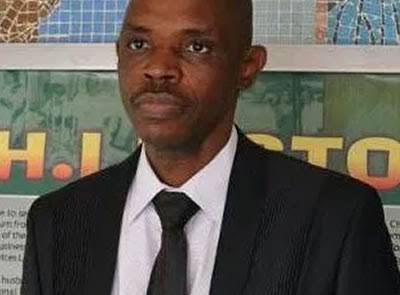
Just In: Tinubu appoints Prof. Amupitan as new INEC chairman

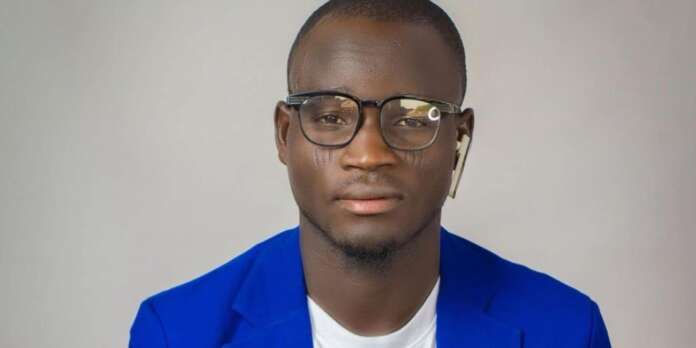
President Bola Ahmed Tinubu has appointed Prof. Joash Amupitan as the new chairman of the Independent National Electoral Commission (INEC).

Mr Amupitan is a professor of Law.

His appointment has also been ratified by the National Council of States, presidential spokesman Bayo Onanuga wrote in a Thursday statement.

“In compliance with the constitution, President Tinubu will now send Amupitan’s name to the Senate for screening,” Mr Onanuga wrote.

Details later…

Read the full statement below.

STATEHOUSE PRESS RELEASE

NATIONAL COUNCIL OF STATE UNANIMOUSLY APPROVES APPOINTMENT OF PROFESSOR AMUPITAN AS INEC CHAIRMAN

The National Council of State has approved the nomination of Professor Joash Ojo Amupitan (SAN) from the North-Central as the new Chairman of the Independent National Electoral Commission (INEC).

President Bola Ahmed Tinubu presented Amupitan as the nominee to fill the vacant position, following Professor Mahmood Yakubu’s exit. Yakubu served from 2015 till October 2025.

President Tinubu told the council that Amupitan is the first person from Kogi, North-Central state, nominated to occupy the position and is apolitical.

Council members unanimously supported the nomination, with Governor Ahmed Usman Ododo describing Amupitan as a man of integrity.

In compliance with the constitution, President Tinubu will now send Amupitan’s name to the Senate for screening.

Amupitan, 58, from Ayetoro Gbede, Ijumu LGA in Kogi State, is a Professor of Law at the University of Jos, Plateau. He is also an alumnus of the university.

He specialises in Company Law, Law of Evidence, Corporate Governance and Privatisation Law. He became a Senior Advocate of Nigeria in September 2014.

Amupitan was born on April 25, 1967.

After completing primary and secondary education, he attended Kwara State Polytechnic, Ilorin, from 1982 to 1984, and the University of Jos from 1984 to 1987. He was called to the bar in 1988.

He earned an LLM at UNIJOS in 1993 and a PhD in 2007, amid an academic career that began in 1989, following his National Youth Service at the Bauchi State Publishing Corporation in Bauchi from 1988 to 1989.

Currently, he serves as the Deputy Vice-Chancellor (Administration) at the University of Jos, a position he holds in conjunction with being the Pro-Chancellor and Chairman of the Governing Council of Joseph Ayo Babalola University in Osun State.

Among the academic positions he has held at UNIJOS are: Chairman of the Committee of Deans and Directors (2012-2014); Dean of the Faculty of Law (2008-2014); and Head of Public Law (2006-2008).

Outside of academics, Amupitan serves as a board member of Integrated Dairies Limited in Vom, a member of the Nigerian Institute of Advanced Legal Studies Governing Council, and a member of the Council of Legal Education (2008-2014), among other roles. He was a board member of Riss Oil Limited, Abuja(1996-2004).

Amupitan is the author of many books on law, such as Corporate Governance: Models and Principles(2008); Documentary Evidence in Nigeria (2008); Evidence Law: Theory and Practice in Nigeria(2013), Principles of Company Law(2013) and an Introduction to the Law of Trust in Nigeria (2014).

He is married and has four children.

Bayo Onanuga
Special Adviser to the President

(Information and Strategy)

October 9, 2025

Full List: UI knocks out Covenant, Unilag to emerge best university in 2026 rankings

University of Ibadan (UI) has bounced back to its position as Nigeria’s topmost university in the Times Higher Education (THE) World University Rankings 2026.

Established in 1948, UI is ranked in the 801–1,000 band globally, moving up from fourth place in 2025, and surpassing other leading Nigerian universities—a feat it last achieved in 2023.

2,191 institutions were surveyed across 115 countries, with evaluations of universities on 18 performance indicators covering teaching, research, research environment, industry engagement, and international outlook.

UI dethroned Covenant University (CU), which had been Nigeria’s best in 2024 and 2025. Following UI, the University of Lagos (UNILAG), Bayero University, and Covenant University rank second, third, and fourth nationally, respectively.

The 2026 ranking reflects shifts in global higher education, analyzing 174.9 million citations from 18.7 million research publications alongside survey responses from over 108,000 scholars worldwide. Notably, UNILAG scored highest in quality research with a score of 66.7, while Bayero University (BUK) leads in international outlook and CU tops industry engagement.

Among Nigerian institutions, 51 universities made the ranking: only UI and UNILAG fall within the 801–1,000 global band; BUK, CU, and Landmark University are between 1001–1200; while five others—including Ahmadu Bello University, University of Ilorin, and University of Nigeria—fall between 1201–1500. Fourteen universities are ranked above 1501, and 27 institutions were unranked.

THE is a globally recognized independent organization providing data and analysis for higher education, including the widely cited World University Rankings. To be ranked, universities must teach undergraduates, conduct research across multiple subjects, and have published at least 1,000 research publications from 2020 to 2024.

Top 30 Nigerian Universities in THE World University Rankings 2026

  1. University of Ibadan (UI) – 801–1000
  2. University of Lagos (UNILAG) – 801–1000
  3. Bayero University Kano (BUK) – 1001–1200
  4. Covenant University (CU) – 1001–1200
  5. Landmark University – 1001–1200
  6. Ahmadu Bello University (ABU) – 1201–1500
  7. Federal University of Technology, Minna (FUT Minna) – 1201–1500
  8. University of Ilorin (UNILORIN) – 1201–1500
  9. University of Jos (UNIJOS) – 1201–1500
  10. University of Nigeria, Nsukka (UNN) – 1201–1500
  11. Babcock University – 1501+
  12. Delta State University, Abraka – 1501+
  13. Ekiti State University – 1501+
  14. Federal University of Agriculture, Abeokuta (FUNAAB) – 1501+
  15. Federal University of Technology, Akure (FUTA) – 1501+
  16. Federal University of Technology, Owerri (FUTO) – 1501+
  17. Federal University Oye-Ekiti (FUOYE) – 1501+
  18. Ladoke Akintola University of Technology (LAUTECH) – 1501+
  19. Lagos State University (LASU) – 1501+
  20. Nnamdi Azikiwe University (UNIZIK) – 1501+
  21. Obafemi Awolowo University (OAU) – 1501+
  22. University of Benin (UNIBEN) – 1501+
  23. University of Calabar (UNICAL) – 1501+
  24. University of Port Harcourt (UNIPORT) – 1501+
  25. Admiralty University of Nigeria – 1501+
  26. Akwa Ibom State University – 1501+
  27. Al-Hikmah University – 1501+
  28. Augustine University – 1501+
  29. Bamidele Olumilua University of Education, Science and Technology, Ikere-Ekiti – 1501+
  30. Bauchi State University, Gadau – 1501+

Presidency rates Tinubu as high-performing, rejects World Bank’s poverty report

  • Accept World Bank verdict, your policies have deepened poverty – ADC to Tinubu

In an apparent above-average score to the President Bola Tinubu-led federal government, the Presidency has rejected the World Bank’s recent report estimating that 139 million Nigerians are living in poverty, saying the figures do not reflect current realities under President Bola Tinubu’s administration.

The Special Adviser to the President on Media and Public Communication, Sunday Dare, in a statement, asserted the data quoted by the World Bank must be properly contextualised, noting that it is based on historical and modelled estimates rather than real-time assessments.

According to the statement, the World Bank’s estimate was derived from the global poverty benchmark of $2.15 per person per day, set in 2017 under the Purchasing Power Parity (PPP) framework. Dare explained that the figure, when converted to today’s exchange rate, equals about ₦100,000 per month—an amount that is above Nigeria’s new minimum wage of ₦70,000.

“The measure is an analytical construct, not a direct reflection of local income realities,” he said. “The poverty assessment under the PPP methodology relies on outdated consumption data, with Nigeria’s last major household survey conducted in 2018/2019.”

He added that the estimate does not account for the informal and subsistence sectors that sustain millions of households across the country.

The Presidency maintained that the figure should be regarded as a global model estimate, not an empirical representation of conditions in 2025, and emphasised that the country’s poverty trajectory is now one of recovery and inclusive reform.

Dare listed a range of government programmes aimed at reducing poverty and improving living standards, including:

Conditional Cash Transfers (CCT): Expanded to reach 15 million households nationwide, with over ₦297 billion disbursed since 2023.

Renewed Hope Ward Development Programme (RH-WDEP): Covering all 8,809 electoral wards, providing micro-infrastructure and social services at the community level.

National Social Investment Programmes (NSIPs): Strengthened initiatives such as N-Power, TraderMoni, MarketMoni, FarmerMoni, and the Home-Grown School Feeding Programme.

Food Security Measures: Including distribution of subsidised grains and fertilisers, mechanisation initiatives, and the revival of strategic food reserves.

Renewed Hope Infrastructure Fund (RHIF): Financing key energy, road, and housing projects to reduce living costs and boost job creation.

National Credit Guarantee Company (NCGC): Expanding access to affordable credit for small businesses, women, and youth.

The Presidency said the government is addressing long-standing structural challenges such as overdependence on imports, productivity constraints, and regional disparities.

It noted that reforms such as the removal of fuel subsidies, exchange rate unification, and fiscal redirection toward productive sectors are part of efforts to tackle the root causes of poverty and promote sustainable growth.

Dare said the World Bank itself has acknowledged that these reforms are contributing to macroeconomic stability and renewed growth momentum.

The statement added that the administration’s medium-term focus is to ensure that macroeconomic stability translates into tangible welfare gains for citizens through affordable food, quality jobs, and reliable infrastructure.

It said ongoing investments in agriculture, micro, small and medium enterprises (MSMEs), and power reliability are expected to create employment and lower living costs.

According to the Presidency, Nigerians are expected to begin seeing improvements in food prices, income levels, and purchasing power as these programmes continue to take effect.

However, the African Democratic Congress (ADC) has urged President Bola Ahmed Tinubu to accept the recent World Bank report showing a sharp rise in poverty across Nigeria.

According to them, it is clear proof that his administration’s economic policies have worsened the living conditions of millions of citizens.

In a statement released on Thursday and signed by its National Publicity Secretary, Mallam Bolaji Abdullahi, the party said the World Bank’s October 2025 report which revealed that 139 million Nigerians are now living below the poverty line, up from 81 million in 2019 exposes the government’s economic failures and misplaced priorities.

“The World Bank’s report tells a painful truth under the APC and President Bola Tinubu’s leadership, more Nigerians have slipped into poverty than ever before.

“In 2019, four out of every ten Nigerians were poor; today, that number has risen to at least six out of ten,” the ADC said.

“Yet, during his Independence Day speech, President Tinubu claimed that the worst is over, quoting figures that now appear to be nothing more than carefully crafted propaganda to paint a false picture of progress.

“Behind those polished numbers lies the harsh reality of growing human suffering families going hungry, children leaving school, and households selling their few possessions just to afford food and medicine.”

According to the statement, under the APC government, about 30 million more Nigerians have fallen into extreme poverty, unable to afford enough food even if they spend all they earn on it.

“The government may boast of record revenues and stability, but the truth is Nigerians are getting poorer every day,” the ADC said.

“Food prices have skyrocketed, with a bag of rice now five times costlier than four years ago. Most poor families spend nearly all their income just to eat, while social safety nets have almost vanished.

“The World Bank’s data clearly shows that life has become harder under the APC and President Tinubu, and instead of denying this reality, the government should accept the facts and act before things get worse.”

The ADC said Nigeria’s social safety nets have collapsed, with coverage dropping from 20% in 2019 to just 6% in 2025, and government aid to the poorest citizens nearly non-existent.

It accused the APC government of masking the country’s deepening poverty through misleading statistics, noting that Nigeria’s poverty line is set far below global standards; a move that hides, rather than helps, the poor.

The party urged President Tinubu to accept the World Bank’s verdict and address the worsening hardship instead of redefining poverty to suit his administration’s narrative.

“What Nigeria needs now is not cosmetic reform but genuine leadership that puts people first,” the ADC stated.

“Inclusive growth must go beyond slogans. it should be a deliberate strategy. We call on the Tinubu-led APC government to stop mistaking revenue collection for progress and instead focus on food security, job creation, and strong social protection systems to support the millions pushed into vulnerability by its poor economic policies.”

Teacher Pays Tribute to Former Pupil Marcus Fakana: He ‘came back home and now he’s gone’

Marcus was passenger in a car that collided with a lorry

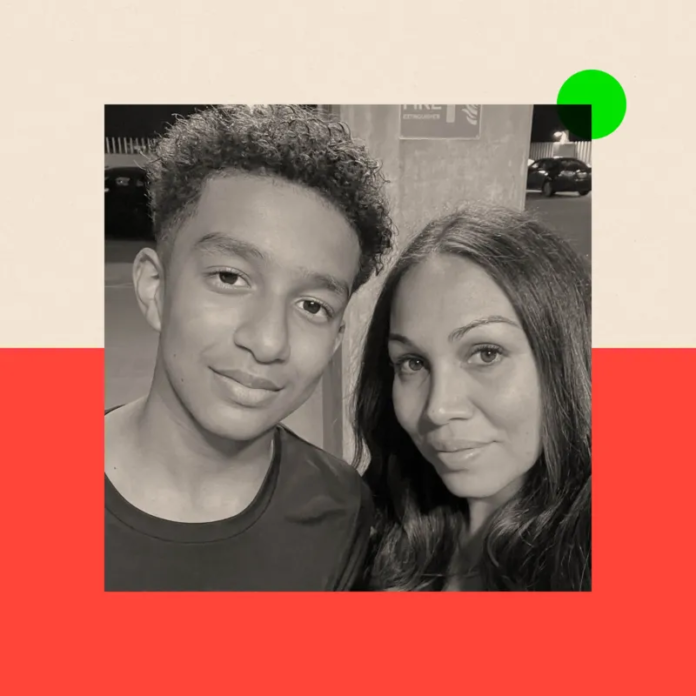
Marlon James-Edwards said his former pupil at Gladesmore Community School was “bright, inquisitive, and full of life.”

“I just remember him in the class, it was a very charismatic class.

Marcus Fakana’s Teacher, Marlon James-Edwards

“He wasn’t the loudest person in the room, but he was paying attention. I could see him looking up, making notes.

Read Also: 19-year-old Marcus Fakana dies in car crash months after release from Dubai jail over sex with 17-year-old girl

“But what I really remember is him being really respectful, being attentive and yeah, I kind of looked at him and thought, ‘OK, this boy is going to go far’.

“I didn’t quite know what he wanted to do. But in terms of his attitude, it seemed like he came from a good family.”

Campaign march, with five people holding a banner saying "bring Marcus home"
Marcus’s friends and family campaigned to get him released from prison

Marcus died three months to the day after he returned to the UK following his release from jail in the United Arab Emirates.

He had been sentenced to one year in prison after admitting to having consensual sex with a 17-year-old girl, also from London.

Although legal in the UK, in the UAE – where both teenagers were on holiday – it is illegal.

The Fakana family called on the UK government to intervene and six months into his sentence, Marcus was granted a royal pardon by the authorities in Dubai.

Mr James-Edward said Marcus’s imprisonment had been a shock.

“We were all getting over the fact of what happened in Dubai and the fact that he was back.

“That was a huge relief, and then a couple of months and then I’m seeing things dotted around social media, friends are contacting me knowing I’d worked with him in the past.

“I still haven’t processed it to be honest, but obviously I can’t imagine what his family is going through.

“He came back home, he’s in north London, he’s in Tottenham, and now he’s gone.

“It just doesn’t feel right. Just really sad, I know, just coming from Tottenham as well, that this is a huge loss for the community, and really it has reverberated around the nation, to be honest.

“I think a lot of people, if they have a son, this is something that you’ll absolutely understand and connect with.”

The driver of the crashed car was arrested at the scene and has since been charged with causing death by dangerous driving, driving with no insurance and failing to stop for police.

There will be a vigil in Tottenham at the scene of the crash on Friday, to mark the seventh day since Marcus died.

The teenager from north London who was killed in a car crash three months after being released from jail in Dubai has been remembered by his former teacher.

Marcus Fakana, 19, was a passenger in the vehicle that collided with a lorry in Tottenham in the early hours of Friday 3 October. He later died in hospital from his injuries.

It happened after officers from the Met Police had attempted to stop the car, the force said.

[Video] Doctor in life-or-death situation after being attacked inside hospital by man who lost 8-year-old daughter

A doctor attached to the Government Taluk Hospital at Thamarassery in Kozhikode, Kerala, India, was on Wednesday, October 8, 2025, attacked by the father of an eight-year-old girl who died of amoebic meningoencephalitis on August 14.

The child, Anaya, was first admitted to the Thamarassery Taluk Hospital with fever symptoms. Her condition worsened later, and she succumbed to the infection while she was being taken to the Government Medical College Hospital, Kozhikode, on August 14. The family members later alleged that Anaya was not given proper treatment at the taluk hospital. 

Two of her siblings were also infected with amoebic meningoencephalitis, but they recovered. 

According to sources, on October 8,  K.V. Sunoop, the father of Anaya, returned to the hospital and attacked Vipin, the doctor.  

Eyewitnesses said Dr. Vipin was in a conversation with his colleagues and a patient in the afternoon when Mr. Sunoop attacked him with a sharp-edged weapon on his head. 
 

Doctor in critical condition after being attacked inside hospital by man who lost 9-year-old daughter� (video)


Mr. Sunoop was also seen blaming Dr. Vipin for his daughter’s de@th before attacking him. 

Subsequently, Mr. Sunoop was overpowered by those present and the weapon was snatched from him. 

Mr. Sunoop was later taken into custody by the police. 

Dr. Vipin was transferred to a private hospital in Kozhikode city after being provided preliminary medical treatment.

Watch the video of the incident below.

19-year-old Marcus Fakana dies in car crash months after release from Dubai jail over sex with 17-year-old girl

Marcus Fakana has died in hospital after police pursued a vehicle in Tottenham, London, which was then involved in a collision

The 19-year-old British teenager who was jailed in Dubai for having a sexual relationship with a 17-year-old girl while they were on holiday has died in a car crash three months after he was released, a campaign group has said.

Marcus Fakana, 19, died in hospital in the early hours of Friday after police pursued a vehicle in Tottenham, north London.

The Metropolitan police said its officers were attempting to stop a “vehicle of interest” on Pretoria Road at about 12.52am. The force said after a short pursuit, police temporarily lost sight of it. Officers then drove on to The Roundway and found the vehicle had been involved in a collision with another vehicle.

A Met spokesperson said: “Police were on patrol at around 00.52hrs when they attempted to stop a vehicle of interest on Pretoria Road, N18.

“After pursuing the vehicle for around 60 seconds, police temporarily lost sight before locating the vehicle on the Roundway, N17, where it had been involved in a collision.

“Officers were supported by the London ambulance service and the London air ambulance, and a 19-year-old man was taken to hospital where he sadly died.

“He has since been named as Marcus Fakana from Tottenham. His next of kin are aware and continue to be supported by specialist officers. They wish for their privacy to be respected at this difficult time.

“The driver arrested close to the scene of the collision has since been charged with multiple offences.”

Fakana, who was 18 at the time of the relationship, received a royal pardon from Dubai’s ruler, Sheikh Mohammed bin Rashid Al Maktoum, in July after being sentenced to a year in prison.

Radha Stirling, the chief executive of campaign group Detained in Dubai, said she was “heartbroken” to share the news.

She said: “Marcus spent the majority of this year in a Dubai prison which no doubt caused him long-lasting mental anguish.

“It’s sad that of all of 2025, he was only free for the three months from the 3rd of July until the 3rd of October.”

Stirling added: “Mr [Fakana’s] loss is a painful reminder of how precious life is and how unnecessary imprisonment robs people of time they can never regain.

Raphaella Stirling, the crisis manager at Detained in Dubai, said in a post on X: “Marcus had only been released from prison earlier this year. Despite everything he endured, he was grateful for the kindness of the British public, and he embraced his freedom with renewed faith, joy, and hope for the future.

“His loss is a painful reminder of how precious life is and how unnecessary imprisonment robs people of time they can never regain. Every day of freedom matters. Rest in peace Marcus.”

Tributes were paid to Fakana on social media. One person expressed their condolences and said: “I fought for you to be released from prison in Dubai, I did my best and this is how it ended.”

Fakana had been with his parents in the United Arab Emirates (UAE) from the end of August 2024 when a “holiday romance blossomed” with another Londoner, who has since turned 18, Detained in Dubai previously said. She was reportedly one month from turning 18.

After returning to the UK and seeing pictures and messages, the girl’s mother reported the relationship to Dubai police, who then arrested Fakana at his hotel, it was alleged.

Fakana previously said the pair had kept their “holiday romance” secret from the girl’s family “because they were strict”, and they had hoped to continue seeing each other back in the UK. Detained in Dubai, he said he felt frightened when police officers arrested him.

In Dubai, if an adult has a sexual relationship with a person under 18, they can be prosecuted for having a sexual relationship with a minor. In the UK, the age of consent is 16.

Police said Marwaan Mohamed Huseen, of Tottenham, had been charged with causing death by dangerous driving, driving without insurance, driving without a licence and failing to stop. He was due to appear at Highbury corner magistrates’ court on Saturday. The Met’s directorate of professional standards was informed about the incident along with the Independent Office for Police Conduct (IOPC).

Credit: The Guardian

The digitally empowered lawyer is a guardian of justice, an architect of innovation — Audrey Chinelo Ofoegbunam

WELFARE NUGGETS

Indeed! This transformation is not just about tools; it is about mindset. It is about the courage to learn anew.

As the legal profession continues to intertwine with technology, the digitally empowered lawyer will emerge not only as a guardian of justice but also as an architect of innovation.

Audrey Chinelo Ofoegbunam, Esq, ACIArb(UK), ANICArb, ACIS, AICMC, ACTI.

#YourWelfareMyPriority

#ImpactfulWelfare

#NBAWelfare

#LegalTips

#WelfareThatMatters

#NBAWelfare2026

#Leadership

#LegalProfession

#ThinkWelfare

#OurWelfareMatters!!!

When I stopped hiding my disability, I no longer felt embarrassed to ask for assistance

In the first week of summer 2019, I decided I wanted a job. I was 16, finally old enough to attend festivals and concerts with my friends; all I needed was the money. With no prior work experience, I scraped together a CV that didn’t even fill a page and sent it to every shop and cafe in my little village in Chelmsford, Essex. Miraculously, I was offered a job interview at the local fast food restaurant.

I remember the nerves I felt on the way there. What would they ask me? Would they like me? In the end, I had nothing to worry about. The interview went well and the hiring manager seemed ready to hand me a contract. But, before I left, he asked me to try out serving a customer. “Just give her the items shown next to her order number on that screen,” he said, pointing to a monitor on the wall behind him.

To my horror, I couldn’t make out a single word on the display. The customer, a woman with her young daughter, stood impatiently as I froze. I didn’t know what to say. After a few awkward minutes, the hiring manager dismissed me, and I received a rejection email the next morning. My dreams of attending Wireless and Reading festivals with my friends disintegrated – and I had another, more important, revelation: for the first time in my life, I realised that I was disabled.

I knew I had been born partially sighted due to complications in the womb. As a child, I remember struggling to see the whiteboard in class, even when I was sitting right at the front. I masked this by copying notes from my friends, face bent close to the paper. To this day I struggle with basic maths, having learned most of it second hand.

Oreoluwa Adeyoola wearing an orange T-shirt and sitting on a blue chair in a garden.
‘I’m not just speaking up for me, but for the millions like me’ … Oreoluwa Adeyoola. Photograph: Courtesy of Oreoluwa Adeyoola

The adults in my life – at home, school, and at my regular hospital appointments – talked about my vision in huddled groups, voices hushed, eyebrows furrowed. It never occurred to me that most children didn’t frequently visit an ophthalmologist. As a seven-year-old, I had treated my two-week hospital stay (while doctors tried to work out what was wrong with me) like a holiday, befriending all the other children on the ward and working my way through books from the hospital library – at that age, I was less self-conscious about how close I had to hold the page in order to see text clearly.

As I got older, I buried the secret even more. At secondary school, I was the new kid who had moved from Ireland to Essex, and I desperately tried to hide my visual impairment.

But when I got back from that job interview, I made the first step towards navigating life with a disability: acceptance. It was a slow, agonising progress. At my next ophthalmologist appointment, I started asking more questions. I learned that glasses couldn’t improve my vision and that I would never be allowed to drive. Each new detail felt like a fresh blow.

For the first time, I looked at the official diagnosis I had received at 12 years old on my certificate of visual impairment: retinal dystrophy. Seeing the words in cold, bold print made something that had seemed so abstract and confusing a reality. To my surprise, I was filled with relief.

The next step was unlearning the hyper-independence I had developed over the years. I hated asking for help – so much so that I preferred taking the wrong bus than asking a stranger to read out the route number for me. I would say I wasn’t hungry at restaurants because I was too self-conscious to look closely at the menu. My biggest fear was being vulnerable and, at first, every time I asked for help, I would have a panic attack.

But as I started reaching out for help, the love and support of my friends overwhelmed me. They built up my confidence so that I no longer felt embarrassed to ask for assistance. As I started asking strangers for help, reading menus at cafes, navigating confusing tube stations or for aid crossing the road, I was surprised at how kind they were.

Today, I feel very far from the anxiety-ridden 16-year-old I was at that interview. I know that I cannot change my vision, but I treat every new barrier as a challenge. Speaking up when something is inaccessible has taught me that adjustments can usually be made to accommodate my needs, and I am no longer shy to ask for them. If I ever do feel anxious to admit I can’t see something, I remember there are more than 2 million people living with sight loss in the UK. I’m not just speaking up for me, but for the millions like me. And, these days, I make sure I never go hungry in restaurants.

Culled from The Guardian

Tinted Glass Ban: Lagos Lawyer drags FG, police to court

  • FCT Police suspend tinted glass permit enforcement after court order

A human rights lawyer and Notary Public, Olajide Abiodun, has instituted an action at the Federal High Court, challenging the continued enforcement of the Motor Vehicle (Tinted Glass) Prohibition Act by the Nigeria Police Force.

The lawyer, who is also the Vice Chairman of the Nigerian Bar Association (NBA) Ikorodu Branch and Chairman of its Human Rights Committee, maintains that the law originally promulgated as a military decree is inconsistent with the 1999 Constitution (as amended).

It could be recalled that police had been engaging in a series of public awareness campaigns about the ban on tinted glass, noting the punishment attached to failure to obtain a permit.

Abiodun contends that under Sections 1(3) and 315 of the Constitution, the legislation, being a military decree originally, is void and should no longer be enforced.

The suit names the Inspector-General of Police and the Attorney-General of the Federation as Respondents.

Abiodun is also seeking a judicial interpretation on whether the National Assembly has the legislative competence to sustain such military-era decrees without proper reenactment.

He further argues that the enforcement of the tinted glass ban violates citizens’ fundamental rights to liberty, privacy, and movement.

He is asking the court to grant injunctive reliefs that would restrain security agencies from harassing or arresting Nigerians over the use of vehicles with tinted windows, pending the determination of the case.

Meanwhile, the Federal Capital Territory (FCT) Police Command on Wednesday announced it has suspended the enforcement of vehicle tinted glass permits following a court order halting the exercise.

The suspension was confirmed by the spokesperson for the Federal Capital Territory (FCT) Police Command, SP Josephine Adeh, during a live interview on AIT on Wednesday.

Adeh said the directive took effect after the police officially received the court order stopping the enforcement.
“Information reaching me from the office of the PRO is that the order has been received, and the enforcement of the tinted permit is now on hold pending the court’s verdict,” she stated.

She explained that the suspension would remain in force until the legal process is concluded. “We are waiting for the verdict. We are not against the courts, and we will continue to wait until we get a verdict,” Adeh added.

Related News

Addressing public concerns, Adeh clarified that the tinted glass policy was introduced for security reasons, not financial gain.
She noted that in the past, criminals had used vehicles with darkened windows to commit crimes, making it difficult for law enforcement agencies to identify suspects.
“The law was not made by us; we are only enforcers. The policy was purely security-driven,” she said.

Adeh also dismissed claims that the policy was being used as a revenue source for the police, stressing that all payments for tinted glass permits are made directly into the Federal Government’s Treasury Single Account (TSA).

She assured motorists and the public that the police would comply fully with the court’s directive pending the final ruling.

[Video] Randy Delta man on the run after impregnating his daughter

A man from Delta who is presently on the run has been roundly condemned by Nigerians and others who heard that he impregnated his own daughter in the Otulu area of Delta state.

Activist Harrison Gwamnishu, who shared the story online, said the victim, now carrying her father’s child, is currently safe and under the care of his NGO.

‘’Incest, which involves sexu@l relations between close blood relatives, is a serious criminal offence under Nigerian law. According to Section 214 and 390 of the Criminal Code Act (applicable in Southern Nigeria), any person who engages in incest commits a felony and faces imprisonment for up to seven years or more, depending on the circumstances. In addition, if the victim is under 18 years old, the offender may be charged with defilement or rape, which attracts a life imprisonment sentence under Section 218 of the Criminal Code or Section 31 of the Child Rights Act.”

Harrison called on the authorities to immediately arrest and prosecute the suspect to ensure justice for the survivor and protect other potential victims.

Harrison mentioned that the survivor and her children are currently receiving support and temporary shelter through our volunteer network.

Watch a video of the traumatised girl below.

TIPS