Home Blog Page 189

Right of Reply: Re under Tinubu Nigeria is becoming a country, Godswill Akpabio

By Nkereuwem Udofia Akpan

This sort of public proclamation coming from the President of the Senate it really unnecessary and somewhat embarrassing

I really don’t have a problem with all three arms of government performing their constitutional roles distinct from each other as enshrined in sections 4, 5 and 6 of the 1999 Constitution.

Read Also: ‘Under Tinubu, Nigeria is becoming a better country’: Akpabio praises Tinubu’s leadership, https://www.intelregion.com/news/under-tinubu-nigeria-is-becoming-a-better-country-akpabio?intel=verified

What I object to is these public declarations of loyalty to the executive branch by the other two arms, whether the judiciary or the legislature.

It is totally uncalled for and gives a wrong message to the public. The legislature must show that it’s ready to conduct its oversight functions as a bulwark to stem the tide of reckless actions of the executive or other lawlessness and call the executive branch to order should there be an overreach by any MDAs.

I really don’t understand why the Senate President should be making these sorts of proclamations as if he is the SSA Media, Minister of information or DG of the National Orientation Agency.

There are half a dozen agencies to sing praises for the executive branch, but definitely not the head of another arm of government, whether the judiciary or the legislature.

The Senate is supposed to provide a check on the Executive Arm of government, not its spokesperson or a rubber stamp to policies or issue press statements for the executive.

The makers of the Constitution knew what they were doing when these three arms of government were kept separate.

The Senate president (as head of the legislature) or Chief Justice of Nigeria (as head of the judiciary) cannot do the job of the SSA on media to the executive branch.

Democracy can only work where these elementary tenets are kept.

Chief Nkereuwem Udofia Akpan, Constitutional Lawyer, Public Affairs Analyst, Human Rights Activist writes from Abuja

The views expressed by contributors are strictly personal and not of Law & Society Magazine.

Open Letter (satire) to PBAT and the AGF: Whether you call it coup d’etat, or coup by defection, the endgame and the methods are similar

The use of unconstitutional methods to seize or control of power at the federal or states of Nigeria (they must have learned from the best strategist-PBAT)

By Dr. Tonye Clinton Jaja

Your Excellency, President of the Federal Republic of Nigeria, GCFR, Sir,

And

Hon. Attorney-General of the Federation (AGF) and Minister of Justice, Sir,

Let me begin by stating a disclaimer: this entire write-up is a fictional satire intended as a comic relief to the harsh economic conditions in Nigeria.

Therefore, any semblance or reference to the names of either living or dead persons is merely a coincidence.

It has just been reported that some military soliders have been arrested for involvement in an attempted coup d’etat to overthrow the government of President Bola Ahmed Tinubu (PBAT). This is reported online at: https://saharareporters.com/2025/10/18/exclusive-nigerian-defence-intelligence-detains-brigadier-general-other-officers-over

Let me also state clearly that I am not in support of any form of coup, whether it is coup d’etat or coup by defection.

The reason is because any form of coup is a violation of Section 1(2) of the Constitution of the Federal Republic of Nigeria, 1999 which states in summary “that the Federal Republic of Nigeria shall be governed only in accordance with the provisions of the Constitution. It prohibits any person or group from taking control of the government or any part of it except as outlined in the Constitution.”

However, as much as every right-thinking citizens of Nigeria condemn 100% the coup plotters, it is important to identify what is the underlying reason (s) that gave them the impetus.

Although, we are yet to receive transcripts of the interrogation conducted by the Defence Intelligence Agency (DIA), we can hazard a guess.

It is a possible and plausible explanation that these coup plotters must have learned from the very successfully executed coup plot of PBAT that he carried out on 18th March 2025 to seize power in Rivers State.

The proclamation of a State of Emergency in Rivers State by PBAT is clearly a violation of Section 1(2) of the Nigerian Constitution and fits the definition of a coup.

In a nutshell, by that singular act, your good self usurped the powers of both the Governor of Rivers State and the Rivers State House of Assembly by unconditional means.

You went further to utilise this coup towards your endgame of instilling fear into the hearts of Governors of some of the 36 States of Nigeria, so that out of duress they would defect to join the All Progressives Congress-APC.

In the final analysis, the series of actions can be classified as a coup by defection because your end game is to consolidate your hold on power ahead of the 2027 general elections.

Let me explain in greater details how it constitutes a coup by defection.

By virtue of the Economic Community of West African States (ECOWAS) Treaty of 1993, every treaty of ECOWAS has direct and immediate application within the territory of Nigeria as self-executing treaties. ECOWAS treaties are on the same status as the Nigerian Constitution as per the judgment of the Supreme Court of Nigeria in the case of Fawehimi vs. Abacha (2000).

One of such ECOWAS Treaties is the 2001 Treaty that prohibits the engagement of unelected officials to govern either the national or sub-national units of any ECOWAS country.

If Nigerian did not have a rubber-stamp Senate or Legislature, PBAT ought to have faced IMPEACHMENT proceedings for his violation of the said ECOWAS Treaty.

Instead with the active participation and collaboration of the Senate and the National Assembly, PBAT successfully violated Section 305 of the Nigerian Constitution by using voice votes instead of the two-thirds majority votes pre-requisite requirement before proclamation of a State of Emergency in Rivers State on 20th March 2025.

Since after the declaration and lifting of the said State of Emergency in Rivers State, the Governors of Delta, Akwa Ibom and Enugu States have since defected from the Peoples Democratic Party (PDP) to the APC.

Even though this is in itself a violation of the Nigerian Constitution which states that: “if a Governor defects to another political party he will cease to hold office in accordance with section 180(1)(d) of the Nigerian Constitution”.

In its judgment of 28th February 2025, the Supreme Court of Nigeria has provided the legal window of opportunity for legislators to defect from the political party that sponsored them into office without the consequence of losing their seat in the legislature as prescribed under Section 68(1)(g) of the Nigerian Constitution.

The foregoing are the details of the coup by defection that is currently on-going within Nigeria which the military soldiers have learned from and possibly tried their own variant which the dictionary defines as coup d’etat!!!

I hope that the Hon. Attorney-General of the Federation (AGF) has informed you that, regardless of their military and unconstitutional methods, if military officers or Yele Sowore and his so-called revolution are successful, they become legitimate.

“A military coup creates a new legal order because the new regime’s validity depends on its own laws, not the previous constitution. In common law jurisdictions, cases like Republic of Fiji v Prasad recognize this by upholding the new legal order, while other precedents like R. v. Dosso in New Zealand, which validated a coup-based government, are sometimes cited for providing a legal foundation for extra-constitutional regimes. Under a new legal order, the coup makers can change laws at will, and courts function only to the extent permitted by the new regime”

On a final note, there is an eternal law, we usually reap whatever we sow, if we teach the general populace that we are like expert scientists who can tweak, twist and modify the Nigerian Constitution (like a genetically modified organism-GMO) to make it serve our own selfish endgame of consolidating our hold on power, the people, citizens are watching and learning!!!

Yours faithfully,
Dr. Tonye Clinton Jaja,
18th October 2025.

The views expressed by contributors are strictly personal and not of Law & Society Magazine.
ALDRAP urges lawyers to rise against Chinedu Agu’s detention

Fellow Learned Colleagues,

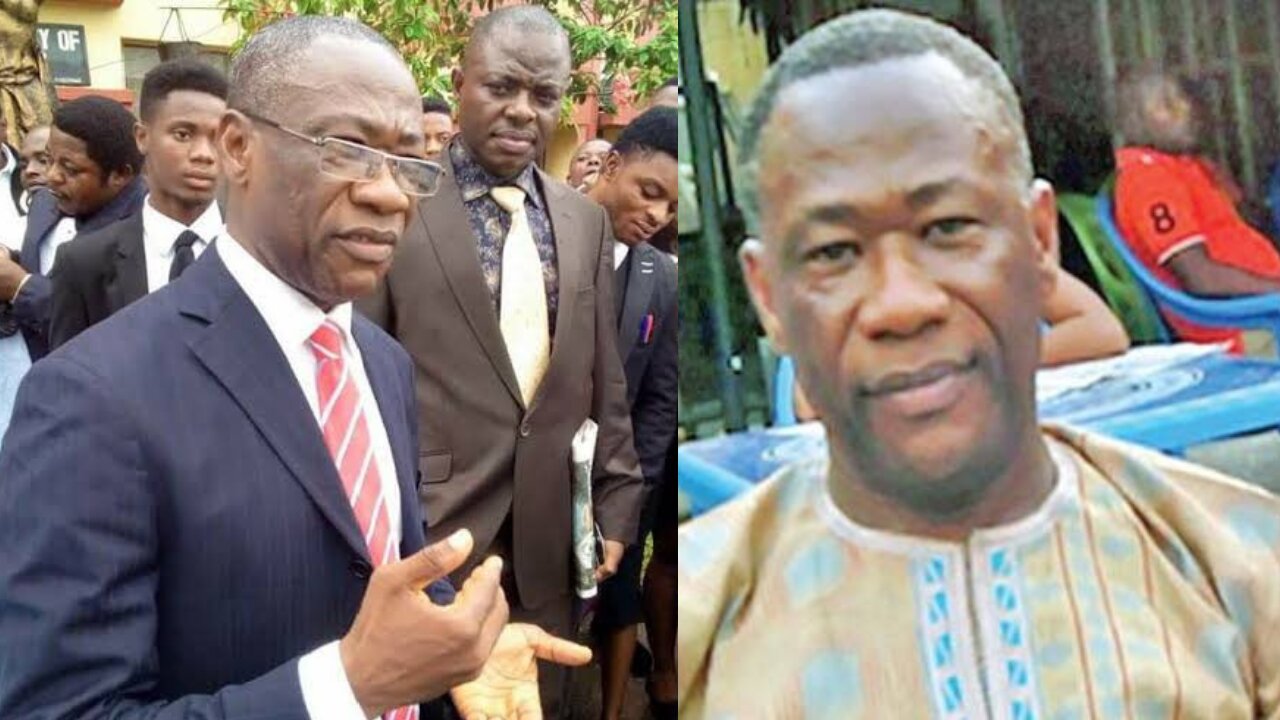
Our Learned colleague, Chinedu Agu, has been in DETENTION for about 20 (twenty) days now.

Regardless of his alleged offence, he is entitled to bail.

This is what we, as his colleagues, should be fighting for.

It is the court of law that would adjudicate upon whether he is guilty or not.

Detention or imprisonment is decided by the court of law after a trial.

Now it appears that his own detention and imprisonment are being imposed before his trial.

In the course of my career as a legal aid lawyer, I have been inside the prisons at Sokoto State and Kirikiri Prisons, it is both physically and psychologically traumatic place.

Let us as Nigerian lawyers, focus on securing bail for our colleague; thereafter, the judge can sentence him to life imprisonment after the trial.

The Nigerian Labour Congress (NLC) made a strong case for the reinstatement of their affiliate PENGASSEN members who were sacked by DANGOTE REFINERY!!!

Dr Tonye Clinton Jaja for Association of Legislative Drafting and Advocacy Practitioners (ALDRAP)

Intimate Affairs: When forgiveness is hard (2), by Funke Egbemode

She was popularly called Mama Iyabo. Her husband threw her out of their matrimonial home 15 years ago, along with her three children, after 15 years of marriage.

“I had earlier heard rumours about my husband and another woman. I knew he had girlfriends. He was doing well and living it up, though he took care of the home front. But one day, like a man in a trance or one in the firm grip of a spell, he threw me and my children out. He said he was done with me and my ‘bush ways’, he said as a Senior Manager of one of the biggest breweries in the country, he needed a wife that fitted his new position. I was dazed. I wept. I begged. I threatened. I called in his family, my family, the church, but he listened to no one. His mind was made up. He wanted a new wife, not a second wife. I was broken. I fell ill, very ill. I lost the will to live even but the fear and tears of my children pulled me back from the brink. Gradually, I rebuilt my life. It was tough and torturous, but we did it together, the children and I. Their father did not lift a finger to help us. Maybe his wife didn’t let him, or he thought sending us money would make me return to him.”

Fast forward to 22 years after Mama Iyabo, Iyabo and Kole were ‘evicted’ by Baba Iyabo, the Senior Manager, 69-year-old, once-successful, fine bobo suffered a stroke. His second wife had left him the previous year. Now a successful mother of a nurse and an engineer, both resident in Canada, Mama Iyabo got a call from one hospital. Her former fast-talking husband now speech-impaired had written her number and name as his next- of-kin. Next of what? Of course, she flipped and screamed.

“So, it was now time to remember me, me that had to live in a room that had no mosquito net. Me, that had to bathe behind an uncompleted building before daybreak and trek with my children to school every day? Me that had to supplement my income with menial jobs to put my children through school? He must be joking. He knows where his family is and my children and I are certainly not one of them. He should go and look for the wife who drove his cars and the children that slept in air-conditioned rooms while I suffered in a house that had no bathroom. No, he should look for those who enjoyed him in the mansion when his blood pressure was normal.”

Mama Iyabo’s anger was huge and justified. Why should she be the one cleaning the drool from a man’s mouth because the one he kissed day and night fled? Really, this thing called ‘tomorrow’ or ‘the future’ can be truly mean. If we all acknowledge that the day called tomorrow always arrive holding karma in one hand and the law of harvest in the other, we will all begin to do better today, right now. Mama Iyabo blocked the line that called her from the hospital and refused to pick any call from unknown numbers.

Then the physical pleas came in torrents, from everywhere. Trust the church to lead the forgiveness and restoration crusade (a topic for another day, that) including her children who flew in from Canada to beg her. That broke her and her resolve to pay Baba Iyabo back in his own coin.

“It was hard but I eventually agreed to care for him in the hospital. Seeing him there helpless and gaunt, being fed through drips and tubes melted whatever anger was left when I walked into his private ward. All the anger gave way to pity. The plea in his eyes brought tears to my eyes. So this was all that remained of my once bossy and handsome don’t-argue-with-me husband? Where was all the bravado, the he-who-must-be-obeyed man who threw me out and then refused to pay my children’s school fees? His lips moved futilely, without making the words he so deeply wanted to deploy. His struggles made it impossible for me to hold on to my anger. He would look at me long and deep as if searching for what was going on in my heart.

Eventually, I started talking to him, told him to forgive himself as I had forgiven him. I held his hand and prayed with him twice daily. One morning, about 4 am, he woke me up in his peculiar way, told me to put his head on my lap so we could pray. I did. He died in the middle of that prayer session. I was happy that I was there for him but till today, I still feel the pain and pressure of the years he left us to fend for ourselves, groping in the dark while he took his second wife on summer holidays.”

If you were in Mama Iyabo’s shoes, what would you have done? Did Baba Iyabo deserve forgiveness? What exactly is forgiveness? For instance, could Mama Iyabo have just gone to the hospital to see her estranged husband, rubbed his bald head and say ‘I forgive you’ and left him in the care of his nurses and doctors? Or forgiveness was her staying beside him until he breathed his last? What if he had lived, would forgiveness have been the resumption of their marriage with Mama Iyabo taking her husband back? Would not taking him back mean she did not forgive him?

Not all women survive desertion and abandonment. Most children’s destinies get twisted when marriages break down. Daughters who would ordinarily have been called to bar at 23 become teenage mothers. Promising sons drop out of school and become coke-heads, depressed or criminals. How does a mother recover and forgive after months and years of hoping and wishing for what-could-have-been? This is why I do not join the multitude to do the evil of lynching any mother who refuses to let a deserter-father in when the children he abandoned become successful. Another long thing for another long day.

Bukky, my sister, said as a Christian, forgiveness is not optional. I agree. But can we all agree that how we show this ‘forgiveness’ can vary?

[email protected].

30-year-old man beaten to death for allegedly tempting a married woman

A 30-year-old man was allegedly beaten to death on Friday by a husband for attempting to entice his wife in Lumbu community, Ningi Local Government Area, Bauchi State, Nigeria.

Security expert, Zagazola Makama, who confirmed the development through his X handle on Friday, disclosed that the sad incident occurred at about 2:09 a.m. on Friday when the deceased, identified as Sanusi Tinau, allegedly visited the house of a yet-to-be-identified man to entice his wife.

The husband reportedly attacked Tinau, beating him to a state of unconsciousness before fleeing the scene.

However, police officers responded promptly and took the victim to the general hospital in Ningi, where he was confirmed dead by a medical doctor.

The report said efforts are ongoing to arrest the fleeing suspect as the investigation continues.

Breaking!! The Unending Epstein Scandal: Prince Andrew relinquishes title as Duke of York

Prince Andrew is giving up his titles, including the Duke of York, he has announced in a personal statement.

He has been under increasing pressure over his links with sex offender Jeffrey Epstein, with calls for the Palace to take action against him.

That now seems to have resulted in the prince deciding to voluntarily hand back his titles and to give up membership of the Order of the Garter.

In his statement, he said he continued to “vigorously deny the accusations against me”.

“In discussion with the King, and my immediate and wider family, we have concluded the continued accusations about me distract from the work of His Majesty and the Royal Family,” said a statement from Prince Andrew.

“I have decided, as I always have, to put my duty to my family and country first.

“I stand by my decision five years ago to stand back from public life.

“With His Majesty’s agreement, we feel I must now go a step further. I will therefore no longer use my title or the honours which have been conferred upon me. As I have said previously, I vigorously deny the accusations against me.”

Prince Andrew has faced a series of scandals, including a court case he settled with Virginia Giuffre, questions about his finances and his involvement with an alleged Chinese spy.

He will remain a prince – but will cease to be the Duke of York, a title received from his mother, the late Queen Elizabeth.

Andrew had already ceased to be a “working royal” and had lost the use of his HRH title and no longer appeared at official royal events. His role now will be even more diminished.

His ex-wife will be known as Sarah Ferguson and no longer Duchess of York, but their daughters will continue to have the title of princess.

Prince Andrew has faced intense scrutiny over his links with disgraced financier Epstein, more recently including questions about when he had really cut off contact.

In his BBC Newsnight interview, Prince Andrew had said that he had severed all links with Epstein after they had been photographed together in New York in December 2010.

But emails sent in February 2011 later emerged suggesting that Andrew had privately stayed in touch with Epstein, including swapping a message: “Keep in close touch and we’ll play some more soon!”

There had been growing frustration in Buckingham Palace at the scandals that continued to surround the prince.

Next week a posthumous memoir by Virginia Giuffre will be published which is likely to cast further attention on Prince Andrew’s involvement with Ms Giuffre and Epstein.

Credit: BBC

Dismissed for refusing to be a temple prostitute? An-ex Catholic reverend sister speaks

A woman religious attends Mass in the chapel of the motherhouse of the Oblate Sisters of Providence near Baltimore Feb. 9, 2022. (CNS photo/Chaz Muth)

By Temitope Adetunji

Annastasia Kinse, a native of Plateau State, made history as the first reverend sister from her village. But after a decade in the convent, her life took a turn — she was dismissed from the Congregation of Mother of Perpetual Help of the Archangels Sisters. In this interview with TEMITOPE ADETUNJI, she opens up about her dismissal and the journey of faith that followed.

For how long did you serve in the convent?

My name is Annastasia Kinse. I’m a few months away from turning 30. I am from Plateau State. I was a reverend sister under the Congregation of Mother of Perpetual Help of the Archangels Sisters, Auchi Diocese, Edo State. I also served as a Graduate Assistant at Veritas University, Abuja, while pursuing my master’s degree there before my dismissal.

I joined the convent in July 2015, went through formation for two years, and made my perpetual profession in 2023. I was proud to be the first sister from my village and tribe. For me, religious life was a deep calling, a way to serve God completely, in sincerity and truth.

What exactly happened that led to your dismissal?

In July 2025, my congregation issued an official clarification and disclaimer letter on Facebook and WhatsApp. The letter stated that a dismissal notice had been dated July 21, but I did not officially receive it until September 24. By then, rumours about my status were already spreading, following the circulation of a letter written by a priest of the Auchi Diocese, Rev. Fr. Solomon Andrew Olumekhor, on social media. To clear the air, I made a public post on Facebook explaining what happened.

The letter claimed that I had acted against my vows and identified as a Muslim, but that was completely false. What truly happened was that I reported a case of harassment at Veritas University. My report didn’t sit well with the vice chancellor and others. Instead of receiving support, I was met with silence, intimidation, and eventually, dismissal.

What kind of harassment did you report?

It was a case of sexual harassment. The man involved was my head of department. I had voice recordings and videos as evidence. My intention was not to destroy anyone’s reputation; I only wanted to prevent him from doing it to other women.

At first, I wrote a confidential complaint, requesting that my identity be protected because I didn’t want it to become a scandal. But soon after, I was told to remove the anonymity clause and defend my claims openly.

They set up a panel that made me feel as though I was the one on trial. The panel members were instructed to make me prove where such cases had been reported and not handled by the university. I felt heartbroken that the burden of proof was being pushed onto me instead of the institution conducting a proper investigation. None of the people I had written to, including the Chief Medical Director of the university, was invited to testify.

What happened when you appeared before the panel?

It was a very difficult experience. The panel hearing was scheduled for the same day I had an exam. I chose to forfeit the exam to attend. When I arrived, they seized my phone and bag.

Inside, the atmosphere was hostile. I was asked intimidating questions such as, “If you knew he was going to harass you, why did you go to his office?”, as if I could avoid my own head of department. Several panel members spoke at once, and it felt like they were trying to confuse and unsettle me.

The session lasted for about an hour and a half. Before that day, I had written to the school, explaining that I was under pressure and experiencing mental distress. I even requested counselling or any form of support, but none was provided.

A day before the hearing, I also wrote to the vice chancellor, stating that I was aware of the instructions he had given to the dean of my faculty, and that I found it unfair that the burden of proof was being placed on me instead of the university investigating the matter.

After the hearing, priests and other staff members came to visit my house uninvited. They came with an unidentified nurse and others. I was about to leave the house when I saw them approaching. I felt completely cornered. I stopped a motorcycle to get away, but they shouted at the rider to stop. I was terrified.

What is the relationship between Veritas University and Congregation of Mother of Perpetual Help of the Archangels Sisters?

Veritas University is a Catholic institution owned by the Catholic Bishops’ Conference of Nigeria. My congregation was founded by the Catholic Bishop of Auchi Diocese in Edo State. The Vice Chancellor and the Bishop attempted to silence me, claiming that speaking out would tarnish the image of the university they had worked hard to build.

You made a post about identifying as a Muslim. What exactly did you mean?

Yes, that post caused a lot of misunderstanding. On July 12, I wrote on Facebook that I had converted to Islam. That post was not a conversion; it was made in a moment of frustration and despair. My aunt died as a Muslim, and her name, Salamatu, came to mind when I made that post. The picture used was from 2023.

At that time, I felt abandoned by the Church system I had served all my life. I was angry that the very people who should protect victims were instead protecting perpetrators. It was an emotional outburst; a cry of pain, not a renunciation of my faith.

How did your congregation respond to all this?

They didn’t reach out to help. Instead, they began to treat me like a problem. They even sent a priest who had previously made advances toward me to “counsel” me. I couldn’t speak to him because I was angry; he was the last face I wanted to see.

He later called my neighbour to find out what happened, and was told I had been harassed.

But since the priest was on a revenge mission because I had refused his advances, he twisted the story and spread the narrative that I had refused to cooperate with them.

I tried to explain my situation to the bishop. I sent messages and letters through WhatsApp, but he later denied ever receiving them, even though I had proof of delivery.

I spent 10 years in religious life. I joined the convent because I wanted to dedicate myself to God and to service. But what I went through in the form of harassment, cover-up, and intimidation broke my trust in the authorities. A lot happened that I don’t yet feel safe discussing.

Tell us about the day your belongings were thrown outside.

It was a day I will never forget. After a meeting with the bishop, the superior general, a sister, and some priests, the bishop told me to spend the night in the guesthouse of my former community.

I refused because of the painful memories attached to that place. I insisted on returning to the central house.

When I arrived, I found all my belongings dumped outside, and my religious habit had already been taken away, without any explanation or courtesy. I took a photo and sent it to a priest because I could hardly believe what I was seeing.

That same night, I made a Facebook post announcing my dismissal, not to seek pity, but to let the public know what had happened.

How did that make you feel?

It shattered me. Ten years of devotion, obedience, and sacrifice, all dismissed in an instant. I was treated like an outcast, discarded without compassion. I felt humiliated, abandoned, and betrayed by the very institution I had loved and served faithfully.

But through it all, I never lost my faith. I still love the Church. My faith in God remains unshaken, even though my faith in human institutions has been tested. I am going through so much, facing several challenges, but I still want justice.

What are your immediate plans now?

Honestly, I don’t have any concrete plans yet. I wasn’t prepared for any of this. My main goal is justice, not revenge, just the truth.

When I reported the case, I was told the institution needed to protect itself. But why protect an institution and not the victim? If institutions keep silencing victims, the Church will continue to lose credibility.

I’ve seen others go through similar experiences and get silenced, too. That’s why I’m speaking up, not just for myself but for every woman who has been told to “keep quiet.”

You also mentioned you’re battling a health condition.

Yes. I was involved in a motorcycle accident in February last year. I sustained a disc bulge and have been in pain ever since. My back swells, and it affects my movement. I’ve been managing it on my own without medical support.

Travelling between Jos, Abuja, and Auchi made it worse. Right now, I live with my cousin, and my sister often comes to help me. I need medical treatment, but I’ve refused to take help from those who mistreated me. I would rather struggle honestly than return to them for assistance.

As I often say, I would rather hawk chin-chin and groundnuts on the street than sell my body or become a temple prostitute. I promised my mother that, and I have kept that promise to this day.

Is it true that your parents were contacted by the congregation?

Yes. Without my consent, the congregation and the university reached out to my parents, claiming I needed psychiatric help. They even sent N50,000 to my father’s account as transport fare for my mother to come to Abuja.

They tried to convince my parents that I was mentally unstable. I warned them, “If you come believing their story, you won’t find me in Abuja.”

To prove I was fine, I completed my exams and travelled home to Jos on my own. I also visited a university teaching hospital for psychological and psychiatric evaluation. I’ve been waiting for the hospital to release the report for months now.

How did the bishop’s meeting go after that?

While I was at the hospital for tests, the bishop called. I answered and told him exactly where I was, yet later, he claimed I had refused communication, which I found baffling.

When I eventually went to see him, he invited a dean and others to join the meeting. Then the superior handed me a letter accusing me of apostasy, saying I had renounced Christianity and converted to Islam.

I told the bishop it was a complete lie, but he said there was nothing he could do and asked what I wanted him to do now that I was no longer one of them.

I took the letter quietly and walked away.

Did you face any other form of harassment within the Church?

Yes. Apart from the university case, another priest also made sexual advances toward me. He said he wanted to be “the first man to sleep with me.” I rejected him, not just him, but others too. I was considered a wicked person for not being “forthcoming,” according to the priests.

Even the superior knew about it. But they will not corroborate my story since they are lying about so much that happened.

I believe the effort to silence me was because exposing one case would expose many others. Instead of helping victims, they protect reputations.

They told me I was wasting my time speaking up, that nobody would help me. But I believe the online community, human rights activists, and people who love justice will not ignore this.

I refuse to be part of a system that reduces my worth and treats me as a commodity.

Despite everything, do you still consider yourself a consecrated person?

Yes, I do. The letter of dismissal was based on false grounds. I took perpetual vows, vows meant to last until death.

 You can’t undo that with a letter full of lies.

They even accused me of burning my religious habit, which was untrue. I only packed my things from the hangers in frustration, and I made a video asking my sisters to come for their habits because of the pressure I was under.

If they claim I’m mentally unstable, where is the medical proof? If they say I went for counselling, where are the records? These are questions no one has answered. They also claimed they sent me to the monastery in Ewu, Edo State; these are all lies from the pit of hell.

What lessons have you learned from all this?

This experience has opened my eyes. There is a lot of rot in the Church, and silence only worsens it. I’ve realised that truth is often inconvenient, and many institutions will do anything to suppress it.

But keeping quiet helps no one. If the Catholic Church in Nigeria can establish proper systems for handling abuse, it will not only help the Church but it will also help society.

The Church is meant to be a light to the world, not a place where victims are silenced.

I’ve also learned to stand firm. They can take away my position, my title, and my job, but they cannot take away my voice.

What message would you give to young women aspiring to religious life?

Religious life is beautiful, but it’s not for the faint-hearted. It’s a path meant to lead one closer to Christ, not a place of comfort or prestige.

I would advise young women to pray deeply and discern carefully. Not everyone in the convent is there for God; some are there for power, control, or personal gain. Go in with pure intentions.

When you choose truth, you’ll be misunderstood and labelled “difficult” or “disobedient.” But don’t let that break you. Stay close to Jesus. Pray the Rosary. Stay rooted in the Blessed Sacrament.

Most importantly, if you ever experience abuse or injustice, speak up. Don’t let fear silence you. And before joining any religious order, do your research. Ask questions. Observe. If something feels wrong, walk away.

How has your family handled all of this?

My family has been incredibly supportive. We are six children – three boys and three girls. My parents were deeply shocked when they heard what happened, but they stood by me through it all.

They believe in justice and truth, and their faith in me has given me the strength to keep moving forward, even when everything else seemed to fall apart.

What keeps you going now?

Faith; pure faith. I’ve witnessed the darkest sides of human behaviour within sacred walls, yet I’ve also experienced God’s unfailing love and faithfulness.

There are days I cry, and others when I find deep peace in prayer.

I may have lost my position, my home, and even my health, but I haven’t lost my purpose.

If my voice can help just one person find the courage to stand up against injustice, then my pain will not be in vain.

I believe God is still writing my story, and one day, even the chapters that broke me will make sense.

When contacted for comments on the allegations, the Superior General of the Mother of Perpetual Help of the Archangels Sisters, Sr Maryanne Ogwokhademhe, referred our correspondent to an official statement issued by the congregation on August 29, 2025.

In the statement, jointly signed by Sr Ogwokhademhe and the Secretary-General, Sr Rosemary Odion, the congregation claimed that Miss Kinse Shako Anastasia had “ipso facto ceased to be a member of the congregation when she defected from the Catholic faith and embraced Islam.”

The statement further denied her allegations of mistreatment, insisting that “at no time did she ever report any case of sexual abuse to the congregation.” It added that her dismissal was due to “acts of gross misconduct” and her “persistent rejection of fraternal correction.”

An inquiry letter was also sent to the Human Resources Department of Veritas University, Abuja, on October 8, 2025. Still, no response had been received as of the time of filing this report.

Originally published by Punch Newspapers and written by Temitope Adetunji.

In Nigeria crime actually pays

By Nkereuwem Udofia Akpan

I sometimes wonder if all the trouble of going to school and remaining law-abiding was a wise choice.

Using Nobel Laureate Wole Soyinka and ex-warlord Tompolo as a reference point, would you really say my father was right when he forced me to pursue education and stay off bad company? Can I afford to donate N10 billion, despite having almost three decades of experience in legal practice, paying taxes, and generally remaining law-abiding?

He said school and education will bring prosperity, while crime and criminality will bring poverty and pain.

Just a few days ago, hundreds of criminals serving jail terms for drug peddling, fraud, murders, kidnapping, including those on death row, were pardoned by President Bola Tinubu

Would you think that crime and criminality are such a bad route after all in Nigeria?

Maryam Sanda has walked free from the brutal murder of her husband.

Farouk Lawan is preparing to contest elections as Governor of Kano State. Three former Governors who were sentenced to prison terms were also pardoned by the late President Buhari.

What exactly is the incentive for remaining law-abiding? Where is the deterrence factor that punishment and prison were meant to serve? How do you spend taxpayers’ money chasing after Yahoo boys and petty theft while drug barons, murderers, and looters roam free?

What message is Nigeria sending to the international community about the Rule of Law in Nigeria? Which investor will want to invest in a country where crime and criminality are celebrated?

You be the judge.

Chief Nkereuwem Udofia Akpan, Constitutional Lawyer, Public Affairs Analyst, Human Rights Activist writes from Abuja

The views expressed by contributors are strictly personal and not of Law & Society Magazine.
Sincere Reforms to Save Our Democracy: An open letter to the President of the Nigerian Senate, the Speaker of House of Representatives and all State Houses of Assembly in Nigeria

By Joseph Onu Silas

INTRODUCTION:
During the Senate screening of the newly appointed Chairman of the Independent National Electoral Commission (INEC) on 16th of October, 2025, I noticed the passion with which the President of the Nigerian Senate spoke about the need for changes in our Electoral Act for more transparent elections in the future. This is in addition to statements from his office that a new Electoral Act could be ready by December of 2025.

As a lawyer with a bias for Constitutional law, this caught my complete attention and moved me to share my thoughts on the proposed amendments to the existing Electoral Act, 2022, and even consequential Constitutional amendments that will strengthen our elections and democracy.

The Nigerian electoral history has been dominated by cries of cheating, rigging, and judicial manipulation of the laws to favour certain players. I have been a counsel in two Presidential Election Petitions representing the Peoples Democratic Party and His Excellency, Atiku Abubakar in both the 2019 and 2023 Presidential Elections Courts and Appeals to the Supreme Court. I have also earned personal experience in election participation as the candidate of the Peoples Democratic Party for the Ebonyi South Senatorial Bye-Election that took place on 3rd of February, 2024, and a Petitioner from the outcome of the same election. Therefore, I have the dual experience of a Counsel and a Petitioner in Nigeria’s electoral matters.

The Nigerian elections are basically bedeviled by three key fundamental issues, which are replete in all election cases. These issues form the basis on which almost 100% of elections are challenged in Nigeria. The question of whether a person is qualified to contest an election is first on this list. This has remained very thorny in Nigeria’s electoral disputes, with multiple standards deployed in resolving the question.

Another pertinent challenge is the question of the conduct of election. The processes laid down by law and how the electoral umpire carries out this responsibility is responsible for many election cases in Nigeria. Then comes the big one, which every politician now desires to have a grip on. The election cases themselves and the role of courts. Judges have become the sole determinants of every election in Nigeria. As a matter of fact, if the outcome of an election is not determined by a judicial pronouncement one way or the other, even the winner will not rest easy. The judiciary now certifies the outcome of an election before it is taken as completed.

These three issues are the focus of this document, and I will proffer recommendations on how the trio of challenges can be dealt with and the integrity of our elections enhanced.

  1. QUALIFICATIONS:
    Today, the question of qualification in Nigeria’s electoral jurisprudence is both a pre-election and a post-election ground for litigation. It is as if the framers of the Constitution intended that qualification should be a subject matter of confusion that should be litigated and completely be left to the discretion of a court to determine what amounts to qualification to hold office in Nigeria. It is more so when you consider why the framers will make a provision for qualification in the constitution and then make another separate provision for disqualification in the same document. Ordinarily, it should be that when a provision for qualification is made in a document, anyone who is unable to meet that requirement is disqualified, without more. If a minimum of a primary school certificate is a requirement for qualification, a confusing word like “its equivalent” should be deleted so that everyone know that a primary school certificate is the minimum academic qualification required to contest an election in Nigeria. That is quite straightforward as it leaves no room for imaginative interpretations as to what is a minimum academic qualification needed for qualification to run for an election in Nigeria. That should not be a difficult task for the National Assembly to accomplish. Same is the case with provisions in the disqualification provisions of the constitution where the list of disqualifying items are provided for, leading to confusion as to whether a person is disqualified under the qualification provisions or only under the disqualification provisions or both. Courts have been giving the judgment on qualifications based on their particular interest in a given case. The jurisprudence is confusing as there are multiple conflicting decisions on what amounts to qualification or disqualification under the Nigerian constitution. My argument is that the provisions of the Constitution on qualification should be simple and straightforward, stating what qualifies a person to contest election in Nigeria, with anything to the contrary amounting to disqualification. If having a criminal record is a disqualifying factor, it should be listed under qualification as “whoever has a criminal conviction on any criminal charge, is not qualified to contest election in Nigeria”.
    Another question that arises on qualification, mostly in litigation, is whether qualification is a pre-election matter or a post-election matter. As stated in the opening of this sub-heading, I do believe that qualification is both a pre-election and post-election ground for questioning an election as clearly provided for in the grounds for questioning an election. As a post-election ground, this question can be raised only by another candidate who participated in the election before an Election Petition Tribunal or Court. The tricky aspect of qualification is the pre-election part. Here, only co-aspirants in the primary elections of a political party can question the qualification of another. In Nigeria today, at the pre-election level, what is obtainable is that a person who is ab initio not qualified, may successfully participate in the general election if he/she is able to ensure that none of the co-aspirants file any challenge on qualification or even emerge unopposed. Once such a person makes it to the general election and emerge successful, the chances of removing such a winner at the election tribunal are almost non-existent as law rarely dictate the decisions of election tribunals. My argument on this point is that the question of qualification should be made a pre-election matter only and the locus be extended beyond being a party affair. Constituents who are the ultimate employers of politicians should and ought to have the constitutional right to question the qualification of anyone who desires to represent them in any political office, whether in the executive arm or legislature. Such cases are to be filed only in High Courts within the constituency that the aspiring politician intends to represent and should be dispensed with in accordance to the time specifications for pre-elections cases.If this becomes the case, there will be no need for qualification being questioned after a general election. Nigeria should not be a nation where elected officials are dragged to court on questions of qualification. It is a national embarrassment and should be dealt with before anyone even emerge as his or her party’s candidate. I believe that the essences of INEC’s publication of nomination 150 days before the day of election is to allow public scrutiny of nominees and therefore provisions such as S.84 (3) needs to grant members of the public in the relevant constituency, the locus to question the qualification of aspirants from all political parties seeking to be elected therefrom. This will enhance the quality of leadership recruitment and improve citizens participation in our democratic process. Electoral processes should not be only about the political parties, citizens are always at the receiving end of leadership decision, good or bad.
  2. CONDUCT OF ELECTION:
    This is at the heart of all elections globally, as it entails the processes and procedures of conducting elections. In Nigeria, this is the most troubling aspect of our electoral history, as election planning are and have always been beautifully and wonderfully organized until the election day itself. In the past, the most troubling challenge faced on elections day was the snatching of ballot boxes and stuffing of same. In recent elections, with the introduction of technologies such as the Card Reader and recently the Bimodal Voters Accreditation System (BVAS) and the undermined Electronic Transmission of Results, together with the Irev, snatching of ballot boxes aren’t fashionable in rigging elections. The conduct of elections in recent times is now undermined by the processes itself. The Electoral Act contains some desire for reforms and transparent election, but is a self-defeating piece of legislation.
    Recent elections have shown that the conduct of election at the polling unit level are almost 100% credible because voters are able to monitor the processes in their respective polling units. The only cases of irregularity at polling units’ levels are those permitted by the voters in such polling units. Therefore, there is now a good measure of elections at the polling units, unless if violence is deployed to frustrate voting by an unpopular candidate or the problem of votes buying which is a growing problem caused mainly by poverty of the mind that pervades the Nigerian voting population because of the weaponization of poverty be the leading political class. So, having established that voting at the polling unit level have attained some level of comfort in a fledgling democracy like Nigeria, what then is the challenge in the conduct of elections? In today’s Nigeria, the only challenge in the conduct of election is the COLLATION system.
    i. Collation: This is the compilation of election results from the polling units to the wards (Registration Areas), from the wards to the local government areas, from the local government areas to the State and from the States to National Collation center. This is currently provided form in S. 25 and only open to a limited number of persons with clearance to participate in the process.
    The paper trail collation system is recognized as a problem and in the 2022 Electoral Act, an attempt was made to compliment this process and enhance transparency. The Electronic Transmission of results was required in the Election Guideline made pursuant to INEC’s powers in the Electoral Act and it was a good timely effort towards credible elections in Nigeria. It is my believe that the result contained in that system for the 2023 General Elections, which has not been made public till date (even the glitched version), contains the untampered authentic outcomes from all the polling units across Nigeria.
    The paper trail step-by-step collation of results is the one and only problem in the conduct of elections in Nigeria today. Before collation, polling unit’ results are mutilated and figures changed to favour the defeated candidates and then these mutilated polling unit results with changed figures are admitted in court as the true reflection of the election. Mutilation and alteration of figures are considered to be criminal allegations at the tribunal or court, thereby making it practically impossible to proof within the time-line for election petition. So, politicians know that there are no consequences for mutilating polling unit results and by ensuring that those who are allowed into the collation venue are willing participants in changing the polling unit results, the entire exercise at the polling unit that was substantially credible, becomes wasted and the election stolen through the process of collation. I am arguing that to deal with this menace, all election results from polling units are to be automatically uploaded onto a blockchain electronic collation system directly from the polling units dispensing with Sections 25, 64 (4)(5)(6)(7)(8)(9) and 70 of the Electoral Act dealing with paper trail collation and step-by-step recording of polls. This is to be without alternative as that only paper trail in election should be the polling unit result sheet (EC8A series). Also, the need for declaration of result should be limited only to the results declared at the polling units, dispensing with the need for Returning Officers at multiple levels of election by deleting sections 71 and 72(1) of the Electoral Act and simply replacing them with “a candidate with the highest votes is elected. A combination of these two reforms will cut down the cost of conducting election in Nigeria as printing of unnecessary electoral materials would be reduced by more than 90% and the engagement of collation/returning officers who are usually paid for their services, will be needless and money saved for the nation. If the provisions that require step-by-step recording of election results and paper collation are dispensed with, and results are transmitted onto a blockchain electronic collation system, our elections will not only be transparent, it will cut down the cost of conducting election and ensure that results are turned in early. Thereby strengthening voters’ confidence and develop our democratic experiment.
  3. LITIGATION:
    This has to come last because it undermines everything electoral and democratic. Elections in a democratic setting entail that the people are able to freely elect their representatives without any form of interference or hinderance. In contemporary Nigeria, the fact is that all elections are determined and confirmed by the judiciary. Our elections have become very litigious and anyone who has good relationship with heads of courts, especially the Court of Appeal and Supreme Court, seem likely to emerge victorious in all kinds of election.
    Nigerian elections have become so problematic that the politicians (legislature) had to hand over the entire electoral process to the judiciary be virtue of enacting Sections 285 and 286 in the Constitution. Ordinarily, rules of election litigation should not be contained in nation’s constitution. Such provisions ought to be in the Electoral Act, to allow easy changes whenever the situation or circumstances demands. Today, by virtue of S. 286, the President of the Court of Appeal is in a position to determine who becomes a legislature across Nigeria, both in State Houses of Assembly and the National Assembly. The President of the Court of Appeal enjoys the privilege of constituting the tribunal (court of first instance) and the Appeal panel at the Court of Appeal to hear appeals from the Tribunal, and their decision is final. So, the entire election case for legislative elections begins and ends at the desk of the President of Court of Appeal.
    That is not my main concern. My main concern is that the judiciary should play a very limited role in political cases, guided by clear rules on what they can do in every given circumstance. Today, elections petition tribunals have become a big business and judges even lobby to be made members of one. We have read and seen how rich many of them become simply by membership of one election petition tribunal. This is so because the judges have replaced the electorates and are now determining the winners of elections in Nigeria. Instead of allowing judges determine the outcome of election, the Electoral Act can make specific provisions on how election cases are to be determined by the court. But firstly, the need to remove sections 285 and 286 from the Constitution is urgent and imminent, if we must reduce judicial dependence for validity in our electoral process. The sections should be added into the Electoral Act with modifications. The modifications should be the total abolition of Election Tribunals. This tribunals have corrupted our judiciary and created more problems for democratic elections. A fairer legal system can be guaranteed if cases election cases are done in the jurisdictions where the cause of action arose. An example is a case of a Presidential Election. If in a Presidential Election, non-compliance is observed at a particular polling unit, ward or LGA, the legal team of the political party/candidate are to file an action at the High Court covering such a polling unit, ward or LGA without waiting for any tribunal to be set up. At the Court, the rules contained in the current S.285 of the Constitution (to be in the Electoral Act) regarding timing, should apply. Where a complaint is filed at the High Court, the Court is bound to only cancel results that have been shown not to be in compliances with the Electoral Act. Where 10% (or any other agreed percent) of the total Presidential Election Result across the country is cancelled by various courts, by law the entire election should be reconducted. This formula is to be replicated at the State level, and legislative elections. When candidates, political parties and INEC are assured that bad elections will be repeated, everyone will adjust and ensure that both the process and outcome are credible. This will also see that the judiciary is only playing a perfunctory role, which does not even require them to declare a re-run as parties will compute the total of cancelled results and if it hits the threshold for re-run, it automatically takes effect without a court order. No more money for election petitions and we will have credible elections.
  4. RECOMMENDATIONS:
    As the National Assembly embarks on amending the current Electoral Act, it is my candid submission, based on the above arguments that the following recommendations will be helpful in enhancing our electoral system towards credible elections, eliminate judicial interference in politics and restore the confidence of electorates in the process.
    i. Make the question of qualification a pre-election matter and grant citizens the right to question and challenge in court, anyone who seek their vote in an election upon the publication of nominees by INEC.
    ii. Qualification should not be a ground for challenging the outcome of an election.
    iii. Amend the provisions of Section 65 of the constitution on the qualification for election to the National Assembly to make specific provisions on what amounts to qualification such as “minimum academic qualification to be PRIMARY SCHOOL CERTIFICATE and deleting the term “or its equivalent”.
    iv. Incorporate the disqualifying provisions in Section 66 of the constitution into the qualification provision by itemizing all that are required for a person to be qualified and then emphasizing that anyone who falls below the requirements is not qualified.
    v. Amend the provisions of Section 106 of the constitution on the qualification for election to State House of Assembly to make specific provisions on what amounts to qualification such as “minimum academic qualification to be PRIMARY SCHOOL CERTIFICATE and deleting the term “or its equivalent”.
    vi. Incorporate the disqualifying provisions in Section 107 of the constitution into the qualification provision by itemizing all that are required for a person to be qualified and then emphasizing that anyone who falls below the requirements is not qualified.
  5. vii. Amend the provisions of Section 131 of the constitution on the qualification for election to the office of the President of the Federal Republic of Nigeria to make specific provisions on what amounts to qualification such as “minimum academic qualification to be PRIMARY SCHOOL CERTIFICATE and deleting the term “or its equivalent”.
    viii. Incorporate the disqualifying provisions in Section 137 of the constitution into the qualification provision by itemizing all that are required for a person to be qualified and then emphasizing that anyone who falls below the requirements is not qualified.

ix. Amend the provisions of Section 177 of the constitution on the qualification for election to the office of a Governor of a State to make specific provisions on what amounts to qualification such as “minimum academic qualification to be PRIMARY SCHOOL CERTIFICATE and deleting the term “or its equivalent”.

x. Incorporate the disqualifying provisions in Section 187 of the constitution into the qualification provision by itemizing all that are required for a person to be qualified and then emphasizing that anyone who falls below the requirements is not qualified.
xi. Amend Part IV of the Electoral Act, 2022 by deleting Sections 25, 64 (4)(5)(6)(7)(8) and (9) and amending section 62 of the Electoral Act to dispense with the need for paper collation of election result.
xii. Replace the deleted sections with provisions that allows only Electronic Collation of Results directly from Polling Units, without options or alternatives. This provision cannot be at INEC’s discretion or matter for guidelines; it has to be a core provision in the Electoral Act.
xiii. Delete Section 70 of the Electoral Act to dispense with the requirement for step-by-step recording of election results, leaving only electronic transmission.
xiv. Delete Sections 71 and amend Section 72 (1) to dispense with the need for Returning Officers, leaving the result electronically transmitted as the sole determining faction for issuing a certificate of return. The result declaration at polling unit is the only return needed.
xv. Delete sections 285 and 286 from the constitution and abolish Election Tribunals.
xvi. The Provisions of section 285 regulating time line for election cases, pre and post elections, are to apply in the regular High Courts that are to hear election cases arising within their respective jurisdictions.
xvii. Make provision in the Electoral Act that all election cases are to be heard by High Courts within the jurisdiction where the cause of action arose and parties are allowed to file multiple cases across various jurisdictions specific to the court covering that judicial division.
xviii. Make provision in the Electoral Act that no court can cancel an election that is held outside the court’s territorial jurisdiction. All Elections cases are to be filed at the State High Court covering the area where dispute arose.
xix. Make provision that where 10% (or any other percent to be agreed) of the total election for any office is cancelled by the court, the said election is to be automatically re-conducted for non-compliance. This will deal with the discretionary confusion caused by what constitutes substantial compliance or non-compliance.

  1. CONCLUSION:
    Finally, I do believe that if we are truly desirous of having credible elections and advancing our democracy as a nation, there is no other way to go but apply these necessary and important changes. The changes will shake tables but stabilize our nation. We must sacrifice selfish interest for our collective interest as a nation. Partisanship must give way to nationalism and patriotic determination to make Nigeria the pride of Africa. A new Nigeria is achievable.

Thank you!

JOSEPH ONU SILAS, ESQ.
Abuja – Nigeria.
Friday 17 October, 2025.

The views expressed by contributors are strictly personal and not of Law & Society Magazine.
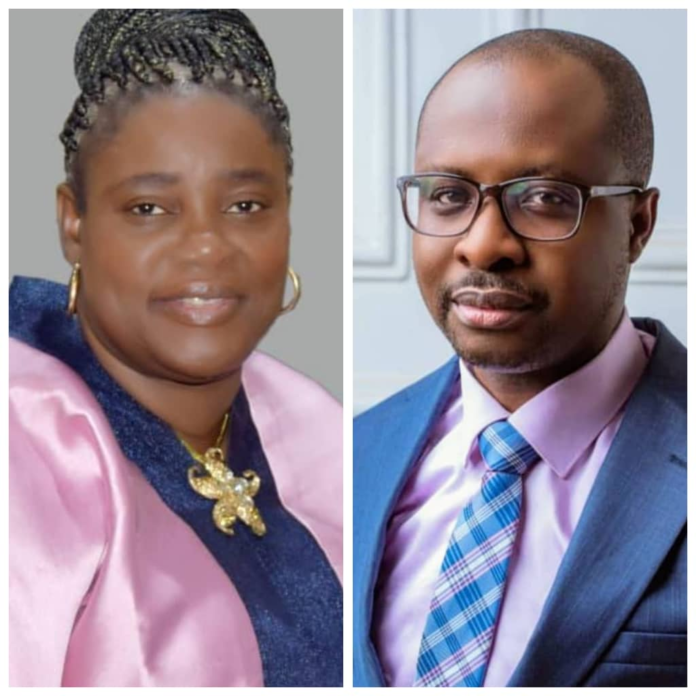
Empowering rural women is not an act of charity, it’s a legal, moral, and global obligation— FIDA Global President

Globally, rural women continue to face significant challenges, including limited access to resources like land and credit, gender inequality, and vulnerability to crises like climate change and economic instability.

And although the plight of rural women was brought to the fore last Wednesday, there’s no gainsaying the fact that this is an issue that must continually be on the front burner until change becomes evident.

Wednesday was the United Nations International Day of Rural Women, and the International Federation of Women Lawyers (FIDA), which has been at the forefront of championing the causes of women, particularly the mostly overlooked ones, like those in rural places, joined the world to celebrate them, Ezinwa Okoroafor, the Global President of FIDA insists that enough cannot be said until their contributions to humanity are truely recognised and honoured.

Mrs. Okoroafor, who pointed out that “empowering rural women is not an act of charity,” but “a legal, moral, and global obligation,” called for the celebration of “the strength, resilience, and vital contributions of rural women everywhere. From small family farms to large cooperative fields, rural women are cultivating not just food but hope, stability, and the future of their communities.”

In a statement issued on behalf of FIDA Global, Okoroafor said:

“[F]ood security and sustainable development rest heavily on the shoulders of these women. Yet, they continue to face barriers, including unequal access to land and credit, limited education, healthcare, and participation in decision-making.

“FIDA reaffirms that empowering rural women is not an act of charity; it is a legal, moral, and global obligation. Recognizing their invaluable role is not enough; we must act deliberately. We must design laws, policies, and programs that protect rural women’s rights, enhance their productivity, and honour their contributions to humanity. When rural women thrive, they feed more than their families. They actually nourish entire nations.

“As advocates for gender equality and social justice, FIDA calls on States, Governments, Development Partners, and Civil Society to build structures that lift rural women from the margins to the center of decision-making, ensuring that their rights are respected and their voices heard.

“When rural women rise, humanity flourishes. Their empowerment is not only the key to ending hunger, it is the seed of equality, justice, and shared prosperity for generations to come.

“Today, and every day, FIDA stands with rural women defending their rights, amplifying their voices, and reaffirming our global commitment to build a fairer, more inclusive world where every woman can cultivate not just food, but freedom, dignity, and a future full of promise.”

TIPS