Home Blog Page 188

Gen. Dambazau to deliver lecture on security at 7th JFCN annual lecture

Former Chief of Army Staff and ex-Minister of Interior, Lt. General Abdulrahman Bello Dambazau (Rtd), will deliver the keynote lecture at the 7th Annual Lecture of Just Friends Club of Nigeria (JFCN), scheduled to hold on Tuesday, November 4, 2025, at Bolingo Hotel, Abuja.

The lecture, themed “Nigeria’s Security Challenges and the Quest for National Cohesion: A New Paradigm for Internal Security Architecture and Governance”, which is scheduled to start at 10 am, comes at a time of heightened public concern over Nigeria’s internal security crisis and the search for lasting solutions to terrorism, communal conflicts, and organized crime.

The Chairman of the event is Prof. Tonnie Osa Iredia, former Director General of Nigerian Television Authority (NTA), a former Director General of National Orientation Agency and founder of Tonnie Iredia University of Communication, Benin City, Edo State

According to Mr. Fred Ohwahwa, the President of JFCN, the high-profile event will provide a platform for deep reflection and policy-driven conversation on how Nigeria can rethink and rebuild its internal security systems in light of emerging national threats.

General Dambazau, who served as Chief of Army Staff from 2008 to 2010 and later as Minister of Interior from 2015 to 2019, is widely regarded as one of the country’s most experienced voices on security matters. A career soldier with a strong academic background in criminology and sociology, Dambazau is expected to deliver a lecture that bridges both theory and practice in national security governance.

He holds a Ph.D. in Criminology from the University of Keele, United Kingdom, and has authored several academic and policy papers on security sector reform, counterterrorism, and civil-military relations.

Ohwahwa explained that the keynote lecture is expected to examine Nigeria’s current security architecture, address its institutional weaknesses, and propose practical reforms that balance law enforcement, intelligence gathering, and community-based approaches. It will also touch on the importance of national cohesion and inclusive governance as tools for long-term peace and stability.

“We are delighted and honoured to host Lt. General Abdulrahman Dambazau (Rtd) at this critical time in our national journey. His wealth of experience and thought leadership in security matters come at a time when the nation is yearning for fresh, pragmatic ideas to address complex internal security threats. We believe his lecture will challenge orthodoxies and offer a bold, coherent vision for Nigeria’s security and unity,” Ohwahwa added.

The lecture will be followed by a high-level panel discussion featuring policy experts, former security chiefs, scholars, and civic leaders, who will provide critical reflections and practical responses to the issues raised in the keynote. The panelists include Air Vice Marshal Gbolahan Adekunle, a former Chief of Training and Operations and also ex-Chief of Policy and Plans of Nigerian Air Force; and Prof. Okey Ikechukwu, Professor of Strategic Management, Nnamdi Azikiwe University, Awka.

Just Friends Club of Nigeria is a non-partisan network of Nigerian professionals, technocrats, and public-spirited individuals committed to civic engagement, public policy reform, and good governance. Since its inception, the Club has positioned itself as a leading forum for cross-sector dialogue and national thought leadership.

The Club’s Annual Lecture Series is one of its flagship programs, aimed at promoting informed national discourse on critical socio-political and economic issues. Over the past six editions, the Annual Lecture has attracted a diverse audience of policymakers, academics, civil society actors, security experts, youth leaders, and media professionals.

With the topic of national cohesion woven into the conversation, the President of JFCN noted that the event is expected to draw a diverse audience of top government officials, lawmakers, retired military officers, traditional rulers, youth leaders, academics, civil society advocates, and members of the diplomatic community.

Mrs. Maria Cardillo

Chair, Organising Committee

Just Friends Club of Nigeria

                                             Lt. General Abdulrahman Dambazau

AFBA 2025: We are not likely to reach negotiated equity, Pat Utomi

Nigerian professor of political economy and management expert Patrick Utomi has querstioned how “this continent that fascinated European explorers who were amazed at the absence of beggars on its streets become attractive for extracting slaves?”

Utomi who was a keynote speaker at the 2025 annual conference of the African Bar Association (AFBA), with the Theme “Foreign Interests in Africa, Exploitation or Investment”, noted that “we are not likely to reach negotiated equity.

The event is currently ongoing at Labadi Beach Resort, Accra, Republic of Ghana.

He also added that: “The creativity of the disadvantaged to escape the system seems to be the way that has worked. The South East Asia Miracle was precisely about that.”

Further more, Prof. Utomi pointed out that: “The amorality of international power politics and trade that goes with it requires that Africa’s elite use associational life, like the African Bar Association, to find institutional pegs that increase intra- African trade, and deploying strategy like building competitive play on value chains rooted in its value chains where its latent comparative advantage fuels limited Industrial policy.”

Below is the full text of his keynote address.

KEYNOTE SPEECH AT THE 2025 ANNUAL CONFERENCE OF THE AFRICAN BAR ASSOCIATION ON MONDAY OCTOBER 20, 2025 @THE LABADI BEACH HOTEL IN ACCRA, GHANA

FOREIGN INTERESTS IN AFRICA: EXPLOITATION OR INVESTMENT?

By Patrick Okedinachi Utomi

(Professor of Political Economy & Management Expert)

I want to begin by thanking the leadership of the African Bar Association for both the choice of topic and venue to discuss this topic, as well as for asking me to be keynote speaker.

I would like to set up a scheme for my remarks and conversation.

First, I would like to show the wisdom in your topic as it relates to the how law and commerce depend on each other, making the theme appropriate for a continental Bar conference.

I would then look at how trade has treated Africa and perhaps the role of the law and Lawyers.

I would then look at how colonial intervention has disrupted natural trade development and created conditions of dependency and exploitation but also of opportunities for collaboration and growth.

Finally, I will speak to issues of a new consciousness in AfCFTA, and continental development finance institutions becoming the basis of a new narrative on Africa’s economic prospects, away from the narrative of Afropessimism.

I am pleased this meeting is in Accra because it was here in 1958 that the legendary Ghanaian leader, Dr Kwame Nkrumah gathered leaders of emerging Africa to consider their future economic possibilities just as he was taking counsel from Sir Arthur Lewis who wrote the document on the Industrialization of the Gold Coast and would become the first black man to win the Nobel Prize in Economics.

How well have ideas of 1958 propelled forward the economies of Africa which were soon in a debt crisis and compelled to embark on structural adjustment programmes that did not deliver on promise?

INSTITUTIONS AND HUMAN PROGRESS

The growing consensus about how man’s life advance came about increasingly comes around institutions. Historians like Niall Ferguson, Economists like Oliver Williamson, Economic historians such as Douglass North, and Political Economists like my Head of Department in Graduate school, Elinor Lin Ostrom who became the first woman to win the Nobel Prize in Economics, agree that Institutions have been critical in separating history’s more prosperous from the poorer ones. Two of last year’s winners of the Nobel Prize for Economics Daron Acemoglu and James Robinson in the book Why Nations Fail show fitting examples of how the paradigm on Institutions and development subsists.

There are still competing but related explanations like the Princeton Economist Angus Deaton who won the 2015 Nobel Prize in Economics for his analysis of consumption, poverty and welfare who shows in the book The Great Escape: Health, Wealth and the Origins of Inequality, that advances in healthcare is a major sift of nation’s that prosper from those that stay poor; and those that focus on how values shape human progress. The latter school is captured in a Harvard colloquium in the late 1990s and the book Culture Matters which summed up proceedings of the colloquium. The consensus is that Institutions matter.

My own work which focuses majorly on the interdependence of Institutions, Culture, Entrepreneurship and Leadership to produce progress; from my 1998 book Managing Uncertainty, to the 2006 book Why Nations Are Poor, recognize the crucial play of Institutions in human advancement.

So, what are these Institutions?

They are essentially rules that set boundaries to conduct and when they become settled habits of a community, these boundaries allow people to evaluate possible outcomes of ventures.

Prime among institutions is the rule of law. Commerce does not thrive without the rule of law, property rights, smart bankruptcy rules and what the Peruvian Economist Hernando De Soto calls ‘representational’ systems like Land Registry which make assets fungible and transition them to access to capital.

The poor, de Soto argues, have assets that cannot be collateral security for a loan because they are not listed in a land registry with a market where they can be easily traded.

LAWYERS AND COMMERCE

The French Laissez faire parliamentarian, Frederic Bastiat, who wrote The Law, just before he passed away in 1850 could not have imagined he would gain folk hero status among students of Institutions and economic performance. Beyond Bastiat’s view of law as codification of power relations and therefore an instrument of oppression. Language of agreement has been a basis of cheating between peoples historically.

Commercial exchange required trust and precision of interpretation of what was agreed. The more powerful have used skill in that area to take advantage of the weaker.

AFRICA AND AFRICANS IN WORLD TRADE

In the last few years, I have been Chairman of PAFTRAC, the Pan African Private Sector committee on trade and Investment. It is a period during which I have reflected much on world trade and development.

Africa was in exchange relations with Europe before slavery and colonization. Why did the nature of the relationship change at each stage.

How did this continent that fascinated European explorers who were amazed at the absence of beggars on its streets become attractive for extracting slaves?

The changing means of economic production which required plantation Labour.

In the process one of those slave plantation economies rebelled and became independent. In 1789 that plantation Island had the highest per capita income in the World. It would end up the poorest country in the Western hemisphere. Today Haiti is a basket case.

Colonialism followed the onset of the Industrial Revolution driven by the redesign of the steam engine by Scottish inventor James Watt in the year of American Independence. Raw materials were required to feed the factories of Europe and the Berlin conference that partitioned Africa was to provide secure access to territories from which to procure cheap raw materials.

Even though the intention was exploitative, produce exports provided revenue source that the moral economy of the peasant would not have generated.

Perhaps the biggest harm to African economies was the fragmentation of economies in Africa with linkages northward to the metropolitan centre in Europe. The inequity in value adding allowed companies like Nestle to get Cacao from Cote d’voire, Ghana, and Nigeria and make profits far above what the three countries put together have as well revenues from exports. (of the raw materials)

It is easy to talk about How Europe Underdeveloped Africa, as Walter Rodney provided evidence but the key for me is in how you use knowledge and creativity to achieve a more equitable order.

Discontent with inequities in the global economic order resulted in pressures for a North South dialogue in the 1970s. A summit was agreed to for Cancun in Mexico. Then President Jimmy Carter lost the 1980 US elections. Ronald Reagan did to the trends on trade back then what tariff policies of Washington are doing today. We are not likely to reach negotiated equity. The creativity of the disadvantaged to escape the system seems to be the way that has worked.

The South East Asia Miracle was precisely about that. In the book, Culture Matters, Samuel P Huntington Jnr compares Ghana and Malaysia, just as my friend Peter Lewis of Johns Hopkins does for Nigeria and Indonesia in his book Growing Apart.

In my view little gain will come from reliving Dependency Theory which I called elegant theorizing without redeeming features that show a path out of the trap.

I am persuaded that intra-African trade with working groups to break the constrictions to cross border trade.  (is the way to go).

Then there are opportunities to construct new narratives about the treasure at the bottom of the pyramid and elite to see prosperity in aggregation across borders that Agenda 2063 and AfCFTA offer.

HOW MUCH HAVE LAWYERS DONE

From the beginning I introduced Bastiat to show how lawyers help build institutions. Now let me compare with some of my own experience.

Rajan and Zingales give credit for easier access to capital to judicial activism and celebrate a jurist, Louis Brandeis for some laws that encourage venturing.

On the other hand, it seems like judges in Africa make it harder to venture by how they interpret laws. In Nigeria currently people are running from providing guarantees to entrepreneurs because of how Bank Verification Numbers are being used to broadly cripple such people. Bankruptcy laws in America are designed to give entrepreneurs another lease of life but in most of Africa it scares people from venturing.

Let me wrap up.

I am sorry a sudden health challenge has meant I am not present to speak to my talking points and expand the message as I speak. In spite of that I hope the heart of the message has reached home.

The amorality of international power politics and trade that goes with it requires that Africa’s elite use associational life, like the African Bar Association, to find institutional pegs that increase intra- African trade, and deploying strategy like building competitive play on value chains rooted in its value chains where its latent comparative advantage fuels limited Industrial policy.

You owe Africa that.

“Foreign Interests in Africa, Exploitation or Investment”: AFBA 2025 conference begins today in Ghana

The 2025 annual conference of the African Bar Association (AFBA), with the Theme “Foreign Interests in Africa, Exploitation or Investment”, commences today, Monday, 20 October at the Labadi Beach Resort, Accra, Republic of Ghana.

The keynote address will be delivered by Prof. Patrick Okedinachi Utomi.

President of the African Bar Association, High Chief Ibrahim Edmund Mark, has assured delegates of a very enriching and fulfilling conference.

The event commenced on the night of 19 October with a welcome dinner hosted by the Ghana Bar Association (GBA).

‘Go to the places where real Nigerians live, you know governance is far from Nigeria and Nigerians’, By J.S. Okutepa, SAN

As the 2027 general election is approaching, a lot of absurdities of a very worrisome degree are going on. You see some discredited politicians with abysmal performances making some nauseating and very annoying statements that show how captured and conquered Nigerians have become in the hands of these failed and corrupt politicians.

When I write on any issue, I do not do so to impress anybody or to seek favour from anyone in power or to bring those in positions down, but to point out and speak to the truth of what I know represents the truth of the Nigerian situation. Today, there can be no debate that things are tough for most Nigerians who work honestly to survive the harsh economy foisted on us, not because there are no resources for the good of all, but because those who have access to these resources have cornered them for themselves.

In this era of politics, most politicians tend to muzzle one’s right to freedom of expression. They see you as being in opposition or being sponsored by opposition politicians. Far from it. I am an apostle of good governance. I love justice that is delivered without interference. I want corruption eradicated as required by the constitution. I am very passionate about the fight against corruption, and any step that will support its eradication will have my support.

I believe in the rule of law and due process in governance. But I believe some employ the concept of the rule of law and due process most mischievously to frustrate the battle against corruption. In this vein, the manner in which they shield corruption and corrupt officials gives me anxious moments. Anyone not willing to join them in their thinking and frustrating antics is branded as a saboteur.

I have nothing personal against anyone in power. I have nothing personal against any Nigerian politicians. But I just have everything against the manner in which most of these politicians and their cronies squandered opportunities to give Nigerians good governance. Good governance is far from us in Nigeria. Forget the advertorial and names these politicians give themselves. Go to the places where real Nigerians live and you know that governance is far from Nigeria and Nigerians. Democracy is also far from its true meaning in Nigeria.

I am not an apologist for any of those jostling to lead Nigeria, and I am not their enemy either. Anyone who wants to be the president of Nigeria can do so. I may not like the party, any of them may run on the platform to come to power. So long as the person follows the due democratic process, I have no problem.

In the forthcoming election, I will not vote for parties, but I will vote for candidates of parties that show a clear understanding of issues afflicting us as a nation. Any candidate who has the template of how to fight and abolish corruption and corrupt practices from our nation will have my vote. Any candidate who will truly run a government that has respect for the rule of law and give the judiciary its rightful place in the state of affairs of our country will have my support.

Any candidate with courage of conviction with well-defined determination for infrastructural development all over the country will have my support. Any candidate who will see that our educational sector is run efficiently, effectively, qualitatively, and productively will have my support. Any candidate who shows leadership by example with a track record of probity and accountability will have my support.

I don’t think I have been persuaded enough to see the difference between Nigerian political parties. But I can see the difference between candidates in the various political parties. That is why my votes and that of people I know with patriotic zeal for greater Nigeria will go for good candidates of political parties and not the political parties themselves. There is no political party in Nigeria that is populated by saints or Satan. The political parties in Nigeria are populated by the same Nigerians with different characters and traits. So my choice and that of other patriotic Nigerians shall be determined by the character and traits of the candidates and not the parties upon which they are standing.

The time has come for us as a people to demand accountability from our political leaders. We should be able to ask questions about the pedigrees of the people seeking to lead us at the various levels of leadership. This is my thought, and I hold it dear to my heart. The current adoptions here and there as bargaining tools to be shielded from criminal prosecutions of those who looted our treasuries dry will not work. Let nobody tell me that there is no opposition in Nigeria. In 2027, it will be an election between those who have ruined Nigeria and Nigerians who are tired of the continuous ruining of Nigeria. Just watch it. I am not a prophet of doom, but I am an apostle of the truth.

The views expressed by contributors are strictly personal and not of Law & Society Magazine.

Nigerian Academy of Pharmacy inducts 14 new fellows, honours Chief Olu Akinkugbe

From L-R: Prince (Dr.) Richard Oma Ahonaruogho (SAN) - Legal Adviser of the Academy, Prof. Lere Baale - President and Chairman of Council, Nigeria Academy of Pharmacy, Mr. Wale Oyedeji - Group Managing Director First Holdco PLC & Keynote Speaker, Alhaji Ahmed Yakassai - Vice President Nigeria Academy of Pharmacy, Pharm. Lekan Asuni - Secretary General Nigeria Academy of Pharmacy and Adj. Prof. Abiodun Osiyemi, of Babcock Business School

Fourteen pharmacists were inducted as Fellows at the Nigerian Academy of Pharmacy (NAPHARM) 2025 Annual General Meeting, held during the week at the College of Medicine, University of Lagos. The event included a valedictory in honour of Pharm Chief Oludolapo Akinkugbe, an icon of the pharmaceutical field renowned as a manufacturer and entrepreneur.

NAPHARM also bestowed honorary fellowships on four individuals and presented Lifetime Achievement Awards to three others.

Chief Akinkugbe, President of the Pharmaceutical Society of Nigeria from 1971-74, was a towering figure whose vision, mentorship, and integrity profoundly influenced generations of pharmacists and national leaders.

At the Valedictory Session, Prof. Lere Baale, President and Chairman of the Governing Council of NAPHARM, described Chief Akinkugbe as “a pharmacist, leader, and statesman whose life exemplified grace, discipline, and visionary service to humanity.”

Fellows and dignitaries offered heartfelt tributes to Chief Akinkugbe’s legacy of excellence, his enduring impact on healthcare systems, and his lifelong dedication to professionalism, ethics, and nation-building.

Chief Oludolapo Ibukun Akinkugbe (CFR, CON), a distinguished Nigerian pharmacist, pioneering entrepreneur, and influential corporate leader, passed away peacefully on September 22, 2025, at the age of 97, eleven days after the passing of his wife of 70 years. He is survived by his children, grandchildren, and great-grandchildren.

He played key founding roles in Palm Chemists Ltd, Spectrum Books Ltd, and Vitalink Pharmaceutical Industries, among others. His corporate presence extended across banking, manufacturing, pharmaceuticals, and publishing. He held leadership positions in numerous major corporations, including Chairman of West African Portland Cement Company, Procter & Gamble Nigeria Plc, and Beecham (now GlaxoSmithKline Nigeria). He also served as a Director of Barclays Bank Nigeria (now Union Bank), Nigerian Tobacco Company, Fan Milk, and IBTC Chartered Bank Plc. This extensive influence earned him the enduring nickname, “Chairman of Chairmen.”

Chief Akinkugbe began his career at the Lagos General Hospital and later worked at the Central Medical Stores. At the young age of 22, he was persuaded to become the General Secretary of the Nigerian Union of Pharmacists (NUP), where he successfully advocated for better pay and working conditions for pharmacists nationwide. After the NUP’s dissolution, he joined the Pharmaceutical Society of Nigeria (PSN), eventually becoming its fourth President. His leadership secured him a position on the Council and Executive Committee of the Commonwealth Pharmaceutical Association.

Old and Newly inducted 2025 Distinguished Fellows at the Old Great Hall, College of Medicine, Unilag, Idi-Araba.

The 14 newly inducted Distinguished Fellows are Pharm. Dr. Samuel Oluwaoromipin Adekola, Pharm. Yedunni Abimbola Adenuga, Pharm. Dr. Adenike Olubisi Adenuga, Pharm. Dr. Victor Gbenga Afolabi, Pharm. Prof. Ezekiel Olugbenga Akinkunmi, Pharm. Dr. Umoru Barde Ali, Pharm. Prof. Olufunsho Awodele, Pharm. Jaiyeola Adetunji Doherty, Pharm. Dr. Monica Hemben Eimunjeze, Pharm. Ayuba Tanko Ibrahim, Pharm. Dr. Thomas Omotayo Ilupeju, Pharm. Dr. Wilson Ishima, Pharm. Steve Azubuike Okoronko, and Pharm. (Mrs.) Olayinka Folashade Oredola.

The four Honorary Fellows are Pharm. Elder Ebenezer Adeleke, Pharm. Alfred Oladeji Osinoiki, Chief Varkey Verghese MFR, and Alhaji Sayyid Atana.

The three Lifetime Achievement Awardees are Pharm. Prof. Gabriel Osuide, Pharm. Asiwaju Theophilous Adebowale Omotosho, and Dr. Fidelis Ayebae.

During the events, NAPHARM reaffirmed its leadership in shaping the future of healthcare and national development. Mr. Wale Oyedeji, Group Managing Director of First HoldCo Plc, led a discussion on the timely and transformative theme, “Pharmaceutical Innovation as a Catalyst for National Development.”

This series of events brought together renowned leaders, professionals, policymakers, and scholars from across Nigeria and the international pharmaceutical community to explore how innovation in pharmacy and healthcare can drive economic diversification, create jobs, and promote national development.

In his address, Mr Oyedeji emphasised the critical role of research, local manufacturing, digital health, and strategic investment in building a resilient pharmaceutical value chain that supports Nigeria’s industrial and health security objectives.

He asserted that “pharmaceutical innovation is not only about developing new drugs but also about creating an ecosystem that supports knowledge, entrepreneurship, and collaboration across public and private sectors.”

Mr. Oyedeji urged government, academia, investors, and practitioners to coordinate their efforts to leverage Nigeria’s demographic advantage and intellectual capital for sustainable development.

The two-day event took place on October 15 and 16, 2025, at the Old Great Hall, College of Medicine, University of Lagos, Idi-Araba.

That unflattering world bank report


Federal government should accept informed counsel to properly address Nigeria’s socio-economic hurdles, writes MONDAY PHILIPS EKPE


Global financial organisations, particularly the International Monetary Fund (IMF) and World Bank (WB), have been kind to the government of President Bola Tinubu. They’ve so far seized virtually every chance to praise the reforms he instituted very early into his administration, notably oil subsidy removal and the floating of the naira. The former was announced in the course of his inauguration speech at Eagle Square, Abuja over two years ago.

Perhaps, there was no better way to display his audacity. And he probably knew that majority of his compatriots had already become despondent or simply succumbed to the weight of years of mediocre governance; but he certainly didn’t intend to leave anyone in doubt about his readiness to right the wrongs either midwifed or superintended over by his predecessors.

With the tacit endorsements by those Bretton Woods institutions came apprehension and outright disapproval from many Nigerians. History has taught them that whenever these financiers step out to assist countries supposedly to boost their economies, the end results often fall short of pledges and expectations. No doubt, their romance with the federal government has been largely viewed with scepticism, especially outside the power corridors. Last week’s unusual intervention by the WB is in some ways surprising. Its Country Director for Nigeria, Matthew Verghis, while presenting the bank’s report titled, “From Policy to People: Bringing the Reforms Gains Home”, veered onto a less travelled path.

First, the familiar eulogies. “Over the last two years, Nigeria has implemented major reforms around the exchange rate and petrol subsidy. These policies have laid the foundation for transforming the country’s economic trajectory for decades to come…. Growth has picked up, revenues have risen, debt indicators are improving, the forex market is stabilising, reserves are rising, and inflation is finally beginning to come down. These are major achievements, and many countries would envy them”, Verghis declared like someone on a mission to make the members of Tinubu’s Renewed Hope corps happy. He sounded very much like the paraphrase of a portion of the last presidential Independence Day broadcast. However, just when the government’s minders thought that he would simply go ahead to corroborate the president’s assertion that “we have finally turned the corner”, his tone changed.

He delved into the not so familiar. His words: “Despite these stabilisation gains, many Nigerians are still struggling. In 2025, we estimate that 139 million Nigerians live in poverty. The challenge is clear: how to translate reform gains into better living standards for all…. Food inflation affects everyone but hits the poor the hardest. It also threatens to undermine political support for reforms. Tight monetary policy is essential, but it must be complemented by structural measures that tackle supply and market bottlenecks…. These are not abstract ideas – they are practical steps that can turn macro-stability into improved livelihoods.” No striking, ingenious statement, actually. It’s a viewpoint supported by both scientific data and street-feeling; something echoed at numerous fora by experts and others alike. Even many of those who swear that Tinubu means well would agree that the gap between the policies being administered to the traumatised citizenry and their promised fruitions keeps expanding. The sooner the government agrees with the fact that this opinion isn’t the handiwork of its enemies, the more energies it can truly muster and invest in workable and fruitful approaches.

But it’s not comfortable with this constructive admonition coming from a friendly body, unfortunately. The immediate response of Sunday Dare, Tinubu’s Special Adviser on Media and Public Communication, validates this fear: “While Nigeria values its partnership with the World Bank and appreciates its contributions to policy analysis, the figure quoted must be properly contextualised. It is unrealistic…. There must be caution against interpreting the World Bank’s numbers as a literal, real-time headcount. The estimate is derived from the global poverty line of $2.15 per person per day, a benchmark set in 2017 Purchasing Power Parity terms….

“The measure is an analytical construct, not a direct reflection of local income realities. Poverty assessment under PPP methodology uses historical consumption data (Nigeria’s last major survey was in 2018/19) and often overlooks the informal and subsistence economies that sustain millions of households. The government, therefore, regards the figure as a modelled global estimate, not an empirical representation of conditions in 2025. What truly matters is the trajectory, and Nigeria’s is now one of recovery and inclusive reform…. Nigeria rejects exaggerated statistical interpretations detached from local realities.”
Nothing unexpected about that reaction, really, considering Dare’s job description. But the Nigerian people do not even need any agency to tell them the scope of their own predicaments. Like the ones before it, this administration has been making efforts to steer the nation’s economy through periods of underperformance and turbulence.

Only that it is heavier on promises, more promises, and assurances than concrete deliverables. Again, we don’t have to depend on statistical charts, tables and diagrams to prove that the number of the beneficiaries of government’s programmes does not come anywhere close to those who haven’t accessed them. Officials can propagate their real and perceived strides without denying Nigeria’s clear downward variables like rising joblessness, grossly disabled purchasing capacity, severely challenged manufacturing sector, acutely weakened social infrastructure and more.

So, Verghis’ submission shouldn’t be waved aside. Establishments like IMF and WB do claim to fight poverty. It is however not lost on industry watchers that they’re more interested in maintaining the status quo, in the long run. It’s difficult to identify the nations they’ve helped to migrate from the underdeveloped or developing category to the elite, developed one. In fact, nations that have been undiscerning enough to wholly take their loans and economic prescriptions are known to have descended to lower grades of development. WB’s Nigeria’s GDP prediction of 4.2 to 4.4 percent growth between now and 2027 isn’t anything to dance about. For the country’s status as host to the world’s largest number of multidimensionally poor people to change significantly, that figure should be in double digits.

Tinubu and his team must go beyond the ongoing superficial packaging believed to be for the next election. There’s work to prosecute. News headlines like “Nigeria’s Public Debt Hits N149 trillion Amid Rising Domestic Borrowing” and “Nigeria’s Public Debt Hits N152 trillion in Q2 2025 – DMO Raises Alarm” alone can rubbish any talk of enhanced revenue generation. Today, penury is a lived reality in many homes, not a shadowy phenomenon. One key action towards tackling it is embracing Verghis’ advice in good faith.

Ekpe, PhD, is a member of THISDAY Editorial Board

The views expressed by contributors are strictly personal and not of Law & Society Magazine.
The Mirror Cracks – How Femi Falana SAN exposed the hypocrisy behind Arise TV and ThisDay’s labor posturing

By Adebamiwa Olugbenga Michael

When Femi Falana SAN, one of Nigeria’s most respected human rights lawyers, appeared on Arise TV’s Morning Show, few expected the interview to turn inward. What began as a discussion about workers rights and the controversy surrounding union activities at Dangote Refinery soon became a scathing critique of Arise TV and its parent company, ThisDay Media Group.

In a stunning moment of televised openness, Falana accused the media empire of the very same labor violations it routinely condemns, non-payment of staff salaries and suppression of unionism. His remarks did not merely question journalistic integrity, they exposed the uneasy contradiction between the media’s moral voice and its internal ethics.

Falana’s intervention came amid ongoing tensions between the Petroleum and Natural Gas Senior Staff Association of Nigeria (PENGASSAN) and the National Union of Petroleum and Natural Gas Workers (NUPENG) on one hand, and the Dangote Group on the other. Arise TV’s reporting and commentary had been criticized for appearing sympathetic to Dangote, portraying the unions’ protests as disruptive to national economic stability. Falana, however, shifted the conversation from the refinery’s gates to the newsroom, arguing that Arise and ThisDay had no moral standing to criticize labor activism when their own employees are reportedly barred from joining the Nigerian Union of Journalists (NUJ) and still face unpaid wages. His point was simple yet piercing, credibility begins at home.

The allegations are not without precedent. Arise TV and ThisDay, both founded by media entrepreneur Nduka Obaigbena, have long been plagued by labor disputes. In 2016, Arise’s London operations were briefly shut down over unpaid staff wages reportedly exceeding £1 million, leading to a union-led legal challenge. Earlier, ThisDay South Africa collapsed under similar circumstances, bankrupt within a year of launch due to mounting salary debts. Even in Nigeria, ThisDay staff strikes over unpaid salaries are well-documented, in fact I know several of my classmates back in the days at NIJ Ogba working for ThisDay Apapa confessing to me that at times they don’t get paid for over 6 months. Falana’s charge therefore struck a chord as more than rhetorical flourish, it reopened a conversation about systemic exploitation in Nigeria’s private media sector and the complicity of silence among journalists working under repressive internal conditions.

The deeper irony, however, lies in Arise TV’s branding as a “voice for the voiceless.” The station’s fiery anchors routinely challenge public corruption, corporate malpractice, and government hypocrisy, yet its own labor record suggests a troubling double standard. Falana’s intervention stripped away the pretense of moral superiority often worn by elite media houses, revealing an industry that demands accountability from others while avoiding self-examination. If true, the practice of denying journalists union membership violates both the 1999 Constitution’s Section 40 on freedom of association and international labor conventions ratified by Nigeria, underscoring how labor law violations are not limited to factories or oil rigs but extend to editorial boardrooms.

Public reaction to the interview was swift and divided. Many viewers praised Falana for his courage in confronting Arise on its own platform, describing it as a masterclass in integrity and consistency. Others argued that his comments, while valid, risked derailing an important conversation about industrial relations at the Dangote Refinery. Yet, the broader implication remains clear, when a media organization that thrives on advocacy journalism is accused of flouting basic labor principles, it undermines its own credibility as a moral arbiter. Silence from Arise or Obaigbena’s management only deepens suspicion and public distrust.

Beyond the personalities involved, Falana’s revelations reignite a national debate on labor justice, press ethics, and corporate governance. They compel the Nigerian media industry to reflect on its internal contradictions, championing fairness in society while perpetuating inequity within. The test of true integrity, Falana seemed to imply, is not in how loudly one condemns the wrongs of others, but in how diligently one corrects their own. For Arise TV and ThisDay, the time for introspection may have finally arrived, not just to restore trust, but to prove that the moral authority they wield on air is not a mask worn to conceal the rot within.

© Adebamiwa Olugbenga Michael

The views expressed by contributors are strictly personal and not of Law & Society Magazine.

Mr. President, you may wish to ACT, as you always do, to salvage this country from impunity and atrophy of justice!

By Chris Kwaja

My Dear President, Bola Ahmed Tinubu. There is a sense in which one of most damaging side of leadership is this notion that “leaders don’t make mistake or should not reverse themselves, even if they take decisions that are viewed as ‘wrong’”.

In your case, you have proven that on the basis of sound logic, a leader can reverse himself or adjust a policy pronouncement when confronted with hard facts. In your case, you have consistently reversed appointments and policies in this sense, which is an impressive display of responsive leadership. I admire you for this!

The recent proclamation of the prerogative of mercy on 175 Nigerians, including one of the country’s founding fathers, Herbert Macaulay, has attracted mixed reactions amongst Nigeria. Majority have expressed misgivings over the federal government’s pardon of some drug traffickers, murderers, arms dealers and other criminals, that also included political exposed persons.

The latest statement by the Attorney General and Minister of Justice, Chief Lateef Fagbemi, reveals that not much was done in terms of due diligence in coming up with the list of persons pardoned.

You may wish to ACT, as you always do, in order to salvage this country from impunity and atrophy of justice!

Dr. Chris M. A. Kwaja, Ph.D., is Associate Professor of International Relations and Strategic Studies, at the Modibbo Adama University, Yola, Adamawa State, Nigeria.

The views expressed by contributors are strictly personal and not of Law & Society Magazine.
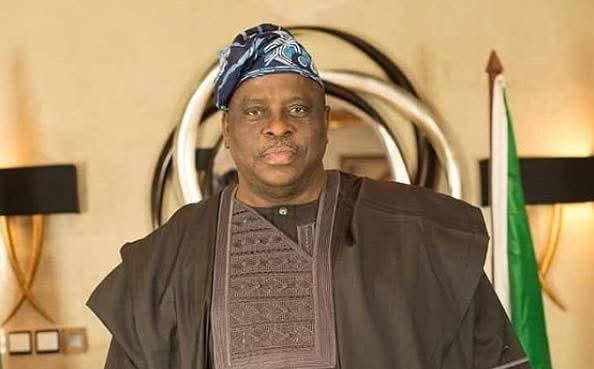
To avoid the appearance of selective justice, Dr. Monday O. Ubani, SAN ought to be charged alongside Senator Onyekachi Nwaebonyi, because he also published words against Senator Natasha Akpoti-Uduaghan

Open letter to AGF and DPPF By Dr. Tonye Clinton Jaja

Hon. Attorney-General of the Federation (AGF) and Minister of Justice, Sir,

And

Director of Public Prosecution of the Federation (DPPF), Sir,

I write as a public interest lawyer that was called to the Bar as a Barrister and Solicitor of the Supreme Court of Nigeria in the year 2004.

Between the years 2019 and 2020, I served as the Chairman of the Governing Board of a federal government agency under the supervision of the Federal Ministry of Justice.

In the year 2018, I also served as a representative of the Federal Government of Nigeria to negotiate for the repatriation of the $301m Abacha loot with the Attorney-General of the Island of Jersey, United Kingdom. I undertook this assignment under the now-defunct Special Presidential Panel for Recovery of Public Properties.

I also served Nigeria as a legislative drafting lawyer at the National Assembly’s Institute for Legislative Studies for eleven years before my relocation to the Kingdom of Lesotho. I am there as a consultant for training their lawyers in Legislative Drafting.

I write in my capacity as a Minister of the Temple of Justice to appeal for the joinder of Dr. Monday O. Ubani SAN to the recent charges preferred against Senator Onyekachi Nwaebonyi.

Hon. AGF, Sir, please respectfully recall that you recently promised to investigate the unprofessional conduct of senior lawyers such as Prof. Mike Ozekhome SAN.

We plead that you extend the same to Dr. Monday O. Ubani so as to send a strong message to lawyers.

Additionally, another reason to add Dr. Monday O Ubani as a co-accused with Senator Onyekachi Nwaebonyi (they both share the same name, which is ONYEKACHI) is because Dr. Monday O. Ubani, SAN is both a necessary party and an accomplice whose publications also affected the public reputation of Senator Natasha Akpoti-Uduaghan.

In a petition dated 15th May 2025, Hon. Dr. Ehiogie West-Idahosa provided details of Dr. Monday O. Ubani’s publications, they are published online at: https://www.vanguardngr.com/2025/05/investigate-akpabio-sandra-duru-natasha-petitions-igp/

Some excerpts are as follows:

“Shortly after the broadcast, Mr Monday Ubani, SAN, a Senior Legislative Aide to Senator Akpabio and also his counsel on record before the Sexual Harassment petition hearing before the Senate committee on Ethics, Privileges and Public Petitions. Mr Ubani, SAN a known ally and associate of Senator Godswill Akpabio, publicly eulogised ‘Prof. Mgbeke’, praising her courage and purported factual expositions. This endorsement came at a time when multiple stakeholders were condemning the broadcast as false, defamatory, and dangerous. Mr. Ubani’s eulogy, when viewed alongside the call log linking ‘Prof. Mgbeke’ to Senator Akpabio, suggests insider awareness and tacit approval from Akpabio’s inner circle. It further entrenches the case that the defamatory broadcast was not an isolated act by a rogue individual, but a concerted operation backed by political actors loyal to Senator Akpabio.”

Yours faithfully,
Dr. Tonye Clinton Jaja,
17th October 2025.

The views expressed by contributors are strictly personal and not of Law & Society Magazine.
Pardon Me?!

By Chidi Anselm Odinkalu

In September 1887, Harry Johnston, Acting Consul of the Oil Rivers Protectorate (Niger Delta) procured the arrest in the wharfs of the Niger Delta of King Jaja of Opobo on the rather dubious charge of “obstruction of trade”. It accused King Jaja of violating a trade treaty with the British, which did not, however, have any penal provisions. The previous year, a Royal Charter granted in the name of Queen Victoria had placed the territory under the rule of the Royal Niger Company (RNC) which empowered it to “undertake and carry on the government or administration of any territories, districts, or places in Africa….” Essentially, the company was government.

After arresting him, the RNC shipped King Jaja for trial over one thousand kilometres away to Accra, capital of what is today known as Ghana. The day before the beginning of his trial in November 1887, the company notified King Jaja that he would stand trial in what was effectively a Court Martial. Rear-Admiral Walter Hunt Grubbe of the Royal Navy presided. The notice was so short, King Jaja could not call any witnesses in his defence. Historian, Elvar Ingimundarsson, who researched the history of the RNC, called it a “a Kangaroo court.” It found King Jaja guilty and sentenced him to exile, from which he did not return alive.

13 years later, the RNC lost its Royal Charter and Her Majesty’s Government took over direct administration of the territory that would later become Nigeria. It comprised a colony in Lagos and two protectorates, one to the north and the other in the south of the country.

On the 108th anniversary of the show trial of King Jaja in a Kangaroo court, the regime of General Sani Abacha re-enacted a similar script leading to the execution on 10 November 1995 of Ken Saro-Wiwa, Saturday Dorbee, Nordu Eawo, Daniel Gbooko, Paul Levura, Felix Nuate, Baribor Bera, Barinem Kiobel, and John Kpuinene, together known today as the “Ogoni Nine”. Their crime was advocacy for responsible exploitation of the hydrocarbons in their communities in Ogoni-land. Unable to call witnesses in their defence, their fate was pre-determined before a tribunal headed by Ibrahim Auta, a kinsman of Alhaji Abacha Maiduguri, who was the father of General Abacha. Like King Jaja, they were not allowed any right of appeal.

            On 12 October 2025, the Presidency announced that the Ogoni Nine were among 175 persons “who (had) received President Tinubu’s mercy.” The announcement followed a meeting of the National Council of State at which the Honorable Attorney-General of the Federation (HAGF), Lateef Fagbemi, a Prince of the Offa Kingdom in Kwara State, who chairs the Committee on the Prerogative of Mercy, reportedly presented the proposal to grant them pardon.

While the Ogoni Nine were included among the beneficiaries of the President’s mercy, King Jaja was excluded. Some would think that is because the injustice he suffered happened so long ago that the reach of the president’s forgiving memory could not be expected to travel that far back in time. However, the list included Herbert Macaulay, the pioneer surveyor and nationalist, whose unfair conviction for theft occurred in 1913, a mere 26 years after the trial and exile of King Jaja. He was also a beneficiary of a post-humous pardon too.

 The pardon to Herbert Macaulay raises at least three significant issues. One is the scope and reach of the pardon powers of the president. Section 175(1) of Nigeria’s Constitution empowers the president to “grant any person concerned with or convicted of any offence created by an Act of the National Assembly a pardon, either free or subject to lawful conditions.”

The trial and conviction of Herbert Macaulay occurred in the Colony of Lagos in 1913. The Amalgamation of the Colony of Lagos with the Protectorates of Southern and Northern Nigeria which created the territory now known as Nigeria, occurred the following year. Nigeria became a federation in 1951, 38 years after the trial of Herbert Macaulay. (How) was he convicted of a crime created by the National Assembly?

Second, there is an implicit procedural requirement in the process of the prerogative of mercy: prior to making a recommendation, the Committee should have had access to and reviewed the transcripts and records of the proceedings leading to the conviction in respect of which it chooses to recommend the exercise of the presidential prerogative. In the case of Herbert Macaulay, it appears that the Committee did not even bother to have access to the records. This is not difficult to understand given that the trial occurred so long ago. But it is a requirement.

Third, the purported pardon to Herbert Macaulay raises deeper issues about how best to immortalise and honour the heroes and sheroes of Nigeria’s colonial struggles. The Presidency chose to pardon Herbert Macaulay in a list which, by its own admission, comprised almost exclusively of “Illegal miners, white-collar convicts, ….drug offenders, foreigners,….capital offenders.”

93% of the 175 beneficiaries of the prerogative of mercy announced by the president involved the most serious crimes known to law anywhere: 29.2% were traffickers in serious drugs, such as Cocaine. Another 1.8% were convicted for human trafficking; 24% were convicted for unlawful mining (itself the cause of insecurity in places like Zamfara State); 13.5% were murderers; 12:3% were convicted of looting the country and another 5.8% were convicted for the crime of hijacking. 4.6% were convicted for firearms and robbery respectively; and another 1.8% were convicted for kidnapping.

It is impossible to dream up a more squalid register of beneficiaries of the prerogative of mercy or a more criminally cynical exercise of presidential pardon. It is unthinkable that the government could persuade itself that the “labours of our heroes past” – among whose pantheon Herbert Macaulay is deservedly a doyen – are best honoured by festooning them with the company of drug-lords, murderers, kidnappers, gun-runners and human traffickers. It is entirely understandable that Herbert Macaulay’s descendants should feel scandalized by this.

It is no surprise that the publication of the list has been attended by credible allegations that certain insertions were oiled by generous inducements in the form of a quid pro quo. The list of beneficiaries is so seedy, it reads like a bazaar for mostly people in a position to purchase the pardon. Those who do not fit this description, such as Herbert Macaulay or Ogoni Nine appear to have been inserted to lend credibility to a seedy assemblage. It is a dreadful commentary on the Committee on the Prerogative of Mercy, the Presidency, and indeed the participants in the last meeting of the Council of State that they could reduce the institution of presidential pardon to this level of abuse.

In addition to the requirement that presidential pardon is only available for crimes created by the National Assembly, the constitution also imposes a procedural constraint on the presidential power of pardon. It is to be exercised after consultation with the National Council of State. The list was, therefore, only published after the Council of State meeting.

More than one week thereafter, the HAGF now claims, because of the scandal and stink unleashed by what they have done, that the list of beneficiaries is “still under review and had not been finalised.” The only reaction to this line is: pardon me?! The HAGF did not cite any law as empowering him to do this because there is none. Important and powerful as the office of HAGF is, he lacks any lawful powers to make these things up as he goes along in this way.

There is no way to diminish the damage that Lateef Fagbemi’s Committee on the Prerogative of Mercy has done to the presidential pardon. There are clear elements of illegality in what it has done and in what it proposes to do. It is seedy and the immorality of it all plainly stinks.

Above all the damage to national security cannot be quantified. Law enforcement and security agents will be reluctant to break sweat in pursuit of serious offenders when they know that a president will cynically let the convicts loose to make prey of them. That is the ultimate crime in these presidential pardons. The biggest job a president does in to guarantee public safety and national security. In these pardons, President Tinubu retrenches and casualizes both.

A lawyer and a teacher, Odinkalu can be reached at [email protected]

The views expressed by contributors are strictly personal and not of Law & Society Magazine.

TIPS