Home Blog Page 185

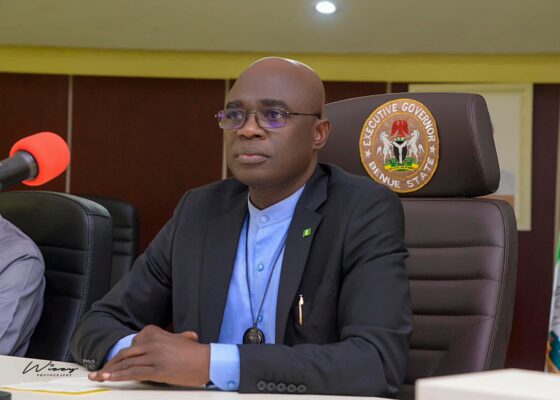
Prof. Anthony Ojukwu, SAN, advocates for stronger African-led approach to human rights protection

Download the full presentation

Accra, Ghana – The President of the Network of National Human Rights Institutions in West Africa (NNHRI-WA), Prof. Anthony O. Ojukwu, SAN, has called for a stronger African-led approach to human rights protection.

Speaking at the AFBA 2025 Conference held at the Labadi Beach Hotel, Ghana, Prof. Ojukwu emphasized that Africa must shape its own human rights narrative rather than merely adopting global models.

He stated that “Africa” represents more than geography; it embodies diverse states, cultures, laws, and histories.
According to him, this diversity—rooted in colonial legacies, customary systems, and linguistic variations—demands a contextual approach to human rights enforcement.

Understanding the African Human Rights System

Prof. Ojukwu explained that Africa’s human rights framework reflects both international standards and local realities.
He highlighted that it comprises multiple components, including the African Charter on Human and Peoples’ Rights, the African Commission, and the African Court.

He noted that these institutions collectively protect civil, political, social, and economic rights.
However, he warned that implementation faces major obstacles, including weak enforcement, limited resources, and insufficient political will.
He pointed out that while many African countries ratified the African Charter, fewer have accepted the African Court’s jurisdiction.

“This gap,” he said, “creates tension between global norms and local legal traditions.”
He urged African states to strengthen domestic systems to ensure that continental decisions are implemented effectively.

Global Influence and Its Impact

Prof. Ojukwu examined how global influence shapes African human rights policies, identified international treaties, United Nations bodies, and donor conditions as major sources of pressure and reform.
He noted that these global forces can promote accountability but may also conflict with African values and priorities.

He observed that during the Cold War, foreign governments supported authoritarian regimes for political gain.
He added that such historical patterns still echo in modern aid and diplomacy, where donor conditionalities often serve political interests.

While acknowledging the positive role of global advocacy, he warned that external influence must align with Africa’s social and cultural context.
He stressed that human rights progress should come through partnership, not imposition.

The Role of Civil Society and Global Advocacy

Prof. Ojukwu praised transnational civil society networks for amplifying human rights awareness across Africa.
He cited organizations like Amnesty International and Human Rights Watch for their contributions to monitoring abuses.
He noted that global activism complements African institutions by empowering local voices and mobilizing public opinion.

He further observed that media, education, and community engagement play vital roles in spreading human rights values.
“These connections,” he said, “build a culture of accountability and strengthen Africa’s human rights foundations.”

African Response and Innovation

Prof. Ojukwu described Africa’s response to global human rights norms as creative and independent.
He explained that regional and sub-regional institutions—such as the African Union and the Regional Economic Communities—have adapted universal principles to African realities.
He emphasized that Africa’s human rights model is not an imitation but an innovation shaped by history and culture.

He cited the African Charter on Human and Peoples’ Rights (1981) as a landmark instrument blending global and African values.
The Charter, he said, expanded traditional rights by adding “Peoples’ Rights” such as self-determination, resource control, and cultural development.
He added that it also introduced duties to family, society, and state, reflecting the African philosophy of Ubuntu and collective responsibility.

“The African Charter,” he explained, “turns human rights from a purely individual concept into a community-based vision.”

Strengthening Institutions and Enforcement

Prof. Ojukwu stressed the importance of strong institutions for sustaining human rights.
He pointed to the African Commission on Human and Peoples’ Rights as a central body that monitors compliance and interprets the Charter.
He also highlighted the African Court on Human and Peoples’ Rights, which delivers binding judgments to strengthen enforcement.

He explained that some states remain hesitant to grant individuals and NGOs direct access to the Court.
“This hesitation,” he said, “reflects the balance between sovereignty and accountability in Africa’s legal systems.”

Balancing Global and Local Realities

Prof. Ojukwu argued that Africa’s engagement with global human rights norms has evolved beyond imitation.
He said the continent now contributes meaningfully to international discourse through its hybrid systems and jurisprudence.
He described Africa’s approach as “contextual universalism”—the adaptation of universal principles to regional realities without compromising dignity.

He noted that Africa’s experience proves that effective human rights systems emerge from dialogue between international standards and local values.
He called this dialogue “a necessary bridge between law, culture, and community.”

Looking Ahead

In his conclusion, Prof. Ojukwu urged African states to keep refining their human rights systems to reflect evolving realities.
He encouraged stronger political commitment, adequate funding, and public participation in rights protection.
He warned that external funding and global recognition must not overshadow local ownership.

“Africa’s human rights future,” he said, “depends on our ability to merge universal values with our shared cultural identity.”
He called for cooperation between states, civil society, and continental institutions to strengthen justice, equality, and accountability.

Prof. Ojukwu ended by asserting that Africa’s model offers lessons to the world.
“It shows,” he concluded, “that universal human dignity can thrive when grounded in local context and collective values.”

Below is the full presentation.

MAIN-PAPER-CALL-FOR-PAPER-GLOBAL-INFLUENCE-ON-AFRICAS-HUMAN-RIGHTS-FRAMEWORKS

Calls for overhaul of customs and excise systems in Africa reverberate at AFBA 2025

Download Full Presentation

Accra, Ghana — Legal scholar and taxation expert Dr. Chinedu Obienu has called for urgent reforms to address deep-rooted customs and taxation bottlenecks hindering trade across Africa.

Speaking at the AFBA 2025 Conference held at the Labadi Beach Hotel, Dr. Obienu, Principal Partner at Zest Partners, Abuja, analyzed structural inefficiencies within African ports, customs operations, and tax systems. He emphasized that bureaucracy and overlapping agencies remain major obstacles to efficient trade facilitation.

Multiple Agencies at African Ports

Dr. Obienu noted that excessive agency presence slows port operations across Africa.
In Nigeria, several agencies operate simultaneously, including Customs, Immigration, NPA, NIMASA, Police, DSS, and NDLEA.
He said overlapping roles create confusion, duplication, and corruption at entry points.
Similarly, South Africa hosts multiple port bodies like TNPA, TPT, SAMSA, and SARS.
In Ghana, he identified the Ghana Ports and Harbours Authority, GRA, and GSA as key players with overlapping mandates.
According to him, multiple agencies demand separate documentation, which delays cargo clearance and raises transaction costs.

Delays in Cargo Clearance

Dr. Obienu explained that excessive documentation and manual processes cause significant clearance delays in African ports.
In Nigeria, bureaucracy and constant policy changes disrupt port efficiency.
In South Africa, centralized customs under SARS remains rigid and over-regulated.
He linked delays to strikes, outdated technology, and weak coordination among agencies.
In Ghana, new systems like UNIPASS and Ghanalink were introduced without adequate consultation.
He said such disruptions, coupled with high import duties, hurt traders and economic growth.

Free Trade Zones and Porous Borders

Dr. Obienu highlighted that multiple Free Trade Zones (FTZs) have become loopholes for smuggling and tax evasion.
He noted that weak customs oversight allows goods meant for export to enter domestic markets duty-free.
Inconsistent FTZ regulations, he added, cause confusion and encourage revenue losses.
He further warned that porous borders across Africa enable smuggling, under-declaration, and inflow of counterfeit goods and weapons.
These practices, he said, undermine local industries and threaten national security.

Rent-Seeking and Political Waivers

Dr. Obienu described rent-seeking as an entrenched form of corruption within customs systems.
He stated that importers often pay “facilitation fees” for faster clearance, creating dual clearance systems.
He also condemned political duty waivers, calling them tools of economic sabotage.
Stressing that politically motivated waivers deprive governments of revenue and weaken local industries, he urged African leaders to separate economic policy from political patronage.

Excise and Taxation Challenges

Dr. Obienu observed that excise administration in Africa faces similar challenges as customs.
He cited policy instability, weak institutions, and low public awareness as key barriers.
Frequent, uncoordinated policy changes discourage investment and increase uncertainty for businesses.
He also criticized inconsistent excise regimes within ECOWAS and SADC for promoting smuggling and tax evasion.
On taxation, he decried overlapping regimes, double taxation, and lack of bilateral tax treaties.
He said these factors reduce investor confidence and limit regional integration.

AfCFTA and the Path Forward

Turning to the African Continental Free Trade Area (AfCFTA), Dr. Obienu called it a bold but fragile initiative.
He noted that AfCFTA aims to eliminate tariffs on 90% of goods and promote free movement of goods and services.
However, he warned that customs inefficiencies and inconsistent national laws threaten its success.
He urged African states to modernize customs systems, simplify procedures, and enhance cooperation.
He emphasized that AfCFTA’s vision requires harmonized taxation, transparent excise systems, and strong institutions.

Recommendations for Reform

Dr. Obienu proposed concrete measures to overcome trade bottlenecks.
He advocated port automation to eliminate manual interference and reduce corruption.
He urged investment in industrial scanners to enhance inspection and speed up cargo clearance.
He called for the abolition of political waivers and the enforcement of stable economic policies.
He also recommended border demarcation, digital surveillance, and collaboration among neighboring customs agencies.
Furthermore, he insisted that Africa must build strong institutions rather than rely on “strong individuals.”
He emphasized that accountability, training, and internal audits are key to sustainable reform.

Africa’s Trade Future

In conclusion, Dr. Obienu questioned whether African nations are truly ready to trade freely.
He noted that while 54 countries have signed the AfCFTA, most remain hesitant about full liberalization.
He urged African leaders to invest in Africa, reduce reliance on foreign investors, and promote intra-African trade.
He said domestic investment would create jobs, strengthen industries, and reduce economic vulnerability.
Dr. Obienu ended by stressing that Africa’s prosperity depends on commitment, cooperation, and institutional integrity.

NAVIGATING-CUSTOM-EXCISE-AND-TAXATION-BOTTLENECKS-TOWARDS-IMPROVING-TRADE-IN-AFRICA

9 years after atrocious abduction case, Ese Oruru graduates from university

  • This is a testament of what a determined mind can accomplish — Oby Ezekwesili
  • There are many other Eses out there, whose future hangs in the balance because certain persons remain morally trapped in the Stone Age — Reuben Abati

Nine years after her controversial abduction and forced marriage, Ese Oruru, who was abducted from her native Bayelsa state in 2016 and forced into a marriage, has graduated with a university degree.

A former minister of education, Oby Ezekwesili shared the graduation picture of Oruru at the University of Ilorin on X.

At the age of 14 years in 2015, one Yunusa Dahiru abducted Oruru from Bayelsa state and took her to Kano state, where she was converted to Islam.

She was also reportedly forced into marriage.

The incident triggered public outrage until the police rescued her.

She was sent to the gender and child protection unit of the police force, where she was given psychological and emotional support.

Ezekwesili expressed her excitement for Oruru’s “academic achievement”.

The girl-child advocate revealed that the lady graduated with a second-class (upper division) honours in Education Technology.

The former minister described Oruru’s feat as “a testament of what a determined mind can accomplish”.

“I am super-joyful to honour and celebrate the academic achievement of Ese Oruru!” she wrote.

“Ese graduated 2nd Class Upper Division in Education Technology today at the University of Ilorin and now stands as a testament of what a determined mind can accomplish.

“Above all, I thank God for Ese.

“The future holds so much greater promise for this young woman whose life has evolved into an extraordinary inspiration and role model for us all.“

In a 5 February 2016 article titled ‘Ese Oruru, The Girl-Child And A Nation’s Shame’, Reuben Abati had this to say:

Three different incidents in the last week cast, poignantly, in bold relief the plight of the girl-child in Nigeria. Thanks to The Punch newspaper, which launched the #FreeEse, #JusticeforEse campaign, and the civil society groups that took up the fight in a spirited manner. With the outrage and outcry that followed, within 72 hours, this same 14-year-old girl who was abducted from Yenagoa, Bayelsa state and taken to Kano, seven months ago, by one Yinusa Dahiru alias Yellow, is now free. While we were still grappling with this bizarre story, on Monday, a group of criminals stormed a school, Babington Macaulay Junior Seminary in Ikorodu, Lagos state and abducted three girls.

And if that was not shocking enough, on Wednesday, there was this other report about a 15-year old Benue girl, Patience Paul, who had been abducted by two neighbours and married off to a certain “Sarkin Musulmi” in Sokoto state. Her brother cried out, obviously motivated to do so by the Ese Oruru story. Set against the background of the abduction of 219 Chibok girls in 2014, a story that is well known internationally, Nigeria must by now appear in the eyes of the world as a large den of sexual predators, who seem to be obsessed with young, under-aged girls, and the adolescent female.

The international community would be correct to conclude that something terrible is happening here. Indeed, can we blame any analyst who may soon conclude that a girl child is abducted, assaulted or violated per minute in Nigeria, and that Nigeria is not a safe place for either a girl child or a female? The sanity and moral temperature of a society should be measured by the manner in which that society treats its underprivileged and vulnerable members. The powerful trample upon the weak, the privileged despise the less fortunate; a long journey to Hobbes’ apotheosis, which is in truth a comment on the state of our development as state, country, people, and society.

It is instructive, for example, that the girls that end up being abused in the manner of the aforementioned are usually from poor backgrounds and perhaps this makes them specially vulnerable. But all the adult males who abduct other people’s daughters, marry them by force, put them in family way and convert them to Islam, not only make the entire country look bad, they give the rest of us a very bad name indeed. In the end, Nigeria is the victim, and this is why the various government agencies, which were in a position to make a difference when it mattered most in the Ese Oruru case, or similar cases, and failed to act, did the entire country a disservice. In some other countries, certain persons would have honourably submitted their resignations.

But you can be sure, it won’t happen here. The standard response in quarters that should be responsible is likely to be: “ah, wetin? So? “I beg”; Nigeria go stop because of one girl wey follow man?. And life will go on and go on, and the tragedy foretold gets moved to the future. Which is why the protesting small community of men and women with conscience, who have helped to rescue this one girl from sex slavery and forced conversion to a religion that is not of her choice deserve special praise.

The Ese Oruru case is a metaphor for the plight of the Nigerian girl-child. She is a living symbol of the assault on the integrity of the girl child and her hopes and aspirations in a deracinated, dispossessed and conflicted society. She was taken away from her parents at 13 by a man who of course was well-known to her family as a tricycle rider. Initial reports identified the abductor and tormentor as Yinusa Dahiru or Yellow, but from that moment, the story further got coloured by the usual politics of identity, ethnicity and religion. Yellow was branded “Kano man”. There were also references to a North-South cultural divide: a Northerner stealing a Southern child! And then of course, Ese’s conversion to the Islamic religion was a source of boiling anger – most abducted girls tend to be Christians.

There is also the role of the Emir of Kano in the matter. Too many loud and silent indications: conflict between traditional and modern institutions, with particular accent on the relevance, influence, and undue superiorization of the traditional institution in the North, ethnic and regional dichotomy, power dynamics, distortions and historical fault lines and the power of the media, old and new, to change trajectories. No one should fail to notice in this entire saga, how Nigeria and its many ugly complexities are again, sorrowfully on display. But the more urgent and painful part is that the life of a young girl has again been scarred forever. Ese could well have been one of the Chibok girls! Everyday, we are back to Chibok either as symbol, metaphor, painful reminder or elemental fact.

Mr Yellow not only abducted her and turned her into a Muslim, all without her parents’, consent, he also allegedly put the girl in a family way. She is said to be five months pregnant. How sad and annoying. Perhaps if there had been a strong follow up mechanism in place at the Kano Emirate Council, the Emir’s order that she should be released would have saved her the ordeal of being turned into a sex slave. Perhaps if the police in the Kano zone had done their job, seeing that this was nothing but a crime in the eyes of the law, and they had remembered that the primary job of the police is to protect lives and property. But sorry, they just all forgot!

There must be sanctions and civil society must not get tired of this case. There are many other Eses out there, whose future hangs in the balance because certain persons remain morally trapped in the Stone Age. The atrocities that have been committed against innocent children in this land, are despicable: in Ese’s case, her right to education was truncated, she had to miss her JSS 3 exam because a man was busy changing the course of her life; she was subjected to undue imprisonment, and now she is a child bearing a child.

It is shocking to say the least that some persons, carried away by religious and ethnic prejudices, chose to justify this madness. Now that the truth is known that she is indeed a minor, and that Yellow is an adult who took advantage of her, I hope such persons will be reasonable enough to apologise, hide their heads in shame and return filthy lucre. The point has been made ad nauseam that Yinusa Yellow must not be allowed to get away with his brazen crime. The Zimbabwean sit-tight ruler has recommended castration as punishment in this kind of context, but castration not being part of our extant criminal law, we take solace in the realization that there is more than enough in the statutes to put Yinusa Yellow away for a long time, to serve as a deterrent to his ilk. He should be tried expeditiously and a proper closure put to this particular case in line with natural justice, equity and good conscience. His accomplices if there are any, no matter who they are, should also be identified and made to face the full wrath of the law.

This is clearly a case of man’s cruelty to man. In an interview with The Sun, her innocence and vulnerability shine through, as compellingly as the madness of her tormentors. She knows Yinusa as one of her mother’s customers who comes around to buy food at their shop, and she being with her mother at the shop knows and relates with everybody, without any special relationship with Yinusa. “He is not my boyfriend”, she tells us. “I just followed him. I don’t know how I followed him.” She says she doesn’t even know how she found herself in Kano.

She was obviously hypnotized or bewitched. Her kidnappers made her to recite lines she did not understand. They even gave her some strange water to drink. They changed her name to Aisha. She comes across as a child whose childhood and spirit have been polluted by wicked souls. When Ese saw her mother at the Emir’s palace during an earlier attempt to rescue her, she had been so polluted she could not even recognize her mother: “I just looked at her. I did not know her, and I did not talk to her.”

She has now regained her senses enough to now ask her mother for “Banga soup and starch”, but there are many lessons involved. She offers advice, for example, to young girls like her: “They should be careful with the people they play with or talk with because it’s not everybody that is good.” Indeed, we live in a society where “not everybody is good” and that includes those callous ones who turned this episode upside down and spilled much ink trying to protect a fictitious Northern interest. At stake is the human interest, and it is not geographical.

Child labour, such as the type Ese was involved in, assisting her mother in her food vending business is, let’s admit, culturally correct in Africa, but it also comes with grave dangers. The children are exposed to risks and accidents: crazy customers who can’t keep their eyes or fingers off the female child labourer and kidnappers like Yellow who go the extra length. Parents must be careful. They must be vigilant. The need to survive and deploy all possible hands in the house may be given as an excuse, but the truth is that children lack such negotiating skills that could protect them in an adult context. Caution is the word.

The argument that obsession with children as brides is cultural and religious is the most unreasonable thing I have ever heard and to think that some of the most enlightened and privileged men in a part of our country are part of this, beggars belief. The girl child is a child, not a bride, not a sex slave: she deserves her rights to human dignity, access to education, freedom from discrimination, a decent life in a decent society and the right to fulfill her potentials as a human being and a citizen. From Chibok to Kano, to Ikorodu, to Sokoto in the episodes under consideration, we lament the shame of a nation, and proclaim the right of the girl-child to dignity.

Breaking!!! Nnamdi Kanu fires legal team, to defend self in court

Leader of the Indigenous People of Biafra (IPOB), Nnamdi Kanu, has disengaged all members of his legal team.

At the resumed hearing of the matter on Thursday, Kanu told the court that he was prepared to defend himself.

On account of his position, all the senior advocates in the team led by Kanu Agabi (SAN) announced their decision to withdraw their continuous participation in the case.

Kanu then proceeded to address the court from the dock, challenging the court’s jurisdiction to continue to try him.

Details later…

Senior NNPC official convicted in the U.S. for money laundering loses $2.5 million mansion in Los Angeles

Paulinus Iheanacho Okoronkwo, a senior official of the Nigerian National Petroleum Company (NNPC), has lost a $2.5 million mansion in Los Angeles to the U.S. government after his conviction for money laundering.

On October 3, 2025, Judge John Walter of the U.S. District Court in California ordered the property forfeited.
The order directed the seizure and transfer of Okoronkwo’s luxury home at 25340 Twin Oaks Place, Valencia, to the U.S. government.

According to court documents obtained by Peoples Gazette, the mansion came from proceeds of illegal financial transactions.

The property, identified as Tract No. 45433, Lot 12, violated U.S. money-laundering laws.

U.S. prosecutors secured Okoronkwo’s conviction on three counts of money laundering after a detailed superseding indictment.

The court found a clear connection between his offences and the Los Angeles mansion.
As a result, the judge ruled the property subject to forfeiture.

Assistant U.S. Attorney Alexander Su, who filed the forfeiture motion, confirmed the government could seize and sell the asset immediately.
He said the Attorney General would notify any third parties with potential claims.

The court stated that the forfeiture would become final at sentencing.
It would form part of Okoronkwo’s punishment and grant the government full ownership once third-party claims are settled.

The case, United States v. Paulinus Iheanacho Okoronkwo (Case No. 2:24-CR-20(A)-JFW), forms part of a wider U.S. probe into global financial crimes.
Investigators are targeting politically exposed persons from Nigeria and several other countries.

Okoronkwo’s conviction adds to a growing list of Nigerian officials and business executives losing U.S. assets linked to illicit offshore funds.

Claude Gatebuke condemns state-backed exploitation of Congo’s resources at AFBA 2025

At the ongoing AFBA 2025 Conference in Ghana, Claude Gatebuke, Executive Director of the African Great Lakes Action Network (AGLAN), delivered a powerful call for justice and accountability in the Democratic Republic of Congo.

Gatebuke, a survivor of the Rwandan genocide and civil war, said the Congo’s exploitation is state-driven, not rebel-led, adding that since the mid-1990s, the sovereign territory of Congo has faced repeated invasions and occupations.

He also stated that proxy militias and rebel groups were created to disguise foreign military invasions.

According to him, the M23 rebel group is largely composed of Rwandan and Ugandan troops, with only a few Congolese members.

Citing the United Nations Charter, Gatebuke said these invasions violate Article 2(4), which prohibits the use of force against sovereign states; while describing the situation as a grave breach of international law, not a complex issue.

Emphasizing that these are not peacekeeping missions, but deliberate campaigns to plunder Congo’s minerals, Gatebuke questioned how two of the world’s poorest nations, Rwanda and Uganda, could wage a 30-year war on Congo.

Gatebuke attributed this to persistent political, financial, and diplomatic support from Western powers, including the United States, the United Kingdom, and the European Union.
He noted that in 2022, the EU condemned Rwanda’s role in Congo, yet sent €17.21 billion in military funding to Kigali.

“These atrocities are well-documented,” he said, referencing reports from UN experts and Human Rights Watch.
He accused the Rwandan and Ugandan regimes of continuing to fuel chaos for mineral control.

Gatebuke revealed that earlier this year, M23 forces seized vast areas of eastern Congo, including the Robaya coltan mine, the largest in the region.
He warned that these operations are not isolated African conflicts, but global enterprises involving multinational corporations.

He explained that multinational companies use local militias as proxies to manage and exploit mines.
“These minerals,” he said, “are smuggled into Rwanda and Uganda, then rebranded as local exports.”

Gatebuke argued that Rwanda and Uganda export far more minerals than they naturally possess.
He said this proves conflict minerals are laundered and then sold to global markets.

He pointed out that gold from Congo travels through the UAE, while coltan feeds the global electronics industry.
He warned that consumer companies in the Global North become indirect beneficiaries of blood minerals.

Gatebuke said, “The phones and electric vehicles we use are powered by these stolen resources.”
He described the trade as a worldwide network implicating Western nations celebrated for human rights, including Canada, Switzerland, and Australia.

He explained that Canadian firms legitimize illicit mining, while Swiss traders launder minerals through opaque systems. Meanwhile, Australian companies and Qatari investors profit through financial and logistical support.

According to Gatebuke, three forces sustain this neo-colonial enterprise: military aggression, Western geopolitical interests, and corporate greed.
He called on Africans to demand Congo’s sovereignty and the withdrawal of foreign forces.

Gatebuke insisted that a stable Congo benefits the entire continent, citing its vast hydropower and food resources.
He said, “A peaceful Congo could feed Africa and power the continent’s industries.”

He also emphasized the need for justice, warning that peace without accountability cannot last.

Gatebuke criticized the US-brokered peace deals and other negotiations in Qatar, Nairobi, and Rwanda for granting amnesty to perpetrators, arguing that such amnesty encourages future violence by rewarding impunity.

He urged African leaders to implement the UN Mapping Exercise Report of 2010, which documents major war crimes in Congo.

“That report,” he said, “should be the foundation for justice and lasting peace in the Great Lakes region.”
He concluded by urging participants to push for the report’s full implementation, emphasizing that without justice, peace will remain impossible.

AFBA 2025: Prof. Ibe Kachikwu urges Africa to rethink energy investments and economic strategy

Prof. Ibe Kachikwu, a former Minister of State for Petroleum Resources of the Federal Republic of Nigeria, highlighted Africa’s urgent need to rethink its investment priorities and energy strategies at the AFBA 2025 Conference in Ghana.

He revealed that 60% of Africa’s oil investments are offshore, while 40% remain onshore.

According to Kachikwu, Egypt and the UAE lead current infrastructure investments, with the UAE alone investing $35 billion in five years.

Transitioning to East Africa, he noted the $5.6 billion crude oil pipeline between Uganda and Tanzania, which enhances regional oil movement.

Prof. Kachikwu then questioned the impact of these projects on African economies.
He stated that Niger’s GDP grew by 8.4% in 2024, with projections of 6.5% in 2025.
Senegal grew by 6.1%, and Côte d’Ivoire by about 6%, while others ranged between 2% and 4%.

Reflecting on his Harvard thesis, he recalled that African nations once feared foreign control of their resources.

He said African leaders worried about losing sovereignty rather than focusing on how to channel foreign investments strategically.

Prof. Kachikwu argued that investment control lies in smart policy, not fear.

However, he warned that foreign investments in oil are becoming scarce as global focus shifts to cleaner, carbon-free energy.
He emphasized that investors now prefer gas projects as transitional energy solutions.

He predicted that in the next decade, traditional oil investments will decline, while solar, wind, and hydrogen will dominate.
Yet, he lamented Africa’s lack of financial resources to develop its abundant energy assets.

Prof. Kachikwu criticized countries like Nigeria for failing to build sovereign wealth funds similar to Saudi Arabia, Qatar, or the UAE.
Without such reserves, he said, African nations remain tied to Western financial institutions.

He also noted that foreign investors naturally seek control when they provide full funding.
African governments, he said, must match investments with local capital to negotiate better terms.

Addressing technology transfer, Prof. Kachikwu urged African nations to actively acquire technologies instead of waiting for foreign handovers.
He praised Nigeria’s Local Content Law, which has inspired similar frameworks across Angola, Algeria, and Ghana.

He explained that by 2015–2019, Nigeria had reduced foreign content in oil projects from 90% to about 30%.
This policy ensured that 70% of skills and contracts now remain with Nigerians.

He warned, however, that global competition for capital is intensifying.
Europe and the U.S., he said, are redirecting funds to domestic recovery efforts, leaving Africa at a disadvantage.

To stay competitive, he urged African countries to focus on their comparative investment strengths.
He advised that not every nation should chase the same kind of investment.

Prof. Kachikwu recommended graduated investment frameworks, where local participation increases every five years.

He observed that Nigerian firms like SEPLAT and First Petroleum are now taking over onshore operations as foreign oil majors exit.
However, he warned that governments must ensure local companies pay proper taxes to prevent revenue loss.

He defined corruption as the “totality of unethical practices,” not just bribery.
He urged African governments to audit the revenue impact of local ownership to avoid “losing income through false accounting.”

Turning to financing, he cited the APPO Energy Fund, initiated under his leadership, now managed by Afreximbank.
He said the fund began with $1 billion and aims to mobilize up to $15 billion for African energy projects.

He called for collective wealth management structures across Africa to fund development internally.
He noted that Arab countries control over $2 trillion in sovereign funds, allowing them to shape global markets.

Prof. Kachikwu urged African nations to pool resources regionally and save collectively under the African Union.
He said Africa must move beyond dependency on Western or Asian capital.

He also criticized how foreign powers play African countries against one another.
He called for a continental investment code setting minimum standards for all deals.

Finally, he emphasized developing Africa’s internal market.
He praised Dangote’s refinery for serving regional demand but noted Africa still lacks refining capacity.

He warned that if Africa fails to act, Arab investors will dominate the continent’s energy markets.
With 1.2 billion people and $7 trillion in undeveloped resources, Africa, he said, remains the world’s last major frontier.

Prof. Kachikwu concluded that without coordinated investment, financing, and policy, Africa risks shifting “from European dependence to Chinese and finally Arab dependence.”

Kolos, ref, loud, gum and fast lane

By Funke Egbemode

Scene One:

Henry is poor and he knows it. He plays those betting games with fancy names, drinks, smokes, and loves loud music. He is in his late 30s with a wife and two children. They all live in a room in one of the new areas in Lagos, not too far from the Lagos end of the famous coastal road. Henry, according to his own account, used to work in a factory but in the last five months has been in-between jobs.

Every family falls on hard times at one point in life, but it always passes, especially when the ‘sufferer’ does not sit on his hands. Bayo, Henry’s kind neighbor told me he used to squeeze N2,000 out regularly to give Henry so his children could at least buy bread and akara or something.  Tired of seeing his neighbor idle, Bayo gave Henry a job, to replace part of his roof that storm just blew away, since Henry said he was a carpenter back home in Bayelsa, his home state.

Henry collected the money for the materials for the job, disappeared for three days and returned with a long story. Bayo had to look for more money to solve his problem. He was disheartened by Henry’s behavior, felt betrayed. Here was a neighbor he knew from nowhere and he was trying to help and he duped him! He stopped giving him the ‘urgent 2k’.  Henry continued playing his loud music all day, drank in front of his room. He wanted a nine-to-five office job. He refused to do anything offered him. There were building sites around him. Lagos has an estate springing up every 24 hours, everywhere there is an available plot. Henry’s children could not go to school because he had no money. They were hungry because he had no money. The landlord has since disconnected his room from public electricity because he had no money. Yet, he has refused to stop betting, drinking or smoking with the little he got from begging. Last week, his wife finally returned to Bayelsa with the children, hungry, disappointed, but determined to exit a vehicle that was not going anywhere.

Scene Two:

“Driver a-beg, please increase the AC, my thing dey pain me bad bad. That guy nearly kill me.” She ordered Bolt to pick her in front of a short-let apartment around Bogije area in Lagos. As soon as she settled in the front seat, that was her first and urgent request of the bolt driver. She needed the air-conditioning vents at full blast, directly on her over-rigged rig. When I heard the story, all I could mutter under my breath was, ‘chai, someone’s bride one day..

‘ Yes, she was a runs-girl, an olosho, who met her match. The guy must have mixed all kinds of stuff to maintain an unnatural erection to ensure he got value for whatever amount he paid to sleep with someone he probably was meeting for the first time.

Scene Three:

Emma left his driving job suddenly and when his sister asked him why, his answer was shocking. “All my Oga’s vehicles are brand new. They are serviced by the companies that sold them. He buys full tank each time we went out, sitting in the car. How am I going to make ‘my own money’ if I have no access to the mechanic or the filling station? So he left. No thought for other opportunities a job with a man who can afford brand new cars in today’s Nigeria, can bring. He walked out of the job because ‘ he’s not making anything extra.’

Scene Four:

I was returning home last Tuesday and praying that I would hopefully beat the Alexander Road stretch traffic. I had my eyes closed, head thrown back, enjoying Fujicologist from the vehicle’s speakers. Suddenly, the vehicle slowed down. There you go, traffic snarl on Ikoyi Link Bridge. I squeezed my eyes tight, opened them and then let out a long hiss that would have made any snake give me a thumbs up. What is it now? The driver told me a car had broken down. True, the driver of the broken-down car was there. But something was not right with the guy. His cap was not sitting right on his head. He kept tugging it down to cover his face. He was struggling to stand straight, struggling to bend. Then he leaned on the driver’s side door, put his head on the bonnet. The spare tire he had brought out of the trunk to probably use as C-Caution was beside him. He seemed confused as to whether to put it in front or at the back of the car. He was just there, dancing or struggling but definitely confused and under the influence of something nasty.

It is ‘kolos’.

I think it is ‘loud’.

It could also be ‘gum’

The two occupants of my car tried to diagnose what that driver had smoked. Gum, loud, kolos. Wow, these young folks have successfully moved me from confusion to wide-eyed fear. Why does an able-bodied sane person smoke or sniff hard stuff when he knew he was going to drive, be alone in the car, on a hot sunny day in Lagos Ikoyi-Lekki traffic. Traffic that is as sure as Christmas! We soon drove past the pathetic sight. Even as I type this, I am still wondering if the young man made it to his destination eventually, safely or he jumped inside the lagoon to cool off the heat in his head. The number of Nigerian young people with heat in their heads is increasing by the day. The things they do are becoming stranger and stranger. The future they may be walking all of us into definitely looks strange, very strange. I looked up the age range of people put in the Gen Z bracket and I decided that ‘what is doing Nigeria’ is more than what can fit into a bracket. These Nigerians are not just Gen Z. They are, yes, mostly in their 20s but plenty of them are in their 30s. Take the case of the Assisted Superintendent of Customs who reportedly died ‘in active service’ with three women. Reckless living really has no age limit but these young ones and the things they do baffle me. Their ways, attitudes are frightening. Let me attempt to describe them.

They love life.

They want to live on the fast lane.

They love easy life.

They call it soft life.

Life should be a little hard work and endless stream of money.

They prefer starting life with a Prado to Corolla.

They do not understand the pride the older generation take in humble beginnings, what is that?

They want to start where their bosses are currently standing.

Their idea of multiple streams of income is PoS job by day, olosho runs by night.

Or Yahoo and Yahoo Plus to speed things up.

We all love easy life. I also like soft life. Who doesn’t? But right now, we all should be more worried than NDLEA. These children, too many of them, are high on something. Loud, Kolos, Ref, Gum, all kinds of things. And when they are high, they bet and gamble, have indiscriminate, shameless sex, party until they wrap their cars around a pole or jump off a bridge or a high-rise.

Why were hard drugs so readily available on the streets like Nico Sweets and Bazooka bubble gum in the 80s?  Every week, every Sunday, like clock work, Femi Babafemi, the spokesman of NDLEA reveals how many kilograms of hard stuff the agency has discovered, again, in the most incredible places. But nobody is ashamed. It is like the harder NDLEA works, the faster the saboteurs run.

From tramadol to cocaine, everything evil in nice wraps finds its way up our young ones’ nostrils and brains. The last report I read said the agency intercepted multiple consignments of illicit drugs hidden in frozen snails, electric bulbs and female clothing! Imagine. Some people buy snails, wash them and hide skunk and canabbis in them. Just because they want to make fast cash. They want to blow today. Tomorrow is too far. One Bello Buba was caught bringing in 38, 270 pills of tramadol ‘concealed in spare tyre, boot and door compartments of his Honda Civic car’. He drove the ‘goods in from Benin Republic.

I know everybody is concerned about those drug merchants who were granted presidential pardon. Valid concern. But our real headache should be; even if we revoke the pardon, what are we going to do with the drug-heads all over the place, the kolos-ravaged brains, our pretty girls who hawk sex in rich neighbourhoods, the supermarkets that sell hard stuff under the counter, tomorrow’s leaders already ruined by our collective nonsense and carelessness? NDLEA will announce more seizures on Sunday. Poor guys, the sniffers and their dealers don’t care. Is Nigeria beyond redemption?

[email protected].

The views expressed by contributors are strictly personal and not of Law & Society Magazine.

AFBA Conference 2025: NBA President advocates for African self-determination and professional diplomacy

Senior Advocate of Nigeria and the President of the Nigerian Bar Association (NBA), Mazi Afam Osigwe, is advocating that African nations redefine their approach to international relations by prioritizing professionalism, integrity, and strategic foresight in global engagements.

Osigwe, who was a speaker at the ongoing African Bar Association (AFBA) Conference 2025 in Accra, Ghana, with the theme “Foreign Interest in Africa: Exploitation or Investment,” stressed that Africa’s progress and sovereignty depend largely on the quality of representation the continent sends to global decision-making tables.

In his goodwill remarks, the President stated that “African countries will not be exploited if we do not allow it.” He urged African governments to ensure that competent professionals, people of integrity who place national interest above personal gain, represent the continent in negotiations at the United Nations and other global platforms.

According to him, “The interdependent nature of modern economies has made it inevitable for African nations to transact across national borders. However, the nature of the agreements we enter into will determine whether we remain dependent or emerge as truly independent nations.”

He observed that weak institutional structures, self-serving negotiations, and short-term political interests have historically left Africa at a disadvantage in global partnerships. To reverse this trend, he called for a new era of transparent diplomacy rooted in sound legal frameworks and guided by professionals who understand the long-term implications of international commitments.

The NBA President also urged participants at the conference to seize the opportunity of the gathering to make a collective commitment toward harnessing Africa’s vast natural and human resources to elevate the continent from the so-called “Third World” to a “First World” status.

Emphasising that genuine investment should empower citizens, strengthen institutions, and promote sustainable development, not perpetuate dependency or economic control, Afam Osigwe reaffirmed the NBA’s commitment to supporting initiatives that promote equitable partnerships, ethical governance, and respect for the rule of law.

In closing, he remarked that Africa’s transformation will only begin when Africans decide to take full ownership of their destiny.

Right of Reply: Can Widows in Igboland fix the burial date, as well as, inherit the property of their deceased husbands?

Maduka Onwukeme Esq, of ELIX LLP, Lekki Phase 1, Lagos writes:

With all due respect, this is a false write-up. No family can fix burial dates in Igbo land unilaterally. It is immaterial whether it is the widow or the children. Communities, by their custom, have dates that no burial can be fixed, especially on market days.

Then dates are given by the communities, and oftentimes, the church may not agree to the date, and the family will consult with the community or association to fix a date acceptable to all.

For certain ages, there are also burial customs that must be performed. I noticed this pattern of false representations and lies about Igbos mistreating widows, and this news platform is being used to spread it.

Read Also: Widows in Igboland: Can they fix the burial date, as well as, inherit the property of their deceased husbands?

There was a story about a group helping widows in the southeast during AGC because of the peculiar challenges they face in the East.

I saw that story as very insulting. There is no part of Nigeria where widows do not face challenges, and singling out the southeast for such prejudicial stories is wrong.

Funny thing is, when I challenge the peddlers of this story, they only cite Nollywood movies as their authority for saying Igbos maltreat widows.

Agbor Passchal Onyejegbu, a member of the Rule of Law (RoL) WhatsApp group, writes:

The idea of fixing the date of burial goes to the issue of who will fund the burial expense. So if the widow is the one funding the burial expense, why not? She can, by all means, but you can’t lead where you are not financing.

It is that simple. So when you consult to fix a burial date, it doesn’t mean the widow is relegated but she has to carry those who will fund the burial along.

TIPS