Home Blog Page 164

Father From Hell: Nigerian man confesses to sexually abusing his three daughters

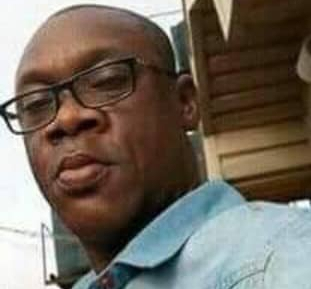
A grossly perverted 54-year-old father in Asaba, Delta State, Edward Odega, has confessed to having sexual relations with his three daughters.

Odega, who has been arrested by the police, disclosed that he had been sleeping with his children for the past seven years.

In a short interview with PUNCH at the police headquarters in Asaba on Saturday, Odega said, “I have three daughters, and I started sleeping with my first daughter when she was 12 years old.”

He also admitted to sleeping with two others who are 13 and 15, respectively, for the same period of time.

The spokesperson for the police, Bright Edafe, said one of Odega’s daughters informed the police about the incident.

He said, “The command has arrested a father who had been defiling his three daughters for the past seven years. The three children are now aged 13, 15, and 24.

Divisional Police Officer of the Ogborikoko Division, CSP Temi Agbede Zuokumor, conducted an enlightenment outreach in a school, during which one of the victims disclosed her ordeal.

“The act was made public after DPO Ogborikoko division CSP Temi Agbede Zuokumor, who went on a school outreach on enlightenment, encountered a child who spoke up, which eventually led to the arrest of the father.”

Edafe said that the three children are currently at the hospital undergoing medical check-ups.

Edafe confirmed that the suspect is “in custody” and will be “charged to court to face full prosecution” in line with the state’s laws on sexual offences.

In October, two fathers, Azeez Lamidi and Oyewole Adamolekun, were arrested by the Ondo State Police Command for allegedly impregnating their daughters after multiple incidents of sexual abuse.

Red Cross sounds alarm as experts warn Nigeria is sliding toward a hunger and debt catastrophe

Nigeria faces a looming hunger crisis as the Red Cross issues a stark warning.
The organisation says over 33 million Nigerians may face severe hunger by 2026 without urgent action.

This alert was delivered in Abuja during the launch of its Nutrition Advocacy Plan.
The event also honoured Ambassador Layla Ali Othman as the group’s new Nutrition Ambassador.

The Red Cross said her role will strengthen awareness and mobilise nationwide support.
Othman expressed gratitude and pledged commitment to the anti-hunger mission.

However, experts argue that the hunger crisis is part of a deeper economic breakdown.

Kunle Oshobi, head of strategy and planning at the Narrative Force, says Nigeria now stands at a devastating economic crossroads.

He notes that 139 million citizens live in poverty, up sharply from 87 million in 2023.
He warns that poor households spend up to 70 percent of their income on food.

Food prices have risen fivefold since 2019, worsening hardship across the country. Yet, despite public suffering, he says the government has intensified tax reforms.

Oshobi argues that heavy taxation cannot create prosperity in a collapsing economy.
He says taxing digital assets and adding new levies only widens national hardship.

He explains that increased taxation during mass poverty is economically destructive, warning that 33 million Nigerians already face food insecurity next year.

Oshobi cites inflation and violence in food-producing regions as key drivers.
He says new taxes hit citizens at the worst possible time.

He adds that deficit financing has pushed Nigeria into dangerous territory.

Nigeria’s 2025 budget carries a deficit of N13.08 trillion.

Most of this deficit will be financed through new borrowing.

Oshobi warns that public debt could exceed N180 trillion by year’s end, and that debt servicing now consumes over one-third of the national budget.

He adds that this leaves little for investment in productive sectors, while arguing that Nigeria is stuck in a cycle where borrowing fuels more borrowing.

He describes the situation as a debt trap that threatens future generations.

Oshobi says the real failure is choosing revenue extraction over wealth creation.

He argues that heavy taxes reduce purchasing power and stifle business growth.
He warns that businesses cancel investments when taxes rise and credit shrinks.

He says this triggers capital flight and shrinks the tax base even further.
According to him, true prosperity requires supporting productive enterprises.

He says Nigeria must first create wealth before expanding its tax net.
He proposes massive investment in agriculture, manufacturing and SMEs.

He notes that these sectors generate jobs and drive inclusive growth.

He argued that supporting MSMEs would create jobs and expand tax revenue naturally.

Oshobi says such stimulus would generate nationwide ripple effects.
He explains that productive loans fuel hiring, purchasing and economic activity.

He contrasts this with the current model that taxes the poor while borrowing heavily.
He says the present system creates no new wealth and worsens suffering.

He says proper infrastructure reduces business costs and multiplies wealth creation.

He notes that infrastructure is not an expense but an economic catalyst.

Oshobi argues that Nigeria still has vast untapped revenue potential.
He says the nation holds assets worth nearly N100 trillion that lie unused.
He argues that monetising these assets would ease pressure on citizens.

He says the government instead chose the easier option of borrowing and taxation.
He calls for suspending new taxes until economic stability returns.
He urges borrowing only for productive investments and not recurrent spending.

He advocates a national SME stimulus programme to drive wealth creation.
He calls for monetising abandoned assets instead of increasing taxes.
He says reducing the cost of doing business must become a priority.

He insists social protection must be strengthened during the economic crisis.
He argues that success must be measured by how much wealth Nigerians create.
Oshobi concludes that Nigeria faces a decisive economic choice.
He says one path leads to deeper poverty and endless debt.

He says the other path builds wealth and lifts millions out of hardship.
He warns that time is running out for leaders to make the right choice.

AFBA applauds NCBL Atlanta summit, demands stronger global action on black justice

The African Bar Association (AFBA), led by High Chief Ibrahim Eddy Mark, issued a powerful goodwill message at the just-concluded 2025 Annual Conference of Black Lawyers (NCBL) in Atlanta, Georgia.

Ibrahim Mark and another lawyer at NCBL at the 2025 Annual Conference of NCBL, which was held in Atlanta, Georgia

With the theme “Inspiring the Next Generation of Legal Warriors in the Movement for Black Liberation,” Life Bencher and President of AFBA, Ibrahim Mark, who represented AFBA, described the conference as both timely and profoundly significant.

Mawuli Davies, President NCBL Georgia Chapter/ President-Elect NCBL, High Chief Ibrahim Eddy Mark, President, AFBA, Whitley Carpenter, President, NCBL, at the 2025 Annual Conference of NCBL held at Atlanta, Georgia

The association applauded the gathering of visionary lawyers, scholars, and activists who remain steadfast in defending justice and advancing liberation for people of African descent across the globe.

AFBA noted that the conference theme aligns closely with its own mission across Africa and the diaspora. It underscored its commitment to strengthening legal institutions throughout the continent and empowering young lawyers through mentorship, advocacy, and transformational leadership.

Emphasising the shared global struggle for dignity and human rights, AFBA praised NCBL as a trusted partner in confronting systemic injustice. The association described both organisations as a united transatlantic force for legal activism—one that fortifies cultural pride, deepens solidarity, and strengthens the collective pursuit of Black liberation.

AFBA expressed hope that the Atlanta conference would generate bold, practical strategies to uplift Black communities worldwide and urged delegates to seize the moment to strengthen unity, sharpen their advocacy, and reinforce the movement’s global impact.

Wishing NCBL a successful and impactful gathering, AFBA expressed confidence that the deliberations in Atlanta will energise and advance the broader liberation agenda.

AFBA President concluded the goodwill message by reaffirming the association’s unwavering commitment to global justice and Black liberation.

FRSC honours outstanding supporters, unveils fresh security strategies at FCT special marshal workshop

The Federal Road Safety Corps (FRSC), RS7.1 FCT Sector Command, has held a high-level Special Marshal Sectoral Workshop in Abuja, advancing its renewed focus on security and operational excellence. The workshop, themed “Enhancing Security and Safety Strategies for Special Marshals’ Operations,” brought together senior officials, legal luminaries, and seasoned safety advocates.

The event was formally declared open by the Corps Marshal, Shehu Mohammed, who also delivered a compelling keynote address emphasising the critical role of Special Marshals in national road safety management.

A highlight of the event was the decoration of distinguished individuals as Honorary Special Marshals. These honourees were recognised for their long-standing support to the Corps, ranging from repairing FRSC service vehicles to providing financial assistance for accident victims and contributing to broader safety initiatives.

The workshop, chaired by Special Marshal, Dr Ogwu James Onoja, SAN, and represented by Special Marshal Moses Ebute, SAN, featured insightful goodwill messages and robust technical presentations.

Presentations included:

  • “Enhancing Security and Safety Strategies for Special Marshals’ Operations” by Wobin Gora
  • “Operations Assessment and Mitigation Strategy in Special Marshal Operations” by Major Aramude Merry

The interactive sessions deepened participants’ understanding of evolving security challenges and strengthened their capacity to mitigate operational risks.

The FRSC reiterated its commitment to fostering a safer road environment across the FCT and the nation at large, while celebrating the dedication of Special Marshals and supporters who continue to advance the Corps’ mandate.

Majority of Nigerian politicians are not democrats, they are democratic despots and terrors

By J.S. Okutepa, SAN

The majority of Nigerian politicians are not democrats. They are majorly democratic despots and terrorists. They have destroyed every institution of democracy, including the rule of law and the judicial institution. The destruction of these vital democratic institutions is worrying me as a lawyer. I am worried that we are watching the reckless use of judicial institutions to kill democracy in the exercise of rights that are not recognised by law.

There is no dispute that the Nigerian Constitution, 1999, as amended, and the Electoral Act, 2022, have set out the types of political disputes that are justiciable in the Nigerian Courts. Nigerian courts of first instance must wake up and not be used to destroy democracy, no matter the level of temptation. The Nigerian Electoral Act 2022 has several sections that deal with pre-election matters. Specifically, Section 84(14) of the Electoral Act, 2022, provides that an aspirant who complains that any provisions of the Act or guidelines of a political party have not been complied with in the selection or nomination of a candidate may apply to the Federal High Court for redress. Those who purchased forms to contest political posts are not aspirants within the meaning of the law. Nigerian lawyers and judges know this, and nobody should claim ignorance of this.

Section 29(5) of the Electoral Act, 2022, also addresses pre-election matters, stating that any aspirant who participated in the primaries of their political party and has reasonable grounds to believe that any information given by their party’s candidate is false may seek relief. The Constitution of the Federal Republic of Nigeria, 1999, as amended, also provides for the provisions for pre-election matters under Section 285(14) thereof. Section 285(14) of the said constitution recognizes three types of pre-election matters.

The three pre-election matters recognized by law in Nigeria are: Non-compliance with the Electoral Act or party guidelines in the conduct of party primaries. Improper nomination of a candidate by a party and disputes over the eligibility of a candidate. These are the matters that can be addressed under Section 285(14) of the Nigerian Constitution and Sections 29(5) and 84(14) of the Electoral Act, 2022. In Nigeria, selections of candidates for party posts outside pre-election matters are generally considered non-justiciable, meaning courts should not and must not interfere with internal party affairs. The Constitution of Nigeria 1999, as amended, and the Electoral Act 2022 limit judicial intervention to specific pre-election matters. See Section 285(14) of the Constitution and Sections 29(5) and 84(14) of the Electoral Act.

The Supreme Court has, on many occasions, warned Nigerian Courts not to entertain disputes on internal party elections or selections for party posts, considering them non-justiciable. There are many judicial decisions. The Supreme Court has, on many occasions, deprecated the lower courts from following its decisions on this point. The case of Dalhatu vs Turaki is in point here. In that case, the Supreme Court was very hard on the trial court. Because of the significance of that decision, let me quote the views of their lordships of the Supreme Court then.

These are what their lordships said: “This court is the highest and final court of appeal in Nigeria. Its decisions bind every court, authority or person in Nigeria. By the doctrine of stare decisis, the courts below are bound to follow the decisions of the Supreme Court. The doctrine is a sine qua non for certainty in the practice and application of law. A refusal, therefore, by a Judge of the court below to be bound by this court’s decision, is gross insubordination (and I dare say such a judicial officer is a misfit in the Judiciary”…I entirely agree with my learned brother Katsina-Alu that Onuoha V. Okafor and others (1983) 14 NSCC 494 was rightly applied to the facts of the case on hand by the Court of Appeal. This case was cited to the trial judge. He failed, rather, he refused, to apply it. He thought the Supreme Court was wrong in its decision in that case and arrogantly closed his judgment in these words “I also with great respect call on the Supreme Court to re-amend its position on the internal affairs of political parties.”

This, to my mind, is the height of judicial impertinence ever exhibited by a judge of a Court lower than the Supreme Court. The doctrine of stare decisis is fully entrenched in our jurisprudence to ensure certainty of the law. Had the learned trial judge in this case cared to read that case and the various dicta of their Lordships of this Court, he would not have exhibited such crass ignorance that ran through his judgment. I think enough said on this the better.”…”My general comment on the last sentence in the judgment of the learned trial judge which says-“I also with great respect call on Supreme Court to re-amend its position on the internal affairs of political parties.” is that it is rather daring and unfortunate. In my view it is a clear misconception of the well established principle of stare decisis in our judicial system. There is no doubt that the learned judge had at the back of his mind the decision of this court in Onuoha’s case (supra) and he did not realize that his duty like all other judges of the lower courts was to apply its ratio decidendi whether he agreed with it or not. See A.G. Ogun State V. Egenti (1986) 3 NWLR (pt. 28) 265; Emerah & Sons Ltd V. A. G. Plateau State (1990) 4 NWLR (pt. 147) 788. He could only avoid it where it was possible to distinguish the case he was dealing with from that of Onuoha. In this case, he could not do so and so it was not open to him to avoid applying it to the case before him nor could he “advise” the Supreme Court to change its position on it. It is well settled that the Supreme Court can only change its position in a case decided earlier by it where it considers, for good and substantial reasons, to overrule itself on an application where the need arises. Williams V. Daily Times (1990) 1 NWLR (pt. 124) 1; Rossek V. ACB Ltd (1993) 8 NWLR (pt. 312) 382; Johnson V. Lawanson (1971) All NLR 58. Judges of the lower court have no right under any circumstances to ask or advise this court to change its decision in any case.”….”The learned trial Judge refused to follow Onuoha. That was not all. He asked this court to re-amend its position in Onuoha. In his words: “I also with the great respect call on the Supreme Court to re-amend its position on the internal affairs of political parties”.

The word “re-amend” gives the impression that this court had earlier amended its position in Onuoha, whatever that means. I cannot remember the case in which this court amended its position in Onuoha. But that is not very important. The important thing is that a trial Judge would have the courage and the strength not to follow a decision of the Supreme Court merely because he feels that the decision is wrong. As if that is not bad enough, the Judge has called upon this court to “re-amend its position” to fall in line with his. This is an extremely unfortunate situation. Apart from the fact that it attempts to destroy the well settled principles of stare decisis, this court is invited to abandon its own correct decision to follow a wrong decision of a trial Judge. This is very serous.

On my part, I will not obey him. He is wrong in his judgment and this court is correct in Onuoha.” The doctrine of judicial precedent otherwise known as stare decsis is not alien to our jurisprudence. It is a well settled principle of judicial policy which must be strictly adhered to by all lower courts. While such lower courts may depart from their own decisions reached per incuriam, they cannot refuse to be bound by decisions of higher courts even if those decisions were reached per incuriam. The implication is that a lower court is bound by the decision of a higher court even where that decision was given erroneously: see Emerah & Sons Ltd V. Attorney-General Plateau State and ors (1990) 4 NWLR (Pt. 147) 788, Global Trans Oceanico S.A. V. Free Ent. (Nig) Ltd (2001) 5 NWLR. (Pt. 706) 426 at p.441; (2001) 3 SCM 35″

Nigerian Courts generally consider internal party matters, like selections for party posts, as non-justiciable, unless they directly impact electoral processes or violate the Constitution/Electoral Act in the party’s primary elections. And it is only aspirants who participated in the primary elections of the political parties that have locus standi and who can sue in the court and before the appropriate court with jurisdiction. One is completely at a loss at the kind of orders flying left and right centre by Nigerian Courts in sabotage of democracy and the rule of law, when, from the facts, there are no party primaries in all these cases.

The judiciary must not be ridiculed further. The sanctity of the judiciary must be preserved. The Nigerian judiciary must not be completely destroyed. Once it is destroyed, the hopes of Nigerians are destroyed forever. Democracy is heading to a calamitous end, given the despotic and thuggish approach to democracy by the majority of Nigerian politicians.

The views expressed by contributors are strictly personal and not of Law & Society Magazine.

Forty-Five days that changed elections in Africa?

By Chidi Anselm Odinkalu

An unlikely coincidence of ballots in a forty-five day period from the middle of September to the end of October 2025 has cast a new light on the state of democratic governance in Africa and now threatens to unscramble the ritual hollowness that has become the fate of elections on the continent under the indifferent watch of the African Union and other regional institutions in Africa. How the continent’s leaders and institutions handle the aftermath could have serious implications for the stability of the continent.

On 16 September, Malawi went to the polls to elect their president. The last time the country did that in 2019, it produced results that were so transparently rigged that five judges of the Constitutional Court of Malawi wearing bullet-proof vests were needed to set aside the result declared by the electoral commission. That was only the second time in Africa’s history that a court would nullify the declared outcome in a presidential election.

The annulled result had favoured then incumbent and fifth president of the Republic, Peter Mutharika (a long-serving law professor and brother of Malawi’s third president, Bingu wa Mutharika), in a contest against Lazarus Chakwera, a theologian and pastor with the Assemblies of God Church in Malawi. In the re-run that followed the judicial nullification in 2020, Chakwera prevailed and the people ousted Peter Mutharika from the presidency.

The contest in September 2025 pitted 85 year-old Peter Mutharika in a sequel against his nemesis, Lazarus Chakwera. In the preceding five years, President Chakwera had managed to implausibly squander the considerable civic goodwill that powered him into office. Despite being 15 years younger than President Mutharika, President Chakwera lost resoundingly to his older opponent who secured 56.8% of the vote.

Malawi may have vindicated the trust of both the voters and of the candidates in a test of the will of the people but it is an outlier in a continent that has grown used to seeing elections as charades. This reluctance for credible ballots was evident when the central African country of Cameroon went to the polls nearly one month later on 12 October 2025, to elect their president. The incumbent, Paul Biya, was a 92 year-old whose sojourn in Cameroon’s government dates back to his appointment as Chief of Staff in the cabinet of the Minister of Education in 1964. In 1975, President Ahmadou Ahidjo made him Prime Minister. On 6 November 1982, two days after the resignation of President Ahidjo on grounds of ill-health, Biya ascended to the presidency and has ruled the country for 43 years since.

At 92, Paul Biya is the oldest serving president in the world, only outlasted in office by Teodoro Obiang, president of the neighbouring Equatorial Guinea, who has been in office since he toppled his uncle, Macias Nguema, in August 1979 before executing him. In the election this year, his main opponent was Issa Tchiroma, a 35-year veteran in the cabinet of President Biya, who stepped down from the ruling Cameroon Peoples’ Democratic Movement (CPDM) and from the Cabinet in order to run against his former boss.

It took the Constitutional Council 15 days to tabulate the figures in an election which had 8.1 million registered voters with an average turnout of about 68.5%. When it eventually declared that outcome on 27 October, the Constitutional Council announced Biya as winner with 53.66% of the votes in disputed results and in an election in which he was unable to campaign because of infirmity. Independent analysts who have examined the official numbers insist he “couldn’t have won.”

With the result, Biya – who was born one month after Adolf Hitler assumed office as German Chancellor and in the month preceding the inauguration of Franklin Delano Roosevelt as the president of the United States of America – entered upon his seventh presidential term in a country in which the median age belongs to children who were born in 2006. By the time of the next election, he will be nearly one century old. In the wake of the announcement, United Nations Secretary-General, António Guterres, pointedly declined to extend congratulations to President Biya, instead focusing his attention on the need for a “thorough and impartial investigation” of the “post-electoral violence and…. reports of excessive use of force.”

Paul Biya can at least claim that he had a genuine contest against a genuine opponent. In Côte d’Ivoire, West Africa, the contest two weeks later on 25 October 2025 pitted incumbent president, Alassane Ouattara – whose ambitions drove the country to the brink of fragmentation at the beginning of the millennium – against no one.

When the result was announced, President Ouattara, a child of the Second World War, having been born on New Year’s Day in 1942, contrived at 83 years to award himself nearly 90% of the vote and a fourth term in office in an election from which he barred every credible competition. That was indeed a generous four percentage points lower than the 94% of the votes that he awarded himself in 2020. In power since 2010, Ouattara was supposed to be term-limited after two terms of ten years in office. At 83, he expects to rule until at least he is 88, which would still be five years younger than President Biya’s current age.

The election in Tanzania four days after Côte d’Ivoire’s took place in a graveyard. The incumbent and candidate of the ruling Chama Cha Mapinduzi (Party of the Revolution) was Samia Suluhu Hassan, who inherited the office when her principal, John Pombe Magufuli, died in March 2021.

Ahead of the contest, however, it became evident that Samia would not tolerate a contest. Under her leadership, the government unleashed what Amnesty International described as a “wave of terror” designed to make her candidacy unopposed and the ruling party unchecked in its march to a pre-determined seventh decade in power. On the day of the contest on 29 October, protests unexpectedly erupted in key cities, such as Dar-Es-Salaam, Arusha, Mbeya, and Mwanza. Under cover of a media blackout complemented by an internet shutdown imposed on the day of the ballot, Samia’s government orchestrated a campaign of targeted mass murder in population centres suspected to be opposition strongholds.

President Samia’s electoral commission declared her winner with 87% voter turnout and nearly 98% of the vote. As Tanzanians in different parts of the country woke up to find bodies on their courtyards with fatal injuries from unknown persons and morgues overflowing with fresh cadavers reportedly being disappeared under instructions of the government, President Samia turned up at a military base in new capital city, Dodoma, where on the fourth night following the vote, she was stealthily inaugurated for a new term.

Initial estimates putting the casualty count in the hundreds were quickly eclipsed by more updated tallies of over 3,000 killed in under 72 hours. Fresh reporting by the New Humanitarian put the number over 5,000 and suggests that the casualty count may indeed be over 10,000. Around the country, initial trepidation gave way to alarm at the scale of the massacre. That alarm has now been ousted by outrage.

Meanwhile, for the first time in their histories, official election observer missions deployed by the African Union (AU) and the Southern African Development Community (SADC) both concluded separately that the election in Tanzania “did not comply with AU principles.” This caught many people unprepared. Now both institutions are scrambling to figure out what to do. There is an emerging consensus that President Samia is illegitimate. The leaders of both institutions must articulate consequences and citizens have a right to expect them to do so clearly.

Consensus is also growing around the urgent need for an independent, international investigation and accountability. Meanwhile, Tanzania’s young people prepare for nation-wide protests on 9 December 2025. The symbolism is significant: it is World Anti-Corruption Day; it is the anniversary of the adoption of the Genocide Convention; and it is Tanzania’s Independence Day.

A lawyer and a teacher, Odinkalu can be reached at [email protected]

The views expressed by contributors are strictly personal and not of Law & Society Magazine.

Okutepa, SAN demands $500,000 in damages from Qatar Airways for degrading treatment and contract breach

A formal complaint has been filed against Qatar Airways by Chief Jibrin Samuel Okutepa, SAN, alleging degrading treatment, wrongful denial of boarding, and a breach of contractual obligations during his recent Abuja–Doha–Toronto trip.

The complaint, issued through his legal representatives, details what he describes as an unfair and humiliating travel experience linked to ticket number QQ32CHOD.

According to the complaint, Okutepa purchased a business class return ticket after Qatar Airways advertised a package that included a transit visa and hotel accommodation in Doha.

He reportedly submitted all required documents within 24 hours, and the airline confirmed receipt.

His lawyers claim Qatar Airways assured him the visa would be processed before the trip.
They state that he arrived early for check-in in Abuja and again raised concerns about the missing visa.

The airline staff allegedly told him the visa would be issued in Doha upon arrival.
He then boarded the Abuja–Doha flight based on this assurance.

However, the complaint says he was shocked to discover no visa awaited him in Doha.

Despite an eight-hour layover, he was allegedly denied the hotel accommodation included in the ticket package.

The lawyers say he endured long hours inside the airport without rest or support.

He eventually continued the trip to Toronto after what he described as an agonising wait.
After attending the International Bar Association Conference, Okutepa returned to the Toronto airport for his scheduled flight to Abuja.

He was allegedly denied boarding on claims that he lacked a transit visa to Doha.
According to the complaint, his explanations fell on deaf ears.

He reportedly spent over four hours pleading with airline staff for assistance.

Qatar Airways allegedly insisted he must pay an additional $5,000 to adjust his ticket.
He refused, describing the demand as exploitative and unfair.

He was then asked to leave the airline’s office as staff closed operations.
Forced to remain in Toronto, he secured a hotel room at his expense.

He later purchased an Ethiopian Airlines business class ticket for $3,668.13 to return home.
His lawyers say the ordeal caused emotional, psychological, and financial trauma.

They argue that Qatar Airways breached its contract by failing to provide the promised visa and hotel.

They also accuse the airline of negligence and unfair commercial practice.

The complaint demands a written apology accepting responsibility for the ordeal.

It also seeks a refund of the unused portion of his Qatar Airways ticket.

Additionally, the lawyers request reimbursement for all expenses he incurred as a result of the disruption.

They also demand $500,000 in damages for distress, humiliation, and harm to his dignity.
The airline has been given fourteen days to comply with the demands.

Failure to do so, they warn, will lead to immediate legal action in a Nigerian court.

Videos: FIDA Abuja lights up Day 2 of Law Week with energetic advocacy walk and heartwarming hospital outreach

Day 2 of the 2025 Law Week of the International Federation of Women Lawyers (FIDA) Nigeria, Abuja Branch, came alive with colour, energy, and compassion as members turned out in impressive numbers for a vibrant Aerobics & Advocacy Walk and a humanitarian visit to the FIDA-adopted ward at Gwarimpa General Hospital.

The morning kicked off with an electrifying aerobics session, as the women lawyers moved in unison—stretching, dancing, and powering through fitness routines designed to promote wellness, mental strength, and camaraderie. The advocacy walk that followed sent a strong message of visibility and unity, with participants marching proudly through designated routes, spotlighting issues affecting women and amplifying FIDA’s ongoing commitment to justice and community service.

Transitioning from advocacy to impact, the group proceeded to the Gwarimpa General Hospital, where they visited patients at the FIDA-adopted ward. The women lawyers offered comfort, encouragement, and essential items donated to support patients in their recovery journey. Smiles, gratitude and emotional moments filled the ward as FIDA members interacted with patients and reaffirmed their dedication to humanitarian service.

The activities marked yet another milestone in this year’s Law Week, showcasing FIDA Abuja’s unique blend of legal advocacy, community engagement, and women-led leadership.

As the Law Week continues, participants say the momentum is only getting stronger.

Watch videos of the events below.

Wike’s weak, wild, wicked week

By Farooq Kperogi

In Nigeria, elite oppression and callousness are often mostly abstract. Most people at the lower end of the social scale think and feel that many people in positions of power, comfortably ensconced in their sinecures, are haughty, self-impressed, and possessed of ice-cold disdain for them. But it is FCT Minister Nyesom Wike, more than anyone in the current government, who brings this abstract ideation into a raw, visceral, in-your-face embodiment through his habitual conduct.

He has become a proverb for boorishness, unendurable arrogance, condescension, tactlessness, and verbal primitivism. He excites visceral emotions in most Nigerians irrespective of their regional, religious, ethnic, or political affiliations. Wike doesn’t do his own oppression of the people in peace or style. He does it with vile and vicious villainy.

That was precisely why his humiliation by Navy Lt. A. M. Yerima provided unrestrained, much needed, exhilarating national catharsis for vast swaths of Nigerians. In Yerima, many Nigerians saw a brave, principled young man who pushed back on Wike’s intolerably familiar and habitual superciliousness and unrelieved toxicity.

Nigerians experienced a collective sensation of emotionally purging excitement through the vicariousness of watching video clips of his encounter with Yerima, which has spawned such creative social media jokes as, “Wike was chasing me in my dream, but when I yelled ‘Yerima!’ he disappeared!”

Millions of perpetually oppressed Nigerians, particularly, derived secondhand joy from seeing Wike, in a moment of unaccustomed powerlessness, flip out his phone to call the Chief of Defence Staff (CDS) and then hand it over to Yerima in an impotent bid to be allowed access to the disputed property Yerima was guarding.

As soon as Yerima was handed the phone, he instinctively took his hand out of his pocket as a sign of respect for his boss, calmly explained why he wouldn’t allow Wike and his ill-bred goons into the property, then handed the phone back to Wike without yielding to Wike’s demands.

In a fit of bacchanalian rage, Wike called the young man “a big fool.” His earnest, insistent, impassioned, lightning-fast riposte of “I am not a fool, sir,” obliquely told Wike that he was the big fool. Only a fool would, as a minister, publicly call a military officer in uniform young enough to be his son a fool in the full glare of cameras.

Wise people impose restraint on themselves, tutor their instincts, and school their emotions. That someone could publicly tell Wike to his face, even if implicitly, that he is the fool that Nigerians say in hushed whispers, was infinitely satisfying for millions of the direct and indirect victims of Wike’s agonizing imperiousness.

It was even more consoling to many Nigerians that although Wike yelled at Yerima to “get out!” it was actually Wike who got out in disgrace — diminished, subdued, chastened, and with his tail between his legs. That was a once-in-a-blue-moon, David-versus-Goliath defeat of a detestable pocket tyrant.

Now, had this been a different minister, the conversation would have taken a radically different tenor. Many legal commentators have persuasively pointed out that Wike has the right to allocate, reallocate, seize, and restore land within the Federal Capital Territory.

Of course, many things are legal or not explicitly illegal but are widely regarded as inappropriate, unethical, or socially unacceptable. For example, no law prohibits wearing a clown suit in public or at a funeral. But it violates social norms of respect, dignity, and decorum.

To be clear, I honestly don’t care if Vice Admiral Awwal Zubairu Gambo, whose property Yerima is tasked with guarding, loses it. Wike is probably right that Gambo was scammed and has no legal right to the land. I also think it’s an indefensible prostitution of the young man’s obviously enormous talents to reduce him to standing sentry by the disputed parcel of land of a retired general.

In addition, I take issue with Yerima’s denigration of the professional worth of a police officer who accompanied Wike to the disputed plot and heckled Yerima in support of Wike. While I understand that in moments of inflamed passions, tempers can rise to stratospheric heights and cause internal emotional guardrails to break, targeting the rank and professional identity of the police officer for aspersion diminished Yerima.

My two immediate younger siblings are police officers, but that’s not the reason for my disappointment in Yerima’s dissing of the profession of the police officer. It’s mostly because it made Yerima guilty of the same kind of hauteur and false pride that has caused Wike to be alienated from most Nigerians.

Whatever we may think of police officers, their services to the nation are as indispensable to national survival as those of military officers. The current NSA, who is the boss of Yerima’s military bosses, was a police officer.

That said, the fact that even people at the core of the current power structure have not come out to defend Wike tells you that most of them are embarrassed by his trademark coarseness and that he is a burden that is tolerated only for strategic political calculations. The persistent inelegance he lets out by virtue of his being a helplessly uncouth boor has caused his colleagues in the circles of power to let him hang out to dry.

The few who have spoken have condemned his conduct and decision-making. For example, Bello Matawalle, Minister of State for Defence, said Wike’s clash with the naval officer was “unnecessary” and “avoidable” and that Wike “should not have exchanged words with the officer” on site.

Instead, he argued, Wike ought to have taken up his concerns through the officer’s superiors and formal channels, saying that there was “no basis to sanction” Lt. Yerima. He framed the officer as having acted professionally and under lawful orders, again implicitly positioning Wike as the one at fault.

At a ministerial briefing for the 2026 Armed Forces Remembrance Day, Minister of Defence Mohammed Badaru also said that the ministry and the armed forces “will always protect our officers on lawful duty” and that “we will not allow anything to happen to him so far as he is doing his job, and he is doing his job greatly well,” referring specifically to Lt. Yerima.

Hours after the Wike–Yerima confrontation, the Defence Headquarters (DHQ) lent veiled institutional support for Yerima. It posted a graphic on its verified X account that reads: “IT IS AN HONOUR TO SERVE IN THE NIGERIAN MILITARY. UNSHAKEN. UNBENT. UNBROKEN.”

The Nigerian news media, including Premium Times, explicitly tied the timing of this DHQ post to the Wike incident and noted that many Nigerians saw it as a covert response defending Yerima.

Former CDS Gen. Lucky Irabor (retd.), like the defense ministers, spoke in a way that supports Lt. A.M. Yerima and rebukes Wike over the clash. The Punch of November 13 reported him as framing Yerima’s uniform as “representing the authority of the state” and pointing out that when you disparage or humiliate someone in uniform, “you are insulting the state itself.”

Irabor said many public reactions to the Wike–Yerima saga were “largely misguided” because people were focusing on personalities instead of the symbolic and legal authority that the military uniform carries.

That capped a really weak, wild, whiny, wicked week for Wike. It came as no shock, therefore, when he addressed a news conference where he tried to sound conciliatory and walk back his totally unprovoked and unwarranted insults at Yerima.

A video clip of his news conference where he denied calling Yerima a fool started trending on Friday. “I did not call the naval officer a fool,” he said. “What I said was that you can’t be carrying out an illegal order. That’s what I meant … I didn’t say military fool. I couldn’t have said that!”

Of course, he didn’t just call Yerima a “fool,” he called him a “big fool” for emphasis, and even repeatedly commanded him to “shut up” with imperious airs. Maybe Wike didn’t remember he said this because he was in a daze when he did.

Or perhaps it is his arrogant way of apologizing. In all this, though, I hope Wike has learned a lesson. In a matter where Nigerians would have ordinarily condemned Yerima for insubordination to superior civilian authority, they were exultant in vicarious satisfaction over his public humiliation.

If the spectacle of a lone junior officer forcing a blustering minister to taste his own medicine nudges Wike and his ilk toward even the faintest flicker of humility, then this confrontation will have served a moral purpose. In a country long brutalized by small men with big egos, even symbolic victories matter.

The views expressed by contributors are strictly personal and not of Law & Society Magazine.

National webinar exposes deep gender bias in Nigeria’s judiciary, sparks demand for immediate reform

A national webinar has sparked renewed calls for sweeping gender reforms in Nigeria’s judiciary.

The Women in Leadership in Law project brought together judges, lawyers, and policymakers for a candid discussion on hidden structural barriers.

The event, led by NAWJN in partnership with IAWJ, exposed systemic bias that continues to restrict women’s growth in the justice sector.

As discussions progressed, speakers described how caregiving demands and cultural expectations shape women’s career trajectories.

They noted that women still shoulder most domestic responsibilities despite their growing visibility on the bench.

This imbalance creates a severe time deficit that slows professional advancement and leadership opportunities.

Attention then shifted to the remarkable success of the Abia State Judiciary crèche.
Participants praised the facility for boosting productivity and restoring confidence among working mothers.

They argued that the crèche demonstrates how simple institutional support can transform workplace outcomes.

Speakers examined broader policy failures affecting maternity rights, childcare access, and judicial welfare.

They urged courts to adopt nursing rooms, flexible scheduling, and digital systems that ease workload pressure.

Such tools, they said, would enhance efficiency without compromising women’s wellbeing.
Another key issue involved discriminatory appointment practices tied to indigene identity.
Experts cited cases where competent women were excluded based on marital or birth origins.

They insisted that no judicial officer should lose opportunities because of her surname or spouse.

Several judges shared personal stories of balancing courtroom duties with childcare demands.

Their testimonies highlighted the emotional strain and stalled careers caused by inadequate support.

Presenters called for a comprehensive gender policy to address these longstanding injustices.

They emphasized that reforms must reflect constitutional guarantees and international standards of equality.

Interactive sessions produced recommendations for consistent maternity leave, childcare support, and unbiased appointments.

Participants stressed that justice cannot thrive where workplace inequality persists.
The webinar ended with a strong pledge to build a judiciary that fully supports women.
Organizers affirmed that fairness begins with dismantling the barriers women encounter daily.

Attendees agreed that empowering women strengthens judicial credibility and national development.

The meeting closed with an urgent call for immediate action across all judicial institutions.

TIPS