Home Blog Page 157

Nigeria and the vagaries of religion

In the midst of the reports and counterclaims about genocide, monitoring unconscionable religious crusaders is now pertinent, writes Monday Philips Ekpe

First, a tribute. Chief Dan Agbese, accomplished journalist and writer, who has just passed on is being showered with well-deserved panegyrics from several quarters. The impact of his superlative writing skill on me was such that I wanted to write on his liquid, manicured and profound articles as my Long Essay at the University of Benin, Benin City. My supervisor, however, turned it down as she felt that the subject was narrow. But, somehow, I had to find a way to work on a personality who had become a stubborn force in the process of choosing my own career. Four decades after, I still hope that I’ve not been a poor student of this legend. Yesterday, as I pulled out my bachelor’s degree project, “Tone and Diction in Selected Editions of Newswatch Magazine”, from my bookshelf, it took on a new meaning. The one who inspired it and who had sufficiently demonstrated that the written word could actually have a robust life of its own had gone the way of all flesh. Good night, Sir!

Now, religion. Or, better still, where it has led the country; what it’s up to here and how to make it work optimally for us all. To be clear, God and religion are not one and the same. The former is the supreme being seen by many as the creator and ultimate controller of all things. Even some of those who spend their entire lives denying his very existence are known to have cried for his help at the point of death. The mystery of his relevance and sovereignty is that compelling. And the latter represents the ways human beings attempt to know and serve him.

All through the ages, problems show up as people grapple with the arduous tasks of trying to understand the almighty and his words for themselves and also communicating same to others. Scriptures contained in the Bible and Quran, for instance, have remained unchanged for centuries – a major proof of their immutability and sanctity, at least in the estimation of their believers. But not so for their interpretations. Transcendental meanings are sometimes attributed to what is recorded in black and white. That way, whole denominations have grown out of existing establishments. Virtually all religious schisms are products of irreconcilable differences emanating from how individuals and groups view what they consider to be holy teachings. The conflicts produced by religions are, therefore, both intra and inter and their scopes can indeed be complicated.

The challenge is never with God. And no apologies for that submission. It is, instead, with the human agents who go into the profession of speaking on his behalf with their own prejudices and other shortcomings. It’s difficult to convince me that the men and women who continually spew hate, bloodletting, chaos and doom from their pulpits are true representatives of the God of love and mercy. That such persons keep growing more confident in their dark trade in this country and in this dispensation indicates assured collective destruction if nothing is done to stem the tide.

In Nigeria, Christianity and Islam, two faiths that lay claims to God’s direct commandments, have since pushed the traditional modes of worship to the background. Perhaps, the ways our forefathers sought to reach and please God were inferior to these two religions and could simply not withstand their crusading powers. Whatever the case, the Nigerian population is now largely distributed among both entrants. Nothing to worry about, ordinarily. But these aren’t the best of times.

Nigeria’s current most daunting predicament – insecurity – is traceable to Boko Haram, a group of bloodthirsty people who hid behind their own interpretation of religious dictates to enter and disrupt public consciousness. It wasn’t hard for the discerning to see murderous criminality through their façade from the beginning. It’s on record that Christians and churches were their initial targets. Sadly, it was only a matter of time before everyone became unsafe. The other terrorists and bandits who came after them only helped in further dragging the name of a religion literally translated as peace into the mud.

But, make no mistake! Violence and bloodshed are not synonymous with Islam. The history of Christianity too isn’t spotless. From the 12th Century to the 19th, the Inquisitions – Medieval, Portuguese, Spanish and Roman – saw the torture and extermination of hundreds of thousands of people considered to be heretics and non-believers. Just imagine such horrors perpetrated in the name of Jesus who had declared that he wasn’t here to condemn the world but to save it! So, one responsibility before us is to checkmate the ‘holy’ energisers of wickedness in our midst. We shouldn’t underrate the greater havoc and pain they’re capable of causing.    

Robert Greene and Joost Elffers’ 1999 bestseller, The 48 Laws of Power, provides a window into the psyche of these merchants of morbidity. Law 27 – Play on People’s Need to Believe to Create a Cult-like Following – reads in part: “Having a large following opens up all sorts of possibilities for deception; not only will your followers worship you, they will defend you from your enemies and will voluntarily take on the work of enticing others to join your fledgling cult. This kind of power will lift you to another realm. You will no longer have to struggle or use subterfuge to enforce your will. You are adored and can do no wrong…. As humans, we have a desperate need to believe in something, anything. This makes us eminently gullible. We simply cannot endure long periods of doubt, or of the emptiness that comes from a lack of something to believe in.…

“Always in a rush to believe in something, we will manufacture saints and faiths out of nothing.… The great European charlatans of the sixteenth and seventeenth centuries mastered the art of cult-making. They lived, as we do now, in a time of transformation. Organised religion was on the wane, science on the rise. People were desperate to rally round a new cause or faith. The charlatans had begun by peddling health elixirs and alchemic shortcuts to wealth.”

There’s no doubt that the army of misguided and helpless Nigerians is swelling. Vulnerable, willing recruits everywhere. Leaving them as ready preys can only further jeopardise the nation’s safety and prosperity. One urgent duty is to identify our common foes, particularly those who callously utilise God’s name, shame and then disarm them by all means. Religion mustn’t continue to neutralise our capacity for cohesion.

Ekpe, PhD, is a member of THISDAY Editorial Board

The views expressed by contributors are strictly personal and not of Law & Society Magazine.

NBA-SPIDEL raises the bar with loaded technical sessions and star-studded speakers’ list

The Nigerian Bar Association Section on Public Interest and Development Law (NBA-SPIDEL) Annual Conference has unveiled an expansive 12 technical sessions for its eagerly awaited Annual Conference, which will be held in Uyo.

The Annual Conference is scheduled to be held from December 1 to December 5, 2025, at the prestigious Ibom Hotels and Golf Resort in Uyo, the Akwa Ibom State capital. To register, click here http://nbaspidel.ng/.

The Opening Ceremony will be headlined by addresses from the NBA-SPIDEL 2025 Conference Planning Committee (CPC) Chair, Assoc. Prof. Uju Agomoh, NBA-SPIDEL Transition Chairman, Prof. Paul Ananaba SAN, NBA President, Mazi Afam Osigwe SAN, Senate President, Senator Godswill Akpabio, Chief Justice of Nigeria, Justice Kudirat Kekere-Ekun, and Attorney-General & Minister for Justice, Prince Lateef Olasunkanmi Fagbemi SAN, among others.

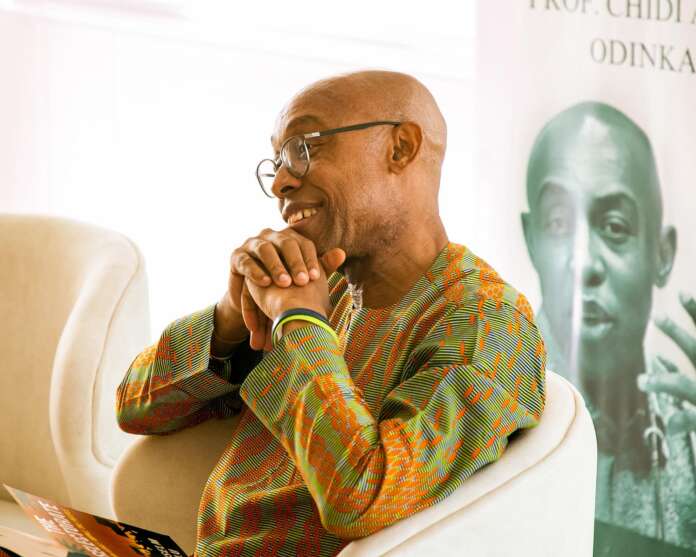
The keynote session is to be chaired by Justice Inyang Okoro of the Supreme Court. The Keynote Address will be delivered by outspoken human rights activist and former Chairman of Nigeria’s National Human Rights Commission (NHRC), Prof. Chidi Odinkalu. The keynote address will be dissected by Professor Stephen Shute, a professor of Criminal Justice and President of the International Penal and Penitentiary Foundation (IPPF), as well as fiery senior lawyer, Mr Jibrin Okutepa SAN. This will set the stage for the Akwa Ibom State Governor, Pastor Umo Eno, to formally declare the annual conference open.

Session 2 will witness public presentation of the National Legal Aid Strategy 2026-2036 by the NBA/SPIDEL, Legal Aid Council of Nigeria, Prisoners Rehabilitation & Welfare Action (PRAWA) and International IDEA.

Session 3 has “Law, Governance, & Development” as its sub-theme, with the governors of Abia State, Benue State, Delta State, and Rivers State, as well as former House Speaker Aminu Tambuwal and the Solicitor General of the Federation, Jeddy Agba, expected as panellists.

“Bridging Access to Justice Gap in Nigeria” is the sub-theme for Session 4. Breakout sessions will tackle Baseline Reports from States on Implementation of the National Legal Aid Strategy 2026–2036; Data, Technology and Justice Delivery – Status, Challenges & Prospects; Understanding the Remuneration Order: A special presentation by the NBA Remuneration Committee, as well as a presentation on the 365-day free subscription of meetsession & technical support for registered attendees.

Session 5 will dwell on “Press Freedom and Cyber-Security Law in Nigeria: Bridging the Justice Gaps,” with Justice Nwaoma Uwa of the Supreme Court as Chairman and leading human rights activist, Mr Femi Falana, SAN as Lead Speaker. Discussants include Dr Monday Onyekachi Ubani, SAN; Prof. Ernest Ojukwu, SAN; Mr Deji Adejanju; Justice Daketima Kio; and Hon. Luke Onofiok, among others.

While former NBA President Olumide Akpata is the Lead Speaker for the topic, “Walking the Talk: Strengthening Public Interest Advocacy Through the NBA-SPIDEL – A Peep into the Future,” the discussants include Mr. Olumuyiwa Akinboro, SAN; Mrs Oyinkasola Badejo-Okusanya, SAN; Mrs. Foluke Dada-Lawanson; Mr. Lateef Akangbe, SAN and Dr. Monday Ubani, SAN.

The session on “Tackling corruption in the Nigerian justice sector: the role of the Bar” has respected Bar Leader and Chairman of the Council of Legal Education, Chief Emeka Ngige, SAN, as chairman, with former Rivers State Attorney-General Worgu Boms as Lead Speaker. Aside from the ICPC Chairman, who will deliver an address, other panellists have been lined up for the session.

The session on “Building Public Trust in Democratic Governance: Electoral Justice, Political Accountability Post-2023 electoral lessons and Pre 2027 reforms” will be chaired by former NBA President Augustine Alegeh SAN, while INEC Chairman, Prof. Joash Amupitan SAN, will deliver a Special Address.

The topics for the technical sessions include “Public Interest, Accountability and Transparency: Securing the banner,” “The Role of Zonal/Regional Development Commissions to National Development: Impacts, Challenges & Prospects,” and “Nigeria’s tax reform agenda: financial reprieve or economic repression?”

Also expected at the conference are Senator Dino Melaye, Mr Kenneth Okonkwo, Hon. Ikenga Imo Ugochinyere, Mr Kanayo O. Kanayo and Dr Reuben Abati.

Aside from exhibition and sundry fun activities, the annual conference will also witness an invitation-only Dinner, a Closing Party, the NBA-SPIDEL Annual General Meeting/Election of Officers, as well as the swearing-in of elected officers.

On whose mandate do judges stand?

By Chidi Anselm Odinkalu

“I had discovered since my appointment as a High Court judge that most of the politicians in Nigeria and, indeed, in other developing countries only pay lip-service to the independence of the judiciary…. It pays in the end for a judge, even at the risk of being a snob or of haughtiness, to be somewhat aloof, not only from members of the Executive, but also from political powerbrokers.”

Atanda Fatayi Williams, Faces, Cases and Places, pp. 77-78 (1983)

Atanda Fatayi Williams, the fourth Chief Justice of post-colonial Nigeria (CJN), has not always received the kind of credit that he probably should for a judicial career of impact. Few judicial careers in Nigerian history can compete with that of this grand-son of an Ijebu merchant in terms of both legacy and luminosity.

Sworn in as a judge a mere seven days after independence on 7 October 1960, Justice Fatayi Williams was the first person to be appointed a judge in post-independence Nigeria. 19 years later, he became Nigeria’s first Chief Justice of the presidential era. In this capacity, he was the first CJN to truly feel the pulse of the elected president as both head of state and head of government.

It was his good fortune that the president during his tenure as CJN was the emollient Alhaji Shehu Shagari but he saw enough to leave him a sceptic about judicial dalliance with politicians. “In Nigeria” he warned in his memoirs, “familiarity does not breed contempt. It breeds obligation…. people with whom you are friendly expect you to bend the rules to suit their requirements.”

As CJN, Fatayi Williams pioneered the All Nigeria Judges Conference in Ilorin, the capital of Kwara State, on 8 March 1982. That was one year after the current CJN became a lawyer. Shehu Shagari, then the president, traveled to Ilorin to address the conference. His presence and delivery bore the hallmarks of the polished modesty that defined Shagari’s long public service career.

The conference has grown since then to become a biennial tradition of the bench of Nigeria’s Superior Courts of Record. For many judges, the opportunity to mix, introspect, and learn together with colleagues from across the country, both serving and retired, is the highpoint of every judicial biennium. The conference is also an opportunity for judges as a collective to diagnose common problems that afflict the judicial branch, think together, and communicate with the other branches of government on policy matters adjacent or relevant to the judiciary.

For the past decade and a half, the conference has acquired a permanent home on the premises of the National Judicial Institute (NJI) in Abuja. This year’s conference began on 17 November at the same venue. The Administrator of the NJI, Babatunde Adejumo, himself a former President of the National Industrial Court of Nigeria, ran the floor under the direction of the Chair of the Institute who is also the CJN.

As befits a conference with the president of Nigeria in attendance, the opening of the conference was supposed to be brisk. The Administrator of the NJI had to be persuaded from lingering on the microphone with prolix protocol. Thereafter, it was the turn of the CJN.

Her delivery made a case that appeared both respectable and heartfelt, inviting her colleagues to defend and deepen democracy in Nigeria “by ensuring that justice is not only done but manifestly seen to be done in every courtroom, across every jurisdiction, and in every case.” With deftness, she acknowledged widespread notions that judicial decisions in Nigeria are “sometimes vulnerable to external influences”, a euphemism for perceptions of both corruption and capture of the judiciary; and admitted “with candour that there are some within our ranks who have undermined the integrity of the Bench.” She hoped that “this must change” but stopped short of saying how or when.

The CJN ended her address by inviting President Bola Tinubu to address the judges and declare the conference open. As she unfurled this introduction and transition, the judges gathered in the Andrews Otutu Obaseki Auditorium of the NJI stood in unison both to applaud the delivery of the CJN and, presumably, as a mark of courtesy to their presidential patron.

In unison, the military band from the presidential Guards Brigade broke into an instrumental rendition of “On Your Madate We Shall Stand”, the president’s personal fealty anthem. When the president was done with the delivery of his 1,314 word-long address, the same band again played the same accompaniment as the judges stood to applaud his transition from the presidential podium back to his seat.

So, not once but twice in a period of less than 15 minutes, the presidential band played this partisan political rendition. From any other president, this may have been a mistake but this president is no political eunuch. If the first was an error, the second surely was comfort. Whatever the intention or design was, this guaranteed that no one remembers anything of what President Tinubu said. The only memory of his showing at this All Nigeria Judges Conference is that he sought to wheedle the judges with an instrumental symbolism of personal fealty.

For a conference with the timely theme of “Building a Confident Judiciary”, President Tinubu could hardly have done worse in undermining public confidence in the judges. To their credit, many of the judges inside the conference auditorium were schtum at the rendition(s). Unmistakably, however, there were people within the hall who also sang along.

President Tinubu’s own television station, TVC, later offered the spectacular apologia  that the singing was done by “the people who came with the president…. The president’s staff, they were at the back”, adding: “if those ones were singing, can anyone question them for singing? This is a song they have been singing since they were in Lagos.” The claimed that President Obasanjo had such a song too. That was absurd.

To convince their audience of presumed presidential proselytes, they hyperventilated to the claim that the same tune had been played the previous week when the president opened the conference of the Guild of Editors. In their estimation, a gathering of Nigeria’s most senior judges is worth no more than the currency of a conference of the Guild of Editors.

One judicial participant at the event went further, privately dissimulating that there was no such rendition and that any sound other than the National Anthem associated with their gathering was deep fake from Artificial Intelligence!

The leadership of the judiciary appeared ambivalent. When eventually they responded, over 48 hours later, it was through a statement with mangled syntax signed by a middling officer described as the “Head, Information, Media and Public Relations” at the NJI. The only thing notable about this statement was what was missing on its face: no judicial principal was courageous enough to own the debacle. Its content was entirely forgettable.

In its text, the statement dutifully dismissed the optics as unfounded, exculpated all conferees from suggestions of partisan political animus, and righteously denounced “any attempt to distort the solemnity of the event”, without offering evidence or process. Instead, they trained ostentatious indignation at people to whom they owed both contrition and apology.

The authors of this statement apparently didn’t know that the horse of the distortion of the solemnity of the event had long bolted. The president accomplished that with hubris to spare.

It does considerable injustice to the current generation of judges in Nigeria to suggest, as that statement does, that they are incapable of running with efficiency and without partisan incident a conference in existence for over four decades. Its attempt to outsource responsibility for an incident that should never have occurred is beneath the dignity of judicial office. A confident judiciary should learn from this and promise itself that it shall never happen again.

Alexander Hamilton may have called the judiciary “the least dangerous” branch, having “neither force nor will but merely judgment”, but in taking his personal fealty anthem to the floor of the judges conference, President Tinubu sought to relocate the source of the judicial function from its constitutional foundation to personal loyalty to him. The question he raised is simple: On whose mandate do judges stand? The judges cannot duck the issue posed by the president’s symbolic choice of battleground.

A lawyer and a teacher, Odinkalu can be reached at [email protected]

The views expressed by contributors are strictly personal and not of Law & Society Magazine.

Professor Cyril Ndifon: The University of Calabar failed the girl child!

By Usani Odum

In 1869, Ms. Myra Bradwell passed the Illinois bar exam in the U.S. but was denied admission into the legal profession solely because she was a woman. She challenged that decision by the state of Illinois up to the U.S. Supreme Court, which in Bradwell v. Illinois (1873) upheld the denial. In his concurring opinion, Justice Joseph Bradley infamously wrote that “the paramount destiny and mission of a woman is to fulfil the noble and benign offices of wife and mother,” adding that women’s “timidity and delicacy” rendered them unfit for many civil occupations.

Although some states in the U.S. began admitting women to the bar before the Supreme Court ruled on Bradwell’s case, Illinois waited nearly two decades, finally opening the profession to women in 1890. Bradwell lost, but her fight sparked global gender-equality movements. In Africa, this momentum contributed to the adoption of the Protocol to the African Charter on the Rights of Women in Africa, (the Maputo Protocol) in 2003. The Protocol is celebrated as one of the most progressive treaties advancing women’s reproductive rights, and the type of education that will guarantee them “substantive equality” with men.

In 2023, as the world marked the 20th anniversary of the Maputo Protocol, female law students of the University of Calabar (Unical) took to the streets to protest what they called “suffocation” from sexual harassment by the Dean Prof. Cyril Ndifon, which is denying them access to education. This was not Ndifon’s first scandal in the faculty: in 2015, Ndifon faced rape allegations involving a 19-year-old law student. The facts of that case, which would normally have led to his immediate dismissal from the school, are summarized as follows:

In August 2015, Ndifon scheduled a Saturday test for fourth-year Jurisprudence students of the faculty. While they wrote, he proceeded to the 19-year-old female student, seized her scripts and tore it up without reason. While on her way home in tears, Ndifon reportedly accosted her in his car and lured her back to his office, where he reportedly offered her the option to rewrite the test. What transpired between the two inside Ndifon’s private office culminated in that rape allegation. In response to the scandal, Ndifon was temporarily removed as Dean, while the substance of the case quickly added to the ever-growing number of unresolved sexual and gender-based violence against students in Nigerian Universities. The case also highlighted Nigeria’s broader failures to address sexual harassment and gender-based violence against women and girls in Nigeria at large.

As a former student during Ndifon’s first term as Dean, I recall him as a predatory, unruly and disruptive little man, who has an unsettling interest in students’ private lives. He maintained informants in every class, often rewarded with academic favors, and who reported on classmates’ gossip or affairs to him. Instead of dwelling on mentoring and helping students succeed into lawyers, Ndifon turned his professorial ears into a cesspit of little talk about student’s private lives. He frequently summoned students over trivial matters, threatening their graduation, and carried out most of those threats repeatedly. I received a few of those calls myself.

Without resolving the rape allegation against Ndifon, UniCal’s then Vice-Chancellor, Prof. Zana Akpagu, recalled him from suspension in 2017. About two years later, under Prof. Florence Obi, the first female and current Vice Chancellor of UniCal, Ndifon was reappointed Dean to the shock of the alumni of the school.  During his second coming, Ndifon’s well-known debauchery continued on a grander scale. It was during this second coming that the female students of the faculty took to the streets to protest the unabating harassment in August 2023. Again, Ndifon was suspended, but this time, an investigative panel was set up to investigate the allegations. To describe the findings of that panel as ‘putrefying’ would be, at best, a gross underrepresentation of the severity of the rot in that faculty.

For context, allegations of sexual harassment against Ndifon have plagued UniCal’s law faculty for about three decades. Stories of female students enduring abuse span generations, with some graduates’ children later recounting similar experiences. While acting in loco parentis, Ndifon reportedly treated female students’ bodies as playthings. But the report of the panel revealed more: levies collected from students for law journals were squandered; unqualified students with incomplete results were mobilized for law school, while qualified candidates were dropped; students with first degree in religious studies and unrelated fields were admitted to the law degree program through direct entry, in clear violations of the admission requirements; female students who rebuffed his advances repeatedly failed law courses in perpetuity. In fact, the investigative panel had to order immediate summer exams for one of the victims as an interim measure, to enable her to proceed to law school while the panel’s report was still being concluded.

Ndifon’s reign of terror extended beyond students. The investigative panel heard that fellow lecturers who opposed him as Dean were sidelined. Course allocations favored loyalty over expertise, and experienced professors lost their courses. A female lecturer who signed an online petition calling for his probe during the first rape scandal, was blocked from defending her PhD indefinitely, while younger, loyal researchers completed theirs in record two years, even amid the COVID-19 lockdown! 

While the UniCal investigative panel exposed the rampant roguery and debauchery in the law faculty, the Independent Corrupt Practices and other related offences Commission (ICPC) filed criminal charges against Ndifon at the Federal High Court. And for the next 23 months, the legal and academic community followed the shocking proceedings detailing how a dean of law traded grades for sexual gratification, solicited nudes from vulnerable students with his phone, and abused his powers in how he administered the faculty. Public outrage peaked when Ndifon argued in open court that his relationship with his diploma student was “consensual,” ignoring the clear power imbalance, duty of care, and trust inherent in his position.

Yesterday, the Federal High Court thankfully convicted Ndifon and sentenced him to five years for sexual harassment and abuse of power against the same diploma student, finally removing him from the reach of innocent students in that school forever. Yet, it is crucial to underscore the fact that for about 30 years, the university knowingly ignored his predations while he plundered lives of young girls. As we make a post-mortem on the eclipse of such a prohibitively disgraceful academic career, we must also underscore that all Ndifon’s perfidious excesses were well known in the university community.  But successive administrations looked the other way, while the man plundered the bodies and destinies of young girls like a rebel soldier in armed conflict.

UniCal failed the girl child for many years, when it failed to provide safe spaces for victims to speak up against their abusers.

UniCal failed the girl child when it recalled Ndifon the first time, despite the controversial weekend tests, the torn scripts, and forcing a student to rewrite the test in his office. All of these were clear, uncontested breaches of extant university rules, requiring no police action to address.

For many years, the University of Calabar failed the girl child!

*Usani Odum is a Transitional Justice expert. He writes from South Sudan.

The views expressed by contributors are strictly personal and not of Law & Society Magazine.

FIDA Abuja lights up Philomath University, inaugurates vibrant student advocacy chapter

The International Federation of Women Lawyers (FIDA) Nigeria, Abuja Branch, has expanded its advocacy footprint with a high-impact visit to Philomath University, Abuja, where the Branch formally inaugurated the FIDA Student Chapter on Thursday, 20 November 2025.

The visit formed part of FIDA Abuja’s broader push to deepen legal awareness, strengthen the protection of women and children, and inspire young people to take active roles in social justice work. The Branch has continued to establish student chapters across tertiary institutions to nurture early leadership and build a pipeline of committed young advocates.

Led by the Branch Chairperson, Mrs Chioma Onyenucheya-Uko, the delegation received a warm welcome from the Dean of the Faculty of Law, Prof Adams Adoga. The hall was filled with energy as over 120 students gathered for the event. The students listened attentively, asked questions, and showed a strong desire to participate in FIDA’s mission.

In her Welcome Address, Onyenucheya-Uko reaffirmed FIDA’s commitment to defending the rights of women and children. She urged the students to see advocacy and community service as essential parts of their legal journey.

She then led a sensitisation session, where she introduced FIDA’s mission, vision, and values, and encouraged the students to champion justice wherever they found themselves.

The Branch Secretary, Mimi Ayua, steered the programme seamlessly, ensuring that every section of the event flowed smoothly. The Student Chapter Coordinator, Ifeoluwa Johnson, later took the students through an orientation session, explaining the structure, objectives, and responsibilities of the new chapter. She also highlighted expectations for students seeking elective positions.

The programme progressed into the election of the pioneer executives of the FIDA Student Chapter. The students presented their manifestos with confidence and clarity, demonstrating strong leadership qualities.

After a well-coordinated election supervised by the Chairperson, the winners were sworn in by Mrs Naomi Abeji Kpenosen, a Notary Public.

The newly elected executives are:

LIST OF THE STUDENT REPRESENTATIVES OF THE PHILOMATH UNIVERSITY STUDENT CHAPTER OF FIDA NIGERIA, ABUJA BRANCH

  1. CHAIRPERSON
    Joan Ojotule Sani
  2. DEPUTY CHAIRPERSON
    Hauwa Haruna
  3. SECRETARY
    Abiodun Oluwadara Aragbaye
  4. ASSISTANT SECRETARY
    Oluwatamilore Eunice Ajayi-Kadir
  5. TREASURER
    Tawakaltu Bamidele
  6. ASSISTANT TREASURER
    Esther Ijeoma Nnabuife
  7. WELFARE SECRETARY
    Immaculata Ofume
  8. ASSISTANT WELFARE SECRETARY
    Amina Abdullahi Abubakar
  9. PUBLICITY OFFICER/EDITOR
    Huraira Buba
  10. ASSISTANT PUBLICITY OFFICER/DEPUTY EDITOR
    Fortune Illaumo

Adding to the excitement of the day, lawyer, journalist, and CEO of Law & Society Magazine, Lillian Okenwa, donated 30 copies of her book, “Court of Appeal – 40 Years Counting,” to the Faculty of Law. Each aspirant and elected officer received a copy, while the remaining books were placed in the university library for students’ use.

The delegation later paid a courtesy visit to Professor Gylych Jelilov, the Vice Chancellor. He expressed his pleasure at the growing partnership between Philomath University and FIDA Abuja. He noted that engagements like this sharpen students’ professional development and strengthen the academic environment. The Vice Chancellor pledged continued support for future collaborations.

The Branch expressed gratitude to all members who supported the outreach, especially those who sponsored various aspects of the programme.

The event concluded on a high note, marking a significant milestone for both Philomath University and FIDA Abuja.

With the establishment of the Student Chapter, FIDA Abuja has taken another major step toward raising young advocates who will champion justice, gender equality, and community service within and beyond the campus.

Kebbi Governor Explodes: Soldiers left school 45 minutes before terrorists struck, as FG

Kebbi State Governor Nasir Idris has accused security operatives of abandoning their posts barely an hour before terrorists invaded Government Girls Comprehensive Secondary School, Maga—an attack that resulted in the abduction of 24 students.

Speaking during a sympathy visit by Nigeria Labour Congress (NLC) President Joe Ajaero, Governor Idris questioned why soldiers deployed to protect the school withdrew at 3 a.m., only for the attackers to strike at 3:45 a.m. He described the situation as deeply troubling, especially as the state had earlier received credible intelligence about an imminent attack.

According to Idris, the government immediately convened a security meeting after receiving the alert, and security agencies initially assured him that adequate personnel would be stationed at the school. However, he said he was shocked to learn that troops pulled out shortly before the bandits arrived.

“The military was deployed, but they later withdrew by 3 a.m., and by 3:45 a.m. the incident happened,” he said, demanding a thorough probe into the circumstances surrounding the withdrawal. “Who authorised the military to withdraw? How did security personnel pull out at such a critical time?”

The governor added that both the state and federal governments were working tirelessly to ensure the safe return of the abducted girls, acknowledging President Bola Tinubu’s swift directive for Vice-President Kashim Shettima and the Minister of State for Defence, Bello Matawalle, to relocate to Kebbi. He also urged clerics to intensify prayers, saying the situation suggested that “enemies are working against this government.”

Earlier, Ajaero described the abduction as a deliberate attempt to derail the state’s recent developmental strides. He insisted that the incident was “more than coincidence” and pledged NLC support toward improving school and border security across Nigeria.

Later, during a visit to the school in Danko/Wasagu Local Government Area, Governor Idris went further, accusing security operatives of ignoring specific alerts from the State Security Services (SSS). He labeled the incident “clear sabotage,” revealing that the State Security Council had ordered round-the-clock protection following the intelligence report. A teacher corroborated this, saying security personnel spent the night at the school but inexplicably departed shortly before dawn. “About 30 minutes after they withdrew, the kidnappers struck,” the teacher said.

The attack itself unfolded around 4 a.m. Witnesses said the gunmen stormed the premises on motorcycles, scaling the fence and engaging the police in a gun duel. The Vice Principal, Mr. Makuku, was shot dead while trying to protect his students. His wife, Amina Hassan, gave a heart-rending account of the invasion, describing how terrorists dragged her from her home and attempted to use her daughter to locate the students before eventually sparing the girl.

By Tuesday morning, the school principal confirmed that one abducted student had escaped, leaving 24 still in captivity.

The attack quickly provoked national outrage. At the Senate on Tuesday, lawmakers observed a minute’s silence for the slain Vice Principal and demanded accountability. Senator Yahaya Abdullahi described the abduction as “a slap in the face,” insisting that a nation unable to secure its children is failing in its most basic duty. The Senate resolved to set up an ad hoc committee to investigate the effectiveness of the Safe School Initiative while postponing plenary to allow senators to attend zonal security summits.

Meanwhile, in Abuja, First Lady Oluremi Tinubu met with the wives of Service Chiefs, describing the attack as “reprehensible” while praising the sacrifices of security personnel. She pledged support for widows and families of fallen soldiers, striking a tone that contrasted sharply with Idris’ allegations of negligence and sabotage.

Security agencies, facing public pressure, moved quickly. Chief of Army Staff Waidi Shaibu visited the attack site and ordered troops to launch intelligence-led, round-the-clock pursuit operations, declaring that “success is not optional.” Police spokesperson Nafi’u Abubakar Kotarkoshi also confirmed that tactical teams had been deployed to block escape routes toward Zamfara and Sokoto—hotspots for bandit factions.

Despite these assurances, palpable anger lingers in Maga. Residents, many still haunted by the 2021 Birnin Yauri school abduction, say they are tired of promises. Some parents recalled how they were forced to raise ransom money themselves during previous kidnappings, only for many children to be held for years.

Civil society organisations have joined the chorus of criticism. Gender Educators Initiative (GEI) Executive Lead Shafa’atu Suleiman stressed the need to revamp school safety frameworks, highlighting the unique vulnerability of girls in conflict-prone regions. International security analysts also pointed to the thriving kidnap-for-ransom economy as a key driver of repeated attacks.

As investigations begin and rescue missions intensify, the unanswered question continues to hang over Kebbi: why did security forces leave—minutes before the terrorists arrived?

Just In: Federal Government orders immediate closure of 47 Unity Schools following Kebbi, Niger abductions (LIST)

The federal government has ordered the immediate shutdown of 47 Federal Unity Colleges across the country following a string of security incidents, including two mass abductions of schoolchildren in Kebbi and Niger states this week.

The directive is contained in a circular dated 21 November and signed by the Director of Senior Secondary Education, Binta Abdulkadir.

It mandates principals of the affected schools, most of them in northern Nigeria, to “suspend academic activities and release students with immediate effect.”

Two mass abductions in one week

The closure follows renewed attacks on educational institutions in the North-west and North-central regions.

On Monday, armed men invaded the Government Girls Comprehensive Secondary School, Maga, in the Danko/Wasagu area of Kebbi State, abducting at least 25 schoolgirls.

The school’s vice principal, Hassan Makuku, was shot dead while attempting to protect the students.

Three days later, on Friday, gunmen stormed St. Mary’s School, a Catholic mission school in Agwara, Niger State, and abducted dozens of pupils and staff. Local officials said up to 52 children might have been taken, though security agencies are yet to release official figures.

Katsina shuts boarding schools

In a separate move, the Katsina State Government on Friday ordered the closure of all public boarding schools across the state. Students have since been directed to return home.

Katsina has experienced repeated mass kidnappings from schools, including the 2020 Kankara abduction involving over 300 boys.

Escalating violence nationwide

Nigeria has recorded multiple violent incidents in the last seven days, further heightening national anxiety and prompting criticism of the government’s security strategy.

Execution of a Brigadier General: The Islamic State West Africa Province (ISWAP) on Monday released footage claiming responsibility for the killing of Brigadier General Musa Uba, who was captured after an ambush near Damboa, Borno State.

Kwara Church Attack: On Tuesday, gunmen attacked a Christ Apostolic Church in Eruku, Kwara State, killing at least two worshippers and abducting several others during a thanksgiving service. The incident was partially captured in a livestream.

The shutdown of 47 Unity Colleges signals the government’s acknowledgement of its inability to guarantee the safety of students in vulnerable areas.

FULL LIST OF AFFECTED UNITY COLLEGES

North-West:
FGGC Minjibir, FTC Ganduje, FGGC Zaria, FTC Kafanchan, FGGC Bakori, FTC Dayi, FGC Daura, FGGC Tambuwal, FSC Sokoto, FTC Wurno, FGC Gusau, FGC Anka, FGGC Gwandu, FGC Birnin Yauri, FTC Zuru, FGGC Kazaure, FGC Kiyawa, FTC Hadejia.

North-East:
FGGC Potiskum, FGC Buni Yadi, FTC Gashua, FTC Michika, FGC Ganye, FGC Azare, FTC Misau, FGGC Bajoga, FGC Billiri, and FTC Zambuk.

North-Central:
FGGC Bida, FGC New-Bussa, FTC Kuta-Shiroro, FGA Suleja, FGC Ilorin, FGGC Omu-Aran, FTC Gwanara, FGC Ugwolawo, FGGC Kabba, FGGC Bwari, FGC Rubochi, FGGC Abaji.

South-West:
FTC Ikare Akoko, FTC Ijebu-Imusin, FTC Ushi-Ekiti, FTC Ogugu.

Nigerian -UK former doctor sentenced for defrauding over £268,000 from NHS

A UK-based Nigerian and former NHS doctor has been sentenced to three years in prison after admitting to defrauding the health service of more than £268,000.

That followed an NHS Counter Fraud Authority (NHSCFA) investigation. On November 4, 2025, 61-year-old Richard Akinrolabu was sentenced to three years’ imprisonment after pleading guilty to four counts of fraud by false representation.

Akinrolabu had been employed as a trust grade specialist registrar in obstetrics and gynaecology by the Princess Royal University Hospital (PRUH) in London. It forms part of King’s College Hospital (KCH) NHS Foundation Trust.

A trust grade specialist registrar is a type of resident doctor – what used to be called a junior doctor. Officials say that between October 2018 and December 2021, he worked on-call and night shifts at three additional trusts.

This was despite him informing his employer that he was unfit to do the same work for them. He worked these shifts whilst on sick leave or on reduced duties from King’s College Hospital.

As well as paying Dr Akinrolabu his full salary, the trust had to employ locums to cover these shifts. In November 2021, KCH received information that Akinrolabu had been working night shifts at Basildon Hospital.

Inquiries by the trust’s local counter fraud team found that he had worked a number of on-call shifts there. The trust and NHSCFA investigators then obtained witness evidence.

This showed that Akinrolabu had worked at Princess Alexandra Hospital, East Kent Hospitals University Foundation Trust and Mid-South Essex NHS Foundation Trust whilst on reduced duties from KCH. KCH provided evidence which confirmed that he had neither sought nor received permission to carry out secondary employment.

Timesheet and payroll information obtained from the other three trusts showed that the majority of shifts that he had worked were at night and on-call. That was despite him claiming to be unfit to do either.

In June 2022, the local counter fraud team interviewed Akinrolabu under caution, during which he gave a “no comment” response. Following further investigation by the NHSCFA, he was subsequently charged with four counts of fraud by false representation.

Ben Harrison, Head of Operations at the NHS Counter Fraud Authority, said: “This case demonstrates a clear and deliberate abuse of trust by an NHS professional who knowingly breached the conditions of his employment for personal gain. By working additional on-call and night shifts, despite being unfit to do so, Akinrolabu defrauded the NHS of substantial funds that should have supported patient care.

“The NHS Counter Fraud Authority will continue to ensure that those who seek to exploit the health service for their own benefit are identified and brought to justice.” In sentencing, Judge David Miller said: “You lied to occupational health, your colleagues and your employer. The public doesn’t expect doctors to lie for personal gain.”

Epstein Ties: Ex-Harvard President Summers will not finish semester of teaching as school launches investigation

Former Harvard President Lawrence H. Summers will immediately leave his role as an instructor at Harvard while the University investigates his ties to child sex trafficker Jeffrey E. Epstein.

“His co-teachers will complete the remaining three class sessions of the courses he has been teaching with them this semester, and he is not scheduled to teach next semester,” a spokesperson for Summers wrote in a Wednesday statement to The Crimson.

Summers will also immediately go on leave from his role as the director of the Mossavar-Rahmani Center for Business and Government at the Harvard Kennedy School. He has led the center, which focuses on studying policy issues in the public and private sector, since 2011.

“Mr. Summers has decided it’s in the best interest of the Center for him to go on leave from his role as Director as Harvard undertakes its review,” the spokesperson wrote in a Wednesday evening statement.

The spokesperson declined to comment on whether Summers is planning on returning to the center in the future.

On Monday, Summers — who served as United States Treasury Secretary under the Clinton administration — said he would step back from all public commitments, while continuing to teach undergraduate and graduate students and leading the Mossavar-Rahmani center, according to a spokesperson.

But by Wednesday night — just one day after Harvard announced that it would probe his ties to Epstein — he had changed his mind amid mounting pressure.

University spokesperson Jason A. Newton confirmed in a Wednesday statement that Summers had communicated his decision to Harvard.

The unprecedented move comes days after The Crimson reported that Summers confided in Epstein about his romantic pursuit of a woman he described as his mentee. In messages and emails over seven months, Epstein workshopped Summers’ texts and interactions with the woman, calling himself Summers’ “wing man.” At one point, the two discussed the probability that Summers would have sex with the woman, a prominent Chinese economist.

In the aftermath of the exchanges between Summers and Epstein becoming public, Summers relinquished or was let go from several roles he held with prominent organizations, including his position on OpenAI’s board of directors and as a contributor to Bloomberg News and the New York Times.

Summers has had a long and high-profile history with Harvard spanning several decades. He served as its president from 2001 to 2006 and has held the title of University Professor — Harvard’s highest faculty distinction — since 2011.

Summers resigned from Harvard’s presidency in 2006 after facing national uproar over his remarks on women in science at an economics conference in 2005 and discontent among Harvard faculty over his management of the University.

Outside of brief stints in Washington, he has continued to teach at Harvard in the years since.

This article, written by Dhruv T. Patel and Cam N. Srivastava, Crimson Staff Writers, was originally published on 20 November 2025 by The Harvard Crimson as ‘Summers Will Not Finish Semester of Teaching as Harvard Investigates Epstein Ties’.

Trump’s threat exposes Nigeria’s weak diplomacy – Okome

Nigeria risks losing vital global influence due to its weak diplomatic posture, a U.S.-based professor of international politics, Mojubaolu Okome, has warned, urging the Tinubu administration to treat President Donald Trump’s recent military threats as a serious national security concern.

Speaking with the News Agency of Nigeria in New York, Prof. Okome said the escalating security crisis at home and the increasingly tense international reactions require Nigeria to adopt a far more assertive diplomatic strategy. According to her, while Trump’s rhetoric is dangerous and should be openly condemned, it must not be dismissed as mere bluster.

Okome, a veteran scholar of geopolitics and Distinguished Higher Ed Ambassador for the Council on Foreign Relations Education Programme, said Nigeria’s diminishing diplomatic visibility has weakened its global sovereignty posture. She argued that this vacuum is part of the reason foreign actors now feel emboldened to issue threats.

She also criticised Nigerians who are calling for foreign intervention, describing such appeals as unrealistic and rooted in a misunderstanding of global power politics.

“The reason I’m saying America has no business in Nigeria is out of actual understanding of international politics and geopolitics,” she said, adding that the United States intervenes only when it stands to gain.

According to her, Washington’s interests are clear: access to Nigeria’s rare-earth minerals, more favourable oil terms, and the opportunity to establish a military base—an outcome she said would be “a major win for Donald Trump.”

“How do we expect magnanimity from somebody who has actually spoken so terribly about Black people?” she asked. “He hates Black people. He thinks we are a ‘shit-hole’ country.”

Prof. Okome also faulted successive Nigerian governments for failing to take insecurity seriously until international pressure escalates. She argued that the sudden urgency displayed by officials followed Trump’s incendiary warning that he would “rain hellfire” if Nigeria did not address alleged religious killings.

“They did not pay any attention until Trump said he’s going to rain hellfire,” she said.

The scholar urged the Nigerian government to stop outsourcing responsibility for its national security to foreign powers.

“Acting out of desperation and saying that America is the saviour is a mistake. Let Nigeria take charge of its own business,” she said.

TIPS