Home Blog Page 1437

Nigeria @ 59: Education sector continues floundering

As Nigeria’s rich continue sending their kids overseas to obtain quality education, the educational system in country continues to flounder.

Ironically, it is the investments the host countries of these foreign schools made in their educational system that made them attractive. Today government office holders who could transform Nigeria’s educational fortunes choose instead to send their wards abroad to obtain that, which the country cannot offer.

Meanwhile, China which celebrates its national day on October 1st like Nigeria has bounded years ahead of the 59 year old. Its educational system is in a different realm. Nigeria does not even come close.

The Blueprint Newspaper on March 2, 2019 wrote on: The worsening state of Nigeria’s education. Eleojo Idachaba in that article posited as follows:

Earlier, in 2017, President Buhari while declaring open the presidential retreat for members of the Federal Executive Council (FEC) at the Old Banquet Hall, Abuja, bemoaned the state of education in the country. According to the president, “The state of education in Nigeria calls for a serious concern and that is why we are all gathered here today. The problem is no longer a secret that the quality of education in Nigeria requires greater attention and improvement.”

“That our country is facing numerous challenges in education and all other sectors as a result of historical abuses, mindless impunity and corruption is not news to anyone. With an estimated 13.2 million children out of school, high illiteracy level, infrastructural deficit and decay, unqualified teachers, and inadequate instructional materials, to mention some of the challenges, we can clearly see the effect of decades of neglect that the education sector has suffered. We are determined to turnaround the sector for the better. We are already making appreciable progress in this respect. This summit must, therefore, among other things, sharpen our strategies for addressing the challenges of basic and secondary education, teacher training and professional development, technical and vocational education,” he said.

An analyst’s view

Writing on the deplorable state of education, an education analyst, Yaz Abubakar, said Nigeria urgently needs to improve school standards to reverse years of decay in education and prevent the sector from falling further.

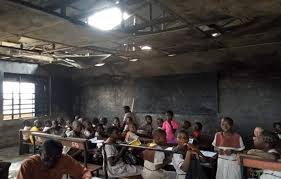
He said: “The Nigerian education system has undoubtedly failed millions of children and we need systematic change across the country to redress the problem. Successive governments have introduced policies to improve access to education in the country. Obasanjo introduced the free Universal Basic Education (UBE) scheme in 2004, Jonathan worked on nomadic education and the Buhari administration just launched a free school meals programme, however, more student enrolment in schools has not translated to improved quality of education. Instead, the attainment gap between students attending state schools and those at fee-paying schools (private schools) has widened. It is not unusual to find students sitting in under-furnished or over-populated classrooms.”

He said the private sector can definitely do better than the current state of under-funded and forsaken state schools.

According to him, “At the very least, the government should defer to private sector management as they tend to value choice and innovation in a market setting.”

While offering solution to the lull in public school system as against the private ones, Abubakar said, “Tax private schools and local businesses and ring-fence this pot for PPP schools. Local businesses would benefit in the long run, as they can employ better educated young people with the skill-sets to improve the local economy. If properly implemented, PPP schools engender competition between private schools and state schools, encouraging both groups to invest the resources needed to improve the learning outcomes of students. The Nigerian government alone can no longer fix education; it needs private sector help in improving education for all.”

Budgetary allocation

Investigations by Blueprint Weekend show that as at the moment, only seven per cent, for instance, out of the 2018 budget was allocated to education whose implementation, according to analysts is below three percent. “No education sector can develop like that especially as the monetary allocation to the sector is far below the United Nations approved minimum standards,” Alechenu Benjamin, a school proprietor, said.
Speaking further, he said: “The Nigerian education system is not beyond redemption. The only time you can say something is beyond redemption is when such a thing is dead. You can liken what is happening to our education system to a child suffering from Kwashiorkor and you know what that means. However, a child suffering from Kwashiorkor, if given proper diet and treatment, can recover and develop like every other normal child.

“In the same vein, what our education system needs now is a revitalisation of policies to align them with modern trends. There are willing and committed hands to implement these policies to nurse the system back to health. We had people from sister African countries coming here to study in our schools in the 60s and 70s, but today, Nigerians are the ones sending their children to Ghana and Togo to get education. We still have what it takes to reverse this trend with proper policy formation, implementation, adequate funding and supervision; Nigeria can compete favourably, not only in Africa, but also across the world.”

Northern states

Nigeria is the largest country in Africa in terms of population and has approximately 20% of the total out-of-school children population in the world. Adding to this challenge is the demographic pressure with about 11,000 new born every day that overburdens the system’s capacity to deliver quality education.

 In the northern part of Nigeria, almost two-thirds of students are functionally illiterate. The states of Jigawa, Kaduna, Katsina, Kano, and Sokoto, for instance, have shown commitment to improving their education systems, but they face severe challenges including high poverty levels, low enrolment figure brought about by cultural factors, gender disparities, poor quality and relevance, poor infrastructure and learning conditions. Another challenge is the direct threat to schooling, especially for girls, emanating from the political insecurity through insurgent activities and attacks on schools. As a result of this, each state created an education sector plan to outline its priorities and objectives.

Jigawa

Blueprint Weekend’s investigation on Jigawa state indicates that its education sector policy highlights four major areas to include improving access and expanding opportunities, ensure quality and relevance of education provision, improve educational planning and management, ensure sustainable funding and improved financial management. The sector plan also establishes 17 clear initiatives to support these policy objectives, including establishing free education for girls at all levels and free education for all people with special needs, however, the constraint is funding.

Kaduna

Kaduna on its part plans to focus on providing access to good quality schooling to all children of school age, attaining gender parity, and a student-teacher ratio of 40:1 per class. It also intends to raise the quality of education to ensure that students acquire permanent literacy, numeracy, life skills, and cognitive capacity. Part of it involves improving performance in both school and public examinations by ensuring better progression rates and higher completion rates for all students, as well as improving planning and management of educational services and institutions to ensure effective delivery of education. Finally, it is working towards ensuring accountability to all stakeholders including communities, civil society organisations and the private sector.

Kano

In Kano, for instance, the details of the education plan revolves around five main areas: Ensuring equitable access to basic education through addressing both supply and demand factors, improving educational quality through reducing class sizes, increasing the availability of instructional materials, and improving teacher quality, expanding technical and vocational opportunities relevant to the needs of industry and local communities, gradually increasing education financing and introducing school grants to support school development, ensuring that all schools have school development plans, school-based committees, and boards of governors to improve school governance.

Katsina

In the case of Katsina, emphasis is on strategic policy objectives and interventions that address five major challenges in its education system. This includes poor quality and relevance, infrastructural insufficiency and decay, inefficient management and system inefficiency, non-sustainable funding and adequate resourcing. The strategic interventions include increasing community participation, increasing advocacy and sensitisation, improving teachers’ welfare packages and providing teachers with re-training.

Sokoto

Sokoto is set to prioritise four policy goals to include the improvement of the learning performance of pre-school children in 23 local government areas, contributing to improvement in net primary school, enrolment, retention, and educational attainment, providing basic education, vocational, and life skills for out of school children and women through non-formal education, increasing enrolment and retention of children. The sector plan also specifies four key areas of intervention including constructing schools, purchasing essential learning materials, providing equipment and machineries and capacity building.

Educationist speaks

“For these states, policy document is not a problem; what is lacking is the political will to allocate enough resources to finance those policy documents,” says Madam Olori Aiyedun, a retired educationist.
The FCT example

In the Federal Capital Territory (FCT), for instance, investigation by our correspondent shows that while the TETFund-assisted buildings adorn most schools, a lot still needs to be done in terms of equipping those schools with basic infrastructure like water, light, library services, sporting facility and laboratory.

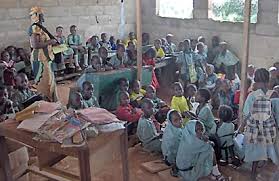
For instance, the Jabi Primary School which is said to be the largest in Abuja Municipal Area Council (AMAC) has an over-bloated population of students in each classroom which makes conducive learning difficult. According to Samson Etodo, a teacher in one of the centres operating under the aegis of FCT Agency for Mass Education in the school, the population explosion is so much that even the teachers are worried but said there is nothing they can do about it.

“I have been here for over three years now. If you come to this school during the day, the noise of students during break and game period is disturbing. There is no control from the teachers because the ratio of teacher/students is in the range of 7:3,” he said.

In a chat with a teacher who simply wanted to be known as Miss Rebecca, she said: “The population explosion here has overstretched the only facility here, (pointing to an old abandoned play ground). The government doesn’t seem to know that something is wrong with the educational system. We have a special school for special children with autism here, the facilities there are better than what we have in this public school because that one is privately managed. Even the children themselves know that they deserve better facilities than what is available here.”

This development is not only peculiar to Jabi, but investigation shows that all the primary schools in the territory suffer the fame fate of population explosion which does not guarantee conducive learning environment.

Efforts to get the officials of Universal Basic Education Commission (UBEC) for comment on what the commission calls counterpart funding from states were not successful as this reporter was informed that “those who are in a position to talk are out of town on account of the elections.”

Considering the importance of education, it is expected that governments at all levels would make conscious efforts to increase budgetary allocation to the sector.

Ikenna Emewu in the article: China’s education leap in 70 years gives an insight into how that country transformed its educational sector.

As Nigeria celebrates 59 with its own peculiar education development history, China seems to have gone through a more tasking but fruitful education development that had few years of interruption when between 1966 and 1970 the university system seemed abrogated during the Cultural Revolution and rejuvenated in 1970 with full revival in 1977 after Deng Xiaoping had come to power. The entrance examinations for higher school admissions for three straight years had a backlog of over 18m people whose education had been interrupted or denied. That gave back hope of higher education to over 848,000 new scholars who returned the country to university education.  In the past 40 years China has had a very rapid and consistent education development as fast as the unprecedented pace of its economy. From 227 higher institutions in 1949 to a rapid growth to 841 in 1958 and to 1,289 in 1960 and an eventual crash to 407 in 1965 and to zero between 1966 and 1970 when the Cultural Revolution forced a closure of all – that was the odd history before it re-incepted.

Nigeria and China coincidentally have the same National Day – October 1. When China’s Communist Party struggles with the ruling Kuomingtan Party ended in 1949, a new People’s Republic of China was adopted on October 1 of the year.  From this datum point, the China People’s Republic on October 1, 2019 was 70. There have been 70 years of moving from the valley to the spur through thorns and spikes. Evaluating China’s history through education is as interesting as its general odyssey.

As the new era for education reforms came, school enrolment also increased. For instance, middle school graduates that went to high school increased from 40.6% in 1990 to 90% in 2011. China school age population today is 28% of the population or 392m, a growth of 20% from 1.4% in 1978 when reforms started. The percentage of primary school graduates that enrolled in secondary likewise, rose from 32% in 1962 to 86% in 1978 and 98.3% in 2011.

Read more: https://www.sunnewsonline.com/chinas-education-leap-in-70-years/



Razaq Akanni Okoya: The Tailor Who Became A Billionaire

Chief Razaq Akanni Okoya. CON, who built his multi-million dollar Eleganza Business Empire from 20 Pounds, was born in Lagos, South-West Nigeria on January 12, 1940 to the family of Tiamiyu Ayinde and Alhaja Idiatu Okoya.

The only formal education he had was at Ansar-Ud-Deen Primary School, Oke-Popo, Lagos.

According to him:
“while in school, I could see my teacher in worn out and often shabby clothes and at the same time, I could see well-dressed businessmen at Dosunmu Street, the then heart of business in Lagos. So it was easy for me to choose business life.”

So, he made up his mind to become an entrepreneur at a very young age.

As he grew up, he worked for his father who was a very good tailor. They weren’t just sewing on-demand clothing for people, but were also making clothes for sale. They also made bicycle seat cover and sold tailoring accessories.

As a tailor, his father was fairly comfortable as he owned a Chrysler, and regularly used it to commute to see his clients. One of his clients was Chief Louis Odumegwu Ojukwu, the father of Chief Emeka Odumegwu-Ojukwu.

While working for his father, he engaged in his own side tailoring services like mending shirts and trousers for a fee and saved up every penny he made until he had £20, which was the equivalent of 40 Nigerian Naira in those days.

With that money, he decided to startup his own small scale trading.

At the time he started his business, a lot of people weren’t ordering items directly from the manufacturers, but somehow, he had stumbled upon a product catalogue of a manufacturer based in Japan; he studied their products and realised they could sell out, and so he decided to place an order. But he got stuck when he realised the value of the order was £70, meaning he was short of £50.

To make up his capital, he approached his mother for a loan, but being a respectful and submissive wife to her husband, she requested he should first ask for permission from his father for her to give him the loan, which he did.

After making up his capital, he placed the order for the items. Upon the arrival of the shipment, he realised that the quality of the products were far better than what was in the market already and also far cheaper. This helped him sell out quickly and place more orders within a very short space of time.

The quick turnovers helped his business to expand rapidly, and gave him the finance he needed to launch into other areas.

Having travelled to many countries around the world to see how things are done, he decided it was about time he started manufacturing his own goods.

Around this period, his first wife, Kuburat Okoya had an obsession with expensive jewellery. She was importing them at ridiculously expensive prices. He got fed up with the cost of the jewelleries, because of the abundance of raw materials in Nigeria.

Since the local demand for these jewelleries were high, he travelled abroad, bought some jewellery manufacturing machines, brought in some experts, and started manufacturing the jewellery at ridiculously low costs.

Shortly after the commencement of the Jewellery Manufacturing Arm of Eleganza Group, his success was overwhelming. They couldn’t keep up with the local demand since their prices and quality were really attractive. This led to a remarkable major breakthrough.

While he was manufacturing jewellery and buttons, he decided to venture into shoe manufacturing. What he did then, was to pay factories in Italy to manufacture the shoes for him and then export them to Nigeria. While this was going smoothly, his order suddenly stopped at some point, so he immediately flew to Italy to find out why they didn’t send in his goods and to his dismay, he realised they had used his money to settle their factory bills.

This angered him, and drove him to import machines and experts to train his workers on shoe manufacturing.

When asked about what motivated him, he said:,

“My father was a very good tailor and we were selling tailoring materials. We didn’t wait for people to bring materials; we were making clothes and sewing everything to sell. From shirts to trousers to bicycle seats.

My father was very industrious and enterprising. That gave me some inspiration.

I am from Cow Lane in Lagos. I looked forward, then, to becoming somebody in life. By the standards of those days, my father was comfortable. He owned a car, a Chrysler for that matter. Then, I used to ride with him in his car to his clients who were living in Ikoyi and its environs, people like Chief Louis Odumegwu Ojukwu, the father of Chief Emeka Odumegwu-Ojukwu.

I used to tell myself that one day I was going to live in one of those mansions. My main motivation was that I wanted to be rich and I knew I had to work very hard to get there.”

The Eleganza Group of Companies today employs over thousands of people and has multiple manufacturing subsidiaries in several places like Oregun-Ikeja, Isolo, Alaba, and Iganmu; producing items like seats, shoes, jewelleries, plastics, coolers, cutlery, ice chests, electric fans, cosmetics, pens, and a lot more.

His Group of Companies also includes a multi-million dollar properties investment arm called RAO Property Investment Company, and is generally one of the largest conglomerates in Nigeria today.

Razaq Okoya has an advice for young entrepreneurs,

“There is a huge market. You just need to be focused and know what you want. And more importantly, you have to work really hard to realise your dream.”

The life of this great industrialist is proof once again, that with hard work and dedication, any youth in Nigeria can turn his/her life around. Despite the difficulties and challenges in our environment, such as capital, infrastructures, etc. We also have many opportunities, which youths today can take advantage of.

If men like Razaq Okoya can achieve this much, in an era without mobile phones, powerful laptops, and no internet, Social. How much more can we achieve?

Today, Razaq Akanni Okoya lives in his magnificent and outlandish estate, known as: Oluwa Ni Shola Estate (The Lord Creates Wealth) at Lekki-Ajah Expressway. The Oluwa Ni Shola Estate, which is also described as an expatriates Estate because of the high number of expatriates living there.
The estate is well equipped with uninterrupted power and water supply, marble floors, central air-conditioning, sauna, lush gardens, billiard room, tennis court, swimming pools, expensive sculptures and lots more.

Success rightfully earned, is sweet.

If you are not too young to run, you are not too young to be wealthy.

Name: Razak Akanni Okoya
Born: 12 January 1940 (age 79)
Net Worth: $650 Million (December 2015)
Citizenship: Nigerian

Awards and Honours

Despite not having a formal education, Chief Rasaq Akanni Okoya has been a recipient of so many honorary awards from different higher institutions, some of which are listed below:

Aare of Lagos.

Lifetime Achievement Award of Business Entrepreneur by ThisDay Newspapers. The award was presented to Okoya by Bill Clinton, Former President of United States of America.

Lifetime Achievement Award by The Sun Newspaper

Fellow of the Institute of Corporate Administration by the Nigerian Institute of Estate Surveyors and Valuers

Golden Award for Quality by the Nigerian Institute of Standards

Award of Honour by the Nigerian Institute of Estate Valuers

Certificate of Recognition by the Nigerian Real Estate (NREA).

DSc (Honoris Causa) by Ekiti State University, Ado Ekiti, Nigeria

DSc (Honoris Causa) by Ladoke Akintola University of Technology, Ogbomoso, Oyo State, Nigeria

DSc (Honoris Causa) in Business Administration by Crescent University, Abeokuta.

Commander of the Order of Niger (CON) the Federal Government of Nigeria

Additional Information

He is the Chairman of the Eleganza Group, and RAO Property Investment Company

Rasaq Akanni Okoya is an affable socialite, he is a staunch member of a number of social clubs in Lagos, including the high-profile Metropolitan Club, Yoruba Tennis Club and The Island Club. As a matter of fact, he has made tremendous contributions to the development and uplift of these clubs, all of which have erected appropriate plaques of recognition within their premises for him.

Eleganza Industries today boasts of thousands of employees spread across the country. He also has multiple manufacturing companies in different parts of Lagos, which produce other items such as plastics, jewelry, coolers, cutlery, electric fans, etc. Eleganza group of companies, through RAO property Investment, has also invested in properties around Lagos. One of such is the magnificent Oluwa Ni Shola Estate, located in Lekki in Lagos State.

His Quotes

“I keep to myself. I do not look at other people. I am content with myself. I do not look for cheap money. I am not interested in contracts and I do not expose myself to intrigues and politics.”

“You do not do business for the ego value. You go for what the people can afford. In business, you have to ensure that the masses are able to afford the cost of your products. That is one of my secrets.”

“My main motivation was that I wanted to be rich and I knew I had to work very hard to get there.”

“I have nothing against education. But at times, education gives people false confidence. It makes people relax, trusting in the power of their certificates rather than in working hard.”

The story of Chief Razaq Akanni Okoya, teaches us that…

There are opportunities for those who are willing to be diligent and faithful in what they can do with their minds and hands.

Be Inspired and Inspire Others.

FIDA Regional Vice President, Awomolo Seeks End To Women Oppression, Calls For Gender Equality

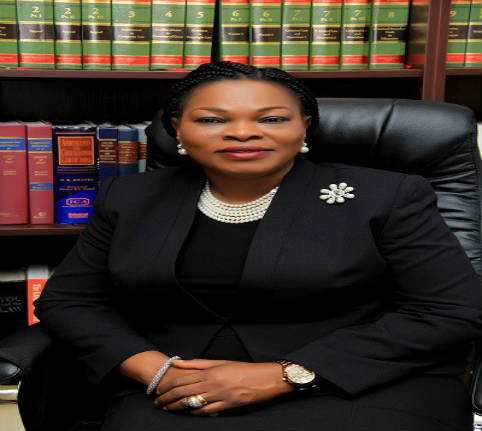
FIDA Regional Vice President and Senior Advocate of Nigeria, Chief Mrs Victoria  Awomolo has  demanded an end to women oppression and called for gender equality as she gives insight into  what this year’s convention sets out to achieve.

In this interview with Sundiata Post Assistant News Editor, Chibuike Nwabuko, the Regional Vice President who was elected into this position in 2017 at the FIDA Convention in Bahamas for a 3 –year tenure, gives details accounts of what FIDA has done to better the lots of women and children in Nigeria and the expectation in this year’s convention.

Excerpts:

What is the significance of the theme for the regional convention this year?

This year we have chosen the theme: The Growth of Women and Children in Africa, beyond Rhetoric! We are doing this because we believe that no matter what, African women are children have grown, our status has changed from what it was 40 to 50 years ago and the growth may be little, but we believe that we have moved. For some of us to be at this status at this time, we believe the status of women has changed. But what about the quality of growth- how much have we grown and in looking at all these issues one would ask what is the problems facing women and children in Africa also.

We are all familiar with cultural biases against women. The working environment for women is a bit different from that of men; the slow pace of women growth in politics is different from that of men. The slow growth of women professionals, children also- how much have we grown? These are the issues we will look at in the wake of the congress. We call it congress because that is the language of FIDA. In some others climes they call it conference but it is an international conference, in FIDA we call it congress. Our International conferences are called conventions because that is where you bring everybody from the globe and so that is what informed the choice for the theme this year.

Again, when you look at the problems of the women, we are not where we ought to be. When you look at constitutional provision all over Africa, there are still some biases against women that has retarded our growth as a gender.

Yes, there are some gender sensitive measures that are being taken by government all over the world, but they need to do more. Men and women are supposed to be at par the way the constitution provides for us. We are open to equal opportunity but in reality, do we get this? Again, the spate of violence against women all over Africa and Nigeria in particular is also what we have to discuss.

Gender violence particularly rape, is in the front burner of every discussion all over the world. Look at Nigeria, there is no day that passes without incidences of rape of minors; rape of old women; by pastors, by fathers, by employers and rape by different kinds of people and you wonder why. What will push a 50-year old man to rape a 2-year old girl for example?

At first they said the women were dressing indecently. What is in the 2-year old girl even 6 months old baby that a man wants to touch her? What is attractive to a father in his own daughter that he will rape her? The last one I read about two day ago was that a man was having sexual affair with his daughter since she is age 9 and now she is 19. Why will a father do that to his daughter? And when there was a move to take her away he resisted it. What is happening?. That is why some people are thinking that there must be some other sinister motives, may be it is for ritual or some other reasons because it is unexplainable.

So we are going to look at this issues as well as the political growth of women in Africa. Have we really grown? If yes how much growth have we recorded. In Nigeria for example, the statistics is appalling. We have dropped from may be 10 senator some years ago to 5 now out of 109 senators. What percentage is that 5 out of 109. In House of Representatives it is not any better, in the states House of Assembly things are not better. At the executive level how many governors or Deputy Governors do we have? Even in State where we thought the women are being given deputy governors slot, many of them have changed to men so what is happening to us? It is not that we don’t have qualified and intelligent women, or hardworking women who can occupy these spaces.

 Look at the last Federal Executive Council (FEC) our president appointed, only 7 women are on the FEC out of 43 people. So these are issues we need to discuss and proffer solutions to them. It will offer us opportunity to speak to ourselves as women because women constitute a larger part of voting population. Why do we have to keep voting the men when we have competent women to vote for, so why don’t we look inwards to vote for ourselves. These are issues we are going to look into among others.

Again, we will look at other issues as inheritance rights, customary rights and others. We have an erudite Professor as our keynote speaker, Prof Joy Ezeilo who is an internationally recognized professor of law who has agreed to come to open up the discussion and other quality speakers to speak at the occasion. So we are going to have a very good week.

Despite continuing advocacy and sensitization, not much seem to have been covered, what could be responsible?

Yes, it is true that FIDA embarks on advocacy and sensitization as part of our strategy to achieve equality. We have made progress in some areas but in larger part of our work, we have not made so much progress. I think what we found over the years is the resistance of the system to yield ground for the women. The cultural biases are still very deep. An average Nigerian community for example may not want a woman to represent them. But I must give kudos to Anambra state. I think the women in Anambra state are women we must, generally speaking, respect in Nigeria. Anambra has produced the first female governor in Nigeria, had it in acting capacity, they have produced senators and also some other states are trying.

We have women who are very powerful in Nigeria and they are making their marks, not only in politics but in commerce, government and multinational corporations. By and large, I will say that our growth has been very slow and we are thinking that we should appeal to ourselves as women that wherever a woman is, allow more women to come in. Give Space to more women to come in. We are as qualified as the men. For example, look at the Nigerian Law School when the results are out. More women come out with “First Class”, more women get most of the awards but sooner than later, when they now go into the world as it is to practice, you don’t hear about them anymore. Many now get married and you don’t hear about them anymore.

 I am not saying that marriage is a distraction, but it is part of it. A woman will just get married; she is slowed down, except she is determined to make it in life. Many husbands also are not supportive of their wives; they don’t just want to see them out there in front. Now I am appealing to our husbands to please, if a woman decides to settle down with you, give her all the opportunity to excel, it will do good for the family and relief the men of certain responsibilities and you will forever be proud of your wife. So despite all the advocacies, we are still continuing and God will help us to achieve our goal and this congress will bring the opportunity to speak to the world.

What role is FIDA playing in ensuring that the SDG’S that will better the lot of women and children are achieved?   

FIDA International partners with foreign donors and we fund some activities which FIDA undertakes and then we go into the rural areas and we give them support and empower them. FIDA is a non-governmental organization, we fund ourselves. We get funding from organisations who have now realized that FIDA is a very prominent and formidable non-governmental organization in Nigeria and all over the world. So they partner with us and we go into the hinterlands and then encourage our women; teach them their rights and make things more comfortable for them and empower them to sustain themselves. It is part of this congress also that we have dedicated two days to skills acquisition and empowerment of fifty (50) women. It is not just doling out money for them; we are going to teach them skills in five areas. Skills that can be learnt and by the time they would be rounding up the second day, we are not just going to give them money, we are buying materials for them, we call it start-up materials. If we teach you how to bid and stone clothes, which is part of the program; we will buy for you stones and gadget to stone, we buy everything for you. So it not that you take the money and walk away, we will give you the materials so that by the time we come again next year and look at them, we monitor them  and in three  years’ time when the next congress comes up, those one would have been out of poverty line forever.

In what areas has FIDA been able to make measurable impact so far?

So far we have been able to make deep impact in the sensitization of women and men on their fundamental rights as enshrined in the constitution. We have also been able to defend those oppressed. As I speak now, FIDA’s thirty-two branches all over Nigeria are in courts defending some women. We have legal desks that we use to counsel them. We also empower them by giving them money. And so women that I have worked with now know their rights. Again, all the laws that have been passed by the National Assembly, we go out and simplify them and teach them to the women and children. FIDA Nigeria has also partnered with Mac-Arthur Foundation to sensitize women on the legal rights that they have and all the branches in Nigeria are involved in this and all over Africa also. FIDA branches in Ghana, Uganda, Kenya, South Africa and West Africa are working with governments in their countries and donor agencies to make sure that we walk the talk. We don’t just say we are lawyers we know the law, we also bring it down to the level in which they will understand. That is why we have our advocacy groups, litigation and ADR groups. We have everyone working to impact on the society.

What is expected to be achieved by this year’s regional congress?   

By the end of this congress, we are expecting that more impact would have been made to the advocacy and sensitization of not only the women and children but the government to arise to their responsibilities where women issues are concerned. Also, we will be charging the government to do more, they have been doing a lot for the women- there is a social empowerment program by this present government. The First Lady is working on her own projects impacting lives, every governor’s wife in all the states are working. Ekiti is working so hard, I don’t just want to mention names; I know that all of them are working. So by the end of this congress, everybody will be more open and more sensitized to their rights because what we found in our struggle for gender equality is that we must carry the men along. It is not a women liberation thing. FIDA is not a women liberation thing- we don’t separate families. In fact we build families knowing that a solid family will make for a solid society. So we encourage family relationships, we counsel and we have achieved a lot in this regard. We have saved a lot of homes from collapse, But focusing on the reality on ground, we are saying that sexual offenders must be punished. Enough of the silence culture. People are speaking up now. They are speaking out now- I have been reaped; my daughter has been raped. People are speaking out now. Ekiti state government has done quite a lot and I give kudos to the First Lady of Ekiti and the Attorney General of Ekiti state who have now opened a sexual offenders register. Once you are convicted of any sexual offence, your name will enter that register for life for everybody to know and to see. It is becoming embarrassing and I don’t know what is happening and I don’t want to sound spiritual because this is real and it is happening.  So we are saying that the message we have to take away from this congress is that enough of women oppression.  We are going to rev up our activities on gender equality and all gender offenders must be punished, this is going to be our message to the world. https://sundiatapost.com/fida-regional-vice-president-awomolo-seeks-end-to-women-oppression-calls-for-gender-equality/

Sexual Offenders’ Register: FIDA Regional Vice President, Awomolo Commends Ekiti State Govt

… Calls For Punishment Of Sexual Offenders

By Chibuike Nwabuko

Abuja (Sundiata Post) – International Federation of Women Lawyers (FIDA) Regional Vice President for Africa, Chief Mrs. Victoria Awomolo SAN, has commended Ekiti State government for opening Sexual Offenders Register in the state.

Awomolo gave the commendation on Wednesday in an exclusive interview with Sundiata Post in her Abuja office while condemning the increasing incidences of rape in the country.

The Senior Advocate of Nigeria who noted that the rate at which cases of rape are recorded is now embarrassing, called for punishment of sexual Offenders.

According to FIDA Regional President, ”Gender violence particularly rape, is in the increase now. Look at Nigeria, there is no day that passes without incidences of rape of minors; rape of old women; by pastors, by fathers etc and you wonder why.

“What will push a 50-year old man to rape a 2-year old girl for example? At first they said the women were dressing indecently. What is in the 2-year old girl even 6 months old baby that a man wants to touch her? What is attractive to a father in his own daughter that he will rape her? The last one I read about two day ago was that a man was having sexual affair with his daughter since she is age 9 and now she is 19. Why will a father do that to his daughter?” She asked.

 The FIDA Regional Vice President therefore commended the First Lady of Ekiti and the Attorney General of the state for opening a sexual offender’s register where names of people convicted of any sexual offence will be registered for life for everybody to know and to see. https://sundiatapost.com/sexual-offenders-register-fida-regional-vice-president-awomolo-commends-ekiti-state-govt/

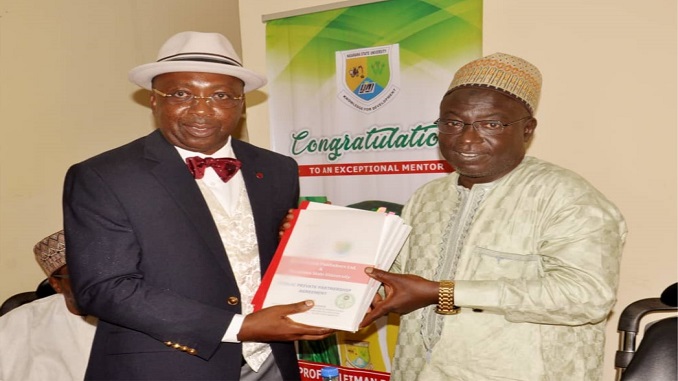
University Press: Bar and Bench Publishers sign MOU with Nassarawa State University

The Council of the Nassarawa State University Keffi has signed a Memorandum of Understanding (MOU) with the management of Bar and Bench Publishers for the construction of Nassarawa State University Press at Keffi.

The Publisher/Editor-in- Chief of Bar and Bench, Chief Ogwu James Onoja, SAN and Vice Chancellor of the University, Professor Suleiman B. Muhammed formalised the agreement.

Onoja stormed the event with over 15 lawyers from his law firm as well as other key administrative staff comprising of the General Managers- Printing Press, Real Estate department, Accounts and others.

Expressing delight at the MOU, the Vice Chancellor enthused that having a printing press of the magnitude envisaged by both parties will not only be beneficial to the university community but to its environs and Nasarawa state as a whole.

Police to Army: How could a kidnap suspect properly restrained with handcuffs by the Police escape from the hands of his military rescuers?

The last has not been heard about the four police detectives who were killed in a village at Taraba state as the Army and Nigeria Police differ on how the men died.

A statement dated 8th August 2019, signed by DCP Frank Mba, the Force Public Relations Officer allege that the Nigerian Army has something to hide; stressing that it was insensitive, “disrespectful and unpatriotic for the Press Release by the Army to continue to describe Policemen on lawful National Assignment as ‘suspected kidnappers’ long after it had become crystal clear to the Army that these are Law Enforcement Officers who unfortunately were gruesomely murdered in the line of duty by Nigerian soldiers attached to 93 Battalion, Takum.”

.Read the full the statement below:  

In reply please quote 

Ref No. CZ.5300/FPRD/FHQ/ABJ/VOL.2/69                        Date: 8th August, 2019

The Director of News 

…………………………….

PRESS RELEASE

SETTING THE RECORD STRAIGHT – WHERE IS THE “RESCUED” NOTORIOUS KIDNAPPER, ALHAJI HAMISU BALA WADUME?

 The attention of the Nigeria Police Force has been drawn to the Press Release by the Nigerian Army dated 07 August, 2019, seeking to justify the unprovoked and unwarranted murder of three (3) Police officers and one (1) Civilian, and serious injury to other operatives, who were on legitimate criminal investigation activities to Taraba State, to arrest one Alhaji Hamisu Bala Wadume indicted in a series of high-profile kidnap incidents in the State. In the best tradition of Esprit de Corps, Inter-Agency Harmony and National Interest, the Nigeria Police Force would naturally have kept quiet, but it has become imperative to set the record straight by addressing the obvious distortion of facts inherent in the Press Release by the Nigerian Army. 

The most important question arising from the Nigerian Army Press Release is: Where is Alhaji Hamisu Bala Wadume? Alhaji Hamisu Bala Wadume is a millionaire kidnapper arrested by the Police but paradoxically treated as a ‘‘kidnap victim’’ by the Soldiers and subsequently ‘rescued’ by them. Where is he? Where is the rescued kidnapper?

Secondly, the Press Release was silent on the source of the alleged distress report or identity of the complainant, on the strength of whose report, the Army claimed had informed their decision to engage in the purported chase and rescue operation. Needless to state that in the true spirit of transparency and accountability, the Nigerian Army ought to have arrested the purported distress caller – if any – for obviously and deliberately furnishing them with false and misleading information. Besides, such arrest should in fact be made public! 

Thirdly, it is not true that the Policemen failed to identify themselves as alleged in the Press Release. The video on the incident, now viral, wherein the voice of one of the soldiers was heard loudly proclaiming that the Policemen were from the Force Headquarters, Abuja speaks volume. Besides, the presence of the IRT personnel was well known to the Taraba Police Command as the Operatives officially and properly documented not only at the State Command Headquarters but also at the Wukari Area Command and the Ibi Divisional Headquarters. As a matter of fact, some of the Detectives from the Taraba State Command’s Criminal Investigation Department (CID) were part of the operation. 

The Force also considers it insensitive, disrespectful and unpatriotic for the Press Release by the Army to continue to describe Policemen on lawful National Assignment as ‘suspected kidnappers’ long after it had become crystal clear to the Army that these are Law Enforcement Officers who unfortunately were gruesomely murdered in the line of duty by Nigerian soldiers attached to 93 Battalion, Takum. 

In the final analysis, we leave the Nigerian Army authorities to provide Nigerians with answers on the following questions emanating from their Press Release: 

* Where is the notorious kidnapper, Alhaji Hamisu Bala Wadume ‘rescued’ by the soldiers?

* How and why was Alhaji Hamisu Bala Wadume released by the soldiers?

* How could a kidnap suspect properly restrained with handcuffs by the Police escape from the hands of his military rescuers? 

* If Alhaji Hamisu Bala Wadume is a ‘‘victim of kidnap’’ as claimed, and properly rescued by soldiers, why was he not taken to the Army Base for documentation purposes and debriefing in line with the Standard Operating Procedure in the Nigerian Army?

*  Why were the Police Operatives shot at close range even after they had identified themselves as Police Officers on legitimate duty as evident in the video now in circulation?

DCP FRANK MBA

FORCE PUBLIC RELATIONS OFFICER

FORCE HEADQUARTERS

ABUJA


Lawyers Kick, Describe Order To Detain Sowore For 45 Days Offensive

A group of human right lawyers in Abuja on Thursday kicked against the ex-parte order granted by a Federal High Court to the Department of State Services to detain the publisher of Sahara Reporters and convener of the RevolutionNow movement, Omoyele Sowore, for 45days.

The lawyers, who came to the court to express their solidarity in support of the human rights crusader, said that they would apply for the vacation of the order.

One of the lawyers, who spoke with journalists and asked not to be named, said that there was no justification to keep Sowore in custody for so long.


He said, “We don’t believe there is any justification for them to seek to detain Sowore for demanding that Nigerians should rise up for their socio-economic rights.

“For calling for revolution, he has defined the terms and has stated it expressly that things are not going well in the country.”

He added that Sowore was not the first person to call for revolution in Nigeria, noting that many people in government today had called for a revolution several times in the past.

He added, “Nobody arrested and detained them, no DSS came for these persons when they called for revolution.

“We have a lot of this evidence. It is most unfortunate that the government is now seeking to clamp down on dissents.”

Also react to the development, a Senior Advocate of Nigeria, Tayo Oyetibo, said, “There is a provision in the administration of criminal justice act that allows that to be done but it’s a provision that needs to be reviewed because the liberty of the individual ought not to be compromised on the altar of investigation. So, that law needs to be reviewed once again.

“To keep a man for 45 days without being charged to court is offensive to the constitution and offensive to the notions of the principles of the constitution.”

Another lawyer, Johnson Omede, told Sahara Reporters that the court order was alien to the crime the suspect had been accused of.

He said, “The order by the Federal High Court to detain Mr Sowore for 45 days is alien to the offense the suspect is been accused of.

“Revolution is nowhere mentioned under the terrorism Act and to have granted an order detaining a suspect for 45 days under the instrument, leaves us with more to be desired.”

The Federal Government had on Tuesday, August 6 requested for an ex-parte order to keep Sowore for at least 90 days.

Culled from: Sahara Reporters

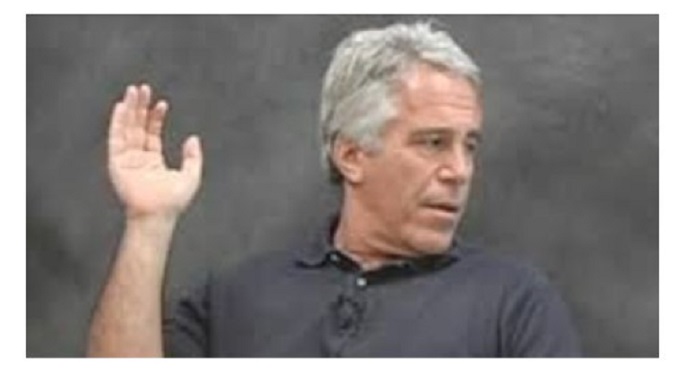
Report: Jeffrey Epstein Dreamed of Turning New Mexico Ranch Into Insemination Factory

Jeffrey Epstein

Apparently, Jeffrey Epstein‘s dream was to turn his New Mexico estate into an insemination factory, thereby spreading his DNA all across the world and asserting his influence on humanity’s collective gene pool.

According to a New York Times report, Epstein used his significant resources to patronize various scientists and Nobel Prize winners, often discussing his plans.

Epstein reportedly managed to attract famous scientists to his dinner parties, Murray Gell-MannStephen HawkingStephen J. Gould, and Oliver Sacks, to name a few. Epstein hosted these scientists and many others at his Manhattan mansion, serving expensive food and alcohol; VR pioneer Jaron Lanier recalled there being attractive, young female guests at such parties. Epstein also reportedly flew scientists out for conferences on his private island. He even once took a group of scientists to his island via a submarine he chartered.

Steven Pinker, a Harvard cognitive psychologist, reportedly went to several luncheons and claimed that Epstein is an “intellectual imposter.”  According to Pinker, Epstein “would abruptly change the subject, A.D.D.-style, dismiss an observation with an adolescent wisecrack.”

Pinker claimed that he was removed from Epstein’s social circle after rebutting him during an argument.

Lanier described Epstein’s ideas as unscientific. Lanier also told the Times that Epstein a NASA scientist, whose name he could not recall, once said Epstein expressed that it his goal was to impregnate 20 women at a time at his New Mexico ranch, basing this idea off of the since-shuttered elite sperm bank known as the Repository for Germinal Choice.

Epstein apparently talked about this dream at several business meetings in the early 2000s. Witnesses claimed he divulged it at a 2001 dinner in his New York townhouse and a separate time during a 2006 conference in the Virgin Islands.

Epstein also had an interest in tinkering with genetic code and the transhumanist movement, a gussied up version of eugenics that employs genetic engineering and AI. He also reportedly wanted to cryogenically freeze his head and penis when he died.

Epstein was once asked during a deposition if it was true that he had an “egg-shaped penis.”

He did not answer the question.

Author James Patterson included multiple description’s of Epstein’s penis in his book Filthy Rich.

Epstein lawyers did not respond to the Times story. Earlier on Wednesday they revealed that would need some time to review a mere one million pages of evidence.

Following his July arrest at Teterboro Airport in New Jersey, Epstein was charged with conspiracy to commit sex trafficking and sex trafficking. He has pleaded not guilty. Judge Richard Berman later decided not to grant Epstein bail ahead of trial, for numerous reasons. The week after that decision–and a day or two after Epstein was served with documents related to Jennifer Araoz’s rape case against him–there was an incident in Epstein’s jail cell.

By all accounts, Epstein did not appear to show signs of injury when appearing at court on Wednesday.

[Photo via New York Sex Offender Registry]

Culled from: Law & Crime

Officer Somehow Survives After Stopped Driver Suddenly Heads for the Highway (VIDEO)

by 


We at Law&Crime have seen our fair share of “Holy Sh*t” moments. This story more than qualifies. As seen in the video above, a police officer in Georgia hung onto a fleeing motorist’s vehicle. That cop managed to hang on for dear life as the driver headed for the highway. Eventually, the officer hit the pavement.

First off: He’s not dead, according to the department. Quite the opposite. The officer, identified as Nathan Daley, got treatment at a hospital, was released hours later, and is at home, cops said in an update on Friday.

“We are confident he will make a full recovery,” said Dunwoody Police Spokesman Sgt. Robert Parsons in the video above.

Authorities say that officers pulled over a man, Derric Simpson, because he was using a handheld device while driving. This suspect pulled over, but during the stop, put his vehicle into gear and stepped on the gas, Parsons said. Daley reached into the vehicle to stop Simpson, but was dragged off, trapped on the car, video shows.

One heck of a chase ensued between the suspect and the other officer. Parsons said that Daley hit another vehicle as Simpson entered the entrance ramp of Interstate 285.

As described by the sergeant, Simpson swerved to the left into a white van. Daley flew off and hit the pavement. What happened next was not clear. Daley pretty much flew of the vehicle right in front of a white van.

We repeat Sgt. Parsons’ statement: “We are confident he will make a full recovery.”

Here is Daley, who is very much alive:

Dunwoody Police @DunwoodyPolice
 

Officer Daley’s message to the community. We are all so thankful for the outpouring of love and support. We think the video says it all.. https://bit.ly/2KjlIMA 

 
“Everyone, it doesn’t–well, it does look as bad as it feels,” he said in a videotaped statement. Daley said he would recover 10 times stronger.

“I accept donations in the form of sweets, cookies, chocolate chip cookies, cupcakes with sprinkles, vanilla, or red velvet,” he said.

Anyway, police said Simpson got into a multi-vehicle crash. He stopped at the side of the interstate, and fled on foot toward the woods, said Parsons. This didn’t last. An officer caught him, police said.

Simpson faces charges including aggravated assault. It’s unclear if he has an attorney in this matter.

Culled from: Law & Crime

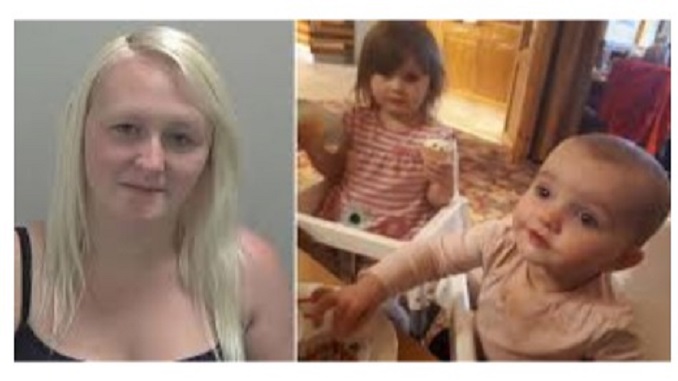
Cousin: Woman Who Killed Daughters for Damaging Her Sex Life Should’ve Gotten Death

by Alberto Luperon

The cousin of a woman convicted of filicide said the defendant should’ve gotten the death penalty.

“If you’re going to take an innocent person’s life, you should be prepared to give your life as well, and she’s taken two,” said the cousin of convicted killer Louise Porton, according to The Mirror. “She’ll have a TV, she’ll be given food, and she shouldn’t have that. What do those poor girls get?”

The cousin was not named because the family was dealing with trolls, according to outlet.

Porton didn’t get death.

“There is only one sentence that is a mandatory life sentence,” Judge Amanda Yip. “As with Lexi you tried to pass her death off as an unexpected natural death. You pretended you were driving to hospital. The truth is both children died because you deliberately obstructed their airways.”

Porton was convicted in the killing of her daughters Lexi Draper, age 3, and Scarlett Vaughan, 17 months. Prosecutors argued she did it because they “got in the way” of her sex life, according to the BBC. The elder sister died January 15, and the younger passed away February 1. Their mother didn’t seem bothered at all by her daughter’s condition, prosecutors said.

In laying out the facts of the case, Yip reportedly said text messages and Internet searches established premediation. Prosecutors argued that she searched for things such as whether covering a person’s nose and mouth with tape would cause death. She also wanted to know a time limit on resuscitation after someone drowns.

The defendant insisted she cared for her children. In the end, she was sentenced to life in prison with the chance of release after 32 years

Culled from: LAW & CRIME

TIPS