Daily Law Tips (Tip 417) By Onyekachi Umah, Esq., LLM. ACIArb(UK)
Surprisingly, Yes. Personal Income Tax is a direct tax charged on income, salary, allowance, wage, fee, bonuses, dividends or any benefit of an adult individual, communities, families, executors and trustees being resident in Nigeria or outside Nigeria or that of any person resident outside Nigeria but deriving income or profit from Nigeria. Where a tax office cannot for a certain year ascertain the true income of a person from his business(trade, Profession or vocation) because the business produced no assessable income or produced an assessable income that is in the opinion of the tax office is less than what might be expected to arise from that business or that the true assessable income of the person form the business cannot be readily ascertained, the tax office may assess and charge such person on such fair and reasonable percentage of the turnover of the business. If the business of the person is carried on in Nigeria, tax office will assess and charge the person on such fair and reasonable percentage of the turnover of the business as the tax office will determine. If the person is a non-resident but has a fixed base in Nigeria, from where he carried on such business, tax office will assess and charge that person on such fair and reasonable percentage of the turnover attributable to that fixed base.
If the person is a non-resident that operates a business through another person or persons, tax office will assess and charge that person on such fair and reasonable percentage of the turnover of business carried on through that person.
If the person is a non-resident that operates a business in Nigeria which involves a single contract for surveys, deliveries, installation or construction, tax office will assess and charge that person on such fair and reasonable percentage of the contract.
My authorities are sections 1, 2, 3, 7, 108 and 109 of the Personal Income Tax Act 1993.
#DailyLawTips #SabiLaw #LearnNigerianLaws
Feel free to reach the author, ask questions or make inquiries on this topic or any other via [email protected] or [email protected] or +2348037665878.
NOTE: Sharing or modifying or publishing this publication without giving credit to Onyekachi Umah, Esq. and “LearnNigerianLaws.com” is a criminal breach of copyright and will be prosecuted. Please share this publication till it gets to those that need it most. Save a Nigerian today!
To receive our Daily Law Tips for free follow our Facebook page, Twitter, Instagram and YouTube via “@LearnNigerianLaws”. This publication is the writer’s view not a legal advice and does not create any form of relationship. You may reach the writer for more information.
Daily Law Tips (Tip 415) By Onyekachi Umah, Esq., LLM. ACIArb(UK)
First of all it is the exclusive duty/power of the Attorney General of the Federation to establish electronic and manual database of all records of arrests at the Federal and State level. The database is designed to be fed through mandatory reports of records of arrested quarterly remitted by Nigeria Police Force and all other security agencies in Nigeria. Hence, the database must contain at least the records of arrest drawn for Register of Arrest completed at various police stations and security agencies across Nigeria showing particulars of arrested persons. Particulars of arrested person includes; alleged offence, date and circumstances of arrest, full name, occupation and residential address as well as height, photograph, full fingerprint impressions and any other means of identification. Note that failure to comply or discharge responsibility without reasonable cause must be treated as misconduct by the appropriate authority.
My authorities are sections 15, 29, 491, 494 and 495 of the Administration of Criminal Justice Act, 2015 and other similar laws across States in Nigeria.
To receive our Daily Law Tips for free follow our Facebook page, Twitter, Instagram and YouTube via “@LearnNigerianLaws”. This publication is the writer’s view not a legal advice and does not create any form of relationship. You may reach the writer for more information.
Daily Law Tips (Tip 414) By Onyekachi Umah, Esq., LLM. ACIArb(UK)
Personal Income Tax is a direct tax charged on income, salary, allowance, wage, fee, bonuses, dividends or any benefit of an adult individual, communities, families, executors and trustees being resident in Nigeria or outside Nigeria or that of any person resident outside Nigeria but deriving income or profit from Nigeria. Government can charge and collect personal income tax on a village or indigenous community, where the government tax agency is of the opinion that it cannot practicably assess individuals in a particular village or that general income of a village cannot be practicably shared with certainty among members of the village. Above all, such can only be done in line with the state law governing the state where the village is located and the tax may be charged on the estimated total income of all members of the village.
My authorities are sections 1, 2, 3, 108 and 109 of the Personal Income Tax Act 1993.
#DailyLawTips #SabiLaw #LearnNigerianLaws
Feel free to reach the author, ask questions or make inquiries on this topic or any other via [email protected] or [email protected] or +2348037665878.
NOTE: Sharing or modifying or publishing this publication without giving credit to Onyekachi Umah, Esq. and “LearnNigerianLaws.com” is a criminal breach of copyright and will be prosecuted. Please share this publication till it gets to those that need it most. Save a Nigerian today!
To receive our Daily Law Tips for free follow our Facebook page, Twitter, Instagram and YouTube via “@LearnNigerianLaws”. This publication is the writer’s view not a legal advice and does not create any form of relationship. You may reach the writer for more information.
Solanke Vs Benson : A Lifetime Story Of Tradition, Love, And Hatred
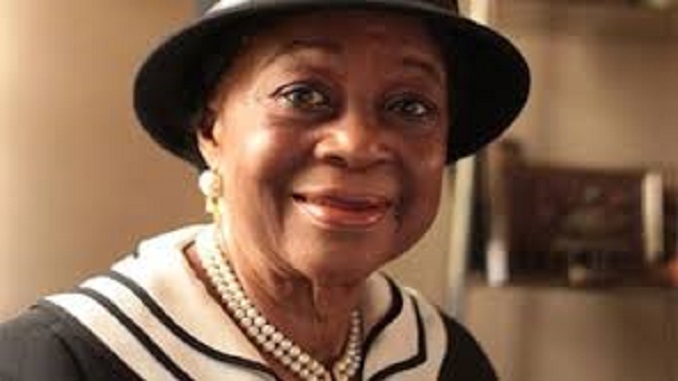
It was probably the first celebrated case where a daughter will defy her father in the choice of marriage. It was in the days when a woman, educated or not, really had no say on the choice of who she marries. But this 18 year old daughter of a very affluent Yoruba chief defied her father’s choice of husband. The father had chosen a prominent politician of those days, Chief TOS Benson, a dashing and flamboyant politician, to marry his stunningly beautiful daughter, Folake Odulate. But she would have none of that. Rather, she would go on to marry her heartthrob, Toriola Solanke, a medical doctor whom she fondly called a “gentleman”.
But suitor Benson would not give up, a decision which led to a case of arrest and a charge of robbery against the prominent politician at the Old Bailey, in London. It was a trial on which eminent Nigerian jurist and Justice of the Supreme Court, the late Justice Kayode Eso , wrote: “The legal drama, as it was, at the awe inspiring Old Bailey, is so vividly presented that it should not be missed by any lawyer, law student or, indeed, any reader at all.”
Thus began one of the greatest stories of marriage scandal in the pre, and post independent Nigeria. It was the story of a love affair, a story of clash of culture between modernity and tradition in terms of marriage rites. It poses the question, do women have the right to choose whom to marry, or should they abide with whoever the parents choose? It is the story of a young woman who stood stoically and chose who to love, and equally stood by that love to the very end. It is the story of Chief Mrs. Folake Solanke, the first woman to defy tradition, and the first woman Senior Advocate of Nigeria. It is also the story of passion, of lifetime hatred only love can bring.
Perhaps, if the chance meeting had not occurred at the lowest ebb of her life, the story may have been different. Her family had just lost a brother, the first born of the family who had sojourned in England for several years. Dr. Albert Olukoya Odulate had died within two weeks of his coming back to Nigeria after qualifying as a Medical Doctor in England. She was in the vehicle that claimed his life and so, she was still very distraught. The accident that would change the course of her family happened on January 30, 1948.
Amongst the sympathizers who came to console her father was TOS Benson, who cited this very beautiful and fair lady, and decided to add her to his harem. Thus began the discussion with Pa Jacob Odulate(Blessed Jacob of the Alabunkun fame) on how Chief Benson can marry the young Folake Odulate.
The young lady years after will later write: “In our collective state of trauma and vulnerability, Benson, became known to the family as a sympathizer, willing to comfort my distraught father in his anguish. The great Roman poet, Virgil had warned, “Timeo Graecos dona ferentes”.
And so by 1950, talks were rife between the Bensons and the Odulates about the arranged marriage. By 1951, the two families met, and did engagement but the young woman refused to see the meeting which was supposed to give her hand in marriage as what it was- her marriage ceremony. That same year as fate would have it, she travelled to England, which provided a means of escape for her.
Immediately she got to London, she wrote to Benson to the effect that he should count her out of the arranged marriage. She said: “I thought very deeply about my future. I came to a firm decision that the talk between Papa and Benson about an arranged marriage could never be for me. Benson was much older and already married with children. My preference was for a monogamous marriage”. About a year after, Folake met the love of her life, Toriola Feisitan Solanke, and by October 6, 1956, they were married.
But Benson would have none of that. Unfortunately for him however, the pretty bird had flown far away to where his hand and influence cannot reach. Six years after however, an opportunity presented itself for Benson, who at that time had become the Chief Whip of the Nigerian Parliament and was a member of delegation to London to discuss the Independence of Nigeria,
In the midst of this serous assignment, Benson arranged with a cousin of Folake (now Mrs Solanke) to lure her to his (cousin’s) house where he hoped to talk sense into her. So on May 25, 1957, Folake paid a visit to her cousin in a house on Flander’s Road, Chiswich, London, where to the shock of her life, Benson; her old suitor came in just after she arrived. Benson tried to convince her that she should marry him but she told him “no”.
She said: “I told him quite categorically, in the presence of Afolabi (cousin), what I had been telling him, my father, and others for six years, that I could never marry him. As he still refuse to take no for an answer, I told him that I was already married. Benson said he did not care about my marital status and that he would do everything to destroy my husband and I in Nigeria”.
The Parliamentarian did not stop at that. He took his luck farther. She further narrated on the incident: “As soon as Afolabi left the room, I got up from my chair to leave the room, but suddenly, Benson grabbed my left hand and started trying to remove my engagement ring by force. I struggled as hard as I could, but he overpowered me and violently forced my engagement ring off my finger. In the course of the assault, my open-ended gold bracelet wristwatch also came off my wrist;
My gold engagement ring had two had two diamonds set on either side of a blue sapphire. I pleaded with him to return my ring and wristwatch to me, but he flatly refused. He then put the two items in one of the pockets in his flowing Agbada. Benson locked the door and kept the key in one of his numerous pockets”.
Desperate to escape the assault, Folake did the unthinkable. “There was no way I was going to remain in that apartment, which for me had suddenly become a place of violence and unlawful detention. After all my pleas had failed to recover my precious possessions from him, and with the door locked against me, I reached for the telephone to dial 999. Benson promptly disabled the telephone. Instinctively, I made for the window to jump out”.
It was at this point Benson knew the lady meant business. He called her cousin who promptly came into the room and both persuaded her to come back. This was the opportunity she had to escape from the apartment and further assault. But Benson held on to her ring and wristwatch.
Mrs Solanke, after this experience reported the case to the police. On June 1, 1957, the London Metropolitan police arrested Benson and arraigned him before Acton Magistrate Court, London, for stealing a ring and a watch valued at Forty one pounds from a woman. In the warrant of arrest, he was alleged to have forcibly robbed Mrs. Solanke of her watch and ring on May 25. He was however granted bail with two sureties. However, the court ordered a remand for two weeks, which meant he could not leave London in that period.
On Saturday June 15, 1957, the case went on trial at the Magistrate Court to determine whether Benson had a case to answer. The Prosecutor was Victor Duran QC and he called two witnesses, the police investigating officer, and Mrs. Solanke. At the end of the pre-trial, the court decided that the defendant had a case to answer and thereafter transferred the case to the London Central Criminal Court, popularly known as “Old Bailey”.
The two day trial commenced on June 27, 1957, before Sir Gerald Dodson, who also doubled as the Recorder of London. There was a jury of 12 persons to determine the case. When his charges were read to him, he pleaded not guilty. The Prosecution lawyer, Mr. Durand thereafter presented the investigating police officer, Mr. Philips, to the witness box. Philips tendered the written statement of the plaintiff to the court, together with plaintiff’s engagement ring as exhibits.
Next in line to enter the witness box was the plaintiff herself. She was led in evidence by Mr Durand. She narrated how the assault took place and how the defendant forcefully removed her engagement ring and wristwatch. She also told the court how she got married secretly to her husband, Toriola, on October 6, 1956. She further told the court that she had told the defendant and her father the she could not marry the defendant as far back as in 1951 and that she was never interested in the proposed arranged marriage. The plaintiff’s husband, Dr Solanke also gave evidence, corroborating his wife’s evidence.
The defendant then gave his own evidence. He denied that he forcefully removed the plaintiff’s engagement ring and wristwatch. He told the court that it was the plaintiff who gave him the ring to return to her father. He also told the court how he gave the plaintiff a cheque containing money for her education.
The defendant through his lawyer, Mr. Foot called 12 witnesses that represented the crème de la crème of Nigerian politics. They include; the late Chief H.O Davies, the late Chief Adeniran Ogunsanya, and the then Nigerian High Commissioner to Britain, Chief M.T Mbu. The greatest shock however, was bringing the plaintiff’s father, Chief Jacob Odulate to the court. The father testified against his daughter!
The courtroom was packed full with Nigerians as the story also hit the headlines of newspapers both in London and Lagos. The plaintiff gave the account thus: “There were also others who came simply to hurl abuses and curses and threats at me. The unprintable taunting and vituperation did not elicit one single response from me. I held my head high and the police gave me every protection”.
After the trial, the judge adjourned the case to July 1, 1957, the date the court eventually discharged and acquitted the defendant.
But the battle did not end there. Chief Benson never forgave Folake Solanke for not marrying him. He taunted her at every opportunity. He made every move to stifle her career in the legal profession, all to no avail. Even when she lost her husband, he hired a band to taunt her, saying that he, an old man had outlived her husband. Until his own death, Chief Benson never forgot, and never forgave the bride he lost to someone else.
Culled from the book: “Reaching for the stars” the autobiography of Folake Solanke, SAN
Podcasting from the General Counsel Conference in New York, we pulled aside a few in-house lawyers and asked them three basic questions focused on outside counsel relationships, their use of technology and career development.
In this episode, we’re podcasting from the General Counsel Conference in Midtown New York. The event is where hundreds of in-house lawyers and other legal pros gathered to focus on trends in the profession.
In the midst of the conference, hosted by Law.com affiliate Corporate Counsel, we pulled aside a few in-house lawyers and asked them three basic questions focused on outside counsel relationships, their use of technology, and career development. You’ll hear from Deborah Pierce, senior vice president and general counsel at Integrity Staffing Solutions; Marc Bonora, chief litigation counsel at Envision Healthcare; and Ksenia Sussman, general counsel and chief compliance officer at BitOoda.
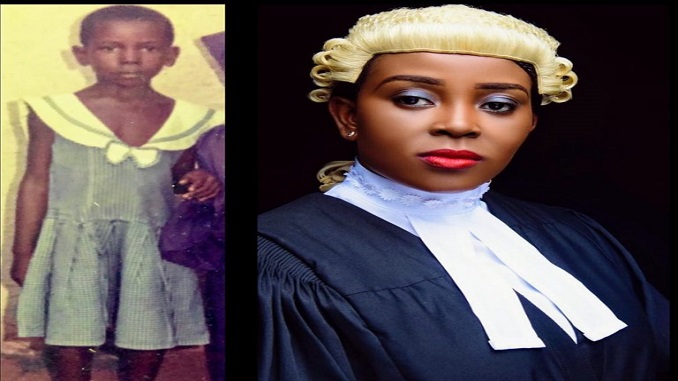
Awele Ideal is the Principal in Chambers of Ideal Chambers, a thriving legal practice in Asaba, She is a graduate of both Delta State University and University of Benin where she obtained her LLB and LLM respectively. A brilliant and reputable legal practitioner, Awele’s journey to success is that of pain, resilience, determination and grace.
Awele decided to share her story in response to the justification of the unruly attitude of one of the disqualified participants in the ongoing Big Brother Nigeria reality show. Awele in the story captioned “YOUR LIFE IS WHAT YOU MAKE OF IT….” said nothing, not even the absence of a mother can justify an unruly and mannerless behavior.
Read her story:
Anytime I hear them say Tacha has no mother. I ask myself if that’s enough excuse to become unruly and mannerless?. Don’t get it twisted I’m not being judgmental. I just want to share a bit of my childhood story with you.
My Childhood… I was abandoned by my mother at the age of seven months (7 months) with my father and stepmother. My stepmother was mean and not so nice to me, but I still called her “Mother” till tomorrow, cos she’s the only mother I knew, although she’s late (may God rest her soul). I endured all manner of maltreatment she meted at me. Sometimes I went hungry for days. She would so starve me that I would be seeing death.
On one occasion, I was very hungry that I had to eat our dog’s leftover food. Our neighbor’s son caught me eating the dog’s leftover food (eba and egusi) and he told his mother who later that evening invited me to her house and asked me if what her son said was true. I was so terrified that I begged her not to tell my step mother, because she will kill me if she knew that I ate the dog’s leftover instead of throwing it away. The woman wept and promised to give me food everyday without my stepmother’s knowledge, a promise she kept till we left the compound.
As if starving me was not enough punishment, my Stepmother flogged me mercilessly until I would faint at times. She would also apply pepper in my vagina, eyes, armpit and neck, tie me up and abandon me in one of the toilets for days without food. In fact, no week passed without pepper being applied on me for minor offenses a child could commit like failure not to wash clothes or dishes well, It wasn’t as if I stole or told a lie or fornicated.
During these dark days of my life, I often prayed for death, but it never came. Despite all these experiences, I was very bright academically and was loved and favored by God and people. I knew that the only way to escape was to achieve educational success, so I never joked with schooling.
So you see, I have every right to be hateful, bitter, jealous, arrogant, sad, negative and toxic but I chose not to. Rather I embraced positivity, kindness, peace and love. My life is beautiful. I am a happy person. I’m at peace with God. I am hardworking, beautiful and smart despite all I’ve been through and I have only Almighty God to thank for it. If I was able to subdue my demons then I believe everyone has the power to conquer his/her demons also. MY LIFE IS WHAT I MAKE OF IT #AweleChukwukaumemma
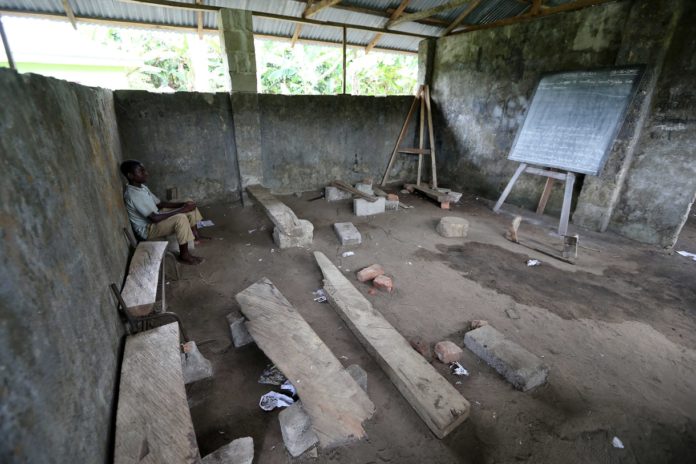
I have often tried to ask myself very critically if the present All Progressives Congress (APC) government of President Muhammadu Buhari has indeed achieved any tangible mileage in its educational agenda for the country. I was just wondering over what has changed or what is set to change. I took cognisance of the school feeding programme in a decayed infrastructural environment. I took cognisance of the promise of the APC to transform the education sector and effect a holistic curriculum that can contend with the needs of 21st Century world, with changing dynamics and sophistication in a new world order driven by technology. I noticed that ASUU strike punctured academic calendar in time past, and its recent threat of another strike is yet again an opportunity to put the country on the reverse gear. I kept asking myself what are the creativity, innovations and inventions within the academia that have impacted on the growth of the country. What exactly are our academics doing to further the narrative of a new Nigeria driven by technology and knowledge?
What do we produce from the Ivory Towers as response to problems confronting us in the country? Beyond the public commentaries from our experts, what have they invented in the different aspects of our lives to provide ready made solutions to our nagging problems? What exactly are our professors professing? What do they do with all the researches from undergraduate to postgraduate levels in the universities? They gather dust on the shelves or become handy disposable wraps for “akara” sellers. Almost every item is imported in our laboratories. Almost every equipment is imported in our hospitals, yet we have seasoned professors who excel so proudly and profoundly outside the country through consultancy services they render to those who pay heavily for them. When you take a sample population of Nigerians in diaspora, you will find a collection of some of the best brains in the world, inventing solutions to global problems and offering other perspectives to developmental problems across the globe. Rather than invent, create and innovate, the news from our higher institutions talks about sexual harassment, sex-for-marks tales, lecturers “being set up”, and other categories of inanities that easily pre-occupy idle minds.
It’s already a year since the
death of Elizabeth Ochanya Ogbanje and the perpetrators are yet to be brought
to book. Raped to death by an uncle and his son, her story reawakened the many
fears women are afraid to speak about for many have been brutally raped by
close family members; others by trusted neighbours and more.
But somehow, a woman in most
situations gets blamed for this grave injury while the offender smirks and struts
about.
Last Monday activists in Nigeria reaffirmed the fact that the
country is yet to scratch the surface in fight against sexual abuse.
The workshop was organised by the
Centre for Children’s Health Education, Orientation and Protection (CEE-HOPE)
Nigeria to commemorate one year since Ochanya Ogbanje, a 13-year-old girl died
due to sexual abuse.
A book titled ‘Reflections on the
Child Abuse Crisis in Nigeria’ was also publicly presented to mark the
anniversary. The book is a documentary of the events around the death of Miss
Ogbanje, thoughts of Nigerians on the issue and the general child sexual abuse
problem in the country.
Princess Olufemi-Kayode, one of
the speakers at the workshop, said a circle of abuse exists in Nigeria because
when some children are abused, they also eventually become abusers regardless
of their sex.
She recommended a massive
awareness campaign on sexual abuse by religious leaders, schools and parents.
She said people should also be made to understand damages associated with child
sexual abuse.
The organiser of the workshop,
Betty Abah, said Nigerian children have become endangered because agencies that
are meant to enforce their wellbeing and deal with the people that threaten
their futures are not in place.
“When the government talks about
the Child’s Right Act, most of the time, they just pay lip service. They want
to impress international donors, they want to impress the rest of the world
because that is the direction of the world.
“A country is deemed to be
serious and progressive when they have child-friendly policies and look out for
the well-being of the children, including the poorest and richest and the
most-vulnerable.”
Miss Ogbanje was a 13-year-old
girl who was allegedly raped by her guardian, Andrew Ogbuja, and his son,
Victor, for five years.
Mr Ogbuja was a lecturer at Benue
State Polytechnic, while his son who has been on the run since the incident was
a student of the Federal University of Agriculture, Markurdi.
Miss Ogbanje died on October 17,
from complications of five years of anal and vaginal rape which led to
Vesicovaginal fistula (VVF) and other health complications.
As a result of her death,
nationwide protests were held across Nigeria seeking justice for the child.
Aside from Nigeria-based advocacy groups and NGOs, her case also attracted
international attention all calling for justice to be meted on the
perpetrators.
Mrs Abah, while making comment on
Miss Ogbanje’s case, said the protection of children has not been prioritised
which is why people who violate the rights of children, including fathers who
rape their children and toddlers, go scot-free without severe punishment.
“That is why the Ochanya’s case
is still dragging. If we are a serious society, with all the mobilisation and
the international outcry, by now, that case should have been settled. By now,
we should have known the fate of the accused. One of the accused is on the run
and the police are yet to declare him wanted.”
Ameh Ejekwonyilo, brother of Miss
Ogbanje, was present at the event.
He said that people who hold
positions in the government do not see child sexual abuse as a problem because
it hardly affects them. In his sister’s case, Mr Ejekwonyilo said, the alleged
perpetrators are those who have political connections and are powerful.
He said Victor Ogbuja has been on
the run since the incident and no one was talking about it. He said the police
were yet to give reasons on why he is yet to be apprehended.
He stated that the hope of the
family is that the authorities in charge of the case will act to ensure that
justice is served. He further expressed hope that children would find safe
spaces to learn and pursue whatever they want to in life.
“I’m optimistic that the
judiciary will do what is required of it by law and those who have been called
to account for their roles in what has happened to Ochanya would be made to
face the wrath of the law.”
He said Mr Ogbuja’s case comes up
on October 9 at the state high court in Makurdi, while the case of the wife,
Felicia, comes up on October 8 at the Federal High Court, Makurdi. Mrs Ogbuja
was arraigned for allowing the persistent rape of the late victim to continue
despite that it was brought to her notice.
Ejekwonyilo advised children undergoing sexual molestation to speak out and let the world know about their challenges. He said parents must also educate their children and ensure their children are confident in speaking up.
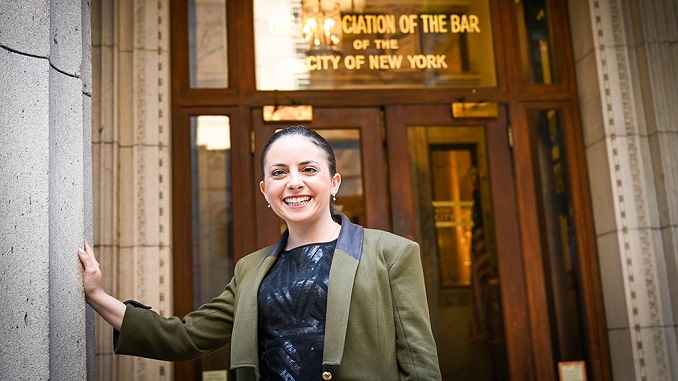
Leona Krasner is a young attorney in New York City. She was photographed at the New York Bar Association on W. 44 th st.
(Photo by David Handschuh/NYLJ)
Dues are too expensive. The events aren’t cool. Everyone in the room is twice my age. No one listens to me. I don’t feel like I’m part of the clique. These are the complaints of millennial lawyers who are much less likely to show up at bar association events than lawyers in their 50s or older.
Leona Krasner, a 32-year-old matrimonial lawyer in New York City, said attending a bar association function is a lot like visiting the doctor. You dread going, but you know it’s good for you.
After hearing that analogy, you’re probably thinking that Krasner is one of the millennial lawyers who doesn’t belong to a bar association or isn’t very active. But you’d be wrong! She chairs the communications committee for the New York State Bar Association’s women in law section and she joined the City Bar in September.
Krasner said she came up with innovative ideas for her state bar section but her suggestions were rejected. She thinks bar associations should tackle topics that touch millennials’ personal lives such as how to negotiate raises, how to advance in your firm and how to balance work and family. Her ideal bar association event? One she attended several years ago that mixed sushi, drinks and a conversation on ethics.
“All the millennials went to that,” she recalls. “People would rather go to a fun event than one that sounds boring.”
Dues are too expensive. The events aren’t cool. Everyone in the room is twice my age. No one listens to me. I don’t feel like I’m part of the clique. These are the complaints of millennial lawyers who are much less likely to show up at bar association events than lawyers in their 50s or older.
“The conversation that I have had most often with my peers has been about money. It always boils down to ‘my student loan is due next week and you want me to shell out another $100 for a bar association event. Are you mad?’ said Sarah Filcher, 33, staff attorney for the Brooklyn Bar Association Volunteer Lawyers Project and vice president of LeGaL, the LGBT Bar Association of Greater New York.
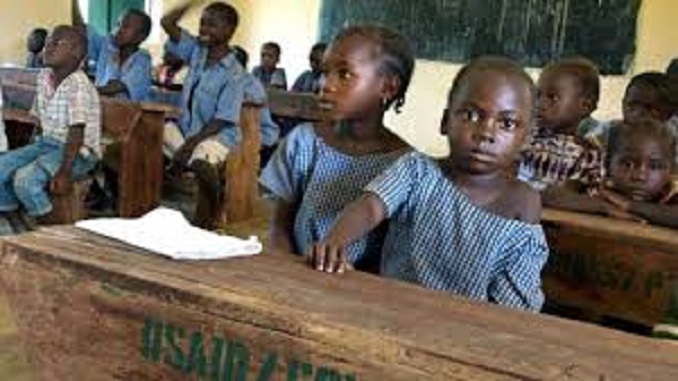
According to Wikipedia, Education is the process of facilitating learning, or the acquisition of knowledge, skills, values, beliefs, and habits. It is the act or process of imparting or acquiring general knowledge, developing the powers of reasoning and judgment, and generally of preparing oneself or others intellectually for mature life.
According to the findings fully supported by Pro-Papers, an education writing firm in USA, the education sector should be paid lots of attention because it gives room for the country’s development. Unfortunately, the quality and standard of education in Nigeria is poor because it has not been paid adequate attention.
Nigeria runs a federation system, so the Nigerian education system is overseen by the Ministry of Education. The education system at the federal level is managed by the Ministry of Education. This includes management of federal universities and schools. State public schools and tertiary institutions are controlled regionally by the Ministry at the state level.
We’ll try to highlight the leading causes for poor state and quality of education in our country and possible ways out.
1. Poor Funding
The first and possibly one of the greatest challenges facing education in Nigeria is inadequate funding by the federal, state and local government. In the year 2017, Nigeria’s education sector was again allocated much lower than the 26 percent of national budget recommended by the United Nations.
The global organization recommended the budgetary benchmark to enable nations adequately cater for rising education demands. But, in the proposal presented to the National Assembly, President Muhammadu Buhari allocated only 7.04% of the 8.6 trillion 2018 budget to the education.
The total sum allocated to the sector is N605.8 billion, with N435.1 billion for recurrent expenditure, N61.73 billion for capital expenditure and N109.06 billion for the Universal Basic Education Commission.
Our site uses cookies. By clicking “Accept All Cookies”, you direct Law and Society Magazine to store cookies on your device and disclose information in accordance with our Cookie Statement: cookie policyACCEPTREJECT
Privacy & Cookies Policy
Privacy Overview
This website uses cookies to improve your experience while you navigate through the website. Out of these cookies, the cookies that are categorized as necessary are stored on your browser as they are essential for the working of basic functionalities of the website. We also use third-party cookies that help us analyze and understand how you use this website. These cookies will be stored in your browser only with your consent. You also have the option to opt-out of these cookies. But opting out of some of these cookies may have an effect on your browsing experience.
Necessary cookies are absolutely essential for the website to function properly. This category only includes cookies that ensures basic functionalities and security features of the website. These cookies do not store any personal information.
Any cookies that may not be particularly necessary for the website to function and is used specifically to collect user personal data via analytics, ads, other embedded contents are termed as non-necessary cookies. It is mandatory to procure user consent prior to running these cookies on your website.