Home Blog Page 1427

Nigeria Named Among Countries Where Journalists Were Killed In 2019

The IFJ listed 18 countries from the world where journalist were killed since the start of the year

Nigeria has been listed among countries where death of journalists and media professionals occurred in 2019.

While over 19 journalists were harassed, assaulted, brutalised, arrested and detained in 2019, a reporter was killed in the country.

The death of Precious Owolabi, a reporter attached to Channels TV, sees Nigeria emerging the least country with record of death of journalists.

Recall that the detention of Agba Jalingo was recorded in the November list of One Free Press Coalition of the most urgent cases of threats to press freedom suffered by journalists around the world.

Student journalists are also facing attack and intimidation by various state governments with the growing repression of media space in the country.

The IFJ recorded 49 killings of journalists and media professionals in 2019, a significant drop from 95 in 2018.

The IFJ listed 18 countries from the world where journalist were killed since the start of the year.

The Federation says that while the apparent decreasing bloodbath in the journalists’ community is a welcome relief, the spread of killings and the motives behind the killings are sobering reminders that violence against journalists is still rampant and failure to combat impunity for these attacks remain a damning indictment on those in power.

“Africa (9), Asia Pacific (12), Europe (2), Latin America (18) and the Middle East and Arab world (8). The Federation also recorded six work-related accidental deaths in Tanzania (5) and the United States (1).

“The death toll is the lowest since 2000, when 37 journalists and media staff were killed, but the causes of the loss of life during 2019 remain largely the same,” said IFJ President, Younes Mjahed.

Culled from: Sahara Reporters

Power minister speaks on appointment of ex-level 12 official to head electrification agency

President Muhammadu Buhari has the prerogative to appoint anyone he believes can deliver on his official mandate, the Minister of Power, Saleh Mamman, said on Wednesday.

The minister was reacting to an exclusive report by PREMIUM TIMES on the controversial appointment by the president of a former mid-level civil servant, Salihijo Ahmad, as the managing director and Chief Executive Officer of a crucial electrification agency, the Rural Electrification Agency (REA).

The REA was created by the Electric Power Sector Reform Act in 2006 to facilitate the provision of affordable power supply for residential, commercial, industrial and social activities in the rural and semi-urban areas of the country using renewable energy sources.

Checks by the newspaper revealed that the new REA boss is a former Level 12 public official at the Infrastructure Concession Regulatory Commission (ICRC) which he is said to have exited in 2018. He is also the son of late Salihijo Mohammed Ahmed, a former managing director of Afri-Project Consortium.

Prior to his death on July 7, 1999, the elder Mr Ahmed was a project consultant to the Petroleum Trust Fund (PTF) then headed by Mr Buhari, who was appointed to the position by the then military ruler, Sani Abacha.

Sources in the power sector queried the appointment, saying the claim by the power minister that the new appointee has ‘vast experience’ in the sector is false. They also queried how a mid-level public official just over a year ago could be appointed head of such a crucial agency if not for his family links.

Additional findings by this newspaper showed that while Mr Ahmad does have experience from his brief stint in the power sector both as a public servant and since he ventured into private practice in 2018, his description as having “vast knowledge and experience in power sector development” may have been exaggerated.

Before our story was published, PREMIUM TIMES reached out to Mr Ahmad and the power minister, none of them replied.

However, the minister through his spokesperson reached out after the story was published.

In his response, the power minister, Saleh Mamman, justified the controversial appointment, saying he has confidence in the president’s decision on the appointment.

Earlier, President Buhari’s spokesperson, Garba Shehu, told our reporter in a telephone chat that his principal likely relied on the recommendation of the minister to make the appointment.

“My advice is that you get in touch with the Minister of Power who oversees the affairs of the agency and may have made the recommendation to the president for the appointment,” Mr Shehu said.

The minister’s response, however, indicated the appointment was directly by the president.

In a response sent to PREMIUM TIMES by his spokesperson, Emmanuel Bello, the power minister said:

“The president has the prerogative for appointments and he has severally said he would only work with individuals he can vouch for and the minister wholly agrees with this.

“The president is serious about power reforms and has said it several times. Besides, Nigerians are right now more concerned about what anyone can deliver in this bid.

“Political appointments are not based on civil service levels. What many care about right now is what the new REA boss has to offer and we have confidence in the president’s decision.

“The former leadership of the REA wasn’t helping to solve the darkness crisis of the country as many reports have shown. We must, therefore, support the president in his effort to sanitise the sector,” the minister said.

Credit: Premium Times

Analysis – 2019: Nigeria’s stock market ends in red, 2020 offers hope

By  Chinyere Joel-Nwokeoma (NAN)

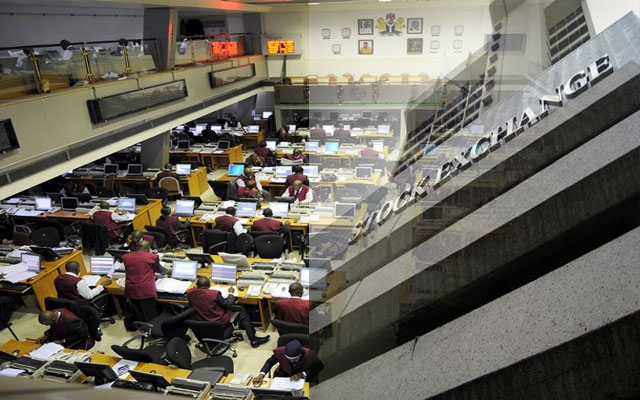
With no fewer than six days of trading before the year ends, it is almost certain that transactions on the Nigerian Stock Exchange (NSE) will close in the red zone.

The outgoing year is, indeed, turning out to be yet another locust year for both local and foreign investors, due to an unfriendly operating environment.

This analysts said was in spite of the impressive financial results churned out by most quoted companies.

According to the analysts, the market was negatively impacted by the general elections, insecurity and unstable monetary and fiscal policies, among others, even in the face of stability in foreign exchange market.

Records of trading on the NSE as of December 20, 2019 showed that the equity market dipped by 15.60 per cent year-to-date due to massive sell-offs, yet it recorded strong corporate fundamentals of listed companies against a loss of 17.81 per cent in 2018.

At the close of transactions on Dec. 22, the All-Share Index of the Exchange during the review period dropped by15.60 per cent year-to-date to close at 26,526.35 against the opening year index of 31,430.50.

However, the market capitalisation which opened for the year at N11.720 trillion in spite of two major listing gained N1.08 trillion to close trading on Dec. 22 at N12.804 trillion.

Market watchers are of the opinion that the loss could have been higher if not for the increased number of listing witnessed during the year.

Analysts believe that despite the decline, 2019 would remain evergreen in the history of the Exchange with the array of new listings like SAHCOL, MTN Nigeria Communications and Airtel Africa.

SAHCOL Plc, which is a competitor to NAHCO Plc, listed 1,353,580,000 ordinary shares at N4.65 per share by way of an Initial Public Offering (IPO) on the main board of the NSE on April 23, 2019.

Specifically, MTN Nigeria on May 16listed, by introduction, a total of 20.35 billion ordinary shares at N90 per share, lifting the market capitalisation then by N1.83 trillion.  

Mr Oscar Onyema, NSE Chief Executive Officer, said MTN Nigeria’s listing on the nation’s bourse was a testament of its commitment to building a dynamic and inclusive market, and creating channels for sustainable investment.

Also, Airtel Africa in July  listed 3.76 ordinary shares on the main board of the NSE at N363 per share.

Commenting on the performance of the stock market in 2019, Malam Garba Kurfi, the Managing Director, APT Securities and Funds Ltd, said the major achievement of the market was its ability to attract the listing of MTN and Airtel Africa.

Kurfi who commended the Exchange for the listing said it was an option to either list on the NSE or the JSE but Nigeria succeeded in bringing them to list on NSE.

“The listing of the two stocks gives the market capitalisation of over N3 trillion, which is over 26 per cent,” he said.

He said another high point of the year was the success of getting the Demutualisation Bill to be signed into law by the President, noting that its implementation would likely commence by the first quarter of 2020.

Kurfi added that achieving one trillion capitalisation for mutual funds was another great feat for the year 2019. 

He noted that the performance of the stock market would close in negative zone at the end of the year with the cumulative loss of 30 per cent or more for 2018 and 2019.

However, Kurfi expressed optimism that 2020 would be a a good year for the stock market as witnessed in 2017 when the market gained more than 42 per cent after dropping in 2015 and 2016.

He listed the factors expected to drive the market in 2020 to include early signing of  the budget, payment of new minimum wage and increment in the Loan Deposit Ratio (LDR).

Kurfi noted that the early signing of the budget would likely increase the Capital Expenditure (CAPEX) performance for the year 2020 with multiplier effects on the economy.

“The salary increase will improve the purchasing power of the workers who may increase their savings and Investments. 

“The Loan Deposit Ratio (LDR) will increase credit to private companies who will likely increase their production and profit declaration.

“The restrictions of participants into OMO and TBs will push investors into equities. The low price of the stocks mostly trading below their fair value is an attraction to the capital markets,” he said.

To Mr Ambrose Omordion, the Chief Operating Officer, InvestData Ltd., the stock market would end the year in red but increased number of listed companies, primary market activities and some mergers were remarkable achievements that impacted positively on market capitalisation.

Omordion also lauded the market regulators for the listing of MTNN Airtel Africa and SAHCOL that strengthened the market capitalisation, noting that the new listing helped in minimising the loss. 

He said the current move by the monetary policy to push funds to the private sector the CBN LDR of 65 per cent would stimulate economic productivity and growth.

According to him, the fiscal authorities need to double their efforts through economic reforms that will complement the CBN policies to support this recovery move.

He added that the signing of the first phases of the trade agreement, lower rates in advanced economies and markets by USA and China would likely redirect funds to emerging and forntier markets in 2020.

Mr Moses Igbrude, the Publicity Secretary, the Independent Shareholders Association of Nigeria (ISAN), said the performance of the stock market in 2019 was neither here nor there as some companies paid good dividends, especially banks.

Igbrude said policy instability, insecurity, port congestion, multiple taxation and infrastructural deficiency affected the market during the period under review with some companies delisting from the NSE.

At the last count, he said seven companies namely Skye Bank, Fortis Microfinance Bank, First Aluminium, Newrest, Diamond Bank, Dangote Flour and Great Nigeria Insurance delisted in 2019.

He stated that some of the companies delisted as a result of environmental factors and government policies.

“I am appealing to the Federal Government to take the capital market seriously because it is the barometer to measure the economy of any nation by providing the necessary support through good policies,” Igbrude said.

He tasked government to pursue policies that would enhance infrastructure development, improve power stability, eliminate ports congestion by opening up other ports in other parts of country.

Another shareholder activist, Malam Shehu Mikail, President ,National President Constance Shareholders’ Association of Nigeria, said the stock market in Nigeria had not been able to achieve its potential due to the inability of most of the operators to adhere to true transparency and accountability.

Mikail said the much-needed compliance was now getting better due to the regulatory measures instituted by the Securities and Exchange Commission.

He challenged government to create the needed policies and an enabling environment to attract more listing and investment to the nation’s bourse.

“Nigeria capital market is a bedrock to enhance the potential of our economy if only our government could create well and essential policies that would attract investors to the market,” he said.


Kano govt impounds 2 trucks loaded with fake drugs

By Aisha Ahmed

The Kano State Task Force on Fake and Counterfeit Drugs has impounded two trucks loaded with fake and expired drugs, a statement from the health ministry said on Saturday.

The statement signed by Malam Ismail Gwammaja, Public Relations Officer of the ministry, said that the Chairman of the task force and Commissioner for Health, Dr Aminu Tsanyawa, led the hunt for the trucks on receiving an information about them.

It said that the trucks were found in an incomplete building at Unguwar Dabai in Dala Local Government.

The statement said that government was committed to curbing the sale and consumption of illicit and fake drugs “especially by youths and women in the state”.

It said that government was strict on its resolve to end the rampant use of the substances and had ordered that the drugs market in Sabon Gari be moved to Dangwauro in Kumbutso Local Government.

The Commissioner appealed to Kano residents to complement government’s efforts toward a drug-free society by reporting suspicious acts and movement of people dealing with such drugs.

(NAN)

Bruce Lee’s daughter sues cafe over dad’s logo

A company run by Bruce Lee’s daughter is suing a popular Chinese fast food chain over its use of an image of the late martial arts star.

Shannon Lee’s Bruce Lee Enterprises alleges Real Kungfu has used the image in its logo without permission.

The firm wants the fast food chain to immediately remove the image, and is reportedly seeking 30m dollars in compensation.

The restaurant argues local authorities approved its use of the logo.

The image depicts a dark-haired man in a martial arts pose.

“The Real Kungfu chain’s logo is one that the company had applied for and obtained after a rigorous screening by the national trademark agency, we have already been using this for 15 years”, the company said in a statement posted on China’s Weibo platform.

“We are baffled that after so many years we are now being sued, and we are currently energetically studying the case and preparing our response.”

The Guangzhou-based fast food chain, which is known as Zhen Gongfu in Mandarin, was founded in 1990 and has around 600 outlets across China.

Bruce Lee Enterprises handles the merchandising and licensing of the kung fu star’s image.

In a statement on its website, the company said it is “dedicated to sharing the art and philosophy of Bruce Lee to inspire personal growth, positive energy, and global harmony and aims to keep the martial artist’s energy alive”.

Bruce Lee Enterprises did not immediately respond to a request for comment.

The case is likely to be watched closely as the Chinese government has in recent years promised to increase protections for intellectual property rights.

NAN

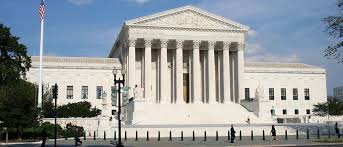
How a seven-month-old Supreme Court ruling revived a nine-year-old case against GSK

In December 2017, U.S. District Judge Cynthia Rufe of Philadelphia seemingly drove a stake through the heart of litigation by two employee healthcare funds suing GlaxoSmithKline over its marketing of the diabetes drug Avandia. The plans, which sued back in 2010, alleged that GSK had falsely touted Avandia as a boon to the cardiovascular health of diabetes patients, which is why health plans were willing to cover the drug’s high cost. But in 2007, the Food and Drug Administration required the company to change Avandia’s label to add a black-box warning that the drug may exacerbate heart conditions in some patients and was available only through a restricted distribution program.

Since that first label change – and while the litigation was ongoing – the FDA has come to believe that the entire body of clinical evidence does not indicate that Avandia is associated with increased risk of myocardial ischemia, or blocked blood flow to the heart. In 2014, the FDA directed GSK to remove information about restricted distribution from Avandia’s label. GSK, at the FDA’s direction, also removed language about myocardial ischemia from Avandia’s black box warning, although that warning continued to advise that the drug may cause or exacerbate congestive heart failure.

In her 2017 ruling, Judge Rufe granted summary judgment to GSK on the health plans’ state-law claims. She found that they were preempted under the doctrine of “impossibility preemption”: GSK is bound by state laws, but it is ultimately required to defer to the FDA on drug labeling. Judge Rufe found GSK had proved that in 2006 and 2007, when the company and the FDA were discussing new studies on Avandia’s associated risk of myocardial ischemia, the FDA would not have approved a label change. (The judge also granted GSK summary judgment on the healthcare plans’ claims under the federal racketeering statute, but I’m focusing on the state law preemption issue.)

On Tuesday, two years after Judge Rufe’s summary judgment decision and nine years after the litigation began, the 3rd U.S. Circuit Court of Appeals issued an opinion reviving the healthcare plans’ case. (The court entered the opinion on Dec. 3 but did not publish it until this week.) The 3rd Circuit’s preemption analysis hinged on the U.S. Supreme Court’s ruling last May in Merck v. Albrecht – which means that a seven-month-old decision salvaged a nine-year-old case. Conventional wisdom is that time favors defendants. Not in this case.

In Merck, the Supreme Court built upon the drug labeling preemption base it established in 2009’s Wyeth v. Levine, in which the justices held that FDA authority does not categorically trump state failure-to-warn claims. The Merck decision provided a two-part test for drug company defendants to show that federal law prohibited them from adding a warning that would satisfy state law: They must prove that they kept the FDA fully informed of the justifications for adding a warning required by state law and they must show that the FDA, in turn, barred them from changing the label to include the warning required by state law.

“In other words,” the 3rd Circuit said in its Avandia decision, “the upshot of Merck is that a drug manufacturer must show that the FDA made a fully informed decision to reject a change to a drug’s label.”

The Supreme Court’s Merck decision – as Judge Luis Restrepo pointed out in Tuesday’s opinion for a panel that also included Judges Brooks Smith and Thomas Ambro – was actually issued after oral arguments last March in the 3rd Circuit’s Avandia case. The 3rd Circuit called for both sides to address how Merck affected their arguments.

GSK’s lawyers at Kirkland & Ellis said in their brief that the company met both prongs of the Merck test. GSK said that as soon as meta-analysis of clinical data suggested an elevated risk for cardiac complications, it went to the FDA with a proposal to change Avandia’s label. The FDA, in GSK’s telling, said in a 2007 letter that it wouldn’t change the label without more information – but, according to GSK, such information didn’t exist at the time. GSK also argued that it could not have used an alternative process to add a warning on its own because it was on notice, from that 2007 letter, that the FDA would not approve the change.

The 3rd Circuit said GSK could not use that 2007 FDA call for more information as a shield. Under Merck, the appeals court said, the 2007 letter was proof that the FDA was not fully informed about whether cardiac risk required a change in Avandia’s label. By the very words of the letter, according to the 3rd Circuit, GSK failed the first prong of the Merck test.

GSK had argued that it had supplied the FDA with all of the existing data that was material to the FDA’s inquiry. The 3rd Circuit, citing a 2005 meta-analysis that produced results similar to the 2006 study that prompted GSK to go to the FDA, said the company’s argument “turns the regulatory regime on its head,.” Judge Restrepo wrote. Judge Restrepo wrote “GSK is not the arbiter of which data and information is or is not ‘material’ to the FDA’s decision to approve or reject a change to a drug’s label. The FDA, and only the FDA, can determine what information is ‘material.’”

The company also failed the second prong of the Merck test, the 3rd Circuit said, because the FDA did not say it would not approve a label change. The agency said in that 2007 letter that it needed more information and that GSK needed to address the data and information deficiencies – not, according to the 3rd Circuit, that it would reject a label change when it had the requisite information.

“At most, the letter indicates that it is possible that the FDA could have rejected the label change after receiving the various data and information it requested from GSK, but as the Supreme Court has reiterated, the ‘possibility of impossibility (is) not enough,’” the 3rd Circuit said, quoting Merck.

The appeals court reversed Judge Rufe’s summary judgment grant on the health funds’ state-law claims, as well as on the RICO claims. (The 3rd Circuit held that the trial judge hadn’t given the funds an adequate chance to show GSK was part of a racketeering enterprise.)

GSK counsel Jay Lefkowitz of Kirkland did not respond to an email request for comment. Nor did lead counsel for the funds, Thomas Sobol of Hagens Berman Sobol Shapiro.

Credit: https://www.reuters.com/article/legal-us-otc-gsk/how-a-seven-month-old-supreme-court-ruling-revived-a-nine-year-old-case-against-gsk-idUSKBN1YN2TP

Trump's dark legacy: a US judiciary remade in his own image

No president has secured so many important judgeships so quickly – and progressive say the damage will be lasting

Critics of Donald Trump make much of the fact that his legacy will forever bear the stain of impeachment, whatever the outcome of the prospective Senate trial next month.

But Trump is positioned to bequeath a much more substantial legacy, one that progressive activists and civil rights advocates warn will harm the cause of equality in the United States for decades to come.

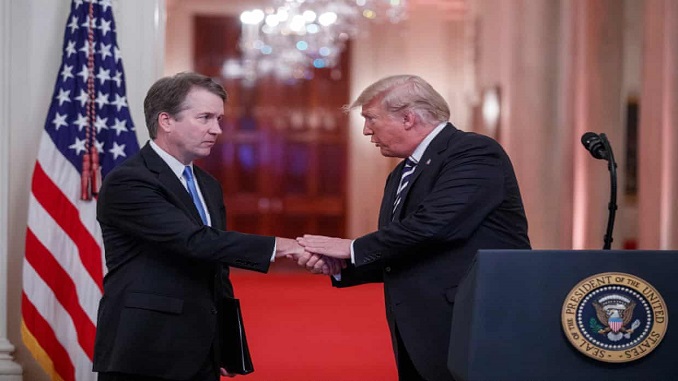
That legacy is a judiciary remade deeply conservative in Trump’s own image. In securing the confirmation of his 50th appeals court judge earlier this month, Trump cemented his status as the most accomplished sponsor of federal judges in the modern history of the presidency.

No president has secured so many important judgeships as quickly. Barack Obama managed to confirm only 55 appeals court judges – in eight years. Trump’s presidency is not yet three years old.

“Among conservatives, this is probably one of the biggest bright spots,” said Josh Blackman, a professor at the South Texas College of Law specializing in the supreme court and constitutional law. “Not all conservatives are happy with a lot of things Trump has done, but on judges he’s killing it. It’s an across-the-board success that we’ve seen in this area.”

With the US supreme court ruling in only a small fraction of federal cases each year, appellate and district court judges actually wield immense power over some of the most urgent issues in American life, from reproductive rights to voting rights to anti-discrimination protections and action on the climate crisis.

Carl Tobias, a professor at Richmond School of Law specializing in federal judicial selection, called Trump’s performance on judges – with the notable assistance of the Senate majority leader, Mitch McConnell, and outside groups such as the Federalist Society – “an amazing accomplishment”.

“He has really made an imprint on the federal appeals courts,” said Tobias. “About a quarter of the active judges by now have been appointed by him. And that’s really substantial.”

Trump continued to run up the score on judges until the last minutes of the congressional calendar year. As the House debated impeachment, the Senate went to work on a final 13 Trump nominees to serve on district courts, one level below the appellate courts.

With a dozen confirmations last Thursday alone, Trump hit an end-of-year tally of 133 district court judges out of 677 total, 50 appeals court judges out of 179 total, and two US supreme court justices out of nine total.

“While Democrats in the House wasted all their time this week on a partisan impeachment,” Vice-President Mike Pence tweeted jubilantly on Friday morning, “the Senate confirmed 13 new judges making that a total of 185 amazing judges picked by President @realDonaldTrump!”

Legal analysts have blasted Trump and McConnell for allowing an unprecedented number of nominees to advance who have staked out extreme philosophies or been flagged as unqualified by the American Bar Association (ABA), the country’s largest non-partisan coalition of lawyers.

Progressive activists additionally express alarm at the relative youth of many Trump nominees, who assume lifelong appointments upon confirmation.

“The American people should be deeply troubled and scared as to the status of their rights and liberties over the next three to four decades,” said Daniel Goldberg, legal director at the progressive Alliance For Justice.

“It’s critical that the next Democratic president prioritize the courts like never before. While Donald Trump has been able to get his judges confirmed, we have never seen progressives as galvanized on the court issue as they are now.”

The confirmation this month of Sarah Pitlyk to the district court in St Louis and Lawrence VanDyke to the 9th circuit court of appeals, both of whom were rated unqualified by the ABA, should give Americans cause for alarm, said Goldberg, whose group has produced the report Trump’s Attacks on Our Justice System.

Pitlyk “spent her career fighting IVF and surrogacy” and VanDyke “has spent his career fighting environmental protections, women’s rights and LGBTQ rights”, Goldberg said.

Trump’s work on the courts would not have been possible without the assistance of McConnell, who blocked Obama judicial nominees and then relaxed Senate rules to accelerate the installation of Trump nominees. Another key Trump partner in the effort is the Federalist Society, the conservative legal group that has vetted judicial candidates and spoon-fed them to the White House.

Blackman said that former Senate majority leader Harry Reid’s 2013 decision to take the so-called “nuclear option” and abolish a rule requiring 60 votes to approve federal judicial appointments – a decision that followed unprecedented stalling on judicial appointments by then minority leader McConnell – had made it easier to confirm judges with ideologies outside the mainstream.

“I think because the nuclear option is gone, you no longer have to appeal to 60, you can appeal to 50,” said Blackman. “And I think with that, you have less of a need to appeal to the moderates, so I definitely think the tilt of the nominees is definitely away from the center.”

Tobias said that Trump’s judicial record could help pave the way to his re-election.

“I think for many Republicans, who don’t agree with a number of the Trump policies, they are willing to tolerate that in order to influence the judiciary,” he said. “Especially Evangelical Christians, who are substantially responsible for his election.

“Issues like abortion, LGBTQ rights, religious freedom – the judges are being chosen to take a particular view on those issues.”

Culled from: https://www.theguardian.com/us-news/2019/dec/25/trump-judiciary-judges-legal-america

Domestic violence kills 15 times as many as terrorism in Britain

Plaid Cymru’s home affairs spokeswoman Liz Saville Roberts says expenditure on the issue must be increased. Photograph: Andrew Price/View Finder

Police budgets to counter domestic assaults must be ringfenced, say campaigners

Domestic violence kills 15 times as many people in Britain as terrorism, say campaigners who want the police to be given more money to tackle the problem.

The huge disparity is highlighted in figures obtained from official sources by victims’ rights campaigners, who say the police budget for combating domestic violence must be ringfenced, as it is for terrorism.

Official figures show there were 1,870 domestic murders in England and Wales between 2000 and 2018, compared with 126 that were terrorism-related. The vast majority of domestic murder victims were women. In addition, campaigners say an estimated 400 victims of domestic violence a year take their own lives.

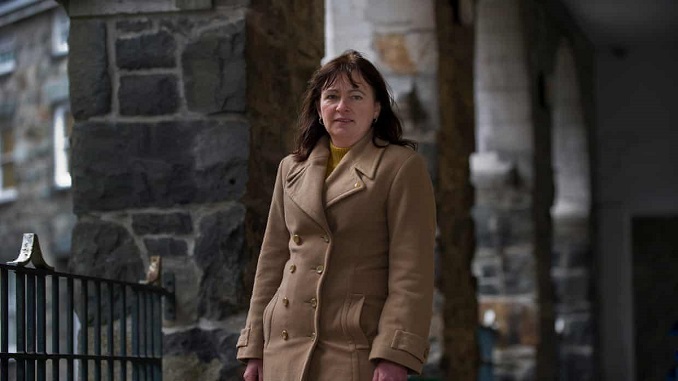
“Expenditure on the prevention and detection of domestic violence must be hugely increased now,” said Liz Saville Roberts, Plaid Cymru’s home affairs spokeswoman. “It is shocking and a disgrace that since 2000 over 6,000 – predominantly women – have either been murdered or have taken their own lives following domestic abuse.”

Police forces do not reveal how much they spend on tackling domestic violence. But campaigners say it has been cut in recent years.

The intelligence and security agencies, charged with combating terrorism have an annual budget of £2.6bn.

“Spending on fighting terrorism has been ringfenced whilst money for women’s support services and for the police has been cut,” said Saville Roberts. “Fifteen times more [people] have been murdered by partners than have lost their lives because of terrorism. It is right that funds for counter terrorism are not cut, but the budget for domestic abuse must increase and be protected as a matter of priority for the next government.”

The call comes amid mounting concern that domestic violence is increasing. Demand for women’s abuse support services rose by 83% in the 10 years up to 2017 while funding fell by almost 50%. The government estimates that domestic violence costs the UK £66bn annually.

On average the police receive an emergency call relating to domestic abuse every 30 seconds. Domestic abuse offences in London rose by 63% between 2011 and 2018, according to figures collated by the mayor’s Office for Policing and Crime. At the same time, prosecutions are falling.

Domestic-abuse related cases referred to prosecutors for consideration for charge fell 11% last year despite a surge in the number of crimes recorded by police.

Thousands of alleged perpetrators remain at large, according to campaigners.

“Police funding and support services for victims of domestic abuse have been severely cut since 2010,” said Harry Fletcher, spokesman for the Victims Rights Campaign. “Over the last 18 years 126 people have been killed by terror in England and Wales whilst over 1,800 mainly women have been killed by partners. This is outrageous.

“It is essential that the new government gives priority to preventing and investigating domestic abuse. Budgets must be protected and ringfenced in the future. The police must be given the resources to find and prosecute the thousands of alleged perpetrators who are at large in the community on the police wanted list.”

Culled from: The Guardian


California's groundbreaking privacy law takes effect in January. What does it do?


California’s groundbreaking privacy law takes effect in January. What does it do?

Landmark law, the ‘most comprehensive’ in the US, gives Californians an arsenal of tools to protect their data online

Last year, California passed a landmark privacy law that gives consumers more control over their data. The legislation gives residents unprecedented rights to control what information companies collect on them and how it is used.

The California Consumer Privacy Act will go into action 1 January 2020, giving residents of the state a whole new arsenal of tools to protect their data and personal information online – and saddling businesses with a lot more responsibility.

Here is everything you need to know about California’s “groundbreaking” new privacy law.

What is the law?

The California Consumer Privacy Act, passed in 2018, is the “most comprehensive” privacy legislation to be enacted in the United States to date, according to the American Bar Association.

Under the new regulations, California residents will be able to demand companies to disclose what information is collected on them and request a copy of that information.

Companies will be forced to delete consumers’ data upon request and they’ll be prohibited from selling information if the customer instructs them to via a mandatory “do not sell” link on the company’s website.

Consumers will also have the right to “receive equal service and price whether or not they exercise their privacy rights” or in other words, companies won’t be able to treat a user differently because they have requested their data.

When does it go into effect?

The law is effective on 1 January – meaning consumers can submit requests for their data starting on that date. The California attorney general’s office will not take any enforcement action against companies that do not comply until 1 July 2020.

What businesses does it affect?

Businesses will be required to comply with the new regulations if they have an annual gross revenue in excess of $25m, derive 50% or more of their annual revenue from selling consumers’ personal information, or annually buy, receive, sell, or share the personal information of more than 50,000 consumers, households, or devices for commercial purposes.

That means at least 500,000 businesses will be required to comply with the new law, according to the not-for-profit the International Association of Privacy.

Who else does it affect?

Consumers in California will be most directly affected by the new law. However, even people who not live in California may see ripple effects, said Peter Yared, the founder and chief executive officer of data management company InCountry.

“There are similar laws manifesting all over the world so increasingly companies are set up to receive and process these kinds of requests for data,” he said.

I live in California – how can I get my own data?

Consumers can receive a copy of their data by sending “a verifiable consumer request” to a business. The company is then required to comply with the request within 45 days of receipt. In some cases, companies can extend this time period for a maximum of 90 days total.

Consumers may only make a request for information twice a year, and only for a 12-month look-back period.

What happens if a company doesn’t give me my data?

Companies may face fines of $2,500 to $7,500 per violation of the new law, if the violation is deemed intentional. However, the CCPA also grants businesses a 30-day period to address a violation after receipt of a consumer’s request. The law is enforced by the California attorney general.

How does the CCPA compare to other privacy laws?

The California Consumer Privacy Act has often been called “GDPR-lite”, bearing resemblance to the EU’s General Data Protection Regulation, which went into effect in May 2018.

GDPR’s scope is broader, affecting all businesses that handle user data, whereas the CCPA applies only to businesses with a gross revenue over $25m, more than 50,000 customers, or whose revenue is 50% or more based on user data.

The CCPA provides more explicit “opt out” options for users who do not want their personal data sold. Under the CCPA, companies must include a “Do Not Sell My Personal Information” link in a clear and conspicuous location on their websites. Under GDPR, by comparison, businesses do not necessarily need the individual’s consent to collect and use data.

The rules also differ in their approaches to the collection of children’s data. Under GDPR, parents must provide consent for the processing of data of children under the age of 16. The CCPA requires businesses obtain consent from parents of children ages 13 and under, while kids older than 13 can provide their own consent.

What’s next?

Although the CCPA is the most extensive privacy law yet to be passed in the US, some advocates say it does not go far enough. Before the comment period on the law closed on 6 December, the Electronic Frontier Foundation, a not-for-profit organization, and other privacy advocates filed a request to strengthen the regulation.

The law as it is written does not do enough to address data collection, said Hayley Tsukayama, an EFF legal advocate, and California has few resources to enforce the law in 2020.

“You have the right to go to companies that have your data and ask to have it back, but they don’t have to come to you to ask to have it in the first place”, she said. “This is what we call opt in versus opt out.”

Companies that violate the law will also have the “right to cure”, meaning they can change their violating policies after they have been apprehended.

“We see this as a get out of jail free card,” Tsukayama said.

Culled from: https://www.theguardian.com/us-news/2019/dec/30/california-consumer-privacy-act-what-does-it-do

Sudan prosecutor announces investigation of Darfur war crimes

Omar Hassan Ahmad al-Bashir, the president of Sudan, listens to a speech during the opening of the 20th session of The New Partnership for Africa's Development in Addis Ababa, Ethiopia, Jan. 31, 2009. The partnership's primary objective is to eradicate poverty in Africa and bring long-term and sustainable political, economic, and social change to the continent. (U.S. Navy photo by Mass Communication Specialist 2nd Class Jesse B. Awalt/Released)

By Gabrielle Wast

The state prosecutor of Sudan, Tagelsir al-Heber, announced the launch of an investigation into the crimes committed in the Darfur region under former President Omar al-Bashir. Al-Bashir has already been arrested by the Sudanese government for corruption and has been under the watch of the International Criminal Court (ICC) for human rights crimes committed in the Darfur region of Sudan as early as 2002.

Al-Herber mentioned that “former regime leaders” would be investigated for crimes including murder and rape. Al-Bashir and other leaders from his regime that are being investigated cannot be tried by the ICC unless the Sudanese government allows it. Al-Herber noted that trials for these crimes could take place abroad, which implied a willingness by Sudan to allow the ICC to pursue their claims against the al-Bashir as well as four other ex-militant and rebel leaders.

Al-Herber also spoke about the four cases against former intelligence chief Salah Gosh, who quit just two days after al-Bashir was ousted from the presidency in April. The prosecutor said that the Sudanese government was in the process of bringing Gosh back to Sudan.

Over 300,000 people died in Sudan as a result of the crimes allegedly committed by al-Bashir and his counterparts.

Culled from: https://www.jurist.org/news/2019/12/sudan-prosecutor-announces-investigation-of-darfur-war-crimes/

TIPS