Home Blog Page 1420

New York increases fine for violating social distancing guidelines to $1,000

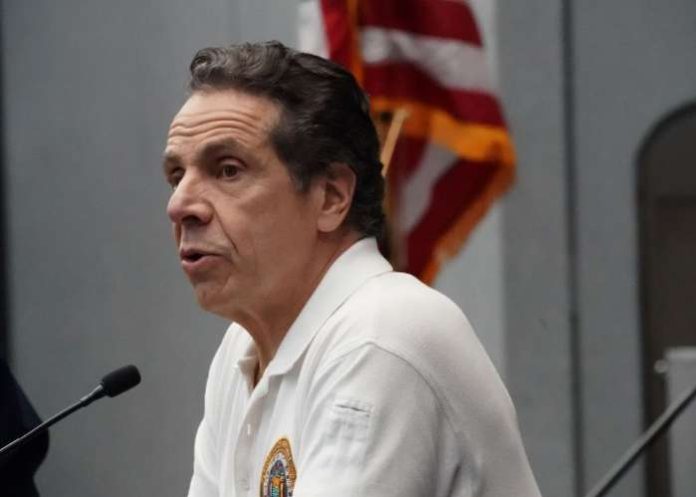
New York Governor, Andrew Cuomo, on Monday said that fines for violating social distancing guidelines would be increased from $500 to $1,000.

Cuomo also extended a shutdown in the epicenter of America’s deadly coronavirus pandemic until near the end of the month.

He said the COVID-19 death rate in the state was “effectively flat” for the past two days but announced that schools and non-essential businesses must stay shut until April 29.

“Now is not the time to be lax,” he told reporters, adding that fines for violating social distancing guidelines would be increased from $500 to $1,000.

The outbreak has killed 4,758 people in New York state as of Monday morning, Cuomo said, an increase of 599 from Sunday.

On Saturday, New York announced 630 deaths in one day — it’s highest daily total of the epidemic so far.

Cuomo said the number of daily deaths had been levelling off since, suggesting the state may be at the peak of its crisis.

“It is hopeful but it is also inconclusive,” he said, warning that the death rate could increase again.

He said it would be a “mistake” to relax restrictions on movement too early.

“If the curve is turning it’s because the rate of infection is going down, if the rate of infection is going down it’s because social distancing is working.

“If we are plateauing then we are plateauing at a very high level and there’s tremendous stress on the health care system,” Cuomo added.

New York has borne the brunt of the spread of COVID-19 in the United States.

Across the country there have been almost 339,000 cases, according to a running tally by Johns Hopkins University.

In New York state, there have been almost 131,000, Cuomo said.

ANALYSIS: Should we wear masks or not? An expert sorts through the confusion

As a professor at Boston University’s School of Medicine and a geriatrician at Boston Medical Center caring for the most vulnerable in this pandemic, I’ve been asked a lot of questions about COVID-19.

It turns out there is good science out there that helps us know what masks we need to wear and when to wear them. That being said, some of the following advice could change as scientists learn more about why some people get a bad or even lethal case of this virus while many more get through it OK. One of the areas of greatest confusion seems to be about masks.

Much of the decision about wearing masks depends on what the essential businesses that remain open are doing to ensure social distancing and therefore, our safety.

Knowledge will protect you

Guidance about wearing a mask has to do with the different ways viruses like COVID-19 spread from person to person: through contact, droplets and as airborne, also called aerosolized, particles.

People get infected with COVID-19 when they touch a contaminated surface like a subway handle, or shake hands and then touch their face. Steel and plastic surfaces can harbor live virus for three days. On average, people touch their faces every two-and-a-half minutes, so it is easy to see how this virus can spread so easily from one person to the next by touching surfaces.

Another way to get the virus is by droplets that people produce by coughing and sneezing. Droplets are relatively large and contain mostly water plus the virus, so they usually fall from the air within six feet (one of the reasons for the six-foot social distancing rule). That said, vigorous coughs can go farther, and a strong sneeze – they’ve been clocked at 50-100 meters per second – can spread a droplet 18 feet away. This is why people who aren’t already wearing a mask because they are sick should cough or sneeze into their elbow.

Coughs and sneezes also produce aerosolized virus, smaller particles that float in the air far longer than droplets and that can also travel farther. Aerosols are also produced by talking, yelling and just normal breathing. A big problem is that in small, poorly ventilated rooms, COVID-19 can hang in the air and stay infectious for three hours. Another thing to know is that common medical devices, like nebulizer machines for people with asthma and CPAP machines for those with sleep apnea, are good at aerosolizing virus.

Two different types of masks to choose from

A surgical mask, left, and an N95 mask, right.

There are two basic kinds of masks – surgical masks and N95 respirator masks.

Surgical masks are worn to protect patients from infectious droplets should the health care provider sneeze or cough. Someone who is suspected of being sick or is actually sick with COVID-19 should also wear a surgical mask to protect anyone around them from their sneeze or cough.

As far as protection for the user, surgical masks can protect the nose and mouth against splashes of bodily fluids, as a surgeon might encounter during a surgery. But don’t wear a surgical mask or a do-it-yourself mask if you think it’s going to protect you from COVID-19 that’s suspended in the air, say in a closed, poorly ventilated space. Aerosolized COVID-19 is so tiny that it can get in through gaps between the mask and face and breathed in through the material of the mask.

Some countries are requiring everyone to wear a surgical mask at least in potentially high people density, closed spaces. For example, the Austrian government now requires supermarkets and pharmacies to hand out surgical masks to all customers who must wear them when in the store. The purpose of the masks is to prevent the wearer from spreading the virus to others by coughing and sneezing. If markets and other businesses and our means of transportation can’t enforce good social distancing and even just some people who are coughing or sneezing don’t wear masks when they venture out, then the United States and other countries might have to follow suit.

Several U.S. government officials have suggested that widespread public use of masks will help. FDA Commissioner Gottlieb argued that a mask can be “an additional layer of protection for those who have to go out.” To be clear though, surgical or DIY masks and scarves are used primarily to protect others by preventing the spread of droplets. People should not be lulled into a false sense of security in thinking that these types of masks will protect them from airborne, aerosolized virus in for example, poorly ventilated spaces frequented by others. The best thing to do is avoid such spaces and stay home as much as possible.

A N95 respirator mask (in Europe, it’s called a FFP2) does protect the wearer from breathing in COVID-19 if it’s worn properly so that there is a really good seal around the face. If you’re a home care provider caring for someone who has or might have COVID-19, you should wear the N95 to protect yourself. That is, assuming there are enough of these masks to go around beyond those needed by care providers on the front lines at the hospitals. If you don’t have a N95, open a window in the patient’s room and maybe even use a fan if you have one to decrease the amount of virus floating around. Of course provide plenty of blankets to keep them warm!

The bottom line

In my opinion, you don’t need a mask with really good social distancing (staying at least six feet away from others) when you are outdoors. Even in a well-ventilated, large room where businesses are doing a good job of keeping the density of people small and you are there for as short a time as possible, I would not feel the need for a mask. But if those who are sneezing or coughing are not wearing masks and if social distancing doesn’t seem to be slowing the spread of COVID-19 fast enough, Americans and others will likely need to follow in Austria’s footsteps with mandatory masks inside buildings and go further to include any public transportation, taxis and ride sharing services.

If you are coughing or sneezing and therefore producing droplets that can contaminate other people or surfaces, wear a surgical mask to protect others. Even if you think it’s just a cold, wear a mask, or if you don’t have one, then a scarf. Pretty soon we may all be asked to wear these when we go to public places even if we aren’t coughing or sneezing, if some people don’t take this responsibility very seriously.

A N95 mask should be worn by people caring for COVID-19-suspected or infected people which, when worn properly, can protect against airborne virus. Because health care professionals are caring for many COVID-19 patients, they must have N95 masks. If there are enough, then asymptomatic caregivers of COVID-19 patients at home should also wear them.

This article is republished from The Conversation under a Creative Commons license. Read the original article.

Premium Times

‘An attempt to gag the media’: Journalists on Nigeria’s proposed social media bill

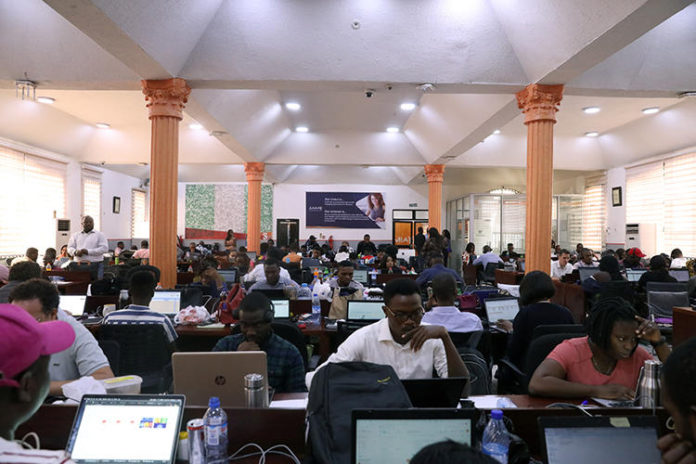
ople use computers in Lagos, Nigeria, on January 20, 2020. Nigerian journalists recently spoke with CPJ about their concerns over a proposed social media bill. (Reuters/Temilade Adelaja)
Staff of Jumia company work on computers at the office in Lagos, Nigeria January 20, 2020. Picture taken January 20, 2020. REUTERS/Temilade Adelaja - RC2ZKE989B8L

At a public hearing on Nigeria’s social media bill held in Abuja last monththe voice of Chris Isiguzo, president of the Nigerian Union of Journalists (NUJ), rang clearly across the room: “This bill…seeks to pigeonhole Nigerians from freely expressing themselves.” The NUJ is “totally opposed” to it, he said.

This strong opposition was echoed by multiple other civil society groups, according to local media reports and a recording of the hearing posted on Twitter with the hashtag #SayNoToSocialMediaBill by Paradigm Initiative, a local digital rights organization. By contrast, a Nigerian army representative welcomed the bill for “reasons of national security,” telling the hearing it would supplement an existing cyber warfare command. The local Guardian newspaper reported in 2018 that the command was established to combat fake news.

At the time of publication, it was not clear whether the COVID-19 crisis would impact the timeline for consideration of the bill, which was scheduled to be sent for a third reading by the senate in April. On March 24, Nigeria’s National Assembly began a two week shutdown with possible extension based on the public health response, Mohammed Sani Musa, a senator from Niger State who is sponsoring the bill, told CPJ. False information related to the coronavirus was an example of the need for the legislation, he said.

Nigeria’s Protection from Internet Falsehood and Manipulation Bill 2019 says that individuals who transmit statements that authorities determine to be “false,” likely to “influence the outcome of an election,” or “prejudicial to the security of Nigeria,” may be imprisoned for up to three years or fined up to 300,000 naira (US$844) or both, according to CPJ’s review of the text. Offenders who are not individuals face fines up to 10 million naira ($27,247 USD). Another section of the bill introduces fines for companies who fail to comply with orders to disable Nigerians’ access to content.

Musa told CPJ that the bill was intended to “mitigate the propaganda of fake news” that travels at the “speed of light.” He said it was important in addition to existing cybercrime legislation, though he did not provide specifics. Nigeria’s 2015 cybercrime act has been used to arrest journalists who criticize officials on social media, as CPJ has documented.

Musa told CPJ the bill was guided by online controls in other jurisdictions, including Singapore, the U.K., the EU, and the United Arab Emirates—where a cybercrime law was passed to suppress criticism on social media, observers have told CPJ.CPJ found strikingly similar language between Singapore’s 2019 Protection from Online Falsehoods and Manipulation Act—which CPJ has condemned—and Nigeria’s social media bill, notably in sections denoting prison time for individuals who post “false statements of fact.”

“If there’s a society like Nigeria, we feel imprisonment is necessary,” Musa said, arguing for deterrence as a tool to manage speech online. He was, however, open to the bill being amended or even dropped. “Any bill that is going to infringe on the fundamental freedom of every Nigerian…I would be against it,” he concluded.

CPJ asked four Nigerian journalists what they thought about the bill. Their answers have been lightly edited for length and clarity.


Ajibola Amzat (Credit: Busola Ajibola)

Ajibola Amzat, editor with the privately owned International Centre For Investigative Reporting(ICIR), based in Abuja

You say we should not share information or transmit information that is false, and then we begin to ask, well, what is falsehood? When you say people should not transmit false information—false information according to who?

Now [the government] realizes that the Nigerian media is getting more critical and having a better sense of awareness of what is going on, and Nigerian people are getting to know a little more about the hypocrisy of the government, and they are talking more freely about it. That is what [the government] does not want to happen, and that is the purpose of bringing up this kind of bill.

The parts that say you can’t transmit information that may affect national security, you can’t transmit information that you know is false, you can’t transmit information that you know will influence the outcome of elections. It’s something that can actually put journalists into easy problems, because you don’t know what the government will consider as “national security.”

How can you jail somebody for saying something? If you think what somebody is saying is false, then bring out the truth, so that the falsehood and the truth can stand together and then people will decide for themselves. But you cannot go ahead and criminalize people, that is like trying to kill people’s spirit to talk.

And don’t forget, apart from journalists, the organization who carries such information is also going to be sanctioned. So the media organization will also pay if you are found to be the one who published such information or misinformation. It’s an attempt to gag the media.

This kind of boldness is coming from places like China and Singapore, and other places where the freedom of expression is being repressed. Nigerian democracy is already broken, but it is going to be more shattered if this kind of bill would be allowed to pass.

The laws that even enable journalists to do their jobs are often disregarded. I mean the laws, like the FOI [freedom of information] law, should enable journalists. Most of them [government agencies] don’t have regard for that law…many agencies of the government are not disclosing information vital for public interest. Those are the laws that are supposed to enable the work of journalists. But those laws are just laws on paper. And now [they] bring some other laws to criminalize what journalists do.


Yecenu Sasetu. (Credit: Toby Martins)

Yecenu Sasetu, health reporter for the privately owned Kiss FM radio station, based in Abuja

As a media person, if this is passed into law it’s going to stifle my voice because the government is going to be in control. They are going to be in control of our online presence.

Now if, as a journalist, I put out content online and the government decides this is “fake news,” of course it won’t fly. Yes, I’ll be penalized. A whole lot of things that we need to put out we may not be able to put out, because it is going to put fear in a whole lot of media people. They will feel they do not want to anger the government.

So you cannot criticize, you cannot give opinions. It’s going to really stifle the voice of traditional media. Forget about the regular, everyday person that just wants to put out content—it will stifle the voice of every media person.

There has been a lot of criticism of the present administration. People are not getting what they expected, especially in terms of the economy. There is insecurity, there are just a whole lot of issues. People come online to vent. People do not really have access to their representatives, their lawmakers, their elected government officials, so the only way they really get to vent is on social media.

I would say it’s just a bid to get people not to say so much, not to be as critical of the government as they are right now. I would say it’s just a bid to control everything and everyone.


Chris Kehinde Nwandu. (Credit: CKN NEWS MEDIA GROUP)

Chris Kehinde Nwandu, publisher of the privately owned CKN News site and president of the Guild of Professional Bloggers of Nigeria, based in Lagos

Some of us have been arrested in the past. I personally was arrested about five years ago, and I stayed about two weeks in jail for some of the information I published [on social media].

For me and my organization, we believe there is no need for another law, the social media bill or whatever. We already have enough laws. In 2015 there was the cybercrime law, but they are trying to come up with another law. We sense there are some political motives behind it.

This may be a law to give more ammunition to some people, to put some level of fear into the minds of journalists. Some people are just trying to wither down the voice of the media, to shut them up. Democracy is about free speech.

I am not totally against a law that regulates what people do. Across the globe there are certain standards that are expected of professionals. [But] this is not China. This is not North Korea. This is not Cuba or one of these countries. This is a democracy.


Amrah Aliyu. (Credit: Imona Rage)

Amrah Aliou, reporter with the federal government-funded Search FM radio station, based in Minna, Niger State

In Nigeria, the only way people get to talk [and] express their views is on social media. They get to hold politicians and policy makers accountable the only way they can reach them, which is on social media. And so far it’s been working well, because the government feels out of place and tries to right their wrongs.

For example, in Niger State we are battling with potholes, terrible roads jam-packed with trailers and heavy duty cars, to the extent that sometimes these vehicles get stuck or fall off and there are oil spills. People feel fear for their dear lives, so most times they snap [photographs of] these incidences and try to question the government on social media, tagging some notable handles. This has, in a way, put the government to order. They try to right their wrongs [and] in turn post it [their actions] on the same social media through their aides. So social media to some extent has impacted positively on the changes the people get to enjoy.

This article was first published on CPJ’s website

Wike to Federal Govt: Why give Lagos N10 billion for COVID-19, and nothing to Rivers?

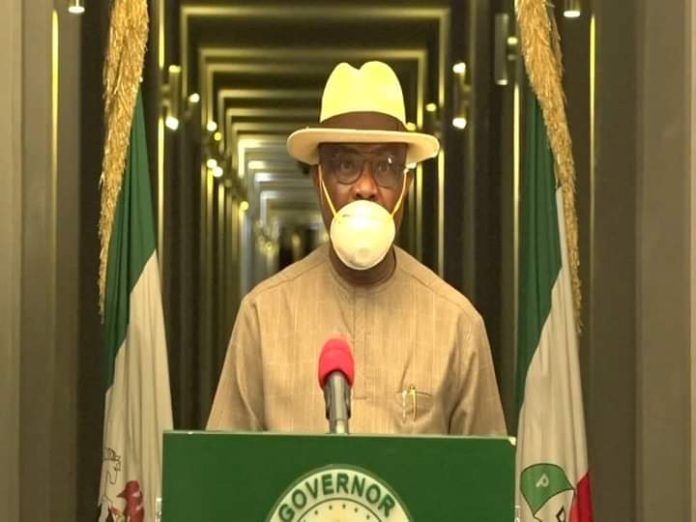
Rivers State governor, Nyesom Wike, has criticised the federal government for giving a N10 billion grant to Lagos State to fight the novel coronavirus while “abandoning” other states of the federation.

The confirmed cases of coronavirus infection in Nigeria stood at 232 as of Sunday evening. Lagos has 120, which is the highest in the country, while Rivers state has one confirmed case.

Mr Wike, in a statewide broadcast on Sunday, accused President Buhari’s administration of “politicising” the nation’s effort to halt the spread of the virus.

Mr Wike said Lagos is Nigeria’s commercial hub, but that Rivers, as the nation’s oil and gas hub, “produces a greater percentage of the nation’s wealth” and therefore deserves federal support.

“One wonders why Federal Government should single out a state out of 36 States to give support. Does it mean that support will come when a State has a record of over 50 infected persons?

“No state should be seen as more important than any other state. This is a Federal Republic. No state is superior to others,” the governor said.

“Rivers State is entitled to support from the Federal Government. Every day, we are inundated with letters from the Federal Government to allow oil companies to fly in expatriates to drill oil. Then we ask, what is the status of those coming from Lagos? Nobody has told us their status as regards coronavirus.

“If they come to Rivers without us knowing their status, what will be the implication assuming they have the virus?”

The governor said the restriction of movement in the state would be relaxed in the state on Tuesday and Wednesday to allow residents to do their shopping for Easter and also replenish their stocks.

He also announced a committee to oversee the state government’s food distribution programme to cushion the impact of the stay-at-home order.

READ ALSO: HOW BUHARI IS LEADING FIGHT AGAINST COVID-19 IN NIGERIA – PRESIDENCY

Mr Wike disclosed that the index case of the coronavirus in Rivers State is now negative and would soon be discharged from the treatment centre.

“We thank our frontline health professionals who have displayed a deep sense of professionalism and patriotism during this trying period.

“The State Government is also grateful to all Rivers people and private individuals who have contributed to support us in this fight. At the appropriate time, Government will publish the names of these individuals.”

“May I urge our religious leaders to continue to intercede on behalf of the state as we fight to contain this virus.

Premium Times

COVID-19 bonanza: Buhari orders Customs to release seized 150 trucks of rice for nationwide distribution

President Muhammadu Buhari has directed the Nigerian Customs Service to release 150 trucks of rice seized from smugglers for immediate distribution across the country.
It is to be part of the palliatives to cushion the effect of COVID-19 lockdown.

The president’s aide on social media, Bashir Ahmad made this known on his Twitter account on Monday.

Also the federal government has concluded plans to engage 774,000 Nigerians on special public works programme implemented by the National Directorate of Employment (NDE).

This was made known by the Minister of Finance, Zainab Ahmed while rolling out government stimulus package for Nigerians against Coronavirus Pandemic.

Minister for Finance, Zainab Ahmed

This, she said, would translate to 1,000 people from the 774 local governments in the country.

Buhari orders $150m withdrawal from NSIA

President Muhammadu Buhari has ordered that $150 million be withdrawn from the National Sovereign Investment Authority (NSIA).

This was made known by the Minister of Finance, Budget and National Planing, Zainab Ahmed, in Abuja while speaking with journalists.

Ahmed said the withdrawal would be made from the NSIA stabilisation fund to augment disbursements by the federation accounts allocation committee to the three tiers of government.

Funke Akindele, husband bag 14-day community service, N100k fine each

Nollywood actress Funke Akindele and her husband Abdulrasheed Bello a.k.a JJC skills, were on Monday sentenced to 14 days community service each by a Magistrate court in Lagos.

The court also ordered them to pay a fine of N100,000 each.

Below is their charge.

The Actress and her husband had earlier pleaded guilty to a one-count charge for hosting a gathering of over 20 persons, contrary to the social distancing directives of the Lagos State Government.

According to the regulation, anyone found guilty is liable to one-month imprisonment or N100,000.

They were arraigned at the Samuel Ilori Courthouse of the Magistrate Court in Ogba, Lagos.

Coronavirus: All you need to know in 500 words

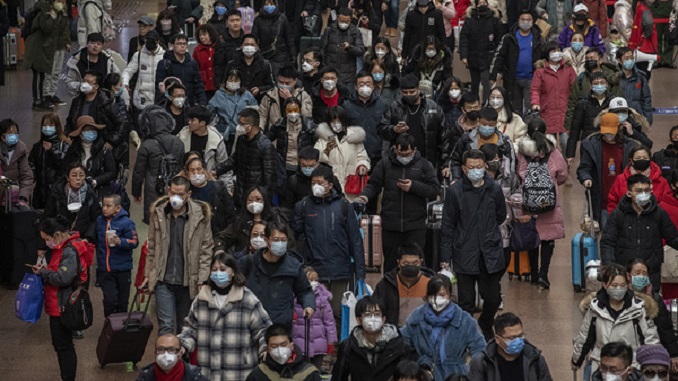
BEIJING, CHINA - JANUARY 23: Chinese passengers, most wearing masks, arrive to board trains before the annual Spring Festival at a Beijing railway station on January 23, 2020 in Beijing, China. The number of cases of a deadly new coronavirus rose to over 500 in mainland China Wednesday as health officials locked down the city of Wuhan in an effort to contain the spread of the pneumonia-like disease. Medicals experts have confirmed that the virus can be passed from human to human. In an unprecedented move, Chinese authorities put travel restrictions on the city of 11 million and two other neighboring cities, preventing people from leaving after 10 AM local time Thursday. The number of those who have died from the virus in China climbed to at least 17 on Thursday and cases have been reported in other countries including the United States,Thailand, Japan, Taiwan and South Korea. (Photo by Kevin Frayer/Getty Images)

Virus thought to have originated in China’s Wuhan has killed over 53,000 people and infected more than 1 million.

The World Health Organization (WHO) has declared the new coronavirus outbreak, which originated in Wuhan, China, a global pandemic. 

As of April 3, over 53,000 people have died from the disease and there have been more than 1 million confirmed cases worldwide, according to data collected by the Johns Hopkins University in the United States.

Here is what you need to know:

What is a coronavirus?

The coronavirus family causes illnesses ranging from the common cold to more severe diseases such as severe acute respiratory syndrome (SARS) and Middle East respiratory syndrome (MERS), according to the WHO.

They circulate in animals and some can be transmitted between animals and humans. Several coronaviruses are circulating in animals that have not yet infected humans.

The new coronavirus, the seventh known to affect humans, has been named COVID-19.

What are the symptoms?

Common signs of infection include fever, coughing and breathing difficulties. In severe cases, it can cause pneumonia, multiple organ failure and death.

The incubation period of COVID-19 is thought to be between one and 14 days. It is contagious before symptoms appear, which is why so many people get infected.

Infected patients can be also asymptomatic, meaning they do not display any symptoms despite having the virus in their systems.

Where did it come from?

China alerted the WHO to cases of unusual pneumonia in Wuhan on December 31.

COVID-19 is thought to have originated in a seafood market where wildlife was sold illegally.

On February 7, Chinese researchers said the virus could have spread from an infected animal to humans through illegally trafficked pangolins, prized in Asia for food and medicine.

Scientists have pointed to either bats or snakes as possible sources. 

CARD: Coronavirus timeline

Should I worry? How can I protect myself?

The WHO declared the virus a global pandemic on March 11, and said it was “deeply concerned by the alarming levels of spread and severity” of the outbreak.

The WHO recommends basic hygiene such as regularly washing hands with soap and water, and covering your mouth with your elbow when sneezing or coughing.

Maintain “social distancing” – keeping at least 1.8 metres (six feet) between yourself and others – particularly if they are coughing and sneezing, and avoid touching your face, eyes and mouth with unwashed hands.

Avoid unnecessary, unprotected contact with animals and be sure to thoroughly wash hands after contact. 

AL JAZEERA NEWS

COVID-19 and Nigeria’s “Burden Bearer”

By Desmond Ekwueme

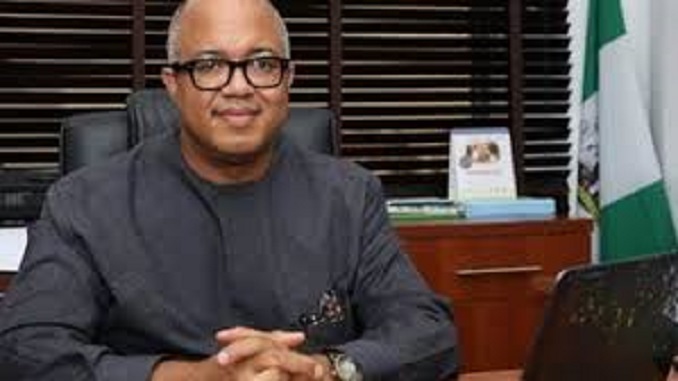
Dr. Chikwe Ihekweazu is a epidemiologist and public health physician. He was appointed the Chief Executive Officer of Nigeria Centre for Disease Control (NCDC) on 15 August 2016 by President Muhammadu Buhari.

Chikwe was born to a Nigerian-German parents. His father is a Nigerian doctor and the mother, a German professor. Chikwe holds an MBBS from the University of Nigeria and a Masters in Public Health from Heinrich-Heine University, Germany.

His mother was Professor Edith Ihekweazu, a German. She was a professor of linguistics and first female HOD, Foreign Languages at UNN but died at a young age of 50 in 1991 in a motor accident. She was also the first female dean, Faculty of Arts of the university. Whe she died her children including Chikwe were still very young. In 2018 UNN began a process of immortalising her for the pioneering work she did in the university when the Department of Foreign Languages instituted the Edith Ihekweazu Memorial Lecture.

Chikwe married his wife Vivianne Ihekweazu in 2003 and they have two children.
He co-founded EpiAFRIC and Nigeria Health Watch as managing partner and editor respectively. In 2011, he moved to Johannesburg, South Africa with his family to become the co-director of the Centre for Tuberculosis at the South Africa National Institute for Communicable Diseases, Johannesburg, South Africa and later as a medical epidemiologist consultant at United Kingdom’s Health Protection Agency.

He is currently the Chief Executive Officer, Nigeria Centre for Disease Control (NCDC). He was the acting director of the Regional Centre for Disease Control for West Africa. Following Nigeria’s National Assembly bill and act, Nigeria Centre for Disease Control (NCDC) became an independent agency on 13 November 2018 and Chikwe emerged the first Director General of the agency.

During the 2019-2020 COVID 19 Pandemic , he was part of a team of experts of the World Health Organisation on a joint mission to study the epidemic in China. In 2007, Chikwe attended his first TED conference in Tanzania. It was reported by Nature that Chikwe criticized Nigeria for being unprepared for epidemics in his blog- 2009–10 H1N1 influenza pandemic, “Nigeria needs a central, well-resourced centre for infectious disease prevention and control, or one day we will pay the price the hard way”.

Ihekweazu has been in the frontline of the battle with Covid-19. He has been attending to scores of cases day and night…and coming very close to the pandemic….eyeball to eyeball. He takes all the risks and faces all the horrifying and terrifying challenges. He has been taking records and history of patients and linking with his colleagues at the WHO seeking more precautionary solutions and measures just as vaccines are expected for cure of the pandemic.

What can we wish, demand or request other than for God to keep protecting Ihekweazu and his family! In the Lord’s hands we commit Ihekweazu and his career!

MRA Condemns Attacks on Journalists Covering Coronavirus, Calls on FG to Ensure Respect for Media Freedom

LAGOS – The Media Rights Agenda (MRA) on Monday condemned the increasing cases of attacks by law enforcement and security agencies on journalists covering the Coronavirus pandemic and other issues and called on the Federal Government to ensure respect for the fundamental rights of journalists and the media.

In a statement issued in Lagos, MRA’s Programme Director, Mr. Ayode Longe, said: “We are constrained to remind the Federal Government that it has obligations under various international instruments which it has voluntarily acceded to, particularly Article 66(c) of the Revised Ecowas Treaty, to ensure respect for the rights of journalists. We are gravely concerned by the rampant cases of attacks by law enforcement and security agents on journalists carrying out their professional duties as well as the obstruction of such duties. This situation is unacceptable and will no longer be tolerated.”

He cited as one of the latest of such incidents, the attack on March 28, 2020 by an operative of the Department of State Security (DSS) on the Imo State correspondent of Leadership newspaper, Ms Angela Nkwo-Akpolu, while she was taking pictures of a hotel in Owerri where guests were forcibly quarantined by security agents allegedly because the hotel failed to comply with government’s directives on checking the spread of COVID-19.

The DSS operative was reported to have manhandled Ms Nkwo-Akpolu, forcibly seized a pair of prescription eye-glasses belonging to her as well as her ipad and deleted several pictures she had taken. The security agent stopped short of beating her up and smashing her ipad on the ground owing to the intervention of other journalists present at the scene.

In yet another incident, at about 4.00am on March 30, 2020, a group of soldiers manning a checkpoint at Mbiama, a border town between Rivers and Bayelsa States, attacked a circulation vehicle belonging to The Punch newspaper, which was on its way to distribute copies of the newspaper in states in the South-South zone, and damaged the car.

According to the driver of the vehicle, Mr Sunkanmi Olusola, when he got to Mbiama, the soldiers stopped him and the driver of the circulation vehicle of The Nation newspaper and refused to allow them to continue their journey. His appeal to the soldiers to allow them leave apparently angered one of them who brought out a knife and slashed one of the vehicle’s front tyres into shreds. Mr. Olusola said the soldier had initially tried unsuccessfully to smash the windscreen of the Passat Golf 3 car before deciding to use the knife to tear the tyre.

Condemning these incidents, Mr. Longe described as tragic the frequent resort to violence and brutality by law enforcement and security agents in their dealings with members of the public, including journalists, without any civility or respect for the basic constitutional rights of citizens.

He said: “these incidents are doubly tragic because a free press and respect for the rule of law are necessary conditions in a democracy.  Unfortunately, these security agents have consistently demonstrated that they are either not aware of these fundamentals of democratic rule or that they have no regard for them. This cannot be allowed to continue unchecked.”

Mr. Longe noted that at a time such as this when the world is confronting an unprecedented public health challenge in the Coronavirus pandemic, the role of the media is more important than ever before, given the imperative of citizens having access to accurate information about the nature of the threat it poses and the means to combat it, among other issues.

He argued that “In a situation such as this, there can be no justification for these types of actions by the Government or its law enforcement and security agencies. The Government has a heightened responsibility to ensure that journalists and the media are able to perform their duties.  This should necessitate taking extraordinary measures to protect journalists and their work and fully implementing all laws aimed at ensuring that journalists and citizens have uninhibited access to information. Unfortunately, we are constantly faced with a situation where the Government, which should be the protector, is the principal impediment.”

Mr. Longe called on Yusuf Magaji Bichi, the Director General of the DSS, and Lieutenant General Tukur Yusuf Buratai, the Chief of Army Staff, to call their officers and men to order and provide them with the necessary training about their human rights obligations to citizens and internationally recognised acceptable modes of engagement by law enforcement agents with citizens and civilian populations.

Sundiata Post

TIPS