Home Blog Page 1377

We Generate ₦3bn From Stamp Duty Weekly – FIRS


The Federal Inland Revenue Service (FIRS) says it generates N3 billion revenue weekly from stamp duty collection.

This stamp duty revenue is generated weekly from May 2020 to date from Deposit Money Banks (DMBs).

Executive Chairman of the FIRS, Muhammad Nami told the House of Representatives Committee on finance on Tuesday in Abuja.

The purpose of the meeting with the legislators was to resolve the face-off between the FIRS and the Nigeria Postal Service (NIPOST) over stamp duty collection, and the fate of the N58 billion revenue generated from February 2016 to April, 2020.

The Session which was chaired by the Chairman Finance Committee of the House of Representatives, Hon. James Abiodun Faleke include other members of the committee, Post- Master General of the Federation Dr. Ismail Adebanjo Adewusi, NIPOST board Chairman Barr. Maimuna Yaya Abubarkar and other top officials of the postal agency and FIRS officials.

Nami said the FIRS was able to generate this much revenue from a single stream of stamp duty collection from DMBs because the Service had deployed a new technology to track and capture such revenue straight into the federation account.

The technology deployed by the FIRS Nami said is the Application Programming Interface (API) technology solution, an – online real time technology that makes collection of Stamp Duties easier.

Nami said when he assumed office in December 2019, the FIRS discovered over N30 billion in the NIPOST Stamp duty Account with the Central Bank of Nigeria (CBN). The account was opened in 2016 specifically to warehouse revenue from stamp duty collection.

However, by April 2020, the balance in the account had grown to N58 billion because of the deployment of the API by the FIRS. Money in the stamp duty account by May 2020 was transferred to the federation account following instructions given to the CBN by the FIRS to do so.

Since then, both the FIRS and the NIPOST have been at daggers drawn over who controls stamp duty collection and invariably the money which accrues from the collection.

Nami said payment of Stamp Duties collection in Nigeria dates back 94 years ago, stressing that stamp duty had always been part of the revenue schedule of tax authority.

He regretted that the differences in who controls stamp duty collection between both NIPOST and FIRS had degenerated a public spat to between the two agencies describing the development as “unnecessary and unhelpful”.

According to him, “the FIRS regrets that as agency of the government, FIRS and NIPOST allow a simple situation to degenerate to media exposure”.

In his submission, Postmaster General/Chief Executive Officer of NIPOST, Dr. Ismail Adebanjo Adewusi described the feud between FIRS and his agency as needless.

According to him, “as prelude, it’s important to make this remark. NIPOST is not a tax collecting agency. We are not in the business of collecting taxes, that’s not our mandate. But our role in stamp duty is clearly stated in the law.

“The issue is, the Finance Act, 2019 did not in any way stop NIPOST from its mandate. In spite of amendment to finance Act, it has not affected the responsibility of NIPOST. There is no fight between NIPOST and FIRS over tax collection”, he said.

He however insisted that, the responsibility of procuring stamp rests with NIPOST but appealed that, the agency is entitled to its share of the stamp duty proceeds it collected and domiciled in the CBN from 2016 to 2020.

He told the Finance committee that “all the monies that accrued to the account include proceeds of stamp sales. In the spirit of peace, we want FIRS to look at the issue. We deserve in sharing cost of collection. At the initial meeting, FIRS said they will give us 30 percent and take 70 percent, we said no”.

Earlier in his opening remarks by Chairman, Finance Committee of the House of Representatives Hon. Abiodun Faleke said the committee was embarrassed by the open engagement of the two government agencies in addressing the issue.

According to him, “as a committee responsible for overseeing finance agencies, we decided to call for this dialogue to see if the agencies are doing the bidding of the law”.

He said having heard presentations by both sides; it would be fool hardy for the committee to just take a decision. “We will go back, look at all legal issues raised and reconvene.”

Digital Inclusion: UK, FG Partner To Advance Policy, Regulatory Reforms On RoW

The British Government through its Prosperity Fund’s Digital Access Programme, has taken the next step in its pledge to support and promote inclusive and sustainable digital access to unserved and underserved communities in Nigeria.

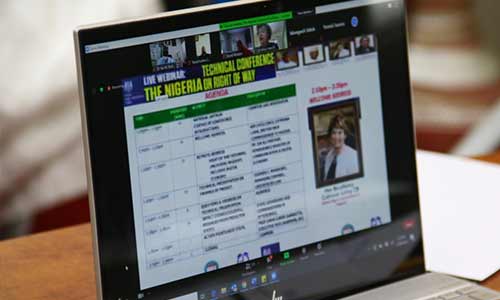
In collaboration with the Federal Ministry of Communications and Digital Economy and the Nigerian Communications Commission (NCC), the Digital Access Programme yesterday hosted the first Nigeria Technical Conference on the Right of Way (RoW) to further aggregate views from key stakeholders, towards the advancement of policy and regulatory reforms on Right of Way (RoW) and Issuance of Planning permits for Mast and Towers.

The virtual forum is one of the key deliverables of the UK’s Technical Assistance project on RoW, which was initiated in April 2020 to assess the existing strategy, charging regime and measure that against economic development indicators.

Funded and overseen by the Digital Access Programme, Greenfields Law, a leading telecom policy, law and regulation firm in Nigeria had engaged with key stakeholders and proposed effective solutions based on the evidence gathered, while taking into account international best practice.

Delivering the opening remarks, the British High Commissioner to Nigeria, Catriona Laing commended the Minister of Communications and Digital Economy and said:

“Nigeria has seen great progress in the effort to provide inclusive digital access to millions of its citizens. The COVID19 pandemic has however, made the world rely more heavily on internet connectivity for access to basic necessities – health, education, work, shopping, convenience and other services. As such, substantial digital inequities have been revealed.

“The UK is keen to support the promotion of affordable, inclusive, safe and secure digital access for underserved or excluded populations, and this conference is a significant step to discuss the technical findings of our preliminary study, outcomes, lingering challenges and the way forward.

“I hope that today’s deliberation will culminate into an increased digital inclusion as a basis for a more thriving local tech ecosystem, generating skilled jobs and innovative solutions for local development challenges.”

Hon. Minister of Communications and Digital Economy, Dr. Isah Ali Ibrahim (Pantami) gave the keynote address and said:

“I want to thank the UK Government for supporting the Nigeria Digital Economy agenda. Earlier the UK Government supported us in the development of the new national broadband plan through the Digital Access Programme.

“Nigeria has in the last 1 year of my time as Minister, added 10% to the broadband penetration level in the country. RoW reforms is the key to unlocking Nigeria’s digital economy for inclusive digital growth and we have worked with the Nigerian Governors Forum to achieve some important results already. We will continue to champion this reforms on RoW and work on the challenges identified by the technical study.”

Reacting to the technical study and the next steps on, the Executive Vice Chairman of the Nigeria Communications Commission, Prof Umar Garba Danbatta, represented by the Executive Commissioner Stakeholder Management (ECSM), Mr. Adeleke Adewolu also thanked the UK Government’s Digital Access Programme for their support in championing reforms on RoW to deepen digital inclusion in Nigeria.

“The Technical Assistance on RoW reforms will assist in our quest for deepening broadband penetration in Nigeria. NCC is willing and ready to advance the reforms noted in the technical study and will collaborate with stakeholders to effect it in the short, medium and long term.” He added.

Applauding State Governments that have announced the reforms on RoW, the UK Government’s Digital Access Programme Adviser and Country Lead, Idongesit Udoh, said:

“This project will help accelerate the roll-out of backbone connectivity infrastructure, to underserved communities which is the key to unlocking Nigeria’s digital economy for inclusive, digitally-enabled growth, development and job creation for Nigerians.

“The Digital Access Programme is also working on other projects such as cybersecurity essentials upskilling for SMEs around the country and basic digital literacy to promote inclusive economic growth and development.”

Female Lawyer Arrested By NDLEA For Alleged Selling Of Drugs, Faints During Interrogation

A Legal Practitioner identified as Obianuju Ekejiuba was intercepted and arrested by the operatives of the National Drugs Law Enforcement Agency (NDLEA) at Abuja while on her way to allegedly supply a parcel of 500grams of Indian hemp to consumers.

In what is now the new trend with people fainting while being interrogated, the NTA Reporter, Iliyasu Yakubu, asked the legal practitioner why she was into drug peddling, she simply slumped in response to his question.

She was led back to the office after officers of the NDLEA gave first aid treatment to her theatrics.

Thenigerialawyer

INEC: Stopping Edo Election Recipe for Constitutional Crisis

The Independent National Electoral Commission (INEC) yesterday walked back its threat to suspend the September 19 governorship election in Edo State over threats of violence, explaining that the rethink was based on the implication of a constitutional crisis such a decision would trigger, if the election is not conducted.

The commission also said out of 14 items required for the preparations of the governorship election, nine had been implemented.

It justified deregistration of some political parties, explaining that they have no verifiable addresses while their telephone lines were traceable to business centres.

Speaking on a television programme yesterday, the INEC National Commissioner for Information and Chairman of Voter Education, Mr. Festus Okoye, assured the electorate that the September 19 governorship election will go ahead as planned as the political parties have complied with INEC’s notice over threats of violence.

“INEC is progressively moving ahead with the September 19 Edo State governorship election. There are fourteen items for the election and nine of them have been implemented and none sensitive materials have been deployed. We are proceeding with the election as planned.

“The political parties on their own are complying with the commission’s warning on violence and we have also observed a change from the threats of violence. So, we are moving ahead with the election,” Okoye stated.
According to him, there will be a constitutional crisis if the election is not conducted because Section 178 (2) stipulates the timeline for the election to be conducted.

He stated that the Edo State governorship election must be conducted before October 13, or else, there would be a constitutional crisis.
He added that the political parties are “pulling out of their threats of violence and INEC is, therefore, going ahead with the governorship election as planned.”

Okoye, who explained why some of the registered political parties were deregistered, said in November 2019, the commission wrote the political parties but discovered that they had no verifiable addresses.

“When INEC put a telephone call to their registered telephone numbers, we discovered that the lines were ringing as telephone lines of some business centres and some of them have no verifiable office addresses,” he said.

He said most of the political parties were deregistered because they did not meet the constitutional requirements of Section 225(a), which states that any political party that did not score a 25 per cent vote in one local government election, or 25 per cent in any local government during a governorship election breached the law.

He said the law prescribed that it should be on votes scored by the political party and not the capacity to win votes, adding that capacity to win votes is futuristic, while the extant laws are insisting on actual votes scored.

He denied knowledge that INEC deregistered some of the political parties despite court orders barring the commission from doing so.

He denied that INEC deregistered any political party that is in any tribunal challenging the outcome of any election.

According to him, “INEC allowed for a full circle of the tribunals to be finished before it commenced the deregistration processes of the defaulting political parties.”

He said there was no record before it that one of the deregistered political parties, KOWA Party, could win a councillorship seat in any part of the country.

Edo Assembly Complex Unsafe for Sitting, Say 17 Lawmakers

The group of 17 members of Edo State House of Assembly, yesterday met in an undisclosed location and condemned alleged destruction of the legislative complex, describing it as unsafe for them to sit.

They also called on security agents to evict hoodlums from the complex in order to create a conducive atmosphere for the conduct of legislative business.

They, however, set up a five-man committee to investigate the removal of three local government chairmen by the state Governor, Mr. Godwin Obaseki.

They described the sacking of the chairmen as an infringement on their fundamental human rights, abuse of office and political victimisation.

Their speaker, Hon. Victor Edoror, said the presence of the hoodlums was a desecration of the House of Assembly, making it unsafe for them to sit.

According to the resolutions of the lawmakers sent to journalists via WhatsApp, the lawmakers called on the police to sack all those they said were occupying the Assembly complex.

The lawmakers also passed a resolution, mandating the Assistant Inspector General of Police (AIG), Zone 5, Mr. Dibal Yakadi; Edo State Commissioner of Police, Mr. Johnson Kokumo; state Director of Department of State Services (DSS) and other relevant security agencies to evict the said hoodlums from the legislative complex.

Edoror said: “The state government under the guise of consolidated renovation has destroyed the roof of the building, making the place inhabitable to the extent that the hallowed chambers have been messed up and valuables carted away.

“We hereby ask the state government to desist from such act of vandalism of the building.

“The relevant security agencies – AIG, Zone 5; Commissioner of Police, and DSS are hereby mandated to evacuate the hoodlums before they turn the state and the assembly premises into a lawless state.”

He said the lawmakers also received three petitions brought before it through the law firm of Ehiogie West-Idahosa Law Chamber, signed by Mr. Emos Osawaru, over what he described as the unlawful removal of the Chairmen of Etsako East, Mr. Oremiyu Momoh; Esan West, Mr. Patrick Aguinede; and Etsako West, Mr. Yakubu Musah.

According to him, “The petitions described the removal of the three elected council chairmen as an infringement of their fundamental human rights and abuse of office and political victimisation on the part of Governor Godwin Obaseki

“The speaker, having listened to the content of the letter, set up a five-man committee to investigate the matter and report back to the house within two weeks before adjourning to Tuesday, August 18, 2020.”

The member, representing Uhumwonde State Constituency, Hon. Washington Osifo, is the chairman of the committee.

Other members are Hon. Ebenezer Okaka, Owan East; Hon. Nosayaba Okunbor, Orhiomwon East; Hon. Dumez Ugiagbe; and Hon. Christopher Okaeben, Oredo East.

As at press time, efforts to get Edo State government and of the state police command’s reactions proved abortive as their officials did not take their calls or reply the text messages sent to them.

Culled from Thisday

Court To Deliver Verdict On Propriety Of Buhari Forwarding FCT High Court Nominees To Senate For Confirmation, October 15

Justice Inyang Ekwo of the Federal High Court, Abuja has fixed October 15 to deliver judgment in the suit challenging the power of the President forwarding the names of 11 nominees for appointment as judges of High Court of the Federal Capital Territory to the Senate for confirmation.

Justice Ekwo adjourned the matter, on Wednesday, for judgment after the parties have adopted their respective briefs of arguments and adumbrated on their submission.

A legal practitioner, Oladimeji Ekengba the plaintiff in the matter had filed the suit in which he made the President of the Federal Republic of Nigeria, Attorney General of Federation and Minister of Justice, Senate of the Federal Republic of Nigeria, the President of the Senate, the clerk of the Senate, Chief of Justice of Nigeria and the National Judicial Council respondents.

Adopting his brief of argument, Ekengba urged the Court to hold that the procedure adopted by the President who forwarded the names of the 11 nominees recommended to him for appointment as judges of the Federal Capital Territory to the Senate for confirmation is unconstitutional.

He urged the Court to determine whether, by virtue of the provisions of section 256(2)of the constitution of the Federal Republic of Nigeria, 1999 as amended, the Senate of the Federal Republic of Nigeria has power to appoint, screen, confirm persons recommended as judges of the High Court of the Federal Capital Territory.

Whether by virtue of the provisions of section 256(2)of the Constitution the President can abdicate his duty and responsibilities to the Senate for the appointment of persons as judges of the High Court of the Federal Capital Territory.

Whether the forwarding of the names of Abubakar Useni Musa, Edward Okpe, B. Abubakar, M. Francis, Jude Nwabueze, Josephine Enobi, Christopher Opeyemi, Mohammed Idris, Hassan Maryam Aliyu, Fashola Akeem Adebowale and Hamza Mu’azu all of whom recommended by the National Judicial Council to the President and judges of the High Court of Federal Capital Territory can be subjected to the Senate for screening and confirmation contrary to and in breach of section 256(1) of the Constitution.

The plaintiff further prayed the court for a declaration that by virtue of the provisions of section 256(2) of the Constitution, the Senate lacks the power to appoint, screen and confirm persons recommended as judges of the High Court of Federal Capital Territory, who is not head of the court.

He urged the court to declare the purported appointment as unconstitutional and void.

He also urged the court to hold that the appointment of the 11 new judges can not be subject to Senate confirmation.

But, Tinuola Babalola who represented the Attorney General of the federation and the President urged the court to dismiss the suit for lacking in merit.

She said that the plaintiff had no (locus standi ) legal right to institute the action.

Other defendants’ lawyers also raised objection to the suit insisting that the plaintiff lack locus standi while the National Judicial Council asked the Court to remove its name as a respondent because it has done nothing wrong.

Boko Haram: After Six-hour Grilling, SSS Releases Mailafia

A former deputy governor of the Central Bank of Nigeria, Dr Obadiah Mailafia on Wednesday honoured the invitation of the Department of State Security Service (DSS) over his comment that government is culpable for the ongoing killings and in Southern Kaduna.

Mailafia was released a few minutes past 6 pm

The DSS had summoned Mailafia for questioning after he claimed on a radio programme that a governor from the northern part of Nigeria is a leader of the Boko Haram sect.

Dr Obadiah arrived at the Plateau State Command of the DSS Jos at exactly 12:45 pm along with a Senior Advocate of Nigeria (SAN), Pius Akumbo and Plateau State chairman of Nigeria Bar Association, Saleh Bawa.

Before his arrival at the premises of the DSS, the vicinity was besieged by his loyalists mostly members of different socio-cultural groups within the Middle Belt, including members of the Middle Belt Forum and Association of Middle Belt Ethnic Nationalities.

As at 3:08 pm on Wednesday, Dr Obadiah and his lawyer, Pius Akumbo SAN are still with the men of the Department of State Security Service (DSS) in Jos while his supporters keep waiting within the vicinity.

UNILAG’s ping-pong game of musical chairs enters Day Two

The battle for the soul of the University of Lagos continues unrestrained. The Governing Council of the university came all the way to Abuja to meet and sack the sitting Vice Chancellor, Professor Oluwatoyin Ogundipe. He resisted and fired his own public notice discountenancing removal.

Not done, the Registrar of the university and Secretary of council, Mr. Oladejo Azeez, believed to have the full backing of its chairman, Mr. Wale Babalakin SAN, issued another statement naming Professor Theophilus Soyombo as acting vice chancellor.

In the messy mix, steps in major and loud stakeholder, the Academic Staff Union of Universities (ASUU) which describes the action of the council as an illegal contraption. ASUU’s position changes the face of the battle, and it promises to be a long drawn one.

Major stakeholders, the students are on edge but side with Ogundipe.

School owner, the Federal Government, through the Ministry of Education, says the council has the power to hire and fire. Ben Goong, its spokesman say, ““While the Ministry awaits for the proper briefing from the university authorities, it is important to reaffirm that council has the power to hire and fire but that due process must be followed in doing so.”

Azeez statement eads: “My attention has been drawn to a document circulating under the hand and signature of the former Vice Chancellor of University of Lagos, Professor Oluwatoyin T. Ogundipe, FAS. The letter purports to deny his removal by the Governing Council of University at its Emergency Meeting of Wednesday, August 12, 2020.

“For the avoidance of doubt, I am in my capacity as Registrar and Secretary to Council the only custodian of the minutes of Council and the authorizing officer on behalf of Council to issue official statements pertaining to all Council Affairs.

“Members of the public are hereby advised to totally disregard the statement attributed to the said former Vice Chancellor. The position remains that he was lawfully removed by the Governing Council at a meeting fully attended by all Council members.

“I also wish to use the opportunity to inform members of the public that Council at the said meeting duly appointed Professor Theophilus Omololu Soyombo of the Faculty of Social Sciences, University of Lagos as Vice Chancellor of the University in an Acting Capacity.”

Ogundipe had said that “his purported removal is an act of illegality and cannot stand as it is in clear violation of UNILAG Act as amended by the universities (miscellaneous provisions) amendment Act, 2003.”

He urged members of the UNILAG community and the general public to disregard the information about his removal.

Students say they have confidence in Ogundipe and his style of leadership since he came on board as the vice-chancellor of the university two years ago, adding that his administration follows due process in all its activities.

The two members council, Professors Olukemi Odukoya, and Bola Oboh, lays the blame for on-going drama squarely Babalakin.

They insist due process was not followed as Ogundipe was not given the opportunity to defend himself.

Exposed: How NGOs, religious organisations will now be strictly regulated by govt under new CAMA law

When it was announced that the presidency had passed CAMA into law, a particular PDF document was being shared on social media about how this law would aid the ease of doing business in Nigeria. To my greatest surprise, after reading through the Law, it is clear that religious bodies and charity organisations that have been giving succour to the oppressed people of Nigeria (who are denied basic amenities by the huge corruption in public service) will now be strictly regulated by the whims and caprices of the Registrar General of Corporate Affairs Commission and the Supervising Minister.

By virtue of section 839 of CAMA 2020 it provides that the commission may by order, suspend the trustees of an association and appoint an interim manager or managers to manage the affairs of an association where it reasonably believes that there has been any misconduct or mismanagement of the association, or where the affairs of the association are being run fraudulently or where it is necessary or desirable for the purpose of public interest. See Section 839(1).

Subsection 2 of Section 839 provides for another procedure for the suspension of trustees.

The trustees can also be suspended by an order of court upon a petition by the commission or one-fifth of the members of the association. However, the petitioners must present reasonable evidence or such as requested by the court. A comparative perusal of subsections 1 & 2 suggests that, while the court requires evidence, following a petition to suspend trustees, the commission simply needs to believe, to desire for some other interests disguised as public interest, to suspend trustees.

It also suggests that the powers of the commission override that of our courts. The belief and desires of the Registrar General and the Minister becomes superior to the judicial powers of the court under subsection 2.

Therefore, the conclusion is that petitioners do not need the court to suspend trustees. All they need to do is appeal to the belief and desires of the Registrar General or the supervising Minister.

Section 823 (1) recognises the appointment trustees by a community of persons bound by custom, religion, kinship or nationality. How then could the commission appoint a manager, who may not have anything in common with the community to manage the affairs of the association?

Section 839(7) provides that after an enquiry into the affairs of the association, if the commission is satisfied as to the matters in subsection (1) (where you have the ambiguous and dictatorial clauses like “reasonably believes”, “deem it necessary or desirable”, “public interest.”) it may suspend and remove any trustee.

Section 842 (2) gives the commission the power to direct transfer of credits in dormant accounts of NGOs. The banks are to inform the commission of dormant accounts of NGOs in its custody and if after 15 days there is no ‘satisfactory’ response from the association of evidence of its activities, the commission may (without any judicial proceedings) dissolve an association and direct a bank to transfer monies from the association’s dormant account to another account (without a court order). Even EFCC requires a court order to forfeit accounts This is the height of dictatorship in a country where the biggest crimes are committed by public officials.

CONCLUSION

Prof. Chidi Odinkalu had raised a red flag on similar provisions two years ago. It is now clear that this is a tactical manoeuvre to entrench the NGO Regulation Bill through the backdoor.

These provisions are pushing the nation into a dangerous terrain in a country with palpable religious tension regarding the licensing of religious organisation’s. . This is a country where the tax collected are not accounted for and inquiries via the Freedom of Information Bill are usually frustrated. There are various empirical evidence to show that lives have been touched by NGOs, but there is no evidence of the utilisation of collected revenues in the lives of average Nigerians.

The freedom of association as guaranteed by the constitution is sacred and should not be tampered with in a nation like Nigeria. NGOs and religious organisations are major sources of hope for an oppressed people. The UK Charity Commission represents a responsible government that has demonstrated integrity in the implementation of its budget and provision of basic amenities to its people. The idea of copying the jurisprudence behind the regulation of NGOs from other climes and pasting same on the CAMA 2020 is counter-productive- and our legislators need to rise above copying and be creative and bespoke in the formulation of policies. We need to focus on the utilisation of revenue collected by government to better the lives of the people.

▪︎ Adeniji is senior partner at Lawracles Legal Practitioners

APPROVED PRICES FOR WRITING LETTERS/DOCUMENTS FOR ILLITERATES. Daily Law Tips (Tip 626) by Onyekachi Umah, Esq., LL.M, ACIArb(UK)

World bank rates Nigeria’s illiteracy level at 62.02%. So out of the estimated population of over 200 million Nigerians, more than half of us are illiterates. The National Bureau of Statistics in Nigeria, reports that 40.1% of Nigerians are poor, on the “average 4 out of 10 individuals in Nigeria has real per capita expenditures below 137,430 Naira per year.”

According to HIIL, there are over 25 million legal problems per year in Nigeria, with only 10% problems reaching lawyers and out of that, 28% are on land disputes. Legal Aid is very low and only few Nigerians can access lawyers. So, how are over 100 million Nigerian illiterates and the literate but poor Nigerians solving their legal problems and accessing justice in Nigeria?

The Supreme Court of Nigeria, the apex court, has defined an illiterate as “… within the meaning of the Illiterate’s Protection Act is a person who is unable to read or write in any language, that is, a person who is totally illiterate; and that a person who is unable to read or write the language in which a particular document is written but can read and write in some other language, is not an illiterate within the meaning of the Illiterates’ Protection Act.” Per, UDO UDOMA, J.S.C ( Pp. 16-17, paras. E-C) in the case of LAWAL v. G.B OLLIVANT (NIG) LTD (1972) LPELR-1764(SC)

Also, the same court in defining an illiterate, further set a yardstick to determine a document made by an illiterate. “In the absence of evidence to the contrary, therefore, the fact that a person thumb-impressed a document is regarded as prima facie evidence that he was illiterate. See Jiboso v. Obadina (1962) W.R.N.L.R. 303.” Per, SUNDAY AKINOLA AKINTAN, J.S.C ( Pp. 25-26, paras. E-A), in the case of EZEIGWE v. AWUDU (2008) LPELR-1200(SC).

Unlike in customary transactions, where documentation and written agreements are not required and needed, modern transactions require written (and electronic) receipts, agreements, notices and demands. Expectedly, illiterates are not often conversant with modern transactions, consequently, illiterates need the support of literates, including lawyers. Since legal services are expensive and there are little or no lawyers, paralegals, law clinics and law firms in villages and rural areas, ordinary literate persons, friends and family members are engaged by illiterates. In a country struggling with corruption and institutional immaturity, many are the afflictions of illiterates in the hands of few literates. Even to seek legal redress and justice by illiterates, the official language of the courts is English Language (contrary to common native languages include; Igbo, Yoruba, Hausa and Efik) and all court forms, notices, documentations and procedures are too complex.

However, the laws in Nigeria have not left the illiterates without protection. In Nigeria, there is a Federal Act (the Illiterates Protection Act, the Illiterate’s Protection Act (Cap. 83) Laws of the Federation of Nigeria) designed to protect illiterates across Nigeria. The said federal legislation is still in existence, although it is omitted in the latest collection of federal laws in Nigeria. The legislation has not been repealed by any law and as such it is still valid and subsisting not minding its omission in codification. States across Nigeria as well as the Federal Capital Territory, Abuja, have their own Illiterates Protection Laws, also designed to protect illiterate.

By the provisions of the said Illiterates Protection Act and its equivalent in states in Nigeria, apart from lawyers, any person that writes a letter or any document for an illiterate person must also state his name as the writer as well as state that the writer was instructed by the illiterate person to write the document, that the contents are correct and that contents were read out to the illiterate, that the illiterate understood the content before the illiterate signed the document or placed his mark and that the signature/mark of the illiterate contained in the document is truly that of the illiterate. Where this is not provided in a letter or document written on behalf of an illiterate, the letter/document is invalid and a huge waste. It is an offence for a writer of such letter/document to fail to state the above issues.

Like in the states in Nigeria, in Federal Capital Territory Abuja, there is a fee regulation and a fee/price list for writers. No writer of any letter/document is allowed to charge any fee or take any reward that exceeds the maximum fee/price set by law. It is an offence, punishable with a fine of One Hundred Naira (N100.00) or in failure to pay the penalty, imprisonment for six (6) months. This does not apply to lawyers (legal practitioners) but to any other person that writes a letter or any document for an illiterate person. Lawyers in this context, are legal practitioners called to the Nigerian bar, enrolled in the Supreme Court of Nigeria and admitted to practise law in Nigeria, as barristers and solicitors of the Supreme Court of Nigeria.

The maximum fee for every original letter or document is fifty Kobo (50K), per hundred words or its part. The maximum fee for a copy of an original letter or document (if any) is twenty Kobo (20K), per hundred words or its part. The maximum fee for second or subsequent copies of an original letter or document (if any) is five Kobo (5K), per hundred words or its part.

Obviously, the fee/price list and the punishment/penalty in the legislation, have lost touch with reality, although it is still binding and must be respected. The legislation came into existence on 15 December 1915, while its provisions on price/fee list came into existence on 25 March 1920. There is an urgent need to amend this protective piece of legislation even as our illiteracy curve keeps climbing.

My authorities are:

1. Macrotrends, “Nigeria Literacy Rate 1991-2020” (Macrotrends, 2020) accessed 3 August 2020 <https://www.macrotrends.net/countries/NGA/nigeria/literacy-rate>

2. National Bureau of Statistics, “Poverty and Inequality in Nigeria 2019: Executive Summary” (NBS, 2019) accessed 30 July 2020 <https://nigerianstat.gov.ng/elibrary?queries[search]=poverty>

3. The Hague Institute for Innovation of Law, “Justice Needs and Satisfaction in Nigeria 2018” (HIIL, 2018) accessed 27 July 2020 <https://www.hiil.org/wp-content/uploads/2018/07/HiiL-Nigeria-JNS-report-web.pdf>

4. The Supreme Court’s judgement (on definition of an illiterate) in the case of LAWAL v. G.B OLLIVANT (NIG) LTD (1972) LPELR-1764(SC)

5. The Supreme Court’s judgement (on definition how to determine document made by an illiterate) in the case of EZEIGWE v. AWUDU (2008) LPELR-1200(SC)

6. Sections 1, 2, 3, 4, 5 and 8 of the Illiterates Protection Act 1915, Laws of Nigeria (Abuja) and its equivalents in states across Nigeria.

7. Sections 2 and 4 of the Legal Practitioners Act,1975.

#SabiLaw

#DailyLawTips

#SabiBusinessLaw

#SabiElectionLaws

#SabiHumanRights

#SabiLawOnBeatFm

#SabiLawLectureSeries

#CriminalJusticeMonday

#SabiLawVideoChallenge

Speak with the writer, ask questions or make inquiries on this topic or any other via [email protected] or [email protected] or +2348037665878. To receive our free Daily Law Tips, follow our Facebook Page:@LearnNigerianLaws, Instagram: 

@LearnNigerianLaws and Twitter: @LearnNigeriaLaw

Please share this publication for free till it gets to those that need it most. Save a Nigerian today! NOTE: Sharing, modifying or publishing this publication without giving credit to Onyekachi Umah, Esq. and “LearnNigerianLaws.com” is a criminal breach of copyright and will be prosecuted.

This publication is the writer’s view not a legal advice and does not create any form of relationship. You may reach the writer for more information.

Powered by www.LearnNigerianLaws.com {A Free Law Awareness Program of Sabi Law Foundation, supported by the law firm of Bezaleel Chambers International (BCI).}

“When Can Rule of Law Be Legally Violated?” Daily Law Tips (Tip 629)

Rule of Law is the sanity in exercise of power. It is the minimum standard that brings all human beings and corporate beings below the law. It is simply, a strict adherence to laws. Without rule of law, power becomes destructive, discretionary, discriminatory and greatly left to rule of man and rule by law.

However, it is not impossible to have circumstances, where rule of law (in this sense, adherence to law) may do injustice. In such circumstances, adherence to law will beget an abuse of rule of law. Below, are the words of the court on this issue.

“To this extent, the reference made by learned counsel to the dictum of Aboki JCA in MOTOH V. MOTOH @ 532, PARAS. B-D is most apt: “Courts in the exercise of their interpretative jurisdiction are enjoined to lean where the justice of the case demands. The proper role of the Court is to do justice between the parties before it. If there is any rule of law which impairs the doing of justice, then it is the province of the Court to do all it legitimately can to avoid that rule so as to do justice in the case before it. The Courts in Nigeria exercise the dual role of being Courts of law and of equity. A Judge in such system has a duty to ameliorate the harsh content of the law, where it is equitable to do so.” Per CHINWE EUGENIA IYIZOBA ,J.C.A ( Pp. 9-20, paras. C-F )

My authorities are:

1. The judgment of the Court of Appeal in the case of OBIDIEGWU v. OBIDIEGWU (2019)LPELR-47236(CA)

#SabiLaw

#DailyLawTips

#SabiBusinessLaw

#SabiElectionLaws

#SabiHumanRights

#SabiLawOnBeatFm

#SabiLawLectureSeries

#CriminalJusticeMonday

#SabiLawVideoChallenge

Speak with the writer, ask questions or make inquiries on this topic or any other via [email protected] or [email protected] or +2348037665878. To receive our free Daily Law Tips, follow our Facebook Page:@LearnNigerianLaws, Instagram: 

@LearnNigerianLaws and Twitter: @LearnNigeriaLaw

Please share this publication for free till it gets to those that need it most. Save a Nigerian today! NOTE: Sharing, modifying or publishing this publication without giving credit to Onyekachi Umah, Esq. and “LearnNigerianLaws.com” is a criminal breach of copyright and will be prosecuted.

This publication is the writer’s view not a legal advice and does not create any form of relationship. You may reach the writer for more information.

Powered by www.LearnNigerianLaws.com {A Free Law Awareness Program of Sabi Law Foundation, supported by the law firm of Bezaleel Chambers International (BCI).}

TIPS