Home Blog Page 1341

5 Real-Life News Stories I Covered that Inspired My Mystery Fiction

R. G. Belsky

I’ve spent most of my life covering the news as a journalist. I worked at the New York PostNew York Daily NewsStar magazine and NBC News. I was there for all of the big crime stories over the past several decades: Son of Sam, O. J. Simpson, John Lennon, Jon Benet, and so many others.

Now, I make my living writing mystery fiction.

My newest suspense thriller, Yesterday’s News, is about a TV journalist obsessed with finding out the answers to a legendary missing child cold case. Before that, I wrote a series about a New York City newspaper reporter who breaks Page 1 crime stories. I like to write about what I know.

So whenever people have asked me where I got the ideas for my mystery novels, I always give them the same answer: “Hey, I just went to work in the newsroom every day!”

Son of Sam

The most sensational serial killer case ever. Loner postal employee holds a city in terror for a year, randomly shoots women and young couples on the streets of New York, talks to a dog, writes taunting letters to the media, and is eventually caught because of a simple parking ticket. What mystery writer could make up a story like that? Well, I tried. My suspense thriller Blonde Ice (2016) is about a blonde woman serial killer who targets men for death the same way Son of Sam used to do with women. One reason I did this is that there have been very few women serial killers who murder just for the thrill of it—either in real life or fiction—so I created one based on some of my memories from covering the Son of Sam murder spree.

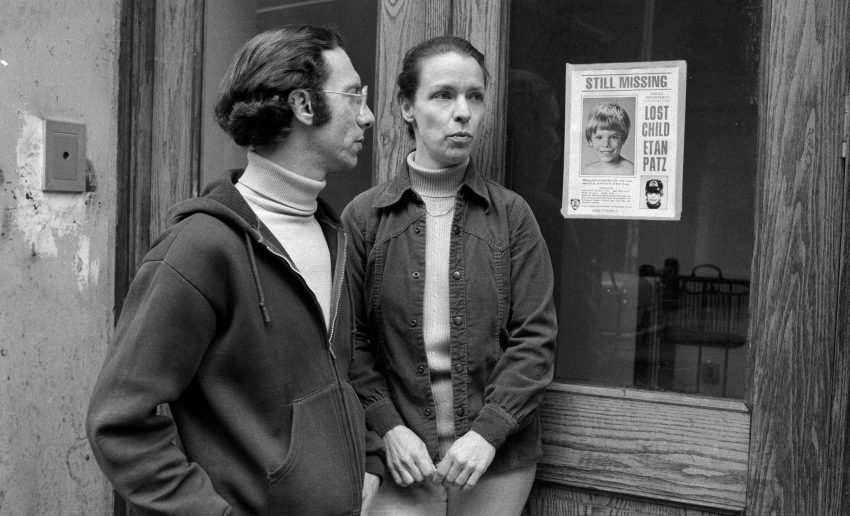
The Disappearance of Etan Patz

Etan’s parents, Stanley and Julie Patz, in 1980. Photo Credit: John Sotomayor / The New York Times

My latest mystery, Yesterday’s News, is about the disappearance of an 11-year-old girl named Lucy Devlin off the streets of New York City. As a young journalist, I covered the legendary case of Etan Patz, a 6-year-old boy who vanished on his way to school. For years afterward, there were false leads and false hopes that he might somehow still be alive. But finally, a man was convicted for the murder of Etan Patz, which at least gave his grieving family some kind of closure. My book is about a different kind of missing child case in which there is no closure for anyone involved—including my reporter covering the story, Clare Carlson—and about how, when that happens, it can be a tragedy even worse than murder.

John Lennon’s Murder

The shooting of John Lennon outside his New York apartment was a horrifying event, but there was no real mystery about it. The killer, Mark David Chapman, was a deluded stalker who killed the former Beatle for no apparent reason. But when I wrote my own celebrity murder mystery—about a Hollywood actress murdered on the street, similar to the way Lennon died—I decided to do a “what if?” What if the stalker didn’t really do it? What if there was another reason why it happened? What if there were other celebrity victims killed for the same reason? The result was my mystery novel Shooting for the Stars.

The Central Park Jogger

The new book I’m working on now, The Perfect Victim, is about a high-profile woman crime victim who wants to find out what actually happened to her. Probably the most famous real-life New York City crime victim was the Central Park Jogger—a story I covered back in the late ‘80s. She was a young woman brutally attacked and left for dead while jogging in Central Park. Five men went to jail for the crime but were later exonerated, and another man was eventually convicted. I decided to write a fiction story about a woman victim like that who is determined to find out the truth about her case.

Headless Body in Topless Bar

The headline “Headless Body in Topless Bar” ran on the New York Post’s front page on April 15, 1983.

This is the most famous—or infamous—tabloid headline ever, and I was part of the New York Post newsroom that produced the story. It was about a man who held up a topless bar, shot the owner to death, and then cut off the victim’s head and took it with him for some inexplicable reason. Yep, you heard that all right. So how is this an inspiration for my mystery novels? It shows that any fictional scenario I write—no matter how far-fetched and implausible it might seem—is possible. I mean if “Headless Body in Topless Bar” really happened, then I can make up anything on the pages of my novels!

Read an excerpt from Yesterday’s News!

Criminal element

Prince Harry: Social media is dividing us. Together, we can redesign it

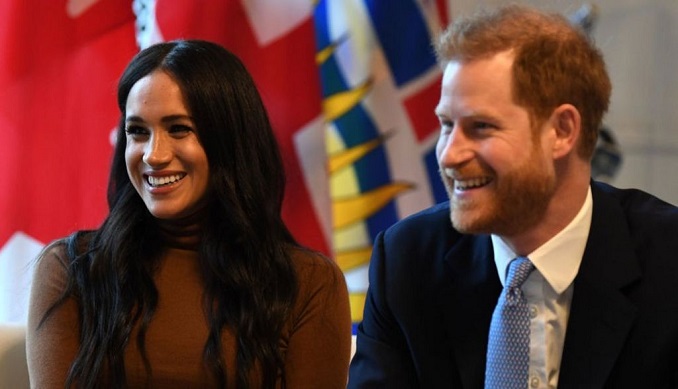
By Prince Harry The Duke Of Sussex

Amid a crisis of health, hate, and truth online, companies need to take a stand for a more compassionate digital world, writes Prince Harry, the Duke of Sussex.

A little over four weeks ago, my wife and I started calling business leaders, heads of major corporations, and chief marketing officers at brands and organisations we all use in our daily lives.

Our message was clear: The digital landscape is unwell and companies like yours have the chance to reconsider your role in funding and supporting online platforms that have contributed to, stoked, and created the conditions for a crisis of hate, a crisis of health, and a crisis of truth.

We did this at the same time as the launch of a civil rights and racial justice campaign called Stop Hate For Profit, which sought to change online policies around hate speech—in this case, policies at Facebook—by urging companies that regularly purchase digital ads on the platform to withhold their advertising spending for the month of July. As of the end of last month, the campaign (led by respected organisations such as the Anti-Defamation League, Color of Change, and the NAACP) sent a $7 billion message through withheld ad dollars.

Some may ask why a change campaign would take aim at online advertising. Well, many of us love and enjoy social media. It’s a seemingly free resource for connecting, sharing, and organising. But it’s not actually free; the cost is high. Every time you click, they learn more about you. Our information, private data, and unknown habits are traded on for advertising space and dollars. The price we’re all paying is much higher than it appears. Whereas normally we’re the consumer buying a product, in this ever-changing digital world, we are the product.

While companies made their own decisions about what to do in July, we felt it necessary to say our part about the rise of an unchecked and divisive attention economy. We’ve always believed that individuals and communities thrive when the frameworks around them are built from compassion, trust, and well-being. Sadly, this belief is at odds with much of what is being experienced by people on social media.

From conversations with experts in this space, we believe we have to remodel the architecture of our online community in a way defined more by compassion than hate; by truth instead of misinformation; by equity and inclusiveness instead of injustice and fearmongering; by free, rather than weaponised, speech. This remodeling must include industry leaders from all areas drawing a line in the sand against unacceptable online practices as well as being active participants in the process of establishing new standards for our online world. Companies that purchase online ads must also recognise that our digital world has an impact on the physical world—on our collective health, on our democracies, on the ways we think and interact with each other, on how we process and trust information. Because, if we are susceptible to the coercive forces in digital spaces, then we have to ask ourselves—what does this mean for our children? As a father, this is especially concerning to me.

In the 1970s, there was a groundbreaking study on the societal effects of lead exposure and kids. The research found a clear connection between lead accumulation in children and their mental development. There’s no debate over the dangers of lead today, but at the time, the development was met with strong resistance from industry leaders (lead was used widespread in products such as gas, house paint, and water pipes). Eventually, sweeping health and environmental reforms were put in place to change this. We knew something was harmful to the health of our children, so we made the necessary changes to keep them safe, healthy, and well.

Researchers I’ve spoken with are studying how social media affects people—particularly young people—and I believe the book of data that we will look back on one day will be incredibly troubling.

WHEN WE DO THE RIGHT THING, WHEN WE CREATE SAFE SPACES BOTH ONLINE AND OFF—EVERYONE WINS.

Around the world, for many reasons, we are at turning point—one that has the potential to be transformative. In all areas of life, a rebuilding of compassionate, trustworthy communities needs to be at the heart of where we go. And this approach must extend to the digital community, which billions of us participate in every day. But it shouldn’t be punitive. When we do the right thing, when we create safe spaces both online and off—everyone wins. Even the platforms themselves.

Meghan and I heard similar arguments made by humane tech leaders with whom we convened at Stanford University earlier this year, by internet law experts, by neuroscientists, and most importantly by young people who have grown up in a fully connected world.

We have an opportunity to do better and remake the digital world, to look at the past and use it to inform the future. We must take a critical eye to the last two decades, where advancements in technology and media have outgrown many of the antiquated guardrails that once ensured they were being designed and used appropriately. It shouldn’t be seen as a coincidence that the rise of social media has been matched by a rise in division amongst us globally. Social media’s own algorithms and recommendation tools can drive people down paths toward radicalism and extremism that they might not have taken otherwise.

There are billions of people right now—in the midst of a global pandemic that has taken hundreds of thousands of lives—who rely on algorithmically driven information feeds to make judgments about fact vs. fiction, about truth vs. lies. One could argue that access to accurate information is more important now than any other time in modern history. And yet, the very places that allow disinformation to spread seem to throw their arms up when asked to take responsibility and find solutions.

We all need a better online experience. We’ve spoken with leaders across the racial justice movement, experts in humane tech, and advocates of mental health. And the collective opinion is abundantly clear: We do not have the luxury of time.

We need meaningful digital reform, and while the role of policymakers and regulators is important, we can’t just wait for them to take the next steps. This is a moment for companies around the world—companies with business and advertising models directly tied to digital platforms—to consider how they can bring about reform to ensure the betterment of all.

WE HAVE AN OPPORTUNITY TO DO BETTER AND REMAKE THE DIGITAL WORLD, TO LOOK AT THE PAST AND USE IT TO INFORM THE FUTURE.

It was reported recently that, for the first time, spending on digital advertising is set to eclipse ad spending in traditional media. Think about what this means. The standards and practices advertisers rely upon when placing their commercials on television, for example, do not apply when it comes to the online space—arguably, the largest broadcaster in the world. And for the first time in history, the ad spend in this relatively lawless space is beginning to overshadow the more traditional spaces. No manufacturer is likely placing their television soap ad next to this type of toxicity, yet due to the nature of the digital world, that advertisement could be sandwiched between inciting propaganda.

So there is huge value in advertisers sitting at the table with advocacy leaders, with policy leaders, with civil society leaders, in search of solutions that strengthen the digital community while protecting its free and open nature.

For companies that purchase online ads, it is one thing to unequivocally disavow hate and racism, white nationalism and anti-Semitism, dangerous misinformation, and a well-established online culture that promotes violence and bigotry. It is another thing for them to use their leverage, including through their advertising dollars, to demand change from the very places that give a safe haven and vehicle of propagation to hate and division. We’re hopeful to see this approach amongst industry leaders become reality. For one, the industry group GARM—the Global Alliance for Responsible Media—has committed to evaluating standards and definitions around online hate speech.

But this is just the beginning. And our hope is that it’s the beginning of a movement where we, as people, place community and connection, tolerance and empathy, and joy and kindness above all. The internet has enabled us to be joined together. We are now plugged into a vast nervous system that, yes, reflects our good, but too often also magnifies and fuels our bad. We can—and must—encourage these platforms to redesign themselves in a more responsible and compassionate way. The world will feel it, and we will all benefit from it.

Prince Harry is the Duke of Sussex.

FastCompany

7 Signs You May Have Had COVID-19 Without Realizing It, According to Doctors

Pay attention to any lingering symptoms from that “bad cold.”

By Korin Miller

Whether you had a “bad cold” this winter or recently endured a cough that would not quit, it’s only natural to wonder if you might have had COVID-19 without realizing it. That’s especially true now that infectious disease experts say the virus was likely already spreading before cities started to lock down and put social distancing orders in place.

“As the weeks progress, it’s become evident that this is a virus that was widespread throughout our country, particularly in more populated areas, sooner than we thought,” says William Schaffner, M.D., an infectious disease specialist and professor at the Vanderbilt University School of Medicine.

So, could you have had COVID-19 without realizing it? It’s possible. “Most people who have coronavirus have an uncomplicated case of infection, and it could be indistinguishable from the cold or influenza,” explains infectious disease expert Amesh A. Adalja, M.D., senior scholar at the Johns Hopkins Center for Health Security. Plus, some people have no symptoms at all—up to 40% of infections, according to estimates from the Centers for Disease Control and Prevention (CDC).

Unfortunately, there’s no way to know with 100% certainty if that illness you dealt with last winter was COVID-19 or if you happened to pick up an asymptomatic case at some time. But experts say some signs can be tip-offs that you might have had COVID-19 already. Here are the top ones to know, plus what it means for immunity.

1. You had a “bad cold.”

Early in the pandemic, people believed that COVID-19 didn’t start circulating in the U.S. until late February and March. New research from the University of Texas suggests otherwise. For the study, scientists analyzed throat swabs taken last winter in people who had suspected flu cases. These swabs were done in Wuhan, China (where the novel coronavirus originated) and Seattle, Washington (where the first case of COVID-19 was confirmed in the U.S.).

The researchers discovered that for every two cases of the flu, there was one case of COVID-19. As a result, they believe COVID-19 likely arrived in the U.S. sometime around Christmas.

“It took longer to get out to rural areas so, if you were on a farm this winter and you had the sniffles, you probably just had a cold. If you were in New York City or another major city, you might have had a COVID infection and never knew it,” Dr. Schaffner says.

It can be tough to distinguish a cold from a mild form of COVID-19 without a test, depending on which symptoms you experience, he says, but colds don’t typically cause shortness of breath, severe headaches, or gastrointestinal symptoms like COVID-19 can. Here’s the full list of the CDC’s official symptoms:

  • Fever or chills
  • Cough
  • Shortness of breath or difficulty breathing
  • Fatigue
  • Muscle or body aches
  • Headache
  • New loss of taste or smell
  • Sore throat
  • Congestion or runny nose
  • Nausea or vomiting
  • Diarrhea

2. You lost your sense of smell or taste at one point.

Loss of smell and taste has been a big hallmark of COVID-19. While this symptom doesn’t occur for everyone, Dr. Adalja points out that it’s now strongly linked with the novel coronavirus.

Preliminary data from the American Academy of Otolaryngology-Head and Neck Surgery (AAO-HNS) found that, in COVID-19 patients who lost their sense of smell, 27% had “some improvement” within about seven days, while most were better within 10 days.

Worth noting: It’s also possible to temporarily lose these senses with other respiratory conditions, like a cold, the flu, a sinus infection, or even with seasonal allergies. But experts say that the symptom can linger in some people and last for months after recovering from COVID-19.

3. You’ve been dealing with unexplained hair loss.

This hasn’t been widely studied in the context of COVID-19, but many people who have recovered from the virus are reporting issues with hair loss. Actress Alyssa Milano, who has been suffering from COVID-19 symptoms for months, shared a video of herself on Instagram in early August repeatedly brushing out large clumps of hair after she showered.

“There are definitely people who got infected and didn’t notice.”

Members of Survivor Corps, the Facebook support group for people who have had COVID-19, have also talked about experiencing hair loss months after recovering from the virus. It’s due to a condition known as telogen effluvium, and it can be caused by a slew of factors, including pregnancy, extreme stress, weight loss, and illnesses other than COVID-19, Dr. Adalja says.

It’s unlikely that you would just lose more hair than usual without having other COVID-19 symptoms, like a cough or fever, Dr. Adalja says. It’s also important to note that hair loss can happen from stress in general, he says—and there’s been a lot of stress due to the pandemic. If you’re experiencing hair loss, it’s possible it’s due to an unknown COVID infection, a build-up of stress during uncertain times, or another underlying issue.

4. You feel breathless sometimes.

Research published in the journal JAMA has found that people with COVID-19 can have after-effects of the virus, including shortness of breath. It’s not entirely clear why at this point or how long this can last, but it’s likely due to lasting inflammation in the lungs.

“This is one of the well-known lingering effects in people who were diagnosed with COVID-19,” Dr. Schaffner says. “If you have this, well, perhaps that illness you experienced before was actually COVID.” If you’re experiencing shortness of breath, call your primary care physician for guidance or ask for a referral to a pulmonologist. They can often prescribe medications and treatments, like an inhaler, that can help, Dr. Schaffner says.

5. You have a cough that will not go away.

A lingering cough is another symptom that people who participated in the JAMA study reported. The cough is often dry, meaning that nothing comes up, like like phlegm or mucus, Dr. Adalja says. This is fairly common: Data from the CDC found that 43% of people who had COVID-19 still had a cough 14 to 21 days after getting a positive test for the virus.

6. You’re really, really tired.

This is one of the biggest lingering effects after a person has COVID-19, according to the JAMA study. That study found that 53% of patients said they were struggling with fatigue around 60 days after they first showed signs of the virus.

“We’re seeing some people who had mild illness who have fatigue for some period of time,” Dr. Adalja says. But, he says, it’s not entirely clear right now why this happens. It could be the way a person’s immune system reacts to the virus, or it could simply be the way the virus works in the body.

Keep in mind that fatigue is a really common issue and can be a sign of many different health issues (including, of course, not getting enough sleep). Like hair loss, people who experience fatigue due to COVID-19 would have also had other symptoms of the virus in the past, Dr. Adalja says.

7. You have unusual symptoms that seem to be lasting forever.

Experts stress that COVID-19 is still a new virus, so doctors and scientists are learning more about it all the time. Research on lasting effects of the virus is ongoing, and it’s difficult for doctors to say at this time that having certain symptoms could mean you had a COVID-19 infection, while others don’t, Dr. Adalja says.

It’s worth mentioning that some people have experienced heart issues after contracting the virus. One small study of 100 people who recovered from COVID-19 that was published in JAMA Cardiology did MRIs on former patients and found that 78% had some kind of abnormal heart finding, independent of any pre-existing conditions. This also didn’t seem to be linked to severity of illness, the researchers found. That could show up in a lot of different ways, including random heart palpitations, Dr. Schaffner says, but it could also be unnoticeable.

Of course, there are plenty of other complications that experts may not even know about yet. If you’ve been feeling off and your symptoms are persistent, Dr. Schaffner says it’s a good idea to get checked out by your doctor, whether you think it’s related to COVID-19 or not.

What about an antibody test?

While an antibody test may tell you if you have had COVID-19, they’re not exactly known for their accuracy. “Antibody tests are getting better, but there are a lot of antibody tests out there that are still unreliable,” Dr. Schaffner says. The Food and Drug Administration (FDA) issued an emergency use authorization for these tests in the spring, but later removed certain tests due to “significant clinical performance problems.”

The CDC also stresses that antibody tests “are not 100% accurate and some false positive results or false negative results may occur.” So it’s possible to test positive for COVID-19 antibodies, but not actuallyhave them.

This comes down to various factors. First, there are other coronaviruses known to cause the common cold, and those can get picked up by your antibody test, skewing the results. What’s more, if you’re only in the first days of the infection, antibodies may not be detected at all because your immune system has not built up a response yet. (Learn more about COVID-19 antibodies here.)

Does possibly having COVID-19 in the past mean you won’t get infected again?

While the above signs could be an indication that you had COVID-19, they can also be caused by other illnesses. “Certainly a lingering cough and fatigue are well known to be a consequence of influenza—just because you have those doesn’t mean you had COVID-19,” Dr. Schaffner says.

Ultimately, short of having a positive test for COVID-19 when you’re ill, it’s hard to know with total certainty if you’ve had the virus. Still, “there are definitely people who got infected and didn’t notice,” Dr. Adalja says.

With all that in mind, there is one important thing to remember: Even if you did have COVID-19 in the past, that doesn’t necessarily mean you won’t get infected again. The CDC specifically states that it’s unclear at this time if people can be re-infected with the virus—and the first case of reinfection was just confirmed in Hong Kong.

So, even if you suspect you contracted COVID-19 before the pandemic really hit, it’s important to continue practicing prevention methods like wearing a maskwashing your hands regularly, and practicing social distancing when you can, both to protect yourself and others.

Prevention US

6 Causes for Vaginal Bumps You Should Know About

By Alyssa Jung

Itchy, painful, or mysterious lumps deserve a trip to the doctor ASAP.

If you’ve ever morphed into a (panicked) Dr. Google, issues with your lady parts probably tops your list of whys. After all, odd smells, itchiness, or mysterious bumps can be anxiety-inducing reasons to schedule an emergency gyno appointment — but that’s exactly what you should do if you notice something unusual happening down there.

“First and foremost, don’t try to be your own doctor! Please seek care and have someone take a look; avoiding care because of embarrassment can lead to worsening symptoms and more extensive treatment,” says Beri Ridgeway, chair of Obstetrics/Gynecology & Women’s Health Institute at Cleveland Clinic. “Trust me — we’ve seen it all — you can’t surprise us, and this is why we’re here.”

Still, we know you might still be tempted to do a little digging (while you wait for your appointment to arrive, of course), so here are some common reasons you may have a lump or bump on your vagina.

It’s an ingrown hair

This is one of the most common causes for bumps on the genital region. When a pubic hair grows back into the skin instead of popping up out of the surface, it can form a small bump that may look red, says Dr. Ridgeway. Though innocent enough, hair bumps can be itchy, tender when swollen, and even filled with pus. Resist the urge to go from Dr. Google to Dr. Pimple Popper — it’ll eventually heal on its own, and popping it or playing with it can make it stick around even longer. Ingrown hairs are often caused by shaving or other hair removal methods, and are more common in women with curly or kinky hair, so if you notice them happening frequently, consider going au naturale for a bit.

You have a cyst

“A cyst can present in many different ways; they appear white in color or clear, they can be tiny or quite large, and they can be located in all areas of the vulva,” says Dr. Ridgeway. A cyst is a pocket of tissue that can be filled with fluid, air, or other material, and often form when a gland or duct becomes clogged — Bartholin cysts in particular form when glands on each side of the vaginal opening become obstructed, forming a fluid-filled lump that can be painful or grow large if it becomes infected. Some women develop cysts after trauma to the vaginal walls (like childbirth or surgery). If a cyst doesn’t go away on its own, your doctor can drain or remove it.

It could be HPV

Certain strains of human papilloma virus (HPV) cause genital warts, which are typically flesh colored and raised and often aren’t accompanied by any other symptoms, says Dr. Ridgeway. These warts can grow anywhere on, in, or around the female genitalia, including the cervix. They may grow clustered together to form a cauliflower-like shape, and can itch.

You might have herpes

Genital herpes is an extremely common sexually transmitted infection — one in six Americans have it. But unless you’re having a full blown outbreak with sores or blisters (which is what you probably think of when you hear “herpes”), it can present with few symptoms other than a small bump you may mistake for a pimple or ingrown hair.

It may be a symptom of cancer

Before you panic, know that your bump is much more likely to be caused by something much less scary, but a bump can be a sign of some types of cancers. Vulvar cancer can produce lumps that are red, pink, or white, and may feel rough or thick to the touch, as a symptom, and vaginal cancer, while rare, can also cause a lump. “It can be scary, but even cancer is curable when diagnosed early,” says Dr. Ridgeway.

It’s possible it’s syphilis

Though not the most common type of sexually transmitted infection, people still get syphilis, and small bumps called gummas can develop as a complication of the disease. Earlier symptoms include a small painless sore and a body-wide rash.

Bottom line: Put your mind at ease ASAP when you notice a bump by paying your doctor a visit. He or she will know the best way to proceed for any of these (or other) diagnoses.

Goodhousekeeping

The Best Essential Oils to Add to Your Bath Routine (and How to Do It Safely)

By Allison Young

Pick the wrong bottle and you could end up irritating your skin.

You run a bath, add a few drops of essential oils, then get in, right? Wrong. Yes, essential oils can dial up your bath, adding stress-relieving, mind-soothing, muscle-relaxing power, but chances are you’ve been doing it all wrong.

Those potent vials are powerful stuff, and using the wrong ones in the wrong way can turn your tranquil tub time into a torture session (if you’ve ever peppered your bath with peppermint, you know exactly what we’re talking about).

So, we’re here to tell you how to do it right — Suzanne Teachey, herbalist and owner of Nectar Apothecary in Prescott, Arizona, offers a few simple tricks to transform your soak, plus three essential oil combos to target all your tub-time goals. Not only will you get the most out of your essential oils, your bath time will go from good to GLOR-I-OUS.

Never add essential oils directly into your bath water.

Bathtub faucet

EASYBUY4UGETTY IMAGES

“When it comes to putting essential oils in the bath, remember — oil and water don’t mix, which is to say the essential oils are not water soluble,” warns Teachey. Translation: When you climb into the tub, the small drops of oil can adhere to your skin (and tender nether regions!) just as if you’d applied the undiluted oil directly your skin, which can irritate and burn. Ouch!

Always combine essential oils with a carrier oil first.

You don’t want essential oils just to sit on top of the water; you want them dispersed throughout. The best way to do that is combine essential oils in a carrier oil first, like coconut, olive, sunflower, or jojoba. “For a single bath, three to 12 drops of essential oil in a tablespoon (15 ml) of carrier oil is sufficient to create a very aromatic, therapeutic bath,” says Teachey, who suggests stirring the bath before climbing in to help circulate oils.

Don’t use just any essential oils.

essential oils and medical flowers herbs

OLGAMILTSOVAGETTY IMAGES

Just because you love a particular scent doesn’t mean you should dump it into your bath. “Even if you use a carrier oil, be extra cautious with oils known to irritate the skin and mucous-membranes,” warns Teachey, who says to avoid cinnamon, clove, oregano, savory, spearmint, thyme (except linalool type), and wintergreen in the bath. Better skin-loving bets: Lavenderchamomile, and rose.

Add essential oils after running the water.

Dr. Bronner’s Pure Castile Liquid Soap

While it may be tempting to trickle essential oils into your tub when running your bath, wait. “The hot running water will cause the essential oils to escape the bath and scent the bathroom instead,” says Teachey. To get the most from your aromatherapy bath, fill the tub and turn off the water first before adding essential oils for full aromatic effect.

Watch out for a slippery tub.

Adding a carrier oil and essential oil blend to your bath can hydrate your skin (hot water can dry it out), but it can also turn your tub into a slip and slide. Be careful getting out and be sure to clean it afterwards to prevent future falls. Baking soda and castile soap are great de-greasers.

Pick essential oils to match your bath-time mood.

essential oils

OLGAORLY/GETTY

Now that you know the essential oil essentials, it’s time to take your bath to the next level. Here, Teachey shares her go-to combos to turn your tub into a truly transformative experience. For all of these recipes, combine the essential oils with 1 tablespoon (15 ml) of carrier oil before adding to bath.

Mood Boost Bath

Uplift and energize with this revitalizing combo that can also boost concentration and focus.

Muscle-Soothing Bath

Target tired, overworked muscles with this trio that may dial up circulation and dial down pain.

Relaxation Bath

This calming and relaxing combo can reduce stress and get you ready for bed.

Angela Bassett Remembers Chadwick Boseman: ‘A Beautiful Spirit’

attends the Marvel Studios' BLACK PANTHER Global Junket Press Conference on January 30, 2018 at Montage Beverly Hills in Beverly Hills, California.

By Daniel Kreps

“This young man’s dedication was awe-inspiring, his smile contagious, his talent unreal,” actor’s Black Panther co-star says in tribute

Angela Bassett, who played the mother of Chadwick Boseman’s character T’Challa in the film Black Panther, remembered the late actor following his death at the age of 43.

“It was meant to be for Chadwick and me to be connected, for us to be family. But what many don’t know is our story began long before his historic turn as Black Panther,” Bassett said in a statement to Rolling Stone.

“During the premiere party for Black Panther, Chadwick reminded me of something. He whispered that when I received my honorary degree from Howard University, his alma mater, he was the student assigned to escort me that day. And here we were, years later as friends and colleagues, enjoying the most glorious night ever! We’d spent weeks prepping, working, sitting next to each other every morning in makeup chairs, preparing for the day together as mother and son. I am honored that we enjoyed that full circle experience.”

Boseman, who outside the Marvel Cinematic Universe starred in the films like Da 5 BloodsMarshall42 and Get On Up, died Friday following a four-year battle with colon cancer; many of Boseman’s recent roles were filmed while the actor discreetly underwent surgeries and chemotherapy. “A true fighter, Chadwick persevered through it all, and brought you many of the films you have come to love so much,” his family said in a statement. “It was the honor of his career to bring King T’Challa to life in Black Panther. He died in his home, with his wife and family by his side.”

Bassett added in her tribute to Boseman, “This young man’s dedication was awe-inspiring, his smile contagious, his talent unreal. So I pay tribute to a beautiful spirit, a consummate artist, a soulful brother…’thou aren’t not dead but flown afar…’ All you possessed, Chadwick, you freely gave. Rest now, sweet prince. #WakandaForever.”

Following news of Boseman’s death, many of the actor’s Marvel cast mates paid tribute, along with former vice president and Democratic presidential candidate Joe Biden and his running mate Kamala Harris; Boseman’s last tweet was in celebration of Harris’ selection as Biden’s vice president.

Harris tweeted Friday, “Heartbroken. My friend and fellow Bison Chadwick Boseman was brilliant, kind, learned, and humble. He left too early but his life made a difference. Sending my sincere condolences to his family.”

Marvel Studios president Kevin Feige said in a statement to Rolling Stone, “Chadwick’s passing is absolutely devastating. He was our T’Challa, our Black Panther, and our dear friend. Each time he stepped on set, he radiated charisma and joy, and each time he appeared on screen, he created something truly indelible. He embodied a lot of amazing people in his work, and nobody was better at bringing great men to life. He was as smart and kind and powerful and strong as any person he portrayed. Now he takes his place alongside them as an icon for the ages. The Marvel Studios family deeply mourns his loss, and we are grieving tonight with his family.”

RollingStone

The Minimum Financial Threshold For EFCC Cases.

Daily Law Tips (Tip 644) by Onyekachi Umah, Esq., LL.M, ACIArb(UK)

What is the minimum amount of money (financial threshold) that must be involved in a financial crime, for the Economic and Financial Crimes Commission (EFCC) to get interested with investigation/prosecution? Rightly or wrongly, there is a believe out there, that Economic and Financial Crimes Commission (EFCC) has a financial threshold for crimes it can investigate or will want to investigate. Ever wondered what a high profile case is and how that term penetrated Nigerian legal system? This work examines the financial threshold of the EFCC through legislative (doctrinal) and sociological (non-doctrinal) tools.

The EFCC is a federal government agency, created by law in June 2004 as the Financial Intelligence Unit in Nigeria, empowered to fight money laundering and to enforce all laws dealing with economic and financial crimes in Nigeria. The specific relevant functions of the EFCC, as stated by its establishing law, are;

1. “the investigation of ALL financial crimes including advance fee fraud, money laundering, counterfeiting, illegal charge transfers, futures market fraud, fraudulent encashment of negotiable instruments, computer credit card fraud and contract scam”;
2. “the co-ordination and enforcement of ALL economic and financial crimes laws and enforcement functions conferred on any other person or authority”; as well as
3. “the examination and investigation of ALL reported cases of economic and financial crimes with a view to identifying individuals, corporate bodies or groups involved”.

One common word in all the above three (3) functions of the EFCC, is “ALL”. In summary the EFCC has powers and the responsibility to enforce all laws relating to economic and financial crimes in Nigeria as well as to investigate ALL financial crimes on its own, even where there is no report/compliant/petition and also to powers to investigate ALL reported cases of economic and financial crimes. Special powers of the EFCC, is that it can on its own commence investigation on any person, group or corporate entity, especially “where the person’s lifestyle and extent of the properties are not justified by his source of income”.

All through the 47 sections of the federal law that establishes the EFCC, there is no threshold or financial limitation/cap on the economic and financial crimes that the EFCC can investigate and prosecute. Furthermore, by the words of the law, no threshold was intended or implied rather an unlimited powers is offered and rested on the EFCC over all the economic and financial crimes. Hence, the EFCC has statutory duty to investigate all economic and financial cases and where there is a probable case, the EFCC is to prosecute. This is the reason, the EFCC can be sued by a person, for the EFCC to be compelled by court to investigate a financial crime.

Unfortunately, in reality and operations, the EFCC cannot investigate all the petitions/complaints it receives in a day. Imagine this picture, Nigeria with a huge population (unofficially rated at over 200 million), with many politicians, scammers, companies and businesses as well as unregistered businesses and foreigners in Nigeria, only one federal agency is to combat economic and financial crimes. With low access to justice, part of the works of the EFCC will include to investigate and reject many civil disputes often disguised as crimes, maliciously or ignorantly by complainants and their lawyers.

Statutory powers and duties need resources; funds and capacity to come to life. Like we say in Nigeria, “good soup na money make am” (good results are products of good/hard work). Both the budget and operational/technical abilities of the EFCC are very poor even as they are expected to investigate hundreds of cases in a country without reliable database of ex-convicts, social security numbers and houses addresses of citizens.

Furthermore, the report of Umar, Samsudin and Mohamad, reveals that the EFCC is under performing due to “factors such as lack of commitment; inefficient judiciary; insufficient budgets; and incompetent personnel.” By the internal structure and leadership of the EFCC is not left out, with the report stating that, “there also exists insufficiency of personnel, professionalism and the dominance of police in the realm of the leadership of the EFCC”. With the recent 2020 reports and investigations of corruption in the leadership of the EFCC, one wonders what is left of the alleged insufficient budget and personnel incompetency of the commission.

High profile cases in Nigeria are cases with enormous attention, often caused by the status/network/networth of the parties involved (suspect, complainant, victim or government), the sum involved, frequency of crime, media focus or political gains. High profile cases are also good for the profile and the ego of leadership of any concerned law enforcement agency in Nigeria. Parties involved in high profile cases are popular, with easily traceable investments, addresses and reliable data; so they are easier jobs for law enforcement agencies, where there is political will and no corruption. Hence, it is not strange that the EFCC may invest its very limited resources in high profile cases. However, there are no little thieves and all financial crimes are crimes enough. There is no need for justice to sought based on the sum or party involved.

The effect of the present approach of the EFCC, includes; lack of trust by the public and the assumption that the EFCC is unserious, discriminatory, political and that there is a financial cap/limit for crimes to be handled by the EFCC. Many people believe that economic/financial crimes involving less than One Million Naira (N1,000,000.00) or without highly placed Complainants may not receive the attention of the EFCC. By the way, fraudsters are off radar once they diligently maintain their crimes below the perceived financial threshold of the EFCC.

To further maximise the low resources of the EFCC is Plea Barging, which is often employed in high profile cases and utilised enormously by politically exposed persons. According to Justice Dahiru Musdapher (former Chief Justice of Nigeria), “Plea Bargain” is designed “to provide [a] soft landing to high profile criminals who loot the treasury entrusted to them.” A report of high profile cases in 2007 to 2010 under the EFCC, according to The Stolen Asset Recovery Initiative (a partnership between the World Bank Group and the United Nations Office on Drugs and Crime (UNODC)), shows 54 cases of politically exposed persons (mostly former governors, federal ministers, federal legislators and heads of big corporations) and the least sum therein was the case of 10 million Naira against Iyabo Obasanjo-Bello (then serving Senator).

The discoveries of Hassan Umar and Kasim Umar from field study conducted with questionnaires, to assess the “perception of Nigerians on the strength of the EFCC against its functional responsibilities to determine the adequacy and appropriateness of the powers”, are more shocking. According to Umar and Umar, relying on primary and secondary sources, their research revealed that “… EFCC lacks adequate prosecutorial powers; it also cannot effectively ensure and monitor compliance to the limit of foreign currency transfer ($10000) and the local cash transaction limit; the court system in Nigeria has also frustrated the efforts of the commission in addition to the unruly behavior of some senior legal counsels who often connive with some judges to subvert justice….”.

Furthermore, the Umar and Umar study revealed that “… the areas of crime covered by the EFCC as provided for by the law is much for the EFCC that some crimes like in the casino operations, drugs and narcotics, use of supernatural powers, etc. received less attention (3.67). EFCC should focus more on financial crimes, fraud and advance fee fraud only (4.03). The Nigerian court system has frustrated the efforts of the EFCC through delays and incessant injunctions ‭ ‬(4.01). The ‭ ‬senior legal ‭ ‬counsel usually ‭ ‬connive ‭ ‬with the ‭ ‬judges to ‭ ‬subvert/manipulate judgements in favour of their clients (3.75)…”.

In conclusion, statutorily there is no law or regulation that stops the EFCC from investigating and prosecuting any economic or financial crime cases. However, the EFCC has little resources to apply to the too many pending cases and new demands for investigation. Hence, the EFCC appears to be unserious and discriminatory in its investigation and prosecution, focusing on high profile cases involving huge sums and often politically exposed persons. Expectedly, this has created a safe heaven for some offenders in crimes involving low sums, poor complainants or persons that are not out politically/religiously/militarily/royally exposed or connected.

Above all, like Odi Nwankwo recommended, “… activities or programmes of the anti-corruption agencies in Nigeria such as the Economic and Financial Crime Commission (EFCC) … should be strengthened” and effectively checked. I add that the EFCC should respect rule of law, be independent of politicians, have higher budget and accountability process and it’s leadership should not be limited to police officers.

My authorities are:

1. Sections 1, 2, 6, 7, 46 and 47 of the Economic and Financial Crimes Commission (Establishment) Act 2004. accessed 29 August 2020.
2. Umar, Samsudin and Mohamad, “Ascertaining the effectiveness of Economic and Financial Crimes Commission (EFCC) in tackling corruptions in Nigeria” (2018) 25(7) Journal of Financial Crime. 1, 9. accessed 29 June 2020.
3. Hassan Umar and Kasim Umar, “The ‭ ‬Economic ‭ ‬and ‭ ‬Financial ‭ ‬Crimes ‭ ‬Commission ‭ ‬and Corruption ‭ ‬Management ‭ in‬ ‭ ‬Nigeria: ‭ ‬A ‭ ‬Perceptual Assessment of its Legal Framework” (2016)3(2) Asian Journal of Social Sciences and Management Studies. 140, 144 accessed 29 August 2020.
4. Odi Nwankwo, “Impact of Corruption on Economic Growth in Nigeria” (2014) 5(6) Mediterranean ‭Journal of Social Sciences. 41, 45 accessed 29 August 2020.‬
5. Hanibal Goitom, “Plea Bargining: Nigeria” (Library of Congress, 2019) accessed 29 August 2020, citing Ikechukwu Nnochiri, CJN Abolishes Plea Bargain, Vanguard (Nov. 16, 2011), https://perma.cc/C3TS-VMHV.
6. The Stolen Assets Recovery Initiative, “ECONOMIC&FINANCIAL CRIMES COMMISSION, EFCC ON-GOING HIGH PROFILE CASES – 2007- 2010” (SARI) accessed 29 August 2020.

#SabiLaw
#DailyLawTips
#SabiBusinessLaw
#SabiElectionLaws
#SabiHumanRights
#SabiLawOnBeatFm
#SabiLawLectureSeries
#CriminalJusticeMonday
#SabiLawVideoChallenge

Speak with the writer, ask questions or make inquiries on this topic or any other via [email protected] or [email protected] or +2348037665878. To receive our free Daily Law Tips, follow our Facebook Page:@LearnNigerianLaws, Instagram: @LearnNigerianLaws and Twitter: @LearnNigeriaLaw

Please share this publication for free till it gets to those that need it most. Save a Nigerian today! NOTE: Sharing, modifying or publishing this publication without giving credit to Onyekachi Umah, Esq. and “LearnNigerianLaws.com” is a criminal breach of copyright and will be prosecuted.

This publication is the writer’s view not a legal advice and does not create any form of relationship. You may reach the writer for more information.

Powered by www.LearnNigerianLaws.com {A Free Law Awareness Program of Sabi Law Foundation, supported by the law firm of Bezaleel Chambers International (BCI).}

NBA In Focus: Agenda For The New Exco (2)

By Ebun-Olu Adegboruwa, SAN

Last week, history was made when Nigerian lawyers all over the world held the first ever virtual Annual General Conference, with well over 20,000 participants. The high point of it all was the Annual General Meeting of August 29, 2020, which also marked the exit of the Paul Usoro SAN-led national executive. The newly elected executive officers were thereafter sworn in for a two-year tenure. The AGC also marked the 60th anniversary of the Nigerian Bar Association, NBA, an organization that is presently battling for life desperately, given all the events happening within its fold, with alarming rapidity. The President has promised to be a bridge builder and he has to do that with tact, because it is a very tight rope to walk.

STATE OF EMERGENCY IN THE JUDICIARY

Except we deceive ourselves, legal practice in Nigeria is facing its biggest trials ever. Even before COVID 19, justice administration was gradually moving towards the grave, perhaps only just remaining to be interred. The NBA should declare a state of emergency in the judicial sector, with the focus on emergency rescue efforts. So far, we have only paid lip service to judicial reforms, addressing just the surface without digging into substance. The absence of critical infrastructure in this all-important sector is a major drawback to effective justice administration. A system that is so slow and unproductive cannot but birth corruption, given the desperation that lawyers and litigants are confronted with, in order to have their causes heard and determined. In this regard, the abandoned new Federal High Court complex along Bourdillon Road in Ikoyi, Lagos, is a calamitous eyesore, it is a global embarrassment to all lawyers and judges, an unpardonable disservice to litigants and a monumental disgrace to Nigeria as a nation. I mean, how can Nigeria as a grown up State find it difficult to complete just one building for one of the most important judicial organs in the land? A proper analysis of section 251 (1) of the 1999 Constitution shows clearly that the Federal High Court is now the bedrock of litigation in Nigeria, given the critical subjects that it has been empowered to deal with. It is the Court that determines matters relating to the revenue of the federation, petroleum, oil and gas, electricity, admiralty, mines and minerals, immigration, aviation, telecommunications, citizenship, broadcasting, customs and exercise, security, taxation, banking, operation of companies, shipping, copyright and patents, arms, ammunition, diplomatic and consular matters, drugs, bankruptcy and insolvency and indeed anything relating to the federal government and any of its agencies. And that Court is not functioning as it should, as lawyers and litigants stand in the rain and in the sun, to conduct their cases. When recently I got to know that even the Chambers of the Judges have no functional toilets, I was moved to tears. A Judge sits from 9am till 4pm at times, yet he cannot afford to eat while in the office, since there is no means of taking care of any pressure that may come with such luxury, as it were. The NBA should take this as its priority and work with the relevant government agencies and the head of the Court, to ensure its completion.

It is not just the Federal High Court, but also the Court of Appeal and indeed the High Courts. It is totally unacceptable that lawyers and litigants go to court and cannot find a place to even sit down, to conduct their cases. My suggestion in this regard is that the National Executive Council of the NBA should in its next meeting mandate all NBA branches nationwide to urgently undertake an audit of all courts within their jurisdiction and submit a comprehensive report, as a working document for discussion and action. Armed with these reports, the NBA Exco should on behalf of all lawyers meet with the heads of the various courts, the Attorneys-General of the States concerned or of the Federation as the case may be and the Governors of these States. If we are constantly crying for funding for the judiciary, if litigants and lawyers are paying through their noses to have their cases filed and conducted (both in the Probate Division and the Main Courts), then we must have corresponding improvement in facilities in all the courts.

We must summon courage to tackle the issue of delay in the administration of justice, by encouraging the executive arm of government to build more courts and to appoint more judges. When you travel outside Lagos, Port Harcourt and Abuja to some other States, trials are conducted in the courts of those other States in just one week, final written addresses filed and judgment delivered in one month, whereas in Lagos State for instance, it takes an average four years to conclude a case, because a judge in Lagos has an average 600 cases to deal with. The rigid process of Case Management Conference, which was meant to last just three months, now takes years to conclude. There is an urgent need to tinker with the Rules of the various courts, whereby non-contentious matters of substituted service, leave to issue writs, renewal of writs, extension of time, etc, can be taken by qualified lawyers amongst the judicial staff, such as the legal assistants, legal officers, etc, who would then report to the supervising judge, on a daily basis. Such orders can be reviewed in cases of manifest abuse. In the Supreme Court for instance, such applications are taken on a special day in Chambers by the Justices, in the absence of counsel and their lawyers and you are only notified of the success or failure of your application, thereafter.

The National Assembly is currently working on a constitutional amendment. Instead of isolating just the cases involving politicians and political office for quick adjudication, the NBA should set up a Committee to work with the National Assembly to streamline the jurisdiction of the appellate courts, especially on issues relating to interlocutory appeals and matters where the principles of law are fairly settled, such as land law, stay of execution, election petitions, criminal cases, enforcement of fundamental rights, etc, as a means of decongesting these courts.

The new NBA Exco must confront the issue of corruption in the judiciary head on, as it is affecting the fabric of our national life already. The system of appointment of judicial officers should be made more transparent, similar to that of Senior Advocates, if it cannot be better. It is totally unacceptable that some set of lawyers and litigants are able to determine the courts to which their cases are assigned, as that in itself is the greatest act of injustice to their opponents. We just cannot continue like this at all, of operating a corrupt system of walking into the courtroom blindfolded, whereas your opponent is in cahoots with the court. And this is prevalent mostly amongst the senior lawyers, who deploy their position and influence to determine the fate of cases pending in court. It should be very easy for security agencies to know the income of judicial officers, with the advent of Bank Verification Numbers, Tax Identification Number, Payer ID, etc. Whereas I can personally testify to the credibility, neutrality and nobility of many judges and senior lawyers, yet we cannot close our eyes to certain anomalies capable of eroding public confidence in the justice system.

But of course we cannot do much in this regard without first addressing the issue of poor welfare conditions of judicial officers. To hear that some judges drive themselves to court, remain in traffic for hours and they are expected to sit in court, conduct cases and then deliver very sound rulings and judgments, is a huge joke. In some States, the salaries and benefits of judges have not been increased for over ten years! Even though judicial assignment is more of a calling, judges are human beings who go to the same market as others, who send their children to school and also buy diesel to power their generators at home and at times even in their offices. In this regard, the NBA NEC should direct the NBA branches to meet with the heads of the courts in all the States, to collate the salaries and allowances of judicial officers for confidential discussion and engagement, by a Sub-Committee of NEC, comprising experienced and tested advocates.

That then takes us to the issue of ethics within the legal profession, as a way of restoring the image of lawyers and judges. By now, it is clear that the Rules of Professional Conduct has become totally irrelevant and otiose, having been overtaken by technology and global trends in legal practice. But even at that, what is needed presently is a separate Rules of Professional Conduct for Senior Advocates, as a model for legal practice. Once we get it right with the senior lawyers, it becomes very easy for their juniors to fall in line. The things that we see some SANs do in court, are totally unpalatable to put in print. Lawyers say it within themselves in small gatherings, prominent names are mentioned very often, but it just seems that there is little anyone can or is willing to do about it. I don’t want to say more in this regard, save that the NBA should urgently work with the Body of Senior Advocates and the Legal Practitioners Privileges Committee, to develop a new set of rules to guide the conduct and etiquette for Senior Advocates. Given that they are not so many, it should be easy to isolate offenders, for the purpose of compliance and reformation.

The new Exco has so much to work with, given the laudable efforts of the Usoro-led administration in the critical areas of financial transparency and the completion of the NBA National Secretariat. So then, 24 hours will not be enough for the President and his team, but there is enough goodwill to succeed. I wish them well. (To be continued).

Stamp Duty On Tenancy Agreement Shouldn’t Raise House Rent – Nami, FIRS Chairman

Last June, the Federation Accounts Allocation Committee (FAAC) shared a total of N696 billion to the three tiers of the Government of Nigeria, the bulk of which was generated from taxes paid by citizens.

For government’s chief tax collector, paying taxes to sustain the machinery of state is an age -long practice that had contributed to the development of many nations which he would like Nigerians to emulate especially now that the COVID-19 pandemic has disrupted revenues from crude oil sales.

Executive Chairman of Federal Inland Revenue Service (FIRS), Muhammad Nami, who at a recent media interaction lamented the negative impact of the COVID-19 pandemic on government’s revenue sources disclosed that the FIRS alone accounted for 70 per cent of the amount shared while other revenue generating agencies collectively contributed the remaining 30 per cent.

He pointed out that government would not be able to fund its programmes and activities without revenue from taxes, while shedding more light on why paying Stamp Duty on tenancy agreement shouldn’t lead to increase house rentals

Task

Well, so far so good. I give glory to God. I am not in a new terrain. Before I was appointed the Executive Chairman of the Federal Inland Revenue Service (FIRS), I had practised tax for 26 years. So, in the tax terrain, this should be my 27th year. This fact confirms what I have been engaged in since 1991 when I graduated from the University. I started tax practice in 1993, some few months after I completed my National Youth Service. This is the path God has carved for me; little did I know that I would be talking to you today as the Executive Chairman of the FIRS.

Stamp duty controversies

We are in a period of economic downturn occasioned by the COVID-19 pandemic. However, let me clarify that Stamp Duties are not new in Nigeria. Stamp Duties came into effect in Nigeria as a result of Ordinance 41 of 1939. There have been several amendments to the Stamp Duties law over the years up to the Finance Act of 2019. The most recent amendment recognised technology, e-commerce and cross border transactions in line with global best practices and current economic realities. Stamp Duty is a tax payable in respect of dutiable instrument as provided under the Stamp Duties Act, CAP S8, LFN 2004 (as amended). Such instruments include agreements, contracts, receipts, Memorandum of Understanding (MOU), promissory notes, insurance policies and others stipulated in the schedule to the Stamp Duties Act. What is happening now is that we are looking into the tax laws and implementing the Stamp Duties Act, which is a form of indirect tax that is more viable in the economic situation we find ourselves today. It may interest you to know that the economic situation has increased the Government’s demand for funding.

The annual target for Stamp Duties that was pegged at N17billion has been revised up to N446billion for FIRS to collect. Please note that this happened before the pandemic. We collected as much as N18 billion in 2019. Presently, the Finance Act, 2019 has taken away 60 per cent of our tax base. That is, 60 per cent of the people who are supposed to pay Companies Income Tax will not do so. Sixty per cent of the people who are supposed to act as agents and pay Value Added Tax monthly will also not do so because their annual turnover is not more than N25million. So, a large number of Small and Micro Enterprises in Nigeria today do not pay taxes. What this means is that these companies will no longer act as agents for collecting VAT. The implication of this is that 60 per cent of Nigerian taxpayers will neither pay VAT nor CIT. Nigerians may note that the Federal Government is so mindful of the taxpayers that the Finance Act, 2019 was passed long before the COVID-19 lockdown in Nigeria. It seemed that the government foresaw the pandemic and quickly passed the Act to give the palliatives contained in the Act. Now that our target on Stamp Duties is about 3000 per cent more than the previous years’, we have to inform taxpayers that Stamp Duties are not only payable at the point of incorporating companies but also on other items that are chargeable. Chargeable items are more than a hundred. This is what we have done. We did not take these decisions from a communiqué after a management meeting. This is in the tax law. People keep asking, what is Stamp Duties, what are the rates, who are they paid to? We consulted the tax law to be able to explain and clarify to Nigerians what it is all about.

Stamp Duty on tenancy agreement

Our public notice on tenancy agreement captured only the last band which is 6 per cent It does not mean that it has a flat rate of 6 per cent. It was a publication error and we sincerely apologise for that. The Stamp Duty on Tenancy is charged on a graduated rate, so that if your rent is from one year to seven years, the Stamp Duty payable is 0.78 percent This is not up to 1 percent The implication of what I have said is that if your rent is N100,000 per annum, the stamp duty due at 0.78 per cent is just N780.00. The second category is the Tenant whose agreement is above seven years and up to 21 years. If an individual can afford to pay rent for 21 years, the Stamp Duty chargeable is three per cent Such a person is not going to pay rent for a long time, so, three per cent is deducted to provide social amenities and fund infrastructure. There are people who would comfortably pay rent for above 21 years; for 22 or 25 years, such people will not go back to their landlords to pay rent again. Therefore, the law states that such people should pay 6 percent of the rent as Stamp Duty. That is the information that generated controversy across board. This is another opportunity we have to clarify it.

Who remits the Stamp Duty?

In VAT administration, the service provider collects the VAT component from the consumer. For ease of administration of Stamp Duties, in the case of individual to individual agreement, the tenant is the agent of collection. The tenant is not expected to pay the Stamp Duty component of rent to the landlord who is also an individual. What the tenant is expected to do is, once an agreement is reached with the landlord or agent, he takes 0.78 per cent of the rent sum to the bank and pays into the Stamp Duties account (for instance, 0.78 percent of 100,000 is N780.00). The bank gives him a teller or an e-ticket as evidence of payment. The tenant presents the payment evidence to the landlord, before he is entitled to the copy of the rental agreement.

For emphasis, the tenant does not pay to the individual landlord; he must insist on going to a bank nearby to remit the Stamp Duty element of the rent. It is equally the responsibility of the landlord to ensure that the Stamp Duty element of the rent is paid to the bank before he issues receipt or a copy of the agreement to the tenant. The evidence of payment of the Stamp Duty should be made available to him. This decision is taken because if an individual landlord is asked to collect the money and pay into the Stamp Duty account, some of them can take the money from the tenants and fail to remit same to the Stamp Duty account in the bank. If a landlord fails to ensure that the Stamp Duty element is remitted before an agreement is signed, such a landlord will bear the burden of payment.

If the transaction is between entities or between entities and an individual or a body of individuals, the landlord is the agent of collection and should ensure that the tenant pays to the FIRS account which is a Federation Account. That money is collected and shared among the three tiers of Government. If the rent is between me (an individual) and another individual, the Stamp Duty element will be paid to the State Government where the property is situated. If I am a tenant living in Suleija, Niger State, the Stamp Duty element of my rent will be paid to the Niger State Stamp Duty account. This has nothing to do with someone who is living in his own house even if it is a ten-storey building. You are not going to pay Stamp Duty on your own house. The essence of it is to legalise the agreement between you and the landlord.

Utilisation of tax revenues

The responsibility of the FIRS is to assess, collect and account for the taxes it has collected. What happens to the money that has been collected is unknown to me. But the little I can assure you is that the money we collect does not belong to the Federal Government alone. The revenue collected by the FIRS is paid into the Federation Account.

The Federation Account belongs to the three tiers of Government: the Local Government where you come from, the State Government where your colleague comes from and the Federal Government that has its headquarters in Abuja. What happens to such money; for instance, the N18 billion collected as Stamp Duties in 2019, is that, certain percentage of the money is paid to the Local Government, a certain percentage is paid to the State Government and the Federal Government takes the balance. It is possible that out of the N18 billion you made reference to, only about N700 million or less than that goes to the Federal Government.

Thenigerialawyer

Constitution Review: Senate Urges North’s Elders To Forward Their Views

THE Senate on Monday urged the Northern Elders Forum (NEF) to send the views of its members to the Senate Committee on the Review of the 1999 Constitution for consideration.

The NEF had described the current efforts to alter the provisions of the Constitution as a waste of time.

Its Publicity Secretary, Dr. Hakeem Baba-Ahmed, had urged the Senate to join hands in seeking permanent solution to insurgency, banditry and other forms of violence in the country.

But Chairman of Senate Committee on Media and Public Affairs, Surajudeen Ajibola Basiru (Osun Central), said it was not correct to say that because previous constitutional amendments did not yield tangible result, that the present process would also fail.

Basiru said: “Even though they are entitled to their views, the question to ask is: does it mean that if former legislatures cum Executive (administrations) have possibly or allegedly failed in this regard, then it can never be achieved?

“Their statement even implied an agreement by them that there is need for fundamental restructuring, which is the purpose of the present endeavor of the Ninth National Assembly.”

“Their views can be encapsulated in a memorandum to the Constitution Review Committee.

“The thematic areas advertised for constitutional reforms cut across some of the concerns they raised and, therefore, we shall be glad to engage them through proper legislative channel rather than news media.”

Thenigerialawyer

TIPS