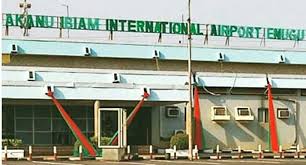
“The idea that elected politicians of South East extraction are falling on themselves in their sycophantic gambits to outperform each other towards pleasing the ‘powerful’ President Muhammadu Buhari over the yet to be completed renovations works at the Akanu Ibiam International Airport Enugu, South East of Nigeria, shows that there is a deep deficit of leadership in the South East of Nigeria and should be a pointer for the people who will vote in subsequent elections to look beyond the momentary bribes of bags of salt, rice and wrappers to search for leaders who have strong will and greater peoples friendly character to be elected”.
With the above preamble, the prominent Civil Rights Advocacy Group: HUMAN RIGHTS WRITERS ASSSOCIATION OF NIGERIA (HURIWA) has carpeted President Muhammadu Buhari for deceiving the people of the South East of Nigeria by going ahead to commission the Akanu Ibiam International Airport which renovation works have not even reached significant proportion or percentage. HURIWA also dismissed as sycophantic rhetorics, the praises heaped on President Muhammadu Buhari-led administration by some political nitwits of South East extraction over the commissioning exercise which is a ruse to deceive the gullible people to believe that the Central government is up and doing with delivering the needed infrastructures that will enable economic growth to take place. The Rights group said assuming without conceding that the renovations of the only International Airport serving Nigeria’s most travelled population is a good thing, why do we have to praise the President as if he personally bankrolled the project. Far from it, the services and projects delivered by political office holders are done from the resources of the people of the Federal Republic of Nigeria.
“We are disappointed that the Airport was shut down for over a year for renovation and was supposed to have been completed back in April, but the Federal Government failed to keep to their words and even when the re-opening was deferred, it has still emerged that the strategic components that should make the Airport Standardized, are yet to be installed, but yet over 60 million South Easterners were deceived into believing that the government at the centre has completed the renovations for which a paltry N10 billion was approved whereas the National Assembly said the same government has spent N60 billion to renovate the fence at the university of Maduguri in Borno North East of Nigeria”. HURIWA wonders why it took the same government less than two months to renovate the Abuja international Airport, build brand new road to Kaduna Airport and renovated Kaduna Airport to take in flights coming to land in Abuja, but the Akanu Ibiam international Airport was shut for over a year but almost all of the strategic components to enhance safety and standardised services at the Airport are yet to be installed and yet Nigerians of Igbo extraction are made to venerate the President as if the South East of Nigeria is not part of the Federal Republic of Nigeria.
HURIWA stated thus: “We have just read the scientific report by Charles Ogbu who reported authoritatively that the Enugu Airport has yet to be fully renovated when he wrote that:”Just to put the record straight, some of the pictures being peddled online ARE NOT pictures of the Akanu Ibiam International Airport. The pictures below represent the true, factual and verified condition of the airport. The renovation of Akanu Ibiam International Airport, Enugu IS NOT yet completed.
As of today, August 30, 2020, (1) Only the runway of the Akanu Ibiam Airport is fully ready which means only local flight can resume. (2) The Night landing equipment is yet to be fixed. Which means, just like before, no flight can use the airport at night. For now. (3) Neither the cargo terminal nor the international terminal building has been completed. In a nutshell, the renovation of Akanu Ibiam International Airport is still continuing even as they have declared it open for use today. Most of the facilities required for international operation are yet to be fixed. According to the authorities, the entire renovation will be completed before the year runs out.
NOTE: what I have done here is provide information as to the true situation of things at the airport in question. Nothing more.”
HURIWA has therefore condemned the haste in pouring rain of gratitude to President Muhammadu Buhari for failing to fully renovate the Enugu International Airport even one full year after it was shut down and Nigerians were told it would be finished in few weeks. The Rights group said the people must evolve the culture of demanding account and transparency from their elected politicians if we truly want constitutional democracy not to collapse just as the Rights group said praising government officials for using public money to build public assets is one way of bringing into being a very dangerous and lawless dictatorship of the strong African ruler which is antithetical to everything we should hold so dear as lovers and builders of a democratic nation.
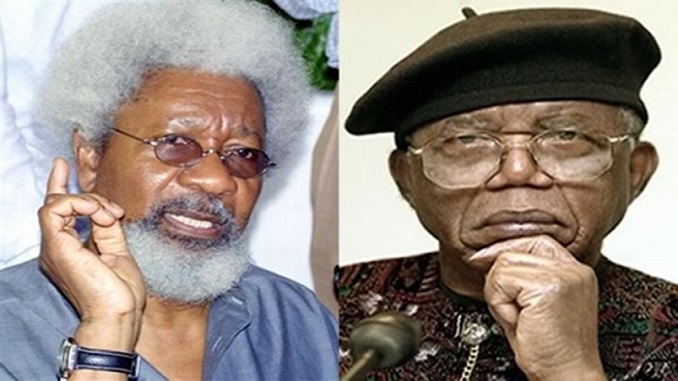
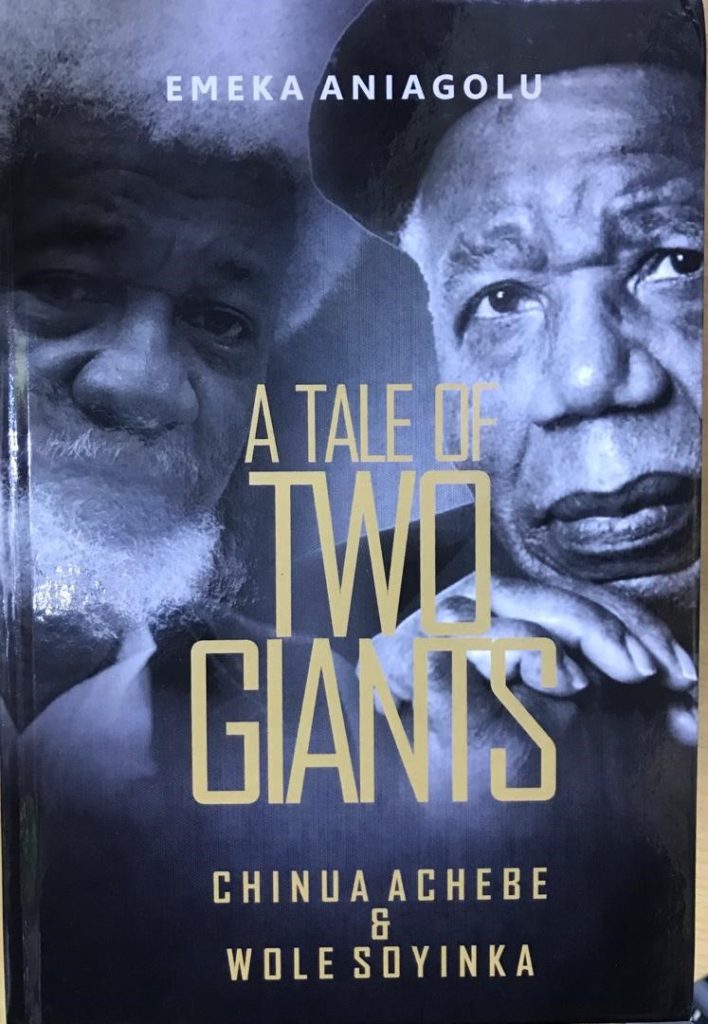
A Book Review of Professor Emeka Aniagolu’s A Tale of Two Giants: Chinua Achebe & Wole Soyinka.
By Kirsten C. Okenwa
The first sixteen years of my life was in Kano, Nigeria. Needless to say I appreciate all things Hausa and Arabic. I like to read magazines and non-fiction books in the Arabic script style, from right to left. I will often turn to the epilogue of books or back pages of magazines to start my reading. It was with relish that I dug into Professor Emeka Aniagolu’s book, A Tale of Two Giants:Chinua Achebe & Wole Soyinka.
Reading the epilogue first, as I usually do, I was immediately reassured that the work is typical Aniagolu: forthright, refined, sagacious, authoritative, authentic, precise, bold, unapologetic and witty.
I titled this review: Sublime Lives, borrowing the phrase from the famous poem, A Psalm of Life, by the American Poet, Henry Wadsworth Longfellow:
Lives of great men all remind us
We can make our lives sublime,
And, departing, leave behind us
Footprints on the sands of time.
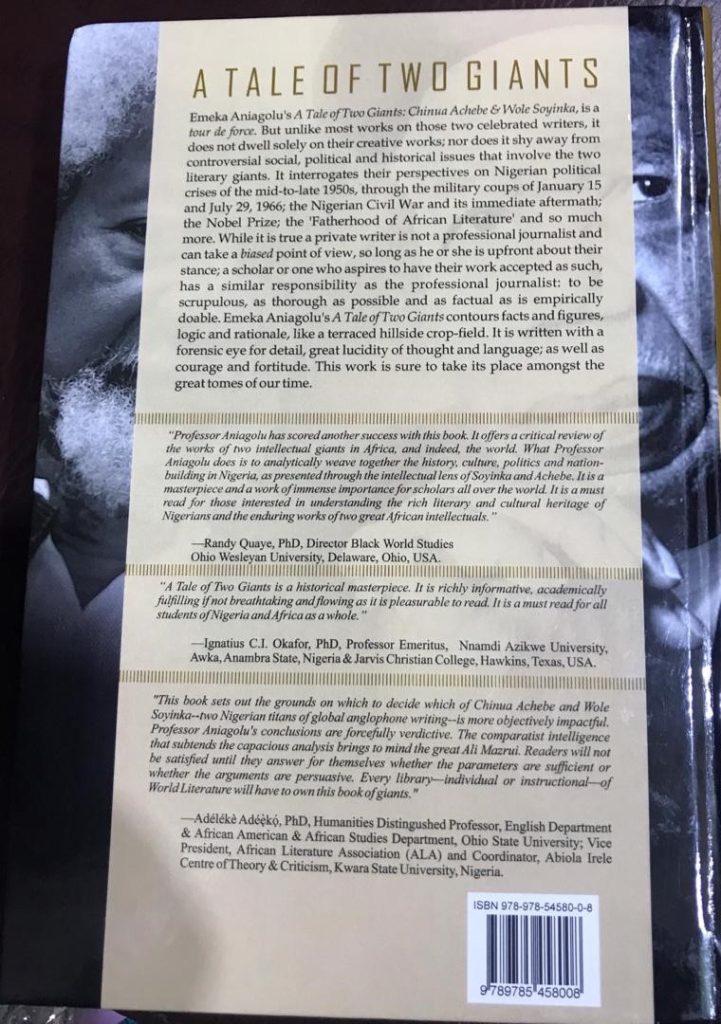
A Tale of Two Giants by Professor Emeka Aniagolu is a thorough, stimulating and fascinating comparative study, grounded in historico-socio-political contextual analysis of the careers, creative, autobiographical as well as scholarly and polemical works of Africa’s two literary giants: Chinua Achebe and Wole Soyinka. Much has been written on those two literary giants, but some lines from the introduction of Aniagolu’s work, explain the primary objective of the comparative study: “. . . critical analyses that go beyond nominal renditions of content analyses to engage dynamic, socio-political, economic and cultural context analysis . . .” Context analysis being the major work the author engaged in this treatise, rather than relying solely on content analysis of the works of the two literary giants. The work boldly interrogates, analyses and confronts the historical and political contexts of motivation, intentionality and expression, that surround and animate Achebe and Soyinka’s works, their personalities and their personal experiences.
A Tale of Two Giants is a voluminous work, with 552 pages, divided into thirteen chapters, though each chapter is not numbered but takes on titles. Like episodes in a television series, each chapter title guides the reader, page by brilliant page, into knowledge of the subject. The work is luxuriant in language and content, an opulent literary feast served by Professor Emeka Aniagolu with finesse and excellence. The details and analysis in this book will satisfy even the most fastidious literary critic. At the same time, it makes for very enjoyable reading to non-literary fellows. Aniagolu’s style is enthralling, highly inspirational and witty. An instance is when in the chapter titled, Literature & Praxis, thatdelves into the literary works of Achebe and Soyinka, Professor Aniagolu wittily writes that the neat divide in creative talent between Chinua Achebe and Wole Soyinka – between novels and dramas respectively – “. . . remains a curious one to him, for there is nothing readily apparent in the two genres that makes their creative manifestations mutually exclusive. Except perhaps, it is the spell of the gods that kept the two literary giants confined to the vineyards of their special talents, so as to spare us all malevolent artistic comparisons!”
Professor Emeka Aniagolu taught history and politics at Ohio Wesleyan University, Delaware, Ohio and at Ohio State University, Columbus, Ohio, for over 36 years. He is the author of eighteen books and several journal articles; and is also a recipient of numerous scholarly and community awards. This much acclaimed comparative study on Chinua Achebe and Wole Soyinka, A Tale of Two Giants, is written with a professor’s sensitivity to his readers. Aniagolu does an impressive job of presenting a broad context of information in each chapter. Using history, personal notes, case studies, tables, graphs, newspaper articles and very detailed appendices; the author excels in conveying knowledge and inducing thought on myriad subjects in all the chapters, with titles such as: “Political Activism, Protest Literature & the Nobel Prize;” “Literary Style, Knowledge & African Literature;” “Sentinels & Salesmen;” “The Two Literary Giants & the Nigerian Civil War,” etc.
A few literary pundits might question Professor Emeka Aniagolu’s qualification in writing this book or of other polemicists who trespass fields to act as literary critics. Asserting his literary bona fides, in the introduction to the work, Aniagolu puts forward strong reasons why he qualifies as a literary critic/creator. He argues that he is not deterred or disqualified to engage in literary creativity or criticism by virtue of the fact that his disciplinary training was not strictly in English, and its branches. He is a political scientist and a historian who has written a number of literary works – novels, short stories, poetry and plays. Trained in excellent universities in the state of Ohio in the USA, with a background in social sciences and humanities for his undergraduate and graduate degrees, and a long teaching career in African and African American Studies, he more than qualifies to undertake this massive comparative study.
Professor Aniagolu’s argument in the book’s introduction on critical thinking not being a function of only narrow disciplinary training and specialisation, but the brainchild or upshot of other disciplines, reads like the bible chapter in Galatians 1: 11-24. In which the Apostle Paul extensively defends his ministry against criticisms. The ‘main apostles’ and their followers probably hoped to weaken Paul’s influence, questioning his authority as a preacher of the gospel. Like Apostle Paul, Aniagolu makes his own defence to critics.
Copious works have been written on Chinua Achebe, who is often called the “Father of Modern African literature,” and whose last work before his passing was: There Was a Country. Wole Soyinka, who in 1986 became the first African to be awarded the Nobel Prize in Literature, isn’t behind in the number of books that have been written about him. Like Achebe, Soyinka also authored his memoir, You Must Set Forth at Dawn. Professor Emeka Aniagolu has broken new grounds with this comparative study, A Tale of Two Giants. Heprovides a broader historical, political and personal information on these two great literary icons: Achebe and Soyinka. His enthusiasm, admiration and sometimes biting criticism, shows through and helps engage the reader. Throughout the book, forgotten history comes alive, readers are also reminded of other important works not only by Achebe and Soyinka, but by other great African writers.
A Tale of Two Giants took me by surprise. Though I like its glossy, attractive cover, I was expecting a didactic, academic tome. But, what I got was a thoroughly engaging work. It is more than a study on the amazing and rich lives of Chinua Achebe and Wole Soyinka; it transcends its subject and reads like an encyclopaedia of knowledge, abounding in information on myriad topics; from natural science, to African folklore, to international politics. In writing on Achebe and Soyinka, the Professor also opens up a treasure trove of golden information on world literature, Africa’s development, Western colonisation of Africa, Nigeria’s nationhood, etc. Using sublime, yet clear language, he takes the reader through incredibly unexpected avenues teeming with information and knowledge.
The author’s discourse in the fourth chapter titled, “The Nobel Prize & The Two Literary Giants” is highly illuminating and audacious. The chapter sets off as a historical and political critical analysis of the Nobel Prize – for peace and in literature – as well as a speculative analysis as to why the Nobel Committee chose Wole Soyinka to bestow the first Nobel Prize in literature on an African, rather than on Chinua Achebe whom many thought was most deserving of the prize. Aniagolu boldly speculates that Chinua Achebe’s “long. running counterfactual narrative and polemical critique of Western colonial history and racist nostrums; crowned by the mother of them all: his excoriating critique of one of the patron saints of Western literature: Joseph Conrad,” may have been considered “. . . so blasphemous as to warrant the literary equivalent of a fatwa issued against him by the high priests of ‘Temple Nobel’?” Professor Aniagolu writes that if the Nobel Committee “makes use of objective and transparent criteria for their selections, they would be on solid ground with respect to their choices – at least procedurally if not substantively.”
Aniagolu keeps Chinua Achebe alive to the reader. His account on Achebe’s career as a literary icon, leader and pioneer, is remarkable. Achebe brought African sensibility into English literature and his books, life, politics, passions, shine throughout this book. I think one of Aniagolu’s best arguments were those he used in the third chapter that discusses The “Father of African Literature Controversy . . .” Aniagolu strongly defends Chinua Achebe’s description as the “Father of Modern African Literature.” With brilliant instances, he juxtaposes the works of Achebe and that of other famous African writers and it is clear the title goes to the matchless Chinua Achebe.
Aniagolu clearly admires and respects Wole Soyinka. He writes that, ” my interest in his literary works has been powerfully spurred by his political activism.” But, Aniagolu’s praise isn’t as effusive for Soyinka as it is for Achebe. I read of Soyinka’s intellectual superiority in all his splendour, but in the chapter titled, ” The Father of African Literature” Aniagolu is critical, for example, of Soyinka’s online newspaper interview with Sahara Reporters on May 18, 2013; a few days before Chinua Achebe’s funeral. In that interview, Soyinka levelled some slights at his longtime friend and colleague, Chinua Achebe by calling him a “storyteller.” Soyinka was asked his view on Achebe’s enduring influence and impact in African literature/canon of world literature. Soyinka responded: “Chinua’s place in the canon of world literature? Wherever the art of the story-teller is celebrated [his place is] definitely assured.” Aniagolu goes on to deconstruct Soyinka’s words with much detail and analysis on Achebe great gift as a “storymaker” not just a “storyteller.” Still, the author praises Soyinka, calling him a “richly gifted constructionist.”
Professor Aniagolu’s writing, with his command of language, makes this meticulously researched work astounding. I knew this book was amazing when in the chapter, “Achebe & Soyinka: Africa’s Twin Gift”, I had tears running down my cheeks. Tears of gratitude to God, who gives excellent gifts to men, and men who in turn, make their lives sublime.
In concluding my review of this epic work by Professor Emeka Aniagolu, I will paraphrase the lines he used in describing Achebe’s critique of the writer Joseph Conrad and his novel: Heart of Darkness; “this book remains, the most cerebral, analytically rigorous and trenchant scholarly deconstruction” – of the works of Chinua Achebe and Wole Soyinka. Aniagolu in this comparative study, displays an incredible intellectual prowess and his hard-earned wisdom sets this work apart. His book is gifted and as he is my elder Igbo brother, I dare say that our universal deity Chi was behind the profundity of this work. I’m awed by the hard work and diligence it took to prepare and write this exceptional book. It is indeed an immense contribution to literature. “In the final analysis,”Aniagolu writes, “the question is not whether there are important differences between the two literary giants; Chinua Achebe and Wole Soyinka. There are. The question is what those differences are and what difference(s) they make in our understanding and appreciation of the two literary giants? And equally important, where they belong in the canon of modern African literature in the light of those differences?”
Overall, the work is brilliant. Paraphrasing another few lines from Professor Emeka Aniagolu’s 2014 novel, God’s Children Too, I will conclude that – this book is good writing which has turned on and kept on for the duration of the work, an enthralling and captivating motion-picture in my imagination and that of many readers, on the lives, passions and politics of our African literary giants; Chinua Achebe and Wole Soyinka.
I expect everyone with a love for literature, African literature or a desire for knowledge: students, book club aficionados, politicians, historians, culture enthusiasts, academics, non-academics, businessmen and women, as well as all book lovers; to buy and enjoy this perfectly crafted masterpiece.
…………………………………………………………………………………………………………….
Kirsten C. Okenwa is a freelance editor/writer/graphics designer for magazines, websites and institutions. She often works as an educator/youth advocate in remote parts of the ECOWAS through the NGO, Amber Africa Dev. Foundation. During elections in Nigeria, she works with the European Union Election Observation Mission (EUEOM) in election observations and monitoring.
Mostly, she is a successful trader in books, African fashion and crafts.
Jeff True takes over as the company’s top lawyer, replacing Aparna Bawa, who became the company’s first general counsel in 2018 and then the chief operating officer in May.
San Jose, California-based Zoom Video Communications Inc. has hired a longtime technology general counsel to serve as its top lawyer while its former chief legal officer takes on the role of chief operating officer full-time.
The company made the announcement Monday of Jeff True’s hiring on its earnings call. True is now listed as the company’s general counsel on the executive page. According to True’s LinkedIn profile, he has worked as the company’s general counsel since August.
True takes over as the company’s top lawyer for Aparna Bawa. Bawa became the company’s first general counsel in September 2018. In May of this year, she was promoted to be Zoom’s chief operating officer but has served as the interim chief legal officer since then.
According to a filing with the Securities and Exchange Commission, Bawa began making a base salary of $400,000 Aug. 1 in her role as chief operating officer. As the company’s general counsel, she was paid $250,000 per year. Compensation information for True was not available.
“I am thrilled to join the Zoom team and help in its mission to deliver a world-class, frictionless and secure communications experience for customers around the world,” True said in a statement to Corporate Counsel. “I look forward to the opportunity to continue growing and scaling an already amazing legal team to address Zoom’s current and future legal needs.”
Zoom became popular at the beginning of the pandemic as employees were sent to work from home and companies wanted to find ways to connect. As the company has become more popular, it has also been the target of lawsuits from consumers. Two of the lawsuits were among the first to invoke the California Consumer Privacy Act and claimed the company shared user information with Facebook without consent.
True has spent his entire career working in-house, according to his LinkedIn profile. Most recently he served as the executive vice president and general counsel of Palo Alto Networks. He has served as vice president and general counsel of 2Wire Inc. and has also worked in-house at Informatica Corp. and Con-Way Transportation Services. True graduated from the Santa Clara University School of Law.
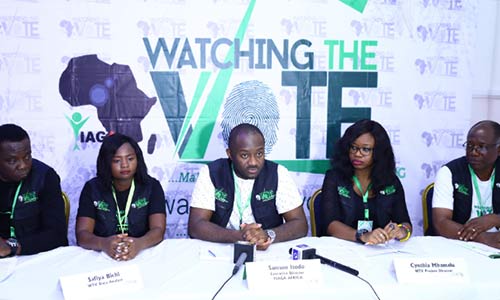
A coalition of civil rights organizations (CSOs) under the aegis of YIAGA Africa has expressed concerns over the increase of pre-election violence ahead of the Edo State governorship election scheduled for September 19.
The group also identified 13 areas across the three Senatorial Districts of the state as possible flashpoints.
YIAGA Africa raised these concerns in its Pre-Election Observation Report titled, ‘2020 Edo Election: An election defined by strongarm tactics and violence’ by its Executive Director, Samson Itodo.
The report which became public yesterday was released on August 31, 2020.
The report read in part ,“Based on our observation reports, the potential hotspots and flashpoints of violence include Etsako West, Etsako East, Etsako Central, Owan West, and Akoko-Edo in Edo North Senatorial district.
“In Edo South Senatorial district, our reports suggest Oredo, Orhionmwon, Egor, Ovia North East, and Ikpoba-Okha LGAs, while in Edo Central Senatorial District, Esan Central, Esan North East, and Esan West are potential hotspots. Reports from our LTOs suggest that the spate of violence and insecurity in the pre-election period may discourage voters from turning up to vote on election day.”
The report attributed the violence to thugs, touts, gangsters, and cultists on the one hand, and the widespread belief that elections could not be won – or smooth governance guaranteed – without strong-arm tactics and the support of powerful thugs.
THE Federal Government has assured religious bodies that the Companies and Allied Matters Act(CAMA) 2020 is not targeted at churches, mosques and other religious bodies.
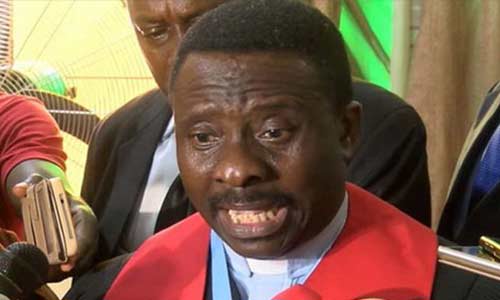
But the Christian Association (CAN) is seeking its suspension by President Muhammadu Buhari because it has “the potential that can further undermine the faith of stakeholders in the Nigerian state.”
Senior Special Assistant to the President on Niger Delta Affairs, Senator Ita Enang and CAN President Rev. Samson Ayokunle, spoke at a meeting in Abuja on Tuesday.
At the meeting organised to enlighten the Christian body on the provisions of CAMA, Enang swore to an oath to assure the church in Nigeria that he would tell the whole truth about the new law.
The Presidential aide alleged that some politicians, especially those opposition parties, had “wrongly characterised” CAMA as an anti-religious law.
He explained that the bill that birthed CAMA was initiated by a Senator and a member of the House of Representatives and not from the Executive arm of government as widely speculated. Enang added that the President had twice declined assented to the bill when it was passed by the 8th National Assembly.
He said: “Misconceptions have enveloped this Act with deliberate misinformation and falsehood by persons who may not have fully and in-fact, personally read and digested the provisions of the Act.
“First, the bill that gave birth to the Act was not an Executive bill transmitted by President Buhari to the legislature. It was initiated by two members of the National Assembly at the behest of the Corporate Affairs Commission and support of the Ministry of Trade and Investment. It was passed and transmitted to Mr. President for assent.
“Mr. President, in accordance with extant best practice escalated the measure to appropriate ministries, departments and agencies who made different inputs some of which lead to Mr. President declining assent twice to the bill in the entire tenure or life of the 8th Assembly.
“We want to declare as a fact, that the Act does not target churches or religious bodies as wrongly assumed.
“President Buhari has not introduced any matter oppressive to the Christian community or any religion or any matter discriminatory against any class of persons in Nigeria
But CAN President, Rev. Ayokunle, urged the President to suspend the implementation of the Act because it does not have the input of “ various interest groups.”
Ayokunle argued that reactions of public officeholders have not helped matters.
His words: “We sincerely appreciate the courtesy of your invitation, we are however constrained from doing so on the following grounds: We are yet to be availed with the authentic version of the voluminous Act .
“From the reactions of stakeholders and a cross-section of the Nigerian-state, it is apparent that the Act either did not receive input from the respective various interest groups or failed to accommodate their views, sundry concerns and varying interests of the Nigerian people.
“Without prejudice to our observations, such a law ought to welcome and accommodate the sundry and varying interests of the Nigerian people.
“Furthermore, we are mindful that comments in public domain are beginning to indicate that CAMA, 2020 has the potential that can further undermine the faith of stakeholders in the Nigerian-state.
“The dominant schools of thought in the public domain, hold the view that should stakeholders of the Nigerian-state seek judicial intervention or amendment of the Act by the National Assembly, they shall achieve nothing much, as they consider such, as exercises in futility.
“Mr. President, from the foregoing, we are of the opinion that you should kindly issue the appropriate directives to suspend the implementation of CAMA 2020 and affirm a thorough reappraisal of the legislation that is in correlation with the provisions of the 1999 Constitution, other extant legal and policy frameworks, the national economy, national security, national interest and the wellbeing of the Nigerian-state.”
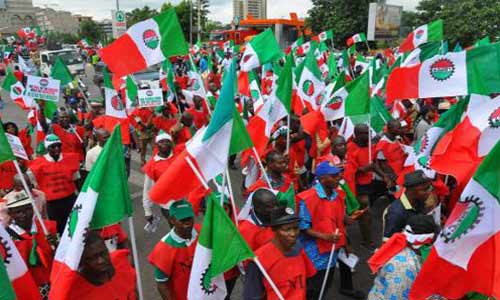
NIGERIA Labour Congress (NLC) President Ayuba Wabba, said on Tuesday that the NLC would reject any plan to inflict further pain on Nigerians.
In a statement titled: “Increase in electricity tariff by Abuja DisCo – a taunting of the will of Nigerian people gone too far,” the congress noted that the new plan by AEDC was “dead on arrival as it will be resisted by the Nigerian working class and people.
The NLC said: “It appears that the adamant desire of DISCOs in Nigeria to ram through their ill-conceived agenda to further impoverish Nigerians through astronomical tariff increase amidst a plummeting return on service delivery has now been deregulated. The DISCOs appear to have given themselves the ignoble tasks of taking turns to taunt the will of the Nigerian people.
“Abuja DISCO has adorned the robe of the protagonist in this regard with its announcement of a new tariff plan for electricity consumers within its service area starting from September 1, 2020.
“We are not aware of any order by the government or the elected representatives of the Nigerian people de-freezing the order to suspend any plans to inflict more pocket and psychological trauma on Nigerians by way of reckless and insensitive hike in electricity tariff.
“We wish to state that the Nigeria Labour Congress (NLC) seriously frowns at, completely condemns, and totally rejects any plan to inflict further pain on Nigerians at this very time of great economic distress. The new dribble by the Abuja DisCo is dead on arrival as it will be resisted by the Nigerian working class and people. The other DISCOs should not bother putting their ships of exploitation to sail.”
The NLC also stated that it was deeply concerned on the deaf and dumb posture of the regulator- the Nigeria Electricity Regulatory Commission (NERC).
“It is important to put on record the fact that NERC would be putting its name on the wrong side of history if it continues to play the Ostrich while a group of portfolio investors make a blood meal of Nigerians.
“Nigerian electricity consumers need the NERC to speak up and act now in defense of the rights of the Nigerian people,” the NLC stated in the statement.
The congress also stated that since the unbundling of the Power Holding Company of Nigeria (PHCN), electricity tariffs through the Multi Year Tariff Order (MYTO) have been increased a number of times without accompanying improvement in services.
The statement added: “It is unfortunate that since the unbundling of the former PHCN to yield DisCos and GenCos , electricity tariffs through the Multi Year Tariff Order (MYTO) have been increased a number of times without accompanying improvement in services.
“Each hike in electricity tariff in Nigeria is trailed by huge leap in hours of darkness, de-metering of more Nigerians, exponential rise in incidences of estimated billing, and increased burden on citizens for the procurement of equipment and facilities for public electricity supply amidst other devious methods by DisCos to cheat, exploit and despoil poor Nigerians.”
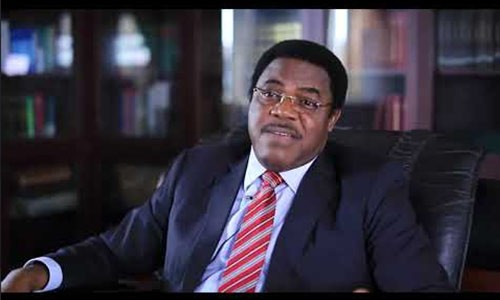
In my Petition dated August 2nd, 2020 to the Chairman, Board of Trustees of the Nigerian Bar Association, I drew attention to the flawed, illegal and unconstitutional process leading to the NBA Election of 29th – 30th of July, 2020 and the electronic fraud that characterised the Election proper. In that Petition, I stated inter alia that as a past Chairman of NBA Ikeja Branch, past General Secretary of the Association, a Life Member of the National Executive Committee and a Life Member of the Distinguished Body of Benchers in addition to other areas of responsibility that I have had the privilege to serve, I can lay claim to being one of the builders of the Association. Consequently, I will hate to see the Association destroyed or destabilised in any way or form. I also stated in that Petition that my participation in the affairs of the NBA is driven purely and absolutely by the desire to advance the interest and aspirations of the Association in particular and our beloved Profession in general.
In drawing attention to the serial violation of the provisions of the NBA Constitution, the cyber fraud perpetrated and the misuse and abuse of powers which I submitted characterised the election, I called for the cancellation of the Election. Recognising that if the election process is wrongful, illegal and unconstitutional, the product must suffer the same fate.
BOARD OF TRUSTEES – FINDINGS AND RECOMMENDATIONS In a letter authored by the Chairman of the Board of Trustees, Dr. Olisa Agbakoba, SAN, dated 19th of August 2020, it was stated that: “although you have petitioned to us, we must be clear that we have no judicial authority to give direction to the NBA, our position in the circumstance is at best advisory. Nonetheless, we have read your Petition and noted that it raises many general and specific allegations in relation to the Elections…. The Trustees have given careful consideration and deeply reflected on your Petition and all the responses, in particular that of ECNBA. We note that the Elections were not perfect. We reviewed your Petition and note that it raises serious issues. Nonetheless our advice would be that the overall interest of the Bar should be paramount on the mind of every Nigerian Lawyer and to that extent, we urge that all Lawyers and no less the Candidates be mindful of the need to promote a cohesive, united and strong Bar. We regret that we are unable to advise that the election should be cancelled in the overall interest of the Bar.” The Trustees further noted that “our elections continue to present challenges going back to 2016 and strongly recommend that a major transformation of our electoral process and framework must be undertaking and we are happy to be assigned this very important responsibility…”
In an earlier letter dated 17th of August, 2020 (an unsigned letter which I received via my email from the Chairman) the Trustees stated that “Nonetheless, we have read your Petition and admit that it is not frivolous. The NBA 2020 Election was marred by irregularities. The ECNBA admitted that the election platform failed which is why they had to engage another I.T. Consultant. The ECNBA admitted that over 14,000 members could not vote which is an extremely high number. The ECNBA should have made provision to enable everyone to vote. This is an omission on their part. You have requested that the NBA 2020 Election be cancelled, but this will be unfair to those who have voted.”
The Letter continued: “the Trustees have given careful consideration and deeply reflected on the nature of advice to give. Our advice will be that the Bar should be paramount on the mind of every Nigerian Lawyer and to that extent, we urge that all Lawyers and no less the Candidates and in particular your good-self accept the Election with its inadequacies in good faith. We are very mindful in our advisory on the need to keep the Bar cohesive, united and strong.” The letter went further to state that “the Trustees are however disappointed that our Elections continue to present challenges going back to 2016 and strongly recommend that major transformation of our Electoral process and framework must be undertaken and we are happy to be assigned this very important responsibility.”
The following are evident from the decision of the Board of Trustees: First, the Petition was not frivolous; Second, the Petition raised serious general and specific allegations; Third, the ECNBA had no defence to the serious issues raised in the Petition; Four, since 2016, NBA Elections have been the subject of serious disputations for which they the Trustees were disappointed; Five, that a strong recommendation for a major transformation of our electoral process and framework should be undertaken; and Six, that the Board of Trustees are willing to undertake the job of electoral transformation of the NBA.
I know as a fact that all the members of the Board of Trustees agreed and were united on the specific findings that the Election was flawed and imperfect. All of them were also united in their desire to terminate the narrative of sham elections in the NBA since 2016, hence their willingness to undertake the responsibility of carrying out electoral transformation for the Association. They only differ on the consequences of their findings which is whether to direct an outright cancellation and order a fresh election, or direct a bye-election for the 14,000 voters that were disenfranchised, or allow the election to stand as it is.
I believe it is an attempt to marry these different outcomes that the Board of Trustees came to the advice that the overall interest of the Bar should be paramount on the mind of every Nigerian Lawyer. That the Board of Trustees urged all Lawyers including the Candidates of the need to promote a cohesive, united and strong Bar and that “the Board of Trustees regretted their inability to advice that the election be cancelled in the overall interest of the Bar.”
THE PETITION SUCCEDED
If my Petition will lead to the transformation of NBA electoral process that will free it from lawlessness, corrupt practices and other forms of cyber-crime for which NBA has become notably reputed since 2016 as promised by the Trustees, I will be satisfied. If my Petition will bring about a definite stop to a manipulated bi-annual electoral process with evidence of producing an appointed President or securing the election of a pre-determined President for the NBA and make votes count in future NBA Elections, I will be satisfied. If my Petition will enthrone respect for Rule of Law, respect for Due Process and stop misuse and abuse of power by a few individuals who believe that they must get what they want for the NBA and not what the NBA wants, I will be satisfied. If this Petition will inculcate and restore the glory, honour, honesty, dignity, integrity, moral and ethical principles on NBA leadership particularly its Presidents and make them do things right to re-establish the NBA as the conscience of the Nation once again, I will be more than satisfied.
As a Legal Practitioner of 38 years post-call and as a matter of practice and experience, I know that when allegation of facts succeeds in a civil claim and defence is held to have no probative value, granting of relief is automatic. When allegations of crime are proved in a criminal matter and defence is rejected, conviction also follows. In an Election Petition, where Grounds of Petition succeeds, such as it has been held by four (4) Trustees out of six (6) in this matter, setting aside of that election is a necessary consequence of the findings. However, in this case, the Board of Trustees have advised in spite of the seriousness of their findings that we accept the election in good faith because of the “need to keep the Bar cohesive, united and strong” in a typical Nigerian mentality.
Notwithstanding that the Board of Trustees of the NBA did not go the whole hog according to them “in the interest of the Association;” I nevertheless want to thank the four (4) members out of the six (6) for standing and upholding the truth on this matter. If I were to be the product of the election that has now been adjudged to be fatally flawed, I would have honourably stepped-aside and call for a re-election. This is because character, honour and integrity are the hallmarks of leadership. It must be particularly noted that we raised serious reservations in our letter of 7th of July, 2020 to the Electoral Committee against the serial breach of the provisions of the Constitution relating to the electoral process and the hap-hazard manner of handling the process, the secrecy surrounding the appointment of the I.T Consultant and the failure to demonstrate the process in order to ascertain the vulnerability and the integrity of the technology to be deployed for the election.
Similarly, Mr. Olumide Akpata also in a most vehement manner raised serious reservations in his letter of 20th of July, 2020, to the Electoral Committee. Both letters were sturdily disregarded and ignored by the ECNBA. Legitimacy is not only a product of popular acceptability, but it is also a product of legality and constitutionality. Indeed, popular acceptability will stand on nothing if there is no legal and constitutional legitimacy as you cannot build something on nothing and expect it to stand.
NIGERIAN BAR ASSOCIATION AND CULTURE OF IMPUNITY
The motto of NBA as enshrined in the Constitution of the Association is Promoting the Rule of Law. In his address to the Annual General Meeting of the NBA on 28th of August, 2020, Mr. Paul Usoro, SAN, said surprisingly “Whatever one may say about those elections, one thing that cannot be taken away from it is that that was the first ever of our National Elections where everyone was turned into Election monitors as well as electoral and returning officers all rolled into one …. For most of our members and based on the comments I have received, this was an exhilarating experience in transparency. The transparency was unparallel and we are expecting that subsequent Bar Elections will build on that quality of transparency.”My friend Mr. Paul Usoro certainly did not see what many others saw. He failed to realize that election is a process culminating with voting. He ought not to have directed his mind only to the voting process to the exclusion of the other various stages leading to the voting process.
Rule of Law in all its ramification presupposes that the Law is supreme and that everything must be done according to law and the law in this instance include the Constitution of the Nigerian Bar Association, 2015, as amended. It includes recognised practices and conventions that enthrone and guarantee Due Process as against arbitrariness, impunity, lawlessness, abuse of office and misuse of power as clearly demonstrated in the conduct of the just concluded 2020 National Officers Election. Transparency in relation to the just concluded Election exists only in the fertile imagination of the out-gone President.
The leaders of the Bar must come together and take decisive steps in other to restore the lost glory, honour and integrity of the Association. If we are complacent in doing this, life in its own way will force decisions on us. In 2016, they superintended over a rigged election which ended in Court. In 2018, they superintended over an election which ended in both civil suit and criminal charges in Court. The fact that the Court cases failed to achieve any success emboldened the perpetrators to go to higher levels of brazen impunity as witnessed in the 2020 Election.
The result of these reckless actions on the part of the few who have vowed to secure the appointment of NBA President through sham elections may be delayed but is never lost. However, it must be recognised by all our members that the character of any leader determines the character of the organisation that he leads and that everything rises and falls with leadership. It is not surprising that Nigerian Bar Association has contributed nothing to nation-building in the last few years. The Association has been stuck at the zero-ground level of low public esteem – in the words of a concerned member of the Bar. After all, anyone who will move the world must first move himself.
MOVING FORWARD
Like I said in my Statement of Tuesday, 25th August, 2020 and in my characteristic manner, “I was already planning to stop talking about what the devil has done regarding this election and begin to talk about what God will do in response to the uncountable appeals and persuasions from highly respected members of the Profession”including some of the members of the Board of Trustees that I hold in very high esteem. I am a builder and a peace-maker. I am never desperate about anything neither do I pursue anything at all cost. I have always allowed God to have His way and establish His will concerning me. My Christian faith teaches me the virtue not to cry behind a closed door to deprive myself the opportunity of seeing the seven doors that are wide open.
I want to plead with all sense of responsibility to all my friends, colleagues and supporters who worked so hard with me nationwide during the electioneering process, those whose votes were either diverted, suppressed, stolen or who were out rightly disenfranchised, and all fair-minded members of the Association who believe that enough is enough and that this Bi-Annual show of shame must stop by pursuing this case to its logical conclusion to please, let us put the July 2020 Presidential Election of the NBA behind us. I have strongly stood against going to Court in this matter despite serious pressure even though I am fully persuaded that simple Originating Summons will set aside this Election, judging by the faulty process that lead to the Election.
Like I have said several times, for me, the Presidency of the NBA is not an end in itself but a means to an end to secure the future of our Profession by strengthening the Association’s relevance to its members, by vigorously pursuing the defence and promotion of the Rule of Law in our Nation, by protecting, promoting and defending the independence of the Legal Profession in general and in particular the independence of Lawyers and Judges in the practice of their Profession and by taking pro-active efforts to change the negative perception about the Legal Profession by members of the public. This is the whole reason for my involvement in the process. It is to give service and I believe this does not warrant my going to court so that I can give. After all, despite the effort of the aggrieved members to the election fraud of 2018 which resulted in filing both civil suits and criminal charges in Court, the beneficiary of the election has just handed over few days ago. My decision to rest the case here is a product of a very careful consideration of all that I have stated above including in particular the fact that I am a peace maker and one of the builders of the Association with a view to preserving whatever is left of the Nigerian Bar Association. After all, “a living Dog is better than a dead Lion.”
EXPRESSION OF GRATITUDE
To all my colleagues both at the inner Bar and outer Bar, friends, members of various DASAN Committees, dedicated supporters and followers on various social media platforms, l once again wish to express my heartfelt gratitude and profound appreciation to each and everyone of you for the wonderful role you played in our attempt to re-position the Association by making it a positive catalyst for the Legal Profession and the development of our Nation. We were going there to change the ways and show the path to follow, to demonstrate the meaning of true leadership in purity, honesty of purpose and integrity.
Please note that we have built a strong bond of friendship, brotherhood and sisterhood thereby creating relationships and connections throughout the Nation. I urge you all to continue in this spirit of friendship and keep our connections active as we are all together in this journey of life and career fulfilment in the true spirit of being “our brother’s keeper.” Remember, love never gives up. It never loses faith. It is always hopeful and endures through every circumstance. Let us remain in love by keeping in touch with one another.
CONCLUSION
Let me conclude with the statement made by Barack Obama, former President of the United States of America, when he visited Japan. He got to Hiroshima and remembered the events of World War II and the destruction and devastation wrought on Hiroshima on August 6, 1945 and said: “We have a responsibility to look directly into history and ask: What must we do differently to achieve a better result?” I do hope that the Board of Trustees appreciates the need to do things differently henceforth in NBA; hence, their promise and willingness to accept responsibility for electoral transformation. I shall continue to join well-meaning members of the Association where I can on this restoration effort to rebuild our Association and repackage the image of our beloved Profession.
Dele Adesina, SAN, FCI Arb. Dated Monday 31st August, 2020.
Thanks to state-of-the-art medical technology—like defibrillators in nearly every place of business—life after death is more possible than ever. Check out these incredible tales from the other side—and what the survivors experienced.
Second chances
It’s easy to shrug off those miraculous stories about people who were effectively dead and then returned to life. But sometimes, this really does happen, and it’s not a hoax but is in fact reality! Sometimes modern medicine proves its worth; other times the shocking recovery amazes even the doctors. Here are some incredible-but-true stories of people who were, for all intents and purposes, dead—until they weren’t.
His heart had been stopped for nearly a minute
GETTY IMAGES
Paul Finkelstein, a 45-year-old lawyer, was in court when he began having trouble breathing. A colleague called emergency services and fed him baby aspirin—chewing it can prevent clotting that can further damage the heart. Nonetheless, Finkelstein suffered a full cardiac arrest and flatlined. He was clinically dead for 43 seconds before a defibrillator brought him back. “I came back for Peri,” he tells Reader’s Digest nine years later: Peri is his daughter who battles a form of muscular dystrophy; she remains Finkelstein’s inspiration to continue.
He survived a “widowmaker”
GETTY IMAGES
Three years ago, Bobby Galvan was gardening when he collapsed. He wasn’t even 50, but he had suffered what’s known as a “widowmaker”—a massive heart attack caused by an arterial blockage. Bobby’s situation was doubly bad: Two of his three major arteries were 100 per cent blocked. But miraculously, he was revived and rushed to hospital, where he survived two surgeries to repair the blockage and the damage. He’s alive and well today.
She was dead from heart failure; she’s alive today
SHUTTERSTOCK
“On Christmas Day of 2013, I died of heart failure,” Claire Goodwin tells Reader’s Digest. Her death was a culmination of a years-long battle with anorexia nervosa and a form of bulimia. Five years later, she recalls the experience as quiet: She felt relief, but she also felt like she was underwater. “I was in the hospital, so thankfully I was resuscitated in time to avoid brain damage or other lasting effects.” Today at 26, Claire has fully recovered and is grateful for a second chance.
He was killed by a rocket-propelled grenade (RPG), alive today
SHUTTERSTOCK
Yonas Hagos was 10 when he emigrated from a Sudanese refugee camp. After growing up in the United States, he joined the Army—and then he made the ultimate sacrifice: Hagos was hit by a rocket-propelled grenade and was clinically dead for 45 seconds. He remembers nothing of those seconds spent on the other side. “When I gained consciousness, all that mattered was that I was fighting for my life.” Hagos was awarded a Purple Heart and is now a successful business owner of a pet store.
His heart stopped, but CPR and an AED saved his life
SHUTTERSTOCK
Photographer Neil Carew‘s heart stopped in February 2018 while he was setting up a photo shoot at a local school. Quick-thinking school staffers called an ambulance and began performing CPR on the 74-year-old. The principal grabbed an AED and gave it to the nurse to shock Neil’s heart into restarting. It worked, Neil tells Reader’s Digest: “If not for that AED, I’d be six feet under.”
He spent time in heaven
SHUTTERSTOCK
Trenton McKinley is a 13-year-old boy who was resuscitated after being dead for 15 minutes following a devastating dune buggy accident. Doctors were certain Trenton’s 15 minutes of flat-line had irreversibly damaged his brain, and for the next several days, he was kept on life support while his family made the decision to donate his organs to five children in need. But then Trenton began showing signs of cognition, and when he was fully awake, he told his family he’d seen heaven. Although Trenton suffers from pain and seizures and has lost 22 kilograms, he still has a sense of humour, reports Fox10 News.
In February 2018, private equity fund manager Robin Lee Allen had just left a meditation class when he realised a car was coming at him the wrong way down a one-way street. Allen tried to dive out of the way, but the car—whose driver turned out to be drunk—hit him anyway. Thankfully, Allen has no memory of the impact; he does remember coming to after being revived by a defibrillator and hearing the EMT say, “Don’t cut off all of his clothes here—there are too many people taking pictures.”
She survived a suicide attempt
SHUTTERSTOCK
Kathryn Goetze narrowly survived a suicide attempt in her early 20s. “It was alcohol and a ton of pills, and I actually left my body and could see myself lying there.” The next thing she remembers is being back inside her own body, and vomiting into the toilet. She made the attempt just a few years after her father had committed suicide. In the 20 years since these events, Kathryn was inspired to create a global charity for mental health and a curriculum for teaching hope. “Clearly it was not my time,” she says. “There was work to be done.”
She was stillborn
SHUTTERSTOCK
Author Milana Perepyolkina entered this world with no heartbeat, no breath, and blue skin. The doctors handed Milana to her mother, giving her a chance to say goodbye. “She held me in her arms, giving me all the love she had for the daughter she would not watch grow up, not dress in beautiful skirts, not sing lullabies to, not braid her hair, not play dolls with her.” And then—Milana’s heart started beating. “My mother tells me I looked at her like an adult, with wisdom, with understanding. Her love brought me back to life.”
She passed away under the knife
SHUTTERSTOCK
In 2013, nurse Becky Lockridge, was undergoing a liver resection. While she was under anaesthesia, her heart stopped. It’s the only part of the surgery Becky remembers. “My late grandmother appeared before me and insisted I return,” she tells Reader’s Digest. “I thought of my two sons, for whom I’m a single mother, and I knew she was right.”
You may be generous with the compliments, but are you saying the right things? Our experts explain how making small changes to how you compliment your child can have a big impact on their self-esteem.
“Great job on the A+!”
When your child earns an A+ on an assignment, it can be hard to stop yourself from exclaiming, “You’re so incredibly smart!” But using strong adverbs and adjectives like “incredibly” or “amazing” can actually have a negative effect on kids, says Dr Nicholas Westers, a clinical child psychologist. For children with low self-esteem, he explains, “inflated praise may inadvertently pressure them to perform exceptionally well at all times,” and they may start avoiding more challenging tasks in order to preserve their sense of self.
“You really gave it your all!”
SHUTTERSTOCK
However, the solution isn’t as simple as dropping the adjectives and adverbs. According to Dr Westers, person-oriented praise, i.e. “You’re so smart!” or “You’re the best!” addresses what kids with low self-esteem perceive as unchangeable traits, such as intelligence or athleticism. “As a result, they may come to believe, ‘If I can do it, I’m smart. Therefore, if I can’t do it, I’m not smart,’” he says. Process-oriented praise, (such as, “I can see how hard you’re trying”) on the other hand, “leads children to later seek challenging tasks because they believe they can meet these realistic expectations.”
“You won the championship! Only one out of 12 teams gets to say that!”
SHUTTERSTOCK
Regardless of their self-esteem, no child should be given more praise than is warranted. “Inflated praise is easily seen for what it is – an exaggeration. It can eventually make our kids either mistrust us or discount what we say as parents,” says Dr Erin Clabough, author of Second Nature: How Parents Can Use Neuroscience to Help Kids Develop Empathy, Creativity, and Self-Control. When a child with low self-esteem does something well, give accurate praise but give them a boost by commenting on how the external world might see it: “You won the soccer championship game! Only one team out of 12 gets to say that!”
“You took so many shots on goal!”
GETTY IMAGES
Even in the worst situations, something always goes well, says Dr Clabough. Rather than spending time on what went wrong, look for the positive and compliment your kid for what they did well. “Praise the elements of an action you want to see again whether it’s a win or a loss,” she says. The team might have lost the game, but it was great to watch him or her take a shot at goal four times.
“It’s great that your grade went up to a B, but I know that you can earn an A if you work harder next time.” Sound familiar? “Praise losses effectiveness when it is coupled with comments that negate the message,” says Dr Mayra Mendez. “Following praise with added comments such as ‘…better than you did before,’ ‘…next time you will do even better,’ or ‘…try to be #1 and win next time’ undermines the praise comment and compromises the child’s ability to positively process and integrate feeling good about themselves,” she explains. Instead, try, “Great job studying and trying your best to learn the material.”
“There’s a difference between telling someone they did a good job and telling someone that they’re a genius,” says Saba Harouni Lurie, a marriage and family therapist. Rather than complimenting a child on her brilliance because she got a good grade on a science project, Lurie suggests keeping your compliment grounded in reality: “You did a good job! You worked really hard on this project, and I hope you feel proud of what you have accomplished.” According to Lurie, “Non-inflated praise gives the child the opportunity to feel proud of themselves without feeling pressured to perform at impossibly high standards in the future.”
“You’re helping our home run smoothly”
SHUTTERSTOCK
It may be awesome that your daughter is old enough to empty the dishwasher as part of her daily chores, but you don’t need to be effusive with your compliments. Instead, Dr Wendela Whitcomb Marsh, author of The ABCs of Autism in the Classroom: Setting the Stage for Success, suggests acknowledging that she did what she was supposed to do without making a big deal out of it. “Lavishing high praise on everyday tasks may seem patronising,” explains Dr Marsh. Instead, emphasise the natural consequence of the chore by saying, “I see you emptied the dishwasher, thank you. Now I can put the dirty dishes in so they don’t pile.”
“I can tell you worked hard on this”
SHUTTERSTOCK
It may be easy to exclaim “It’s perfect!” every time your child draws a picture but it’s not in their best interest. “If they believe that everything they do is perfect, even when they don’t try very hard, they may just coast through life expecting to be appreciated for even the feeblest effort,” says Dr Marsh. An equally easy fix is to make an observation: “I can see that you took your time instead of rushing,” or “I see you put a lot of thought and feeling into your picture.”
“Jack had a great game, and we are so proud of him”
GETTY IMAGES
If you’re proud of your child, let other people know – especially when they’re nearby. “An excellent way to build self-esteem in children is to make sure they hear you speaking positively about them,” says Stephanie Leclair, a curriculum expert. A family Facetime call with grandma and grandpa is an excellent opportunity to boast that your son has been practising his ball skills every day after school and, as a result, scored a basket at his last game.
“I love you no matter what”
GETTY IMAGES
In addition to giving thoughtful praise, parents should conscientiously tell their children “I love you” on a regular basis. But parents should be mindful to express their love “in a way that communicates their love is unconditional and not attached to anything they do or do not do,” says Dr Westers. Children should know that they are loved and be treated with kindness regardless of their looks, behaviours, or achievements.
Sign up here to get Reader’s Digest’s favourite stories delivered straight to your inbox – for free!
Even though it’s meant as a tool for productivity, emails often end up as nothing more than a distraction. Productivity expert Jocelyn K. Glei explains how to use email more effectively in her book Unsubscribe: How to Kill Email Anxiety, Avoid Distractions, and Get Real Work Done.
An empty inbox is never their goal
Email is a crucial factor in accomplishing your goals, but in and of itself, it isn’t meaningful. Sure, having zero unread messages gives you short-term satisfaction, but an empty inbox says nothing about your productivity. In fact, you’ll end up fighting a losing battle as it starts to refill immediately. Keep your focus on your important messages, and don’t stress if you don’t get to read every single email that comes your way. “If you can accept that it’s just not going to happen, you’ve taken the first step towards removing yourself from the productivity rat race,” writes Glei. “In the grand scheme of things, email is just one small part of doing great work.”
They start their day with more meaningful work
SHUTTERSTOCK
Checking your email first thing in the morning immediately frames your day around other people’s demands. Rather than heading straight for your unread messages, take advantage of the peak energy you have when you first get to the office by first working on your most meaningful tasks for at least an hour. Then, when you finally do open your inbox, you’ll already be well into a productive day.
They cut down on the back-and-forth
GETTY IMAGES
Streamline your emails by answering each message as fully as you can, so the receiver has less need to send follow-up questions. For instance, if a co-worker asks you to lunch, instead of reacting with a simple “Sure!” specify a date, time and location that work for you. Your colleague can give a simple yes or no, rather than stretching the conversation out for several more messages.
Email isn’t their only way to communicate
GETTY IMAGES
Because you can’t read tone or body language in a written message, email can lead to misinterpretations and frustration. When you’re having a delicate conversation, brainstorming, or making complex decisions, skip the email chain and pick up the phone or drop into your co-worker’s office. “You’ll be rescuing yourself, and everyone else, from those annoying email threads that drag on for 15-20 messages and constantly interrupt you throughout the day,” writes Glei.
They use the two-minute rule
GETTY IMAGES
Follow this rule of thumb from productivity expert David Allen: If you can finish your response in two minutes, send it right away. If you procrastinate, you’ll end up using more effort to find it and reprocess it later. “This does not mean you should respond to all emails that take less than two minutes,” writes Glei, “rather, it means that you should respond to all emails that you can process quickly and that relate to ‘people who matter’ or your meaningful work goals.” Anything that isn’t a priority can wait until later – if you happen to have time.
With just one inbox folder, your messages will be jumbled into one chaotic void. Organise your emails into folders that will keep you on track. One easy setup: ‘reply’ for ones you need to respond to, ‘waiting’ for those that you need to hear back from, and ‘archive’ for messages you might reference later. Consider putting your spam emails into a specific folder.
“There are two types of emailers: ‘reactors’ who rely on notifications and near-constant monitoring of their inboxes to nibble away at their emails throughout the day, and ‘batchers’, who set aside specific chunks of time to power through their emails so they can ignore it the rest of the day,” writes Glei. As soon as a new email pops on reactors’ screens, their focus is gone, so turn off your own notifications to cut down on distractions. Instead, make yourself a batcher by setting aside two or three 30 to 60-minute chunks every day to check and reply to emails.
They use a different calendar
SHUTTERSTOCK
If your calendar is linked to your email, you might be hesitant in turning off all notifications. Create a loophole by syncing your email calendar with a separate calendar app. Turn notifications on for the app only – you’ll get all the event alerts you need, without the distracting email pop-ups.
While it’s easy enough to hold off on a response to a client for a few hours, your boss might need a faster reply. Gmail and iPhone apps allow you to select priority senders, setting off notifications for only those people. Set up your own to keep you focused without stressing that you could be missing an urgent message.
They don’t let others’ stress get to them
GETTY IMAGES
Other people have different schedules and priorities to you, so if you receive an urgent-sounding email when you’re pressed for time, you have two choices: sacrifice your own productivity to switch tasks, or keep working with the nagging feeling that the sender is getting impatient. To satisfy the sender, rattle off a quick reply acknowledging his or her concerns, and give an estimate of when you’ll be able to address it fully. “People crave context. If you merely help them understand where their email sits within your workload, they can be surprisingly understanding,” writes Glei. “What’s more, expectation-setting emails can help you relax by allowing you to reassert control over your schedule and release any feeling of obligation about meeting someone else’s timetable.”
They prioritise their replies
SHUTTERSTOCK
Consider your relationship to the sender when you’re going through your messages. Answer an email to your boss quickly and thoughtfully, but don’t kill yourself over your wording to someone you’ve never met – in fact, you shouldn’t feel obligated to reply to everyone in the first place. “Your working life and your credibility are built on relationships, be mindful of them,” writes Glei.
They don’t let emails keep them from real work
SHUTTERSTOCK
“If you got 200+ letters a day, you would never think it was realistic to respond to all of them. Why should emails be any different?” writes Glei. “Politely responding to every single email you receive is all well and good, but not if it makes you a stranger to your own goals.”
Sign up here to get Reader’s Digest’s favourite stories straight to your inbox!
Our site uses cookies. By clicking “Accept All Cookies”, you direct Law and Society Magazine to store cookies on your device and disclose information in accordance with our Cookie Statement: cookie policyACCEPTREJECT
Privacy & Cookies Policy
Privacy Overview
This website uses cookies to improve your experience while you navigate through the website. Out of these cookies, the cookies that are categorized as necessary are stored on your browser as they are essential for the working of basic functionalities of the website. We also use third-party cookies that help us analyze and understand how you use this website. These cookies will be stored in your browser only with your consent. You also have the option to opt-out of these cookies. But opting out of some of these cookies may have an effect on your browsing experience.
Necessary cookies are absolutely essential for the website to function properly. This category only includes cookies that ensures basic functionalities and security features of the website. These cookies do not store any personal information.
Any cookies that may not be particularly necessary for the website to function and is used specifically to collect user personal data via analytics, ads, other embedded contents are termed as non-necessary cookies. It is mandatory to procure user consent prior to running these cookies on your website.