Home Blog Page 1263

#EndSARS: Access To Justice Says SARS Disbandment Not Enough, Calls For Urgent Reform Of Police & Security Agencies To Confront Impunity

Human Rights Group, Access to Justice has stated that the disbandment of the Special Anti-Robbery Squad (SARS) is not enough to confront the impunity and entrenched lawlessness, calling for more urgent reforms to be carried out.

This was disclosed in a statement issued by the Group on Sunday, signed by the Convener, Joseph Otte & the Project Director, Deji Ajare, which was made available to TheNigeriaLawyer.

“Access to Justice welcomes the dissolution of the Special Anti-Robbery Squad (SARS) by the Inspector-General of Police following the recent public outcry over police brutality, particularly those of the SARS. However, dissolving SARS is not enough and will not address the large-scale and widespread culture of impunity that has characterized the delivery of policing and security services in Nigeria.

“That culture of impunity is rife and thriving in the Police Force as most people know. If the Police Force as a whole is not reformed, it is highly unlikely that any new initiatives or tactical Units created out of the Force will operate differently from the way SARS did. The institutional culture of the Police, as well as other law enforcement/security agencies promotes impunity, lawlessness, lack of accountability and disregard for the rule of law.”

Meanwhile, it was stated that successive administrations have not paid attention to this endemic culture, adding that, “ Past and present governments in Nigeria are enablers of this culture. Neither the Buhari government nor past governments have done anything significantly more than traffic in largely “empty” rhetoric regarding reform of law enforcement and security institutions. The actual work of undertaking reforms that would make Nigeria’s law enforcement and security agencies accountable, professional and respectful of the rule of law has been left undone, and traded-off for the rhetoric.”

However, it was stated that the present administration failed to do the needful, and as such, aiding the impunity culture.

“President Buhari’s government has, possibly more than any other, created the atmosphere for widespread impunity to thrive and flourish. Under his administration, – as many independent reports have asserted – thousands of Nigerians have been summarily or extrajudicially killed by security and law enforcement officials in circumstances that are themselves an expression of the confidence which officials of these institutions have that no consequences will follow their brutal actions, and indeed, nothing has followed.”

In the light of the forgoing, the Group made the following five recommendations:

“Do more than lip-service, and immediately commence the reform of all law enforcement and security institutions in order to confront and kick out deeply entrenched cultures of lawlessness and impunity within them. For this purpose, government must itself lead by example. By showing intolerance for acts of lawlessness and impunity, and complying with court orders, government will set the marker for law enforcement and security agencies’ conducts in this respect.

“Government must conduct a thorough review or audit of [the dissolved] SARS operations, and, for this purpose, establish a fact-finding Inquiry into how the unit transformed into a notorious scheme of oppression and injustice; every SARS official who was involved in the brutal and widespread assault of citizens and the violations of human rights must be brought to justice, including being prosecuted, in order to safeguard against similar atrocities in the future. If these operatives are not identified and sanctioned now, they may very well find their ways into new successor initiatives to SARS, and thus forcing Nigerians to relive the past in the form of old wine in new wineskins. Also, by bringing perpetrators of human rights abuses to justice, Government begins the arduous task of tackling the culture of lawlessness and impunity in its key security institutions.

“Government must re-organize current accountability systems in order for police services to function accountably. The Police Service Commission which is constitutionally responsible for the discipline of members of the Police Force is practically toothless and unable to implement its crucial mandate.

“Government must immediately abrogate laws – such as the Sheriff and Civil Process Act [SCPA] 2004 – which make it nearly impossible for courts to hold the police –and other law enforcement and security agencies – to account. Unless those laws are jettisoned, courts may also continue to face daunting challenges in upholding the rule of law and punishing the infraction of civil rights. Furthermore, law enforcement and security institutions (and their operatives) will continue to act with impunity knowing that Nigeria’s laws, in practice, shield and protect them from being made accountable for their actions.

“Government must also improve the service and post-service welfare of officers of the Police Force. In addition, there is a need for Government to ensure that Police officers are given the tools they need for their jobs as some of the extortionist tendencies amongst members of the force is aimed at raising funds to get their jobs done. Finally, training and retraining of the rank and file of the force must be given more priority and selection for these trainings must be done on need basis and not on the basis of other sentiments.”

UK Supreme Court Establishes New Test For Deciding Which Law Governs An Arbitration Agreement

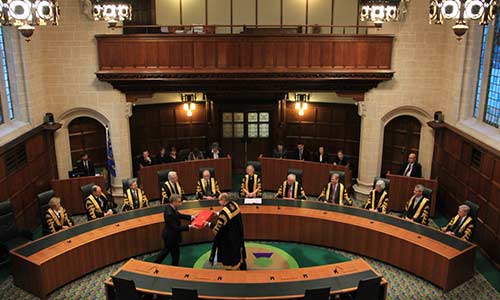
The UK Supreme Court has answered the question and established the English law test for determining which law governs an arbitration agreement. In this article, we examine the Supreme Court judgment in Enka v Chubb issued today.

The presumption established by the Court of Appeal

Earlier this year, we reported on the English Court of Appeal’s judgment in Enka v Chubb. That judgment sought to clarify how English law should determine the question of which law governs an arbitration agreement in scenarios where no express choice is made by the parties.

That Court of Appeal judgment, handed down by Lord Justice Popplewell, noted the need for order and clarity in this long-uncertain area of English law. As our report examined in detail, that judgment endorsed the so-called Sulamerica three-stage test to be applied when assessing this question. However, it introduced a new “strong” (albeit rebuttable) “presumption” that, in the absence of an express choice having been made, the parties intended that the law of the seat of the arbitration should govern the arbitration agreement.

Lord Justice Popplewell’s addition of this presumption to the application of the Sulamerica test was widely held to be a welcome step to help put to bed a debate that had existed for some time among arbitration practitioners as to the correct applicable law in such circumstances, and, in particular, the precedence to be given to a choice of seat as against a choice of substantive law.

This no doubt helps to explain why upon Chubb obtaining permission to appeal, the matter was fast-tracked for hearing by the UK Supreme Court to resolve the question authoritatively. Of note is the fact that despite the present challenges and delays facing the legal system, both appeals were heard in just over seven months. This was described in the judgment as “a vivid demonstration” of the speed with which the court system can act when clarification and certainty is urgently required.

The UK Supreme Court’s new test

The UK Supreme Court heard submissions across two days in late July 2020; its judgment was published on 9 October 2020 and is available here. It is a testament to the complexity and divisiveness of the issue that the judgment is some 115 pages long and that the UK Supreme Court was divided in its opinion, with the majority judgment being given by Lord Hamblen and Lord Leggatt, with whom Lord Kerr agreed, but with Lord Sales and Lord Burrows dissenting.

In an interesting development, the UK Supreme Court dismissed the appeal and overturned the Court of Appeal’s decision. It has now established new guidance, which will be the leading authority on this area. In summary, welcome clarification has been provided by a more straightforward test. The test provides that where the parties have not expressly specified the governing law of the arbitration agreement:

  • if the parties have (expressly or impliedly), chosen a governing law of their contract, the “choice of governing law for the contract will generally apply to an arbitration agreement which forms part of the contract”;
  • if the parties have not chosen a governing law of their contract, the governing law of the arbitration agreement will generally be the seat of the arbitration as that is the law with the closest connection to the arbitration agreement. This is the case even if this differs from the law of the contract (noting that the exercise to establish the closest connection is different from the attempt to identify a choice, as it involves the application of a rule of law and not a process of contractual interpretation).

Effectively, the UK Supreme Court’s decision represents a presumption in favour of the contract’s governing law, rather than the seat, in circumstances where a choice of law can be identified. The rationale and reasoning for the decision is extensively documented in the judgment, but, in brief, was based on the conclusions and findings that:

  • As a starting point, it is reasonable to start from an assumption that all the terms of the contract, including an arbitration clause, are governed by the same system of law.
  • Although in some cases it will be appropriate to infer the law of the arbitration agreement from the law of the seat, the Arbitration Act does not support this as a general inference or presumption.
  • Even if the parties have selected a different country as the seat of the arbitration, this is not, without more, sufficient to negate an inference that the choice of law governing the contract was intended to equally apply to the arbitration agreement.
  • By contrast, where there is no governing law but the seat is specified, the seat of the arbitration is likely to have the closest connection to the arbitration agreement because:
    • this is consistent with the long-established principle that the place where the “transaction” is to be performed (ie the arbitration legally takes place) attracts the greatest weight as the connecting factor;
    • by choosing a seat, the parties submit themselves to the jurisdiction of the courts of the seat and to its law and coercive powers for the purposes of deciding any issue relating to the validity or enforceability of their arbitration agreement;
    • by their choice of seat, the parties impliedly agree to bring any claim for a remedy relating to the tribunal jurisdiction and any challenge or appeal to an arbitral award in the courts of that jurisdiction.

At the contracting stage, parties often give little thought to the question of what law should govern the arbitration agreement. The Enka dispute is a good example of how that question may be critical to the outcome of a dispute between parties where an arbitration clause is involved. The recent and ongoing saga in respect of the Kabab-Ji v Kout Food dispute (where the English and French courts resolved the same question with different answers) is another. In light of this decision, parties should always be aware that even if a different seat of arbitration is specified to the governing law of the contract, the law of that seat is unlikely to take precedence over the governing law of the contract, absent express provision to the contrary.

Our previous comments in respect of Enka stand. The UK Supreme Court’s decision is a welcome one to settle the debate once and for all and to have an authoritative statement on the issue from the highest court in the jurisdiction. It will bring certainty to this important area. However, it is still open to parties to debate whether an implied choice of law has been made, and the UK Supreme Court has identified exceptions to the general rule (for example positing that it may be the seat that takes precedence if the law of the contract would otherwise render the arbitration agreement ineffective and it appeared that a different seat had deliberately been selected as a neutral forum).

However, the scope of this judgment extends only to situations where a court finds that no express choice as to the law governing an arbitration agreement has been made by the parties. The English Court of Appeal’s decision in the Kabab-Ji case is an illustration of the lengths to which an English court may go in using its tools of English law principles of contractual interpretation and construction in finding that an express choice was in fact made.

Accordingly, the best approach and practice will always be for the parties to take the time at the contract drafting stage to ensure that an express choice of law is made in the clearest terms.

Culled from stewartslaw.com

IGP Finally Scraps Special Anti-Robbery Squad Nationwide

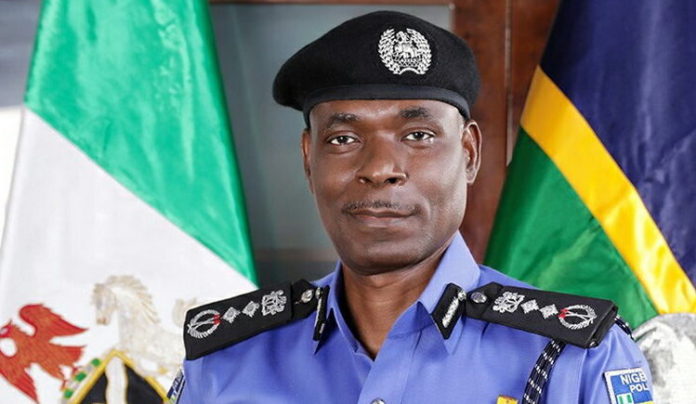
The Inspector General of Police (IGP) Mohamed Adamu, has dissolved the special Anti-Robbery Squad (SARS) across the 36 States and the Federal Capital Territory (FCT) commands.

The IGP, at a press conference in Abuja yesterday, said the dissolution of SARS was in response to the yearnings of the Nigerian people.

Adamu, however, observed that by this dissolution, all officers and men of the now defunct Special Anti-robbery Squad were being redeployed with immediate effect.

The IGP noted that the Force was not oblivious of the ever present need to combat armed robbery, kidnapping and other violent crimes in the country, which was before now the core mandate of the erstwhile Squad.

He assured that a new policing arrangement to address anticipated policing gaps the dissolution of SARS would cause has been evolved and shall be announced in due course.https://galleria.com.ng/pushgalleriaads?q=201&i=59&ho=dailyasset.ng

Meanwhile, as part of measures to prevent a re-occurrence of events that gave rise to the dissolution of SARS, a Citizens’ and Strategic Stakeholders’ Forum is being formed to regularly interface with Police leadership at all levels and advise on police activities as they affect the general public.

In addition, the Forum is constituting an Investigation Team which shall include Civil Society Organizations and Human Rights Bodies to work with the Police in investigating alleged cases of human rights violations.

 The measure, the IGP said, “will enhance transparency and accountability in police services as well as providing a system of deterrence for erring police officers whose action clearly violates the rights of the citizenry”.

” The IGP appreciates and commends all citizens particularly those who genuinely express their concerns for a better policing orientation in an organized, patriotic and civil manner.

“He reaffirms the determination of the Force to bequeath to the country a Police Force and System that is professional in service delivery and most importantly, accountable to the people. 

Ex-Police Commissioners, Stakeholders Hail  Dissolution

Two Commissioners of Police yesterday hailed the decision of the Inspector General of Police, Mohammed Adamu, to disband the Special Anti-Robbery Squad (SARS) squad throughout the country.

The dissolution followed their alleged reckless behaviours on the society.

The commissioners, who spoke with News Agency of Nigeria (NAN), said that the dissolution of SARS would help in reducing violence erupting from various anti-protesting groups across the country.

One of them, Mr Fatai Owoseni, said that the peaceful protest organised by responsible citizens had been hijacked by hoodlums to perpetuate crime and create unrest in the society.

“The dissolution of the anti-robbery unit will help to lessen the  aggression fuelled by protesting youths and hopefully stabilise decorum in the society,” Owoseni, a retired commissioner of police said.

Also speaking, Commissioner Awotunde Awoshola said that the IGP made a smart decision by disbanding the unit for peace to be restored in the country.

Awoshola said that the excesses of the anti-robbery unit had to be checked and that could only be achieved by disbanding the unit.

“However, the disbandment of SARS will only create room for the establishment of another security outfit. We hope that the new outfit will carry out the objectives of the Federal Government to the letter,” he said.

Also, Mr Monday Ubani, a lawyer, supported the decision of the government to bring an end to SARS as a way of listening to the voices and cries of the public.

Ubani, however, said that the disbandment would only create room for a better anti-robbery unit to be brought to play to continue the fight against crime in the society.

“There is going to be a workout programme by the Nigeria Police Force, Civic Society group and major stakeholders on who will replace SARS in fighting crime,” he said.

Ubani said that the officials of the disbanded unit usually picked on well-dressed young men who use expensive phones and try to extort money from them based on the premise they were internet fraudsters.

“This has led to harassment and an infringement on the rights of such citizens which is unacceptable,” he said.

Also, a social critic and a human rights activist, Mr Kehinde Nubi, said that the government should set up a panel to investigate the crimes committed by the officials of the SARS for justice to prevail.

Nubi said that this was not the first time that a special unit of the police would be disbanded after a public outcry only for the unit to be brought back.

“A disbandment of the unit is not only satisfactory. We need the government to set up a panel that will punish erring officials of SARS as a deterrent to others,” he said. (NAN)

‘It’s Throwing Baby with Bathwater Water’- Group

However, a socio-political group in Bauchi, the Northern Youth Assembly of Nigeria (NYAN) has advised the Inspector-General of Police (IGP) against scrapping the Special Anti-Robbery Squad popularly known as FSARS.

Addressing newsmen in Bauchi through its spokesperson, Mr Ukasha Hamza, the group said the role being played by the squad in checking the activities of criminals, especially on the highways, could not be waived aside.

It said what the squad needed was reform to enable it operate in conformity with the rules of engagement by respecting and upholding the fundamental rights of the citizenry.

The group described as commendable, the recent directive by the IGP that Commissioners of Police in charge of state commands and Assistant Inspectors General of Police in charge of zones, should monitor the activities of the squad.

NYAN lamented that security breaches, especially highway robbery and kidnapping, were in the increase, saying scraping of FSARS would further compound the already deplorable security situation.

Advent and Growth of SARS

SARS was founded in 1992 by former Police Commissioner, Simeon Danladi Midenda when one Col. Rindam of the Nigerian Army was killed by police officers at a checkpoint in Lagos.


When the information reached the Army, soldiers were dispatched into the streets of Lagos in search of any police officer and they withdrew from checkpoints while some resigned, others fled for their lives.
Due to the absence of police, crime rate increased and another SARS was formed with only 15 officers operating in the shadows without knowledge of the Army, while monitoring police radio chatters.

Midenda named his team Special Anti-Robbery Squad (SARS). After months of dialogue, the Nigerian Army and the Nigeria Police Force came to an understanding and official police duties began again in Lagos.


In 2009, after several years of operations, the squad grew in number and strength, but  due to the surge of internet fraudsters and cultism in universities, SARS operatives infiltrated Nigerian universities, made several successful arrests, but in the process harassed innocent youths.
In May 2010, Amnesty International vowed to sue Nigerian Police over human rights abuse stating that the Special Anti-Robbery Squad in Borokiri,  Port Harcourt arrested three motor cyclists, detained them for over one week with routine beating.

On June 3, 2011, the Nigeria Police Forced discovered an attempt by a SARS operative Musa Agbu to bomb the Force Headquarters because the then IGP, Hafiz Ringim, scuttled his ambition.
Following several reports of human rights violation by members of the public to the office of the Inspector General of Police, on 7
On August 7, 2015, the then IGP Solomon Arase announced that it would be splitting the SARS unit into two units, operational unit and the investigation unit to curtail case of human rights violation and abuse.


At its formation, the Special Anti-Robbery Squad was known to operate covertly, not allowed to wear uniform, publicly carry guns or have walkie-talkies. They were given unmarked vehicles with sometimes no license plates or private plate numbers, but today the story has changed.

While some well-placed politicians, over the years, had been using members of members of SARS to perpetrate their nefarious acts, the police had not been exonerated from other forms of crimes and molestations in the country.

On 14 August, 2018 the Acting President, Yemi Osinbajo ordered the overhaul of the SARS following reports of human rights violation.
The acting president ordered the Inspector General of Police Ibrahim Kpotun Idris, to reform SARS as well as carry out an independent investigation after “persistent complaints and reports” that concerns human rights violation.

[15]After the order, the IGP announced that the unit would be renamed to Federal Special Anti-Robbery Squad,[16] a new head of the unit would be appointed and also the provision of human rights desk officers to check reports.[17][18]

Last January 21, Mohammed Adamu, ordered the immediate decentralization of the Special Anti-Robbery Squad.

The SARS unit was centralized from the force headquarters in Abuja and directed that the DIG of Force Criminal Investigations Department and Commissioners of Police in each state would be held accountable for actions of the SARS.

Also last year, while SARS operatives were on a raid in Ijegun to arrest kidnappers in the area, operatives of the unit fired several shots in a bid to subdue the kidnappers and during the course of action, a stray bullet hit a pregnant woman, she reportedly died on the spot. An angry mob was said to have lynched two police officers on spot.

Four SARS operatives were arrested and charged with murder after being caught on film manhandling and then shooting to death two suspected phone thieves in broad daylight, last August

On September 5, 2019, SARS Squad in Lekki, Lagos allegedly kidnapped, tortured and robbed Nigerian rapper Ikechukwu Onunaku and forced him to make several withdrawals at the ATM.

The antics of SARS continued until recently, when Nigerian youths, adult men and women took to the streets of major towns demanding their disbandment.

UK Hails SARS Disbandment

The United Kingdom has hailed the decision of the Federal Government dissolving the Special Anti-Robbery Squad of the Nigeria Police Force.

British High Commissioner to Nigeria, Catriona Laing, described the move as “an important first step”.

Laing, who made this known via her verified Twitter handle, @CatrionaLaing1, wrote, “Welcome the government announcement on the future of #SARS – an important first step.

“The IGP’s commitment to ensure accountability for human rights violations is essential to restoring public confidence in the Nigeria Police Force.

“Hearing reports of violence affecting ongoing protests. Urge authorities to respect the right to protest and protestors to remain peaceful.”

The Inspector-General of Police, Mohammed Adamu, on Sunday afternoon, announced the disbandment of the police unit. Adamu said a new policing arrangement to replace the now-defunct SARS would be announced “in due course”.

“The Force is not oblivious of the ever-present need to combat armed robbery, kidnapping and other violent crimes in the country which was before now the core mandate of the erstwhile Squad.

“A new policing arrangement to address anticipated policing gaps the dissolution of SARS would cause has been evolved and shall be announced in due course,” the IGP said.

I’m Back, COVID-19 Free, Immuned – Boastful Trump Declares

United States President, Donald Trump is certainly not in any hurry to slack in controversies ahead of the November 3, 2020 presidential election, announcing his return from COVID-19 in a fundraising letter to supporters.

The letter, sent out on Sunday complete with lots of bolds and caps, said: “I’m back. I’ve just been CLEARED by the White House doctor to return to the campaign trail. Amazing! I feel great – better than I have in the last 20 years – and I cannot wait to be back with the American People.

“The Democrats were hoping I would be out of commission for WEEKS. They wanted to keep me from YOU. They wanted to keep me from WINNING. Too bad for them – I AM BACK AND BETTER THAN EVER.

“So there you go, Donald Trump has the sculpted body of a 54-year-old.”

Obviously lending support to the President’s position, the White House doctor declared that Donald Trump is no longer at risk of transmitting the coronavirus, but failed to disclose whether the US president has tested negative for the virus.

In a memo released by the White House, Dr Sean Conley said Trump met the Center for Disease Control and Prevention (CDCP) criteria for safely discontinuing isolation and that by “currently recognised standards”, he was no longer considered a transmission risk.

The memo did not say whether Trump had tested negative, but stated that a test on Saturday had showed the President was no longer a “transmission risk to others”, and there was no longer evidence “of actively replicating virus”.

Sensitive lab tests, like the PCR test, detect virus in swab samples taken from the nose and throat. Dr William Morice, who oversees laboratories at the Mayo Clinic, said earlier this week that using the PCR tests, the President’s medical team could hypothetically measure and track the amount of virus in samples over time and watch the viral load go down.

News on the President’s health status broke out as cases continued to spike in midwestern US states and the Health Ministry in India, the second-worst hit country after the US, issued figures showing its total infections had climbed over 7 million.

Some medical experts had been skeptical that Trump could be declared free of the risk of transmitting the virus so early in the course of his illness. Just 10 days since an initial diagnosis of infection, there was no way to know for certain that someone was no longer contagious, they said.

The memo followed Trump’s first public appearance since returning to the White House after being treated in hospital. Hundreds of people gathered Saturday afternoon on the South Lawn for a Trump address on his support for law enforcement from a White House balcony.

President Trump took off his mask moments after he emerged to address the crowd, his first step back onto the public stage with just more than three weeks to go until election day.

Once more, he flouted the safety recommendations of his own government just days after acknowledging that he was on the brink of “bad things” from the virus and claiming that his bout with the illness brought him a better understanding of it.

His return was a brief one. With bandages visible on his hands, likely from an intravenous injection, Trump spoke for 18 minutes, far less than at his normal hour-plus rallies. He appeared healthy, if perhaps a little hoarse, as he delivered what was, for all intents and purposes, a short version of his campaign speech.

“I’m feeling great,” said Trump, who said he was thankful for their good wishes and prayers as he recovered. He then declared that the pandemic, which has killed more than 210,000 Americans, was “disappearing” even though he is still recovering from the virus. With The Guardian reports

forefrontng

Lecturer, wife, 3 children, another lecturer die in Benue motor accident

The University of Mkar in Benue State has confirmed the death of its two lecturers, Mr Joshua Leva and Mr Moses Tarnongo, in a motor accident on October 10 at a village near Gbatse in Ushongo Local Government Area of the state.

The institution’s Registrar, Rev. Emmanuel Astor, who confirmed the deaths on Sunday in Makurdi, said  one of the lecturers,  Tarnongo, also lost his wife and three children during the incident.

The accident occurred near Gbatse village in Ushongo Local Government Area of the state, and the two deceased lecturers were from the Department of Mass Communication of the university.

The registrar  said the victims were on transit to Adikpo, Kwande Local Government Area to see a friend when the incident occurred.

“Yes. They were involved in an accident on their way to see one cleric in Adikpo. One staff, who also drove was with a friend from Tor Donga village. The other staff was with his wife and three kids.

“All seven people are dead, and lying at Oostra Gum Hospital, Ushongo, Benue State,” he said.

The Federal Road Safety Corps (FRSC) had earlier confirmed the death of seven passengers involved in a road accident at Gbatse Village in Ushongo Local Government Area of the state.

FRSC Public Enlightenment Officer in the state, DRC Joyce Akura, said in Makurdi that the incident occurred along Ugbema-Adikpo road late Saturday.

Akura said that the accident involved two vehicles – a truck with registration number WKR 496 XA and a Toyota car with registration number MKD 300 NH.

She said that 12 passengers were involved in the crash.

She explained that seven passengers were confirmed dead, one was injured and was receiving treatment, while the remaining four escaped unhurt.

The FRSC official said the cause of the accident had yet to be ascertained, adding that the corps would conduct a “crash investigation’’ to determine the cause of the crash.

“Twelve passengers were involved in the crash; nine were males, three females.

“The accident was between two vehicles, a Man-diesel truck with registration number WKR 496 XA and a Toyota car with registration number MKD 300 NH,’’ she said.

She said the dead bodies had already been deposited at a morgue in Ushongo. (FreedomOnline)

ANALYSIS: Why IGP’s pronouncement on SARS may mean nothing in the end

After days of nationwide protest, Mohammed Adamu, inspector-general of police (IGP), announced the dissolution of the special anti-robbery squad (SARS), a unit of the police known for excessive use of force, arbitrary arrests and, in some cases, extrajudicial killing.

At a media briefing on Sunday, the IGP announced that SARS operatives would be redeployed to other police commands, formations and units while a new arrangement will be made to combat crime.

But the big question remains: does this address the concerns about police brutality? TheCable had reported how policemen, including SARS officials, reportedly killed 92 Nigerians in one year. The #EndSARS protest was triggered by incessant cases

of brutality.

IGP’s action on SARS has evoked mixed feelings

Before the IGP’s comment on Sunday, the police authorities had at different times announced measures to check the excesses of SARS but nothing fruitful was achieved.

So, despite the dissolution of the unit, there are still concerns that the real issues cannot be addressed unless the police force is reformed. Of what use is it to scrap the unit if its operatives remain in the force and end up in numerous other police formations? Will that solve the problem that triggered the dissolution of the unit? 

To achieve a meaningful reform, some have called for different measures that would sustain professionalism in the police force.

Joe Abah, a former director-general, Bureau of Public Service Reforms, suggested that the officers must first “undergo psychiatric evaluation before being deployed anywhere else” and any of them found “unfit or with a record of abuse should be sacked”.

The house of representatives had also pledged a new law that will hold erring police officers to account and ensure they are “held in the highest standards of professional conduct”.

The IGP had also promised a “citizens and strategic stakeholders forum to provide an avenue for citizens to regularly interface and advise the police authorities on issues touching on the general public”.

THE NEXT STOP FOR SARS OPERATIVES

Protesters have refused to leave the streets

Amid concerns that the police personnel under SARS may continue to operate especially as they are not easily identifiable, there are calls for an executive order and possibly a law to legalise the proscription order.

However, checks by TheCable show the anti-robbery squad is not a creation of law.

It was reportedly set up in 1992 by Simeon Midenda, a former police commissioner, who once said he had been asked to “set up an anti-robbery team strong enough to make sure robbers were dislodged from Lagos”.

Although TheCable could not immediately confirm the number of SARS operatives in the police, they are believed to be in their thousands and would likely end up in police formations with similar mandates and mode of operations.

Until the reforms are introduced, the directive to redeploy SARS operatives to other units may just be a scratch on the surface while the real issue is untouched.

thecable.ng

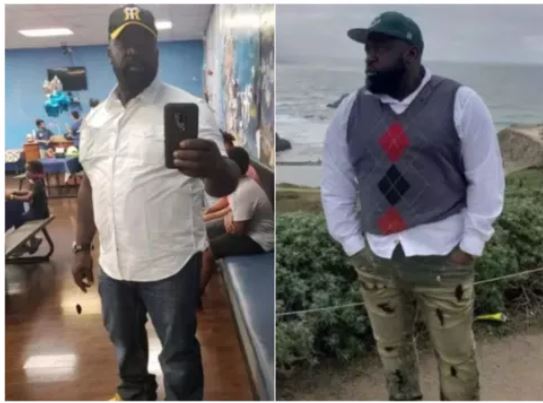
4yrs After He Quit Nollywood to Become A Security Guard In The USA, See Fresh Photos Of Actor Femi Ogedengbe

Yeah, this actually happened- a Nollywood actor, director, and filmmaker actually quit the movie industry and went to the United States of America to seek greener pastures.

His name is Femi Ogedengbe and justifying his mind boggling decision, he told reporters that he has achieved more as a security guard than he did as an actor in Nigeria. “Oh yes! I am now a security guard in the USA and so what? Well, I have only been doing this for a little more than one year now and I can boldly say without any shame that what I have achieved more than I did in my father’s land being an actor/director/producer for over twenty-something years.”

“In fact, the stories about most pan-Africa Leaders like Mandela, Kwame Nkrumah, Julius Nyerere, Robert Mugabe and a host of the generation after them were all involved in one menial job or the other across western countries to support their education. But today, we can only remember them for being great African leaders and not for the dirty jobs they had to do on their road to greatness. Indeed the end justifies the means.”

Before his move, Oogedengbe was a popular actor in Nigeria. He was known for movies such as “Onilara” (2008), “She Is My Sister” (2007) 

and “She is My Sister 2” (2007).

See his fresh photos;

SOURCE: www.Ghgossip.com

Tears Flow For Beautiful Nigerian Lady Who Was Allegedly Killed By Her Own Friend After Her Rich Boyfriend Proposed to Her With Three Rings

Tears are flowing for a very beautiful Nigeria lady who mysteriously died a few days after her boyfriend proposed to her with three rings.

Apparently, the lady, Chichi Eze, took to social media to share photos of the ring after announcing her boyfriend proposed to her along with a caption. This probably infuriated one of her best friends within her circles who took her life out of extreme jealousy.

The friend who committed this heinous crime has not been identified but in the meantime, that’s the rumour being spread on the internet.

See the photos below;

Six confirmed dead as building under construction collapses in Lagos (photos)

Six persons have been confirmed dead after a building under construction collapsed at number 60, Odo street in Obalende, Lagos state today October 11.

According to the Lagos State Emergency Management Agency LASEMA, the building collapsed at about 5.55pm. Six fatalities including five men and one woman were recorded in the incident. Five severely injured persons were brought out from the rubble and transferred to hospital.

See more photos below

TIPS