

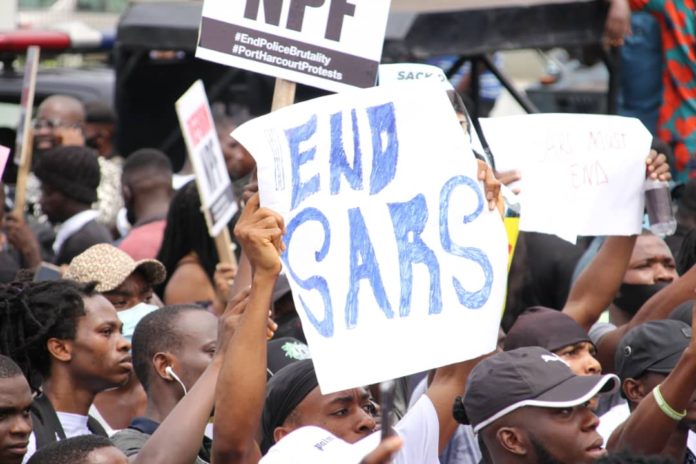

#EndSARS: Almost A Revolution
By Reuben Abati
The increase in the pump price of fuel, in 2020, a fall-out of the deregulation of the down stream sector, did not compel the youths of Nigeria to troop out onto the streets. The additional hike in electricity tariffs was not enough to ignite their anger either. The government of the day explained to the people that the additional burden of higher prices was part of the sacrifice they had to make as citizens. The impact of COVID-19 was hobbling the country: loss of revenue, inflation, a weak national currency, foreign exchange crisis. The people showed understanding. The strongest point about the average Nigerian is that he or she is resilient, long-suffering, yet ever ready to give up a little comfort for the country’s sake. Nigerian leaders do not show as much readiness or patriotism in the same manner. Nonetheless, Nigerians continue to endure, but the lesson of the #EndSARS crisis that has now engulfed the country is that it is not good to take the people’s patience for granted.
Last week, it took an encounter between a young man and the notorious Federal Special Anti-Robbery Squad (FSARS) in Ughelli, Delta State, for the people to cry out and show their outrage over unending cases of police brutality. A young man by name Ochuko, was first said to have been killed by the men of the FSARS. It was later established that he did not die. He was brutalized. His vehicle was seized by the police. He ended up in hospital. The Minister of State for Labour and Employment, Festus Keyamo, SAN who was born in Ughelli intervened and tried to explain. He said the victim was alive and that in fact, the outfit involved in the encounter was not SARS, but Operation Delta Safe. These were policemen all the same. The youths of Ughelli therefore turned their anger on the police. Whether it was Operation Delta Safe or SARS did not matter, the truth is that the Federal Special Anti-Robbery Squad established in 1992 has over the years become synonymous with impunity and brutality.
CSP Simeon Danladi Midenda (assisted by DSP Taiwo Lakanu) who helped to set up the unit as a default strategy at the time, is on record as having said that the unit, one of 14 in the Nigeria Police Crime and Intelligence Division, has “deviated from the original concept.” The exact nature of that deviation is that over the years, Nigerians concluded that FSARS had transformed from being a crime-fighting unit of the Nigeria Police into a criminal unit, granted automatic immunity by official status and the guns that they wield. Rather than fight armed robbery, SARS officials spent more time terrorizing Nigerians. The many stories that have been written about this unit of the Nigeria Police convey a picture of how Nigeria itself has deteriorated and how institutions of state can be easily used to condone and promote impunity. In 1971, Nigerian policemen killed Kunle Adepeju, a promising Nigerian student at the University of Ibadan, who was not even involved in a protest about the inefficiency and incompetence of a University catering manager.
In April 1978, the police killed Nigerian students for daring to query the then Olusegun Obasanjo military regime. The government had increased the cost of meal on campuses by 50k per day. The students revolted. The Nigeria Police, this same one, joined by soldiers who were called out to quell the protests, littered every campus from Zaria to Lagos with corpses. In 1981, they killed Dele Udoh, a 24-year old, award winning athlete. He was gunned down for having the temerity to argue with a policeman. With the emergence of a unit of the Nigeria Police Force called Nigerian Mobile Police (MOPOL) Nigerians were finally confronted with the spectre of police brutality in full force. It was a para-military police unit. It would eventually distinguish itself internationally and bring laurels to Nigeria in UN, AU, ECOWAS international peace-keeping operations. But locally, the MOPOL, as it was called, was known for its human rights abuses. Under Inspector-General of Police, Sunday Adewusi (1981- 1983), the MOPOL became so notorious, so evil, that it was called the “Kill and Go Police”.
After dismissing the civilian Shehu Shagari administration in 1983, the military rulers that came after had to whittle down the influence of the MOPOL. It had become a threat not just to society but also the military. MOPOL may have been bad but SARS is worse. Nigeria’s Special Anti-Robbery Squad inherited the “Kill and Go” label and turned it into a shameless brand. Nobody is spared. You only need to drive a good car, wear dreadlocks, look like you had just returned from an overseas trip, speak with a foreign accent, or look like the son or daughter or wife of a rich man, or make the mistake of being seen with an expensive phone or tablet, and you automatically become a target. Walking too confidently on the streets of Nigeria is now regarded as a crime by SARS policemen and yet, the Nigerian Constitution guarantees the freedom of movement. SARS officials pry into people’s bags, enter their houses and look into soup pots and refrigerators, and ask for a share of family assets or else, they will “kill and go” and as they often say, “nothing will happen.” And indeed, often, and always, nothing happens, and if anything happens at all, such policemen are protected by the police and subsequently rewarded with promotion and better postings. They are not answerable to anybody in the state to which they are deployed. They operate as a Federal Force! This is exactly the problem. A Police system that is supposed to protect the safety of lives and property but which operates like an enemy of the people, and the state lacks the will to do what is right, is a threat to everyone.
It has been argued that we should never have expected, and should not expect much from the Modern Nigeria Police. It was established by the colonial authorities as a force of domination, division, suppression, and control, and so the argument goes, we should expect the Modern Nigeria Police Force to remain true to its antecedents. The weakness of that argument is that it props up colonial determinism. It has been 60 years after independence. We can’t keep blaming the past. My take, in fact is that the colonial police master is much better than the post-colonial police masters we now have. Present day internal colonialists are far less human than the British colonialists. There are many Nigerians who will readily argue that colonialism had its good sides, highlighted ironically by the wickedness of a generation that inherited independence and subverted it.
Too many panels and committees have been set up to reform the Nigeria Police: why has that not worked? For more than 40 years, civil society groups in Nigeria and the International Community have been drawing attention to human rights abuses by the Nigeria Police: why has nobody listened? Every Inspector General of Police since the 1990s has talked about Police Reform, Police decentralization, Police restructuring, but that has also not worked. The current #EndSARS protest is a response to years of inaction and the deafness of the Nigerian state. The argument is not about a colonial heritage. It is about the failure of leadership. This is worsened by the fact that the protesters do not trust the Nigerian government anymore. There is nothing new about police brutality and the violation of human rights by the Nigerian State, but the people have seen that it may never end. For the past four years, there have been similar protests and demands. This is not the first time Government will restructure the notorious SARS or direct that checkpoints should be disbanded. In 2017, 2018, 2019, the police hierarchy gave the same directives. The police simply went about their duties and punished the people even more. It is tragic to have a Police system that the people do not trust.
After the aforementioned Ughelli incident, the Inspector General of Police – Mohammed Adamu announced that SARS officials had been ordered off the streets, checkpoints banned and that every SARS official must wear a uniform. The public laughed. They dismissed the directive as “an audio directive.” AUDIO used in that context in Nigeria’s street talk means mere sound, nothing of substance, it can be heard but there is nothing to it because it is deceptive and dishonest. The people have been proven right. When a people begin to call those who are supposed to protect them liars and hypocrites, something has gone crazy in that society, and a bomb is ticking. Indeed, within 24 hours after the IGP’s mollifying directives, SARS officials were seen again on the streets, acting like emperors as usual. The people then resolved that “Enough is Enough”. In Ughelli, Lagos, Osogbo, Abuja, and elsewhere, they confronted the SARS officials. The Police fought back. Nigeria now looks like a scene out of William Shakespeare’s Coriolanus. “Na on top that matter we dey since oh” as the people say.
The people standing up to the Nigeria Police are to be exact, the youths of Nigeria. The #EndSARS campaign is an expression of youth power. What we have seen is a whole generation speaking up. Their protest goes beyond police brutality. It is an outflow of pent up anger about how Nigeria has been mismanaged over the years. It is a protest about the failure of the state, the reign of impunity and the abuse of uniform, not just by the police, but Customs, Immigration, Civil Defence, Road Safety officials, and anyone who wears an official uniform and thinks he or she has been empowered to humiliate and oppress less privileged Nigerians. But the Phoenix has risen. Before now, many young Nigerians kept calling on the older generation of activists to speak up for them about contemporary issues. The majority actually thought the duty of liberating Nigeria should be carried out by the same set of old actors. This time, new heroes and heroines have shown up from the most unlikely quarters. Their protest goes beyond police brutality. It demonstrates the power of technology and the nature of a modern revolution and its potency. The Arab Spring was triggered off in December 2010, by an act of self-immolation by a Tunisian youth in protest over police corruption and brutality. In Nigeria, a Revolutionary Spring has been afoot for days. Well, almost.
Nigerian youths took over not just the streets of Nigeria, they possessed the international social media space. They ignited the fire of patriotism at home and in Diaspora. There have been protests by Nigerians across the world- in Paris, London, Johannesburg, Monrovia, Dublin and elsewhere. On Twitter, a dedicated team called out international celebrities and governments to help defend the rights of Nigerians to live in peace in their country. Within 24 hours, the #EndSARS campaign became the Number one trending topic on social media worldwide. Governments and embassies joined the protest, calling on the Nigerian government to address the grievances of its angry citizens. I saw Drake, Cardi B, John Boyega, Trey Songz, Chance the Rapper, Estelle, global cultural figures asking questions about Nigeria. It was in the government’s interest to respond. The IGP has now announced a complete disbandment of the Special Anti-Robbery Squad, but two days later, nobody trusted him. Nigerian youths shouted “AU-DI-O”. They have remained on the streets. They have asked that the President of Nigeria Muhammadu Buhari must address the nation. He has now done so. It was in his interest to do so. Every step that has been taken by the Nigerian government in the last three days is not because the government listens, but a response to a desperate situation. #EndSARS was beginning to graduate to an #EndNigeria campaign. Even the Vice President and one of his daughters joined the campaign. One of the President’s daughters, Zahra Buhari also tweeted on the side of the people. The children of both billionaires and the poor are united. One of them, DJ Cuppy, has said she had to defy other people’s counsel but as a young Nigerian she felt obliged to speak up.
The #EndSARS campaign has produced new heroes. We have seen an expression of youth anger and patriotism that we never expected was possible. Omoyele Sowore, the activist who ignited the fire that now burns, must be pleased. The other hero is Aisha Yesufu, the foster daughter of the North, who has emerged as a symbol of the protest. There is Rinu, the young lady who acted as spokesperson at the Lagos State House of Assembly. And Segun Awosanya, the #EndSARS architect and spirit. Deji Adeyanju. Dipo Awojide. Reno Omokri. There are others: those who lived, those who died, the living ancestors, and members of Corporate Nigeria who stood up to be counted. The Nollywood and Creative Industry team gave verve to the protest: Falz the Bad Guy, Wizkid, Davido, Tiwa Savage, Paul Okoye, Rema, Don Jazzy, Mike Edwards, Genevieve Nnaji, Toke Makinwa, too many to mention… and the BBNaija queen – Tacha showing that far beyond beauty and brains, conscience matters… Notably, there is no single hero. The youths of Nigeria led themselves. They blocked politicians from hijacking the protest, and therein lies the strength of this unfolding Nigerian story. We have not yet seen the end of it. It is a much bigger story: the story of how a strategic police unit that used to be known as the “Scorpions” ended up as a group of “Monkeys”, looking for “Bananas”, so badly they became involved in land matters, snatched ATM cards, and became “AsSARSins.”
EVAPWD Kicks Against Onochie’s Nomination
…Asks Senate To Reject The APC Apologist
The Campaign for Equal Voting Access for persons with disabilities (EVAPWD) has asked the Nigerian Senate not to confirm Lauretta Onochie’s nomination as INEC National Commissioner.
The group believes the confirmation of Ms Onochie, whom it described as a foot soldier of APC, would raise credibility issues for the Independent National Electoral Commission given that the presidential aide has not hidden her sympathy for the ruling All Progressives Congress(APC).
David Anyaele, chairman of the group also queried the integrity of Mrs Onochie, haven displayed unparalleled partisan support for the ruling party contrary to relevant provisions of the constitution.
“The Campaign for Equal Voting Access for persons with disabilities (EVAPWD) is worried over the nomination of Ms. Lauretta Onochie, a foot soldier and senior sympathizer of the ruling APC, and Senior Special Assistant to the President on Social Media as National Commissioner of the Independent National Electoral Commission (INEC) representing the South-South.”
The honesty and integrity of Ms. Onochie to serve as INEC official is questionable as she has been very partisan in the last 5 years. Hence, Item F, paragraph 14 of the third schedule of the 1999 Constitution of Nigeria (as amended) prohibits a person with questionable integrity from serving as a member of INEC
“EVAPWD calls on the Nigeria Senate to reject her nomination to avoid contamination of the successes recorded so far by INEC and protect the election management body from political party influences”.
thenigerialawyer
SWAT replaces SARS: Stakeholders okay 5-point demand of protesters; IGP summons all SARS operatives to Abuja
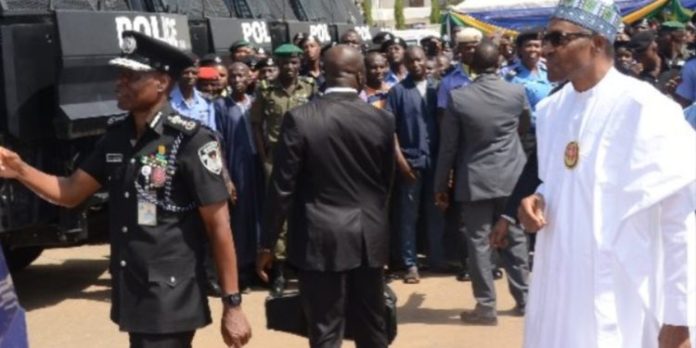
It took flaring tempers, the death of protesters and policemen, but finally, the Inspector General of Police, Mr. Mohammed Adamu, has ordered all personnel of the defunct SARS to report at the Force Headquarters, Abuja for debriefing, psychological and medical examination.
But he has, again, set up another group, the Special Weapons and Tactics (SWAT) unit to replace the inglorious SARS. Members of the SWAT unit will undergo psychological and medical examination to ascertain their fitness and eligibility for the new assignment
According to a statement by Force Headquarters spokesman, Deputy Commissioner of Police Frank Mba, Adamu acted with his rights in accordance with Section 18 (10) of the Police Act 2020.
Mba adds, “The officers are expected to undergo this process as a prelude to further training and reorientation before being redeployed into mainstream policing duties.
The medical examination will be carried out by the newly set-up Police Counselling and Support Unit (PCSU), a Unit, which henceforth shall engage in psychological management, re-orientation and training of officers of the Force deployed for tactical operations and other duties.
“The Unit, which is domiciled with the Force Medical Department and coordinated by the Force Medical Officer, has its membership drawn from amongst psychiatrists, psychologists, medics, pastors and imams, Public Relations practitioners, Civil Society and other Human Rights groups with relevant qualifications and expertise.
“Meanwhile, the IGP has set up a new Special Weapons and Tactics (SWAT) Team that will fill the gaps arising from the dissolution of the defunct SARS.
“Prospective members of this new team will also undergo psychological and medical examination to ascertain their fitness and eligibility for the new assignment. They are to commence training at the different Police tactical training institutions nationwide, next week.
“While personnel from the Police Commands in the South-East and the South-South will be trained at the Counter-Terrorism College, Nonwa-Tai, Rivers State, those from the Police Commands from the North and the South-West will be trained at the Police Mobile Force Training College, Ende, Nasarawa State and the Police Mobile Force Training College, Ila-Orangun, Osun State, respectively.
“While reaffirming his irrevocable commitment towards the successful and holistic implementation of the Police reforms, the IGP enjoins members of the public, particularly protesting citizens to exercise restraint and allow measures being put in place to come to fruition and engender a Police Force that would meet the yearnings and aspirations of the citizenry.”
Earlier, Adamu convened a meeting with stakeholders, agreeing to meet #EndSARS protesters’ demands.
According to a statement by Presidential spokesman, Mr. Femi Adesina, the new initiatives followed directives by President Muhammadu Buhari on dissolution of Special Anti-Robbery Squad and immediate response to yearnings of citizens
One of the demands acceded to by the stakeholders meeting include halting use of force against protesters and the unconditional release of arrested citizens.
The demands, according to a statement by Presidential spokesman, Mr. Femi Adesina, include halting use of force against protesters and unconditional release of arrested citizens.
The meeting, organized by the Office of the Inspector General of Police and National Human Rights Commission, was a multi-stakeholders’ forum attended by leaders and representatives of civil society organisations in Nigeria, activists from the entertainment industry and the #EndSARS movement and development partners.
The Ministry of Police Affairs and Police Service Commission were also present at the meeting that affirmed that the five-point demands of the protesters and the #EndSARS movement are genuine concerns and will be addressed by the Government.
A communiqué of the Stakeholders’ Meeting said:
“Following the public protests regarding various forms of human rights violations by the Special Anti-Robbery Squad (SARS) and the consequent disbandment of the unit by the Inspector General of Police, Mohammed Adamu, there arose the need for stakeholders engagement to build trust and restore public confidence in law enforcement.
“The agitations also brought to the fore, the need to implement the recommendations of the Presidential Panel on the Reform of the Special Anti-Robbery Squad (SARS).
“The Forum was addressed by the Inspector General of Police and the Executive Secretary of the National Human Rights Commission.
“The Forum collectively: welcomed the dissolution of the Special Anti-Robbery Squad (SARS) by the Inspector General of Police, Mohammed Adamu; reaffirmed the constitutional rights of Nigerians to peaceful assembly and protest; further affirmed the sanctity of life of every Nigerian and the role of the Police in protecting this right; affirms that the five-point demands of the protesters and the #EndSARS movement are genuine concerns and will be addressed by the Government.’’
According to the communiqué signed by the Inspector General of Police and Executive Secretary of the National Human Rights Commission, Tony Ojukwu, Esq, the Forum noted that the dissolution of SARS presents an opportunity to embark on comprehensive reforms aimed at repositioning the Nigerian Police Force as a modern, responsive and citizens-centred law enforcement organisation.
“The Forum further notes that the proposed reforms should be anchored under the basis of the White Paper on the Report of the Presidential Panel on the Reform of the Special Anti-Robbery Squad which was jointly authored by the National Human Rights Commission, the Federal Ministry of Justice, and the Nigeria Police Force.
“The Forum affirms that reform proposals for the Nigerian Police Force will be based on the Constitution of the Federal Republic of Nigeria and existing legislations such as the Nigeria Police Act, 2020, the Nigeria Police Trust Fund Act, 2019, the Administration of Criminal Justice Act, 2015 the Anti-Torture Act, 2017, and the National Human Rights Commission Act, 2010 amongst others.
“Following the dissolution of SARS, the Forum calls for the following immediate steps to be taken in restoring public confidence and trust in the Police:
▪︎ An order by the Inspector General of Police to all State Commands to halt the use of force against protesters;
▪︎ Unconditional release of arrested protesters and citizens;
▪︎Open communication and outreach to citizens to establish trust and confidence and;
▪︎ roadmap for the implementation of the White Paper of the Presidential Panel on the Reform of the SARS.
“The Forum welcomed the proposal to set up an Independent Investigation Panel to look into the violations of human rights by the defunct SARS and other segments of the Nigerian Police. The Forum agrees to the setting up of this Independent Panel by the National Human Rights Commission within the next one week. An open call for Memoranda from members of the public whose rights have been violated by the defunct SARS and other segments of the Police will be released by the Commission within one week.
“The Forum recommends the psychological evaluation, training and retraining of disbanded SARS officials prior to re-deployment.
“The Forum resolves to set up the following Technical Sub-Committees to design an implementation roadmap and work plan for the implementation of the White Paper: Training, Capacity and Re-orientation; Logistics: Infrastructure, Communications and Technology; Arrest, Detention, and Investigations; Regulations, Oversight and Accountability and Financing and Partnerships.’’
The communiqué stated that the sub-Committees will be supported by the National Human Rights Commission and other civil society organisations.
FG accepts 5-point demand of #EndSARS protesters
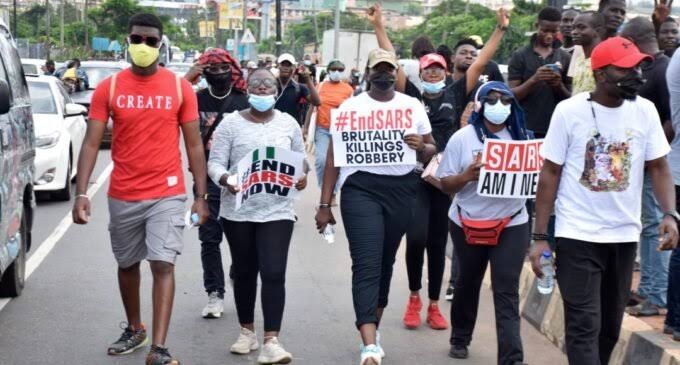
The presidential panel on the reform of the special anti-robbery squad (SARS) has accepted the five-point demand of the #EndSARS protesters, Femi Adesina, presidential spokesman, has said in a press statement.
Over the past few days, there have been renewed calls for the scrapping of the special anti-robbery squad (SARS) of the Nigeria police force over reports of brutality and extrajudicial killings.
Following the protests, Mohammed Adamu, inspector-general of police (IGP), had disbanded the SARS unit.
President Muhammadu Buhari had also issued a directive, calling for a reform of the police force.
However, the protests have continued, with activists issuing a five-point demand which include release of all persons arrested and justice for victims of police brutality.
Other demands are “setting up an independent body to oversee the investigation and prosecution of all reports of police misconduct (within 10 days); psychological evaluation of all disbanded SARS officers before they can be redeployed, and increase police salary so that they can be adequately compensated for protecting lives and property of citizens”.
According to the statement issued on Tuesday by Adesina, at a meeting convened by the IGP with stakeholders, it was agreed that the demands of the protesters would be met.
The meeting, organised by the office of the IGP and the National Human Rights Commission (NHRC), had in attendance representatives of civil society organisations, activists from the entertainment industry and the #EndSARS movement, among others.
Also present at the meeting were officials of the ministry of police affairs and the police service commission.
According to Adesina, a communiqué issued at the end of the meeting, which held on Monday, focused on implementation of the recommendations of the presidential panel.
“Following the public protests regarding various forms of human rights violations by the Special Anti-Robbery Squad (SARS) and the consequent disbandment of the unit by the Inspector General of Police, Mohammed Adamu, there arose the need for stakeholder engagement to build trust and restore public confidence in law enforcement,” it read.
“The agitations also brought to the fore, the need to implement the recommendations of the Presidential Panel on the Reform of the Special Anti-Robbery Squad (SARS).
“The Forum was addressed by the Inspector General of Police and the Executive Secretary of the National Human Rights Commission.
“The Forum collectively: welcomed the dissolution of the Special Anti-Robbery Squad (SARS) by the Inspector General of Police, Mohammed Adamu; reaffirmed the constitutional rights of Nigerians to peaceful assembly and protest; further affirmed the sanctity of life of every Nigerian and the role of the Police in protecting this right; affirms that the five-point demands of the protesters and the ENDSARS movement are genuine concerns and will be addressed by the Government.’’
According to Adesina, the communiqué which was signed by the IGP and Tony Ojukwu, NHRC executive secretary, noted that the dissolution of SARS presents an opportunity to embark on comprehensive reforms aimed at repositioning the force as a “modern, responsive and citizens-centred law enforcement organisation”.
“The Forum further notes that the proposed reforms should be anchored under the basis of the White Paper on the Report of the Presidential Panel on the Reform of the Special Anti-Robbery Squad which was jointly authored by the National Human Rights Commission, the Federal Ministry of Justice, and the Nigeria Police Force,” it read.
“The Forum affirms that reform proposals for the Nigerian Police Force will be based on the Constitution of the Federal Republic of Nigeria and existing legislations such as the Nigeria Police Act, 2020, the Nigeria Police Trust Fund Act, 2019, the Administration of Criminal Justice Act, 2015 the Anti-Torture Act, 2017, and the National Human Rights Commission Act, 2010, amongst others.
“Following the dissolution of SARS, the Forum calls for the following immediate steps to be taken in restoring public confidence and trust in the Police: An order by the Inspector General of Police to all State Commands to halt the use of force against protesters; unconditional release of arrested protesters and citizens; open communication and outreach to citizens to establish trust and confidence and a roadmap for the implementation of the White Paper of the Presidential Panel on the Reform of the SARS.
“The Forum welcomed the proposal to set up an Independent Investigation Panel to look into the violations of human rights by the defunct SARS and other segments of the Nigerian Police. The Forum agrees to the setting up of this Independent Panel by the National Human Rights Commission within the next one week. An open call for Memoranda from members of the public whose rights have been violated by the defunct SARS and other segments of the Police will be released by the Commission within one week.
“The Forum recommends the psychological evaluation, training and retraining of disbanded SARS officials prior to re-deployment. The Forum resolves to set up the following Technical Sub-Committees to design an implementation roadmap and work plan for the implementation of the White Paper: Training, Capacity and Re-orientation; Logistics: Infrastructure, Communications and Technology; Arrest, Detention, and Investigations; Regulations, Oversight and Accountability and Financing and Partnerships.’’
TheCable
#EndSARS: Soldiers seize ARISE TV camera at national assembly
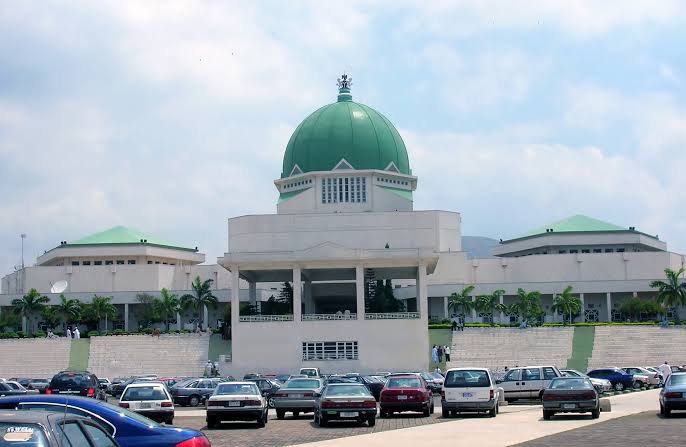
Officers of the Nigerian Army at the national assembly have seized a camera and microphones belonging to ARISE TV at the #EndSARS protest currently holding at the assembly.
The protesters told TheCable reporter on site that they were not leaving the assembly until they get the camera and all that was taken away from them.
The cameraman told TheCable that they took all his gadgets, save his microphone “used to go live”.
After over an hour at the national assembly, Aisha Yesufu, a socio-political activist present at the protest told the protesters that she just got information that the camera has now been returned.
You can watch more from the protest ground via our Facebook live feed here:
TheCable
Restructuring: Lifeline For A Faltering Republic (1)
By Ebun-Olu Adegboruwa, SAN
For some months now, there has been a growing agitation for the restructuring of the entity called Nigeria. In times past, there has been lots of clamour from Nigerians, for the All Progressive Congress (APC) led government, to fulfil its promise of restructuring, to the nation. By way of reminder, the APC had covenanted in its Manifesto, before the 2015 general elections, to “initiate ACTION to amend our Constitution with a view to devolving powers, duties and responsibilities to states and local governments in order to entrench true Federalism and the Federal spirit.” You would well agree with me that you can only “entrench” that which does not hitherto exist. So, the APC was well aware that Nigeria has not been operating “true Federalism”, and thus, the major campaign theme for the 2015 election for the APC, was devolution of powers. The song then, from prominent APC stalwarts, was true federalism. It is thus understandable why the party has been under severe criiticism, for abandoning its own Manifesto, after it secured power, following its victory in the 2015 and 2019 general elections. It is totally uncharitable, for any political party to climb to power on the altar of sloganeering and deceit. And that is exactly what the APC has done, such that six years down the lane after it took over the reins of power, Nigeria is still neck deep in unitary federalism.
In the words of the learned authors of Merriam-Webster Dictionary, to RESTRUCTURE is “to change the makeup, organization or pattern of” something, meaning that restructuring involves some fundamental alteration of the existing structure. The structure of the entity presently called Nigeria is spelt out in a document referred to as the Constitution of the Federal Republic of Nigeria, 1999. Although it claims to be a federal Constitution, it was in fact enacted by the military regime of General Abdulsalam Abubakar (Retd.), as a document imposing a unitary system of government on the people of Nigeria, by concentrating all powers in the federal government and leaving the States and the local governments totally powerless, and I dare say, rudderless.
Presently, virtually all regions in Nigeria are in support of and yearning for restructuring, through a fundamental rejigging of the entire fabric of what is left of Nigeria. What we should ponder upon now is why the entity called Nigeria is no longer suitable to the South and the North, given the latest agitations from all the regions. The simple answer, to my mind, is that Nigeria is in the hands of a cabal, a tiny few, cutting across tribe and religion, spread and entrenched within the business sector and indeed all important aspects of our national life, not excluding even the legal profession. They have cornered the commonwealth of the nation, they are in charge of everything useful to our economic life and because of this, they are not directly affected by the sufferings and problems that the masses go through, which in itself explains why they are vehemently opposed to the idea of any form of change at all, relishing as it were, the booties falling their way from the status quo.
In its section 16 (1), the Constitution of the Federal Republic of Nigeria states expressly that “the State shall:
(a) harness the resources of the nation and promote national prosperity and an efficient, dynamic and self-reliant economy; for every citizen on the basis of social justice and equality of status and opportunity.
(d) that the economic system is not operated in such a manner as to permit the concentration of wealth or the means of production and exchange in the hands of a few individuals or of a group.”
As you would well agree with me, Nigeria is running exactly on the opposite of the constitutional imperative stated above, given that the national resources of this great nation are only circulating between very few individuals and their favoured agents. We surely cannot continue in this form at all and expect things to remain normal. No. A time is coming, and it is nearer than it used to be, when the people will revolt, when the gunpowder will explode, when tolerance will be exhausted and endurance will thin out. No one should take the people for granted permanently. So, our leaders should listen to the voices of reason and do the needful very urgently. Without any doubt, APC claimed to have set up a committee on restructuring without any meaningful result, playing political tricks on the people and dancing on the tribulations of its followers. For sure, the national assembly is currently on its regular weather-beaten track of constitutional amendment, with almost very predictable results. This must stop. We cannot keep taking people round in endless circles all the time and think that they are fools. Nigerians are choking right now! It is becoming totally unbearable and something has to give.
Someone would well ask me, why do we need restructuring? Please come along with me, on a small exercise. Section 153 (1) of the Constitution established the following federal agencies:
Independent National Electoral Commission Council of State
Federal Character Commission Federal Civil Service Commission
Code of Conduct Bureau Federal Judicial Service Commission
National Defence Council National Economic Council
National Judicial Council National Population Commission
National Security Council Nigerian Police Council
Police Service Commission Federal Mobilisation Allocation and Fiscal Commission
From all the above, it can be seen that the powers of the federation called Nigeria are all concentrated in either this “federal” institution or that “national” agency. In fact, some states do not have any agency as such, of their own, established for any purpose, other than these federal bodies. Not stopping there, the Constitution then finally castrated the states and the local governments, by enacting the following provisions, in section 4:
“4 – (2) The National Assembly shall have power to make laws for the peace, order and good governance of the Federation or any part thereof with respect to any matter included in the Exclusive Legislative List set out in Part 1 of the Second Schedule to this Constitution.”
Now, let us travel to the Second Schedule of the Constitution, to examine some of the matters concentrated in the hands of the federal government to the detriment of the rest of the federation.
EXCLUSIVE LEGISLATIVE LIST
“Arms, Ammunitions and Explosives, Aviation,
Bankruptcy and Insolvency Banks, Commercial and Industrial Monopolies
Control of Capital Issues Copyright, Currency, Customs and Excise Duties
Defence, Drugs and Poisons Evidence, Exchange Control, Export Duties,
Fishing and Fisheries, Immigration Incorporation of bodies corporate, Insurance, Labour, Trade Unions, etc
Maritime shipping and navigation, Meteorology,
Military, Mines and Minerals, oil fields, oil mining, natural gas,
National Parks, Nuclear energy, Passports and Visas,
Patents, Trade Marks, Business names, Pensions, Gratuities,
Police and Government Security Services Posts and Telegraphs and Telephones,
Prisons, Public Holidays, Quarantine Railways, Regulation of Political Parties,
Stamp Duties, Taxation, Marriages, Trade and Commerce, Inland Waterways,
Weights and Measures Wireless Broadcasting and Television, etc.”
The existing structure of Nigeria from the above table, is that everything is in the hands and under the control of the federal government; the states and local governments do not exist at all, as far as the Constitution is concerned. This is the reason why the governors don’t want state police, because they simply don’t have the funds to run it. And it is the same reason why they are against minimum wage, autonomy for the judiciary and the local government. Everything that generates income in Nigeria resides in the federal government, which is controlling even domestic matters such as marriage. What kind of federation is that, where the other federating units have no capacity for survival or any chance of self-sustenance? It is a federation where the federal government sits upon all resources and then begins to hand out bailouts to the other federating units. So, in point of fact, there is nothing like the Federal Republic of Nigeria at all, but rather the Federal Government of Nigeria. No state can handle electricity generation or distribution, they cannot set up telephone companies or even run television or radio stations, or even attempt to regulate the mines and minerals in their domain. Is that a true federation? What is the federal government doing with banking, advertisement, waterways, railways and even electricity?
How do we run a system whereby the federal government appoints judges for the States and the federal government controls the security of the States, to the extent that the governor is totally powerless if the Commissioner of Police of the State decides not to obey his lawful directives as the chief security officer of the State? Why will anybody insist on perpetuating this lopsided arrangement except of course he is an enemy of the people? This is what is promoting corruption, as the fastest way to sudden wealth in Nigeria presently is to be connected to the federal government one way or the other, through one of those moribund agencies that have no relevance to the lives of the people. How do we sustain this parasitic system that takes away true development from our people, simply because some privileged few are feeding fat on the commonwealth?
The immediate solution is in genuine restructuring, not this surface attempt of one step every year, as is being executed by the National Assembly in the name of constitutional amendment. We must encourage the President and the legislators to go the whole hug and break down the Constitution into a workable template that can deliver true federalism, for our collective dream of a true Nigeria, as stated in the APC Manifesto. The President should not block his ears to the cries of all our people. He has proved himself to be man enough to touch the sacred cows, so he should confront the monster of the faltering imbalance called Nigeria. It is the only lifeline to rescue the sinking ship.
I Abolished and Rebuilt the Police; The United States Can Do the Same
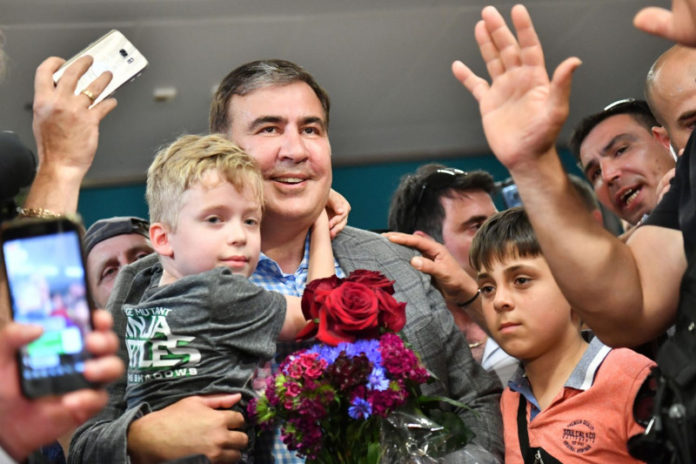
I Abolished and Rebuilt the Police. The United States Can Do the Same.
The former president of Georgia explains how to restore public trust and beat corruption.
After Georgia’s Rose Revolution in 2004, I became president of a failed state. Law enforcement agencies functioned like criminal gangs. Officers demanded bribes, trafficked narcotics and weapons, and worked for political and business elites as a mercenary security force. Georgia was a textbook example of “predatory policing”: Police did not perform the basic responsibilities of ensuring public safety, instead enriching themselves and their patrons by extorting citizens. A 2003 survey found that just 2.3 percent of Georgians held a positive view of police. In just a few years, we transformed this—offering a model for other countries, such as the United States, struggling with police reform.
The corruption of law enforcement empowered organized criminals, known in the former Soviet Union as vory v zakone, literally “thieves in law,” to fill the void. Gang leaders served not only as de facto police but also as judge, jury, and executioner. The police themselves were notorious for collaborating with organized crime. Suspicion of state institutions was deeply rooted in Georgian society: A survey of schoolchildren in 1993 found that a quarter of them wanted to be thieves in law when they grew up. Those youth had witnessed police systematically exploiting their communities. Of course, they held gangsters in higher regard than law enforcement.
Given that reality, police reform was not only a matter of restructuring institutions or implementing better policies. We had to change the mentality of a broken, cynical, and fearful society. Before people could begin to trust the police, we—the new political elites—had to earn their trust. Challenging the status quo was not enough. We had to destroy it and build something better. And we had to do it quickly. After the Rose Revolution, Georgian society united to demand reform. Reforms mean nothing without results that people can see.
The first priority was to seize back control of state security functions from organized crime. Vano Merabishvili, then-interior minister, announced: “We will confiscate from all thieves in law the palaces they built with their dirty money and put police stations in their place.” And we did. Over a billion dollars’ worth of stolen property was recovered from thieves and returned to the state budget. New police stations were built all over Georgia, with floor-to-ceiling glass. This wasn’t just an aesthetic choice—building trust in law enforcement requires transparency.
Simultaneously, we dismantled the Soviet legacy of politicized policing and replaced it with equitable law enforcement. We eliminated redundant agencies and those beyond hope of rehabilitation. The Ministry of State Security, a KGB relic, was dissolved. We disbanded the Traffic Police, firing every one of the thousands of officers who had acted as state-sanctioned highway robbers. We replaced them with an entirely new force of Patrol Police, who had no background in law enforcement and thus no ties to old, corrupted elites. Recruits had to pass a competitive examination and complete a course in criminal procedure code. They were trained in persuasion, negotiation, and mediation skills to minimize the use of force.
In restaffing the streamlined law enforcement agencies, we chose quality over quantity. The total number of Ministry of Internal Affairs employees decreased from around 56,000 to 33,000. Violent crime fell by 66 percent after reforms were implemented. Carjackings and auto thefts, once commonplace, nearly disappeared. The overall crime rate dropped by over 50 percent, making Georgia one of the world’s safest countries in the world. We hadn’t needed so many police. We only needed good police.
Before my government’s reforms, talented people who wanted to serve their communities would never have considered careers in law enforcement. We had to change that. Without the right people, even the best policies would be doomed to fail. Besides revamping the hiring process, we established a Police Academy, issued modern uniforms, and imported new squad cars and equipment. These investments improved morale and professionalism of personnel.
At last, professional police earned professional salaries. Before my presidency, police officers were paid just $44 per month—with the unspoken expectation that they would supplement their meager incomes with bribes. By reducing the size of the force, jettisoning agencies and ministries, and hiring only qualified candidates, we increased salaries of police officers nearly tenfold. Now that officers were fairly compensated, we enforced zero tolerance for corruption. Public employees did not enjoy any special treatment from the criminal justice system. The Ministry of Internal Affairs created a reality TV show to broadcast raids at the homes of corrupt officers.
With these tactics, some time-tested and some unconventional, we managed to break the backbone of the post-Soviet patronage system.
With these tactics, some time-tested and some unconventional, we managed to break the backbone of the post-Soviet patronage system.
Police no longer exploited the people whom they took an oath to protect. In place of cash bribes, they gained the public’s trust. At the end of my presidency in 2013, law enforcement ranked among the most respected institutions in the country, with an 87 percent approval rating. This figure was one of the highest in the world.
If leading Georgia from a failed state to, in the World Bank’s estimation, the “world’s best reformer” taught me one thing, it’s that half-measures don’t work. Those who benefit from the status quo will always abhor change. And vested interests tend to fight incremental measures with the same ferocity as they resist dramatic overhauls. So when the moment is ripe, why accept incremental progress when you can seize the opportunity for real transformation?
The push in some American cities to “defund the police” constitutes a dramatic overhaul, at least as bold as firing an entire small country’s police force. But, unlike post-revolutionary Georgia, most Americans do not support such a drastic measure. Cutting funds for police departments could result in privatization of security, with the wealthy hiring personal guards while the poor bear the brunt of increased crime. These risks deserve serious consideration—take it from someone who once lived in a country where mercenary forces owned by oligarchs and gangsters ruled the streets.
Creative destruction requires a better replacement for the current system. Perhaps in certain cities, alternatives to traditional policing could be tested. Innovative policies can be piloted in localities and, if successful, may be replicated and scaled across the United States. Georgia’s population is about 3.7 million—not much more than the Minneapolis metro area. But size alone does not explain Georgia’s success. When I was elected, the people of Georgia gave me a mandate to destroy a system that no longer worked for them. The top-down transformation of law enforcement was possible because citizens and government united to achieve it.
The United States today is much more fragmented than Georgia was in 2004. But as the massive ongoing protests demonstrate, Americans are dissatisfied with the status quo. According to recent polls, two-thirds of Americans think their country is headed in the wrong direction. Change seems urgent and necessary. But what kind of change will work for America?
First, transparency is key. Police departments nationwide must operate under clear, succinct, uniform guidelines. A set of national standards should be developed for training officers on crisis management and conflict resolution; federal funding should be contingent on local departments meeting these standards. Technology can enhance transparency and rebuild trust. Civilians are now driving the police accountability movement by livestreaming videos of misconduct from their smartphones. Departments could use the same technology for internal accountability. Police could be required to wear body cameras that continually upload footage to the cloud for monitoring by law enforcement agencies and independent experts.
Second, those who enforce the law cannot be above the law.
Second, those who enforce the law cannot be above the law.
The doctrine of “qualified immunity,” which has drawn criticism for protecting officers accused of misconduct from legal repercussions, can undermine public trust in police. While acknowledging that officers must sometimes make split-second, life-or-death decisions, and that human error is inevitable, the legal system should not enshrine double standards.
Third, a solid public relations strategy is essential. In Georgia, we rehabilitated the sullied image of law enforcement with modern uniforms, new cars, and glass police stations. This rebrand was not merely cosmetic but part of a broader effort to raise public awareness of the structural and policy changes in law enforcement. U.S. police departments could use constructive approaches to connect with their communities. Events and education, in partnership with community leaders, close the gap between police and the people they are expected to protect.
Last but not least, human resources management should be revamped. Supporters of the status quo maintain that police are generally good, but “a few bad apples”—like Derek Chauvin, the Minneapolis officer who has been charged with second-degree murder in the killing of George Floyd—cause undue damage to the reputation of the institution. I would caution those who agree with this statement to recall the rest of it: A few bad apples spoil the barrel. In Georgia, we had more than a few bad apples. To transform a rotten system, we had to remove all of them.
Watchdog groups and policy researchers could develop new standards for law enforcement personnel. Police must represent the diverse communities they serve. Law enforcement agencies should also consider steps to improve working conditions to mitigate risks for police and civilians alike. Long shifts and unpredictable hours can devastate officers’ mental and physical health. Departments may increase resources for employee wellness, including counseling. Procedures for advancement, punishment, and termination of staff should be reviewed to ensure that incentives for police are aligned with the public interest.
Distrust of police is symptomatic of a widespread sentiment: The system is built to protect the interests of elites. If we could solve this problem in Georgia, so can Americans. With that said, reform in any society is a continuous process because backsliding is always a danger. In the seven years since I left Georgia, the current ruling party has done nothing but erode the institutions that my government built. Approval of police dropped precipitously from 87 percent to 59 percent following the violent dispersal of peaceful protests in Tbilisi last summer.
Law enforcement institutions must evolve to meet the needs of the people they serve. This can only happen if civil society is vigilant in holding the authorities accountable. Americans and Georgians take this responsibility seriously, and that is one reason for optimism.
foreignpolicy
#EndSars: Amnesty International Shares A Sad And Tragic 1-Minute-Video Of Sars Brutalizing Nigerian Citizens
Contents
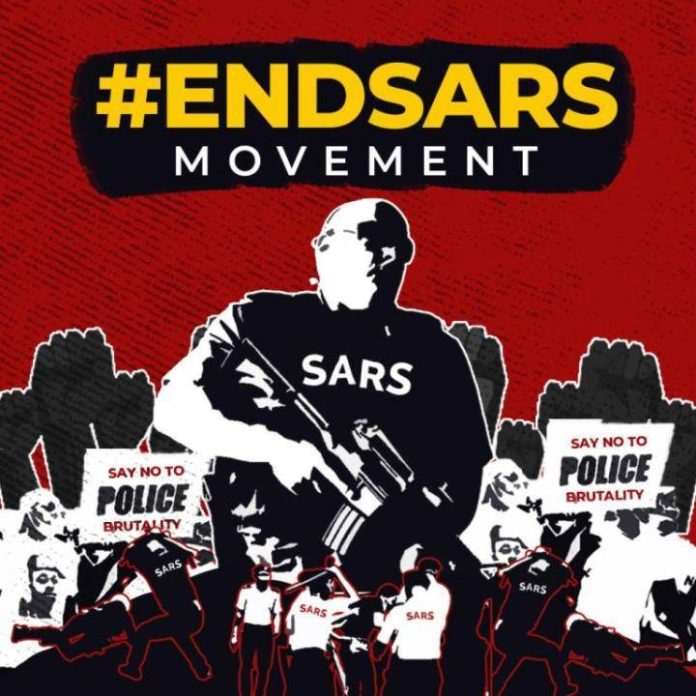
In a 1-minute-video shared by Amnesty International Nigeria on their official Twitter page tells a story about Nigerian citizens being brutalized in a merciless fashion by Sars
EndSarsNow has become a nationwide protest which is now gaining a stand in most of the Nigerian communities in view of Sars brutal harassment, maiming, killing etc of Nigerian citizens.
Watch the video below;
Everything about #SARS in one minute; pic.twitter.com/Ba07NzQ3iT
— Amnesty Int. Nigeria (@AmnestyNigeria) October 9, 2020
Source: www.NaijaOnPoint.co
“Young People Can’t Be Driving Cars Of N7m”– Former SARS Boss Justifies Searching Of Phones
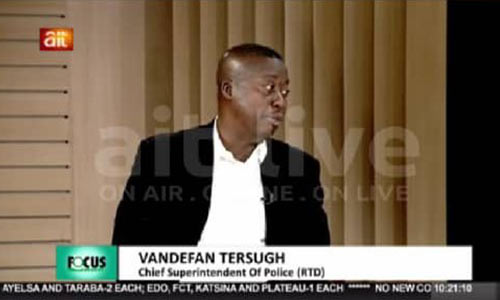
Vandefan Tersugh, a former commander of the dissolved special anti-robbery squad (SARS), says it raises suspicion for a young Nigerian to have a car worth N7 million.
Tersugh, who is a retired chief superintendent of police, said this during an African Independent Television (AIT) programme on Monday.
He said police officers, including former operatives of SARS cannot detect crime by “mere seeing you” on the road but they have to interrogate such persons to find out the source of their income.
He was speaking in the light of the recent nationwide protests against the anti-robbery squad accused of excessive use of force, arbitrary arrests and, in some cases, extrajudicial killings.
Many Nigerians have accused SARS operatives of undue profiling and stereotyping leading to alleged harassment and extortion of young people.
When he featured on the programme monitored Tersugh said while working as a police officer, he would suspect a Nigerian aged between 20 and 30 who was driving an expensive car and would have to enquire about such a person’s background.
“The mandate of the policeman is to detect crime and you can detect crime also through most of these technologies coming on board,” he said.
“We were not trained during our manuals to talk about cybersecurity and cybercrime, but today cybercrime has become something very endemic in our society. And this can be done by asking questions and examining some of these things physically.”
Arguing that police officers do not need a search warrant in such occasions, he said the manner the person replies the security operatives will determine their next line of action.
“If I stop you on the road and I want to have a look at your phone, I want to see your Facebook, I don’t think I have committed any crime because I am only asking you a simple question,” he said.
“It is your answer that will lead me to go beyond where I have started. I can’t detect crime by mere seeing you but by asking you questions. I have seen you with a car, and now I have assessed your age, and I know in Nigeria how difficult it is for someone who is 20, 30 to start having a car worth N7 million.
Thenigerialawyer

