Home Blog Page 1226

Obong of Calabar lambasts Gov Ayade, says step aside for interim governor

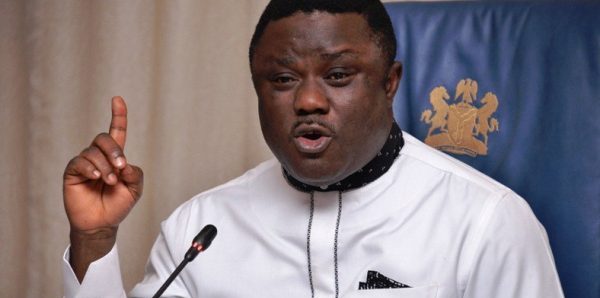
Cross River State governor, Ben Ayade

The Obong of Calabar, Edidem Ekpo Okon Abasi Otu, V, has blamed Governor Ben Ayade of Cross River State for the wanton vandalism, looting and destruction of public and private property in the state last week.

He called on the Governor to step aside to enable an interim administration to come up so that he can learn how administration and governance should be handled.

Daily Trust reports that the Obong, who spoke when a former governor, Liyel Imoke, paid homage to him, said the attack happened partly because the governor was not holding regular security meetings.

“He has not been holding security meeting regularly.

“This thing would not have happened if he had called the security people together after hearing what happened in Lagos and other places; If he had called them together and tell them, look my friends; nothing should happen in my state,” he said.

The Obong said Gov Ayade does not pick his calls even after calling him several times.

He urged the Governor to have a change of attitude, stressing that every critical stakeholder should have access to the governor.

“The Governor should be able to open his door for people to come in, and should work with everybody,” the Obong stated.

The monarch asked the former governor to tell Ayade that the state cannot continue the way he is going about governance.

“We have to face it; we don’t need to play around with it; we cannot continue this way.

“You tell him that there is a need for total reconciliation; a total rehabilitation of whatever he has been doing.

“Everybody matters in this state.

“He should be able to talk to people.

“He wouldn’t call you and even when you call him, he doesn’t answer the call. Nobody talks to him.”

Speaking earlier, Imoke told the Obong that in the wake of the incident, he thought it wise to seek the help and cooperation of the traditional institution in finding a way out of the problem.

He said: “We do not understand the extent of the carnage.

“We are all victims of this incident.

“If you were not hit directly, you were hit indirectly.

“For me, I was hit directly, so to very many public officials. They were also hit directly.”

Meanwhile, a media aide to the governor, Christian Ita, said it is very doubtful that his principal would ignore a call from the Obong of Calabar, stressing that the governor holds him in high esteem as the traditional father of the state.

“He couldn’t have ignored the monarch’s phone calls.

“It is unfair for him to call for the governor, who has done all in his power very sincerely to enhance the fortunes of the state, to step aside.”

Nigerian Policewoman, CSP Ugorji wins UN award

Nigerian policewoman on foreign mission in Mali, CSP Ugorji, has been honoured by the United Nations in recognition of her selfless service.CSP Ugorji, serving with the UN Multidimensional Integrated Stabilization Mission in Mali (MINUSMA), was selected by the United Nations as one of two runners-up for the prestigious UN Woman Police Officer of the Year award for 2020.“Through both her words and actions, United Nations Police Officer Ugorji exemplifies the best of United Nations policing,” said Under-Secretary-General for Peace Operations Jean-Pierre Lacroix.Only 21 of the 1,300 UN policewomen deployed in UN peacekeeping operations were said to have been nominated for the award with Ugorji emerging among the top three.The year’s winner, Chief Inspector Doreen Malambo of Zambia, who serves with the UN Mission in South Sudan (UNMISS), is billed to receive the award during a virtual ceremony presided over by Mr. Lacroix on November 3.Superintendent Rebecca Nnanga of Cameroon, serving with the UN Multidimensional Integrated Stabilization Mission in the Central African Republic (MINUSCA), is the other runner-up.Congratulating Ugorji for emerging as a runner-up, UN Police Advisor Luis Carrilho, said: “MINUSMA United Nations Police Officer Ugorji’s leadership of three Formed Police Units in Gao has been remarkable, and Catherine (Ugorji) has introduced tactical operations that have been instrumental in reducing crime in the area, in support of the Malian security forces and the host population.“In addition to this very demanding role, Chief Superintendent Ugorji has worked diligently to improve living conditions for women police officers so they can serve safely and with dignity.”Deployed to the UN Multidimensional Integrated Stabilization Mission in Mali (MINUSMA) in 2018, Ugorji was said to have demonstrated exemplary conduct throughout her deployment in Mali where she serves as a Formed Police Unit (FPU) Coordinator in Gao.She has been liaising and coordinating with local authorities and civil society to finalise United Nations Police operations to reassure the population in the conduct of normal activities in an area of insecurity due to the incursion of terrorist and armed groups.She is commended for her work to extend the outreach of the FPU to the Ansongo area, close to the Mali-Niger-Burkina Faso border area, where terrorists and spoilers of the Malian peace agreement are increasing their influence.Her support for joint operations between the Malian police, gendarmerie and National Guard was said to have helped to ensure the security of the local population. Ugorji herself was quoted as saying that she was eager to continue enhancing safety in Gao once COVID-19 related restrictions were lifted.Ugorji joined the Nigerian Police in 2003, and has served as Criminal Investigator from the local to regional level, Child Protection Officer, Divisional Crime Officer up to Acting Deputy Commander of the Ogudu Police Division in Lagos.Her other UN deployment was with the United Nations Stabilisation Mission in Haiti (MINUSTAH) from 2006-2007, where she served as a planning officer for FPU operations.The UN Woman Police Officer of the Year award was established in 2011 to recognise the exceptional contributions of female police officers to UN peacekeeping and to promote the empowerment of women.The award carries even greater significance this year, given the 20th anniversary of Security Council resolution 1325 on women, peace and security. (Sundiata Post)

Buhari’s refusal to sign electoral act into law politically motivated – Okowa

Delta State Governor  Ifeanyi Okowa  has said that politics is behind President Muhammadu Buhari’s refusal to sign the Electoral Amendment Act before the 2019 general election.He described politicians generally as ‘selfish ‘, adding that politicians deliberately avoid actions that are capable of undermining their personal interests, even if this is detrimental to common good.Okowa expressed optimism that the Electoral Act would be signed on time for the next election.He said, “The Electoral Act was not signed because of politics, politicians are selfish. If you watch what is going on in America, President Trump does not want the mailing votes to be counted if they arrive after 8PM on Election Day. But members of the Democratic Party think otherwise.“That is the way of politicians, always be conscious to avoid taking actions and decisions that would undo you. So it was not signed because of politics but I know that it will be signed this time.”The governor who spoke in Asaba while addressing youths in Delta North at a town hall meeting, following the #EndSARS protests, told the youths that politics was about learning along the line and picking the good things seen in good politicians and throwing away the bad ideas.“I agree that there is a need to re-work our electoral processes but we need to re-engineer our minds because we have lost it and it’s time we began to talk to ourselves.“You must truly begin to organise yourselves in truth with a common goal and focus and whoever you select must stand for the common good of others.“We are building a new Nigeria with the youths and we must shun acts capable of reducing us when we leave office.“We will continue to allow youths, including females, to be part of the governance process because in learning you are building yourself for the future.”(Sundiata Post)

COVID-19: Britain announces new national lockdown as it records 21,915 fresh cases

By Chibuike NwabukoAbuja (Sundiata Post) –

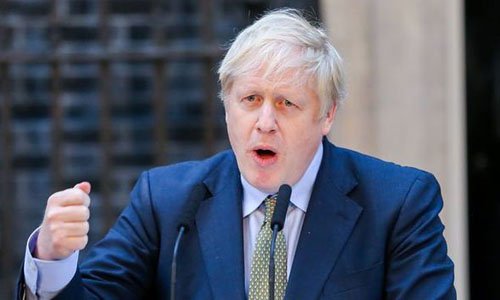
After the country recorded 21,915 new cases on Saturday,British Prime Minister, Boris Johnson, has announced a new month-long lockdown for England after being warned that a resurgent coronavirus outbreak will overwhelm hospitals in weeks without tough action.Johnson said in a televised news conference on Saturday that the new measures will begin Thursday and last until December 2. He said without them, “we could see deaths in this country running at several thousand a day.”Bars and restaurants can only offer takeout, non-essential shops must close and people will only be able to leave home for a short list of reasons, including exercise.Unlike during the UK’s first lockdown earlier this year, schools, universities, construction sites and manufacturing businesses will stay open.Johnson had hoped a set of regional restrictions would be enough to contain the virus, but government scientific advisers predict that on the outbreak’s current trajectory, demand for hospital beds will soon exceed capacity.Foreign media report monitored on Saturday said the measures apply to England. Other parts of the U.K. set their own public health measures, with Wales and Northern Ireland already effectively in lockdown and Scotland under a set of tough regional restrictions.London School of Hygiene epidemiologist, John Edmunds, a member of the government’s scientific advisory group, said yesterday that cases were running “significantly above” a reasonable worst-case scenario drawn up by modelers.“It is really unthinkable now, unfortunately, that we don’t count our deaths in tens of thousands from this wave,” Edmunds told the BBC. “The issue is, is that going to be low tens of thousands if we take radical action now or is that going to be the high tens of thousands if we don’t?”Official figures announced on Saturday recorded 21,915 new cases confirmed in the last 24 hours, bringing Britain’s total since the start of the pandemic to 1,011,660. Britain’s official death toll from the coronavirus is 46,555, the highest in Europe, with 326 new deaths announced Saturday.The United States, India, Brazil, Russia, France, Spain, Argentina and Colombia have also recorded more than 1 million cases, according to a tally by Johns Hopkins University. Scientists say the true number of cases is much higher because not everyone with the virus is tested.

America’s role as global leader all but died under Trump. The world was outgrowing it anyway

By Angela Dewan

(CNN) – The United States was never expected to last this long as the world’s leader. For more than seven decades, America has buttressed the “rules-based order,” acting as the world’s police and its moral champion, whether its allies and enemies liked it or not. That’s no longer the case.

In the past four years, Donald Trump’s “America First” presidency has challenged the post-war spirit of cooperation more aggressively than any leader before him. One by one, he has defunded and abandoned the multilateral agreements and institutions created by his predecessors. His courtship of strongman leaders has allowed autocrats to exploit this extraordinary moment in time to further their own interests and roll back democratic freedoms in their countries.

But the global instruments Trump deserted haven’t crumbled, nor is the world crashing and burning with its long-time leader in the back seat. Strongman leaders may be emboldened, but they aren’t going entirely unchallenged. And old US allies have not fallen straight into the arms of China, as many analysts fear.

Instead, the world is adapting these agreements, it’s reshaping its institutions and, as for China, most countries are finding ways to balance their relations with Beijing as both a friend and foe.

What America’s European allies want from a Biden presidency

This shift has been a long time coming. While US grand strategists who believe American world leadership is exceptional argue it could go on in its role indefinitely, most international relations experts agree that all unipolar models must come to an eventual end, as other powers rise and challenge its primacy.

After assuming the role of leader following World War II, the US proved its dominance with its victory in the Cold War, a consolidation of power that experts described as a “unipolar moment.” That moment has lasted 30 years.

There have been clear signs over the past two decades, however, that Americans are tiring of taking on this role, while much of the world, equally, is cooling on the US as its hegemon, and is eager to step into its shoes.

Germany, for example, is pitching itself as a global health leader. Even before the pandemic, German Chancellor Angela Merkel had put global health on the agenda at G20 meetings for the first time as the Trump administration showed signs of retreat from international cooperation. Germany has boosted funding for health research and development, and was even able to treat patients from neighboring countries for Covid-19 early in the European outbreak, so well-resourced were its hospitals at a time of crisis.

As the US attempted to lead reforms of the World Health Organisation — despite its decision to abandon it — Merkel and French President Emmanuel Macron proposed their own alternative plan, after rejecting Washington’s, as Reuters reported.

Germany has pledged an extra 200 million euros ($234.1 million) to the WHO this year, making for a total of 500 million euros, to help plug the gap left by the US, traditionally the organisation’s biggest donor. It’s not the only one. The UK announced last month it would boost its WHO funding by 30% over the next four years, which would make it the biggest donor, should the US follow through with its withdrawal.

China, under international pressure to resource the global response, has also pledged additional funding, as has France, Finland and Ireland, among others. It’s unclear whether they will be able to make up for the US’ shortfall in the years to come, but it’s at least a good start

Merkel — often described as the world’s “anti-Trump” — said in May she wanted the European Union to take on more global responsibility for the pandemic and for the bloc to harness a more powerful voice overall on the values of “democracy, freedom and the protection of human dignity,” describing cooperation with the US as “more difficult that we’d like.”

Making comments in a speech ahead of Germany assuming the six-month presidency of the European Union, Merkel said she saw her country’s presidency as an opportunity to be an “anchor of stability” in the world that could shape change and assume responsibility for global peace and security.

“Itself a project between individual states, the European Union is inherently a supporter of rules‑based multilateral cooperation. This is truer than ever in the crisis,” Merkel said.

Macron too tried to pitch himself as the next leader of the free world in the earlier days of Trump’s presidency. His campaign lost steam, but he still often plays the democratic defender in the room where the US is missing, having confronted Russia’s Vladimir Putin on his country’s role in the Syrian conflict and on the deterioration of gay rights in Russia, and Saudi Crown Prince Mohammed bin Salman on the murder of his critic, Jamal Khashoggi, at a Saudi consulate in Turkey.

While EU leaders’ will to replace American leadership is strong, the lack of progress in the areas Macron has tried to address are a sobering reminder of the limited power the world has to uphold democratic values without the United States at the helm.

Rescuers search for victims after an air strike in the Syrian city of Idlib on March 15, 2017. Russia has propped up President Bashar al-Assad’s with air power.

Putin had his wrist slapped, but the abuse of gay Russians continues, and Russia and its firepower has all but won the war for Syrian President Bashir al-Assad. Bin Salman has been forced to keep a lower profile, but Macron’s confrontation has done little to threaten his position of power.

The European Union is also losing its battle with the rise of autocracy in some of its eastern states, like Hungary and Poland, or countering Russian influence in that part of their bloc.

But they continue to try and their own alliances are strengthening. Take the E3. UK Prime Minister Boris Johnson should be Merkel’s and Macron’s worst enemy, as tense Brexit trade talks crash out ahead of the UK’s December 31 withdrawal from the EU. Remarkably, the three are still chummy on topics other than Brexit.

The E3’s whole raison d’etre has been to counter US foreign policy, coming together informally during the Iraq war and to engage Iran on nuclear proliferation where the US wouldn’t. But it has become tighter knit in the Trump era — the trio have openly opposed US sanctions on Iran and increasingly cooperate in areas like Beijing’s territorial expansionism in the South China Sea and the Syrian conflict as the US shows less interest in those security challenges.

Members of the trans-Atlantic defence alliance, NATO, have also had to adapt to a less present US. The alliance has had plans to boost funding since Russia’s annexation of Crimea in 2014, an audacious move that the Obama administration did little about. Trump’s aggressive criticism of member nations contributing below their commitments of 2% of GDP applied further pressure on several members to pay their share.

A long time coming

There may be no easy replacement for US leadership, but Scott Lucas, a professor of international politics at the University of Birmingham, points out that Washington hasn’t achieved many of its recent international security objectives, either. “Asia, the Middle East, Africa, in many parts, disorder continues to a great extent,” he said.

The list of US failures in international security is long. The US hasn’t been able to build legitimate states in Iraq and Afghanistan, as it sought to. Israelis and Palestinians are no closer to peace deal. Both Iran and North Korea have developed nuclear weapons. The US hasn’t prevented Russia from exerting influence in Eastern Europe. It hasn’t convinced China to end its military aggressions in Asia. These were all true before Trump’s rise.

Lucas said that the Trump presidency hasn’t really been the turning point in this shift. President George W. Bush’s invasion of Iraq was the “critical moment.”

“A lot of countries were discomforted, to say the least. They felt the war wasn’t justified — countries like France, Germany, Australia — that a unipolar America with the UK tagging along wasn’t working, especially when Iraq turned so horribly wrong, with so many people dying, and the instability that continues. So, the notion that the US leads and everyone follows was shot,” Lucas said.

Trump tried to reinvent Middle East policy, but the region is still a bottomless pit of woes

Some experts say China is the only real contender here, and that a bipolar world in which the US and China compete is inevitable. Like in the Cold War, other countries will be forced to choose sides.

China too is finding areas in which to assert its growing power on the world stage with an increasingly absent US. At the UN General Assembly in September, Chinese President Xi called for the world to “join hands to uphold the values of peace, development, equity, justice, democracy and freedom shared by all of us.” In contrast, Trump devoted much of his speech to attacking China over its handling of the coronavirus, playing to his supporter base at home ahead of the November election.

Xi’s comments need to be taken with a grain of salt — Beijing has also taken elements of Trump’s presidency as an opportunity to vindicate its own heavy-handedness at home, in Hong Kong, for example, with its draconian national security law. But Xi does have a genuine appetite to be welcomed as a world leader, a role that will require him to conform somewhat to the rules-based order.

In the same speech in September, Xi made a pledge for China to become carbon neutral by 2060, an ambitious goal that has been met with both excitement and skepticism. Critics point out that China “off-shores” its carbon emissions, largely through its multi-trillion dollar Belt and Road Initiative, which includes development projects across more than 120 countries.

But Beijing is looking at ways to make these development endeavors more sustainable, and Xi’s announcement at least shows that China, the world’s biggest carbon emitter, is willing to lead and engage with the world on this crucial issue, where the US, the second-largest emitter, is not.

Shaun Breslin, a professor of politics and international studies at the University of Warwick, disagrees that the long-term future is necessarily a bipolar one where countries must choose sides between a competing China and US. Instead, he thinks the transition from a unipolar world will be “messy” and more likely give way to clusters of power.

“My problem with poles is we’re trying to use language from a different era and wedge the current era on that linguistic basis. What I think we’ll see is looser constellations of power and interests dependent on specific issue areas,” he said.

The world will see countries continuing to engage China in areas like trade and technology, but not necessarily replacing Washington with Beijing on issues like security or moral leadership. In many ways, that shift has already happened.

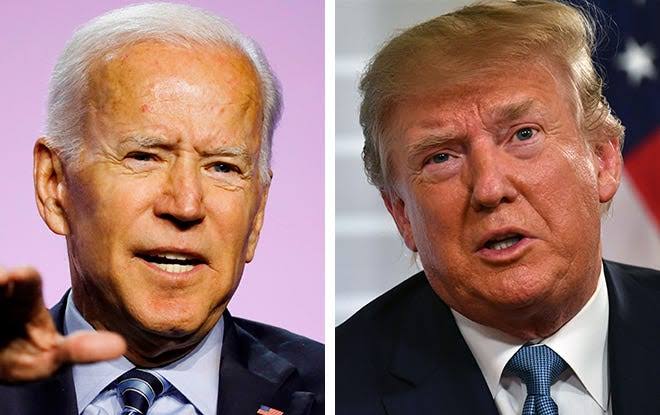
Democratic candidate Joe Biden is among those who believe the US should continue to lead. Though he has promised to rejoin institutions like the WHO and the Paris climate accord should he win on Tuesday, he won’t be able to reverse every foreign policy decision Trump has made.

For instance, it will be difficult for Biden to invest the troops and weapons needed to regain the influence the US once had in Syria. He may also find the US’ former Kurdish allies unwilling to work with him, having for years fought alongside the US to defeat ISIS, only to be abandoned last year as Trump gave Turkish President Recep Tayyip Erdogan the green light to invade their territory in a quick phone call.

Biden’s comments during a debate last week on North Korea also suggest he may have no policy that differs from Obama’s, which did little to deter the pariah state.

Regardless of who wins the vote, the US’ role in the world has changed profoundly. Returning to where it was four years ago won’t be easy. Returning to its post-Cold War primacy is near impossible.

CNN

US election: Last call for transatlanticism, By Joschka Fischer

With polls having consistently favoured Joe Biden in this year’s momentous US presidential election, Europeans should be preparing to seize the opportunity that would come with a new administration. But the biggest threats to the transatlantic relationship have little to do with Donald Trump, and Europeans ignore them at their peril.

BERLIN – Many Americans have already voted, and many more will soon go to the polls in what will be the world’s most important political event of the year. The 2020 US presidential election is a fateful moment in every sense of the word, not just for American democracy but also for transatlanticism and the future of the West.

If Donald Trump is re-elected, there are good reasons to doubt that transatlanticism will survive the next four years, or that the West will remain united in any meaningful way. It would be a veritable disaster in an already disastrous year.

Fortunately, Trump’s Democratic challenger, Joe Biden, has consistently led in opinion polls, which means there could soon be an opportunity to revive the West as a geopolitical actor. The question is what a post-Trump transatlantic relationship should look like. Merely returning to the pre-Trump era isn’t an option. Too much has changed on both sides of the Atlantic these last few years, including the key political players themselves.

For the United States, there can be no returning to the status quo ante in which Europe was a security freeloader. The complaint that European NATO members have not been contributing their fair share to common defense is hardly exclusive to Trump. But Europeans, for their part, will not soon forget the shock of the Trump presidency, and have already come to the realization that they must rely more on their own strength and sovereignty in the years ahead.

Lest anyone forget, the US “pivot” to Asia (and away from Europe) started under former President Barack Obama, not Trump, and was driven not by ideology but by the US’ objective interests as a global and Pacific power. In fact, the intensifying focus on Asia has been happening ever since the end of the Cold War, and even more so since China’s accession to the World Trade Organisation and economic, technological, and military ascendency. These developments have all been shifting the geopolitical center of gravity from the Atlantic to the Pacific.

Moreover, Europe, too, has undergone a tacit pivot to Asia, as it has increasingly come to rely on China as a trading partner. But because the European Union has not been a global political player, this shift didn’t attract much attention, let alone a broader strategy debate. Europe is no Pacific power, so it has been left operating as a kind of Western tail in Eurasia.

But all of this will change dramatically in the coming years. Even under Biden, China will be the central strategic issue confronting the transatlantic West. Will Sino-Western relations be characterized by confrontation and “decoupling,” trade and cooperation, or some complicated mix of both?

Questions about Hong Kong and China’s treatment of minorities such as the Uighurs inevitably will drag Western values into the mix. And where Taiwan is concerned, there is good reason to fear that the new superpower rivalry will escalate to the point of military confrontation, given that China’s actions in Hong Kong have invalidated the old formula (“one country, two systems”) for maintaining peace and stability across the Taiwan Strait.

Clearly, US-European cooperation in countless regional conflicts will have to be renewed. But this won’t come easy for Europe. In Germany, in particular, the federal government will finally have to back words with action if it wants to strengthen the transatlantic security partnership and halt the US drift toward a more isolationist foreign policy.

In other words, Europe must become a capable global player in its own right, by building up the necessary political and military capacities and integrating these into the NATO framework. European leaders (and particularly Germans) should be under no illusions: deeper European security engagement will be the price for restarting the transatlantic partnership under a Biden administration.

Aside from China and defence spending, relations with a post-Trump US will involve a third difficulty: the EU’s pursuit of technological sovereignty and self-determination. The EU’s digital market is largely dominated by big US tech firms, which means that if the EU wants to achieve data sovereignty, it must build its own platforms, clouds, and so forth, as well as subject all providers in Europe to a domestic regulatory regime.

Among other things, Europe needs to set its own rules and standards to ensure that all data belonging to European citizens and companies remains in Europe; and it needs to minimize its dependency on others when it comes to the core hardware underpinning today’s digital technologies. This is a matter not just of economic competitiveness, but of security as well. Surely, European militaries cannot be expected to rely on cloud-based computing facilities located outside of Europe.

These issues will become sources of significant transatlantic disagreement. But at least under a Biden presidency, US allies would once again be treated as allies, and multilateralism would no longer be held in contempt by its erstwhile champion. The US would rejoin the rest of the world in international climate agreements and global-governance institutions such as the World Health Organisation, and these developments would offer some hope for the future.

But, again, Europeans must not harbor any illusions. After four years of Trump, all parties involved should understand what the alternative to a strong North Atlantic alliance looks like, and what the price of such an alternative would be. The global geopolitical landscape will be directly affected by what happens in the transatlantic relationship. The rest of the twenty-first century could be a time of dueling superpowers and deepening instability, or it could give rise to a balance of powers, with Europe making its weight felt within a broader geopolitical triangle.

Either way, Europe’s next moves will be decisive. Can the EU muster the strength and vision to become a global player in security and geopolitical terms? Yes, but only if it is willing and able to seize the opportunity that a Biden presidency would offer.

Culled from Project Syndicate. Joschka Fischer, Germany’s foreign minister and vice chancellor from 1998 to 2005, was a leader of the German Green Party for almost 20 years.

Why coronavirus didn’t consume Nigeria, Pastor Adeboye reveals

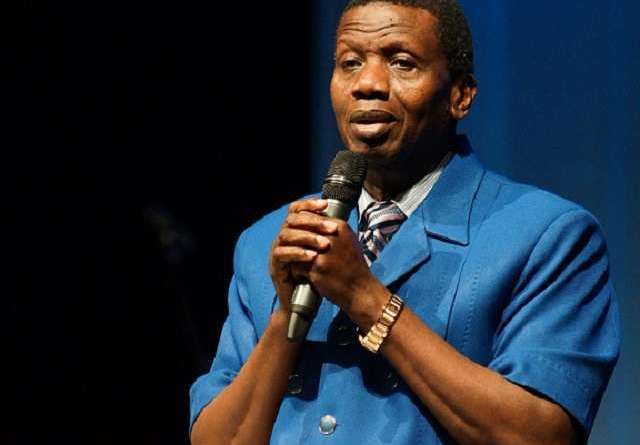
Abuja (Sundiata Post) –  Pastor Enoch Adeboye of the Redeemed Christian Church of God, RCCG, on Sunday revealed why coronavirus did not consume Nigeria.Adeboye, who is the General Overseer of RCCG, disclosed that the mercy of God saved Nigeria from being consumed by COVID-19.Papa G.O. as he is fondly called spoke during the first Sunday service in November tagged ‘Better days ahead” at Redemption Camp, along Lagos-Ibadan expressway.According to Adeboye: “If not for the mercy of God, coronavirus would have consumed Nigerians.“Compared to developed countries, God has been faithful to Nigeria.”He also urged Nigerians to continue praying for God’s mercy and protection as the world is trying to overcome the pandemic.Adeboye also cautioned Nigerians against taking God’s mercy for granted.

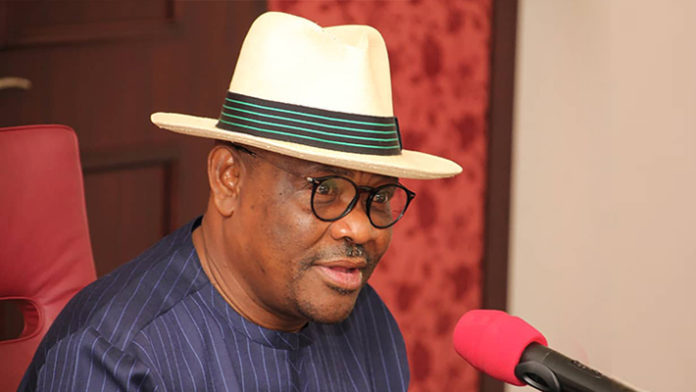
Oyigbo: Wike keeps mum as Nigerian soldiers, starvation wreak havoc in Rivers community

Rivers State governor, Nyesom Wike (Photo Credit: @Govwike)

The community with its over 300,000 people has seen dozens killed by soldiers since last week, even as residents run out of food and water.

Governor Nyesom Wike has maintained a dangerous snub as Nigerian soldiers continued a deadly campaign against a densely-populated community in Rivers.

Since last week, Nigerian soldiers have been laying a deadly siege to Oyigbo, a border community of Rivers and Abia just 30 kilometres east of Port Harcourt. The community with its over 300,000 people has seen dozens killed by soldiers over the past week, witnesses told Peoples Gazette on Sunday.

Mr. Wike, who last week directed security forces to be ruthless in their chase of perceived IPOB elements, has yet to comment on the unfolding devastation in his state. Telephone numbers for the governor’s media aides, including information commissioner Paulinus Nsirim, repeatedly rang through on Sunday. They also did not return messages seeking comments.

The unfolding crisis in Oyigbo has been aggravated by Mr. Wike’s week-long imposition of a curfew on the community, with widespread starvation looming as residents run out of food and water supply.

The military operation appeared targeted at young men of the community, and witnesses said death toll so far indicated most of those killed were between 19 and 35.

The Gazette could not immediate confirm casualty figures as soldiers have initiated a blockade that made it difficult for journalists and activists to conduct independent assessment of the situation.

“Soldiers and militia are still killing people in Oyigbo,” a resident who fled the community to on Saturday afternoon told Peoples Gazette. Earlier, another witness Kelechi Francis told Peoples Gazette how soldiers were invading homes to kill mostly young men, some of whom their remains were left to decompose indoors.

Civic groups have called on the Nigerian Army to allow people willing to leave Oyigbo out of the community. They also demanded immediately opening of the community to journalists and independent rights organisations.

The Nigerian Army said five soldiers were allegedly killed recently by members of the Indigenous People of Biafra, a separatist movement active in Nigeria’s Igbo-dominated southeast and the oil-rich Delta region. It was unclear whether or not IPOB has claimed responsibility for the attack on soldiers, which the military did not publicly announce.

Mr. Wike responded to the violence by directing security forces to be ruthless against perceived IPOB elements in Rivers, but with specific attention to Oyigbo. In merry-go-round, the governor also proscribed IPOB in Rivers, three years after the group was outlawed by President Muhammadu Buhari.

Communication in Oyigbo has been significantly restricted over the past week, including for supply of crucial materials for residents. Pictures of military devastation in the community have been leaking to social media, and those who have relatives in the community are also crying out for help.

Scores of lucky residents have also fled the community over the past week, the Gazette understands.

Although Mr. Wike’s directive on October 29 encouraged security forces to violently route out perceived IPOB elements, it was unclear whether or not the governor was in support of ongoing military operation that has led to civilian casualties.

The Nigerian Army 6 Division in Port Harcourt and Rivers police command have yet to provide critical updates on the crisis.

#EndSARS protest: Nigeria’s investment outlook dims

•Looting, destruction of properties send danger signals

•Investorsassets’ security not guaranteed

•Unemployment, inflation may worsen …

•Country risks loss of investor-confidence

By Odinaka Anudu, Emelike Obinna and Amaka

The events of the last two weeks could push Africa’s most populous nation further down investors’ pecking order at a time it is battling flagging economic growth, low foreign direct investments and high unemployment rate.

It first started with peaceful #EndSARS protests across the country targeted at ending reckless brutality in the hands of a rogue and brutal police unit widely known as the State Anti-Robbery Squad (SARS).

The protest turned bloody mid-way on October 20 as soldiers shot peaceful protesters, fuelling crisis across the nation. Hoodlums seized the opportunity to vent their spleen on police officers and their stations, private residences of politicians, media houses and businesses owned by local and foreign investors.

The whole hullabaloo has changed Nigeria’s investment outlook, according to economists and investment experts, at a period when the country is in dire need of DFIs.

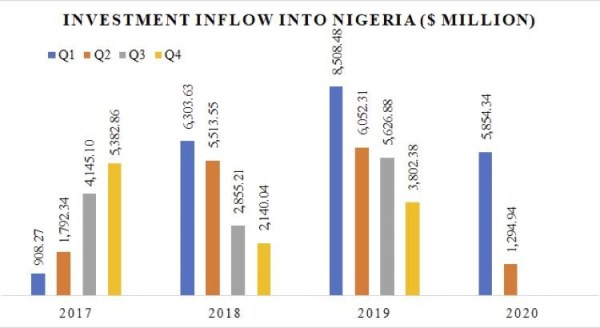
In the second quarter (Q2) of 2020, total investments into Nigeria, including portfolio, equity and foreign direct investments, stood at $1.29 billion as against $5.85 billion recorded in the preceding quarter, representing a 77.88 percent decline over the period. The $1.29 billion also indicates a 78.1 percent crash from $6.05 billion reported in the corresponding period of 2019.

The FDI figure in Q2 of 2020 is the lowest inflows since the first quarter of 2017 when the country slipped into recession owing to a global collapse in oil prices.

With that outlook, analysts say this is not the right time to do anything that could be antithetical to investments.

With the shooting and consequent massive looting and wanton destruction of private and public properties, analysts see worsening unemployment rate that could throw millions more into the labour market. In the Q2 of 2020, unemployment rate stood at 27.1 percent and reached 56 percent when underemployment is factored in. About 14 million youths are jobless in Nigeria as of the Q2 of 2020, according to the National Bureau of Statistics (NBS).

Muda Yusuf, director general, ‎Lagos Chamber of Commerce and Industry (LCCI), said the regrettable actions of the hoodlums would have very negative impact on investor confidence, saying that the economy is worse-off when investor confidence begins to wane.

“No investor, who witnessed the massive lootings and destruction, will want to invest now, particularly on projects that are customer-focused, like the retail outlets because you can see how vulnerable such investments are to any social unrest,” Yusuf said.

Speaking further, the LCCI director-general noted that those who are thinking of investing in Nigeria would begin to think twice now because of the high level of insecurity, lawlessness and crime during the protests.

“It does not give a sense of security even to the investors because if the looting can happen so freely, then the society is not secured, as well as, your investments,” he further said.

Ademola Okikiola, a stockbroker, noted that the impact of the looting and wanton destruction of lives and properties is already felt in the economy as investor confidence has dampened further from its low point occasioned by the lockdown.

“On Wednesday, October 21, 2020, the stock market lost N113 billion because investors’ appetite dampened due to the tensed security situation in the country,” Okikiola said.

The stockbroker was sad that the market, which had remained stable for some time now with marginal gains, is losing again because investors have reduced their demand for equities as they reacted to the prevailing security situation occasioned by #EndSARS protests.

In his review of ACCA Global Economic Conditions Survey (GECS) for Q4’19, Thomas Isibor, head, Association of Chartered Certified Accountants (ACCA) Nigeria, noted that with double digit inflation, which results in low economic growth and decline of Gross Domestic product (GDP) per capita, investor confidence is bound to drop in any economy and Nigeria is not different.

Considering the huge loss of revenue and closure of businesses torched during the protests, economic analysts think that the situation would impact negatively on Nigeria’s economic growth and gross domestic product (GDP).

“Investors are the employers and when they are not convinced that their investments are secure, they will shut down, leaving many unemployed and denying the economy the much needed revenue to boost the GDP,” Emele Onugha, an economist, said.

Nigerian economic growth crashed by 6 percent in the Q2 of 2020 due to COVID-19 lockdowns which disrupted the value chains across the world. But the shooting and looting have both raised a new risk for a weak economy.

For the LCCI director general, the lootings and destruction of properties would worsen unemployment in the country because a lot of companies torched by the hoodlums during the protests have shutdown, while their employees have lost their jobs. “It is when you have business that you employ people,” he said.

Speaking further on the impact, Yusuf noted that some of those who suffered losses during the protests may not be able to recover because they borrowed money, stressing that some might have paid two years’ rent in advance, which are looking wasted.

“It will affect unemployment, investment, government revenue, and also the general psyche of the average Nigerian,” he noted.

Analysts say the unresolved shooting of protesters in Lekki by soldiers could present Nigerian government as authoritarian and unable to make lives better for the people in the comity of nations.

Jonathan Nicol, president of Shippers Association of Lagos State, said the after-effect of the massive looting and destruction in Nigeria last week has forced some businesses to close down, revealing that shippers are cancelling orders due to the uncertainty in the polity. He observed that Nigerian environment is no longer safe to conduct business.

According to him, the burning and looting of private businesses is a reflection of bottled-up anger, which sends dire signal to both foreign and domestic investors. He said the fact that many embassies including the American Embassy in Nigeria had to shut down their visa application centres is an indication of what could come.

“We believe the peaceful protest was in line with the reality of the present time. It was all over the country. It was writing the history of our present situation of retrogression in all fronts apart from the institution of corruption. It was a signal that the older generation has failed. The governments should have been more diplomatic with the peaceful protesters. It was an expression of dis-satisfaction in a failed system which could have been managed with wisdom. It was a time bomb that was detonated by irrational decision of force,” Nicol explained in a phone interview with BusinessDay Sunday.

Citing example, Nicol further said that his principals recently refused to invest in fishery business in Nigeria due to constant harassment of fishing vessels within the Gulf of Guinea region by pirates which portrays the height of insecurity on the nation’s waterway.

“The pockets of protest are still continuing in several parts of the country and there seems to be no end in sight. People are hungry because the outbreak of Covid-19 shut down a lot of industries and while such people are trying to bounce back gradually, the nationwide protest started. How can an investor invest in a situation of lack of security to investment? Investors are already leaving the country in their numbers,” he further said.

The Lagos Chamber of Commerce and Industry (LCCI) disclosed that Nigeria lost about N700 billion in just two weeks of protest. Nicol said that the loss has reached over N1.6 trillion across the country going by the massive burning of property across the country.

“Nigerians are tired of paying unnecessary bills for services that do not commensurate to the sums being levied. The government is doing nothing for her citizens. No good roads, no good hospitals, businesses are dwindling and closing shops while the global oil price remains epileptic,” he said.

These, he noted, has contributed to the frustration faced by Nigerians across the country as many households and families have continued to face difficulties in the provision of basic needs as well as payment of children school fees.

On the way forward, Nicol suggested that government should in addition to putting an end to using force to quell legitimate demands, also accept the 5-point demand of the youth and engage them in meaningful dialogue.

“After spending seven to eight years in school, there is no work for the graduating students. Therefore, government should be able to console the youths and offer them meaningful jobs in all the states. Jobs are not meant for one tribe. So, there should be true federal character in recruitment of people into government institutions,” he added.

On his part, Tony Anakebe, managing director of Gold-Link Investment Ltd, a Lagos-based clearing and forwarding company, confirmed that the massive looting and destruction of private businesses would definitely scare away investors from investing their money in Nigeria even as he disclosed that some of his principals (importers) were already cancelling their order due to the uncertainty in the country.

According to him, a lot of businesses such as Shoprite and Samsung that lost heavy investments during the protest are suspending plans to expand their investment in Nigeria.

He however, called on government to consider financial empowerment, which could come in form of tax rebate or holiday for private companies that lost their investment during the nationwide protest in order to cushion the effect of the loss on their bottom-line.

In January 2020, a survey by the Association of Chartered Certified Accountants (ACCA) and Institute of Management Accountants (IMA) revealed that investor confidence in the Nigerian economy dropped below its nine years average in the last quarter of 2019.

From -7.6 index points in 2019, investors’ confidence dropped to a staggering -17 points in September 2020, according to data from the Central Bank of Nigeria (CBN).

While the huge loss of confidence was attributed mainly to the uncertainties of the 2019 elections, investor confidence dampened further due to the travail of the Nigerian economy in recent times; from border closure, insecurity, lockdown and most recently, the mass lootings and destruction of public and private properties during the #ENDSARS protests across the country.

For many investors, the massive lootings and destruction of properties was unprecedented and a pointer to the high level of insecurity of both lives and properties in the country.

They feared that investors’ confidence in the Nigerian economy, which has dropped very low since the lockdown might be witnessing the worse decline in history due to the impact of the unprecedented lootings and destruction of businesses by hoodlums during the protests.

“But there is a light at the end of the tunnel,” said Ike Ibeabuchi, an analyst and manufacturer.

“I believe the country is still the best place to do business. This is a short-term risk, but it presents an opportunity for the government at different levels to make the environment better for investors. Government does not create jobs, but the private sector. Remove multiple taxation, solve the infrastructure problem, Apapa and port challenges, and the economy will begin to create jobs for the youth again,” he noted. (BusinessDay)

#EndSARS: NBC faces two lawsuits over N9m fine against TV stations

Oladimeji Ramon

Two separate lawsuits have been filed against the National Broadcasting Commission over the N3m fine imposed by the commission on three television stations in relation to their coverage of the #EndSARS protests.

One of the two suits was filed by Socio-Economic Rights and Accountability Project; while the second one was filed by a group of lawyers, under the aegis of Digital Rights Lawyers Initiative.

Two separate lawsuits have been filed against the National Broadcasting Commission over the N3m fine imposed by the commission on three television stations in relation to their coverage of the #EndSARS protests.

One of the two suits was filed by Socio-Economic Rights and Accountability Project; while the second one was filed by a group of lawyers, under the aegis of Digital Rights Lawyers Initiative.

Both suits are before the Federal High Court in Abuja.

SERAP, which filed its suit in collaboration with 261 concerned Nigerians, civil society and media groups, also joined the Minister of Information and Culture, Lai Mohammed; and the acting Director-General of the NBC, Prof. Armstrong Idachaba, as defendants.

The group is urging the court to declare that the N3m fine imposed by NBC on each of Channels TV, Africa Independent Television and Arise TV over their coverage of the #EndSARS protests was “arbitrary, illegal and unconstitutional.”

It wants the court to stop NBC from enforcing the fine.

SERAP contended that the information minister had been making consistent efforts to gag the press from performing their watchdog role by using broadcasting codes.

The group said the imposition of N3 million fine on each of Channels TV, Africa Independent Television, and Arise TV without giving them fair hearing was in breach of the constitutional rights of the media houses.

“The NBC, being a regulatory body, is not empowered by law to act as the prosecutor and the judge; all at the same time. We humbly urge the court to set aside the unlawful and unconstitutional fines imposed on independent media houses, and to uphold the sanctity of the Nigerian Constitution, Nigerians’ human rights, media freedom, and the rule of law,” SERAP said.

It urged the court to strike down Section 2[n] of the NBC Act and Broadcasting Code relied upon by the NBC and information minister to impose fines on the three stations.

SERAP argued that that section was inconsistent sections 22 and 39 of the Nigerian Constitution which guarantee freedom of expression, access to information, and media freedom.

Similarly, DRLI, in the suit filed by its lawyers, Messrs Solomon Okedara and Olumide Babalola, contended that “the sanction and fine imposed on the television stations creates a chilling effect on freedom of expression and constitutes an unjustifiable interference of its members’ right to freedom of expression particularly, their right to receive ideas and information from the sanctioned television stations.”

DRLI is praying the court to set aside the N3m fine and to award N1m damages against the NBC.

TIPS