



2021 SAN Rank: Legal Practitioners Privileges Committee Calls For Application, Charges N600,000 Processing Fee
*Calls For 2021 SAN Rank Application
The Legal Practitioners Privileges Committee has called for applications for the conferment of the rank of Senior Advocate of Nigeria (SAN) for the year 2021.
This is contained in a notice signed by Hadiza Mustapha, the Secretary of the LPPC and Chief Registrar of the Supreme Court, which was made available to TheNigeriaLawyer.
The LPPC issued the notice as “a formal call for SAN applications preparatory to the award of the rank for the year 2021”, pursuant to “the combined provisions of Section 5 (2) of the Legal Practitioners Act, Laws of the Federation 2004 and Regulation 9, Guidelines of the Legal Practitioners’ Privileges Committee 2018.”
Besides, it was stated that applicants are expected to pay a non-refundable fee of #600,000 as a processing fee.
“As a corollary to the above, any submission after the deadline of January 31, 2021 at 4pm, shall be treated as a non-submission,” the notice added.
TheNigeriaLawyer recalls that LPPC had on September 23 released the first shortlist of 137 candidates who applied for the SAN rank in 2020 while the final list is to emerge after the interview of the candidates comprising 116 advocate and 21 academic applicants, among other selection procedures.
Consequently, the new call for applications is for the year 2021, as the LPPC is rounding off the process of selecting the successful applicants for the conferment of the rank for the year 2020. (Thenigerialawyer)
Edo Prisoner Kills Neighbor Who Testified Against Him in Court Hours After Escape
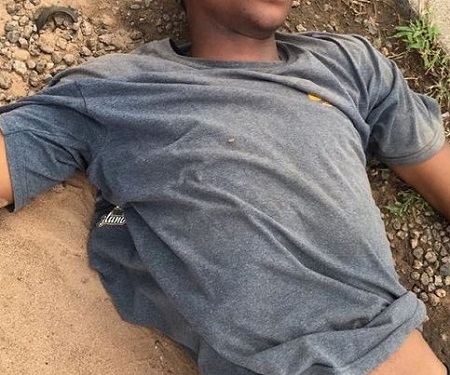
A convicted criminal who escaped from prison in Edo state has killed a neighbor who testified against him in court.
File photo
A convict who escaped from the Oko Correctional Centre in Edo state has killed his neighbor who testified against him in court. The convict killed his neighbor hours after escaping. According to Vanguard, the escapee prisoner was among over 1,993 prisoners who escaped from two correctional facilities in Edo state. Few have been arrested while about 1,818 prisoners are still on the run and had flooded the streets launching various degrees of attacks. Addressing newsmen yesterday, Babatunde Kokumo, Edo commissioner of police, said they have arrested 126 suspected criminals and 10 amongst them were escapees. His words according to TheCable: “We have commenced actions against the criminal elements. It will interest you to know that 10 of the criminal elements who escaped from Oko Correctional Centre on Airport Road, Benin and the Correctional Centre on Sapele Road, Benin were also arrested.“One of them, after having escaped from Oko correctional centre, ran back to his village on the same day, to kill the person who stood as a prosecution witness in the case that took him to the correctional centre. He has been arrested and he is among the suspects.“Another group of three escapees from the correctional centre in Benin also went ahead to snatch a Lexus Sport Utility Vehicle (SUV). Three of them met at the correctional centre and they were caught by the police.“A set of two escapees equally stole a Toyota Camry car. They also met at the correctional centre. They were arrested by Okada Division of Edo State Police Command. We have a total of ten escapees.“The guns were also recovered from the criminal elements.”
Buhari’s Appointee, Salisu Zuru Dragged To Court For Keeping Two Public Offices, Receiving Double Salaries
Mr. Salisu Zuru, the Chairman-elect of National Assembly Legislative Aides’ Forum has been dragged to Court by Mr. Joshua Okah, who is Senior Legislative Aide to a member of the House of Representatives, Mr. Ben Igbakpa, for allegedly receiving double salaries while he holds two public offices.
It was alleged that Zuru has been a member of the board of the National Orientation Agency and without quitting the job, he took another appointment as SLA to Senator Sahabi Ya’u representing Zamfara North.
This is following the dissatisfaction with the emergence of Zuru as the Chairman in the concluded elections into the Forum, stating that the chairmanship election was void and ought to be nullified, adding that a fresh election should be conducted for the remaining chairmanship candidates.
This is vided a suit instituted in the High Court of the Federal Capital Territory on 26th day of October, 2020, with suit number : FCT/HC/BW/CV/311/20.
The Claimant tells the Court that “The 1st defendant is a Senior Legislative Aide appointed by the National Assembly Service Commission on the recommendation of Senator Alhaji Ya’u Sahabi on the 27th of August, 2019, and also currently a member of the Board of National Orientation Agency appointed by the President of the Federal Republic of Nigeria on the 29th of December, 2017. Sequel to the above, he has been receiving emoluments from both offices and the 1st defendant is a public servant and bound by the extent provisions of the Public Service Rules, 2009.
“It is not lawful for the 1st defendant to receive and/or be paid emoluments in respect of his office as Senior Legislative Aide appointed by the National Assembly Service Commission and at the same time as a member of the Board of National Orientation Agency appointed by the President of the Federal Republic of Nigeria.
“The 1st defendant, who was elected as Chairman of the NASSLAF at the delegates’ election held on 16th October, 2020, has put himself in a position where his personal interest as Senior Legislative Aide appointed by the National Assembly Service Commission conflicts with his duties and responsibilities as a member of the Board of National Orientation Agency appointed by the President of the Federal Republic of Nigeria and, therefore, he is, in the eye of the law, not eligible to participate and/or contest in the NASSLAF Election 2020.”
The plaintiff, in the affidavit, deposed that upon appointment by the NASC, all legislative aides, as part of their conditions for appointment, are entitled to emoluments such as salaries, allowances’ payment of first 28 days in lieu of accommodation upon assumption of duty, severance gratuity at the rate of 300 per cent of annual basic salary for the completion of each tenure, and trainings among others.
He stated that as at the time Zuru contested the NASSLAF election, he remained a member of the NOA board. He also attached a copy of a letter from the Office of the Director-General of the NOA, dated 19th day of October, 2020, confirming the 1st defendant’s membership of the present board of the agency, as well as a photograph taken by the board’s members on 5th day of April, 2018.
“That the 1st defendant deliberately refused, failed and/or neglected to disclose the above stated facts of his membership of the board of NOA to the 2nd to 13th defendants during screening all in his desperation for power. That had the 1st defendant disclosed the facts under reference, he would not have been screened and/or cleared to contest for the NASSLAF chairmanship election.
“That the NOA is in Category ‘B’ under the categorisation of board of federal parastatals. Since inauguration of the board since 2008 to date, the 1st defendant, being a member, has sat four times and the fifth meeting in 2020 was done virtually due to the COVID-19 pandemic, and the 1st defendant has been receiving emoluments from the agency”, he said.
He seeks an order of Court mandating Zuru to step aside as NASSLAF’s chairman-elect and/or substantive chairman, pending the hearing and determination of the motion on notice for interlocutory injunction.
In addition, he prays the Court for an Interim injunction restraining the 2nd to 13th respondents, as well as the Clerk to the National Assembly, Olatunde Ojo, from “acting on or taking further steps in respect of the chairmanship election of NASSLAF held on 16th October, 2020, and/or accepting or giving any further recognition to the 1st defendant/respondent (Zuru) as the NASSLAF chairman-elect or substantive chairman or otherwise however called and/or issuing the 1st defendant/respondent a fresh Certificate of Return…”
The defendants are legislative aides who took different roles in the conduct of the election, they are Idris Ejima Aruwa, Mon-Charles Egbo, Olushola Olugbani, Oyorokoto Ogheneruemu, Ndudi Nwagbara, Jackson Collins Ette, Haruna Abdullahi Kure, Bamidele Ajibola, Garbriel Garba Silas, Umar Farouk Ahmed, Yakubu Shano Garba and Okwudili Nwankino.
Labour: FG Can’t Hike Electricity Tariff Yet
The Nigeria Labour Congress has disclosed that it is impracticable for electricity tariff to be hiked yet, following the outcry across the country against the Federal Government September 1, 2020 service reflective tariff.
Mr Joe Ajaero, Deputy President & General Secretary, National Union of Electricity Employees stated that a new tariff template had been agreed upon by government and labour unions.
“I’m not sure of any planned reversal to the old or increased tariff. The template has been touched after the first two weeks of our meeting on the tariff review.
“If you watch the new template for customers in bands A and B, there was a reduction of 10 per cent and 10.5 per cent, respectively. For those in Band C, there is a 31 per cent reduction.”
“Those in bands D and E were not increased at all. Now, that is what we could do within the two weeks and we were given an extension of about two to three months to work on some other issues”, he added.
Furthermore, he stated that because of some adjustments, the Nigerian Electricity Regulatory Commission would have to commence the implementation of the reductions later , which ought to have started two weeks ago.
“NERC is not reverting to the tariff that led to the outcry. Rather, it would commence the implementation of these adjustments that were done pending when we are going to make further findings.
“So, they are going to revert to these adjustments that we have made and not the September 1, 2020 tariff hike, which they had approved earlier. The NERC chairman’s signature is on what we agreed to during our meeting,” he said.
Meanwhile, he stated that the NLC agreed to a 3 month extension in order for other issues to be settled.
“Why are we talking about two to three months to iron out issues? It is because of the issue of gas pricing. Gas produced in this country is being sold in dollars and they now compute tariff based on the price of gas in dollars.
“We said this is wrong. So, we have to look into it and know the cost of gas for power in the country. Now, these issues have to do with the gas policy of Nigeria, which cannot be handled within two weeks.”
In addition, he stated that the new tariff templates would run for three months, “The template was presented to the joint meeting between labour and government; it was adopted there and the approval for two to three months to conclude the work was given. Within that two to three months’ period, we are going to visit the Discos and interview the customers as well.”
He also added that the power tariff would come down by the time the team secures the accurate pricing for gas and that it won’t be in dollars.
#EndSARS: Instigators of violent protests, killing of policemen must appear before ICC, human rights group vow
The Global Network for Human Rights (GNHR) has vowed to drag instigators of violence that led to the killing of policemen and destruction of properties during the EndSARS protests to the International Criminal Court.
The group, at a press conference on Friday in Abuja, said these individuals must be brought to justice for their roles in inciting “massive terror on the streets”.
Coordinating chairman,
Adulmalik Alfa Esq, speaking on behalf of the group, said these persons exploited the socio-economic challenges of the country to prime the population for mob action.
The human rights group said Femi Falana, Aisha Yesufu, Nnamdi Kanu, DJ Switch among others were behind this vicious act.
Recall that the Inspector General of Police, Adamu Mohammed, had said 22 of his officers were killed during the violence.
And according to the group, Femi Falana, in particular, should be held responsible as the known face and voice of the violent aspects of the protests.
GNHR said it has evidence to back this claim and would present it to ICC with documentary evidence of Femi Falana’s involvement in inciting those that carried out this pogrom against law enforcement officers and other innocent Nigerians.
The rights group, however, called on the media, all Nigerians and the international community to “help us in bringing about justice for innocent security operatives that were murdered by these violent protesters”.
Read the full statement below:
Gentlemen of the press, we are pleased that you can join us for this press conference despite the massive terror on the streets that has been unleashed on the country by saboteurs.
We will like to start by clearing the air about a misconception that is making the round in terms of situating the cause of the violent protests across the countr .countrye is a tendency to tie the start of the protest to the agitation against police brutality and abuse of human rights, particularly by the defunct Special Anti-Robbery Squad (SARS), which has now been christened #EndSARS. The reality, however, is that the singular incidence that provoked the protest could be described as a mere trigger for something that brewed over some time.
Before the protests ever started, there has been a systematic campaign of incitement by a well-heeled circuit, who exploited the socio-economic challenges of the country to prime the population for mob action. They picked on the day to day challenges that are not peculiar to Nigeria as means of goading the population to rebel against the government.
We will name a few of these people, those that we consider as the arrowheads of the well-oiled propaganda machine that poisoned the minds of Nigerians to attempt destroying their own country. We believe these are the people to be held responsible by their leadership position and the inciteful contents of the messages they have put out on their social media accounts, media interviews, statements and utterances.
On the list are: Chief Femi Falana, Falz (Folarin Falana), Nnamdi Kanu, Obianuju Catherine Udeh (DJ Switch), Aisha Yesufu, Reno Omokri, Deji Adeyanju, Dino Melaye, David Oyedepo, BurnaBoy, Paul Okoye, Ayo Makun amongst others.
It is on record that all the above-named persons contributed in one way or the other is ramping up public anger much before the protests began. They then intensified the incitement of people in multiple folds in the early days of the protests such that their actions can be directly linked to the outbreak of violence. They sustained this incitement until it became clear that the violence, arson and looting of government and private property were getting out of hand.
It was observed that some of these celebrity activists and clout chasers backed down and sort of distanced themselves from the negative stance they had maintained on the protests, apparently to evade responsibility for the killings and destruction of property that they had triggered.
We noted that Chief Femi Falana has been particularly vociferous in inciting people to keep up the protests. This is even though policemen and other law enforcement personnel were being attacked and killed. It is therefore pertinent to hold Femi Falana responsible as the known face and voice of the violent aspects of the protests. We are convinced that he knows more than he is letting on because he continued to support the protests even when the fugitive leader of the terrorist Indigenous People of Biafra (IPOB), Nnamdi Kanu was coordinating the mob and identifying where and who to attack.
Consequently, we are resolute to make Femi Falana answer for his crimes against Nigeria in the course of the protests. These include:
- Incitement of the population against the government
- Incitement of the population against public office holders with intent to cause them harm
- Maliciously spreading information known to be false with intent to incite violence
- Providing propaganda support for terrorist attacks through the aiding of attacks carried out by members of a proscribed terrorist group
- Making of utterances that incited people to kill policemen on legitimate duty
- Making of statement that incited people to kill citizens of Nigeria
- Making of statement that resulted in mobs destroying government-owned assets and private assets.
Gentlemen of the press, as a result of Falana’s incitement, with specific reference to the Oyingbo incident, where BRT Buses were burnt and several policemen killed, our network has taken the bold decision to drag Falana before the International Criminal Court at the Hague in the course of the next seven days.
We have pulled our facts together as follow:
OYIGBO ATTACK SUMMARY OF INCIDENT REPORT:-
Number of Hoodlums arrested – 21
Number of Policemen Killed — 3
Number of Police Stations burnt –3
Number of Police Station Vandalised –1
Number of Hoodlums killed — 4
NAMES OF POLICEMEN KILLED ARE AS FOLLOW:-
- AP/No. 241542 Inspr. Sunday Dubon— APC Driver Attached to Anti-Kidnapping Unit (AKU) killed and burnt to ashes.
- F/No. 414018 Sgt. Swawale Ornan — Attached to 19 PMF on Special Duty at Oyigbo, killed and burnt to ashes.
- F/No. 424944 Sgt. Umunna Uchechukwu—- serving in Afam Police Station, his leg and hand were cut off and burnt to ashes.
We shall be tendering these to the ICC with documentary evidence of Femi Falana’s involvement in inciting those that carried out this pogrom against law enforcement officers and other innocent Nigerians. We shall also be drawing the attention of the ICC to the fact that Falana ran this campaign of incitement as a family business in which he was actively supported by his son, Falz (Folarin Falana) in partnership with the wanted IPOB leader, Nnamdi Kanu.
We hereby use this medium to solicit the support of the media, all Nigerians and the international community to help us in bringing about justice for innocent security operatives that were murdered by these violent protesters.
Thank you all.
Ex-NBA VP, Ubani Offers Free Legal Service To Palliatives Looters
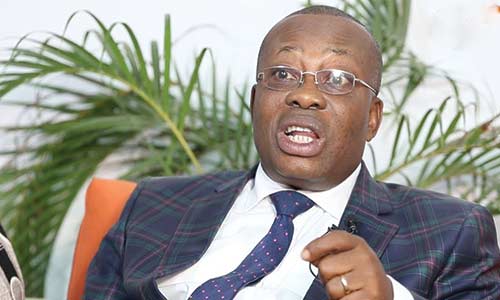
Former Second Vice President of the Nigeria Bar Association (NBA), Monday Ubani has offered free legal services to any Nigerian arrested for taking Covid-19 palliatives from warehouses in various States across the country.
In the last one week, there has been reported cases of residents breaking into warehouses where Covid-19 Palliatives were stored and helping themselves out with food items.
The trend which started in Lagos with the total raid of a large warehouse in Maza Maza area of the State where CA-COVID Palliatives worth N1.4billion were stored, quickly spread across the South West States, then the North, the East including the Federal Capital Territory.
Houses of some politicians where palliatives were also stored were not spared as residents stormed such locations, broke into the house and carted away anything they considered valuable to them.
Already, security agencies have arrested some residents who were caught in the act, while some houses were raided and some items retrieved.
Some State Governors had also called on residents to return the looted items back to the warehouse or risk arrest and prosecution.
But responding to the development, Ubani on his Facebook page, said he was ready to offer his legal services at no cost to such residents who went on the looting spree as a result of hunger urging them to reach out to him.
“After careful prayer and leading of the spirit, I hereby offer free legal services to any Nigerian who is arrested for taking any of the palliatives from the warehouses in the States as a result of hunger. Contact me,” he wrote.
Video: It’s Time for Everybody to “Soro Soke!” – KWAM1
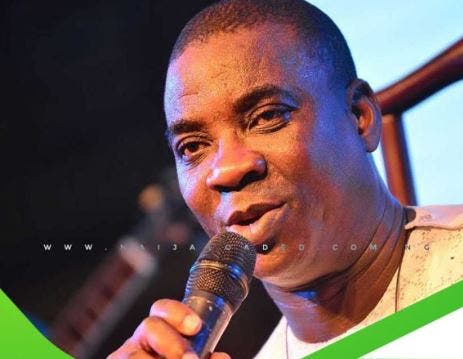
King Wasiu Ayinde Marshal otherwise known as KWAM 1 has thrown his weight behind calls for an end to police brutality and bad governance in Nigeria. He said was obvious that Nigerians were not happy with the state of the nation and how the government is being run.
According to him, Wasiu what the youths are doing now is what the older generation failed to do 60 years ago. He added that the protest is not just to #EndSARS and police barbarity but to end bad governance as well
KWAM urged all Nigerians to “Soro Soke” which means to speak up against bad governance and demand for change.
https://youtube.com/watch?v=NYpPQ3VXmfk%3Ffeature%3Doembed
#EndSARS: Shock As Aisha Yesufu Reveals She Is Now Being Cursed In Places Of Worship
By Oyinlola Awonuga (The New Diplomat’s Entertainment, Fashion and Sports Desk)
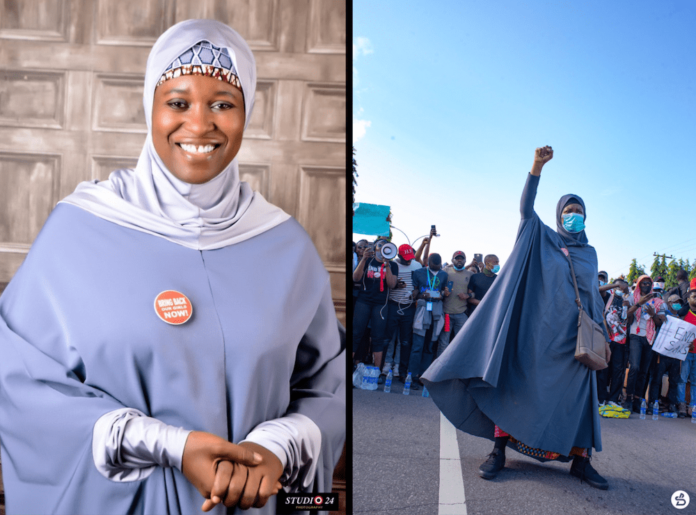
Nigerian socio-political activist, Aisha Yesufu, has opened up that people now lay curses on her in places of worship following her #EndSARS movement.
Yesufu revealed this today on her verified Twitter account @AishaYesufu as she mentioned that some religious persons after praying, will take time to curse her.
Yesufu, who doubles as a co-convener of the BringBackOurGirls, BBOG, advocacy group lamented that this is due to her involvement in the widespread End SARS protests.
The activist made the disclosure on her Twitter handle.
Her tweet reads: ”Heard I am being cursed…! People finish praying and take time out to curse me in their prayers.
”I have asked they should please let me know how many of these curses they rained on me when I was making the same demands during GEJ! We are all already cursed in Nigeria,” she tweeted.
Many activists including Aisha Yesufu had joined Nigerian youths in the streets to protest against police brutality and bad governance in the country.
OPINION | To Zahra Buhari-Indimi: Yes, Your Father is the Problem of Nigeria, By Vincent Chuks Igbinedion
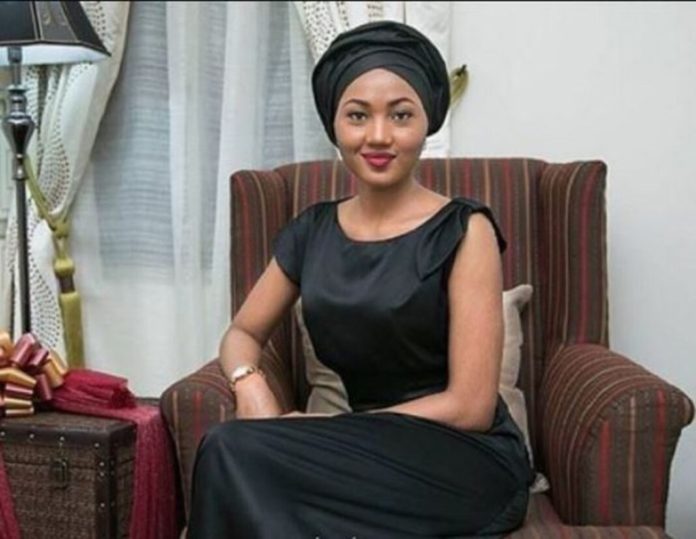
“If you speak you die, if you are silent you will die; so speak so that you don’t die with the speech inside you” – AnonymousIn the euphoria following the discovery and looting of various warehouses loaded with COVID-19 palliatives in many states of the country, Mrs. Zahra Buhari-Indimi was quoted by various media outlets as enthusing that her father is not the problem of Nigeria.For the avoidance of doubt, Zahra Buhari-Indimi is the daughter of General Muhammadu Buhari (rtd), President, Federal Republic of Nigeria, the sitting president, that is, a man who first by dint of military tactics burst his way into national political reckoning by toppling a legitimate government in 1983 and becoming the Head of State.The election that saw Alhaji Shehu Shagari go into office as the President of Nigeria for a second four-year term in 1983 was to all intents and purposes, fatally flawed. However, President Shehu Shagari had hardly settled down into office before a martial music on December 31st, 1983 announced that the government had been toppled and Muhammadu Buhari was announced as the Head of State.I don’t know much about your history, Zahra, because I don’t know when you were born, but it was jubilation that greeted the palace coup that saw the toppling of your father as the Head of State as announced by General Sanni Abacha sometime in August of 1985 because his stone-faced approach to governance did not go down well with the mood of the country at the time.Besides, his iron-fisted leadership style which birthed Decree 4 that nearly drove all media houses into comatose and Decree 20 that gave him the impetus to publicly execute Nigerian youths over drug peddling charges were too much to be condoned by a miffed world.Your father’s desperation to get the top job in Nigeria under a democratic dispensation left a lot of people in a demented mood. Some viewed it as if there was something left in Aso Rock that he wanted to reclaim, or at best, since Aso Rock was not built when he was Head of State, he had to have a feel of the Villa, afterall, Olusegun Obasanjo, another beneficiary of opportunistic military adventurism in the past has had his fair share of the Aso Rock largesse.It was easy to fool Nigerians with a CHANGE mantra during the 2014/2015 electioneering period and yours truly was among the victims. We have had to give up intimate friends and close family relationships because we decided to stand up to those who dared to think that General Muhammadu Buhari (rtd) was not the best material for the presidential slot at the time, in 2015, I mean.However, as the saying goes, you can fool all of the people some of the time, some of the people all of the time, but not all of the people all of the time.Your father is a president who was elected into office overwhelmingly, after gunning for the top job four times yet could not form a cabined in six months because he did not know the people that he was supposed to work with.By the time he has presided over the country for four years and Nigerians expected that he has known everybody and was now ready for a cabinet with some enthusiasm, zest and bite, what did they get? Spent political forces and self-serving irredentists. Was it any surprise that the nation nearly went up in flames a few weeks ago that made you to make that comment that necessitated this reaction?If you were born in 1983 when the government of President Shehu Shagari was toppled, which is most unlikely, please be informed that queuing for the basic essentials of life started then. As a student at a College of Education then, it was the first time that I got to know that milk is an essential commodity as well as sugar, toothpaste, tomato puree, margarine, and the like. Prior to that period, we just walked into the stores to buy such items.Fast forward to 2015, Zahra and your father became the president of Nigeria. The blood of Nigerians that had been spilled prior to his becoming the president and the looming doom and the anticipated ocean of blood that was to be unleashed on Nigerians made a sitting president to proclaim that his political ambition was not worth the blood of any Nigerian.That election could have been contested at the law courts and the evidences would have presented an awe-inspiring outcome but the sitting president had to concede defeat so that “dogs and baboons” do not get soaked in blood.That Nigeria got swallowed up in the orgy of destructions occasioned by #ENDSARS protests leaves much to be desired but the buck stops on the desk of the president of the Federal Republic of Nigeria to gauge the mood of the country and know when to step in and like a father to all, say ENOUGH IS ENOUGH.It is obvious that if the president of Nigeria had known what to say and had spoken earlier, the orgy of destructions and the attendant calamities would have been averted, at least to a reasonable extent.Zahra, consider that in your home, you are engaged in an altercation with your siblings and your father, apparently with a toothpick between his lips with a newspaper in his hands, has both his feet on the table pays a deaf ear to the crisis behind him. Your mother, Aisha, would probably shout blue murder and at the slightest provocation, snatch the newspaper from your father’s hands and accuse him of enjoying the brewing crisis. That was the desperate situation Nigeria found herself while the peaceful protests lasted before hoodlums were unleashed on the protesters that generated the national mayhem.You might want to think again, Zahra, that even the National Assembly in a resolution demanded that your father, President Muhammadu Buhari, should address the nation while other well-meaning individuals and corporates both at home and in the diaspora also screamed their throats hoarse in calling on your father to address the nation.When the address eventually was made, you were probably elated because your father had spoken but to put it bluntly, I, and many others like me were gravely disappointed by what sounded like a coup statement that brought your father to power in 1983!You don’t belong to this generation of Nigerians, because you have the privilege of being the daughter of a sitting president. You probably have never known hunger because since you were born, your father has been enjoying the perquisites of public office; you did not attend a public school in Nigeria, so you will not appreciate the implications of disruption of academic calendar that has become the lot of our teeming youth population; you have never lacked a decent job, so you cannot empathize with those who wake up daily not knowing where to go or where the next meal will come from. These were some of the frustrations that captivated the hoodlums into seizing the nation by the jugulars that climaxed in the national frenzy of the past few weeks.It is common wisdom to carefully read a situation and know when silence should be golden. Speaking when you should be quiet speaks volume to your either being a spoilt child or lacking in basic wisdom. This was not the time to educate a nation whose nerves were jagged that your father is not the problem with the country apparently because palliatives meant for hungry Nigerians buffeted by the pangs of the coronavirus pandemic were looted in the warehouses where the various state governments had horded them.If the president of the Federal Republic of Nigeria claims not to know that the palliatives were horded and not distributed to hungry Nigerians, then we need to know who is governing our country. This is important because all we here daily is the government of President Muhammadu Buhari. Even when History as a subject has been thrashed into the recycle bin of our academic curriculum, children that will be born tomorrow, fifty years’ time and beyond will get to know that between 2015 and 2023, there was a president in Nigeria called Muhammadu Buhari when some youths were killed by soldiers for protesting to demand an end to police brutality. During that time, neither you nor your father might be around to defend yourselves before the ultimate and impartial judge which History is.Here are some teasers for you, Mrs. Zahra Buhari-Indimi: when last did you ply a major Nigerian highway apart from those in Abuja and maybe the Abuja – Kaduna highway?Can you boldly tell Nigerians that there has been less disruptions in the nation’s academic calendar in your father’s administration than there has been in other administrations before him?Can you look at Nigerians on the face and proclaim to them that they are feeding better at a cheaper rate during this administration than any other in the past?Can you boldly state without fear of contradiction that Nigeria’s resources are being better utilized for the betterment of Nigerians now than in the past?Will you tell Nigerians and nay the world at large how many interviews your father, as the president of the Federal Republic of Nigeria has granted to Nigerian media organizations, including the Nigerian Television Authority (NTA) which parrots his every deed to answer questions bothering on how their country is being governed?Can you rightly claim that the gaping man-made hole between the North and South is today better healed than before your father became the president of Nigeria?At a time the other worlds have moved on thinking and planning for Generation next, we are here promoting the excision of some swathe of our land as grazing routes because the British created such.Have we bothered to ask ourselves if we have more cows than the USA, UAE and the United Kingdom? Is it on record that we have more cows than those countries or are we having more meat in our diets than they have? At a time that science and technology have modernized lifestyles, we want to remain in the Old Stone Age and we want to compete with and in the world that has advanced?Things don’t work that way, madam.It is possible that because of the circumstances of your birth, you attended the best schools in the world. That automatically comes with the office in Nigeria. If you did not, however, that is another problem: that you have a father who had the privilege of sending you to the best schools in the world where you could have been taught that there is a time not to waste media space making spurious statements when the mood of the nation demands sober reflection.The buck stops on your father’s table.Since he took over the reins of governance, we have been paying more and getting less and enduring the pangs of such executive imposed burdens with convoluted equanimity, yet you tell us that your father is not the problem of Nigeria.Your father in one of the responses to the COVID-19 pandemic ordered the employment of 1,000 youths from each of the 774 local governments in Nigeria. The modalities for such exercise became a matter of intense debate and bickering between the National Assembly and the Ministry of Labour.Today, those youths are yet to be engaged and your father, the initiator of the programme sits aloof while the helpless and hapless youths continue to wait in vain for the elusive jobs.Zahra, be informed that never in the history of Nigeria has there been a president so wilfully, deliberately or fortuitously detached from developments in Nigeria as has been since 2015 when Nigerians overwhelmingly voted for CHANGE. That change was represented and characterized body, soul and spirit by Muhammadu Buhari. If that is not enough of a problem, then you need to tell us where to look for the problem of Nigeria, but for me and my family, we have nowhere to look to, but the chief occupant of Aso Rock Villa, the seat of the Nigerian government!

