Home Blog Page 1221

We approved US rescue operation, says FG

The Federal Government has declared it approved of the hostage rescue operation carried out by the United States of America Special Force for a kidnapped America in Nigeria at the weekend.

The operation, it said, was not a violation of Nigeria’s sovereignty.

There had been insinuation in some quarters the rescue of a kidnapped American citizen in Nigeria by the United States Special military Forces may have violated the territorial integrity of Nigeria.

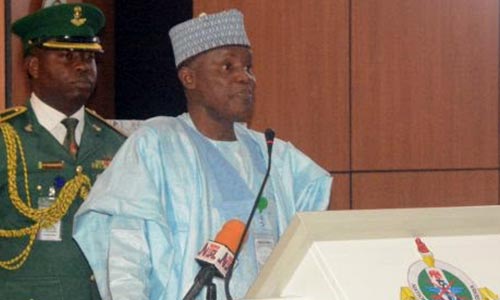
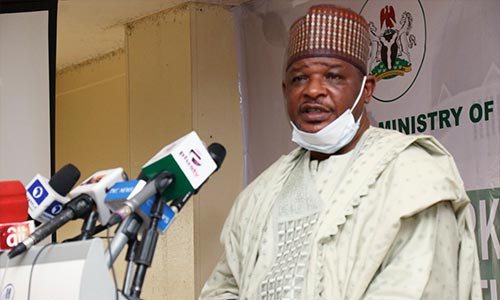
But Minister of Defence Major General Bashir Magashi (rtd) on Tuesday clarified Nigeria was aware and approved of the operation.

He spoke while responding to questions from reporters after defending the Ministry of Defence 2021 Budget estimates before the Senate Committee on Defence, in Abuja.

The Minister said that Federal Government granted the USA permission to operate in the country being a “friendly country.”

Responding to questions on the need for the Nigerian military to deploy sophomore technology in the fight against insecurity; Magashi said Nigeria is handicapped at the moment by some “so-called developed countries who want the country to remain the way it is and keep running to them for help.

He however said the country was doing the best it can with what is available to the military.

The Minister further said that Nigeria will explore the current partnership with the United States to tackle insurgency in the country.

Magashi said: “The United States of America contacted the Nigerian government to undertake that operation.

“There is nothing wrong with a friendly nation taking permission to conduct an operation which is for the mutual good of the countries. That is why we allowed it to happen.”

Asked how far Nigeria has been able to exploit the friendliness between both countries to fight insurgency, the Minister said: “It is something that can be discussed later.

“It is not meant for the consumption of the public. To be honest but certainly we are making efforts and they have been helping us greatly in areas where we have difficulties and we are still asking for more.”

On comments that some countries were trying to block Nigeria from owning some technologies to fight insurgency, the Minister said: “It is natural. They want to sell their equipment so they will try to make it difficult for developing countries to have what they want.”

NBA, FIDA Pledge Pro-Bono Service To Victims Of Police Brutality In Edo

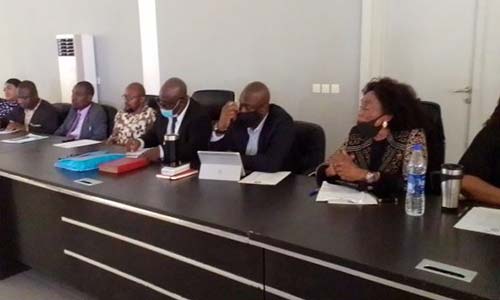
Members of the Panel of Judicial Inquiry at the sitting in Benin yesterday

The Edo State chapter of the Nigeria Bar Association and the International Federation of Women Lawyers, (FIDA) Edo State chapter, yesterday, pledged their support to render pro-bono services to victims of police brutality in the state, just as the chairman of the Judicial Panel of Inquiry assured them of thoroughness, fairness and speedy delivery of justice to all.

The two bodies gave their pledges at the inaugural sitting of the Judicial Panel of Inquiry set up by the state government to investigate and give recommendations on how to compensate victims of police brutality in the state.

The NBA chairman, Pius Oiwoh, said they have been given a matching order by the national president of the association to render free legal services to victims of police brutality who might not be able to hire the services of a legal practitioner to adjudicate on their matters if need be.

Oiwoh said besides rendering pro-bono services to them, they have also been asked to be part of the observers of the proceedings.

He commended the state government for setting up the committee, pointing that it was the right step in the right direction.

He said the NBA has absolute confidence on the calibres of persons that have constituted the panel, given their pedigrees in the legal profession, adding that they are poised to assist and ensure that the panel succeeds in their mandates.

Also, the International Federation of Women Lawyers, (FIDA), Edo State chapter, represented by its Public Relations Officer, Florence Okundaye, said they would never hesitate to give free legal services to the victims of police brutality in the state and to endeavour that justice is delivered to them.

Earlier, the chairman of the 20-man panel, Justice Ada Ehigiamusoe (rtd), advised all persons who were victims to come forward with their petitions and concrete evidences with verifiable phone numbers and addresses.

She said the panel would perform its duty under the terms of reference which include to receive and investigate complaints of brutality by security agents, human rights violation or related extra judicial killings in Edo State.

She said the panel would also recommend measures of compensation, as well as suggest to Edo State government on how to ensure that security agents no longer abuse the rights of citizens.

She added that the panel is also charged to ascertain the officers responsible for the abuse of victims, and recommend their prosecution were applicable.

According to the chairman, the proceedings would be opened between 10am and 4pm to every member of the public, urged all victims to submit their petitions on or before November 29, 2020.
“Physical submission of petitions or oral lodging of complaints shall be at the civic center between Block C and Block D, new secretariat complex opposite EFCC office, Benin City, Edo State every Tuesday, Wednesday and Thursday,” she said, promising that the panel would be thorough, fair and ready to do justice to all irrespective of who is involved.

#EndSars: Setting Up Judicial Panel Of Inquiry Is The Responsibility Of FG, Not States — Ex-NHRC Chair, Prof. Odinkalu

A human rights lawyer and former Chairman of Nigeria’s National Human Rights Commission (NHRC), Prof Chidi Odinkalu, has said that the responsibility for setting up of Judicial Panel of Inquiry against the activities of the disbanded Special Anti-Robbery Squad (SARS) and police brutality lies with the federal government, not state governments

The Ex NHRC boss disclosed this during an interview with THE SUN. He said police is an agency of the Federal Government and outsourcing its responsibility of setting up the panel to states is suspicious

“It is always suspicious when the Federal Government outsources its constitutional role to the states. Police is a federal institution under the constitution and its malfeasances are the responsibility of the Federal Government.

“The atrocities of the SARS are for the Federal Government to fix. Now, they are asking the state governors to set up these judicial commissions in inquiry.” he said

He added that “The problem is that the inquiries will report to the state governors that set them up not to the president, who has control of the police. Their White Papers will be issued by the state governments, not by the Federal Government.”

Therefore, according to Odinkalu, the federal government will not be bound by the recommendations of the state panels and the recommendations will be frustrated.

He said, “The recommendations of these inquiry bodies will not bind the Federal Government. Any police officers found errant would easily get transferred out of the state making the recommendation and so the recommendations will be frustrated.”

Furthermore, Odinkalu said federal government has been relying on the decision of the Supreme Court in a case between Ibrahim Babangida and Oputa Commission in 2001 in refusing to set up panel on police brutality. To him, such is not an excuse because even after the decision, FG have set up several judicial panels of inquiry including the current one headed by Justice Ayo Salami against the former Acting Chairman of EFCC.

He said FG also has the option of setting up a panel of inquiry in line with section 6(1) of NHRC Act.

He said, “The explanation of the Federal Government is that they have been precluded by the decision of the Supreme Court in the case involving former military president, Gen. Ibrahim Babangida and the Oputa Commission in 2001, from being involved in setting up judicial commissions of inquiry except in Abuja.

“Two things should be said about that. First, despite that decision, the Federal Government has set up a lot of panels since then, including the Danmadami, MD Yusuf, Parry Osayande Presidential Commissions on Police Reform; the Uwais Panel on Electoral Reform; the Sheikh Lemu Panel on Post-Election Violence; the Galtimari Panel on Boko Haram; the Turaki Panel on Insecurity, etc.

“Even now, the former President of the Court of Appeal heads a panel to investigate the former chair of the Economic and Financial Crimes Commission (EFCC).

“So, when it wants to, the Federal Government finds ways to use panels for its work. Second, there is a power of inquiry under section 6(1) of the National Human Rights Commission Act, but the President has refused to exercise his power to appoint a Governing Council for the Commission since the last one ended in 2015.”

The Ex-NHRC boss also flayed the Lagos State government for adding the Lekki Toll Gate Massacre to the terms of reference of the state’s panel even when the Massacre was done by the military, not police.

“Then you have now this matter of the oath of secrecy subscribed to by the members swearing to the authority of the state governor instead of the Oath Act. It’s all rather dubious in my view but the members are adults and I cannot prescribe for them. Most of them are known to me and some of them are my friends. I wish them well.”

Again, EFCC Questions Ex-FIRS Boss Fowler

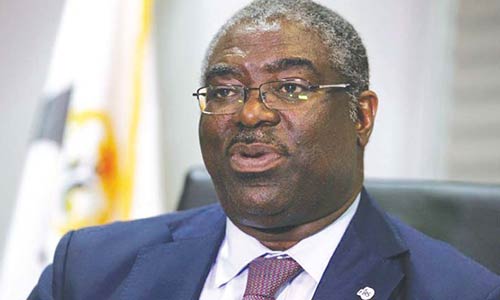
The Economic and Financial Crimes Commission (EFCC) has again questioned a former Chairman of the Federal Inland Revenue Service (FIRS), Babatunde Fowler.

Fowler on Tuesday returned to the EFCC office for the second round of questioning.

Fowler, who was also a former Chief Executive Officer, Lagos State Internal Revenue Service (LIRS) was on Monday quizzed for several hours by the EFCC.

Spokesperson of the EFCC, Mr Wilson Uwujaren confirmed to newsmen that Fowler was allowed to go home yesterday and returned again today for further questioning.

According to Uwujaren, Fowler is being interrogated in connection to an ongoing investigation by the anti-graft agency.

What Imo VAPP bill is

Angela Nkwo-Akpolu and Faith Kalagbor

The Violence Against Persons Prohibition bill currently before the Imo State House of Assembly has generated so much dust over what some people have erroneously tagged “Abortion bill”. Unfortunately the bill does not even make a mention of the issues it is accused of.

The bill is sponsored by Rt. Hon Uju Onwudiwe, the member representing Njaba State Constituency and is scheduled for public hearing when the State Assembly reconvenes for sittings.

On her part, a Non Governmental Organization, Alliances for Africa (AFA) has brought together seasoned technocrats from diverse backgrounds to push for the passage of the VAPP bill under the aegis ISCEVAWG.

The Imo State Committee on the Elimination of Violence Against Women and Girls (ISCEVAWG) are committed men and women passionate about the safety of people in Imo State.

Currently, Imo is the only state yet to domesticate the VAPP in the South Eastern States.

In the last one month, Church WhatsApp platforms have been awash with messages calling for rejection of the bill as it is considered to be anti Church values.

Specifically, the Catholic Auxiliary Bishop of Owerri Archdiocese, Most Revd. Moses Chikwe was quoted in The Leader newspaper to have said the bill seeks to ” turn society upside down because it will endanger cultural, traditional, and religious values”.

Further, he said the bill seeks to spell out prosecution of Clerics who refuse to join Homosexuals and Lesbians in Holy Matrimony in the State.

On his part, Revd. Ikenna Emmanuel of Faith House Transformation Assembly in Owerri sent out a message across the platform of the Imo Pentecostal Fellowship of Nigeria (PFN) calling for stoppage of the Imo VAPP bill.

According to him, the “VAPP Bill 2020 Mandates Jail Sentence for Parents Who Scold their Children; VAPP BILL 2020 does not recognise the unborn Child in the vulnerable groups; will imprison Priests for preaching moral order; and seeks to destroy the Igbo Family and promise rise in poverty.

Further, he alleged in the message he signed on behalf of PFN Legal Forum that the VAPP bill does not protect the sanctity of life; does not protect the unborn child as a person; legalises same sex marriage; bans use of teachings of the Holy Bible in public.

According to Barrister Emmanuel, the VAPP BILL 2020 promotes deadly violence against women; and legalises Abortion and contraception to kill the unborn Child.

However, the truth is the VAPP bill does not even make a mention of all the aforementioned issues, not even one!

These are the provisions provided. Rape, inflicting physical injury on a person, coercion, willfully placing a person in fear of physical injury, offensive conduct, taking undue advantage of persons living with disability, prohibition of female circumcision or genital mutilation, and frustrating investigation.

Others are willfully making false statements, forceful ejection from home, depriving a person his or her liberty, damage to property with intent to cause distress, deprivation of right of inheritance.

Further, the offences listed include: forced financial dependence or economic abuse, forced isolation or separation from family and friends, emotional, verbal, and psychological abuse, harmful widowhood practices, abandonment of spouse, children and other dependants without sustenance, and stalking.

Others are sexual intimidation, intimidation of a person, spouse battery, harmful traditional practices, attack with harmful substance, incest, indecent exposure, posting pictures or videos of sexual violence on the internet, sexual blackmail, political violence, and violence by State actors.

The part two and three proposes protection order, while part four is about the regulatory body, and part five is about the investigation and prosecution of offences.

Part six highlights jurisdiction of the court, part seven is miscellaneous, part eight is consequential amendments, and nine interpretation.

From the aforementioned, it is obvious that all the issues bandied about the bill were not conceived let alone mentioned.

There is nothing in the bill that seeks to install females as Traditional Rulers or Priests.

The claims by Dr Phillip Njemanze that the bill promotes abortion or anything about tampering with anyone’s life is also not true.

Presently, Imo State following the lock down occasioned by the Covid 19 pandemic is bedeviled with rising cases of violence especially sexual offences involving blood relations.

Incest regrettably holds sway and most times involving minors who are forced to such acts.

However, the COVID-19 pandemic brought about a surge in the perpetration of these vicious acts as well as promotion of impunity for perpetrators due to the lack of legislative frameworks to adequately address the issues.

This has made difficult the work of our front line Women Human Right Defenders; because they face intimidation by some police officers. Such intimidations are also faced by the survivors who often times are even threatened to back out from seeking justice and encouraged to accept alternative dispute resolution by some corrupt officials.

Sadly, this doesn’t in anyway commensurate for the extent of damages caused especially where perpetrators violate under aged children or involve brutality in the act. The violations of our minors are the most reported within this period and has escalated which informs the need for systems to be put in place to put a check on these evil vices, particularly legislations.

Many people do not understand that under the present laws, a person cannot be successfully tried for sexual offences because proving such is herculean!

For instance, 12 years old Grace (not real name) had her pelvic bones broken by a man while being raped in Imo State.

For people especially children caught in the web of sexual violation, there is no safe space for them to hide from their abuser. After they report the incidents, they still have to return to the same house where their abuser lives!

Thus, such persons suffer repeated sexual and psychological abuses without reprieve.

Already, States like Ekiti and Lagos have passed their VAPP bill and protects her people, whether male or female, young or old.

Further, they have provided safe spaces where people abused can hide, heal, and recover from the abuse while the abuser is kept behind bars, away from other people lest they fall victims.

However, these are some of the concerns the bill by Hon Onwudiwe seeks to address. It seeks to proffer stiff penalties for offenders who consciously cause others harm.

Another concern is the obnoxious widowhood practices still practiced in some parts of the State like asking a widow to drink the water used to wash the body of her late husband. Acts such as this cause untold health concerns on the victims and that is what the bill seeks to address.

No woman is interested in seeking to be the Traditional Ruler of her community, rather we would love to enjoy thriving careers and or businesses. We do not desire to be the husband’s, we prefer to allow the men be the breadwinners and pay the bills, we will gladly support them.

However, it is obvious that many people have condemned the noble efforts of a committed lawmaker, who desires a safer space for all of us.

Many people have erroneously condemned a bill they have not seen nor read and are busy forwarding unconfirmed messages and inadvertently helping abusers to fight against a bill that protects everyone.

Facts about the Vapp Act and the Current Imo State Vapp Bill

The VAPP Act was signed into law by President Goodluck Jonathan in May 2015 due to lack of uniformity in the law with regards to the battle to eliminate gender-based violence and sundry discrimination and abuses that the VAPP Act was enacted.

THE VAPP Act is a law that guarantees protection of the rights of victims of all forms of sexual and gender-based violence in the country.

The VAPP Act is the single law in place that transcends the criminal and penal code in guaranteeing justice and protecting the rights and properties of victims of sexual and gender-based violence by its expansion of the definition of rape, domestic offences, incest and several forms of violence.

Further, it ensures justice and protection of victims in a way that guarantees freedom, compensation and respect to human rights.
Under the VAPP Act, a wide range of Sexual and Gender-Based Violence (SGBV) including; rape/defilement forced financial dependence or economic abuse, harmful widowhood practices, genital mutilation, abandonment of children, harmful substance attacks, and incest are all recognized as punishable offences.

Only fifteen (15) out of the 36 states of the federation have domesticated the VAPP and in South-East Nigeria, Imo is the only state yet to domesticate the VAPP.

The Imo State VAPP Bill has been reviewed to integrate current trends of violence, roles and responsibilities of Key institutions based on the needs of survivors and for the effectual implementation of the provisions contained therein.

The Bill does not in any way support same sex marriage or Abortion as is currently propagated by Dr Philip Njemanze.

Call to Action:
We all must support the passage of the Violence Against Person’s Prohibition bill in Imo State as an institution charged with the mandate of protecting her citizenry and maintaining peace.

Sensitize the entire Church and citizens on the proscription and prohibition of all forms of sexual harassment and violation of women and girls and the need to support the passage of the VAPP bill.

Importantly, we must consciously disseminate only the right information via our different platforms and shun misinformation being propagated by those who are determined to frustrate the progress made by the ISCEVAWG Committee.

Together, let us collaborate to support the Imo State Committee on the Elimination of Violence Against Women and Girls (ISCEVAWG) and see that the VAPP bill is passed to protect all of us.


The Rise of Homo Nigerianus

Tatalo Alamu

From the volcanic meltdown of Nigeria in the past fortnight has emerged a unique species: Homo Nigerianus.  Homo Nigerianus has been long in coming. He does not speak Hausa, Ibo, Yoruba and does not partake in any of Nigeria’s multi-lingual riot of possibilities. He has been delinked from linguistic communion. His lingo is inarticulate rage which he spews out in sharp, stuttering and spluttering cadences of equal opportunity violence.

Social prophets predicted his arrival on the scene. Long before he was hatched like a monster animal in the fetid and festering bowel of harsh inequity that is modern post-Independence Nigeria, early precursors have been making some sneak appearance.  Homo Nigerianus is a product of complete de-socialization; a haunting throwback to the primitive caveman of human antiquity where wild men roamed the wild forests hunting for what to eat.

Like the old African savages in Joseph Conrad’s infamous novel, The Heart of Darkness, whose skills of communication never went beyond “catch am, kill am” or “Mr Kurtz he dead”, the linguistic ability of Homo Nigerianus is pared down to the barest minimum mode of self-expression. A fortnight ago upon sighting edibles in a warehouse that had been prised open by bare knuckles, Homo Nigerianus brayed: “See food!”

This is what happens when humanity has been reduced to the most feral level of existence, a condition which echoes the darker stages of the hunter-gatherer epoch of history. It is a Hobbesian hell; a state of nature in which everything is short, nasty and brutish. It is eat or be eaten alive. Beyond the common foraging for food, there is no solidarity of purpose. What is looted is easily re-looted and what is stolen is briskly stolen again.

How did a modern Nigerian society regress this far to the infancy of humanity? It has been said that humankind first civilized in Africa, but it has not continued to do so there. Like the rest of the world, Africa has also known great civilizations, mighty empires, notable kingdoms, remarkable city-states and globally recognized trading emporiums that date back to the Babylonian epoch.

But beginning from the thirteenth century African witnessed a steep decline. The people and their societies became very vulnerable to emergent European powers and Arab marauders that laid siege to them from greater Arabia. Portugal, Holland, France, Germany and Britain conquered and subjugated huge swathes of the continent while newly created Belgium was waiting in the wings.

The unending nightmare and humiliation culminated in the Berlin Conference of 1884/85 when the continent was parcelled out among the contending European powers. This was not just conquest in the ordinary sense of the word. It was conquest accompanied by a systematic political, economic, intellectual, spiritual and cultural annihilation in which a people and continent already at the end of its wits lost their organic essence.

To appreciate the colossal scale of depredation, the old Kongo kingdom whose entire inhabitants had been transported as slaves through the new slave port of Luanda underwent three different types of colonial rationalizations: Portuguese, French and Belgian. With its extant traditional institutions destroyed and the new colonial replacements stymied by host rejection, Africa became a land of anomic normlessness.

In such circumstances, it ought to have been obvious to the generation of African leaders involved in the independence struggle for Africa that to make a dent on the global scene, the nations inherited from the colonial masters had to be reinvented and forced to undergo a drastic reconfiguration in order to be able to stand up on their own. The colonial nation was not designed for Africans.

Those African leaders who grasped this imperative necessity for a comprehensive overhaul of the ticking time-bombs gingerly placed on their laps such as Patrice Lumumba, Kwame Nkrumah, Amilcar Cabral, Obafemi Awolowo, Eduardo Mondlane, Augustino Neto and Samora Michel were either destroyed or prevented from coming to power. Post-colonial Africa is a blood-splattered canvas indeed.

It is a tragic pity that Nigeria which has been touted as the Black person’s last hope and the potential Mecca of the Black race as a result of its humongous size and spectacular endowments in natural and human resources has failed to live up to its historic billing.

After a costly civil war, several coups, civil uprisings, religious upheavals, organized banditry which has devastated the north central states and an on-going sectarian insurrection which has lasted eleven years, Nigeria is bleeding on all fronts. The nation has been in traumatic transition since independence.

In a strange irony, the post-military epoch seems to have sharply accentuated the debacle. Nigeria suffers from a double jeopardy. Military rule brought neither accelerated development nor national cohesion while civil rule has failed to throw up an organic and nationalist political class capable of squarely addressing the grave national problems.

With its economy devastated by a crippling war bill, dwindling revenues due to a mono-cultural dependence on oil, open mismanagement of resources, graft and spellbinding corruption in all arms of government, Nigeria’s woes have been critically compounded by the post-Covid-19 realities.

As a result of a run on the national currency due to state larceny and pressure on the external reserves, stagflation, which is a combination of rising prices and low purchasing power reigns supreme causing untold hardship to many Nigerian homes. With unemployment among the vibrant and energetic youth running at an all-time high, it is not a question of low purchasing power for the youngsters but no purchasing power.

With such a plethora of negative forces tugging at the national underbelly, no state diviner can predict when the tipping point would be reached. This is the fate that overtook Nigeria in the last fortnight.

Against a background of increasing despair and general impoverishment, the steep increase in the price of petroleum and the punitive tariff on electricity seemed to have pushed the public to a point of no return. The EndSARS protest against police brutality was just a pretext for a more massive social upheaval.

Enter Homo Nigerianus. Homo Nigerianus was not part of the EndSARS movement. On his own he could not articulate any social grievances and neither does he have the social clout or group cohesion to lead any mass protest. Only the articulate can call out the articulated. It was a case of the tail wagging the dog.

Homo Nigerianus does not belong to any social class. He cannot even be classified as belonging to an underclass. Classes are distinct social categories with their own unique identity. Being the wretched of the most wretched, hoodlums are declasse and unclassifiable.

The EndSARS protest people were leaderless by choice. The hoodlums were leaderless by vocation or lack of it. Criminal gangs have kingpins. But who ever heard of the leader of hoodlums?  Hoodlums are an amorphous mass distinguished by the brutality of dumb resentment against a system that has completely dehumanized them.

Drawn mainly from the rump of Nigeria’s old middle class and the emergent entertainment aristocracy, the EndSARS movement had no commonality or mutuality with Homo Nigerianus on the prowl. But the genuine protesters saw their nemesis too late in the day until it was ready to side line or steamroll them as the case may be.

Homo Nigerianus has now arrived on the scene fully dressed or fully undressed as the case may be. The genie is already out of the bottle and cannot be put back. Unlike the more disciplined proletariat of yore, the more class conscious artisan groups and peasant formations, Homo Nigerianus cannot be enlisted for revolutionary rousing or progressive politics.

But as we have seen, it will always be available where looting, anarchic mayhem and arson are being contemplated on a vast scale. The apocalyptic nightmare we have witnessed in the last fortnight will be a child’s play if we were to witness a repeat performance.

That encore may not be long in coming if nothing is urgently done to contain the menace. The hostile, inhuman postcolonial state that has spawned the monstrosity will have to give way to allow Nigeria to be made anew. As a first step, our sprawling anarchic metropolis, particularly Lagos, which are nothing but conglomerations of urban chaos will have to be urgently depopulated.

It is either we are going to be dragged into modernity or we choose to remain in our current neither-zone until it gets to us. A modern mega-city without a metro system, adequate sanitation, dwelling quarters, civic centres and a polite and people-friendly security service can only produce the type of dehumanized denizens that have been on rampage in our cities in the past fortnight.

Lagos needs federal help which will transform it into a fully functioning megalopolis and revive its shattered infrastructure. As a federal policy, there is an urgent need to revive the whole idea of satellite suburbia which will release our besieged cities from their current claustrophobic confines and drain them of their poisonous influx.

The whole concept of farm settlements, out of city hubs for emerging technologies, auto-polis, aero-malls etc can be fundamentally rethought and adapted to the needs of an emerging Third World economic power-house. However much we hate Chief Obafemi Awolowo as an avatar of emancipatory politics we can at least borrow from his brilliant Keynesian ruminations about redistribution of public wealth and amelioration of poverty.

This year has been quite momentous for Nigeria. Nobody could have predicted its unhappy trajectory at the beginning. Covid-19 emerged from nowhere to place the economy in acute jeopardy. As if this was not enough, the legitimate, well-organized but profoundly naïve EndSARS movement prepared the ground for the emergence of Homo Nigerianus who promptly incinerated the nation.

The monster we birthed has become a full grown hoodlum roaming the length and breadth of the country like an apocalyptic demon. He does not believe in anything or anybody for that matter. Having grown up in Nigeria’s vast orphanage of political and economic inequities, the hoodlums no longer speak our language. Like all nihilists, and with due to apologies to Oscar Wilde, Homo Nigerianus knows the price of everything but the value of nothing.

His driving motive is sheer wilful destructiveness which is borne out of implacable social malice. But because he lacks both group solidarity and revolutionary cunning, he will be easily apprehended and neutralised by a police force buoyed and energised by group resentment and professional solidarity after being briefly overwhelmed. But like mosquitoes, they will continue to proliferate until the pond of filth that spawns them is drained.

We are very lucky that this time around that the police chose to abscond rather than join them. We have said it several times in this column that as long as we pretend to be paying the police, the police will pretend to be watching over us until some epochal event comes along to shatter the illusion of order. Next time around, the police having lost all illusions may be tempted to join. That will be real Armageddon.

We can only avoid this looming disaster if the rate of social absorption of the hoodlums through their economic rehabilitation outpaces their growth rate. For a society facing a drastic economic decline, this is going to be a tall order.

But there is no other way. Just as it amounts to sheer economic illiteracy to believe you can lift people out of poverty without economic production outpacing population growth, it is nothing but political delusion to believe that we have heard the last from Homo Nigerianus.

Thenationonlineng

Open Letter to the African Union: Africa’s Opportunity to Address Gender Diversity at the ICJ

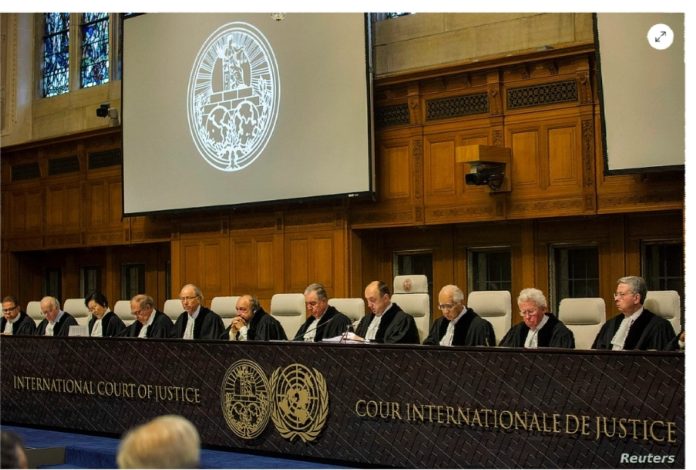
Credit: REUTERS/Michael Kooren

Women of Africa are increasingly demonstrating their resilience in global leadership, financial institutions, international criminal law, the United Nations, the World Bank and the International Criminal Court to name a few. But there is more that needs to be done— the November 11, 2020 elections to the bench of the International Court of Justice (ICJ) provides a unique opportunity for member-states of the African Union to once again demonstrate their support for gender equality by supporting the candidature of Judge Julia Sebutinde of Uganda—the first and only African woman to serve on that court.

Currently, women represent only 20% of the judges on the bench of the ICJ. As the ICJ is poised to celebrate its 75th Anniversary in April 2021, it is noteworthy that historically, out of the 108 judges since the court was established, only four have been women. To date, the principal judicial organ of the United Nations remains the most gender-imbalanced international court in the world. This imbalance has prompted scholars and advocacy groups such as the Gender Equality Campaign (GQUAL) to engage in advocacy for diversifying the ICJ bench. On November 11, 2020, elections will be held to fill five judicial positions on the ICJ. Of the eight candidates on the ballot for this election, three are women; Julia Sebutinde of Uganda, Hanqin Xue of China, and Maja Seršic, of Croatia.

In 2012, Judge Julia Sebutinde made history as the fourth woman to be elected to the bench of the ICJ in over 60 years of the Court’s existence. Judge Sebutinde’s election was remarkable for reasons beyond her gender: she was also the first woman from the African continent to be elected to the ICJ, compared to the 14 African male judges who sat on that court before her. As an international judge, Judge Sebutinde’s appointment signaled the intersections of race, gender, geographical location, and other identities that women from non-western societies must navigate. Judge Sebutinde’s journey to the ICJ, was as a combination of an unwavering ambition to become an international judge, and professional experiences spanning 41 years, having has served as a judge and jurist at national and international levels, including as a judge of the High Court of Uganda and the Special Court for Sierra Leone.

Judge Sebutinde’s multiple and intersecting identities of race, gender, geography, as well as her professional experience are reflective of her journey to the international bench, a journey which she describes as ‘different threads that were woven into a kind of cloth, the kind of cloth that I now am’ (quoted in Judge Julia Sebutinde: An Unbreakable Cloth,” in International Courts and the African Woman Judge: Unveiled Narratives. Judge Sebutinde’s journey as the first woman from an African country to sit on the ICJ is symbolic of the increasing number of African women judges sitting on international courts since 2006. As one of the most gender-imbalanced international courts, the upcoming elections in November to fill the five vacant seats on the bench of the ICJ provides a unique opportunity for the Africa group of States to back the nomination and election of a strong candidate—who just so happens to be a woman!

Judging Julia Sebutinde

On Merit

Judicial selection processes to international courts aspire to meet the highest standards of merit, integrity, professionalism, equal opportunity, inclusion, and diversity. Julia Sebutinde possesses a total of 41 years of experience as a judge and jurist at national, regional, and international levels. Her expertise spans public international law, international humanitarian law, international human rights law, the law of the sea, environmental law, and international criminal law. As a judge at the ICJ since 2012, Judge Sebutinde has contributed to 40 Judgments, 65 Orders of Court, and an Advisory Opinion. Besides her judicial functions, she has served on the Court’s essential committees, including the Chamber of Summary Procedure, the Budgetary and Administrative Committee, and Head of the Information and Communications Technology Committee of the Court. As an incumbent judge, she has experience in the internal operations of the Court. She has initiated key internal reforms that have contributed to strengthening the ICJ internally, including internal justice for staff members and the modernization of the Court’s processes.

Judge Sebutinde’s knowledge and grasp of international law builds on her experiences as Judge of the Special Court for Sierra Leone (SCSL) (2005-2010); and Presiding Judge of Trial Chamber 2 of the Special Court for Sierra Leone (2007-2008 and 2010-11). Judge Sebutinde’s contribution to jurisprudence is captured by international law professor Nienke Grossman when she notes; “Among Judge Sebutinde’s most noteworthy individual opinions during her time on the Special Court are a separate concurring opinion regarding “forced marriage” in the AFRC Trial and a dissenting opinion on whether to accept a late brief by defense counsel in the Taylor trial. Judge Sebutinde’s separate concurring opinion in the AFRC trial explored the legal contours of “forced marriage” and highlighted the testimony of expert witnesses on the subject.

Judge Sebutinde has written many declarations and separate opinions appended to the judgments of the ICJ, thus contributing to its jurisprudence, including a separate opinion to the Chagos Advisory Opinion, in which she elaborated on the right to self-determination in the context of decolonization as having attained peremptory status (jus cogens) under customary international law, from which no derogation is permitted. Judge Sebutinde has delivered numerous papers and public lectures and holds several international awards, including two Honorary Doctorates, in recognition of her contribution to international peace and justice. Having served on the ICJ bench since 2012, Judge Sebutinde brings with her the knowledge and skills of an incumbent judge who has demonstrated that she understands the internal workings of the Court and has contributed to international law through her judicial opinions.

On Process

Fourteen male African judges preceded the arrival of Sebutinde as the first African woman judge at the ICJ. The practice has been for the African Union (AU) to endorse the re-election bid of incumbent judges contesting for a second term. Judge Julia Sebutinde is the first and only African woman on the Court, and the first judge whose bid for a second term has not been formally endorsed by the AU and is instead challenged by two male competitors. While AU endorsement does not necessarily mean an automatic election, the fact that the first woman candidate’s bid for re-election has not been endorsed by the AU, calls for further reflection on promises of gender equity in representation. The AU must honor the customary practice of supporting incumbent candidates for re-election by openly supporting the re-election bid of the incumbent candidate who just so happens to a woman.

On Gender Equality

Gender equality does not mean that women should be nominated or endorsed at the expense of men. The ICJ’s infamous historical record as one of the most gender-imbalanced courts in the world requires deliberate action in addressing this disparity. All the former male African judges of the ICJ received the AU’s endorsement, and each one served two terms (unless they died in office or voluntarily resigned). Why is the AU refusing to endorse the first and only African woman judge? The lack of endorsement by the AU should send a chilling signal to all member States, international organizations, civil society advocacy groups, women’s organizations, and all individuals interested in gender diversity, inclusion and equal opportunities for all sexes. The AU must affirm its commitments on gender equality contained in multiple legal instruments at the regional and international levels. The election of international court judges should be of concern to all members of the international community. As a principal judicial organ of the United Nations, the bench of the ICJ should symbolically reflect the world’s gender diversity.

The AU must hold true to the progress within the AU system as demonstrated by the election of women judges to the ACtHPR—making it the most gender-balanced court in the world currently. In electing judges to the ICJ, the AU and individual African states have been presented with a unique opportunity to showcase to the world that qualified African women candidates have equitable and strong support from member-states of the AU to serve in international organizations. The AU must live up to its commitment to promoting gender equity, equality, inclusion, and diversity as espoused in the Maputo Protocol. The AU must continue the progress made, as seen in the number of women represented in the African Commission and the African Court (ACtHPR). The African Union must live up to its espousal of gender equality by endorsing the incumbent candidate’s re-election—who has the merit, comes with a wealth of international law experience, and just so happens to be a woman!

Africanwomeninlaw

Minister Denies Complicity in Detention of Abuja Publisher

Minister of State, Power, Mr Goddy Jedy-Agba, has refuted imputations that he ordered the detention of the publisher of Power Steering Magazine, Mr Tom Ohia, by the police in Abuja.

Jedy-Agba, in a statement signed by his Special Assistant on Media and Communications Strategy, Mr. Ofem Uket, in Abuja, noted that contrary to the “concocted” online media reports, he was not a court of law to remand Ohia.

It was gathered that Ohia, in one of the published articles had alleged in the July 2020 edition of the magazine that the minister bribed the Nigerian Police in 2012 to suppress investigations into the ill-fated Dana plane crash.

The crash of the plane which was conveying passengers from Abuja to Lagos, he alleged, was masterminded and orchestrated by the minister when he served as Group General Manager, Crude Marketing, at the Nigerian National Petroleum Corporation (NNPC).

But Jedy-Agba, in the statement, maintained that he only reported the matter to the police for investigation, adding that he was not the judge who signed the court remand order bordering on allegations of bribery against the police.

He added that Ohia accused the police of taking bribes to bury the alleged shutting down of the airplane, noting that he was being held in connection with his case with the security agencies.

“It has become necessary to set the records straight by disclosing that the police secured a warrant of arrest to go after the self-acclaimed publisher who had severally declined invitation by the police to appear before them to answer questions bordering on allegation of bribery against them.

“The minister was only a complainant to the police having suffered libel in the hands of Tom Ohia because the publication was injurious and attempted to link the minister with acts of terrorism.

“The one man magazine, which flagrantly disregards the ethics of journalism for fair hearing and objectivity also disputed the report painstakingly carried out by the Accident Investigation Bureau (AIB), which clearly and sufficiently analysed the dual failure of the engine of the Dana airlines.

“The report of the AIB did not mention Jedy-Agba either as one who masterminded or orchestrated the ill-fated air crash, which ugly memories still lives with the families of those who lost their lives and by extension the Nigerian state, especially the aviation industry,” the minister stated.

He maintained that eight years after, the allegation that the minister was responsible for the Dana air crash of 2012, in which over 190 Nigerians lost their lives, clearly, was a misrepresentation of facts, blackmail, intimidation and libel.

“At the time of the crash and the subsequent report of the AIB, relevant authorities did not dispute the AIB report, neither did Ohia contest the report, and after eight years, he is coming out with outright blackmail.

“To set the records straight, the minister has no hand in the detention of the journalist as the police have secured a remand order to keep him until his date of appearance in court.

“The media industry has to urgently rid the profession of quackery and specialised blackmailers by some self-acclaimed publishers of unknown newspapers and magazines, certainly not circulated beyond a few communities,” Jedy-Agba stated.

I was planning to share the looted COVID-19 palliatives on my birthday – Lawmaker, SOB Agunbiade

The majority leader in the Lagos State House of Assembly Majority Leader, Sanai (SOB) Agunbiade has said that he was planning to distribute the palliatives looted from his home in Ikorodu on Friday, October 23.

A mob stormed his apartment and looted food items and other properties they could lay their hands on.

In a statement released on social media, Agunbiade who represents Ikorodu Constituency 1, said he got intelligence of the planned attack, but thought it was a rumour. He said he received the palliatives as well as many other items from well-meaning Nigerians and had planned to distribute them to members of his constituency today October 25.

His statement reads

The violent attack on my house: Thank you Ikorodu.

To God be the glory that the violent attack on my house on friday 23rd October, and the massive destruction of everything therein did not record any fatalities.

I got intelligence reports of the plan to exterminate me early enough, but I took it as unfounded rumours. Moreso, I was not ready to have security operatives around lest lives be lost. I trusted in God’s plan for my life.

But to those that masterminded and sponsored the carnage for nothing other than political vendetta, I say ‘thank you.’ We know ourselves in Ikorodu, but God reigns supreme. God will repay every hands involved in the attack in appropriate proportion.

I am happy to be alive to witness the 2020 anniversary of my birthday on Sunday 25th October. The plan of detractors to delete me before my bithday has failed. To God be the glory.

Let it be noted that at the peak of covid 19 pandemic, I personally distributed palliatives to my constituents more than three (3) times at my personal expense and recently, my team also shared palliatives to very indigent residents of Ikorodu. All these and many more of efforts aimed at taking care of my constituents are public knowledge as we have a way of ensuring open nomination of beneficiaries.

And for my bithday on 25th October 2020, I have sent out, through my Media Team, notice of my intention to give support to 50 widows who have already been nominated by different groups in a programme christianed Widows Mite for Widows and also distribute to some vulnerable and indigent individuals across the three local councils of my constituency, some palliative materials donated by the state and federal governments, as well as myself. Those are the materials stolen from my house yesterday. Alhamdullilah.

My service to Ikorodu since my teenage years up to this present time is already treasured by posterity and remain immutable. God knows I do not deserve the treatment meted on me by the perpetrators of this politically motivated attack and their sponsors, but I seek solace in God.

It is a truism that no one will attack the property of a mad man, but people of reckoning always suffer vilification. The barbaric event of friday is though shocking but like a dolphin which is happy even in the middle of giant waves and horrible storm, I am stable and my faith in the mercy and grace of God is very fat.

For certain the looters are not #Endsars protesters because the youth in Ikorodu engaged in very peaceful and well coordinated protest. The perpetrators of the attack on my house are group of assailants on a mission targeted at my life. They stole my certificates and travelling passports of my family. They emptied my wardrobe and that of my wife and went with other valuables…pure broad day robbery! But we thank God.
Nigerian politics is indeed very profitable! Ikorodu you have done well for me, I thank you.

For all of these, I thank God for the preservation of lives. I thank God for his infinite mercies and grace.

SOB will not go down, no matter how much they try because God is my armour. Whatever the situation, Ise Oluwa n tesiwaju insha Allah!

Agunbiade S.O.B

Watch videos of residents carting away the palliatives below

by Linda Ikeji

EXCLUSIVE: Federal government begins compilation of #EndSARS protesters on no-fly list

they suspected of energising the #EndSARS movement that loomed across the country last month, officials told Peoples Gazette on Monday, in a move that could drive a wedge of mutual suspicions in ongoing negotiations between the government and the protesters.

Three officials with distinct but corroborative knowledge of the government’s plans told the Gazette in separate interviews on Monday that the federal interior minister was responsible for the controversial list.

Officials did not immediately accuse the protesters of any crime, but the ministry started collating the list nearly two weeks ago, an official said, and the Gazette only became aware of its existence on Monday morning.

Two sources at the State Security Service told the Gazette that the interior ministry, under Rauf Aregbesola, requested from the secret police whether or not it had a profile of key supporters of the protests. 

The immigration office is domiciled under the interior ministry, and a senior official said the ministry planned to forward names of “hundreds of Nigerians” who should be targeted for overseas journey.

“We told the ministry that we have not started compiling a list of the protesters because we did not get a presidential directive to do so as of that time,” the official said. “But the ministry went on on its own to start collating a list for enforcement.”

Another SSS official attached to civil aviation told the Gazette that the list was yet to be formally circulated, but six people suspected of participating in #EndSARS were already prevented from traveling last week.

“I know six people have been prevented from travelling to Europe and Dubai because of the troubles they put the government through with their campaign against security workers,” the official said. “The immigration people are already doing their own work, but we have not received any list from the headquarters.”

A preliminary interior ministry ‘no fly’ document seen by the Gazette included a man who was a key voice in #EndSARS. His passport was issued in Atlanta, United States, in February 2016, but the Gazette has left out his name and passport number on legal advice. 

SSS Officers (Credit: Premium Times)

The two SSS officials and a senior interior ministry official who confirmed the compilation to the Gazette sought anonymity to discuss it. One of them described the compilation as “a matter of federal emergency,” on Monday morning.

On November 1, another key strategist for #EndSARS Modupe Chizoba Odele was prevented from travelling out of Nigeria. 

Ms. Odele, a law graduate of Columbia University with passport number ******60, said her passport was confiscated at the Murtala Muhammad International Airport while traveling to the Maldives for her birthday on November 2. 

Ms. Odele’s friends said she accused the Defence Intelligence Agency of being responsible for her botched trip, but the Gazette could not independently corroborate that claim between Sunday night and throughout Monday.

As a legal counsel to the Feminist Coalition, she initially asked that her matter should not be made public, but a newsletter she distributed on Monday night blew her ordeal on social media.

‘Subversive roles’ 

#EndSARS first became a rallying point against police brutality in 2017, when Nigerians used the hashtag to recount how they endured years of atrocities and corruption from the now-outlawed police special anti-robbery squad. 

But the campaign only shot to worldwide prominence on October 8 when citizens decided it was time to finally rid society of the deadly and corrupt unit. 

More than 150 million tweets were sent under the hashtag between October 8 and 23, promptly outstripping the prominent Black Lives Matter agitation in the United States.

President Muhammadu Buhari has yet to publicly disclose his personal estimation of the #EndSARS, but officials close to him have seen the movement as an attempt to force him out of power, the Gazette reported on October 22. 

On Monday, a meeting of northern governors, ministers and other allies of the president slammed #EndSARS as an attempt to force a regime change through the back door, emphasising the administration’s democratically-elected status.

Mr. Buhari also appeared discomfited about the protests when on October 22 his cabinet failed to discuss the Lekki massacre of Lagos protesters by Nigerian soldiers on October 20.

snapshot from footage of soldiers shooting the Lekki protesters.
A snapshot from footage of soldiers shooting the Lekki protesters

A senior interior ministry official told the Gazette on Monday that the government was looking into personalities behind the #EndSARS movement, which remained largely decentralised.

“We want to be sure of the real motive of those who led the protests and raised money,” the senior official said. “We suspect some people might have played subversive roles in the suspicious campaign against the government.” 

The official’s comments marked a sharp contrast from public statements of the government over the past three weeks. Senior administration officials, including Vice President Yemi Osinbajo, have publicly acknowledged #EndSARS as a dispassionate call for better policing.

Mr. Osinbajo also chaired a team of national economic council to look into all issues raised by #EndSARS protesters, days after he tendered a formal apology for police aggressions.

It was unclear whether or not the vice-president was aware of the controversial list being compiled by the interior office. A spokesman for the president did not immediately return a request for comments Tuesday morning.

TIPS