Home Blog Page 1220

BREAKING!! FALZ, AISHA YESUFU AND DJ SWITCH TO BE CHARGED FOR THE DEATH OF POLICEMEN

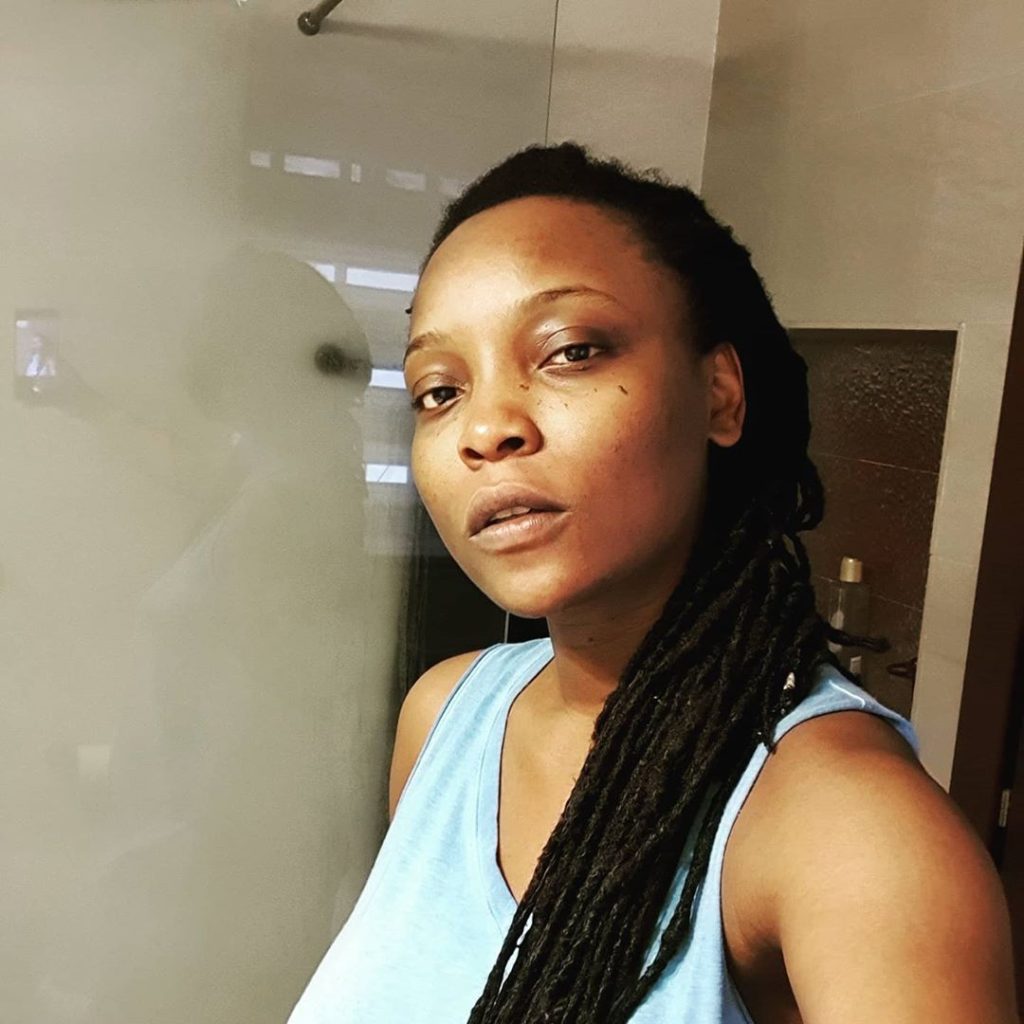
A human rights group named The Global Network for Human Rights (GNHR) has handpicked Aisha YesufuFalzDJ Switch, and few other celebrities for investigation after accusing them of Installing a campaign allegedly led to the killing of police officers across the nation during the #Endsars protest.

Falz – GQBuzz.com

According to GNHR, Aisha Yesufu and others contributed in one way or the other is ramping up public anger before the protests began.

They then intensified the incitement of people in multiple folds in the early days of the protests such that their actions can be directly linked to the outbreak of violence.

Aisha Yesufu – GQBuzz.com

Few notable Nigerians to be investigated on the GNHR list are Chief Femi Falana, Falz (Folarin Falana), Nnamdi Kanu, Obianuju Catherine Udeh (DJ Switch), Aisha Yesufu, Reno Omokri, Deji Adeyanju, Dino Melaye, David Oyedepo, BurnaBoy, Paul Okoye, Ayo Makun amongst others.

DJ Switch – GQBuzz.com

GNHR has vowed to present the list of deceased police officers and other ICC evidence for further investigation.

Buhari’s poverty alleviation, job creation programmes best in Nigerian history – Lai Mohammed

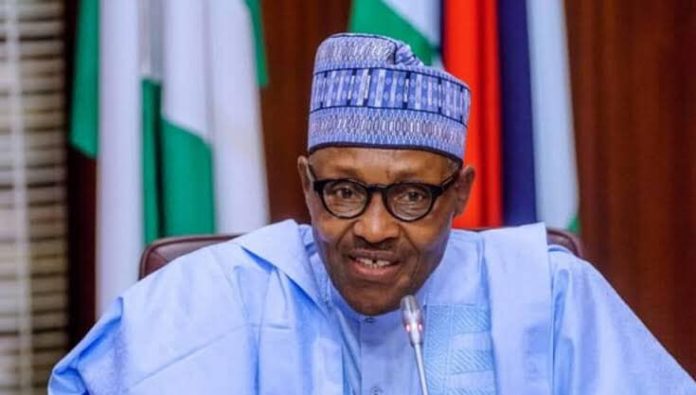
President Muhammadu Buhari’s several initiatives targeted at jobs for the youths and alleviating poverty among women and vulnerable groups remain the best in the history of the country.The Minister of Information and Culture, Alhaji Lai Mohammed stated this in Kaduna at a meeting of the Northern Governors Forum with traditional rulers on the aftermath of the #EndSARS protest.The meeting hosted by  Gov. Nasir el-Rufai of Kaduna was attended by a federal government delegation led by the Chief of Staff to the President, Prof. Ibrahim Gambari.Other members of the delegation were the Minister of Federal Capital Territory, Mohammed Bello, and the Inspector-General of Police, Mohammed Adamu.The Senate President, Sen. Ahmad Lawan, and  some members of the National Assembly from the region were also in attendance.In a presentation to the meeting, the minister who is a member of the federal government delegation said the Buhari government has remained committed to creating jobs for the teeming youths and alleviating poverty.“”No government in the history of this country has ever methodically and seriously put in place measures aimed at addressing poverty alleviation and creating jobs for youths like this Administration,” he said.Buttressing his position, the minister identified the N75 billion National Youth Investment Fund (NYIF) initiated by the government  aimed at providing opportunities for the youths.He said the Fund is part of the N2.3 trillion Economic Sustainability Plan to cushion the effects of the COVID-19 pandemic on most vulnerable Micro Small Medium Enterprises (MSMEs) across the country.The minister said the Fund, approved by the Federal Executive Council (FEC) on July 22, 2020, targets young people between ages 18-35 years and is expected to last for a period of three years (2020-2023).NAN recalled that President Buhari recently said that no fewer than one million Nigerians have applied for the N75 billion NYIF since the portal opened on October 12, 2020.The minister also listed MSMEs Survival Fund as part of the administration’s initiative at jobs sustainability.He said the Fund is a cluster of grants to support MSMEs to meet their payroll obligations and safeguard MSMEs jobs from the shock of COVID-19 pandemic.Highlights of the MSME Survival Fund, according to the minister included Payroll Support for businesses in health, education, hospitality and food production sectors targeted at 500,000 beneficiaries.One-Off payment to support self-employed individuals like mechanics and drivers, hair dressers, Keke Napep and Okada riders, plumbers, electricians with a one-time payment of N30,000 for 333,000 beneficiaries.Formalisation Support where federal government will register 250,000 new businesses with the Corporate Affairs Commission at no cost to MSMEs.General MSMEs grants which will provide N50,000 to an additional 100,000 MSMEs.Guaranteed Offtake Stimulus Scheme which aimed to stimulate direct local production in the 36 states and the FCT.Products from MSMEs involved will enjoy off-taker guarantees from the federal government.Mohammed said other initiatives targeted at the youths included N-POWER which had engaged 500,000 beneficiaries with 400,000 more in December.He said 10,000 youths had been trained and benefitted under N-TECH and N-AGRO respectively.The minister said the federal government FINTECH created enabling environment for growth of businesses that use technology to enhance or automate financial services and processes.He said over two million farmers, traders, mostly youths were empowered under FARMERMONI, TRADERMONI and MARKETMONI.Digital Youth Nigeria was also initiated to implement skill acquisition programmes for poverty alleviation and employment generation.Mohammed said over 100,000 youths across the country benefitted from Mobile Service Repair Training with financial and technical assistance.Over 500,000 youths have also benefited from the Graduate Internship Scheme which provides short-term employment graduates.1000 farmers from each of the 774 LGAs in the country were empowered and guided under the Youth Entrepreneurship Support programme.He said Entrepreneurship Training Programme ensures MSMEs are equipped with skills and access to credit while Digital Youth Nigeria focusses on positioning youth for revenue jobs opportunities tapping into the global tech market.The minister said the federal government made provision for 300,000 homes to be built by young Architects and Engineers as well as provision of 5 million Solar Home System to be installed by youth owned businesses.Mohammed reiterated that the federal government was promptly responsive to the demands of the #EndSARS protesters in meeting their five-point demands.He said the failure of the organisers to embrace dialogue led to the hijack of the protest by hoodlums leading to destruction looting and burning of public and private propertyNAN reports that some of the traditional rulers that attended the meeting are the Sultan of Sokoto, and the Emirs of Kano, Zauzau, and Bauchi.The Emirs of Ilorin and Gwandu, Tor Tiv, the Shehu of Borno, the Etsu Nupe and the Ona of Abaji in the FCT were also attended the meeting. (NAN)

LEKKI SHOOTING PROBE: Our CCTV Cameras Stopped Recording, Didn’t Capture Killings – LCC Tells Judicial Panel

Abayomi Omomuwansa, managing director of the Lekki Concession Company, operator of the Lekki toll gate, has said security cameras mounted by the company stopped recording, therefore did not capture soldiers’ shooting of #EndSARS protesters on Tuesday, October 20.

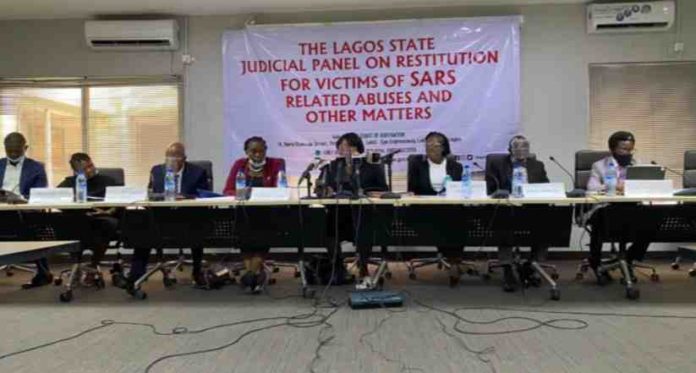
He stated this on Tuesday when he tendered the video footages of the incident to the Lagos State Panel of Inquiry and Restitution looking into allegations of brutality and killings by men of the SARS as well as soldiers’ shooting at the Lekki tollgate which according to witnesses cost 15 protesters their lives and left scores injured.

According to Omomuwansa, the cameras stopped working from 8pm on the night of the shooting, adding it was tampered with. Multiple reports show the shooting started around 7pm.

“I can confirm that inside here is the video footage that our surveillance camera was able to record for the 20th of October,” he said.

Omomuwansa said the surveillance cameras are called PTZ; wherein P enables the camera pan; T enables the camera tilt, and Z allows the camera to zoom.

“I can confirm categorically that we never ever tampered with that surveillance cameras. That’s why we can still get the footage. Until 8 o’clock when it was tampered with and we couldn’t get any footage anymore,” he said.

The judicial panel had visited the tollgate where the LCC assured it that the recording from its closed-circuit television system (CCTV) on the night of the incident was intact.

The company had also said the power outage on the night of the shooting was because its staff were withdrawn from office locations; hence they could not switch on backup generators when power was interrupted.

Hoodlums wearing army uniform behind Lekki shooting – Attorney General Abubakar Malami

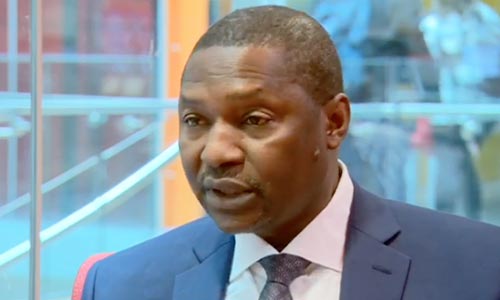
Meanwhile, Abubakar Malami, attorney-general of the federation (AGF), has said it is likely that hoodlums wearing military fatigues — and not soldiers — shot #EndSARS protesters at the Lekki tollgate in Lagos state.

About three weeks ago, thousands of youths nationwide trooped out alongside celebrities like Runtown, Falz, Davido, Phyno, amongst others, to demand an end to police ruthlessness, extortion and killings. The demonstration was largely peaceful until protesters began to be attacked by hired thugs. 

The protests involved calling for the disbandment of the brutal SARS unit.

The police unit was disbanded but the protests persisted as citizens demanded reforms in the force.

Protesters converged on the tollgate for 13 days before they were forcefully dispersed by soldiers who fired live rounds at them.

Speaking with journalists on Monday in Abuja, the AGF said investigation is underway to ascertain what truly happened at the Lekki tollgate.

Malami said it was “pre-emptive” to conclude that there had even been shootings, adding that “hoodlums” may have been hired to create a scene.

“You cannot rule out the possibility of perhaps hoodlums that set in to create a scene… could equally partake in the process,” the AGF said.

The Lekki tollgate incident had sparked off outrage across the country.

Babajide Sanwo-Olu, Lagos state governor, blamed the incident on “forces beyond my direct control”.

But the Osoba Olaniyi, acting director, army public relations, said the Lagos government invited the army to restore order.

However, he denied that soldiers shot protesters, describing reports on the attack by the military as fake.

The army also said it will not disclose the identity of its men who were sent to Lekki tollgate on October 20.

The judicial panel set up by the Lagos state government to probe alleged brutality by the disbanded SARS has already commenced sitting.

The panel visited the Lekki tollgate last Friday.

Magu: Salami Panel Winds Up, Wants Police Out Of EFCC

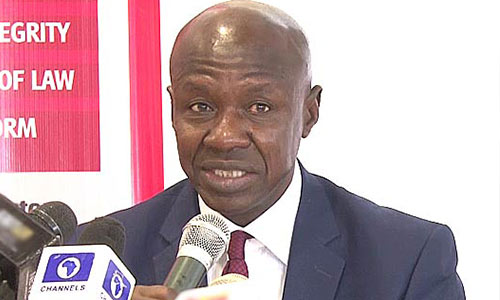
After about five months, Justice Isa Ayo Salami Judicial Commission of Inquiry is set to wind up investigation into the activities of the Economic and Financial Crimes Commission (EFCC).

It was learnt that the panel plans to conclude its assignment this week. Its report will then be sent to President Muhammadu Buhari.

It was gathered that one of the recommendations of the panel is that the Head of the Economic and Financial Crimes Commission (EFCC) should no longer be picked from the police.

It favours appointment of the EFCC chairman from other security agencies.

All the chairman of the agency from inception till date are policemen.

But the proposed recommendation is already generating replies from among stakeholders. The police is represented in the Salami panel by deputy inspector general.

The panel will also recommend that policemen should no longer be operatives of the EFCC.

At present, there are no fewer than 850 policemen deployed in the anti-graft agency.

If the plan to remove the police from the EFCC is approved, it will foreclose the recall of Acting EFCC Chairman Ibrahim Magu.

A source close to the panel said: “We are rounding off this week or as soon as the report can be taken from us.”

A source said: “The advisory to put EFCC’s woes on the police is unfair. In the last 17 years, EFCC recorded landmark achievements under the leadership of senior retired and serving police officers. All the past and present chairmen have won international awards. Police officers and men are not liabilities to EFCC.

“These same police detectives gave on-the-job training to the cadets. The essence of bringing police officers is to put cadets through on investigation. There are still investigative manpower gaps to be filled in EFCC.

“The EFCC as it is now does not have enforcement unit. Policemen were seconded to the anti-graft agency to give back up during operations and when enforcement is required.

“After being used to deal with Magu, the police are now to be sacrificed on baseless allegation. But the Act is clear that a police officer can be chairman of EFCC. We don’t know whether they are planning to amend the EFCC Act.”

The source added: “I think the desperation to get Magu out of the EFCC has made some people to decide to throw away the baby with the bath water. The President should reject any recommendation to ease out policemen from the EFCC.”

Culled from Thenation

Malami Urged To Obey Court Order On EFCC, ICPC Powers

Nigeria’s leading anti-corruption group, Human and Environmental Development Agenda, (HEDA Resource Centre), has urged the Attorney General of the Federation and Minister of Justice, Mr. Abubakar Mallam, to obey subsisting court order that scrapped the Asset Tracing and Management Regulations put in place by the minister.

The regulation was put in place in 2019 to checkmate anti-graft agencies in the management of recovered assets and proceeds of crime.

However, few months ago, a Federal High Court declared the regulation null and void.

HEDA Resource Centre said in a statement that the minister has the legal obligation to scrap the regulation. It said the rule undermines optimum performance of key anti-corruption institutions, the Economic and Financial Crimes Commission, (EFCC) and the Independent Corrupt Practices and Other Related Offences Commission, (ICPC).

The statement signed by the group’s Chairman, Mr. Olanrewaju Suraju, asked the minister to set aside the rule.

HEDA said recent judgment of a Federal High Court confirms public fears that the regulation will not promote transparency in Nigeria.

The learned judge had said “in my view, these provisions are clear as to the powers of the applicant, the EFCC to commence this action. Consequently, I consider and hold that paragraph 5 of the assets tracing and management regulations 2019 are good for being inconsistent with Section 17 (1) of the advance fee fraud and other fraud related offences”.

The judge said relying on the asset tracing recovery and management regulations 2019 was wrong.

He submitted that the EFCC is a distinct office from that of the Attorney General of the Federation. This action is therefore predicated on a faulty pedestal.

“We make bold to state that these Regulation trespasses into the scope of powers vested in National Assembly and amounts to disregarding the supremacy of the Ground Norm. The powers as stated in the Commencement Clause of the Regulations cannot override the powers vested in the LEAs and ACAs being Acts of the National Assembly.

Assets Tracing, Recovery and Management Regulations, 2019 is merely a duplicity of laws and adds no solution, harmony or progress but further rigidity and dilemma to the implementation of the functions of the LEAs and the ACAs by prescribing sanctions for non-compliance as seen in Section 14 of the Assets Tracing, Recovery and Management Regulations, 2019.

It is trite law that the Act of the National Assembly supersedes any regulation by the executive.

HEDA had in December 2019 demanded for the immediate cancelation and nullification of the Asset Tracing, Recovery and Management Regulations, 2019 within 14 days.

It said though the objective is to prescribe procedures for all Law Enforcement Agencies (LEAs) and Anti-Corruption Agencies (ACAs) to ensure effective coordination of the investigation of illegally acquired assets and proceeds of crime, but that in the past one year the regulation has proved to be counterproductive.

Suraju said the order was to aid tracing and attachment of assets and proceeds of crime, the seizure and disposal of assets and proceeds of crime, and the recovery of stolen assets but that abundance evidence shows that the motive has been defeated through parochial political manipulations, adding that the EFCC and ICPC have enough laws to deal with the issues raised in the new regulation.

Requirements For Enforcement of Fundamental Human Rights

Daily Law Tips (Tip 688) by Onyekachi Umah, Esq., LL.M, ACIArb(UK)

Introduction:
One of the commonest reasons that Nigerians go to court is for the enforcement of fundamental human rights, especially against law enforcement agencies. The requirements for filing cases in court for the enforcement of human rights are unique and different from any other type of case in Nigeria. Also, the courts to approach and the types of remedies that a victim can seek are unique and specific. This work will focus on the requirements for filling cases in courts in Nigeria, for the enforcement of fundamental human rights under the Constitution of Nigeria.

What Are Fundamental Human Rights:
Fundamental human rights are the entitlements of persons, they are legally provided by law and cannot be ordinarily denied by any person or government. Fundamental human rights are basic, elementary, mandatory, compulsory and unshakable entitlements of persons, just because the persons are human beings or corporate beings. Fundamental human rights are never purchased rather enjoyed by being a person (human being or corporate being).

The fundamental human rights of persons in Nigeria, are contained in chapter 4 of the constitution of Nigeria. Also, Nigeria has signed a regional instrument (document) that ensures that the fundamental human rights of persons are respected across Africa. The regional law is the African Charter on Human and People’s Rights. The African Charter on Human and People’s Rights has expanded the fundamental human rights provided in the constitution of Nigeria.

List of Human Rights Under the Nigerian Constitution:
By the Constitution of Nigeria, the fundamental human rights in Nigeria, are: the Right to Life, the Right to Dignity of Human Person, the Right to Personal Liberty, the Right to Fair Hearing, the Right to Private and Family Life, the Right to Freedom of Thought, Conscience and Religion, the Right to Freedom of Expression and the Press, the Rights to Peaceful Assembly and Association, the Right to Freedom of Movement, the Right to Freedom from Discrimination and then, the Right to Acquire and Own Immovable Property anywhere in Nigeria.

None of the fundamental human rights is greater or more important than the other. They all are sacred and must be respected. Human rights should never be violated by any person, including law enforcement agencies or agents in any part of Nigeria. Consequently, where there is a violation or even a mere attempted violation of a fundamental human right, the victim and any other person on behalf of the victim, can seek justice against the violator.

Courts that Can Handle Cases of Fundamental Human Rights:
Since fundamental human rights are important, there are punishments for violators of such rights and compensation for victims. Where there is a violation of any fundamental human right or a threat to such right, the court to approach is a State High Court or the Federal High Court. It is easy and fast to get judgment in such cases, because they are urgently treated. It is advisable to engage the services of a good lawyer.

Documents to be Filed in Cases of Fundamental Human Rights:
Where there is a violation or a threat to violate any fundamental human right, the victim or any person on behalf of the victim, may engage the services of a lawyer to sue (drag to court) the violator. The victim is expected to gather evidence (proof of violation or pending violation) to prove his case. Evidence may include, affidavit of witnesses, video recordings, audio recordings, receipts, photographs, emails, letters and any other item to prove violation.

For enforcement of fundamental human rights, a victim or his representative must make a written application to court (often through a lawyer), backed up with an affidavit. The Affidavit must state facts of what has transpired so far and to be attached to the affidavit will be proofs.

Conclusion:
Fundamental human rights make human beings to be human beings. Hence, fundamental human rights must be respected at all cost. Where there is a violation of fundamental human rights, the victim or his/her supporters should approach a State High Court or the Federal High Court for enforcement of fundamental human rights.

My authorities are:
1. Sections 1, 2, 3, 4, 5, 6, 14, 20, 33, 34, 35, 36, 37, 38, 39, 40, 41, 42, 43, 44, 45, 305, 318 and 319 of the Constitution of the Federal Republic of Nigeria, 1999.
2. The judgment of the Supreme Court of Nigeria (on meaning and nature of fundamental human rights) in the case of RANSOME-KUTI & ORS v. AG FEDERATION & ORS (1985) LPELR-2940(SC)
3. The judgment of the Supreme Court of Nigeria (on meaning and nature of fundamental human rights) in the case of AGBAI & ORS v. OKOGBUE (1991) LPELR-225(SC)
4. The judgment of the Supreme Court of Nigeria (on documents for cases of fundamental human rights) in the case of EFCC v. REINL (2020) LPELR-49387(SC)
5. The judgment of the Supreme Court of Nigeria (on when and why fundamental human rights can be restricted/suspended) in the case of DOKUBO-ASARI v. FRN (2007) LPELR-958(SC).
6. The judgment of Supreme Court of Nigeria (on State of Emergency) in the case of ADEGBENRO v. AG OF THE FEDERATION & ORS (1962) LPELR-25118(SC)
7. Section 42 of the Constitution of Nigeria, 1999.
8. The judgment of the Supreme Court of Nigeria in the case LAFIA LOCAL GOVT v. EXECUTIVE GOVT NASARAWA STATE & ORS (2012) LPELR-20602(SC).
9. Onyekachi Umah, “Human Rights That Can Never Be Restricted Even In War, Pandemic or State of Emergency (Daily Law Tips [Tip 539]) <https://learnnigerianlaws.com/human-rights-that-can-never-be-restricted-even-in-war-pandemic-or-state-of-emergency-daily-law-tips-tip-539-by-onyekachi-umah-esq-llm-aciarbuk/> accessed 2 November 2020.
10. Onyekachi Umah, “Does The President/Governors Have Powers To Lockdown Any Part Of Nigeria Or Restrict Human Rights?” (Daily Law Tips [Tip 537]) <https://learnnigerianlaws.com/does-the-president-governors-have-powers-to-lockdown-any-part-of-nigeria-or-restrict-human-rights-daily-law-tips-tip-537-by-onyekachi-umah-esq-llm-aciarbuk/ > accessed 2 November 2020.

#SabiLaw
#DailyLawTips
#SabiBusinessLaw
#SabiElectionLaws
#SabiHumanRights
#SabiLawOnBeatFm
#SabiLawLectureSeries
#CriminalJusticeMonday
#SabiLawVideoChallenge

Speak with the writer, ask questions or make inquiries on this topic or any other via [email protected] or [email protected] or +2348037665878 (whatsapp). To receive our free Daily Law Tips, follow our Facebook Page:@LearnNigerianLaws, Instagram:  @LearnNigerianLaws and Twitter: @LearnNigeriaLaw

Please share this publication for free till it gets to those that need it most. Save a Nigerian today!

NOTE: Sharing, modifying or publishing this publication without giving credit to Onyekachi Umah, Esq. and “LearnNigerianLaws.com” is a criminal breach of copyright and will be prosecuted.

This publication is the writer’s view not a legal advice and does not create any form of relationship. You may reach the writer for more information.

Powered by www.LearnNigerianLaws.com {A Free Law Awareness Program of Sabi Law Foundation, supported by the law firm of Bezaleel Chambers International (BCI).}


#EndSARS Advocate: Immigration Seized My Passport — Stopped Me From Travelling

Modupe Odele, a member of the Feminist Coalition, says the Nigerian Immigration Service stopped her from travelling out of the country.

The Feminist Coalition is the promoter of the #EndSARS protest and it raised about N147 million for the cause.

Odele, a lawyer who was actively involved in the campaign, offered legal aid to persons who were arrested during the demonstrations.

In a newsletter on Monday, Odele narrated how she was stopped at the airport while on her way to the Maldives to celebrate her birthday.

She said the officer who accosted her said the action was ordered “from above”, and that she saw a “wanted poster” of herself on the officer’s computer.

The lawyer said she was detained and her passport seized.

“For my birthday, I had planned a trip to the Maldives. It was really for a break as the events of the last three weeks have exhausted my mind and body in a way I have never been exhausted in my life,” she said.

“I went to the airport, passed through immigration, and while I was putting my bags through the body and baggage scanner, the immigration officer who had previously cleared me, called me back. He told me he had orders from above to detain me.

“Okay, at this point I’m like excuse me, my flight is in an hour. On what grounds are you detaining me?” He didn’t respond. Instead, he goes to his computer where he typed in my name and something that looked like a ‘wanted poster’ popped up on the portal.

“He blocked my view so I couldn’t see most of it but I saw some of it. And it read something like – ‘This person is under investigation by XYZ Intelligence Agency. If seen, they should be apprehended on sight.

“They held me for a little over an hour, seized my passport and I missed my flight. My passport is still seized up until this very moment and I have still not been made aware of what I am under investigation for.”

In a Twitter post on Tuesday, Odele said she is safe and that she has been invited back with her lawyers.

“Hello everyone. Thank you so much. I’m fine and I’m safe. We haven’t confirmed yet why I was stopped on Sunday or by whom. But I’ve been invited back in with my lawyers today. I’ll update when I have more information but please don’t spread false news. That is dangerous,” she tweeted.

AGF, Malami: It’s Unclear Who Shot Protesters In Lagos

*Says new guidelines will accelerate decongestion of correctional centres

The Attorney General of the Federation and the Minister of Justice, Mr. Abubakar Malami, has declared that “hoodlums” wearing military uniforms may have shot Nigerian protesters campaigning against police brutality in Lagos, adding that it was too soon to tell if soldiers were involved.

Malami has also said that the Consolidated Federal Capital Territory Courts Sentencing Guidelines and Practice will accelerate decongestion of Correctional Centres nationwide.

EndSARS demonstrations across the country turned violent on October 20 when witnesses in Lagos said the military opened fire on peaceful protesters in the Lekki district shortly after local authorities imposed a 24-hour curfew, drawing international condemnation.

Soldiers and police killed at least 12 people in two Lagos neighbourhoods on October 20, according to witnesses and rights group, Amnesty International. The army and police have denied involvement.

Reuters quoted Malami as telling reporters in Abuja yesterday, that the matter was being investigated and there was a need to establish whether the shooting took place, who was responsible and whether the people who were shooting were part of the military.

“You cannot rule out the possibility of perhaps hoodlums that set in to create a scene… could equally partake in the process,” Malami said at the news conference, which was also attended by government officials including the defence minister and finance minister.

He also said it was “pre-emptive” to conclude that there had even been a shooting.

Lagos state has ordered an investigation into the incident.

Last week the military said the Lagos state government asked the army to intervene to restore order, but soldiers did not shoot civilians.

Meanwhile, Malami has said that the Consolidated Federal Capital Territory Courts Sentencing Guidelines and Practice will accelerate decongestion of Correctional Centres nationwide.

Malami, while commending the introduction of non-custodial sentencing by the Administration of Criminal Justice Act (ACJA), 2015, said the recent provision of a clear legislative and institutional framework for the implementation of the ACJA by the Nigerian Correctional Service Act, 2019, were efforts by the Federal Government at addressing the colossal problem of congestion in correctional facilities in Nigeria.

The AGF spoke at the signing of the Consolidated Federal Capital Territory Courts (Custodial and Non – Custodial Sentencing) Practice Directions, 2020 at the headquarters of the Federal Capital Territory (FCT) High Court, Abuja.

He said: “The provision for non-custodial sentences such as probation, community service, restitution, compensation and suspended sentence by the ACJA 2015, was one of the main innovations of the Act”.

In his remarks, Chief Judge of the FCT High Court, Justice Ishaq Bello, said the signing of the sentencing guideline is a milestone achievement in the FCT Judiciary because lack of sentencing guideline in the past has led to misconception with the court often being accused of either being unduly lenient or of playing to the gallery by imposing severe punishment upon conviction especially in cases of public interest.

I Was Made A Paraplegic By SARS Officials, Trader Tells Lagos Judicial Panel

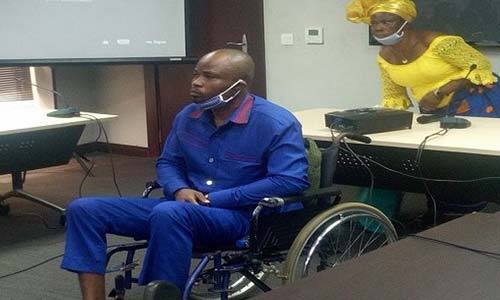
A trader, Mr. Ndukwe Ekekwe has recounted to the Lagos State Judicial Panel Investigating cases of alleged police brutality, how he was made a paraplegic by officers of the disbanded Special Anti Robbery Squad (SARS).

The News Agency of Nigeria (NAN) reports that wheelchair-bound Ekekwe told the nine-man panel on Tuesday that he was thrown from a two-storey building at the Alaba International Market by officers of the squad.

Accompanied by his aged mother to the sitting, Ekekwe, who was not represented by a counsel, narrated to the panel in pidgin English the events that led to his paralysis.

The petitioner said at 2.00 pm on Feb. 16, 2018, he was arrested at the Alaba International Market without charge by SARS officers .
He said that fellow traders asked the policemen to show their identity cards before Ekekwe could be handcuffed.

“They immediately removed their SARS shirts and began to shoot and everyone ran away. I asked them what my crime was and they said the arrest was an order from the Inspector-General of Police (IGP).

“I was handcuffed in one hand because they noticed I wasn’t a troublemaker. On our way, they stopped at Igando and came down from the car and were talking.

“I used my other hand to reach my phone to try to call my mother, but the Inspector saw me, approached me and asked who gave me the guts to make a phone call and he took the phone, stepped on it and destroyed it.

“He stabbed me on my wrist and back and I was hit on the head with the butt of a gun and beaten. They collected the N58,000 that was for my shop,” he said.

Ekekwe said he was taken to the SARS office at Ikeja, Lagos, and at midnight he was stripped naked, taken to a torture chamber where he was beaten and tortured.

He said other SARS officers, who were torturing other individuals, also joined their colleagues in torturing him and the men even threatened to shoot him.

“I was left there till evening and I didn’t know my crime and till now I don’t know my crime. They kept saying that the intelligence report is on me.

“At the night of that day (Feb. 17, 2018), I was taken to my three shops where I sell phone accessories.

“They took away my goods worth N15million. I began shouting to attract attention and the commander told them to take me to the top of the two-storey plaza and I was thrown down from the building.

“The SARS officer that threw me from that building is Hamza Haruna. They took me back to their office in my injured state,” he said.

Ekekwe said that when his condition became dire, he was taken from the SARS office to the Police Hospital in Ikeja . He said was eventually referred to two other hospitals for treatment of his injury.

The trader said that he used to be the breadwinner of his family, but suffered a spinal injury from being thrown from the storey building, which led to his paralysis.

The petitioner said the police did not pay for his medical expenses and that he had to sell his house and landed property to offset the expenses.

The chairman of the panel, Justice Doris Okuwobi (Rtd) adjourned proceedings to Nov. 13 for the testimony of Ekekwe’s mother.

(NAN)

Legal Competence Of Judicial Commissions Of Inquiry To Probe Police Brutality

By Femi Falana SAN

At the emergency meeting of the National Economic Council held in Abuja on October 15, 2020 the members unanimously resolved to institute judicial commissions of inquiry  to deliver justice for all victims of the dissolved Special Anti-Robbery Squad (SARS) and other police units. The judicial panels to be set up in all the states, would include representatives of youths, students, civil society organisations and would be chaired by a retired judge.

The Council also resolved and directed State Governors to immediately establish  State-based Special Security and Human Rights Committees to be chaired by the Governors in their States. The Committees are to supervise the newly formed police tactical units and all other security agencies located in the States. The idea of the Special Security and Human Rights Committees in all States  and the FCT is to ensure that police formations and other security agencies in the State consistently protect the Human Rights of citizens.

Sequel to the aforementioned resolutions, state governors, have in exercise of the powers vested in them by the Tribunal of Inquiry Laws, instituted Judicial Commissions of Inquiry to probe complaints of human rights abuse and make appropriate recommendations to the governments. The resolutions are perfectly in order as the Tribunal of Inquiry of each State qualifies as an existing law under section 315 of the 1999 Constitution. See Williams v Dawodu (1988) 4 NWLW (PT 87).

It is submitted that by virtue of section 1 of the Tribunal of Inquiry Law each Governor is vested with the power to constitute a tribunal of inquiry to inquire into the conduct of officers or of any Chief or of the department of the government and related issues including “any matter in respect of which in the opinion an inquiry would be for the public welfare.” It cannot be disputed that the investigation of police brutality is designed to promote the welfare of the people. Indeed, majority of the  allegations of police brutality pertain to extra judicial killing or murder, attempted murder, false imprisonment and assault occasioning harm which are offences created by either the criminal code or penal code  applicable in the states. To that extent, the governors have the power  to cause these complaints to be investigated with a view to preventing police brutality in all its ramifications.

Regrettably, in spite of of the several decisions of the Supreme Court  on the constitutional powers of state governments over law and order including crime control, many lawyers have continued to believe that state governments are appendages of the federal government as was the case under the defunct military junta. Hence, the powers of governors to institute judicial commissions of inquiry to probe police brutality has generated a needless controversy. With respect, tribunal of inquiry is not one of the items in the Exclusive List or the Concurrent List to the Constitution. Therefore, it is a residual matter within the exclusive legislative competence of state governments.

This was the bone of contention in the celebrated case of Fawehinmi v. Babangida (2003) WRN 4 where the Supreme Court held that: “When it is remembered that the 1999 Constitution has made no provision for tribunals of inquiry as did the 1963 Constitution in Item 39 of the exclusive list and Item 25 of the concurrent list, it follows that, to repeat myself on the point, the power to make a general law for the establishment and regulation of tribunals of inquiry in the form of the Tribunals of Inquiry Act 1966 is now a residual power under the 1999 Constitution belonging to the States. However, in regard to the Federal Capital Territory Abuja, the power resides in the National Assembly.”

It has also been contended that the judicial panels lack the vires to summon police officers who are in the public service of the federal government. In Fawehinmi  v Babangida  (supra) the Supreme Court dismissed such spurious contention. Speaking for the apex court, Uwaifo JSC (as he then was)  asserted  that “Sections 5 (c), 10 and 11(3) of the Tribunals of Inquiry Act, to compel the attendance of witnesses and the production of documents were constitutional and valid in so far as they applied to the Federal Capital Territory”.

In view of the categorical pronouncement of the Supreme Court on the validity of Section 5 (c) of the Tribunal of Inquiry Law  it is submitted that the power of all state governments to set up judicial commissions of inquiry to probe human rights abuse arising from police brutality is well grounded in law. In the same vein, the power of the judicial commission to summon police and military personnel as well as other officers in the public service of the federal government to testify in respect of allegations of human rights abuse cannot be questioned on solid legal grounds. Indeed, it is in the interest of all persons accused of violating the human rights of citizens to defend themselves in exercise of their fundamental right to fair hearing guaranteed by section 36 (1) of the Constitution.

Another objection is that the judicial commissions of inquiry are not competent to probe human rights abuse because the National Human Rights Commission is has been empowered by the National Human Rights Commission Act to investigate all allegations of human rights in any part of the country. With respect, this argument is a red herring as the national human rights commission has not been clothed with exclusive power to investigate all allegations of infringement of human rights in Nigeria. Hence, the human rights committees of the national and state legislative houses as well as  the human rights desks in many police stations do investigate complaints of human rights abuse from time to time. In fact, in order to institutionalise the observance of human rights in all the states the Governors have commendably resolved to establish human rights committees on a permanent basis.

In State v Mathew (2018) 9 NWLR (1625) 399 it was the argument of the respondent that the power to assign a defence counsel to an indigent accused person is the exclusive preserve of the Legal Aid Council. In rejecting the argument the Supreme Court held that notwithstanding the existence of the Legal Aid Act a counsel assigned from the Office of the Public Defender of Ogun State was competent to defend the defendant who had been charged with armed robbery committed  in the State.

Having regards to the state of the law on human rights protection in Nigeria the Judicial Commissions of Inquiry set up to investigate allegations of police brutality have the undoubted power to compel the attendance of private persons and public officers whose evidence will be of assistance in the delivery of justice to all victims of human rights abuse traced to members of the disbanded SARS and other police units. However, the proposed State Human Rights Human Rights Committees to be established in the States should not be headed by Governors. For the purpose of independence and impartiality the Committees should be constituted by representatives of credible professional bodies and mass based organisations

TIPS