Home Blog Page 1209

Buhari reinstates Ogundipe as UniLag VC; Babalakin, Governing Council lose out

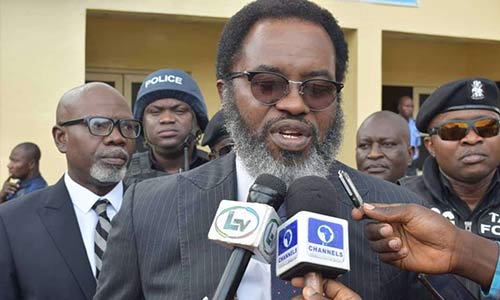
The President Muhammadu Buhari has put an end to the leadership crisis rocking the University of Lagos, reinstating its Vice Chancellor, Prof. Toyin Ogundipe, and sacking the governing council which initially sacked Ogundipe.

In a statement on Wednesday by the Director (Press and Public Relations) in the Federal Ministry of Education, Ben Ben Goong, the government said the process adopted to remove Ogundipe and his replacement with Omololu Soyombo, another professor in the school was faulty.

The statement titled:  ‘Re: Report of the Special Visitation Panel to the University of Lagos’ reads, “President Muhammadu Buhari, GCFR, Commander-in-Chief of the Armed Forces of the Federal Republic of Nigeria and Visitor to the University of Lagos has approved the Report of the Special Visitation Panel to the University of Lagos.

“The highlights of the findings and recommendations approved by Mr. President are as follows:

“The removal of Professor Oluwatoyin T. Ogundipe as the Vice Chancellor did not follow due process.

“The Vice Chancellor was not granted an opportunity to defend himself on the allegations upon which his removal was based.  He should accordingly be re-instated.

“All allegations made against the Vice Chancellor and the management of the University before and after the Constitution of the Special Visitation Panel should be referred to regular Visitation Panel for thorough investigation and necessary recommendations.

“The process adopted by the Council in the appointment of Professor Omololu Soyombo as Acting Vice-Chancellor of the University was inconsistent with the provisions of the Law relating to the appointment of an Acting Vice-Chancellor.

“Mr. President after careful review of the report has approved all the recommendations of the Panel.

“Accordingly, Prof. Oluwatoyin Ogundipe is hereby reinstated as the Vice Chancellor of the University of Lagos.

“The Governing Council of the University of Lagos Chaired by Dr. B. O. Babalakin is hereby dissolved. Mr. President hopes these steps will bring peace, stability, focus and direction to the University.”

Last August, Ogundipe withdrew a case he filed against his removal by the governing council of the school headed by Babalakin.

The Federal Government had directed him and the Pro-Chancellor, Babalakin, to recuse themselves from official duties, pending the outcome of the Special Visitation Panel set up by the President.

Ogundipe’s lawyer, Ebun Adegboruwa SAN, hinted then in a statement Ogundipe’s case againstthe governing council was withdrawn from court.

Adegboruwa said his client withdrew his suit “upon detailed consultation with all stakeholders and his supporters in and outside the University.”

He adds, “Prof. Ogundipe directed his lawyers to file a notice of discontinuance of the suit and this has been done on August 21, 2020.

“This is to defer to the authority of the President as the Visitor of the University as Prof. Ogundipe has enough time to challenge his purported removal.”

Babalakin’s Governing Council had, on August 12, sacked Ogundipe as Vice-Chancellor over alleged financial misappropriation and misconduct.

Ogundipe, however, rejected the Council’s decision, saying the University’s due process had not been followed.

The University’s Senate, alumni, and labour unions also put out statements saying due process had not been followed.

But Babalakin, in several media reactions, insisted that due process had been complied with in terminating Ogundipe’s appointment.

A Presidential Panel was set up, made up of seven members, to determine whether the required steps were taken by the Council in sacking Ogundipe.

The Visitation panel, which has since submitted its report was also expected “to make appropriate recommendations including sanctions for all those found culpable” in the investigation, which is expected to last for two weeks.

Members of the panel included Professor Tukur Sa’ad (Chairman), Barrister Victor Onuoha, Professor Ikenna Onyido, Professor Ekanem Braide, Professor Adamu K. Usman, Chief Jimoh Bankole and Barrister Grace Ekanem (Secretary).

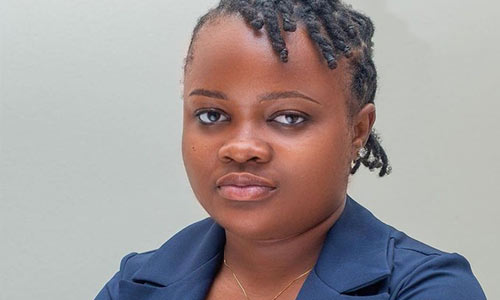
FG Trying To Silence Me By Freezing My Account, Says #Endsars Activist

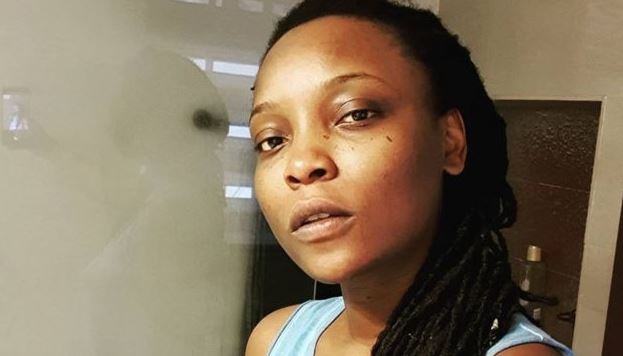
Racheal Oduala, a promoter of the #EndSARS campaign, says the federal government is trying to silence her by freezing her bank account.

Recall how the Central Bank of Nigeria (CBN) obtained a court order to freeze the accounts of 19 individuals and a public affairs company linked to the #EndSARS protests.

Oduala is one of those affected by the court order.

In an article, the activist decried the development saying it is a wrong way of treating young people demanding a better country.

Oduala said she is not afraid of the government’s plot as the demands of young persons are not beyond their constitutional rights.

“I am not afraid—I am only disappointed that this country will treat me this way. Nigeria is all I have, and I have a right to demand that it works for all of us, not just those with influence, wealth, or a government position,” she said.

“In a country that people have been voiceless for a long time, people holding the government accountable is being seen as too much? How can we ensure that this sort of thing will encourage people to build a new Nigeria?

“A Nigeria that will be filled with accountable government officials, where all forms of oppressions and injustice is a thing of the past. How do you expect me as a part of the future of this country to still believe in a country who thinks they have the right through CBN to freeze my account for no just cause.”

Oduala said she agreed to be a youth representative on the Lagos judicial panel to show that the protest was not to fight the government.

She lamented that the government sees her existence as a threat despite how she struggles to make ends meet.

“We called for among other things, a probe into the killings and torture of people and the government agreed by setting up judicial panels. In order to assure young people of the independence and fairness of the panel I took up the role as a youth representative at the detriment of my education, personal life and family,” the activist said.

“I did this to make peace. I did to ensure our young people understood that the only way to create a better and safer Nigeria is to do things lawfully. Why am I still being targeted for lending the government my good will.

“I study, selling hoodies and other clothing for ₦5,000 to pay my school fees. I also do the odd bit of freelancing, taking on some brand influencing work to ensure my family doesn’t suffer. Somehow, however, my existence threatens my government, the fact that I have a voice is enough for them to try to silence me.

“In the Nigeria I am fighting for, it wouldn’t matter that I am a child of nobody coming from the average Nigerian home. The Nigeria I am fighting for is one that prioritizes every voice, protects every inalienable right, even mine.

“I decided to use the only currency I have, my voice to speak up against extrajudicial killings, torture, extortion and unjust harassment that is still happening in a democratic nation in the 21st century! The government also agreed that reform is inevitable and promised us they were going to listen so why punish the same people that are speaking up?”

Culled from TheCable

#EndSARS: FG Releases Moe Odele’s Passport

The federal government has released the passport of End SARS advocate, Modupe (Moe) Odele.

Immigration officials blocked the activist from boarding an international flight on November 1.

Two days later, the legal practitioner went to retrieve her passport but was told she is under investigation.

On Monday, Modele announced that her official document has been returned.

“Passport now picked up. No issues. I’m told I can travel at any time. Thank you so much, everyone, for the help and concern”, she tweeted.

The lawyer, Feyikemi Abudu, among others rose to prominence during the agitation for an end to police brutality.

They offered free legal representation to citizens arrested and detained during the demonstrations.

It is believed that authorities moved against Odele for her involvement in coordination and supply of emergency services on health and security, facilities, equipment, protest materials, among several needs.

Currently, bank accounts of those who received funds linked to the End SARS campaign have been blocked.

Legal Officers, Resident Doctors Begin Indefinite Strike In Ondo

The Association of Resident Doctors in the Ondo State University of Medical Sciences Teaching Hospital (UNIMEDTH) on Monday began its indefinite strike action over non-payment of four months’ salary.

This is just as the legal officers in the Ondo State Ministry of Justice under the auspices of Law Officers Association of Nigeria (LOAN) withdrew its services over what it termed worsening despicable and deplorable conditions its members were subjected to.

Last week, the UNIMEDTH ARD had embarked on a three-day warning strike with a threat to totally down tools if their demands were not met.

Acting President of ARD, Ondo State, Dr. Sanni Oriyomi, who spoke to journalist in Akure said they could no longer pretend that all was well with them.

Dr. Oriyomi stated that besides the non-payment of salaries, there were issues of dearth of doctors and House Officers.

Oriyomi said the COVID-19 hazard allowance was paid for only one month and that the Resident doctors sought accommodation for themselves instead of residing in houses provided by the hospital management.

He said the absence of House Officers is affecting health of his members.

According to him, “Having persevered to render services, our salary has become issue of concern. We are finding it difficult to meet up with our financial obligations.

“We are calling on the government to come up with solutions. It is not in our interest to embark on this strike but enough is enough.”

Spokesman of the Ondo ARD, Dr. Taiwo Olaigbe, said the state health system was on the brink of collapsed.

Dr. Olaigbe insisted that they would not return work until all their salaries are paid.

Meanwhile, the Ondo Legal Officers in a statement signed by its Chairman, Babatunde Victor Falodun and Secretary, Wale Banisile and addressed to Governor Oluwarotimi Akeredolu said the work-to-rule strike action would persist until their demands are met.

The statement said administration of justice in Ondo State has suffered untold hardship due to constraints of funds and abysmal condition of service.

It said legal poverty must end in the state as the state Counsel are the least paid in the country.

Other demands were stoppage of the N187 State Counsel Allowance and upward review of same to reflect current reality, end to commercial motorcycling to courts as well as release of funds approved for outfit/Robe allowance since March 2020.

Acting Ondo Commissioner for Health, Dr. Jibayo Adeyeye, said the state government was already working towards ensuring the Resident doctors receive their salaries same day with the civil servants.

Dr. Adeyeye said the plan was to move the doctors’ salaries to the central pay system.

NYSC Mobilises 66,000 Graduates, Says Corp Members To Take COVID-19 Test

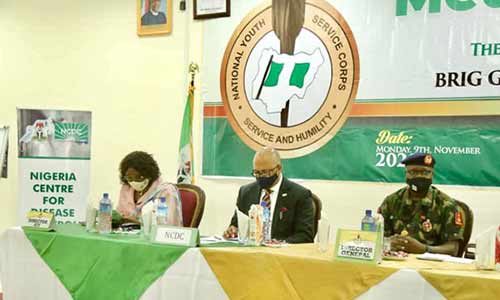
The National Youth Service Corps (NYSC) has mobilised 66,000 eligible graduates to participate in the 2020 Batch B service year.

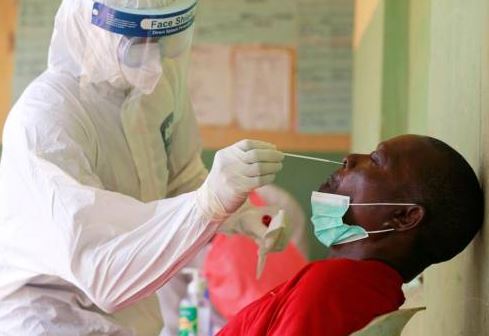
The prospective corps members and course officials are however mandated to undergo the COVID-19 test before admission into the orientation camps set to reopen on Tuesday, November 10, 2020.

This was disclosed on Monday by the NYSC Director-General, Brigadier General Shuaibu Ibrahim at a briefing held in Abuja, the nation’s capital.

The event was held in preparation for the 2020 Batch B Orientation Course with compliance with COVID-19 guidelines.

The Director-General of Nigeria Centre for Disease Control (NCDC), Chikwe Ihekweazu also at the event appealed to prospective corps members and officials to take personal responsibility, shun complacency, saying the second wave of the virus is not inevitable but can be prevented.

Dr Ihekweazu had earlier stated that prevention, detection and prompt response are germane to the safe reopening of the 37 NYSC Orientation Camps nationwide.

The NCDC boss said the centre is prepared to collaborate with the NYSC and ensure that all the prospective Corps Members and Camp Officials undergoes the COVID-19 test.

This according to him is to ascertain their health status. He adds that in case a prospective Corps Member tests positive, Corps Members should not panic, as adequate measures have been put in place in all the NYSC camps to manage such case.

Alleged N714m Fraud: How Ex-Minister Ignored Tenders Board – Witness

The trial of Tanimu Turaki, former Minister of Special Duties, resumed on Monday.

Turaki was charged with his special assistant, Sampson Okpetu and two companies – Samtee Essentials Limited and Pasco Investment Limited.

They are facing a 16-count charge, bordering on fraud and misappropriation to the tune of N714,670,014.

The fifth prosecution witness, Vincent Odafe, continued his testimony before Justice Inyang Ekwo of the Federal High Court, Abuja.

He was cross-examined by defence counsel, Joe Kyari Gadzama (SAN).

Odafe, ex-director of Finance and Administration in the ministry, denied being coerced into giving evidence against Turaki by the Economic and Financial Crimes Commission (EFCC).

He said the minister’s approval ceiling was up to N1billion if he goes through the Ministerial Tenders Board but that Turaki shunned due process.

Under cross-examination by the third defence counsel, Abdulazeez Ibrahim, Odafe disclosed that he has so far refunded N35 million through the EFCC to the government.

It was his share of N45million from an N80million contract in the ministry.

The judge adjourned until November 10, 2020 for continuation of trial.

House Committee Queries Pantami over 70% Increase in Ministry’s Capital Allocation

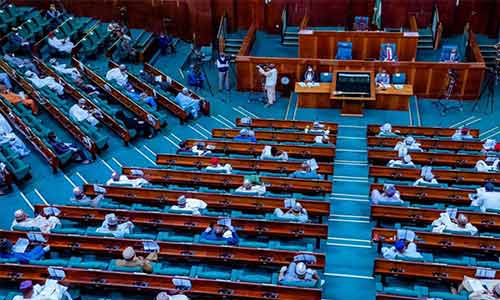
The House of Representatives Committee on Telecommunications has queried the Minister of Communications and Digital Economy, Dr. Isa Pantami, over what it described as sharp increase of the ministry’s 2021 budget proposal.

The committee said the total proposal for the Communications Sector, which is N39.3billion for the fiscal year 2021 is N21.9billion higher than the total approval of N17.4billion for 2020.

The Chairman of Committee on Telecommunications, Hon. Akeem Adeyemi, stated yesterday in Abuja this during the budget defence of the ministry before a joint committee of the House.

He said one of the advantages of such interaction was that it provided an ample opportunity for the Joint Committee, not only to save time, but also to interface with the ministry and its parastatals on the degree of execution of the approved budgets for the previous fiscal year.

This, Adeyemi said would enable the legislature to identify projects that have been concluded; those that are ongoing; those that remain unexecuted; and the reasons, if any, why some projects are not executed.

The chairman stressed that during previous budget interactions with the ministry, there was a plan to establish the ICT University of Nigeria; also the Smart City Project; ICT Hub Centres; and ICT Parks all of which are components of the National ICT Roadmaps, saying the committee would like to be appraised on the extent of work done in this regard.

Adeyemi said the committee believed that if Nigeria must realise the full benefits that accrues to the country from digital economy, the ICT sector in Nigeria, spearheaded by the ministry must sufficiently promote the utilisation of ICT infrastructure and participation in the ICT economy by Nigerians with a view to using same to promote good governance and digital service delivery in the country,

The chairman said that with the current high level of development and deployment of ICT worldwide, it is expected that Nigeria, at the moment, should be able to tap into the capabilities of digital technology to proffer digital solutions not only to insecurity of lives and property, but to other social and economic endeavours of Nigerians.

He also asked the minister to explain ‘noticeable disparities’ between total approvals and total releases where total amount released for the 1st and 2nd Quarters are much higher than actual approvals.

The chairman also noted that a number of projects for which releases have been made are still either awaiting Bureau of Public Procurement (BPP) approval or the procurement process is ongoing, while asking the minister if he could guarantee the Joint Committee that projects in these categories would be executed before the expiration of the current fiscal year.

He stated: “It is observed that the total proposal for the Communications Sector, which is N39.3billion for the fiscal year 2021 is N21.9billion higher than the total approval of N17.4billion for 2020. What is responsible for this sharp increase, especially when the total Capital allocation in 2021 for the Ministry alone represents 70 per cent of the capital allocation for the entire communications sector?

“We would also like to know the rationale for proposing another round of 76 projects in 2021 when a vast sum of Capital Projects in 2020 is awaiting execution.”

However, a document sighted, showed that in the 2020 budget of the commission, the sum of 8,911,615.00 was budgeted for meals and refreshment, but the sum of 8,749,687,26 was released.

Reacting to the sharp increase in the budget, the minister said it was to accommodate the National identify Management Commission (NIMC).

On the issue of ICT university, Pantami added: “I think the issue came up before I was appointed minister; it was part of 2017, 2018 deliberations, based on information available to the office of minister of communication and digital economy, that proposal was not approved by the Federal Executive Council chaired by Mr. President. I think the main issue at that time, other stakeholders were not involved in the process. For example, minister of education and National Universities Commission (NUC) we not accommodated in the process. So during deliberation when the ministry of education disclosed that they were not accommodated, the FEC then didn’t approve it. Secondly today, maybe we don’t give it the priority, our major challenge in the country, ICT sector, is not just about you establishing a university but what is more important is providing digital skills to our citizens.”

Lagos Govt Urges Youth Reps In Panel Of Inquiry To Resume Sitting, Says The State Has No Hand In Freezing Of Bank Accounts Of #EndSars Protesters

*Urges affected youths to challenge the exparte order

The Lagos State Government has urged the two representatives of youth in the Lagos Judicial Panel Of Inquiry against the activities of the disbanded Special Anti-Robbery Squad (SARS) and police brutality to come back for sittings of the panel to resume

The Attorney-General and Commissioner for Justice of Lagos, Mr. Moyosore Onigbanjo, SAN, made this appeal on behalf of the State while featuring on Channels Television on Monday

He said Lagos government has no hand in the freezing of the bank account of the EndSars protesters and absence of the youth representatives has resulted in lost of quorum by the panel

Consequently, if they (the youth representatives) do not come back for sittings to resume, victims of SARS abuses may not get justice

“The representatives of the youths on the panel who were affected by the CBN decision to freeze these accounts should bear two things in mind;

“One is that by the panel not forming quorum, then it means that all the victims of SARS abuses in Lagos which they have been clamouring for will not get the compensation which they seek and which the state government thinks they deserve.” Onigbanjo, SAN said.

He added “All those affected cannot get their compensation for no fault of theirs because the panel members have some legal issues with the CBN.

“This problem is not the state’s making; the state has no control over the CBN. The state is interested in ensuring that people who suffered abuses in Lagos State ventilate and get the compensation which the panel awards to them.

“Also, very crucial and critical, there have been so many allegations about what happened at the Lekki toll gate on the 20th of October this year. Again, that very crucial investigation will not be able to go on because of this quorum issue.”

He therefore called on the youth representatives to resume sittings

“I would be urging the affected panel member and the other youth representative to resume their seats at the panel.” he said

Furthermore, he said the affected youths can challenge the exparte order obtained by the CBN while sitting of the Lagos Panel goes on

He said, “The CBN got a court order against their accounts and I believe that decision can be challenged on its own. They can go to court and challenge the decision of the CBN and at the same time, let the panel continue the work which impact on the lives of so many people in Lagos State and which also touches on what happened at the Lekki toll gate.”

The COVID reset Latin America needs, By Mauricio & Eduardo Levy Yeyati

The COVID-19 pandemic has done more than ravage Latin America’s economies; it has highlighted two pervasive and chronic structural weaknesses. Addressing them must be a key component of recovery efforts throughout the region.

BOGOTÁ/BUENOS AIRES/LONDON – The recession that Latin America is now confronting as a result of the COVID-19 pandemic is not a typical economic slump. This year, output across the region will be 10% lower than was forecast in late 2019, joblessness is in double digits, and nearly 15 million more people will now have to endure extreme poverty. Two decades of progress in reducing poverty and inequality are at risk. With living standards collapsing, the wave of social unrest experienced before the pandemic is likely to return.

During the initial phase of the COVID-19 crisis, most governments in the region made the preservation of lives and livelihoods their main priority. They plowed resources into the health sector, provided subsidies to businesses, and supplied households with emergency cash transfers. This was the correct approach, but, as economies gradually began to reopen, a shift in policies became necessary. Moving from economic preservation to recovery will bring new challenges.

The pandemic has highlighted two long-standing structural weaknesses in Latin America. The first is pervasive and chronic shortcomings in state capacity. It was not just a lack of fiscal resources, but also the lack of effectiveness in providing government support, that led to the sharp increase in the COVID-19 death toll across the region. Even today, classes and school activities remain suspended in many countries due to unresolved logistical problems. It is easy to imagine what will happen once a vaccine is available: Latin America will lag in the challenge of vaccinating the population at an adequate pace.

The second structural weakness is the dual labour market typical of the region: a minority of insiders who work in stable salaried jobs with access to traditional benefits (paid leave, unemployment insurance, severance pay), and a majority of outsiders who work in precarious, low-wage, high-turnover jobs. During lockdowns, insiders enjoyed job support and furlough schemes, while outsiders depended entirely on cash transfers from governments that compensated them for a mere fraction of their lost income.

This crisis is the region’s greatest opportunity in decades to strengthen state capacity and correct the dysfunction of the labor market. But the necessary changes are politically difficult. The risk is that the region will move in the opposite direction, with a looming fiscal crisis, a slow recovery, and a permanent destruction of “good” jobs that would deepen dualism in the labor market.

Latin America has confronted the macro-financial shock of the pandemic reasonably well. Despite the early capital flight that weakened local currencies, the region has avoided financial collapse and most countries have retained access to international financial markets. Even those in sovereign default, like Argentina and Ecuador, were able to negotiate debt exchanges with unexpected speed.

But the pandemic has been devastating for the real economy: countless businesses, big and small, have run out of cash and been forced to shut down permanently. As firms go under and whole sectors need to be restructured, potential output growth will suffer. This will make it more difficult to reverse the increase in unemployment, poverty, and inequality – and will render the job of balancing fiscal accounts and stabilising public debt unmanageable.

Unconventional monetary policy is useful but will be insufficient to guarantee a recovery. Countries in the region require surgically precise plans that not only boost demand, but also help relax key supply restrictions and mitigate firms’ financial stress. At the same time, support for workers must be designed to encourage formal employment, and governments should invest in health, education, and infrastructure to help firms and households adapt to the new normal. Public-private collaboration and stable industrial relations will be essential: a healthy recovery is a cooperative game.

The ultimate challenge, as ever, is political. Several Latin American countries have paid a steep price for the populist posturing that dismissed scientific evidence and minimised the threat posed by the virus. These are serious times; they require serious leaders.

Yet national and regional leadership is scarce in fragmented Latin America. To borrow a description by Spanish philosopher José Ortega y Gasset, the region is “invertebrate,” with countries moving in their own directions without much consideration for the rest.

The pandemic has given Latin Americans a harsh reminder of the costs of allowing states to be ineffective and labour markets to remain unfairly segmented. It has deepened old inequalities and created new ones. Infrastructure investment remains weak, and export diversification insufficient.

On these fronts and others, inaction is not an option. Latin America cannot afford another lost decade. As the region begins a new electoral cycle – and after listening to voters instead of lecturing them – political candidates should agree on some core principles for reform. This is a crisis that the region must not let go to waste.

Mauricio Cárdenas, a former finance minister of Colombia, is Senior Fellow at Columbia University’s Center on Global Energy Policy.

Eduardo Levy Yeyati, former chief economist at the Central Bank of Argentina and head of emerging markets strategy at Barclays Capital, is Director of Elypsis Partners, Dean of the School of Government at Universidad Torcuato Di Tella, and President of the Centre for Public Policy (CIPPEC)

Lekki Tollgate shooting witness, DJ Switch reportedly granted asylum in Canada

DJ Switch, popular Nigerian Disc Jockey and eye witness of the Lekki Tollgate shootings has been reportedly been granted asylum in Canada after leaving Nigeria over threats.

On the 20th of October 2020, the world was left stunned as military men stormed the Lekki Toll Plaza to shoot at unarmed #EndSARS protesters.

The popular disc jockey was at the scene and live streamed the video of the incident on her Instagram page.

In a fall out of that incident, DJ Switch has now reportedly appeared before the Sub-committee on International Human Rights of the Standing Committee on Foreign Affairs and International Development of the Canadian parliament.

According to Sahara reporters, she told the Canadian parliament that she counted not less than seven persons shot, adding that one of the soldiers threatened to shoot her.

“On October 20, 2020, we had spirited Nigerians there united with one goal against police brutality against bad governance. What started out as a protest against police brutality with the unit called SARS, unfortunately, degenerated into something I still find hard to reconcile within my heart.

“We got information that the government wants to see me and six other people and I remember saying to them that we have no leader and if the government wanted to speak with us, he should kindly come to the toll gate and address Nigerians because we have been out for eleven days.”

She added that the first gunshot was heard from behind, adding that it was chaotic as people were running in different directions so as not to be hit by a bullet until it was announced that protesters should lie on the floor. She continued, saying, “As we didn’t know where the gunshots were coming from and what they are about and then the lights went off.

“I remembered the military came in first, they stopped shooting at some point and I walked up to one of them and I asked why he was shooting at us and he said he had express order from above, and I was coming too close to him and if I come too close, it would be considered an attack on him and he would have to shoot.

It didn’t take another ten minutes, the shooting started again. I remember seeing seven people that have been shot down and we were telling people on my live Instagram to help us call an ambulance.”

She also added that after the military were ordered to stop shooting by a senior military officer, the police were drafted to the toll gate and continued shooting at protesters, who were still at the protest ground. She revealed that she has been in hiding following threats to her live by unknown people.

She said she initially thought it was an empty threat until she received a call that the military were trying to arrest her.“I have been on the move because they have been after my life.

The first threat came in, I thought it was a joke, I sincerely thought it was a joke. Just as I was leaving, I got a phone call that I should leave the vicinity because there are military men at the hospital. I had to abandon my home, I moved from people’s home, and then just to get out of Nigeria. I am still travelling, and I am not done with my trip,”

TIPS