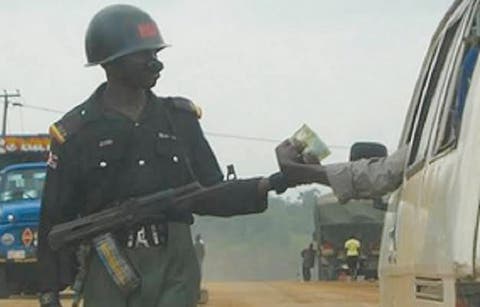
Why is police corrupt from bottom up? And why does the Nigerian police on duty abroad excel as a good ambassador of his country but fail at home? It does seem the police is a reflection of the Nigerian society and until corruption is cleaned off our moral fabric, no one should expect so much. Having tried all the rules in the playbook to re-create the police system may be, just maybe, a decentralised police would serve the people better and curb corruption, argues Nduka Nwosu
“Happy weekend Sir” is the title of an unfinished essay by a member of a protest group campaigning against gender discrimination and police brutality. Happy weekend sir is an appeal by the police on duty, to help make the week pleasant, to be part of millions of families looking forward to a memorable and eventful week end.
That explains why improved conditions of service in terms of wages, allowances and housing are central in dealing with the psychology of the policeman and his incessant desire for money, across the counter deals and all that back hand business. The nature of the job and the tendency for corruption is probably worldwide. In New York, corruption was fought hands down by ensuring the grass eaters or low cadre policemen were put in check by their bosses and if they wore the corruption tag as a norm, the meat eaters or high level policemen among them were held responsible and punished. In Nigeria, this may prove difficult to adopt because corruption starts from the topmost rank down to the lowest, the leadership problem or the trouble with Nigeria as Chinua Achebe postulated.
In one of his appearances on Arise television Professor Chidi Odinkalu re-emphasised the fact that there is a culture in the police rank and file encouraging corruption from the bottom to the top, more precisely from the top down. This institutionalized trend is called making returns from the loot garnered from victims for various offences, extortion not excluded. It puts a strain on the policeman on the road and leads to all manner of criminal acts. Returns are also done in a similar fashion in the Immigration and Customs departments. Ministers supervising revenue generating departments of government receive returns by way of rent. The list goes on and on. So why should an inspector general of police for example, not expect returns which do not include the budget he manages and the billions of contracts that come under his purview? The system is ridden with institutionalised corruption which a policeman tries to exploit to help himself when the victim is caught with his hands deep in the cookie jar. Oftentimes attempts to plug these corruption leakages fail because systemic corruption is bottom up. Victims of police in the cell contribute money to buy candles, match boxes, mosquito coils et al. If you have a case with police, you have to pay money to fuel the car that will drive the accused to the station and if you have to bail yourself as an accused, there is an unofficial fee attached the same way old NEPA officials would need a transportation fee and an additional reconnection fee to fix a disconnected line. That is what makes the job exciting, the unofficial sources of income that come with the territory.
The police can hide your iniquities once money exchanges hands just as a smart accountant does window dressing to secure a bank loan for a fledgling company that may collapse shortly after picking up the loan. Don’t forget the bank manager gets factored into the deal and his DPO friend gets regularly ‘greased ‘to protect him In the event of trouble. If you want police to guard your estate, you will have to pay for every bullet fired into the air warning potential bandits to keep off. The shopping list of a corrupt police officer is humongous but as in all cases only the big boys go to the bush on a hunting exercise, kill their loot and bring it home.
The rest make do with the sprinkles down the road. Someone once had his car impounded by the police and was advised if he wanted the assistance of a top police officer to secure the car, he must part with a certain amount of money. His boys would make photocopies for needed documents and his contact would have to be settled for a consultancy fee. That moment the top officer who was always in the news was demystified in his consciousness.
In all of these, the gun with its bullet is the intimidating weapon used to terrorise the public it is meant to protect. Sadly the police have become the Roman sentinel who guards the gate to the city but prefers to turn the gun on those he is meant to protect.
Of course when the executive sends in a bogus budget with several question marks, two things are possible; either the executive agrees to a deal when the budget is revised upwards by the National Assembly which expectedly will factor its demands such as constituency projects, renovations, travels, furniture and other allowances or the executive would have the budget revised downwards. Since the police know it operates in a corrupt system, it expects society to bear its burden. When it does, it amounts to nothing just as minimum wage solves no problem for the beneficiaries. The policeman knows what to do to settle himself. This is summed up as corruption.
How about revising extant laws for positive results?
Before we crucify the police, his problem and the way he approaches it is the problem of the average Nigerian, how to short change the system and live like others in the rat race. How much does the police man take home for a salary? A misery index wage that is below two square meals tells it all. He lives in a barracks that at best approximates to a zoo. Worse of all his kinsmen have minimum regard for him and this lowers his self-esteem.
The reason is not too far-fetched. The police mentality scorns the Biblical injunction, which says it is better to give than to receive. During the book launch of Ikedi Ohakim while in office, a popular comedian said the only reason he has issues visiting a certain Oba in Lagos is that you end up giving and if he were to visit you or attend your event, you would also be the one giving. This is the way of the policeman; he receives from both hands and does not give. In the church while offerings and donations are being made, he goes into hiding and it is probably not difficult to hazard a guess if the policeman pays his tithe since cheating rules his soul. The problem of a typical policeman summarises the problem of the average Nigerian, how to secure today against tomorrow. In spite of all this, some of the finest breed have made their impact and left. Inspector General Etim Inyang comes to mind followed by a host of others probably unsung. What about the dancing traffic officers who transform traffic control to high art, making the soul of workers rushing to work glow?
The reason for corruption in the Nigerian police is not different from why the average Nigerian is corrupt, one is to meet the demands of everyday living, putting food on the table for the family and then going the extra mile to seek for self-actualisation even if it means to kill and loot.
The summary is that like most Nigerians, the policeman on the road has been largely marginalised and no matter the efforts made in the past, his characterisation approximates that of a hungry man, an endangered species in search of a game for feast.
Marvellous Iheukwumere, a Harvard Law student did her research and concluded there was need for a legal reform governing the police and these extant laws have been there since 1943 without much revision. Training and retraining of police has been a recurring mantra needed to elevate the standards and quality of the Nigerian policeman. Has it made any difference? May be it has made some minimum difference. The Esprit de Corps approach of the French Civil Service remains a global reference point that could help in the total reform of the police. That means a whole generation of new police men and women recruited with a high level of expectation and new vision statement should be the ideal for our future police recruitments. Everything about him should be one of a new age of great possibilities. While doing that, ethical reforms which Iheukwumere advocated, should be pursued vigorously.
Again this is not new. All the propositions in the play book of police reformation have been tested and tried. Many who became radicals seeking to play the role of the new kid on the block collapsed like a pack of cards early in the day. Alozie Ogugbuaja, a Mass Communications graduate from the University of Lagos, who made a name as a police PRO is a good example. No one remembers and talks about him any longer for his gallantry in exposing police exploits against armed robbers. Ogugbuaja in his days made a hero out of devoted police men and women working daily to rid Lagos of crime. His pepper soup narrative against soldiers became his undoing.
How do we call the riot act if we add an integrity code of conduct and disciplinary measures such as bribe taking, bullets that cannot be accounted for through an audit check et al? Will CCTVs installed in critical points in and outside the place of work help to check corrupt practices and who then will be the chief security officer patrolling in and out to keep the police in check? All these could come under an internal audit check system, which again is there as part of the police system of checks and regulations. The police through its community relations system have tried to recreate its image but how far has it gone? May be, just maybe, it calls for greater sophistication in human relations management.
What manner of policemen kill and sell human parts? Some #Endsars protesters had talked of how the SARS police in Anambra State led by a certain DSP James Nwafor and his kind for many years eliminated his victims whose body parts got missing. James Nwafor trended for a long time on Twitter and other social media platforms before the #Endsars protests began. Surprisingly, the Anambra State Governor Willie Obiano only hurriedly disengaged him as his staff when the protests gathered momentum.
In an explosive interview granted to Leadership newspaper which this reporter managed at the time, the Oluwo of Iwoland in Osun State, Oba Abdulrosheed Adewale Akanbi claimed without equivocation that he has been fighting a war against his fellow Obas in the Southwest for their unbridled consumption of human parts for sacrificial purposes. The human parts industry in the country, it is claimed, is a multi-billion naira business. These body parts missing when a policeman carries out an extra judicial killing and secret burial are often needed by ambitious politicians, businessmen, obas, ezes and other forms of traditional rulers and their associates, for their regular propitiations and esoteric rituals to the gods they serve. They make the industry a money spinner for the foot soldiers. These things once thought to belong in the realm of conspiracy theories have acquired protean imageries actualised as truth. The human parts business was one sore point of the #Endsars protest that no one is talking about. Why are we even now as a people so rooted in the worship of Baal and Molech, something our forefathers robustly practiced?
What the police authority or government needs to largely curb or stem corruption, not to totally halt it, is to create an El Dorado, a pampered paradise for the emerging cadre of policemen and women both at work and on retirement, a satellite environment containing all the good things of life, a constant training and retraining at home and abroad and a code of conduct that will instill best practices and sanctions when profaned. That our policemen earn laurels when they travel to other countries means our environment has been harsh to them. The minimum luxury and return given to them abroad should not be anything less in their country.
The same expectations we demand from the other ranks of the police on the streets and elsewhere, should be extended to the Inspector General and his deputies whose loyalty would be to the nation, not to any president or the ruling party when it matters. His mode of recruitment through a board set up by law would go a long way to achieve this.
More importantly, the police outside the barracks, should be made to live among the people they serve and protect to earn their love and appreciation, which is also saying a decentralised police would serve the people better than a centralized one.
It is now more clear than ever that Europe must take its security, broadly understood, into its own hands. Doing so will not only secure the European Union’s proper place on the world stage, but will also ensure a healthy transatlantic partnership in the years ahead.
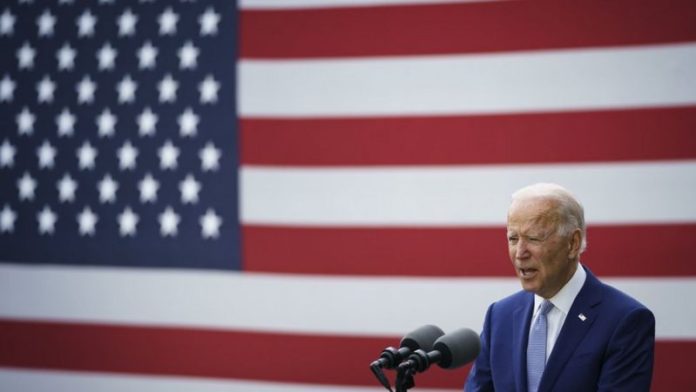
BRUSSELS – Joe Biden’s election as the next president of the United States has raised hopes in Europe of putting the transatlantic relationship back on track. But there can be no simple return to the past. Facing so many domestic and international challenges, the US will value the transatlantic relationship only insofar as that relationship delivers actual value. A stronger Europe that shoulders a greater share of global responsibilities can ensure that it does.
There has been much talk of achieving “European strategic autonomy,” but what does that mean in practice? Autonomy should not imply total independence or isolation from the rest of the world. Rather, it refers to an ability to think for oneself and to act according to one’s own values and interests. The European Union needs to achieve this kind of autonomy, while at the same time strengthening our alliances and preserving our commitments to multilateralism and openness.
The EU is facing serious strategic challenges in today’s antagonistic international environment, where geopolitical rivalries and great-power competition are on the rise. That is why, as German Chancellor Angela Merkel once bluntly put it, “We Europeans truly have to take our fate into our own hands.” We must stand on our own feet.
For a long time, the debate about strategic autonomy focused mainly on security and defense. Some saw the discussion as an attempt to create alternatives to defence cooperation within the North Atlantic Alliance; and some even took it to mean that America’s commitment to Europe had been called into question, and that a greater decoupling might be on the way.
But there is no question that NATO has played an indispensable role in European security. Any consolidation of Europe’s security capacity should be pursued within the alliance. As successive US leaders have emphasised, Europe needs to increase its own contribution to defence, to militate against the perception that America alone is paying for transatlantic security. Although the Biden administration will bring a change in tone and a less confrontational approach, on the question of defense spending it will expect the same from Europe as its predecessors. America’s core geopolitical interests will not change.
Fortunately, the EU is already working on several tracks to strengthen the transatlantic partnership. Under the Permanent Structured Cooperation (PESCO) efforts, European NATO members are helping to address gaps in the alliance’s capabilities, and are working toward fulfilling by 2024 their commitment to spend 2% of GDP on defense. Equally important, the creation of a new European Defence Fund (EDF) represents an important step toward improving the capabilities of Europe’s military industry.
But Europe’s security challenges go beyond NATO’s traditional remit. From the Sahel and Libya to the Eastern Mediterranean, there is no shortage of crises that demand a strong European response. The task for the EU is to define a common position from which it can act in the interest of maintaining regional stability.
To succeed, Europe must develop its own framework for monitoring and analysing threats, so that it can move quickly from threat assessment to operationalization and response. That is why we are now developing a Strategic Compass.
It is crucial for the strategic-autonomy discussion to expand far beyond the issues of defense and security. As the COVID-19 crisis has shown, issues such as public health and economic interdependence are no less important.
Strategic autonomy is the conceptual framework that Europe needs to understand these issues and how they relate to one another. Viewed in isolation, face masks and medicines are not strategic products. But the strategic calculus changes when the production of such items is concentrated in just a few countries. The same applies to the sourcing of rare metals, social-media and other digital platforms, and technologies such as 5G.
To help member states navigate these and many other issues, the European Commission has proposed a series of new instruments, such as the mechanism that went into force last month to screen foreign investments in the EU. But achieving strategic autonomy also will require intensive leveraging of the power of Europe’s single market. With its vast size and scope, the single market offers many instruments for safeguarding European interests with respect to critical infrastructure, foreign investment, state subsidies (from which certain foreign investors benefit), or dual-use (military and commercial) exports.
For example, we have become increasingly aware of the vulnerabilities introduced by an increasingly unbalanced economic relationship with China, so we have made reciprocity a core objective in our negotiations on an investment agreement. Europe has no problem with China’s own economic development and the benefits this has delivered to its citizens. But we cannot allow China’s international expansion to occur at the expense of our own interests and values. That is why we have settled on a dual approach, treating China as an important partner, but also as a competitor and a systemic rival.
Overall, the EU’s overarching objective must be to strengthen its role and influence in the world, so that it is the partner of choice for every other country and world power. The concept of strategic autonomy is essential to this ambition. Strategic complacency is not an option.
•Josep Borrell is EU High Representative for Foreign Affairs and Security Policy and a vice president of the European Commission.
Even if a successful rollout of a new COVID-19 vaccine causes the current health crisis to recede by next spring, the unemployment crisis will remain. That is especially true in the United Kingdom, where fiscal stimulus is urgently needed to avert a lost decade – if not a lost generation – of growth.
EDINBURGH/LONDON – In the wake of the COVID-19 pandemic, both the US and European economies are gearing up for large-scale job creation. US President-elect Joe Biden has pledged to invest $700 billion in manufacturing and innovation, plus $2 trillion in a “Biden Green Deal” to combat climate change and promote clean energy. Meanwhile, Germany has abandoned years of thrift by backing a €750 billion ($887 billion) European Union recovery fund and, like France, will maintain its own national job retention and job creatiotn program throughout 2021.
By contrast, the United Kingdom’s chancellor of the exchequer, Rishi Sunak, has fallen behind the curve. Back in March, many expected that Britain would experience a V-shaped recovery. As this prospect faded, it became clear that Sunak’s rescue operation needed to be matched with a viable recovery plan.
The consensus view is that both the UK and the global economy will be smaller in 2021 than they were in 2019. The International Monetary Fund predicts that the global economy will be 6.5% smaller than was forecast before the COVID-19 crisis, with a legacy of unemployment at least double the pre-pandemic norm.
These gloomier forecasts have prompted international calls for the reinstatement of active fiscal policy, with the IMF urging rich-country governments to start large public investment programmes. In its latest Fiscal Monitor, the Fund says that increasing public investment by 1% of GDP could boost GDP by 2.7%, private investment by 10%, and employment by 1.2%.
The IMF’s call to action is particularly important, because the Fund was a champion of fiscal retrenchment during the 2008-09 global financial crisis, despite the obvious need for stimulus. Its earlier macroeconomic model, like those of most other economists and policymakers at that time, was based on the flawed theory that market economies have a natural tendency to reach full employment. This ignored the truth, most persuasively articulated by John Maynard Keynes, that in the absence of government stimulus, economies can remain naturally stuck in recession for a long time.
The Bank of England, too, has changed its tune. The BOE is about to inject an additional £150 billion ($198 billion) into the UK economy, in addition to the more than £200 billion it already has pumped out in 2020, and now realises that it cannot do all the heavy lifting. Businesses will not invest, no matter how low the cost of capital, until they see a market. That is why the BOE has now joined the US Federal Reserve and the European Central Bank in calling for fiscal stimulus.
Before COVID-19, monetary policy seemed to be the only game in town. Now, if we are to avoid mass unemployment and the consequent loss of demand in the economy, job creation must become the overriding priority after the lockdown.
To its credit, the UK government brought forward £8 billion in infrastructure spending this past summer. But that is a mere fraction of what is needed. The government is now frontloading its £40 billion, five-year investment plan into the next two and a half years, and giving priority to big environmental projects and social housing. Retrofitting homes and local amenities could quickly create many jobs, with immediate multiplier effects.
Regional and local job and training schemes are essential to the longer-term task of reallocating work and skills toward the labor market of the future. The lesson of the UK’s 1998 New Deal for Young People and the 2009 Future Jobs Fund is that such programmes must offer not only training and work experience but also assistance with job searches and incentives for employers to hire people on a permanent basis.
We estimate that one million young Britons under the age of 25 are neither working nor in training or education. But the government’s Kickstart job-creation scheme, which was launched belatedly earlier this month, has offered job placements to young people only for six-month periods.
The government expected that Kickstart would secure placements for 300,000 young people, but perhaps only around 100,000 will be enrolled in the scheme by the end of 2020. Ministers assumed that 5% of UK employers would take on young people, but outside of the retail and logistics sectors, thousands of firms are instead planning redundancies and will almost certainly not offer employment on anything like the hoped-for scale in the coming months.
If we are to assist the other 900,000 or so under-25s in need of help and create the estimated 1.5 million youth placements that will be required over the next year, the public sector will have to become the employer of last resort. So, rather than passively responding to a rise in unemployment, fiscal policy should aim to replace Karl Marx’s “reserve army of the unemployed” with a buffer stock of state-supported jobs and training schemes that expands or contracts with the business cycle.
What we need above all from UK policymakers is an updated full-employment commitment in the spirit of Keynes and US President Franklin D. Roosevelt. An essential condition for this is the coordination of monetary and fiscal policy. The BOE should retain its anti-inflation mandate, but policymakers should not use this to cut off necessary fiscal stimulus.
Earlier this month, the BOE echoed then-ECB President Mario Draghi’s famous 2012 pledge to save the euro by stating that it “stands ready to take whatever additional action is necessary” to boost the economy. To boost the credibility of such forward guidance, the government could give the BOE a dual mandate to fight both inflation and unemployment, while the bank could state that it will not tighten monetary policy until unemployment falls below its pre-crisis level of 4%.
A successful rollout of Pfizer’s new COVID-19 vaccine (and possibly others) could return life to a semblance of normality by next spring. But even if the health crisis recedes, the unemployment crisis will remain. UK policymakers must act now to avert a lost decade – if not a lost generation – of growth. (Project Syndicate)
•Gordon Brown, former Prime Minister and Chancellor of the Exchequer of the United Kingdom, is United Nations Special Envoy for Global Education and Chair of the International Commission on Financing Global Education Opportunity. He chairs the Advisory Board of the Catalyst Foundation.
•Robert Skidelsky, a member of the British House of Lords, is Professor Emeritus of Political Economy at Warwick University. The author of a three-volume biography of John Maynard Keynes, he began his political career in the Labour party, became the Conservative Party’s spokesman for Treasury affairs in the House of Lords, and was eventually forced out of the Conservative Party for his opposition to NATO’s intervention in Kosovo in 1999.
Abuja (Sundiata Post) – Mexico surpassed one million Covid-19 cases on Saturday, registering 5,860 new infections over the previous day in a country with one of the world’s highest death tolls from the virus, the government said. A total of 1,003,253 people have now tested positive for the virus in Mexico, said health ministry official Ricardo Cortes. The death toll meanwhile reached 98,259, including 635 registered over the past day, he added. Mexico has the world’s fourth-highest death toll from the virus behind the United States, Brazil and India, according to an AFP tally based on official figures.
It also has the 11th highest number of infections. Cases have been spiking in a number of areas of the country. “We probably still need to see the worst,” Alejandro Macias, former national commissioner against the AH1N1 influenza pandemic in Mexico City in 2009, told AFP. The government earlier declared a lockdown on March 23, although essential economic activities remained open, with no sanctions for non-compliance. The mayor of Mexico City, Claudia Sheinbaum, announced on Friday the closure of bars for 15 days and earlier closing times for restaurants, cinemas and gyms due to the spike in infections and hospitalizations over the last week. Sheinbaum also said that daily tests will be increased to 10,000. The capital has seen an increase in infections since mid-October and remains the epicenter of the pandemic in Mexico.
Nigeria’s youngest comedian, Emmanuella has surprised her mother with a new house.
The young comedienne took to Instagram to share photos of the house and also thank her mom for encouragement and support.
She wrote: ” I built this for u mom. For all the prayers, all the encouragements and support. Mummy I know you said u want a portable house and this is it. But forgive me because I must complete ur mansion for you next year. Don’t worry it won’t make us go to hell. my super Christmas mummy. I love you.”
It is interesting that after more than 60 years, the 1959 general elections remain hot topic. In recent weeks, the old interview of Harold Smith, the British civil servants who participated in that election, was again being discussed in many public fora, including online groups. As Nigeria marks the 60th anniversary of the British departure from our country, Smith’s confession remains hot topic. What is also certain is that the result of their rule and their decisions, especially in the final run to independence, continue to affect events and dictate our relationship with each other.
The three main Nigerian leader were participants and high stakeholders in the 1959 general elections. There were Alhaji Ahmadu Bello, the teacher and local government administrator, Dr Nnamdi Azikiwe, journalist and publisher of the famous West African Pilot and Chief Obafemi Awolowo, the lawyer, trade unionist and journalist. Each of them was the undisputed master of his region; Bello for the North, Zik for the East and Awo for the West. The colonial government was making arrangements to wind down and they wanted a friendly and if possible, pliable successor. Smith was one of the young British officers that were saddled with the assignment to ensure that a friendly regime takes over the reign of government in Nigeria.
Smith alleged that what the British wanted was to have their friends from the North take over power in Lagos. Smith said the British did not want the two main parties in the south, Azikiwe’s National Council of Nigerian Citizens, NCNC, and Awo’s Action Group, AG, to team up to form the government at the centre. They would prefer Ahmadu Bello and his Northern People’s Congress, NPC. They regarded Bello as less troublesome compared to the flamboyant Zik and the methodical Awolowo. The British felt neither Awolowo nor Zik could be trusted. They feared, against the background of the Cold War that came in the aftermath of the Second World War, that either of them may later have sympathy for communism, the counter ideology of the East then represented by the giant and now defunct Union of Soviet Socialist Republic, USSR.
Even now after almost 60 years, the British authorities have refused to lift embargo on secret papers about Zik and the last days of the British in Nigeria. What could be so important about Nigeria that the British government want to keep secret despite the passage of time? All the major actors are dead, but their deeds and memories are still portent even today. That some papers, especially those concerning Zik have been embargoed by the British government for another 50 years before they can be opened to the public, raises a lot of questions. This is an indication that there are unpalatable, and possibly dangerous, secrets that must be kept for another 50 years.
In the aftermath of the 1959 elections, Zik was the decider in Nigeria politics. Awolowo wanted to serve at the Federal Government and knew that he can only get there with the support of Zik. He offered Zik the post of Prime-Minister saying he was ready to serve as Zik’s deputy. Bello too reached out to Zik, offering him the titular post of Governor-General. When Ghana’s Kwame Nkrumah visited Zik, he was flabbergasted that the great Zik would prefer to be a titular Governor-General instead of Prime-Minister, the repository of executive power. Many years later, one of Zik’s strongest supporters and his successor as Premier of the Eastern Region, Dr Michael Okpara, said he regretted Zik’s action. This was in an interview he granted the defunct New Nation magazine, edited by the legendary former editor of the old Sunday Times, Gbolabo Ogunsanwo.
Could the alliance of Zik and Bello have been orchestrated by the British? What did they have on Zik that made them bend him to their will? Smith said the instrument of the British in the NCNC was the wealthy Chief Festus Okotie-Eboh, who was regarded as a free-spending wheeler-dealer. The British allegedly persuaded many of the dominant British companies in Nigeria to donate money to the NCNC through its national treasurer, Okotie-Eboh. Through this slush money, the British were able to have unusual influence on the NCNC and its policies and direction. It may be through this that they had their strong influence on Zik, forcing him to give up the job of prime-minister for the empty glory of being Governor-General. When Nigeria became a republic in 1963, Zik was re-designated President, still downing the same uniforms of naval admiral and army field-marshal. In effect he had pushed himself above the fray of competitive politics.
There were reasons why the British felt more comfortable with the North. Sir Frederick Lugard, the first Governor-General of Nigeria who amalgamated the Northern and Southern Protectorates with the Colony of Lagos in 1914, was born and raised in British India. He saw that the Muslim rulers were more friendly to the British unlike the hostile Hindus. Some of those who came after him were also old Indian or Asian hands. Hugh Clifford, who came after Lugard, was also from Malaysia. Donald Cameron also served in India where he was the registrar of the High Court in Allahabad among other postings. Sir Bernard Bourdillon also served in Malaya. He served in Siri Lanka and Bangladesh before his posting to Nigeria.
All these men bought into the vision of Lugard that the best way to rule Nigeria was through Indirect Rule as was done in Indian through the Rajas. They found the Muslim rulers of India more friendly than the Hindus. When they got to Nigeria, they were eager to translate their Indian experience onto the Nigerian soil. They regarded the Northern Muslim rulers as their natural allies. Despite the violent campaign in the North that preceded the imposition of British rule, including the conquest of Sokoto and the killing of the Caliph, most of the emirs were not unfriendly to the British.
Lugard and his men did three things to win the hearts of the emirs. First, they allowed them to keep their throne despite the embers of rebellion from the conquered Hausa aristocracies who regarded the Fulani rulers as usurpers and branded them illegitimate. Second, the British promised that they would not allow Christian missionaries to preach in the emirates or places claimed by them. The entire territories carved out as Northern Nigeria was also treated as larger extension of the Sokoto Caliphate. Therefore, preaching was made difficult even in areas where the Jihadist never conquered like the Benue valley, the Jos Plateau, Southern-Zaria (now called Southern Kaduna), Borno and a swath part of Adamawa.
The consequences of this policy were far-reaching. Areas of the Northern Protectorate that were never conquered by the Fulani jihadists, were nonetheless placed under their influence and sometimes direct control. The paramount chiefs of the other areas, like the Tivs, the Jukuns, the Nupes, Kataf, Jere and scores of others, were regarded as inferior to the Muslims emirs and treated so. Many of these chiefs were encouraged or even coaxed to become Muslims. The consequence had been that towns that use to have chiefs in the past, like Minna and Kafanchan, now have emirs. Throughout the colonial period, Christian missionaries were not allowed to preach openly in areas regarded as parts of the old emirates.
Sixty-one years after the 1959 elections, we are still living with the consequences. The upheavals and general insecurity in the old North may be part of the repercussions. We need to examine more of our past in other to find ways out of the present sense of unease by most Nigerians. Even during the Nigerian Civil War, the incidence of Internally Displaced Persons, IDP, was unheard of. Now, it has become the general pattern. The Federal Government has been unable to guarantee the security of life and property of its citizens and most of the IDP residents cannot return home.
I have a feeling that the history of Nigeria would have taken a different turn if Nigerians have been left to decide their own fate instead of the invidious manipulations by the departing British colonialists of the 1959 General Elections. The history of Nigeria would have taken a different contour if Zik had indeed being the first Prime-Minister of Nigeria. What one cannot escape is whether it would have been appropriate to keep away from power the NPC, the party that had the largest block of members in the House of Representatives. What is clear is that we were never really left alone to decide the issue of Nigerian leadership. It is not certain whether the situation is different today.
US President-elect Joe Biden has won the state of Georgia, the BBC projects, the first Democratic candidate to do so since 1992.
The win solidifies Mr Biden’s victory, giving him a total of 306 votes in the electoral college, the system the US uses to choose its president.
President Donald Trump is projected to win North Carolina, reaching 232 votes.
Mr Trump, who has not yet conceded, alluded for the first time to a possible new administration in January.
Looking subdued, the president stopped short of acknowledging his defeat during a briefing of his coronavirus task force at the White House. These were his first public comments on the election since his defeat was projected by US media.
As the country faces growing outbreaks of Covid-19, Mr Trump said he would not impose a lockdown to fight the virus, adding: “Whatever happens in the future, who knows which administration it will be. I guess time will tell.”
The president, who did not mention Mr Biden by name, did not take questions from reporters. Pressure is growing on Mr Trump, a Republican, to acknowledge Mr Biden’s victory and help prepare the transition from one administration to another.
The results in Georgia and North Carolina were the last to be projected in the race for the White House. Mr Biden’s electoral votes equal the tally Mr Trump achieved in his victory over Hillary Clinton in 2016. At the time Mr Trump referred to it as “a landslide”.
President Trump has launched a flurry of legal challenges in key states and levelled unsubstantiated allegations of widespread electoral fraud. But his efforts suffered three setbacks on Friday:
In Arizona, his team dropped a lawsuit seeking a review of ballots cast on Election Day after it became clear his rival’s lead was unassailable. The challenge was based on a claim that some legal votes had been rejected
In Michigan, a judge rejected a request by two Republican poll watchers – who had alleged fraud in Wayne County – to block the certification of election results in Detroit
In Philadelphia, Pennsylvania, the Trump campaign’s requests to invalidate several batches of mail-in ballots were rejected
A manual recount is to be carried out in Georgia because of the narrow margin between the two candidates, but the Biden team said they did not expect it to change the results there.
Shifting electoral map
Joe Biden did not have to win Georgia or Arizona to secure the White House. His recapturing of the “blue wall” northern industrial states of Wisconsin, Michigan and Pennsylvania by themselves assured his victory.
The former vice-president’s success in these Sun Belt states – the first time a Democrat has won either in decades – suggests, however, that Democrats may be clearing a new path to presidential success in future elections.
If so, it would make Democrats less dependent on the kind of non-college-educated white voters in those northern battlegrounds that, given Donald Trump’s appeal, may be trending toward the Republicans. It was educated suburban voters, as well as traditionally Democratic ethnic minorities, that delivered Georgia and Arizona to Mr Biden.
It is not all good news for the Democrats, however. Donald Trump did win North Carolina – another southern swing state – even though it was carried by Barack Obama in 2008.
The electoral map is shifting, and the parties will have to adjust their strategies accordingly. In the meantime, Georgia – which has two January run-off elections that will decide control of the US Senate – will take centre stage in the months ahead. Joe Biden’s narrow victory there all but assures it will be a hotly contested battle.
Biden team urge access to briefings
The General Services Administration (GSA), the government agency tasked with beginning the transition process, has yet to recognise Mr Biden and his running mate Kamala Harris as winners.
Meanwhile, the Biden team have not been given access to classified security briefings, federal agencies and funding needed to ensure a smooth transition of power. Biden spokesperson Jen Psaki said this lack of access could affect Mr Biden’s ability to govern.
“You need real-time information to deal with crises of the moment,” she said, highlighting the impact of the pandemic. “It’s imperative that our team and our experts have that access”.
Earlier, a group of more than 150 former national security officials urged the GSA to officially recognise Mr Biden so that they could access “pressing national security issues”. A small but growing number of Republicans are also backing calls for the president-elect to be given daily intelligence briefings.
What is Trump saying?
The president continues to dispute the election result. A tweet on Saturday questioned the checks on mail-in ballots in Georgia, saying: “Expose the crime!”
It was the latest in a slew of tweets backing his claims of widespread election fraud, although he has provided no evidence.
He also suggested he might join his supporters at a rally planned in Washington on Saturday.
The statement from the Election Infrastructure Government Co-ordinating Council was released after Mr Trump tweeted that voting software used in 28 states had deleted millions of votes for him, but presented no evidence.
The claim appeared to originate from the obscure TV network One America News (OANN) and was flagged by Twitter as disputed.
On Friday, White House spokeswoman Kayleigh McEnany told Fox News: “President Trump believes he will be President Trump, have a second term.”
during the pandemic, he preferred to limit his human contact. He also doubted whether human contact would have much value anyway, when his mathematical models could already tell me everything I needed to know.
But he had to leave his office sometime. (“One way you know I am Russian is that I cannot think sitting down,” he told me. “I have to go for a walk.”) Neither of us had seen much of anyone since the pandemic had closed the country several months before. The campus was quiet. “A week ago, it was even more like a neutron bomb hit,” Turchin said. Animals were timidly reclaiming the campus, he said: squirrels, woodchucks, deer, even an occasional red-tailed hawk. During our walk, groundskeepers and a few kids on skateboards were the only other representatives of the human population in sight.
The year 2020 has been kind to Turchin, for many of the same reasons it has been hell for the rest of us. Cities on fire, elected leaders endorsing violence, homicides surging—to a normal American, these are apocalyptic signs. To Turchin, they indicate that his models, which incorporate thousands of years of data about human history, are working. (“Not all of human history,” he corrected me once. “Just the last 10,000 years.”) He has been warning for a decade that a few key social and political trends portend an “age of discord,” civil unrest and carnage worse than most Americans have experienced. In 2010, he predicted that the unrest would get serious around 2020, and that it wouldn’t let up until those social and political trends reversed. Havoc at the level of the late 1960s and early ’70s is the best-case scenario; all-out civil war is the worst.
The fundamental problems, he says, are a dark triad of social maladies: a bloated elite class, with too few elite jobs to go around; declining living standards among the general population; and a government that can’t cover its financial positions. His models, which track these factors in other societies across history, are too complicated to explain in a nontechnical publication. But they’ve succeeded in impressing writers for nontechnical publications, and have won him comparisons to other authors of “megahistories,” such as Jared Diamond and Yuval Noah Harari. The New York Times columnist Ross Douthat had once found Turchin’s historical modeling unpersuasive, but 2020 made him a believer: “At this point,” Douthat recently admitted on a podcast, “I feel like you have to pay a little more attention to him.”
Diamond and Harari aimed to describe the history of humanity. Turchin looks into a distant, science-fiction future for peers. In War and Peace and War(2006), his most accessible book, he likens himself to Hari Seldon, the “maverick mathematician” of Isaac Asimov’sFoundationseries, who can foretell the rise and fall of empires. In those 10,000 years’ worth of data, Turchin believes he has found iron laws that dictate the fates of human societies.
The fate of our own society, he says, is not going to be pretty, at least in the near term. “It’s too late,” he told me as we passed Mirror Lake, which UConn’s website describes as a favorite place for students to “read, relax, or ride on the wooden swing.” The problems are deep and structural—not the type that the tedious process of democratic change can fix in time to forestall mayhem. Turchin likens America to a huge ship headed directly for an iceberg: “If you have a discussion among the crew about which way to turn, you will not turn in time, and you hit the iceberg directly.” The past 10 years or so have been discussion. That sickening crunch you now hear—steel twisting, rivets popping—is the sound of the ship hitting the iceberg.
“We are almost guaranteed” five hellish years, Turchin predicts, and likely a decade or more. The problem, he says, is that there are too many people like me. “You are ruling class,” he said, with no more rancor than if he had informed me that I had brown hair, or a slightly newer iPhone than his. Of the three factors driving social violence, Turchin stresses most heavily “elite overproduction”—the tendency of a society’s ruling classes to grow faster than the number of positions for their members to fill. One way for a ruling class to grow is biologically—think of Saudi Arabia, where princes and princesses are born faster than royal roles can be created for them. In the United States, elites overproduce themselves through economic and educational upward mobility: More and more people get rich, and more and more get educated. Neither of these sounds bad on its own. Don’t we want everyone to be rich and educated? The problems begin when money and Harvard degrees become like royal titles in Saudi Arabia. If lots of people have them, but only some have real power, the ones who don’t have power eventually turn on the ones who do.
In the United States, Turchin told me, you can see more and more aspirants fighting for a single job at, say, a prestigious law firm, or in an influential government sinecure, or (here it got personal) at a national magazine. Perhaps seeing the holes in my T-shirt, Turchin noted that a person can be part of an ideological elite rather than an economic one. (He doesn’t view himself as a member of either. A professor reaches at most a few hundred students, he told me. “You reach hundreds of thousands.”) Elite jobs do not multiply as fast as elites do. There are still only 100 Senate seats, but more people than ever have enough money or degrees to think they should be running the country. “You have a situation now where there are many more elites fighting for the same position, and some portion of them will convert to counter-elites,” Turchin said.
Donald Trump, for example, may appear elite (rich father, Wharton degree, gilded commodes), but Trumpism is a counter-elite movement. His government is packed with credentialed nobodies who were shut out of previous administrations, sometimes for good reasons and sometimes because the Groton-Yale establishment simply didn’t have any vacancies. Trump’s former adviser and chief strategist Steve Bannon, Turchin said, is a “paradigmatic example” of a counter-elite. He grew up working-class, went to Harvard Business School, and got rich as an investment banker and by owning a small stake in the syndication rights to Seinfeld. None of that translated to political power until he allied himself with the common people. “He was a counter-elite who used Trump to break through, to put the white working males back in charge,” Turchin said.
Elite overproduction creates counter-elites, and counter-elites look for allies among the commoners. If commoners’ living standards slip—not relative to the elites, but relative to what they had before—they accept the overtures of the counter-elites and start oiling the axles of their tumbrels. Commoners’ lives grow worse, and the few who try to pull themselves onto the elite lifeboat are pushed back into the water by those already aboard. The final trigger of impending collapse, Turchin says, tends to be state insolvency. At some point rising insecurity becomes expensive. The elites have to pacify unhappy citizens with handouts and freebies—and when these run out, they have to police dissent and oppress people. Eventually the state exhausts all short-term solutions, and what was heretofore a coherent civilization disintegrates.
Turchin’s prognostications would be easier to dismiss as barstool theorizing if the disintegration were not happening now, roughly as the Seer of Storrs foretold 10 years ago. If the next 10 years are as seismic as he says they will be, his insights will have to be accounted for by historians and social scientists—assuming, of course, that there are still universities left to employ such people.
Turchin was born in 1957 in Obninsk, Russia, a city built by the Soviet state as a kind of nerd heaven, where scientists could collaborate and live together. His father, Valentin, was a physicist and political dissident, and his mother, Tatiana, had trained as a geologist. They moved to Moscow when he was 7 and in 1978 fled to New York as political refugees. There they quickly found a community that spoke the household language, which was science. Valentin taught at the City University of New York, and Peter studied biology at NYU and earned a zoology doctorate from Duke.
Turchin wrote a dissertation on the Mexican bean beetle, a cute, ladybuglike pest that feasts on legumes in areas between the United States and Guatemala. When Turchin began his research, in the early 1980s, ecology was evolving in a way that some fields already had. The old way to study bugs was to collect them and describe them: count their legs, measure their bellies, and pin them to pieces of particleboard for future reference. (Go to the Natural History Museum in London, and in the old storerooms you can still see the shelves of bell jars and cases of specimens.) In the ’70s, the Australian physicist Robert May had turned his attention to ecology and helped transform it into a mathematical science whose tools included supercomputers along with butterfly nets and bottle traps. Yet in the early days of his career, Turchin told me, “the majority of ecologists were still quite math-phobic.”
Turchin did, in fact, do fieldwork, but he contributed to ecology primarily by collecting and using data to model the dynamics of populations—for example, determining why a pine-beetle population might take over a forest, or why that same population might decline. (He also worked on moths, voles, and lemmings.)
In the late ’90s, disaster struck: Turchin realized that he knew everything he ever wanted to know about beetles. He compares himself to Thomasina Coverly, the girl genius in the Tom Stoppard play Arcadia, who obsessed about the life cycles of grouse and other creatures around her Derbyshire country house. Stoppard’s character had the disadvantage of living a century and a half before the development of chaos theory. “She gave up because it was just too complicated,” Turchin said. “I gave up because I solved the problem.”
Turchin published one final monograph, Complex Population Dynamics: A Theoretical/Empirical Synthesis (2003), then broke the news to his UConn colleagues that he would be saying a permanent sayonara to the field, although he would continue to draw a salary as a tenured professor in their department. (He no longer gets raises, but he told me he was already “at a comfortable level, and, you know, you don’t need so much money.”) “Usually a midlife crisis means you divorce your old wife and marry a graduate student,” Turchin said. “I divorced an old science and married a new one.”Turchin’s prognostications would be easier to dismiss as barstool theorizing if they weren’t playing out now, roughly as he foretold 10 years ago.
One of his last papers appeared in the journal Oikos. “Does population ecology have general laws?” Turchin asked. Most ecologists said no: Populations have their own dynamics, and each situation is different. Pine beetles reproduce, run amok, and ravage a forest for pine-beetle reasons, but that does not mean mosquito or tick populations will rise and fall according to the same rhythms. Turchin suggested that “there are several very general law-like propositions” that could be applied to ecology. After its long adolescence of collecting and cataloging, ecology had enough data to describe these universal laws—and to stop pretending that every species had its own idiosyncrasies. “Ecologists know these laws and should call them laws,” he said. Turchin proposed, for example, that populations of organisms grow or decline exponentially, not linearly. This is why if you buy two guinea pigs, you will soon have not just a few more guinea pigs but a home—and then a neighborhood—full of the damn things (as long as you keep feeding them). This law is simple enough to be understood by a high-school math student, and it describes the fortunes of everything from ticks to starlings to camels. The laws Turchin applied to ecology—and his insistence on calling them laws—generated respectful controversy at the time. Now they are cited in textbooks.
Having left ecology, Turchin began similar research that attempted to formulate general laws for a different animal species: human beings. He’d long had a hobbyist’s interest in history. But he also had a predator’s instinct to survey the savanna of human knowledge and pounce on the weakest prey. “All sciences go through this transition to mathematization,” Turchin told me. “When I had my midlife crisis, I was looking for a subject where I could help with this transition to a mathematized science. There was only one left, and that was history.”
Historians read books, letters, and other texts. Occasionally, if they are archaeologically inclined, they dig up potsherds and coins. But to Turchin, relying solely on these methods was the equivalent of studying bugs by pinning them to particleboard and counting their antennae. If the historians weren’t going to usher in a mathematical revolution themselves, he would storm their departments and do it for them.
“There is a longstanding debate among scientists and philosophers as to whether history has general laws,” he and a co-author wrote in Secular Cycles (2009). “A basic premise of our study is that historical societies can be studied with the same methods physicists and biologists used to study natural systems.” Turchin founded a journal, Cliodynamics, dedicated to “the search for general principles explaining the functioning and dynamics of historical societies.” (The term is his coinage; Clio is the muse of history.) He had already announced the discipline’s arrival in an article in Nature, where he likened historians reluctant to build general principles to his colleagues in biology “who care most for the private life of warblers.” “Let history continue to focus on the particular,” he wrote. Cliodynamics would be a new science. While historians dusted bell jars in the basement of the university, Turchin and his followers would be upstairs, answering the big questions.
To seed the journal’s research, Turchin masterminded a digital archive of historical and archaeological data. The coding of its records requires finesse, he told me, because (for example) the method of determining the size of the elite-aspirant class of medieval France might differ from the measure of the same class in the present-day United States. (For medieval France, a proxy is the membership in its noble class, which became glutted with second and third sons who had no castles or manors to rule over. One American proxy, Turchin says, is the number of lawyers.) But once the data are entered, after vetting by Turchin and specialists in the historical period under review, they offer quick and powerful suggestions about historical phenomena.
Historians of religion have long pondered the relationship between the rise of complex civilization and the belief in gods—especially “moralizing gods,” the kind who scold you for sinning. Last year, Turchin and a dozen co-authors mined the database (“records from 414 societies that span the past 10,000 years from 30 regions around the world, using 51 measures of social complexity and 4 measures of supernatural enforcement of morality”) to answer the question conclusively. They found that complex societies are more likely to have moralizing gods, but the gods tend to start their scolding after the societies get complex, not before. As the database expands, it will attempt to remove more questions from the realm of humanistic speculation and sock them away in a drawer marked answered.
One of Turchin’s most unwelcome conclusions is that complex societies arise through war. The effect of war is to reward communities that organize themselves to fight and survive, and it tends to wipe out ones that are simple and small-scale. “No one wants to accept that we live in the societies we do”—rich, complex ones with universities and museums and philosophy and art—“because of an ugly thing like war,” he said. But the data are clear: Darwinian processes select for complex societies because they kill off simpler ones. The notion that democracy finds its strength in its essential goodness and moral improvement over its rival systems is likewise fanciful. Instead, democratic societies flourish because they have a memory of being nearly obliterated by an external enemy. They avoided extinction only through collective action, and the memory of that collective action makes democratic politics easier to conduct in the present, Turchin said. “There is a very close correlation between adopting democratic institutions and having to fight a war for survival.”
Also unwelcome: the conclusion that civil unrest might soon be upon us, and might reach the point of shattering the country. In 2012, Turchin published an analysis of political violence in the United States, again starting with a database. He classified 1,590 incidents—riots, lynchings, any political event that killed at least one person—from 1780 to 2010. Some periods were placid and others bloody, with peaks of brutality in 1870, 1920, and 1970, a 50-year cycle. Turchin excludes the ultimate violent incident, the Civil War, as a “sui generis event.” The exclusion may seem suspicious, but to a statistician, “trimming outliers” is standard practice. Historians and journalists, by contrast, tend to focus on outliers—because they are interesting—and sometimes miss grander trends.
Certain aspects of this cyclical view require relearning portions of American history, with special attention paid to the numbers of elites. The industrialization of the North, starting in the mid-19th century, Turchin says, made huge numbers of people rich. The elite herd was culled during the Civil War, which killed off or impoverished the southern slaveholding class, and during Reconstruction, when America experienced a wave of assassinations of Republican politicians. (The most famous of these was the assassination of James A. Garfield, the 20th president of the United States, by a lawyer who had demanded but not received a political appointment.) It wasn’t until the Progressive reforms of the 1920s, and later the New Deal, that elite overproduction actually slowed, at least for a time.
This oscillation between violence and peace, with elite overproduction as the first horseman of the recurring American apocalypse, inspired Turchin’s 2020 prediction. In 2010, when Nature surveyed scientists about their predictions for the coming decade, most took the survey as an invitation to self-promote and rhapsodize, dreamily, about coming advances in their fields. Turchin retorted with his prophecy of doom and said that nothing short of fundamental change would stop another violent turn.
Turchin’s prescriptions are, as a whole, vague and unclassifiable. Some sound like ideas that might have come from Senator Elizabeth Warren—tax the elites until there are fewer of them—while others, such as a call to reduce immigration to keep wages high for American workers, resemble Trumpian protectionism. Other policies are simply heretical. He opposes credential-oriented higher education, for example, which he says is a way of mass-producing elites without also mass-producing elite jobs for them to occupy. Architects of such policies, he told me, are “creating surplus elites, and some become counter-elites.” A smarter approach would be to keep the elite numbers small, and the real wages of the general population on a constant rise.
How to do that? Turchin says he doesn’t really know, and it isn’t his job to know. “I don’t really think in terms of specific policy,” he told me. “We need to stop the runaway process of elite overproduction, but I don’t know what will work to do that, and nobody else does. Do you increase taxation? Raise the minimum wage? Universal basic income?” He conceded that each of these possibilities would have unpredictable effects. He recalled a story he’d heard back when he was still an ecologist: The Forest Service had once implemented a plan to reduce the population of bark beetles with pesticide—only to find that the pesticide killed off the beetles’ predators even more effectively than it killed the beetles. The intervention resulted in more beetles than before. The lesson, he said, was to practice “adaptive management,” changing and modulating your approach as you go.
Eventually, Turchin hopes, our understanding of historical dynamics will mature to the point that no government will make policy without reflecting on whether it is hurtling toward a mathematically preordained disaster. He says he could imagine an Asimovian agency that keeps tabs on leading indicators and advises accordingly. It would be like the Federal Reserve, but instead of monitoring inflation and controlling monetary supply, it would be tasked with averting total civilizational collapse.
Historians have not, as a whole, accepted Turchin’s terms of surrender graciously. Since at least the 19th century, the discipline has embraced the idea that history is irreducibly complex, and by now most historians believe that the diversity of human activity will foil any attempt to come up with general laws, especially predictive ones. (As Jo Guldi, a historian at Southern Methodist University, put it to me, “Some historians regard Turchin the way astronomers regard Nostradamus.”) Instead, each historical event must be lovingly described, and its idiosyncrasies understood to be limited in relevance to other events. The idea that one thing causes another, and that the causal pattern can tell you about sequences of events in another place or century, is foreign territory.
One might even say that what defines history as a humanistic enterprise is the belief that it is not governed by scientific laws—that the working parts of human societies are not like billiard balls, which, if arranged at certain angles and struck with a certain amount of force, will invariably crack just so and roll toward a corner pocket of war, or a side pocket of peace. Turchin counters that he has heard claims of irreducible complexity before, and that steady application of the scientific method has succeeded in managing that complexity. Consider, he says, the concept of temperature—something so obviously quantifiable now that we laugh at the idea that it’s too vague to measure. “Back before people knew what temperature was, the best thing you could do is to say you’re hot or cold,” Turchin told me. The concept depended on many factors: wind, humidity, ordinary human differences in perception. Now we have thermometers. Turchin wants to invent a thermometer for human societies that will measure when they are likely to boil over into war.Eventually, Turchin hopes, no government will make policy without reflecting on whether it is hurtling toward a mathematically preordained disaster.
One social scientist who can speak to Turchin in his own mathematical argot is Dingxin Zhao, a sociology professor at the University of Chicago who is—incredibly—also a former mathematical ecologist. (He earned a doctorate modeling carrot-weevil population dynamics before earning a second doctorate in Chinese political sociology.) “I came from a natural-science background,” Zhao told me, “and in a way I am sympathetic to Turchin. If you come to social science from natural sciences, you have a powerful way of looking at the world. But you may also make big mistakes.”
Zhao said that human beings are just much more complicated than bugs. “Biological species don’t strategize in a very flexible way,” he told me. After millennia of evolutionary R&D, a woodpecker will come up with ingenious ways to stick its beak into a tree in search of food. It might even have social characteristics—an alpha woodpecker might strong-wing beta woodpeckers into giving it first dibs on the tastiest termites. But humans are much wilier social creatures, Zhao said. A woodpecker will eat a termite, but it “will not explain that he is doing so because it is his divine right.” Humans pull ideological power moves like this all the time, Zhao said, and to understand “the decisions of a Donald Trump, or a Xi Jinping,” a natural scientist has to incorporate the myriad complexities of human strategy, emotion, and belief. “I made that change,” Zhao told me, “and Peter Turchin has not.”
Turchin is nonetheless filling a historiographical niche left empty by academic historians with allergies not just to science but to a wide-angle view of the past. He places himself in a Russian tradition prone to thinking sweeping, Tolstoyan thoughts about the path of history. By comparison, American historians mostly look like micro-historians. Few would dare to write a history of the United States, let alone one of human civilization. Turchin’s approach is also Russian, or post-Soviet, in its rejection of the Marxist theory of historical progress that had been the official ideology of the Soviet state. When the U.S.S.R. collapsed, so too did the requirement that historical writing acknowledge international communism as the condition toward which the arc of history was bending. Turchin dropped ideology altogether, he says: Rather than bending toward progress, the arc in his view bends all the way back on itself, in a never-ending loop of boom and bust. This puts him at odds with American historians, many of whom harbor an unspoken faith that liberal democracy is the end state of all history.
Writing history in this sweeping, cyclical way is easier if you are trained outside the field. “If you look at who is doing these megahistories, more often than not, it’s not actual historians,” Walter Scheidel, an actual historian at Stanford, told me. (Scheidel, whose books span millennia, takes Turchin’s work seriously and has even co-written a paper with him.) Instead they come from scientific fields where these taboos do not dominate. The genre’s most famous book, Guns, Germs, and Steel (1997), beheld 13,000 years of human history in a single volume. Its author, Jared Diamond, spent the first half of his career as one of the world’s foremost experts on the physiology of the gallbladder. Steven Pinker, a cognitive psychologist who studies how children acquire parts of speech, has written a megahistory about the decline of violence across thousands of years, and about human flourishing since the Enlightenment. Most historians I asked about these men—and for some reason megahistory is nearly always a male pursuit—used terms like laughingstock and patently tendentious to describe them.
Pinker retorts that historians are resentful of the attention “disciplinary carpetbaggers” like himself have received for applying scientific methods to the humanities and coming up with conclusions that had eluded the old methods. He is skeptical of Turchin’s claims about historical cycles, but he believes in data-driven historical inquiry. “Given the noisiness of human behavior and the prevalence of cognitive biases, it’s easy to delude oneself about a historical period or trend by picking whichever event suits one’s narrative,” he says. The only answer is to use large data sets. Pinker thanks traditional historians for their work collating these data sets; he told me in an email that they “deserve extraordinary admiration for their original research (‘brushing the mouse shit off moldy court records in the basement of town halls,’ as one historian put it to me).” He calls not for surrender but for a truce. “There’s no reason that traditional history and data science can’t merge into a cooperative enterprise,” Pinker wrote. “Knowing stuff is hard; we need to use every available tool.”
Guldi, the Southern Methodist University professor, is one scholar who has embraced tools previously scorned by historians. She is a pioneer of data-driven history that considers timescales beyond a human lifetime. Her primary technique is the mining of texts—for example, sifting through the millions and millions of words captured in parliamentary debate in order to understand the history of land use in the final century of the British empire. Guldi may seem a potential recruit to cliodynamics, but her approach to data sets is grounded in the traditional methods of the humanities. She counts the frequency of words, rather than trying to find ways to compare big, fuzzy categories among civilizations. Turchin’s conclusions are only as good as his databases, she told me, and any database that tries to code something as complex as who constitutes a society’s elites—then tries to make like-to-like comparisons across millennia and oceans—will meet with skepticism from traditional historians, who deny that the subject to which they have devoted their lives can be expressed in Excel format. Turchin’s data are also limited to big-picture characteristics observed over 10,000 years, or about 200 lifetimes. By scientific standards, a sample size of 200 is small, even if it is all humanity has.
Yet 200 lifetimes is at least more ambitious than the average historical purview of only one. And the reward for that ambition—in addition to the bragging rights for having potentially explained everything that has ever happened to human beings—includes something every writer wants: an audience. Thinking small rarely gets you quoted in The New York Times. Turchin has not yet attracted the mass audiences of a Diamond, Pinker, or Harari. But he has lured connoisseurs of political catastrophe, journalists and pundits looking for big answers to pressing questions, and true believers in the power of science to conquer uncertainty and improve the world. He has certainly outsold most beetle experts.
If he is right, it is hard to see how history will avoid assimilating his insights—if it can avoid being abolished by them. Privately, some historians have told me they consider the tools he uses powerful, if a little crude. Cliodynamics is now on a long list of methods that arrived on the scene promising to revolutionize history. Many were fads, but some survived that stage to take their rightful place in an expanding historiographical tool kit. Turchin’s methods have already shown their power. Cliodynamics offers scientific hypotheses, and human history will give us more and more opportunities to check its predictions—revealing whether Peter Turchin is a Hari Seldon or a mere Nostradamus. For my own sake, there are few thinkers whom I am more eager to see proved wrong.
This article appears in the December 2020 print edition with the headline “The Historian Who Sees the Future.” It was first published online on November 12, 2020.
New Zealand is pursuing a century-old idea to close the gender pay gap: not equal pay for equal work, but equal pay for work of equal value.
Last week, as Americans were obsessing over the results of the presidential election, a New Zealand law aimed at eliminating pay discrimination against women in female-dominated occupations went into effect. The bill, which takes an approach known as “pay equity,” provides a road map for addressing the seemingly intractable gender pay gap.
Unlike “equal pay” — the concept most often used to address gender pay disparities in the United States — the concept of “pay equity” doesn’t just demand equal pay for women doing the same work as men, in the same positions. Such efforts, while worthwhile, ignore the role of occupational segregation in keeping women’s pay down: There are some jobs done mostly by women and others that are still largely the province of men. The latter are typically better paid.
But if the coronavirus has taught us anything, it is that what has traditionally been women’s work — caring, cleaning, the provision of food — can no longer be taken for granted. “It’s not the bankers and the hedge fund managers and the highest paid people” upon whose services we’ve come to rely, said Amy Ross, former national organizer for New Zealand’s Public Service Association union. “It’s our supermarket workers, it’s our cleaners, it’s our nurses — and they’re all women!”
It has also taught us how poorly these jobs are compensated. Over half of workers designated essential in the United States are women; their jobs are typically paid well below the median hourly wage of a little over $19 an hour. (Median hourly pay for cashiers is just $11.37; for child care workers it’s $11.65; health support workers such as home health aides and orderlies make $12.68.)
Instead of “equal pay for equal work,” supporters of pay equity call for “equal pay for work of equal value,” or “comparable worth.” They ask us to consider whether a female-dominated occupation such as nursing home aide, for instance, is really so different from a male-dominated one, such as corrections officer, when both are physically exhausting, emotionally demanding, and stressful — and if not, why is the nursing home aide paid so much less? In the words of New Zealand’s law, the pay scale for women should be “determined by reference to what men would be paid to do the same work abstracting from skills, responsibility, conditions and degrees of effort.”
What is at stake is not just a simple pay raise but a societywide reckoning with the value of “women’s work.” How much do we really think this work is worth? But also: How do we decide?
The idea of pay equity is at least a century old. A 1919 draft of the International Labor Organization’s constitution, which formed part of the Treaty of Versailles, cites “the principle that men and women should receive equal remuneration for work of equal value.” The I.L.O.’s Equal Remuneration Convention, which went into force in 1953, has been ratified by 173 member countries (the United States is one of 14 holdouts). Still, the gender pay gap remains a feature of nearly every economy on earth.
The movement for pay equity gained momentum in North America in the late 1970s and 1980s, when provinces across Canada began passing pay equity laws and several U.S. states with strong labor movements, including Minnesota, Wisconsin and Hawaii, undertook pay equity evaluations for public employees. (As a result, in 1982, clerk typists in Minnesota saw their monthly pay increased by $267, to match that of a delivery van driver, according to the National Committee on Pay Equity’s website.)
But the movement, in the United States at least, lost much of its momentum just a few years later, when a 1985 ruling in the U.S. Court of Appeals for the Ninth Circuit overturned a judgment by a Federal District Court that would have given female Washington state employees substantial raises based on a pay equity study. Judge Anthony Kennedy, who would later go onto the Supreme Court, wrote the opinion, in which he argued that the Washington state pay equity plan required the state to “eliminate an economic inequality that it did not create,” thus interfering with the free market for labor. With that ruling, alongside other legal setbacks courtesy of conservative judges appointed by President Ronald Reagan, and the broader ascendance of free-market thought, the movement lost its legal leverage. By the early 1990s, the pay equity movement was faltering.
The political and legal campaign for equal pay had preceded the pay equity movement.Pushed by the college-educated women who dominated mainstream feminist groups, and who sought to work alongside men in corporations, universities, and law firms, the equal pay movement was initially less attentive to the concerns of low-wage workers in pink-collar jobs, argues Michael McCann, a University of Washington professor who wrote a 1994 book on pay equity. But after the judicial rulings of the 1980s undercut the comparable worth legal framework, equal pay became the dominant standard for addressing the gender gap in the United States
In 1972, New Zealand passed an equal pay law that could have, in theory, required a pay-equity type of approach: The law included a provision calling for equal compensation for work “exclusively or predominantly performed by female employees” with “the same, or substantially similar, skills, responsibility and service … under the same, or substantially similar, conditions and with the same, or substantially similar, degrees of effort” as work performed by men. But courts, until recently, interpreted the provision narrowly: to mean equal pay for identical work.
Then, in 2012, Kristine Bartlett, a caregiver who had worked for more than 20 years in a home for the aged making barely above minimum wage, filed a claim with the Employment Relations Authority against her employer, TerraNova Homes and Care. TerraNova relied on traditional equal pay logic in its defense, arguing that it paid its four male caregivers the same as its 106 female caregivers.
The claimants asked the court to take a pay equity approach instead and to look more closely at the actual nature of the work. They argued that caring for elderly people was just as demanding and dangerous as better-paid jobs mostly performed by men, including, notably, prison guards. One filing by Ms. Bartlett’s union noted that both jobs require “dealing with challenging behaviors including sexual behaviors and/or aggression.” Arguably, care home workers could be even more at risk, since while corrections facilities are specifically designed to promote maximum security for workers, care homes are not. Before the claim was settled, Ms. Bartlett was earning $15.75 (U.S. $11.20) an hour, 50 cents above the New Zealand minimum wage, for work her union estimated was worth $26 (U.S. $18.50) an hour.
Ms. Bartlett’s claim was settled out of court through a three-way negotiation between union officials, employers and the government in 2017, resulting in pay increases of 15 to 49 percent for 55,000 workers (paid for by the government, which funds elder care in New Zealand through contracts with private firms and NGOs). The outcome sparked a wave of new claims throughout the public sector from other female-dominated occupations, including midwives, social workers and school support staff. The same year, the newly elected Labour government, led by Prime Minister Jacinda Ardern, set to work: The government would follow through on her party’s campaign promise to amend the 1972 law to finally deliver true pay equity.
In 2015, a 15-member joint working group, made up of union leaders, employer representatives and government officials, had begun meeting to agree on a set of principles for resolving pay equity claims. A 2018 settlement on behalf of around 1,300 state-employed social workers was proof of concept, said Ms. Ross, the lead advocate for those negotiations. It was a chance to show the recommended principles — in particular, that female-dominated occupations should be evaluated in a way as free from bias as possible — could work in practice.
Economics 101 says wages are set by the intersection of a supply curve and a demand curve — if demand for say, data scientists is high, and there aren’t enough of them to fill the available roles, data scientists will have more pricing power over their wages. But in the real world (and, sometimes, in Economics 201), most people recognize that wages encapsulate a host of other factors: monopoly and monopsony (buyer’s monopoly) power, the quirks of a given firm or institution, and, most relevant to pay equity, social beliefs about the relative value of a job. These social beliefs inevitably intersect with biases like racism and sexism, which then manifest in ways both formal and informal.
The 1950s — a time when only around a third of women were in the work force and their earnings were often referred to as “pin money” — saw the rapid rise of job evaluation tools, which were developed decades earlier as a way to analyze and classify jobs within an organization so as to systematize roles and pay scales. One of the most widely used, the Hay method, attempted to capture not tasks, but rather, the various skills, competencies and responsibilities that make up a given job; each of these was then assigned a weight and graded according to a point system. These tools, which are today still commonly used in large firms and in government bureaucracies, were intended to measure and rank the work being done by different employees, from line workers to chief executives, as organizations grew and became more complex.
At the time, given the nature of the economy, these tools largely applied to jobs held by male workers in manufacturing firms, said Ronnie J. Steinberg, a longtime pay equity advocate and professor of sociology emerita at Vanderbilt University. They eventually came to encompass managerial, executive and administrative roles, but the built-in male bias held strong.
Most job evaluation methodologies ignored what the sociologist Arlie Hochschild called “emotional labor” — adjusting one’s feelings in order to competently perform a job— while others, if they measured some aspect of it, often treated it as a proxy for the femaleness of a job, so that jobs with high levels of emotional labor wound up with lower pay.
As a result, an evaluation tool might rate dog pound attendants and parking lot attendants as more highly skilled than nursery schoolteachers, Dr. Steinberg noted. She and others have since developed gender-neutral job evaluation systems, but their implementation still hinges on who is doing the evaluation and what aspects of the work they’re able to recognize and document.
In effect, New Zealand is engaged in a countrywide effort to use these tools to fundamentally rethink the value of the work typically done by women. But where equal pay processes are relatively straightforward, pay equity, when done properly, challenges us to think deeply and objectively about a job and its components. This can be a messy process, one that requires unlearning decades of bias about gender and work, as well as political good will and a spirit of collaboration.
To negotiate the New Zealand social workers’ settlement, for instance, a working group composed of union officials, delegates from the Ministry of Children, social workers and employer representatives undertook a comprehensive assessment process to build a richer understanding of the social worker’s role. In dwelling on parts of the job that are often overlooked — the emotional demands, the problem-solving, the physical danger — many at the table were surprised at its difficulty and complexity. Even articulating the role’s various demands and skills posed a challenge.
“People struggled with the language to describe it, and that speaks to the undervaluation in itself, because we don’t often have the language to really talk about the skills we’re using,” Ms. Ross said. What skills are being deployed to, say, deal with someone who is angry and doesn’t want to be there, and several hours later, with someone who is needy and crying, all while maintaining meaningful boundaries? To describe this capacity to navigate “these emotionally complex situations — how to be both emotionally present but not emotionally enmeshed,” as Ms. Ross put it, the group eventually came up with the term “emotional dexterity.”
Although everyone at the table sought consensus, disagreements arose. The employer advocates, for example, hesitated to classify “listening” as a skill, arguing that anyone can listen; Ms. Ross, herself a former social worker, tried to explain how active listening entails not just hearing, but also picking up on what goes unsaid, the way things are said and what that means in context. When employers were skeptical that the job’s cumulative stresses were severe enough to result in post-traumatic stress disorder, social worker delegates at the table testified about their experience of hearing stories every day about physical or sexual abuse and the treatment they needed for their own emotional distress.
Based on what they had learned about social work, each side came to the table with proposals for comparable male-dominated occupations, but quickly realized they were better off identifying a set of agreed-upon criteria (that these jobs should be at least 66 percent male, have a collective bargaining agreement and also be public sector jobs) to create an initial longlist. This list included several outliers, such as surgeons (who undergo highly specialized training) and park rangers (who face no barrier to entry into the profession), that were quickly tossed out.
What remained were four occupations that all parties agreed were potentially comparable with social workers in different aspects of the work: detectives and family violence constables in the New Zealand Police, engineers employed by the Auckland City Council and air traffic controllers for Airways New Zealand. All of these roles require alertness and focus and therefore rate highly on sensory demands. On the other hand, they vary widely in the degree of physical effort or emotional skills involved (a published analysis of the occupations noted that air traffic controllers, for example, “operate within a highly codified environment,” which reduces the need for interpersonal skills.)
The next step was administering a questionnaire to workers in these occupations. (The questionnaire included sections on problem-solving skills, physical demands, interpersonal skills and emotional demands.) Based on the answers, as well as a range of data, such as health and safety records and professional body requirements, each component of the job was given a point rating, which formed the basis for understanding the skills and responsibilities involved in each role. These, in turn, formed the basis for negotiating the social workers’ pay.
The final settlement included an average 30.6 percent pay increase, phased in over two years. It was, to Ms. Ross’s surprise, a higher figure than the union had historically promoted — and a powerful argument for going through the job evaluation process with the goal of eliminating gender-based undervaluation, rather than targeting a specific pay hike.
The job evaluation process yielded another unexpected benefit. Ms. Ross said many social workers found the analysis of their work “more valuable” than the pay raise itself. Some, on seeing the many skills and competencies they brought to work every day spelled out in a detailed assessment, were moved to tears.
Many, she said, were “seeing themselves as skilled professionals for the first time.”
Unions in New Zealand are currently pursuing over a dozen public sector claims, covering, among others, library assistants, clerical workers and customer-facing roles, which were all prioritized because of their high shares of Maori and Pasifika women and especially low pay.
New Zealand is not the only country taking serious steps toward pay equity. The World Bank’s most recent Women, Business and the Law report notes that since 2017, seven economies have introduced legislation requiring employers to grant equal pay for work of equal value, though they vary in scope and ambition. In December 2018, Canada passed a federal pay equity act, which covers federal public agencies and state-regulated private firms such as banks, airlines and telecommunication firms, and requires firms to proactively implement pay equity plans. In 2017, Iceland passed a law requiring organizations with more than 25 employees to evaluate workers’ pay based on their comparative responsibilities; the results were to be certified by third-party auditors.
Unlike New Zealand’s law, however, which allows claimants to look across nearly the whole of the labor market for male comparators, Canada and Iceland’s laws only require companies to undertake pay equity efforts at the organization or firm level; as a result, they’re inherently limited, since some firms will still be focused primarily on professions dominated by women or those dominated by men.
New Zealand’s more ambitious law is also notable for the buy-in it garnered at the legislative level. Several New Zealanders pointed to the unanimous vote on the pay equity law as an important sign of where the public had moved on the issue. “It wasn’t seen to be politically tenable to oppose equal pay, because that’s just wrong,” said Kerry Davies, national secretary of the New Zealand Public Service Association.
Even so, New Zealand has, so far, been able to take the steps it has because the government pays for these wages. It’s not yet clear when, or whether, these efforts will work their way into the private sector. The vast majority of New Zealand’s businesses are small, with some 95 percent of firms employing fewer than 20 people. Not all of these employers are wealthy, nor are these small firms universally profitable, said Paul Mackay, manager for employment relations policy at BusinessNZ, an advocacy group for New Zealand companies.
But proponents of pay equity say arguments about affordability miss the point. “Employers are not entitled to make even small profits on the backs of underpaid women,” said Linda Hill, a member of the Coalition for Equal Value, Equal Pay, a group of feminists who have worked in different fields on this issue for years. “Businesses that can’t pay fair wages aren’t viable businesses.” Still, especially in the private sector, this money will have to come from somewhere, raising uncomfortable questions about our expectations of cost, value, and worth.
In the United States and elsewhere, it has taken extreme levels of injustice and deprivation, and a once-in-a-lifetime crisis, to expose the emptiness of how different types of work are valued. We are finally beginning to grapple with fundamental questions about what makes a worker truly “essential” — but how far will this grappling actually go?
There are important efforts now underway — the push for a higher minimum wage, say, or more visibility for domestic workers — but they fail to address a deeper problem: The thing that so many of today’s most underpaid and essential workers have in common is simply that they are women. In America, where state support for gender equality has never been less robust, pay equity’s financial obligation will likely fall on individuals. Are we willing to pay more, say, at the grocery store, or to the home health aides who look after our elderly? Are we willing to re-examine the assumptions embedded in what we have been told are “free markets” for labor?
New Zealand’s experience in the coming years will serve as an experiment in what happens when an entire society, led by a feminist prime minister, decides, in effect, to say yes.
The stubborn, pigheaded, and religion-inspired support for Donald Trump by large swathes of Nigerian Christians (who also happen to be virulent critics of Muhammadu Buhari) is the clearest evidence that their criticisms of Buhari isn’t informed by Buhari’s tragic missteps in governance but by the mere fact of his being a Muslim.
Buhari and Trump have a lot of things in common. They both live in alternate realities. They both lack empathy. They are both bigots who exploit the primordial loyalties of their natal constituents to divide their countries. They both supervise the most corrupt regimes in their countries’ histories. And they both deploy state-sanctioned violence to squelch dissent that rattles them.
But Nigerian Trump supporters criticise in Buhari what they praise in Trump. For instance, when Trump ordered the military to crack down on peaceful Black Lives Matter protesters, Nigerian Trumptards praised it. They are even ferocious opponents of Black Lives Matter and repeat racist rightwing propaganda against it. They say it’s a coordinated stratagem to dislodge Trump from power, not to protest and seek systemic redress against police brutality.
Interestingly, Nigerian Trumptards are enthusiasts of the EndSARS revolt against police brutality who resent Buhari’s brutal military action against protesters. They resist the government’s narrative that EndSARS is a well-planned civil insurrection to unseat the Buhari regime.
Nigerian Trumptards defend Trump’s white supremacist bigotry. They see no wrong in Trump characterising African countries as “shitholes”; in limiting visa issuance to Africans; in halting immigration from African countries; in preferring only immigrants “from countries like Norway”; in appointing only white judges; in having the whitest, least diverse cabinet in recent American history; and in defending negrophobic, white supremacist, domestic terrorist groups such as the Proud Boys (whom he told to “stand back and stand by”).
They also see no big deal in Trump’s habitual preferential treatment to “red” Republican states that voted for him and his antagonism to“blue” Democratic states that voted against him.
But they impotently rail against Buhari’s Arewacentric appointments, his inveterate defence of his Fulani kinfolk, his mollycoddling of Boko Haram terrorists, and his systematic exclusion of states that he said gave him only “5 per cent” of their votes.
Nigerian Trumptards also defend Trump’s unprecedented nepotism and exploitation of the presidency for personal gains—in contravention of the U.S. Constitution. Trump’s employment of his daughter and her husband as his senior advisers with undeserved national security clearance has no precedent in recent American history. As I showed in a recent column, several watchdog groups have found Trump guilty of corrupt enrichment. Nigerian Trumptards said it was small potatoes.
But my revelations about the unprecedented number of Buhari’s family members who work in his government drew the fury of these same defenders of Trump’s nepotism and corruption. Apparently, for them, only Trump has the right to be nepotistic and corrupt.
When Buhari lost previous elections and perpetually complained that he was “rigged out” even though he never even campaigned outside the Muslim North and therefore couldn’t possibly have won a national mandate, he was dismissed as a sore loser by the same Nigerian Trumptards who are now defending Trump’s infantile, mendacious claims that he lost because he was cheated.
Buhari lost his second term election in 2019 but used the power of incumbency to steal it. He was roundly condemned by the same Nigerian Trumptards who are excited that Trump is refusing to concede an election he has clearly lost.
In 1985, Buhari was accused of betraying Nigeria by supporting a Hausa-speaking diplomat from Niger Republic to become Secretary General of the Organisation of African Unity at the expense of a Nigerian by the name of Peter Onu.
Well, largely because of his racial animus toward Black people, Trump has also voted against Ngozi Okonjo-Iweala to become Director-General of the World Trade Organization even though Okonjo-Iweala became a US citizen in 2019.
Nigerian Trumptards’ defence is that Barack Obama also denied Okonjo-Iweala the headship of the World Bank in 2012. Well, at the time she vied for the headship of the World Bank, Okonjo-Iweala wasn’t a U.S. citizen.
As I pointed out in my April 27, 2012 column titled, ‘Nigeria’s Failed World Bank Presidency Bid,’ “Historically, Europeans lead the IMF and Americans lead the World Bank. That’s how it has been from the beginning. While it makes sense to demand that this undemocratic practice be stopped, it is unreasonable to let Europe lead the IMF but insist that America give up its own hold on the World Bank.”
The similarities between Trump and Buhari are almost endless. But it’s amazing what kind of self-indulgent cognitive bias causes people to condemn a vice in one person but praise it as a virtue in another.
This isn’t altogether surprising, though. Nigerian Trumptards also tend to be knee-jerk Goodluck Jonathan partisans who defended Jonathan for exactly what they criticise Buhari for. For instance, they attacked Bring Back Our Girls activists who demanded that the government rescue schoolgirls abducted by Boko Haram in April 2014. They even said the abduction never happened—or that it was staged to bring down Jonathan’s government.
But they are the most strident in condemning Buhari for Boko Haram’s February 19, 2018 abduction of more than 100 schoolgirls in Dapchi, Yobe State on Buhari’s watch.
When Jonathan signed a draconian anti-social media law before he left power in 2015, which is now being used to muzzle and try activists like Omoyele Sowore, Jonathanian-Trumptards-turned-Buhari-critics praised it as a necessity to guarantee “national security.” Now they are up in arms against the series of duplicative anti-social media bills the Buhari regime is planning on unleashing shortly.
(Jonathan’s Cybercrime Act, which he signed into law in 2015, prescribes a three-year jail term or a fine of 7 million naira or both for anyone convicted of “causing annoyance, inconvenience, danger, obstruction, insult, injury, criminal intimidation, enmity, hatred, ill will or needless anxiety to another.”)
The Jonathanians-turned-Nigerian-Trumptards also opposed the OccupyNigeria protest, saw it as a coup against Jonathan, and had not the feeblest compunction that the Jonathan government murdered at least 12 OccupyNigeria protesters. Now they criticise Buhari’s strong-arm tactics against protesters and even gaslight Nigerians by falsely claiming that Jonathan gave Nigerians “total freedom” and never murdered anyone for protesting.
What has become apparent is that Trump-supporting Buhari critics don’t criticise Buhari because of his disastrous policies; they do so because of his religious, ethnic, and regional identity. They aren’t animated by the imperatives of critical democratic citizenship; they are simply two-bit religious and ethnic bigots who hate Buhari for who he is and not for what he does or doesn’t do.
They support Trump because, in their twisted, infantile, and impoverished minds, he is the Christian messiah who has come to establish a Talibangelical theocracy in America and the rest of the world. Never mind that Trump isn’t a Christian and has deep-seated contempt for believing Christians.
In other words, Trump-loving Nigerians are Christofascists. Like Islamofascists, their only goal in life is to impose their religious beliefs on others, to merge religion and everyday life, and to close off secular spaces.
In the last few years, because of my consistently searing critiques of the Buhari regime’s frightful ineptitude, I’ve become popular with Nigerian Trumptards. But I block them on social media now because I share nothing in common with them. I criticise Buhari, as I criticised his predecessors, out of a civic obligation to hold the government accountable.
If I were as bigoted as they are, I would either ignore or vigorously defend Buhari because he and I share the same religious and regional identity. Plus, I had related personally with Buhari in the past and have personal relationships with many people who serve at the highest levels of his government.
I can’t stand Nigerian Trumptards the same way I can’t stand Buharists. They are two sides of the same sordid, bigoted coin. Buharists also criticise Trump for the same things they defend in Buhari—just like they gave Jonathan hell for the exact same things they are defending Buhari for. I was also their hero when Jonathan was in power, but they can’t stand me now.
The redemption of our world from ruin will come not from bigoted, self-interested, and situational critics of leaders but from people who transcend cheap emotions and show willingness for dispassionate examination of the ills that ail us.
Our site uses cookies. By clicking “Accept All Cookies”, you direct Law and Society Magazine to store cookies on your device and disclose information in accordance with our Cookie Statement: cookie policyACCEPTREJECT
Privacy & Cookies Policy
Privacy Overview
This website uses cookies to improve your experience while you navigate through the website. Out of these cookies, the cookies that are categorized as necessary are stored on your browser as they are essential for the working of basic functionalities of the website. We also use third-party cookies that help us analyze and understand how you use this website. These cookies will be stored in your browser only with your consent. You also have the option to opt-out of these cookies. But opting out of some of these cookies may have an effect on your browsing experience.
Necessary cookies are absolutely essential for the website to function properly. This category only includes cookies that ensures basic functionalities and security features of the website. These cookies do not store any personal information.
Any cookies that may not be particularly necessary for the website to function and is used specifically to collect user personal data via analytics, ads, other embedded contents are termed as non-necessary cookies. It is mandatory to procure user consent prior to running these cookies on your website.