Home Blog Page 117

Lantern Births in 2026: Ebonyi health centre collapse exposes Nigeria’s constitutional failure

By Johnson Agu

More than 3,000 residents of Akpaka community in Ngbo, Ohaukwu Local Government Area of Ebonyi State are facing serious health risks as the community’s only Primary Health Care (PHC) centre has been abandoned and left in ruins for over four years—an ordeal that underscores Nigeria’s wider healthcare collapse, chronic government neglect and a growing constitutional failure.

A report released by civic technology organisation MonITNG described the state of the facility as a “clear failure of governance,” noting that Akpaka PHC, the community’s sole public health institution, has remained in a shocking state of decay despite repeated notifications to government authorities. Legal and health advocates argue that the prolonged neglect goes beyond poor administration, pointing instead to a breach of the state’s constitutional responsibility to safeguard citizens’ welfare.

“The total neglect of the only primary health care centre in Akpaka community is a serious threat to human lives,” the report stated. “For over four years, Akpaka PHC has remained abandoned and forgotten despite being the sole public health facility serving the community.”

According to the report, rooms, hospital beds and mattresses are damaged beyond use, while the centre lacks functional medical equipment, doctors and qualified health personnel, effectively denying residents access to even basic healthcare.

The structure of the facility has also deteriorated severely, with broken roofing, collapsing ceilings and dilapidated walls, rendering the building unsafe. These conditions mirror those found in many public health facilities across Nigeria, where systemic underfunding and weak oversight have hollowed out primary healthcare.

Perhaps most alarming, MonITNG revealed that pregnant women in Akpaka are forced to give birth using lanterns, owing to the absence of electricity, sterilised equipment and skilled attendants; conditions widely regarded as preventable under a functioning public health system.

Residents seeking routine medical care are reportedly compelled to travel long distances or rely on unaffordable private clinics, further entrenching inequality and excluding the poorest from essential services.

Beyond the humanitarian implications, the report raises constitutional concerns. Section 14(2)(b) of Nigeria’s 1999 Constitution states that “the security and welfare of the people shall be the primary purpose of government.”

Rights advocates say the prolonged abandonment of Akpaka PHC calls into question the government’s compliance with this provision, particularly as healthcare remains central to citizens’ welfare.

The crisis has persisted despite formal letters submitted in December 2024 to the Senator representing the constituency under which Akpaka falls and the member of the House of Representatives, followed by repeated engagements throughout 2025.

This has fuelled criticism over the absence of accountability from elected officials.

For the past three years, MonITNG’s Tracka team said it has consistently monitored, documented and escalated concerns without any meaningful response.

“This crisis persists despite letters submitted in December 2024 and repeated follow-ups throughout 2025,” the organisation said. “For three years, the Tracka team has raised concerns, yet no meaningful action has been taken.”

MonITNG called for urgent intervention from Ebonyi State Governor Francis Nwifuru, the Coordinating Minister of Health, Prof. Muhammad Pate, lawmakers Odono Ikechukwu, Senator Onyekachi Nwenbonyi and Eze Nwanchukwu Eze, as well as the National Primary Health Care Development Agency (NPHCDA), the Ebonyi State Government and the Federal Ministry of Housing.

“The lives and health of over 3,000 residents depend on immediate action,” the organisation stressed, urging authorities to rehabilitate and equip the centre, deploy qualified healthcare workers and uphold their constitutional duty to protect the welfare of citizens, rather than allowing preventable suffering to persist.

‘I Lost My Legs, My Eye, and My Life as I Knew It’: Survivor testifies in Owo Church terror trial

More than three years after one of Nigeria’s deadliest terror attacks on a place of worship, harrowing testimony at the Federal High Court in Abuja has reopened the human wounds left by the June 5, 2022, bombing of St. Francis Xavier Catholic Church in Owo, Ondo State.

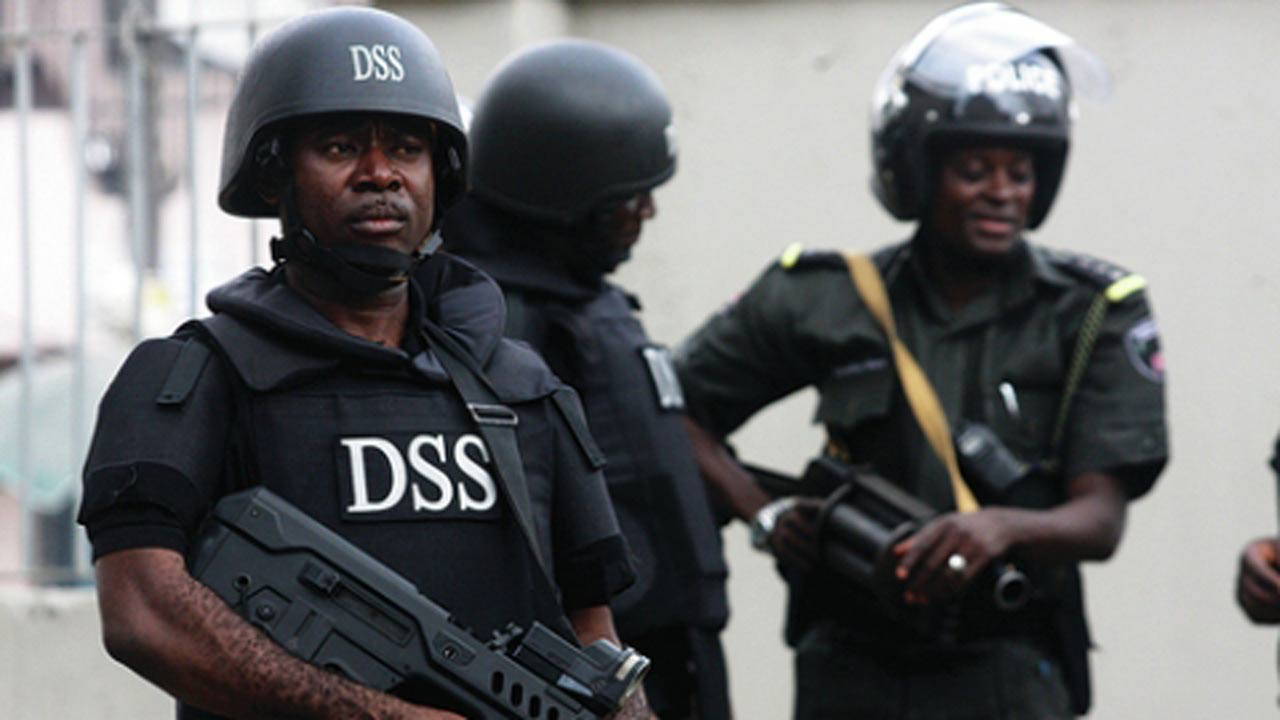
A Department of State Services (DSS) witness, identified in court as SSD, told Justice Emeka Nwite on Wednesday that the explosive device used in the attack shattered both her legs, blinded her left eye, and permanently confined her to a wheelchair.

“I lost both my legs above the knee and my left eye,” the witness— a trained nurse and housewife—told the court while testifying in the terrorism trial of five men accused of masterminding the massacre. “I will be on a wheelchair for the rest of my life.”

Inside the Attack

SSD recounted how gunmen stormed the church during Sunday Mass, firing sporadically and sending worshippers scrambling for safety. She said she ran toward the choir gallery, hoping to escape the violence.

Instead, she found herself trapped in a dense crowd.

“They threw an explosive device into the gallery,” she said, describing what prosecutors believe was dynamite. “My legs were destroyed. My eye was shattered.”

She spent five months in hospital, undergoing multiple surgeries. Forty-one parishioners were killed in the attack, while more than 100 others suffered injuries ranging from gunshot wounds to amputations.

The five defendants—Idris Abdulmalik Omeiza, Al Qasim Idris, Jamiu Abdulmalik, Abdulhaleem Idris, and Momoh Otuho Abubakar—have all pleaded not guilty to a nine-count terrorism charge brought by the DSS.

A Husband’s Account: ‘I Signed for the Amputation’

After SSD’s testimony, prosecutors called another witness, SSE, her husband and a civil servant based in Owo. His account added a second layer of devastation to the narrative.

“I signed at the hospital for the amputation of my wife’s two legs,” he told the court.

He said his mother also sustained serious injuries in the attack, while the family’s hopes for post-trauma support have since faded.

According to SSE, the Ondo State Government initially promised his wife prosthetic legs but failed to deliver a functional pair before the end of its tenure.

“The current government is not doing anything about her,” he said. “I have called the Commissioner for Health several times. Nothing has been done.”

Both witnesses’ statements were admitted into evidence.

More Survivors, More Evidence

Earlier proceedings also heard testimony from additional witnesses, identified as SSB and SSC, who described how the attackers locked the church doors, fired into the congregation, and detonated explosives multiple times.

One female witness told the court she narrowly escaped death after a dynamite charge was placed near her head. She moved just in time, but the blast shattered her leg. She later displayed the injured limb in court with the judge’s permission, explaining it had undergone four surgeries and still contains metal implants.

Another witness confirmed that three separate explosions rocked the church and that bodies were counted after the attackers fled.

DSS prosecutors tendered the witnesses’ extrajudicial statements, which were admitted as exhibits without objection from the defence.

Trial Continues

The DSS says it plans to call seven more witnesses as the trial progresses. Justice Nwite has adjourned proceedings to January 14, with additional dates in February set for continuation.

The case remains one of Nigeria’s most closely watched terrorism trials, not only for its legal implications but for the unresolved questions it raises about justice, victim support, and accountability—long after the headlines have faded.

On whether a court can rewrite an agreement voluntarily entered into by parties

By M.O.Idam, Esq.

In Nigeria, most people pay little or no attention to the details of contract documents when transacting with other parties. They often skim through and simply proceed to signing (execution), without paying attention or seeking an explanation to the terms and clauses inserted in the contract document.

Sadly, several economic rights have been lost as a result of poor or lack of attention to terms and clauses contained in contractual documents by contracting parties, and the courts have rightly not intervened, as they are lawfully bound to faithfully construe the letters in an agreement and righteously give effect to the meaning expressed in the agreement. Provided that such an agreement is voluntarily entered into by parties, despite how lopsided or manifestly disadvantageous to a party, the courts cannot change it to suit anyone.

The courts cannot, during trial, rewrite, correct, alter, vary or even reprimand a cheater party for drafting a contractual term solely favourable to him. As long as such a contract is reduced in writing and executed by the parties, the Agreement must be kept or “Agreement is Agreement” (Pacta Sunt Servanda).

In ADETOUN OLADEJI (NIG.) LTD. vs. NIGERIA BREWERIES PLC (2007) 1 SCNJ 375, it was held that where there is a contract regulating any arrangement between the parties, the main duty of the Court is to give effect to the wishes of the parties as expressed in the contract documented. Similarly, in OGUNDEPO vs. OLUMESAN (2011) 2 SC (Pt. 1) 39; it is not the business of the Court to rewrite parties’ contract for them, but to interpret the contract as contained in the instrument made by the parties on their free volition.

Nevertheless, no court will enforce a contract whose subject is illegal, such contract is as follows:

Contract to Commit a Crime
Any agreement to commit an unlawful act, such as stealing, drug trafficking, or fraud, is illegal and unenforceable.

Example: A contract between a cyber fraudster (“Yahoo boy”) and his cashier cannot be enforced by any court.

Contracts Against Public Policy
Agreements that seek to harm society or violate accepted moral or legal standards are void.
Example: Any agreement that undermines public order or governance, such as the one allegedly referenced in the Wike vs. Fubara matter, remains unenforceable.

Contracts to Defraud or Deceive
Any contract entered into with the intention to deceive an individual or the public is illegal and cannot be enforced.

Contracts with Immoral Purpose
Agreements connected to immoral activities such as prostitution, or sharing proceeds therefrom (whether as a pimp or hotel operator), are illegal and unenforceable.
Contracts Contrary to Statutory Provisions: On whether a court can rewrite an agreement voluntarily entered into by parties?
Any contract that violates an existing law or statutory provision is void and unenforceable.

Gambling or Wagering Contracts
Except where expressly permitted by statute, contracts based solely on betting or gambling are unenforceable.

The attitude of the Courts to such a contract is reflected in the Judgment of Dongbam-Memsen, J.C.A., in Dr Shirish Tanksale v. Rubee Medical Centre Limited (2013) LPELR-21445(CA). In that case, His lordship, referring to the case of Nnadozie v. Mbabwu (2008) ALL FWLR (Pt. 405) 1613 at 1639, held thus –

“A contract or an agreement rooted in illegality must not be pleaded and if pleaded, it cannot be enforced by any court of law. An agreement is illegal if the consideration or the promise involves doing something illegal or contrary to public policy.

In the instant case, the plaintiff’s evidence of proclamation of ownership of the land by an oracle was wrong in law and the trial court erred to have given it any legal recognition which was rightly set aside on appeal” See also Onyiuke v. Okeke (1976) 10 NSCC 146, Onwuchekwa v. N.D.I.C (2002) FWLR (Pt. 101) 1615. (2002) 5 NWLR (Pt. 760) 371, Olaniyan v. Aroyechun (1991) 5 NWLR (Pt.194) 652 @ 656. Enigwe v. Akaigwe (1992) 2 NWLR (Pt. 225) 505 @ 535.”

CONCLUSION:

Where a party is merely handed a contract document to sign, it is important that such a party engages a legal practitioner to study and advise him accordingly on the document before executing same.

M.O.Idam

[email protected]

VAT on Survival: Nigerians to pay extra 7.5% tax on mobile banking from January 19

As tax disputes continue to swirl—and with Nigerians already paying a 7.5 percent Value Added Tax (VAT) on goods and services—the federal government is extending the levy to everyday banking, introducing an additional 7.5 percent VAT on selected services, such as mobile transfers and USSD transactions, effective January 19, 2026.

The move effectively expands the VAT regime deeper into everyday financial activity, placing extra costs on millions who rely on low-cost digital banking to navigate an economy battered by inflation, fuel price hikes and stagnant wages. While VAT is not new in Nigeria, critics note that this latest enforcement represents another layer of taxation, this time on routine banking transactions that have become essential for daily survival.

The new charge comes as Nigerians contend with rising food prices, escalating transport costs and multiple levies across essential services, intensifying what many describe as an unrelenting squeeze on disposable income. For low-income earners, artisans, and small traders—many of whom heavily depend on USSD and mobile banking due to limited access to smartphones or reliable internet—the policy raises the cost of basic economic participation.

A customer notice issued Wednesday afternoon by digital bank Moniepoint confirmed the impending implementation of the VAT regime on certain electronic banking charges.

“We would like to inform you of an upcoming government-endorsed regulatory change regarding Value Added Tax (VAT),” the notice stated.

“From Monday, 19 January 2026, we are required to collect a 7.5% VAT, to be remitted to the Nigerian Revenue Service (NRS), formerly known as the Federal Inland Revenue Service.”

According to the notice, the tax will apply to “certain banking services,” including mobile banking fees for transfers, USSD transaction fees and card issuance fees.

However, Moniepoint clarified that not all banking-related transactions would attract the tax, noting that interest on deposits and savings remains VAT-exempt.

The company was careful to distance itself from responsibility for the additional deductions, stressing that the charge does not represent a price increase by the platform.

“This is not a price increase by Moniepoint,” the notice read. “We are required to collect and remit VAT to the Nigerian Revenue Service.”

Moniepoint added that the directive applies across the financial sector, including commercial banks, microfinance banks and electronic money transfer operators, all of which are expected to comply from January 19, 2026.

The firm further emphasised that the VAT would apply only to service charges, not to interest, and assured customers that deductions would be transparently displayed.

“VAT charges will appear separately on your transaction reports and statements,” the notice said.

The expanded VAT enforcement is expected to affect millions of Nigerians who depend daily on mobile banking platforms and USSD services to send money, pay bills and conduct small-scale business.

Critics argue the policy highlights a widening disconnect between fiscal policy and social reality. While the government frames the measure as a revenue-boosting initiative, many citizens view it as yet another burden shifted onto the most financially vulnerable—deepening concerns that Nigeria’s economic reforms are being funded from the bottom up, even as calls grow louder for visible cuts to government waste and elite spending.

Vindication for Osun CJ as NJC dismisses corruption claims, reverses Appeal Court Justice’s suspension

Nigeria’s top judicial watchdog, the National Judicial Council (NJC), has cleared the Chief Judge of Osun State, Justice Oyebola Ojo, of all allegations of financial impropriety and judicial misconduct, delivering a decisive rebuke to claims that had fuelled a prolonged crisis within the state’s judiciary.

The decision was reached at the Council’s 110th meeting, held on Wednesday under the chairmanship of the Chief Justice of Nigeria (CJN), Justice Kudirat Kekere-Ekun.

In a statement issued after the meeting, the NJC’s Deputy Director of Information, Kemi Babalola-Ogedengbe, said the Council unanimously adopted the findings of a three-member investigation committee set up to examine multiple petitions against Justice Ojo.

Petitions Dismissed After Probe

The petitions were filed by Eludire Kunle, a staff member of the Osun State Customary Court of Appeal and chairman of the Judiciary Staff Union of Nigeria (JUSUN) in the state, alongside three others. Additional complaints were submitted by the Speaker of the Osun State House of Assembly, Adewale Egbediran; Temitope Fasina; and a joint petition by the Osun State Attorney-General, Oluwole Bada, with four purported members of the State Judicial Service Commission.

Justice Ojo was accused of unilaterally suspending judiciary staff, engaging in selective promotions, halting training programmes, disobeying court orders, and misappropriating public funds. Specific allegations included the diversion of ₦7.4 million earmarked for judges’ and magistrates’ retreats, ₦5 million in robe allowances, and proceeds from e-affidavit services.

After reviewing documentary and oral evidence, the investigation committee found no proof of wrongdoing. It concluded that the suspension of judiciary staff followed due process and was based on recommendations from the appropriate disciplinary committee. The panel further affirmed that staff training and promotions fell within the statutory powers of the State Judicial Service Commission.

Crucially, the committee found no evidence that Justice Ojo misappropriated robe allowances, retreat funds, or e-affidavit revenues, nor that she personally benefited from any financial transactions.

On the basis of these findings, the committee recommended the outright dismissal of all petitions—a recommendation the NJC fully upheld.

A Judiciary in Turmoil

The NJC’s decision comes against the backdrop of a judiciary in Osun State that has been largely paralysed for over a year due to strike actions by JUSUN, driven by unresolved grievances and deep institutional rifts.

Read Also: NJC recommends Justice Oyewole for Supreme Court, clears judges, reverses suspension in sweeping decisions

The crisis was further compounded by political intervention. In November 2023, Governor Ademola Adeleke suspended Justice Ojo as Chief Judge following allegations of misconduct, abuse of office and corruption raised by the Osun State House of Assembly. He subsequently named Justice David Afolabi of the High Court as Acting Chief Judge.

That move, however, triggered widespread backlash. Justice Afolabi declined the appointment, citing the governor’s failure to involve the NJC, as required by the Nigerian Constitution and established judicial precedents. He formally communicated his rejection to the Council.

At the time, the NJC—then chaired by former CJN Olukayode Ariwoola—directed the state government to maintain the status quo, stressing that only the Council had the constitutional authority to discipline judicial officers and recommend sanctions to a governor.

The Nigerian Bar Association (NBA) also condemned Justice Ojo’s suspension, describing it as unlawful, a violation of the separation of powers, and a disregard for subsisting court orders.

Other NJC Decisions

Beyond the Osun case, the NJC also dismissed a petition against Justice Gentu Timi of the Delta State High Court after the complainant withdrew the case following the resolution of a chieftaincy dispute.

In a significant reversal, the Council set aside the one-year suspension without pay earlier imposed on Justice Jane Inyang of the Court of Appeal, Uyo Division. Justice Inyang had been sanctioned over alleged improper ex parte orders granted while she served at the Federal High Court. The NJC ruled that the petition was filed outside the statutory six-month window and related to a matter already under appeal.

Overall, the Council reviewed 39 petitions through its Preliminary Complaints Assessment Committees, dismissing 26 as lacking merit, recommending seven for further investigation, and issuing cautions to two judicial officers over procedural lapses, including delayed judgments and inappropriate language.

Reiterating its reform stance, the NJC warned judges against the indiscriminate grant of ex parte orders and urged Heads of Court to exercise restraint when assigning complex cases to newly appointed judges.

More pain for cash-strapped Nigerians as VAT hits 7.5% from Jan. 19

Amid mounting tax controversies—and as household budgets are already stretched to breaking point—Nigerians will begin paying a 7.5 percent Value Added Tax (VAT) on selected banking services, including mobile transfers and USSD transactions, from January 19, 2026, following a new government-backed regulatory directive. The move expands Nigeria’s tax net deeper into everyday financial activity, hitting millions who rely on low-cost digital banking to survive rising living costs.

The new charge comes at a time when Nigerians are grappling with soaring inflation, higher fuel prices, stagnant wages and multiple levies across essential services, intensifying what many describe as a relentless squeeze on disposable income. For low-income earners, artisans and small traders—many of whom depend on USSD and mobile banking due to limited access to smartphones or stable internet—the tax effectively raises the cost of basic economic participation.

A notice sent to customers on Wednesday afternoon by Moniepoint informed users of the impending implementation of the VAT regime on certain electronic banking charges.

According to the notice, the development is tied to a directive from tax authorities mandating financial institutions to begin VAT collection and remittance.

“We would like to inform you of an upcoming government-endorsed regulatory change regarding Value Added Tax (VAT),” the notice stated.

It added, “From Monday, 19 January 2026, we are required to collect a 7.5% VAT, to be remitted to the Nigerian Revenue Service (NRS) (formerly known as the Federal Inland Revenue Service).”

vat

The company disclosed that the tax will apply to “certain banking services,” including “electronic banking charges such as mobile banking fees (transfers), USSD transaction fees and card issuance fee.”

However, Moniepoint clarified that not all banking-related transactions would attract the tax, noting that “services that DO NOT attract VAT include: interest on deposits and savings.”

The firm also distanced itself from responsibility for the new charges, stressing that “this is not a price increase by Moniepoint.”

“Moniepoint is required to collect and remit VAT to the Nigerian Revenue Service (NRS),” the notice read.

It further explained that the tax authority had issued a clear timeline for compliance across the financial sector.

“The NRS has communicated a deadline for 19th January 2026 for all financial institutions (commercial banks, microfinance banks and electronic money transfer operators) to start collecting and remitting VAT,” the statement said.

Moniepoint also emphasised that the VAT would be limited strictly to service charges, stating that “VAT applies only to banking or service fees, not interest.”

Customers were also informed that the deductions would be clearly itemised, as “VAT charge will appear separately on your transaction reports and statements.”

The new VAT enforcement is expected to affect millions of Nigerians who rely daily on mobile banking platforms and USSD services for financial transactions.

Critics argue that the policy underscores a growing disconnect between fiscal policy and social reality. While the government frames the VAT expansion as a revenue-boosting measure, citizens see it as yet another burden shifted onto the most financially vulnerable, reinforcing concerns that economic reforms are being financed from the bottom up—without visible efforts to cut waste or ease elite spending at the top.

NJC recommends Justice Oyewole for Supreme Court, clears judges, reverses suspension in sweeping decisions

  • View Full List

Nigeria’s apex judicial body, the National Judicial Council (NJC), has recommended Hon. Justice Joseph Olubunmi Kayode Oyewole, JCA, for elevation to the Supreme Court, marking one of the most consequential outcomes of its 110th meeting as the Council also cleared senior judges of misconduct, reversed a controversial suspension, and approved dozens of new judicial appointments nationwide.

The decisions were taken at the Council’s meeting held on January 13, 2026, under the chairmanship of the Chief Justice of Nigeria (CJN), Justice Kudirat Motonmori Olatokunbo Kekere-Ekun, and formally announced on Wednesday by the NJC’s Deputy Director of Information, Kemi Babalola-Ogedengbe.

Supreme Court Slot Filled

Justice Oyewole, the Presiding Justice of the Court of Appeal, Enugu Division, was the sole nominee recommended for appointment to the Supreme Court of Nigeria. His elevation is set to fill the South-West vacancy created by the retirement of former Chief Justice of Nigeria, Justice Olukayode Ariwoola.

Born on May 13, 1965, in Ila-Orangun, Osun State, Justice Oyewole’s nomination followed what the NJC described as a rigorous screening process involving petitions review, public complaints consideration and interviews conducted in line with the 2023 Revised NJC Guidelines.

Judicial Expansion Across States

Beyond the apex court recommendation, the NJC approved the appointment of 27 judges to State High Courts across seven states—Borno, Niger, Benue, Taraba, Plateau, Delta and Ekiti—in a move aimed at easing case backlogs and strengthening judicial capacity.

A breakdown shows that Borno and Plateau States will receive six judges each; Ekiti will get five; Niger and Delta four each; while Benue and Taraba will receive one judge apiece.

The Council also recommended the appointment of six Kadis to the Sharia Courts of Appeal in Niger and Taraba States, as well as two judges to the Customary Court of Appeal in Delta State.

Reversals, Vindications and Warnings

In a major vindication, the NJC cleared the Chief Judge of Osun State, Justice Oyebola Adepele Ojo, of all allegations bordering on financial recklessness, diversion of funds and judicial misconduct. The Council upheld the findings of a three-member investigation committee, dismissing all petitions against him for lack of evidence.

Similarly, a petition against Delta State High Court judge, Justice Gentu E. Timi, arising from a chieftaincy dispute, was dismissed after the complainant formally withdrew the case following the resolution of the dispute.

In a dramatic reversal, the Council set aside the one-year suspension without pay earlier imposed on Justice Jane E. Inyang of the Court of Appeal, Uyo Division, ruling that the petition was filed outside the constitutionally permitted six-month window and concerned a matter already under appeal at the time.

Overall, the NJC reviewed 39 petitions against judicial officers, dismissing 26 as lacking merit, ordering further investigation into seven, and issuing cautions to two judges—one of whom was reprimanded for delivering judgment outside the constitutionally prescribed 90-day period and for using uncouth language in responding to a petition.

Imo Judiciary Under Scrutiny

The Council extended the tenure of the Acting Chief Judge of Imo State, Justice I. O. Agugua, by three months, while urging Governor Hope Uzodimma to urgently constitute the State Judicial Service Commission to facilitate the appointment of a substantive Chief Judge.

Warning that prolonged delays could undermine judicial independence and stability, the NJC stressed the need for immediate action to safeguard the administration of justice in the state.

The Council also constituted a committee to review requests submitted by nine dismissed judges of the Imo State Judiciary, but declined to entertain a fresh petition against the Acting Chief Judge, noting that the issues raised had already been exhaustively considered.

Administrative Decisions

On the administrative front, the NJC approved the voluntary retirement of two senior judicial officers, including the Presiding Justice of the Court of Appeal, Asaba Division, Justice Obientobara Owupele Daniel-Kalio. It also announced, with regret, the death of two judicial officers between November and December 2025, extending condolences to their families and the legal community.

Reiterating its reform stance, the Council warned judges against the indiscriminate grant of ex parte orders and advised Heads of Court to exercise restraint in assigning complex cases to newly appointed judges.

List of Recommended Candidates

SUPREME COURT

1.      Hon. Justice Joseph Olubunmi Kayode Oyewole

SIX HIGH COURT JUDGES FOR BORNO STATE

1.      Mustapha, Mallam Babagana

2.      Mustapha, Hadiza Grema

3.      James, Peter Bwala

4.      Zannah, Tijjani Babakura

5.      Alkali, Alhaji Umar

6.      Dunoma, Yahaya Alhaji

SIX HIGH COURT JUDGES FOR PLATEAU STATE

1.      Maikai, Andrawus

2.      Kparbong, Tongret Nanman

3.      Nkwap, Diane Ngummai

4.      Mantu, John Ishaku

5.      Bature, Gavou Musa

6.      Mallan, Kingsley Mangai

FIVE HIGH COURT JUDGES FOR EKITI STATE

1.      Adegoke, Olanike Caroline

2.      Bamise, Julius Sunday Bamidele

3.      Ajibare, Julius

4.      Akinyede, Stephen Rotimi

5.      Anoma, Adefunke Helen

FOUR HIGH COURT JUDGES FOR NIGER STATE

1.      Abubakar, Adamu

2.      Ahmed, Bala Ndajiwo

3.      Gambo, Sa’adatu Abubakar

4.      Wushishi, Sulaiman Buhari

FOUR HIGH COURT JUDGES FOR DELTA STATE

1.      Otite, Jonah Akporuaro

2.      Sam-Oligida, Jereoma

3.      Ukuli, Boeye Irene

4.      Adamidenyo, Otome Benjamin

ONE HIGH COURT JUDGE FOR TARABA STATE

1.      Babagari, Mansura Mohammed

THREE KADIS FOR SHARIA COURT OF APPEAL, NIGER STATE

1.      Aboki, Usman Abdulrahman

2.      Mohammed, Ya’aba

3.      Muhammad, Nasir Ibrahim

TWO KADIS FOR SHARIA COURT OF APPEAL, TARABA STATE

1.      Yakubu, Muhammad

2.       Aliyu, Yahaya Abubakar

ONE KADI FOR SHARIA COURT OF APPEAL, KATSINA STATE

1.      Mutawakkil, Mustapha Salis

TWO JUDGES FOR CUSTOMARY COURT OF APPEAL, DELTA STATE

1.      Ojeikere, Bridget Onome

2.      Okah, Stella Ovuorieroro

African Bar Association raises alarm over U.S. military operation in Nigeria

The African Bar Association (AfBA) has expressed deep concern over a U.S. military operation carried out in Nigeria on Christmas Day, December 25, 2025, warning that the action raises serious legal, sovereignty and geopolitical questions under international law.

In a statement dated January 2, 2026, the pan-African legal body said it was alerted to the operation, reportedly conducted by U.S. Africa Command (AFRICOM) against ISIS-linked terrorist forces in Sokoto State, and cautioned that counterterrorism efforts must not erode state sovereignty or open the door to the militarisation of Africa.

While acknowledging the obligation of states to protect their citizens, AfBA, in a statement signed by its President, High Chief Ibrahim Eddy Mark and Secretary General, Dr Prudence Acirokop, warned that such military actions must not breach the United Nations Charter, nor “metastasise into tacit recolonisation” or serve foreign ideological, religious, economic or political interests.

Conflicting Accounts from Washington and Abuja

Central to AfBA’s concerns are conflicting public explanations offered by the United States and Nigeria regarding the purpose and character of the operation.

U.S. President Donald Trump, speaking via his Truth Social platform, said he personally authorised the strike to “obliterate militants committing genocide against Christians in Nigeria,” adding that further operations would follow if attacks continued.

Nigeria’s government, however, struck a different tone. In a public statement, the Minister of Foreign Affairs said the operation—supported by Nigeria through the provision of operational intelligence—was not based on religious considerations, but aimed at eliminating terrorist threats in line with Nigeria’s security policy. The minister stressed that terrorism, whether directed at Christians, Muslims or other communities, remains an affront to Nigeria’s values and international peace.

AfBA said the divergent narratives raise urgent questions about command authority, operational control and intent in a sovereign state.

Legal and Sovereignty Questions

According to the association, President Trump’s framing of the operation as a religiously motivated intervention was particularly troubling. AfBA argued that the language used appeared tailored to satisfy the ideological objectives of a domestic political base rather than the collective security needs of all Nigerians.

The legal body emphasised that terrorist violence in Nigeria is complex and multi-dimensional, with criminal networks operating across national and international borders, and cannot be reduced to a single religious narrative.

AfBA reaffirmed its condemnation of terrorism in Nigeria, across Africa and globally, and said it welcomes legitimate international cooperation to defeat terrorist threats—provided such efforts protect civilians without discrimination and comply with international law.

However, the association said the U.S. operation did not appear to fall within the limited exceptions under international law that permit the use of force in another state, including UN Security Council authorization, self-defence or collective self-defence under Article 51, or Chapter VII enforcement actions.

African Charter and AFRICOM Concerns

AfBA further warned that the justification offered by the United States conflicts with the African Charter on Human and Peoples’ Rights, which explicitly condemns colonialism, neo-colonialism, aggressive foreign military bases and discrimination based on religion or other grounds.

The association called on Nigeria to clarify allegations that the operation was launched from AFRICOM facilities in the Gulf of Guinea, noting that such arrangements could contradict Africa’s longstanding opposition to permanent foreign military bases on the continent.

While acknowledging Nigeria’s statement that it consented to the operation, AfBA said consent alone does not resolve the issue. It questioned why Nigeria, having granted consent, did not retain operational command and control, warning that repeated foreign-led operations could evolve into a permanent military presence in Nigeria, the Gulf of Guinea, the Sahel and wider Africa.

Warning Against Militarisation of Africa

AfBA urged the Nigerian government to urgently limit the scope of the operation and mitigate its broader consequences, stressing the need to respect Nigeria’s constitutional order and international, regional and sub-regional treaty obligations.

The association also highlighted what it described as deeper structural drivers of terrorism in Africa, including colonial and neo-colonial economic interests, illicit arms flows, money laundering and transnational networks exploiting instability to dominate mineral resources and maritime routes.

Rather than expanded military interventions, AfBA called on Nigeria, the United States and Western countries to intensify cooperation through international treaties and bilateral frameworks aimed at cutting off terrorist financing, weapons proliferation and logistical support.

A Broader Test for Sovereignty

AfBA’s statement positions the Christmas Day operation as more than a counterterrorism action, framing it as a test case for African sovereignty, international law and the future balance between security cooperation and foreign military involvement on the continent.

As the debate continues, the association said clarity, transparency and adherence to international legal norms are essential to ensuring that the fight against terrorism does not undermine the very principles it claims to defend.

Global South alarmed as African Bar Association condemns U.S. Military action in Venezuela

The African Bar Association (AfBA) has issued a forceful rebuke of recent U.S. military actions targeting the Bolivarian Republic of Venezuela—including the capture and removal of President Nicolás Maduro and his wife, Cilia Flores—calling the episode a blatant breach of international law and national sovereignty.

The AfBA’s statement signed by its President, High Chief Ibrahim Eddy Mark and Secretary General, Dr. Prudence Acirokop frames the operation not as a legitimate law-enforcement action but as an act of aggression that undermines the core principles of the post-World War IIinternational order, particularly Articles 1 and 2 of the United Nations Charter, which require states to refrain from the threat or use of force against another state’s territorial integrity or political independence. (TIME)

According to the association, the alleged “abduction” of President Maduro signals a dangerous shift in U.S. foreign policy toward a paradigm of might over right—a turn that threatens global peace and sets a precedent for military intervention without United Nations authorisation. (Chatham House)

A Broader Pattern, AfBA Says

In its release, AfBA expresses alarm that this intervention fits a pattern of what it describes as persistent U.S. repudiation of the international legal order, self-determination and peaceful coexistence among nations. That characterisation echoes responses from other global actors: African multilateral bodies and state governments have similarly called for respect for Venezuelan sovereignty and the peaceful settlement of disputes following the U.S. military strike that resulted in Maduro’s capture. (Anadolu Ajansı)

Multiple African governments have issued statements urging adherence to the principles of territorial integrity and non-interference, reiterating that no nation should enforce its domestic laws on another state’s soil without consent or a UN mandate. (IOL)

Legal and Geopolitical Faultlines

The controversy centres on the nature and legality of the U.S. operation, which was announced by President Donald Trump as a law-enforcement mission targeting alleged “narco-terrorism” but executed with military precision and bombardment that left Venezuelan military personnel and civilians dead. Maduro and Flores have since appeared in a U.S. court, pleading not guilty to drug-trafficking charges; Maduro himself has described his removal as a kidnapping. (TIME)

International legal experts and numerous states have challenged Washington’s justification, arguing that without a UN Security Council resolution, the use of force violates the UN Charter and threatens the foundations of a rules-based international system. (Al Jazeera)

Solidarity and Outcry

AfBA’s condemnation situates Africa within a broad chorus of global South voices and legal bodies that see the Venezuelan intervention as a bellwether for eroding norms on sovereignty and self-determination. The association underscores its solidarity with the Venezuelan people and urges the United Nations to take immediate steps to halt the aggression and hold the United States accountable.

“Our collective security is imperilled when powerful states act with impunity,” the AfBA statement asserts, stressing that international peace and justice must prevail over unilateral military interventions.

Key Developments You Should Know

  • U.S. military operation in Venezuela (Operation Absolute Resolve) resulted in the capture and removal of President Maduro and his wife on Jan. 3, drawing widespread global criticism. (Wikipedia)
  • Maduro and Flores have pleaded not guilty in a U.S. court to longstanding drug-related indictments. (Wikipedia)
  • African regional bodies and international legal experts have warned that the operation threatens norms of sovereignty and international law. (Anadolu Ajansı)
  • UN Charter violations debated at the Security Council, with several states calling for respect for territorial integrity. (Chatham House)

Nigeria: When the state shakes hands with the gun

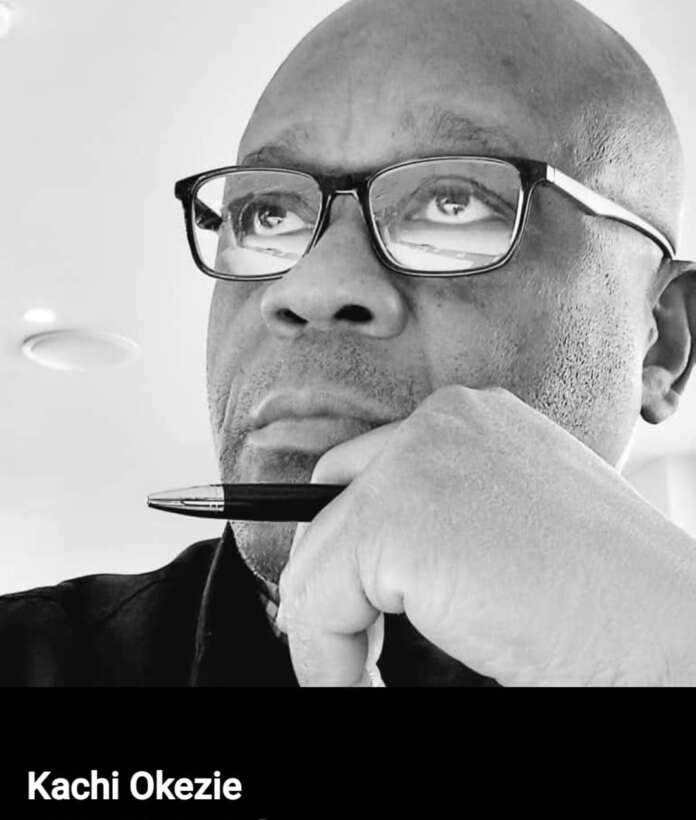
By Kachi Okezie, Esq.

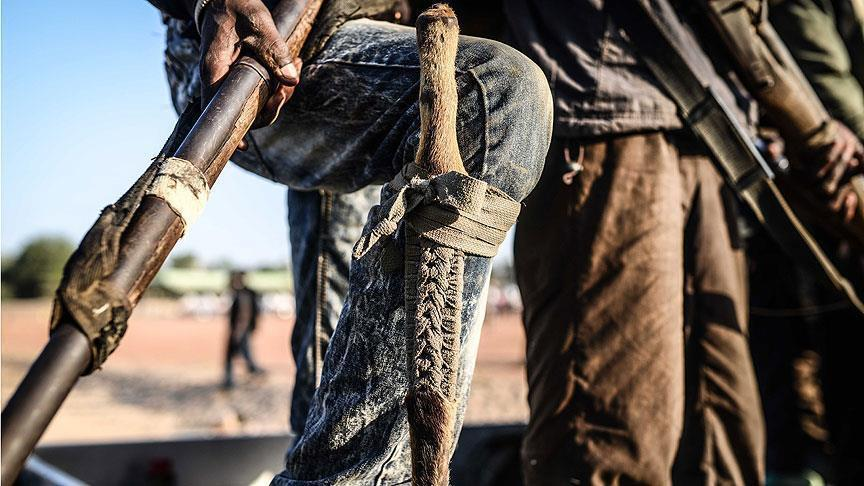
Nigeria sent itself a dangerous message the day Katsina State quietly opened the prison gates for 70 suspected bandits. Draped in the language of peace, the move landed instead like a slap on the face of justice. At a time when the country is bleeding from relentless violence, forgiving men accused of terror without trial feels less like reconciliation and more like surrender.

The contradiction is stark. President Bola Tinubu has formally designated banditry as terrorism, a declaration meant to signal resolve at home and seriousness abroad. Yet Katsina’s action cuts directly against that posture, creating a dissonance that criminals are quick to exploit. You cannot call a crime terrorism in Abuja and treat it as a negotiable inconvenience in Katsina. That confusion is not policy. It is peril.

The state government insists it acted within the law, citing provisions of its Administration of Criminal Justice Law. But laws are not talismans that magically absolve moral and constitutional responsibility. Releasing suspects accused of mass murder, kidnapping and village raids without a transparent judicial process raises a fundamental question: where does the victim fit into this peace deal? Justice delayed is painful; justice discarded is incendiary.

What message does this send to families who buried loved ones, to communities razed in midnight attacks, to children traumatized by years in captivity? What does it say to soldiers and police officers risking their lives in forests and borderlands, when those they hunt are welcomed back into society with promises and handshakes? The signal is unmistakable: violence pays, persistence is rewarded, and the state can be worn down.

Supporters of the deal point to results—over 1,000 abducted persons allegedly freed through negotiations with so-called repentant bandits. No humane society can dismiss such relief lightly. Moreso when those kidnaps were arguably the result of the government’s own failure to fulfil its Constitutional duty of securing the land and protecting its people. But desperation should never be mistaken for strategy. Deals extracted under the shadow of the gun are rarely born of remorse; they are transactions, temporary ceasefires in a longer war. History shows that today’s “repentant bandit” often returns tomorrow with better weapons and higher demands.

Security experts warn that this approach hollows out deterrence and corrodes public trust. When accountability disappears, criminality flourishes. Banditry in Nigeria did not emerge in a vacuum. It feeds on weak governance, rural poverty, environmental stress and institutional decay. But acknowledging root causes does not require absolving atrocities. Rehabilitation without truth, justice and consequences is not peacebuilding. It is appeasement.

The federal government’s oft-repeated claim of “no negotiations with terrorists” now rings hollow. If states can cut their own deals while Abuja thunders about hard lines, Nigeria begins to look incoherent, even unserious. The House of Representatives has already warned that negotiating with bandits legitimises criminal enterprise and fuels more kidnappings. Retired military officers have gone further, calling it an open display of weakness that erodes the rule of law.

Even plea bargaining, defended by the Attorney General as a pragmatic tool for managing caseloads, becomes deeply problematic when applied to mass violence. Efficiency is not a virtue when it blurs the line between justice and indulgence. Terror is not a traffic offence to be settled quietly for convenience.

The media, too, must shoulder responsibility. Sanitising language dulls urgency and distorts reality. Men (and women, if any) who terrorise villages, abduct schoolchildren and challenge the authority of the state are not “armed groups” or “unknown gunmen.” They are terrorists, and naming them honestly matters.

Nigeria stands at a crossroads. It can pursue peace anchored in law, accountability and coherent national strategy, or it can continue this patchwork of deals that trade long-term security for short-term calm. The choice should not be difficult. A state that negotiates from fear teaches its enemies patience.

One truth remains unavoidable: you cannot defeat terror by accommodating it. When the state shakes hands with the gun, it risks losing its grip on the future.

The views expressed by contributors are strictly personal and not of Law & Society Magazine.

TIPS