Home Blog Page 1167

ASUU uncovers multi-billion naira commodity market, other properties owned by AGF Idris, seeks explanation

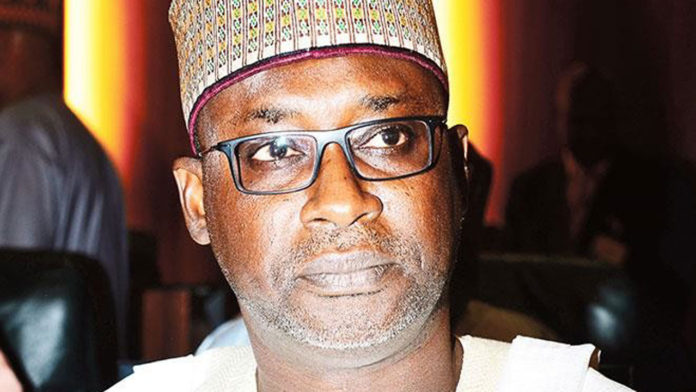
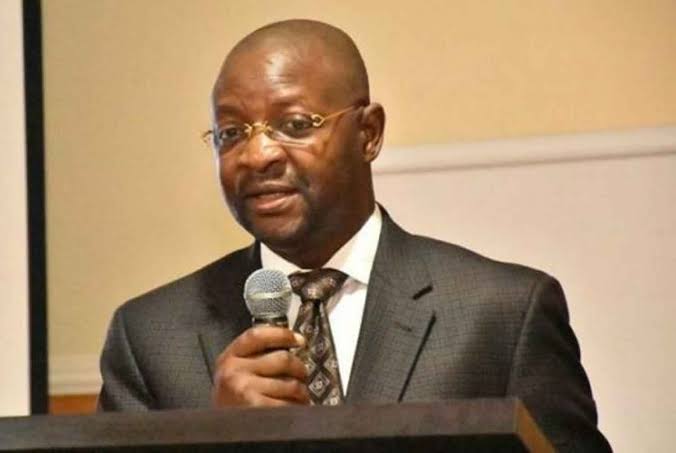
Accountant-General of the Federation, Ahmed Idris

The Academic Staff Union of Universities, ASUU, has asked the Accountant-General of the Federation, AGF, Ahmed Idris, to explain how he acquired some multi-billion naira properties in Kano State.

The ASUU’s Bauchi zone coordinator, Prof. Lawan Abubakar, in a statement on Wednesday, sought the AGF’s explanation on how he bought Sokoto Hotel in Kano at the sum of N500million and ordered for its immediate demolition to build a multi-billion naira shopping mall.

The union confirmed that the project is ongoing.

The university lecturers also asked the AGF to account for the money he used in acquiring multi-billion naira Gezawa Commodity Market and Exchange.

The ASUU said: “We would want Gentlemen of the Press to assist us in the conduct of two Investigations.

“The first is to uncover who bought the version of the Sokoto Hotel in Kano with a swooping sum of N500m, cash down, and demolished it the next day for an on-going development of a multi-billion Naira Shopping Mall.

“How and where did he or she get money for such investment?”

 “The second assignment is to assist uncover who is hiding to invest multi-billion Naira in the Gezawa Commodity Market and Exchange.

“How and where did he or she get money for such investment?”

On the ongoing strike, Mr Abubakar blamed the AGF and the Minister of Labour and Employment, Chris Ngige, for impeding resolution of the industrial action.

According to the union, the duo has “continued to throw spanners in the wheel of progress of the concerted efforts, aimed at amicable resolution of its disagreement with federal government.”

He also alleged that the AGF insisted on Integrated Payroll and Personnel Information System, IPPIS, in order to gain N16,000 per enrollment of each of the academic staff of universities on the salary payment platform.

“While the Minister of Labour and Employment has continued to exhibit all manners of antics and insisting that government does not have the money to responsibly educate its citizens, the AGF has continued to greedily and selfishly count on the gains of N16,000 per enrollment of each academic staff he would have made.

“Thereby insisting that ASUU members be enrolled on the only payment platform he has now, Integrated Payroll and Personnel Information System, IPPIS,” said the coordinator.

The coordinator further alleged that the union had discovered that the AGF “is assiduously working for his retirement benefits, becoming the next governor of Kano State in addition to other financial gains already mentioned.”

Mr Abubakar, therefore, warned that all the AGF’s ambition would fail if he does not assist the government to honour and actualize the promises it made to ASUU and the Nigerian university system.

He stressed that ASUU is not asking the Federal Government to give it money, rather to honour the truce reached on February 7, 2019, tagged, ASUU/FGN Memorandum of Action, bordering on finances to develop university education in Nigeria.

He, therefore, called on students, parents and general public to join forces with the union in the struggle to emancipate the country’s university education system by insisting that the government commit resources to adequately fund the system.

The AGF did not respond to DAILY NIGERIAN call and text message seeking his response on the matter.

Sanwo-Olu stopped Tunubu, Fashola, Ambode’s pensions to access loan, not out of love for Lagos, says group

Ambode and Sanwo-Olu, with Tinubu (middle)

A group styling itself as Concerned Lagosians has said the decision by Lagos State Governor, Mr. Babajide Sanwo-Olu, to stop the huge monthly pensions to three of his predecessors was more of a financial survival stunt for Lagos rather than for altruistic reasons.

It has also cautioned that civil society and other stakeholders to monitor the present the State Government to ensure it does not continue to pay these monies to the ex-Governors through the back door through nebulous tax consultancy contracts, inflated and fictitious contract awards.

In a statement titled, “The Truth behind Sanwo-Olu’s proposed cancellation of pension payments to Tinubu, Fashola and Ambode,” the group says the governor, who has received accolades for his proposal, should tell Lagosians the reasons behind the proposed cancellation instead of presenting it like an altruistic action.

Recall that days ago, while presenting budget estimates for the Lagos State government before the State House of Assembly, Sanwo-Olu announced the proposed move.

However, the Concerned Lagosians state as follows:

▪︎Ex-Governors are being paid humongous pension packages, after their tenors, by a lot of States.

▪︎The Pension Reform Act of 2004 changed Nigerian Pension system from Defined Benefits to Defined Contributions;

▪︎This means that private and public sector workers can only be paid pensions from the funds they contributed while in active pensionable work;

▪︎The salaries of Governors and their deputies are not subjected to pension deductions, their own pensions can only be fixed by the Revenue Mobilization, Allocation and Fiscal Commission (RMAFC);

▪︎Lagos State is one of the States using tax payers money to make this illegal pension payment to non-contributing ex-governors/deputies, a case of robbing Peter to pay Paul;

▪︎When Lagos State wanted to issue Bonds to raise N100billion from the Capital Market in January 2020, the Nigeria Pension Commission disqualified the Bond from accessing pension monies in custody of the PFAs;

▪︎Lagos Government had to sign an undertaking to correct the illegal pension payment provisions in its pension law before the disqualification was lifted;

▪︎Lagos was then able to borrow N100billion in January 2020 to spend on projects yet to be properly accounted for;

▪︎Justice Oluremi Oguntoyinbo of the Federal High Court, in a suit filed by SERAP in 2017, in judgement last year December ordered that the Attorney General of the federation to challenge the legality of the pension payments to ex-governors and their deputies;

▪︎The National Industrial Court in January 2020, also declared as null and void, payment of pension and gratuity to former governors and their deputies.

This is the position of the law as of now, in the absence of any Appeal Court order setting it aside;

▪︎Lagos State intends to borrow additional huge sums of money from the Capital Market again, but it must cancel the illegal payments to governors/deputies by revoking Ex Governors Pension Law in order for PENCOM to qualify its new borrowing for PFAs’ investments;

▪︎Sanwo-Olu’s decision to cancel the ex- Governors pension law is not altruistic and should not be applauded. The decision to cancel the illegal pension is by compulsion and not by choice;

▪︎Civil society and other stakeholders must monitor the present Lagos State Government to ensure it does not continue to pay these monies to the ex-Governors through the back door through nebulous tax Consultancy contracts, inflated and fictitious contract awards.

Amid strong suspicions of plans to increase taxes, FG announces reliefs, explains incremental taxes

Finance Minister, Hajia Zainab Ahmed

Nigerians are wondering what the term incremental changes mean in the Finance Bill 2020 being sent to the National Assembly, but Finance Minister, Mrs. Zainab Ahmed, says it does not mean increasing taxes, but an improvement in the tax law, stressing that the country’s value added tax (VAT) remains at 7.5 per cent.

The last time a Finance Bill was sent to the National Assembly last year, lawmakers were quick to approve, leading to a 2.5% increase in VAT, but many wonder if the incremental changes being proposed will not mean an inbuilt mechanism for upward review of taxes from time to time.

Howver, determined to cushion the socio-economic condition in the country the Federal Government is offering more tax incentives to Nigerians especially through the forthcoming 2020 Finance Bill.

Some highlights of the proposed bill include:

▪︎Reduction in duties on tractors from 35 to 10 per cent

▪︎Reduction in duties on motor vehicles for the transportation of goods from 35 to 10 per cent.

▪︎Reduction of levy on motor vehicles for the transportation of persons (cars) from 35 per cent to 5 per cent.

▪︎Exemption of small companies from payment of education tax under the Tertiary Education Trust fund (TETFUND)-companies with less than N25m turnover are eligible

▪︎50 per cent reduction in minimum tax; from 0.5 per cent to 0.25 per cent for gross turnover for financial years ending between January 1st, 2020 and December 31st, 2021.

▪︎Granting of tax relief to companies that donated to the COVID-19 relief fund under the private sector coalition (CACOVID).

Briefing State House Correspondents after the Federal Executive Council (FEC) meeting in Abuja on Wednesday, the Minister of Finance, Budget and National Planning, Mrs Zainab Ahmed said, “you recall that we did a Finance Bill in 2019, through these finance bills, what we are seeking to do is to make incremental changes to tax laws relating to customs excise as well as other fiscal laws, to support the implementation of annual budgets.”

“This is further expected to create more job opportunities in the automobile industry and stimulate economic growth,” the minister added.
 
The inclusion in the Finance Bill intended to grant tax relief to companies that donated to the COVID-19 relief fund is expected to serve as an acknowledgement and encouragement of such behavior.
 
Some of the principles underpinning the proposed fiscal and other reforms include:
 
* Make incremental changes to tax, customs, excise, fiscal and other laws to support the 2021 Budget, for instance, by empowering the Federal Inland Revenue Service to automate its collection of tax returns and information from taxpayers within, and trading with the Nigerian Customs Area;

*Providing fiscal relief for corporate taxpayers, for instance by reducing the applicable minimum tax rate for two (2) consecutive fiscal year (from 0.5% to 0.25%), reforming commencement and cessation rules for small businesses, as well as incentivizing mass transit by reviewing the duties and levies regime for the transportation sector, (particularly, targeting tractors, buses, trucks and other motor vehicles);

*Proposing measures and interventions to fund the Government’s COVID-19 Crisis Intervention Initiatives as well as introducing provisions to allow for the recovery of donations made by corporate taxpayers towards the COVID-19 Pandemic and other potential crises;

*Amending aspects of the Fiscal Responsibility Act 2007 to enhance fiscal efficiencies as well as to control the cost-to-revenue ratios of key State and Government-Owned Enterprises; and

*Amending the Public Procurement Act to implement key procurement reforms previously proposed by the National Assembly to extend he Act to the judiciary and legislature, accelerate procurement processes and increase mobilization fee threshold.  

 The Finance Act 2019, which is the template for the proposed 2020 Bill, sets five strategic objectives, which include: raising government revenue through various fiscal measures, reforming domestic tax laws to align with global best practice, promoting fiscal equity by mitigating instances of regressive taxation, supporting small business entities in line with Ease of Business Reforms and introducing tax incentives for investments in infrastructure and capital market.

The State v Audu (1972): A Travesty

Taslim O. Elias (Chief Justice of Nigeria, 1972-1975).
                             I 

The facts of this case are tragic and involve the rape of a minor. The victim-survivor was a nine-year old girl who sold fruits in Gusau, in the old North-Western State. On 23 May 1970, the victim-survivor met the accused person (a 39-year old man) while hawking mangoes. On the pretext that he wanted to purchase some mangoes, the accused person lured the victim-survivor into his living quarters and raped her. He was subsequently apprehended by the police and prosecuted in the High Court at Sokoto.

                II

At the trial, the prosecution successfully established that the accused person committed statutory rape. He was accordingly convicted on June 29, 1971. Remarkably, the trial judge, M. Muhammed, J., handed down a lenient sentence of three years’ imprisonment. Trivialising the gravity of the crime, the trial judge was so “moved by sentiment” in favour of the accused person that he also proceeded to suspend the prison sentence. The judge, unabashedly, declared as follows:

                             III

“. . . [O]n the evidence, I am more inclined to believe that the sexual intercourse in question came about more from the deep love which the accused [person] has for [the victim-survivor] and which love is unmistakably reciprocated by her. For in spite of the damage caused her by the accused through that intercourse, she did not mince her words in declaring in open court that she was prepared to marry him if she would be allowed to do so.”

                             IV

Subsequently, the Director of Public Prosecutions of the North-Western State filed an appeal against the decision of the trial judge. In its judgment on 15 June 1972, the Supreme Court faulted the trial judge for handing down a suspended sentence on the basis that this type of sentence was not contemplated by the laws of the North-Western State of Nigeria where the crime was committed. The three Supreme Court justices who heard the appeal (Taslim Elias CJN, Egbert Udo Udoma, and Atanda Fatayi-Williams JJSC) deplored the grievousness of the crime and confirmed the three-year prison sentence “without the qualification of suspension.”

                           V

However, in an ignominious volte-face, the Supreme Court then proceeded to urge the authorities to exercise the prerogative of mercy in favour of the respondent—i.e. the man convicted in the High Court—on the grounds that he had publicly indicated his intention to marry the victim-survivor.

                             VI

Taslim O. Elias (the then Chief Justice of Nigeria, who delivered the unanimous judgment of the Court) declared as follows: “The respondent, who appeared in person before us [in the Supreme Court] and to whom all the proceedings were duly interpreted by an official interpreter, expressed a desire to marry the girl, now aged eleven years, as soon as her parents would permit. We, however, consider that this fact should not affect our view of the enormity of his crime against a young girl of 9 years. We would, however, add a recommendation to mercy for consideration by the appropriate authorities provided, as he asserted before us, the respondent takes immediate steps towards marrying [the victim-survivor].”

SOURCE:—THE STATE VS HASSAN AUDU (1972) LCN/1409(SC). For the full law report, see: https://lawcarenigeria.com/the-state-vs-hassan-audu-2/

Why we demolished building at Wuse 2 – FCTA

The Federal Capital Territory Administration (FCTA) has reacted to the viral video of the demolition of a building in Wuse 2.

In the viral video, owners of shops at the plaza were lamenting as a bulldozer tried to demolish the ground-floor.

This got Nigerians on social media reacting as they lamented and criticised the authorities.

But reacting, FCTA in a Twitter thread on Tuesday said the action was taken due to the owner’s disregard for notices served by the authorities.

FCTA disclosed that the ground-floor of the building was initially approved as a car park but the developer disrupted the plans and set up shops.

The tweets read: “This action taken was due to the owner’s continuous disregard of adequate notices served on him by FCTA Dept of Development Control. The ground floor was approved as a CAR PARK but the developer converted it to shops.

“The same developer also went ahead to cut down trees planted by the government to enhance the visibility of his shops. Abatement notice for illegal removal of 6 matured trees was served at Plot 413, Lobito Crescent, Wuse 2 on July 14th, 2020 at 2.22pm

“Total sum abated is N600,000 only to be paid into the AMMC IGR account with Eco bank. All efforts made to ensure compliance were met with deaf ears, hence the action taken.”

The FCTA further advised developers to follow what is approved in their building plan to avoid any illegality.

#EndSARS: Lagos State Govt Notifies Public To Help Identify Bodies Abandoned At Mortuary In October

Members of the public have been asked by Lagos state authorities to assist in identifying some unknown bodies abandoned at the morgue. 

A notice published in newspapers on Wednesday appealed to families whose loved ones went missing between October 19 and 27 to visit the Lagos State University Teaching Hospital (LASUTH) in Ikeja for identification exercise.

The announcement was made by Lagos chief coroner Justice Mojisola Dada in the dailies. Screenshots of the public notice have set social media alight overnight, raising suspicion that the bodies might include those killed in the October 20 military attack on protesters in Lekki.

The announcement came as outrage and investigation intensified over the Nigerian Army’s role in the attack, which effectively quelled the historic #EndSARS protests. 

Peoples Gazette reported on the night of the military shooting that a major was leading an attempt to hand over nine bodies to the police in Lagos, which the police rejected and advised the military officers to take the bodies to the mortuary by themselves.

Ms. Dada did not mention how many bodies were still at the mortuary in her announcement. The Gazette noted that a spokesman for her office did not immediately return a request seeking comments Thursday morning. 

SCOOPER had meanwhile reported how a CNN investigation yesterday revealed the Nigerian Army indeed used live bullets on #EndSARS protesters at Lekki tollgate on October 20, 2020.

Although the army has repeatedly denied the allegation, saying its operatives only fired blank bullets into the air, not at the protesters, CNN said its evidence shows otherwise.

Findings of the CNN investigation also totally debunked claims by Lagos State Governor Babajide Sanwo-Olu and the Nigerian Army that no one died on the scene.

ANTI-TERRORISM WAR: Why Sambisa Forest Cannot Be Destroyed Revealed By Retired Army General

https://youtube.com/watch?v=pYkJrc-OEWQ%3Fautoplay%3D1%26controls%3D1

The investigation showed imagery of a lifeless man, identified as Victor Sunday Ibanga, who was said to have been hit by bullet on the head and died on the scene.

This directly contradicts claims by the governor that no one died at the tollgate.

The report also showed that some of the bullet shells recovered from the scene by protesters were indeed from live ammunition of firearms purchased by the Nigerian government from Serbia between 2005 and 2016, which are being used by the Army.

The CNN investigation, which has set social media abuzz since its release on Wednesday morning, saw the deployment of forensic and geo-data techniques to give clearer explanation on the shooting that has remained controversial for weeks.

While parts of the findings in the report, which contained graphic images of the injured and the dead, corroborated earlier accounts published by The Nation, others provided fresh insights from victims who narrated how soldiers pointed their guns at them and started shooting.

Explaining that it hid the full names of some interviewees and identifies of others for their safety, CNN said shooting by the Army lasted from 6:43 p.m to 8:24 p.m, adding that the videos analysed on the incident told a story of terror, chaos, and showed graphic injuries and people bleeding on the ground.

CNN said: “Sometime after midnight on October 21, Elisha Sunday Ibanga answered a phone call from his older brother’s number.

“The person on the other end of the line – a stranger – broke the news that Ibanga’s brother, Victor, had been shot dead at the Lekki tollgate in Lagos, Nigeria, where he had been peacefully protesting against police brutality earlier that night.

“’The person told me that the police took his body away,’ Ibanga, 24, told CNN.

“An eyewitness to Victor Sunday Ibanga’s death told CNN the 27-year-old entrepreneur was shot in the head during the protest.

“CNN obtained and geolocated a photograph of Victor’s body lying in a pool of blood and wrapped in the white and green of the Nigerian standard – one of the same flags gripped by fellow protesters earlier in the evening as they sang the country’s national anthem. Ibanga confirmed the photograph is of his brother.

“The body of Victor Sunday Ibanga is pictured in a pool of blood.

“The Ibangas are one of several families yet to locate the bodies of their missing loved ones – protestors at the toll gate – who dozens of eyewitnesses say were shot at, first by members of the Army and then hours later by police. Eyewitnesses told CNN they saw the Army remove a number of bodies from the scene.

“What happened on October 20, and into the early hours of October 21, at the eight-lane Lekki tollgate – a key piece of Lagos’ road network – has stunned the country.

“The protesters, who were present, have told CNN it was a ‘massacre’ with multiple people killed and dozens wounded. But local authorities have downplayed that account.

“Governor Sanwo-Olu admitted to CNN that footage showed uniformed soldiers firing on peaceful protesters, but claimed only two demonstrators were killed.

“He said there was ‘not a scratch of blood’ at the tollgate when he visited.

“The governor said no families had approached authorities saying they were missing relatives.

“In the immediate aftermath of the shooting, the Army denied any involvement, describing reports of the incident as ‘fake news’ before backtracking and saying soldiers were present but fired their weapons in the air and used blanks, not live rounds.

“CNN’s calls to the Nigerian Army have not been returned. But on November 14, during a judicial enquiry into the shooting, Army representative, Brig.-Gen. Ahmed Taiwo said: ‘There’s no way officers and men will kill their brothers and sisters. I repeat: no way. We have those who constantly seek to drive a wedge between us and between the citizens of Nigeria…’”

Also, the Defence Headquarters (DHQ) declined to comment on the CNN report on the shooting of #EndSARS protesters at the Lekki tollgate in Lagos State.

Efforts to get the military spokesmen to react to the report were unsuccessful last night.

But the The Nation reports that a senior military officer, who spoke in confidence, said the military could not have two opinions in one matter.

“There is a panel in Lagos State sitting on the matter and the military is represented and has presented a report. That report is the position of the military. We can’t have two opinions in one matter,” the military officer said.

AMCON Seizes Nicon Hotel, NICON Insurance , 10 Other Choice Properties Worth N70b From Self Acclaimed Billionaire Jimoh Ibrahim

The Asset Management Corporation of Nigeria (AMCON) has seized 12 properties belonging to Jimoh Ibrahim, the Chairman and Chief Executive Officer of Global Fleet Group and frozen all his accounts over N69.4bn debt.

AMCON took over the businessman’s assets following an order by Justice R.M. Aikawa of a Federal High Court, in Lagos.

The corporation on Wednesday, November 18, 2020, took effective possession of the properties through its Debt Recovery Agent — Pinheiro Legal Partners.

The forfeited properties include the following: the building of NICON Investment Limited at Plot 242, Muhammadu Buhari Way, Central Business District, Abuja; NICON Hotels Limited building at Plot 557, Port-Harcourt Crescent, off Gimbiya Street, Abuja and the building of NICON Lekki Limited also at №5, Customs Street, Lagos.

Other properties include:

 The building of Abuja International Hotels Limited located at №3, Hospital Road, Lagos; another Property at Plot 242, Muhammadu Buhari Way, Abuja; the former Allied Bank Building on Mile 2, Oshodi Express Way, Apapa Road, Lagos; Energy House located on №94, Awolowo Road, Ikoyi, Lagos; NICON Building at №40, Madeira Street, Maitama, Abuja; a Residential Apartment at Road 2, House A14, Victoria Garden City, Lagos; NICON Hotels Building at Plot 3, Road 3, Victoria Garden City, Lagos as well as the NICON Luxury Hotel’s Building, Garki I, FCT, Abuja.

In addition to the seized properties, the court also ordered AMCON to seize all Ibrahim’s personal and companies’ accounts Global Fleet Oil & Gas Limited and NICON Investment Limited.

Recall that in 2016, a Federal High Court granted AMCON’s request to seize some assets belonging to Ibrahim over an alleged N50bn.

A month after, the businessman obtained a court injunction discharging the interim order granted AMCON to seize his properties

POPULAR LAGOS PROPHET, ISRAEL GENESIS BAGS JAIL TERM FOR FRAUD

A Lagos State High Court on Wednesday sentenced popular prophet and Shepherd-in-charge of Celestial Church of Christ Global Genesis Parish, Prophet Israel Oladele Ogundipe, to two years imprisonment for defrauding a United States-based woman.

Trial judge, Justice Olabisi Akinlade, sentenced Oladele to the two-year jail term after she found him guilty on two of the seven charges brought against him.

Justice Akinlade, in a judgment that lasted for about four hours, sentenced the defendant, Prophet Oladele, to a year imprisonment on count two and four.

She, however, discharged him on counts 1, 3, 5 ,6 and 7 for lack of evidence against him.

Oladele was charged with seven counts bordering on fraud and obtaining money by false pretences, preferred against him by the Lagos State Government since 2007.

He was said to have defrauded one Mrs Olaide William Oni to the tune of eleven million naira (N11m).

He had, however, earlier pleaded not guilty to the charges when he was brought before the court.

HOW TO ENSURE FUNDING FOR MATERNAL HEALTH DURING COVID-19

Nigeria’s young population and a fast pandemic response contributed to a relatively low number of people infected with COVID-19. With an estimated 27 million people, Lagos State government has worked hard to protect its population and decided to divert health funds and resources to respond and prevent the spread of the virus.

Maternal and child health services funds were also diverted, preventing women from accessing the care they needed. Chief Mrs Abiodun Oroja-Giwa experienced this first-hand: “Personal Protective Equipment (PPE) for Health care workers were not adequate. Transportation to duty posts was also a challenge for health care workers because of movement restrictions. One other major issue during this period was the fear of contracting the COVID-19 which prevented the mothers from accessing Reproductive Maternal Neonatal and Child Health (RMNCH) services.

Fortunately, Chief Mrs Abiodun is no ordinary woman. She is well connected and part of a group that provides her with direct access to representatives from civil society organisations, politicians in the Lagos government as well as representatives from the media and health professional bodies. This group, called the Lagos State Accountability Mechanism for Maternal and Newborn health (LASAM), uses data to actively track RMNCH progress and funding, identifies issues and works to save women and children’s lives.

[…] One other major issue during this period was the fear of contracting the COVID-19 which prevented the mothers from accessing Reproductive Maternal Neonatal and Child Health (RMNCH) services.

REPRIORITISING FUNDS TO COMBAT COVID-19

The COVID-19 pandemic shifted government priorities all over the globe towards curbing the spread of the virus while trying to protect their economies. In Lagos State, this is no different. In April, E4A-MamaYe supported LASAM members to confront decision-makers with evidence that showed that approved funds for maternal and child health in the State were delayed because of the COVID-19 emergency, and to advocate for this funding to be released to ensure mothers and children would be able to continue to access the health services they need.

REACHING POLITICAL DECISION-MAKERS THROUGH POLITICAL ECONOMY ANALYSIS (PEA) APPROACHES

Before the COVID-19 outbreak, the E4A-MamaYe team trained  LASAM on how to apply its practical 6-step political economy analysis technique. This method helps identify a specific problem that prevents improvements in maternal and child health as well as map out key decision-makers and gathers evidence and solutions to convince them to take action. Through this method, LASAM identified the Executive Governor of Lagos State as the key decision-maker in control of all Ministry of Health approvals. His attention was entirely focused on delivering a strong COVID-19 response in the State. As the Ministry’s Director of Family Health and Nutrition said: “I had 3 fund approvals for maternal health as of January 2020, but no (fund) release (since) due to the COVID-19 response and we are now in the month of April.”

LASAM also identified other influential policymakers and tried to engage them. These included the Executive Governor, the Commissioner for Health, the wife of the Governor, the Chairman, Lagos State House of Assembly Committee on Health, the Accountant General, and the Director, State Treasury Office.

ADAPTING ADVOCACY FOR FUNDS RELEASE FOR MATERNAL AND CHILD HEALTH

The team’s ask was simple: for the Ministry of Health to release funds allocated to MNCH programmes. It gathered and produced compelling evidence to convince stakeholders of the issue. But while it had relevant connections to decision-makers through its members, more was needed to get their attention, namely, the power of the masses. LASAM mobilised maternal health advocates from across the state to collaborate in its campaign and amplified their voices via radio and social media.

To further convince decision-makers, the team explained in their advocacy asks, how continued quality maternal health is an important part of the COVID-19 response. This ensures funding requests would get the Executive Governor of Lagos State’s attention. For example, funding the provision of personal protective equipment to health workers not only protects them from contracting COVID-19 but also reassures mothers that they can safely access health services during the pandemic.

This led to action: there was a significant increase in funding released from the approved budget for maternal and child health services from 0% at the end of June to 81% by the middle of August.

COALITIONS ARE THE CORNERSTONES OF ACCOUNTABILITY

Connecting women like Chief Mrs Abiodun Oroja-Giwa, who experienced the direct impact of political decisions on the lives of women in her community, with those in power is essential to bringing about change. LASAM is an accountability coalition that is not unique to Nigeria. Options supports similar coalitions across the country, such as in Bauchi, Niger, Gombe, Kano, Kaduna, Yobe, Jigawa and Zamfara States.

These multi-stakeholder groups don’t position themselves ‘against’ the government. Instead, they build a culture of accountability by: sharing and using evidence in a transparent way, building trust and reinforcing joint action among government, civil society organisations and practitioners. Trust, transparency and collaboration are the cornerstones of promoting health sector accountability in any country. Through LASAM, Lagos State is putting these principles into practice.  

TIPS