Home Blog Page 1158

Where else shall we go?”

By Buti Sam Kputu

I watched them from my car window, a mother and daughter, carrying their wares to the market. The daughter was crying as she followed, making as if she would turn back. The mother would yell at her to go back home. Reluctantly, but with a sense of, where – else-can – I – go, the little girl would follow on.

As God’s beloved children, we often find ourselves at a point in life where our journey with God brings us pains and tears. And like that little girl, or the children of Israel in the wilderness, we are tempted to turn back and return to “Egypt”.

It is in such moments that a reflecting saint comes to the sober realisation of God’s amazing love and grace; for who else loves and cares for us like our God? And no where else can one find such acceptance and security?

“You lead me in the path of life; I experience absolute joy in your presence; you always give me sheer delight” – Psalm 16:11, NET.

▪︎ Kputu, the International Director of Calvary Ministries, lives in Lagos and sent this via WhatsApp

Kogi gets over 6,000 Malaria test kits from MIFAA

The Kogi State Government has received about 6,500 test kits for Malaria Fever, worth millions of Naira, courtesy of Medical Initiative for Africa Abuja (MIFAA).

Represented by the Kogi State co-ordinator, Dr. Jimoh Umar, and its North Central legal adviser, Barr Mark Ogedengbe, MIFAA encouraged the Kogi State Government, represented by the Commissioner of Health, Dr Audu Saka, to ensure judicious and fair distribution of the consumables across the 21 LGAs, adding that preference be given to indigent beneficiaries.

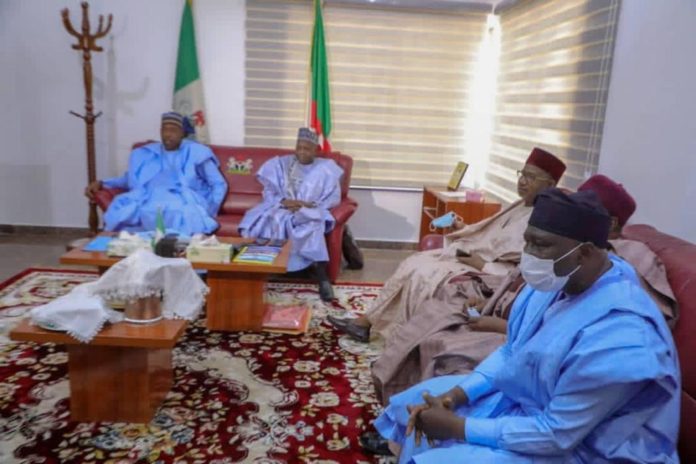
At the donation event in Lokoja

Speaking on the occasion, Barr Mark Ogedengbe, restated MIFAA ‘s commitment to ensuring support for health interventions across Africa.

The Kogi commissioner, while receiving the items, lamented the recent loss of medical store supplies to hoodlums who took advantage of the recent #EndSARS protest to raid the state medical stores.

Drs. Taiwo Fasoranti and Agbor Ebuta, the President and Vice-President of MIFAA respectively, who monitored events from MIFAA Head Quarters in Abuja , assured the beneficiaries of MIFAA’s continuous health intervention across all hard hit areas.

They pointedly identified other key areas, which included staff training and strategic service-wide support as potential areas penciled down to benefit from MIFAA interventions in future.

They also used the opportunity to highlight over 40 activities MIFAA had commissioned nationwide recently.

The Hostess of the ceremony, the founder of the Rashida Bello Foundation and First Lady of Kogi State, Mrs Rashida Bello, representedby Mr. Victor Okee, her Senior Special Assistant on Administration, expressed her excitement on the initiative and assured MIFAA of judicious distribution and deployment of the donations.(Everyday)

Proxy War in Osun Following Fears That Aregbesola, Oyetola Camps May Clash This Week

The proxy war between Abuja and some powerful All Progressives Congress (APC) chieftains; and APC national leader, Asiwaju Bola Ahmed Tinubu may snowball into violence in Osogbo, the Osun State capital this week, if media reports are to be believed.

An alleged plan by Tinubu to throw in his hat for the presidency in 2023, and the anger of a federal minister, whose wings Tinubu is believed to be clipping in the South-West, pundits say, is the fertiliser for the political battle of supremacy, using Osun as the battlefield.

Many APC chieftains, including a serving South-West Governor and three former governors; and many northern governors, especially one from the North-West, are believed to be adopting counter-measures to stultify Tinubus alleged presidential dreams.

Governors Nasir el Rufai, Kayode Fayemi; former Governors Babatunde Fashola, Akinwumi Ambode; Minister Rauf Aregbesola and a host of northern governors, excepting Kano Governor, Umar Ganduje, are believed to be working with other Abuja elements against Tinubu, though none is known to have played an open card.

The situation is further worsened for the Lagos politician because of the suspicion that he allegedly has a hand in the #EndSARS protests, exploiting the simmering anger of youths. The protest is believed in Abuja to have had an uncanny resemblance to one used to rattle the preceding Goodluck Jonathan presidency when APC was undermining the Ijaw-born politician.

Meanwhile, GWG.com, an online newspaper, is giving details of the brewing crisis in Osun. It reports:

Palpable tension was on Monday morning brewing ahead of the second year anniversary of the Gboyega Oyetola administration in Osun State following the revelation that his predecessor, Rauf Aregbesola, is also planning a rival anniversary of ten years of “progressive governance.”

GWG gathered that the Oyetola administration is in the dark concerning the minister of interior’s plans and Osun State administration officials are afraid that the conflicting events may lead to anarchy.

Oyetola was inaugurated as governor on November 27, 2018 following eight years of Aregbesola’s administration who first came to office on November 27, 2010.

The fears of the authorities are also following claims that the recent EndSARS protest was used by enemies of the governor to attack him. It is now feared that a repeat may occur.

Aregbesola and Oyetola are remarkably members of the same political family, but issues between them have emerged since the Oyetola administration reversed some landmark ideas of his predecessor which were seen as unpopular.

“The truth is, the situation is getting out of hand between the governor and the minister. We have been trying to man­age it but the truth is that the attitude of some of these key players hasn’t been helpful,” a source privy to the development told Daily Independent.

“The Osun State govern­ment will clock two years in office this week. The state gov­ernment has lined up some activities which includes commissioning of projects. However, we received reports that the Minister of Interior, Ogbeni Aregbesola is also coming to Osun this week to celebrate what they called ‘10 Years of Progressive Gover­nance in Osun’ without con­sulting with the governor.

“We felt since they are both members of the same politi­cal party and family, if you are celebrating 10 years of APC coming to power in Osun, it is the responsibility of the state government to do that, not an individual; or at best, there should be a synergy between the incumbent governor and his predecessor. But I can categorically tell you that the minister is doing it without recourse to the governor.

“From intelligence report we have gathered, there is no way there won’t be crisis if both events take place at the same time because the sup­porters in both camps are al­ready threatening showdown. It was even alleged that some supporters of the minister masterminded the attack on the governor and his convoy last month using the #End­SARS protest as a cover. Many had alleged that the minister is remotely connected to the attack.

“We have appealed to the minister to shelve his event for some days to allow the state government celebrate the second anniversary this week but he won’t budge”.

Another source who is a former commissioner in the state called on APC political leaders to call the minister to order saying:

“We are appealing to Pres­ident Buhari, Asiwaju Bola Tinubu and other APC lead­ers to call Aregbesola to order. Coming to Osun to celebrate 10 years of progressive gover­nance in Osun, the same week the state government is plan­ning to celebrate two years in office is just an avenue to cause trouble in the state.

“They are planning to bring in thugs from Ede, Ibadan, Ilesa and other plac­es to cause crisis in the state. Aregbesola is also planning to use his influence as Min­ister of Interior to bring in paramilitary officers such as Civil Defence, Immigration, Prisons and so on. There is no way the relative peace being enjoyed in the state will not be shattered if he is allowed to go ahead with his programme”, he said.

Aregbesola’s media aide, Sola Fasure while confirming Aregbesola’s plans to celebrate 10 years of ‘progressive governance’ however, dismissed insinuations of anarchy as alleged.

“Yes, he is planning to cel­ebrate it. This is the 10th an­niversary of bringing in pro­gressive government to Osun. That includes eight years of his own tenure and two years of the current.”

He affirmed that the governor was in the know part of Aregbesola’s plans.

▪︎ Additional reports by gwg.com

Why Tinubu was absent during visit of his ‘henchmen’ to Buhari: Bode George offers insight

The visit of Chief Bisi Akande, Prince Tajudeen Olusi, Dr Yomi Finnih and Chief Segun Osoba to the seat of power in Abuja is needless, unnecessary, veiled in some poorly hidden agenda that is woven in apparently self-serving ulterior personalised desperation.

It is easy to discern that the visit is stripped of any patriotic progression, lacking in balanced national leadership, voided of a spirit of sacrifice and developmental vision.

The very absence of Bola Tinubu from the jamboree screams to high heavens that the meeting itself is a covert placatory softening of the ground for Tinubu himself. I am pretty certain that in his very absence, Tinubu occupies the centrality of the discussion.

President Muhammadu Buhari should not fall for those who would eclipse the main issue wracking Lagos state in a needless, solicitous self immersed scheming in partisan engagement.

The very pivot of the Lagosian malady is the reckless, irresponsible misappropriation of the Lagosian commonwealth by Tinubu. This much I have documented in several public interventions. This, I may add, contributed to the heightened scale of the disgruntlement and the anger of the youths who made the Lekki Toll Gates the very symbol of their rejection of the politics of subjugation.

I will advise Baba Akande who governed Ọsun state with principled, incorruptible leadership to kindly help us drop off Bola Tinubu at Iragbiji (in Osun State) as he makes his way back to Ila-Ọrangun (also in Osun), rather than engaging in fruitless pleading sessions for a man who is fixated on a warped pipe-dream about governing Nigeria. He should pay restitution for the egregious stripping of the Lagosian coffers.

This is my humble birthday offering.

▪︎Chief Olabode Ibiyinka George, Atọna Oodua of Yorubaland.(Everyday)

#EndSARS + youth unemployment + ethnic warlords + egocentric politicians = ticking time-bomb, Peace Corp Boss, Akoh, tells SGF

Peace Corps

▪︎ Asks FG to collaborate with PCN

By Yemi Oyeyemi, Abuja.

The National Commandant of the Peace Corp of Nigeria, (PCN) Ambassador Dickson Akoh, has warned that the huge youth unemployment rate staring Nigeria in the face at the moment is a time bomb capable of devastating the future of the nation.

To arrest the recurrence of the #EndSARS protest, the Peace Corp boss pleaded with the President Muhammadu Buhari led-Federal Government to come out with a clear policy that will generate sustainable and gainful employment for the youths.

Akoh, who gave the warning when he led a delegation of the Corps on a courtesy visit on the Secretary to the Government of the Federation (SGF), Mr Boss Mustapha, however commended the federal government for the Social Security Programmes so far initiated to address immediate challenges facing the youths.

Citing the five thousand naira Social Security Grants, Conditional Cash Transfer (CCT), N-Power programme and the Home Grown School Feeding programme, the PCN Chief opined that the federal government has demonstrated a strong will to tackle youth empowerment and ameliorate poverty in the populace.

However, as commendable as the Social Security Programmes are, Ambassador Akoh, canvassed that sustainable and permanent approaches are mechanisms that can be put in place to ensure irreversibility of conditions and welfare status of the target beneficiaries.

Ambassador Akoh revealed that information across the country had indicated most of the “Financial Handouts” and “Token-Grants” of Governments, both past and present, have only ended up making the Youths lazier and more dependent minded, while destroying the sense and principles of hard-work and dignity in labour, contrary to the intent and wishes of the Federal Government.

“It is a proven fact and incontrovertible reality that once such ‘Financial Handouts’ are no longer forthcoming or delayed in coming, these same youths go back to the streets on protest or quickly revert to social ills and unproductive preoccupations that sometimes backlash on the same generous Government.

“It is upon this premise that we have been in the advocacy and quest of setting up of a more permanent and sustainable Institutional Framework for mass and cost-effective engagement of the Nigerian youth towards proactive and positive preoccupations and activities.

“We envision a structure that shall effectively engage millions of well trained and disciplined young people in various forms of community works and social safety activities, in the spirit of volunteerism.

“We are highly convinced that if half of the financial resources deployed to some of the social security programmes were otherwise channelled to such a structure as we propose to offer, the Government will harvest much higher results and record greater impact.

“What the nation needs, at this critical point of economic challenges, is a robust institutional mechanism for cheap, yet effective, labour services that shall also serve as a reservoir of ready-made/standby workforce for government establishments, to be sustained by permanent stipends, thus creating a sense of alternative employment”, he said.

Akoh who quoted the report of the National Bureau of Statistics which put unemployed graduates “at over 29.9 million”, said that the idle state of unemployed youths has given rise in criminal activities, restiveness and heightening insecurity in the land.

He added that the situation is also being exploited by ethnic warlords and egocentric politicians for negative tendencies.

“Unemployment and the attendant social consequences, one of which is the EndSARS movement, that we recently witnessed is a time bomb and every concerned citizen and organization must, out of patriotic zeal, join hands with the government to avert this serious danger.

“We are concerned with the high level of unemployment and its implications for peace and security of our dear nation. Hence, if our roadmap for addressing youth restiveness and job creation in Nigeria is adopted by the government, we are optimistic that more positive and enduring result in terms of youth empowerment will be achieved through our bold initiatives.

“In our most considered view, the Government should evolve means of pulling the youth off the streets and deploying them to organised labour services at most minimal cost, which is exactly what we promise to bring onboard”, he said.

Stating that the Peace Corp has offices in the 36 states of the federation and Abuja as well as in 90 percent of the Local Government Areas in the country, Akoh pleaded with the federal government to partner with his organization to reach out to the youths so as to put an end to their restiveness.

The Director, Nigeria National Volunteer Service in the SGF’s office, Mrs Olusola Dada, who received the delegation on behalf of Boss Mustapha, thanked the Peace Corp of Nigeria for identifying and appreciating the social security programmes of the Government and for showing concern on how to arrest youth unemployment, assuring that the roadmap of the PCN would be delivered to the SGF for positive action.

Without visas ringed foreign Birds do fly to Weppa, Nigeria

By Tony Erha

To conservationists and the simple-minded folks of Weppa in Etsako East Local Government Area of Edo State, Nigeria, it is ‘bravo’ that ringed birds ceaselessly migrate from distant countries in Europe, America, Africa and other continents of the world to its neighbourhoods of Weppa Farms. Classified by key global conservation institutions as an International Bird Area (IBA) and Key Biodiversity Area (KBA), it is a significant transit/destination to the itinerant birds as well as a home to a high number of species; some endangered or are going extinct.

With the presence of pervasive indigenous and migratory bird species, visitors in the mode of Birdwatchers, Eco-tourists and Ornithologists (a tongue-biting-word for those who study of birds) etc., throng there to observe all, including the “Flying Visitors”, which the innocent villagers willingly grant recurring ‘asylums’ without “Visas and Travel Restrictions”.

Yet again on November 11, 2020, a ‘Lesser Spotted Eagle _’ (Aquila pomarina), of_ nestling born in July 12, 2020, wearing a yellowish ‘TEZ DEH CA 16564’ tag on the leg, flew all the way from Gustrow in Germany (coordinate 53°56’00″N 12°29’00″E) to the serene Weppa neighbourhood in Nigeria (7°02’22″N 6°33’59″E). Via a letter dated on 12th November, 2020 by Beringunszentrale Hiddensee, Official Ringer of the bird authenticated its identity etc. Hiddensee gave the time-lapse of the bird’s disappearance in Germany and discovering in Nigeria as 122 days, on a distance of 5,081 km. Perhaps the timeline was much longer than that of the average ringed aquatic birds of near equal-distance from Finland to Taraba State, Nigeria, which stay only about a month. The delay of the German bird might be that it was found sick and wounded, leading to its treatment at Weppa Farms, with the aim to release it after recovery.

The Weppa’s neighbourhood had been in the global news spotlight for long. For instance, 25 years ago, the discovery of a rarest Vemiculated Fishing Owl _(Scotopelia bouvieri)_ in the vicinity dominated the world news. That was an amazing discovery by ‘Eagle-eye’ Phil Hall.

For decades, Weppa had had the nurturing support of Mr A. P. Leventis, a flawless conservationist and birdwatcher, whose second nature for caregiving encouraged Weppa as an integrated farm settlement, Agricultural College, Conservation Resource Centre and IBA/KBA etc. Suffice that Mr Leventis and his associates like the aforementioned Sir Phil Hall OBE, Nick Ashton Jones and others, with relentless conservation and agricultural activities in Nigeria, had groomed numerous young Nigerians, in a generational knowledge and practice transfer bid.

Yet, “Nigeria hasn’t a strong tradition or culture of birdwatching and bird study/ornithology. It is a relatively new field of study herein that is just developing…” Retorted Sam Ivande, a PhD holder in Ornithology from the St Andrews University of United Kingdom (U.K.), who is a lecturer at the degree awarding A.P. Leventis Ornithological Research Institute (APLORI) of the University of Jos, Nigeria. Ivande joins Hope Usieta and other young Nigerians, nourished by the Leventis Foundation-Nigeria (LFN). Usieta, LFN’s boss, is a Cambridge University, U.K., Ph.D holder in Ornithology, and a visiting lecturer to APLORI.

Dr Joseph Onoja, Director of Technical Programme with the Nigerian Conservation Foundation (NCF), praised the efforts of the Weppa IBA/KBA, which he said is as a result of the nurturing by APLORI, a dependable partner of NCF. Onoja spoke elatedly about the NCF’s flagship Bird Study Office located in Buru, Donga, Taraba State. Between 1996 and 1997, before the setting up of the Buru Bird Project, this writer and some foreign bird observers, a thing lavishly reported by the global press, discovered Taraba, a fringe north-east state of Nigeria, as a transit/destination of seasonal migratory birds ringed in Germany, Sweden, Holland and Finland etc.

But the useful lessons derivable from the Weppa IBA/KBA’s success story, is the benchmark record set for exploitative multinational companies, not to deviate from exemplary Corporate Social Responsibility principle, where the Leventis Foundation-Nigeria and its appendage Weppa Farms could squeeze a vast 4,000 hectares for conservation, from a merely 13,000 hectares total ceded to them for agriculture and livelihood sustainability drives, to aid local communities.

_Tony Erha is a journalist and Conservationist_

Like losing a loved one, Atiku says he received news of Nigeria’s worst recession since IBB years with a heavy heart

▪︎ offers way out

When it rains, it surely pours for Nigeria, economically. Now, for the second time in four years, Nigeria has slipped into recession – the worst in 33 years.

Like someone announcing an obituary, former Vice President, Atiku Abubakar, announced: “It is with a very heavy heart that I received the confirmation that for the second time in five years, Nigeria has entered into another recession. Heaviness of heart, because this could have been avoided had this administration taken heed to patriotic counsel given by myself and other well meaning Nigerians on cutting the cost of governance, saving for a rainy day, and avoiding profligate borrowing.” 

According to the National Bureau of Statistics (NBS), the economy slipped into recession at the end of the third quarter (Q3) of this year.

Following what many said was the new administration’s delay in hitting the ground running within a year, the country slipped into its recession in 2016.

According to the NBS, the Gross Domestic Product in real terms declined by -3.62% (year-on-year) in the third quarter of 2020 and is driven by the long closure of the Nigerian borders which stopped economic movements across the borders.

“Nigeria’s gross domestic product (GDP) recorded a growth rate of –3.62% (year-on-year) in real terms in the third quarter of 2020,” NBS disclosed on Saturday.

“Cumulatively, the economy has contracted by -2.48% While this represents an improvement of 2.48% points over the –6.10% growth rate recorded in the preceding quarter (Q2 2020), it also indicates that two consecutive quarters of negative growth have been recorded in 2020.

“Furthermore, growth in Q3 2020 was slower by 5.90% points when compared to the third quarter of 2019 which recorded a real growth rate of 2.28% year on year.

“The performance of the economy in Q3 2020 reflected residual effects of the restrictions to movement and economic activity implemented across the country in early Q2 in response to the COVID-19 pandemic.

“As these restrictions were lifted, businesses re-opened and international travel and trading activities resumed, some economic activities have returned to positive growth. A total of 18 economic activities recorded positive growth in Q3 2020, compared to 13 activities in Q2 2020.”

It added that aggregate GDP was at N39,089,460.61 million in nominal terms, saying that the performance was 3.39% higher when compared to the third quarter of 2019 which had an aggregate of N37,806,924.41 million.

“This rate was, however, lower relative to growth recorded in the third quarter of 2019 by –9.91% points but higher than the proceeding quarter by 6.19% points.

“For clarity, the Nigerian economy has been broadly classified into the oil and non-oil sectors: The contract mark the beginning of a full-blown recession and second consecutive contraction from -6.10 per cent recorded in the previous quarter of this year.”

“Nigeria’s gross domestic product (GDP) recorded a growth rate of –3.62% (year-on-year) in real terms in the third quarter of 2020,” NBS disclosed on Saturday.

“Cumulatively, the economy has contracted by -2.48% While this represents an improvement of 2.48% points over the –6.10% growth rate recorded in the preceding quarter (Q2 2020), it also indicates that two consecutive quarters of negative growth have been recorded in 2020.

“Furthermore, growth in Q3 2020 was slower by 5.90% points when compared to the third quarter of 2019 which recorded a real growth rate of 2.28% year on year.

“The performance of the economy in Q3 2020 reflected residual effects of the restrictions to movement and economic activity implemented across the country in early Q2 in response to the COVID-19 pandemic.

“As these restrictions were lifted, businesses re-opened and international travel and trading activities resumed, some economic activities have returned to positive growth. A total of 18 economic activities recorded positive growth in Q3 2020, compared to 13 activities in Q2 2020.”

The report also disclosed that during the quarter under review, aggregate GDP was at N39,089,460.61 million in nominal terms, saying that the performance was 3.39% higher when compared to the third quarter of 2019 which had an aggregate of N37,806,924.41 million.

“This rate was, however, lower relative to growth recorded in the third quarter of 2019 by –9.91% points but higher than the proceeding quarter by 6.19% points.

“For clarity, the Nigerian economy has been broadly classified into the oil and non-oil sectors: The contract mark the beginning of a full-blown recession and second consecutive contraction from -6.10 per cent recorded in the previous quarter of this year.”

Atiku laments further, but advises: “Yes, the COVID19 pandemic has exacerbated an already bad situation, however, we could have avoided this fate by a disciplined and prudent management of our economy. 

“Be that as it may, it serves no one’s purposes to quarrel after the fact. We must focus on solutions. Nigeria needs critical leadership to guide her back to the path of economic sustainability. 

“We cannot afford hand wringing and navel-gazing. We must act now, by taking necessary, and perhaps painful actions. 

“For a start, the proposed 2021 budget presented to the National Assembly on Tuesday, October 8, 2020, is no longer tenable. Nigeria neither has the resources, or the need to implement such a luxury heavy budget. The nation is broke, but not broken. However, if we continue to spend lavishly, even when we do not earn commensurately, we would go from being a broke nation, to being a broken nation. 

“As a matter of importance and urgency, every non essential line item in the proposed 2021 budget must be expunged. For the avoidance of doubt, this ought to include estacodes, non emergency travel, feeding, welfare packages, overseas training, new vehicle purchases, office upgrades, non salary allowances, etc. 

“Until our economic prospects improve, Nigeria ought to exclusively focus on making budgetary proposals for essential items, which include reasonable wages and salaries, infrastructural projects, and social services (citizenry’s health, and other human development investments). 

“Additionally, we have to stimulate the economy, by investing in human development, and increasing the purchasing power of the most vulnerable of our population. Only a well developed populace can generate enough economic activity for the nation to exit this recession. 

“We must invest in those most likely to be impacted by the effects of the recession, the poorest of the poor. As well as stimulating the economy, this also ensures that they do not slip further into extreme poverty. 

“For example, a stimulus package, in the form of monthly cash transfers of ₦5000 to be made to every bank account holder, verified by a Bank Verification Number, whose combined total deposit in the year 2019 was lower than the annual minimum wage. 

“Now, how will this be funded? By more profligate borrowing? No. I propose a luxury tax on goods and services that are exclusively accessible only to the super-wealthy. A tax on the ultra wealthy to protect the extremely poor. 

“A practical approach to this is to place a 15% tax on all Business and First Class tickets sold to and from Nigeria, on all luxury car imports and sales, on all private jets imports and service charges, on all jewellery imports and sales, on all designer products imported, produced or sold in Nigeria, and on all other luxury goods either manufactured, or imported into Nigeria, with the exception of goods made for export. The proceeds of this tax should be exclusively dedicated to a Poverty Eradication Fund, which must be managed in the same manner as the Tertiary Education Trust Fund, or the Ecological Fund. 

“I further propose that a 1% poverty alleviation tax should be legislated by the National Assembly on the profits of every International Oil Company operating in Nigeria, and international airlines doing business in Nigeria, which should also go towards the proposed Poverty Eradication Fund. 

“It is inhumane for us as a nation to increase the cost of goods and services that affect the poor, while keeping the cost of luxuries fairly stable. We must flip this, and flip it immediately. 

“And above all, Nigeria must stop borrowing for anything other than essential needs. Again, for the avoidance of doubt, borrowing to pay salaries, or to engage in White Elephant projects, is not an essential need. This is particularly important as we need cash at hand, because the world and our economic and development partners are also focused on helping their home economies overcome the effects of COVID19. We must be our own saviours.

“The more we borrow, the more we will need cash to make interest and principal payments, and the less cash we will have to make necessary investments in our economy and our people. If we keep borrowing, we stand the risk of defaulting, and that will make recession a child’s play, because we will lose some of our sovereignty. 

“I urge the administration of President Muhammadu Buhari to swallow its pride, and accept its limitations, so that they can open their minds to ideas, without caring who the messenger is. For as Deng Xiaoping said “It doesn’t matter whether the cat is black or white, so long as it catches mice.”

Striking at the future of the Nigerian youths, By Dakuku Peterside

A Google search of ASUU, the acronym of the Academic Staff Union of Universities, comes with the suggestions ‘ASUU strike’, ‘ASUU strike update’ and ‘ASUU strike update today.’ The above are not surprising because most Nigerians have come to associate ASUU with ‘strikes’.

ASUU is a union of teachers in the universities in Nigeria founded in 1978. It succeeded the defunct Nigerian Association of University Teachers formed in 1965. It is a trade union which was set up to fight for the rights and welfare of her members. It is the responsibility of the union to assist the stakeholders of the Nigerian university system in attaining the set classic standard of education through the provision of quality education in the Nigerian university system. Furthermore, the union strives to ensure adequate welfare and job security for her members and facilitate for them an enabling working environment.

‘ASUU strikes’ have become a familiar and disturbing refrain in the Nigerian body polity. They have probably become the gravest threat to the Nigerian university system, in particular, and the Nigerian education sector in general. Since the return to democratic rule in 1999, ASUU has embarked on nationwide strike more than 20 times during which students have lost a cumulative period of almost four years of the academic calendar. And this is not taking into consideration the avalanche of ‘local ASUU strikes’, whereby a particular vice-chancellor, University Governing Council or state government is at loggerheads with the academic staff of a specific university.

The effect of ASUU strikes has been devastating to the Nigerian university system by watering down the quality of education offered to Nigerian students which has at best been mediocre. The academic performance of students is adversely affected, and the entire educational system is almost crippled. These result in half-baked students and graduates who are unemployable and who lack the basic skills necessary to survive dynamic environments like Nigeria and the rest of the world. 

Students are known to perform poorly in examinations upon resumption from prolonged strike action. This is unrelated to short contact hours and the diminished motivation to read and conduct research, which invariably affect the quality of their education. 

On the part of the lecturers, prolonged ASUU strikes, make them rush academic work. The import of this is that they tend to forgo essential aspects of their course work, the semesters are cut short, and the students get bombarded with a lot of academic work within a short period. In the end, this “scattergun approach” to literary and scientific academic studies lead to poor performance by students and demeans the overall standard of our tertiary education system.

Incessant ASUU strikes naturally extend the period a student spends in school and the attendant cost implication. Some undergraduates are known to spend up to seven years for a four-year course due to ASUU strikes. It is common to hear students talk about their year of graduation for four years course by adding mathematical integer “X” representing an unknown number of years. This has a ripple effect on some forms of employment, like in the banking industry and military where age is an essential consideration for entry-level job positions. 

Another effect of the continuous industrial activities of the ASUU is that most students, after a prolonged stay at home, deem it fit to venture into the street to eke out a living. Some of them do not return to school when the industrial action is over. There are others who out of loneliness and boredom, resort to crime and criminal activities such as advanced fee fraud, armed robbery, and kidnapping. Others are overwhelmed by juvenile delinquency, engage in vices like gambling and wanderlust, while some of the ladies become susceptible to abusive relationships and unwanted pregnancies. The speculations in certain quarters that some of the hoodlums who took part in the lootings that ensued from the recent #EndSARS protests were university students forced to idleness due to the prolonged ASUU strike may have some merit.

Some of the demands of the university lecturers are germane. One of the recurring issues is the underfunding of the education sector, which has an impact on the quality of infrastructure, instructional resources, and research. Budgetary allocations for the education sector are inadequate, and over the years, this has had a collateral damaging effect on the educational sector in the country. Nigerian universities that used to be centres of excellence, that attracted academics from far and near, have now become grotesque carcasses of their former selves.

The standards of our public universities have fallen so low that many Nigerians now resort to the more expensive private universities. Those who can afford it amongst the upper class send their wards to good schools in North America, Asia, and Europe.  

A troubling report released last year showed that the country loses over N1.5 trillion per annum to overseas studies. This amount though modest by some estimation is still staggering considering the foreign exchange pressures it mounts on Nigeria’smeagre foreign reserve. It is disheartening to note that countries previously considered to be beneath Nigeria in terms of human development indices like the Benin Republic, Ghana and Togo are some of the prime beneficiaries of the education capital flight from Nigeria. Ghana alone is estimated to be benefitting from about N160 billion per year from thousands of Nigerians trooping to pursue university education there.

Another demand of ASUU is the earned allowances of lecturers. Earned allowances are typically a kind of overtime allowance whereby the lecturers make extra allowances when the class size they are teaching exceeds the maximum allowed. It is surprising that instead of ASUU insisting on increasing staffing levels and universities admitting students according to the ratio of their capacity, it would instead prefer agitating for earned allowances for their members. 

Standards and employment contracts of our academics are Soviet era model. Lecturers are remunerated equally irrespective of their standards of research excellence. Ordinarily, in a free market system, private sector endowments should pay academics for relevant outstanding research, ensuring that the more productive scholars are better paid. 

The third issue related to the first is ASUU’s demand for an increase in funding. However, ASUU seems oblivious of the challenges posed by decreasing government revenue mainly due to the economic impact of the Covid-19 pandemic. It is on record that at N743bn, the education sector only lags behind defence in the current budgetary allocations by the federal government. 

The money given to education is relatively small, given the population and the educational gap in Nigeria. The budgetary allocation to education represents 6.33% of the budget, which falls short of UNESCO benchmark recommendation of between 15% and 20% . Interestingly the capital allocation to the Ministry of Education is higher than that of Ministry of Defence. Does this have any visible impact on education in Nigeria?  

The current ASUU strike started since March 2020 which media reports say they have only worked out a truce with the Federal government after seven months comes at an enormous socio-economic cost. 

The country cannot make progress with the current system whereby incessant ASUU strikes continues to damage the Nigerian educational sector and imperils the future of the Nigerian youth. It’s time to get to the root of this matter and close this chapter.   

The academic staff of Nigerian universities should explore other viable means of protest than strike actions. Industrial actions should come as a last resort due to the enormous damage it does to our educational system. There should always be open communication between ASUU and the Federal Government with each party ready to understand the other and willing to place national interest above “ego” and  short-term  political considerations.

In the face of depleting government revenues, Nigerian universities should source for alternative means of funding. Nigerian lecturers should drive this process. They should engage in research for which they can get funding from private  organisations  and from which they can also generate revenue. There are examples in other climes, for example,  Standford University’s endowment of $28.9billion and Harvard University’s endowment of $41.9billion surpasses Federal Government of Nigeria proposed budgetary expenditure of N13.08trillion for 2021 even with a fiscal deficit of N5trillion. 

A constant in ASUU demands on the Federal Government is university autonomy where it seeks minimum government interference in the universities. I agree with the principle of non-interference; however, the reality is that “he who pays the piper dictates the tune”. If our universities are heavily dependent on government funding, expecting that the same government would not interfere in the affairs of the universities is tantamount to crass wishful thinking. 

In as much as it may be painful to most students, the current tuition fees paid in some of the public universities are grossly inadequate. The unit cost of a university education in the public institutions is less than a nursery education in a private kindergarten. In most countries, tertiary education is costly that is why some countries like the United States of America have a system where students get soft loans to pursue their university education, which would be paid back in future. The Nigerian rducation authorities should explore the idea of soft loans to students to pay higher tuition fees to help universities get requisite funding. 

On their part, the government should learn to keep the agreements they entered with workers. Government is a continuum, and an incumbent government should naturally see that it keeps to commitments made by its predecessors. Government negotiators should put future government revenue projections into considerationbefore making future funding commitments to avoid default. 

The educational sector is the bedrock of any society that wants to meet up with the challenges of a dynamic world. Incessant ASUU strikes have pilloried the Nigerian educational system and have continued to jeopardise the future of our youths. The future of our nation rests on quality education, and all stakeholders must work together to get it right.

•Dr Dakuku Peterside ( DAP) is a leadership & organisational development consultant and corporate political strategist. He can be reached on +2348033123801 www.dakukupeterside.com

Things Fall Apart For Trump As Ally, Chris Christie, Says Time Up!

…Describes President’s Legal Team ‘National Embarrassment’

By David Matthews, New York Daily News

As the court losses continue to mount, President Donald Trump’s ally and informal adviser Chris Christie called the commander-in-chief’s legal team a “national embarrassment.”

The former New Jersey governor said it was time for the president to face reality.

Chris Christie
Chris Christie

“If you have got the evidence of fraud, present it,” Christie said on ABC Sunday morning.

“Quite frankly, the conduct of the president’s legal team has been a national embarrassment,” he said, referring to Trump attorney Sidney Powell’s accusations against Georgia Gov. Brian Kemp, a fellow Republican.

“This is outrageous conduct by any lawyer,” Christie said.

“They allege fraud outside the courtroom, but when they go inside the courtroom, they don’t plead fraud and they don’t argue fraud,” he said.

“I have been a supporter of the president’s,” Christie said. “I voted for him twice, but elections have consequences, and we cannot continue to act as if something happened here that didn’t happen.”

“If you are unwilling to come forward and present the evidence, it must mean the evidence doesn’t exist,” he added. “The country is what has to matter the most. As much as I’m a strong Republican and I love my party, it’s the country that has to come first.”

In the two weeks since the election was originally called for Joe Biden, several states have certified their results, reducing the already slim chances that Trump would be able to overturn the election through lawsuits and other legal chicanery. As more and more of the legal challenges have failed, a growing number of Republican politicians and commenters have called on the administration to officially start the transition process.

  • New York Daily News

Why Workplace Shops/Canteens Are Illegal In Nigeria.

Daily Law Tips (Tip 702) by Onyekachi Umah, Esq., LL.M, ACIArb(UK)

Introduction:
Labour and employment is highly regulated in Nigeria. The federal government of Nigeria, regulates all types of employment in any part of Nigeria. The federal law (the Labour Act) made since 1st August 1971 is binding all employers and employees in Nigeria. The Labour Act is designed to ensure that employers do not exploit and take advantage of their employees (workers). This is well within the constitutional obligations of the government in Nigeria.

Among other things, the federal law regulates content of an employment letter, duration of an annual leave, workplace conditions, place of payment of salaries and types of salaries/wages. This work reveals the position of the labour law on establishment of shops/Canteens by employers for selling of provisions and items to workers.

Legality of Workplace Shop/Canteen:
The Labour Act prohibits the establishment of shops in any place of employment, by an employer for the sale of provisions to his workers. It also prohibits employers from allowing any person to establish or keep such shop.

The reason behind this may not be far from the fact that, an employer may lure or force his workers to patronize his shop. In reality, we have seen cases where employers force their workers to shop and patronize their shops, schools and any other type of business that the employer does. This is unfair and illegal.

A shop for sale of provision to workers, can only be established by an employer, if the employer has an approval from the Federal Minister of Labour. The Federal Minister of Labour cannot issue such approval without a consultation with the State Authority (State Governor) of the state where the employer wishes to locate his shop. Even where there is an approval for establishment of shop, no worker is to be forced by any contract or agreement, written or oral, to purchase provisions at any shop established in his workplace.

Offence of Workplace Shop/Canteen:
Establishing a shop for sale of provision in a workplace without an approval is a criminal offence. Also, the forcing any worker by any means to patronise such shop is a crime, even where the shop was established with an approval of the Federal Minister of Labour.

These crimes are punishable with fine of not more than Eight Hundred Naira (#800.00) for a first offender. A second time offender or subsequent offender is punishable with fine of not more than One Thousand, Five Hundred Naira (N1,500.00).

Conclusion and Recommendation:
The gap between the poor and the rich is very wide in Nigeria. Most employees (workers) are poorer than their employers, hence most employees are often muscled and violated by their employers. Hence, there is a need for government to regulate the relationship between employers and employees to ensure fairness and equity. There is need to ensure that employees are not forced to spend their wages and salaries in the shops and business enterprises of their employers. And any shop in an employment place should have the approval of the Federal Minister of Labour.

No matter how promising and beautify a legislation may be, until there is an enforcement of the promises and beauty of the law, the law is a mere imagination. The Federal Ministry of Labour must wake up to enforce the Labour Act. Task force teams should be supervising workplaces and engaging employees to ensure that employees are not exploited by the employers.

The Labour Act of 1971 is about 49 years old and needs serious amendments to stay alive with the present-day realities of Nigeria. Punishment (fine) under the Labour Act is N800.00 ($2.00), this is too poor and will not discourage crime. Being a maximum penalty, it means that a court of law cannot go above the fine of N800.00, this ties and limits the just hands of judges, even where substantial justice would have been done through a higher punishment.

My authorities, are:
1. Sections 1, 2, 3, 14, 16, 17 (3) (c), 318 and 319 of the Constitution of the Federal Republic of Nigeria, 1999
2. Sections 6, 21, 91 and 92 of the Labour Act of 1971.
3. Onyekachi Umah, “Places, Workers Cannot Be Paid Salaries In Nigeria” (LearnNigerianLaws.com, 27 February 2019) <https://learnnigerianlaws.com/daily-law-tips-by-onyekachi-umah-esq-tip-277-places-workers-cannot-be-paid-salaries-in-nigeria/ > accessed 22 November 2020
4. Onyekachi Umah, “It Is Illegal For Workers To Be Told Where And How To Spend Salaries” (LearnNigerianLaws.com, 20 February 2019) <https://learnnigerianlaws.com/daily-law-tips-by-onyekachi-umah-esq-tip-272-it-is-illegal-for-workers-to-be-told-where-and-how-to-spend-salaries/ > accessed 22 November 2020
5. Onyekachi Umah, “An Employment without a Written Employment Agreement is an Offence” (LearnNigerianLaws.com, 30 April 2018) <https://learnnigerianlaws.com/daily-law-tips-by-onyekachi-umah-esq-tip-91-an-employment-without-a-written-employment-agreement-is-an-offence/ > accessed 22 November 2020.
6. Onyekachi Umah, “Fines And Deductions From A Worker’s Salary Are Illegal” (LearnNigerianLaws.com, 15 July 2020) <https://learnnigerianlaws.com/fines-and-deductions-from-a-workers-salary-are-illegal-daily-law-tips-tip-610-by-onyekachi-umah-esq-ll-m-aciarbuk/ > accessed 22 November 2020.
7. Onyekachi Umah, “Sacking Of A Private Sector Worker With Or Without Reason” (LearnNigerianLaws.com, 8 May 2020) <https://learnnigerianlaws.com/sacking-of-a-private-sector-worker-with-or-without-reason-daily-law-tips-tip-565-by-onyekachi-umah-esq-llm-aciarbuk/ > accessed 22 November 2020
8. Onyekachi Umah, “Can Workers Be Paid Salaries With Relief Materials And PPES?” (LearnNigerianLaws.com, 17 April 2020) <https://learnnigerianlaws.com/can-workers-be-paid-salaries-with-relief-materials-and-ppes-daily-law-tips-tip-550-by-onyekachi-umah-esq-llm-aciarbuk/ > accessed 22 November 2020
9. Onyekachi Umah, “Duration Of Sick Leave With Pay In Nigeria” (LearnNigerianLaws.com, 24 March 2020) <https://learnnigerianlaws.com/duration-of-sick-leave-with-pay-in-nigeria-daily-law-tips-tip-532-by-onyekachi-umah-esq-llm-aciarbuk/ > accessed 22 November 2020.
10. Onyekachi Umah, “Who Must Pay The Cost Of Medical Examination Of All Workers In Nigeria” (LearnNigerianLaws.com, 23 March 2020) <https://learnnigerianlaws.com/who-must-pay-the-cost-of-medical-examination-of-all-workers-in-nigeria-daily-law-tips-tip-531-by-onyekachi-umah-esq-llm-aciarbuk/ > accessed 22 November 2020
11. Onyekachi Umah, “List Of Things That Must Be In An Employment Letter/Agreement” (LearnNigerianLaws.com, 28 January 2020) <https://learnnigerianlaws.com/list-of-things-that-must-be-in-an-employment-letter-agreement-daily-law-tips-tip-492-by-onyekachi-umah-esq-llm-aciarbuk/ > accessed 22 November 2020
12. Onyekachi Umah, “Oral Employment Agreement Is Illegal In Nigeria” (LearnNigerianLaws.com, 23 January 2020) <https://learnnigerianlaws.com/oral-employment-agreement-is-illegal-in-nigeria-daily-law-tips-tip-489-by-onyekachi-umah-esq-llm-aciarbuk/ > accessed 22 November 2020

#SabiLaw
#DailyLawTips
#SabiBusinessLaw
#SabiElectionLaws
#SabiHumanRights
#SabiLawOnBeatFm
#SabiLawLectureSeries
#CriminalJusticeMonday
#SabiLawVideoChallenge

Speak with the writer, ask questions or make inquiries on this topic or any other via [email protected], [email protected] or +2348037665878 (whatsapp).

To receive our free Daily Law Tips, join our free WhatsApp group via the below link:
https://chat.whatsapp.com/Drc0UK3ba10KnuR8zuPMwl
Or our free Telegram group, via the below link:
https://t.me/LearnNigerianLaws

To keep up to date on all our free legal awareness projects, follow us via:
Facebook Page:@LearnNigerianLaws, Instagram: @LearnNigerianLaws and Twitter: @LearnNigeriaLaw

Please share this publication for free till it gets to those that need it most. Save a Nigerian today! NOTE: Sharing, modifying or publishing this publication without giving credit to Onyekachi Umah, Esq. and “LearnNigerianLaws.com” is a criminal breach of copyright and will be prosecuted.

This publication is the writer’s view not a legal advice and does not create any form of relationship. You may reach the writer for more information.

Powered by www.LearnNigerianLaws.com {A Free Law Awareness Program of Sabi Law Foundation, supported by the law firm of Bezaleel Chambers International (BCI).}

TIPS