Home Blog Page 1157

Cops Alleged of Killing UNIZIK Law Student Freed from Police Custody

Cops Alleged of Killing UNIZIK Law Student Freed from Police Custody

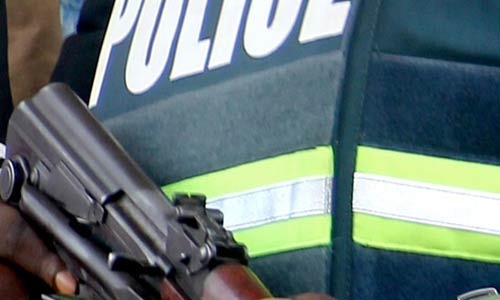
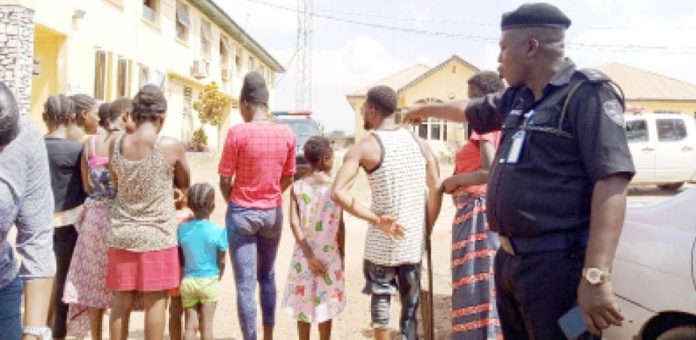
The five policemen who allegedly killed a final-year Law student at the Nnamdi Azikiwe University, Awka, Anambra State, Augustine Ugwu, have reportedly escaped from police custody.

Augustine was said to have been arrested in a bar by a local anti-cult outfit set up by the late Chairman of Nsukka Local Government Area, Patrick Omeje, on April 23, 2020.

They were reported to have handed him over to the officer-in-charge of the Enugu Police Anti-Cult unit in Nsukka, DSP Nnamdi Ochin.

The police later claimed the student was not in their custody.

Following the development, his father, Andy Ugwu, a retired police officer, petitioned the Inspector-General of Police, Mohammed Adamu, who ordered an investigation into the incident.

A six-man panel led by ACP Gabriel Elaigbwu was constituted to unravel the matter. The panel from the Force Headquarters, Abuja came to Enugu in June for investigation.

It was gathered that the panel found that Augustine had been killed and buried in a shallow grave by five policemen.

The OC anti-cult unit, three sergeants working under him: Emmanuel Ibiam, Godwin Abel, Abu John and Nsukka Divisional Crime Officer 3, ASP Peter Adu, were indicted by the panel.

However, Second-in-Command, Enugu State Police Criminal Investigation Department, ACP Fidelis Ogarabe, reportedly prevented the panel from being taken to Abuja.

He allegedly insisted that they should remain in police custody in the state, pending the outcome of autopsy.

Police sources told newsmen on Tuesday that immediately the panel left, the suspects were released and redeployed to other police divisions.

One of the sources said, “The panel came last week to continue with the investigation possibly to take them to Abuja. As I am talking to you, none of the policemen accused of the killing appeared before the panel until they left for Abuja on Saturday.”

When contacted on the telephone, Ogarabe described the allegations as baseless and untrue.

He said, “My brother, how can I do such a thing? My father died and I travelled to bury him. I am not even around. So, how am I aiding them? They are serving members of the Force. My opinion is that everybody is responsible for their action.”

Efforts to get the response of the state police command on the development were unsuccessful as neither the Commissioner of Police, Ahmad Abdurrahman, nor the Police Public Relations Officer, Daniel Ndukwe, answered their calls.

They also did not respond to text messages sent to them as of the time of filing this report.

Nigerian-American Scientist Robert Okogie Inducted Into NASA Hall Of Fame

A Nigerian-American, Robert Olusola Okojie, has been inducted into the U.S’s National Aeronautics Space Administration‘s (NASA) Inventors Hall of Fame.

Okogie, according to NASA, joined the silicon carbide research group at agency’s Glenn Research Center in Cleveland in 1999 and has gained worldwide recognition as the leading expert on silicon carbide-based microelectromechanical systems (MEMS) for use in extreme environments.

The successful scientist who has been working with NASA for 20 years has 21 patented inventions to his credit.

“He holds more than 20 patents relating to high-temperature devices, including several licensed for commercial use that could reduce spacecraft weight, and thereby launch cost and fuel consumption, while leaving additional space for scientific payloads. He has also published more than 50 peer-reviewed papers relating to his field,” NASA stated on its website.

While at Glenn, Okojie has received numerous accolades, including in 2009 the NASA Abe Silverstein Medal for Research and in 2012 the Glenn Research Center Distinguished Publication Award.

He was also recognized in 2002 as the Scientist of the Year by the National Technical Association for his “exceptional accomplishments in advancing the state–of–the–art of MEMS for use in harsh environments” and in 2007 was a recipient of the Cleveland Executive Board Wings of Excellence award.

Okojie has a Ph.D. in Electrical Engineering from New Jersey Institute Of Technology.

He has mentored several students at Glenn, all of whom have gone on to achieve high academic and professional success in their various fields.

Currently, Okojie’s research focus is in single-chip integrated multifunctional sensing for extreme environments.

Gov. Akeredolu Sacks Olawoye As AG Of Ondo, Appoints Titiloye As Replacement

Rotimi Akeredolu, governor of Ondo state, has sacked Adekola Olawoye as the commissioner for justice and attorney-general of the state.

Segun Ajiboye, chief press secretary to the governor, disclosed this in a statement on Monday.

No reason was given for his sack.

Akeredolu appointed Charles Titiloye as Olawoye’s replacement.

“Ondo State Governor, Arakunrin Oluwarotimi Akeredolu, SAN, has rejigged his cabinet. Following this, he has appointed front line human rights lawyer, Sir Charles Titiloye as his new Attorney-General and Commissioner for Justice,” the statement said.

“Titiloye is a human right activist and a renowned social critic. He was former Secretary of the Nigerian Bar of Association (NBA), Akure Branch. His name will be forwarded to the state House of Assembly for confirmation.

“Mr. Governor thanks the Attorney-General and Commissioner for Justice that has just been removed for services rendered to the state. He wishes him success in his future endeavours.”

Access To Justice Writes African Commission On Human And Peoples’ Rights, Seeks Resolution On Nigeria

An advocacy group under the aegis of Access to Justice (A2Justice) has called on the African Commission for Human and Peoples’ Rights (ACHPR) to adopt a resolution and take specific action on Nigeria in view of the alleged “deteriorating human rights situation” in the country.

In a statement dated 22nd November, 2020, made available to TheNigeriaLawyer, A2Justice said it wrote the Commission via a letter dated 20th November, 2020 condemning the response of government to the EndSars protest.

Giving account of the human rights violations, Access to Justice said it made reference to the Lekki Toll-Gate incidence in their letter, where soldiers allegedly shot at the protesters.

“The use of significant military force in the shooting appears to be targeted at sending a strong and chilling message to those taking part in protests across Nigeria, insinuating to them that the government would not tolerate the expression of political speech that may threaten its grip on power”. The statement partly reads

The Group said they had also informed ACHPR of “the continuing intimidation, arrests, and prosecution of citizens by the Nigerian government saying faces in the #ENDSARS protests are being harassed, arrested, and prosecuted.”

And according to them, “some other persons who participated in the protests have had their bank accounts frozen and some have had their travel Passport seized. Additionally, that Nigeria’s independent media have also been a victim of government’s intimidation with some media houses penalized with heavy fines for disseminating information of the protests.”

Furthermore, A2Justice said it has informed ACHPR of an attempt by the Nigerian government to gag citizens from freely exercising their freedom of speech because Police Chiefs say that protests are now illegal

They noted also that the Nigerian government has “renewed its interest in the passage of the Social Media Regulation Bill with the intent on clamping down on social media activism.”

Access to Justice further noted that the threats and actions undertaken by the Nigerian government “have had a chilling effect on citizens, fostering a sense of palpable fear as well as escalating already high social tension within the civil society”.

A2Justice said they thereafter urged the Commission to “adopt a Resolution on Nigeria while keeping the human rights situation in Nigeria under close observation.” and to “call on the Nigerian government to make good its promise to reform the police since it had acknowledged the need for wide-ranging reform of the force while acceding to the #ENDSARS demands.”

Also, A2Justice said it requested the ACHPR “to demand, from the Nigerian government the release of all those who have been arrested and detained as well as end the harassment of #ENDSARS protesters. It also urged the Commission to call on the Nigerian government to end the use of military forces to police protests and ensure that Nigeria carries on with its commitment to ACHPR on rights-based policing.”

Lastly, they said they urged the Commission to “call on the Nigerian government to stop misusing counter-terrorism measures to target peaceful protesters.”

Alleged Corruption: FIFA Suspends CAF President For Five Years

African soccer confederation president Ahmad Ahmad was banned for five years by FIFA on Monday for financial misconduct.

The ban was announced during the Madagascan official’s campaign to be re-elected for four more years as the head of African soccer. His position also makes him a FIFA vice-president.

The FIFA ethics committee found “Ahmad had breached his duty of loyalty, offered gifts and other benefits, mismanaged funds and abused his position as the CAF President.”

Ahmad, a former government official in Madagascar, was also fined 200,000 Swiss francs ($220,000).

Ahmad’s first four-year term was clouded with allegations of financial wrongdoing and misconduct at the Confederation of African Football headquarters in Cairo.

He was detained by French authorities in Paris on the eve of the Women’s World Cup for questioning about a CAF equipment deal with a company that appeared to have little connection with soccer.

“The investigation into Mr. Ahmad’s conduct in his position as CAF President during the period from 2017 to 2019 concerned various CAF-related governance issues, including the organization and financing of an Umrah pilgrimage to Mecca, his involvement in CAF’s dealings with the sports equipment company Tactical Steel and other activities,” FIFA said in a statement.

An audit of CAF finances pointed to irregularities under Ahmad’s leadership. The report was ordered by FIFA while it effectively took over running the organization for six months.

CAF appeared to pay about $100,000 for 18 people, including Ahmad and the heads of some of the continent’s 54 national member federations, to travel on the pilgrimage in Saudi Arabia.

The CAF election is scheduled for March 12 in Rabat, Morocco.

Ahmad had been supported by FIFA leaders in Zurich when he was elected in 2017, ousting FIFA senior vice-president Issa Hayatou after 29 years.

Moghalu: Our Economy Can’t Make Progress Until 1999 Constitution Is Changed

A former deputy governor of the Central Bank of Nigeria, Kingsley Moghalu has said to fix Nigeria’s ailing economy, the country needs to return to true federalism.

In a statement on Sunday, Moghalu said it is no surprise that Nigeria has entered its second severe economic recession in five years since 2015.

He said, “According to Dr. Yemi Kale, Chief Executive and Statistician-General of Nigeria’s National Bureau of Statistics, Q3 2020 Real GDP contracted for a second consecutive quarter by -3.62 per cent. Cumulative GDP for the first nine months of 2020 stood at -2.48 per cent.

“This decline was led by the oil sector, which contracted by 13.89 per cent in Q3, while the non-oil sector contracted by 2.51 per cent in the same period.”

He said leading inclusive growth for economic transformation in Nigeria now required far-reaching actions in the political realm.

According to him, No amount of “defensive” approaches to economic management, akin to the labors of the mythical Sisyphus, can adequately reverse Nigeria’s worsening economic crisis and put the country on a path to real development if the underlying issues that have created our weak economic framework are not addressed.

“Chief among these structural factors is the urgent need for a constitutional restructuring of Nigeria to true federalism. Nigeria’s economy cannot make real progress as long as it is organized on the basis of the 1999 Constitution,” he said.

Moghalu lamented that the Nigerian constitution had no incentives for wealth creation through economic production because it gives the government at the centre too much power.

He said, “On the contrary, it creates massive incentives for a “sharing” economy based on earnings from crude oil sales, which belong primarily to the Federal Government of Nigeria.

“This in turn creates an embedded incentive to rent-seeking as economic activity, an absence of deep reflection by the political leadership on the nuances of competing economic frameworks as a basis for economic policy, and the commodity dependence that has created frequent economic distress through externally induced oil price shocks. Our distress is now further entrenched with extreme levels of foreign borrowing that have essentially mortgaged the future of Nigeria’s youth.”

Moghalu said that while the COVID-19 pandemic and associated lockdowns imposed in the early months of the pandemic contributed significantly to this recession, it was not a valid excuse to avoid confronting the more important causative factor of the longstanding, weak fundamentals of the Nigerian economy.

He noted that the Nigerian economy was distressed long before COVID-19T as demonstrated by the recession of 2016-2017 and the fragile recovery.

The former presidential candidate added, “Moreover, the Nigerian government’s already-weak fiscal position left it unprepared and unable to support its citizens adequately during the Covid-19 pandemic.

“While South Africa’s government announced a $26 billion fiscal stimulus package in April 2020 in response to the pandemic, the Nigerian government’s budgetary response was N500 billion ($1.3 billion) and Central Bank of Nigeria intervention funds of N1 trillion ($3 billion).”

He said, “This fiscal and monetary-authority response was grossly inadequate to meet the magnitude of the challenge, and, in my estimation, at least 95 per cent of the 100 million Nigerians living in extreme poverty did not receive any support from the government during the lockdowns and the pandemic more generally. This indicates extremely weak state capacity.

“The second political response to Nigeria’s longstanding and escalating economic crisis should be the conscious selection and election of intellectually competent leadership for our country.”

Such leadership, with political will and visionary politics backed by sound economic thinking, he said, will identify and work with the best minds among our compatriots to create economic transformation.

He said said it was the duty of Nigerian citizens to ensure the emergence of this kind of leadership at the ballot box, while holding the government in office accountable for the performance of the economy as is the case in every democracy.

BREAKING: Court orders Sen. Ali Ndume to be remanded in prison after failing to Produce ex-Pensions Task Force boss, Maina

A Federal High Court has ordered Sen. Ali Ndume to be remanded at Kuje at Kuje Correctional Centre for failing to produce the former Chairman of the defunct Pension Task Team, Abdulrasheed Maina.

Ndume stood, who is representing Borno south, as surety for Maina’s bail, who is standing trial on alleged money laundering charges. (Theexpressng)

Police Brutality: Soccer Fan Shot Dead at Hotel Bar

There was pandemonium at Queens Court Hotel bar at Ologede area in Ado Ekiti, Ekiti State on Saturday when a police officer opened fire at football fans, killing one of the spectators, identified as Olaoye Abayomi.

The victim was said to be with his friend, Idris Adebayo at the bar , when four police officers arrived at the scene with a vehicle with “PF 600 – WSH” registration number.

An eyewitness disclosed that the officer allegedly alighted from the vehicle and shot into the crowd, with a  bullet hitting Abayomi in the stomach while his friend, also reportedly sustained bullet wound on the leg.

Abayomi died on the spot while his friend was rushed to the hospital by other police officers at the scene of the incident. The policeman who allegedly shot the victims took to his heels.

The incident was reported to have occurred, during a football match between Manchester United and West Brom at about 9.30pm. Another witness, Adetunji Olaniyi who affirmed the sad incident said, “I went to watch a football match at Queens Court at Ologede area in Ado Ekiti when the incident occurred around 9:30 p.m,”

“The police drove into the hotel as people were watching football and drinking. All of a sudden, we heard gunshots, and those of us watching football scattered in an attempt to run away for our lives’, he explained.

“Before we could know what happened, we saw that police that entered have shot at people drinking, killing one person while the other was brutally injured on the leg”, the witness added.

Another witness, Seun Olaifa, in his account said the atmosphere was calm and police should not have shot at peaceful citizens, adding, “they came in their usual way looking for who to raid and all we heard were gunshots and the perpetrator immediately ran leaving his colleagues who took the injured person to the hospital.

The Ekiti State Police Command Public Relations Officer, Sunday Abutu, confirmed the incident, adding that the policeman who fired the gunshot has been apprehended.

“The policeman who was involved in the fatal shooting at Queens Court Hotel for the reason which is still under investigation has been arrested by Ekiti State police command, disarmed and detained for investigation and disciplinary action. Ekiti State Police Commissioner implores all the good people of Ekiti State to be calm as he will ensure justice prevails” (Thepodiummedia)

America, heal thyself; By Ana Palacio

President-elect Joe Biden’s victory in the US election has raised hopes that the US is ready to re-engage with the world and the multilateral system. But if the US is to resume its role as the beating heart of the liberal international order, it needs to overcome the domestic divisions that the election confirmed and reinforced.

MADRID – In 1998, then-US Secretary of State Madeleine Albright famously defined the United States as “the indispensable nation,” declaring that, “We stand tall and we see further than other countries into the future.” Two decades later, the US remains the indispensable nation. And yet, rather than seeing into the future, it has lately seemed to have its eyes closed. Does Joe Biden’s victory in this month’s presidential election mean the US is re-opening them?

One thing is apparent: had Donald Trump won a second term, the fate of the US Albright described would have been sealed. The America that has long undergirded the liberal international order – shaped by the universal principles defined in the 1941 Atlantic Charter – would have been destroyed, once and for all.

And yet the impending Biden presidency by no means guarantees a return to the US leadership and vision of the past. Yes, it was a definitive victory. Biden won over 79 million votes, more than any other US president. And he won the same number of Electoral College votes as Trump did in 2016, when Trump claimed to have a “massive landslide victory,” despite his having lost the popular vote to Hillary Clinton.

Nonetheless, Trump received more than 73 million votes this year – about ten million more than in 2016, and the second-largest number of votes ever cast for a US presidential candidate. And his unfounded claims of widespread voter fraud – supported so far by much of the Republican Party establishment that has, until now, refused to confirm Biden’s victory – have convinced about half of US Republicans that he is the election’s “rightful” winner.

Far from producing a wholesale rejection of Trump and Trumpism, the election has demonstrated that Trump’s influence will extend far beyond his presidency. This is to say nothing about the lasting scars that his continued challenges to the election results – in the courts and in public consciousness – will leave on America’s democracy and international reputation.

To be sure, this legacy is not likely to be fully felt internationally in the near term. The Biden administration will seek to reassert America’s role in multilateral institutions. Already, the president-elect has pledged to rejoin the Paris climate agreement, the World Health Organisation, and the Iran nuclear agreement. Other likely actions include the unblocking of appointments to the World Trade Organisation’s Appellate Body, responsible for adjudicating disputes among members, a move that is of both practical and symbolic significance.

But, while these nods to multilateralism are important, the expectations that the US will swiftly resume its global leadership role must be tempered. Although the US remains the world’s predominant military and economic power, as well as a major cultural force, it is no hegemon. It can no longer dictate the direction of international relations.

What the US can still do is mobilise diverse international actors to address shared challenges. Unless the US heals its divisions, however, even this “convening power” – which lies at the heart of Biden’s likely early efforts to restore multilateralism – is likely to be eroded in the medium to long term.

Convening power is more nuanced than raw hegemonic power. It rests not only on capacity and influence, but also on a sense of moral authority that attracts partners and infuses shared action with legitimacy. A convening power must set an example of liberalism and multilateralism, not just make demands. A country as divided as today’s US cannot provide such an example.

The stakes are high. If the pole around which the international order was built continues to weaken, the dangerous drift of recent years – exemplified by the absence of a coordinated global response to the COVID-19 pandemic – will continue. Even the diplomatic muscle memory that has enabled the limited recent examples of cooperation will fade.

Why shouldn’t someone else lead? Simply put, because no one else can. There is no single actor, or even a collection of actors, that is ready to take America’s place.

Consider the European Union, which has long fancied itself a potential standard-bearer of liberal values. It certainly possesses many of the attributes of an exemplar: vibrant and diverse cultures, dynamic civil societies, well-institutionalised systems for upholding human rights and the rule of law, and a commitment to multilateralism.

And yet, in many areas vital to global leadership, the EU falters. A lack of political will has meant that Europe has consistently misallocated resources. As a result, it has failed to build up adequate shared capacity or even to create the conditions for doing so. For example, EU leaders insist that Europe needs to achieve “strategic autonomy,” without agreement on what that means.

More fundamentally, the EU lacks the self-assurance it would need to serve as a credible and compelling example for the world. To change that, it must first define and convey a compelling raison d’être, which can form the basis of its own revitalised model. It must then dedicate significant resources – time, effort, and money – to building the capacity and status needed to project its influence. In short, the EU must walk the walk.

Unless and until it does, the US will be indispensable, because it is irreplaceable. That makes it all the more important for the Biden administration not only to re-engage with the world and the multilateral system as a convening power, but also to find a way to heal the US. Only a reasonably united America can stand tall, look forward, and serve as the beating heart of the liberal international order. (Project Syndicate)

Ana Palacio, a former minister of foreign affairs of Spain and former senior vice president and general counsel of the World Bank Group, is a visiting lecturer at Georgetown University.

The siren song of austerity, By J. Bradford Delong

Among the many lessons of the 2008 financial crisis and its aftermath in the United States is that there is no good reason to start worrying about debt when unemployment remains high and interest rates low. The hasty embrace of austerity derailed the last recovery, and it must not be allowed to do so again.

BERKELEY – Ten years and 10 months ago, US President Barack Obama announced in his 2010 State of the Union address that it was time for austerity. “Families across the country are tightening their belts and making tough decisions,” he explained. “The Federal Government should do the same.” Signaling his willingness to freeze government spending for three years, Obama argued that, “Like any cash-strapped family, we will work within a budget to invest in what we need and sacrifice what we don’t.” So great was the perceived need for austerity that he even vowed to “enforce this discipline by veto,” just in case congressional Democrats had something else in mind.

Immediately following these remarks, which appeared to fly in the face of economic common sense, some in the Obama administration tried to convince me that the president was merely engaging in Dingbat Kabuki Theatre. The implication was that the administration would, of course, continue to use fiscal policy to reduce unemployment through tax cuts and spending on items that were exempt from the freeze: “national security, Medicare, Medicaid, and Social Security.”

But political theatre can have a powerful effect on policy debates, determining which arguments can and cannot command broad assent in the public sphere. After the 2008 financial crisis, I and others had argued that in an environment of still-high unemployment and extremely low interest rates, the cost of continued government borrowing and spending would be trivial compared to the benefits. Yet Obama’s rhetoric lent austerity the bipartisan gloss that it needed to prevail.

Never mind that the US prime-age employment rate was still a dismal 75.1%, having fallen from 80% in early 2007 (and from almost 82% in mid-2000). Owing to the embrace of austerity, the employment rate was still only 75.6% when Obama gave his Second Inaugural Address in January 2013. Almost three years later, it remained at 77.4% – making up less than half the loss since 2007, and just one-third of the loss since 2000. Nonetheless, then-Federal Reserve Chair Janet Yellen announced in December 2015 that the economy would soon be running “too hot” unless interest rates were raised.

In the event, the Fed started raising its benchmark rate for the first time in a decade. The US prime-age employment rate did not return to its 2007 level until August 2019, and even then, US national income was still 8.3% below its 2000-07 growth trend, meaning that none of the lost real income and production output since Obama’s January 2010 speech had been recouped.

In 2012, Lawrence H. Summers, the director of Obama’s National Economic Council until January 2011, and I warned that without a renewal of aggressive fiscal stimulus, prime-age employment, productivity, and real incomes would never recover to their pre-2007 trends. We were right about the latter two, while the prime-age employment rate eventually recovered only after 12 years (three times longer than in previous post-World War II business cycles).

Summers and I considered it a matter of elementary arithmetic. The rates at which savers around the world were lending to the US government, we noted, implied a willingness to pay the government to keep their wealth safe. Not only was there no cost to government borrowing; there also was no need to divert resources to service the debt.

Under those conditions, borrowing to fund additional stimulus would have been wholly beneficial. Although there might well come a time when savers would lose their taste for holding US government debt, and when policies to curtail the debt would be appropriate, 2012 certainly wasn’t it.

Needless to say, our arguments had little if any impact. But I am reminded of this now-ancient history because it increasingly looks like we are about to repeat it.

Owing to the COVID-19 pandemic, US prime-age employment is back down to 76%, just a little higher than it was in 2010. Remember, in normal times (before 2007-08), one-fifth of prime-age Americans were neither employed nor looking for a job; but now, an extra 5% of the population has been added to this cohort. That is millions of people who could be performing any number of useful paid tasks that are currently being left undone.

Under a sane national policy, the Federal Government would spend as much money as it takes to generate the demand necessary to make it worthwhile for employers to re-hire this one-twentieth of the working-age population. Worries about what we can afford would be set aside until the day the world’s savers no longer regard US government debt as a special, singularly valuable asset. That day may never come.

As John Maynard Keynes famously observed during World War II, “What we can do, we can afford.” Today, the point is even more obvious. We do not even have to figure out how to finance the response to the current crisis; that part of the equation has already worked itself out.

•J. Bradford DeLong is Professor of Economics at the University of California at Berkeley and a research associate at the National Bureau of Economic Research. He was Deputy Assistant US Treasury Secretary during the Clinton Administration, where he was heavily involved in budget and trade negotiations. His role in designing the bailout of Mexico during the 1994 peso crisis placed him at the forefront of Latin America’s transformation into a region of open economies, and cemented his stature as a leading voice in economic-policy debates.

TIPS