Can The Self-Employed Access The National Housing Fund/Loan? Daily Law Tips (Tip 700) by Onyekachi Umah, Esq., LL.M, ACIArb(UK)
Introduction:
There is huge disconnection between government (especially, the Federal Government of Nigeria) and the ordinary Nigerians. While there are laws and policies designed to benefit the ordinary Nigerians, most of those laws, policies and schemes are often not promoted and advertised rather their benefits are dished out to the wealthy Nigerians that do not need them.
The Federal Government of Nigeria has a national housing fund that is worth over N265 Billion Naira but many Nigerian workers are homeless or on rented apartments, even though deductions are compulsorily made from their salaries every month towards the national housing fund. Among workers in Nigeria is the self-employed and the workers in the private sector, who often assume that Federal Government welfare programs are only for Federal Government Workers. In this works, answers will be offered to the question; “Can The Self-Employed Access the National Housing Fund/Loan in Nigeria?”.
National Housing Fund and Its Regulator:
To increase national housing, the Federal Government of Nigeria, made a law to create a national housing fund for all workers in Nigeria. So, through the federal law (the Federal Housing Act) made since 31st January 1992, the Federal Government of Nigeria created a housing fund for Nigerians. The Fund is being gathered from contributions by Nigerians in both the public and private sectors; investments from commercial and merchant banks; investments from insurance companies and financial contributions by the Federal Government for long-term housing loans.
It is important to note that an attempt has been made to amend the law, the proposed new law was passed by the National Assembly but the President of Nigeria (President Muhammed Buhari) refused to sign it into law. The President refused assent to the proposed new law, on the grounds that the proposed law will cause hardship to Nigerians. Hence, the 1992 federal law is still the valid law for now.
The federal law (the Federal Housing Act) appoints the Federal Mortgage Bank of Nigeria (FMBN) to keep the National Housing Fund and administer it. The FMBN is the regulator of the national housing loan. The FMBN ensures that the proceeds from the National Housing Fund are utilized to finance the housing sector of the economy through wholesale mortgage lending to primary mortgage institutions.
The headquarters of the Federal Mortgage Bank of Nigeria (FMBN) is located at No. 266 Cadastral AO, Central Business District, Abuja, Nigeria. The FMBN’s telephone numbers are; 09-2920689, 09-2920690, 09087973000 and 08170237904, email address is [email protected] and website is https://www.fmbn.gov.ng. As a Nigerian, you have a right to visit them, call them or write them for inquires on the National Housing Fund, FMBN is created to serve Nigerians.
The Self-Employed and the National Housing Fund/Loan:
A Worker in Nigeria is an adult that renders service or goods in any part of Nigeria in any sector and in any lawful enterprise while contributing to the labour force of Nigeria. With this, a person that is self-employed, or employed by government or employed by a private employer is a worker. In this, a self-employed person includes; artisans, labourers, freelancers, online workers, professionals and any other person that is independent in his work engagement and benefits; hence he/she is not answerable to any employer. A self-employed person is his own boss.
In Nigeria, most persons that are self-employed are often schemed out of national welfare packages, may be because they often have no organized pressure groups to engage government, unlike government workers and other workers in organized sectors. The different labour groups and trade unions in Nigerian have a great role to play in this sector, when they get organized, focused and sincere.
In the case of the National Housing Fund, the federal law that created the National Housing Fund allows all workers to benefit from the National Housing Fund. Hence, it allows persons that are self-employed to benefit from the National Housing Fund. A person does not need to be working for any government or any big company or employer or be from a particular tribe for him/her to be able to apply and benefit from the National Housing Fund/Loan.
Monetary Requirements For Participation:
Any Nigerian worker (whether working for government or private employer or self-employed) that earns at least Three Thousand Naira (N3,000.00) in a year is qualified to apply, obtain and enjoy the National Housing Fund. Each worker in Nigeria is to contribute 2.5% of his/her basic monthly salary.
So, where the annual salary is N3,000.00 (Three Thousand Naira), the monthly salary will be N250.00 (Two Hundred and Fifty Naira). The monthly contribution will be 2.5% of the basic monthly salary of N250.00 and that is Six Naira Twenty-Five Kobo (N6.25k). With this, any Nigerian that earns about N250.00 in a month (ie, N3,000.00 in a year) is eligible to enjoy the National Housing Loan (the worker can be employed by government or private person or be self-employed, it does not matter)
Conclusion and Recommendation:
The National Housing Fund applies to all workers in Nigeria, whether a government worker, non-government worker, company worker or self-employed worker. Whether the worker is in federal, state or local government is not relevant and the state of residence or location of the worker is also not relevant.
Any worker in Nigeria (including a person that is self-employed), that earns at least Three Thousand Naira (N3,000.00) in a year (that is at least, N250.00 in a month) is eligible to apply, obtain and enjoy the National Housing Fund. The National Housing Fund is your right and government has a constitutional obligation to provide good housing for Nigerians.
Government laws, policies and schemes for the welfare of Nigerians are not for government officials, politicians and their dependents, only. Government at all levels must learn to be faithful and must ensure that welfare packages reach the people that need them. Government Agencies and offices created to regulate welfare schemes must promote awareness across Nigeria and be transparent. Nigerians should be informed, for what is the essence of a welfare policy if same is unpopular, unpredictable, inaccessible and unutilized?
My authorities, are:
Sections 1, 2, 3, 16 (2)(d), 17 (3) (c), 318 and 319 of the Constitution of the Federal Republic of Nigeria, 1999
Sections 1, 2, 3, 4, 5, 6, 7, 9, 10, 26 and 27 of the National Housing Fund, 1992
Speak with the writer, ask questions or make inquiries on this topic or any other via [email protected], [email protected] or +2348037665878 (whatsapp).
To receive our free Daily Law Tips, join our free WhatsApp group via the below link:
To keep up to date on all our free legal awareness projects, follow us via:
Facebook Page:@LearnNigerianLaws, Instagram: @LearnNigerianLaws and Twitter: @LearnNigeriaLaw
Please share this publication for free till it gets to those that need it most. Save a Nigerian today! NOTE: Sharing, modifying or publishing this publication without giving credit to Onyekachi Umah, Esq. and “LearnNigerianLaws.com” is a criminal breach of copyright and will be prosecuted.
This publication is the writer’s view not a legal advice and does not create any form of relationship. You may reach the writer for more information.
Powered by www.LearnNigerianLaws.com {A Free Law Awareness Program of Sabi Law Foundation, supported by the law firm of Bezaleel Chambers International (BCI).}
President Trump’s overt contempt for Africans is encapsulated in his famously crass remark about African countries. But the principal damage to Africa has stemmed from his administration’s broader policy choices, such as the disastrous rejection of the World Health Organization and the Paris climate accords; harsh curbs on legal immigration and asylum; and gutting of gender equality programs.
Most recently, Trump’s remarks supporting Egypt in its dispute with Ethiopia over the construction of a dam on the Nile River have inflamed tensions in a volatile region. And now his administration’s failure to call for de-escalation and dialogue in the conflict in Ethiopia’s Tigray region is likely to have disastrous consequences in fueling expanded war.
Nevertheless, the Biden administration should not merely go back to the pre-Trump status quo. As noted by John Campbell at the Council on Foreign Relations, the Trump administration has made fewer changes to Africa policy than expected. Campbell calls for a “reset.” We argue that an even more fundamental questioning of U.S. Africa-related policy is needed.
The record of both Republican and Democratic administrations, over more than six decades, has been mixed, ranging from destructive interventions to neglect to — far less often — productive collaboration with Africans on common goals. If the Biden mantra of “Build Back Better” is to be applied to Africa, we need to think about new frameworks to guide policy rather than retreading the shibboleths of the past.
The new administration should abandon the temptation to offer lessons to Africa. Instead, the United States should strive to understand African realities and address problems in a spirit of collaboration and mutual learning. This requires rebuilding the capacity for diplomacy and also taking account of how other U.S. government agencies and institutions outside the foreign policy arena directly affect Africa’s future.
The following guidelines are essential for not repeating the many mistakes of the past.
There are no easy answers to such conflicts. But the U.S. priority must be to support multilateral initiatives in conflict resolution and peacekeeping, as well as humanitarian relief. Rather than assuming that Washington knows best, the incoming administration should heed advice from knowledgeable sources, such as the recent letter from over 80 African studies scholars responding to police brutality in Nigeria.
Do not subordinate Africa policy to a new cold war with China. For decades, U.S. Africa policy was harnessed to the Cold War with the Soviet Union. This led to disastrous interventions in the Congo and to the de facto alliance with apartheid South Africa. The competition with China in Africa is economic rather than military, but a blinkered vision ignoring Africa’s own interests is self-defeating. It also misses the opportunities for cooperation as well as competition with China.
U.S. policymakers should recognize that, despite the wide disparities in size and power, African countries, like the United States, must find their way in a multipolar world. This requires managing opportunities for cooperation, as well as threats, from a wide range of external powers, and is incompatible with simplistic binary choices.
Do not impose the false gospels of austerity and privatization on African countries. In developed and developing countries alike, market fundamentalism — denying the essential role of government in promoting development — has failed to deliver. The International Monetary Fund and the World Bank have begun to admit this failure, but old guidelines are still applied to countries too weak to determine their own policies.
The United States and African countries face many of the same global issues, and these must be addressed at multiple levels. Coordination is complex and always imperfect. But collaboration is essential, both with African countries and, to the extent possible, with multilateral agencies and other external actors.
The U.S. contribution can be significant in three areas:
Global health: Despite lack of resources, African countries have done better than the United States and many European countries in coping with the Covid-19 pandemic. While they have not matched the success of the Asia Pacific region, they have benefited from early action and from proactive coordination by the WHO regional office and the Africa Centres for Disease Control.
The United States, which lags the world in recognition of a universal right to health, needs to put its own house in order. But it also bears responsibility for paying its fair share in supporting public health in African and other developing countries. As Covid-19 makes clear, that is the prudent as well as moral thing to do.
The U.S. return to the Paris climate agreement will be only a first step. Renewable energy is expanding rapidly in Africa and there is enormous potential for additional expansion, drawing private and public investment from the countries most responsible for the problem. There is room for both the United States and China if they are willing to work with African partners.
In the United States, legislative action is key to greater transparency, as advocated by the Financial Transparency and Corporate Accountability Coalition. But strong executive actions also have a role to play. Stemming illicit financial flows could have more impact on African countries’ fiscal capacity to meet their own needs than either aid or trade.
It is likely that the Biden administration’s Africa policy will largely reflect continuity with previous administrations. But Africa and the United States share common interests that are increasingly visible, and this gives some hope that, with creative diplomacy, greater humility, and attention to African concerns, policymakers can move closer to mutually beneficial engagement.
The bottom line is that U.S. Africa policy will be most productive if U.S. policymakers are willing to learn and collaborate rather than to preach or dictate.
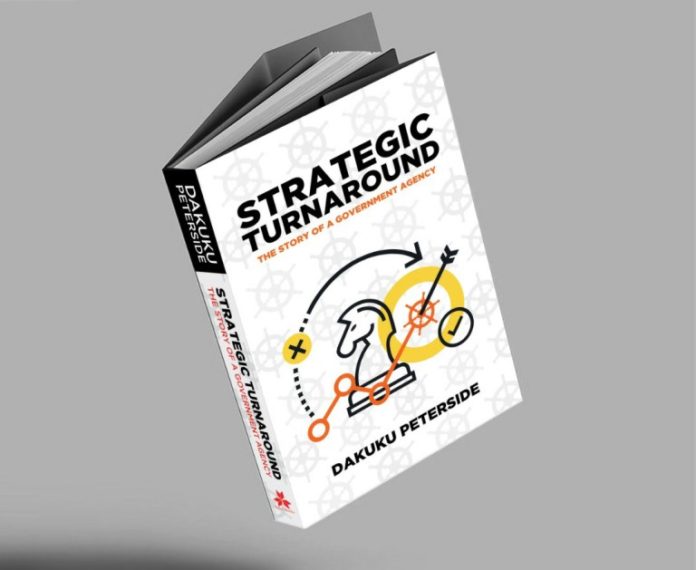
ABUJA – A British don, Professor Chris Bellamy, has commended a book on strategic management in the Nigerian maritime sector written by Dr. Dakuku Peterside, immediate past Director-General of NIMASA.
Bellamy, according to a statement made available to Sundiata Post, said the book, Strategic Turnaround is a definitive case of successful high-level change management and essential insight into the maritime sector of an emerging maritime power”. He further posits “Dr Dakuku Adol Peterside’s book,Strategic Turnaround, showcases the radical reform of the Nigerian Maritime Administration and Safety Agency (NIMASA), and the entire maritime sector in Nigeria by its leaders and key stakeholders”.
The story of how strategic change was initiated, instigated,and successfully managed in the maritime sector in Nigeria has far-ranging relevance within the horn of Africa and beyond. This story is briefly and eloquently told inStrategic Turnaround.
Nigeria is the most populous country in Africa and the seventh most populous in the world with 206 million people in late 2019. Its maritime sector is highly significant: Nigeria has Africa’s largest economy and the 24th in the world, with a GDP estimated by the IMF at about $500 billion. Sometimes called the ‘Giant of Africa’ because of its large population and economy, it is one of the MINT countries named in 2011 – Mexico, Indonesia, Nigeria, and Turkey – having great potential and offering potential great returns on investment in the next decade.
Nigeria’s maritime sector is of great importance, not only for indigenous transport but potentially globally. Oil is one of the critical cargoes. “Nigeria hopes to compete with the Philippines in provision of seafarers. However, it also faces challenges. It lies on the Gulf of Guinea, which in 2013 surpassed Somali-based piracy in the western Indian Ocean as the world hot-spot for piracy and armed robbery at sea” argues Professor Bellamy.
Professor Bellamy, who had the opportunity to preview the yet-to-be-released book, has praises for the story style writing of serious leadership, management, and maritime concepts.
He praised the book for its straightforward narrative that makes it easy for every scholar to understand how Dakuku’s leadership team applied leadership and management principles to change the maritime industry in Nigeria.
Dr. Chris Bellamy is Professor Emeritus of Maritime Security at the University of Greenwich United Kingdom, a former Professor of Military Science and doctrine at Cranfield University, and Editor-in-Chief, International Journal of Maritime Crime and Security.
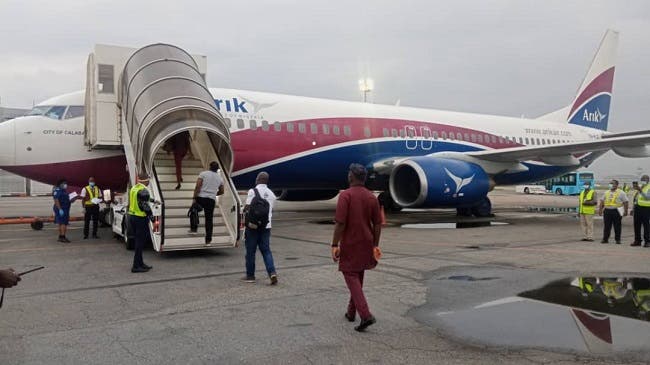
As the effects of the COVID-19 lockdown and the general downturn in the economy bite harder, Arik Air today terminated the appointment of 300 employees.
In a a statement signed by its spokesperson, Mr Banji Ola, Arik Air attributed the sack to the impact of the Coronavirus pandemic on the airline.
The statement reads “Arising from the devastating impact of the COVID-19 pandemic, leading to the constrained ability of the airline to complete heavy maintenance activities and return its planes to operations, stunted revenues against increasing operational costs, the management of Arik Air (in Receivership) has declared 300 staff members redundant to its current level of operations”.
The airline said the leadership of the impacted unions have been contacted to negotiate a redundancy package for the affected staff.
“It is important to note that over 50% of Arik Air’s workforce of over 1,600 staff have been on furlough in the past six months on a base allowance. Decisions to let go of staff is naturally a difficult decision. Arik Air wishes the impacted staff well in their future endeavours”, the statement added.
President Xi Jinping of China, and also the general secretary of the Communist Party of China (CPC) Central Committee, said on Thursday that China has accomplished its poverty alleviation target of the new era as scheduled and achieved a significant victory that impresses the world.
Through eight years of sustained work, China has lifted all rural poor population under the current standard out of poverty and nearly 100 million poor people have shaken off poverty.
Xi made the remarks while presiding over a meeting of the Standing Committee of the Political Bureau of the CPC Central Committee.
China has removed all poor counties from the poverty list, and eradicated absolute poverty and regional poverty, Xi said.
Since the 18th CPC National Congress, the CPC Central Committee has put poverty alleviation in a more prominent position, adopted significant measures with originality and speciality and fought the largest and most vigorous battle in human history against poverty, Xi said.
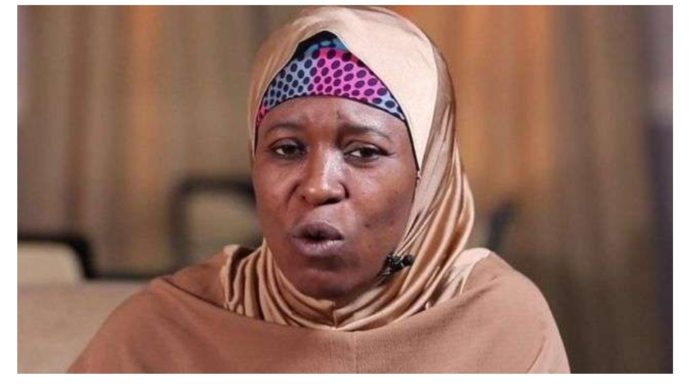
Anti – SARS activist Aisha Yesufu criticizes President Muhammadu Buhari after
The Nigerian Senate has called for the removal of security chiefs and their replacement.
Aisha Yesufu has made it clear that President Muhammadu Buhari is Nigeria’s problem and not the security forces.
Aisha called on Nigerian senators to impeach President Muhammadu Buhari instead of impeachment of security chiefs.
Aisha Yesufu made the announcement on her Twitter account after Channels TV reported that senators had called on President Buhari to remove the security chiefs because they had failed.
According to her: “Buhari is the problem. Get him out”
Shortly after writing, a Twitter user responded to Aisha Yesufu’s remarks.
A Twitter user said the problem was not with the security forces, it was with the person who did not see the need to pass them and the problem was not with President Buhari.
Twitter User added that it was the people who needed President Buhari despite the fact that his actions were seen as the problem.
“But the reality at the time was that, whether it was Boko Haram or not, blood would be more than water, ” he said.
According to him; “D problem is not d Service Chiefs. It is d man wu doesn’t see deir nid 2go. And d problem is not d man himself. It is d ppl wu nids him regardless of wat he does. Now dey panic in deir own abode. But d fact is dat with him, Boko Haram or not, there will b more blood than water. “
Mrs Yesufu said Nigerian senators know how to do it as long as they are serious, but the most important thing is to remove President Buhari.
“Buhari is the main problem and not the security chiefs. Buhari is the one who should go home before the security officers, ” said Aisha Yesufu.
According to her saying; “Again, @NGRSenate has called on the service chiefs to be sacked. If they are serious they know what to do.
But more importantly, the main problem is @MBuhari not the service chiefs, the first who should go home!
Watch my take @ARISEtv Interview yesterday. “
After that, Aisha Yesufu refocused her attention on the attack on BBOG members by the Nigerian Police.
Mrs Yesufu said before we get angry until it comes to those who do not want to see riots and need to stop, we have no protection from what will happen to us, injustice to one person is like injustice to each of us.
“Many applauded when the Nigerian police attacked members of Bring Back Our Girls, ” said Aisha.
According to Yesufu: ” Until we are outraged when it happens to those we do not like and ensure it is stopped, we are not safe from it happening to us.
Injustice to one is injustice to all.
Many applauded when @PoliceNG attacked @BBOG_Nigeria members. “
Watch the ARISEtv Interview released by Aisha Yesufu.”
A coalition of four Civil Society Organisations in Enugu State has appealed to Governor Ifeanyi Ugwuanyi to ensure justice for a 16-year-old girl, Goodness Pius, who was gang raped by five young men in the State.
The coalition are made of Civil Rights Realisation and Advancement Network (CRRAN), Rule of Law and Accountability Advocacy Centre (RULAAC), Parent-Child Intervention Center, and Center for the Victims of Extra-Judicial Killings and Torture (CVEKT AFRICA).
In a petition to the Governor, dated December 1, 2020, which was titled: “Justice for Goodness Pius; Re: ‘appeal for urgent intervention: gang rape of Goodness Pius and infliction of grevious bodily harm on her by Mr. Okwudili and four others,” and was made available to The PUNCH on Wednesday, the coalition said the crime was too grevious to be swept under the carpet.
The petition was signed by Olu Omotayo, President (CRRAN); Okechukwu Nwanguma, Executive Director (RULAAC); Peggy Chukwuemeka, Executive Director (Parent-Child Intervention Center); and Frank Agu, Director Southeast Operations (CVEKT AFRICA), respectively.
They said the appeal became necessary since the police have failed to arrest the suspects, and as Chief Security officer of the state it is incumbent on the governor to ensure justice for all the residents of the state.
The coalition described as disheartening that three weeks after the occurrence of this crime a petition was sent to the State Commissioner of Police, yet the command has refused to arrest the suspects.
While the coalition stated that gang-rape is an offence against the State, and the state should maintain at all times its’ sovereignty and integrity. “The fact that the victim comes from a poor family has been the reason of Police inaction over this matter but we submit that it is the duty of the government to protect all its’ citizens whether poor or rich”
The petition partly read: That Goodness is an apprentice to a petit fruits seller at Proda junction, Enugu. That one Mr. Okwudili also has a provision shop at the same Proda junction.
“On Friday, November 16, Mr. Okwudili was going out in the afternoon and handed his shop key to Goodness and asked her to help him look after his shop but he did not return till the close of work.
“Unable to wait further for Mr. Okwudili, Goodness gave the shop key to Okwudilis’ wife so that she could go home.
“That Monday, November 9, when Goodness got to work, Okwudili claimed that she stole phone recharge cards worth N50,000 only from his shop. Okwudili and his wife invited four secret cult boys who beat Goodness to stupor.
“That Mrs. Prisca Eze (Goodness’ elder sister) said Okwudili and the four cultists took Goodness to her residence and told her she stole phone recharge cards, and continued beating her in her presence. When she asked them to stop beating her sister, they pulled their guns and threatened her.
“After they took her away, she kept searching for her sister until about 5pm when she got Okwudili’s phone number and called him. He asked her to come to Otuku, Emene for her sister and when she got there, he took them to a farmland where he showed them Goodness lying unconscious in a pool of blood with injuries all over her body including her private part.”
The coalition, however, maintained that the case was too serious to be allowed to be swept under, adding that if the rapists were not punished, they would be emboldened to commit more heinous crimes.
A Federal High Court in Abuja, on Friday, ordered that the former Chairman of the defunct Pension Reform Taskforce Team, Abulrasheed Maina, be taken into custody till end of trial.
Maina is answering to a 12-count money laundering charge preferred against him by the Economic and Financial Crimes Commission (EFCC).
His appearance in court on Friday was sequel to his arrest in Niger Republic and extraditiob to the country by the Interpol.
Maina had jumped bail since September 29 and refused to appear for continuation of his trial.
Following his arrest, the Economic and Financial Crimes Commission, EFCC, on Friday, produced him in court.
The anti-graft agency, through its lawyer, Mr Mohammed Abubakar, further applied that he should be remanded in custody of the Nigerian Correctional Service.
Mohammed reminded the court that Maina’s re-appearance was sequel to a bench warrant that was issued against him on November 18.
“We apply for the Defendant to be remanded in prison custody pending his trial, his earlier bail having been revoked,” the Prosecution added.
However, Maina’s new lawyer, Mr Adaji Abel, who said he was only briefed on Friday, opposed the application, even as he prayed the court for a short adjournment.
In a bench ruling, trial Justice Okon Abang said he was inclined to accommodate the new lawyer in the overall interest of justice.
The court however held that the Defendant should be remanded in custody since the bail that was earlier granted to him was revoked on November 18.
The case was subsequently adjourned to December 8 for continuation of hearing.
Why You Should Refuse Plea Bargain. Daily Law Tips (Tip 699) by Onyekachi Umah, Esq., LL.M, ACIArb(UK)
Introduction:
In Nigeria, a suspect/defendant is assumed to be innocent, until proven otherwise by his prosecutor. Where a person is suspected of any crime, the person is to be charged to court and prosecuted. It is the duty of a court to do justice by finding the defendant to be guilty or not guilty, based on evidence presented before the court.
In some circumstances, a defendant may admit to a crime in order for the defendant to be issued a lesser punishment than he would have obtained, if the defendant had gone to full trial; this is Plea Bargain. While this legal abracadabra (magic) may appear harmless and attractive, there are serious reasons a suspect/defendant should avoid plea bargain. This work reveals reasons a suspect/defendant should avoid and refuse plea bargain from any law enforcement agency in Nigeria.
Purpose of Plea Bargain:
The highest court in Nigeria is the Supreme Court of Nigeria. There is no better place to obtain the definition or purpose of any legal invention, than from the Supreme Court f Nigeria. Hence, I will quote the words of the apex court on the purpose of Plea Bargain and I will add nothing more to it.
“The main purpose of criminal trial is to ensure that a person, who has chosen to break any aspect of the criminal law, is not left to go scot free and for this reason, the prosecution has to establish the guilt of an accused person beyond reasonable doubt to pave the way for his punishment by law. The concept of plea bargain has in no way, derogated from the purpose or objective of criminal prosecution, given the fact that before an accused can benefit from the arrangement, the accused in question must plead guilty to some form of offence and, of course, be convicted for what he has pleaded guilty to.”
Rise In Plea Bargain:
Like most government incentives in Nigeria, plea bargain started as an exclusive backdoor for only wealthy persons or politically exposed persons in Nigeria. Plea Bargain is often perceived as the exclusive freedom backdoor for wealthy corrupt persons left open by a corrupt system, since it was employed rarely in non-financial crimes (not just in all financial crimes but financial crimes involving high figures and high-profile offenders).
Recently, there seems to be a rise in plea bargain, especially in the Economic and Financial Crimes Commission (EFCC). While many scholars argue the propriety of plea bargain, it is also argued that plea bargain saves time and resources that would have been spent on court trials.
By the way, it is important that mention that plea bargain increases the number of convictions secured by EFCC. To the Judges, plea bargain reduces the busy court dockets and schedules. If judges are rated by the number of cases they complete within a given time, then plea bargain also aids judges to complete more cases timely.
Realities of Plea Bargain:
Plea Bargain turns a suspect/defendant into a CONVICT without the process of a full court trial. If being a convict matters to a suspect/defendant, then plea bargain must be dreaded. While most suspects/defendants focus on immediate freedom through plea bargain, plea bargain marks such persons with the limiting status of a convict.
In some circumstances where there is sufficient evidence against a suspect/defendant, and such a suspect/defendant has no good defence, plea bargain may be an option. Where a suspect/defendant is innocent, such a person should ensure that full court trial is employed, for at the end, justice must prevail. Although plea bargain saves a suspect/defendant, from the long agonizing and expensive years of court trials, it is not an option for innocent suspects/defendants.
The practice of cajoling suspects/defendants to accept plea bargain even where there is no sufficient evidence against such persons, is highly unprofessional and must be discouraged by all law enforcement agencies. Innocent suspects/defendants must be encouraged to stand up for full trial even where there may spend time in Correctional Centers (Prisons), instead of bowing to plea bargain as a shortcut to freedom.
Conclusion and Recommendation:
Plea bargain is part of criminal procedures and clearly provided for by several laws, including the innovative Administration of Criminal Justice Law of Lagos State, Economic and Financial Crimes Commission Act and the Administration of Criminal Justice Act, 2015. However, plea bargain is not a settlement out of court. It is not a scheme whereby suspects and defendants are forgiven of their crimes by merely returning the stolen items or paying fines.
Plea bargain is rather a legal process where a defendant admits to having committed all or parts of the crimes he/she is charged with and by this the person will be convicted by a court, where the court accepts the plea bargain. Plea Bargain cannot be approved by any law enforcement agency or agent, rather it is only a court of law that can after listening to a prosecutor and a defendant, accept or reject a plea bargain. So, for there to be a plea bargain, a suspect must be brought to court and charges read out to the suspect (now a defendant) for the defendant to accept or deny them (arraignment).
The part that plea bargain turns a defendant to a convict is often not advertised and made pronounced to defendants who seek plea bargain. Those who have no problem in being convicts and ex-convicts without a legal fight, should embrace plea bargain. Let the innocent and persons that wish to put up a legal fight, say no to plea bargain.
Prosecution (proving of crimes against a defendant) is the duty of law enforcement agencies, let them do their job. If a law enforcement agency has enough/sufficient evidence, let it prosecute, after all, it is illegal to offer plea bargain where there is sufficient evidence for the prosecution of a defendant
By the way, a defendant should never accept plea bargain without contacting a lawyer of his choice (lawyers provided by law enforcement agencies are often not suitable for this). It is the right of a suspect/defendant to talk, meet, engage and use ONLY lawyers of his own choice and not any lawyer provided by any law enforcement agency or listed by any law enforcement agency.
My authorities, are:
Sections 1, 2, 3, 36, 318 and 319 of the Constitution of Federal Republic of Nigeria, 1999.
Sections 270, 494 and 495 of the Administration of Criminal Justice Act 2015 and its equivalent in states across Nigeria.
The Supreme Court’s judgement on “Purpose of Criminal trial and the nature and scope of Plea Bargain” in the case of PML (SECURITIES) CO. LTD v. FRN (2018) LPELR-47993(SC).
Speak with the writer, ask questions or make inquiries on this topic or any other via [email protected], [email protected] or +2348037665878 (whatsapp).
To receive our free Daily Law Tips, join our free WhatsApp group via the below link:
To keep up to date on all our free legal awareness projects, follow us via:
Facebook Page:@LearnNigerianLaws, Instagram: @LearnNigerianLaws and Twitter: @LearnNigeriaLaw
Please share this publication for free till it gets to those that need it most. Save a Nigerian today! NOTE: Sharing, modifying or publishing this publication without giving credit to Onyekachi Umah, Esq. and “LearnNigerianLaws.com” is a criminal breach of copyright and will be prosecuted.
This publication is the writer’s view not a legal advice and does not create any form of relationship. You may reach the writer for more information.
Powered by www.LearnNigerianLaws.com {A Free Law Awareness Program of Sabi Law Foundation, supported by the law firm of Bezaleel Chambers International (BCI).}
Inside the distinctive, largely unknown ideology of American policing — and how it justifies racist violence.
Arthur Rizer is a former police officer and 21-year veteran of the US Army, where he served as a military policeman. Today, he heads the criminal justice program at the R Street Institute, a center-right think tank in DC. And he wants you to know that American policing is even more broken than you think.
“That whole thing about the bad apple? I hate when people say that,” Rizer tells me. “The bad apple rots the barrel. And until we do something about the rotten barrel, it doesn’t matter how many good fucking apples you put in.”
To illustrate the problem, Rizer tells a story about a time he observed a patrol by some officers in Montgomery, Alabama. They were called in to deal with a woman they knew had mental illness; she was flailing around and had cut someone with a broken plant pick. To subdue her, one of the officers body-slammed her against a door. Hard.
Rizer recalls that Montgomery officers were nervous about being watched during such a violent arrest — until they found out he had once been a cop. They didn’t actually have any problem with what one of them had just done to the woman; in fact, they started laughing about it.
“It’s one thing to use force and violence to affect an arrest. It’s another thing to find it funny,” he tells me. “It’s just pervasive throughout policing. When I was a police officer and doing these kind of ride-alongs [as a researcher],you see the underbelly of it. And it’s … gross.”
America’s epidemic of police violence is not limited to what’s on the news. For every high-profile story of a police officer killing an unarmed Black person or tear-gassing peaceful protesters, there are many, many allegations of police misconduct you don’t hear about — abuses ranging from excessive use of force to mistreatment of prisoners to planting evidence. African Americans are arrested and roughed up by cops at wildly disproportionate rates, relative to both their overall share of the population and the percentage of crimes they commit.
Something about the way police relate to the communities they’re tasked with protecting has gone wrong. Officers aren’t just regularly treating people badly; a deep dive into the motivations and beliefs of police reveals that too many believe they are justified in doing so.
To understand how the police think about themselves and their job, I interviewed more than a dozen former officers and experts on policing. These sources, ranging from conservatives to police abolitionists, painted a deeply disturbing picture of the internal culture of policing.
Police officers confront protesters in front of City Hall in New York City on July 1.
Police officers across America have adopted a set of beliefs about their work and its role in our society. The tenets of police ideology are not codified or written down, but are nonetheless widely shared in departments around the country.
The ideology holds that the world is a profoundly dangerous place: Officers are conditioned to see themselves as constantly in danger and that the only way to guarantee survival is to dominate the citizens they’re supposed to protect. The police believe they’re alone in this fight; police ideology holds that officers are under siege by criminals and are not understood or respected by the broader citizenry. These beliefs, combined with widely held racial stereotypes, push officers toward violent and racist behavior during intense and stressful street interactions.
In that sense, police ideology can help us understand the persistence of officer-involved shootings and the recent brutal suppression of peaceful protests. In a culture where Black people are stereotyped as more threatening, Black communities are terrorized by aggressive policing, with officers acting less like community protectors and more like an occupying army.
The beliefs that define police ideology are neither universally shared among officers nor evenly distributed across departments. There are more than 600,000 local police officers across the country and more than 12,000 local police agencies. The officer corps has gotten more diverse over the years, with women, people of color, and LGBTQ officers making up a growing share of the profession. Speaking about such a group in blanket terms would do a disservice to the many officers who try to serve with care and kindness.
However, the officer corps remains overwhelmingly white, male, and straight. Federal Election Commission data from the 2020 cycle suggests that police heavily favor Republicans. And it is indisputable that there are commonly held beliefs among officers.
“The fact that not every department is the same doesn’t undermine the point that there are common factors that people can reasonably identify as a police culture,” says Tracey Meares, the founding director of Yale University’s Justice Collaboratory.
The danger imperative
In 1998, Georgia sheriff’s deputy Kyle Dinkheller pulled over a middle-aged white man named Andrew Howard Brannan for speeding. Brannan, a Vietnam veteran with PTSD, refused to comply with Dinkheller’s instructions. He got out of the car and started dancing in the middle of the road, singing “Here I am, shoot me” over and over again.
In the encounter, recorded by the deputy’s dashcam, things then escalate: Brannan charges at Dinkheller; Dinkheller tells him to “get back.” Brannan heads back to the car — only to reemerge with a rifle pointed at Dinkheller. The officer fires first, and misses; Brannan shoots back. In the ensuing firefight, both men are wounded, but Dinkheller far more severely. It ends with Brannan standing over Dinkheller, pointing the rifle at the deputy’s eye. He yells — “Die, fucker!” — and pulls the trigger.
The dashcam footage of Dinkheller’s killing, widely known among cops as the “Dinkheller video,” is burned into the minds of many American police officers. It is screened in police academies around the country; one training turns it into a video game-style simulation in which officers can change the ending by killing Brannan. Jeronimo Yanez, the officer who killed Philando Castile during a 2016 traffic stop, was shown the Dinkheller video during his training.
“Every cop knows the name ‘Dinkheller’ — and no one else does,” says Peter Moskos, a former Baltimore police officer who currently teaches at the John Jay College of Criminal Justice.
The purpose of the Dinkheller video, and many others like it shown at police academies, is to teach officers that any situation could escalate to violence. Cop killers lurk around every corner.
It’s true that policing is a relatively dangerous job. But contrary to the impression the Dinkheller video might give trainees, murders of police are not the omnipresent threat they are made out to be. The number of police killings across the country has been falling for decades; there’s been a 90 percent drop in ambush killings of officers since 1970. According to Bureau of Labor Statistics data, about 13 per 100,000 police officers died on the job in 2017. Compare that to farmers (24 deaths per 100,000), truck drivers (26.9 per 100,000), and trash collectors (34.9 per 100,000). But police academies and field training officers hammer home the risk of violent death to officers again and again.
It’s not just training and socialization, though: The very nature of the job reinforces the sense of fear and threat. Law enforcement isn’t called to people’s homes and streets when things are going well. Officers constantly find themselves thrown into situations where a seemingly normal interaction has gone haywire — a marital argument devolving into domestic violence, for example.
“For them, any scene can turn into a potential danger,” says Eugene Paoline III, a criminologist at the University of Central Florida. “They’re taught, through their experiences, that very routine events can go bad.”
Michael Sierra-Arévalo, a professor at UT-Austin, calls the police obsession with violent death “the danger imperative.” After conducting 1,000 hours of fieldwork and interviews with 94 police officers, he found that the risk of violent death occupies an extraordinary amount of mental space for many officers — far more so than it should, given the objective risks.
Here’s what I mean: According to the past 20 years of FBI data on officer fatalities, 1,001 officers have been killed by firearms while 760 have died in car crashes. For this reason, police officers are, like the rest of us, required to wear seat belts at all times.
In reality, many choose not to wear them even when speeding through city streets. Sierra-Arévalo rode along with one police officer, whom he calls officer Doyle, during a car chase where Doyle was going around 100 miles per hour — and still not wearing a seat belt. Sierra-Arévalo asked him why he did things like this. Here’s what Doyle said:
There’s times where I’ll be driving and the next thing you know I’ll be like, ‘Oh shit, that dude’s got a fucking gun!’ I’ll stop [mimics tires screeching], try to get out — fuck. Stuck on the seat belt … I’d rather just be able to jump out on people, you know. If I have to, be able to jump out of this deathtrap of a car.
Despite the fact that fatal car accidents are a risk for police, officers like Doyle prioritize their ability to respond to one specific shooting scenario over the clear and consistent benefits of wearing a seat belt.
“Knowing officers consistently claim safety is their primary concern, multiple drivers not wearing a seatbelt and speeding towards the same call should be interpreted as an unacceptable danger; it is not,” Sierra-Arévalo writes. “The danger imperative — the preoccupation with violence and the provision of officer safety — contributes to officer behaviors that, though perceived as keeping them safe, in fact put them in great physical danger.”
This outsized attention to violence doesn’t just make officers a threat to themselves. It’s also part of what makes them a threat to citizens.
Because officers are hyper-attuned to the risks of attacks, they tend to believe that they must always be prepared to use force against them — sometimes even disproportionate force. Many officers believe that, if they are humiliated or undermined by a civilian, that civilian might be more willing to physically threaten them.
Scholars of policing call this concept “maintaining the edge,” and it’s a vital reason why officers seem so willing to employ force that appears obviously excessive when captured by body cams and cellphones.
“To let down that edge is perceived as inviting chaos, and thus danger,” Moskos says.
In these situations, the officers aren’t always threatened with a deadly weapon: Floyd, for example, was unarmed. But when the officer decides the suspect is disrespecting them or resisting their commands, they feel the need to use force to reestablish the edge.
A siege mentality
Police officers today tend to see themselves as engaged in a lonely, armed struggle against the criminal element. They are judged by their effectiveness at that task, measured by internal data such as arrest numbers and crime rates in the areas they patrol. Officers believe these efforts are underappreciated by the general public; according to a 2017 Pew report, 86 percent of police believe the public doesn’t really understand the “risks and challenges” involved in their job.
Rizer, the former officer and R Street researcher, recently conducted a separate large-scale survey of American police officers. One of the questions he asked was whether they would want their children to become police officers. A majority, around 60 percent, said no — for reasons that, in Rizer’s words, “blew me away.”
“The vast majority of people that said ‘no, I don’t want them to become a police officer’ was because they felt like the public no longer supported them — and that they were ‘at war’ with the public,” he tells me. “There’s a ‘me versus them’ kind of worldview, that we’re not part of this community that we’re patrolling.”
You can see this mentality on display in the widespread police adoption of an emblem called the “thin blue line.” In one version of the symbol, two black rectangles are separated by a dark blue horizontal line. The rectangles represent the public and criminals, respectively; the blue line separating them is the police.
In another, the blue line replaces the central white stripe in a black-and-white American flag, separating the stars from the stripes below. During the recent anti-police violence protests in Cincinnati, Ohio, officers raised this modified banner outside their station.
A demonstrator holds a “thin blue line” flag and a sign in support of police during a protest outside the governor’s mansion in St. Paul, Minnesota, on June 27.
In the “thin blue line” mindset, loyalty to the badge is paramount; reporting excessive force or the use of racial slurs by a colleague is an act of treason. This emphasis on loyalty can create conditions for abuses, even systematic ones, to take place: Officers at one station in Chicago, Illinois, tortured at least 125 Black suspects between 1972 and 1991. These crimes were uncovered by the dogged work of an investigative journalist rather than a police whistleblower.
“Officers, when they get wind that something might be wrong, either participate init themselves when they’re commanded to — or they actively ignore it, find ways to look the other way,” says Laurence Ralph, a Princeton professor and the author of The Torture Letters, a recent book on the abuses in Chicago.
This insularity and siege mentality is not universal among American police. Worldviews vary from person to person and department to department; many officers are decent people who work hard to get to know citizens and address their concerns.
But it is powerful enough, experts say, to distort departments across the country. It has seriously undermined some recent efforts to reorient the police toward working more closely with local communities, generally pushing departments away from deep engagement with citizens and toward a more militarized and aggressive model.
“The police have been in the midst of an epic ideological battle. It’s been taking place ever since the supposed community policing revolution started back in the 1980s,” says Peter Kraska, a professor at Eastern Kentucky University’s School of Justice Studies. “In the last 10 to 15 years, the more toxic elements have been far more influential.”
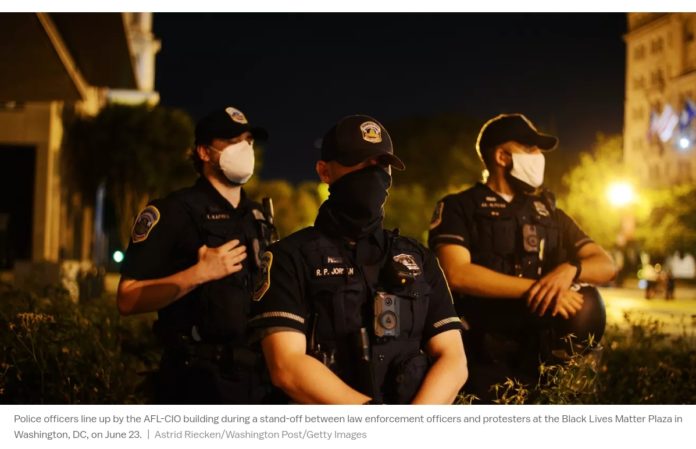
Since the George Floyd protests began, police have tear-gassed protesters in 100 different US cities. This is not an accident or the result of behaviors by a few bad apples. Instead, it reflects the fact that officers see themselves as at war — and the protesters as the enemies.
A 2017 study by Heidi Reynolds-Stenson, a sociologist at Colorado State University-Pueblo, examined data on 7,000 protests from 1960 to 1995. She found that “police are much more likely to try to quell protests that criticize police conduct.”
“Recent scholarship argues that, over the last twenty years, protest policing [has gotten] more aggressive and less impartial,” Reynolds-Stenson concludes. “The pattern of disproportionate repression of police brutality protests found in this study may be even more pronounced today.”
There’s a reason that, after New York Police Department Lt. Robert Cattani kneeled alongside Black Lives Matter protesters on May 31, he sent an email to his precinct apologizing for the “horrible decision to give into a crowd of protesters’ demands.” In his mind, the decision to work with the crowd amounted to collaboration with the enemy.
“The cop in me,” Cattani wrote, “wants to kick my own ass.”
Anti-Blackness
Policing in the United States has always been bound up with the color line. In the South, police departments emerged out of 18th century slave patrols — bands of men working to discipline slaves, facilitate their transfer between plantations, and catch runaways. In the North, professional police departments came about as a response to a series of mid-19th century urban upheavals — many of which, like the 1834 New York anti-abolition riot, had their origins in racial strife.
When talking about race in policing and the way it relates to police ideology, there are two related phenomena to think about.
The first is overt racism. In some police departments, the culture permits a minority of racists on the force to commit brutal acts of racial violence with impunity.
Examples of explicit racism abound in police officer conduct. The following three incidents were reported in the past month alone:
In leaked audio, Wilmington, North Carolina, officer Kevin Piner said, “we are just going to go out and start slaughtering [Blacks],” adding that he “can’t wait” for a new civil war so whites could “wipe them off the fucking map.” Piner was dismissed from the force, as were two other officers involved in the conversation.
Joey Lawn, a 10-year veteran of the Meridian, Mississippi, force, was fired for using an unspecified racial slur against a Black colleague during a 2018 exercise. Lawn’s boss, John Griffith, was demoted from captain to lieutenant for failing to punish Lawn at the time.
Four officers in San Jose, California, were put on administrative leave amid an investigation into their membership in a secret Facebook group. In a public post, officer Mark Pimentel wrote that “black lives don’t really matter”; in another private one, retired officer Michael Nagel wrote about female Muslim prisoners: “i say we repurpose the hijabs into nooses.”
In all of these cases, superiors punished officers for their offensive comments and actions — but only after they came to light. It’s safe to say a lot more go unreported.
Last April, a human resources manager in San Francisco’s city government quit after spending two years conducting anti-bias training for the city’s police force. In an exit email sent to his boss and the city’s police chief, he wrote that “the degree of anti-black sentiment throughout SFPD is extreme,” adding that “while there are some at SFPD who possess somewhat of a balanced view of racism and anti-blackness, there are an equal number (if not more) — who possess and exude deeply rooted anti-black sentiments.”
Psychological research suggests that white officers are disproportionately likely to demonstrate a personality trait called “social dominance orientation.” Individuals with high levels of this trait tend to believe that existing social hierarchies are not only necessary, but morally justified — that inequalities reflect the way that things actually should be. The concept was originally formulated in the 1990s as a way of explaining why some people are more likely to accept what a group of researchers termed “ideologies that promote or maintain group inequality,” including “the ideology of anti-Black racism.”
A demonstrator walks past a mural for George Floyd during a protest near the White House in Washington, DC, on June 4.
This helps us understand why some officers are more likely to use force against Black suspects, even unarmed ones. Phillip Atiba Goff, a psychologist at John Jay and the CEO of the Center for Policing Equity think tank, has done forthcoming research on the distribution of social dominance orientation among officers in three different cities. Goff and his co-authors found that white officers who score very highly in this trait tend to use force more frequently than those who don’t.
“If you think the social hierarchy is good, then maybe you’re more willing to use violence from the state’s perspective to enforce that hierarchy — and you think that’s your job,” he tells me.
But while the problem of overt racism and explicit commitment to racial hierarchy is a serious one, it’s not necessarily the central problem in modern policing.
The second manifestation of anti-Blackness is more subtle. The very nature of policing, in which officers perform a dizzying array of stressful tasks for long hours, brings out the worst in people. The psychological stressors combine with police ideology and widespread cultural stereotypes to push officers, even ones who don’t hold overtly racist beliefs, to treat Black people as more suspect and more dangerous. It’s not just the officers who are the problem; it’s the society they come from, and the things that society asks them to do.
While overt racists may be overrepresented on police forces, the average white officer’s beliefs are not all that different from those of the average white person in their local community. According to Goff, tests of racial bias reveal somewhat higher rates of prejudice among officers than the general population, but the effect size tends to be swamped by demographic and regional effects.
“If you live in a racist city, that’s going to matter more for how racist your law enforcement is … than looking at the difference between law enforcement and your neighbors,” he told me.
In this sense, the rising diversity of America’s officer corps should make a real difference. If you draw from a demographically different pool of recruits, one with overall lower levels of racial bias, then there should be less of a problem with racism on the force.
There’s some data to back this up. Pew’s 2017 survey of officers found that Black officers and female officers were considerably more sympathetic to anti-police brutality protesters than white ones. A 2016 paper on officer-involved killings of Black people, from Yale’s Joscha Legewie and Columbia’s Jeffrey Fagan, found that departments with a larger percentage of Black officers had lower rates of killings of Black people.
But scholars caution that diversity will not, on its own, solve policing’s problems. In Pew’s survey, 60 percent of Hispanic and white officers said their departments had “excellent” or “good” relations with the local Black community, while only 32 percent of Black officers said the same. The hierarchy of policing remains extremely white — across cities, departmental brass and police unions tend to be disproportionately white relative to the rank-and-file. And the existing culture in many departments pushes nonwhite officers to try and fit in with what’s been established by the white hierarchy.
“We have seen that officers of color actually face increased pressure to fit into the existing culture of policing and may go out of their way to align themselves with traditional police tactics,” says Shannon Portillo, a scholar of bureaucratic culture at the University of Kansas-Edwards.
There’s a deeper problem than mere representation. The very nature of policing, both police ideology and the nuts-and-bolts nature of the job, can bring out the worst in people — especially when it comes to deep-seated racial prejudices and stereotypes.
The intersection of commonly held stereotypes with police ideology can prime officers for abusive behavior, especially when they’re patrolling majority-Black neighborhoods where residents have long-standing grievances against the cops. Some kind of incident with a Black citizen is certain to set off a confrontation; officers will eventually feel the need to escalate well beyond what seems necessary or even acceptable from the outside to protect themselves.
“The drug dealer — if he says ‘fuck you’ one day, it’s like getting punked on the playground. You have to go through that every day,” says Moskos, the former Baltimore officer. “You’re not allowed to get punked as a cop, not just because of your ego but because of the danger of it.”
The problems with ideology and prejudice are dramatically intensified by the demanding nature of the policing profession. Officers work a difficult job for long hours, called upon to handle responsibilities ranging from mental health intervention to spousal dispute resolution. While on shift, they are constantly anxious, searching for the next threat or potential arrest.
Stress gets to them even off the job; PTSD and marital strife are common problems. It’s a kind of negative feedback loop: The job makes them stressed and nervous, which damages their mental health and personal relationships, which raises their overall level of stress and makes the job even more taxing.
According to Goff, it’s hard to overstate how much more likely people are to be racist under these circumstances. When you put people under stress, they tend to make snap judgments rooted in their basic instincts. For police officers, raised in a racist society and socialized in a violent work atmosphere, that makes racist behavior inevitable.
“The mission and practice of policing is not aligned with what we know about how to keep people from acting on the kinds of implicit biases and mental shortcuts,” he says. “You could design a job where that’s not how it works. We have not chosen to do that for policing.”
Across the United States, we have created a system that makes disproportionate police targeting of Black citizens an inevitability. Officers don’t need to be especially racist as compared to the general population for discrimination to recur over and over; it’s the nature of the police profession, the beliefs that permeate it, and the situations in which officers find themselves that lead them to act in racist ways.
This reality helps us understand why the current protests have been so forceful: they are an expression of long-held rage against an institution that Black communities experience less as a protection force and more as a sort of military occupation.
Police officers often represent more of a military occupation than a protection force for Black communities.
In one landmark project, a team including Yale’s Meares and Hopkins’s Vesla Weaver facilitated more than 850 conversations about policing among residents of six different cities, finding a pervasive sense of police lawlessness among residents of highly policed Black communities.
Residents believe that police see them as subhuman or animal, that interactions with officers invariably end with arrests and/or physical assaults, and that the Constitution’s protections against police abuse don’t apply to Black people.
“[It’s often said that] if you don’t have anything on you, just agree to a search and everything will be okay. Let me tell you, that’s not what happens,” Weaver tells me, summarizing the beliefs of her research subjects. “What actually happens is that you’re bound to get beat up, you’re bound to get dragged to the station. The police can search you for whatever. We don’t get due process, we don’t get restitution — this is what we live by.”
Police don’t treat whole communities like this because they’re born worse or more evil than civilians. It’s better to understand the majority of officers as ordinary Americans who are thrown into a system that conditions them to be violent and to treat Black people, in particular, as the enemy. While some departments are better than others at ameliorating this problem, there’s not a city in the country that appears to have solved it entirely.
Rizer summarizes the problem by telling me about one new officer’s experience in Baltimore.
“This was a great young man,” Rizer says. “He joined the Baltimore Police Department because he wanted to make a difference.”
Six months after this man graduated from the academy, Rizer checked in on him to see how he was doing. It wasn’t good.
“They’re animals. All of them,” Rizer recalls the young officer telling him. “The cops, the people I patrol, everybody. They’re just fucking animals.”
This man was, in Rizer’s mind, “the embodiment of what a good police officer should have been.” Some time after their conversation, he quit the force — pushed out by a system that takes people in and breaks them, on both sides of the law.
Our site uses cookies. By clicking “Accept All Cookies”, you direct Law and Society Magazine to store cookies on your device and disclose information in accordance with our Cookie Statement: cookie policyACCEPTREJECT
Privacy & Cookies Policy
Privacy Overview
This website uses cookies to improve your experience while you navigate through the website. Out of these cookies, the cookies that are categorized as necessary are stored on your browser as they are essential for the working of basic functionalities of the website. We also use third-party cookies that help us analyze and understand how you use this website. These cookies will be stored in your browser only with your consent. You also have the option to opt-out of these cookies. But opting out of some of these cookies may have an effect on your browsing experience.
Necessary cookies are absolutely essential for the website to function properly. This category only includes cookies that ensures basic functionalities and security features of the website. These cookies do not store any personal information.
Any cookies that may not be particularly necessary for the website to function and is used specifically to collect user personal data via analytics, ads, other embedded contents are termed as non-necessary cookies. It is mandatory to procure user consent prior to running these cookies on your website.








:no_upscale()/cdn.vox-cdn.com/uploads/chorus_asset/file/20064750/GettyImages_1223804672.jpg)
:no_upscale()/cdn.vox-cdn.com/uploads/chorus_asset/file/20064827/GettyImages_1223286806.jpg)
:no_upscale()/cdn.vox-cdn.com/uploads/chorus_asset/file/20064923/GettyImages_1217563708.jpg)
:no_upscale()/cdn.vox-cdn.com/uploads/chorus_asset/file/20064892/GettyImages_1223804665.jpg)

