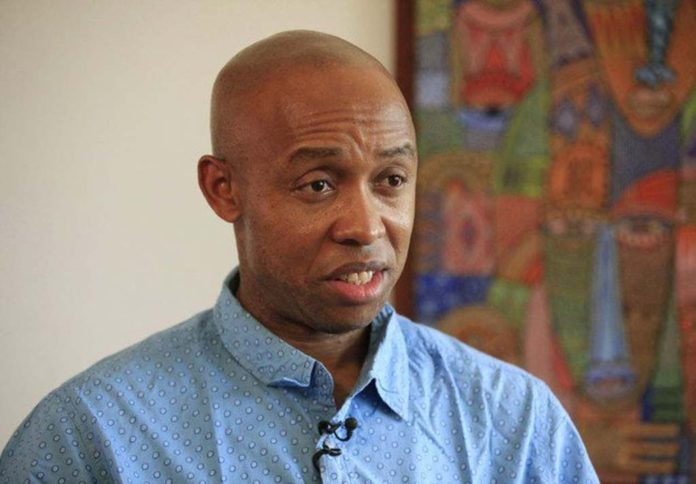
Professor Chidi Anselm Odinkalu was the former Chairman of the National Human Rights Commission, NHRC. He is a human rights activist, lawyer and writer.
He is currently the senior team manager for the Africa Programme of Open Society Justice Initiative. In this interview, he x-rays the fight against corruption by the present administration and gives a damning verdict.
He also argues that the damage which the current Service Chiefs have done will take a long time to heal By Clever Advertising Excerpts: Establishment of EFCC, ICPC has not deterred corrupt practices in the country, how else can we fight corruption? Corruption has been a crime that looks like the only people who commit it are those whom the government doesn’t like or who have fallen out of favour with the President.
The institutions you mention as well as the Code of Conduct Bureau and Code of Conduct Tribunal have been captured for the most part by government. That is why the CCB will be resistant to access to asset declarations by politicians. And why will the CCT issue an ex-parte order to depose a Chief Justice and appoint his successor? You see, as we speak the former Chair of the Asset Recovery Panel, Okoi Obono Obla, is under trial for allegations of corruption. Ibrahim Magu who was at EFCC has been recommended for prosecution.
You will notice that every Chairman of EFCC since Nuhu Ribadu has left under a cloud or been hounded out. I am not even speaking here of inter-agency rivalries as between the Attorney-General and the EFCC Chairman. So, to answer your question briefly, anti-corruption has itself been abjectly corrupted. Some have suggested traditional means of oath taking as a way to discourage corruption, do you think this can work? We are too invested in appearances of piety rather than conviction, honesty and accountability.
There is nothing in the laws or processes to preclude anyone who wants to swear with a matchete or on coral beads or inside a coven full of witches and wizards, from doing so. That is their problem. But no one can be forced or compelled to take an oath in a manner they don’t necessarily believe in or subscribe to. If we have no rational means of nurturing civic virtue and persuading people to take it seriously, all the shrines in Africa and beyond will be irrelevant to us.
Can we find a Nigerian, whether in public or private sector, who is not corrupt? Of course there are loads of honest Nigerians, in the millions indeed. I meet them every day. They are in some of the places we call awful too – police, universities, judiciary, armed services. And some quite corrupt people are also in some of the places we regard as virtuous – like churches and mosques and ashrams and temples and places of worship.
The country has been arrested, however, by bandits masquerading as politicians. Is it possible to rid society of corruption? What is important in my view is to have a country in which people know there will be consequences for corrupt malfeasance. Which part of that is difficult? Nigerians want someone who will do something resolute to diminish corruption, end impunity for it or the selectivity which makes it a crime that only enemies of the President are tarnished with. What are the challenges of fighting corruption? You need capable institutions to do it. And you need determined leaders too. You need clear rules and dedicated professionals who will apply the rules with clarity and consistency. In Nigeria, we run a system that is still largely based on affinity rather than rationality and evidence. That requires committed leadership to change it and we have not had that in a long while, surely not under Buhari. The reason this is so galling is because Buhari explicitly made fighting corruption his campaign platform. That turns out to have been a lie. He didn’t believe it. READ ALSO: We’re not sure of reopening in 2020 ― ASUU regrets No place or vocation is immune to corruption. No place is also immune to virtue. The real challenge is creating a system of rational incentives that encourages civic virtue and discourages vice. That requires fidelity to rules and a sense of fair shakes. The problem General Buhari has is that his regime has no regard for rules and fairness for him means sectional partisanship. In his response to weekend massacre of Borno farmers by insurgents, Buhari said he had given all the needed support to the armed forces to take all necessary steps to protect the country’s population and its territory. What else do you think still need to be done? Where did you see Gen. Buhari’s response? Or where did you hear him speak? We may never know the number of Nigerians killed in Zabarmari, nor their identities. I have read 43, 45, 78, 110. In a sense the filigree of numbers tells you all you need to know really. In any case, these were scores of Nigerians killed in the most gruesome possible manner: bound, gagged, drawn, quartered, decapitated. All for the heinous crime of going to their farms. What has the President done? He is MIA, bunkered inside the presidency. No one can see him. Instead, he sends out one of his horde of inebriated spokespersons to say something deranged as usual and to abuse the victims with the idea that they did not get clearance to go to their farms. President Buhari has gone to Ndjamena. He has gone to Bamako. To get to Bamako, he’d have to overfly Southern Kaduna. To go to Ndjamena, he’d overfly Borno. But he doesn’t have the time to drop in and visit the victims and communities or show he cares. It is evident that as a leader, the man is devoid of empathy or fellow feeling. He cannot say he has given all the necessary support to the armed forces when he has kept the same inept Service Chiefs for over five years while all this death and destruction has unfolded over growing killing field. The consequence is that morale in the officer corps is destroyed. Generations of successor commanders have retired while these Service Chiefs are presiding over a growing despondency in the Armed Forces. Do you believe sacking the Service Chiefs will have any impact? Let me ask you: “Do you believe that keeping these Service Chiefs is the answer to our present security crisis? The damage they have done will take a long time to heal (if at all it will heal). Vanguardngr.com
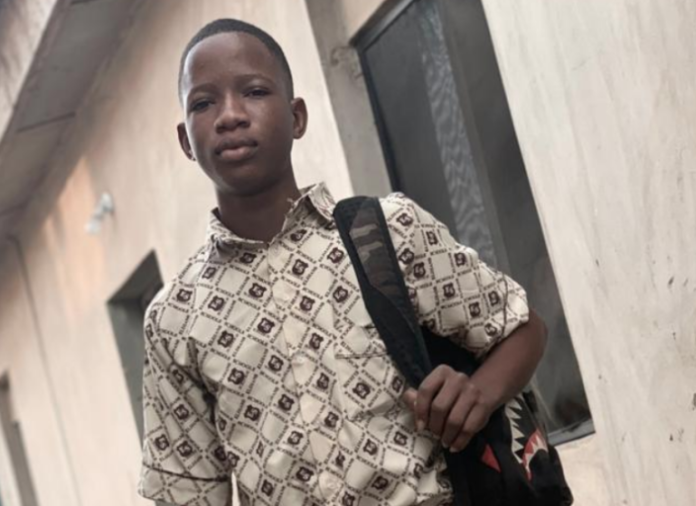
Backpack strapped to his torso and lunchbox subdued by the firm grip of his right palm, Boluwatife Omelaja had left his home at Isawo, Ikorodu for school in Igbolomu — stout and ready to take on the day’s activities. He never knew that bidding his parents goodbye would be the last shot he gets at seeing their smiley faces. It was the same day his school brought home the 14-year-old boy’s corpse to his parents, stating he slumped in front of the class while attempting a mathematical equation.
It all started at around 9:57 am on November 26, 2020. One moment Ramon Omelaja, his father, was busy with an apprentice at his furniture workshop. Another, he was headed for Elihans College in Ikorodu on an Okada after he had received a panic call from the school’s proprietress, whom he said cried over the phone that Bolu, his son, had a medical emergency. According to him, it was along the way that he spotted the school ambulance inside of which he sighted his boy lying motionless in the company of some staff of the school.
“On entering it, I lifted my son’s arms and it fell off lifelessly. I touched and he wasn’t breathing. We started hitting his chest; he didn’t budge. At that moment, I had started weeping. I demanded to know what happened again and I was told they rushed him to a medical centre and were redirected to the General Hospital, Ikorodu. I interrupted, saying, ‘But this boy you say you’re taking to the hospital is actually dead’. Yet, as a father, I hoped that if my son received oxygen therapy, we would be able to resuscitate him,” Ramon said in an interview with TheCable Lifestyle.
“I suggested we head to the nearest hospital since the place where this incident transpired was far from the General Hospital. We got to Victory Hospital, Isawo. They ran tests and noted there was no pulse. Panicky, I pleaded, asking if we can rush him to another medical centre. They agreed. We were still along Isawo road when the husband of the proprietress called. They were coming from home because Victory Hospital, which we got to, is close to them. I had panicked such that I was unsure what to do next. We all headed for another medical centre called Bethel Hospital.
El-Bethel Hospital
“The attendants protested that we shouldn’t have brought him out of the vehicle, noting that they’d rather examine him there. I begged them to get started irrespective. They tested to no avail, at which time I was already sprawling on the ground hysterically. They started asking the proprietress’s husband how he’s related to Boluwatife. As an adult, I knew that sort of question meant something had gone wrong. ‘I’m his father,’ I replied them. ‘Tell me what has happened’. That was when he was declared dead. As Muslims, we’re required to bury our dead under 24 hours.”
It was when Bolu’s elder brother, who was in the SS2 class of the same school, returned that fresh claims surfaced.
‘They left him without medication’ — brother alleges Bolu was flogged, punished
Bolu’s elder brother speaking with TheCable Lifestyle
An older brother to Bolu, who is only one class ahead of the deceased boy, told TheCable Lifestyle that he was in an English class when he was informed his brother had fainted. He said water was poured on his head to resuscitate him while a spoon was stuck into his mouth as in the case of a seizure to prevent a patient from biting their tongue. He said Bolu was transferred to the school’s sickbay, which he said had no one in it as of when he paid a visit.
“I was surprised because he wasn’t sick before then. When I saw him, his face had changed. They took him to the sickbay and, for five minutes, they did nothing. I suggested alongside the vendor woman that he is rushed to the hospital. But we were told a vehicle was coming. Bolu was breathing heavily. This prompted Mr. David, a teacher, to ask if he had asthma. I told him there was no such thing. The bus arrived. My brother was put in while three teachers joined in for the hospital. I asked to follow but Mr. Seun, my teacher said ‘no need’,” the boy (name withheld) narrated.
“I cried back to my class and lost interest in the English session. At this time, my brother’s class in SS1 had started leaking information to my class that Bolu only fainted after he was flogged and that he was initially being accused of pulling a fainting prank. I returned to SS1 and his classmates confirmed the story. I met my teacher during the long break to ask how my brother was doing. He’s said he had recovered but the bus with which they took him had yet to return. I was at the cafeteria when his mates kept saying he was flogged. I went to meet my teacher during the seventh period when I noticed the ambulance had returned to the school without my brother. He said all was well.
“I fetched his bag, trousers, shoes, and lunch box when the school closed because he left only with a shirt. His meal was untouched. I asked my teacher for money to go home because of the luggage I had. I noticed something was off. At home, I met my elder brother and my other younger brother. They were locked out. It was one of my friends in the neighbourhood that took me to the sidelines and broke the news of Boluwatife’s death. That was when I started explaining what happened at the school. My brother and I were both Art students. He was in SS1 and I’m in SS2.”
On November 27, Ridwan Oyewunmi, Bolu’s eldest brother, who went public with the case, alleged the school and one Emmanuel Kayode, a teacher alleged to have flogged Bolu, were trying to cover up what caused the boy’s death.
‘We went to police but it won’t bring Bolu back’ — family backs down on suit, withdraws case
Ridwan: ‘They had time to save his life but left him in sickbay’
On the day TheCable Lifestyle visited the family, Ramon and his eldest son had left home for the High & Magistrate Courts, Ikorodu, to get an affidavit evidencing their resolve not to file a lawsuit against the school. Ramon said they had reported the case to Owutu Police Station in Ikorodu a day after the death. He added that Emmanuel was also asked to write a statement, which he did, but the family decided to withdraw the case after Margaret Okonkwo, the DPO, asked what they would like to do. According to him, he decided he couldn’t go through the rigour of court sittings while mourning the loss of a son.
Ridwan, who expressed doubts about the standard of the sickbay in Elihans College, claimed to TheCable Lifestyle that the school had enough time to have Bolu hospitalised after he was initially resuscitated but didn’t until he died. While corroborating his junior brother’s account, he alledged the school authorities had made up lies to preserve its image in a move that prompted him to go public. Ridwan also mentioned that the family isn’t filing any lawsuit.
“Boluwaife is my younger brother, our second born from my mother’s side. I didn’t intend to raise the alarm. It was when they cooked up a story that my brother slumped without anyone touching him that it became clear I had to do something. One of my brothers narrated what happened when he returned from school but the school denied it, saying no such thing happened. I took to Twitter out of anger. Why would they lie just because they want to protect the school’s image? I was at home that day, on Thursday. Mum left because my dad told her to come,” he explained.
Owutu Police Station
“He talked about oxygen but didn’t tell her anything about my brother. He came back around 11 am; I was sleeping. But he later told me my brother died after the school said he slumped. I was like, ‘How’s that possible when nothing was wrong with this boy?’ It was until around 5 pm before we started hearing the teacher had actually flogged him.
“I was actually pissed because they had enough time to save his life, yet, transferred him to the sickbay instead of taking him to the hospital when he woke up. They had enough time but they abandoned him in the sickbay without any treatment —nothing. They just kept saying the bus was coming until the boy died. We’ve withdrawn the case. Let’s leave everything to God. There’s nothing we can do. If we do anything else, it won’t bring my brother back.”
‘We’re looking into it as directed by CP’ — Lagos police breaks silence as school shuns press
On the case, TheCable Lifestyle visited the police station where Emmanuel is believed to have been held to speak with the DPO but she declined to comment. Muyiwa Adejobi, the Lagos police spokesperson, however, said the force was expecting the report from its investigation. “The matter was not reported to the police. Our attention was called to it in the news. However, the CP (commissioner of police) has directed the DPO to look into it and do the needful. We’re presently looking into the case as directed. We’re waiting for the interim report from the DPO,” he said.
Jolaoso Michael, a staff of the school identified as a vice-principal, was severally contacted but refused to comment. TheCable Lifestyle also reached out to a certain Oludashe, who was identified as a member of the school management, but he stated that he had been ordered to make no comment on the case. TheCable Lifestyle visited the school, which had been shut temporarily with the exclusion of final students, who are presently writing their exams, and was denied both entry and access to the school officials. State government officials deployed to examine the death case also refused to address the press.
Health expert suspects blood sugar drop, says autopsy could have revealed the cause of death
When contacted, Goke Akinrogunde, TheCable’s health analyst, who doubles as chairman of the committee on medical negligence for the Nigeria Medical Association (NMA) in Lagos, deduced that the deceased boy could have suffered a case of hypoglycemia, a medical condition marked by a drop in blood sugar to abnormal levels. He said this could cause a variety of symptoms including loss of consciousness, seizures, or death if not well managed. He, however, noted that conducting an autopsy on the deceased before he was buried would have revealed the cause of his death assertively.
Domestic and Sexual Violence Response Team (DSVRT) deployed to examine the school
“Based on my deductions on the 14-year-old’s case from experience, if the young boy doesn’t have an acute case of any pre-existing illnesses, then he most likely must have missed his breakfast, although it can be added that an autopsy would have brought the cause of the death out assertively, the physical stress of that punishment he was given apparently led to a hypoglycemia crisis. This simply means that his blood sugar could have taken a drop and the body needed to maximally limit stress on the whole system. That’s why one would likely faint,” Goke explained.
“If that was not reversed by the simple mechanism of just taking a bottle of sugary drink, it affects the brain. Since the brain controls heartbeat and respiration, permanent damage can result or even sudden death. For that young child, it’s unfortunate. From the description that the child fainted; was later revived and kept in the sickbay; started gasping for breath, it’s possible it was a problem that started with just missing breakfast. The public health message that some of us have drummed is that there is no basis to have a physiological fast beyond 12 hours of the last meal.
“Before you leave your house, make sure you eat something. It could be two slices of bread. Other combinations can go but make sure that your body doesn’t have sudden blood sugar demands that can cause crisis under stress. Also in the public domain is the campaign that what is worth doing at all is worth doing well. When the government sets up a protocol for school registration, there is always the clause that there must be a sickbay. A sickbay isn’t about having the finest furniture there. There should be qualified personnel. Some require just one, starting from a nurse.
“Others could be as big as the Nigerian Air Force (NAF) schools that you have a doctor and a retinue of experts. This is something we should all emulate because there can be a critical situation like what happened in the Ikorodu school. The presence of a health practitioner would have ensured there was someone to raise alarm and apply first aid. Sometimes, you just need glucose-containing intravenous infusion to save the person. In the absence of that, you have situations like this, which can be checked with a glucometer which should be available in health facilities. So aside from the need to end physical punishment in these schools, they must be equipped no matter how small.”
Lagos commissioner kicks against flogging students, says the school has been summoned
Folashade Adefisayo, the Lagos commissioner for education, reiterated the state ministry’s stance on corporal punishments for students among both public and private schools while speaking with TheCable Lifestyle on Thursday.
She said the ministry has had a policy statement pursuant to the Child Rights Act, which was introduced in Lagos back in 2007. Adefisayo noted that the Elihans College teacher involved has been detained. The commissioner also said that the ministry has initiated procedures to address the school as investigations continue.
A representative of DSVRT speaks with TheCable Lifestyle at Elihans College in Ikorodu
“We don’t allow flogging as a matter of principle. The Child Rights Act states that discipline shouldn’t be punitive but corrective. It is a law but, pursuant to that, we do have a policy statement about flogging. We don’t flog in any Lagos public schools. It’s not allowed. By extension, it applies to the whole school system in the state. So whatever that man did is not allowed. We’ve gone there. The man is under arrest. We spoke with the school principal. We will be having a meeting with her and the owner of the school tomorrow (December 4) in our office,” Adefisayo said.
“You’re not the one who told me about it. Immediately I was informed about two days ago, we went down to the school. So that teacher who flogged the boy denied it but he’s already in police custody. We have seen the parents of the child who was flogged. Quality Assurance (department of the ministry) has done a lot of things. It’s a police case. We won’t do anything in the ministry other than what we have done. As soon as the case is cleared and we’re sure of the directions, we will address the issue of the school. As for the teacher, he’s definitely under arrest.”
Today, a continental court in Africa delivered a landmark opinion on colonial era vagrancy laws, which criminalize activities such as loitering, public indecency, and begging. The judgment has the potential to help reshape criminal justice policy and practice in dozens of African countries and reduce prison overcrowding.
The African Court on Human and Peoples’ Rights issued an Advisory Opinion in response to a case brought by the Pan African Lawyers Union and found that vagrancy laws or bylaws in nearly every country in Africa discriminate against marginalized populations including women, children, people with disabilities, and others.
“These vague and arbitrary laws, rooted in the era of empire law making, are used to arrest and imprison thousands of poor and marginalized people every day including the poor and the homeless, street children, migrants, people with disabilities, sex workers, LGBTI people, and drug users,” said Louise Ehlers, of the Open Society Foundations. “This judgment has the potential to significantly reduce exposure to police violence and incarceration for these communities, both in Africa and in other places grappling with a colonial legacy of vague, discriminatory criminal law,” she said.
The Open Society Justice Initiative filed an amicus brief in the case, citing the urgent need to decriminalize vagrancy laws in light of the COVID-19 pandemic because the laws over-incarcerate poor and marginalized people, putting them at greater risk of contracting the virus.
“It is in the interest of African states to implement this advisory opinion by repealing all vagrancy laws, which reinforce structural discrimination and penalize poverty,” said Stanley Ibe, associate legal officer for Africa at the Open Society Justice Initiative. “Since vagrancy laws contribute to dangerously overcrowded prisons, a hotbed of COVID-19, failing to do so could have disastrous consequences.”
British, French, Portuguese, Dutch, and Belgian colonists used vagrancy laws to control the streets. They were intentionally broad and vaguely defined, giving law enforcement wide discretion to arrest and detain just about anyone.
These laws are still in place in many former colonies. For example, the very same language introduced to British colonies through the English Vagrancy Act of 1824 is still in use today in some places. In Botswana, the Gambia, Nigeria, Seychelles, Tanzania, Uganda, and Zambia, you can still be cited for being a “rogue and a vagabond.” The penal codes of at least 18 former French colonies, including Algeria, Burundi, Burkina Faso, Cameroon, Chad, Comoros, Republic of Congo, Cote d’Ivoire, Gabon, Guinea, Madagascar, Mauritania, Mali, Morocco, Niger, Sahrawi Arab Democratic Republic, Senegal, and Togo contain a similarly worded offense of “vagabondage.”
Today’s African Court opinion provides clarity on the discriminatory nature of these laws. This will bolster efforts to strike them down in domestic and regional courts across Africa and provide a foundation to limit their enforcement by the police in the short term. This pronouncement, coming from Africa’s apex court will also add legal weight and moral authority to broader efforts to address the legacy of slavery, colonialism, and structural racism on the continent.
“This is a significant legal victory as it sends a clear message to policymakers across Africa,” added Ehlers. “These arcane laws have no place in open, inclusive societies and need to be repealed.”
The Open Society Foundations, founded by George Soros, are the world’s largest private funder of independent groups working for justice, democratic governance, and human rights. We provide thousands of grants every year through a network of national and regional foundations and offices, funding a vast array of projects—many of them now shaped by the challenges of the COVID-19 pandemic.
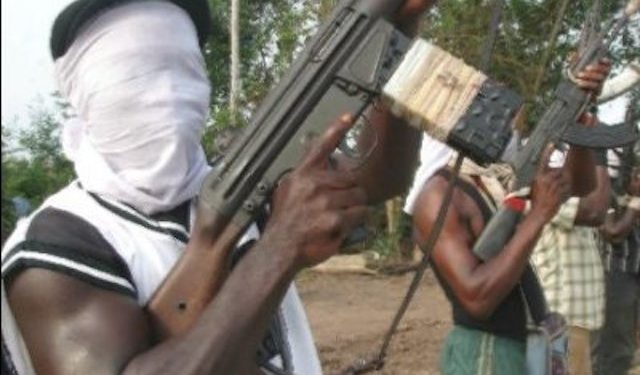
Armed Fulani men on Wednesday stormed a prayer mountain in Wasimi, near Abeokuta.
The armed men who stormed the prayer mountain raided the worshipers collecting cash, phones and other valuables from the worshipers.
Some of the Pastors and worshipers were attacked with machetes. Two middle-aged women and wife of a top Pastor on the mountain were taken away by the armed men.
Witnesses told our correspondent that the armed Fulani men came around 1am on Wednesday shooting sporadically into the air before storming the chalets where they broke the bedrooms and robbed all occupants before taking away the women.
“I was in the auditorium of the Church. The armed Fulani men came around 1am. They attacked me.They divided themselves.Four of them were in the hall. Another four went into the rooms and raided the women. They used cutlasses on me. I was bleeding. They did not stop. I was asked to lead them to the rooms and knock the doors of Pastors” Pastor Sanyaolu who was a victim told Irohinoodua.
He said the gory incidence was reported to the Ogun State Vigilante who came and searched the bush all night.
He said the Vigilante later arrested three of the armed Fulani men who were handed over to the police.
“I have been going to the prayer mountain for the past four years. I have never seen a thing like this. I can’t imagine this would happen” he said.
Irohinoodua was informed that the kidnappers that stormed the CAC Prayer mountain located at Mushin Ayanmo Mosan, Wasimi Abeokuta were all heavily armed.
Some of the kidnapped included Madam Mojisola, Christianah Atolagbe an Evangelist with CAC who were among those visiting the prayer mountain for program of days of fasting from November 23.
One of the victims said the women were kept in the wilderness all through the nights by some six armed Fulani men.
The armed Fulani men later called relatives of the victims using the following numbers 08114022543 and 07042476569 asking for ransom.
A source told Irohinoodua “They demanded for 2million before they could release their captives. Negotiation started or else they said they would. terminate their lives.” He said he was surprised that two high profile men came in two jeeps to the police station with the hope of bailing the arrested suspects who were arrested by the Vigilante.
“What I sense is a well organised crime syndicate” he said.
The source said the case has been transferred to State Criminal Investigation Department, (CID) Eleweran Abeokuta, anti-kidnapping Squad, AKT.
Mr Olusona Durotowluwa whose family members were some of those kidnapped said the activities of the armed Fulani was embarrassing.
He said they attacked pastor Sanyaolu and others before taking away the women.
Another victim Prophet Samuel Awotunde a native of Ilesha , Osun State resident in Ijoko Ogun- State where the headquarters of his Church is situated said worshipers are traumatised and that it would take them a long time to recover.
A member of the Nigerian Human Rights Community (NHRC) that has shown interest in the case in Abeokuta however said he met the victims and that there are complaints that police have collected N300,000 from the victims.
“We have interrogated the victims. The sad aspect is that the police have collected N300,000 from the victims. They claim they need the money to conduct investigation into the case” Suleiman Abiodun a NHRC coordinator in Ogun State told Irohinoodua.
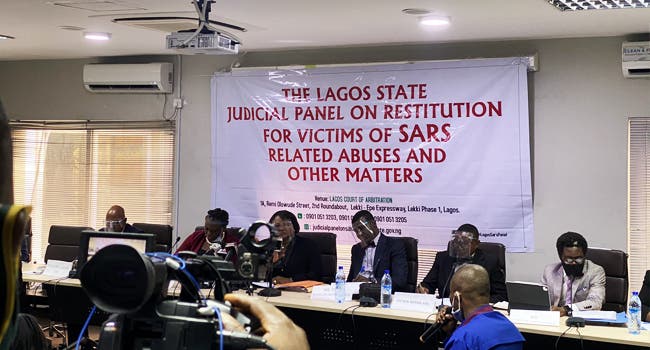
Fifteen #EndSARS protesters who suffered gunshot wounds on 20 October at the Lekki Toll Gate surfaced today at the venue of the venue of the Lagos State Judicial Panel of Inquiry, probing the incident and other police atrocities.
Fourteen of those who appeared today were said to have been shot at Lekki Toll Gate. One was said to have been shot at Ojodu Berger.
On their tail was Mr Nathaniel Solomon, whose younger brother Abouta Solomon was said to have been shot dead at the toll gate.
The deceased had been buried in his hometown in Mubi Local Government Area of Adamawa State.
Aiyedungbe Olufunmi Grace, whose brother died at LASUTH after suffering gunshot injury to the head, also came.
The Nigerian Army has denied allegations that it shot at peaceful protesters, saying it merely fired blanks into the air to disperse the protesters.(thelagostimes)
Some of the victims of the Lekki shooting incident on the 20th of October at the Lekki tollgate have come out to share sad stories of how they survived the horrifying incident and also how they lost loved ones during the incident.
The victims appeared before the Lagos state Judicial Panel on Restitution for Victims of SARS related abuses and relayed their sad stories.
One of them, Edwin Augustine, who still has a bullet in his body, recounted how he went for the protest on that fateful day and was allegedly shot at by the military men who stormed the tollgate where the unarmed protesters were gathered. He said he went to the tollgate with his friend.
”I was at the snooker board that night but I don’t know how to play snooker. I was standing with him while he was playing. I was like let me go and check my phone that was charging. The lights went off and we were like what is wrong?
The next thing I heard was shooting everywhere. The guy that was leading me to the charging point was shot at the side. I received my own on my thigh. Right now the bullet is still inside of me. It has not yet been removed.
The next day I woke up and saw myself at Ikeja General Hospital.
The bullet in me is giving me discomfort and affecting my leg, making it swell every day. Sometimes my leg gets stiff.
Sometimes I wonder why the government is saying they didn’t shoot at us while I am still having the bullet in my body”
Mr. Tunde Odeyemi, the father of another victim, recounted how he met his son in the hospital after the shooting.
I met him lying down, being treated by the corner of the hospital. He couldn’t talk to me, he couldn’t open his eyes. I was surprised to see him in that position.
I had to try and see the doctor so he can be transferred to Ikeja. They wrote a letter that he should be transferred that night but they said there was no ambulance. It was the next day in the night that they brought us to the emergency ward in Ikeja.
That very day, they asked us to go do an X-Ray of the brain. When the doctor studied it, he noticed that there was blood at the front and back of the brain and he said that is why he (the son) cannot say anything now and that when they start giving him drugs, the blood will vanish.
It was about 5 days later that he started talking. He did not get himself well until when they discharged us from the hospital. ”
Mr. Adeyemi said his son was discharged and asked to come back in January to collect date for further checkup. He said he took him to his house and has since employed the service of a nurse who caters for him at home.
Olufunmi Aiyedungbe who was also interviewed spoke about her brother, Aiyedungbe Gabriel Ayoola, who she says died during the protest. A tearful Olufunmi said her deceased brother was shot in the head.
”I am speaking on behalf of my brother Aiyedungbe Gabriel Ayoola. He was shot in the head. We were actually looking for him because he doesn’t stay with us so it was like two days before he passed on that somebody sent this(a message) to me on Whatsapp. They wrote it there that he is at LASUTH and that they are looking for his family. So we went to LASUTH,
They said he was unconscious for like two weeks. By the time we got there, he had opened his eyes and he was moving his hands but he couldn’t talk. They were feeding him through his nose. There were sores all over his body because they did not turn him for a long time. I think he did not get medical attention. That was what led to his death eventually”.
…It is N3, 000 for economy, N5, 000 business and N6000 first class
The Federal Government has approved passengers’ charges on the new Lagos Ibadan rail standard gauge.
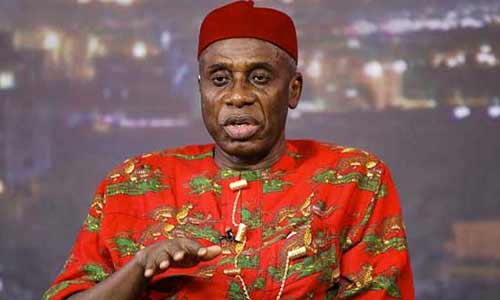
The Minister of Transportation, Rotimi Amaechi, made the disclosure during the inauguration of the Governing Council of the Chartered Institute of Transport Administration of Nigeria (CIOTA) in Abuja on Friday.
The Nigerian Railway Corporation (NRC) Managing Director Engr Fidet Okhiria had said the corporation will begin commercial operation on the Lagos-Ibadan speed train corridor on Monday.
At the second Annual Summit with the theme, “Building Sustainable Transport Infrastructure in Nigeria :Opportunities, Innovations and Technologies,” Amaechi said: “I have received the mandate of President Muhammadu Buhari to inaugurate the Lagos /Ibadan rail project by Jan. 2021 which will makes Nigerians see the way the standard gauge railway looked like.
“Today I approved the charges on passengers from Lagos to Ibadan; we just transfer how we charged from Abuja to Kaduna.
“We charge N3, 000 per Economy seat, N5, 000 for Business class and N6, 000 for First class, the same is applicable to Lagos to Ibadan.
“It should have started running by now before Mr. President inaugurates it by January.”
The minister said there had been tremendous changes in most of the air terminals saying that the Minister of Aviation would inform the public of the completion of Lagos/Kano terminal.
Amaechi promised that the ministry would collaborate with CIOTA to enable them achieved their objectives.
He added that transportation was more than administration but without administration there would be no transportation.
The minister said CIOTA role was critical to the growth of transportation in Nigeria adding that the country had advanced a lot in the area of transportation.
The primary aim and objectives of the Institute is to advance the study, training and practice of transport management and administration in Nigeria regardless of specialization within the industry; and to set standards of practice and determines the knowledge and skills to be attained by persons seeking to become registered members of the Institute and practice as a Chartered Transportation.
CAS Charges Them To Remain Professional In Support Of Air Operations
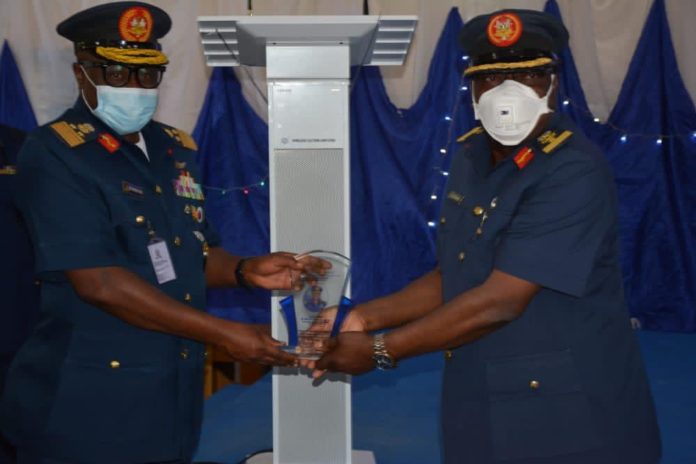
The Nigerian Air Force (NAF) has commenced a 2-day workshop for its head nurses in other to equip them for more effective discharge of their leadership responsibilities whilst remaining professional in the performance of their duties in support of air operations.
In a statement by Air Commodore Ibikunle Daramola, Director of Public Relations and Information, Nigerian Air Force, the workshop, with the theme: Transformational Leadership In Nursing, was inaugurated by the Chief of the Air Staff (CAS), Air Marshal Sadique Abubakar, who was represented by the Air Officer Commanding, Air Training Command, Air Vice Marshal Musa Mukhtar, at the NAF School of Medical Sciences and Aviation Medicine (NAFSMS&AM), Kaduna.
Speaking during the inauguration ceremony, the CAS stated that NAF platforms are operated by personnel who need to be in a state of good health at all times in order to discharge their duties effectively for the Service to achieve its objectives.
He said medical personnel, especially nurses, who are at the frontline of ensuring good health and well-being of personnel and their families, therefore need to be adequately trained and properly motivated for them to perform optimally.
He also observed that current security trends in the country and around the world require transformational leaders, who would think outside the box to find solutions to challenges.
The Air Force Chief noted that it was such considerations that necessitated the holding of the workshop, which, he said, was part of the overall deliberate steps taken by the current Federal Government Administration, since 2015, to improve the capacity of the NAF for greater productivity in all areas of specialisation.
Speaking further, the CAS noted that a collective commitment to excellence was paramount if the Service was to effectively discharge its constitutional roles.
He urged the nurses to be disciplined, proficient, hard-working, loyal and resilient to succeed in their profession. He said the NAF expects a lot from them in setting standards in terms of transformation, loyalty and discipline.
The CAS, therefore, charged them to endeavour to exemplify the sterling qualities for which the noble profession of Nursing is known, whilst epitomising the NAF Core Values of ‘Integrity’, ‘Service before Self’ and ‘Excellence’.
The CAS further encouraged the participants to keep on giving their best in dealing with the security challenges facing the Nation. “I am confident that, with our continued commitment and sustained effort, we shall overcome every threat to the peace and security of our country, Nigeria”, he said.
Air Marshal Abubakar commended the Chief of Medical Services as well as the Director of Nursing Services, for their efforts in building the capacity of NAF nurses.
He also appreciated the Kaduna State Ministry of Health and the Nursing and Midwifery Council of Nigeria for all their support and cooperation towards the improvement of nursing services and education in the NAF.
Earlier in his welcome address, the Commandant NAFSMS&AM, Air Commodore Glenn Nkanang, expressed his appreciation to the CAS for his unflinching commitment to human capacity development as well as his tireless support to the school.
He noted that a total of 65 participants, comprising nurses from all NAF hospitals, medical centres and clinics, were present at the workshop. He further noted that the training underlines the CAS’ vision of ensuring qualitative training of manpower for the NAF and his commitment to supporting the growth of Nursing, in particular, and the Medical Services Branch, as a whole.
Also present at the event were Commanders and Commandants of co-located NAF units.
The World Health Organisation with funding from the European Union has rehabilitated Borno psychiatric hospital in Maiduguri, which was totally destroyed and vandalised by the Boko Haram terrorists in 2013.
The State Psychiatric Hospital was formerly a unit in the State Specialist Hospital before it was relocated to the current location.
The hospital which was built in 1976 with a 48-bed capacity, and having four wards, when it was fully functional was serving the entire North East and three neighbouring countries of Cameroon, Chad and Niger.
Since the destruction by Boko Haram, the hospital has been nonfunctional and totally dilapidated, leading to mentally ailed patients seeking treatment elsewhere, until 2019 when the Government approached the WHO, to facilitate the reconstruction, equipping and restoration of healthcare services to the hospital.
Speaking at the handing over of the rehabilitated hospital to the Borno state government on Thursday, WHO’s Public Health Officer, Henry Okoro-Nwanja expressed gratitude to the European Union for making the funds available for the restoration of healthcare services in the health facility.
Okoro-Nwanja said:” The hospital currently has a 48-bed capacity, with 4 wards as follow: Acute Ward where male patients with functional mental disorders will be admitted; Stable Ward for male patients that are stabilized; Drug Ward for patients with alcohol and drug-related disorders will be admitted; Female General Ward where female patients with all forms of mental disorders will be admitted.
“Other departments include Outpatient Department which also accommodates the Medical Records Department; Occupational Therapy Department, with Social Welfare Section among others.”
He said empirical evidence has shown that the rate of common mental disorders has doubled to as much as 20 per cent comparatively because of the violent conflicts in the State, adding that stressful events such as violence and loss of loved ones, increasing poverty and loss of livelihood, discrimination, overcrowding, and food and resource insecurity, are common in emergencies and can increase the risk of developing mental health conditions.
He said people with severe mental disorders are particularly vulnerable, adding that this by implication, estimates that most of the affected population in Borno, would continue to suffer from a wide range of mental health disorders even after the emergencies and the acute trauma phase is over.
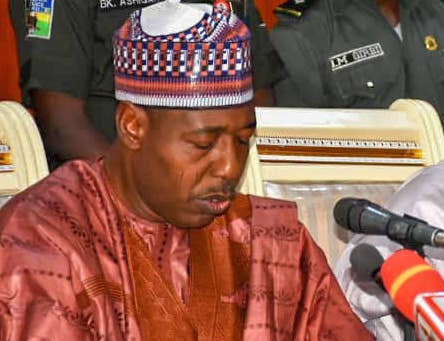
In his remarks, Borno state Governor, Prof. Babagana Umara Zulum thanked the EU, WHO for rehabilitating the hospital, saying that the hospital will go a long way in serving Borno as well as neighbouring countries.
Zulum, who was represented by his Special Adviser on Reconstruction, Rehabilitation and Resettlement, Abdulrahman Abdulkarim, said the state will ensure the maintenance of the facilities in the hospital.
Dr. Anthony Fauci, the US’s top infectious-disease expert, on Thursday doubled down his criticism of the UK’s “rushed” decision to approve Pfizer’s COVID-19 shot – before apologizing and claiming it was a “misunderstanding.”
After the UK on Wednesday became the first Western country to approve Pfizer’s COVID-19 vaccine, EU politicians called the decision “hasty” and “problematic.” Fauci contributed to the criticism on Thursday, telling Fox News that UK regulators hadn’t scrutinized the Pfizer trial data as “carefully” as the US Food and Drug Administration (FDA).
“If you go quickly and you do it superficially, people are not going to want to get vaccinated,” he said.
In interviews with CBS News and Sky News later on Thursday, Fauci doubled down on his criticism, saying the UK had “rushed its approval.”
“They kind of ran around the corner of the marathon and joined it in the last mile,” Fauci told CBS News in an interview for an episode of “The Takeout” podcast, adding that UK regulators “really rushed through that approval.”
“I love the Brits, they’re great, they’re good scientists, but they just took the data from the Pfizer company and instead of scrutinizing it really, really carefully, they said, ‘OK, let’s approve it, that’s it.’ And they went with it,” Fauci said.
He added that the UK had been “severely criticized” by officials in the European Union.
Fauci then walked back on his comments later on Thursday in an interview with the BBC, saying there was “no judgement on the way the UK did it,” and that he hadn’t meant to imply any “sloppiness” from UK regulators. “There really has been a misunderstanding and for that I’m sorry and I apologize” he said. “I do have great faith in both [the] scientific community and regulatory community in the UK.”
Fauci said that if the US had approved the vaccine as quickly as the UK, there would have likely been pushback in society.
“We do things a certain way in the US – possibly a little different, not necessarily better or worse than what’s done in the UK, and that’s where I slipped,” he said.
“Our process is one that takes more time than it takes in the UK. And that’s just the reality,” Fauci told the BBC. “I did not mean to imply any sloppiness even though it came out that way.”
The US hasn’t yet authorized a COVID-19 vaccine. The FDA has arranged a December 10 meeting between a panel independent experts to evaluate Pfizer’s shot, and a decision on whether to authorize the vaccine could come on the same day.
Late-stage trial studies suggest the vaccine is 95% effective at preventing COVID-19.
Our site uses cookies. By clicking “Accept All Cookies”, you direct Law and Society Magazine to store cookies on your device and disclose information in accordance with our Cookie Statement: cookie policyACCEPTREJECT
Privacy & Cookies Policy
Privacy Overview
This website uses cookies to improve your experience while you navigate through the website. Out of these cookies, the cookies that are categorized as necessary are stored on your browser as they are essential for the working of basic functionalities of the website. We also use third-party cookies that help us analyze and understand how you use this website. These cookies will be stored in your browser only with your consent. You also have the option to opt-out of these cookies. But opting out of some of these cookies may have an effect on your browsing experience.
Necessary cookies are absolutely essential for the website to function properly. This category only includes cookies that ensures basic functionalities and security features of the website. These cookies do not store any personal information.
Any cookies that may not be particularly necessary for the website to function and is used specifically to collect user personal data via analytics, ads, other embedded contents are termed as non-necessary cookies. It is mandatory to procure user consent prior to running these cookies on your website.