‘Parents are the pride of their children.’ Proverbs 17:6 NIV
Your child is already in the process of becoming the kind of person he or she is eventually going to be. So to bring them up right and to make them proud of you, live by these six principles: 1) Assure them of your love. They need to know your love is given, and it will never be withdrawn because of their appearance, achievements, or actions. Let them know they are loved for who they are, and that their worth in your eyes is never in question. 2) Build strong character and godly values. ‘Direct your children onto the right path, and when they are older, they will not leave it’ (Proverbs 22:6 NLT). 3) Establish clear boundaries. And be consistent in maintaining them. Do children like rules? No. But your first goal is not to make your child happy, it’s to teach them responsibility, and happiness will follow. 4) Help them to discover their potential. That means listening, observing, and once their talents are identified, helping to develop them. ‘We have different gifts, according to the grace given us…’ (Romans 12:6 NIV). 5) Don’t try to duplicate yourself through them. God gave each of your children their own unique makeup and personality. So don’t try to make them something that God and the rest of us don’t need one more of. 6) Encourage them to pursue their life’s vision. ‘Your young men [and women] shall see visions’ (Joel 2:28 KJV). Don’t pour cold water on the fire of their enthusiasm, fan it. Get out of the critic’s seat and become their greatest supporter. If you do, you will make them proud of you.
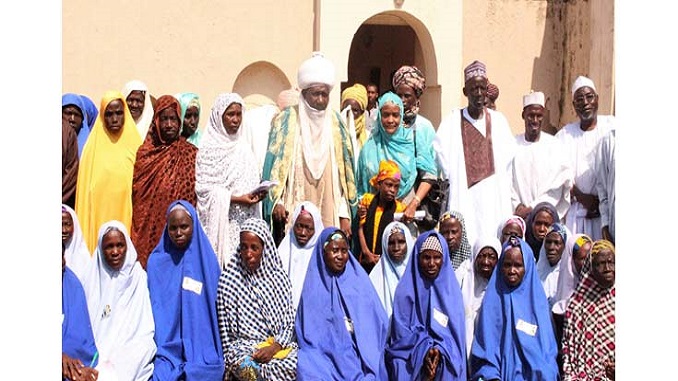
Both the government and men in their communities failed them; but these women knew that to survive, they had to band together.
The story was told of how one afternoon in October 2013, a young woman in Gwammaja area of Kano, North-western Nigeria, went into labour. As time went on, it became clear that something was wrong. Those around tried to reach her husband, but he seemed to have vanished. They wanted to take her to the hospital, but they did not know if she could afford the costs or if they could even get there on time.
Running out of options, a child was sent to find Hajiya Gambo. By the time she arrived, the woman had given birth, but the placenta was trapped. Hajiya Gambo, who had received midwife training just a week earlier, helped remove it safely.
It was only two weeks later that the woman’s husband resurfaced. Only close family members knew of his vanishing act. They asked no questions and, in order to protect his reputation, they kept it quiet.
Disappearing men
This was not the first time Hajiya Gambo had been called in to help a woman in labour. Nor was it the first time a pregnant woman’s husband had suddenly gone missing. According to locals, it has become a trend for men to disappear when their wives go into labour. They reportedly do this to avoid having to pay any financial costs associated with childbirth and secure in the belief that their wives will be looked after one way or another.
“When you ask them why they abandon their wives, they say it’s because they don’t have money,” says the Hajiya. “This has been going on for years.”
It was because of this recurring problem that she established the Maraban Alheri Women Development Association in 2007. In the first half of 2020 alone, the organisation supported at least nine women whose husbands disappeared during childbirth.
The association is made up of around 30 members of the community. Most have little education and work as petty traders, henna designers, local perfumers, or tailors. Though their incomes are small, the women contribute an average of N7,000 ($18) each month. When someone in labour needs to go to the hospital, this fund is used to pay the costs. The association’s members have also received some external midwife training for occasions when it is not feasible to take someone to hospital.
For all the women they support, the association records the mother and newborn child’s health status in case it is relevant for future health needs. It is all written down in Hausa.
Important interventions
As well as supporting women in childbirth, Maraban Alheri Women Development Association has also been branching out into more preventative measures. For instance, members sometimes go house to house to educate women and men about family planning. In the past, this has led to some pushback.
“They said things like they don’t understand the process or pills [or that] they don’t trust them”, says Hajiya Gambo of men that have argued against their suggestions. “Then later they said children are a gift from God and shouldn’t be stopped from coming…How can you insist that your wife keep getting pregnant and yet run away when she goes into labour?”
Because of these kinds of responses, the association often advises women to take matters into their own hands.
“Just last week, I witnessed a woman bleed so much during childbirth,” says the Hajiya. “Her husband had run away when she started showing signs of labour…It was her eighth child and I knew that if I did not act fast before her husband resurfaced, we will still be back here in a year or two so I told her I would have the doctor administer a five-year birth control plan for her.”
The woman was hesitant at first but eventually agreed.
Acknowledging the difficulty of influencing men in the community, the association has tried a range of strategies. One has been to persuade local imams to intervene when husbands run away or refuse to do family planning. Hajiya Gambo says the religious leaders usually just ask her to talk to the men instead.
Another has been to run background checks on men before they marry.
“We also encourage women whose daughters are getting married to come to us and let us know who the prospective husband is,” says Memuna Musa, 50, a member of the association. “We then conduct background research into his personhood and make sure that he’s fit to have a wife.”
Members do this by going into the man’s neighbourhood and asking key questions. Does he help his mother around the house? Does he provide financial assistance to his family? Is he kind? Who are his friends? Has he been known to engage in fights? Is he Islamically grounded? What does he do for a living? Has he ever been caught engaging in criminal activities?
Navigating patriarchy and poverty
The Maraban Alheri Women Development Association in Kano is a microcosm of a much bigger phenomenon. That of local women mobilising to support each other in navigating the hazards caused by patriarchy and, often, poverty.
With little institutional recognition or backing, the group has helped multiple women who were abandoned by both their husbands and the larger system. In this environment, the association has become ever more important and has grown in scope over the years. It has even begun providing some women with capital to start small businesses and raised money to support women who fall sick.
The grassroots nature of the association has allowed it to be responsive to its members’ needs in this way, but this also presents a big and ongoing challenge if it is to sustain its work and continue growing.
“It is obvious that these women have the capacity to act with larger impact but they just don’t have the resources,” says community development expert Fakhrriyyah Hashim. “How do we create a link of contact with authorities and these women that ensure they don’t run out of money?”
2 out of 10 deliveries attended by skilled birth attendants in Kano
Meanwhile, research has revealed that only 21.5 per cent – two out of ten deliveries in Kano State are attended by skilled birth attendants.
The research which was conducted by Nigeria Health Watch traversed 49 facilities in 44 local government areas.
Presenting the report, Managing Director of Nigeria Health Watch, Vivianne Ihekweazu, said the percentage of facilities that offer maternal and child health (MNCH) services is very low.
“Results from the Primary Health Care Centres (PHCs) assessed reveal that many seem to lack some component of the basic requirements as outlined by the National Primary Health Care Development Agency (NPHCDA) minimum standards for PHCs,” said Mrs Ihekweazu.
“However, it is evident that significant effort has been made to improve health services in Kano State, as well as increasing funding to the state’s health budget.”
The director revealed that Kano State is one of the few states allocating over 15 per cent of the state budget to health services.
Mrs Ihekweazu said the results of the monitoring also revealed that there is poor power supply in many of the primary health centres.
According to her, health care services are being performed in facilities with insufficient infrastructure.
“There are appears to be a shortage of staff, especially doctors as results show that almost 90 per cent of the PHCs assessed do not have a doctor. Only 17 primary health centres indicated that a pharmacy technician was posted to their facilities. Only seven facilities indicated that they had an ambulance driver. 35 PHCs said there was no security posted there.
more gender-neutral or gender-specific terms. But it appears that the debate will not end soon because of the ingrained popular cliché: “It is a man’s world”.
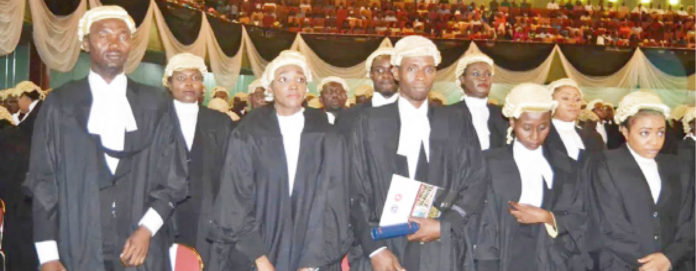
The legal profession has many androcentric terms such as “gentlemen; sir; my lord and chairman which are masculine but used for both the male and female genders.
On several occasions, female lawyers and judges are made to affix their status to their names such as “Miss”, “Mrs.” and “Ms.” during introductions in court or in legal documents, while the male lawyers and judges are not required to do so or can use general terms like “Mr.”.https://secureframe.doubleclick.net/container.html?ecs=20201209
Daily Trust has observed that when judicial panels of three males and two females preside over cases, the media downplay the contributions of the females by referring to the team as “five-man panel” rather than “five-member panel”.
A former Chief Justice of Nigeria, Justice Walter Onnoghen, in 2017, cautioned against making females to identify themselves as Miss or Mrs. in court.
According to Justice Onnoghen, the use of the legal title or suffix “Esquire” is sufficient for all lawyers or barristers, adding that it is not mandatory in the rules for female lawyers to state their marital status.
Some lawyers traced the practice of identifying female lawyers and judges with male titles as part of the tradition of the legal profession, which they explained would take a long time to correct.
Nigeria as a member of the Commonwealth of Nations; being a former colonial territory of Britain, derived its legal origins from the English Common Law. The British influence in both procedural and substantive laws in Nigeria can be seen even in the dressing, address and courtesies in court.
A member of the Nigerian Bar Association (NBA) Women Forum, Ozioma Izuora, said there was no consensus among the concerned female members of the legal profession on a change of how they were formally addressed.
Izuora noted that many female judges even felt uncomfortable to be addressed as “Your Worship” or “My Lady” instead of “My Lord”; which is masculine.
She said, “It is not just in the legal profession; it is in the armed forces and the media.”
“We are hoping that with time people can change. But as it is, some women have succumbed to the direction that the poll swings.
“In the NBA, they will tell you that until the constitution is changed, there is no provision for ‘chairperson’; that there is no ‘chairperson’ on the ballot.
“When I was Vice Chairman of NBA, I insisted on being called ‘vice chair’, but when I signed documents, I signed as ‘vice chairman’.”
A law research expert, Chinelo Ogbazo, said the challenge was that there were not enough women in the top echelon as justices of the profession; whether as Justices of the Supreme Court or Senior Advocates of Nigeria (SAN), to push for a change in the narrative.
Ogbazo said, “It is a combination and the tradition of the bar. In fact, they say there are no women in the profession. They will tell you ‘gentlemen in skirt’.
“The idea is that the profession is for stronger people; depicting women as weak. Therefore, if a woman must be in the profession, she is a man.
“So, that is why you see people calling female justices ‘sir’ instead of ‘ma’; or ‘your lordship’ instead of ‘your ladyship’.”
Many gender advocates in other parts of the world see the terms with which female lawyers and judges are addressed with as awkward, sexist, antiquated and discriminatory.
A journalist, Sharmila Bhowmick, in an interview with the Indian Times, said, “Classifying women into Miss/Mrs. is patriarchal. A woman’s life is defined by the various stages of her being possessed by a man. Before possession she is a ‘Miss’, after possession, ‘Mrs’, and if possession falls through, she is ‘Ms’.”
In his reaction, the Director General of the Nigerian Institute of Advanced Legal Studies (NIALS), Prof. Tawfiq Ladan, said the lack of gender sensitivity in references in the legal profession could be traced to about 100 years tradition of the legal profession inherited from the colonial masters as a male-driven, conservative profession.
However, he said the situation was changing gradually as many female justices in Kenya, South Africa and even those at the African Court of Human and Peoples’ Rights were now referred to as ‘your ladyship’.
Of the about 120,000 lawyers in Nigeria, there are more males than females.
But Prof .Ladan said this had nothing to do with masculine references to female lawyers and judges, explaining that male dominance was changing rapidly.
He said, “There is no gender disparity or discrimination whatsoever when it comes to enrolment into the Nigerian law faculties or the law school or call to the bar.
“If you meet the criteria, you are admitted. And I can tell you that the older generations of the federal universities that have law faculties such as ABU Zaria, University of Lagos, University of Ibadan and UNN had 55 per cent of females as against 45 per cent in the last 10 years that I know of as Chairman of the NUC Accreditation Panel.
“Twenty five years ago, you could see more males than females, but I can tell you that in the last 10 years, I have seen in the law faculties more females than males.
“With regards to employment; whether on the bench as judges and magistrates, or in private practice, it is about additional qualifications and placements and interviews.”
He further said if there were discriminations forty years ago, the Court of Appeal would not have produced Justice Zainab Bulkachuwa as president for almost nine years, and another female replacement in Justice Monica Dongban-Mensem
He pointed to the meritorious appointment of five female justices in the current Supreme Court and the earlier rise of the first female CJN, Justice Mariam Aloma Mukhtar, in the last 10 years.
He explained that, “The same thing applies to the payroll which is already computed based on particular qualities of salary grade structure which is neutral or blind and doesn’t really focus on gender.
“The same thing applies to the legal academia, in the last 10 years that I know, we have had more females actually joining the academia of the law faculties than the males.
“In the last 10 years, we have had more female Deans of Law as professors than in the last 30 years. Currently, the Dean of Law of UNN, Prof. Joy Ezeilo, is a lady; the Dean of Law, University of Lagos, is a lady, Prof. Ayo Atsenuwa; the former Dean of Law in Lagos, Prof. Chioma Agomoh, is a lady; and the current Deputy Vice Chancellor, Academic, at the Nnamdi Azikiwe University, Prof. Carol, is actually from the Law Faculty; the former Dean of Law, University of Ibadan, Prof. Bamgbose, is a lady.”
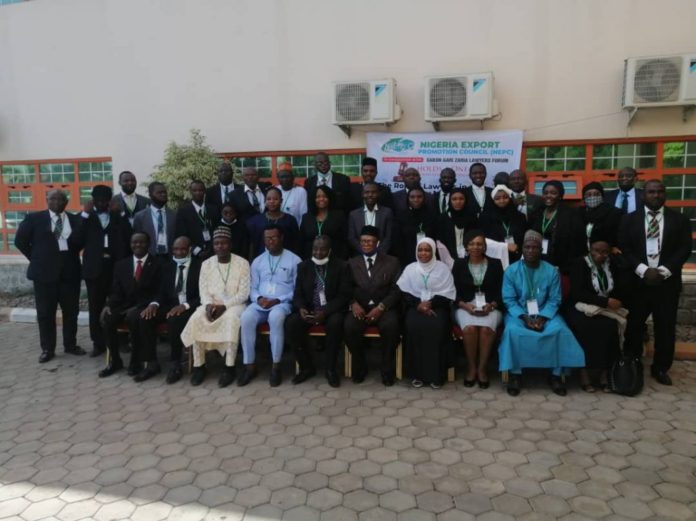
The Nigerian Export Promotion Council (NEPC) took its promotional mandate to another level at a highly interactive and engaging outing with a crème of lawyers in the north western part of the country. On the 4th December, 2020, at the cozy Fabs International Hotel, GRA, Zaria the NEPC in collaboration with the Sabon Gari Zaria Lawyers Forum (SGZLF) held a one day workshop/continuing legal education on the role of lawyers in export activities. The workshop was declared opened by the Presiding Judge, High Court of Justice of Kaduna State, Zaria Judicial Division.
In attendance at the workshop numbering over fifty, were judges, practicing lawyers and professors of law drawn from the academia. In his welcome address the Chairman of the Forum, Dr Abubakar Is’haq enjoined the participants to be conscious of the opportunities in their environment and bring sound ethics to bear in the discharge of their duties to their clients. He reminded them that the driving philosophy behind the SGZLF is the professional development of their members and the need to infuse sound ethics in the relationship with clients as the mother NBA has always advised.
He welcomed the partnership between the NEPC and the SGZLF towards professional enhancement of lawyers and the overall need to diversify the Nigerian economy to leverage on the immense endowments of the country. He advised all to take advantage of the benefits of this training and improve themselves. In declaring the event formerly opened, Justice Dabo enjoined the participants to ensure their practice of law in the contemporary world is competitive and knowledge driven. He pointed out the importance of diversification in the practice of law and certainly export business is one area. Mr Ben Achor Esq the lead resource person from NEPC educated the participants on the activities lawyers can undertake in the export business to make the market easily accessible and rewarding for exporters.
In his paper, he talked about incentives in the export trade that a lawyer can advise his clients on or take advantage off as an exporter. Properly educated, a lawyer can make a living as export consultant in rendering proper legal advice on export processes or drafting necessary and important legal documents on export transactions. He directed the participants to the website of the NEPC for more information. He took the listening audience on memory lane on the establishment of the NEPC, functions and management of the Council and the giant strides the Council has attained over the years in the discharge of its mandate. Though very rewarding to the individual business man as exporter, export activities can be tricky for the unwary, hence the need for proper guide in advising clients and the importance of engagement with NEPC for proper guide on current regulations, the market for export and the processes.
He invited the participants to visit the NEPC website and feel free to advance their suggestions for improvement in the area of the mandate of the Council or even amendment to the enabling law of the NEPC. There was a flurry of questions and answers bothering on how lawyers can fit into the export trade activities. A good number of the participants sought to know how they can obtain very current information on export regulation to be in a position to properly encourage and advise their clients. The members suggested that more information be displayed on the NEPC website and requested for more of this kind of fruitful interaction.
In appreciation, the SGZLF presented a Certificate of Appreciation to the Council through the resource person Ben Achor Esq and Mrs. Amina Ibrahim. The participants received their certificate of attendance.
Speaking after the workshop, Mr. Mamuda Suleiman Shehu, Esq. and a group of young lawyers who attended the workshop thanked the organisers of the programme and vowed to leverage on the immense opportunity this training has offered them.
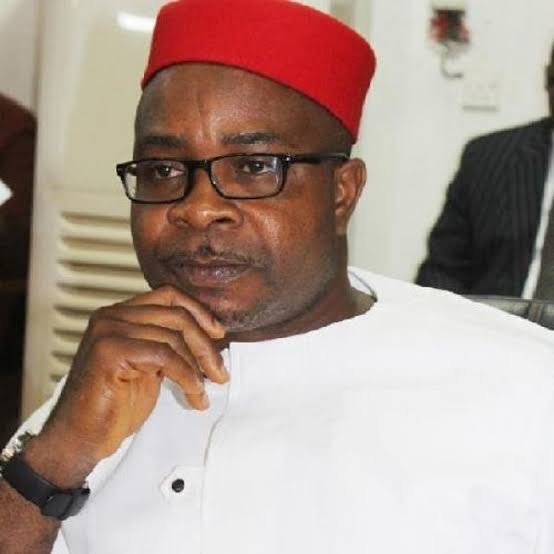
The Anambra State Government has congratulated James Eze, the Chief Press Secretary to Governor Willie Obiano, for winning the 2020 Association of Nigerian Authors (ANA) Poetry Prize at the weekend.
James Eze won the coveted prize with his critically acclaimed debut collection of poems, Dispossessed, at the just ended 39th ANA International Convention which took place in Ilorin, Kwara State.
Governor Obiano quickly called Eze to congratulate him on hearing the news, according to the Anambra State Commissioner for Information and Public Enlightenment, C. Don Adinuba, who disclosed that many other cabinet members have also praised the author, describing the ANA prize as “the shape of things to come”.
ANA Prizes are Nigeria’s longest-running literary prizes and arguably the most respected because they represent the opinion of writers on the art and craft of their fellow writers.
James Eze’s prize came exactly one year after Dispossessed was published to a grand reception by critics and fellow poets and writers in Awka, the Anambra State capital.
The book has since been given pride of place by leading online retailers in the US, Canada, UK, Australia, Germany, South Korea, Ireland, South Africa, India and Russia.
Some poems were read at a session of the Anambra State Executive Council on publication, becoming pergaps the first time poems were read at any cabinet in Nigeria’s recent history.
James Eze’s Dispossessed which bears the subtitle “poetry of innocence, transgression and atonement” is indeed a revelation structured in the lower case style of the great American avant-garde poet, EE Cummings.
With poetic influences from such immortal poets as Christopher Okigbo, Pablo Neruda, TS Eliot, Ezra Pound and W.B. Yeats, it is little wonder that James Eze beat all comers to win the ANA Prize for poetry.
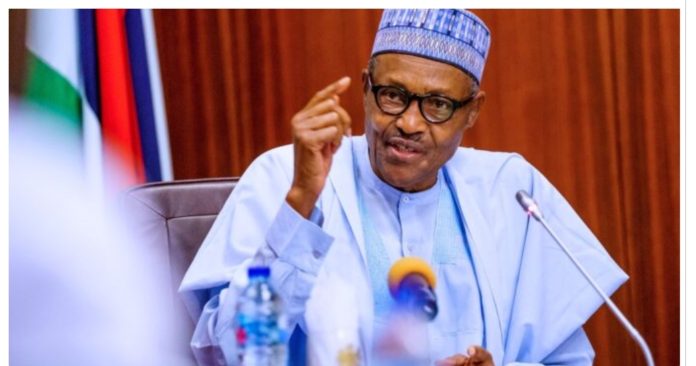
President Muhammadu Buhari has warned criminals against hiding behind lawful and peaceful protests to disrupt peace and order in the country.
Buhari issued the warning on Monday while virtually declaring open the chief of army staff’s annual conference 2020.
The president said anyone found wanting will be dealt with decisively, adding that peace and stability in the country is not debatable.
The warning comes amid the reconvergence of some #EndSARS protesters in Lagos.
In October, the #EndSARS protest took place across different locations in the country for about two weeks.
The protest was later hijacked by hoodlums which led to loss of lives and destruction of property.
Buhari used the occasion to commend the Nigerian armed forces for their efforts at restoring law and order in various states during unrest.
He described the year as a very challenging one, citing the COVID-19 pandemic and its impact on the economy.
Buhari said: ”Despite this, I am pleased to note that the Army remained resolute in the discharge of its Constitutional roles and in keeping the wealth and welfare of our soldiers a priority.
”The Army’s support of Civil Authorities in the management of the COVID – 19 Pandemic is a case in point.
”Also, the peaceful elections conducted in Edo and Ondo States would not have been achieved without the high level of professionalism displayed by all security agencies, including the Army,” he said at the conference themed “Human Capacity Development in Sustaining Professionalism and Responsiveness of the Nigerian Army in the Discharge of its Constitutional Roles.”
He commended the army for its commitment towards curtailing the activities of insurgents, armed bandits, kidnappers, cattle rustlers and other criminals through ongoing exercises and operations in different parts of the country.
”I have also been briefed about the tremendous successes that have been achieved by troops during the ongoing Operation FIRE BALL in the North East,” he said.
”I charge you all to sustain these efforts until the full restoration of peace and security in the nation is achieved.”
The president paid his tribute to military officers who lost their lives on duty while commiserating with their families, comrades and friends.
He pledged that his administration will not relent in its efforts to take adequate care of families of fallen heroes.
”It is in line with this that the Army as part of its welfare initiative and in line with the Federal Government’s housing programme is undertaking the Housing Scheme for families and next of kin of troops that were killed in action in the fight against insurgency and other criminalities in the country,” he said.
”I believe this initiative will act as a huge morale booster to the troops on the frontlines as well as project the Army in good light.
”On our part, I assure you that this administration will continue to do all within available means to provide for your operational and welfare needs.”
…..At least another 100 all-electric charging stations to open in next 5 years
Abuja (Sundiata Post) – The UK’s first station solely for electric cars has opened, ahead of a larger rollout of green energy infrastructure over the next five years.
The site, which has 36 charging points, opened in Braintree, Essex, on Monday.
Gridserve, the company which built the forecourt, intends to open at least another 100 all-electric stations in the next five years as part of a £1 billion project.
The chargers are carbon neutral as all the energy comes from solar power, according to the start-up.
The forecourt in Braintree also has shops and facilities including meeting pods and electricity-generating exercise bikes for those waiting for their vehicles to charge.
Toddington Harper, the founder and CEO of Gridserve, suggested the initiative will help “move the needle on climate change” by “updating the traditional petrol station model for a net-zero carbon world”.
James Cleverly, the cabinet minister who is MP for Braintree, praised the opening of the all-electric forecourt, claiming it is “the most advanced charging facility in the world”.
The launch of the site comes a month after the prime minister pledged to ban sales of new diesel and petrol vehicles by 2030, a decade earlier than initially planned.
The government also plans to reduce carbon emissions by 68 per cent by 2030 with the aim of reaching net zero by 2050.
Although this move has been welcomed by campaigners, some have called on the government to be more ambitious.
Last week, John Sauven, executive director of Greenpeace UK, said Boris Johnson was doing the right thing by setting out “one of the most ambitious climate targets in the world”.
“But given the urgency of the climate crisis and the rapid advances in zero carbon solutions, ambition can be pushed even higher over the next decade,” he added.
Mr Sauven also said action was now needed on “homes, roads, farms and power sources” to help the UK reach its environmental target. (Channels TV).
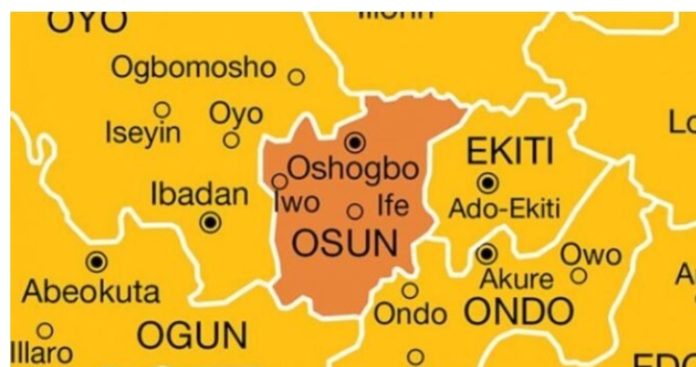
Some protesters under the aegis of Face of #EndSARS Movement, on Monday, hit the streets of Osogbo, Osun state capital, to demand good governance in the country.
This is despite the warning issued by President Muhammadu Buhari that the federal government will not allow a repeat of the #EndSARS protests that rocked the country in October.
The protesters converged on Ogo-Oluwa area of the state and marched to the state house of assembly where they demanded an audience with the leadership of the house.
Led by one Emmanuel Adebisi, the demonstrators were seen with different placards that read: “We are not fighting for any political party; #End Bad Judiciary in Nigeria; #End fake judicial panel of Inquiry in Osun; Unfreeze all the frozen account; We are Nigerian youths.”
The protesters called for the release of all detainees arrested during the demonstrations in October and also asked the Central Bank of Nigeria (CBN) to unfreeze the accounts of protesters.
The first wave of the #EndSARS protest, which led to the disbandment of the special anti-robbery squad (SARS) of the police force, degenerated into chaos in different parts of the country.
There was destruction of private and public facilities as well as lootings and killings.
In Osun, Justrite superstore and some other private stores were looted and vandalised while some buildings were razed.
The convoy of Gboyega Oyetola, the governor, was also attacked while he was addressing the protesters at Olaiya junction in Osogbo.
Oyetola was whisked away from the protest ground after some persons in the crowd hurled stones at his direction.
One person died in the incident while two cars in the governor’s convoy were damaged.
The state government claimed the attack was an attempt on the governor’s life. (TheCable )
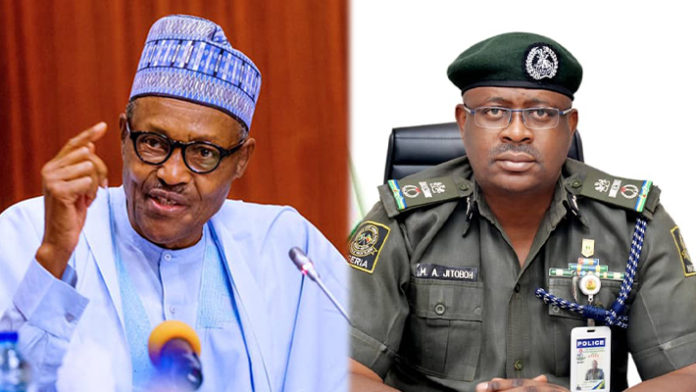
President Muhammadu Buhari has engineered a desperate and sectional move to hedge out yet another southerner from clinching a crucial federal position under his administration, Peoples Gazette can report, all aimed at elongating the northern grip on the nation’s security architecture.
The Gazette over the weekend uncovered a deep-laid plot to suddenly promote Moses Jitoboh, an assistant police inspector-general from Bayelsa, to a higher rank of deputy inspector-general, despite having nine service years remaining and currently not the most-senior AIG from the South-South.
Section Seven of the Nigeria Police Act 2020 (PDF) has positioned Mr. Jitoboh, 50, as the only qualified officer to become the next inspector-general out of all the 24 AIGs currently in the Nigeria Police Force.
The presidency-induced promotion scheme, if allowed to stand, will all but guarantee Mr. Jitoboh’s elimination from consideration as the next police inspector-general; while clearing a dubious path for another northerner to take over from Mohammed Adamu.
At least four sources at the Force Headquarters, Police Service Commission and the State House told the Gazette that Mr. Buhari was part of the strategy to forcibly promote Mr. Jitoboh to DIG in order to make his enduring stay in the police untenable beyond February 1, 2021 — when all his DIG peers will retire with Mr. Adamu.
To advance the plan, a deputy inspector-general has summarily retired from service under apparently puzzling but undisclosed circumstances, the Gazette reported on Sunday citing police sources.
Michael Ogbizi, from Cross River, handed in his early retirement filings late November, even though he had barely two months left to properly retire alongside Mr. Adamu and other colleagues from the 1986 course.
Michael Ogbizi
Following Mr. Ogbizi’s exit, Mr. Adamu swiftly requested for Mr. Jitoboh’s annual performance evaluation results (APER) in order to recommend him for urgent promotion to DIG, police document obtained by the Gazette showed. Extant police leadership order requires a deputy inspector-general from each of Nigeria’s six geopolitical zones to make up the police management team.
The Gazette’s findings showed that none of the six DIGs representing the six geopolitical zones in the police management structure is eligible for appointment as IG, having fallen short of the required years of service mandated by law.
The police service records showed that two of the DIGs — Celestine Okoye (Southeast) and Lawal Shehu (Northwest) are due for retirement in December 2020, while Aminchi Samaila Baraya (Northeast), Anthony Ogbizi Michael (South South) and Adeleye Olusola (Southwest) will retire alongside IG Adamu (North central) in February 2021. DIG Sanusi Lemu (North central) is expected to proceed on retirement in January 2023.
Of many one
The most-recent police staff list (PDF) obtained by the Gazette showed that there are 24 general duty officers in the rank of AIG. Previously, either of the 24 officiers could have been appointed as IG by the president.
But the new police law signed by Mr. Buhari in September 2020 mandated that only an officer with at least four more service years’ grace could be appointed as IG.
Twenty-three of the 24 AIGs are up for retirement between January 8, 2021 and March 1, 2023, either based on enlistment or age. Only Mr. Jitoboh, the youngest of them all, has more than eight years left in service — twice the legal requirement.
Eligible AIG
Mr. Jitoboh’s status should have triggered his preparation to take charge of police affairs from Mr. Adamu, a Muslim northerner from Nasarawa, in two months’ time.
But the president and his associates are loath to accept a Christian southerner of Ijaw extraction with the potential to lead the police for nine years — and are now racing to circumvent the law and pave the way for four northern commissioners of police to be the only available candidates for the top law enforcement office.
After being handicapped by law from using an unqualified AIG from the North to replace Mr. Adamu, Mr. Buhari has decided to hurriedly promote several commissioners to the position of AIG. The law requires that an IG can only be appointed from a position no less than AIG, i.e.: only a DIG or an AIG could be made an IG.
Recent administrations have, however, adopted the convention of appointing IGs from AIGs. Senior ranking officers (DIGs) are summarily sacrificed when a junior colleague is appointed in furtherance of the controversial practice.
There are currently 89 officers in the rank of commissioner in the police, but only 20-24 of them can be promoted as AIGs to replace the current 24 AIGs who will either be promoted as DIGs or forced to retire alongside Mr. Adamu in February.
But out of the 24 commissioners that the presidency is looking to promote to AIG, only four of them have at least four years left in service. And all the four are northerners.
They are: Hafiz Inuwa from Jigawa (Northwest, retiring 2024); Dasuki Galandachi from Kano (Northwest, retiring 2025); Habu Sani Ahmadu from Sokoto (Northwest, retiring 2025) and Bala Ciroma from Yobe (Northeast, retiring 2025).
Eligible police commissioners
After resolving that only northern police commissioners will meet the legal requirements to become IG out of the 24 potential commissioners to be promoted to AIG, the presidency then sought to finalise Mr. Jitoboh’s promotion as DIG forthwith, police sources said.
Mr. Buhari’s associates quickly found an ally in Mr. Ogbizi, who agreed to proceed on retirement to create an excuse for promoting Mr. Jitoboh to become the new DIG for the South-South.
Mr. Ogbizi’s sudden decision to initiate his own voluntary retirement in late November when he could have just waited for additional two months when he would be officially due to retire has continued to unsettle senior police officers from the South.
“We are still shocked that he agreed to such a desperate plot to deprive another officer from his own region the opportunity of being the next IG,” a police chief told the Gazette under anonymity over the weekend, adding that officers are still seething about the “messy plots.”
Following Mr. Ogbizi’s retirement, Mr. Adamu on November 26 asked Mr. Jitoboh to forward his annual performance results for 2018 and 2019 within a week, according to a memo obtained by the Gazette.
police wireless message
The Force Headquarters is now preparing to forward Mr. Jitoboh’s records to the Police Service Commission to approve his promotion as DIG.
But Mr. Jitoboh is not the most-senior AIG from the South-South. Austin Agbonlahor from Edo is scheduled for retirement in August 2021 and should have been the one promoted to replace Mr. Ogbizi in the police management team, staff records showed.
The Gazette learnt that Mr. Ogbizi was told by the presidency that he would be made the next chairman of the EFCC if he agreed to go along with the plan.
EFCC Officials used to illustrate the story
Reached for comments, Mr. Ogbizi asked the Gazette to always confirm information before reporting. He declined to elaborate on whether he was responding to our enquiry on why he suddenly retired from the police or the information that he was being promised the top position at the EFCC. Police and presidential spokespersons declined requests seeking comments from the Gazette.
‘Dyed-in-the-wool sectionalist’
A PSC source said the presidency had already informed the commission to expedite Mr. Jitoboh’s promotion. But the official said the process would be stalled because there was no basis to circumvent the law to prevent the officer from becoming the next IG.
“Quite frankly, we have no basis to ignore the law because we want to prevent one man from attaining a position in the police,” a PSC official said. “The fight is currently being fought from within.”
Ikechukwu Ani, a spokesman for PSC, told the Gazette that no decision has yet been made to promote Mr. Jitoboh as DIG, although the matter would be discussed at the next plenary scheduled to hold anytime from this week.
A presidency source also confirmed to the Gazette that two meetings had been held over the past week on who would be the next IG, and it was concluded that Mr. Jitoboh should be frustrated from getting the position in favour of Mr. Galandachi.
“I can confirm that Dasuki Galadanchi is the first option of the president to become the next IG,” the presidency source said under anonymity to comment on an internal matter.
President Buhari’s strong stance against the emergence of Mr. Jitoboh follows his pattern of nepotistic appointments into top positions, said police reform activist Okechukwu Nwanguma — considering that top military and national security positions are currently filled by northerners appointed by Mr. Buhari.
“The president must immediately withdraw from this plot and the police council should also immediately reject it,” Mr. Nwanguma said. “An IG whose loyalty would be to the law and the people rather than to one man that created a path for him to emerge.”
Mr. Nwanguma described Mr. Buhari as a ‘dyed-in-the-wool sectionalist’, calling on him to ensure compliance with the law he signed and allow Mr. Jitoboh to be elevated to the top police job.
Despite glaring evidence, the president has frequently denied allegations of being sectiontional, often citing his appointment of ministers from southern states without noting that it is a constitutional requirement for all states to have at least one minister in the federal cabinet.
Yet in 2017, Mr. Buhari declined to appoint Walter Onnoghen as the Chief Justice of Nigeria, despite a looming constitutional crisis. But when he fell ill and was flown to London for an extended medical treatment, Vice-President Yemi Osinbajo quickly moved to avert the crisis by forwarding Mr. Onnoghen’s name to the Senate for confirmation.
Walter Onnoghen
Barely two years later, Mr. Buhari ultimately plotted the inglorious ouster of Mr. Onnoghen, a southern Christian, expectedly sourcing his replacement from the North.
In 2018, Mr. Buhari oversaw the infamous removal and controversial replacement of Matthew Seiyefa, a former acting director-general of the State Security Service from Bayelsa. After seeing that the senior positions from which he could appoint the next SSS DG were occupied by southerners, Mr. Buhari ignored them to name Yusuf Bichi from Kano, years after he retired from service.
Last year, Azuka Azinge was removed from office as registrar-general of the Corporate Affairs Commission (CAC) on allegations of false assets filings. Mrs. Azinge was subsequently replaced with a northerner and was never prosecuted to the purported allegations.
Ex-PenCom chief Chinelo Anohu was similarly booted out of office and her position immediately ceded to the North.
Senate Minority Leader, Enyinnaya Abaribe
Senate Minority Leader, Enyinnaya Abaribe had kicked against Mr. Buhari’s nomination of a Northeast candidate to replace Ms. Anohu as PenCom DG, in flagrant breach of the PenCom Act, which mandates the president to appoint a replacement “from the geopolitical zone of the immediate past member of the vacated office” in the event of a vacancy.
“I recall that the tenure of the incumbent (Ms. Anohu) was truncated therefore, the new letter from the president that has now moved the chairman of the commission to another zone may not be correct because it is against the law setting up the National Pension Commission,” Mr. Abaribe had argued on the floor of the Senate in September.
Appreciation and depreciation of currency is not related to race or color or who is the president be it Hausa Igbo or Yoruba. It is basically about production of goods and services and the demand of your products in the world market. A confused country that produces almost nothing will never meet up, policies only control your currency not the value of another countries currency against yours.
A country where over 500 industries died within 30 years must be stupid to complain of depreciation of her currency. We keep killing local industries and expect policies to make it up, it’s a joke sir. Don’t use China as an example if depreciating currencies and strong economy, China produces and may attract more export with that strategy unlike Nigeria that produces nothing.
A country where someone carried $2+billion simply to be shared is already a doomed one in terms of monetary policy and value. A country that produces Dizeani and Bafarawa who spent billion to appease demons. Those money without economic value is an economic poison injected into the system.
A country that favours importation over local production is doomed because it creates employment for another country while sacking her own citizens. Some people are working in Michelin and Dunlop somewhere, yet we use the tyre here. Don’t tell me principle of comparative advantage here, it’s not applicable.
A country that exports all raw materials without adding value is shameless to talk of depreciation of currency, to later re-import finished products of that materials is the peak of daftness. A bag of cocoa will go for like N1 million naira but when it is processed it will worth around N7million. Even farmers who produced raw cocoa can’t buy chocolate.
A country that deliberately operate banking system that gives loans to importers at the expense of local industries is doomed and should say nothing about depreciation. Most of the loans are given to senators and representatives not industrialists.
A country that give loans in billions to agric sector without monitoring & evaluation of such loan on how it gets to the real farmers is a sham. A guy collected over N2 billion agric loan, he bought a jeep, built a nice house and use the rest to import processed pork. Meanwhile, local pork farmers are dying here. Is that not a double tragedy, stressing forex at the same time killing local industries.
A country that spend more on few privileged politicians at the cost of the populace who are unemployed should not talk about money depreciation. A country that keeps paying NNPC staff N10 billion as salaries every month when a single drop of petrol was not processed shout shut up about depreciation of currency. Crime is rising as value added to the initial failure.
A country where it is difficult for investors to register businesses because of the governent officials demanding for bribe. Right from airport, to hotel, to minister to governors investors will bribe, all these are part of cost of investment. A friend brought investor on estate development just for the state commissioner in charge to demand 30% of the investment. To see the governor in a state will cost you N2 million as bribe before you can be scheduled. This is a state as poor as anything.
A country where the cost of travelling for treatment abroad by officials will build world class hospitals should not talk about naira against dollar parity. Money taken to that trip is part of stress on forex. Same as forex spend on pilgrimage, let religion fanatics keep off me here. Without going to Mecca or Jerusalem you can still make heaven. You waste forex on pilgrimage to later be talking rubbish about forex.
A country where few people have access to federal reserve and those few can get loans are not because of what they can produce but the connection they have, is that country not gone already?
A country where we import what we produce because it’s cheaper over there is gone.
A country that has arable land, teaming idle youths and still complain of hunger should not talk about currency depreciation. It’s annoying.
A country where free money flows can never control inflow and outflow of forex. Imagine someone who wants to hide his loot went to Aboki to buy dollars worth $50 million just to hide it in the basement of his house. That money has no economic value yet it deprived those companies that need it to import raw materials, those companies go to Aboki to buy at exorbitant price.
A country where a strong bank owners can influence shares from within Stock Exchange room to inflate their shares worths from N20 to N150, crash the same share to N30 and ready to buy it back at N28 all within a year. Forget it, currency will never appreciate in such economy.
A country where banks are involved in round tripping and inflated cost to siphon money is doomed. A company wants to import caterpillar worths $50,000. A bank made the forex $550,000 meanwhile no caterpillar was imported at last yet the money faded into private accounts. Who strain forex in that case?
Our site uses cookies. By clicking “Accept All Cookies”, you direct Law and Society Magazine to store cookies on your device and disclose information in accordance with our Cookie Statement: cookie policyACCEPTREJECT
Privacy & Cookies Policy
Privacy Overview
This website uses cookies to improve your experience while you navigate through the website. Out of these cookies, the cookies that are categorized as necessary are stored on your browser as they are essential for the working of basic functionalities of the website. We also use third-party cookies that help us analyze and understand how you use this website. These cookies will be stored in your browser only with your consent. You also have the option to opt-out of these cookies. But opting out of some of these cookies may have an effect on your browsing experience.
Necessary cookies are absolutely essential for the website to function properly. This category only includes cookies that ensures basic functionalities and security features of the website. These cookies do not store any personal information.
Any cookies that may not be particularly necessary for the website to function and is used specifically to collect user personal data via analytics, ads, other embedded contents are termed as non-necessary cookies. It is mandatory to procure user consent prior to running these cookies on your website.