Home Blog Page 1134

Like Zamfara, Sokoto closes boarding schools over Kankara schoolboys abduction

The Sokoto state government has ordered the immediate closure of 16 boarding schools over insecurity.

This development comes two days after Bello Matawalle, governor of Zamfara, ordered the closure of boarding schools around the state’s borders with Katsina and Sokoto states.

Last Friday, over 300 schoolboys were abducted by gunmen in Kankara, Katsina state.

Abubakar Shekau, Boko Haram leader, claimed responsibility for the abduction, but Aminu Masari, governor of Katsina, disputed the claim, saying the kidnappers are bandits and not members of Boko Haram.

In a statement on Thursday, Muhammad Bello, the governor’s special adviser on media and publicity, said the decision was reached at the state’s 17th security council meeting held at the government house.

He quoted Aminu Tambuwal, the state governor, as saying “the schools were to be closed, temporarily for two weeks”.

“This followed the brief received by the Council from the State Commissioner for Basic and Secondary Education, Dr Muhammad Bello Abubakar Guiwa on the security situation in the affected areas and the threats this portends,” he said.

“The affected schools are: Government Girls Model Secondary School, Illela; Sultan Muhammadu Tambari Arabic Secondary School, Illela; Gamji Girls College, Rabah; Government Secondary School, Gada; Government Secondary School, Gandi and Government Secondary School, Goronyo.

“Others were: Government Secondary School, Isa, Government Secondary School Sabon Birnin Gobir, Boarding Primary School, Isa, Boarding Primary School, Balle and Boarding Primary School, Jabo.

“The remaining are: UBE Junior Secondary School, Sabon Birni, Government Secondary School, Kebbe, Government Secondary School, Tureta, Government Technical College, Binji and Olusegun Obasanjo Technical College, Bafarawa.”

Bello said the governor directed the ministries of basic and secondary education and those of science and technology to “temporarily merge the students of the affected schools with those of other schools for the continuation of their studies pending the improvement in the security situation of the affected areas”.

He said principals of the affected schools are to comply with immediate effect.

TheCable

At 78, seek forgiveness of your sins, not celebration, S/West PDP tells Buhari

President Muhammadu Buhari has been told to use the occasion of his 78 birthday to seek forgiveness for the sins he committed against the people of the South-West Nigeria, rather than going about celebrating in the midst of his own people, whose over 300 children are being held captive by terrorists.

The People’s Democratic Party (PDP) in the South-West, which congratulated the President for reaching the age of 78, said God must have kept him so that he can have enough time to ruminate over his past misdeeds and seek restitution.

In a statement on Thursday, by the party’s Zonal Director of Media and Publicity, Lere Olayinka, President Buhari was reminded how as Military Head of State, he frustrated the progress of the the South-West, abandoned the region when he was Chairman of the Petroleum Trust Fund (PTF) under late General Sani Abacha and has done nothing for the region since 2015.”

The South-West PDP said one of President Buhari’s major disservice to the people of the zone was the cancellation of the Lagos Metroline project embarked upon by the government of Alhaji Lateef Jakande, adding that; “The Metroline project was scrapped by Buhari at a loss of over $78 million to the Lagos tax payers. If Buhari had not cancelled that project, transportation in Lagos would have been better than it is now.

The party said; “Today, we thank God for taking our President this far and congratulate him for attaining 78 years.

“However, it is expected that Mr President will be honest enough to see today as an opportunity to seek forgiveness for his sins, especially the ones he committed against the people of the South-West.

“It is on record that in 1984, he impounded the international passport of the late sage, Chief Obafemi Awolowo and prevented him from visiting his doctors at Mayo Clinic, Rochester Minnesota, USA. The passport was only returned to him with courtesies by General Ibrahim Babangida in 1985. It was however too late as Awolowo died in 1987!

“It is also on record that with President Buhari’s directive, Chief Olabisi Onabanjo was abducted by military men while recuperating from a surgical operation at the Lagos University Teaching Hospital. He was sent to Bauchi prison.

“President Buhari sent our notable leaders like Onabanjo, Jakande, Chief Michael Ajasin, Bola Ige, Chief Bisi Akande and others to jail for committing no offense other than showing commitment to the development of the region and welfare of the people.

“Curiously, in April this year, when he was granting state pardon to those he sent to jail as military Head of State, the President did not remember to extend this pardon to Chief Bisi Akande, despite being his party man and one of those who ensured his electoral victory in 2015 and 2019.

“Therefore, Mr President, as you celebrate your 78 birthday, take heed to this wise counsel and seek forgiveness from the Almighty Allah (Subhanahu wa ta’ala) and the people you have caused untold sufferings, especially those in the South-West.”

Theexpressng

Nigeria: Time Freezes For Purposes Of The Statute Of Limitation When An Action Is Instituted: The Supreme Court’s Decision In Sifax V Migfo

Introduction

On 16 February 2018, the Supreme Court of Nigeria unanimously decided in the case of Sifax Nigeria Ltd v Migfo Nigeria Ltd1 that where a statute of limitation prescribes a time frame within which a claimant must file an action in respect of his grievances, time will stop running against the Claimant from the moment an action is commenced. The Court further stated that even where the action is instituted in a court that lacks jurisdiction and is struck out for that reason, the time expended in the wrong court will be discounted for purposes of computation of time under the relevant statute of limitation.

Facts of the Case

Sometime in 2005, the Federal Government of Nigeria, through the Bureau of Public Enterprises and the Nigerian Ports Authority, decided to concession Terminal ‘C’ of the Tin Can Island Port in Lagos. Sifax Nigeria Ltd. (Sifax/1st Appellant), Migfo Nigeria Ltd. (Migfo/1st Respondent) and Denca Services Ltd (Denca/2nd Respondent) (the parties) agreed to make a joint bid for the concession and joint management of the said terminal. The parties entered into a Memorandum of Understanding (MoU) dated 27 May 2005, by which they agreed to work together as joint venture partners if they emerged as the preferred bidders. They also agreed to incorporate a “special purpose vehicle” which would be used to operate and manage the terminal. Under the MOU, the parties agreed that Sifax, Migfo and Denca Services Ltd (the 2nd Respondent) would hold the shares in the proposed SPV in the ratio of 40%, 30% and 30% respectively, and that the respective Chairmen or Chief Executive Officers of these companies would be entitled to be appointed as directors of the said SPV.2

When the joint bid succeeded, the 1st Appellant incorporated an entity known as ‘Ports and Cargo Handling Services Ltd'(the 5th Appellant) along with the 3rd and 4th Appellants, and to the exclusion of Migfo and Denca (the Respondents).

Consequently, the Respondents filed an action against the Appellants at the Federal High Court seeking an order of specific performance of the terms of the MoU. Judgment was given in favour of the Respondents at the Federal High Court and on the Appellants’ appeal to the Court of Appeal, the appeal was dismissed, and the Federal High Court’s decision was upheld. Dissatisfied, the Appellants further appealed to the Supreme Court3, which struck out the appeal on the basis that the Federal High Court’s jurisdiction does not include adjudicating on disputes arising from simple contracts, as was the case in the instant appeal.

Following the Supreme Court’s decision, the Respondents filed a new suit at the High Court of Lagos State on 18 July 2012. In response to the suit, the Appellants filed an objection, invoking section 8(1)(a) of the Limitation Law of Lagos State which provides that claims based on simple contracts cannot be sued on after 6 years. The Appellants, therefore, argued that the Respondents’ claim had become time-barred having been instituted after 6 years from the date the Respondents’ alleged claim for breach of the MOU arose in 2006.

The High Court of Lagos State and the Court of Appeal both dismissed the Appellants’ objection and held that the Respondents’ claim was not time-barred. Dissatisfied with both decisions, the Appellants then appealed to the Supreme Court.

The decision of the Supreme Court

In a unanimous decision delivered by Honourable Justice Amina Augie, the Supreme Court dismissed the appeal. The Court reasoned that:

  1. The Court of Appeal was right in its determination that the Respondents’ suit was not time-barred under the Limitation Law because time begins to run against a claimant from the day such Claimant becomes or ought to become aware of the injury/breach that formed the basis for the cause of action. In this case, the Court held that the Respondents’ 6-year period would start to run from 20 July 2006 when their search at the Corporate Affairs Corporation (CAC) revealed that the 1st, 3rd and 4th Appellants had incorporated the 5th Appellant to manage Terminal C of the Port to the Respondents’ exclusion. Accordingly, even if time continued to run when the Respondents were litigating the dispute in a wrong court, the prescribed 6 years had not elapsed at the time the Supreme Court struck out that first suit on the 8 June 2012.
  2. When the Respondents first filed their suit at the Federal High Court, time stopped running against them under the Limitation Law. When the Supreme Court struck out the first suit because it had been commenced in the wrong court, the Respondents’ action remained “pending”, and they had the right to re-institute the suit in the proper court as they did. The Court relied on its decision in Alhaji Haruna Kassim (Trading as Cash Stores) v Herman Ebert4 to buttress the point that a matter that has been struck out remains pending. Therefore, when a party timeously files an action in court, time will cease to run against that party until the matter is decided. 

Impact of Sifax on Future Cases

On the authority of the Sifax case, once a party files an action within the time prescribed by the limitation statutes, the statutory period specified by the law will be halted until the matter is finally determined. In other words, time bar provisions become suspended the moment an aggrieved party sues a defendant; and it remains suspended until the dispute is either determined with finality or abandoned by the aggrieved party. If the dispute is resolved with finality, the decision of the Court will bind the disputing parties for good; however, where the aggrieved party abandons its claim, it will not be allowed to re-open its case after the limitation period.

The Sifax case also appears to be a decision based on public policy. In other words, it is a decision that seeks to protect the interest of justice, as against adhering to rigid procedural requirements. As the Supreme Court noted5, it is not only unconstitutional but also unreasonable for the Limitation Law to provide that disputes brought before the Court must be concluded within the specified period prescribed in the law so that litigants would stand to lose their right of action if, for no fault of theirs, the Court failed to meet the deadline.

On this issue, Augie, JSC adopted the Court of Appeal’s reasoning as follows:

“…to accede to the … contention that time should not run during the pendency of an action in court for the purpose of Limitation Law would, in my modest opinion, unwittingly permit the Legislature, to take over control of the time-table of litigation indirectly or by subtle means, to wrongly/technically dictate the pace at which cases are heard in court under the cloak of limitation enactment. This will create the alarming scenario in which pending cases caught by the effluxion of time and objection to their determination on the merit on account of lapse of time so upheld would meet undeserved grief. Or it may create the dangerous repercussion of stampeding the court to operate on full throttle to grapple with time in the course of which justice may be sacrificed on the altar of neck-breaking speed or indecent haste which will drain the adjudication of the dispute of the patience, fairness, diligence, or balanced/even-handed justice which it is wont to have, which will be a sad day for the administration of justice…”6

This decision is a welcome relief for litigants who are denied justice due to procedural technicalities. It also reiterates the position that litigants should not, under compelling circumstances, be punished for the inadvertence of their counsel.

Click here to access a downloadable version of this article

Footnotes

1 SC. 417/2015

2 See Sifax Nigeria Limited & Ors v. Migfo Nigeria Limited & Anor (2015) LPELR-24655 (CA), P.1

3 See Ports and Cargo Handling Services Company Ltd v Migfo Nigeria Ltd (2012) 18 NWLR (PT 1333) 555, delivered on 8/06/2012.

4 (1966-69) NNLR 75

5 Page 33 of the lead Judgment

6 See Pp. 33-34 of the Lead Judgment

The content of this article is intended to provide a general guide to the subject matter. Specialist advice should be sought about your specific circumstances.

Mondaq

An Overview Of The Origin Of The Modern Doctrine Of Contractual Laws With Particular Reference To Assumpsit

By Ochi Maria Chikamso

INTRODUCTION

Unjust enrichment, the doctrine of modern contract can be traced back to the 13th century English Law, known as the “Action of Assumpsit” which developed from “Trespass On The Case.” The courts at that time did not recognize our modern concept of breach of contract. According to Ranulf Glanvill, a famous legal scholar, he wrote just before the year 1200 thus “It is not the custom of the Lord King to protect the private agreements nor does it concern itself with such contracts as can be considered private agreements.”[1] However, in the early days of English common law, the categories of civil liability had to be approached by forms of actions known as Writs and according to Maitland’s words “the forms of action we have buried, but they still rule us from their graves.”[2] This article seeks to proffer an overview of the historical development of our modern contractual terms and law.

FORMS OF ACTION

Two forms of action particularly existed at that time which was contractual, and they were Writ of Covenant and Debt.[3] These writs commanded the defendants to perform an act e.g. fulfil a promise.

The action of the covenant was only available to enforce an agreement or promise made in writing and under seal usually referred to as a “Deed”. Such documents were hardly employed in informal affairs, so the action of the covenant had limited utility for enforcing promise and was thus one of the limitations.[4] This writ applied to a promise to pay money rather.

The second writ which is Writ of Debt was two-fold. They are the Writ of Debt on The Obligation (debt sur obligation) and Writ of Debt on The Contract (debt sur contract). Writ of Obligation was used to obligate someone to pay money. If a defendant admitted a debt in sealed writing (formal promise) an obligation would arise not because the defendant promised to pay as in a writ of the covenant but rather the obligation arose because he admitted he owed and that is the difference between a deed on the obligation and writ of covenant. It also works under a written and sealed agreement. Thus, instead of saying a defendant promised to pay money, a plaintiff would claim that he owed it.

Writ of Debt on Contract also known as debt sur contract covers an informal agreement. It covers admittance of a debt owed in so far as it is not admitted in sealed writing. Thus, it covers oral admittance or admittance in writing so far it is not under a seal and a deed was not necessary. This is the reason it covers informal agreements. This can be in the form of loans, purchase of goods, quid pro quo (agreement to pay for services received). It is very important to note that while the Writ of Covenant covers promises made, although it must be in writing and under a seal, Writ of Debt both sur obligation and sur contract covers admittance of a debt owed and not a promise made.

Despite this benefit, the debt sur contract has its limitations. First and foremost, it was not available unless the plaintiff claimed that the defendant owed him a specific sum of money and not for monetary damages, thus it was useless for enforcing monetary damages for breach of promise to pay a debt owed to the plaintiff in a situation where the agreement fails. This limitation did not affect the action of debt sur contract from being used to enforce informal promises, insofar as the plaintiff could claim a specific sum or prove that the defendant had received a quid pro quo for the accrued debt he owed.

Another limitation was that it provided no useful remedy for the improper performance (misfeasance) of an informal agreement. Suppose a countess took a pair of shoes to a cobbler for repair and the cobbler performed the work badly thus damaging the shoes further. The countess could not seek a remedy in covenant because it was a routine transaction, and one would not expect a sealed document nor will the action of debt sur contract apply, because the damage caused by the improper performance was not a specific sum.

Another limitation of debt sur contract was that the court rules permitted the defendant accused of owing a debt to have the benefit of “wager of law.” This benefit allows the defendant to appear in court with oath helpers each of whom would swear that the defendant was a credible person and was not indebted to the plaintiff. If this is successfully done, the defendant will succeed.[5]

Due to these various hardships and limitations, especially inability to recover for damages due to breach of an agreement, litigants turned to the law of tort in particular, the Writ of Trespass which led to the emergence of the doctrine of assumpsit. It was different from debt or covenant in the sense that while debt demanded the specific recovery of a debt, covenant demanded the actual performance of a promise made. However, the Writ of Trespass was designed that a wrongdoer should compensate in money for damages as a result of the defendant’s wrongdoing which could no longer be put right.

EMERGENCE OF THE WRIT OF TRESPASS AND WRIT OF TRESPASS ON THE CASE

This form of action known as a Writ of Trespass was generally applied to public wrongs, such as breach of the King’s peace. It is the unlawful interference using direct force with another person or his property or rights.  However, the courts later recognized that a writ of trespass could lie even without an allegation that the defendant had acted with force and arms against the King’s peace in the Humber Ferryman’s Case.[6] The court recognized a new form of action known as a Writ of Trespass on the case which allowed one to recover for injury/damage that resulted indirectly or by the negligence of the defendant’s actions. It is also known as action on the case or simply cases. It extended to apply to private wrongs.

In Bukton v Townsend,[7] traditionally known as The Humber ferryman’s case, the defendant overloaded a boat with the plaintiff’s horses which he sought to ferry across the Humber River. The plaintiff’s horse which was among the horses fell overboard and died. Plaintiff sued in tort for trespass. There was no sealed document, and in the previous law, it had been required to sue for breach of a covenant. The defendant argued that the action be brought under the Writ of Covenant. The King’s Bench held that the action could brightly be brought in tort. The claim was against the killing of the horse (liability for the negligent breach of a contractual undertaking) and not merely the failure to transport it and thus no documentary proof of covenant was needed.

In Waldon v Marshall, [8]  The plaintiff alleged that the defendant, a horse doctor, had undertaken to cure his horse but owing to the negligent performance the horse died. The defendant argued that it be brought under trespass generally, but the court held that the action was properly laid on trespass on the case. Thus, an action on the case could lie where an express undertaking was breached by a negligent act or wrong (misfeasance).

By the 15th century, it was well established that action on the case could be used to recover damages for improper performance of a voluntary agreement. It didn’t apply to nonfeasance i.e. failure to render any performance at all. For nonfeasance, one had to invoke the action of the writ of the covenant where he could recover, if only he had the speciality of a sealed document. Nevertheless, by the 16th century, exceptions to this rule came and the plaintiff was allowed to recover for nonfeasance and misfeasance with or without a sealed document. This completely superseded the Writ of Covenant. All the plaintiff needed to prove was deceit on the part of the defendant. This was known as “special assumpsit” for breach of an express agreement that is a failure to carry out an express agreement.

In Somerton’s case,[9] Somerton had retained Colles as Counsel in the purchase of a manor. Colles fraudulently and falsely procured the manor for another. Court held that a mere failure to perform the undertaking would not give Somerton an action on the case; the appropriate form of action would have been covenant and this would require a seal. It was however different where the counsel betrays his client and becomes counsel for another.  For here, deceit would lie. Similarly, in Shepton v Dogge,[10] also known as Doige’s case, in which the defendant undertook to enfeoff the plaintiff within fourteen days but instead enfeoffed a third party. The defendant claimed against the plaintiff’s bill of deceit on the ground that the action should have been in the covenant, but again the verdict went in favour of the plaintiff. The defendant’s act of enfeoffing the third party had rendered him liable in deceit.

By the 16th century, lawyers recognized a distinct specie of action on the case, known as Assumpsit. It had become the typical phrase in pleadings. Assumpsit took over for such issues such as the claim that an agreement had been breached.

DEFINITION OF ASSUMPSIT AND OTHER FORMS OF ASSUMPSIT

Assumpsit[11] is a form of action which may be defined to be an action for the recovery of damages for the non-performance of, a parol or simple contract; or, in other words, a contract not under seal, nor of record.

A new form of assumpsit also emerged known as ‘Indebitatus assumpsit.’  It became possible to sue in assumpsit if the defendant owed a debt and then violated a fresh promise to pay it.  It simply means “being indebted, he promised.” This development allowed such a range of lawsuits based on promises to private parties that it came to be known as general assumpsit. The issue of using assumpsit even when an action of debt could be available came up. This was because of the more desirable course of the assumpsit where the defendant would not be able to use the benefit of wager of law as he would in debt sur contract.

Two issues arose as to whether assumpsit can be brought in lieu of debt.[12] The first issue was that of proving the subsequent promise to pay as regards the Indebitatus Assumpsit, while the second issue was as regards to the practice of the King’s Bench and the Court of Common Pleas.

In the King’s Bench, the plaintiff didn’t need to prove the subsequent promise. The Court of Common Pleas however disagreed.  However, the case of Slade V Morley[13] established that assumpsit could be used in lieu of debt at the plaintiff’s election and that the law would imply a promise to pay the debt, from the existence of the debt itself.[14] It was not possible though to bring an action in assumpsit where the proper action was debt sur obligation. The reason for this was because assumpsit applied only to agreements made orally or in writing but not under seal.

Assumpsit became like a saviour coming to the rescue of parties to contract cases. William Blackstone in his “Commentaries on the Laws of England” he explained that this was the reason The Statute of Frauds was later passed in 1677.[15]

In the 17th century, actions developed for the recovery of money (had and received), for goods sold i.e. for reimbursement of goods supplied (quantum Valebat)  and work/services rendered (quantum meruit).

Claim in action for assumpsit can be divided into:

  1. Common or Indebitatus Assumpsit (implied promise once a debt exists)
  2. Special or express assumpsit (express agreement/promise)[16]

Where a plaintiff brings an action in lieu of debt sur contract, the plaintiff had to specify how the debt had arisen using the common ways of pleading how the debt arose. It was not sufficient enough for the plaintiff to only allege that the defendant owed a debt, the plaintiff must also show that the defendant promised to pay.

Common ways of pleading how the debt arose are:

  • For money had and received to the defendant’s use.
  • Reimbursement for goods sold (quantum Valebat)
  • For services rendered (quantum meruit)
  • For money lent
  • For money due on account stated.
  • For quasi-contract

CONCLUSION

The traces of the common law can still be seen in our recent contractual laws. For instance, back then, if Oge mistakenly pays money to Nneka, Oge would bring an action for money had and received to the defendant’s use. The law would imply a promise of Nneka to pay the debt. This is known in the modern contract as unjust enrichment. Also, consideration is only necessary for simple/informal contracts and where a claimant brings an action for the breach of contract under a seal, he needs not to prove consideration for the promise. This can be traced back to previous times in the sense that previously, the same applied where there was a deed/seal the action is brought under the writ of covenant and debt sur obligation, but where it is not under a seal the action is brought under debt sur contract or assumpsit.

In our current contract laws of unjust enrichment, the doctrine of quantum meruit and actions for money had and received (quasi-contract) are still in use. Also,  the concept of detriment in the present doctrine of consideration is similar to the harm suffered by the plaintiff in the early trespass action, while the benefit to the promisor is similar to the services (quid pro quo) received by the defendant in a debt action.

The doctrine of assumpsit was however abolished by the Judicature Act 1925. It is clear that the doctrine of assumpsit established what we now refer to as our modern law of contracts.

[1] https://law.jrank.org/pages/4510/Assumpsit.html

[2] F. Matiland “The Forms of Action at Common Law: A Course of Lectures” (1963) https://www.worldcat.org/title/forms-of-action-at-common-law-a-course-of-lectures-by-fw-maitland/oclc/5937642 accessed on 28th November 2020

[3] Sir John Baker “An Introduction To English Legal History” (4th Edition, 2004)

[4] Waltham Carrier Case (1321) in London Eyre 1321 86 Seldon Society 286

[5] JW  Salmond “Observations on Trevor and Conversion” (1905) 21 L. Q. R.

[6] (1348) B&M 358

[7] Ibid

[8] Y. B. Mich. 43 Edw. III, f. 33, pl. 38 (1370)

[9] (1433) B 11 Hen 6 Hil Pl 1. 101

[10] (1442) B Hill 9 Hy VI. 102

[11] Chisholm, Hugh, ed. (1911). “Assumpsit“. Encyclopædia Britannica. 2 (11th ed.). Cambridge University Press. p. 787.


[12] AWB Simpson ” A History of the Common Law of Contract” at 199

[13] Slade’s case (1598) 4 Co Rep 92b, 76 ER 1074 (1602)

Slade v Morley (1792) Yelv 21, 80 ER 15

Slade v Morley (1688) MooKB 433, 72 ER 677

[14] Maitland, F. W. (1909). “The Forms of Action at Common Law“.

[15] Blackstone, Williams (1771) “Commentaries on the Laws of England”.

[16]  Chisholm, Hugh, ed. (1911). “Assumpsit“. Encyclopædia Britannica. 2 (11th ed.). Cambridge University Press. p. 787.

Court Refuses Post Conviction Bail Of Popular Televangelist ‘Genesis’

Justice Olabisi Akinlade of an Ikeja High Court on Tuesday refused the post-conviction bail application filed by Oladele Ogundipe, a televangelist, popularly known as ‘Genesis’ and the head of the ‘Genesis Parish of the Celestial Church of Christ’, Alagbado, Lagos.

Reports have it that Ogundipe was on Nov. 18 sentenced to a year in prison after being found guilty of the offences of conversion of property not delivered and stealing.

The televangelist, however, in a motion on notice for bail pending appeal asked the court for an order, admitting him to unconditional bail pending the hearing and determination of the appeal of his sentence.

Akinlade dismissed the application which was brought pursuant to Section 6(6) of the Constitution of Federal Republic of Nigeria 1999 as amended paving way for the convict to continue serving his sentence at the Kirikiri Correctional Centre.

In a 16-paragraph affidavit sworn by his counsel, Mr Olanrewaju Ajanaku which is in support of his bail application, the televangelist said he was suffering from diabetes.

He noted that he could not follow a strict diet and the constant specialised medical attention in custody and this has taken a toll on his health making him be gaunt in appearance.

He also noted that prior to his incarceration, he was suffering from hypertension, peptic ulcer and unending malaria which had worsened his health challenges since his Nov. 18 conviction.

The state in its counter-affidavit which was sworn by the prosecutor Mrs Rotimi Odutola prayed the court to refuse the application of the convict.

She noted that the trial had spanned several years and there was never a time the convict complained about his state of health.

Odutola said, “it is now he is alluding to facts about his alleged state of health now that he has been in custody for barely three weeks.”

“Indeed if his health status truly requires treatment, the correctional centres also have a procedure for referral where an inmate’s health case so demand without the prompting of anyone.”

However, the ruling on the application, the court held that Ogundipe had not proved any special circumstances that could persuade the court to do so.

The judge noted that the Court of Appeal Practice Direction 2013 provides for a quick hearing of criminal matters.

”The convict has not shown any medical records of his illness. Also, he has not been to the prison hospital for treatment. So his appeal can be heard early by the Court of Appeal,” Akinlade said.

NAN reports that Ogundipe was arraigned in 2009 for obtaining money by stealing, inducing delivery of money by false pretences, unlawful conversion of property and forgery.

He was alleged to have fraudulently obtained between 2002 and 2005 the sums of N14million and 12,000 pounds in various tranches from a London-based architect, Mrs Oladele Williams-Oni who had approached him for spiritual assistance.

The judge had in the judgment ordered that Ogundipe should repay the complainant, the sum of N11million, part of the funds illegally obtained from her.

The offences contravened Sections 390(9), 419 and 467(1)(b) of the Criminal Code Law of Lagos 2003.

Thenigerialawyer

“Nigerians are on their own, they have a president without empathy” – Northern Elders Forum

Estimated Reading Time: 2

Dr Hakeem Baba Ahmed Spokesman, Northern Elders Forum’s Director, Publicity and Advocacy, casts a vote of no-confidence on the Buhari administration.

During an interview with Arise Television, monitored by NewsWireNGR, Dr Ahmed said, “Nigerians are on their own, they have a president without empathy”.

Northern Elders Forum (NEF) had called on President Muhammadu Buhari to resign for failure to combat increasing insecurity in the country after over 500 school boys in his home state were abducted.

Baba- Ahmed was concerned at the person of Buhari.. He wondered why the President who is also in Daura has not been able to console grieving parents of the abducted boys but has stayed in his home in Daura welcoming visitors.

“He stayed in Daura, the Governors were going there to greet him, everybody was there to brief him, where is the empathy, where is the Presidents compassion?, How does he show the people that he really is genuinely worried”?.

Northern Elders, in a statement on Tuesday by its Director, Publicity and Advocacy, Dr. Hakeem Baba-Ahmed, noted that life had lost its value under the present administration due to the absence of political will to fight the Boko Haram insurgency and other threats such as banditry, rustling and kidnapping.

During his appearance on Wednesday, Dr Ahmed said, “Hundreds of school children, abducted by maybe a hundred and fifty criminals riding into a town on motorcycle, go into a school – no intelligence, no challenge, nothing and then succeed in taking them out”.

“How you explain that we have a security in place, how do you explain that five days after these children were taking away there is silence now. We are completely at the Mercy of criminals, everyday more and more people are being kidnapped, kidnapping is becoming more lucrative,”.

Baba-Ahmed also talked about the capacity of the Nigerian Military, “We haven’t seen President Buhari increase their numbers, increase their capacities, increase their capabilities, it is the same Military he inherited from Jonathan, he hasn’t done anything – here you have the President living in the same state where these children were abducted, literally you could say right under his nose. He didn’t go to Katsina to take charge of what is going to happen, he didn’t go to Kankara , which is to the South of the state to condole with the community” .

“So, you are exposed you are being led by a person who doesn’t show any semblance of concern or even assuming responsibility for what happened . Nigerians appear to completely be entirely on our own, we are on a free fall”.

Reps To NCC: Extend Time Limit For Submission Of NIN To Service Providers

…wants time extended to Feb.28, 2021

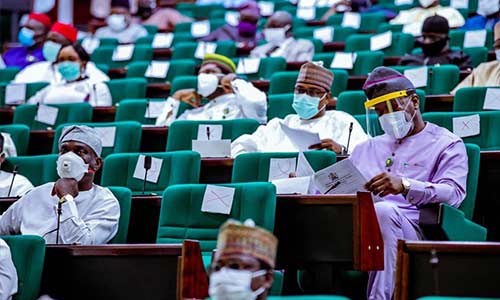
The House of Representatives on Wednesday asked the Nigeria Communication Commission (NCC) to give Nigerians a minimum of ten weeks to submit their National Identity Card Number to their network service providers, saying the two weeks given by the commission was grossly inadequate.

The House resolution followed a motion of urgent public importance sponsored by the House Minority Leader; Hon. Ndudi Elumelu on the need for an extension of time, since the two weeks given by the NCC, falls within the festive period and was also too small for Nigeria to comply with the directives.

He said if the NCC is allowed to carry out this directive at this time of the year and within.

The stipulated time frame will bring about untold hardship as millions of subscribers will be disconnected this yuletide period which could spell disaster in an already volatile nation like ours.

He said even though the exercise is laudable, the timing is very wrong because “Nigerians have not been properly sensitized, as only a few educated persons who bother to read the dailies might have heard about this instructions” adding that “trying to enforce this policy in a period where most Nigerians are gearing up for Christmas festivities may lead to stampede in the process of rushing to get registered which could lead to unnecessary death and injuries.”

He expressed worries that “if the NCC is not urgently called to halt their plans there may be unnecessary panic in the country which may lead to exploitation of vulnerable Nigerian thereby causing more pains in an already pathetic situation hence the need to urgently Wade into this impending crisis.”

He informed the House that the Minister of Communications and Digital Economy had in January 2020 directed telecom subscribers to get their National Identity Numbers (NIN) and submit them to the network operators, with the aim of ascertaining the true identities of all subscribers and thereby blocking loopholes currently being exploited by unscrupulous individuals.

He said the NCC instructions were filed out based on what is happening in the country, especially considering how hoodlums used the sim cards to harass and intimidate Nigerians during the #EndSARS protests.

He said the House had summoned the NCC to find out why the SIM card registration was not concluded, directing that all sim cards should be registered, adding that the house did not envisage the time limit as recently given by the NCC.

He said that the time limit will almost be impossible to meet the deadline, adding that the motion is not condemning the action, but asking for more time for Nigerians since they will have to register with the national identity card first before approaching their service providers.

He asked the House to support the extension of time for the actualisation of the NCC directive so that those using their sim cards to carry out criminal activities can be tracked.

Chairman of the House Committee on Communication, Hon. Akeem Adeyemi said the extension of time will afford the commission the opportunity to educate Nigerians on the reasons for the exercise as all mobile numbers will not be linked to the NIN of Nigerians, making it easy to track those involved in criminal activities using their phone numbers.

S*x-Starved Woman Seeks Dissolution Of 16 Year-Old Marriage

A fish trader, Mrs Toyin Bello, has petitioned an Ile-Tuntun Customary Court in Ibadan to dissolve her 16-year-old marriage to Mr Dotun Bello on grounds of 10 years of sex starvation, lack of productivity, and irresponsibility.

Toyin, a resident of Soka area in Ibadan, told the court that when she could no longer bear the shame of childlessness, she compromised righteousness and got pregnant for another man to shield her husband from the shame of old age.

She added that about six years after the death of the legitimate child she had for Bello, he adamantly refused to make sexual advances to her and she became worried.

“Then, I started running from pillar to post; seeking spiritual and other available solutions towards getting pregnant for him.

“Dotun himself went to the hospital, but he never showed me the result of the test conducted on him in spite of my numerous demands.

“When Dotun was not at home one day, I saw the result where he hid it and it read: `unproductive due to low count discharge`.

“With age not on my side any longer, I did the needful by secretly getting pregnant for another man so as to make him happy.

“Immediately after delivery, Dotun started misbehaving as he became grossly irresponsible and hostile to me and to the child.

“In fact, for the past 10 years now, he hasn’t slept on the same bed with me let alone touch me and I’m already feeling the trauma.

“Despite Dotun’s disaffection and irresponsibility to me, he is also taking steps to kill me so as to inherit my house and claim the child that doesn’t belong to him.

“That is the reason why I have fled home to start sleeping in our church at Asi area in Ibadan.

“My lord, I cannot continue to waste my time with Dotun; age is no longer on my side; please dissolve our union,’’ Toyin cried.

Bello, however, opposed the suit, praying the court to help pacify his wife because she was a rare gem by being merciful to him.

He accepted he once had a low count discharge, but he quickly pointed out that he had since taken care of himself.

“My lord, Toyin denied me my conjugal rite most of the times, usually complaining that she was tired haven worked all through the day.

“In fact, there was a particular night I broke the door into her bedroom, but she was shouting that I wanted to rape her.

“The only mistake I made was that I didn’t report the incident to her relatives,’’ he stated.

In his ruling, the Court President, Chief Henry Agbaje requested the duo to produce more evidence to substantiate their claims while urging them to involve their relatives to resolve the matter amicably.

He adjourned the case to Dec. 29 for the continuation of the hearing. (NAN)

Herdsmen Slaughter Benue Lawyer, Moses Udam, Family After Birthday Celebration

Barely few hours after celebrating his birthday, a Benue based Legal Practitioner, Moses Udam Esq was murdered by suspended herdsmen together with his family on Tuesday.

It was reported that his house was invaded in the late hours of Tuesday where they were gruesomely killed and their properties vandalized.

One Mr. Jirgba Terfa Jirgba, who took to his Facebook handle said he had allegedly investigated the incident and consequently, he narrates as follows:

“The Killing of Barr. Udam Moses, Wife and 3 Others: The True Story!

The early hours of today witnessed the most gruesome murder of my senior colleague and brother, Hon. Barr, Moses Udam, his wife and 3 others. I have taken time to investigate what led to the killings and also to ascertain the true story, since there are several conflicting stories around the incident.

What transpired at Agboughoul, behind Modern Market this morning that left the bodies of my colleague and several others dead is one of the several attacks by the Fulani herdsmen. Udam’s residence is located at the western part of Makurdi and is almost the last house towards the Benue River. The place has seen several Fulani herders’ attacks in the recent past and has practically been deserted as Fulani herdsmen have continued to lay claim to the vast land that stretches from Agboughol, Kpeifi behind NKST church, Kua to River Benue, where the incident took place.

The place where the incident took place is less than a kilometer to Modern Market, the biggest market in Benue state. Fulani herdsmen who have carried out several attacks on that community in the past this morning were said to have split themselves into two groups during the attack according to a colleague who witnessed the onslaught.

They arrived Agboughol, Kpeifi behind NKST church, Kua at about 11 pm with sophisticated weapons and were heard speaking in Hausa language with a touch of Fulfude accent. One group blocked the famous Kua road that leads to Ortom’s farm and the other group stood at Udam’s house directly facing Nyiko’s compound who is also a victim of the attack. The biggest problem in this area is the lack of access road. The road is practically immotorable and it’s very difficult to ply it even with a motorcycle. And to worsen it, there is no single police post in a community that houses over 5 thousand people.

“The true story is that Fulani herdsmen arrived the area crossing through River Benue in numbers and camped within the Fadama that stretches from River BENUE to the neighboring houses where our colleague also built his house. Mind you, our colleague’s house is the last house that when you pass you won’t see any other house till the next big village where herdsmen had slaughtered hundreds of people the other year.

“Their target was to silently pick their victims in their sleep and slaughter them from house to house and leave quietly the next morning without any trace. They began by entering the house of Barrister Moses Udam and one Mr. Nyiko, a blind man who is also a victim of today’s attack. When the herdsmen entered Udam’s compound which is unfenced, they discovered that the group that went to Mr. Nyiko’s house had been spotted by a young man who ran out through the window on sighting them from afar and was already shouting and alerting the public of their presence.

The herders immediately became apprehensive and started shooting sporadically in order to scare people. They shouted in pidgin English with a thick Hausa accent and demanded that Udam must open his door. But as Udam refused they started shooting at his door until the bullets tore the door apart and they got inside where they fired at him even as he was shielding his wife. They cut his head and followed his wife, raped her in the bathroom and finally killed her with a bullet that went through her head. They also fired a shot at the nanny and cut her in several places and she is currently receiving treatment in the hospital.

“They finally returned to Nyiko’s house and killed him with 3 of his grand children and ransacked the whole house, carted away cash and other valuable items and followed the river path to where they used their canoes and crossed into Nasarawa state.

People who saw these killers know that they were Fulani and had come with a mission to eliminate the entire community.

“Their modus oparandi still remains the same. So to try to give another story is unacceptable.”

However, the images obtained by TheNigeriaLawyer showed that they were ruthlessly killed and matcheted.

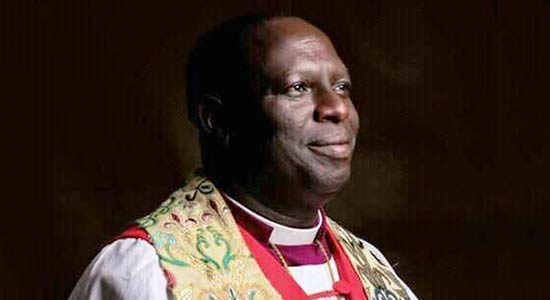
Anglican Church Suspends Ekiti West Diocese Bishop, Rev. Adepoju For Allegedly Having Illicit Affair With Clergy Wife

The Church of Nigeria (Anglican Church) has announced the suspension of the Bishop of Ekiti West Diocese of the Anglican Communion, The Rt. Rev. Rufus Victor Ajileye Adepoju for allegedly having illicit sexual affair with the wife of one of the clergy in his diocese.

The suspension is contained in a letter addressed to the embattled Bishop and obtained by TheNigeriaLawyers. The letter is dated Friday, December 11, 2020, and titled “SUSPENSION FROM OFFICE AS DIOCESAN BISHOP OF EKITI WEST DIOCESE (ANGLICAN COMMUNION)”.

“We write with a deep sense of concern and pain to suspend you from office as the Diocesan Bishop of the Anglican Diocese of Ekiti West.

This is sequel to your conduct giving just cause for scandal and abhorrent sexual behavior with the wife of a priest under your employment and care. These facts were admitted by you in a meeting in our office held on Thursday, December 10, 2020. By this suspension, you are not to partake in any activity of the Diocese as the Diocesan Bishop for a period of one (1) year effective from the date of this letter”, the letter reads in part.

“By this suspension, you are not to partake in any activity of the Diocese as the Diocesan Bishop for a period of one (1) year effective from the date of this letter”, it was added.

Bishop Adepoju, 57, was enthroned Bishop of Ekiti West on June 27, 2017, after about 32 years of priesthood and after serving as a venerable for 20 years.

He replaced Oludare Oke, the inaugural Diocesan Bishop of Ekiti West, who retired from office at 70.

TIPS