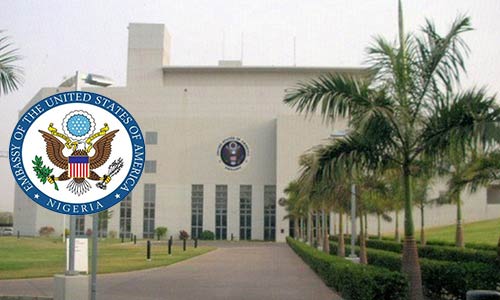
The US embassy in Abuja and consulate general in Lagos have asked Americans to exercise caution while traveling or residing in Nigeria during the holidays.
In a holiday security advisory posted onits website, the embassy said it gave the warning given that crime is relatively higher during the festive periods.
It asked its citizens to be wary of public places including airports, places of worship, shopping centres and markets where it said “westerners are common attack targets”
“The U.S. Embassy in Abuja and Consulate General in Lagos remind U.S. citizens to exercise caution while traveling and residing in Nigeria. Crime is endemic throughout Nigeria, ranging from petty street crime to carjacking, and crime levels tend to increase during the holidays. It is prudent to exercise particular caution during the holiday season and at holiday events,” the mission said.
“Demonstrations are relatively commonplace in Nigeria and generally affect traffic flow, especially if they progress along major thoroughfares. Criminal and other elements often infiltrate large gatherings. Terrorist organizations and individuals inspired by extremist ideology exist throughout Nigeria. Shopping centers, airports, hotels, clubs, restaurants, places of worship, transportation hubs, street markets, and other public venues frequented by Westerners are common attack targets.”
The embassy and consulate advised Americans residing or travelling in the country to keep a low profile, review their personal security plans and to avoid large gatherings and protests.
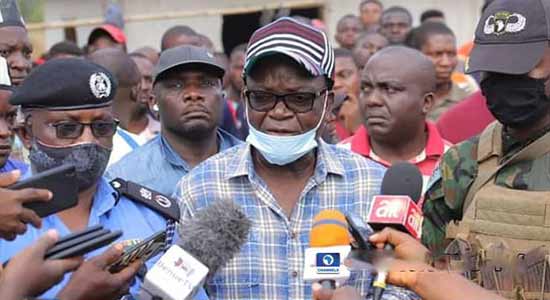
Following the abduction of students at Government Science Secondary School, Kankara, Katsina State, Gov. Samuel Ortom has ordered the closure of all boarding schools in Benue State.
Ortom, who announced the decision on Thursday when he visited the Maximum Security Custodian Centre (MSCC) in Makurdi, condemned the abduction of students in Katsina State.
He said he had directed the Commissioner for Education to complete necessary steps to close all boarding schools in Benue as a preventive measure against abduction of students.
The governor said if hundreds of students could be abducted in Katsina, the home state of the president, no place was safe again.
Ortom expressed regrets at the abduction of students and on-going killings across the country and called on the President Muhammadu Buhari and security chiefs to adopt new methods of addressing insecurity.
He also directed the immediate completion of the four block cell building the Benue government was constructing at the MSCC, Makurdi to decongest the existing cells.
The governor also directed the state’s Attorney-General and Commissioner for Justice, Michael Gusa, who doubles as Chairman Prerogative of Mercy to compile a list of deserving inmates for possible pardon.
Ortom equally urged the Chief Judge of the State, Justice Aondover Kaka’an, to identify those who were unjustly incarcerated and those who could not afford to pay their fines for necessary action.
He disclosed that following the directives of the Federal Government, a total of 48 inmates were released during the COVID-19 pandemic lockdown.
The governor urged all citizens in the state to always wear facemasks and obey the Nigeria Centre for Disease Control safety protocols on COVID-19, adding that the second wave of the pandemic was in the country.
Ortom stated that he had supported inmates through payment of fines even before he became governor, adding that those in various cells across the country could become good leaders if given the opportunity.
He also inspected the level of encroachment on the Centre’s land and addressed the inmates in the facility.
The governor said his administration would liaise with the community to end further encroachment on the land and directed that no new building should be erected there.
Speaking earlier, the Controller, Nigeria Correctional Service (NCS), Benue, Mrs, Amaka Nwonavi, commended the governor for his continuous support to the service. (NAN)
I first met him after the 2003 election, which his candidate, General Muhammadu Buhari, lost. I was then Editor of PUNCH and Sam Nda-Isaiah, was founding member and Publicity Secretary of The Buhari Organisation (TBO). He came to see me about the coverage of Buhari, which obviously displeased him.
He barged into my office, flinging the door wide open, before I had time to figure out if he even knocked. His voice preceded him, booming over the office partition and giving my secretary no chance to announce his presence.
“Azu,” he pulled a seat, “you people are not being fair to Buhari at all, haba!” He went on and on the substance of which was that he thought there was a deliberate editorial decision to antagonise his principal.
If you know Sam, you would know that he did most of the talking. I managed to tell him that PUNCH had nothing personal against Buhari and that if he had any specific evidence to the contrary, I would be happy to investigate it. He seemed slightly mollified, but I could tell that his visit to PUNCH was one of the many media rounds on his schedule on that Lagos trip.
Anyone with Buhari as his principal in 2003, was on a long, bumpy road. Of course, Buhari was not an unknown; he was military head of state between 1983 and 1985. Before that, he was Federal Commissioner for Petroleum in 1977 and before that, first military governor of Borno State, among other high-profile positions.
The problem was how he was known or perceived: a loner, a religious bigot, an obtuse, obdurate, stony-faced fellow, and above all, an incorrigible hater of press freedom and human rights, with long, harsh jail sentences he meted out to politicians as military ruler, to show for it.
If charm was a currency of politics, Buhari’s persona shortchanged him. You wouldn’t notice, of course, if you were Tony Momoh. Or Sam who not only had a job to do, but as it seemed to me from our first encounter, also had a conviction to proselytise for Buhari.
Sam had been with Buhari way back, apparently since Buhari’s days as Chairman of the Petroleum Trust Fund (PTF), where he not only worked with PTF consultant/brain-box and CEO of Afri-Projects, Salihijo Ahmad and the others, but also met Zainab, the woman who would later become his wife and best friend. In a way, Sam owed Buhari more than a post-election defeat mop up. But of course, I didn’t begin to know the extent of his debt till nearly seven years later.
When I left PUNCH in April 2010, the headline was that I had retired after 21 years of service. That was funny because I was only 45. The irony wasn’t lost on three publishers – Vanguard founder and publisher, the venerable Uncle Sam Amuka; ThisDay Publisher, Prince Nduka Obaigbena; and of course, LEADERSHIP Chairman, Sam.
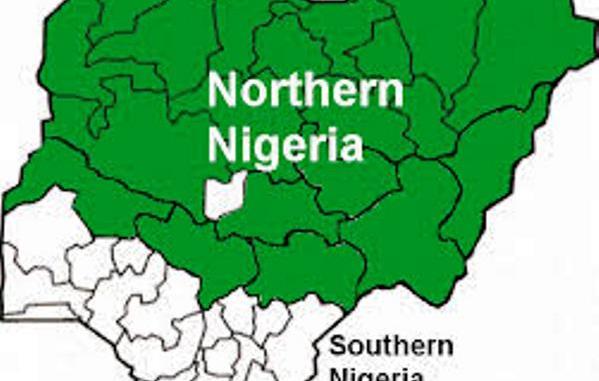
Chief Audu Ogbeh, immediate past minister of agriculture and chairman, ACF, was recently quoted as saying that politics is the only industry in Northern Nigeria. His statement intrigues me for two reasons. One, I have often wondered why the north which has ruled the country longer than all the other regions put together is in dire straits. If it is only the industry, then it must be an industry that has failed disastrously.
Two, his statement reminds me of the famous statement made long ago by the late Alhaji Yusuf Maitama Sule. He said: “The northerners are endowed … with leadership qualities. The Yoruba man knows how to earn a living and has diplomatic qualities. The Igbo is gifted in commerce, trade… God so created us individually for a purpose. Others are created as kings, servants. We all need each other. If there are no followers, a king will not exist.”
I am not sure he spoke for the almighty but his statement, obviously provocative at the time it was made, was an attempt to promote the right of the north, for which read, Hausa/Fulani, to rule while the Yoruba and the Igbo respectively carry on with their divine assignments of earning a living and diplomacy and engaging in commerce and trade. If the man upstairs had not meant it to be so, he would not have given these tribes their special qualities. If each tribe sticks to its divine assignment, things would work well in Nigeria and for Nigerians because every tribe would mind its own business and in doing so, contribute to the peace and development of the country.
What Sule said was fiction and utter nonsense of course. But it has sat on the psyche of the north for so long that it has gradually acquired something close to divine imprimatur; or more correctly, an exclusive political industry nurtured by a warped psyche and sustained by a political engineering that has put the north at the head but left it hollow. Power, political power, matters to the north because it is the only thing that matters. I have heard it argued with some passion that since the north could not compete in money-making ventures with the Yoruba and in commerce and trade with the Igbo, it is only fair that for it to be a major player on the national stage, it must hold on to the reign of power.
The late Chief Richard Akinjide once kindly invited me to breakfast in his London home many years ago. In the course of our conversation, he said, and he said it with biting contempt, that every stupid northerner, no matter how ill-prepared for leadership he may be, wants to be head of state. “And this,” he underlined it, “for no better reason than that he is a northerner and would always count on the full support of fellow northerners. No northerner I know disagrees with this provocative notion that his right to rule was given from above.”
Our conversation then shifted to a critical point: what has the north done with power or leadership? It is an important question. Northerners hate to address it. But however much we tend to shy away from it, there is no hiding the fact that politics as a northern industry is a failed industry. It has failed where it matters most: lifting the people from illiteracy, poverty and mind-boggling squalor. It only offers seasonal employment to young men as political thugs in election seasons. When the elections are over, the job ends and the young men find themselves right back where they were until another election season rolls by.
Northern Nigeria is merely an also-run in all the indices of social and economic development. About 80 per cent of about 14 million children out of school are in the north. It took a southerner, President Goodluck Jonathan, to appreciate the damage the north is doing to its young people through the trado-religious almajirai system. Worried about the future of these children who beg to sustain their teachers, he built a number of schools specifically for them. The schools are not functioning because the northern leaders simply sabotaged them and the noble intentions of the former president came to nought. When the Covid-19 hit the country, the almajirai were shipped from one state to another because they were deemed to be the responsibilities of their home states. No state governor would be the keeper of the almajirai who were not indigenes of his state. It was a pathetic abdication of responsibility. Toying with the fate of young people is unpardonable political rascality. Is this the correct use of politics as an industry?
In the times before these when Nigeria was an agrarian economy, the north, with its vast arable land and well-honed tradition of agriculture was the food basket of the nation. Our country’s food needs were met largely by northern peasant farmers. Northern cattle, sheep and goats provided the meat needs of the nation. The groundnut pyramids in Kano might be a fading distant memory today but they celebrated northern agricultural ingenuity. Today, what does the north contribute to the national economy? Ask the politicians who run politics as an industry in the north. Southerners generally regard the north as a parasite and a drag on national development. You cannot blame them.
None of the 19 states in the north is able to meet its basic obligations such as the payment of the salaries of civil servants and the pension of retired civil servants. They are comprehensively poor and impoverished. The difference between the northern states and the southern states in terms of resources and human development is clear. The south is soaring in modern development and the north is sinking in under-development. All the northern states must wait for the monthly handouts from the federation account. Obviously, politics as an industry in the north is not booming. It is sterile. Never mind the fine babban riguna won by our political leaders, strutting the political stage in fine examples of conspicuous consumption. Things are not what they want us to believe.
Nigeria, as you know, is the poverty capital of the world. Northern Nigeria is a major contributor to our national level of poverty. The rate of poverty is as follows: 77.7% in the north-west; 76.3% in the north-east and 67.5% in north-central. The fault lies with the managers of the political industry. An industry should yield better dividends than these.
Two scholars, professors Aslam Khan and Lawan Cheri, undertook a study in which they homed in on poverty in the north. In the report titled An Examination of Poverty as the Foundation of Crisis in Northern Nigeria, they wrote:
“Northern Nigeria is a region that contradicts its natural endowments. Despite the existence of many economic resources such as tin, kaolin, a variety of agricultural products and a huge fertile land, the people remain in abject poverty leading to a plethora of crisis in forms of insurgency, electoral violence and crime. …Northern Nigeria becomes a hub of joblessness, crime, illiteracy, maternal mortality and terrorism.”
This is what politics as an industry has done to the north.
Over 300 students abducted by bandits at the Government Science Secondary School in Kankara have regained freedom.
The boys were released on Thursday afternoon after spending six nights in captivity.
Confirming the development, Katsina State Governor, Aminu Bello Masari he said vitually all the 344 students were released while no ransom was paid.
He said they will be handed over to their parents on Friday after medical examination.
Speaking on the ordeal, Masari said the government will increase private security we have employed to fight insurgency, just as he commended security agencies for a job well done.
Speaking to Al Jazeera earlier at the Government House, the governor said the state and the country have been on edge due to what he described as a sad development. He however promised that the country should expect something positive within the next 24 hours.
“I am sure that within the next 24 hours the boys will be back home. Yes, I’m sure of that. I have been in touch with them. Everything is on course, very soon they will be back, the governor said.
“The security agencies have done very well.
“l thank and appreciate the people of Katsina state especially the parents for their understanding, including the Nigerian press for their support and solidarity.
“Security is for all of us we are all in it together and we should fight the menace together,” the Governor said.
Speaking on the video that was released few hours ago by the terrorist group, Boko Haram, showing pictures of some of the boys, Masari said he was sure that Boko Haram was not directly involved in the abduction, saying however that there might have been a connection between the terror group and some bandits.
“Boko Haram was not directly involved in the abduction. It is doubtful if the group was directly involved. But there might be a connection with other groups”, the governor said.
Governor Masari also lamented that insecurity has adversely affected the way of life of the people and economy of the state. He said virtually all facets of life have been affected, while at the same time, appealing for patience and understanding from the people.
Recall that bandits attacked the all-boys school on Friday, December 11 and abducted the school children.
The bandits used the children as a human shield as they were forced marched through the night to Daji Yankuzo village in Zamfara state, making it difficult for security operatives to use lethal force to rescue the children.
However, the Nigeria military surrounded the perimeter of the location where the bandits camped the boys and maintained aerial surveillance even as negotiations and intelligence operations were ongoing.
The result of the giant stride of Enugu State Government in offering Vocational and entrepreneurial Training to the Youths
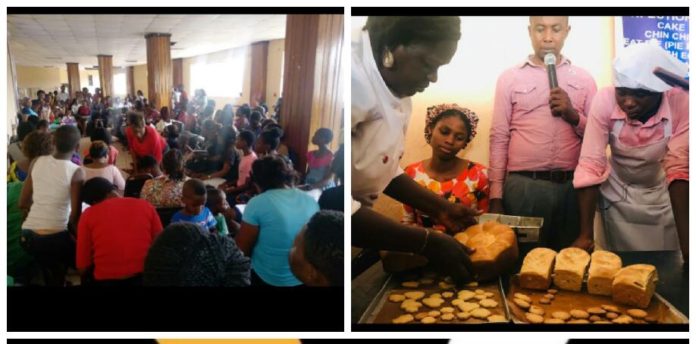
The second batch trainees on Vocational and Entrepreneurial Training, graduated on the 5th December 2020 at the Media Center,Nnamdi Azikiwe Stadium Enugu.
The training which was carried out by the Potters Wheel Foundation was facilitated by the Rt. Hon. Ifeanyi Ugwuanyi’s government through the Ministry of Youths and Sports.
Out of over 500 registered participants, 350 of them qualified for empowerment from the government and other sources, having scored above 70 marks.
The commissioner for Youths and Sports Hon Manfred Nzekwe while speaking to the graduands enjoined them to make good use of the knowledge acquired.
This set of youths are however looking forward to receiving start up materials from Federal, State,Local government, Organisations or individuals to enable them start up something.
The cost of these materials for one person can be as low as between 10,000 to 30,000 per individual.
We are convinced that all they need now is start up materials which will enable them put into practice what they learnt and from which they will gradually start making money to take care of their needs and that of others.
Sincerely, if these Youths are encouraged to be productively busy,it will reduce insecurity in the society and boost the strength of our economy.
Meanwhile, the forms for the next batch of the Vocational and Entrepreneurial Training starting 9th of January 2021 is already out. Interested persons are advised to come to the Training Center at Nnamdi Azikiwe Stadium Complex to pick their forms free of charge with two passport photos.
For more information on the Vocational Training, the public is advised to call or WhatsApp 07033568470, email [email protected] visit the ministry for Youths and Sports Enugu State.
Enugu State is indeed in the hands of the Almighty God.
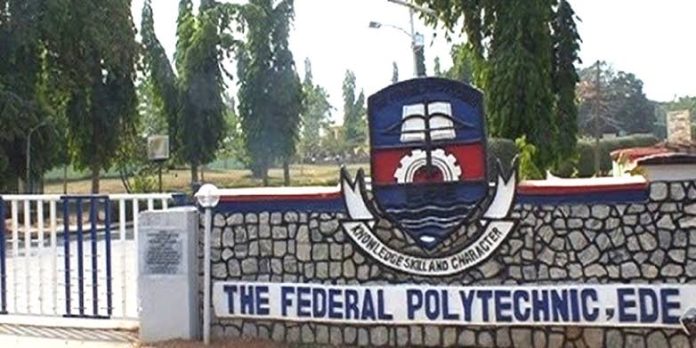
The Rector of the Federal Polytechnic, Ede, in Osun State; John Adekolawole, was suspended in 1995 for sexual harassment, years before he became the rector, a document obtained exclusively by PREMIUM TIMES revealed.
Despite the indictment, however, the academic still emerged the rector of the same polytechnic 22 years after, with the education ministry saying it had no knowledge of the 1995 suspension.
Mr Ade Kolawole was suspended for allegedly sexually harassing a woman in his office while he was the Director of School of Applied Science and Head of Department of Science Laboratory Technology.
The then registrar of the institution, F. C. Mordi, communicated Mr Adekolawole’s sanction for “gross misconduct” through a letter dated November 1, 1995 seen by PREMIUM TIMES.
During that period, Mr Adekolawole was known on campus as John Edaogbogun until 2010 when he changed his name to John Adekolawole.
Mr Adekolawole confirmed his suspension for sexual harassment in 1995 and also confirmed changing his name when PREMIUM TIMES confronted him with our findings.
According to the letter, Mr Adekolawole was suspended for two months without payment and was also removed from his positions.
“Consequent upon a case of gross misconduct in which you were involved, I write to inform you that the management has closely studied your defence as decided as follows:
i) Suspension for two (2) months without a pay with effect from 1st November, 1995.
ii) removal from the Directorship and Headship of the School of Applied Science and Department of Science Laboratory Technology respectively, with immediate effect”, part of his suspension letter obtained by PREMIUM TIMES read.
“You are seriously warned to desist from any such act of gross misconduct in future, as any slightest information about such misdemeanor will attract severe disciplinary action against you. This is your last warning.
“You are to hand over all relevant documents and property of the school and the department respectively as well as all the scripts in the department to A. A. Adebesin with immediate effect. The handing over should be in the presence of the deputy rector,” the suspension letter issued to him then read.
Sources in the Polytechnic disclosed to PREMIUM TIMES that the suspension letter was later removed from the rector’s file.
“It was in 2010 when he changed his name that he looked for means to remove the suspension letter from his file so as not to serve as hindrance to his career ambition,” a source at the institution said.
Mr Adekolawole did not deny the suspension when contacted by PREMIUM TIMES. He, however, said the suspension was to save him from being assassinated.
“The suspension you were talking about was arranged by the polytechnic then to save me from being assassinated. As the Director of the School of Applied Science then, I was one of the top people dealing with corruption, so some people then made arrangements, lied against me that I was involved in sexual misconduct.
“When I got the letter then, I went straight to the registrar who told me they purposely wrote the letter so the people pressuring them to deal with me will be deceived.”
Asked why he did not appeal the suspension, he simply said “I was only suspended on paper. These people are bringing up all those issues now because they want to remove me as rector and they cannot remove me because God puts me there.”
He also confirmed changing his name and the removal of the suspension letter from his records with the polytechnic.
“I changed my name in 2010 after my Ph.D and it was because a prophetess called from Abuja that I should drop Edaogbogun for Adekolawole. The two names are mine but I just chose to change from Edaogbogun which is my father’s name to my own name, Adekolawole. The document was removed from my file after it was discovered that I did no wrong”.
Asked how it was removed, he simply said “by the authority of cause. See, I don’t want us to go back to this.”
Mr Adekolawole was appointed the Rector of The Federal Polytechnic, Ede, in December 2017 by President Muhammadu Buhari.
He obtained his BSc Engineering Physics in 1982; MSc Engineering Physics in 1990; MPhil (Physics) in 2007; and PhD (Physics) in 2010.
He joined the service of the Federal Polytechnic, Ede in 1993 and served in various capacities in the institution before his appointment as the rector.
Mr Adekolawole is however, enmeshed in a fresh crisis as the academic board of the institution passed a vote of no confidence on him on Monday. The board, headed by the Rector, has reportedly sent its resolution to the Education Minister calling for Mr Adekolawole’s suspension after accusing him of maladministration.
The Polytechnic currently has no Governing Council which has the constitutional power to ask the President to remove the Rector.
Mr Adekolawole has however, denied any wrongdoing.
When contacted on why Mr Adekolawole was appointed despite the earlier indictment, the spokesperson of the Federal Ministry of Education; Ben-Bem Goong said the Ministry was not aware of the earlier indictment.
“Nobody has complained about this to the ministry. The due process is that they (those who detect the wrongdoing) will write to the ministry, complaining of his sin and the Ministry will take the necessary step to discipline the man if he is found wanting.
“It is not enough for people to sit somewhere and start creating crisis. I have not said the man has not done anything but let due process be followed. The Government is not aware of the 1995 matter and if members of the academia have anything against him, they should complain to the Ministry formally. Once it comes to our knowledge, we will set up an investigation,” he said.
The two spokespersons for President Buhari; Garba Shehu and Femi Adesina did not respond to PREMIUM TIMES enquiry on whether or not the President was briefed about the earlier indictment before the 2017 appointment.
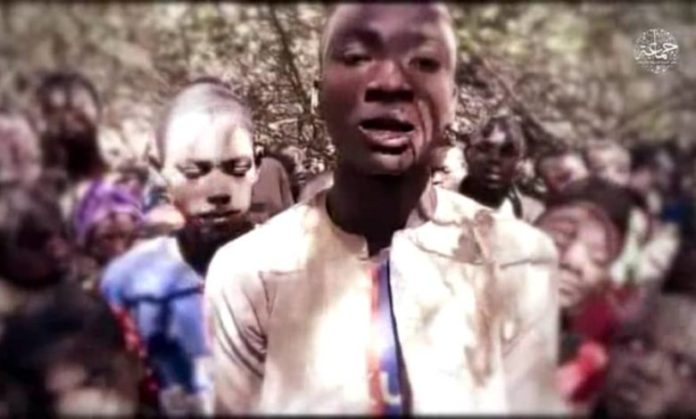
Recently abducted students of Government Science Secondary School, Kankara, Katsina State, have cried for help in a video released by the Abubakar Shekau-led faction of Boko Haram on Thursday.
In the six minutes 30 seconds video, the boys said some of them have been killed and pleaded with the government to respond to the demands of the terrorists, including paying ransom so they could be set free.
The students of the all-boys boarding secondary school were abducted on Friday, December 11, after the terrorists stormed their school in the middle of the night, broke its gate, shot sporadically, and gathered the boys, claiming to be security operatives.
In the newly released video, the abductors showed the boys, with some of them crying, and claimed that they were in good health.
One of the boys who spoke in both English and Hausa said they were 520 in number but some of them were killed because the government sent troops to rescue them. He urged the Federal Government to settle amicably with their abductors and advised against the use of military force in rescuing them. A voice behind the camera could be heard telling the pupil what to say.
“We have been caught by the gangs of Abu Shekau; some of us were killed,” the distraught student said.
At least dozens of other young boys could be seen gathered close to him, all covered in dust and appearing to be within a forest area. A young member of the terrorist group stood in their midst wearing a military uniform, including a face mask, and wielding an assault rifle.
The abductors in the video said they kidnapped the students because the government refused to stop killing and arresting Fulani criminals.
“We did this because you refused to stop killing and arresting Fulani,” one of them said.
The young student then pleaded with the government to stop attacking the terrorists. “All the armies that you sent here can do nothing to them,” he said.
He added that that government should “dissolve vigilante gangs and close down all types of schools, excluding Islamiyya [Qur’anic schools]”.
https://youtube.com/watch?v=958GcQyZ9Lc
Shekau speaks
The leader of the Jama’atu Ahlussunnah Lidda’awati Wal Jihad, otherwise known as Boko Haram, Abubakar Shekau, spoke at the end of the video saying he was happy with the operation.
He said many people thought he was lying when he claimed responsibility for the schoolboys’ abduction. Shekau said he would not add anything since sceptics could now see the boys by themselves.
“Even if I didn’t say anything, here are my people speaking and here are your boys speaking too,” he said.
HumAngle earlier reported that Boko Haram said it was responsible for the kidnapping, which is the group’s most daring attack outside its stronghold in the Northeast.
The same faction of Boko Haram had in 2014 abducted 276 schoolgirls in Chibok, Borno State. Since then, only 164 have been freed while 112 others remain missing.
To secure the release of some of the schoolgirls, the Nigerian government, complying with the terror group’s demands, secretly paid a ransom of €3 million and released about five imprisoned Boko Haram members.
Following this pattern, it is expected that the group will soon make specific demands for money and ask to swap the abducted students for some of its detained members.
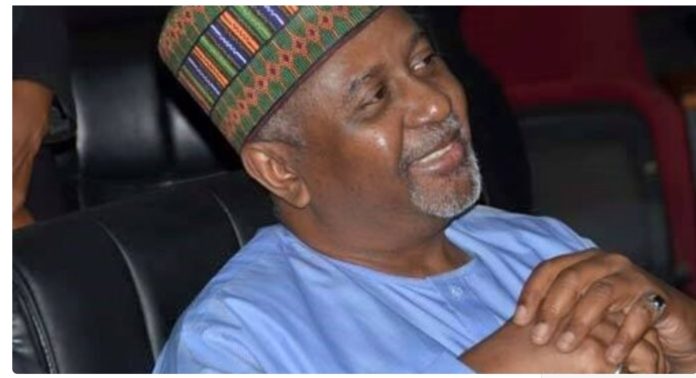
The court of appeal in Abuja has set aside the indictment of Sambo Dasuki, former national security adviser, in the judgment which convicted Olisa Metuh, former spokesman of the Peoples Democratic Party (PDP).
The Economic and Financial Crimes Commission (EFCC) had arraigned Metuh on seven counts of money laundering for allegedly receiving N400 million from Dasuki.
Dasuki who was named in the alleged $2.1 billion arms purchase scandal is facing charges of corruption, though his trial has often been stalled.
On February 25, 2020, the trial court found the former PDP spokesman guilty on all counts of money laundering and sentenced him to seven years in prison.
But the court of appeal on Thursday voided Metuh’s conviction and ordered a retrial on the grounds that Okon Abang, the trial judge, was biased in the course of the trial.
In a separate appeal, Dasuki asked the appellate court to quash parts of the trial court’s judgment which was indictive of him.
The EFCC had objected to the former NSA’s appeal on the grounds that the appellant was not an accused person in the criminal proceedings.
But Stephen Adah who read the judgment on behalf of a three-man panel of the appellate court held that section 36 of the constitution gives Dasuki the right to appeal.
“He can appeal as a matter of right,” the court held.
“There is no argument about the fact that certain lines of this judgment have indicted indeed this appellant.
“The only role the appellant played was that he was subpoenaed as a witness and he was never involved as an accused person.
“He was not in the charge, his plea was not taken, yet so many damaging things were said about him. And it is with this respect that we see that the complaints of this appellant in this appeal are justified.
“Ordinarily, someone who is accused of an offence is presumed innocent until proven guilty. This man was not charged and a lot of things indicting and convicting him were found in this judgment.
“It is in this respect that we believe that his complaints cannot in any way be faulted.
“This appeal brought by this application is hereby allowed and every strand of those lines that he complained about which we have seen are hereby nullified.”
Our site uses cookies. By clicking “Accept All Cookies”, you direct Law and Society Magazine to store cookies on your device and disclose information in accordance with our Cookie Statement: cookie policyACCEPTREJECT
Privacy & Cookies Policy
Privacy Overview
This website uses cookies to improve your experience while you navigate through the website. Out of these cookies, the cookies that are categorized as necessary are stored on your browser as they are essential for the working of basic functionalities of the website. We also use third-party cookies that help us analyze and understand how you use this website. These cookies will be stored in your browser only with your consent. You also have the option to opt-out of these cookies. But opting out of some of these cookies may have an effect on your browsing experience.
Necessary cookies are absolutely essential for the website to function properly. This category only includes cookies that ensures basic functionalities and security features of the website. These cookies do not store any personal information.
Any cookies that may not be particularly necessary for the website to function and is used specifically to collect user personal data via analytics, ads, other embedded contents are termed as non-necessary cookies. It is mandatory to procure user consent prior to running these cookies on your website.