Home Blog Page 1126

Open Society Welcomes African Court’s Ruling against “Arbitrary” Vagrancy Laws

Today, a continental court in Africa delivered a landmark opinion on colonial era vagrancy laws, which criminalize activities such as loitering, public indecency, and begging. The judgment has the potential to help reshape criminal justice policy and practice in dozens of African countries and reduce prison overcrowding.

The African Court on Human and Peoples’ Rights issued an Advisory Opinion in response to a case brought by the Pan African Lawyers Union and found that vagrancy laws or bylaws in nearly every country in Africa discriminate against marginalized populations including women, children, people with disabilities, and others.

“These vague and arbitrary laws, rooted in the era of empire law making, are used to arrest and imprison thousands of poor and marginalized people every day including the poor and the homeless, street children, migrants, people with disabilities, sex workers, LGBTI people, and drug users,” said Louise Ehlers, of the Open Society Foundations. “This judgment has the potential to significantly reduce exposure to police violence and incarceration for these communities, both in Africa and in other places grappling with a colonial legacy of vague, discriminatory criminal law,” she said. 

The Open Society Justice Initiative filed an amicus brief in the case, citing the urgent need to decriminalize vagrancy laws in light of the COVID-19 pandemic because the laws over-incarcerate poor and marginalized people, putting them at greater risk of contracting the virus.

“It is in the interest of African states to implement this advisory opinion by repealing all vagrancy laws, which reinforce structural discrimination and penalize poverty,” said Stanley Ibe, associate legal officer for Africa at the Open Society Justice Initiative. “Since vagrancy laws contribute to dangerously overcrowded prisons, a hotbed of COVID-19, failing to do so could have disastrous consequences.”

British, French, Portuguese, Dutch, and Belgian colonists used vagrancy laws to control the streets. They were intentionally broad and vaguely defined, giving law enforcement wide discretion to arrest and detain just about anyone. 

These laws are still in place in many former colonies. For example, the very same language introduced to British colonies through the English Vagrancy Act of 1824 is still in use today in some places. In Botswana, the Gambia, Nigeria, Seychelles, Tanzania, Uganda, and Zambia, you can still be cited for being a “rogue and a vagabond.” The penal codes of at least 18 former French colonies, including Algeria, Burundi, Burkina Faso, Cameroon, Chad, Comoros, Republic of Congo, Cote d’Ivoire, Gabon, Guinea, Madagascar, Mauritania, Mali, Morocco, Niger, Sahrawi Arab Democratic Republic, Senegal, and Togo contain a similarly worded offense of “vagabondage.”  

Today’s African Court opinion provides clarity on the discriminatory nature of these laws. This will bolster efforts to strike them down in domestic and regional courts across Africa and provide a foundation to limit their enforcement by the police in the short term. This pronouncement, coming from Africa’s apex court will also add legal weight and moral authority to broader efforts to address the legacy of slavery, colonialism, and structural racism on the continent.  

“This is a significant legal victory as it sends a clear message to policymakers across Africa,” added Ehlers. “These arcane laws have no place in open, inclusive societies and need to be repealed.” 

The Open Society Foundations, founded by George Soros, are the world’s largest private funder of independent groups working for justice, democratic governance, and human rights. We provide thousands of grants every year through a network of national and regional foundations and offices, funding a vast array of projects—many of them now shaped by the challenges of the COVID-19 pandemic.

Open Society Foundations

Armed Fulani storm Abeokuta prayer mountain, kidnap worshipers, Police ask victims for N300,000

By Olubodun Are

Armed Fulani men on Wednesday stormed a prayer mountain in Wasimi, near Abeokuta.

The armed men who stormed the prayer mountain raided the worshipers collecting cash, phones and other valuables from the worshipers.

Some of the Pastors and worshipers were attacked with machetes. Two middle-aged women and wife of a top Pastor on the mountain were taken away by the armed men.

Witnesses told our correspondent that the armed Fulani men came around 1am on Wednesday shooting sporadically into the air before storming the chalets where they broke the bedrooms and robbed all occupants before taking away the women.

“I was in the auditorium of the Church. The armed Fulani men came around 1am. They attacked me.They divided themselves.Four of them were in the hall. Another four went into the rooms and raided the women. They used cutlasses on me. I was bleeding. They did not stop. I was asked to lead them to the rooms and knock the doors of Pastors” Pastor Sanyaolu who was a victim told Irohinoodua.

He said the gory incidence was reported to the Ogun State Vigilante who came and searched the bush all night.

He said the Vigilante later arrested three of the armed Fulani men who were handed over to the police.

“I have been going to the prayer mountain for the past four years. I have never seen a thing like this. I can’t imagine this would happen” he said.

Irohinoodua was informed that the kidnappers that stormed the CAC Prayer mountain located at Mushin Ayanmo Mosan, Wasimi Abeokuta were all heavily armed.

Some of the kidnapped included Madam Mojisola, Christianah Atolagbe an Evangelist with CAC who were among those visiting the prayer mountain for program of days of fasting from November 23.

One of the victims said the women were kept in the wilderness all through the nights by some six armed Fulani men.

The armed Fulani men later called relatives of the victims using the following numbers 08114022543 and 07042476569 asking for ransom.

A source told Irohinoodua “They demanded for 2million before they could release their captives. Negotiation started or else they said they would. terminate their lives.”
He said he was surprised that two high profile men came in two jeeps to the police station with the hope of bailing the arrested suspects who were arrested by the Vigilante.

“What I sense is a well organised crime syndicate” he said.

The source said the case has been transferred to State Criminal Investigation Department, (CID) Eleweran Abeokuta, anti-kidnapping Squad, AKT.

Mr Olusona Durotowluwa whose family members were some of those kidnapped said the activities of the armed Fulani was embarrassing.

He said they attacked pastor Sanyaolu and others before taking away the women.

Another victim Prophet Samuel Awotunde a native of Ilesha , Osun State resident in Ijoko Ogun- State where the headquarters of his Church is situated said worshipers are traumatised and that it would take them a long time to recover.

A member of the Nigerian Human Rights Community (NHRC) that has shown interest in the case in Abeokuta however said he met the victims and that there are complaints that police have collected N300,000 from the victims.

“We have interrogated the victims. The sad aspect is that the police have collected N300,000 from the victims. They claim they need the money to conduct investigation into the case” Suleiman Abiodun a NHRC coordinator in Ogun State told Irohinoodua.

#EndSARS: 15 Lekki gunshot victims surface at inquiry

Fifteen #EndSARS protesters who suffered gunshot wounds on 20 October at the Lekki Toll Gate surfaced today at the venue of the venue of the Lagos State Judicial Panel of Inquiry, probing the incident and other police atrocities.

Fourteen of those who appeared today were said to have been shot at Lekki Toll Gate. One was said to have been shot at Ojodu Berger.

On their tail was Mr Nathaniel Solomon, whose younger brother Abouta Solomon was said to have been shot dead at the toll gate.

The deceased had been buried in his hometown in Mubi Local Government Area of Adamawa State.

Aiyedungbe Olufunmi Grace, whose brother died at LASUTH after suffering gunshot injury to the head, also came.

The Nigerian Army has denied allegations that it shot at peaceful protesters, saying it merely fired blanks into the air to disperse the protesters.(thelagostimes)

#EndSARS| “The Bullet Is Still In My Body”-Victims Of Lekki Tollgate Shooting Weep Bitterly As They Share Their Stories (VIDEO)

Some of the victims of the Lekki shooting incident on the 20th of October at the Lekki tollgate have come out to share sad stories of how they survived the horrifying incident and also how they lost loved ones during the incident.

The victims appeared before the Lagos state Judicial Panel on Restitution for Victims of SARS related abuses and relayed their sad stories.

One of them, Edwin Augustine, who still has a bullet in his body, recounted how he went for the protest on that fateful day and was allegedly shot at by the military men who stormed the tollgate where the unarmed protesters were gathered. He said he went to the tollgate with his friend.

”I was at the snooker board that night but I don’t know how to play snooker. I was standing with him while he was playing. I was like let me go and check my phone that was charging. The lights went off and we were like what is wrong? 

The next thing I heard was shooting everywhere. The guy that was leading me to the charging point was shot at the side. I received my own on my thigh. Right now the bullet is still inside of me. It has not yet been removed. 

The next day I woke up and saw myself at Ikeja General Hospital.

The bullet in me is giving me discomfort and affecting my leg, making it swell every day. Sometimes my leg gets stiff.

Sometimes I wonder why the government is saying they didn’t shoot at us while I am still having the bullet in my body”

Mr. Tunde Odeyemi, the father of another victim, recounted how he met his son in the hospital after the shooting.

I met him lying down, being treated by the corner of the hospital. He couldn’t talk to me, he couldn’t open his eyes. I was surprised to see him in that position. 

I had to try and see the doctor so he can be transferred to Ikeja. They wrote a letter that he should be transferred that night but they said there was no ambulance. It was the next day in the night that they brought us to the emergency ward in Ikeja.

That very day, they asked us to go do an X-Ray of the brain. When the doctor studied it, he noticed that there was blood at the front and back of the brain and he said that is why he (the son) cannot say anything now and that when they start giving him drugs, the blood will vanish.

It was about 5 days later that he started talking. He did not get himself well until when they discharged us from the hospital. ”

Mr. Adeyemi said his son was discharged and asked to come back in January to collect date for further checkup. He said he took him to his house and has since employed the service of a nurse who caters for him at home.

 Olufunmi Aiyedungbe who was also interviewed spoke about her brother, Aiyedungbe Gabriel Ayoola, who she says died during the protest. A tearful Olufunmi said her deceased brother was shot in the head.

”I am speaking on behalf of my brother Aiyedungbe Gabriel Ayoola. He was shot in the head. We were actually looking for him because he doesn’t stay with us so it was like two days before he passed on that somebody sent this(a message) to me on Whatsapp. They wrote it there that he is at LASUTH and that they are looking for his family. So we went to LASUTH,

They said he was unconscious for like two weeks. By the time we got there, he had opened his eyes and he was moving his hands but he couldn’t talk. They were feeding him through his nose. There were sores all over his body because they did not turn him for a long time. I think he did not get medical attention. That was what led to his death eventually”.

Watch The Video Below

https://youtube.com/watch?v=FMxabR4n6K4%3Fautoplay%3D1%26controls%3D1

FG approves charges for Lagos-Ibadan rail

…It is N3, 000 for economy, N5, 000 business and N6000 first class

The Federal Government has approved passengers’ charges on the new Lagos Ibadan rail standard gauge.

The Minister of Transportation, Rotimi Amaechi, made the disclosure during the inauguration of the Governing Council of the Chartered Institute of Transport Administration of Nigeria (CIOTA) in Abuja on Friday.

The Nigerian Railway Corporation (NRC) Managing Director Engr Fidet Okhiria had said the corporation will begin commercial operation on the Lagos-Ibadan speed train corridor on Monday.

At the second Annual Summit with the theme, “Building Sustainable Transport Infrastructure in Nigeria :Opportunities, Innovations and Technologies,” Amaechi said: “I have received the mandate of President Muhammadu Buhari to inaugurate the Lagos /Ibadan rail project by Jan. 2021 which will makes Nigerians see the way the standard gauge railway looked like.

“Today I approved the charges on passengers from Lagos to Ibadan; we just transfer how we charged from Abuja to Kaduna.

“We charge N3, 000 per Economy seat, N5, 000 for Business class and N6, 000 for First class, the same is applicable to Lagos to Ibadan.

“It should have started running by now before Mr. President inaugurates it by January.”

The minister said there had been tremendous changes in most of the air terminals saying that the Minister of Aviation would inform the public of the completion of Lagos/Kano terminal.

Amaechi promised that the ministry would collaborate with CIOTA to enable them achieved their objectives.

He added that transportation was more than administration but without administration there would be no transportation.

The minister said CIOTA role was critical to the growth of transportation in Nigeria adding that the country had advanced a lot in the area of transportation.

The primary aim and objectives of the Institute is to advance the study, training and practice of transport management and administration in Nigeria regardless of specialization within the industry; and to set standards of practice and determines the knowledge and skills to be attained by persons seeking to become registered members of the Institute and practice as a Chartered Transportation.

thenigerialawyer

Nigeria Air Force Holds Leadership Training For Head Nurses Of Medical Facilities

  • CAS Charges Them To Remain Professional In Support Of Air Operations

The Nigerian Air Force (NAF) has commenced a 2-day workshop for its head nurses in other to equip them for more effective discharge of their leadership responsibilities whilst remaining professional in the performance of their duties in support of air operations.

In a statement by Air Commodore Ibikunle Daramola, Director of Public Relations and Information, Nigerian Air Force, the workshop, with the theme: Transformational Leadership In Nursing, was inaugurated by the Chief of the Air Staff (CAS), Air Marshal Sadique Abubakar, who was represented by the Air Officer Commanding, Air Training Command, Air Vice Marshal Musa Mukhtar, at the NAF School of Medical Sciences and Aviation Medicine (NAFSMS&AM), Kaduna.

Speaking during the inauguration ceremony, the CAS stated that NAF platforms are operated by personnel who need to be in a state of good health at all times in order to discharge their duties effectively for the Service to achieve its objectives.

He said medical personnel, especially nurses, who are at the frontline of ensuring good health and well-being of personnel and their families, therefore need to be adequately trained and properly motivated for them to perform optimally.

He also observed that current security trends in the country and around the world require transformational leaders, who would think outside the box to find solutions to challenges.

The Air Force Chief noted that it was such considerations that necessitated the holding of the workshop, which, he said, was part of the overall deliberate steps taken by the current Federal Government Administration, since 2015, to improve the capacity of the NAF for greater productivity in all areas of specialisation.

Speaking further, the CAS noted that a collective commitment to excellence was paramount if the Service was to effectively discharge its constitutional roles.

He urged the nurses to be disciplined, proficient, hard-working, loyal and resilient to succeed in their profession. He said the NAF expects a lot from them in setting standards in terms of transformation, loyalty and discipline.

The CAS, therefore, charged them to endeavour to exemplify the sterling qualities for which the noble profession of Nursing is known, whilst epitomising the NAF Core Values of ‘Integrity’, ‘Service before Self’ and ‘Excellence’.

The CAS further encouraged the participants to keep on giving their best in dealing with the security challenges facing the Nation. “I am confident that, with our continued commitment and sustained effort, we shall overcome every threat to the peace and security of our country, Nigeria”, he said.

Air Marshal Abubakar commended the Chief of Medical Services as well as the Director of Nursing Services, for their efforts in building the capacity of NAF nurses.

He also appreciated the Kaduna State Ministry of Health and the Nursing and Midwifery Council of Nigeria for all their support and cooperation towards the improvement of nursing services and education in the NAF.

Earlier in his welcome address, the Commandant NAFSMS&AM, Air Commodore Glenn Nkanang, expressed his appreciation to the CAS for his unflinching commitment to human capacity development as well as his tireless support to the school.

He noted that a total of 65 participants, comprising nurses from all NAF hospitals, medical centres and clinics, were present at the workshop. He further noted that the training underlines the CAS’ vision of ensuring qualitative training of manpower for the NAF and his commitment to supporting the growth of Nursing, in particular, and the Medical Services Branch, as a whole.

Also present at the event were Commanders and Commandants of co-located NAF units.

Theleadnewsreport

EU, WHO Restore Borno Psychiatric Hospital Destroyed By Boko Haram

BY REMILEKUN DARAMOLA/

The World Health Organisation with funding from the European Union has rehabilitated Borno psychiatric hospital in Maiduguri, which was totally destroyed and vandalised by the Boko Haram terrorists in 2013.

The State Psychiatric Hospital was formerly a unit in the State Specialist Hospital before it was relocated to the current location.

The hospital which was built in 1976 with a 48-bed capacity, and having four wards, when it was fully functional was serving the entire North East and three neighbouring countries of Cameroon, Chad and Niger.

Since the destruction by Boko Haram, the hospital has been nonfunctional and totally dilapidated, leading to mentally ailed patients seeking treatment elsewhere, until 2019 when the Government approached the WHO, to facilitate the reconstruction, equipping and restoration of healthcare services to the hospital.

Speaking at the handing over of the rehabilitated hospital to the Borno state government on Thursday, WHO’s Public Health Officer, Henry Okoro-Nwanja expressed gratitude to the European Union for making the funds available for the restoration of healthcare services in the health facility.

Okoro-Nwanja said:” The hospital currently has a 48-bed capacity, with 4 wards as follow: Acute Ward where male patients with functional mental disorders will be admitted; Stable Ward for male patients that are stabilized; Drug Ward for patients with alcohol and drug-related disorders will be admitted; Female General Ward where female patients with all forms of mental disorders will be admitted.

“Other departments include Outpatient Department which also accommodates the Medical Records Department; Occupational Therapy Department, with Social Welfare Section among others.”

He said empirical evidence has shown that the rate of common mental disorders has doubled to as much as 20 per cent comparatively because of the violent conflicts in the State, adding that stressful events such as violence and loss of loved ones, increasing poverty and loss of livelihood, discrimination, overcrowding, and food and resource insecurity, are common in emergencies and can increase the risk of developing mental health conditions.

He said people with severe mental disorders are particularly vulnerable, adding that this by implication, estimates that most of the affected population in Borno, would continue to suffer from a wide range of mental health disorders even after the emergencies and the acute trauma phase is over.

In his remarks, Borno state Governor, Prof. Babagana Umara Zulum thanked the EU, WHO for rehabilitating the hospital, saying that the hospital will go a long way in serving Borno as well as neighbouring countries.

Zulum, who was represented by his Special Adviser on Reconstruction, Rehabilitation and Resettlement, Abdulrahman Abdulkarim, said the state will ensure the maintenance of the facilities in the hospital.

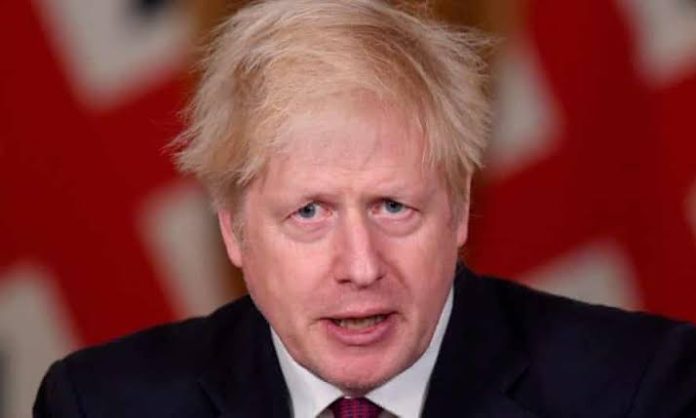
Fauci Apologizes for Casting Doubt Over UK’s Approval of Pfizer Vaccine

Dr. Anthony Fauci, the US’s top infectious-disease expert, on Thursday doubled down his criticism of the UK’s “rushed” decision to approve Pfizer’s COVID-19 shot – before apologizing and claiming it was a “misunderstanding.”

After the UK on Wednesday became the first Western country to approve Pfizer’s COVID-19 vaccine, EU politicians called the decision “hasty” and “problematic.” Fauci contributed to the criticism on Thursday, telling Fox News that UK regulators hadn’t scrutinized the Pfizer trial data as “carefully” as the US Food and Drug Administration (FDA).

“If you go quickly and you do it superficially, people are not going to want to get vaccinated,” he said.

In interviews with CBS News and Sky News later on Thursday, Fauci doubled down on his criticism, saying the UK had “rushed its approval.”

“They kind of ran around the corner of the marathon and joined it in the last mile,” Fauci told CBS News in an interview for an episode of “The Takeout” podcast, adding that UK regulators “really rushed through that approval.”

“I love the Brits, they’re great, they’re good scientists, but they just took the data from the Pfizer company and instead of scrutinizing it really, really carefully, they said, ‘OK, let’s approve it, that’s it.’ And they went with it,” Fauci said.

He added that the UK had been “severely criticized” by officials in the European Union.

Fauci then walked back on his comments later on Thursday in an interview with the BBC, saying there was “no judgement on the way the UK did it,” and that he hadn’t meant to imply any “sloppiness” from UK regulators. “There really has been a misunderstanding and for that I’m sorry and I apologize” he said. “I do have great faith in both [the] scientific community and regulatory community in the UK.”

Fauci said that if the US had approved the vaccine as quickly as the UK, there would have likely been pushback in society.

“We do things a certain way in the US – possibly a little different, not necessarily better or worse than what’s done in the UK, and that’s where I slipped,” he said.

“Our process is one that takes more time than it takes in the UK. And that’s just the reality,” Fauci told the BBC. “I did not mean to imply any sloppiness even though it came out that way.”

The US hasn’t yet authorized a COVID-19 vaccine. The FDA has arranged a December 10 meeting between a panel independent experts to evaluate Pfizer’s shot, and a decision on whether to authorize the vaccine could come on the same day.

Late-stage trial studies suggest the vaccine is 95% effective at preventing COVID-19.

Can The Self-Employed Access The National Housing Fund/Loan?

Can The Self-Employed Access The National Housing Fund/Loan? Daily Law Tips (Tip 700) by Onyekachi Umah, Esq., LL.M, ACIArb(UK)

Introduction: 

There is huge disconnection between government (especially, the Federal Government of Nigeria) and the ordinary Nigerians. While there are laws and policies designed to benefit the ordinary Nigerians, most of those laws, policies and schemes are often not promoted and advertised rather their benefits are dished out to the wealthy Nigerians that do not need them. 

The Federal Government of Nigeria has a national housing fund that is worth over N265 Billion Naira but many Nigerian workers are homeless or on rented apartments, even though deductions are compulsorily made from their salaries every month towards the national housing fund. Among workers in Nigeria is the self-employed and the workers in the private sector, who often assume that Federal Government welfare programs are only for Federal Government Workers. In this works, answers will be offered to the question; “Can The Self-Employed Access the National Housing Fund/Loan in Nigeria?”.

National Housing Fund and Its Regulator: 

To increase national housing, the Federal Government of Nigeria, made a law to create a national housing fund for all workers in Nigeria. So, through the federal law (the Federal Housing Act) made since 31st January 1992, the Federal Government of Nigeria created a housing fund for Nigerians. The Fund is being gathered from contributions by Nigerians in both the public and private sectors; investments from commercial and merchant banks; investments from insurance companies and financial contributions by the Federal Government for long-term housing loans. 

It is important to note that an attempt has been made to amend the law, the proposed new law was passed by the National Assembly but the President of Nigeria (President Muhammed Buhari) refused to sign it into law. The President refused assent to the proposed new law, on the grounds that the proposed law will cause hardship to Nigerians. Hence, the 1992 federal law is still the valid law for now.

 The federal law (the Federal Housing Act) appoints the Federal Mortgage Bank of Nigeria (FMBN) to keep the National Housing Fund and administer it. The FMBN is the regulator of the national housing loan. The FMBN ensures that the proceeds from the National Housing Fund are utilized to finance the housing sector of the economy through wholesale mortgage lending to primary mortgage institutions. 

The headquarters of the Federal Mortgage Bank of Nigeria (FMBN) is located at No. 266 Cadastral AO, Central Business District, Abuja, Nigeria. The FMBN’s telephone numbers are; 09-2920689, 09-2920690, 09087973000 and 08170237904, email address is [email protected] and website is https://www.fmbn.gov.ng. As a Nigerian, you have a right to visit them, call them or write them for inquires on the National Housing Fund, FMBN is created to serve Nigerians. 

The Self-Employed and the National Housing Fund/Loan:

A Worker in Nigeria is an adult that renders service or goods in any part of Nigeria in any sector and in any lawful enterprise while contributing to the labour force of Nigeria. With this, a person that is self-employed, or employed by government or employed by a private employer is a worker. In this, a self-employed person includes; artisans, labourers, freelancers, online workers, professionals and any other person that is independent in his work engagement and benefits; hence he/she is not answerable to any employer. A self-employed person is his own boss. 

In Nigeria, most persons that are self-employed are often schemed out of national welfare packages, may be because they often have no organized pressure groups to engage government, unlike government workers and other workers in organized sectors. The different labour groups and trade unions in Nigerian have a great role to play in this sector, when they get organized, focused and sincere. 

In the case of the National Housing Fund, the federal law that created the National Housing Fund allows all workers to benefit from the National Housing Fund. Hence, it allows persons that are self-employed to benefit from the National Housing Fund. A person does not need to be working for any government or any big company or employer or be from a particular tribe for him/her to be able to apply and benefit from the National Housing Fund/Loan. 

Monetary Requirements For Participation:

Any Nigerian worker (whether working for government or private employer or self-employed) that earns at least Three Thousand Naira (N3,000.00) in a year is qualified to apply, obtain and enjoy the National Housing Fund. Each worker in Nigeria is to contribute 2.5% of his/her basic monthly salary. 

So, where the annual salary is N3,000.00 (Three Thousand Naira), the monthly salary will be N250.00 (Two Hundred and Fifty Naira). The monthly contribution will be 2.5% of the basic monthly salary of N250.00 and that is Six Naira Twenty-Five Kobo (N6.25k). With this, any Nigerian that earns about N250.00 in a month (ie, N3,000.00 in a year) is eligible to enjoy the National Housing Loan (the worker can be employed by government or private person or be self-employed, it does not matter)

Conclusion and Recommendation: 

The National Housing Fund applies to all workers in Nigeria, whether a government worker, non-government worker, company worker or self-employed worker. Whether the worker is in federal, state or local government is not relevant and the state of residence or location of the worker is also not relevant. 

Any worker in Nigeria (including a person that is self-employed), that earns at least Three Thousand Naira (N3,000.00) in a year (that is at least, N250.00 in a month) is eligible to apply, obtain and enjoy the National Housing Fund. The National Housing Fund is your right and government has a constitutional obligation to provide good housing for Nigerians. 

Government laws, policies and schemes for the welfare of Nigerians are not for government officials, politicians and their dependents, only. Government at all levels must learn to be faithful and must ensure that welfare packages reach the people that need them. Government Agencies and offices created to regulate welfare schemes must promote awareness across Nigeria and be transparent. Nigerians should be informed, for what is the essence of a welfare policy if same is unpopular, unpredictable, inaccessible and unutilized? 

  My authorities, are:

  1. Sections 1, 2, 3, 16 (2)(d), 17 (3) (c), 318 and 319 of the Constitution of the Federal Republic of Nigeria, 1999
  2. Sections 1, 2, 3, 4, 5, 6, 7, 9, 10, 26 and 27 of the National Housing Fund, 1992
  3. Chuka Uroko, ”Here Is Nigerian Govrnmnment’s Understanding of Housing Deficit In The Country” (Business Day, 9 June 2020) <https://businessday.ng/real-estate/article/heres-nigerian-governments-understanding-of-housing-deficit-in-the-country/ > accessed 4 November 2020
  4. National Bureau of Statistics, “Poverty and Inequality in Nigeria 2019 : Executive Summary” (Nigerianstats, May 2020) <https://nigerianstat.gov.ng/elibrary?queries[search]=poverty > accessed 4 November 2020
  5. Onyekachi Umah, ““National Housing Fund Is For All Nigerians (Both Government and Non-Government Workers)” (LearnNigerianLaws.com, 11 September 2018) <https://learnnigerianlaws.com/daily-law-tips-by-onyekachi-umah-esq-tip-181-national-housing-fund-is-for-all-nigerians-both-government-and-non-government-workers/ > accessed 4 November 2020.
  6. Banwo and Ighodalo, “National Housing Fund (Establishment) Act, 2018: Analysis & Recommendations For Legislative Review” (Banwo-ighodalo, 18 April 2019) <https://www.banwo-ighodalo.com/grey-matter/national-housing-fund-act-analysis-recommendations-legislative-review-2018?leaf=10 > accessed 4 November 2020 
  7. Onyekachi Umah, “Persons That Can Enjoy The National Housing Fund and Loans” (LearnNigerianLaws.com, 5 November 2020) <https://learnnigerianlaws.com/persons-that-can-enjoy-the-national-housing-fund-and-loans/ > accessed 19 November 2020. 
  8. Joshnson Uche, “National Housing Fund Disbursements Hit N265 Billion Naira- FMBN” (LearnNigerianLaws.com, 16 November 2020) < https://nairametrics.com/2020/11/16/national-housing-fund-disbursements-hit-n265billion-fmbn/ > accessed 19 November 2020.

#SabiLaw

#DailyLawTips

#SabiBusinessLaw

#SabiElectionLaws

#SabiHumanRights

#SabiLawOnBeatFm

#SabiLawLectureSeries

#CriminalJusticeMonday

#SabiLawVideoChallenge

Speak with the writer, ask questions or make inquiries on this topic or any other via [email protected], [email protected] or +2348037665878 (whatsapp). 

To receive our free Daily Law Tips, join our free WhatsApp group via the below link:

https://chat.whatsapp.com/Drc0UK3ba10KnuR8zuPMwl

Or our free Telegram group, via the below link:

https://t.me/LearnNigerianLaws

To keep up to date on all our free legal awareness projects, follow us via:

Facebook Page:@LearnNigerianLaws, Instagram: @LearnNigerianLaws and Twitter: @LearnNigeriaLaw

Please share this publication for free till it gets to those that need it most. Save a Nigerian today! NOTE: Sharing, modifying or publishing this publication without giving credit to Onyekachi Umah, Esq. and “LearnNigerianLaws.com” is a criminal breach of copyright and will be prosecuted.

This publication is the writer’s view not a legal advice and does not create any form of relationship. You may reach the writer for more information.

Powered by www.LearnNigerianLaws.com {A Free Law Awareness Program of Sabi Law Foundation, supported by the law firm of Bezaleel Chambers International (BCI).}

Building back a better Africa policy should not mean going back to old ways

Written by
Imani Countess and William Minter

President Trump’s overt contempt for Africans is encapsulated in his famously crass remark about African countries. But the principal damage to Africa has stemmed from his administration’s broader policy choices, such as the disastrous rejection of the World Health Organization and the Paris climate accords; harsh curbs on legal immigration and asylum; and gutting of gender equality programs. 

Most recently, Trump’s remarks supporting Egypt in its dispute with Ethiopia over the construction of a dam on the Nile River have inflamed tensions in a volatile region. And now his administration’s failure to call for de-escalation and dialogue in the conflict in Ethiopia’s Tigray region is likely to have disastrous consequences in fueling expanded war

Nevertheless, the Biden administration should not merely go back to the pre-Trump status quo. As noted by John Campbell at the Council on Foreign Relations, the Trump administration has made fewer changes to Africa policy than expected. Campbell calls for a “reset.” We argue that an even more fundamental questioning of U.S. Africa-related policy is needed.

The record of both Republican and Democratic administrations, over more than six decades, has been mixed, ranging from destructive interventions to neglect to — far less often — productive collaboration with Africans on common goals. If the Biden mantra of “Build Back Better” is to be applied to Africa, we need to think about new frameworks to guide policy rather than retreading the shibboleths of the past. 

The new administration should abandon the temptation to offer lessons to Africa. Instead, the United States should strive to understand African realities and address problems in a spirit of collaboration and mutual learning. This requires rebuilding the capacity for diplomacy and also taking account of how other U.S. government agencies and institutions outside the foreign policy arena directly affect Africa’s future. 

The following guidelines are essential for not repeating the many mistakes of the past.

First, do no harm

Avoid counterproductive military engagements, a point made by earlier commentators in Responsible Statecraft. Whether in the Sahel, Nigeria, or Somalia, counterinsurgency efforts and government repression have fueled rather than quelled Islamic insurgencies. Analysts are virtually unanimous that foreign intervention to counter the growing insurgency in Mozambique’s Cabo Delgado province would be a disaster.

There are no easy answers to such conflicts. But the U.S. priority must be to support multilateral initiatives in conflict resolution and peacekeeping, as well as humanitarian relief. Rather than assuming that Washington knows best, the incoming administration should heed advice from knowledgeable sources, such as the recent letter from over 80 African studies scholars responding to police brutality in Nigeria.

Do not subordinate Africa policy to a new cold war with China. For decades, U.S. Africa policy was harnessed to the Cold War with the Soviet Union. This led to disastrous interventions in the Congo and to the de facto alliance with apartheid South Africa. The competition with China in Africa is economic rather than military, but a blinkered vision ignoring Africa’s own interests is self-defeating. It also misses the opportunities for cooperation as well as competition with China.

U.S. policymakers should recognize that, despite the wide disparities in size and power, African countries, like the United States, must find their way in a multipolar world. This requires managing opportunities for cooperation, as well as threats, from a wide range of external powers, and is incompatible with simplistic binary choices. 

Do not impose the false gospels of austerity and privatization on African countries. In developed and developing countries alike, market fundamentalism — denying the essential role of government in promoting development — has failed to deliver. The International Monetary Fund and the World Bank have begun to admit this failure, but old guidelines are still applied to countries too weak to determine their own policies. 

U.S. policymakers should instead learn from African thinkers such as Thandika Mkandawire and the economists at the Addis Ababa–based U.N. Economic Commission for Africa. They share the growing global consensus that state investment in public goods and strategic state leadership in development strategy are prerequisites for sustainable and equitable development. This thinking is reflected in a new co-authored book, “African Economic Development: Evidence, Theory, Policy.” 

Then, think globally and work collaboratively

The United States and African countries face many of the same global issues, and these must be addressed at multiple levels. Coordination is complex and always imperfect. But collaboration is essential, both with African countries and, to the extent possible, with multilateral agencies and other external actors.  

The U.S. contribution can be significant in three areas:

Global health: Despite lack of resources, African countries have done better than the United States and many European countries in coping with the Covid-19 pandemic. While they have not matched the success of the Asia Pacific region, they have benefited from early action and from proactive coordination by the WHO regional office and the Africa Centres for Disease Control.

The United States, which lags the world in recognition of a universal right to health, needs to put its own house in order. But it also bears responsibility for paying its fair share in supporting public health in African and other developing countries. As Covid-19 makes clear, that is the prudent as well as moral thing to do. 

Climate change: Africa is the continent most vulnerable to global climate change, though it has contributed the least to causing it. Many African countries depend on fossil fuel exports. Much of the rural population relies on charcoal for cooking, contributing to the loss of tree cover. Fiscal resources for both mitigation and adaptation fall far short of the need.

The U.S. return to the Paris climate agreement will be only a first step. Renewable energy is expanding rapidly in Africa and there is enormous potential for additional expansion, drawing private and public investment from the countries most responsible for the problem. There is room for both the United States and China if they are willing to work with African partners. 

Tax justiceTax evasion, tax avoidance, and illicit financial flows have eroded the fiscal capacity of African governments. African civil society as well as governments have called for international action. But success depends on action in the United States and other major financial centers, where global banks, accounting firms, and legal firms help secretive corporations and individuals hide financial assets.

Giant multinational corporations also avoid taxation by shifting assets to jurisdictions with lower tax rates. Internet giants Google, Facebook, and Microsoft, for example, avoided as much as $2.8 billion in taxes in 20 developing countries

In the United States, legislative action is key to greater transparency, as advocated by the Financial Transparency and Corporate Accountability Coalition. But strong executive actions also have a role to play. Stemming illicit financial flows could have more impact on African countries’ fiscal capacity to meet their own needs than either aid or trade.

It is likely that the Biden administration’s Africa policy will largely reflect continuity with previous administrations. But Africa and the United States share common interests that are increasingly visible, and this gives some hope that, with creative diplomacy, greater humility, and attention to African concerns, policymakers can move closer to mutually beneficial engagement.

The bottom line is that U.S. Africa policy will be most productive if U.S. policymakers are willing to learn and collaborate rather than to preach or dictate.

responsiblestatecraft

TIPS