Home Blog Page 1117

How Soviet Russia Banished Their Version of Santa Claus, Then Brought Him Back to Spread Communist Cheer

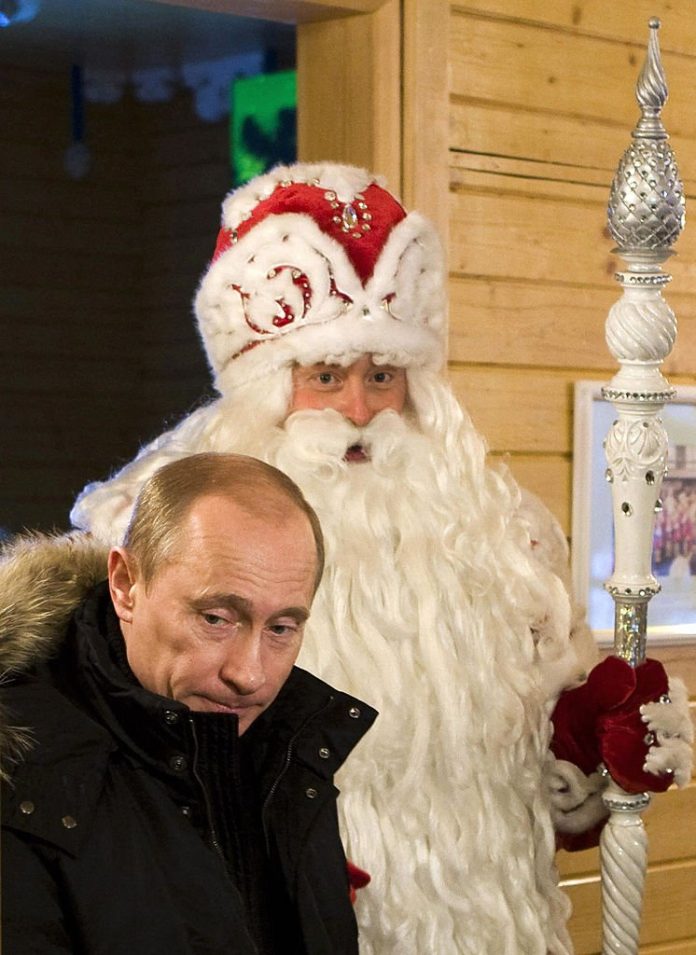
President Vladimir Putin (L) is seen with a man dressed up as Ded Moroz, the Russian equivalent of Santa Claus, at Ded Moroz's palace in Veliky Ustyug, in the Vologda region, about 650 kilometers (400 miles) north of Moscow 07 January 2008. The Russian Orthodox Church follows the old Gregorian calendar, which places Christmas on January 7. AFP PHOTO/ POOL/ MISHA JAPARIDZE (Photo credit should read MISHA JAPARIDZE/AFP via Getty Images)

Around the world there are different versions of the jolly, bearded man who gives gifts to children in December or, in some countries, January. Unlike the bloated, red-coated father Christmas of the West, Russia’s Santa Claus, known as Ded Moroz (Grandfather Frost), is slender with a wizard-like flowing beard and he wears a long robe that comes in different colors, such as blue and white.

He is assisted not by elves, but by his beautiful granddaughter Snegurochka (Snow Maiden). His sleigh is powered not by reindeers, but three steely horses. What really sets Russia’s Santa Claus apart from his Western counterpart is the turbulent century that he’s faced. He has survived a violent social and political revolution that saw him go from beloved to banned as a subversive element, then beloved again and hailed as a symbol of the true Russian spirit.

The trouble for Ded Moroz and his granddaughter sidekick, who originate from pagan Slavic mythology, began with the creation of the Soviet Union in 1922. Under the new communist regime, which was built on the promise of creating social equality, religion was banned as it was deemed a bourgeois instrument to repress the working class. Many clergy and some believers of the Russian Orthodox Church were sent to labor camps or killed. In 1928, Ded Moroz was banished into exile having been “unmasked as an ally of the priest and the kulak [supposedly rich peasants who the communist party considered a threat to their power],” Karen Petrone explains in her book, Life Has Become More Joyous, ComradesChristmas day, celebrated on Jan. 7 in Russia and some Eastern European countries that follow the Julian calendar, was erased and all festive celebrations were forbidden. Anyone who broke the rules risked arrest.

In a sharp turn in 1935, Soviet dictator Joseph Stalin decided to bring in Ded Moroz from the cold as part of efforts to “boost his popularity and assert stability,” says Petrone, a history professor at Kentucky University. An aggressive period of collectivization between 1929 and 1932, when the government forced farmers to give up their individual lands and join collective farms, sparked violent opposition. Millions of peasants who resisted the policy were sent to prison camps. The disruption caused by collectivization led to a famine that killed at least five million people across the Soviet Union.

Stalin lifted a ban on celebrations but only on New Year’s eve to avoid giving the festivities a religious significance and instructed Ded Moroz to deliver presents on the morning of Jan. 1. He also brought back the tradition of putting up Chirstmas trees in homes, previously deemed an “economic evil” says Petrone, and rebranded them New Year’s trees. “Life has become better, comrades, life has become more joyous,” Stalin said in 1935 as he promised workers better living standards.

State-controlled footage of New Year’s eve celebrations showing happy workers dancing and drinking to the health of Stalin painted the picture of a more prosperous era. But in reality, life did not improve for the majority of the population. Such footage was part of the state propaganda machine that tried to present the Soviet Union as a “superior system” to the capitalist West that was in the grip of economic depression, says Petrone.

More than just the giver of gifts, Ded Moroz was the giver of pro communist PR. In 1949, the Associated Press reported wrote that at gatherings with children, Ded Moroz ‘customarily ends his talk with the question “to whom do we owe all the good things in socialist society?” to which it is said the children chorus reply “Stalin.”’ In the 1960s, at the height of the space race between the Soviet Union and U.S., Ded Moroz appeared in flying rockets on cards and posters, some with the caption: “Ded Moroz is seriously ready for the space flight.”Ded Moroz sees off a rocket in a 1963 postcard. Katya Zykova/soviet-postcards.comA 1962 New Year's card shows Ded Moroz holding a boy who waves a communist flagA 1962 New Year’s card shows Ded Moroz holding a boy who waves a communist flag PostcardWatch USSR/Etsy.com

Meanwhile, some U.S. officials used Ded Moroz to highlight the supposed dangers of ending religious practices. In 1966, Senator Joseph McCarthy warned that “brutal cynicism” was on the march in the U.S., reacting to a 1962 ban on government sponsored prayer in public schools, “rivaled only by the Soviet Union where they eliminated Santa Claus and brought in Grandfather Frost. Will that satisfy the children of America?”

As communism began to fall across Europe in 1989, Ded Moroz fell out of favor in some satellite states in eastern Europe, where the Russian gift-giver had been exported. Countries such as Bulgaria and Romania restored their original versions of Santa Claus as they returned to their old customs.

When Western cultural influence began to seep into the new capitalist Russia in the 1990s and with it, Coca Cola billboards featuring a beaming Western Santa and ornaments of the tubby man in store fronts, Ded Moroz decided to get into business. In 1998, then Moscow mayor Yuri Luzhkov and local authorities marketed Veliky Ustyug, a small town surrounded by pine forest in the northern region of Vologda, as the home of Ded Moroz and built him a 12-room wooden palace. Open all year round, the palace draws in about 250,000 guests annually. Guests can rent cottages near his residence, where they have access to a swimming pool, sports facilities such as skis and sledges, a restaurant and a New Year’s souvenirs store. In the capital Moscow, Ded Moroz has branches in Kuzminki Park, and on the 55th floor of the Imperia Tower in the city center for visitors over the New Year. Ded Moroz and Snegurochka regularly feature in adverts, including for Pepsi and Russia’s Sberbank.https://e5effe1a73fd35e45250f594eaf982cf.safeframe.googlesyndication.com/safeframe/1-0-37/html/container.html

Ded Moroz is still the most popular gift-giver in today’s Russia and the New Year is the main winter holiday. But there seems to be a rivalry between the Slavic wizard, who some politicians promote as a true symbol of Russia’s spirit, and his Western peer who is often viewed as an “imposter”.

In 2008, then-Prime Minister Vladimir Putin, who had been taking steps to revive Soviet nostalgia and drawing closer ties with the Russian Orthodox Church visited Ded Moroz’s wooden palace. The same year, Luzhkov said: “Take a look at our huge, handsome Ded Moroz. The puny Santa Claus is a far cry from him!” after escorting Ded Moroz through central Moscow. Boris Gryzlov, a parliament speaker at the time, declared: “No one will ever be able to take away Ded Moroz from Russia—not Santa Claus nor any other imposters.”

Some Russians feel very passionately about their traditional winter figure and their desire to protect him from Western culture. In December, Denis Amosov, a marketing specialist from the Siberian city Tomsk, launched a lawsuit seeking 30 million rubles ($411,000) in compensation for “moral damages” against Coca Cola for “imposing” the Western Santa Claus in its Russian advert. He has also appealed to Putin and the Ministry of Culture to limit “Santa propaganda” in the country. In an Instagram post, Amosov said: “There is an association among adults and children that a Happy New Year is only possible with Coca Cola and Santa Claus, Russian traditions and centuries-old history are being lost”. (time.com)

U.K. Increasingly Isolated as U.S. Restricts Travel

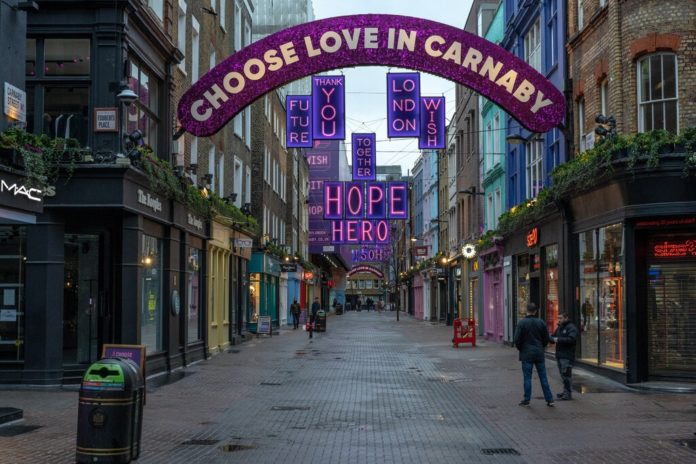
A deserted shopping district in London. The rapid spread of a coronavirus variant prompted the lockdown of the city and southern England.Credit...Andrew Testa for The New York Times

America’s requirement that passengers coming from Britain provide negative coronavirus tests is just the latest woe to strike the country this Christmas period.

LONDON — It was one more reminder, delivered before dawn on Christmas morning, that Britain is not only an island nation, but one that finds itself increasingly alone.

A decision by the United States to require all airline passengers arriving from Britain to test negative for the coronavirus within 72 hours of their departure, starting on Monday, was not so much a shock as it was another bitter pill in a somber holiday season.

There is the fast spread of a coronavirus variant feared to be more contagious. Dozens of nations have barred travelers from Britain from entering. Expanded lockdowns in the country will include 48 million people by Saturday. And thousands of trucks remain stranded along England’s coast even after France lifted a brief border blockade imposed over virus concerns.

Adding to the volatility was a last-minute Brexit deal with the European Union, which kept Britain from crashing out of the bloc without an agreement in place but was all the same a painful reminder of a decision that has divided the country.

Continue reading

Enslaving The Sahrawi

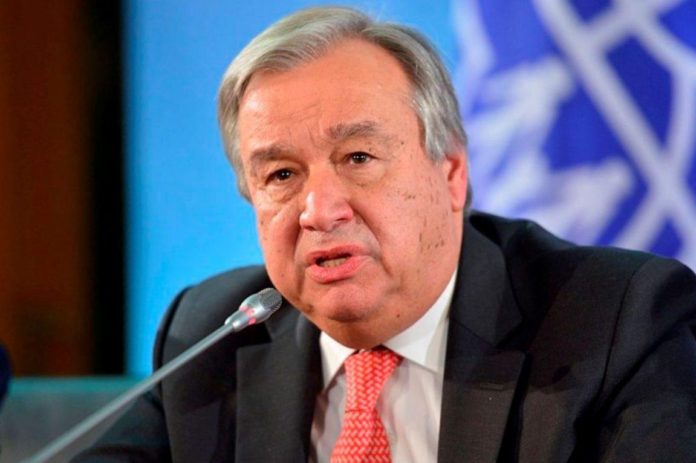
UN secretary-general, Antonio Guterres.

Standing in the way of independence for the Sahrawi people, since 1991, has been a referendum, which Morocco has refused to administer, claiming sovereign rights over the territory instead.

In February 2020, Antonio Guterres, the Secretary General of the United Nation said at the Special Committee on Decolonisation, “This year marks the last year of the Third International Decade to Eradicate Colonialism.

“This milestone is an important opportunity to take stock of our progress. I will remain alongside you as you make another push to eradicate colonialism once and for all.’’

Today though, his words sound hollow.

The United Nations could not be more helpless in freeing colonised territories.

For Guterres, the year could not be ending on a worse note.

In Africa, Western Sahara is the only territory on the United Nation’s list of the 17 Non-Self-Governing Territories across the globe where the process of decolonization is incomplete.

Standing in the way of independence for the Sahrawi people, since 1991, has been a referendum, which Morocco has refused to administer, claiming sovereign rights over the territory instead.

While Morocco has succeeded to keep the issue of a referendum in limbo for the last three decades, it also could get any major power, even continental and world bodies to recognise its sovereignty over the mineral rich territory.

Then, along came Donald Trump; the norm breaker, disruptor of world stability and violator of international treaties.

Eighteen months ago, the US President had never heard of Western Sahara.

What Donald Trump did was not just to trade away the rights of a people to self-determination, but also goes against international law, which makes it illegal to acquire territory by means of force

He reportedly said as much to US Senator James Inhofe, who for years has been a one-man army trying to see to it that the Sahrawi people get the independence they have dreamt of for four whole decades.

And knowing he couldn’t point to Western Sahara on a map, on December 11, President Trump didn’t think twice about upending 40 years of official US policy of remaining neutral, by recognising Moroccan sovereignty over Western Sahara.

This is in spite of the fact that the United Nations, the European Union and even the African Union see Morocco as an occupying force.

What Donald Trump did was not just to trade away the rights of a people to self-determination, but also goes against international law, which makes it illegal to acquire territory by means of force.

The United Nations Charter prohibits the acquisition of territory by force.

And in the case of Western Sahara, Moroccan forces moved in in 1975 when Spain abandoned its occupation.

The real shock from recent events isn’t the sudden change in position by the US government led by an unconventional president.

It is that many African countries have suddenly become tolerant to the idea of colonialism on the continent.

Goodluck Jonathan had only been president for just over a year.

But in October 2011, Nigeria recommended that the UN initiate mechanism for independence of Sahrawi Arab Democratic Republic.

A year earlier, “president” of the republic was in Nigeria to mark the country’s Independence Day celebration with Jonathan.

Those events would mark the beginning of what would be a four-year long relationship put on ice between the Jonathan government and the Kingdom of Morocco.

And ahead of Nigeria’s presidential election in 2015, with Jonathan’s chances of reelection looking bleak, his foreign ministry made the mistake of claiming he had spoken with the King of Morocco, supposedly to curry favour with Muslim voters.

It was an incident the Morocco wouldn’t let pass.

It led to a diplomatic row with the Kingdom’s ambassador condemning what he described as Nigeria’s unethical practices and insisting that the king had refused to talk with Jonathan.

But the moment Muhammadu Buhari was elected president in 2015, King Mohammed VI went on a charm offensive, visiting Nigeria in December 2016 and welcoming Buhari to Morocco two years later.

Agreements that were signed during those visits include the building a gas pipeline from Nigeria to Morocco and also a fertiliser plant in Nigeria that will be fed with phosphate from the occupied territory.

In between those two visits was when the fate of the Sahrawi people would suffer major setbacks.

In June 2017, ECOWAS agreed in principle to admit Morocco as a member state of the regional body.

Officially, Nigeria hasn’t changed its position in support of Western Saharan independence and Buhari as recently as a few weeks ago gave a private commitment to Algeria’s foreign minister, Sabri Boukadoum, who was in Nigeria

Some former and sitting Nigerian diplomats had pushed against such a move and were outspoken about it.

The reality is that Morocco’s application to join ECOWAS could not have been approved without the support of Nigeria’s Buhari.

And it wasn’t until earlier this year that the effects of Morocco’s charm offensive started to manifest.

At about the same time Antonio Guterres was paying lip service to eradicating colonialism, some ECOWAS countries were helping to entrench it in Western Sahara.

Some of the countries that effectively gave recognition to Moroccan sovereignty over territory in January 2020 or are cutting ties with the Sahrawi Arab Democratic Republic include Senegal, Niger, Liberia, Ivory Coast, Guinea Bissau, Guinea, Gambia, Chad, Burkina Faso and Benin.

Officially, Nigeria hasn’t changed its position in support of Western Saharan independence and Buhari as recently as a few weeks ago gave a private commitment to Algeria’s foreign minister, Sabri Boukadoum, who was in Nigeria.

But judging from the statements from Geoffrey Onyeama, the appearance was that Buhari snubbed Boukadoum, in his push to put the issue of a referendum back on the international agenda.

Articles have appeared in Moroccan newspaper celebrating Onyeama’s deliberate avoidance of the subject after the meeting with the Algerian diplomat.

Apparently, it is also no longer a talking point for Nigeria’s diplomat at the UN.

It is this absence of a public commitment from the Buhari government that has allowed Morocco to advance its cause and cut the Sahrawi off the once committed allies in the West Africa region.

But their support is far less significant than the change of direction by the United States.

Donald Trump’s motives are no secret. Neither are his views on Africans.

It is no surprise that he would think the rights of the Sahrawi people are dispensable, all so that he could get Israel and Morocco to establish diplomatic ties.

He has sold weapons to the United Arab Emirates and offered a stand against Iran to the Emiratis to embrace Israel.

He is lifting sanctions against Sudan to get them to warm up to the Israelis.

As for the Sahrawi, they were sold out without been heard.

Donald Trump obviously sees the warming of relations between the Arab world and Israel as his one foreign policy achievement and is trying to tie the hands of the incoming administration led by Joseph Biden.

The fact still remains that the Palestinian issue will remain unsolved even if all the Arab states have up on it.

Now King Mohammed succeeded in playing the more than a dozen African countries who have given tacit approval to the colonization of a territory and, both Donald Trump and Prime Minister Benjamin Netanyahu of Israel by exposing the similar nature of the occupation of the West Bank and that of Western Sahara.

It would be a major shift in adherence to international law, which could have repercussion in every corner of the world, if the incoming Biden administration allows the recognition of Moroccan sovereignty to stand.

There are a number of territories presently under occupation and Western Sahara could very well set a precedent.

Written by Shuaib Shuaib

Shuaibu, a former Editor of the LEADERSHIP Newspapers, is based in Abuja.

Buhari’s Government Is A Figment

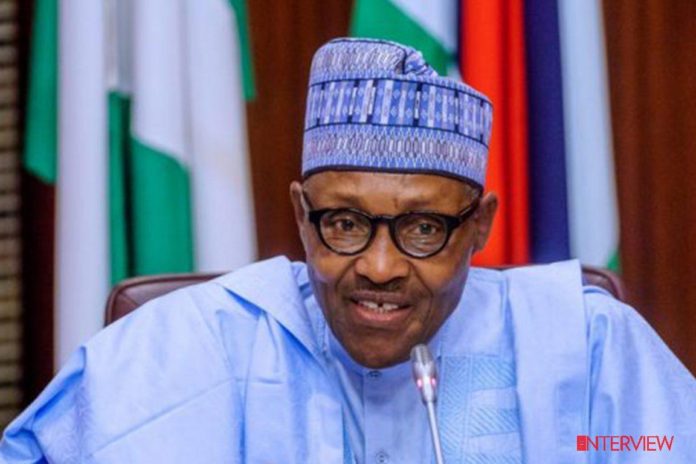
President Muhammadu Buhari / Photo credit: dailytrust.com

Two events over the last few weeks would have caused some governments to volcanically erupt in reaction to public expectation, but none of them have moved our president.

The current administration rode into power in 2015 with a basketful of electoral promises that put Nigerians in a dreamland.

It over-promised and has, so far, under-delivered. Not even the most ardent supporters of President Mohammadu Buhari can beat their chest in confidence that he has been able to make a dent.

Nigeria’s problems are many and intricate, but they are not impossible to tackle with the right mix of hard work and intelligence. The disappointment is the apparent lackadaisical attitude to governance in the last few years that has turned the expectation of success into just an imagination.

Recent developments in Nigeria make it hard to believe there is, indeed, a president in office.

For, how can we have a president whose feelings are unknown, whose thoughts are relayed by rediffusion and whose silence reverberates during national crises.

Bizarre stories of President Muhammadu Buhari being bodily replaced are so rife in Nigerian conversations that it is no longer idiotic to suggest that there is a presidential double, even if the possibility is startling to consider.

The story goes that after a long sick leave for an undisclosed illness in Britain in 2017, an impersonator whose real identity is Jubril from Sudan performed a cosmetic surgery that transformed him to a perfect lookalike who now acts as Nigeria’s president.

Wild and ludicrous as it may sound, the behavioUr of the president in times of crisis adds fuel to the theory, and the resultant combustion is oxidizing confidence in, and the credibility of, the Buhari administration.

It was silly enough that President Buhari had to deny rumors that he had died and had been replaced by a lookalike. “It’s the real me, I assure you,” he told an audience in Poland in 2018. Even if we believed him then, he must move from words to tangible assurance. It is now critical for him to back up the declaration with actions that will translate Nigeria from a pervading darkness of insecurity.

There is an aura of coldness and apathy oozing from Aso Rock, at a time when the people, who gave the president the ultimate power, expect leadership, direction and strength to stamp out lawlessness and banditry that is threatening national security.

Two events over the last few weeks would have caused some governments to volcanically erupt in reaction to public expectation, but none of them have moved our president.

He is not just slow, he is stagnant.

Nigeria is unraveling through lawless armed attacks on the population, and the government is not just convincingly incompetent to deal with it, but is transparently disinterested in maintaining peace

On November 29, no fewer than 40 farmers in the Zabarmari village in northeast Borno State were beheaded in a strange act of cruelty. The United Nations humanitarian coordinator in Nigeria, Edward Kallon, confirmed that at least 110 civilians were ruthlessly killed.

The president refused to visit the village or address the nation about their growing fears. Instead, he proceeded on a private visit to his home state. As he arrived Katsina enjoying himself, disaster struck again in his backyard.

Children citizens were kidnapped in daylight gangsterism right under his nose, while he was there at home.

Such dastardly acts have become all too common. There are growing fears it can only get worse, except the government does something different and imaginative.

To the relief of the nation, those students kidnapped in Katsina have been released. However, there have been multiple reports of kidnapping even after that worrying affair; and the signs are there that the nation is drifting towards lawlessness.

As these events play one after the other, President Buhari has not considered it fit to address the nation in person.

Instead, he hides behind his men, who deliver conflicting accounts and outright lies to the public.

Politicians would like to do something at a time like this to give an assurance to those they serve.

Not President Buhari.

He continues to live on an island, where Nigerians cannot reach him.

Our president is disconnected from his people.

There are even unverified reports that the First Lady has eloped to Dubai, as Aso Rock is no longer considered a safe haven from kidnappers.

Although I have waved off for years the idea that President Buhari is not interested in managing Nigeria, it is no longer reasonable to assert that his interest in the presidency is beyond power

Nigerians are giving up on this president.

In case he has yet to be properly briefed, as he seems out of touch, the talk of the town is that God is now our president.

Hope is skinny as a rail that Aso Rock has an active occupant.

There seems to be no one in active charge.

There have been times when you really wish that the president would speak, and he does not.

Even when he speaks, he says so little that a wave of disappointment trails.

Nigeria looks like a nation on autopilot – rudderless and aimless. Drifting and lost.

Just as citizens are dying in shocking ways and kidnaps are rising, the economy is sicker than a dog.

The exchange rate is the highest it has ever been and prices of essential goods are going through the roof.

President Buhari is almost completely disengaged and turned off from the worries of his people.

Nigerians are yearning to hear from him, but he has nothing to say – there is no word of comfort or sympathy.

Even if he cares, it cannot be gauged.

He is in a different atmosphere.

At a time of Soro Soke, the president needs to speak loudly.

Or if he can’t speak, he should do something, because action can speak louder than words.

Can the president come out from his hiding? Can he be human and convince us that Jubril of Sudan is made up?

If President Buhari were an employee in the private sector, he would have been sacked half-way into his first term.

Who can employ a worker who takes off sick for nearly half a year without a doctor’s report, while using company resources?

That the government is absent, our leaders are on leave and President Buhari is missing in action is also unacceptable

Nigerians are Buhari’s employers, but our deformed democratic system is too weak to tackle dereliction of duty. Legislators are unable to look the president in the eye.

The government exists for many reasons, but none is more important than maintaining social order and public safety.

And on this fundamental purpose, the government of Nigeria has simply taken a vacation.

In the American constitution, upon which the Nigerian copy rides, this purpose of government to be the society’s policeman is elegantly phrased as ensuring domestic tranquility.

Nigeria is unraveling through lawless armed attacks on the population, and the government is not just convincingly incompetent to deal with it, but is transparently disinterested in maintaining peace.

Nigerians have nearly given up on good roads, schools or hospitals. You can’t think about those when the safety of life is not guaranteed.

The good things of life have now become just nice-to-haves. The must-have, security, is where the government is failing.

It is no longer safe to travel, or even jog in neighborhood streets.

The other day, a retired military officer was mugged while jogging. Hungry people are laying siege on other citizens.

Nigerians are eating each other.

Although I have waved off for years the idea that President Buhari is not interested in managing Nigeria, it is no longer reasonable to assert that his interest in the presidency is beyond power.

There is no evidence he believes in public service or has empathy for those he serves.

No one truly knows how our government is being run, but in a nation where the military and the police get more funding that the educational system, a steady decline into lawlessness is not acceptable.

That the government is absent, our leaders are on leave and President Buhari is missing in action is also unacceptable.

President Buhari and his cabinet need to gbe body.

They have sworn an oath to do this job and they must.

If they continue to run around without any solution while burning taxpayer’s funds, they must start thinking about retiring to their home towns for good.

Nigeria does not lack talent for the job of a president. Takers are waiting.

If President Buhari is too tired to work for us and talk to us, early retirement is a good and noble option.

Nigerians will praise him for it.

Written by Tunde Chris Odediran

Tunde Chris Odediran studied and practiced journalism in Nigeria. He is now a Technical Communications and Information Technology professional in the United States.

What Happened To Akufo-Addo? By Azu Ishiekwene

If we could cast a vote in the December 8 presidential election in Ghana, President Nana Akufo-Addo, would have won re-election by miles. Nigerians love him to bits. He talks a good game.

In the first two years or more of his presidency, I remember a number of videos shared with me on the Akufo-Addo promise. On a tour of the US, he met with the conference of US governors and awed with his presentation. On another occasion, he wowed French President Emmanuel Macron with his speech on “Ghana Beyond Aid”. 

That speech, which has chalked over three and a half million views on YouTube, spoke the minds of many self-respecting Africans. The continent’s leaders have so degraded themselves with their begging bowls, that they have become unwanted guests in many European capitals. We would give them away, if we could.

But Akufo-Addo was different. It was refreshing to hear an African leader tell a major European leader, face-to-face, that Ghana – and indeed the continent – was no longer peddling the begging bowl. 

The continent wanted fair trading terms, that’s all. Akufo-Addo did not take his seat until he refreshed Macron about how the injustices of 18th century European history laid the foundation for some of today’s problems. Yet, he ended on the note that Africa must take responsibility for its own future.

He made a few more stirring speeches – at the UN – and wherever he went thereafter, bearing the torch of what seemed, quite frankly, to be a new overdue renaissance of Africa, a place where the Mo Ibrahim leadership prize has languished for three years now for lack of a worthy recipient.

In a way, Akufo-Addo became the president Nigeria never had. But we coveted him for more than his stirring speeches on the global stage. We also thought he wasn’t doing too badly at home. At no time did we seem more certain of his performance than during the initial outbreak of the coronavirus this year.

While some Nigerians were still sharing wicked jokes about whether or not President Muhammadu Buhari could pronounce the word well into the outbreak, Ghana seemed to be on the front foot. There were reports that Ghana was not only leading the continent in testing and tracing, it was also using drones to deliver test results in hospitals in remote areas! It was testing, per capita, more than any other country on the continent, followed by South Africa.

This was at a time when Madagascar President Andry Rajoelina was still brewing his herbal tonic, when Tanzanian President John Magufuli was insisting that coronavirus was a spiritual problem, the Sierra Leonean president’s wife was rebranding COVID-19 materials as political party handouts, and when the Nigerian president was being accused of dispensing COVID-19 relief materials in small bread nylon bags. 

The only president who came close to Akufo-Addo was perhaps Rwandan President Paul Kagame. Yet, even he was a distant second.

In a year when congenital incompetence compounded by catastrophic mismanagement of the COVID19 pandemic cost President Donald Trump his second term, you would think that Akufo-Addo’s advertised exceptional handling of the virus in Ghana would override any earlier transgressions. We thought so.

But from the result of the election, Ghanaians think differently. The man won by the skin of his teeth. Not just because winning a second term is a tough call even in the best of circumstances, but perhaps because Ghanaian voters seemed determined to punish the hubris carefully buried under the veneer of Akufo-Addo’s good public relations in much of the last four years.

He was lucky to get off with his pants on.

The result of the presidential election on December 8 showed that Akufo-Addo won with 6.7million votes compared with John Mahama’s 6.2million votes, a difference of about 500,000. 

The opposition National Democratic Congress (NDC) flipped 36 seats, drawing level with Akufo-Addo’s New Patriotic Party (NPP) and as you read this the opposition insists that the government and the Electoral Commission rigged the final result.

What did Ghanaian voters see in Akufo-Addo that outsiders missed almost completely in the last four years? Why was it that the incumbent could easily have lost the election, in spite of his status as a nearly patron saint of African leaders?

Some Ghanaian friends have been talking – and they have been talking vehemently. At least ten mortal sins have been listed against Akufo-Addo, from the Ghana banking sector crisis to nepotism and the conduct of party constituency executives and from the cost of party primaries to the so-called Galamsey affair and the Agyapa deal.

Of these charges, three stand out, which politicians in Ghana and elsewhere might do well to pay attention to. 

The first is NPP’s narrow elitism. While the NDC focused on bread-and-butter issues and campaigned in language most ordinary people could understand, the incumbent’s party was on a high horse. It used elite platforms, wasting time money and resources on arm-chair voters. 

Trump has taught the world that politics responds to the language of ordinary folks – the marginalised, the displaced, the powerless, the embittered and angry. The opposition tapped into that lava and did so with a vehemence that left the ruling party doubting even in areas where it had achieved modest successes.

Second, Akufo-Addo positioned himself as the clean guy, the man whose government had come to deliver Ghana from the multiple scandals of the Mahama years – scandals which even Jerry Rawlings confessed, even before his death, had become an embarrassment for him as a founding father of the party. 

It was good campaign tactic for Akufo-Addo four years ago, but after four years, he appears to have been caught in his own trap. And the opposition he once accused of being corrupt is making heavy weather of it, topping the charge of malfeasance with nepotism. 

One year ago, the opposition published a list 51 appointees in Akufo-Addo’s government that they said were relatives of the President. Though, it was largely a dubious list, the similarity in names hardly allowed any distinction between Tweedledee and Tweedledum. 

The resignation of the country’s Special Prosecutor, Martin Amidu, days before the presidential election didn’t do Akufo-Addo any favours. In a bitter, lengthy letter, the Special Prosecutor accused the President of interfering with his job. In specific reference to the Agyapa Royalties corruption saga, Amidu accused the President of trying to protect the Minister of Finance, allegedly involved in a gold deal bribery case with a South African company because the minister is his cousin.

He claimed that his office was underfunded and that he had not been paid a Cedi since taking office two years ago, saying he hoped they would at least pay his deputy, now that he was “out of the way.”

Garbage doesn’t get any messier. Even though Akufo-Addo survived it, he’ll still have to deal with it in his second term.

I think the near-fatal blow, which is the third point, was the banking sector crisis between 2017 and last year. About nine banks of the 28 private banks in Ghana had almost been brought to their knees by poor corporate governance. These were banks where large swathes of the poor and low-income earners had their savings. Although Akufo-Addo was not responsible for the laxity that nearly brought the system crashing down, he was perceived as being “too soft” on those found to that brought on the crisis. 

“To date”, my Ghanaian friend lamented on Wednesday, “many of them are still walking the streets free, and even castigating the government for blocking their private accounts!”

The opposition’s story was that the government condoned the errant fat cats because top officials of the government had been paid off.

Akufo-Addo has another four years to repair the damage. If he struggled in the last four years when he had the parliamentary majority to make bold and lasting changes, you guess is as good as mine what his fate would be with a hung parliament.

But that’s the way it is: he has his job cut out for him.

•Ishiekwene is the MD/Editor-In-Chief of The Interview

Wolumo: The Abuja airport community lacking electricity, potable water, schools, hospital

“I am an indigene of Wolumo. My father and forefathers lived and died here. I am 38 years but we have never had one single electric pole or transformer talk more of electricity.”

Abuja, Nigeria’s capital can be described as a dual society. One part is the city of the powerful and the affluent, the other is the city of the downtrodden.

A dual society typically has rural, impoverished, and neglected parts surrounding a more developed and advanced part – with the two having little interaction.

Arguably, nowhere is this contrast sharper than in the difference between the Nnamdi Azikiwe International Airport and its nearby community of Wolumo.

Though the international airport, the second busiest in the country, is 20 kilometres west of the Abuja main city, it is surrounded by lush landmarks and posh edifices.

Important landmarks such as the Nigerian Civil Aviation Authority head office, the Air Force Base, and other are in this area.

Flying into Abuja at night is such a splendour. Driving through the long airport road, the bright street lights are lit, turning the quiet neighbourhood’s after-hours into daylight. The trees on the roadside are lined in perfect harmony.

Bright lights from houses at the Air Force Base and filling stations illuminate the serene environment to give Abuja and its airport the befitting ambience until of course, you decide to take a left turn into the valley of Wolumo.

A mere stone throwaway, the village is enveloped in a blinding darkness.

“I am an indigene of Wolumo. My father and forefathers lived and died here. This is where I was born and raised. I am 38 years but we have never had one single electric pole or transformer talk more of electricity,” a visibly sad Saliu Musa told our reporters on Saturday.

Saliu Musa, a resident of Wolumo community

These journalists inquisitively entered the village when they visited Nigeria’s national vaccine plant, which is the first and last quality building you will see when entering Wolumo.

After passing the tarred roads and cobbled pavements with street lights, underground drainages, lush royal palm trees surrounding the residences with high fences, luxurious cars cruising around, it is a bit hard to imagine how a village like Wolumo will be tucked in the middle of all these.

Abandoned

Wolumo, a community under the Abuja Municipal Area Council (AMAC), is densely populated with substandard houses and shanties lacking sanitation and safe drinking water, depicting squalor right in the middle of the road leading to the airport.

The major road that leads to Wolumo is ironically named after a former American president.

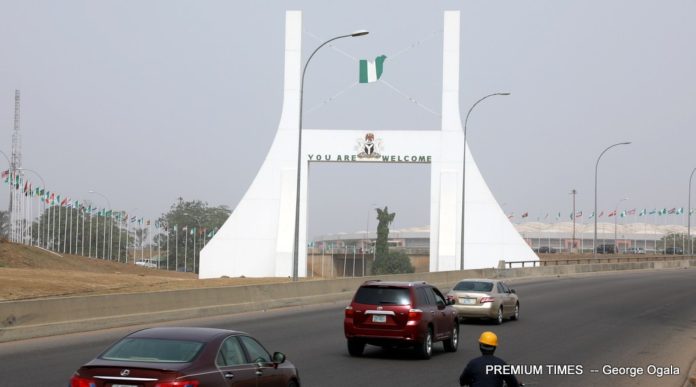
Along Bill Clinton Way, Wolumo sits directly opposite the presidential wing of the airport.

Aside from the absence of electricity, there are no schools or health facilities in the entire community with about a thousand residents.

Wolumo residents would have to take tricycles or motorcycles to the airport base for schooling, health care, and other essential services.ADVERTISEMENT

Mr Musa was quick to show the reporters one of the decrepit wells which serve as a source of water in the community.

“We have repeatedly requested from AMAC to supply electricity to this community but we are yet to get a response from them for ages. We started with our councillor, then the chairman and up till date nothing has been done,” Mr Musa, a farmer, said.

“No single school has been built in this community since its existence. The children attend a school located at the airport base. No potable water supply in this community. Our only source of water is a stream and well dug in some households.

“During election campaigns, politicians will come and promise light, school, water, and other basic amenities but once they win, they won’t fulfill their promises.

“There is no healthcare centre in this community. We travel all the way to the air force base hospital to access healthcare.”

Ladidi Kasim, a mother of four residing in Wolumo community.

Ladidi Kasim, a mother of four, owns a food store in the village. She lamented how the lack of electricity is affecting her business.

“We are still praying for God to provide electricity for us in this village. Lack of light has greatly affected my business. Most of my customers request cold drinks and water due to the hot weather. I buy ice block every day”, said Kasim who spoke partially in pidgin.

“We have to travel out of the community to access vaccines for the children. When it’s time for childbirth too, we have to take a bike to the nearest hospital at Bassa.”

Left out from COVID-19 palliatives

The Wolumo village chief, Sule Sariki explained how the community was left out during the sharing of COVID-19 palliatives.

Wolumo village chief, Sule Sariki

During the severest part of the lockdown, the government created a national register of about 3.6 million vulnerable persons. Residents of Wolumo should, ordinarily, fall under this category.

“During the COVID-19 lockdown, some people came to the community to document our names and bank details, promising to send some money to mitigate the impact of the lockdown but to date, we haven’t received any money. Residents of the nearby communities said they received some money from the government,” the chief said.

“We have reached out to our councillors numerous times but he said there is no budget for our community yet.”

For Yakubu Abbas, there is a bit of tension and insecurity in the community due to the situation of the community. “I plead with our leaders to have mercy and provide basic and social amenities for us.”

Sadiq Mohammed, 27, said, “I want the federal government to remember us in this community and help solve all our problems.”

No response from government

The village chief, Mr Sariki, showed our reporters a letter dating back to 2014 written to AMAC through the councillor representing Gwui ward, which Wolumo is under.

Despite repeated reminders and several visits to the councilor, Mr Saraki said there has not been any response.

“With the fact that security challenges in the country is on the high side, we humbly plead for electrification of our village… attached is the formal letter… this is a reminder to our request”, the letter dated April 24, 2014 read.

A copy of the letter written to AMAC.

Contacted last week, Sunday Bikko, the councilor of Gwui ward said he would not discuss matters regarding development of the community over the phone, insisting that our reporter comes to his office.

But when contacted later in a bid to schedule the said visit, Mr Bikko did not take calls or return text messages.

Felix Nwankwo, the director of Satellite Town Development Department of the FCT, when contacted, said his office is not in charge of the area in which Wolumo is located. “Call the FCTA office”, he said on phone Sunday morning.

But Hajiya Rabiu, the information officer of the FCTA, said the community actually falls under the purview of Mr Nwankwo.

“The Satellite Town Development Department is the office to contact”, she said in a phone interview. “They are responsible for developing suburbs: communities within urban areas but lack basic amenities”.

The official promised to “get back to us” with more information. She has yet to do so at press time.

Dual society

Wolumo is just one of the long-abandoned communities that make Nigeria’s national capital, Abuja, a dual city.

As PREMIUM TIMES’ investigation showed that in Abuja officials take refuge in their fortified houses and offices with standard infrastructure and services at the centre, leaving hundreds of thousands of others to wallow in extremely torrid circumstances in the rural peripheries.

Outside of the enclaves of the rich, like Maitama or Asokoro, Abuja has many urban slums, such as Dakibiu, Nyanya, Orozo, Karimo, or Dei Dei. These places are often not connected to public water service and lack sanitation and planning. But this is just a small hint of Abuja’s development crises.

Just like Wolumo, some of the abandoned communities are home to the indigenous people who originally lived in Abuja before it became Nigeria’s national capital decades ago.

A previous PREMIUM TIMES report showed how the village of Gomani which lies inward from Yangoji on the Abuja-Lokoja Expressway was abandoned for years with no basic amenities.

Danladi Jeji, the president of the Original Inhabitants Development Association of Abuja, had told PREMIUM TIMES in an interview that the original inhabitants have become orphans in Nigeria’s equation.

As the constitution provides, Mr Jeji noted, the President and the National Assembly have the executive and legislative responsibilities over the people of the FCT respectively.

“But for the 43 years of FCT, the government has been unfair to the original people,” he said. “And this is a democracy. They don’t remember us.”

https://youtube.com/watch?v=UZo1VJ8tLg8%3Fversion%3D3%26rel%3D1%26fs%3D1%26autohide%3D2%26showsearch%3D0%26showinfo%3D1%26iv_load_policy%3D1%26wmode%3Dtransparent

EXCLUSIVE: PAYTECH: Lagos tertiary schools finally accept controversial revenue collector imposed by Sanwo-Olu

Payment Technology Limited (PAYTECH) will take seven per cent of the schools’ revenues as consultation fee.

Lagos State Governor Babajide Sanwo-Olu has crushed opposition to the imposition of a revenue collector, Payment Technology Limited (PAYTECH), on the state’s tertiary institutions as the schools have all enrolled on the platform.

But the company will now take only seven per cent of the schools’ revenues as commission, instead of the 10 per cent it demanded. The agreement has been signed by the schools in spite of the clear violation of the state’s procurement law.

The government has argued that it needs such a firm to bring transparency to – and maximise the opportunities in – the collection of the internal revenue generated by the institutions.

The development is similar to the adoption of Alpha Beta Consulting LLP as Lagos State’s tax consultant since 1999. The private tax consulting firm, which is linked to a former governor of the state, Bola Tinubu, has faced a series of corruption allegations, including tax evasion.

The management of the Lagos institutions and the education committee of the state’s House of Assembly had earlier kicked against PAYTECH, describing it as exploitative.

When contacted, the governor’s spokesperson, Gboyega Akosile, said he had nothing new to say on the issue.

However, the special adviser to Mr Sanwo-Olu on education, Tokunbo Wahab, had told PREMIUM TIMES on many occasions that the government introduced the platform to allow stakeholders to monitor the revenues of the institutions real-time.

But Mr Wahab refused to speak on the seemingly huge commission to be pocketed by the private company and the violation of the state’s procurement laws in the selection of the company.

PREMIUM TIMES exclusively reported how shortly after Mr Sanwo-Olu took office in 2019, the fintech firm, which currently has no client on the proposed innovation, submitted a proposal to serve as the payment platform for tertiary schools in the state.

It proposed to charge 10 per cent on each transaction made on the platform, promising that its payment information system application would ensure increased revenue for the institutions.

However, the management of the institutions kicked against the proposal and many of them failed to meet the various deadlines set by the governor for enrollment as contained in a series of correspondences by Mr Wahab to the schools.

In one of the letters dated September 8, the schools were directed to forward the signed agreement with the company to the government on or before September 11.

“As you may recall, Payment Technology Limited (PAYTECH) has been appointed as the consultant on revenue collection automation within the Lagos tertiary institutions and shall deploy a management information system (MIS) that will facilitate the automation and independent e-monitoring of revenue collection that will promote accountability, transparency, and integrity, thus boost internally generated revenue (IGR),” the letter read.

However, following the failure of the institutions to comply, Mr Wahab sent them another letter of September 21, titled; “Re: Lagos State Tertiary Institution Revenue Collection.” The new letter was copied to the commissioner for economic planning and budget, and establishment, training and pensions.

“Full automation of your internally generated revenue with PAYTECH should commence latest by the same date, 30th September, 2020,” the letter stated.

The letter said failure to comply with the directive “shall attract stiff sanctions.”

Many of the institutions still did not comply.ADVERTISEMENT

Sanwo-Olu wades in

Worried by the schools’ opposition to the idea and the accompanying growing animosity between Mr Wahab and some lawmakers who had taken the side of the institutions, Mr Sanwo-Olu decided to intervene.

Findings by PREMIUM TIMES revealed that the governor decided to “speak” to the leadership of the parliament and the chairmen of the various governing boards of the affected institutions.

“Take my words but please don’t quote me. This matter is highly sensitive because the governor, in a very disappointing way, has come to the open to confirm he is behind the idea,” a source at the state house of assembly told our correspondent. The source demanded anonymity to avoid drawing a backlash.

More sources in two of the schools also confirmed the development, saying everyone was surprised that the governor decided to go ahead with the PAYTECH proposal, in spite of recent developments.

The sources were referring to recent scandals involving Alpha Beta, the state’s tax consultant.

One of the sources, who spoke to our reporter on the phone but asked not to be named, said: “You know, initially, the special adviser on education had been dropping the governor’s name to harass and bully everyone on the project. Very few of us believed him. But when the masquerade eventually unveiled himself with strange phone calls to those that were regarded as opposition to the project, then we became dumbfounded.”

Schools confirmed enrolment

The provost of Adeniran Ogunsanya College of Education (AOCOED), Ijanikin, Idowu Okuneye, confirmed that her institution has enrolled on the platform.

In her response to this newspaper’s inquiry, Mrs Okuneye, a professor of education, said via a short message that; “Yes we have enrolled. Thanks.”

But PREMIUM TIMES has since learnt that instead of the 10 per cent commission proposed by the company, the new agreement pegs it to seven per cent.

LASPOTECH entrance
LASPOTECH entrance

The chairman of the governing council of the Lagos State Polytechnic (LASPOTECH), Ikorodu, Rasheed Ojikutu, also confirmed the development.

Mr Ojikutu, a professor of statistics at the University of Lagos (UNILAG), Akoka, said the agreement stipulates a review after three months to determine whether to continue with the company or not.

On the violation of the procurement law, Mr Ojikutu simply asked our reporter to get a copy of the agreement before criticising it.

“We know you are doing your work, which is very good because you are the conscience of the society. But about five of us representing different institutions sat with the SAE to review the proposal, and I think you should be able to trust our judgement,” Mr Ojikutu told our reporter on the phone.

The Lagos State University (LASU)

At the Lagos State University (LASU), its head of the centre for information, press and public relations (CIPPR), Ojo, Ademola Adekoya, confirmed that the institution has enrolled on the platform.

Mr Adekoya said as employees of government, the university officials obey the government’s instructions.

“The university is owned by the government and the governor is the Visitor. So by law, we are bound to obey the government’s instructions,” he said.

Financial windfalls to be enjoyed by PAYTECH

With the enrollment of all the state-owned tertiary institutions, PAYTECH will enjoy a financial windfall from the institutions’ revenues.

New revenue streams, separate from the usual high-fee-paying programmes such as distance learning programmes, sandwiches, pre-degree and degree programmes, run by the state-owned institutions, include LASU’s land regularisation charges, hostel project and LASPOTECH’s new consultancy initiatives.

For instance, one source said, LASU is expected to generate as much as N8 billion from its land regularisation policy, which involved the payment of N1.25 million per plot as regularisation fee to the university by at least 8,000 households who encroached on the university’s land at its main campus in Ojo.

In 2018, the encroachers agreed to pay the sum to the university after the state threatened to evict them from the land. Upon payment of the regularisation fee, the state government will award them certificates of occupancy (C of O).

That means PAYTECH stands to make about seven per cent of this sum, over N500 million, from LASU’s land regularisation charges alone.

A tradition of imposing revenue-collecting “consultants”

The imposition of PAYTECH as a revenue-collecting consultant on Lagos tertiary schools follows a tradition of successive administrations in the state imposing revenue-collecting firms, which take mouth-watering consultation fees.

The state’s primary tax consultant, Alpha-Beta, was recently accused of fraud and tax-evasion by one of its former leaders.

The immediate past governor of the state, Akinwunmi Ambode, also introduced Visionscape Sanitation Solutions, a relatively new company, to take over the refuse collection in the state from the various private individuals who had partnered the Lagos State Waste Management Agency (LAWMA) to execute the task.

The deal ended in a fiasco as Visionscape struggled to collect waste around the state on time, leaving the city in a mess of refuse.

The uproar and bickering that accompanied the initiative contributed significantly to Mr Ambode’s ouster after his first term in office.

Government keeps mum

The government has refused further comment on the development, saying enough explanation had been given already.

Mr Wahab told PREMIUM TIMES he would not speak further on the matter, alleging that this newspaper’s report on the subject had been full of inaccuracies.

“But I wouldn’t talk on this anymore,” he wrote in a WhatsApp message sent to our reporter.

After four years, Britain reaches Brexit deal with EU

EU officials have praised the agreement, which came four years, five months and 29 days after the UK voted in a referendum to leave the EU.

Britain on Thursday finally reached a deal signalling its exit from the European Union after more than four years of intense negotiations.

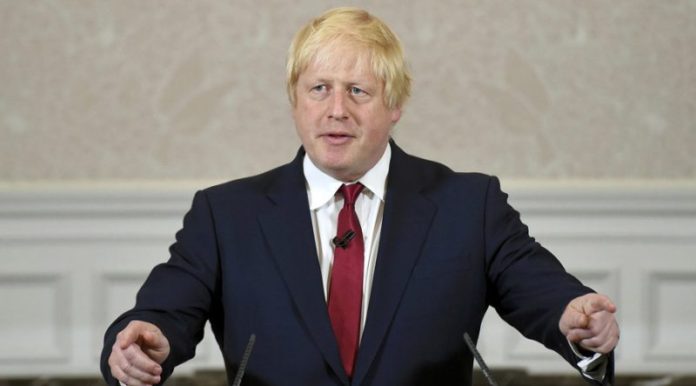
“The deal is done,” New York Post quotes UK Prime Minister Boris Johnson as tweeting along with a photo of him joyfully giving two thumbs up.

His country had finally “taken back control,” he told a press conference.

EU officials have praised the agreement, which came four years, five months and 29 days after the UK voted in a referendum to leave the EU — and a week before the December 31 deadline.

Significance

The deal now means goods can continue without tariffs or quotas after the UK breaks fully free on New Year’s Day.

“It is, I believe, what the UK needs at this time, and the right way forward,” the newspaper also quotes Mr Johnson as saying.

He said the 500-page agreement promises to be “stable and prosperous for both sides.”

“This country will remain culturally, historically, strategically, geologically attached to Europe,” he reportedly said, “vowing to remain a close ally of the 27-nation bloc after the sometimes fierce negotiations.”

For the deal to be binding, the British and European parliaments both must hold votes on the agreement.

“It was worth fighting for this deal,” European Commission President Ursula von der Leyen tweeted afterward.

“It was a long and winding road, but we have got a good deal to show for it,” she said at a press conference. “It is fair, it is a balanced deal, and it is the right and responsible thing to do for both sides,” she said.

Changes

New York Post also reports that despite the deal, “there are still unanswered questions about huge areas, including security cooperation and access to the EU market for Britain’s financial services sector.”

The nations involved “will also see huge changes when Brexit finally happens in a week”.

“Goods and people will no longer be able to move freely without border restrictions, and exporters and importers face customs declarations, goods checks and other obstacles.

“EU citizens will no longer be able to live and work in Britain without visas — though that does not apply to the more than 3 million already doing so — and Britons can no longer automatically work or retire in EU nations.”

VIDEO: Katsina billionaire funds presidential candidate in Niger Republic

The Katsina businessman donated over 100 vehicles.

Renowned Katsina billionaire, Dahiru Mangal, has donated over a hundred campaign vehicles in support of the presidential election bid of a former minister, Mohamed Bazoum, in the Republic of Niger.

In an undated video obtained by PRNigeria, the presentation of the vehicles was made in Maradi, the second-largest city in the Niger Republic which is also a border town between Nigeria and the country.

The vehicles were all branded with “Mohammed Bazoum, 2021” with a conspicuous photo of the presidential candidate on them.

With a net worth estimated around $765 million, Mr Mangal is a business mogul, an entrepreneur, industrialist and seasoned management expert who founded Max Air Limited in 2008.

His donation will boost Mohamed Bazoum’s chances who is already a protege of President Issoufou and the candidate for the ruling Nigerien Party for Democracy and Socialism (PNDS).

The general elections are scheduled to be held in Niger on Sunday, December 27 to elect the President and National Assembly. PRNigeria gathered that if no presidential candidate receives a majority of the vote above 50 per cent at the election on the weekend, a second-round will be held on 21 February 2021.

In a year marked by setbacks for some West African countries, the forthcoming presidential election will lead to Niger’s first democratic transition of power between two democratically elected presidents since the country’s independence in 1960 from France.

Mohamed Bazoum is a Nigerien Arab politician who has been President of the Nigerien Party for Democracy and Socialism (PNDS-Tarayya) since 2011. He served in the government of Niger as Minister of Foreign Affairs from 1995 to 1996 and again from 2011 to 2015. He was Minister of State at the Presidency from 2015 to 2016 and was Minister of State for the Interior between 2016 and the summer of 2020 when he resigned to focus on running for the 2020 presidential election.

There are indications that Mr Bazoum may win Niger’s first democratic transfer of power in 2021’s Presidential election owing to the ruling party’s vast financial advantages.

The 60-year-old former interior minister has vowed to continue Mr Issoufou’s policies for combating Islamist violence and tackling poverty. His policy platform, dubbed Renaissance 3, is named after Mr Issoufou’s Renaissance 1 and Renaissance 2 governing agendas. Bazoum’s campaign manager is Issoufou’s son.

Dahiru Mangal Katsina businessman donated over 100 vehicles.

Mr Bazoum will face 29 other candidates, including Mahamane Ousmane, who was president from 1993-1996, and Seini Oumarou, a former prime minister. The runner-up in the last election, Hama Amadou, is barred from running because of a criminal conviction.

President Mahamadou Issoufou is stepping aside after two five-year terms, in contrast to other leaders in the region, especially in Guinea and Ivory Coast who used constitutional changes to extend their tenures to three terms.

He thus paves the way for a peaceful transition of power between two elected presidents, a first for the West African country, which has seen four coups since achieving independence from France in 1960.

Premiumtimesng

#EndSARS: Six weeks after inauguration, Oyo judicial panel yet to sit

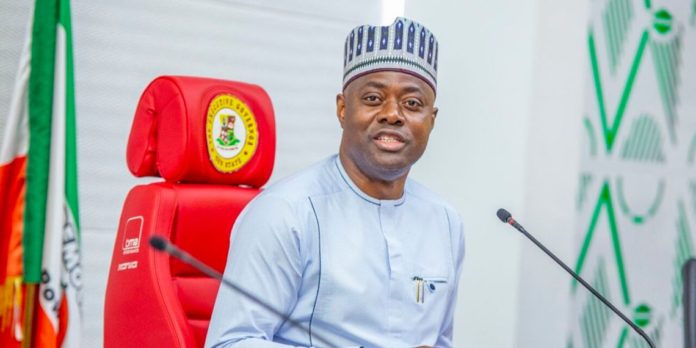
Governor, Seyi Makinde of Oyo State

The spokesperson to Governor Seyi Makinde explains the position of the Oyo government on the matter.

Six weeks after the Governor of Oyo State, Seyi Makinde, inaugurated the state’s Judicial Panel of Inquiry to look into cases of police brutalities by the disbanded Special Anti-Robbery Squad (SARS) and other police units against citizens, no single sitting and cases have been heard.

During the nationwide #EndSARS protest against police brutality, the government reached some concessions with the protesters.

One of such concessions was the setting up of judicial panels of inquiry by state governments to look into cases of alleged violations of human rights by SARS ,now disbanded, and other units of the police.

The six southwest states swiftly inaugurated their panels of inquiry based on the directive of the federal government.

While this newspaper has consistently reported how cases are being treated in Lagos, Ogun, Osun, Ekiti and Ondo, no case has been heard in Oyo State, despite being one of the hot spots of the protest.

Panel inauguration

On November 10, Mr Makinde inaugurated a panel made up of 11 members selected from the legal circle, the National Human Rights Commission, the Department of Public Prosecution (DPP), the National Youth Council of Nigeria, youth representatives of #EndSARS protesters and the community.

The panel is led by a retired judge, Bolajoko Adeniji.

Speaking at the inauguration, the governor encouraged all citizens of the state to report their cases with the assurance that all matters would be treated justly.

“I encouraged anyone who has faced human rights abuse in the hands of any of the security forces to use this opportunity to seek justice. I also stated that those responsible for the deaths of Isiaka Jimoh, Ganiyu Moshood Alabi, and Adeoye Taiwo would be brought to book”, he said then.

Mr Jimoh was a 23-year-old resident of Ogbomosho, and student of Ladoke Akintola University of Technology (LAUTECH) in Oyo State, who was shot dead by security operatives during protest on October 10.

The uproar that followed his death led to the death of two others namely Mr Alabi amd Mr Taiwo.

Panel not sitting?

The failure of the panel to hold any sitting has generated kerfuffle on social media. Many citizens of the state have taken to Twitter to question Mr Makinde about the refusal of the panel to hear cases of abuse.

A twitter user @savvyrinu said, “Seyi Makinde, what’s happening with the Oyo State Judicial Panel of Inquiry?@seyiamakinde !”

Another user posted that “Oyo state, do we still remember Jimoh Isiaq, some of us haven’t forgotten him Oyo State Judicial Panel Seyi Makinde. Regardless #JimohIsiaq Lives on”

Continue reading

TIPS