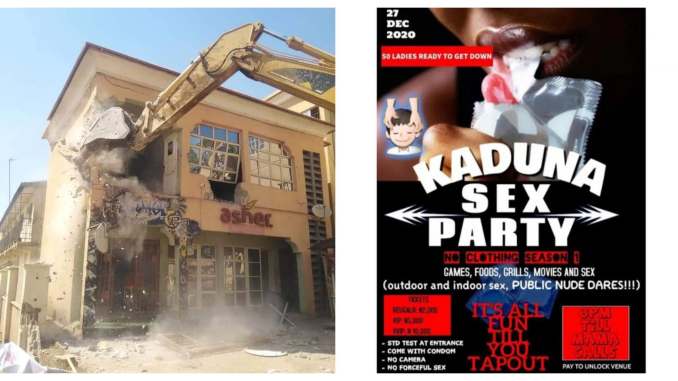
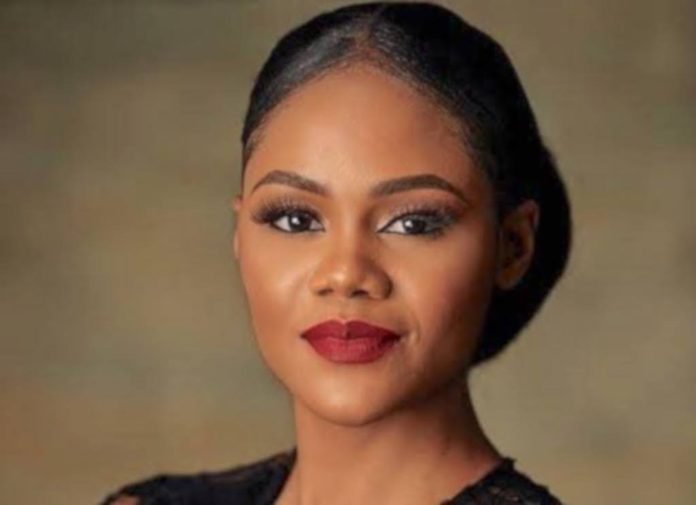
The chief executive officer of Asher Kings & Queens Restaurant, demolished by the Kaduna State Government on allegation of hosting a sex party has denied the allegation.
In a statement issued on Saturday, Mrs Yakubu said she the allegation was strange to her, adding that she would not stoop so low to have anything to do with a sex party.
The full statement reads:
THE STORY OF ASHER KINGS AND QUEENS RESTAURANT… this is my story
The Asher Kings and Queens Restaurant is 34 sitting-capacity- at -a -time restaurant, located at #75 Kachia Road, Sabon Tasha, Kaduna State, registered with the Corporate Affairs Commision, with with the registration number BN2463851 on 5th December 2016, under the COMPANIES AND ALLIED MATTERS ACT 1990 Food Production and Processing Services.
The restaurant is a one-storey building structure, with a VIP Lounge section, where premium customers relax to watch football league games in a cozy environment, with all the comfort; airconditioners and light music.
Whilst the ground floor is where the kitchen and serving spot is, also with chairs and tables for customers to sit and eat their food as required.
We hire/rent the VIP section for light events, of not more than 26 customers.
On the 27th December 2020, a customer hired the VIP Lounge for a 15-man reunion/clothing line promo, to appreciate his customers for their good patronage of his brands.
Before the event proper commenced, a friend of mine and l noticed an unusual movement around the main gate to the restaurant,as it was half opened to avoid a crowded environment. We approached the main gate and on getting there I saw two truck load of heavily armed officers of the Nigeria Police Force (NPF).
I asked the team leader what was going on but he ignored my question and said he will explain to me when we get to the Police Station, Sabon Tasha Division.
When we arrived the Police station, my customer, who accompanied me to the station, enquired what the matter was and the Police showed us a poster on a GSM phone belonging to one of the officers by name Inspector Felix. It was a poster of an event titled; KADUNA SEX PARTY, which the Police claimed the venue for the supposed “sex party” was scheduled to hold at my restaurant, even though with no address of where it will take place on the poster. I denied knowledge of that event as there was nothing of that sort taking place at the restaurant and I wouldn’t stoop so low to entertain such illicit activity at my place, but the Police refused to believe me and had my friend and two of my staff detained for one night, one day, until the customer that had earlier hired the place for usage on that fateful day was also arrested the next day.
They were released after paying a “bail fee” of #100,000 to Inspector Felix and one other lady Officer,fair in complexion.
I noticed how incompetent the NPF were, i suggested to the them to call the number on the supppsed “Kaduna Sex Party” poster, which they immediately put a call through and a name came out using the True Caller App as MARVELLOUS AKPAN. The Police asked me to pay a fee of #20,000 for them to do their job of tracking the user of the phone number, which I immediately paid them so that they will swing into action.
Marvellous Akpan was arrested the next. He was interrogated and he obliged to owning the phone number on the poster and printing of the poster which was posted on Social Media, assisted by a friend of his named Noah and one other guy. On further interrogation, Mr Marvellous Akpan confessed to the Police that he doesn’t know me and has never been to my restaurant nor have any knowledge of its address.
Mr Chimeze, who had hired the place was released, summarily, after the successful arrest of Mr Akpan.
The next day, 31st December, while at the other Branch of my restaurant, at Court Road, Sabon Tasha, Kaduna, a friend of mine called me, asked me to go to the main restaurant and see what was going on. I immediately went and saw a combined team of Police men, soldiers, KASTLEA and Vigilante groups guarded a pay loader to demolished my restaurant. No prior notice was served to me before the demolition, there was no any form of communication between I and the Kaduna State Property Development Agency (KASUPDA) who came to demolish the building structure. Even when they arrived the location, the main entrance to the main Restaurant and the restaurant was under lock and key. There was no any form of communication to me !
I watched them pull down the building without allowing me remove any item before the demolition. As a result of the trauma, I lost my one month old pregnancy.
Seldom has a Christmas message from any Nigerian cleric garnered the sort of reactions as those that greeted Bishop Mathew Hassan Kukah’s 2020 Christmas Message.
The Bishop of the Catholic Diocese of Sokoto remembered the words of the current English Queen, Elizabeth II, memorably spoken in 1992, referring to the year as an “annus horribilis,” She was right: three royal marriages had collapsed that year, a fire destroyed more than a hundred rooms in Windsor Castle and a toe-sucking scandal involving Sarah Ferguson, Duchess of York, rocked Britain and the monarchy. Moreover, the Lady Diana and Prince Charles’s marriage was not only terribly shaky, the entire world was in on that fact.
It is likely that those well-chosen words of the sage could have dwelt only in the minds of the literary-minded few who could have endevoured to answer the question the cleric posed: whether year 2020 would be remembered as “Annus Mirabilis (Miraculous, marvelous, remarkable amazing, wonderful year) or Annus Horribilis (horrible year)?”
The Bishop explained: “When Isaac Newton, at the age of 23, made the spectacular discoveries in the areas of Calculus, Motion, Optics, and Gravitation, the year of those discoveries, 1666, was referred to as, annus mirabilis, the year of joy”.
Please, bear in mind that there is a great need to dwell at length on the poet who titled his poem “Annus Mirabilis”, John Dryden, and why he did so. He it was, who turned the minds of Londoners from a certain annus horibilis to annus mirabilis.
Was Kukah also trying to so change our collective view of these terrible times? We shall interrogate that later.
Then, some members of the present administration of President Muhammadu Buhari reacted, excoriating the Bishop and the floodgates of attack opened against Kukah as sundry northern groups (real and imagined) began to issue statements. Other organisations responded, supporting Kuka. Now, a major controversy has broken open upon this luckless nation, but really, over what?
Really, over nothing!
Ah, straight to the point; what do I have against Bishop Kukah? Here is my answer: I quarrel with the statement he issued to explain that he never called for a coup. He had no reason to issue that second or explanatory statement. I hold it against him. It was totally clear to anybody who understands ordinary English that he did not call for a coup. Only somebody intent on mischief would stretch the good Bishop’s words to such a ridiculous extent. There was nothing that Bishop Kukah had said that had not been said by others. Other Bishops had condemned the state of insecurity in the land, the traditional rulers have done the same, the Sultan of Sokoto, the state governors, even the newspaper Publishers and the Managing Directors said so when they met with the Information Minister in Lagos late last year. What dropped from their mouths were more acidic than what Bishop Kukah ever said, except that they did not make their stand and stance public.
And even as some persons continued excoriating Kuka, the Arewa Consultative Forum (ACF) has alleged that camels are being used to carry deadly weapons into the country. Chief Audu Ogbeh, national chairman of ACF, said so in a statement on the last day of 2020 that weapons are being imported from a neighbouring country through Sokoto and Zamfara states.
Going into specifics, he said the weapons being ferried into Nigeria included rocket propelled grenades (RPGs) and anti-aircraft guns, adding that security operatives do not check the cargoes. To show that what he was saying was not novel, he charged: “At the last meeting of our National Executive Council, NEC, in October 2020, our members, particularly from Sokoto and Zamfara, reported that large consignments of camels were crossing our borders into Nigeria with a lot of baggage on their backs on a daily basis. And they observed that nobody checks their baggage and nobody knows what is being brought into Nigeria. The question Arewa Consultative Forum would like to ask the security agencies is what are the camels carrying and where they are heading?
The ACF is alarmed that this kind of situation should persist at a time when weapons of all kinds are coming into our country and worsening the climate of terror and national uncertainty. It is clear now from what we know that, as victims pay ransoms to the kidnappers the money is instantly converted to more sophisticated weapons and instruments of death by the kidnappers.”
Kukah said nothing as damaging as what Ogbeh did say. And Ogbeh recounted what was discussed at ACF meeting in October 2020, two full months ago. Now, Bishop Kukah deserves some apologies from all those who condemned him.
Someone should remind Alhaji Lai Mohammed that he is serving in a democracy. He should remember that even during Ibrahim Babangida’s military administration, one Bishop Ukaegbu, while preaching at the 1986 or 1987 Independence Anniversary church service, said “If God does not punish Nigeria’s leaders for corruption, He would have to apologise to Sodom and Gomorrah” and nobody threatened him with direct or veiled reprisals.
Now back to the front: Bishop Kukah is an intellectual of such a towering height that I feel rather uncomfortable just to help further explain how exactly the Annus Mirabilis phrase came into public discussion about England of 1666. Actually, the Latin phrase gained public recognition from “Annus Mirabilis”, a poem John Dryden published in 1667 to commemorate 1665–1666, the “year of miracles” of London. Despite the poem’s name, the year had been one of great tragedies, including the Great Fire of London. In fact, Dryden wrote the poem while at Charlton in Wiltshire, where he went to escape one of the great events of the year: the Great Plague of London.
In 1666, the Great Fire of London left a scorched path 40 miles long, through the city, destroyed over 15,000 homes, 100 churches and an unknown number of businesses. So, why did Dryden the poet see hope instead of disaster? Here is the answer: the burnt buildings were constructed of wood and were often lined with tar paper to keep out the famous London rain. The narrow streets and jam-packed houses helped the fire to spread rapidly, even as London lacked a fire brigade then.Loading…
Yet, in a short while, a new London began to rise; better designed houses, wider streets began to emerge. That was when Christopher Wren, the most famous British architect of his time commenced work on St. Paul’s Cathedral, that lofty monument of stone and marble, which still stands to this day.
So, John Dryden’s poem was actually an epic poetic call to the patriotic spirit of Londoners, to turn their Annus Horibilis into Annus Mirabilis – which they did. Where others concluded that the fire and the plague proved that God was punishing the city, Dryden saw in the destruction an opportunity to cleanse and purify London and turn it into a superior metropolis. The Oxford English Dictionary credits Dryden with the first known written use of that phrase in an English text.
Hey, I know that President Buhari studied at military academies, and so he must have studied various forms of strategy, the art of war, leadership, and how to survive in harsh terrains and the like. But poetry? I doubt if such a soft topic has ever arrived at any military academy.
So, let us not blame Buhari for not wondering if Bishop Kukah, by bringing the Annus Miraabilis and the Annus Horibilis ideas, was actually leaving a choice, a challenge even to Nigeria, to make the nation what it would choose to, despite the unconscionable killings taking place. Did I say the Information Minister, Lai Mohammed, look up the essence of Dryden’s poem even after Bishop Kukah had copiously invoked it? I doubt it. In fact, I must confess that from the way the man forces his arguments, it is obvious he has little respect for logic, but from the way he and certain others reacted to Kukah’s Christmas sermon, I began to wonder who their teachers were. Why did the fact that Kukah deliberately chose to end his sermon on a hopeful note not force them to return to Dryden’s poem?
Kukah said: “This moment calls on us as Christians to celebrate the simplicity of Christ represented in Christmas. Joy to the world, the Lord has come, the song says. Jesus has offered us a roadmap. We are challenged to bring light into the darkness of our society.
“Darkness has its own logic. St Paul reminds us that without Christ, our lives are characterized by: immorality, filthy and indecent actions, worship of idols and witchcraft. People become enemies and they fight, they become jealous, angry, and ambitious. They separate into parties and groups, they are envious, get drunk and have orgies (Gal. 5: 19-21). When it is dark, we cannot see our way and we stumble. Nigeria has stumbled so much. It is time to for us to turn on the light of the torch. Each of us can make a change.”
Please dwell on the Bishop’s conclusion: “So, Pastor Adesina was right. On the sad situation in Nigeria, the United Nations has wailed. The Pope has wailed. Cardinals, Archbishops, Bishops, Priests, Pastors have wailed. Emirs have wailed. Politicians have wailed. The Sultan has wailed. Surely, it is time for the Lord to hear the wailer as they have sung their redemption songs. With St. Paul, I say: The hour has come for you to wake up from your slumber because our salvation is nearer now than when we first believed. The night is nearly over the day is almost here, so let us put aside the deeds of darkness and put on the armor of light. (Rom. 13:11-12). Let us unite and seek the Lord in sincerity because the Lord will vindicate the righteous. Happy Christmas to you all.”
On another level I wish to let some people know that if they wanted to intimidate the Bishop, they are blowing against the wind. Catholic prelates have faced down the worst tyrants the world has ever known. Some have been cut down in their churches, such as Bishop Thomas Becket and Oscar Romero was shot while saying mass. Yet, such has never stopped them from speaking truth to power.
Bishop Kukah did not deserve the knocks he has received. One group was decidedly against him because he, a Christian, served as a secretary to the Oputa panel even though the Chairman was also a Christian. I laughed so hard it hurt, wondering how they could have forgotten, if that was a sin, that someone was a Military Head of State though his number two man was also a Muslim – just like himself.
Kukah should even be applauded. Only a scholar like him would bother with annus mirabilis or annus horibilis. I would have just gone ahead with annus calamitous or annus disastrous.
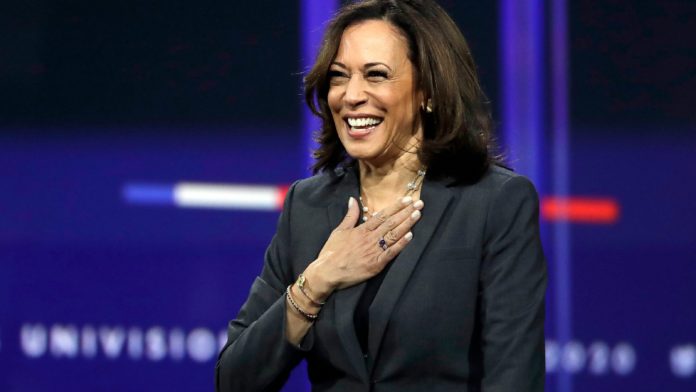
She’s the first female; first Black and first Asian American vice president-elect of the United States. Here are things to know about Kamala Harris.
Kamala Devi Harris was born in Oakland, California on October 20, 1964, the eldest of two children born to Shyamala Gopalan, a cancer researcher from India, and Donald Harris, an economist from Jamaica.
2.
Her parents met at UC Berkeley while pursuing graduate degrees, and bonded over a shared passion for the civil rights movement, which was active on campus. After she was born, they took young Kamala along to protests in a stroller.
3.
Harris’ parents divorced when she was 7, and her mother raised her and her sister, Maya, on the top floor of a yellow duplex in Berkeley.
4.
She visited India as a child and was heavily influenced by her grandfather, a high-ranking government official who fought for Indian independence, and grandmother, an activist who travelled the countryside teaching impoverished women about birth control.
5.
In Montreal, where she lived with her mum, a 13-year-old Harris and her younger sister, Maya, led a successful demonstration in front of their apartment building in protest of a policy that banned children from playing on the lawn.
6.
After being recruited to the San Francisco District Attorney’s office by a former colleague in Alameda, Harris cracked down on teenage prostitution in the city, reorienting law enforcement’s approach to focus on the girls as victims rather than as criminals selling sex.
7.
Her family was initially skeptical of her carrier choice.
8.
In 2003, she ran for district attorney in San Francisco against incumbent Terence Hallinan, her former boss. Her message, a top strategist on that campaign told POLITICO, was: “We’re progressive, like Terence Hallinan, but we’re competent like Terence Hallinan is not.”
9.
She’s the first Black woman in California to be elected district attorney.
10.
She Was the First Woman and First Black Attorney General of California.
11.
As Attorney General Harris created Open Justice, an online platform that makes criminal justice data available to the public at large. The database has helped improve police accountability by tabulating the number of deaths and injuries of those in police custody.
12.
She met the love of her life, Douglas Emhoff, a corporate lawyer in Los Angeles, at 49, and got married at 50 in 2014 at a private ceremony officiated by her sister. Emhoff has two children from his previous marriage; they call Harris “Momala.”
13.
She won her U.S. Senate race in 2016, defeating fellow Democrat Loretta Sanchez, a moderate congresswoman with 20 years of experience.
14.
She went viral in 2017 for her sharp questioning of then-Attorney General Jeff Sessions on the Russia investigation. After 3½ minutes of persistent questioning, Sessions said, “I’m not able to be rushed this fast! It makes me nervous.”
15.
She implemented a similar strategy of questioning during Brett Kavanaugh’s Supreme Court confirmation hearings in 2018, when she grilled him about whether he’d discussed the Mueller investigation with anyone.
16.
Biden and Harris Butted Heads During the Democratic Primary Before Teaming Up in 2020.
Harris announced she was running for president in January 2019. One high points came during the first Democratic debate when Harris confronted her future running mate over his position on cross-district busing in the 1970s and delivered a stirring anecdote ending with the line, “And that little girl was me,” which became an immediate viral sensation. The resulting surge in poll numbers, however, did not last. Harris shut her campaign down in December, and endorsed Biden in March 2020. He announced Harris as his VP pick in August saying, “Back when Kamala was Attorney General, she worked closely with (my son) Beau. I watched as they took on the big banks, lifted up working people, and protected women and kids from abuse. I was proud then, and I’m proud now to have her as my partner in this campaign.”
17.
She’s an enthusiastic cook who bookmarks recipes from the New York Times’ cooking section and has tried almost all the recipes from Alice Waters’ The Art of Simple Food. Her go-to dinner entree is a simple roast chicken.
18.
She collects Converse Chuck Taylor sneakers, which are her go-to travel shoes.
19.
Her favorite books include Native Son by Richard Wright, The Kite Runner by Khaled Hosseini, The Joy Luck Club by Amy Tan, Song of Solomon by Toni Morrison, and The Lion, the Witch and the Wardrobe by C.S. Lewis.
20.
She typically wakes up around 6 a.m. and works out for half an hour on the elliptical or SoulCycle. She’ll start the day with a bowl of Raisin Bran with almond milk and tea with honey and lemon before leaving for work.
21.
She describes herself as a “tough” boss—although mostly on herself.
22.
Her motto comes from her mom: “You may be the first, but make sure you’re not the last.”
Sources: Los Angeles Times, San Francisco Chronicle, POLITICO, The New Yorker, The Atlantic, NPR, USA Today, The Washington Post, The New York Times, GovTrack, The Guardian, Vox, The Intercept, Smart Voter, Book Riot, SF Gate, Mercury News, The Cut, The Truths We Hold by Kamala Harris.
Ankara wax prints are here to stay. For something as blindingly conspicuous as the brave, bold print, it certainly has enjoyed a long run for decades, in fashion and interiors. Such stamina is very remarkable considering fashion’s notoriously fickle nature and ever-shortening attention span. Yet, some of the industry’s most discerning brands and trendsetting young designers still seem to be infatuated with Ankara printed fabrics, returning again and again to intensely vibrant, graphic and super-saturated motifs.
Ankara wax prints have now become a must-have for nearly every West African fashion designer’s collection, and some foreigners too. Interior designers, furniture makers are also increasingly inspired to use these prints in more unique ways. The blend of vibrant colours and patterns in the wax print gives a welcoming ambience to any space. Everything, from flowerpot covers, clothing, to shoes, bags or stationeries have become lavish and over the top with the use of Ankara wax prints. Soft furnishings made with Ankara patterns on cotton or silk fabrics, are as flashy and excessive as possible.
Interior decorators are making curtains, wall hangings, pillows, throws, lampshades, with Ankara. The wax prints can liven up a room because it blends well with leather or other fabrics. You can mix, match or clash the prints. One of the best, and most exciting, things about Ankara wax print is that there are endless possibilities. There are so many variations to mix and match the product you want to create, with what you already have in your wardrobe or home.
It is impossible to get bored!
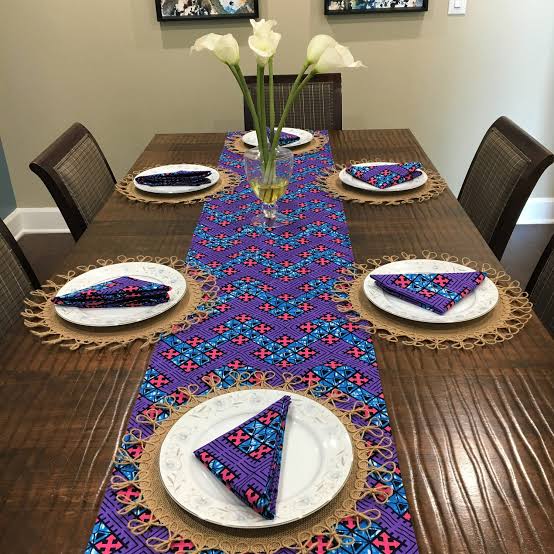
But, if you’re nervous about using bold Ankara prints in your furnishings, start with something small like a lampshade or cushion. Ankara prints also does good service on the table. Table cloths or napkins can be made with Ankara. You can bring them out on occasions when you fancy a flourish of prints and keep a cupboard full of options. For all your Ankara wax products: fabric bundles, soft furnishings, clothing, and all Ankara crafts, visit O-PHYL Ethnic, Upper Level, Shop U8 at Jabi Lake Mall, Abuja. Or the branch at Reiz Continental Hotel, Central Area, Abuja. Tel: 0803 7870 536, 0908 7845 157.
Eastern Africa’s pastoral drylands have witnessed an influx of large investment to develop the region’s land, resources and infrastructure. In areas inhabited by various pastoral and agro-pastoral groups, these projects have in many cases proceeded with little consideration for local livelihoods and social relations. Jeremy Lind, Doris Okenwa and Ian Scoones argue they have accentuated inequalities and social difference within the host communities.
More than a decade since the investment spike began in the pastoral drylands of Eastern Africa, it is possible to see how a new generation of projects are reconfiguring power, livelihoods and conflict. What do these investments look like in Eastern Africa’s drylands? Do the diverse inhabitants of these lands benefit, or is this a new type of territorialisation? And what types of resistance, mobilisation and activism are evident?
These questions are explored across thirteen different contexts of large-scale investment in our new book, Land, Investment and Politics: Reconfiguring Eastern Africa’s Pastoral Drylands. Focusing on local cases, stretching from the Gulf of Aden ports on Somaliland’s coast in the north to the Kilombero rice developments in southern Tanzania, the book highlights diverse experiences and perspectives of investment from the bottom up.
Many pastoral and agro-pastoral societies were marginalised by centralised state power and maligned as backwards by earlier ‘modernisation’ efforts to create sedentary (and compliant) governable subjects. Violence and the destruction of livelihoods was the experience for many. Set against such legacies of contestation and underdevelopment, global investors, project developers and national governments herald new large-scale investment as transformational, ushering in new-found prosperity and secure livelihoods. When large-scale investments
encounter local economies, the social and spatial outcomes do not reflect merely the state’s aspirations of ‘development’ or the interests of large global capital. The outcomes also intersect with local realities and aspirations. Seen from the dryland margins, struggles around the framing and meanings given to investments in oil, wind, livestock, land and water are the crux of many tensions.
Even the most elaborate plans of financiers, contractors and national governments come unstuck and are re-made in the likeness of not only states’ visions of modernity and ‘progress’, but also those of herders and small-town entrepreneurs in the pastoral drylands.
‘Seeing’ and responding to
investments
Ports, pipelines, roads, wind farms and plantations are prominent features in the development visions of both national governments and private capital across Eastern Africa. National development plans emphasise the presumed benefits of large outside investment for expanding markets and economic activities in marginal rural areas. Actors in national governments become gatekeepers to foreign investment and are well-positioned to benefit personally from deals.
Investors promote the benefits of project activity to residents of nearby communities through additional programmes in the community, delivering the construction of new infrastructure, easing transport difficulties, promoting marketing activity, providing opportunities for work and creating corporate social investments in bursaries, classrooms and the provision of water, for example. Yet, these efforts at corporate social responsibility have ignited debates around belonging, entitlements and inclusion. In Turka na in northern Kenya, tensions cropped up around the efforts of oil investors to curry favour with communities and stem any potential resistance through ‘participatory’ and ‘consultative’ processes, inadvertently creating asymmetric power relations.
State actors at the sub-national level may not see investments in the same way, however. The position of sub-national political administrations can waiver between embrace and hostility. Mixed views of large-scale investments also often hold among local business elites. Ultimately, investment is something to be welcomed, but the terms of inclusion in land deals, compensation and contract and tendering opportunities dictate the nature of politics.
For example, around new geothermal developments in Baringo in Kenya’s northern Rift Valley, Pokot elites are at the forefront of land privatisation, fencing the most valuable plots along new roads that connect geothermal sites with national infrastructure.
The views of other dryland residents – small-scale pastoralists and dryland farmers – cover a spectrum, from opposition and resistance to the perceived loss of key grazing resources and farmland, to accommodation in anticipation of deriving personal benefit or simple antipathy.
For example, residents of small settlements near the Lake Turkana Wind Power site, also in northern Kenya, blockaded roads to protest their alleged exclusion from investment benefits, including compensation for the extraction of sand and the felling of trees, as well as access to jobs. Even so, at the local level, there is no uniform opinion or interest: while young people seek an economic foothold, elders agitate to uphold precedence for grazing rights and women seek opportunities as cleaners and cooks for contractors.
Ambiguous outcomes,
unclear ‘winners’
Exploring ways that large-scale investments are ‘seen’ by stakeholders at various levels of project design, finance and implementation brings into frame the questions: investments for whom? In whose interests? And with what consequences?
The reconfiguration of land ownership and use, while perhaps not as dramatic as earlier ‘land grabbing’ debates feared, has been profound, creating new politics of land and investment in the pastoral regions. Simple narratives of the ‘state’ and/or ‘investor’ versus ‘local people’ do not relay the more complex dynamics and assemblages of interests that mobilise behind, anticipate and pursue large-scale investments. In Ethiopia’s Awash Valley, local Afar elites have become complicit in seeking personal advantage from the state’s investments in sugar estates, which have dispossessed livestock-keepers from prime grazing areas.
Jeremy Lind is a Research Fellow at the Institute of Development Studies (IDS) at the University of Sussex, UK. He leads a research team on livestock commercialisation for the Agricultural Policy Research in Africa Programme. He works on livelihoods, pastoralism, extractives industry development and conflict, focusing on Kenya and Ethiopia. He co-edited Pastoralism and Development in Africa (2013).Doris Okenwa is a Social Anthropologist with an interest in the political economy of natural resources and development. Her doctoral research based on long-term ethnographic fieldwork in Kenya’s Turkana County, examined the generative potentials of uncertainty and how legacies of marginalisation and the discovery of oil created new notions of ‘rightful share’. She completed her doctoral research in Anthropology at the London School of Economics.Ian Scoones is a professorial Fellow at the Institute of Development Studies at the University of Sussex and is codirector of the ESRC STEPS (Social, Technological and Environmental Pathways to Sustainability) Centre. He currently leads the ERC-funded project PASTRES (Pastoralism, Uncertainty and Resilience), working in Kenya, Italy and China.
Infrastructure and investments have ignited intense competition and the revaluing of land, as local elites and other domestic and foreign investors jostle to claim tracts of land. Far from resisting and obstructing investment, many have sought to position themselves to benefit from it. In Somaliland, intense competition to command a favourable position in wider trade networks are evident in struggles to capture the expected windfall of the Berbera corridor development. A common saying in Somaliland – He who sits close to the cooking pot gets a good bone – is invoked by some far from infrastructure who worry they will miss out from the benefits.
Inequality and mobilisation from below
So, how do communities around the edges of big projects gain more than arbitrary compensation? Local governments and leadership need to be more creative in negotiating investments beyond the national government agreements with developers. It is crucial to demand clear terms of engagement and more long-term benefits for differentiated local stakeholders – not just one-off disbursements or short-term work.
While national governments often side with investment, citizens and civil society alike can press for accountability – through statutory human rights instruments, the implementation of land reforms to guard against grabbing, the enforcement of environmental regulations and scrutiny of contracts by anti-corruption agencies, to name a few.
Meanwhile, as we argue in the book – Land, Investment and Politics – the more imperceptible influences of investments on territory, as well as the economy, politics and citizenship, will accentuate inequalities and social difference that increasingly characterise dryland margins. While there is no simple view ‘from below’, resistance, mobilisation and subversion are something to anticipate as part of the ongoing development of infrastructure, land and resources across Africa’s drylands.
Publication information:
Lind, Jeremy, Okenwa, Doris, and Scoones, Ian. 2020. Land, Investment and Politics: Reconfiguring Eastern Africa’s Pastoral Drylands. Woodbridge: James Currey.
Pastor Fatoyinbo may have achieved a technical legal victory but it has left his name in ruins. He may never be able to clear himself of allegations that he is a rapist. That is a terrible burden for a “Man of God” to live with, a testament to the soft vengeance of Busola Dakolo’s incredible courage.
At the end of June 2019, #MeToo became #ChurchToo in Nigeria.
Busola Dakolo, a mother of three who grew up a gifted child was the unlikely heroine in this script. She first laid bare her claims in an interview with Chude Jideonwo, lawyer and co-founder of the digital platform, YNaija. These claims later became the basis for her civil claim filed at the Abuja High Court on September 6, detailing harrowing allegations of rape perpetrated against her by Pastor Biodun Fatoyinbo, best known as the senior pastor of the Commonwealth of Zion Assembly (COZA). The acts took place on 23 and 26 September 2002.
To be clear, this was not the first time allegations of sexual predation had been made against this pastor. Mrs. Dakolo’s allegations, however, felt different. They were detailed; as a married mother, she had very little to gain from making these allegations public and an awful blowback was both predictable and to be expected from partisans and propagandists of the alleged perpetrator.
The first incident of sexual assault allegedly took place when she was 17 in her parents’ house in Ilorin, Kwara State. Neither parent was at home and the pastor knew this. She had never experienced sexual intimacy before then. She looked up to the pastor as her “Spiritual Father”. The facts would suggest that the alleged perpetrator probably groomed her for this moment. After the sexual act, he reportedly gave her a bottle of “Krest”, a lemonade-flavoured soda and forced her to drink it. There was a second incident which reportedly took place in or on a car. As a young Christian girl from a polygamous home, Busola Amupitan, as she was when these sexual assaults reportedly took place, initially was unable to confide in anyone about these crimes.
Expectedly, these allegations set off a firestorm across Nigeria and beyond. The alleged perpetrator initially issued a statement offering a general denial of the allegations and threatening both civil and criminal proceedings. For the first time, Pastor Fatoyinbo found himself issuing a public response to such allegations. In the past, he had not dignified similar allegations with an acknowledgement. Pastor Fatoyinbo’s threat of criminal proceedings sounded like bluster. He did not have a plausible path to criminal proceedings against her.
In the end, Mrs. Dakolo sued before the civil courts. A mere nine weeks after her case was filed, Justice A.O. Musa, sitting on the outskirts of Abuja in Bwari, delivered a ruling on the outskirts of the jurisprudential season, holding on November 14 that it was statute-barred. Under the applicable laws, he ruled, such cases must be filed not later than 75 months (six years and three months) after the act complained of. Having dismissed Mrs. Dakolo’s action, the judge then added: “…what we are now left with in this suit is sentiment. This suit is soaked in emotions and ferried into this court by the claimant riding on the thick clouds of bourgeoning sentiments”, claiming that it will “occasion grave miscarriage of justice” to ask the pastor to answer to these claims after 16 years.
This ruling raises many questions about the state of both law and procedure concerning sexual assaults in Nigeria, especially, one reported so many years after it happened. As the world marks the International day for the Elimination of Violence Against Women, it is important to return to these.
Criminal proceedings, if one were to take place, become a trial, not of the alleged perpetrator, but an ordeal for the victim, in which her intimate life is subjected to humiliating micro-examination for the purpose of granting the perpetrator a free pass.
In principle, there is no limitation on criminal prosecution for rape or sexual violence. The fact that the allegations in this case happened long ago does not preclude an investigation or, if evidence of rape is in fact unearthed, of prosecution. Achieving such an outcome, however, would be dependent on overcoming some constraints of law, evidence and practice.
Let’s begin with the broad regime of laws affecting rape and sexual violence in Nigeria. At present, Nigeria has a multiplicity of sources of laws on rape and sexual violence. There are at least five. In the Federal Capital Territory, the Violence Against Persons (Prohibition) Act (VAPPA) of 2015 has a robust definition of rape as a crime that can be committed by both men and women and involves penetration of any bodily orifice. Nine states – Anambra, Benue, Ebonyi, Edo, Ekiti, Enugu, Kaduna, Osun, and Oyo – seven in the south and only two in the north – have adopted the VAPPA. In nine other states of Southern Nigeria, the Criminal Code applies. Separately, Lagos State enacted a Criminal Law in 2011, which defined rape in terms that both anticipated and resemble the VAPPA. 12 States of Northern Nigeria that have adopted Sharia also recognise a Huddud crime of rape. Additionally, the Penal Code remains applicable in 17 States of the north in relation to the crime of rape.
Both the Criminal and Penal Codes are Victorian pieces of legislation, the gist of whose prescriptions on sexual violence were defined in the last quarter of the 19th century during the reign of Queen Victoria. By the way, she died in 1901. In the terms alleged, the crimes against Mrs. Dakolo took place in Kwara State, where the Penal Code is applicable.
Section 282 of the Penal Code defines the crime of rape as comprising four essential elements:
(a) penetration of female genitals with the male phallus; (b) the act of penetration achieved without the consent of the woman or the consent – if one is alleged – was obtained by fraud, force, threat, intimidation, deceit or impersonation; (c) the woman is not the wife of the perpetrator; and (d) the perpetrator intended to achieve penetration of the woman without her consent or acted recklessly without regard to whether or not she consented.
The two most important of these four elements are the physical act of penetration and the communicative act of lack of consent. Every investigation of rape invariably turns on these, making rape a trial of the body of the woman or victim. Rape typically occurs outside public view. Overcome invariably by personal feelings of guilt and filth, victims are often too ashamed in the immediate aftermath of the crime to confide in anyone. As a result, rape kits are often not performed until after loss of biological evidence. By the time a rape kit is performed, essential biological evidence would have been lost, making the likelihood of effective investigation or successful prosecution rather low or non-existent. Criminal proceedings, if one were to take place, become a trial, not of the alleged perpetrator, but an ordeal for the victim, in which her intimate life is subjected to humiliating micro-examination for the purpose of granting the perpetrator a free pass. Unsurprisingly, many victims, unwilling to subject themselves to such ordeals, would rather nurse their violations and not report rape.
This is the context for assessing the ruling dismissing Mrs. Dakolo’s civil case. The victim was too young at the time of the alleged incident. The judge, having held the case was statute–barred, went on to venture gratuitous put downs that did not do him a lot of credit. He rendered judgment with neither compassion nor humaneness and was too enthusiastic to lay into the victim. The award of punitive costs against her counsel (in the sum of one million naira) appeared rather uncalled for at best.
…the definition of rape in both the Criminal and Penal Codes is clearly very outdated. It makes the crime near impossible to prove. To achieve this, VAPP Act needs to be taken to all the States and made the standard all over Nigeria. This will make it possible to harmonise the laws of sexual offences across the country…
Whatever the difficulties of proof, cases like Mrs. Dakolo’s remind us of the need to scale up rape law reform in Nigeria. Some basic steps can help.
First, the definition of rape in both the Criminal and Penal Codes is clearly very outdated. It makes the crime near impossible to prove. To achieve this, VAPP Act needs to be taken to all the States and made the standard all over Nigeria. This will make it possible to harmonise the laws of sexual offences across the country, eliminating the confusion that presently exists. The Conference of Attorneys-General in concert with the inspector-general of Police can commit to legislating to make this possible.
Second, at present, the law allows evidence of the sexual or intimate histories of victims from the proceedings but mostly precludes such evidence on the part of alleged perpetrators. This incidence of the laws of evidence in rape proceedings in most jurisdictions in Nigeria can be reversed by amending the relevant laws in all the states other than Lagos where this has already been achieved.
Third, in civil cases alleging the rape of minors – as in persons under the age of 18 – or culpability of persons in authority over the victim (as in a pastor), it should be possible to allow for a doctrine of continuing violation triggering the commencement of computation for limitation purposes from either the attainment of majority or the end of the power relationship between the victim and the perpetrator (whichever is later). If this requires updating legal doctrine or amending the statute of limitation, then it should be done.
Fourth, predictably, propagandists for the alleged perpetrator have gone to town with unfounded claims of his exoneration. That, sadly, is far from what has happened. It is impossible, however, for victims in cases such as this not to feel let down by the system. We must invest in weaning judges through training of a prevailing Victorian mind-set about remedying rape.
Pastor Fatoyinbo may have achieved a technical legal victory but it has left his name in ruins. He may never be able to clear himself of allegations that he is a rapist. That is a terrible burden for a “Man of God” to live with, a testament to the soft vengeance of Busola Dakolo’s incredible courage.
A co-convenor of Nigeria Mourns, Chidi Anselm Odinkalu works with the Open Society Foundations and writes in his personal capacity.
Ali Zafar denies ‘any and all claims of harassment lodged against me’. Photograph: Chirag Wakaskar/WireImage
A popular actor was accused of harassment – now those who spoke against him are being charged under law meant to protect women
It takes a lot to rattle Leena Ghani. As an artist turned activist helping to raise the voices of Pakistan’s women, she has often fielded abuse, threats and harassment.
But when she learned, on a morning in late September, that police had charged her for criminal defamation, linked to Pakistan’s most high-profile #MeToo case, Ghani says she was shaken. “In terms of silencing and demonising people speaking out against sexual assault, it was a new low even for Pakistan,” she says.
Ghani was not alone. Eight others were also named in the case, facing three years in jail for criminal defamation. Some only learned of their involvement through a newspaper article.
Lawyers say the case has exposed how cyber defamation laws passed under the guise of protecting women from online harassment are being used instead to silence Pakistan’s victims of sexual assault.
On 16 December, the authorities said there was enough evidence to take Ghani and others to trial – and the future of Pakistan’s #MeToo movement now hangs in the balance.
Meesha Shafi, whose 2018 tweet marked the beginning of Pakistan’s #MeToo movement. Photograph: IFC Films/courtesy Everett C/REX
That movement began in April 2018 after Meesha Shafi, a singer and actor who starred in The Reluctant Fundamentalist, sent out a tweet alleging sexual harassment.
Shafi alleged that she had “been subjected, on more than one occasion, to sexual harassment of a physical nature” at the hands of one of Pakistan’s most beloved celebrities, Ali Zafar. Shafi wrote that by speaking out, she hoped to “break the culture of silence that permeates through our society”.
Zafar denies “any and all claims of harassment lodged against me by Ms Shafi”, and so far has successfully defeated the sexual harassment claims she brought against him in court.
The allegations reverberated through Pakistan’s deeply conservative Islamic society, where women speaking out against assault is rare and taboo. Because of Zafar’s popularity disbelief was rife, but dozens of women and men came out in support of Shafi on social media, including several who alleged assault by Zafar.
Among them was Ghani, who said her concerns about Zafar’s treatment of women emerged after they became friends in 2014. Writing on Twitter, Ghani accused Zafar of behaviour towards her that “displays a clear lack of respect for women”, including “inappropriate contact, groping, sexual comments”.
“You hide from him,” read Ghani’s post, “hoping his sleazy eyes and hands don’t find you again. His hands don’t make their way up and down your waist or hold you too tight while you desperately try to wriggle and run.”
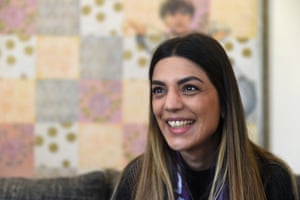
Pakistani activist Leena Ghani says the charge against her is a ‘new low even for Pakistan’. Photograph: Arif Ali/AFP/Getty Images
Similar accusations followed. Blogger Humna Raza alleged that Zafar had groped her at an event, while Maham Javaid, a journalist, recounted on Twitter an alleged incident where Zafar had “tried to kiss my cousin and pull my cousin into a restroom with him. Luckily, my cousin’s friends were there to push him off.”Advertisementhttps://e7b5d3b23d7efa91cbc46c176942663a.safeframe.googlesyndication.com/safeframe/1-0-37/html/container.html
Zafar has accused Shafi of organising a social media campaign against him. According to newspaper reports, he said he could not believe that “anyone can come forward and accuse someone who is innocent and decent, has worked hard for over two decades – solely on social media”.
Zafar filed a civil defamation lawsuit against Shafi, seeking a billion rupees in damages. The court accepted the lawsuit and placed a gag order on Shafi, which still prevents her from discussing the allegations in public.
Over the next two and a half years, Zafar appeared on a dozen television shows to defend his name, sometimes breaking down into tears and occasionally accompanied by his wife. He alleged the accusations were a smear campaign, coordinated by a group of women who created fake accounts and were funded by foreign money. Last month, Pakistan’s president awarded Zafar the Pride of Pakistan, one of the country’s highest honours.
In July 2018, Shafi also began legal proceedings, attempting to take Zafar to court for sexual harassment in the workplace. Her case was dismissed on the technicality that freelancers were not covered by the law. An appeal to the Lahore high court was unsuccessful and although her lawyers have challenged the ruling in the supreme court, the case has still not been heard.
Meesha Shafi still awaits a supreme court ruling on her sexual harassment case. Photograph: Michael Loccisano/Getty Images
Advertisement
In November 2018 rumours began to swirl that Zafar had also filed criminal charges against Shafi and 25 of her online supporters and fellow accusers with the Federal Investigation Agency (FIA), Pakistan’s most powerful investigating body.
By July 2019, dozens of people, mainly women, who had written social media posts either making allegations about Zafar or expressing support for Shafi, began to receive notices to appear before the FIA for questioning.
Ghani, Javaid and Raza were among them, as well as Iffat Omar, an actor who knew Shafi and Zafar personally. When Zafar claimed on television that the women taking Shafi’s side were being paid by the west to spread propaganda, Omar wrote “stop lying harasser” on her social media.
Omar and Ghani were questioned by the FIA and both separately alleged they had been put under pressure by officers to retract their allegations against Zafar and apologise. Both refused. The senior FIA officer on the case was later suspended over a tweet which led to accusations he was being “Ali Zafar’s personal spokesperson” on social media. The FIA declined to comment on the case.
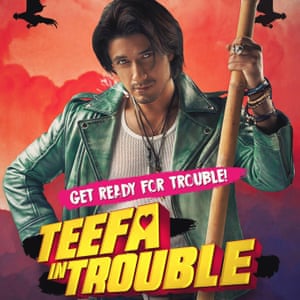
Poster featuring Ali Zafar, one of Pakistan’s most beloved celebrities Photograph: Everett Collection Inc/Alamy
At least three of the women also allege that Zafar applied “indirect harassment” through social networks. Omar says she received a “clear message from Ali Zafar that if I just apologise, everything will be better for me – and I have given him the direct answer that it is not happening.”
Ghani alleges that “Zafar also tried to get to me through my family and would send cruel messages about my family’s problems through third parties. A lot of dirty tactics. He was trying to put pressure on me to apologise and I’ll admit it was scary.”
But in late 2019, after she had filed a legal petition against Zafar and the FIA for harassment and Javaid had written to the senate human rights committee to complain, everything went quiet. Until September 2020, when news of the charges broke.
Nine people, five women including Shafi, Ghani, Omar, Javaid and Raza, and four men, had been booked for defamation by the FIA’s cybercrime wing over the alleged social media “character assassination” of Zafar. The charges carried a three-year jail sentence.
There was confusion as to why only nine had been booked in the case, when the original list had 25 names. But then, says Javaid, the penny dropped: “We realised we were the only ones who had refused to apologise to Zafar.”Advertisement
One of the accused, journalist Haseem uz Zaman, is facing charges for tweets that claimed “Ali Zafar harasses women”. They refuse to apologise. “That would not only harm my future and my journalistic credibility, but it would also harm every other survivor of sexual harassment who comes forward in the future,” they say. “And I could not live with that.”
After news of the criminal charges broke, Ghani and the others began to face a barrage of online rape and death threats and harassment, and say they were vilified in Pakistani media.
A week later, the blogger Raza created a new Twitter account and published a handwritten note retracting her allegations against Zafar and apologising for “the hurt” she had caused him and his family. Zafar shared the tweet. Raza’s name has been dropped from the case.
For the women, most galling of all was the law they had been charged under. The Prevention of Electronic Crimes Act was passed in 2016 partly to protect women from online harassment, but the wing of the FIA tasked with prosecuting these cases is accused of being ineffective.
Nighat Dad, Shafi’s lawyer, says she knows dozens of women who have complained to the FIA about online abuse, hate-speech, rape threats and vindictive sharing of intimate videos, but had received no response.
“It’s rare the cybercrime wing will register cases lodged by women activists, and even if they do, it usually takes years for anything to happen,” says Dad. “So I was never expecting that they would be so shameless as to take action against women survivors who are speaking up.”
This was not an isolated use of the law against women. When girls at the prestigious Lahore Grammar School recently alleged harassment by teachers and fellow students, several were threatened with criminal defamation, after which the accusations went quiet. At Lahore University of Management Sciences, a Facebook page for student testimonials of sexual assault was shut down with a letter threatening to report them to the FIA.
“We are seeing this happen over and over,” says Dad. “The cyber laws that were enacted in the name of protecting women in Pakistan now are being misused and weaponised to silence them.”
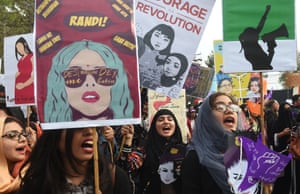
Activists call for change on International Women’s Day in Lahore last March. Photograph: Arif Ali/AFP/Getty Images
As Shafi’s lawyer, Dad claims she herself has been subjected to a “vicious smear campaign”, with newspapers making allegations that she is a foreign operative running an “illegal NGO”, unsubstantiated claimsretweeted by Zafar. “They will not only try and silence victims, but anyone who tries to help victims fight for justice,” says Dad.
On 15 December, the FIA presented evidence that Shafi and others in the case were “guilty” of defamation and asked for court proceedings against them to begin.
Ambreen Qureshi, Zafar’s lawyer, declined to talk to the Guardian about the allegations but said “we have presented evidence to the FIA on account of which Ms Shafi and eight others are booked”. Qureshi says Shafi had failed to provide any witnesses to support her allegations. Shafi’s lawyers say she was not given the opportunity.
According to Qureshi, the court documents so far show “in this case an innocent man was made a target of a criminally motivated malicious campaign by a group of closely related women.” The eight women facing charges deny any previous relationship or any campaign and say they intend to fight the case in court and push for the cyber defamation law to be repealed.
Ghani says: “People keep saying #MeToo is dying in Pakistan, which is so terrible because it’s not like women are not getting harassed and assaulted and raped, but we are being silenced. We all realise that Pakistan’s #MeToo movement hinges on this case.”
“The whole system is against us; Ali Zafar is a powerful man, and going to court is hard – but what can be harder than lying and living with that lie,” she adds. “I would rather go to jail.”
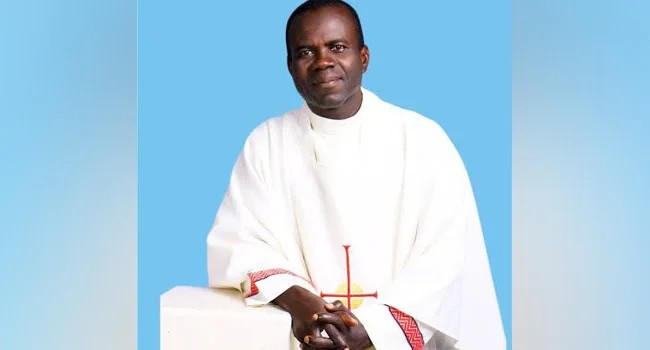
The auxiliary Bishop of Owerri Archdiocese, Moses Chikwe, and some other kidnapped victims have been rescued without ransom.
Spokesperson of the police in Imo, Orlando Ikeokwu, confirmed this on Friday.
He said the rescue followed a sting operation by men of the Imo State Police Command.
The Bishop was abducted on Sunday night, along with his driver, at the World Bank area of Owerri, the Imo State capital.
His kidnap drew condemnation from the Christian Association of Nigeria, which described it as the height of wickedness.
On Thursday, women under the aegis of the Owerri Archdiocesan Catholic Women organization also called for the state government and security operatives to help secure the Bishop’s release (theconclaveng)
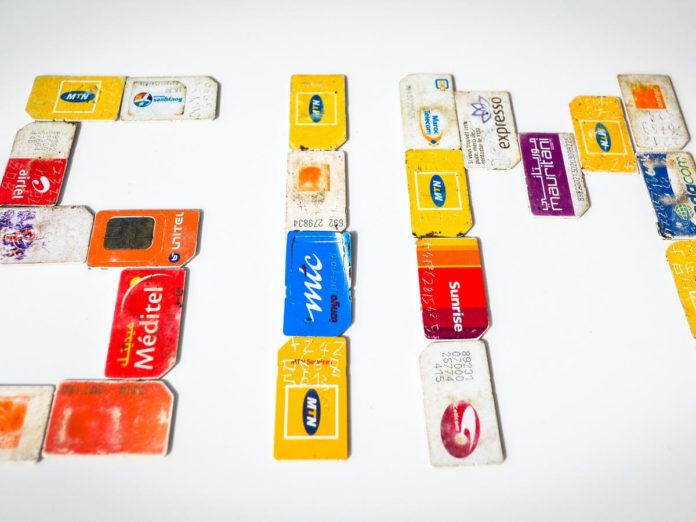
Based on recommendations by the Technical Committee set up for implementation of linking SIM card with National Identification Numbers (NINs), the Minister of Communications and Digital Economy, Dr Ibrahim Pantami, has approved a SIM Replacement Policy for subscribers whose SIMs have been lost, stolen, misplaced or damaged.
In a statement jointly signed by NCC Director, Public Affairs, Dr Ikechukwu Adinde and NIMC Head, Corporate Communication, Mr Kayode Adegoke, the technical committee said “subscriber present a NIN, an effective verification of the NIN is carried out by NIMC and relevant Guidelines and Regulations of NCC concerning SIM Replacement are fully adhered to.”The technical committee further stated that “this policy is part of the Federal Government’s efforts to reduce the burden on subscribers and simplify the exercise.
”The technical committee also said the policy was aimed at enabling telecommunications service users who needed to replace their damaged, stolen or misplaced SIMs to re-establish access to telecom services.
The technical committee added that the Federal Government’s drive to ensure all Subscriber registrations were linked with National Identification Numbers (NINs) was moving forward and all stakeholders in the industry were working together to ensure the process was carried out as seamlessly as possible.
It said the government sincerely appreciated Nigerians for the understanding and commitment demonstrated towards ensuring the overall success of the exercise. (theconclaveng)
Veteran Nollywood actor and broadcaster, Patrick Doyle, has reacted to the love affair between Nollywood diva, Rita Dominic and media mogul, Fidelis Anosike.
Newsmen note that pictures of Rita Dominic and Fidelis Anosike recently emerged online and many people expressed their happiness over the development.
Joining the conversation, Patrick Doyle, took to his Facebook page saying that Rita Dominic and Fidelis Anosike are “deeply in love” with each other and they “deserve to be happy”.
“Fidelis, I have known and interacted with over the years and I have come to respect him a great deal, Rita, I have encountered socially on a good number of occasions and I find her to be a very personable and charming lady,” he wrote.
“I have been with both of them on one memorable occasion and my impression is that they are deeply in love with each other. I wish them well, they both deserve to be deliriously happy.”
Our site uses cookies. By clicking “Accept All Cookies”, you direct Law and Society Magazine to store cookies on your device and disclose information in accordance with our Cookie Statement: cookie policyACCEPTREJECT
Privacy & Cookies Policy
Privacy Overview
This website uses cookies to improve your experience while you navigate through the website. Out of these cookies, the cookies that are categorized as necessary are stored on your browser as they are essential for the working of basic functionalities of the website. We also use third-party cookies that help us analyze and understand how you use this website. These cookies will be stored in your browser only with your consent. You also have the option to opt-out of these cookies. But opting out of some of these cookies may have an effect on your browsing experience.
Necessary cookies are absolutely essential for the website to function properly. This category only includes cookies that ensures basic functionalities and security features of the website. These cookies do not store any personal information.
Any cookies that may not be particularly necessary for the website to function and is used specifically to collect user personal data via analytics, ads, other embedded contents are termed as non-necessary cookies. It is mandatory to procure user consent prior to running these cookies on your website.