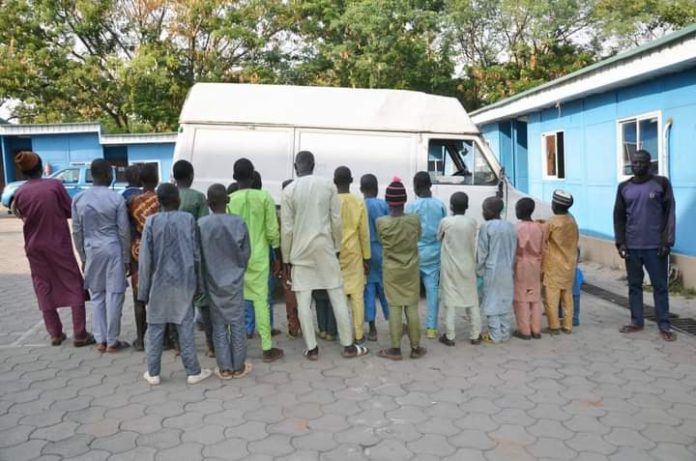
The National Agency for the Prohibition of Trafficking in Persons (NAPTIP) has rescued 21 children of Kaduna State origin on their way from Zaria, Kaduna state to Nasarawa State for labour exploitation.
In a statement, NAPTIP Head, Press and Public Relations Unit (PPRU) Stella Nezan said the children whose ages ranged from 6 – 15 years were intercepted at the Bwari area council of the Federal Capital Territory (FCT) by military personnel at a military check point.
She stated that the children were cramped in a white coloured old J5 vehicle with registration number Lagos XT 472 GGE without windows.
Nezan said the vehicle according to the suspect was used for carrying tomatoes.
She said by the time the children were rescued, they were weak and tired without face masks and other protective equipment from COVID-19.
Nezan added that the driver of the vehicle, Bala Ibrahim, who is the prime suspect, was being interrogated by the investigators.
Reacting to this, the Director-General, Imaan Sulaiman Ibrahim advised parents to be wary of those they leave their children with especially with the menace of trafficking in persons across the world.
She wondered why anybody would allow the children to be moved in such an inhumane condition, especially in the COVID-19 pandemic era.
She pledged that the law would take its course in this matter. (theconclaveng)
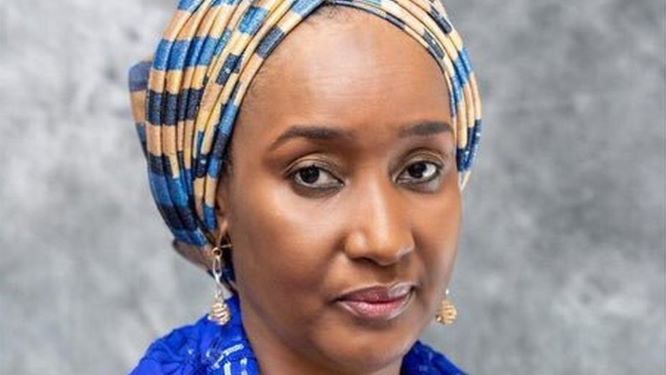
The Minister of Humanitarian Affairs, Disaster Management and Social Development, Hajia Sadiya Umar Farouk, has reiterated that the Federal Government will continue to provide the necessary support and resources to the National Agency for the Prohibition of Trafficking in Persons (NAPTIP) in a bid to adequately address the issue of human trafficking and other associated humanitarian crisis in Nigeria.
The minister stated this in her office while receiving the newly-appointed Director General of NAPTIP, Imaan Sulaiman – Ibrahim who was on a courtesy visit.
The Ministry of Humanitarian Affairs, Disaster Management and Social Development is the supervising Ministry for the Agency.
It would be recalled that Imaan Sulaiman – Ibrahim, assumed duty as the new Director General of the Agency on December 21, 2020.
The minister who described the NAPTIP as a foremost Agency of Government whose mandate is critical in mitigating human trafficking and all forms of abuses across Nigeria, urged the Director General to build on the successes recorded by the Agency in the past and ensure evidence-based activities that would further increase the visibility of the Agency.
While urging her to reach out to partners and other line ministries in order to secure full cooperation of Nigerians, the minister charged the NAPTIP boss to ensure that her programmes and activities clearly align with mandates of the Ministry.
Earlier in her address, NAPTIP’s Director General had reminded the minister that “NAPTIP is the creation of Trafficking in Persons (Prohibition) Enforcement and Administration Act (TIPPEA), 2015 as re-enacted, in response to addressing the scourge of trafficking in persons in Nigeria and its attendant human rights abuses in its entire ramification.
“It is also a fulfillment of the Federal Governments international obligation under the Trafficking in Persons Protocol supplementing the United Nations Transnational Organized Crime (UNTOC).”
She promised that NAPTIP was fully committed to the prevention of all forms of human degradation and exploitation through the coordinated use of the nation’s crime prevention and law enforcement resources to stamp out human trafficking and to liberate and uplift the vulnerable, especially women, children and youths, from dehumanizing and exploitative employment and usage, with the deployment of the Five P Approach such as policy development, prevention, protection, prosecution, and partnering with stakeholders to ensure their rehabilitation and effective reintegration of victims into the society.
“However, the Agency is inundated with challenges and draw backs that are hindering our growth and development. These challenges have affected the smooth running of our operations towards achieving our statutory mandate.
“Some of the challenges observed in the course of the review of reports from departments, units and zonal commands of the Agency are largely administrative and operational.
“The Agency requires adequate funding to effectively execute its day-to-day operational activities. More so, there is the need for vehicles for administrative and operational purposes.
“We are equally incapacitated in the areas of inadequate office structure, and funding for operations such as surveillance, raids operations, investigations, and activities leading to the prosecution of perpetrators of the Human Trafficking crime,” the NAPTIP boss said.
She however assured the minister of the determination of the Agency to continue to fulfil her mandates.
The visit was the first courtesy visit embarked on by the Director General since her assumption of office.
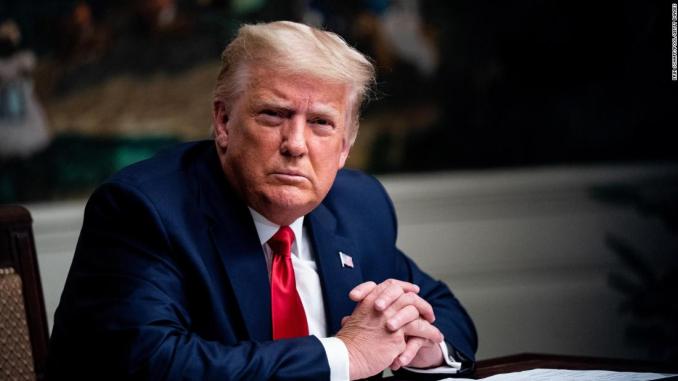
Twitter’s German-listed shares slumped as much as 8 per cent on Monday, the first trading day after it permanently suspended U.S. President Donald Trump’s account late on Friday.
The company said suspension of Trump’s account, which had more than 88 million followers, was due to the risk of further violence, following the storming of the U.S. Capitol on Wednesday.
At 1011 GMT, the social media firm’s U.S.-listed shares were also off 6.8 per cent at $47.94 in thin premarket trading.
It was the first time Twitter banned a head of state, sparking a worldwide controversy over the impact U.S. tech giants can have on free speech and democracy more broadly.
For Twitter’s balance sheet itself, the decision to ban the U.S. president is expected to have a moderate negative impact.
“Expect slight user decline, though engagement erosion is a bigger question”, Berstein analysts wrote in a note looking into the issue.
Far-right groups maintain a vigorous online presence on digital platforms like Parler, Gab, MeWe, Zello and Telegram and could disengage from mainstream social media.
There could also be additional costs for Twitter and others as they seek to further moderate content uploaded by their users.
“Incremental moderation may be welcome but it’s not cheap and could benefit Facebook that already employees a moderation army (around six times) larger than Twitter’s workforce,” Berstein analysts said.
Facebook Inc has suspended Trump’s account until at least the end of his presidential term later this month. (Reuters/NAN)
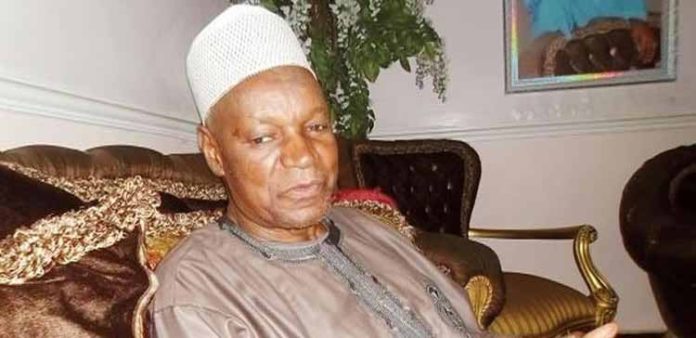
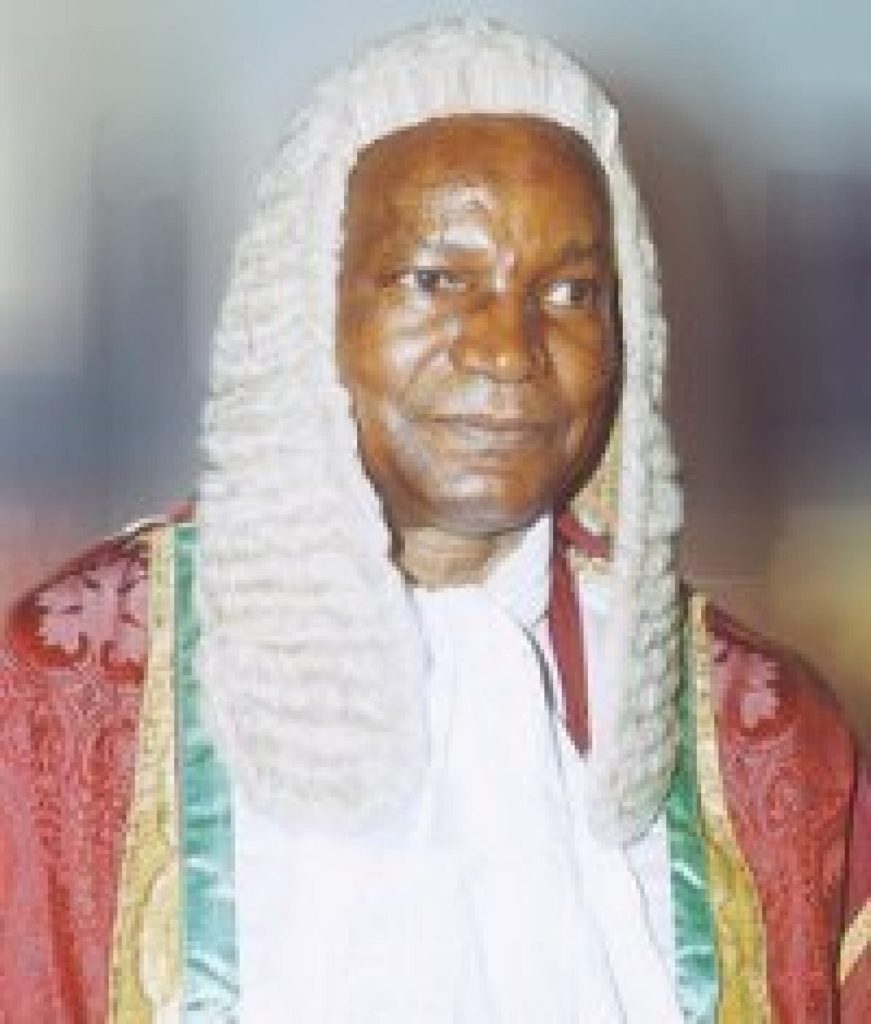
Hon. Justice Umaru Farouk Abdullahi is the 4th President of Nigeria’s Court of Appeal. He was also a former Chairman of the Body of Benchers. His Lordship spoke with Lillian Okenwa.
My lord could you give some insight into the roles of Law Faculties, Council of Legal Education and Body of Benchers in the training of lawyers in Nigeria?
Let me start from the beginning about the perception of the generality of Nigerians about Nigerian lawyers. There is this perception that the standard of practice has gone down, and you can hear this from even lawyers themselves. Discipline has become a shadow of itself from what it used to be. Some attributed the issue to the large number of people that study law as a profession. Some say it’s not necessarily the large number, because there are countries that are producing a lot of lawyers but their standards still remain high, and their standard of discipline also remains intact. So, maybe it is a reflection of our society itself. But can the law profession afford to fold into the circle of the general indiscipline that pervades the society? Isn’t a lawyer supposed to lead the way that people should follow? Should the lawyer melt into the society and adopt all the maladies that the society is grappling with? I think not.
The legal profession is specifically designed to serve a purpose. In a society where lawyers are in short supply, it becomes an archaic society. The rule of law is very fundamental to the existence of the society and where the rule of law is weak; the next thing that follows is anarchy. Leaders who have found themselves with a weak legal framework, ineffective conveyance of sustaining the principles of rule of law, do what they like and get away with it at the expense of the welfare of the society.
I think we have to look at the legal profession as a whole. The role it plays and the responsibility the society expects lawyers to perform in the day to day activities of the society. From the lawyers that are produced in the country, we have the by-product of magistrates and judges who are administering justice. If these people don’t come from a solid base, can they really perform optimally for the benefit of the society? There are lots of implications in the way you take the legal profession. Now, of course legal training has stages. You start with your Senior School Certificate Examination.; having the right combination of subjects that will entitle you to study law at the university.
Now if the universities are lowering their standards and limiting the number of brilliant students from studying law, right from that stage, there is going to be a problem. If you lower standards or give preference to some people who have not met the standard, then you are beginning to mess the system up. And the profession will be the loser at the end of the day.
Having passed through the university and gone through the necessary trainings and so on, you graduate from the university with a degree in law and then the next stage is to go to the law school. The law school has its own period and curriculum; its method of teaching and imparting knowledge. If the curriculum is up and doing, it will produce quality lawyers.
As far as I know, the law school over a number of years has been doing very well in trying to shape the capacity and the quality of the legal profession on the lawyers that are passing through it. Some years back we had a problem of backlog of students who passed through the universities, but could not get admitted into the law school. This came up because of the indiscipline. Ordinarily, the National Universities Commission, (NUC) which accredits law faculties normally, gives certain numbers that the universities will accommodate. They are not meant to exceed this number but they do. If they are given a quota to admit 35 students for instance, the university admits 120. You can imagine the number of universities offering law courses. Unfortunately, even universities of agriculture have faculties of law. It is part of the indiscipline of the society. What has a University of Agriculture got to do with the faculty of law? But we have them in this country. Yet, the NUC has not asked them to stop it.
It then became a problem for the law school because they cannot go beyond a certain number of students per session and you would see products from various universities, both private and public. The number became overwhelming. Naturally, there was a lot of anxiety from parents who sponsored their children to study law when after five years of studying law they cannot be called lawyers because they didn’t go to the law school. There was no space in the law school; it became a very chaotic and frustrating situation.
Therefore, the law school had to go extra-mile to increase the number of sessions. Instead of the two, we increased to three sessions so as to absorb the spillage. But you can see right from there a situation been created where the supervision, lecturing and the preparation of students will have to go down because instead of two sessions, we have to do three sessions. Obviously there are consequences as a result of that. Lecturers are overburdened and the facilities are overstretched.
Hon. Justice Umaru F. Abdullahi
Be that as it may, the Council of Legal Education, which is the regulatory body for legal education in the country, the Body of Benchers responsible for calling students to the Bar as well as the Law School eventually had a talk with the NUC to see what can be done to restore sanity in the system.
At the end of the day, it was decided that NUC should notify the institutions that any university which exceeds the quota of students given to it, stands the risk of those excess not being admitted into the Law School. I think that has helped in some way. After clearing the backlog, the Law School was able to come back to its traditional two sessions.
We must also take note of the attitude of the students themselves, right from the university. If they are not serious students, if they just want to study law or go to the law school without putting their best into it, they’ll be substandard. Some of them think it is just to pass and then be called by the title of Esq, but it’s far beyond that.
Could the scenario you painted above be responsible for the abysmal performance of law students in the last few years?
To be a successful lawyer, you have to have the culture of reading. A lawyer should be a master of all. He should read everything and every aspect of life is important including medicine. But some of them just read to pass. Even the law that they have read is not quite stable, let alone the other aspects of the training they are supposed to have. Naturally if you have that kind of product, you will not achieve the best in the system. And when people get to that level, they should not expect anybody to sit them down and tell them what to do and what not to do. They should be able to have focus and be sufficiently enlightened to know what they want and address their mind to it. That will probably guarantee success. There are still a lot of people in the legal profession that can be taken as role models. They did not become what they have become by idling around. They were reading. If you don’t want to read but wear your wig and gown and float around, then you will never get anywhere. You would be called a lawyer, but a lawyer for what?
What are your thoughts on the suggestion that Law should be studied as a second degree in Nigeria as it is being done in the United States?
The performance of lawyers in court these days is not only embarrassing but shameful. This matter of having a first degree before you make law a second degree has been in the country for quite a while. There has been a serious debate on it. I think one of the arguments of the opponents to law as a second degree is that they look at the parents; the struggles parents go through to train their children from the secondary school to the university and then to the law school. Some of them have been waiting to see the fruit of their labour. Opponents think it’s an additional burden on parents to sponsor a child to study a first degree, then come to study law as second degree. I think it’s on that ground that the argument has not been really taken up seriously.
However, if you observe, there are some students who have been following that pattern. If look at the Bar final exams, those who had gone to acquire first degree and making law second degree, have been found to perform better. But the argument of forcing everybody to study law as a second degree has not been grounded in this country because of this argument of overburdening of the parents and so on. I think the time will come whether we like it or not. We have to adopt that if we want good products and if we want the legal profession to survive.
We have to look at other alternatives, because we can’t continue to have lawyers who just go to the university and come out without anything in their heads, and they are called lawyers. That is why you find some of them, the kind of documents they prepare and the file is disgraceful. They don’t even know how to prepare a simple writ of summons, let alone write letters to clients. The English language which is supposed to be the tool for a lawyer is lacking. So, you start with a faulty kind of foundation and a collection of these problems has affected the standards of the profession itself.
There are some chambers that go through a lot of process to pick junior lawyers. It is not every lawyer that can work in those kind chambers, how can he perform? What is he expecting from the future of the legal profession? That is why you find a lot of them roaming around with no chambers to work in.
You would recall that there used to be a rule that you must be five years post-call before you can establish your own chambers, but somehow that rule disappeared. Nobody seems to care. There is no enforcement of this very good foundation rule. That gave room for some crooks to call themselves lawyers. Maybe they have done some chambers work somewhere or clerk in court. I think the Nigerian Bar Association (NBA) is working on that. It has also introduced a lot of checks to ensure that quacks are removed from the profession through the introduction of the Stamp and Seal for lawyers.
On the issue of pupillage, junior lawyers have argued that senior lawyers don’t pay good salaries, thereby forcing them to set up their law firms.
It is very clear that these issues are there and the juniors have been complaining about them. The NBA and the body of Senior Advocates of Nigeria should listen to these complaints, because those juniors wouldn’t lie about such issues. The legal profession and the country should address these issues squarely.
I think the time has come for all the stakeholders in the legal profession to sit down and look surgically the things that are going wrong in the profession. The standard of the profession is going down to the detriment of everyone. If the senior lawyers are succeeding today, what about the future of their children and grandchildren who are coming up? They too will be caught up.
Like I said, the Bar is the foundation or platform from which you find or engage judicial officers from magistrates up to the Supreme Court level. If you don’t have good products from the word go, then you will be in serious trouble. If you hear what people are saying about the courts, it is disheartening. And this is as a result of the failure and collapse of the system in the legal profession. I think the time has come when there should be all stakeholders summit to address this issue. The NBA is not addressing the issues.
Who are the stakeholders that should convene the meeting you are referring to?
The senior lawyers themselves. Those who are reaping the benefits of the profession. The NBA as a national body with state branches, and the judiciary cannot afford to insulate themselves from these problems, because eventually the issues are creeping into the judiciary. The educational system starting from the universities; the kind of curriculum they offer in the training of lawyers. Then, the Council of Legal Education, which is the regulatory body for legal training and then the Body of Benchers that gets the ultimate products of all these activities. Sadly, we are watching all these things happening and nobody is making any move to solve the problems.
I think we need the law teachers to come in; the NBA, the judiciary. We need the Body of Benchers, the Council of Legal Education. I think if we are able to come together to sit down honestly and look at these things dispassionately, we will be able to come up with a lot of reforms that will address some of these maladies. Otherwise, the profession will be destroyed and we will all be the losers.
The NBA is always talking about who will become the Bar President, Secretary-General and all that. That is not the issue! What are you doing to better the profession itself, to strengthen it and restore its dignity, because law is a dignified profession? The legal profession is in danger of losing its sense of direction; sense of bearing.
Could you touch on the roles of the Nigerian Law School, the Council of Legal Education and the Body of Benchers?
Well, the Council of Legal Education is established by law. It has the role of modelling the curriculum and regulating the mode of training of lawyers in the country. It’s job is also to look at the review of the curriculum from time to time and the performance of the legal profession while the Nigerian Law School is just an educational institution. It was established to groom law students that have passed through universities law faculties; to upgrade them to the stage of becoming lawyers in the country. The Body of Benchers is called the body of lawyers of high distinction. I know there are functions that the Body of Benchers performs like attending the dinners. The dinners are supposed to inculcate that kind of discipline in you. In the legal profession, you are supposed to be well groomed on even how to sit down and eat. Lawyers need to dress well and avoid noise-making.
Then after students’ results have been published, the Body of Benchers’ screening committee would go through the list one after the other with all the supporting documents. Each student is supposed to have two guarantors from members of the Body of Benchers. These Benchers are expected to sign forms for the intending lawyers about to be called to the Bar certifying that their candidates are fit and proper persons to be called to the Nigerian Bar. This signing of the forms in my opinion has to be reviewed.
Previously, the screening committee would not just bring a book of lists containing the names and number of students that are qualified to be called to the Bar. In the days when things were going on very well, the report of the Body of Benchers would be tabled before all the members of the Body of Benchers. They look at it, and if there is any quarrel, they raised the issue. But that practice has been stopped.
Another issue is that of the title of Esq and Barrister. It is wrong to address a lawyer as a barrister. What is a barrister? The legal system we are following here is the British system, and I believe the NBA has issued a lot of circulars asking lawyers to stop using the title “Barrister”, but nobody cares. This is part of the indiscipline that has crept into the profession. They have polluted the system and we have to take steps to stop this kind of nonsense.
My Lord what is your position on the creation of more divisions of the Court of Appeal?
The Court of Appeal is the second highest court in the land. You don’t take it for granted. You don’t spread it out everywhere. Yes there is wisdom in establishing a division, if there is really a need for it. I established the Yola, Owerri, Ekiti divisions and I emphasised Ilorin that there is a reason for doing that, now people from Yola from Jalingo will travel all the way to Jos division of the Court of Appeal to attend to their case, the lawyers also have to come there before they can take up their appeals, people from Maiduguri had to come to Jos, even from Gombe has to come to Jos, so I felt there is need to reduce that problem of having to travel all the way before you can pursue your appeal, Jalingo, from Maiduguri or Damaturu had to come to Jos, that’s why I proposed establishing divisions in Maiduguri and another divisions in Yola, I also looked at the load work, heavy load work in the South East,, Enugu was the only division there, everybody had to go to Enugu, then I discovered that there is heavy load of cases around Imo, Anambra, Abia and so on and just to help to reduce the burden on counsel and people who want appeal, that’s why I proposed to establish Owerri Division to take care of the (Axis), Ekiti Division was also created to take care of appeals from Ondo, Ekiti itself. Ibadan was over loaded, appeals take a longer time because of concentration of load that is why Ekiti division came into relieve Ibadan, Sokoto too has to come to Kaduna. All those states, Sokoto, Katsina, Kano, Kebbi will have to come to Kaduna for their appeals, I established Sokoto division to lessen the problem of people having to travel, sometimes, they will come to Kaduna, they have no place to sleep, some of them, their appeal will come up in a day or two, they have nowhere to sleep, they sleep in the court premises, so, I thought it was too heavy to pursue your right of appeal to come and suffer on the way, so Sokoto Division was created, so these are the basic reasons, but then I think Salami created Akure Division, but fair enough, Benin Division was looking after Akure, but to be fair, there was a lot of over load of work in Benin. So I had no grudge against establishing Akure Division, it helped in a way to relieve Benin Division but then you see the time I left, I had started the construction of court for the divisions, I had gone a long way on constructing the Ibadan Division, Owerri Division, Adamawa and Benue Division, I have not done much before I left, something was started, then I would have thought before any other new Divisions is to be created, in fact we were just managing, I started constructing of the complex at Ilorin, it wasn’t completed by the time I left, I started Calabar, it was a very small court, a Colonial Court and there was need, as the division was growing, then I started the construction of the complex in Calabar (before I left) but I was not able to finish, some of them are 70% or 80% completed when I left, so I would have thought the best thing was complete those projects, Ibadan, Calabar, Owerri, do something for Adamawa, do something for Maiduguri. I thought that would have been enough, of course, they’ve been working and I am afraid, I think when construction work takes such a long time. They are bound to get problems with financing and review of prices and this and that, so from the documents I have seen, because I was part of the budget committee of the NJC, we looked at the submission of all the courts and we discovered that there are quite a number of unpaid jobs, and court of Appeal was one of the heaviest debtor courts in all the Federal Courts. The allocation was going down, it was not as robust as it used to be, and the job had been done for that reason, I would have thought it was a better idea to pay off your debts before venturing into establishing new divisions. Those were my reasons why I felt I disagreed with the policy of proliferation because the present divisions are functioning, maybe, what we need was increase the manpower, you have to take from the older divisions before you form a panel to go to the new division and that is also depriving those division you have already established. so that’s why I had my reservations about this new divisions if I were in her position on I wouldn’t rush to go into having new divisions, I would make sure the old one are functioning properly by one adding others, in any case, I don’t think it’s necessary for her, she’s just about going away, why bother about establishing new divisions with who will she leave the problem for, because I think is not a simple thing, it takes a lot of thing, yes, politically, there are some political issues, but you don’t establish a court for political reasons, you establish a court for and already, one other thing that I probably have to say is that, in view of the over expansion there is the influx of judges of the Court of Appeal bench, I am sorry to say, I am not quite happy with the way Court of Appeal operates, brotherhood, working together and making sure that judgments are delivered as at when due, nothing is allowed to lapse, but, lately, I am very unhappy when I realize that judgments sometimes lapse, I don’t think it is a good thing for the Court of Appeal. I would rather like to see brotherhood, intellectual relationship, producing good quality judgment, holding conferences, if agreeing, if you don’t agree fine, you area a professional, you are a judge you don’t have to, your opinion is your own opinion. But there are too much diversions, so much so that I felt so very worried sometimes last year that INEC made a comment that the Court of Appeal is are confusing them, because they are coming out with conflicting judgments, this shouldn’t be in the Court of Appeal, and to be honest I felt very worried about that. And I hope the judges will sit down, the old ones who has been there, they should instil discipline back into the Court to take bold step so that the new ones should come and learn, listen to their seniors, the seniors would have to carry along with them, the new ones that come in, so that they can come out with very good judgments that people can say yes, this is the Court of Appeal, I have said my mind.
I have always said, so that when I came to Court Appeal, I could call myself a junior judge, because I was the youngest in the division. I was posted to Jos in 1982. We opened Jos division. Myself, late Akanbi, late Michael Ogundare and late Agbaje. I was the youngest but they taught me everything, I was always with them. After sittings in Court, we hold conferences for a whole week. We sit and discuss cases and then, take a unanimous decision on each judgment. The Presiding Justice (PJ) will assign someone to write the lead judgment when we finish. Then we all make drafts. You don’t just go and start reading. No. You send it to the PJ. He will look at it and circulate it to the others. After we have cleared out everything and they say okay, a final copy is produced and that is the judgment of the Court. I hope it is still happening. It is a must in the Court of Appeal. You must hold conferences. As a matter of rule, when appeal is taken, there must be a conference. The judges who take the appeal must sit down and discuss it. When you write a judgment, you don’t just go alone and deliver. You produce a draft first and take it to the PJ. The PJ will circulate it to the other members of the panel. Then everybody will make his own contribution, maybe, on the lead judgment. If there is something that has been left out, if it is considered that the issue is important, that needs to be given more attention, you write an opinion on it. That’s how Court of Appeal operates. That’s why we call it the Appeal Court.
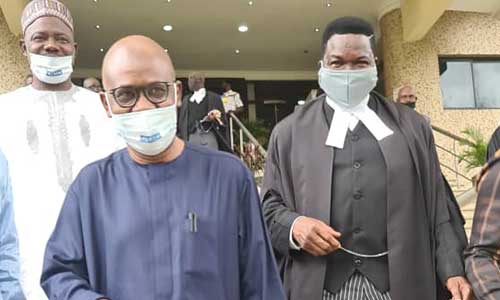
Counsel to Mohammed Bello Adoke (SAN), a former Attorney General of the Federation (AGF) and Minister of Justice, Godwin Kanu Agabi (SAN) on Monday told a Federal High Court in Abuja that Adoke is presently stranded in the United Arab Emirate (UAE), where he tested positive to COVID-19.
Agabi who is the lead counsel to Adoke in the alleged money laundering charges filed against Adoke and a businessman, Aliyu Abubakar, by the Economic and Financial Crimes Commission (EFCC) conveyed the plight of the former AGF to Justice Inyang Ekwo on yesterday.
Adoke was granted permission to travel abroad for medical examination on December 11, 2020 following a plea to that effect.
Justice Ekwo, who ordered the release of the ex-AGF’s international passport to him, gave him the permission to travel between December 15 and return on January 10, 2021, a day before the scheduled resumption of his trial.
However, at the resumed proceeding yesterday, Adoke was not in court prompting the Agabi to apologise to the court for the absence.
Agabi told Justice Ekwo that his client tested positive to the disease at the point of his return to Nigeria and was subsequently held back by the authorities of the UAE.
The SAN further told the court that Adoke later tested negative to the coronavirus after his treatment but was unable to get flight to the country as ordered by the court.
“My Lord, let me apologise to you that the 1st defendant in this matter, Mohammed Bello Adoke, is not in court today due to circumstances beyond his control.
“I thank this court for granting him permission to travel abroad for medical examination. Before he left this country, he tested negative. But unfortunately while in the UAE, he tested positive at his point of his return to Nigeria.
“However, he is now negative after the treatment but he was unable to get flight to the country. Happily, he will return tomorrow, January 12, 2021,” he told the court.
Agabi informed the court that an application dated January 4, 2021 and filed same day, seeking for an extension of time to avail the 1st defendant of the opportunity to take care of himself had already been brought before the court.
He then prayed the court to extend the time within which Adoke would be allowed to appear in court for the continuation of his trial and assured that the former minister would make himself available for his trial in the next adjourned date.
Counsel to the 2nd defendant (Aliyu Abubakar), Emmanuel. C. Ikechi, who held brief for Chief Akin Olujimi, (SAN) did not oppose the application, the prosecution counsel, Bala Sanga, also did not oppose the request for adjournment on the ground that he had been regular in court and in the interest of justice.
Justice Ekwo subsequently adjourned the matter till March 1, 2021 for the continuation of trial. (Thenigerialawyer)
As Police, NYSC Speak On Female Corps Member Who ‘Murdered’ Boyfriend
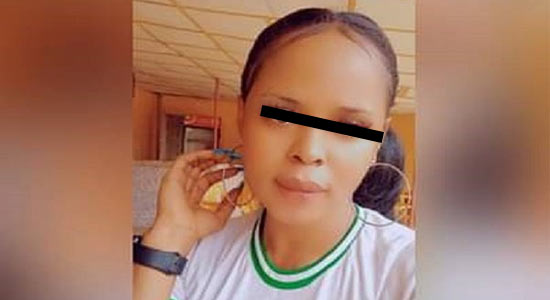
A female member of the National Youth Service Service Corps (NYSC) serving in one of the government departments in Akwa Ibom State has allegedly macheted her boyfriend to death in Uyo.
The suspect identified by the police as Chidinma Odume was said to have been caught by bystanders and neighbours of her slain boyfriend while trying to escape by scaling the fence of the compound where the deceased lived after committing the crime.
Our correspondent learned that what alerted the neighbours about the crime apart from her attempt to scale the perimeter fence were the bloodstains on her clothes and body.
It was learned that Odume was seriously beaten by the mob who gathered at the Olu Obasanjo Road residence of the deceased after the body of the unidentified man was found dead.
‘She was found this morning around 9:30 am trying to jump the fence of a young guy she went for hook-up with. Bloodstains were all over her so she was caught and beaten to stupor and also stripped naked,’ a witness said.
‘I won’t be able to post the video on my timeline cos it’s so disgusting.
‘She macheted a young guy to death this morning whom she went out with. She killed the young guy instantly after several cuts on his stomach and face, on trying to jump out from the fence she was caught.
‘Some bike men there said that she is used to sending them to buy weed (Indian Hemp) for her ever since she was deployed to Akwa Ibom for her NYSC.’
Police Public Relations Officer (PPRO) SP Odiko MacDon, who confirmed the incident, said the police were alerted to the incident on Sunday morning.
‘At about 11:00 pm on Sunday morning, the police got a distressed call and we responded swiftly at number 219, Abak road, in Uyo.
‘One, Chidinma Odume, a Youth Corps member serving at the political desk at Edet Akpan Avenue, was said to be at the verge of mopping her by the angry but the police rescued her,’ MacDon said.
MacDon explained the police had since taken the corpse to the mortuary.
As Police, NYSC Speak On Female Corps Member Who ‘Murdered’ Boyfriend
The police in Akwa Ibom State have confirmed the arrest of a female National Youth Service Corps (NYSC) member who reportedly killed a man she spent a night with.
The incident happened in Uyo, Sunday night.
The police spokesperson in the state, Odiko MacDon, said Ms Paschaline is being treated as a murder suspect.
“She was arrested because she murdered (killed) one Akwaowo,” Mr MacDon, a superintendent of police.
“We got a distress call, we responded to that distress call at 219 Abak Road, Uyo. When we got there they were at the verge of lynching her, so we had to rescue her. Preliminary investigation revealed that she and the guy went out to the guy’s house. She said that the guy, in his house, brought out a machete and said he wants to kill her. She said she acted in self-defence, picked up the machete and used it on him.
“The CP (commissioner of police) has ordered a very ‘discreet’ investigation. As I speak, we have her in custody and as soon as we are done with our investigation, that matter will be charged to court.”
Julius Amusan, the NYSC coordinator in Akwa Ibom State, confirmed that Ms Paschaline is a corps member serving in the state.
Mr Amusan said the incident was “very sad and unfortunate”.
“We cannot run away from the fact that she is a corps member, we owe her the obligation to ensure that thorough investigation is carried out into the matter. As it is, it is a criminal offence and beyond what NYSC can handle,” he said.
The coordinator said ”(as soon as) the NYSC authorities heard of the incident, they got in touch with the police to establish if the person involved was truly a corps member.
“We have met with the police and we have established that she is a corps member, and the police have assured us they are going to carry out an investigation into the circumstances surrounding the incident,” he said.
The Department of State Services has alleged that there is a plot to incite religious violence in Sokoto, Kano, Kaduna, Plateau, Rivers, Oyo, Lagos, and some states in the South East.
This was contained in a statement by Head, Public Relations Officer, Department of State Services, Peter Afunanya, titled, ‘Plots to incite religious violence in Nigeria’, on Monday.
The DSS also warned that some worship centres and religious leaders may be attacked.
The statement read, “The Department of State Services wishes to alert the public about plans by some elements working with external forces to incite religious violence across the country. Targeted States include Sokoto, Kano, Kaduna, Plateau, Rivers, Oyo, Lagos and those in the South East.
“Part of the plans is to cause inter-religious conflicts as well as use their foot soldiers to attack some worship centres, religious leaders, personalities, key and vulnerable points.
“Consequently, Nigerians are advised to be wary of these antics and shun all divisive tendencies aimed at inciting or setting them against one another.
“While the Service pledges to collaborate with sister agencies to ensure that public order is maintained, those hatching these plots are warned to desist from such in the interest of peace, security and development of the country.
“However, law-abiding citizens (and residents) are encouraged to report suspected breaches of peace around them to the nearest security agencies.” (thenigerialawyer)
The National Drug Law Enforcement Agency (NDLEA) has suspended the screening of applicants in its ongoing recruitment exercise.
The spokesman of the agency, Jonah Achema, said on Monday that this is in compliance with the directive of the Attorney General of the Federation (AGF) and Minister of Justice, Abubakar Malami.
The Agency last week announced the release of the list of 5000 shortlisted candidates who were to proceed to the agency’s Academy in Jos for final screening and enlistment, but Malami ordered the suspension of the exercise given the current and alarming wave of COVID- 19 pandemic across the country.
“The Agency is prepared to seek advice from the Presidential Task Force (PTF) on COVID- 19 on the public health implications of such an exercise, especially as it relates to the adequacy and possibility of strict adherence to COVID-19 protocols.
“The Acting Chairman of the agency, Shadrach Haruna has therefore directed the screening team to suspend all actions and return to the National Headquarters, Abuja immediately for further briefing. He further stated that there shall be no prejudice against any candidate that tuned up for the screening or that failed to do so,” Achema said. (Thenigerialawyer)
Prince Harry and Meghan Markle have quit social media after growing disillusioned by the “hate” they have found on sites like Facebook and Twitter, a UK newspaper reported on Sunday.
The couple were rejecting social media in both a personal and professional capacity as part of their new “progressive role” in the United States, the Sunday Times said.
A source close to the couple told the newspaper they had “no plans” to use social media for their new Archewell Foundation and were “very unlikely” to restart utilising platforms personally.
The Duke and Duchess of Sussex, who moved to California last year after abruptly resigning from British royal duties, have previously had prominent presences online.
They amassed more than 10 million Instagram followers to their Sussex Royal account while they were working royals.
But the couple have also previously complained about their treatment on social media, as well as in the British press.
Meghan described past trolling of her as “almost unsurvivable” while Harry issued an unprecedented statement in 2016 denouncing “the racial undertones of comment pieces” and “the sexism and racism of social media trolls”.
Last year they launched a wide-ranging non-profit organisation, Archewell, after giving up their “Sussex Royal” brand as part of the terms of their departure from frontline monarchy duties.
They have started other creative ventures, including signing a deal with Spotify to produce podcasts that tell “uplifting and entertaining stories”.
The couple also signed a multi-year contract, reportedly worth tens of millions of dollars, with streaming giant Netflix to produce “impactful” films and series.
Meanwhile, Markle, a former television actress, narrated a wildlife documentary on Disney+ in 2020.
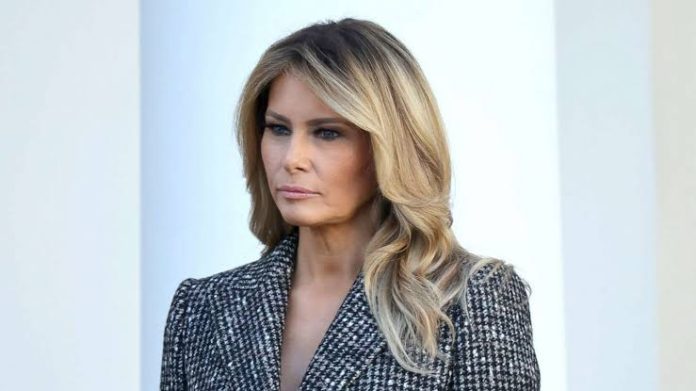
Melania Trump said Monday that she is “disappointed and disheartened” by the deadly riot at the Capitol last week by supporters of her husband. But in breaking her silence, she also lashed out at people she said have used the tragic event to spread “salacious gossip, unwarranted personal attacks and false and misleading accusations about me.”
The statement marked the first lady’s first public comment in the five days since a violent mob of Trump supporters, angry over Trump’s election loss and stirred up by the president himself, stormed the Capitol on Wednesday and temporarily disrupted proceedings certifying that Democrat Joe Biden will be the next president come Jan. 20.
“I am disappointed and disheartened with what happened last week,” she wrote in a White House blog post released before sunrise. “I find it shameful that surrounding these tragic events there has been salacious gossip, unwarranted personal attacks, and false misleading accusations on me – from people who are looking to be relevant and have an agenda.”
The first lady did not say who she was referring to. Last week, Stephanie Winston Wolkoff, the first lady’s former friend and one-time assistant at the White House, wrote an editorial accusing Mrs. Trump of being “complicit in the destruction of America.”
Their friendship ended bitterly after Wolkoff, who had worked on arranging festivities for Trump’s inauguration in 2017, said the first lady failed to defend her after questions arose about inaugural spending, now the subject of federal and congressional investigations.
In the post Monday, the first lady said, “This time is solely about healing our country and its citizens. It should not be used for personal gain.”
“Our Nation must heal in a civil manner,” she wrote. “Make no mistake about it, I absolutely condemn the violence that has occurred on our Nation’s Capitol. Violence is never acceptable.”
She also urged people to stop the violence, not judge people by the color of their skin or “use differing political ideologies as a basis for aggression and viciousness.” She made no comment about her husband or his role in encouraging his supporters to go to the Capitol.
The president has spent the weeks after losing the November presidential contest spreading baseless claims that the balloting was tainted by massive fraud and that the election was stolen from him. Numerous state and federal officials, including former U.S. Attorney General William Barr, said there was no evidence of fraud on a scale massive enough to have affected the outcome.
Trump encouraged his supporters to flock to Washington last Wednesday, the day set for Congress to certify the presidential vote. After addressing a rally near the White House in which he encouraged his supporters to keep fighting, they stormed the Capitol.
Five people, including a Capitol police officer, died.
Our site uses cookies. By clicking “Accept All Cookies”, you direct Law and Society Magazine to store cookies on your device and disclose information in accordance with our Cookie Statement: cookie policyACCEPTREJECT
Privacy & Cookies Policy
Privacy Overview
This website uses cookies to improve your experience while you navigate through the website. Out of these cookies, the cookies that are categorized as necessary are stored on your browser as they are essential for the working of basic functionalities of the website. We also use third-party cookies that help us analyze and understand how you use this website. These cookies will be stored in your browser only with your consent. You also have the option to opt-out of these cookies. But opting out of some of these cookies may have an effect on your browsing experience.
Necessary cookies are absolutely essential for the website to function properly. This category only includes cookies that ensures basic functionalities and security features of the website. These cookies do not store any personal information.
Any cookies that may not be particularly necessary for the website to function and is used specifically to collect user personal data via analytics, ads, other embedded contents are termed as non-necessary cookies. It is mandatory to procure user consent prior to running these cookies on your website.